President Donald Trump gives a speech at the World Economic Forum on Jan. 21, 2026 in Davos, Switzerland. (Photo by Chip Somodevilla/Getty Images)
ALEXANDRIA, Va. — A federal judge in the Eastern District of Virginia issued a preliminary injunction Friday halting the Trump administration’s nearly $1.8 billion “anti-weaponization” fund for one week, giving the government time to sign a “clear, unambiguous” agreement that the fund is dead.
U.S. District Judge Leonie Brinkema said from the bench the agreement must be signed by acting Attorney General Todd Blanche and Treasury Secretary Scott Bessent.
“The balance of harms tips in the favor of the plaintiff,” said Brinkema, a Clinton administration appointee.
Brinkema had already temporarily blocked the fund on May 29 on an emergency basis.
The prospect that the fund would pay Trump’s supporters, including those who assaulted police officers during the Jan. 6, 2021, U.S. Capitol riot, sparked multiple lawsuits, including the filing in Virginia.
Challengers included a former Department of Justice Jan. 6 prosecutor who was fired last year and a protester at an immigration raid last year who was charged with a felony, and has since been acquitted by a jury. The plaintiffs are represented by the legal advocacy groups Democracy Forward and Common Cause.
The Department of Justice announced the creation of the fund, in the amount of $1.776 billion, on May 18 in exchange for President Donald Trump voluntarily dropping his $10 billion lawsuit against the IRS for the leak of his tax returns nearly seven years ago.
Issue not moot, judge says
During a hearing that lasted less than an hour, Brinkema swiftly called Andrew Block, senior counsel to the U.S. associate attorney general, to speak first.
“You’re a brave man, Mr. Block. You’re all by yourself. Frankly, you’re in the hot seat,” Brinkema said, noting that Block was the only representative for the government in the courtroom.
Brinkema kicked off questioning by asking Block if he’d had a chance to find an answer to why Blanche has not formally rescinded the “anti-weaponization” fund in writing.
The question had been posed to Block by U.S. District Judge Richard Leon in U.S. District Court for the District of Columbia less than 48 hours ago during a hearing for a separate lawsuit against the fund. Block, who also appeared alone before Leon, told the judge he did not know the reason Blanche had not issued a written order.
“Do you have an answer to that question now?” Brinkema asked.
“Your honor, I don’t. I don’t have the ability to speak to the AG,” he responded.
As he did in federal court June 10, Block argued that Blanche testified publicly before Congress that the administration was not moving forward with the fund, and that Blanche had signed legal briefs on the matter.
Acknowledging those arguments, Leon denied an emergency request to block the fund, saying the case appeared “moot.”
Brinkema, however, said she does not agree with Leon’s assessment.
Doubting whether any of Blanche’s verbal or written statements to stop the fund had been made under penalty of perjury, Brinkema said, “that means the issue, in my view, is not moot.”
Brinkema also cited Trump’s public comments praising the fund, even after Blanche’s declaration it would not move forward.
“When the president of the United States says he’s going to be disappointed if something doesn’t happen, that’s a pretty good indication that it (could) happen,” Brinkema said.
“There are a lot of people out there who think this fund is up and running,” she added.
Block responded: “People may think a lot of things.” He said “what I can tell you” is that no commissioners have been appointed to the fund to establish a claim system.
No lawful business restrained
Block, as he did before Judge Leon, dismissed the plaintiffs’ allegations as “what-ifs,” based on a “loose factual record that is premature.”
Referring to the departments of Justice and Treasury, Brinkema asked, “What injury do they face if the court issues a preliminary injunction at this point?”
Block argued any temporary order to block the fund would mean the government was being “restrained” in conducting business.
“You think this is lawful business? This is a serious issue,” Brinkema said, adding the “only reason this fund exists” is because it’s a settlement in the president’s IRS case, which is “under severe scrutiny.”
U.S. District Judge Kathleen Williams, in the Southern District of Florida, has asked for the government’s response by day’s end to a May 27 request from 35 former federal judges to reopen the case. The judges allege the government deceived the court by not sharing all details of the settlement.
Blanche on Capitol Hill
The Department of Justice declined to comment Friday.
The department maintains the fund does not exist, based on Blanche’s June 2 statements before a House Appropriations subcommittee that the department was “not moving forward with the fund, period.”
Skye Perryman, president and CEO of Democracy Forward, wrote in a statement the “ruling is a significant victory for the Constitution, the rule of law, and people in America.”
“The court recognized the serious legal concerns raised by the Trump-Vance administration’s attempt to create a secretive, taxpayer-funded compensation program,” she continued. “Despite the administration’s shifting explanations about the future of the slush fund, the court’s order ensures that taxpayer dollars cannot be distributed through this unlawful scheme while the courts fully consider the serious constitutional issues at stake.”
Virginia Gov. Abigail Spanberger stands outside the Executive Mansion in Richmond as her administration faces growing tensions with some fellow Democrats over a series of high-profile vetoes and amendments to major legislation. (Photo by Markus Schmidt/Virginia Mercury)
Virginia Democrats spent years waiting for unified control of state government after an unprecedented string of bruising vetoes under Republican Gov. Glenn Youngkin.
But nearly six months into Gov. Abigail Spanberger’s four-year term, some Democratic lawmakers and progressive allies say the former congresswoman is governing less like the leader of a blue-state trifecta and more like the cautious centrist Virginians elected to Congress eight years ago.
The pushback has exposed ideological and procedural tensions inside Virginia’s Democratic Party at a moment when lawmakers had hoped to capitalize on full control of Richmond after years of divided government.
Spanberger, however, rejects the idea that her vetoes reflect dysfunction or political drift.
“As I view it, I’m doing my job,” Spanberger said during a lengthy interview with The Mercury at her office at the Patrick Henry Building in Richmond Thursday. “The General Assembly passes bills, the governor has the responsibility to amend, sign, or veto.”
The governor argued that Democrats entered the 2026 legislative session with what she described as “some sort of pent-up interest” after four years of Youngkin, noting that she has signed more than 100 bills previously vetoed by her Republican predecessor.
“My focus is on implementation,” Spanberger said. “Especially some of the larger bills that need to be implemented and people will feel or see if they are not implemented well. That is on my administration.”
Tensions emerge inside Democratic trifecta
The friction has become increasingly public in recent weeks.
Labor groups blasted Spanberger after she vetoed collective bargaining legislation backed heavily by unions. Progressive lawmakers privately complained that the governor’s office failed to engage during the legislative session, only to unveil sweeping substitute proposals after bills had already reached her desk.
Sen. Louise Lucas, D-Portsmouth, the Senate’s president pro tempore, continues to air her frustration with the governor on social media.
And Senate Majority Leader Scott Surovell, one of the chamber’s most vocal lawmakers, said Spanberger’s approach differs significantly from the four prior governors he has worked with since he was first elected to public office.
“In the 17 years I’ve served, governors just tend to leave the details of a bill to the legislature,” Surovell said in a recent phone interview. “And if they have issues with details, they’re usually raised during session.”
But this year, he said, lawmakers were often presented with late-stage substitute proposals that fundamentally rewrote legislation without time for enough public debate or negotiation.
“It’s hard to work with a governor’s office that has opinions when they don’t share them before they act, or they don’t share them during the legislative process,” Surovell said. “Governor Spanberger’s proposals were serious policy proposals, but they were made about two months too late.”
The criticism reflects a growing complaint among some Democrats that Spanberger, who served three terms in Congress before winning the governorship last year, brought a more executive-driven style to Richmond that clashes with the relationship-heavy culture of the Virginia legislature.
In a strongly-worded resolution, the Virginia AFL-CIO accused Spanberger of abandoning campaign commitments after she vetoed the collective bargaining proposal for public employees.
The labor federation said Spanberger campaigned on ending what it called a “historic injustice” and noted that unions had agreed to changes requested by her administration during negotiations over the bill.
The resolution said the governor later offered a substitute measure containing “poison-pill terms” before ultimately rejecting it, which they framed as Spanberger choosing “to betray her commitment and vetoing the legislation.”
Spanberger, who said she supported the core idea of the proposal, dismissed suggestions that the criticism reflects a wider collapse in Democratic support.
“Here’s a place where I will say, there’s a backlash among some organized groups and advocates, and then there’s the opinions of people and communities,” she said in the interview.
Spanberger said local governments raised concerns about the cost and complexity of implementing collective bargaining systems, particularly in smaller jurisdictions.
“Those concerns were significant,” she said. “People can react to their anger or their disappointment in me as they choose, but I’m going to do what I think is right.”
Virginia Senate Majority Leader Scott Surovell, D-Fairfax, has emerged as one of the most vocal Democratic critics of Gov. Abigail Spanberger’s approach to vetoes and late-stage amendments during her first months in office. (Photo by Nathaniel Cline/Virginia Mercury)
Governor defends cannabis veto
Spanberger’s veto of legislation establishing a legal cannabis retail market by early next year became another major source of tension.
Virginia legalized adult possession of marijuana in 2021 but never created a legal framework for commercial sales, leaving the state in what many lawmakers have described as a legal gray area.
Spanberger said she supports eventually creating a regulated market and called the current system “not optimal.” But she argued the legislation moved too quickly and did not give regulators enough time to build enforcement systems.
“There’s not enough time to stand up the CCA,” she said, referring to the Virginia Cannabis Control Authority. “There’s not enough time to train law enforcement under the CCA. There’s not enough time to get their regulations for the licenses in place.”
She also defended her decision to veto the bill and revisit changes at a later time. Conversations between her administrations and lawmakers to wrap a revised measure into the state budget are currently underway.
“I did have people say, why not just sign it and we’ll fix it later?” Spanberger said. “To which I said, I sent back a list of all the things I wanted to fix, but you didn’t vote them up or down.”
Surovell said lawmakers were alarmed by portions of the governor’s substitute proposal, including felony penalties tied to marijuana transportation offenses.
Spanberger’s proposed substitute, he said, had a Class 2 felony for carrying 50 pounds of marijuana over the state line.
“I don’t think I’ve ever voted for a Class 2 felony in 17 years,” he said.
Spanberger also vetoed or amended several immigration-related measures tied to federal Immigration and Customs Enforcement, drawing criticism from several top Democrats and immigrant-rights advocates.
The intra-party clashes have revived an old debate inside Virginia Democratic politics about how progressive statewide Democrats can afford to be.
“Virginia Democrats are continuing to struggle with a question of identity,” Steven Farnsworth, a political scientist at the University of Mary Washington, said. “How conservative or how moderate do you have to be to win a statewide election is a question that has bedeviled Virginia lawmakers since the days of (former Governor) Chuck Robb.”
Farnsworth noted that Spanberger campaigned and served in Congress as a centrist Democrat.
“If Virginia liberal Democrats were unhappy with that record, then why was the governor unopposed in the Democratic primary last year?” he said.
The governor’s approval ratings have also slipped since her election victory last November. A Washington Post-Schar School poll released in April found 47% of Virginia voters approved of her performance while 46% disapproved.
While she eventually backed the effort, some Democratic activists criticized what they viewed as a lukewarm embrace of a proposal designed to help Democrats pick up U.S. House seats in the 2026 midterms.
Farnsworth said Spanberger appears to be caught between different audiences.
“The governor’s current battle is really to persuade Virginians to support her over the Democratic majority of the Senate,” he said.
Still, Farnsworth said tensions between governors and legislatures are hardly unique.
“The first year for every new governor tends to be a rough one,” he said. “Even if members of the same party hold all the key positions of power, there are still significant differences of opinion between what the governor wants and what the legislature wants.”
Sen. Schuyler VanValkenburg, D-Henrico, one of the state Senate’s more liberal members, said lawmakers still accomplished major priorities this year despite disagreements with the governor.
“I think we had an incredibly productive session, the most productive session we’ve had in four years,” VanValkenburg said in a recent interview.
He acknowledged frustration over some vetoes but argued the broader picture remains positive.
“Every time a governor comes in, there’s growing pains, people have to feel each other out,” he said. “We’re going to get those other things done. Maybe it’s not all going to be this year, but this happens every four years.”
Virginia state Sen. Schuyler VanValkenburg, D-Henrico, said disagreements between Gov. Abigail Spanberger and Democratic lawmakers are part of the adjustment period that often comes with a new administration and legislature. (Photo by Markus Schmidt/Virginia Mercury)
Budget battle is governor’s, legislature’s next test
Spanberger and lawmakers are facing another looming challenge: a budget stalemate tied largely to disagreements over when Virginia should scale back tax incentives for data centers.
Democratic lawmakers are expected to return to Richmond in the coming weeks and pass a new biennial spending plan before the June 30 deadline to avoid a government shutdown.
Farnsworth said the budget fight may ultimately force both sides toward compromise.
“The idea of an impasse lasting past June 30 would be very unappealing for all Democrats,” he said.
For now, Spanberger insists her ties with her party remain intact despite the public criticism.
“I don’t think it’s in a difficult place, I think it’s in a strong place,” she said of her relationship with legislative Democrats.
“But a legislator who might think that I was going to come in and do everything they wanted me to do is probably not happy with the fact that I’m an executive who takes my role very seriously.”
By Erin O’Hare, Charlottesville Tomorrow Virginia Mercury
Jojo and Rick Robertson raised both of their children at the Park’s Edge apartment complex in Albemarle County, Virginia. In recent years, the conditions in the complex have deteriorated rapidly. But in the state, renters have limited options to compel landlords to make repairs especially in properties that serve low-income renters. Here, Jojo holds an insecticide kit that she bought in an attempt to deal with a roach infestation in the family’s apartment. (Photo by Ézé Amos/Charlottesville Tomorrow)
Real quick
Residents of Park’s Edge, an apartment complex in Albemarle County, have experienced poor and at times hazardous conditions in their homes for years.
Tenants have struggled to get their landlords to fix the problems, even with help from pro bono attorneys.
Often a tenant’s only option is to move out. But every Park’s Edge resident we spoke with said they can’t afford to.
“My toilet is leaking and draining all over my floor. In the master bedroom, with an odor,” Park’s Edge resident Lanika Hester emailed to her property manager at 9:55 a.m. on Monday, Sept. 12, 2022.
A foul-smelling substance — maybe sewage? — was spewing from the sink in the apartment next door, she wrote. It had seeped through the walls and leaked into the hallway and the other basement-level apartments. The neighbor across the hall was trying to mop it up.
“Do you have maintenance to take care of this asap? Or a hotel you can put me in until it is taken care of?”
Chunks of what appeared to be used toilet paper and reeking brown stuff floated in at least an inch of water in the hallway and her apartment, Hester later recalled to Charlottesville Tomorrow.
Waking up to such a disgusting mess was startling, Hester said, but it wasn’t necessarily surprising. It wasn’t the first time her apartment had flooded, and it was far from the only maintenance issue she and her neighbors have faced.
Since 2020, residents of the Park’s Edge apartment complex in Albemarle County have reported electrical outlets releasing sparks; broken smoke detectors; faulty appliances; exterior dryer vents bulging with dense, dark balls of lint; mold creeping along walls and growing in ceiling tiles; improperly ventilated and irregularly cleaned HVAC closets that sent dust, dirt and mold into apartments. Residents reported tripping on broken hallway stairs and on the parking lot’s split pavement. Children were waking up to rats in their rooms.
Many of these issues were documented by attorneys and organizers with the Legal Aid Justice Center. LAJC has worked with dozens of Park’s Edge residents who faced eviction, many of whom couldn’t pay rent after losing wages during the COVID-19 pandemic. But during their meetings, residents regularly mentioned poor living conditions, said LAJC attorney Victoria Horrock.
“For everything that we verify, clients are coming in and telling us other things,” she said.
Over the past three years, Charlottesville Tomorrow interviewed seven Park’s Edge residents about their experiences living in the complex, as well as some of the attorneys and housing advocates trying to help them and their neighbors.
Those residents, attorneys and advocates asked other residents if they wanted to speak publicly. Most said they didn’t out of fear of retaliation from their landlord or property manager.
Those who did speak tell the story of a quickly deteriorating apartment complex with limited and inconsistent maintenance — even when the problems were dire.
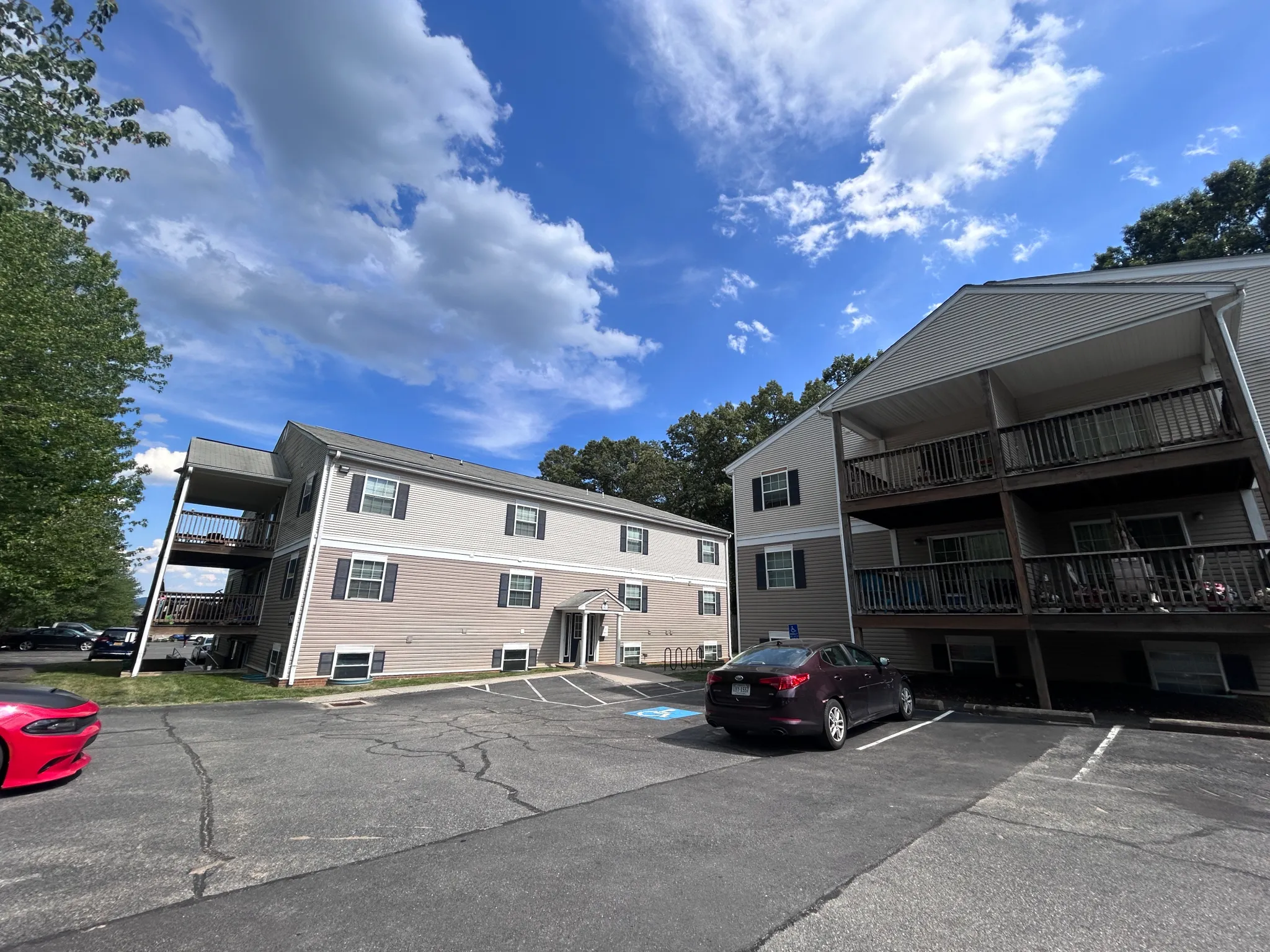
Built in 1977 and renovated in 2005, Park’s Edge is an eight-building, 96-unit apartment complex located on Whitewood Rd. in Albemarle County’s urban ring, very close to Albemarle High School. It has one-, two-, and three-bedroom apartments, all of which are relatively affordable compared to other places to live in Albemarle County.
Park’s Edge apartments are more affordable because the complex is part of a federal program called the Low-Income Housing Tax Credit program (or “LIHTC,” pronounced “lie tech”). LIHTC is a nationwide tax incentive program administered by the Internal Revenue Service and used by developers to acquire, build, or — as in Park’s Edge’s case — rehabilitate low-cost rental housing reserved specifically for low-income households.
The complex has had at least five different owners since it was built, including two different ones in the last five years, according to Albemarle County’s geographic data.
Residents say they noticed problems starting to pile up in 2020, the year Albemarle Housing Improvement Project sold the property to a company called TRC Park’s Edge LLC.
Charlottesville Tomorrow reporters made multiple calls and sent multiple emails to various individuals associated with TRC Park’s Edge LLC. No one responded. TRC Park’s Edge LLC owned the property for less than two years before selling it to RailField Realty.
Over the course of about five years, residents in several Park’s Edge buildings made different attempts — from emails and calls to legal action — to improve their living conditions. Even as conditions got worse in some cases, all said that they could not afford to move.(Photo by Erin O’Hare/Charlottesville Tomorrow)
RailField Realty responded to several emailed questions in 2024 and again in 2026, detailing the attempts it has made to address issues with the property since buying it in Sept. 2022.
In April 2024, a representative of the property management company, The Franklin Johnston Group, agreed to answer Charlottesville Tomorrow’s questions on a phone call. They did not respond to multiple messages through their website, emails and phone calls to schedule time for an interview, however. A few weeks later, the reporter received an automated email from the company marking the request “resolved.”
Over the course of about five years, residents in several Park’s Edge buildings made different attempts — from emails and calls to legal action — to improve their living conditions.
Most of the residents who spoke with Charlottesville Tomorrow were not satisfied with the responses they received, if they received them at all. Even as conditions got worse in some cases, all said that they could not afford to move. Even if they could, there are not enough affordable housing options in Albemarle County or Charlottesville for them to have any place to go. Now, they say, they’ve run out of options. They’re stuck.
Despite sparking outlets and expired fire extinguishers, residents say their landlords ‘just don’t care’
Jojo and Rick Robertson, who have lived for more than 12 years on the third floor of the same Park’s Edge building where Lanika Hester lives with her daughter, have documented a slew of issues in their family’s three-bedroom unit, which smells vaguely of cinnamon. Jojo makes homemade cinnamon air fresheners because it relaxes her and because it covers the mildew odor that permeates the entire building.
Sitting in their living room one January evening in 2024 with their dog, Coco, the Robertsons rattled off a list of things wrong with their apartment — it was clear they’d done this before. They pulled up photo after photo on their phones to show exactly what they were talking about. Jojo regularly stopped to take deep breaths before continuing.
“They just don’t care,” Jojo said repeatedly, shaking her head. “They just don’t care.”
To start, the Robertsons have been afraid to drink or cook with their tap water — it’s been brown or smelly several times, they said. And then there’s what’s happened downstairs with the putrid floods of what smelled like sewage. A few years ago, the Robertsons bought a water cooler and started to pay to have water delivered.
Jojo has photos of roaches the size of Sweet ‘n’ Low packets, and of an enormous ball of lint bulging from an exterior vent, one that the couple can’t reach themselves. They constantly worry the lint ball could catch on fire.
Over the past few years, Jojo and Rick Robertson documented issues in their three-bedroom Park’s Edge apartment and shared them with their landlords. They shared dozens of images with Charlottesville Tomorrow, documenting carpets in disrepair, cockroach infestations, mold and more. (Photos courtesy of Jojo and Rick Robertson)
The Robertsons have worried about fires quite a bit, actually. Their outlets sometimes sparked when they plugged in appliances. At least one of their outlets has caught fire. Sometimes, their smoke detectors haven’t worked.
In the fall of 2023, the Robertsons were sitting in their living room when they heard banging on their door.
“There’s a fire, there’s a fire! I don’t know what to do!” yelled the teenage boy who lives in the apartment below theirs. The garbage disposal was ablaze.
One neighbor told him to grab the fire extinguisher while another called the fire department.
After the fire department put it out, Jojo said, they noticed the fire extinguishers were dated 2000. Most have a lifespan of about 10 years.
Jojo said it took weeks for property management to give them new extinguishers.
“We were scared shitless,” she said.
Even though one resident took legal action and got repairs, others said the condition of their buildings got worse
Looking back, many residents say they noticed living conditions in the Park’s Edge complex started to deteriorate between 2020 and 2021, around the time the COVID-19 pandemic was accelerating.
The U.S. government declared a countrywide state of emergency in mid-March 2020, and by the end of the month, then-Virginia governor Ralph Northam issued a statewide stay-at-home order.
The following month, in April 2020, Lanika Hester emailed Albemarle Housing Improvement Program, the nonprofit organization that owned the building at the time, about having the carpets in her apartment cleaned after a flood. She received a prompt reply from the community manager, who explained that certain maintenance issues were on hold due to the state of emergency. Maintenance would address emergencies, including water leaks and flooding. Non-emergency requests, however, would be documented and taken care of once the government lifted the state of emergency.
But even after the state’s stay-at-home order ended in May 2020 and public health guidance allowed for non-essential, masked work to resume, conditions in Park’s Edge apartments continued to decline.
After TRC Parks Edge LLC bought the complex in December 2020, residents’ emails and their website show that they hired The Franklin Johnston Group, a Virginia Beach-based company, to manage it.
Fifteen months after the sale, a Park’s Edge resident took TRC Park’s Edge to court over the conditions in her unit.
A Charlottesville Tomorrow reporter learned about this case while reviewing cases in Albemarle County General District Court records. The lawsuit lists more than a dozen problems, including air filters that hadn’t been replaced in over a year; leaking windows; a rotting bathroom vanity; buckling floors; electrical outlets that didn’t work; a leaky sink; and a buckling kitchen floor.
“I am optimistic that the majority of these repairs can be done in a reasonable timeframe, preferably within/or about thirty (30) days,” Central Virginia Legal Aid Society attorney Katie Allen wrote to the property manager in December 2021. However, Allen added if the repairs were not made, the tenant she represented would take legal action.
In March 2022, the tenant filed a tenant’s assertion, a legal action a tenant can take against a landlord claiming that the landlord is in violation of the lease agreement. The point is usually to pressure a landlord to fix whatever is wrong with the unit.
It seems to have worked. In August 2022, Allen moved to dismiss the case because the repairs had been made.
But, while the apartment in the lawsuit was being fixed, the issues in Hester’s apartment were accumulating.
“I have put in several requests about the issues with my apartment,” Hester wrote in an email to Franklin Johnston Group on June 2, 2022. “It takes months to get anything done, if ever at all. The latest is that I can’t use my stove without it catching fire. My apartment floods regularly. And there has been nothing done. The [bathroom] tub is stopped up again but no service yet. The ceiling that you guys took pictures of is still in the same condition. These floors have suffered from years of flooding and no attention. No one has checked for mold in this basement apartment.”
Hester received a prompt reply to that email, and it seems some repairs were made, but they weren’t the end of her problems.
Hester shared four years of email correspondence between her and various property management staff with Charlottesville Tomorrow detailing the litany of maintenance issues her apartment had during that time.
Between the spring of 2022 and spring 2024, Hester sent more than 150 emails to employees of the property management company about issues with her apartment.
Hester’s emails show that sometimes the Franklin Johnston Group’s staff responded within hours. Other times, it took weeks — and multiple follow-up emails — for someone to reply. A few times, her records show, they didn’t respond at all.
Seven residents of Park’s Edge, along with attorneys and community organizers who talked to dozens more residents, said they had similar experiences trying to improve the condition of their apartments. All of this was particularly frustrating, they said, because it wasn’t always clear who they should be communicating with.
New “community managers” would cycle through every four to six months according to Hester’s email records. Additionally, at least two other people from Franklin Johnston Group filled in when that job was vacant. On top of that, the company used two separate — but similar — email addresses to communicate with Hester.
Whenever someone left the management office and a new person came into that role, Hester said she was back at square one. She had to explain what was going on with her apartment all over again, and justify her frustration to new staff.
Hester is a friendly, upbeat person who loves herbal teas and laughs with her whole body when her cat, Pep (short for Pepita) springs around her living room.
But when she talks about her experience living at Park’s Edge, particularly the last five years, her demeanor changes. She takes sharp, shallow breaths and talks quickly, rattling off a laundry list of things wrong with her home.
When Lanika Hester’s basement apartment flooded with stinking brown water in September 2022, she notified property management right away, but didn’t receive a response until the following day. Email records show that the incident set off a series of frustrating communications with property management that lasted for over a year. Hester is pictured here, playing with the family cat, Pepita, in February 2024. (Photo by Ézé Amos/Charlottesville Tomorrow)
The worst of the maintenance issues in Hester’s apartment at Park’s Edge started Sept. 12, 2022. She woke up that morning to a flood that she said smelled “old, mildewy and poopy.” She emailed property management about it right away, but by the following morning, nothing had been done.
“Sewage has flooded my apartment and they have yet to fix it. It’s madness here,” Hester wrote in an email to an eviction prevention case manager at Piedmont Housing Alliance’s Financial Opportunity Center the next morning. (Hester said she was struggling to keep up with rent after losing one of her two jobs, and at that point, PHA was no longer involved in the management of the property.)
Someone at Franklin Johnston Group replied to Hester on Sept. 13 at 10:56 a.m., about 25 hours after she first emailed them. The company cycled through at least a dozen on-site property managers over about four years, most of whom Charlottesville Tomorrow could not find contact information for after they left the property.
“Is your toilet still leaking? Is there water all on the floor still?” the property manager at the time wrote.
The toilet had stopped leaking, Hester replied. But the apartment was still soaked with foul smelling water.
Hester had to go to work, but she said someone told her they would clean the place. When she returned home, it didn’t appear clean.
“It smells so bad. Is there any way the office can pay for a hotel or refund hotel fees until this particular issue is resolved?” Hester wrote at 3:54 p.m. “The stuff in the tub hasn’t been cleaned. The laundry room, none of it is clean — all covered in the sewage that spewed. They said they did the carpet but the place smells horrid.”
Someone at Franklin Johnston Group replied that professional cleaners could come by the following morning, 48 hours after the flood.
The email did not acknowledge her request for a hotel.
Hester was concerned about what was in the water that soaked her carpet, floors, and some of her belongings and — unable to stand the putrid smell of it — paid to stay in a hotel for a few nights with her daughter.
Hester asked the property manager by email to pay for the hotel a few more times. Someone wrote back about a week later: “If you have renters insurance, I would strongly recommend reaching out to them as they may be able to help out with the refund for a hotel.”
Hester didn’t have rental insurance.
One resident is offered to exit her lease, but she can’t afford to
Hester was still emailing the property manager about the smell on Sept. 19, about a week after the flood, and days after a cleaning crew came and went.
“You can smell later at 3:15 when I’m home if you are available,” she wrote.
Eventually, the Franklin Johnston Group decided to just replace the carpet. They scheduled the work for Sept. 29, two weeks after the flood.
But that created an entirely new dilemma.
As the carpet replacement date neared, the Franklin Johnston Group told Hester that she had to move all her belongings out of her apartment in order for the work to be done. Hester panicked.
She barely had the money for the hotel stay, and she couldn’t afford to pay movers. She would have to take time off work to move things, and that meant lost wages. Plus, she didn’t have anywhere to move her stuff.
Hester asked management if she could move her things from room to room as the crew removed the old carpet and installed the new. She asked if someone could help her. The flood wasn’t her fault.
No, they couldn’t have anyone help due to liability issues, management wrote. They couldn’t answer for the carpet crew. And no, they wouldn’t put her in touch with them.
“Just to clarify on this email thread your carpet is being replaced due to age and how long you have been in the apartment,” the Franklin Johnston Group told Hester on Sept. 26. The email did not mention the flood.
Whenever Hester asked a question about the replacement process, management referred her to the agreement she signed for the carpet replacement. Among other things, the contract stipulated that all of her furniture must be moved in order for the carpet to be installed. If she didn’t have her apartment in the right order, they wouldn’t replace the carpet and Hester would be charged a fee.
Hester sent a final email a few days before the appointment with a few more questions.
“If this is an inconvenience,” management replied, “then you will have the choice to cancel your appointment.”
That is not what Hester wanted, she wrote. She only wanted to be prepared.
“We have gone over this with you,” an employee of the Franklin Johnston Group replied. “We cannot help unforeseen circumstances, all we can do is take care of it immediately, which we did. We are doing everything we can to rectify and remedy this situation. If you are still unhappy, then I will let you out of your lease with a 60-day notice.”
Hester couldn’t afford to move out. She did not have the money to pay movers, or to pay first and last month’s rent and a security deposit, likely thousands of dollars, for a new apartment. She wrote back that she did not want to cancel the appointment. Her apartment still smelled.
Hester and other residents say they never learned why their apartments flooded with sewage. But it wasn’t the last time it happened.
About a year and a half later, in mid-2024, another basement apartment at Park’s Edge flooded, this time in a different building in the complex.
Brittney, who has lived at Park’s Edge for about a decade, first with her mother and then on her own, told a story that mirrors Hester’s — mostly.
Brittney (not her real name) spoke with Charlottesville Tomorrow by phone in August 2024 on the condition that we not use her name. She said she feared losing her housing. Legally, a landlord cannot evict a tenant for speaking with a reporter about potential code violations. However, a landlord can decide at their discretion to not renew a tenant’s lease when that comes up.
Her apartment had flooded a couple of months earlier, she said. A chunky brown substance floated in the water. It stank. It inundated her hallway, her son’s bedroom and the small bathroom. She put on her rain boots to walk around inside.
“It smelled like sewage,” she said.
Property managers sent the company Roto Rooter to look at the problem, she said. The Roto Rooter employee told her the flood was caused by wipes clogging up the building’s pipes.
Management said that someone from the maintenance crew would come in after Roto Rooter to clean up the brown water, Brittney said.
“I was up until 4 in the morning waiting for people to come and fix the problem, get the water up,” she said. “But nobody came.”
By the time a maintenance worker knocked at her door the following morning, she’d already mopped up the stinking mess herself. But worse than all that, she said, has been the rats.
“I can deal with a lot of things, but the rats I cannot deal with.”
Park’s Edge residents said that a rat infestation made them lose hope
Rats disturbed, disgusted and eventually terrorized Park’s Edge residents between at least August 2023 and August 2024. By the end of 2024, residents were not only disappointed by how management handled it, they were feeling discouraged because they felt they had no choice but to live with the infestation.
It started sometime in summer 2023. In early September of that year, Jojo Robertson sent a text message to Charlottesville Tomorrow saying that the complex was dealing with a rat infestation. Brittney said she first noticed rats around that time, too. The rats were still around in December, when Hester emailed property management about them.
“It’s getting cold outside and I do not want them in my home,” she wrote.
None of management’s replies to Hester’s emails about rats mentioned rodents.
In January, Robertson said she heard from other residents that the Franklin Johnston Group hadn’t paid extermination bills, and so no one had come to the property to take care of the rats (or the roaches).
Charlottesville Tomorrow was unable to confirm that the property manager did not pay bills, nor did the company explain what actions they took to address the rodent problem. The Franklin Johnston Group did not respond to multiple requests for comment by email and phone from 2024 to just before publishing.
But what is clear is that trash was an issue at Park’s Edge that same month. A heap of it started to accumulate outside some of the buildings in the complex.
Residents chronicled maintenance issues at Park’s Edge apartment complex in Albemarle County over several years. In 2024, JoJo Robertson took an image of trash piling up (left) while residents were dealing with a rodent infestation. Another resident, who asked to remain anonymous because she worried she could lose her housing, documented rat droppings (right) under the chewed through fabric of her sofa. (Photos courtesy of Park’s Edge residents)
Robertson took photos of the discarded objects. Household appliances lay tipped over on the ground, their internal parts and wiring exposed. Someone had tossed half a bent bed frame over them. There were rolled-up rugs, chairs, a couch, a utility trailer, a rusted tool chest, and smaller bits dotting the ground.
By February, residents suspected that one of their neighbors was hoarding trash and other items inside their apartment. It is unclear whether or not the trash that accumulated outside of the complex was related.
Later that month, though, the outside trash was gone, Robertson said. Management had sent out a notice to residents asking them to tidy up their apartments and exterior areas in preparation for a visit from the owners, RailField Realty, that day.
But, not long after that visit the trash was back. This time it was appliances sitting in the yard next to an upside-down couch.
Trash is one of the things that can attract rats and foment an infestation, Denise G. Aranoff, vice president of American Pest, a national company, told Charlottesville Tomorrow in an email. The company is mentioned in emails between Hester and the property manager, but Aranoff said she was not commenting about Park’s Edge specifically.
“Trash in hallways and breezeways or around dumpsters and trash chutes will attract all sorts of pests,” Aranoff wrote.
As 2024 progressed, the rats became more pervasive, residents said. Fed up, Brittney bought her own traps. But they didn’t help in the way she’d hoped.
One night, Brittney woke to a horrible screeching sound coming from her young son’s bedroom — a rat was stuck to a glue trap. The scene petrified the three-year-old child, who refused to set foot in his bedroom afterward.
“He sleeps with me,” Brittney said. “He doesn’t even play in his room.”
That wasn’t the end of it, though. Rats got into Brittney’s clothes. They chewed up her couch.
Brittney spoke with Charlottesville Tomorrow in August 2024, about a year after she first noticed rodents around her building. By then, she estimated she’d caught about 30 rats in her apartment.
“I’m constantly catching them,” she said at the time, convinced that the rats were getting in through the HVAC system. “I’m catching, like, three a week now.”
It’s unclear how the Franklin Johnston Group was handling the situation before Charlottesville Tomorrow spoke with Brittney. But, by the time she spoke with a reporter, Brittney said she was getting weekly visits from property management, and a pest control company was also visiting the property regularly.
“They’re treating the outside and not really doing anything on the inside,” she said. “They put poison down, but then they’re crawling inside the walls and dying. We have these horrible smells, huge black flies. It’s just terrible.”
She said that property managers were coming into tenants’ apartments weekly to monitor interior conditions, checking to see if people were taking out their trash, warning them not to leave dishes in the sink, or leave laundry out.
But at the same time, she said, trash was all over the outside of the complex.
At one point, the dumpster was so full of furniture, residents had to put their trash on the ground, Brittney said.
“They say we can’t keep trash overnight, but everybody’s scared to take the trash out at night because we have rodents that run around the trash can,” Brittney said. “There’s trash all over the ground. That’s what’s causing rats. None of the maintenance team is picking it up.”
While the property management company did not respond to requests for information, the complex’s owner, RailField Realty, did respond just before this report was published.
“There was a rodent issue in 2023/2024. That issue resolved when two residents were evicted,” Todd Watkins, Railfield’s Chief Operating Officer, told Charlottesville Tomorrow in an email on May 25, 2026. “To my knowledge, the pest control contract was always in full force. We currently have monthly pest and rodent servicing at the property and have not seen a recurrence of the problem.”
But while the infestation was going on, residents began to realize that there wasn’t much they could do to force a faster response. They were learning that Virginia law makes it hard for renters to hold landlords accountable for the condition of their properties, even when there is flooding, rats and fire hazards.
The next report in the series shows what can happen when, against all odds, a resident manages to get a case against their landlord into court.
An elections forecaster has moved three U.S. Senate races in the 2026 midterms in Democrats' favor, in Ohio, Alaska and North Carolina. (Getty Images)
Democrats’ prospects in a trio of key U.S. Senate races are improving, an influential elections forecaster said Thursday, though Republicans are still favored to retain control of the chamber after the midterm elections.
Sabato’s Crystal Ball, which predicts election outcomes, moved three races — in North Carolina, Alaska and Ohio — in Democrats’ favor. After the changes, the University of Virginia-based forecaster considers four contests pure toss-ups: Alaska, Ohio, Maine and Michigan.
Democrats would have to sweep those races, and win competitive races in which they’re favored in Georgia, New Hampshire and Minnesota, to gain control of the Senate, which Republicans now hold with a 53-47 majority.
That’s a tall task for Democrats, but it represents the best chance the party has seen this midterm cycle.
In North Carolina, the race to succeed retiring Republican Thom Tillis is trending toward Democrats due to “big picture political factors” such as President Donald Trump’s poor approval ratings, the tip sheet said. Former Gov. Roy Cooper, a Democrat, easily won the state’s March primary and will face former Republican National Committee Chair Michael Whatley in November.
The party that controls the White House is typically at a disadvantage in midterm races, and Trump’s underwater favorability in North Carolina only makes that race harder for Republicans, the Crystal Ball writers said.
The three ratings changes make “Democrats’ path to the majority clearer, but we still favor Republicans in the overall race for the Senate,” authors Kyle Kondik and J. Miles Coleman wrote.
Proven candidates
Two Democratic candidates who have won statewide elections in Republican-leading Ohio and Alaska buoy Democrats’ chances there.
In the Buckeye state, former U.S. Sen. Sherrod Brown is seeking to return for a fourth term in a favorable Democratic year after Republican Bernie Moreno ousted him in a GOP-dominated cycle two years ago. Brown will face Republican Sen. Jon Husted, who has never won election to the seat but was appointed to replace now-Vice President JD Vance after the 2024 election, in the fall.
And former U.S. Rep. Mary Peltola, who in 2022 won a special election to become the first Democrat to represent Alaska in the House in a half-century, is challenging incumbent Dan Sullivan.
Questions in Maine, Michigan
The forecaster did not change its toss-up rating for Maine, which is the only Republican-held Senate seat contested this year in a state Trump lost in 2024 and was considered among Democrats’ best pickup opportunities at the start of the cycle.
Political newcomer and Marine Corps veteran Graham Platner won the June 9 Democratic primary after his strongest opponent, Gov. Janet Mills, suspended her campaign. But some experts question his strength in a general election after more personal scandals were reported between Mills’ departure and primary Election Day.
The Crystal Ball article Thursday compared Platner to weak Republican candidates who likely cost the GOP seats in favorable election years 2010 and 2022.
The Maine race “features an embattled Democratic nominee, veteran Graham Platner, an anti-establishment candidate who may wind up being Democrats’ answer to weak, outsider GOP nominees from the Tea Party era (and, more recently, the 2022 midterm) that cost Republicans winnable races,” they wrote.
The authors also said Democratic candidate quality will be a key factor in Michigan’s open seat.
The race will likely keep the toss-up label at least until the Aug. 4 primary, they said.
Former Wayne County health director Abdul El-Sayed has led some recent surveys in the three-way Democratic race, but polls the worst against GOP nominee former Rep. Mike Rogers. U.S. Rep. Haley Stevens appears to be Democrats’ strongest general election candidate, the forecasters said.
A SNAP sign in a storefront. (Photo by Getty Images)
Virginia Attorney General Jay Jones announced Thursday that a federal judge issued a preliminary injunction on June 5 amid a multi-state lawsuit challenging “vague, extraneous and unreasoned conditions” to how the U.S Department of Agriculture issues funding to states.
“As Virginians face a growing cost crisis, President Trump is politicizing funding for critical USDA programs that help feed vulnerable children, hardworking families, senior citizens and rural communities,” Jones said in a statement, noting that nearly one million Virginians are facing hunger and rely on programs like SNAP and WIC, which are funded by the USDA.
As part of its 2026 conditions, states receiving USDA grants must certify that they don’t operate “any programs that advance or promote Diversity, Equity and Inclusion,” do not “promote gender ideology” and that they do not permit funding disbursement to undocumented immigrants.
Countering this, Virginia, 20 other states and the District of Columbia sued in March, stating they believe the impositions for compliance are unclear and unconstitutional.
The injunction means that these conditions will not apply as the lawsuit continues to advance.
Federal lawyers said in court filings that the new requirements would “help promote the sound stewardship of taxpayer dollars, strengthen USDA’s control and oversight of obligated funds, and ensure that grant recipients comply with federal laws, regulations and policies.”
About 850,000 Virginians (and millions of people nationwide) use SNAP to help them purchase their groceries.
USDA is also the federal umbrella agency for other social services like the Special Supplemental Nutrition Program for Women, Infants and Children, the Emergency Food Assistance Program, and the Volunteer Fire Capacity Program.
With one in eight Virginians facing hunger, Jones’ office called the USDA conditions “unconstitutional,” and Jones pledged to “keep fighting for these crucial resources and the people who depend on them.”
Senate Majority Leader Scott Surovell, D-Fairfax, virtually joins a discussion panel with criminal justice experts in Richmond on May 14, 2025 about a forthcoming record-sealing law. (Photo by Charlotte Rene Woods/ Virginia Mercury)
After years of fine-tuning and preparation, a 2021 law allowing Virginians with certain past felony convictions to have their criminal records sealed will take effect July 1. Lawmakers and advocates say this will allow former felons without new convictions to expand their housing and employment options.
Under the “Clean Slate law,” when hiring managers and landlords run background checks on people whose criminal records have been sealed, they won’t be able to see some older convictions. It only applies if former felons don’t have new convictions within seven years of their petition date for certain misdemeanors and 10 years for certain felonies.
“We know that people age out of crime and nobody should have to live with their record forever,” said Sheba Williams, director of recidivism reduction organization Nolef Turns.
As someone who navigated hurdles from her past criminal record, Williams founded her organization to help people return to society after incarceration. She has helped craft numerous criminal justice reform laws over the years.
Sheba Williams is a Richmond native and the founder and executive director of Nolef Turns, which provides direct service and advocates for criminal legal systems reform on behalf of survivors and victims of crime, incarcerated people, and their loved ones. (Provided photo)
People with Class 1 or 2 felonies – typically violent crimes or charges that carry life sentences — aren’t eligible. And petitioners must not have been convicted of a Class 3 or 4 felony within 20 years.
Critically, Sen. Scott Surovell, D-Fairfax said, is that the law also effectively eliminates many barrier crimes. Should someone have a cocaine charge and be able to petition, for instance, they would no longer be prohibited from entering medical or security career fields.
Surovell, along with Del. Charniele Herring, D-Alexandra, had led the legislative charge on the law.
Over 900,000 Virginians are estimated to be able to seal their misdemeanors under the new provision, while over 100,000 are able to seal their felonies, according to a Virginia State Police presentation to the state Crime Commission.
Part of the delay in setting up the sealing ability was to give circuit courts time to modernize records and prepare for the additional workload.
Charlottesville Circuit Court Clerk Llezelle Dugger noted that it has taken a combination of clerks, state police and the office of the executive secretary in the state’s judicial system to properly prepare.
Nuances had to be sorted out, like how far back the law would permit court records to be sealed and which types of crime would be eligible.
“I give kudos to the Crime Commission,” Dugger said, for helping lawmakers bring the required parties to the table in recent years.
With petitions opening July 1, Dugger does still anticipate some hiccups because certain convictions will be eligible for automatic sealing by October of this year.
For instance, people with past petit larceny, trespassing, shoplifting, disorderly conduct or marijuana distribution misdemeanors would be eligible for automatic sealing so long as they don’t have new convictions within the past seven years.
“I can see a layperson filing for something that would actually become sealed by October,” she said.
Surovell said he’s eager for his bill to begin helping people. During a discussion panel last summer on the pending law, he shared that a constituent reached out to him about how a larceny charge from his youth had “followed him around” for decades.
The new law’s colloquial name is also a nod to a law firm called Clean Slate Virginia and the national movement of the same name. Founder George Townsend, who dedicated his career to helping ex-felons navigate reentry, was also involved in advocacy for Surovell’s and Herring’s bill.
He’s called the law a “game changer” for many of his clients’ personal and professional lives.
Beyond employment and stable housing, Williams said people’s records can bar them from certain civic engagement like volunteer work or helping to chaperone their children’s field trips or sporting trips.
“There’s all these nuanced things that people don’t always think about unless it’s happening to them or their loved one,” she said.
People with misdemeanors that may have been dismissed but still show up on records can also seek an expungement through local circuit courts. This is a related, but different process where a conviction is not simply sealed, but deleted.
More details on automatic or petition-based criteria can be found here.
Marvell data center is one of eight newly approved data center campuses in Culpeper County. (Photo by Evan Visconti/Virginia Mercury).
Virginia gave data centers a $928 million tax break in a single fiscal year, 2023, and the General Assembly cannot pass a budget because it can no longer agree on whether to keep doing it. That is the fight underneath the standoff in Richmond, with state spending set to expire June 30 and the conferees who should be writing a deal gone home without one.
The state’s own auditors laid out the stakes more than a year ago. The Joint Legislative Audit and Review Commission studied the exemption in 2024 and found it provided $928 million in tax savings in fiscal 2023. About 90% of the state’s data center industry was using it. The exemption has been on the books since 2010 and is scheduled to expire in 2035.
The significance of JLARC’s findings about the return on that money has eluded the budget debate so far.
The benefit is real but front-loaded. JLARC estimated the industry contributes 74,000 jobs, $5.5 billion in labor income, and $9.1 billion in GDP to the state economy, then added the qualifier that matters: most of it comes from construction, not from running the centers once built.
A typical data center employs about 50 full-time workers, half of them contractors, JLARC’s report found. At the height of building one, roughly 1,500 workers are on site. The jobs that justify the break are mostly the jobs that end when the concrete cures.
Then there is the cost that lands on people who will never own a server.
JLARC commissioned an independent study of utility rates and found current rates correctly assign costs to the customers who cause them, data centers included. But the industry’s appetite for power changes the math going forward. Meeting it requires building generation and transmission that would not otherwise be built, and those fixed costs get spread across every ratepayer.
JLARC put a number on it: a typical Dominion residential customer could see generation and transmission costs rise by $14 to $37 a month in today’s dollars by 2040. That is the quiet transfer inside this debate. An industry that buys its equipment tax-free helps drive a power buildout that shows up on household bills.
This is where the Senate and the governor parted ways. Senate Finance Chair Louise Lucas has pushed to wind the exemption down rather than let it run untouched to 2035, and walked out of the meeting when that went nowhere.
Gov. Abigail Spanberger and House Appropriations Chair Luke Torian have resisted early repeal, arguing the state must honor the agreements it signed. A single tax preference has been able to hold the whole budget hostage.
The contract argument deserves a closer look than it usually gets. Companies claiming the exemption sign a memorandum of understanding with the state, and Virginia law spells out what that document must contain: the company’s investment target, its job target, the timeline, and what it owes back if it falls short.
The binding promises run from the company to the commonwealth, enforced by clawback. Nothing in that framework commits the state to keep the exemption alive for any set term. The life of the break is fixed by statute, and a statute can be amended by the body that wrote it.
That points to an option neither side is championing, though JLARC named it plainly: The Assembly could apply a partial exemption after 2035, or end the full break early, drawing the line to protect existing commitments while changing the terms for what comes next.
JLARC noted the Assembly could even narrow an expiration to one region, while warning a Northern Virginia-only approach would do little to slow statewide growth, since the industry is now spreading down the I-95 corridor into central Virginia. A prospective change avoids the contract objection entirely, because no facility can claim it relied on a benefit it was never offered.
The reason the clean version isn’t on the table is the same reason the budget is stuck. Prospective-only changes raise little money now, and the money is the point.
Lucas wants revenue this biennium for services that federal cuts are squeezing. Phasing the break out for the existing base delivers that; protecting the base does not. So the legally cautious path is the fiscally weak one, and the fiscally strong path invites the fight over the agreements. Both sides understand the tradeoff. Neither states it out loud.
A skinny budget may keep the lights on past June 30. It will not resolve what the standoff revealed.
Virginia built an incentive its own auditors say returns less to the state than it costs, watched it grow into a near-billion-dollar annual line, and has not decided whether it has the will to change course. Localities adopting their own budgets this month, waiting on state numbers that may not come, will feel that indecision first.
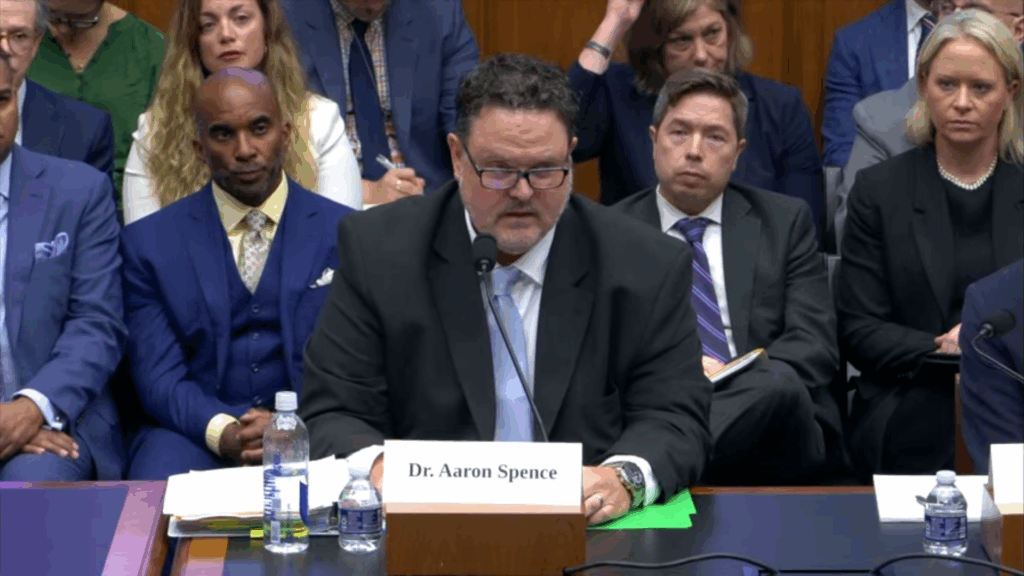
Loudoun County Public Schools Superintendent Aaron Spence testifies during a June 10, 2026, hearing. (Courtesy photo of House Committee on Education and Workforce)
The U.S. House Committee on Education and Workforce on Wednesday invited Loudoun County Public Schools Superintendent Aaron Spence and others to hear how K-12 schools in Virginia and other states manage sensitive educational content, student safety and the extent of parental control in classrooms, key issues in current national debates.
The hearing follows recent federal investigations of the school system, including one triggered after a high schooler reportedly recorded peers in bathroom stalls. Another probe focused on the district allowing students to use facilities based on gender identity rather than biological sex.
Loudoun Schools also faced a parent-led lawsuit for allegedly retaliating against male students who opposed a student assigned as female at birth changing in the male locker room.
Spence stated LCPS, serving 80,000 students in Northern Virginia, is committed to legal compliance, partnering with parents, providing rigorous coursework, removing learning barriers and centering student needs.
He also pushed back against the “parents vs. schools” framing that has dominated education debates nationally over the past five years.
“Too often, the public narrative frames schools and parents as adversaries,” said Spence. “That’s not the reality I see in our community, and it’s not the reality I see in public education more broadly,” Spence said. “As I mentioned earlier in the statement, I’m a parent, and I believe it’s critical that schools respect and listen to our parents as we work alongside them to educate our students.”
Committee Chair U.S. Rep. Tim Walberg, R-Michigan, said some districts are prioritizing controversial gender policies over student safety and educational fundamentals, raising concerns about parental rights and student well-being.
He pointed to national cases, including two in Loudoun County, the first where a teenager entered a girls bathroom and sexually assaulted a 15-year-old girl and the other over a teacher who was placed on leave after speaking out against what he called “radical gender ideology” in his personal capacity at a school board meeting.
“School districts seem to be losing sight of their core mission and that core mission is educating students,” Walberg said. “When school policies affect the safety, the privacy, and the well-being of children, Congress has a responsibility to ask questions.”
Spence, who joined LCPS in 2023 after these events, said state employees have a right to their “deeply held religious beliefs” but must also follow district policy. He added that LCPS does not discriminate, treats students according to the law and allows parent-requested rooming alternatives.
Spence has the full backing of his school board, which upholds inclusive policies, according to a letter cited by Ranking Member U.S. Rep. Bobby Scott, D-Newport News. The board recently reconfirmed Spence’s job after a five-hour meeting, the Loudoun Times-Mirror reported.
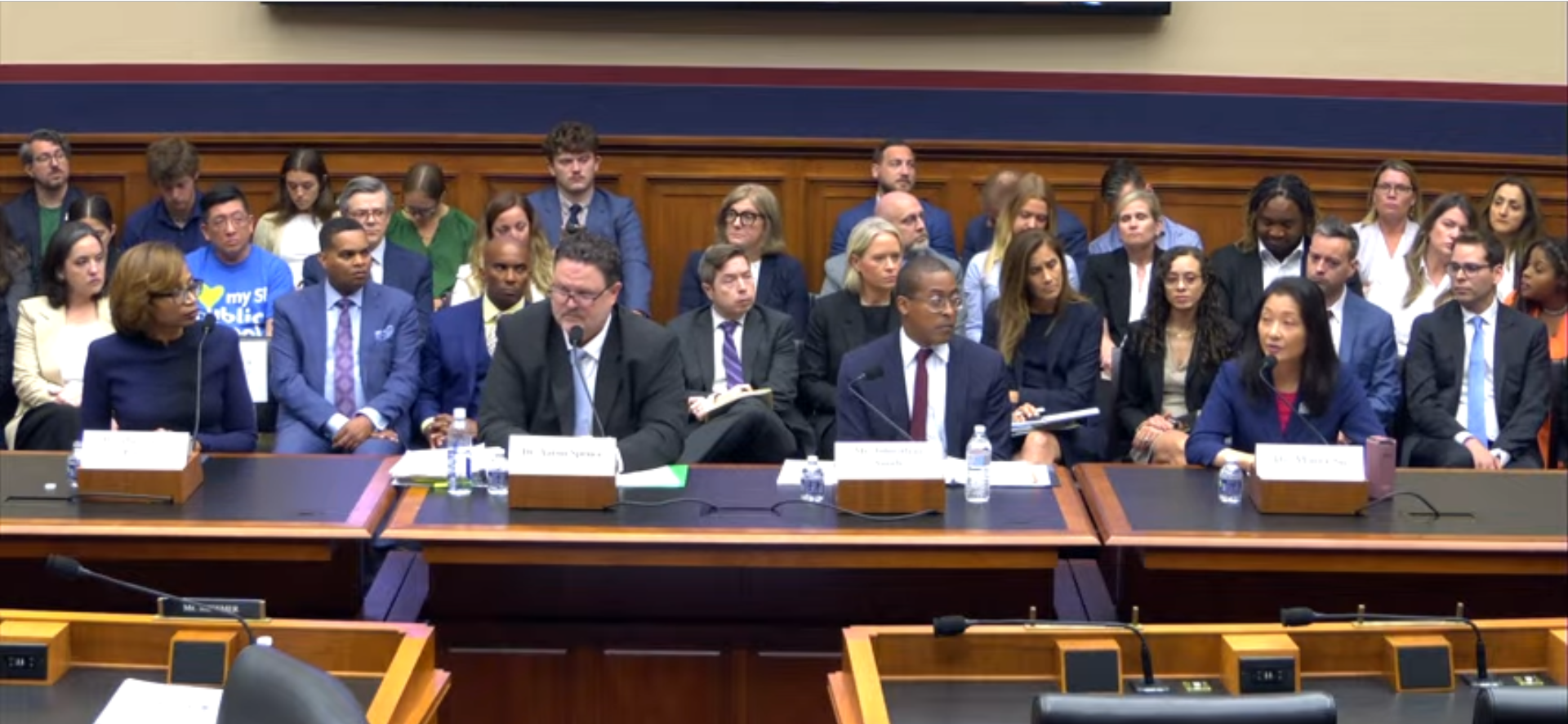
A view of the witnesses at June 10 hearing with the House Committee on Education & Workforce. (Courtesy Photo of House Committee on Education and Workforce)
Still, lawmakers questioned Spence on religious speech, parental curriculum access, room assignments, transgender rights, and the division’s handling of drug overdoses.
“LCPS isn’t perfect, no institution is, but the good ones will understand that and address concerns,” Spence responded. “We work hard to ensure that the education we provide meets the needs of our students and our families.”
Scott, the only Virginian on the committee, later argued Republicans are prioritizing “culture-war” issues over real student needs like affordability, gun violence, immigration enforcement, and learning loss.
He added the federal government must ensure inclusive, quality, and safe learning environments, but said this is difficult when the Trump administration undermines the Department of Education and Office for Civil Rights, shutters the Institute of Education Sciences, and fails to resolve civil rights complaints or protect students from discrimination.
“I’m disappointed the majority again ignores parents’ concerns, favoring divisive culture wars for political gain,” Scott said.
Spence’s testimony made him the most recent K-12 Virginia superintendent to speak before Congress.
In 2011, Robert P. Grimesey Jr., then the superintendent of Orange County Public Schools, spoke to federal lawmakers about how extensive federal regulations and reporting requirements affect teachers, administrators and students in elementary and secondary schools.
Wednesday’s hearing lasted for slightly over three hours. Other witnesses included: Maria Su, superintendent of San Francisco Unified School District; Macquline King, superintendent and CEO of Chicago Public Schools; and Johnathan Smith, managing director at the National Center for Youth Law.
By Erin O'Hare, Charlottesville Tomorrow Virginia Mercury
Elesia Cooper's (right) illness began in 2023. She was weak and couldn't keep food or liquids down — she lost almost a quarter of her body weight, her mother Lanika Hester said. A nurse wrote in her notes: "Immune suppression and symptoms consistent with mold exposure." So they embarked on a years-long journey to try to improve conditions at their federally supported apartment complex, Park's Edge in Albemarle County, Virginia. (Photo by Ézé Amos/Charlottesville Tomorrow)
Floods, roaches, rats, mold — these are just a few of the issues in Charlottesville Tomorrow’s investigation into how Virginia law often fails to protect vulnerable renters. Read the first story in the series below.
Lanika Hester had just fallen asleep when a chilling scream woke her.
She leapt out of bed and bolted into the next room, where she found her daughter, Elesia Cooper, doubled over in pain.
“I’m fine Mom, I’m fine,” Cooper cried, tears streaming down her face.
Hester knew her daughter wasn’t fine. She’d lost count of the number of times the 18-year-old had woken up in their Albemarle County apartment this way in spring 2023, and the number of times they’d gone to the emergency room. Every time, she said, doctors declared Cooper dehydrated, gave her IV fluids, and sent her home with directions to drink more water, only to have it happen again a few days later.
Cooper had enrolled in her first year of college at Hampton University the previous fall. But she became desperately ill when she returned to their home in the Park’s Edge complex near Albemarle High School for winter break. By the time she was supposed to return in late January, she was too ill to go back, Cooper said. She ended up dropping out.
Cooper’s illness continued through the spring. She was weak and couldn’t keep food or liquids down — she’d lost almost a quarter of her body weight, Hester said.
The family was desperate for a diagnosis. Then, in June 2023, a new nurse practitioner came back with a shocking theory.
“Immune suppression and symptoms consistent with mold exposure,” the nurse wrote in her visit summary. “I strongly suspect that the current mold exposure is contributing to your symptoms. I am medically requiring past home/mold testing.”
Mold.
For more than two years, Hester and Cooper had watched it creep down their kitchen wall, a splatter of spores re-growing from the corner of the ceiling in their basement apartment every time property maintenance claimed to have removed it. Hester had suspected, after at least half a dozen floods covered the floors of her apartment with cloudy, foul-smelling brown water, that it was sewage.
What she didn’t realize was that the mold could be the reason her daughter was so sick.
The nurse’s letter prompted Hester to push hard for property management to test her apartment for mold. It took months, and dozens of emails back and forth, for them to agree. And when a well-respected mold inspector finally visited her apartment, his test confirmed it: mold in the kitchen and on the HVAC vents.
The solution seemed obvious: Remove the mold and fix its causes — likely a leak and a badly-installed HVAC filter. A mold inspector even recommended this. But the leak wasn’t a quick fix, and the mold in Hester’s apartment was just one on a long list of maintenance and safety issues plaguing the Park’s Edge apartment complex.
Hester and her neighbors had been trying for years to correct these issues, with little success. They had even enlisted the help of local pro bono attorneys, but the attorneys also struggled to move the needle.
Why?
The Virginia Residential Landlord and Tenant Act makes it difficult for anyone to force a landlord to address poor living conditions, even dangerous ones like black mold. Tenants can technically sue landlords, but the requirements for filing such a suit either disqualifies or discourages many tenants from doing so.
Add that to the fact that tenants — especially those with low incomes — don’t often have access to legal assistance to help them navigate the justice system. Tenants can’t band together to sue their landlords, either — Virginia is one of just two states in the U.S. that does not allow class-action lawsuits. The other is Mississippi.
The Virginia General Assembly has tried to change that. In 2024, the state legislature passed a bill that would allow class-action suits, but then-Governor Glenn Youngkin vetoed it. State lawmakers passed a similar bill during its 2026 session, but Governor Abigail Spanberger vetoed it when the General Assembly did not accept her amendments to the bill.
Local governments aren’t always much help, either. Under Virginia law, the only way a local government can effectively hold a landlord accountable for conditions inside a building is through a rental inspection program. Some Virginia localities have created those programs. Albemarle County is not one of them.
In recent years, county leaders have said state law makes it too difficult to start one here. But since Charlottesville Tomorrow began reporting this series, and reaching out to public officials about conditions at Park’s Edge, conversations about rental inspections have begun.
“I have always been told that we don’t, that we can’t do anything for renters and tenant protections and holding landlords accountable,” Supervisor Sally Duncan, who represents the Jack Jouett District where Park’s Edge is located, said during the May 20 Board meeting. “I was made aware last week that that’s actually not the case.”
Supervisor Mike Pruitt represents the Scottsville district and is an attorney who has worked in housing law. He cited Charlottesville Tomorrow’s investigation in his remarks.
“This is something that I think most, several members of the Board have thought about previously, because Erin O’Hare, doing great work, doing the Lord’s work, has been hounding this issue for a while and doing a really long-term investigative report on it,” Pruitt said. Though he has some reservations about rental inspection programs, particularly around costs and potential unintended consequences for tenants, he wanted to know what was possible.
Until Albemarle County and others make policy changes, though, it’s up to tenants to advocate for themselves.
“You’re basically counting on tenants to do this individually,” said former Del. Sally Hudson, a public policy professor at the University of Virginia who represented all of Charlottesville and parts of Albemarle County in the General Assembly from 2020 to 2024. “And we all know this is beyond the reach of most of the tenants who need the safety protections.”
Even if a single tenant does manage to take a landlord to court and win their case, all they can hope to receive are damages, which is a legal term for financial compensation for whatever the tenant lost. There is no way for them to force the landlord to fix a problem as it is happening.
It’s a fairly common position for renters with low incomes to find themselves in, said Victoria Horrock, an attorney with the Charlottesville office of the Legal Aid Justice Center.
“Inside the legal system, it’s very frustrating,” Horrock said. “A lot of tenants will get blamed for problems in their unit. But then it turns out that everyone in the building has that exact same problem.”
And beginning in at least 2020, this was precisely what Hester and her neighbors say was happening at Park’s Edge.
“I Voted” stickers are displayed at a Richmond polling place during the 2022 midterm elections. (Photo by Graham Moomaw/Virginia Mercury)
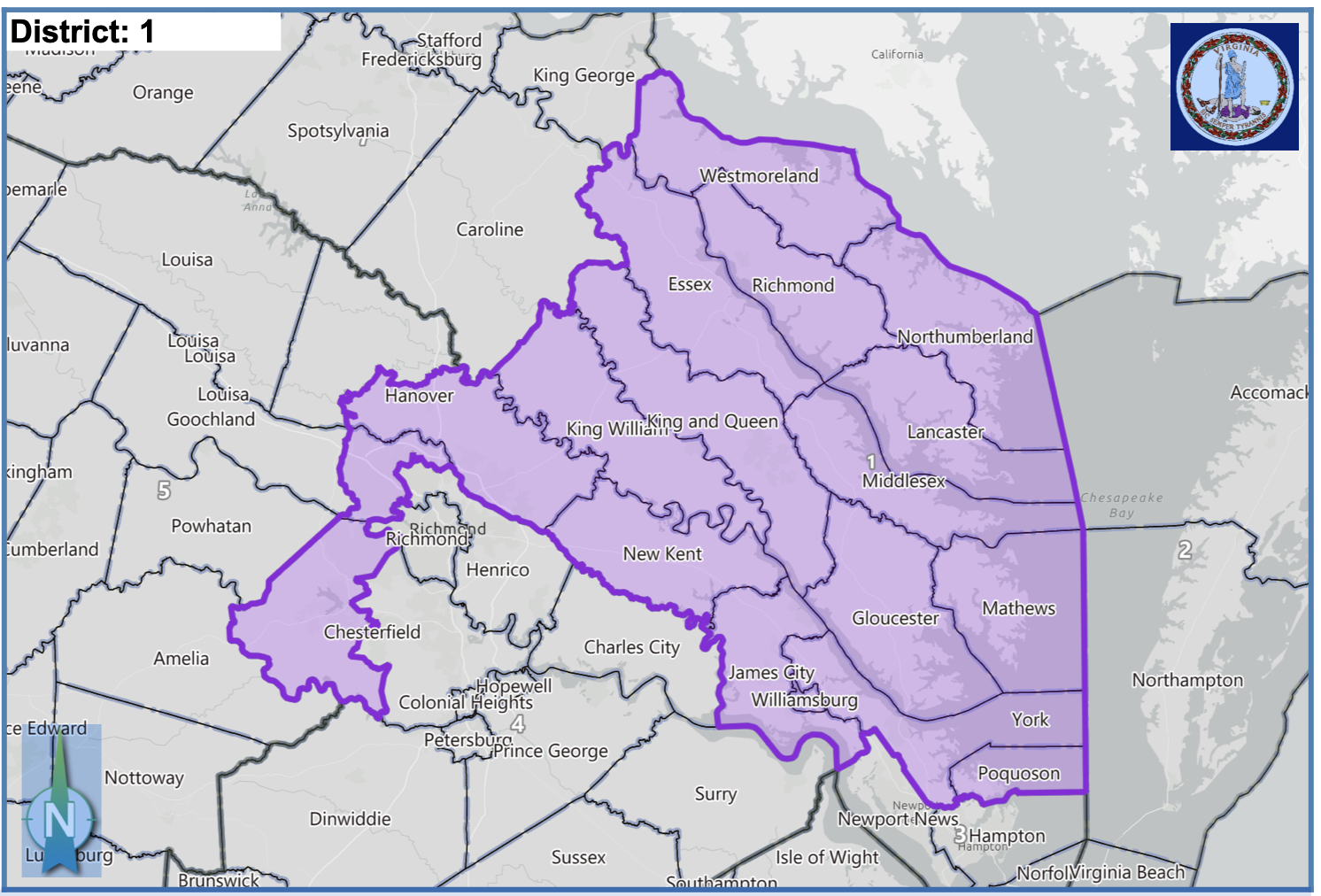
After a grueling redistricting battle that spanned months and cost millions, the congressional district lines Virginia adopted in 2021 remain in place as Democratic contenders line up to challenge longtime Republican incumbent Robb Wittman in this fall’s race to represent the state’s 1st Congressional District.
The 1st District stretches from Colonial Beach down the eastern coast of the state to Williamsburg, and hooks over the north side of Henrico County into part of Chesterfield.
Over 615,000 registered voters live in the 1st District, with the largest portions of the population in Henrico, Chesterfield, Hanover, and James City counties. The majority of voters there are white, but U.S. Census Bureau data shows diverse demographics: nearly 13% of voters are Black, almost 7% identify as multiracial and 6% are Asian. About 6% of voters are Hispanic or Latino.
Voters in the area have historically favored Republicans, with 51.6% choosing Donald Trump in the 2024 presidential election and 57.8% voting for Glenn Youngkin in 2021, helping send the GOP newcomer to the governor’s mansion.
That tide shifted in 2025, when Abigail Spanberger was elected governor with a margin of 51% in the district. Spanberger’s victory supercharged scrutiny from up-ballot Democrats, who saw it as a sign the district could be flipped in the 2026 midterm elections.
Virginia Congressional District 1 (Photo courtesy Supreme Court of Virginia)
Wittman to defend seat of nearly two decades
U.S. Rep. Rob Wittman, R-Westmoreland, has represented the 1st District in Congress since 2007. Before taking office, he served in the Virginia Department of Health’s Division of Shellfish Sanitation for 26 years, which has shaped his policies and tenure on the House Natural Resources Committee.
Wittman was one of just a handful of House Republicans nationwide to join Democrats in voting to extend the Enhanced Premium Tax Credits through the Affordable Care Act for three years. The measure ultimately failed.
Wittman has consistently supported H.R. 1, the One Big Beautiful Bill, which excluded the credits when passed last summer, critics have highlighted. The congressman also faced blowback from constituents last year who said he avoided in-person town halls amid sweeping federal budget cuts and layoffs.
Promising to guard against “reckless government spending” on his website, Wittman also supports enhanced border security – including the construction of a wall bordering Mexico to staunch illegal immigration.
Wittman did not respond to requests for comment on his campaign and has not completed The Virginia Mercury’s candidate questionnaire, sent to all contenders on June 1.
Seven Democrats vie to take on Wittman
Shannon Taylor, the frontrunner in the race to flip the 1st District to blue, is an experienced prosecutor and has spent the last 13 years as the Henrico Commonwealth’s Attorney. She was the first woman to hold the position and the first Democrat to be elected to the seat in 40 years.
Her courtroom experience undergirds one of her key campaign priorities: managing political corruption. She also advocates for congressional stock trading to be made illegal.
Taylor is also committed to protecting healthcare access in the wake of the sweeping changes from H.B. 1, she said.
“More than 44,000 Virginians have lost their ACA coverage, and rural hospitals like Rappahannock General are at risk of closure,” Taylor said. “I’ll fight to lower health care costs by extending the ACA tax credits, expand Medicare’s ability to negotiate drug prices, and protect Medicaid.”
She previously ran for the office of the Attorney General but lost the primary to Jay Jones, who was elected to the seat last fall. Taylor’s campaign has raised $1,300,040, as of the latest campaign finance reporting.
Political newcomer and lawyer Salaam Bhatti’s priorities center on expanding Medicare access, increasing taxes for the highest earners and reforming political candidates’ campaign finance process.
The former Virginia Poverty Law Center attorney is a child of immigrants who relied on programs like WIC and free school meals while growing up. Bhatti focused his VPLC work on expanding SNAP access and at the Food Research and Action Center, worked against a farm bill addition that would have made major cuts to SNAP.
Wittman has had more than enough time to better address issues of poverty and healthcare access in the district, Bhatti said.
“Rob Wittman has been in office for nearly 20 years and in that time our neighbors have gotten poorer, healthcare has become more expensive, corporate donors have gotten more access, and Rob has become a multimillionaire through stock trades,” he said.
Bhatti has raised $184,834 as of March 31 reporting.
Tim Cywinski, another Democratic challenger, is not new to the political sphere. He spent years as a community advocate and has worked on the political side as an intern for the Obama campaign when he was 17.
Cywinski’s brother was born with a heart defect, and the cost of his care contributed to his family’s skyrocketing medical debt and eventual loss of their home. That experience, Cywinski said, gave him personal experience with the challenges of America’s healthcare system and fuels his interest in addressing it via federal legislation.
Wittman represents what Cywinski characterized as the political establishment, which doesn’t provide solutions for constituents’ healthcare needs, tax burdens and other priorities. His campaign is about finding ways to take big money out of politics, he said.
“My main platform is what I call the fair shot agenda because unless you’re already powerful or unless you’re really wealthy and well connected, no one feels like they have a fair shot in this country and our politics upholds that reality,” Cywinski said.
As of March 31, Cywinski has raised just over $8,113, the smallest campaign coffer of any candidate in the race. He lives in the greater Richmond area.
Jason Knapp has served his country for 21 years as a naval officer and said his military background shapes his policy goals.
A former defense fellow assigned to the Armed Services Committee and deputy director of legislative affairs for the U.S. European Command, Knapp has taken aim at the cost Virginians and Americans are paying for the Iran war, a conflict Wittman has supported.
“Food, fuel, energy, housing, and medical costs are skyrocketing and people are literally choosing between buying food, buying medicine, or paying bills — and the man who represents this district is at worst complicit in these hardships, and at best, apathetic to the real problems people are facing,” Knapp said.
Universal healthcare is another top priority for Knapp, who aims to counter the privatization of the Veterans Administration, which he said creates barriers for servicemembers to access essential care.
Ericka Kopp, a healthcare attorney and a caregiver to her husband who is a disabled veteran, said Wittman’s support of the congressional bill that stripped funding for Medicaid compelled her to run to replace him.
Kopp earned her law degree from the University of Richmond and clerked for a Virginia circuit court judge. She said she never considered running for office until her frustrations with Wittman bubbled to the surface because he did not attend several town hall meetings in her district in 2025.
“He’s not accessible to the people, let alone accountable to us. In April of last year, I started thinking that anyone could do a better job, even me. And then I thought, ‘Why not me?’” Kopp said.
Her campaign priorities include expanding Medicaid and healthcare access. She has raised $13,867 so far.
Business lawyer and small law firm owner, Mel Tull believes he can help bridge the partisan divide in Congress and said his experience successfully navigating competing interests can earn the trust of other lawmakers and the people they represent.
Like several other Democratic contenders, Tull said Wittman’s 18 years in Congress is too long a time to serve without better addressing issues like healthcare, affordability, and government functionality.
“My job has been to evaluate competing interests, understand risks and consequences, and help people make sound decisions. I’ve spent my career bringing people together to solve difficult problems, not score political points,” Tull said.
Tull served in the Army before branching into business law. His campaign has raised $179,991, to date.
Elizabeth Dempsey Beggs, the final Democratic contender in the contest, was one of the first women to serve as a tank commander in a combat role in the U.S. Army. The veteran now works in the package and manufacturing industry.
She said concerns about affordability and government transparency drove her to enter the race. Her campaign priorities also include protecting the right to vote and reproductive healthcare access.
“As a mother, foster parent, and business leader, I’ve seen firsthand how decisions made in Washington affect families every single day,” Beggs said. “Whether it’s the cost of childcare, access to healthcare, housing affordability, or the lack of accountability in government, people are working harder than ever and feeling like they have less and less to show for it.”
Public office should be a service and not a long-standing career, Beggs added, pointing out Wittman’s tenure in the seat. So far, she has raised $64,494.
Early voting for the primary election for the first congressional district begins on June 18. Election day is Aug. 4.