Category: VA State News

  • Juneteenth reminds us of Black Americans’ long struggle for education following end of slavery

    Juneteenth reminds us of Black Americans’ long struggle for education following end of slavery

    This piece originally appeared in The Conversation.

    The abolitionist and writer Frederick Douglass is known for many things, but perhaps among the most significant is his views on education’s relationship to slavery. Douglass himself was born into slavery in Maryland in 1818.

    Douglass described in his 1845 autobiography how one of his enslavers, Mrs. Auld, began teaching him to read when he was a child. Mrs. Auld’s husband ordered her to stop giving Douglass lessons.

    “Just at this point of my progress, Mr. Auld found out what was going on, and at once forbade Mrs. Auld to instruct me further, telling her, among other things, that it was unlawful, as well as unsafe, to teach a slave to read,” Douglass writes. “To use his own words, further, he said, ‘If you give a nigger an inch, he will take an ell. A nigger should know nothing but to obey his master.’”

    Congress enacted the 13th Amendment on Jan. 31, 1865, abolishing slavery. It was not until June 19, 1865, that word of the amendment reached enslaved people in Galveston, Texas, marking the origin of the Juneteenth holiday.

    The Biden administration declared Juneteenth a federal holiday in 2021. Today, Juneteenth commemorates the end of slavery in the U.S. But the story for formerly enslaved people continued to unfold in complex ways well after Juneteenth, including when it came to their educational journeys.

    Juneteenth made clear that freedom was not just confined to someone’s physical enslavement, but mental enslavement as well, bound in the laws that barred enslaved people from receiving an education in Southern states.

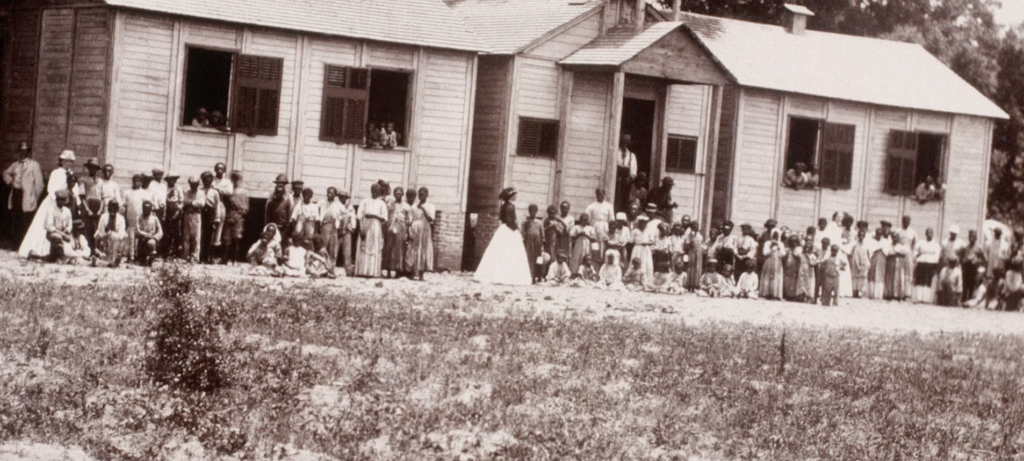
    A drawing of a National Freedmen’s Bureau school in Richmond, Va., in 1866. (Photo by Universal History Archive/Universal Images Group via Getty Images)

    Making learning illegal

    In 1739, the Stono slave rebellion took place in South Carolina. Fearing that educated slaves would go on to plot future rebellions, South Carolina passed an anti-literacy law in 1740, banning slaves from being taught how to read.

    Most Southern states soon followed with anti-literacy laws of their own between 1740 and 1834, in the hopes of preventing any further slave rebellions. These laws applied to both enslaved and free Black people.

    Despite these laws, thousands of enslaved people still learned to read and write in the antebellum South. Literacy was a means of freedom.

    Meanwhile, the first African Free School for Black children was established in New York City in 1787. The one-room schoolhouse began with 40 students, the majority of whom had parents who were formerly enslaved. Six additional, similar schools were created with public funding by 1824.

    Juneteenth and the path to freedom

    Juneteenth is a complicated story of formerly enslaved people’s faith and resilience, as well as white supremacists’ hate and resistance to formerly enslaved people experiencing liberation.

    It also offers an important reminder that true freedom must also include the right to an education.

    Formerly enslaved individuals had various responses to their newfound freedom in 1865, ranging from gratitude and joy to despair and loss.

    Many formerly enslaved people decided to leave plantations and Southern states to reunite with family members and communities separated by slavery.

    Others opted to remain where they had been enslaved, seeking to experience freedom in familiar surroundings. In fact, the vast majority of freed people remained in the South.

    Regardless of their choices, the approximately 4 million formerly enslaved people challenged the U.S. to acknowledge their liberation and welcome them as equals.

    Relentlessly, they endeavored to establish themselves as free citizens within the nation. One of these newly freed people’s primary goals was to receive an education.

    Learning to read, write and more

    After the Civil War, newly freed people gathered in churches, homes, cellars, sheds, meetinghouses and even under shade trees in the fields where they worked the crops to learn how to read and write. They also learned basic job skills, such as the ability to read and understand labor contracts.

    Many of the teachers had no formal training, and some of them were local Black people who were self-taught.

    Other educators included white teachers from the South and the North, sent by churches and aid societies.

    White aid societies and religious organizations from the North, including the American Missionary Association and the National Freedman’s Relief Association, sometimes funded these free schools for formerly enslaved Black people.

    However, most of the money to fund these schools came from the newly freed Americans, who privately paid for their schools.

    While about 90% of the Black population in Southern states were illiterate in 1865, this percentage dropped to 70% by 1880.

    A journey into higher education

    Newly freed Black people also began to have more options for higher education.

    The first historically Black college and university, Cheyney University, was established in Pennsylvania in 1837, well before the Civil War. A total of four HBCUs were established by the end of the Civil War in 1865.

    At this point, true liberation began, as a growing number of HBCUs offered academic freedom to Black Americans, who otherwise would have been prohibited from attending most colleges and universities.

    In the 15 years following the Civil War, a total of 59 HBCUs had opened their doors to Black students.

    In 1867, by act of Congress, Howard University was established in Washington, D.C. It provided not only basic college courses but also programs in law, medicine, education and pharmaceuticals.

    A history class at the Tuskegee Institute, a coeducational elementary and secondary school for Black Americans founded in 1881 in Georgia. (Photo by Corbis/Getty Images)

    A promise that requires education

    A whole new set of challenges and opportunities greeted the formerly enslaved Black Americans who sought freedom in the North. Most arrived in cities such as Chicago and New York, where they found some humanitarian support but also racial discrimination and poverty.

    Their lives were constantly filled with both legal and racial hostility.

    Education ranked high among the free people as a priority, as they looked to gain new skills and advance in life. They learned not only the basics in reading and math, but also job skills, citizenship and advanced learning in professional careers, such as law, medicine, pharmacy and teaching.

    Ultimately, Juneteenth offered a promise of freedom – but education was necessary to make it happen.
  • Four Va. counties will pump almost 20 million gallons of water a day to Amazon. Cause for concern?

    Four Va. counties will pump almost 20 million gallons of water a day to Amazon. Cause for concern?

    How you look at something – the frame you use and your perspective – often influences what you see.

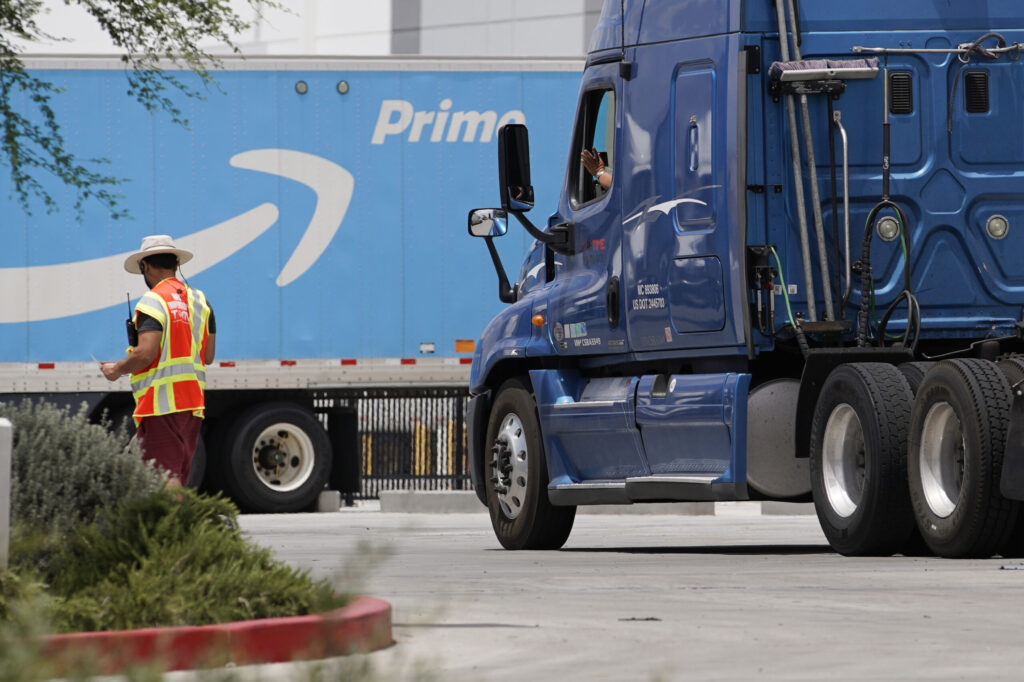
    This holds true with the issue of data centers and water use. Amazon recently reported that it withdrew a total of 2.5 billion gallons of water for data center cooling operations in 2025. That seems like a lot of water.

    But Amazon also points out that Americans used 3.3 trillion gallons of water that same year to grow their gardens and lawns.

    The company apparently wants to assure you that the water it uses for its data center operations, in comparison to other uses of water across our very large country, is not such a big deal.

    Of course, Amazon doesn’t operate its data centers across the entire nation. It does so in only a few states, and nowhere at higher concentration than in Virginia.

    We wanted to learn for ourselves how much water local communities have promised to Amazon for data center cooling in our part of the state, the region between Northern Virginia and Richmond, including Louisa, Spotsylvania, Caroline and Stafford Counties.

    By scouring available public records and submitting Freedom of Information Act requests, we learned that local governments in the commonwealth have allocated at least 19.6 million gallons a day to Amazon.

    This, we think, is an underestimate. It doesn’t include at least one large water-cooled data center campus in another nearby county that might end up being leased and operated by Amazon, but is currently being constructed by another company. And it doesn’t include other potential Amazon data center campuses that have not yet been approved or are being held up in court.

    Even so, 19.6 million gallons a day seems like a good deal of water. It’s enough to fill 980 backyard swimming pools every day. If the average American uses 82 gallons of water a day, it’s enough to sustain 239,000 people.

    But Amazon tells us not to worry. The company has ambitious goals to become “water positive.” To Amazon, this means “replenishing more water to communities than we use in our direct operations.”

    But being “water positive” depends on your scale of analysis.

    For instance, Louisa County plans to provide seven million gallons a day to two separate Amazon data center campuses. Amazon is paying to construct the new water infrastructure that will make this possible.

    On one hand, this is “new” water to Louisa County that wouldn’t otherwise be available for industrial use without Amazon’s funding. But from the perspective of the larger North Anna reservoir and river system, it still constitutes a withdrawal.

    While Amazon is using raw water for its operations in Louisa County, in other localities the company is investing in extensive “purple pipe” systems that will capture water that would otherwise be sent downstream in order to circulate it to its data center campuses. The company is proud that it “works with utilities to collect treated wastewater, clean it to appropriate standards, and reuse it to save drinking water.”

    Amazon doesn’t mention, however, that it will lose more than half of this water through evaporation as it cools its data center facilities, sending most of it up into the atmosphere. So something that appears to be water positive from the perspective of a community hosting an Amazon data center campus might also be a net water loss to a river system and to downstream users.

    Even so, Amazon claims, it doesn’t use water to cool its operations throughout the whole year, only during the hottest days in Virginia.

    A company spokesperson, for instance, marked up a water service agreement between Stafford County and Amazon we received from a FOIA request, in which the county promised to deliver more than five million gallons a day. The spokesperson wrote to us that, “actual annual use is much lower. Based on 10 years of data, the campus only needs cooling water about 4% of the year during the hottest months.”

    The idea that Amazon is spending tens of millions of dollars to build a water system that it will only use for fifteen days out of the year strains credulity. Even if this is true, those are millions of gallons of water being diverted away from our rivers and streams during the peak of summer, when flows are the lowest and water is most needed.

    It’s especially concerning when most of the state is in a severe drought, as we are now experiencing and may endure again in future years.

    Beyond being Virginia’s leading data center company, Amazon has attained near- monopoly status as an online retailer and delivery service. It spends $19 million a year on lobbying alone, according to the Center for Responsive Politics. It funneled almost $10 million to political campaigns in 2024 in order to influence elections, the same source reports.

    Amazon, needless to say, also has a powerful public relations operation. It uses its economic and political power to avoid paying taxes that other companies and most individuals have to pay.

    And in Virginia, the company and others in the data center industry are exempt from paying sales and use tax, which lawmakers say costs us nearly $2 billion annually. That exemption is the sticking point in ongoing budget negotiations; if legislators don’t finalize the spending plan by June 30, with or without the tax exemption, the state will experience its first government shutdown.

    Amazon encourages us not to worry about all the water local governments are allocating to the company in central Virginia. It assures us that it is a good steward of this resource, and that it cares about sustainability.

    But Amazon, just like any company with vested interests and a profit motive, doesn’t always share the complete picture. It frames the view it wants the public to see.

    Given the massive size of this company and the ways it has abused its power in the past, Virginians would be wise to keep a watchful eye on how Amazon is using water. And as communities consider approving yet more data centers and additional water service agreements, Virginians may want to consider when enough is enough.

  • As Trump’s immigration dragnet grows, so do complaints of detention center conditions

    As Trump’s immigration dragnet grows, so do complaints of detention center conditions

    WASHINGTON — When the overhead lights turn off at the Farmville Detention Center in Virginia, it not only means that night has arrived for Aliaksei Scharbachenia, but that panic attacks will soon follow.

    The attacks, which started after his detention began last August, he said, have only grown worse, stemming from the fear that he will be returned to his country of Belarus and face persecution due to his opposition to the authoritarian government.

    “With the panic attacks, I was able to take care of myself before,” he said in Russian. “But now it’s kind of getting worse, so I really need some medication, which will help me.”

    States Newsroom interviewed Scharbachenia by video with the help of an interpreter.

    As the Trump administration increases the scale of its immigrant detention program, now up to 68,000 immigrants in custody, reports have surfaced of inhumane conditions and inadequate medical care at U.S. Immigration and Customs Enforcement detention facilities like the one housing Scharbachenia. Congress recently boosted funding for immigration enforcement by $70 billion over three years, through the end of President Donald Trump’s term.

    ICE acknowledged receiving, but did not respond to, a detailed list of questions from States Newsroom regarding Scharbachenia’s treatment at Farmville.

    Ailments ignored

    Farmville 2010

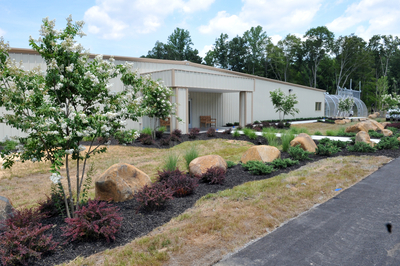
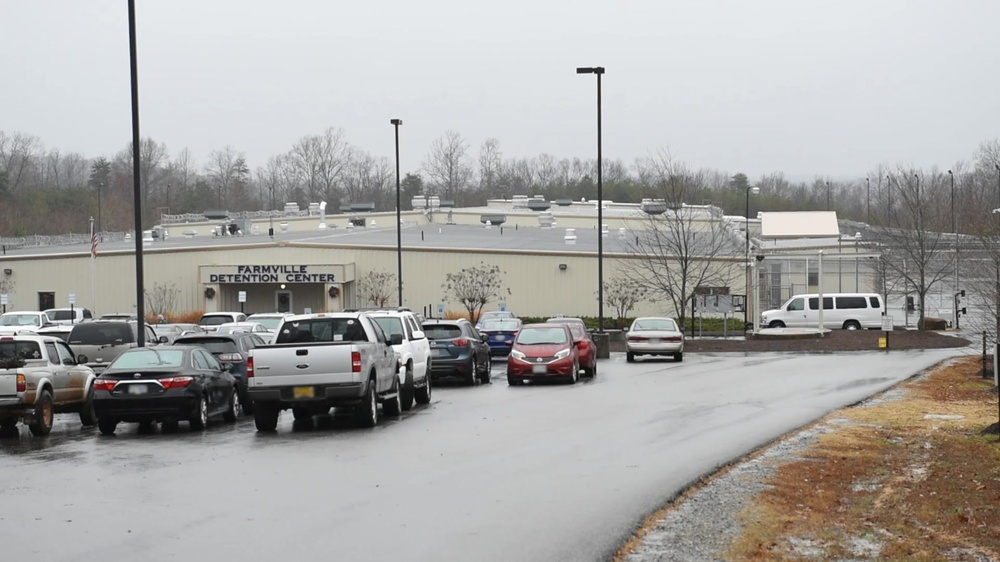
    The front entrance to the ICE Farmville Detention Center in 2010. (Photo by Paul Caffrey/ICE)

    The nightly panic attacks, and the lack of medication to treat them, are not the only health issues that 37-year-old Scharbachenia said he has brought to medical staff at the Virginia facility.

    He’s lost feeling in his right pinky and ring fingers, which he attributes to an-egg sized mass that developed on the back of his biceps during his 11-month detention. The few items that he purchased at the center – earplugs and a small blanket – were confiscated after he spent two weeks in solitary confinement after sharing know-your-rights information to newly arrived immigrants, he said.

    “I totally understand that’s another way of punishment to beat me, you know, so I will be quiet,” Scharbachenia said of his two weeks in solitary confinement.

    Scharbachenia told States Newsroom that on May 20, ICE agents tried to deport him to Belarus, despite his active legal petition challenging his detention. He said he was eventually placed on a deportation flight back to the United States from Turkey, his hands and feet bound for the nine-hour journey, and returned to the Farmville detention.

    States Newsroom could not independently verify the May 20 deportation attempt, and ICE did not respond to questions about it.

    Poor conditions at multiple facilities

    Scharbachenia’s complaints fit a pattern of reports from independent government inspectors that have found unsafe conditions and inadequate medical care provided to immigrants detained in facilities in Texas and Louisiana.

    A recent report from the Department of Homeland Security’s internal watchdog found a detention center in Louisiana failed to ensure sanitary conditions, properly store perishable food, report use-of-force incidents and maintain medical records of detainees.

    Congress this month passed the three-year, $70 billion immigration enforcement package that contains no restraints on ICE activities. The tens of billions in funding is on top of roughly $170 billion provided to DHS last year for detention and deportations.

    Democratic lawmakers conducting oversight visits at some facilities have raised concerns about poor conditions and lack of medical care provided.

    U.S. Rep. Adriano Espaillat, a New York Democrat who chairs the Congressional Hispanic Caucus, said during a recent press conference that the additional $70 billion in funding will only continue a “detention and deportation industry that profits from human suffering.”

    New Jersey facility

    State officials are demanding that health inspectors be given full access to the jail they say they have been unlawfully barred from entering. (Photo by Anne-Marie Caruso/New Jersey Monitor)

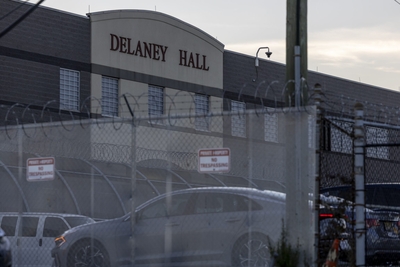
    Delaney Hall in New Jersey. (Photo by Anne-Marie Caruso/New Jersey Monitor)

    Civil rights groups have filed two major lawsuits charging poor and inadequate conditions at detention centers in Texas and New Jersey run by ICE and private contractors.

    In New Jersey, Sen. Andy Kim called for the Delaney Hall facility to be shut down after detained immigrants went on a hunger strike to protest their conditions. While Kim and dozens of advocates demonstrated at the facility, he was hit with pepper smoke deployed by immigration officers.

    “At Delaney Hall, we learned of unsanitary living conditions, lack of adequate medical care and unhealthy food,” House Minority Leader Hakeem Jeffries, D-N.Y., said after conducting oversight at the facility. “The situation is unacceptable. Delaney Hall must be shut down immediately.”

    In response to the criticism of poor conditions at Delaney Hall, Homeland Security Secretary Markwayne Mullin argued before lawmakers that the detention centers have higher standards than jails and prisons. He described the complaints about food as detainees wanting “ethnic food.”

    With House Democrats in the minority, the authority to make unannounced oversight visits at any federal facility that houses immigrants is one of the few tools they have. The power is codified in a 2019 appropriations law, but the Trump administration has not adhered to that policy.

    Democrats have sued to regain access in a case now before the U.S. Court of Appeals for the District of Columbia Circuit.

    Outbreaks at Farmville

    Prior to Trump’s current deportation push, lawmakers had raised concerns about issues at the detention center where Scharbachenia is held. In 2019, a mumps outbreak started at the facility, and in 2020, 93% of the detained population contracted the coronavirus.

    Roughly now three-quarters of the immigrants detained at Farmville, nearly 500, have no criminal record, according to the most recent government data. On the campaign trail, the president vowed to focus enforcement on immigrants with criminal records, but those in detention are there on a civil charge of violating U.S. immigration law.

    Virginia Democrats have continued to conduct oversight of the facility.

    U.S. Sen. Mark Warner went last August to visit Kilmar Abrego Garcia, who was transferred to Farmville after the Trump administration brought him back to the U.S. after erroneously deporting him to a brutal mega-prison in El Salvador.

    Warner also raised concerns about the facility during the coronavirus outbreak in 2020.

    During his August visit, Warner’s office said he “secured a commitment from the facility’s private operator to work with legislators to address concerns regarding food quality and access to health care.”

    Virginia Sen. Tim Kaine also visited the facility in March and his office said he “continues to track conditions there closely.”

    Scharbachenia, who is still detained at Farmville, has a pending habeas corpus petition, which is challenging his detention.

    He has a final order of removal from an immigration judge, but said if he is removed back to Belarus, the country’s special police force will be waiting for him, “along with electric shock torture and death.”

  • Some former felons, eligible to vote this summer, are in registration limbo

    Some former felons, eligible to vote this summer, are in registration limbo

    While a pending constitutional amendment to automatically restore voting rights to people with felony convictions who have served their sentences awaits Virginians’ approval or rejection in a statewide referendum later this year, thousands of people who should never have lost their right to vote in the first place remain in limbo during this summer’s congressional primary elections.

    After a court ruled earlier this year that certain felony convictions should not have resulted in loss of voting rights, Virginia’s Department of Elections had until June 1 to comply with the order to rectify the situation.

    Instead, on June 1, the department sent an advisory to election officials indicating that they should not deny peoples’ applications but to not fully process them either.

    “Please note that records available through the felon search may have been affected by the updates to the Agency Felony Prohibited table. ELECT will provide additional guidance on reviewing felony history soon,” the June 2 advisory obtained by The Mercury read.

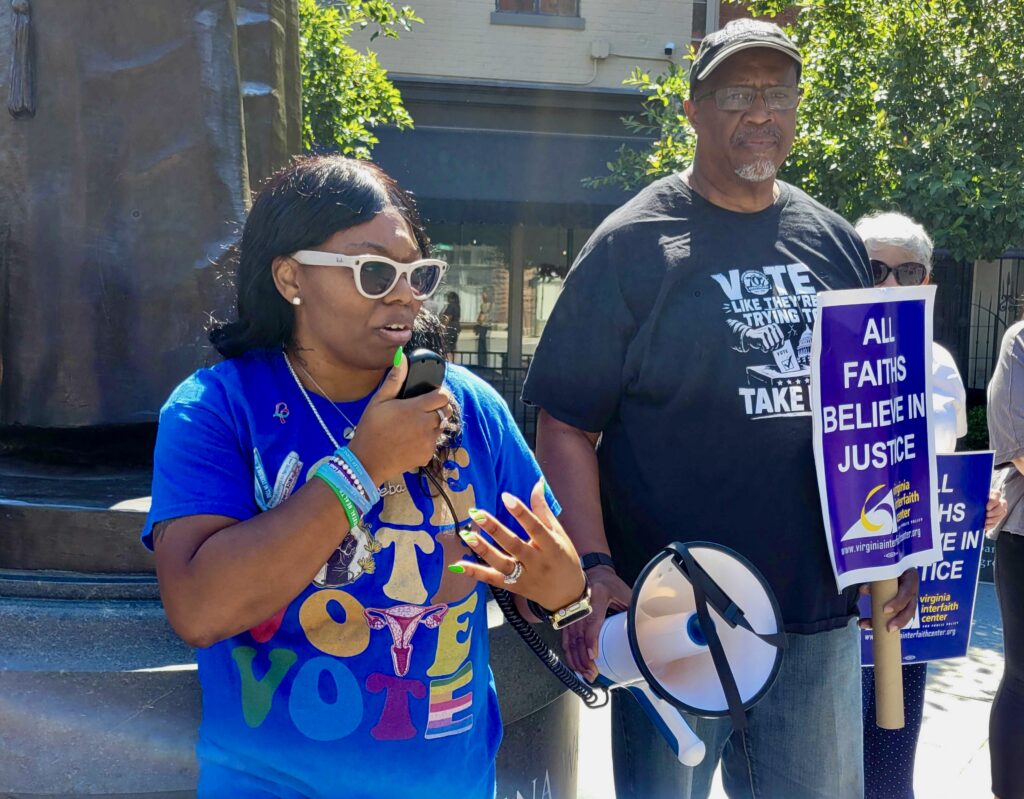
    The crux, Nolef Turns director Sheba Williams said, is that some people with felony convictions who should be eligible to vote this summer are nervous to register because it is a crime to lie on applications.

    “When they get to their application, there is a question about whether or not you have been convicted of a felony,” Williams explained.

    For people whose felonies don’t count towards prohibition of voting, they are unsure if they should check the box or not. So, with early voting for the congressional midterms beginning June 18, relevant applicants are stuck waiting as the process plays out.

    Williams organized a press conference in Richmond on Wednesday along with the Virginia Interfaith Center For Public Policy and Bridging the Gap Virginia. Each group has advocated for criminal justice reform and voting rights laws and some have helped returning citizens navigate post-incarceration life.

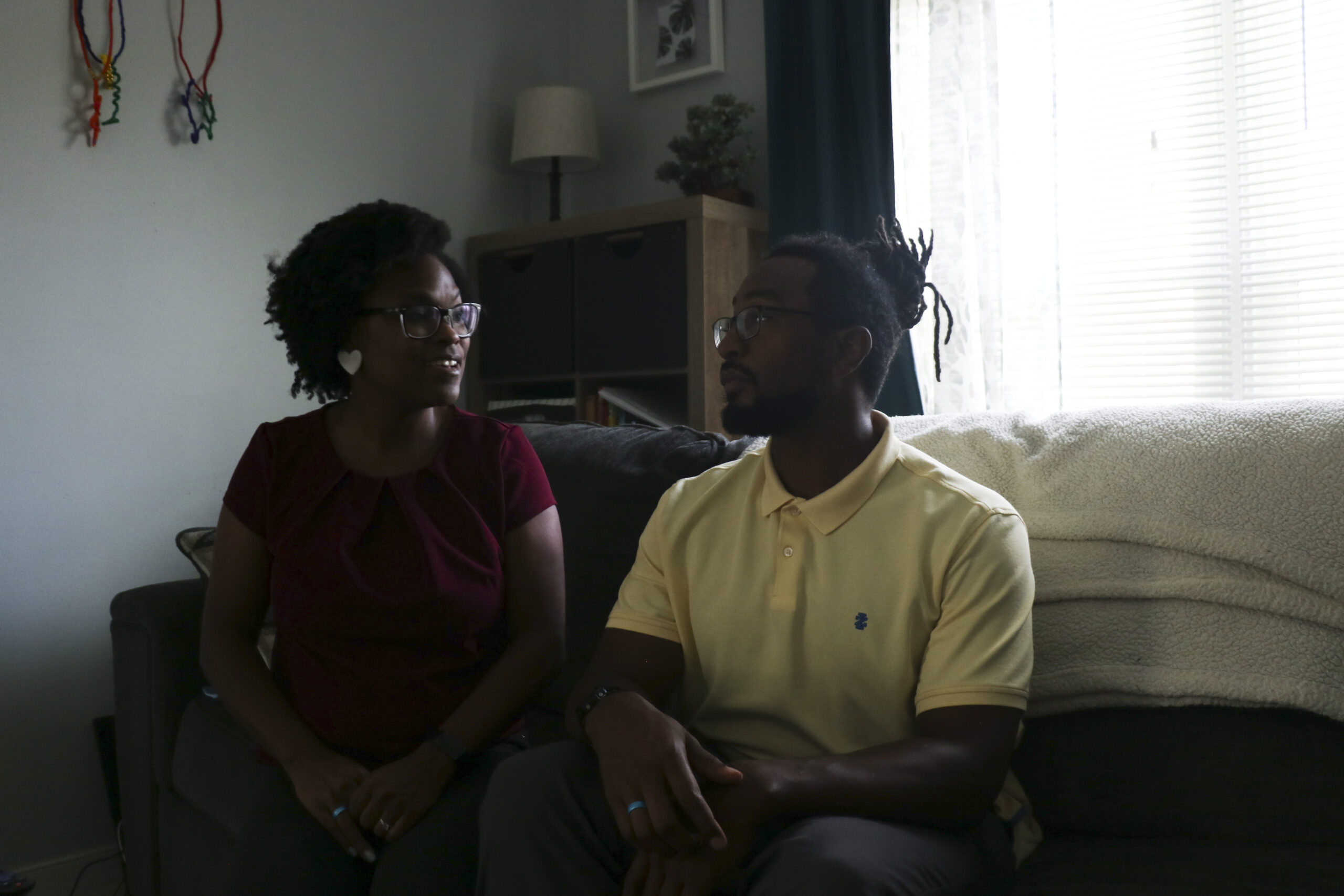
    Quadaire Patterson and his wife Santia Nance attended the event. The couple has ramped up their criminal justice advocacy, starting when Patterson was still incarcerated. Though he’s helped shape laws before and after his 2024 release, he has still been unable to vote.

    Santia Nance (left) sits with husband Quadaire Patterson (right) in their living room in Henrico County in September 2024. (Photo by Charlotte Rene Woods/Virginia Mercury)

    “As I think back to my crime when I was 19 years old, I had no awareness of the political systems that are in play,” Patterson said.

    But now at 38, having spent about half of his life behind bars, Patterson said he understands how important it is to engage in democracy. The importance of the right to vote hits closer to home now that he and his wife have a 14-month-old daughter, Trinity.

    “If we ever want to repair this broken system, if we ever want to repair our broken communities, we have to fully allow returning citizens to participate in the civic processes,” Patterson said.

    The case at the core of the matter stemmed from a series of 1870 laws called the Readmission Acts, which allowed former Confederate states to re-enter U.S. Congress after the Civil War. The laws had barred states from constitutionally disenfranchising people other than those convicted of crimes considered common law at the time.

    “We create crimes every year but we never revisit and say ‘what did we get wrong?’ and I think that is a barrier too,” Williams said.

    Following the suit, Attorney General Jay Jones’ office has been drafting lists of crimes that could be applicable to the ruling.

    Congressional primaries will take place Aug. 4 and the deadline to register to vote in those elections is July 24.

  • William & Mary’s Lemon Project helps Black Virginians learn about their lineage, counter narratives

    William & Mary’s Lemon Project helps Black Virginians learn about their lineage, counter narratives

    By Nick McNamara/WHRO

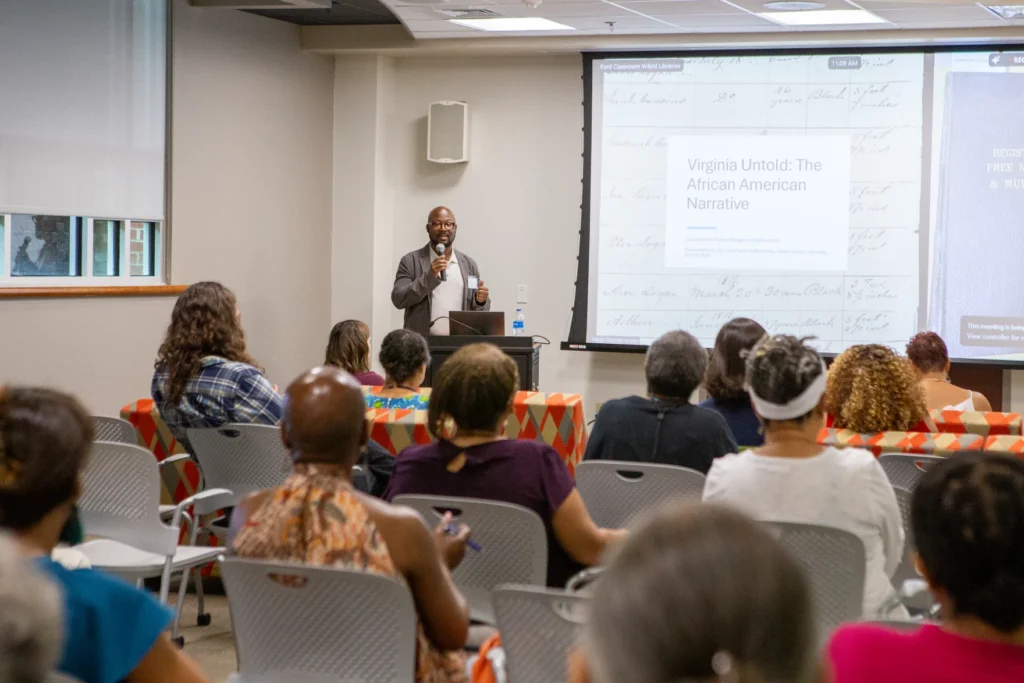
    William & Mary’s Lemon Project helps African Americans in Williamsburg uncover their families’ histories and the role their relatives played in shaping the college, the city and the landscape of the early United States.

    On Thursday morning, the Lemon Project is taking its services to the college’s Juneteenth Celebration in the Sadler Center.

    “It resonates deeply if you have been told for generations that you did not make a substantive contribution to the building of a nation and now you have records that say ‘Yes, I did, I did build this place,’” said Jajuan Johnson, interim director of the Lemon Project. “We think that they’re worth the search, they’re worth the labor.”

    The Lemon Project was created in 2009 to investigate William & Mary’s ties to slavery, starting with its founding in 1693. The college’s historic campus was built by enslaved people, and its founding president, James Blair, was instrumental in the institutionalization of slavery in Colonial Virginia.

    The project was inspired by similar work at Brown University and pushed forward with advocacy by faculty and students such as Tiseme Zegeye, who in 2007 proposed a resolution in the Student Assembly that called on William & Mary to research and publicize the college’s role in slavery and create a memorial to the enslaved. The Board of Visitors agreed in 2009. “Hearth: Memorial to the Enslaved” was dedicated in 2022.

    “We wouldn’t be here without students; they are key to our success,” said Sarah Thomas, associate director of the Lemon Project.

    Johnson helped establish the project’s public genealogical research work about five years ago. Members of the Descendant community, African Americans with roots in Williamsburg’s earliest days, had been asking for it for years.

    A $1 million grant created a foundation to get started during the COVID-19 pandemic.

    “People were wanting to connect,” Johnson said. “They are in place, sheltered and they’re wanting to connect with family.”

    Interest in genealogy predated the pandemic, Johnson said, but as historical records were digitized and made available online, it became easier for Black people to investigate unanswered questions about their lineage.

    For people who descend from enslaved people, however, ancestry work can be difficult. Many records were lost or destroyed during the Civil War. In other cases, records pertaining to the enslaved were sparse or nonexistent, sometimes noting the presence of an enslaved worker but not their name.

    “Slavery was injustice against family lines,” Johnson said. “So much is not recorded because you were considered property.”

    Despite the challenges, many records do exist in William & Mary’s Swem Library special collections. The Lemon Project also makes use of Library of Virginia records and Freedmen’s Bureau records, which Johnson said have been instrumental in their work.

    “Although people are told that they can’t find anything prior to 1865, I would say 80% of the time they do, they find some type of clue,” Johnson said.

    The Lemon Project collaborates on genealogy work with other groups, including the Bray School Lab, the Afro-American Historical and Genealogical Society of Hampton Roads and Black residents, Johnson said. Where institutional records fell short, records from historical church congregations in Williamsburg, such as First Baptist Church, Oak Grove Baptist Church and Bruton Parish, sometimes provide new leads.

    “African American cemeteries and the structures as well are major testimonies of African American life and history and family history in this region,” Johnson said. “These are places that are repositories of information that tell the story of people and the communities they built.”

    The project doesn’t always start in the distant past and move forward. Using a mix of oral history, death certificates and payroll documents from the 1900s at the college, Johnson said, the project was able to follow lineages backward.

    “We see that not only are these people in the early 1900s on this payroll list working at William & Mary, but they have children who are working at the college,” Johnson said. “We can trace back to find that there was this labor lineage at the college.”

    Thomas said the project’s work builds community and connects people.

    “We had a genealogy roundtable and cousins met each other for the first time,” Thomas said. “We didn’t plan it, it just happened; those kinds of stories are priceless.”

    Those moments and demonstrating the Black community’s role in building early Williamsburg and overcoming oppression make the project’s work resonate with people, Johnson said.

    “They built the churches, they cared for their dead, they reproduced, they established businesses, they did everything that people have told them — that institutions have told them — they did not do,” he said. “It’s sustaining when you consistently live in a world that tells you you don’t matter, it reaffirms ‘No, this is my place; this, too, is my nation; this is my institution.’”

  • Lawmakers demand info on Trump use of national park fees to pay for D.C. repairs

    Lawmakers demand info on Trump use of national park fees to pay for D.C. repairs

    WASHINGTON — U.S. House and Senate Democrats, mostly from Western states, are demanding transparency from the Interior Department after media reports revealed the Trump administration redirected roughly $90 million in national parks fees to help fund renovations and upcoming celebratory displays in Washington, D.C.

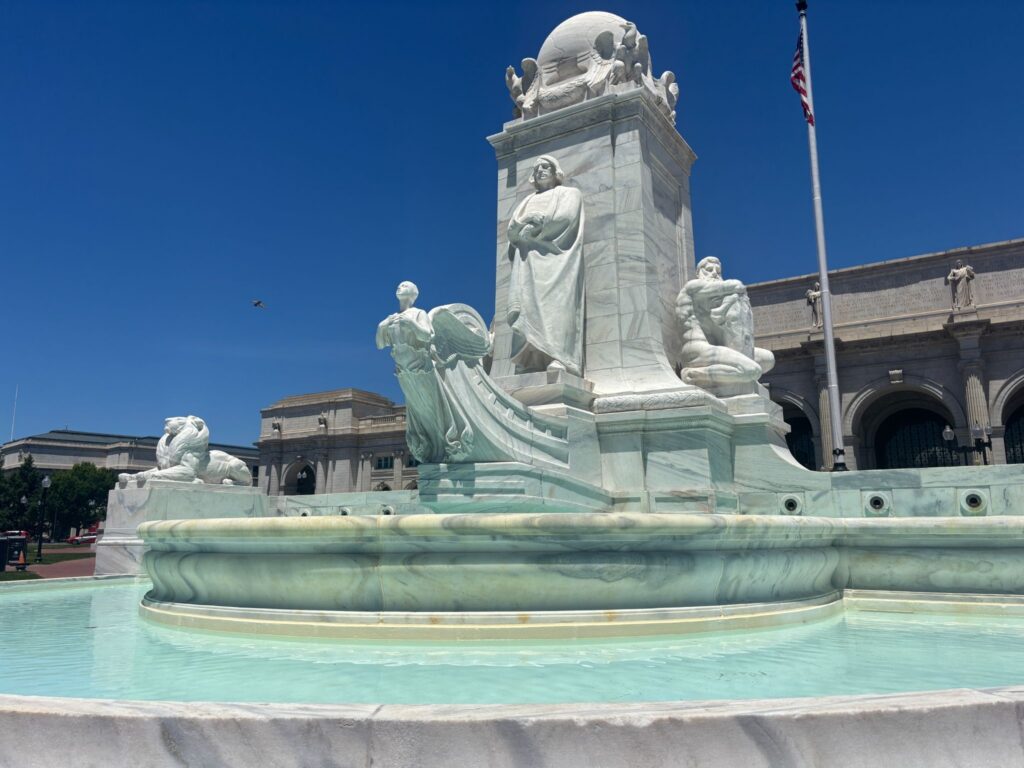
    The administration’s use of fee revenues to pay for fountain repairs, statue upgrades and fireworks shows in preparation for America’s 250th birthday on July 4 diverts money from national parks in desperate need of billions of dollars in maintenance, lawmakers wrote in two separate early-June letters to Secretary of the Interior Doug Burgum.

    “The public deserves to know how their park fees are being spent, and Congress cannot conduct appropriate oversight without basic information about these transactions,” Rep. Gabe Vasquez of New Mexico and seven other Democratic representatives wrote in their letter, dated June 12.

    A group of 11 Senate Democrats, led by Sen. Adam Schiff of California, sent a similar letter to Burgum on June 10.

    According to a DOI spokesperson, the National Park Service “has not only been focused on beautifying the district but has also been working on many deferred maintenance projects throughout the country,” pooling money from “endowment funds” and the sale of park passes.

    How the funding stream works

    The National Park Service, housed within Interior, gets a portion of its funding from entry fees and visitors’ purchase of recreational passes. Under the Federal Lands Recreation Enhancement Act, at least 80% of the fee money must go back to the national park where it is collected.

    The remaining 20% is available for overall Park Service use, a policy meant to help support parks that do not charge entry fees or only make a small amount of revenue, according to NPS. Just over 100 parks charge an entrance fee out of the more than 400 that make up the National Park System.

    The National Mall in Washington and various memorial sites are part of the crop that do not charge visitors to enter, meaning it is legal for the DOI to spend leftover revenue on projects in its own backyard.

    But the amount the department has allocated to renovations so far this year appears to greatly exceed how much it has put toward maintaining the district’s public spaces in the past, according to Tony Irish, a former Interior senior attorney under Trump and attorney under earlier presidents who is now senior counsel with the nonprofit Public Employees for Environmental Responsibility.

    Reflecting pool repair

    Multiple news outlets, including The New York Times and The Washington Post, reported NPS is using at least $60 million in fees paid by parkgoers to fund the repair of nine ornamental fountains across Washington, D.C.

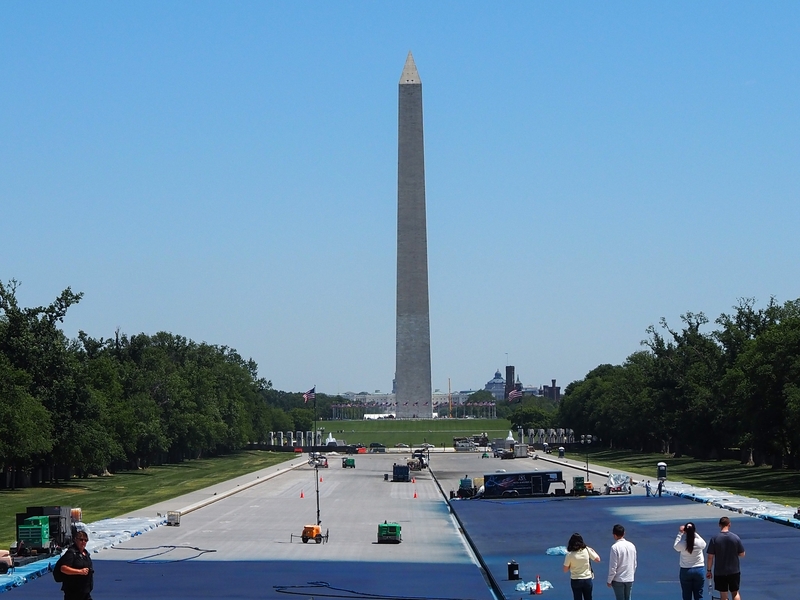
    Documents showed an additional $7 million was redirected to help pay for the renovation of the Lincoln Memorial Reflecting Pool, while more will be put toward funding a $1.6 million Fourth of July fireworks display.

    The Lincoln Memorial Reflecting Pool while under renovation on May 5, 2026. (Photo by Ashley Murray/States Newsroom)

    The Lincoln Memorial Reflecting Pool while under renovation on May 5, 2026. (Photo by Ashley Murray/States Newsroom)

    “While other administrations have let the city fall into decay, President Trump has made Washington, D.C. Safe and Beautiful again and we should all be grateful,” the Interior spokesperson said in an emailed statement on June 16.

    In their letters to Burgum, lawmakers also demanded clarity on the reported use of revenue from the sale of digital park passes—called “America the Beautiful Passes”—as there is no current law that requires those funds be spent in a specific place.

    “Credible sources with direct knowledge of these matters have now reported to Congress that much, if not all, fee revenue from online America the Beautiful Passes is being used to fund the President’s ‘beautification’ projects in Washington,” they wrote.

    Along with Vasquez, the House letter was signed by Reps. Sarah Elfreth of Maryland, Darren Soto of Florida, Adelita Grijalva of Arizona, Dina Titus and Susie Lee of Nevada, Joe Neguse of Colorado and Jill Tokuda of Hawaii.

    Joining Schiff in signing the Senate letter were Sens. Martin Heinrich and Ben Luján of New Mexico, Angus King of Maine, Kirsten Gillibrand of New York, Ron Wyden and Jeffrey Merkley of Oregon, Edward Markey of Massachusetts, Jack Reed of Rhode Island and Michael Bennet and John Hickenlooper of Colorado.

    Delayed park maintenance

    Many critics are pushing back against the Trump administration for not channeling fee funds back into the national parks that need them, including popular travel destinations such as Grand Teton and Yellowstone.

    “Last month, I was in Joshua Tree exploring one of our beautiful national parks and was again reminded what a treasured legacy these lands represent,” said Schiff in a June 17 statement to States Newsroom.

    “This is just the latest scheme by the President to put himself before the American people, and it will have devastating impacts on parks that millions of people visit every year,” he added.

    The National Park System is backlogged with about $24 billion worth of repairs to buildings and infrastructure, according to NPS.

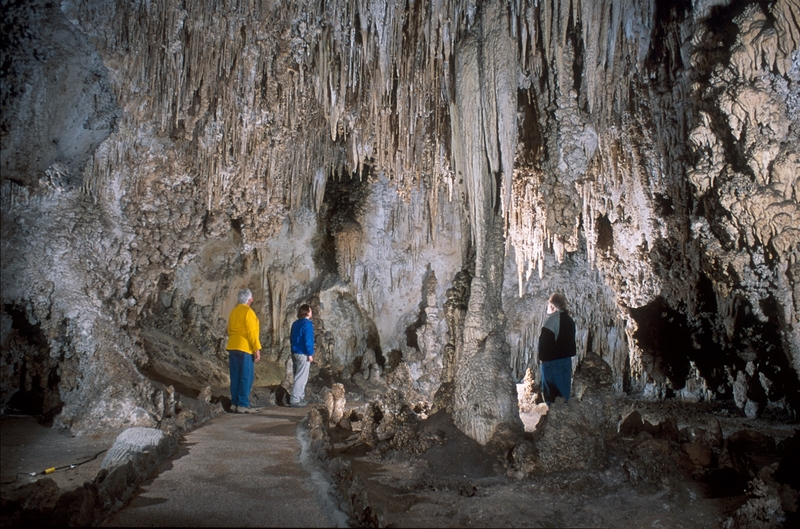
    Vasquez said New Mexico’s Carlsbad Caverns National Park, which runs through his district, “has over $45 million in deferred maintenance” alone.

    Part of the most popular tour at Carlsbad Caverns, the King's Palace is home to massive amounts of cave formations of all shapes and sizes. (Photo by Peter Jones/National Park Service)

    Part of the most popular tour at Carlsbad Caverns, the King’s Palace is home to massive amounts of cave formations of all shapes and sizes. (Photo by Peter Jones/National Park Service)

    “The Administration is choosing to let roads, trails, and wastewater systems in the park fall into disrepair amidst the peak summer visitor season so it can paint statues gold in Washington,” he said in a June 15 statement to States Newsroom. “This is unacceptable, and I am demanding action from the Department of Interior to correct course.”

    Irish also said the DOI’s current use of fee revenues for D.C.-area renovations could lead to more money being spent in the long run because of the rush to complete some projects, like the $14 million reflecting pool. Completed just at the beginning of June, the reflecting pool has already amassed clumps of green algae.

    “Not only are we displacing higher-priority needs right now, but we’re still going to have unmet needs in the future at an additional cost to the taxpayer, the fee payers within that,” Irish said.

    Vasquez and his colleagues in their letter asked that NPS restore funding to national parks to help preserve them for future generations.

    U.S. senators went even further, including a list of detailed questions about park funding in their letter for the DOI to respond to by June 23.

  • Spanberger joins governors in Reproductive Freedom Alliance, signs related Va. bills into law

    Spanberger joins governors in Reproductive Freedom Alliance, signs related Va. bills into law

    From support for legislation and ballot referendums to helping states stockpile abortion and miscarriage management drug mifepristone, a growing cohort of governors are banding together as the Reproductive Freedom Alliance. Virginia Gov. Abigail Spanberger announced Wednesday that she has joined the coalition.

    Members include California Gov. Gavin Newsom, New York Gov. Kathy Hochul, Gov. Wes Moore from Maryland and New Jersey Gov. Mikie Sherrill — who was elected the same night as Spanberger last fall — among 23 others so far.

    As part of the alliance, Spanberger said she will “continue doing everything in my power to preserve the rights of Virginians seeking reproductive care and making sure families across our Commonwealth can continue making their own personal healthcare decisions.”

    Mifepristone has been subject to legal challenges, with opponents pushing for a national ban on mailing the medication. Several of the states are working to preserve access to the medication and have also enacted shield laws to protect patients’ privacy and expand coverage for over-the-counter contraception.

    On the heels of announcing she’d joined the governors’ group, Spanberger signed two new reproductive health bills into law in Lorton Wednesday. Years-long efforts dubbed the Right-To-Contraception Act and Contraception Equity Act will fortify people’s ability to access family planning measures.

    Del. Cia Price, D-Newport News, who carried the legislation, has emphasized that contraception is also used to treat conditions like polycystic ovarian syndrome and endometriosis. Price uses contraception to treat her own PCOS symptoms, she said.

    After signing the law Wednesday, Spanberger called contraception “vital for being able to contend with an ongoing health issue.”

    The coalition announcement and new laws preempt the fourth anniversary of the overturn of federal abortion protections by the U.S. Supreme Court and a ballot referendum in Virginia later this year to enshrine reproductive rights into the state’s constitution.

    How a 19th century law, central to a national telehealth abortion case, could impact Virginia

    With abortion drawing the most scrutiny, several states have enacted deep restrictions or bans on the procedure. Virginia, where abortion is legal to varying degrees in all three trimesters of pregnancy, is the least restrictive Southern state.

    As such, clinics and abortion funds have noted upticks in out-of-state patients in recent years.

    Blue Ridge Abortion Fund director April Greene said that 26% of people seeking assistance from her organization live outside Virginia, a 13% uptick since 2023. More people are relying on abortion funds for financial assistance, as rising fuel prices affect travel.

    “What this tells us is that abortion bans, anywhere, impact access everywhere,” Greene said.

    Spanberger, reproductive rights advocates, state lawmakers and congressional candidates will continue advocating for the constitutional amendment leading up to this fall’s election.

    Rising costs of fuel, other goods squeeze already strained abortion funds

    Despite some Republican-leaning states having already pursued similar measures, the amendment has fallen along partisan lines in Virginia. Every elected Republican in the state legislature has voted against the amendment, which had to clear the legislature two years in a row before it could appear on statewide ballots.

    “Once it becomes enshrined in our constitution it becomes harder to fight,” said Family Foundation president Victoria Cobb at the Virginia March For Life this past spring.

    Her organization, which staunchly opposes the amendment, has filed one of two lawsuits challenging the pending amendment.

  • Senate budget proposal keeps data center sales tax exemption, adds new tax for industry

    Senate budget proposal keeps data center sales tax exemption, adds new tax for industry

    On Tuesday, the Virginia Senate released its latest budget proposal that preserves a sales and use tax exemption for the data center industry, the major hangup that has gummed up negotiations between both legislative chambers.

    The revamped proposal also adds a tiered tax for the industry that targets diesel generators and would generate $1.8 billion for the state, Senate leaders said.

    Sen. Louise Lucas, D-Portsmouth, has advocated to axe the exemption for months but amid stalled negotiations that risk a government shutdown if a budget isn’t finalized by June 30, the new proposal from her chamber signals willingness to compromise, with a sustained goal of regaining money the state misses out on due to the exemption.

    “We know technology is not bad. You know, we all can benefit from technology, but we, as a government, have not done a good job in managing the regulations and the impact on our communities and that’s what we’ve got to rein in,” Lucas said Tuesday night at a middle school in Chesterfield at a stop on her data center listening tour.

    The new Senate spending plan would levy a tiered impact tax on the types of backup generators that data centers use. The diesel generators have been a point of contention for residents who live near data centers due to heightened concerns over the air pollution released from the generators.

    The older, Tier 1 and 2 model backup generators release the most pollution. A new state law requires all new data centers that apply for an air permit to use Tier 4 models, which, along with tier 3 models, are cleaner.

    The Senate’s proposed data center tax would be distributed this way:

    – $45.00 per permitted kilowatt electrical (kWe) on any Tier 1 and Tier 2 generator;

    – $37.00 per permitted kWe on any Tier 2 backup generator retrofitted to be a Tier 4-

    equivalent backup generator, Tier 3 generators, and any generator powered by natural gas

    – $35.00 per permitted kWe on any Tier 4 generator or any other generator.

    Each quarter, data centers would remit the fees to the Department of Taxation and deposited to the general fund.

    The key term is “permitted.” Data centers rarely run their backup generators unless there is an emergency power outage or for short periods for monthly testing. But they are permitted for vastly larger amounts than their actual use – which would mean more tax revenue under this plan.

    According to Senate finance committee officials, the new generator tax would bring in an estimated $1.8 billion over the biennium. This would be about half of what the state could make in tax revenue if the sales and use tax exemption for the industry was revoked.

    The Senate plan, similar to the House, would create a workgroup to generate policy recommendations on how to phase out the sales tax exemption for the industry and present a report to the General Assembly in the fall.

    When asked how this group’s report would differ from past reports, such as the 2024 JLARC study on data centers, Lucas said it won’t reveal more than what the state already knows about the impact of data centers across the commonwealth.

    “I don’t expect that there’s going to be anything new coming out of it. I actually think it’s a waste of time. But since they want to do it, we will accommodate them,” Lucas said Tuesday.

    Lucas said that the House and Senate conferees planned to meet late into the night on Tuesday to work out a deal.

    House Speaker Don Scott, D-Portsmouth, cancelled the chamber’s special session on the budget that had been scheduled for Thursday in Richmond, since a deal with the Senate has not been finalized.

    Lucas said that the goal for budget conferees of both bodies is to have a deal in place before the Senate is slated to return to the Capitol on Monday.

  • Va. centralizes state internship programs to benefit students, workforce

    Va. centralizes state internship programs to benefit students, workforce

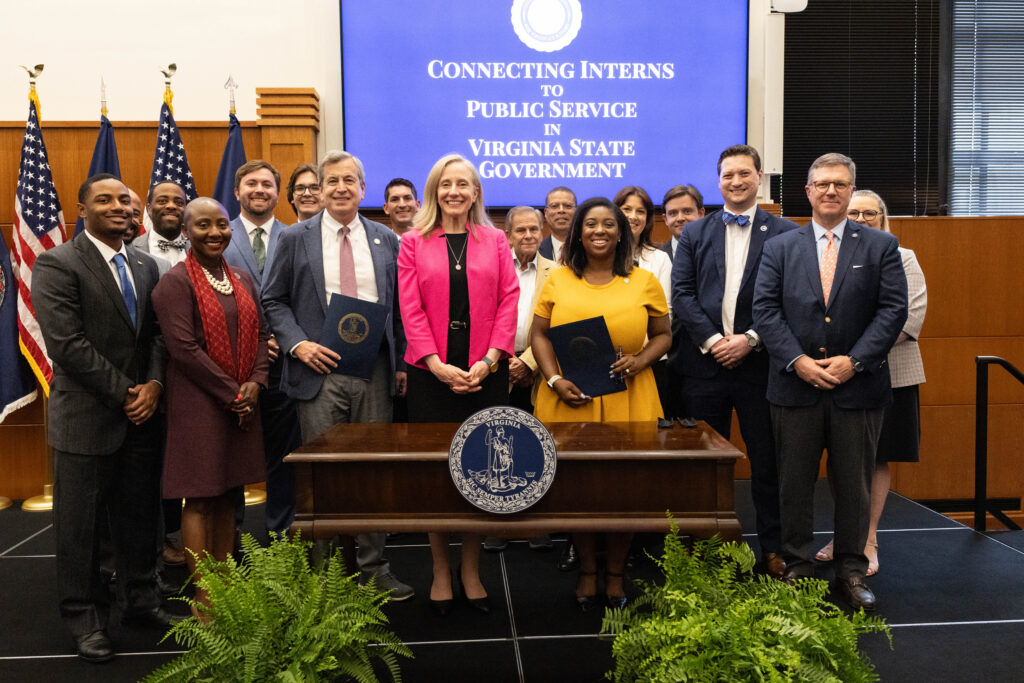
    Virginia Gov. Abigail Spanberger recently signed a law creating a Virginia State Internship coordinator position, designed to improve how students and recent graduates gain workforce experience through state agencies.

    In 2019, Virginia established the Innovative Internship Fund and Program to expand paid and credit-bearing internships statewide, reinforcing the commonwealth’s commitment to workforce development. The new role builds on that foundation, as does the Virginia Talent + Opportunity Partnership, which helps connect students and government agencies with these opportunities.

    Then in 2023, the Department of Human Resource Management, in partnership with the State Council of Higher Education in Virginia and V-TOP, created the COVA Internship Connection Pilot, which uses the V-TOP system to help agencies recruit interns.

    The COVA Internship Connection Pilot was designed to be a temporary, multi-agency initiative during and after the COVID pandemic, so students studying remotely could still find meaningful paid or unpaid, work-based learning through the state government.

    When Spanberger signed legislation carried by Sen. Lashrecse Aird, D-Henrico, and Del. Rip Sullivan, D-Fairfax, the pilot was transformed into a permanent, centrally managed program.

    “This is a great example of what the commonwealth can do to provide real-world opportunities for young, talented people entering the workforce,” Spanberger said in a statement on Friday. “Virginia is the top state for talent in America, and one of the most powerful tools we have is making sure talented students stay and grow right here in Virginia.”

    The legislation aims to centralize internship outreach, streamline application processes and provide agency support, making internships more visible and accessible to all students, including those from under-resourced schools and students with disabilities.

    The legislation strengthens data collection and program tracking to measure internship results and enhance Virginia’s long-term workforce development.

    “Internships are an essential opportunity to provide young people on-the-job experience and employers access to the workforce of the future,” Sullivan said in a statement. “As one of the largest employers in Virginia, it is imperative that the Virginia state government lead by example by expanding quality internships and attracting talent to support its vital mission.”

    As someone who started her public service with a state government internship, Aird said she knows firsthand how transformative such opportunities can be for young people. She cited Virginia’s aging public workforce as a driver of the new law that will help develop the next generation of public servants.

    “By strengthening and coordinating internship opportunities across state government, we can build a workforce that better reflects the communities it serves and ensure Virginia remains prepared to meet the challenges of tomorrow,” Aird said.

    Max Berckmueller, who graduated early from the College of William & Mary in 2023, credits his internships at multiple state agencies with helping him reach his goal of gaining real experience and making a tangible difference in his fellow Virginians’ lives.

    Now working as a data analyst with the Department of the Treasury, Berckmueller helps review monetary and budgetary matters for the state.

    “Conducting a budget or fiscal analysis, and seeing how the Department of Planning and Budget is taking that into account and changing their decisions based on the analysis that I did…that’s pretty cool,” Berckmueller said.

    “You might not get those kinds of opportunities at the federal government, but the state always needs a lot of help, and there’s always a lot to do,” he added.

    Spanberger also launched InternshipsVA, a statewide initiative to connect students with paid internships and strengthen Virginia’s workforce, as one of her first major economic development announcements at the start of her term. Recently, the program won a national Business Facilities 2026 Economic Development Organization (EDO) award.

    Funding for the new position is included in the House and Senate’s budget proposals, which lawmakers are working to reconcile and finalize ahead of a June 30 deadline. The position is estimated to cost annually $172,224.

  • ​Federal measure could undermine rideshare safety laws, Virginia, Colorado state legislators say

    ​Federal measure could undermine rideshare safety laws, Virginia, Colorado state legislators say

    Colorado state Rep. Jenny Willford is calling on congressional leadership to strike an amendment in a major federal transportation bill that could jeopardize new state-level safety protections around ride-hailing apps like Uber and Lyft.

    The amendment, added to the BUILD America 250 Act by a California House Republican during the federal bill’s committee hearing in May, would limit when ride-hailing companies can be held responsible for damages caused by their drivers by limiting vicarious liability — when an employer or superior is liable for an employee’s mistakes.

    “In plain terms, it would make it far harder and, in the cases that matter most, effectively impossible to hold multibillion-dollar rideshare corporations accountable in court when a passenger or a driver is sexually assaulted on its platform,” a letter to U.S. Speaker of the House Mike Johnson, signed by Willford and over 275 other state lawmakers, says. “We hold different views on many things. On this we do not differ: under no circumstances should any corporation be shielded from liability for sexual assault. The scale of the harm is not speculative.”

    Signers of the letter are women lawmakers from 42 states and one territory.

    A federal jury ordered Uber to pay $8.5 million to an Arizona passenger who said a driver raped her, and in April, a jury found Uber liable for a sexual assault in North Carolina.

    Willford, a Northglenn Democrat, is joined by 28 other Democratic state lawmakers from Colorado in the letter. The proposed amendment would preempt House Bill 26-1424, they contend, a new law sponsored by Willford that sets requirements for driver background checks and driver disqualifications and allows the Public Utilities Commission to impose penalties against the companies. The law explicitly allows a party to sue a company even if they are fined by the PUC. Willford worked for two years to pass the bill and have it signed into law following a case in which a man was charged with unlawful sexual contact against Willford during a Lyft ride in 2024.

    Uber and Lyft did not oppose the legislation. Gov. Jared Polis signed it into law earlier this month.

    The federal law could also conflict with House Bills 1273 and 1469 in Virginia.

    “In Virginia, we did the work. We held the hearings, we listened to survivors, and we passed real protections and the Governor signed them,” Virginia Delegate Jackie Glass said in a statement. “Now, a single amendment, slipped into a highway bill at two in the morning, would override what our states just built … Congress should be raising the bar on safety — not cutting the floor out from under us.”

    The letter goes on to say: “State legislatures must retain the ability to identify a problem in their communities and to enact meaningful, responsive policy. That is the constitutional design, and it is a practical one: these harms look different in Denver than in Norfolk, and the people closest to them are best positioned to respond. It is telling and deeply troubling that when Uber and Lyft could not prevail in state legislatures, city councils, or in the courtroom, they turned to Congress to change the rules for everyone at once.”

    The BUILD America 250 Act is a five-year surface transportation bill funding roads, bridges and other infrastructure. It will next head to the Republican-led House floor.

    This story was originally produced by Colorado Newsline, which is part of States Newsroom, a nonprofit news network which includes Virginia Mercury, and is supported by grants and a coalition of donors as a 501c(3) public charity.