Category: National News

  • White House discloses outline of deal to end Iran war, open Strait of Hormuz

    White House discloses outline of deal to end Iran war, open Strait of Hormuz

    WASHINGTON — The White House on Wednesday read to reporters a 14-point memorandum of understanding with Iran to stop the ongoing war and allow for further negotiations, but did not release the exact text.

    The 60-day MOU outlines the opening of the Strait of Hormuz, sanctions relief and reconstruction funds for Iran, and the promise of negotiations on Iran ending its nuclear program. Senior administration officials say economic and sanctions relief will only occur if Iran is on “good behavior.”

    “If we think that they’re just dragging us along and kind of bull- – – -ting us, then we’ll be very quick to pull the plug on it and go back to tightening the screws on them very, very aggressively,” a senior administration official who did not want to be identified said on a Wednesday afternoon call with reporters.

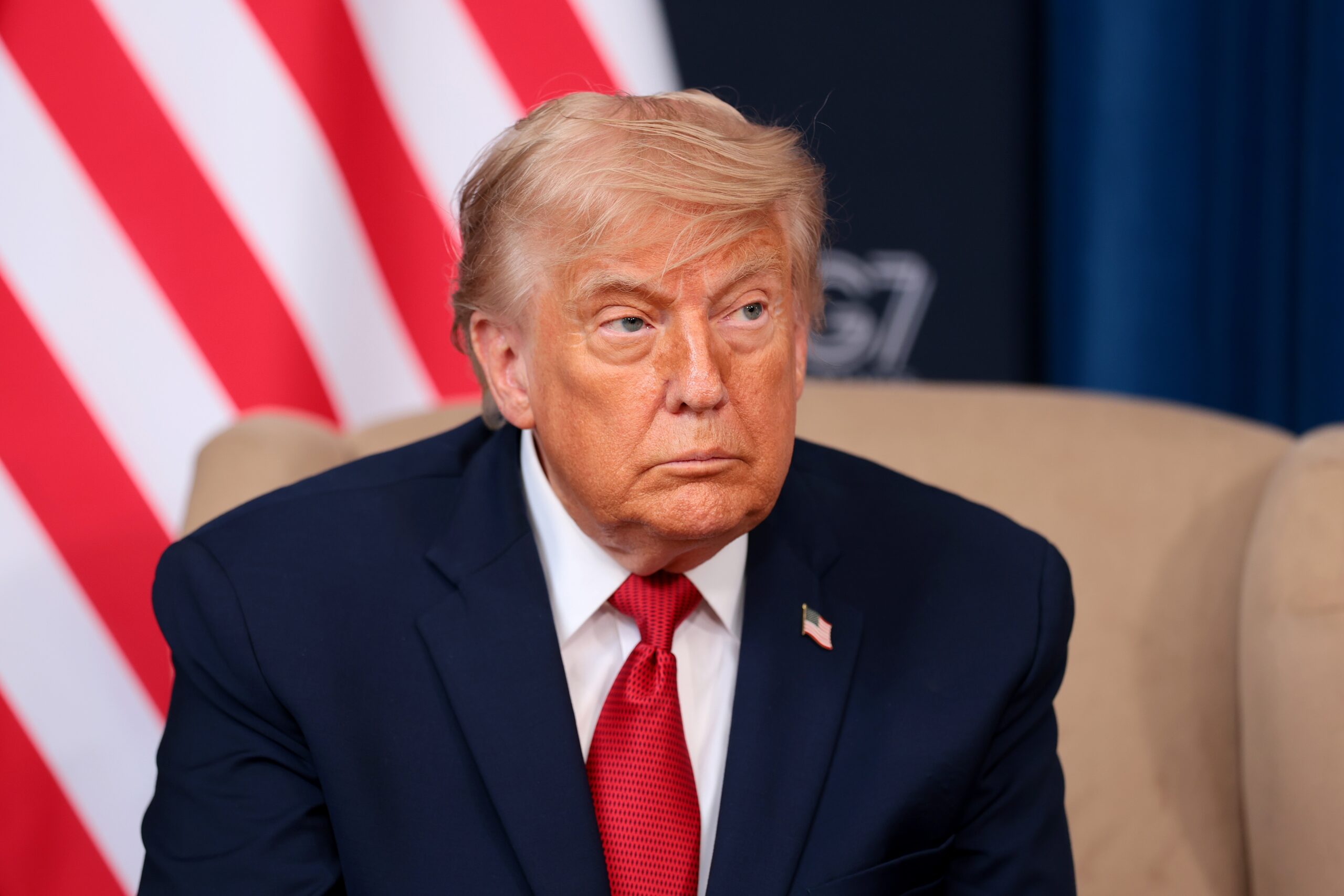
    President Donald Trump told reporters in France he “might” stay in Europe for the ceremonial signing of the memo, but doubted it.

    “This is a memorandum of understanding. It’s very important, but it might not be the kind of a document that I should be signing,” Trump told reporters at his final press conference of the G7 summit, a meeting of the world’s wealthiest capitalist economies.

    Earlier Wednesday he told reporters at the G7, “If I don’t like it, we’ll go back to shooting at them, dropping bombs on their head.”

    Trump announced Monday he had reached a ceasefire agreement with Iranian officials to temporarily end the war, which has lasted longer than 100 days, but the administration had not released any part of the agreement until Wednesday. Members of the U.S. Senate complained they had not seen the details and some said they wanted to vote on a final agreement.

    Iran’s Prime Minister Shehbaz Sharif confirmed in a social media post Monday that a deal had been reached.

    Iranians requested the United States not release the text until language was finalized, according to a second senior administration official who added “it was obviously unfortunate we weren’t able to put it out right away.”

    “We were trying to accommodate their domestic messaging and their domestic politics. We’re trying to build trust with them, and that’s what they asked us to do, so we agreed to do it.”

    Iran’s Foreign Minister Seyed Abbas Araghchi warned on social media June 12 against speculation on the deal which “has never been closer” and said details would be shared with the public “in due course.”

    Nuclear weapons

    The 14-paragraph “Islamabad memorandum of understanding between the United States of America and the Islamic Republic of Iran,” which the second senior administration official read on the call, declares an “immediate and permanent termination of military operations on all fronts, including in Lebanon.”

    The White House declined to provide a written copy of the MOU to reporters.

    Israel’s Prime Minister Benjamin Netanyahu has not agreed publicly to withdraw forces from Lebanon, which emerged as a second front of the war that the U.S. launched in tandem with Israel in February.

    The U.S. and Iran have 60 days, “extendable with consent” to reach a final deal.

    According to the agreement, Iran “reaffirms that it shall not procure or develop nuclear weapons.”

    The document charges the U.S. and Iran to agree on how to deal with Iran’s buried stockpile of enriched uranium, with the minimum arrangement being the “down blending” of the material on site under the supervision of the International Atomic Energy Agency.

    “The two parties also agreed to discuss the issue of enrichment and other mutually agreed matters related to the Islamic Republic of Iran’s nuclear needs based on a satisfactory framework being agreed upon in the final deal,” according to the MOU.

    In 2018, Trump pulled the U.S. out of a previous nuclear agreement brokered by former President Barack Obama’s administration.

    Obama appeared skeptical Saturday of Trump’s nuclear negotiations with Iran.

    “It is doubtful that any agreement that arises is going to be significantly different or a significant improvement from the deal that we had in the first place and had worked for, for a long stretch of time before we, the United States, pulled out of it,” he told ABC News’ Robin Roberts.

    Reopening Strait of Hormuz

    The agreement also commits the U.S. to “immediately” begin the removal of its naval blockade on Iranian ports, with a full and final stoppage to occur within 30 days.

    The U.S. will also have to remove military forces from the vicinity of Iran, meaning the American forces “will return our force posture in the region to that which existed before the conflict started,” according to the administration official.

    Roughly 40,000 troops were in the region prior to the war. That number increased to approximately 50,000 after Feb. 28.

    For its part, Iran must “make arrangements using its best efforts for the safe passage of commercial vessels with no charge for 60 days only from the Persian Gulf to the Sea of Oman and vice versa,” according to the agreement.

    However, the MOU continues: “The traffic of commercial vessels will immediately start in considering the need for removing the technical and military obstacles, and demining by the Islamic Republic of Iran will be instated within 30 days.”

    From there, Iranian officials agreed to negotiate a plan with the sultan of Oman and Persian Gulf states on “future administration and maritime services in the Strait of Hormuz.”

    The war’s de facto closing of the strait has rocked economies across the globe, as 20% of the world’s petroleum exports passed uninterrupted through the narrow waterway prior to the conflict. Oil prices reached $120 per barrel during the height of the conflict but have fallen to roughly $79 this week.

    Article 38 of the United Nations Convention on the Law of Sea declares passage through straits a right that should not be impeded, though neither the U.S. nor Iran are party to the international agreement.

    $300B in reconstruction funds

    In perhaps one of the most “controversial” parts of the MOU, according to the senior official, Iran could see up to $300 billion in reconstruction funds.

    The White House official was quick to downplay the prospect of Iran reaping billions of U.S. dollars.

    “Note that it doesn’t require us to do anything to, one, to ever pay a cent of money to the Iranians, (and) to ever contribute money to this reconstruction fund,” the official said.

    “What it says is that if we get to a final deal, and if the Iranians behave, we will permit the sanctions relief that would allow, for example, the Emiratis to build a power plant in Iran. That’s all it says. If they do what they have to do, we will permit the investment and the reconstruction of their country,” the official said.

    Additionally, upon the signing of the MOU, the U.S. Department of Treasury will immediately issue waivers for the export of Iranian crude oil and other petroleum products, as well as associated activities, including bank transactions and insurance, according to the document.
  • FEMA nominee pressed on whether Trump favors disaster funding requests from GOP states

    WASHINGTON — President Donald Trump’s nominee to lead the Federal Emergency Management Agency testified before a U.S. Senate committee Wednesday that if confirmed he would ensure natural disaster recovery efforts are “objective” and “fair.”

    Cameron Hamilton, who worked as acting head of the agency before being fired and ultimately nominated for Senate confirmation by the president, faced criticism from members of both political parties about the agency’s response time.

    But it was Democrats who repeatedly pressed Hamilton about whether states controlled by Republicans should receive a disproportionately higher number of disaster declarations than blue states.

    “I certainly appreciate your concern,” Hamilton said. “What I can tell you is that if confirmed, my focus will be to ensure that FEMA is objective, is fair and reasonable, follows the law, and is consistent in the approach to how we adjudicate and process claims and requests for disasters.”

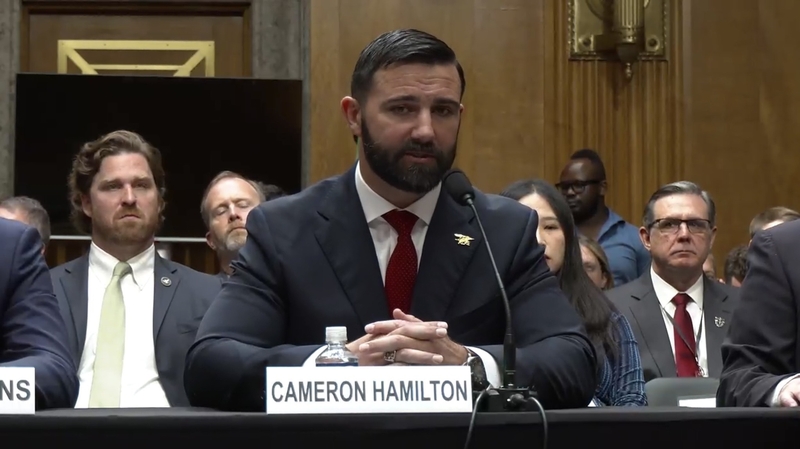
    FEMA nominee Cameron Hamilton testifies before the Homeland Security and Governmental Affairs Committee on June 17, 2026. (Screenshot from committee webcast)

    FEMA nominee Cameron Hamilton testifies before the Homeland Security and Governmental Affairs Committee on June 17, 2026. (Screenshot from committee webcast)

    Hamilton was the acting head of FEMA earlier in the Trump administration but was ousted after he testified before Congress that he didn’t believe the agency should be eliminated.

    Almost exactly a year after being pushed out, Trump formally nominated Hamilton to become the FEMA administrator by sending his paperwork to the Senate without any fanfare.

    Trump has repeatedly raised grievances with how the federal government prepares for and responds to natural disasters during his second term, saying he believes much of the responsibility should be moved to states.

    “We want to wean off of FEMA and we want to bring it down to the state level,” Trump said in June 2025. “We’re moving it back to the states so the governors can handle it. That’s why they’re governors. Now, if they can’t handle it, they shouldn’t be governor.”

    A review council established by Trump to propose overhauls to FEMA released its recommendations in May, calling on state governments to carry more of the responsibility. Lawmakers, so far, haven’t taken any significant actions to implement any of the proposals.

    Red state favoritism?

    Senators on the Homeland Security and Governmental Affairs Committee didn’t ask Hamilton about his ousting during the confirmation hearing, though they did question him about staffing reductions at FEMA and why the Trump administration seems to favor Republican states.

    Michigan Democratic Sen. Gary Peters, the committee’s ranking member, referenced a news article Politico published in March that concluded Democratic states had 23% of their disaster funding requests approved, compared to 89% for Republican-controlled states.

    “No other president has created such a disparity in states that receive federal disaster aid,” Peters said. “Denying over 75% of requests from states that are led by representatives of another party is unconscionable.”

    New Hampshire Democratic Sen. Maggie Hassan also questioned Hamilton about the disparity, saying it’s “unacceptable” that federal disaster aid would be approved based on how people voted.

    “The idea that Americans, who need help in the wake of a tornado, or a flood, or a hurricane, should be treated differently based upon politics is shameful,” she said.

    Hassan then asked Hamilton if he agreed “that politics and partisan considerations should play no part in approving disaster assistance.”

    Hamilton said he did, later adding that he doesn’t believe Trump would withhold disaster declarations or aid for political reasons.

    Hawley finds FEMA ‘slow’ and ‘often ill-informed’

    Democrats weren’t the only members of the committee to voice frustrations with FEMA during the confirmation hearing.

    Missouri Republican Sen. Josh Hawley showed an enlarged photograph of St. Louis following tornadoes, saying it took FEMA far too long to provide aid for residents.

    “As you can see, the devastation is absolutely unbelievable,” Hawley said. “I walked these streets myself. You’ve got buildings completely destroyed, homes absolutely razed to the ground, churches whose roofs were lifted off, whose sanctuaries were completely destroyed, streets that were ripped up. And the problem is that many of these neighborhoods don’t look a lot different now because in some cases they’re still waiting for relief.”

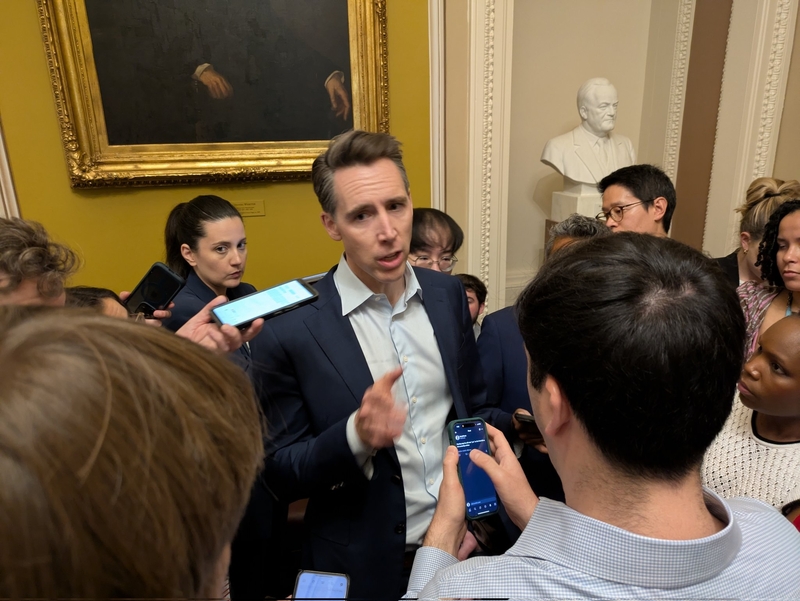
    U.S. Sen. Josh Hawley, R-Mo., talks to reporters at the U.S. Capitol on Saturday, June 28, 2025. (Photo by Ashley Murray/States Newsroom)

    U.S. Sen. Josh Hawley, R-Mo., talks to reporters at the U.S. Capitol on Saturday, June 28, 2025. (Photo by Ashley Murray/States Newsroom)

    Hawley said that wasn’t an isolated incident and that he finds FEMA’s response to natural disasters is “slow” and “often ill-informed.”

    Hamilton said he believes the agency’s “disaster declaration process and also the federal mentorship that goes into it needs to be improved.”

    “I believe states need to receive better customer service. I have full faith and confidence in the FEMA workforce, but we can do better,” Hamilton said. “And there’s a significant amount of areas where that process should be simplified, better understood and we owe you answers, I think, much faster.”

    Positions being restored

    Connecticut Democratic Sen. Richard Blumenthal pressed Hamilton about whether staffing reductions “jeopardize the response of FEMA.”

    “I think certainly FEMA operates in a unique environment where there are challenges and setbacks that impact our ability to respond,” Hamilton said.

    Blumenthal then asked whether Hamilton believed there are enough employees at FEMA and whether lower staffing could lead the agency to lose more people.

    “I would agree that the FEMA workforce needs to be scalable in such a way to best meet the needs of the agency and the execution of the program and mission,” Hamilton said.

    Blumenthal pressed again, asking whether agency leadership needs “to restore the staff levels essential to their morale as well as their responsiveness.”

    Hamilton said that Department of Homeland Security Secretary Markwayne Mullin had approved bringing back nearly 350 positions “to fill critical vacancies in key program offices and key responsibilities.”

    Western states need different approach

    Arizona Democratic Sen. Ruben Gallego urged Hamilton, if confirmed, to approach aid to Western states that hold large swaths of federal land differently than states on the East Coast.

    “I just want to make sure I emphasize, the one-size-fits-all approach to disaster response just is not working for the West,” he said. “And this is not a red state versus blue state or anything like that.”

    Gallego urged Hamilton to ensure the agency considers states’ special characteristics, saying when his state gets hit by a wildfire, it needs FEMA to replant trees so there isn’t severe flooding.

    “Sometimes FEMA does not pay for the replanting and reseeding of our forests, which end up causing even greater disasters a year from now,” he said.

    Hamilton said that he understood the “unique paradigm” some states face since he grew up on the West Coast and has “family who’ve lost homes from fires and other significant natural disasters out West.”

    Hamilton said he believes FEMA’s pre-disaster grants, which are intended to reduce risk and prepare states for future natural disasters, “should be uniquely suited to handle the challenges and threats facing each state on the nuanced issues.”

  • Lawmakers demand info on Trump use of national park fees to pay for D.C. repairs

    Lawmakers demand info on Trump use of national park fees to pay for D.C. repairs

    WASHINGTON — U.S. House and Senate Democrats, mostly from Western states, are demanding transparency from the Interior Department after media reports revealed the Trump administration redirected roughly $90 million in national parks fees to help fund renovations and upcoming celebratory displays in Washington, D.C.

    The administration’s use of fee revenues to pay for fountain repairs, statue upgrades and fireworks shows in preparation for America’s 250th birthday on July 4 diverts money from national parks in desperate need of billions of dollars in maintenance, lawmakers wrote in two separate early-June letters to Secretary of the Interior Doug Burgum.

    “The public deserves to know how their park fees are being spent, and Congress cannot conduct appropriate oversight without basic information about these transactions,” Rep. Gabe Vasquez of New Mexico and seven other Democratic representatives wrote in their letter, dated June 12.

    A group of 11 Senate Democrats, led by Sen. Adam Schiff of California, sent a similar letter to Burgum on June 10.

    According to a DOI spokesperson, the National Park Service “has not only been focused on beautifying the district but has also been working on many deferred maintenance projects throughout the country,” pooling money from “endowment funds” and the sale of park passes.

    How the funding stream works

    The National Park Service, housed within Interior, gets a portion of its funding from entry fees and visitors’ purchase of recreational passes. Under the Federal Lands Recreation Enhancement Act, at least 80% of the fee money must go back to the national park where it is collected.

    The remaining 20% is available for overall Park Service use, a policy meant to help support parks that do not charge entry fees or only make a small amount of revenue, according to NPS. Just over 100 parks charge an entrance fee out of the more than 400 that make up the National Park System.

    The National Mall in Washington and various memorial sites are part of the crop that do not charge visitors to enter, meaning it is legal for the DOI to spend leftover revenue on projects in its own backyard.

    But the amount the department has allocated to renovations so far this year appears to greatly exceed how much it has put toward maintaining the district’s public spaces in the past, according to Tony Irish, a former Interior senior attorney under Trump and attorney under earlier presidents who is now senior counsel with the nonprofit Public Employees for Environmental Responsibility.

    Reflecting pool repair

    Multiple news outlets, including The New York Times and The Washington Post, reported NPS is using at least $60 million in fees paid by parkgoers to fund the repair of nine ornamental fountains across Washington, D.C.

    Documents showed an additional $7 million was redirected to help pay for the renovation of the Lincoln Memorial Reflecting Pool, while more will be put toward funding a $1.6 million Fourth of July fireworks display.

    The Lincoln Memorial Reflecting Pool while under renovation on May 5, 2026. (Photo by Ashley Murray/States Newsroom)

    The Lincoln Memorial Reflecting Pool while under renovation on May 5, 2026. (Photo by Ashley Murray/States Newsroom)

    “While other administrations have let the city fall into decay, President Trump has made Washington, D.C. Safe and Beautiful again and we should all be grateful,” the Interior spokesperson said in an emailed statement on June 16.

    In their letters to Burgum, lawmakers also demanded clarity on the reported use of revenue from the sale of digital park passes—called “America the Beautiful Passes”—as there is no current law that requires those funds be spent in a specific place.

    “Credible sources with direct knowledge of these matters have now reported to Congress that much, if not all, fee revenue from online America the Beautiful Passes is being used to fund the President’s ‘beautification’ projects in Washington,” they wrote.

    Along with Vasquez, the House letter was signed by Reps. Sarah Elfreth of Maryland, Darren Soto of Florida, Adelita Grijalva of Arizona, Dina Titus and Susie Lee of Nevada, Joe Neguse of Colorado and Jill Tokuda of Hawaii.

    Joining Schiff in signing the Senate letter were Sens. Martin Heinrich and Ben Luján of New Mexico, Angus King of Maine, Kirsten Gillibrand of New York, Ron Wyden and Jeffrey Merkley of Oregon, Edward Markey of Massachusetts, Jack Reed of Rhode Island and Michael Bennet and John Hickenlooper of Colorado.

    Delayed park maintenance

    Many critics are pushing back against the Trump administration for not channeling fee funds back into the national parks that need them, including popular travel destinations such as Grand Teton and Yellowstone.

    “Last month, I was in Joshua Tree exploring one of our beautiful national parks and was again reminded what a treasured legacy these lands represent,” said Schiff in a June 17 statement to States Newsroom.

    “This is just the latest scheme by the President to put himself before the American people, and it will have devastating impacts on parks that millions of people visit every year,” he added.

    The National Park System is backlogged with about $24 billion worth of repairs to buildings and infrastructure, according to NPS.

    Vasquez said New Mexico’s Carlsbad Caverns National Park, which runs through his district, “has over $45 million in deferred maintenance” alone.

    Part of the most popular tour at Carlsbad Caverns, the King's Palace is home to massive amounts of cave formations of all shapes and sizes. (Photo by Peter Jones/National Park Service)

    Part of the most popular tour at Carlsbad Caverns, the King’s Palace is home to massive amounts of cave formations of all shapes and sizes. (Photo by Peter Jones/National Park Service)

    “The Administration is choosing to let roads, trails, and wastewater systems in the park fall into disrepair amidst the peak summer visitor season so it can paint statues gold in Washington,” he said in a June 15 statement to States Newsroom. “This is unacceptable, and I am demanding action from the Department of Interior to correct course.”

    Irish also said the DOI’s current use of fee revenues for D.C.-area renovations could lead to more money being spent in the long run because of the rush to complete some projects, like the $14 million reflecting pool. Completed just at the beginning of June, the reflecting pool has already amassed clumps of green algae.

    “Not only are we displacing higher-priority needs right now, but we’re still going to have unmet needs in the future at an additional cost to the taxpayer, the fee payers within that,” Irish said.

    Vasquez and his colleagues in their letter asked that NPS restore funding to national parks to help preserve them for future generations.

    U.S. senators went even further, including a list of detailed questions about park funding in their letter for the DOI to respond to by June 23.

  • Calmer hurricane season expected in Atlantic as worries over federal response persist

    Calmer hurricane season expected in Atlantic as worries over federal response persist

    WASHINGTON — The Atlantic Ocean is predicted to have a tamer-than-usual hurricane season this year, but experts say it’s necessary to remain vigilant as it can take only one serious storm to cause significant damage.

    But with many of the nation’s climate and weather-focused and emergency response agencies facing proposed funding cuts, some policy analysts are warning that states’ ability to respond to serious weather events could be weakened.

    The National Oceanic and Atmospheric Administration predicts there will likely be between eight and 14 named storms, with between three and six of those becoming hurricanes, this season.

    NOAA estimates there will be between one and three serious hurricanes — those ranging from Category 3 to Category 5, which brings winds higher than 157 mph. An average hurricane season has about 14 named storms and three serious hurricanes.

    This season’s relatively lesser predicted intensity comes mainly from the current El Nino, according to Matthew Rosencrans, NOAA’s lead for seasonal hurricane outlook.

    “August, September, October is really the peak of the hurricane season, that accounts for 90% of all your tropical storm and hurricane activity in the Atlantic,” he said. “And we’re expecting even that to be quiet, too.”

    While NOAA will update its forecast for the remainder of the season in August, Rosencrans said the difference between the early and later summer forecasts is not typically large, but often a change of just one or two predicted storms.

    Being prepared

    Even though the upcoming hurricane season isn’t likely to be as intense as in years past, some storm-prone states may be more unprepared to respond to them, some experts warn.

    The Trump administration’s funding cuts, layoffs and reorganization efforts to the nation’s weather and climate-related agencies have put these communities at risk, according to a recent report from the liberal-leaning Center for American Progress.

    “The Trump administration has just made it its mission to stretch out our federal agencies way too thin,” Lucero Marquez, the center’s associate director for federal climate policy, said.

    Marquez said that many states don’t have the infrastructure to handle severe weather events entirely on their own without federal assistance. If local governments are forced to shoulder more of the burden, she said, it could affect their ability to respond to crises.

    (function(){function e(){window.addEventListener(`message`,function(e){if(e.data[`datawrapper-height`]!==void 0){var t=document.querySelectorAll(`iframe`);for(var n in e.data[`datawrapper-height`])for(var r=0,i;i=t[r];r++)if(i.contentWindow===e.source){var a=e.data[`datawrapper-height`][n]+`px`;i.style.height=a}}})}e()})();

    If agencies like the Federal Emergency Management Agency were to withdraw support, she said, state and local communities would not be equipped.

    Top U.S. House Democrats on the Homeland Security Committee say more than 5,000 FEMA employees have left since January 2025 and a recent report by a review panel recommended more cutbacks.

    According to data from the Disaster Dollar Database, a tool launched by the Carnegie Endowment for International Peace that tracks federal funding for disaster recovery efforts, residents and households in Florida, Texas and Louisiana alone have received more than $10 billion in relief payments since 2015.

    FEMA says it’s ready

    But representatives for the federal government’s weather and emergency response agencies said they’re fully prepared for the season.

    In a statement to States Newsroom, a FEMA spokesperson said the agency is “ensuring workforce stability and a strong, deployable force for upcoming national events and potential disasters; making the agency leaner, faster and laser-focused on supporting state, local, tribal and territorial partners before, during and after disasters.”

    “FEMA continues to maintain a roster of experienced leadership and support staff across headquarters and regional offices, including through acting and career personnel serving in key roles to ensure continuity of operations and mission readiness,” the statement read.

    A representative for the National Weather Service echoed this sentiment.

    “We have been and continue to be fully staffed for around-the-clock operations to meet the rigorous demands of severe weather season, hurricane season, and all other weather hazards,” Erica Cei, a spokesperson for the National Weather Service and its National Hurricane Center, said in a statement to States Newsroom.

    Best safety practices

    A lighter season doesn’t mean there still can’t be a dangerous or damaging storm.

    Rosencrans, the NOAA meteorologist, said that the forecasts predicted the overall amount of storm activity, not necessarily the strength of an individual storm.

    “Definitely the potential for any one of the storms that does form to go all the way to Cat 5, if it hits the right area of low wind shear and the right area of warm sea surface temperatures,” he said. “In bulk, we’re not expecting to see as many of them this year, because you just don’t have as much energy in the Atlantic.”

    To stay safe during significant weather events, Rosencrans recommended preparing ahead of time and stocking up on food, water and gas.

    He also advised residents to gather all necessary paperwork, such as proof of residency documentation, in addition to reviewing insurance policies for flooding or storm damage.

    Rosencrans also stressed the importance of monitoring current storm conditions. He advised checking the weather.gov and hurricanes.gov trackers frequently, as well as staying up to date with your local county, parish or state emergency managers for community-specific information and updates.

  • Man charged in killing of West Virginia guard member pleads not guilty to new charges

    Man charged in killing of West Virginia guard member pleads not guilty to new charges

    WASHINGTON — The Department of Justice Tuesday issued a new indictment against Rahmanullah Lakanwal, the man accused of killing one West Virginia National Guard member and wounding another in an attack in the nation’s capital, including six new charges that qualify for the death penalty.

    Lakanwal, an Afghan national, pleaded not guilty to 17 counts.

    He appeared before federal Judge Amit P. Mehta, whom former President Barack Obama appointed in 2014, for a status hearing in the District Court for the District of Columbia.

    Department of Justice attorneys said the Trump administration is pursuing the death penalty, but could not give Mehta a timeline on the proceedings.

    The two guard members were attacked the day before Thanksgiving while on duty in a downtown Washington neighborhood blocks from the White House.

    U.S. Army Spc. Sarah Beckstrom, 20, died as a result of her injuries, and U.S. Air Force Staff Sgt. Andrew Wolfe, 25, was severely injured but survived. The guard members were in the district as part of the president’s crackdown on crime, despite a continued decrease in violent crime.

    The new indictment will replace the nine charges initially filed in December, to which Lakanwal also pleaded not guilty.

    Lakanwal used an interpreter during Tuesday’s status hearing and was flanked by two members of the U.S. Marshals Service. He used a wheelchair and appeared gaunt, compared to his previous appearance in court in February.

    The next hearing is at 9 a.m. Eastern on Sept. 16.

    Lakanwal’s charges include:

    • Count 1, of Beckstrom’s murder while she was assisting Wolfe.
    • Count 2, of the attempted murder of Wolfe.
    • Count 3, of the attempted murder of a person assisting an officer and employee of the United States, who is referred to as R.R. in court documents.
    • Count 4, of the attempted murder of a person assisting an officer and employee of the United States, who is referred to as E.S. in court documents.
    • Count 5, of transporting a firearm and ammunition in interstate commerce with the intent to commit a felony.
    • Count 6, of using a firearm during a crime of violence and causing the death of a person with a firearm.
    • Counts 7, 8 and 9, of discharging a firearm during a crime of violence.
    • Count 10, of first-degree murder while armed.
    • Count 11, of possession of a firearm during a crime of violence.
    • Count 12, of assault with the attempt to kill while armed of Wolfe.
    • Count 13, of possession of a firearm during a crime of violence.
    • Count 14, of assault with the intent to kill R.R.
    • Count 15, of possession of a firearm during a crime of violence.
    • Count 16, of assault with the intent to kill E.S.
    • Count 17, of possession of a firearm during a crime of violence.

    Asylum granted

    Lakanwal was granted asylum last year after he came to the United States through a special humanitarian program for Afghanistan allies who served along with American forces. The allies fled the country after the Taliban took it over following the chaotic U.S. withdrawal in 2021.

    November’s shooting also spurred President Donald Trump’s administration to direct U.S. Citizenship and Immigration Services to halt processing legal immigration paperwork for nationals from Afghanistan, along with a dozen other countries.

    Earlier this month, a federal judge in Rhode Island struck down several Trump administration policies that ended processing for asylum seekers following the shooting in Washington.

    Last week, the Trump administration submitted a court document describing steps the government was taking to comply with resuming the processing of immigration applications.

  • Republicans in US Senate left in dark by Trump on Iran deal, but want details and a vote

    Republicans in US Senate left in dark by Trump on Iran deal, but want details and a vote

    WASHINGTON — U.S. senators from both political parties said Tuesday they had yet to see the text of the deal Trump administration officials struck over the weekend to end the war in Iran, though several indicated any final agreement will require their approval.

    Senate Majority Leader John Thune, R-S.D., said administration officials have signaled they expect to share the text of the memorandum of understanding with lawmakers, though he didn’t know when.

    “Hopefully that’ll happen sooner rather than later,” he said. “But, you know, obviously it sounds like they’re not going public with it until later in the week. So we’ll see.”

    Thune said he’s heard the deal sets up a 60-day framework for negotiators to reach agreement on more specifics, including about Iran’s nuclear ambitions.

    “I think at the end of the day the goal here is to make sure that Iran ends its nuclear program and whatever financial incentives they have should be conditioned upon that,” he said. “But we’ll see when we know more.”

    President Donald Trump, speaking from the G7 convention in Europe, said he may hold a press conference in “a couple days” to release the text of the memorandum of understanding and appeared ready for a vote in Congress.

    “What I would like to do is send it to Congress, saying you shouldn’t approve it. And I will get it approved. Whatever I say, they want to do the opposite,” he said. “It is not working too well for them, by the way.”

    North Dakota Republican Sen. John Hoeven said he believes the plan is to vote to approve the Iran agreement at some point.

    “I think anytime you have Congress ratify something, it gives it longevity,” Hoeven said. “You can’t have the next president come in and change it with an executive order. So I think that’s a benefit. I think it helps strengthen it.”

    Hoeven said he hasn’t heard from administration officials why they haven’t shared the text of the memorandum of understanding with senators, even in a classified setting. But he said he’s more focused on U.S. enforcement of agreements on Iran’s nuclear program in the long term.

    “The real issue is that we have something that we can enforce and that’s hard with Iran because they don’t honor any agreement,” Hoeven said.

    Is the agreement a treaty?

    Louisiana Republican Sen. Bill Cassidy said he believes an agreement with Iran would represent a treaty and be subject to Senate approval.

    “It sounds like a treaty,” he said. “And if it’s a treaty, it certainly seems like it.”

    That would require strong bipartisanship, since the Constitution sets a two-thirds threshold for the Senate to approve a treaty.

    Cassidy added it appears the administration will need the Israeli government — which initiated the attack on Iran with the United States — to stop its war in Lebanon in order to reach a final deal with Iran during the next two months.

    “To make a deal, it takes two sides. In this case, maybe three, maybe four because you have Hezbollah and Israel,” Cassidy said, referring to a powerful Lebanese political party and militant group opposed to Israel. “Hezbollah can just stir it up with impunity if they want to under certain circumstances. So you tell me, I mean, it takes two to dance, and so now it takes four to dance. Can you pull it off in 60 days? I don’t know.”

    North Carolina Republican Sen. Thom Tillis said the administration needs to be as transparent as possible about what exactly is in the memorandum of understanding it’s reached with Iran.

    “Minimally, there has to be maximum transparency,” he said.

    Tillis said it “makes sense” for the Senate to approve any final deal, saying President Barack Obama made a mistake when he didn’t have lawmakers ratify the agreement his administration struck with Iran in 2015. That deal was named the Joint Comprehensive Plan of Action, or JCPOA.

    “I’ve said repeatedly Obama made a mistake when he didn’t do the work to have it rise to the level of a treaty, and I believe that we should here,” he said. “Otherwise, it’s only good for two and a half years.”

    Tillis said he wasn’t concerned Congress hasn’t received the text of the memorandum of understanding yet, but that it’s imperative the administration share those documents.

    “Trust but verify,” he said.

    ‘Essentially a surrender’

    Connecticut Democratic Sen. Chris Murphy said he “doubts” the memorandum of understanding is actually real, but that if it is, lawmakers should expect there are “side deals” the administration may not share.

    “If what’s reported is real, it’s Iran’s terms. I mean, it’s essentially a surrender. But I think that’s the only play we can make at this point,” he said. “We have to end this war and stop wasting money and stop killing Americans and civilians and stop driving up prices. So it’s a bad deal but he’s not going to get a better deal. So we just have to accept the humiliation. But I don’t even know if it’s real.”

    West Virginia Republican Sen. Shelley Moore Capito said that lawmakers need to see the memorandum of understanding so she and others can “express our opinions.”

    “But right now we can’t because it’s not fully out there,” she said.

    Senate Intelligence Committee ranking member Mark Warner, D-Va., said he hadn’t seen the text of the memorandum of understanding or been briefed by administration officials. But he does believe the administration needs to submit it to lawmakers within five days, as outlined in a 2015 law.

    “My fear is that the details are not going to be as good as the president represents,” Warner said.

    Law requirements

    Congress approved legislation in 2015 that requires any presidential administration to submit the text of a deal addressing Iran’s nuclear program within five days. Those documents don’t need to be sent to every lawmaker but are supposed to go to the congressional leaders as well as eight committees with jurisdiction.

    That transmission creates a 30-day review period for the Senate Foreign Relations Committee and the House Foreign Affairs Committee to hold hearings and briefings.

    The law created a pathway for Congress to approve a joint resolution of disapproval for any Iran nuclear deal. The House and Senate would likely need the support of at least two-thirds of members in order to override a likely veto from Trump.

    Congress overriding a presidential veto of a disapproval resolution would block the Trump administration from lifting sanctions on Iran, though that seems an unlikely scenario given both chambers are controlled by Republicans.

    A report from the nonpartisan Congressional Research Service says a joint resolution of disapproval taking effect “would not invalidate the agreement itself but would affect only the possibility of presidential sanctions relief to Iran; nevertheless, precluding the President from providing such relief would almost certainly result in a dissolution of the agreement by Iran.”

    The law, officially titled the Iran Nuclear Agreement Review Act of 2015, also clears the way for Congress to approve a joint resolution of approval.

    The CRS report says that “would, upon enactment, allow the President to waive sanctions, apparently even if the review period had not yet elapsed.”

    Congress taking no action during the 30-day review period would allow the administration to begin sanctions relief as soon as that deadline passes.

  • Special ed, civil rights to be shifted out of Trump’s shrinking Department of Education

    WASHINGTON — The U.S. Department of Education announced sweeping efforts Tuesday to outsource its special education programs and civil rights enforcement to other agencies, in another major step by President Donald Trump’s administration to dismantle the department.

    The Department of Health and Human Services will administer programs under the Education Department’s Office of Special Education and Rehabilitative Services, or OSERS, while civil rights enforcement under Education’s Office for Civil Rights, or OCR, will be transferred to the Department of Justice.

    The move follows 10 earlier interagency agreements, or IAAs, with the departments of Labor, Health and Human Services, Interior, State and Treasury that transfer several of Education’s responsibilities to those agencies.

    The Education Department clarified in fact sheets that in the agreements announced Tuesday, it “will continue to perform all statutorily required duties and responsibilities.”

    “The Trump Administration has been clear: as we scale back federal micromanagement when it hinders success, we are equally committed to bolstering the efficacy of federal oversight where it is essential,” U.S. Education Secretary Linda McMahon said in a statement Tuesday.

    The administration has sought to do away with the 46-year-old department as part of Trump’s quest to return education “back to the states.” That push continues despite much of the oversight and funding of schools already occurring at the state and local levels.

    Congress created the Department of Education, and only Congress has the authority to abolish the agency.

    Special education

    On a background call with reporters, a senior department official said OSERS “will maintain its independent statutory functions without interruption to vigorously enforce compliance with all of OSERS programs.”

    OSERS is responsible for administering the Individuals with Disabilities Education Act, or IDEA, which guarantees a free public education for students with disabilities. The umbrella unit OSERS includes the Office of the Assistant Secretary, Office of Special Education Programs and the Rehabilitation Services Administration.

    The official added that “students will not lose any rights, including their right to a free appropriate public education,” adding that “no agreement can alter the rights that students with disabilities are afforded under federal law.”

    “In coordination with and at the direction of OSERS, HHS will support meaningful stakeholder outreach; grant administration; enforcement, compliance, and monitoring activities; annual performance determinations and assessments; collection, reporting, and analyzing of data for monitoring compliance; and drawdowns of Federal funds,” according to a fact sheet.

    Civil rights oversight

    Meanwhile, Education’s agreement with the DOJ is intended to “support and bolster the federal government’s enforcement of federal civil rights laws,” a senior department official said.

    The Education Department’s Office for Civil Rights, or OCR, is tasked with investigating civil rights complaints from students and families.

    Under the agreement, “OCR will utilize the Civil Rights Division to evaluate, investigate and resolve complaints filed under the laws enforced by OCR,” the official said.

    The official also stressed that under the interagency agreement, OCR “retains management and leadership of OCR in accordance with federal law.”

    Education will also partner with the DOJ on student privacy protection, in which the Justice Department will “review complaints alleging privacy act violations, conduct necessary investigations and recommend potential resolutions,” per a fact sheet.

    In another agreement, the DOJ will “provide technical assistance” in training and advisory services regarding the desegregation of public schools, according to a fact sheet.

    ‘This isn’t efficiency — it’s chaos’

    The announcement sparked fierce condemnation from Democratic members of Congress, labor unions and advocacy groups Tuesday.

    Rachel Gittleman, president of American Federation of Government Employees Local 252, the union representing Education Department workers, said the interagency agreements regarding special ed programs and civil rights enforcement “will leave our most vulnerable students and families who have been shut out of our education system without the services they need and without protection when they face discrimination,” in a Tuesday statement.

    “This isn’t efficiency — it’s chaos,” Gittleman added. “Secretary McMahon is yet again targeting historically underserved students, eroding public trust, and sowing dysfunction for the federal employees who are trying to do their jobs on behalf of the public.”

    U.S. Sen. Patty Murray of Washington state, the top Democrat on the Senate Appropriations Committee, said that “instead of helping kids get a great education, this administration is spending its time, energy, and taxpayer resources fixated on where employees sit and illegally trying to shutter the Department of Education,” in a Tuesday statement.

    “It’s an outrageous betrayal that undoes decades of hard-won progress for students,” Murray added. “More kids with disabilities will be denied the education they are entitled to by law, and more college students who were harassed or assaulted will go without the justice they are owed.”

    Randi Weingarten, president of the American Federation of Teachers, one of the largest teachers unions in the country, said the decision “will have dire, real-world consequences.”

    “Congress — the only body that can legally take such actions — has refused to follow the whims of the White House when it comes to abolishing the Education Department,” Weingarten said. “And parents, educators, students, and the disability and civil rights communities are rising up — and will fight in every way possible to reverse this in the courts, at the ballot box and in the court of public opinion.”

  • Local election officials reel over ‘logistical nightmare’ of Trump’s vote-by-mail order

    Local election officials reel over ‘logistical nightmare’ of Trump’s vote-by-mail order

    As election officials across the country steel themselves for the midterm elections in less than five months, President Donald Trump’s executive order restricting voting by mail threatens to upend their preparations.

    The executive order instructs the U.S. Postal Service to refuse to deliver ballots in states that don’t provide lists of voters or meet other requirements. It has created a sense of deep uncertainty and concern among election officials as they consider how to comply, according to a review of court documents and interviews with election officials and experts on election administration.

    The March 31 executive order, and a proposed Postal Service rule published June 2 that would put the order’s requirements into effect, raise serious logistical and procedural challenges for those running elections, they say. Rural areas with limited resources are especially at risk, but jurisdictions of all sizes could be forced to scramble.

    The executive order is the latest step taken by Trump to assert control over state-run elections, along with the stalled SAVE America Act, which would require voters to provide documents proving their citizenship. The Justice Department, under Trump’s control, is also trying to obtain state voter rolls.

    “This is just another death by a thousand cuts that clerks have been experiencing since the 2020 elections,” said Barb Byrum, the Democratic clerk of Ingham County, Michigan, which includes Lansing.

    First-ever national voter list

    The order and the rule require states to provide lists of mail-in voters if they want the Postal Service to deliver ballots, marking the first time the federal government has created a national voter list.

    Mail ballot envelopes must meet certain design standards. And federal agencies have to compile lists of voting-age citizens to share with each state in an effort to root out noncitizen voters.

    But Democratic states and voting rights groups argue the executive order — and the accompanying proposed rule — represent an illegal overreach by Trump because states administer elections under the U.S. Constitution. Trump and his Republican allies say the restrictions are necessary for election security and to combat noncitizen voting, which occurs extremely rarely.

    The Postal Service didn’t respond to questions from States Newsroom. The agency has said the rule “will facilitate the faithful execution of federal law.”

    Multiple lawsuits have been brought against the order, but a federal judge in Washington, D.C., in May declined to halt it, partly because the Trump administration hadn’t taken enough action to implement its requirements. Another federal judge in Massachusetts is weighing a separate request to block the order.

    With the executive order still in effect, at least for now, election officials and experts who work with them are taking the ramifications of it and the proposed Postal Service rule seriously.

    “We don’t have a national voter registration list. We don’t have, currently, a list of sanctioned, authorized voters to vote by mail at the federal level,” said Tammy Patrick, chief programs officer at Election Center, operated by the National Association of Election Officials. “That’s a big, big change in the way elections have always been conducted.”

    Sweeping changes very quickly

    In court papers filed in May, local election officials and local governments representing 26 jurisdictions across the country warned the executive order would “severely disrupt” local election administration and force the implementation of sweeping changes within months. Implementation of the order’s requirements will largely fall on local election officials, they argued.

    Byrum was among the officials to sign onto the brief, along with others in Boston, and counties in Pennsylvania, Washington, Wisconsin and elsewhere.

    Under the executive order, states that want to send ballots through the mail must provide the Postal Service with lists of voters they intend to provide a mail ballot. Local election officials will play a large role in helping states develop these lists, according to the court papers, and will have primary responsibility to help voters address any errors.

    And Trump wants it all in place before November. The executive order’s proposed timelines “present a logistical nightmare for local election officials,” the officials warn.

    “The general rule is don’t make changes before a big election because there’s always something you didn’t think about,” said Carolina Lopez, executive director of the Partnership for Large Election Jurisdictions, a nonpartisan organization for election officials in jurisdictions of at least 250,000 people.

    The proposed Postal Service rule says the agency would launch a portal where states would submit voter lists and make updates. But a number of questions remain, said Lopez, who previously spent a decade administering elections in Miami-Dade County, Florida.

    The portal poses the potential for bottlenecks in the election system and it’s unclear what would happen if it was ever offline. The United States has a decentralized election system, with states each running their own elections. By contrast, the Postal Service portal would create a single point of failure, raising concerns about the security of information on tens of millions of voters.

    Additionally, while every state maintains a voter registration list, there is no nationwide standard for the formatting of that data. It’s unclear whether the portal will accept data in a variety of formats — the proposed rule only says the Postal Service wouldn’t alter the data provided by states.

    “It looks a little different across the country and therefore normalizing the data will be a process,” Lopez said.

    Struggle for small, rural counties

    The Department of Justice initially said in a court document that the Department of Homeland Security planned to obtain voter data from the Postal Service before backpedaling a few days later. Still, Homeland Security continues to have “preliminary conversations” about data sharing, the Justice Department said in a subsequent court filing.

    DHS operates the Systematic Alien Verification for Entitlements, or SAVE, system that can scan voter data to identify possible noncitizens. The Justice Department has sued 30 states in an effort to force them to turn over their unredacted voter rolls, which include sensitive personal data such as dates of birth, driver’s license and full or partial Social Security numbers, for the purpose of running the information through SAVE.

    The proposed Postal Service rule also imposes standards on ballot envelopes that states must meet if they want to send ballots through the mail.

    Envelopes must include an election mail logo, be automation compatible and have a bar code that allows for tracking. These are already considered best practices — and many jurisdictions across the country already follow them — but the rule would make them mandatory.

    Election offices in small, rural counties may struggle to comply. In many places, a single person is in charge of elections and may not even be on the job full time, Patrick said.

    “There’s rural offices all across the country, some of them don’t have their own computer in their office — they are sharing it with the tax assessor or whatever — they don’t have the ability to generate those serialized tracking codes, intelligent mail bar codes,” Patrick said. “Because they’re physically hand-writing these envelopes out or they’re using a rubber stamp with their address on it.”

    Neither the executive order or the proposed Postal Service rule include any federal funding for implementation, something that would likely have to be appropriated by Congress.

    Some Republican states have championed the executive order. A dozen GOP state attorneys general filed court documents defending the order and arguing that it “will enhance the security of absentee voting.”

    “It is vital to the strength of our republic that we ensure only American citizens vote in our elections and that mail-in and absentee ballots are secure and reliable,” South Carolina Attorney General Alan Wilson said in a statement earlier this spring.

    But Matt Crane, a Republican who is the executive director of the Colorado County Clerks Association, said the executive order and the proposed rule mark an overreach by the federal government into duties best left to states and local governments.

    The biggest reaction among Colorado clerks, he said, has been, “why?”

    “No offense to our friends at the post office,” Crane said, “but I trust our processes more than I trust theirs.”

  • Kennedy Center facade blocked from public view by tarp after Trump’s name removed

    Kennedy Center facade blocked from public view by tarp after Trump’s name removed

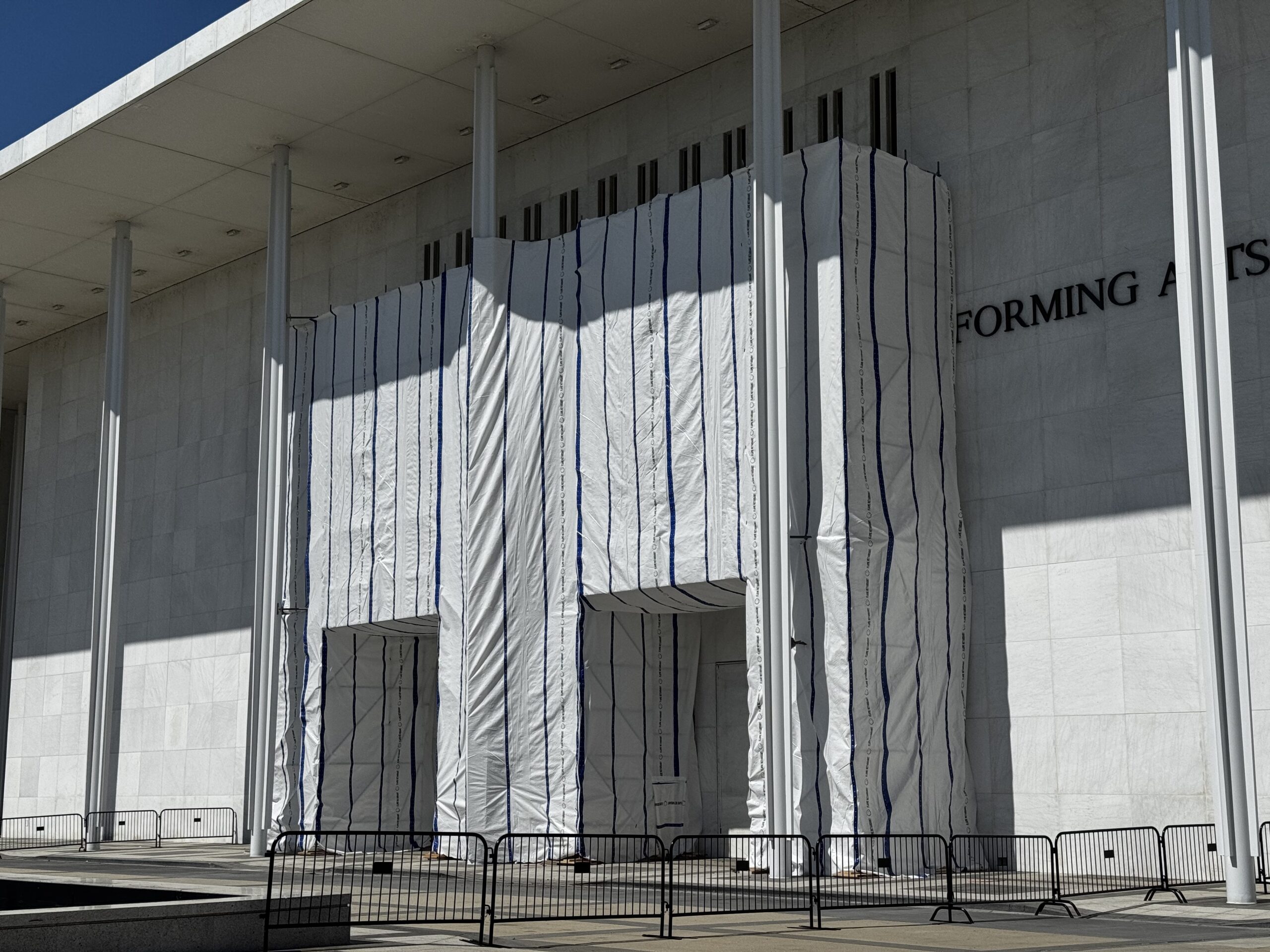
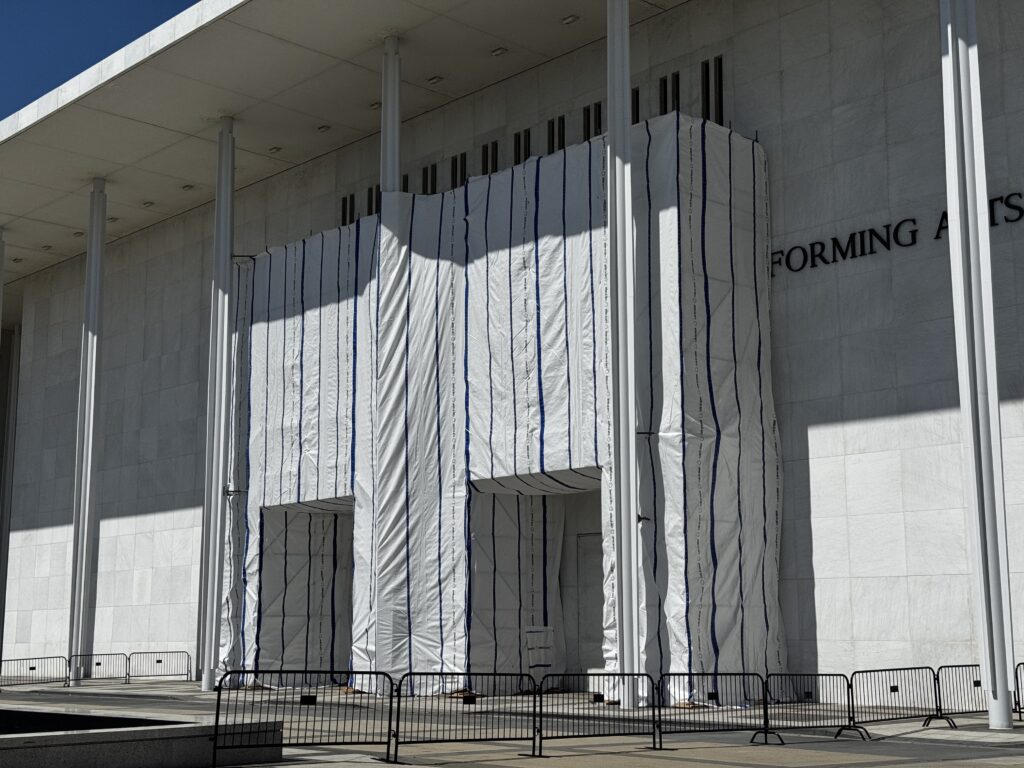
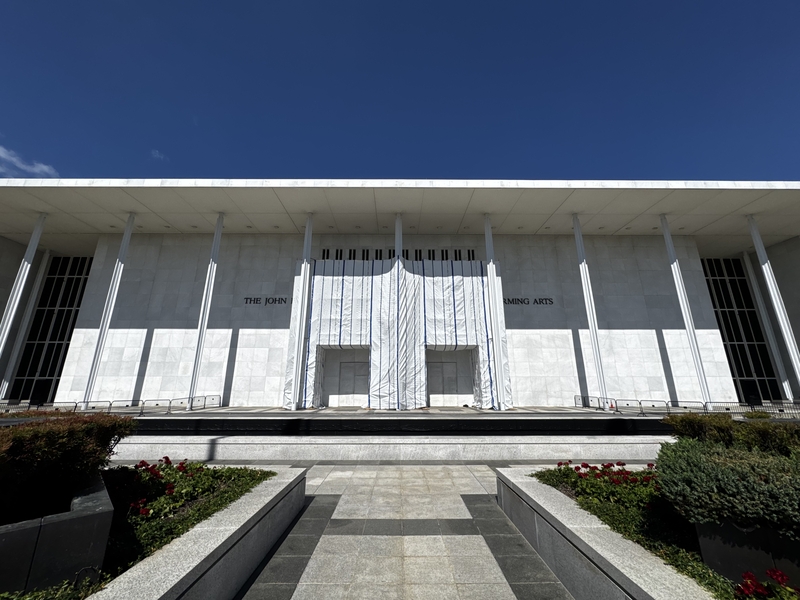
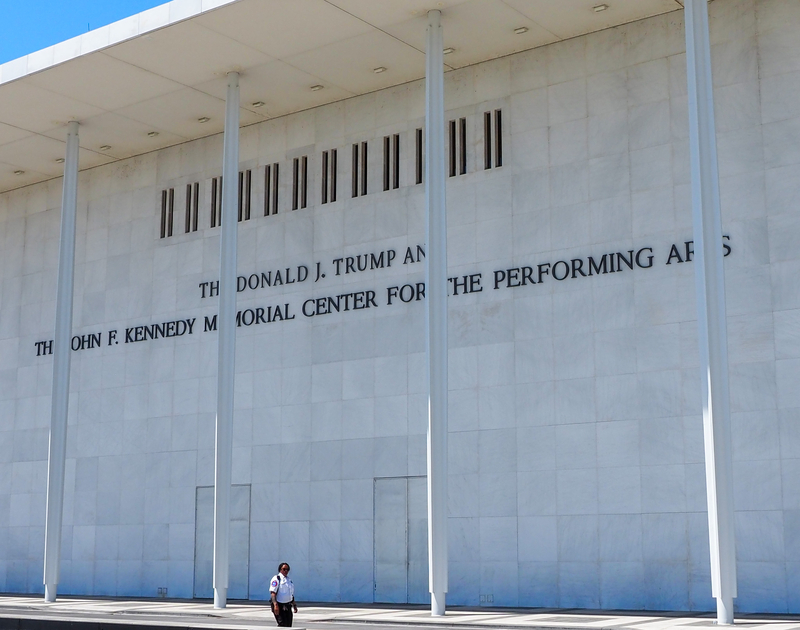
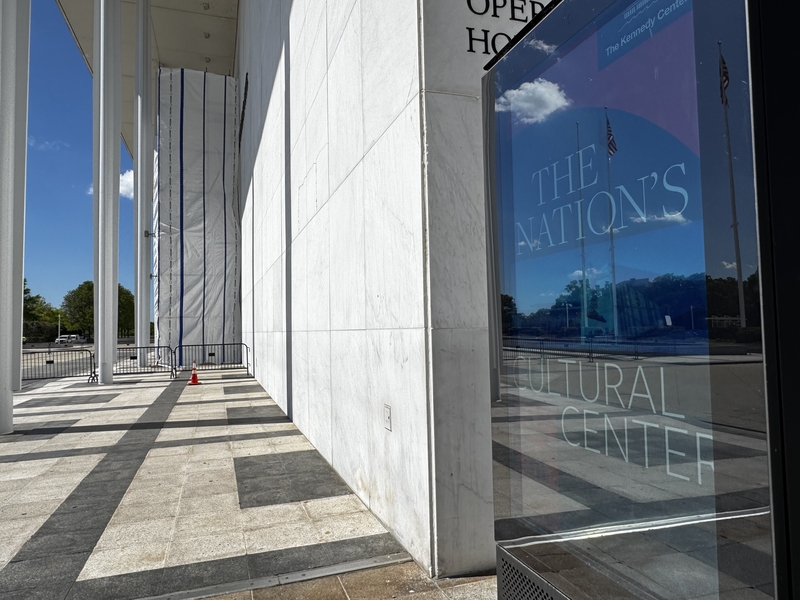
    Days after President Donald Trump’s name was removed from the John F. Kennedy Center for the Performing Arts, a large tarp and scaffolding was still blocking the building’s facade from public view Monday afternoon.

    Construction crews took Trump’s name off the center early Saturday morning after a federal appeals court upheld a Friday deadline for its removal.

    But at the start of the work week, the portion of the building’s facade where Trump’s name was located was almost entirely obstructed.

    A weatherproof tarp covers the facade of the John F. Kennedy Center for the Performing Arts in Washington, D.C., on July 15, 2026. (Photo by Sam Gauntt/States Newsroom)

    A weatherproof tarp covers the facade of the John F. Kennedy Center for the Performing Arts in Washington, D.C., on June 15, 2026. (Photo by Sam Gauntt/States Newsroom)

    According to a Kennedy Center spokesperson, the scaffolding and tarp will remain up while crews perform maintenance on the marble and soffit panels on the building’s facade.

    The center did not provide any indication about how long the maintenance work will take or when the tarps will be taken down.

    The removal of Trump’s name came as a blow to his efforts over the course of his second term to take direct control of the center’s governance and get rid of what he described as “woke” programming.

    Early last year, he appointed a new, hand-selected board of trustees for the center. They subsequently named him chair. Last December, he even personally hosted the Kennedy Centers Honors, the annual tribute show celebrating significant contributions to performing arts.

    In February, Trump announced that he planned to close the Kennedy Center for two years while working on significant renovations.

    Ohio lawmaker sues

    In the midst of these changes to the center, Rep. Joyce Beatty, D-Ohio, filed a lawsuit against the Trump administration in late December, challenging the legality of the president renaming the center after himself. She amended the suit in February, seeking to block the closure as well.

    U.S. District Judge Christopher R. Cooper ruled in favor of Beatty on May 29, ordering that Trump’s name come down, and that the center similarly remove references to Trump from its website and online branding.

    Kennedy Center

    The John F. Kennedy Center for the Performing Arts in Washington, D.C., with President Donald Trump’s name on the facade is pictured May 5, 2026. (Photo by Ashley Murray/States Newsroom)

    After Cooper ruled, Trump took to Truth Social and blasted the judge, whom he described as an “anti-Trump Hater,” for stopping the “magnificent structural and aesthetic rebuilding of The Trump Kennedy Center.”

    Cooper’s order also halted the planned two-year closure of the center. The Trump administration appealed the ruling, but a panel of the U.S. Court of Appeals for the District of Columbia Circuit upheld Cooper’s decision Friday evening.

    Beatty, one of seven U.S. House members on the center’s board, said in a statement last week that the Kennedy Center’s newly appointed trustees are “more focused on elevating the president than advancing the arts.”

    “The court was clear in its order because the statute is clear: only Congress can change the name of the Kennedy Center,” Beatty said. “My hope moving forward is that the board restores the integrity of the Kennedy Center, rebuilds programming and respects the rule of law. This beloved national treasure deserves nothing less.”

    A weatherproof tarp is affixed to the facade of the John F. Kennedy Center for the Performing Arts in Washington, D.C., on June 15, 2026. (Photo by Sam Gauntt/States Newsroom)

    A weatherproof tarp is affixed to the facade of the John F. Kennedy Center for the Performing Arts in Washington, D.C., on June 15, 2026. (Photo by Sam Gauntt/States Newsroom)

    Beatty did not immediately return States Newsroom’s request for comment Monday afternoon.

    But even though Trump’s name is gone, the center is still shrouded in legal uncertainty.

    In his May order, Cooper wrote that his ruling was not an effort to control how the center should be run or set a plan for it going forward. Rather, he said it was to hold the Kennedy Center’s Board to the requirements set by the law.

    Beyond that, he wrote, the court will “let the parties play on.”

  • Bloody UFC cage match on White House lawn marks Trump’s 80th birthday

    Bloody UFC cage match on White House lawn marks Trump’s 80th birthday

    WASHINGTON — President Donald Trump celebrated his 80th birthday Sunday cageside at a multimillion-dollar bloody mixed martial arts event staged on the White House South Lawn, punctuated by fighter jet flyovers, a live military band and fireworks to mark the country’s 250th anniversary.

    It also included the airing of a conspiracy theory about a former first lady, Michelle Obama, during post-fight comments by one of the contestants.

    The spectacle promoted by the Las Vegas-based Ultimate Fighting Championship, billed as Freedom 250, was exclusively shown on the paid subscription platform Paramount+. The Trump-organized event was not affiliated with the national nonpartisan organization America 250, a commission created by Congress.

    Aside from a blood sport taking place in the backyard of the White House, the night served as a first for several other extraordinary sights. That included live pre-fight sports commentary from inside the White House, and fighters warming up in offices-turned-lockerrooms at the neighboring Eisenhower Executive Office Building.

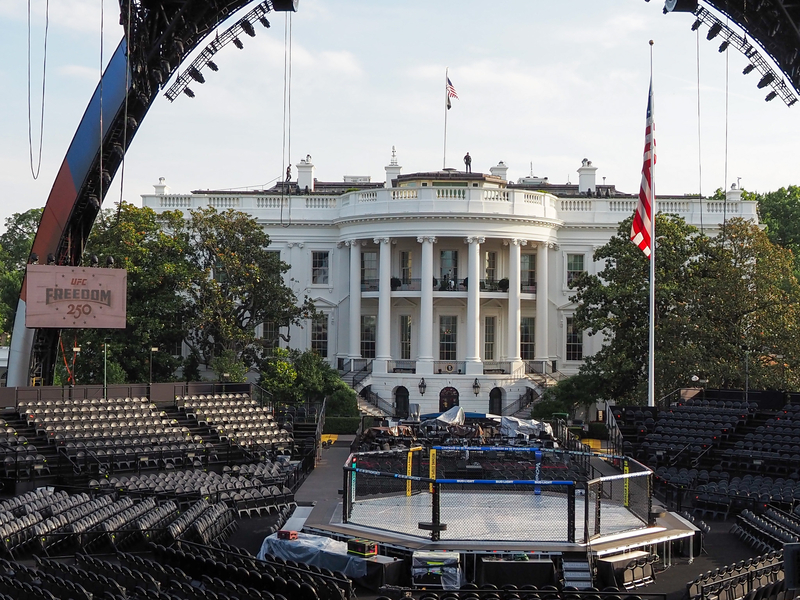
    The Ultimate Fighting Championship ring on the White House South Lawn on Thursday, June 11, 2026. (Photo by Ashley Murray/States Newsroom)

    The Ultimate Fighting Championship ring on the White House South Lawn on Thursday, June 11, 2026. (Photo by Ashley Murray/States Newsroom)

    VIPs, including members of Congress and tech giants, sat under the lights in the temporary arena able to hold up to 4,300 guests. Tens of thousands of UFC fans crowded the Ellipse, where the fights were displayed on two mammoth screens.

    The event reportedly cost $60 million, according to a government court filing. VIP sponsorship packages, including a chance to sit cage-side under “the claw” cost up to the widely reported price tag of $1.5 million.

    Between praise for the American military and Jesus Christ, fighters delivered insulting and expletive-laden comments from inside “the Octagon.” Two American fighters, Bo Nikal and Josh Hokit, thanked Trump for having “the balls” to host the event at the White House.

    Hokit, a former NFL player, during his live post-fight comments to massively popular podcast host Joe Rogan, insulted Brazilian fighter Alex Pereira’s mother and then repeated a right-wing conspiracy theory claiming former first lady Michelle Obama is “a man.”

    Rogan did not challenge the comment. Shortly after his remark, Hokit placed his victory chain around Trump’s neck and the two shook hands. The moment was captured and posted on social media by White House special assistant Margo Martin.

    The official UFC YouTube clip of the California heavyweight’s speech does not include his unfounded insult of Obama.

    Bright lights and flyovers

    Spotlights from the UFC’s 92-foot steel canopy that dwarfed the White House and towered over “the Octagon” cage could be seen in the night sky from neighborhoods around Washington, D.C., and several residents took to social media to complain that a B-1 bomber flyover at 11:30 p.m. Eastern woke them. Fireworks exploded until nearly 1:30 a.m.

    Drinks in hand, U.S. service members in short-sleeve dress uniforms celebrated from the seats — several sailors even taking part in the “YMCA” dance during the Marine Corps band’s live cover of the Village People’s 1978 hit, a staple at Trump’s events.

    Trump and UFC CEO Dana White entered the arena just before 8:30 p.m. Shortly after, a dozen fighter jets, in a joint “Super Delta” formation performed by the U.S. Air Force Thunderbirds and Navy Blue Angels, flew overhead during the national anthem, performed by country music star Zac Brown.

    Trump sat just below the fighting cage between first lady Melania Trump and White, an ally who has delivered primetime addresses in support of Trump at the 2016, 2020 and 2024 Republican National Conventions.

    Trump was surrounded by family, including his son, Barron, who sat behind him and shook hands with several guests who approached the president, according to pooled dispatches from the White House press corps.

    Several winning fighters jumped over the cage rail to shake the president’s hand following the individual matches.

    Eight US fighters

    Of the seven-fight card’s 14 competitors, eight were American. The violent bouts were accompanied by cheers of “USA!” and various taunts, including shouts that Canada should be “the 51st state” as American bantamweight fighter Sean O’Malley defeated Canada’s Aiemann Zahabi. Trump applauded O’Malley and shook his hand following the individual fight.

    The main event featured a title match between lightweights American Justin Gaethje and Spanish-Georgian Ilia Topuria. Officials named Gaethje the winner just after 1 a.m., as the badly battered Topuria, with a bloodied face, was declared incapable of continuing, according to pool reports.

    Fighters were paid a $250,000 performance bonus sponsored by World Liberty Financial, a crypto currency venture owned by the Trump family, according to broadcast announcers.

    Cameras delivering the exclusive Paramount stream showed notable lawmakers and tech moguls in the crowd, including House Speaker Mike Johnson, R-La., former wrestler and college wrestling coach Rep. Jim Jordan, R-Ohio, and Meta CEO Mark Zuckerberg. The press corps reported Senate Majority Leader John Thune, R-S.D., was also nearby.

    Trump, Zuckerberg and White spoke for several minutes during a break in the fights just before 10 p.m., according to pool reports.

    Other notable guests included Kris Marszalek, CEO of Crypto.com, one of the event’s two primary sponsors, and Polish President Karol Nawrocki.

    Acting Attorney General Todd Blanche, Trump’s former personal defense attorney and his attorney general nominee, shook hands as he moved through the crowd, according to press pool reports. Several other presidential Cabinet members were present, including Secretary of State Marco Rubio, who on Thursday signed a “sports diplomacy” agreement with UFC.

    Also in attendance was Paramount Skydance CEO David Ellison, whose reportedly $111 billion corporate takeover of Warner Bros. Discovery, was cleared by the Justice Department Friday, a key last step for the merger.

    Paramount+ has a $7.7 billion multi-year content deal to exclusively carry UFC events.

    The event, which was to start at 8 p.m., was delayed for roughly an hour because of the threat of thunderstorms. The fights wrapped up just after 1 a.m.

    Weekend festivities included a UFC press conference Friday night in front of the Lincoln Memorial, and a two-day fan festival on the Ellipse that featured motorcycle stunts from the Nitro Circus and a concert from the Georgia-based Zac Brown Band.

    The UFC controlled media credentialing for the event on the White House grounds.

    ‘No Kings’ protest

    The event faced sharp criticism but remained unscathed by an eleventh-hour lawsuit challenging the legality of UFC’s use of the White House lawn.

    Performers and celebrities staged a counter-concert organized by the Committee for the First Amendment, an activist coalition of artists spearheaded by Jane Fonda.

    The No Kings protest organization promoted a livestream from The Town Hall in New York City, and encouraged people to organize remote watch parties for the “Rise Up, Sing Out” concert featuring Patti Smith, Bette Midler and Rufus Wainwright, among others.

    C-SPAN also streamed the nearly two-and-a-half hour concert, though some performances were muted because of licensing restrictions.