Category: National News

  • GOP dreams of another big budget bill dashed by Trump demands for SAVE America Act

    GOP dreams of another big budget bill dashed by Trump demands for SAVE America Act

    WASHINGTON — Republicans have one more opportunity to use the complex process they relied on to enact their “big, beautiful” law and provide tens of billions in additional funding for immigration enforcement — a chance that becomes less likely the more divisions over a voter identification bill splinter the party.

    Debate over a third reconciliation bill has been simmering in the background for months, though GOP lawmakers have yet to reach consensus about whether they should draft another massive package, like they approved last year, or a more narrow one that could help the party boost defense spending.

    That budget reconciliation process gives Republican leaders a way to get around Senate rules that would otherwise force bipartisanship, giving them a loophole out of negotiating major legislation with Democrats.

    But it comes with several hurdles in order to get that special treatment, including that each provision in the bill have an impact on federal revenue or spending that is not deemed “merely incidental” by the Senate parliamentarian.

    Those in-the-weeds restrictions aren’t especially important to President Donald Trump, who wants Republicans in Congress to prioritize a voter identification bill, which cannot move through reconciliation, over everything else.

    House Speaker Mike Johnson, R-La., tried to find middle ground in late June, proposing lawmakers use reconciliation to create a grant program for states that implement voter identification requirements.

    Johnson acknowledged the challenges to using reconciliation amid narrow majorities in each chamber, but said he thinks Republicans can accomplish their goals if they “stick together.”

    He, however, didn’t have details to share.

    “Stay tuned. We’re working through that,” Johnson said. “Doing a reconciliation bill is a very complicated process of consensus building, where we have a collection of ideas that, I think, every Republican, certainly, agrees with in principle.”

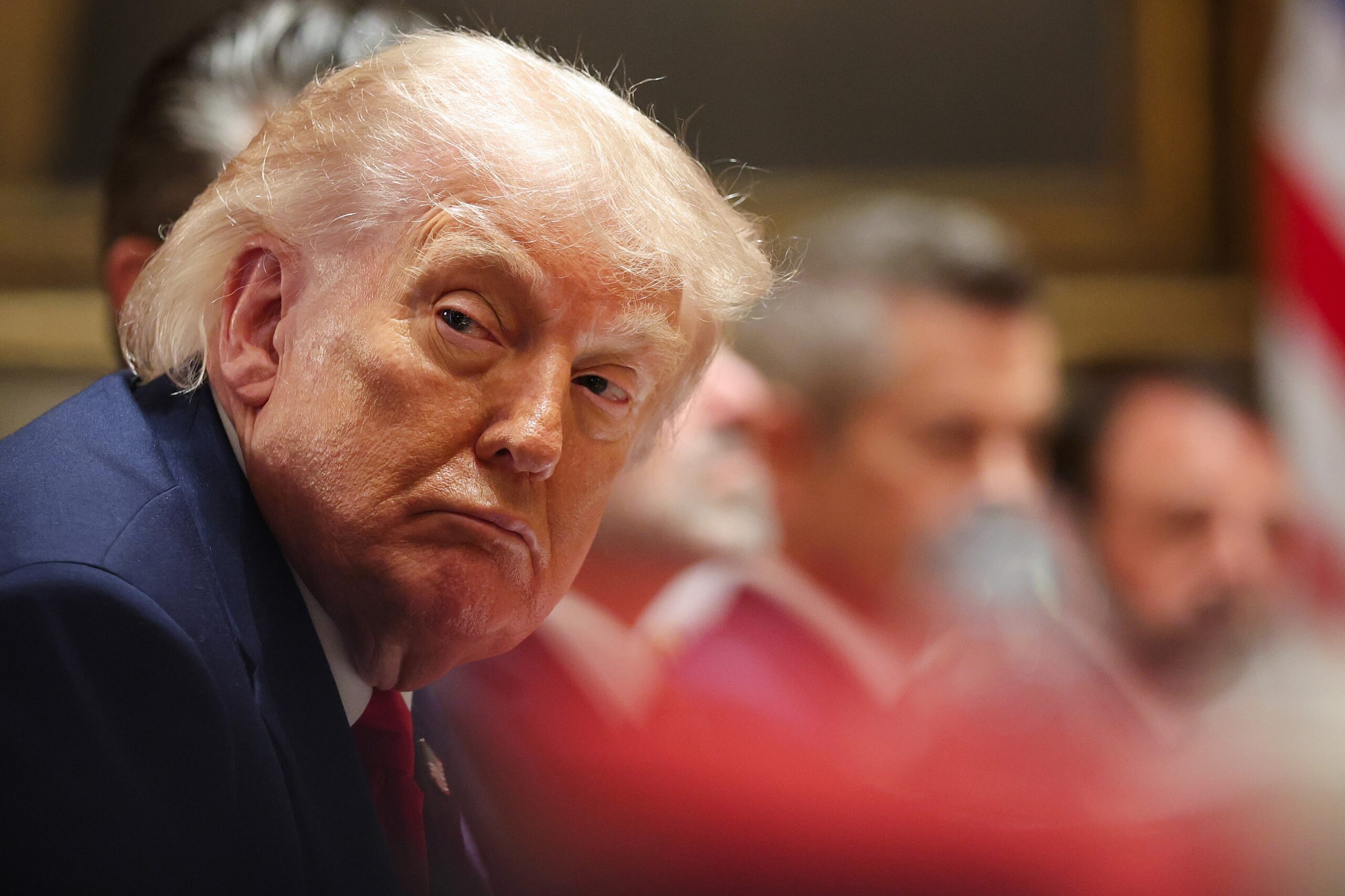
    A few hours later, sitting in the Oval Office, the president batted down the idea of any compromise on the elections bill, creating more public disagreement between the top Republicans in the country.

    “Not really. No,” Trump said when asked whether he’d “be open to a compromise measure” moving through the reconciliation process.

    Hardball tactics

    Lobbying for the full bill, which would require people show proof of citizenship to register to vote and a photo ID when casting a ballot, isn’t only coming from the president.

    Far-right Republicans in both chambers are using hardball tactics to cajole their leaders to get the legislation to Trump’s desk, even if it means delaying work on their colleagues’ priorities.

    Utah Sen. Mike Lee is one of several Republicans posting on social media and holding press conferences. He recently called for Americans to “encourage your senators to resume debate on the Senate floor—with a plan to keep debating it until it passes.”

    “Tell your senators: Pass the SAVE America Act,” Lee wrote in another post. “Accept no excuses or half measures.”

    Senate Majority Leader John Thune, R-S.D., has become somewhat frustrated with constant pressure from some of his members, who are diverting time and resources to a bill that cannot pass.

    “At the end of the day, I have to deal with reality,” Thune said. “And sometimes the alternative universe that is X doesn’t reflect the facts on the ground.”

    Thune said it’s been “very clear” for some time there isn’t enough support among Republicans to change the Senate rule that requires at least 60 lawmakers vote to limit debate on most bills. That legislative filibuster forces bipartisanship and gives the minority party, which could be Republicans as soon as next year, a seat at the table.

    “There are not the votes to nuke the filibuster and there aren’t going to be 10 Democrat votes to all of a sudden support the SAVE America Act,” Thune said. “Those are just hard realities and I think people at some point have to come to grips with that.”

    Trump cancels signing for housing bill

    West Virginia Republican Sen. Shelley Moore Capito said that despite months of effort, the voter identification bill doesn’t have the votes to become law.

    “If you can’t get to 60, you can’t pass it. I mean, that’s pretty simple,” she said. “Now, he says talk it to death and people will change their minds. I don’t think that’s a strategy that’s going to be in success. We tried that earlier this year to keep talking, we didn’t get to the end.”

    Capito said voters want to see Republicans focus on issues that can improve people’s lives, like the broadly bipartisan housing affordability bill both chambers approved this month. Trump was set to sign that bill during a ceremony on Capitol Hill but canceled at the last minute to try to push through the election bill.

    “So, yeah, they want to see us do something,” she said. “They don’t want to see us sitting up there yakking all the time.”

    Senate Appropriations Chairwoman Susan Collins, R-Maine, wants to use the time to avoid another government shutdown when the next fiscal year begins Oct. 1 — no easy feat following three shutdowns over the last year.

    Senate Agriculture Committee Chairman John Boozman, R-Ark., hopes to reach final agreement on the farm bill in the months ahead after years of delays and stopgap measures for those agriculture and food safety net programs.

    He brushed aside demands from some other GOP lawmakers to use the budget reconciliation process to pass another party-line package.

    “We had trouble with the one that we just did and that was very, very narrow. I mean, that was strictly Homeland Security,” Boozman said. “When you start doing a bigger package, like they’re talking about and you start involving various committees, it becomes a lot more issues involved that you have to work out. And so it just gets very complex.”

    Boozman added that working through the several steps of that process takes weeks, which lawmakers may not have.

    Other priorities

    Missouri Republican Sen. Josh Hawley said the party needs to focus on legislation that would lower “the cost of everything,” in part, by eliminating taxes on gasoline and health care.

    “That’s something that would be a huge benefit to every working person out there immediately,” he said. “Let them take all health care costs off of their federal taxes, so they paid no taxes on it.”

    Louisiana Republican Sen. John Kennedy said he thinks lawmakers should use the budget reconciliation process to significantly bolster defense funding. But he said “duh” when asked by States Newsroom whether the limited number of days in session would make that difficult.

    Lawmakers are set to be out of session for nearly all of August and September.

    “I think if we want to get more money for defense, we have to do it through reconciliation, which means we need to start immediately,” he said.

    Ohio Sen. Bernie Moreno has a lengthy list of issues he wants to see Republicans address before November, including a bill he’s set to release later this summer with Massachusetts Democratic Sen. Elizabeth Warren that would shore up the Social Security trust fund.

    “It’s not really a third-rail issue, because what we’re saying is that everybody should pay the same amount of money for Social Security,” he said. “When you have something that literally 90% of Americans support, I think we should be able to get something on that across the finish line.”

    The two lawmakers wrote in an op-ed published in The New York Times the bill would raise the cap that ensures people don’t pay into Social Security on earnings more than $184,500.

    “Since the vast majority of Americans make less than that, most people are paying Social Security taxes on 100 percent of their earnings while the highest earners are paying on only part of theirs,” they wrote.

    “Why should a middle-class nurse pay a larger share of her paycheck — than a wealthy corporate lawyer?” they added. “This is doubly unfair in an economy in which top earners’ wages, over time, have pulled far ahead of those of the average worker.”

    Iowa Republican Sen. Chuck Grassley said he’d like lawmakers to ensure E15 gasoline, a blend that includes 15% ethanol and is usually unavailable in summer, can be sold year-round, though he hadn’t thought about any other issues the party should press for ahead of November.

    “I guess I can’t answer your question,” he said. “I just haven’t thought about it.”

  • States show their stuff: The Great American State Fair opens in D.C.

    States show their stuff: The Great American State Fair opens in D.C.

    WASHINGTON — Visitors from across the United States traveled to the National Mall Thursday for the opening day of the Great American State Fair, a days-long event that is part of President Donald Trump’s Freedom 250 celebration of the nation’s semiquincentennial.

    States and territories showed off cultural and agricultural exports at exhibits stretching nearly a mile. Attendees snapped photos on the small Grand Ole Opry stage in the Tennessee booth, kids tried putt-putt at Indiana’s miniature golf course and cowboys rode horses at Montana’s rodeo.

    A crowd watches a rodeo on the National Mall as part of Montana's exhibit for the Freedom 250 Great American State Fair on Thursday, June 25, 2026. (Photo by Ashley Murray/States Newsroom)

    A crowd watches a rodeo on the National Mall as part of Montana’s exhibit for the Freedom 250 Great American State Fair on Thursday, June 25, 2026. (Photo by Ashley Murray/States Newsroom)

    A 110-foot Ferris wheel slowly turned at the center of the freshly manicured lawn, framing the Washington Monument and the U.S. Capitol in the distance on either side. Nearby stood a model of Trump’s controversial “triumphal arch.”

    People collected swag from each state — drawstring bags from Ohio, stickers from South Dakota, snacks from Tennessee — and could receive a stamp on state fair passports.

    The Trump administration's Freedom 250 Great American State Fair opened on the National Mall on Thursday, June 25, 2026. (Photo by Ashley Murray/States Newsroom

    The Trump administration’s Freedom 250 Great American State Fair opened on the National Mall on Thursday, June 25, 2026. (Photo by Ashley Murray/States Newsroom

    The fair is part of the larger Freedom 250 programming and kicked off Wednesday night with a rally on the mall featuring a speech from the president that closely resembled his remarks along the 2024 presidential campaign trail. The festivities will continue over Independence Day, when Trump will deliver a second speech followed by what is promised to be an impressive fireworks display.

    The president will visit North and South Dakota as part of his Freedom 250 tour for the opening of the Teddy Roosevelt presidential library and Independence Day eve fireworks above Mount Rushmore.

    Emma Francus, 10, of Detroit, Michigan, plays mini golf at Indiana's golf-themed exhibit at the Freedom 250 Great American State Fair on the National Mall on Thursday, June 25, 2026. (Photo by Ashley Murray)

    Emma Francus, 10, of Detroit, Michigan, plays mini golf at Indiana’s golf-themed exhibit at the Freedom 250 Great American State Fair on the National Mall on Thursday, June 25, 2026. (Photo by Ashley Murray)

    Freedom 250 then extends into August with a high school athletic competition in Washington, D.C., dubbed the “Patriot Games” and a Freedom 250 INDYCAR race around the National Mall.

    The administration’s celebration is separate from the America250 commission, created by Congress a decade ago, and which has its own nationwide programming this year.

    From Lake Erie to the Ohio River

    Ohio Gov. Mike DeWine and first lady Fran DeWine greeted guests in Ohio’s pavilion. The couple posed for photos in front of a map of the Buckeye State.

    “We wanted to see on the wall all the different things, from Lake Erie to the Ohio River, all the different fun things you can do in Ohio,” the Republican governor said, adding the state has local celebrations and initiatives planned for the 250th anniversary, including “Movies in Ohio” for community showings of films that feature the state.

    From left, Ohio first lady Fran DeWine and Gov. Mike DeWine take a photo with Miles Armiger, 12, of Severn, Maryland, and his grandmother, Robyn Toman, on Thursday, June 25, 2026, at the Ohio exhibit, part of the Trump administration's Freedom 250 Great American State Fair. (Photo by Ashley Murray/States Newsroom)

    From left, Ohio first lady Fran DeWine and Gov. Mike DeWine take a photo with Miles Armiger, 12, of Severn, Maryland, and his grandmother, Robyn Toman, on Thursday, June 25, 2026, at the Ohio exhibit, part of the Trump administration’s Freedom 250 Great American State Fair. (Photo by Ashley Murray/States Newsroom)

    Ohio’s first lady showcased a children’s literacy exhibit on the opposite wall and touted the roughly 427,000 participants in the state’s partnership with the Dolly Parton Imagination Library, a program that mails free children’s books monthly to households with kids under age 5.

    “We’ve mailed out 27 million books. We know that a child’s brain is 80% developed by age 3, so we want to get them those books early,” she said.

    Reflecting on America’s milestone birthday, the governor said, “We’re always a work in progress, Ohio’s a work in progress, this country is a work in progress.”

    “I think you know the thing we need to keep in mind, all of us, is there’s some essential core principles that we all believe in. … We may disagree about different policies, but the core principles are the same,” he said.

    Cartwheels on the lawn

    People from various states walked from exhibit to exhibit, while stopped in the nation’s capital during road trip vacations.

    Tanya Geders, 43, of St. Louis, Missouri, did a cartwheel in the mall lawn, trying to persuade her son to join in. The family stopped at the state fair on their way to Virginia Beach.

    Tanya Geders, 43, of St. Louis, Missouri, modeled a cartwheel for her son on the National Mall at the Freedom 250 Great American State Fair on Thursday, June 25, 2026. (Photo by Ashley Murray/States Newsroom)

    Tanya Geders, 43, of St. Louis, Missouri, modeled a cartwheel for her son on the National Mall at the Freedom 250 Great American State Fair on Thursday, June 25, 2026. (Photo by Ashley Murray/States Newsroom)

    “We’re like, well, if we go to the ocean, we can go to D.C. and what a better time to be here than the 250th anniversary,” Geders said.

    Faith Eliza, of Grand Junction, Colorado, performed on the National Endowment for the Arts stage at the Freedom 250 Great American State Fair on the National Mall on Thursday, June 25, 2026. (Photo by Ashley Murray)

    Faith Eliza, of Grand Junction, Colorado, performed on the National Endowment for the Arts stage at the Freedom 250 Great American State Fair on the National Mall on Thursday, June 25, 2026. (Photo by Ashley Murray)

    Robyn Toman, 71, of Severn, Maryland, escorted her 12-year-old grandson Miles to meet DeWine and grab a photo with the governor.

    Toman said she remembers the country’s bicentennial.

    “I was a kid about his age, and I came in 1976. I said, ‘We’re gonna go, let’s go down to D.C. for a couple days and see this,’” she said.

    “We’ve enjoyed it. We went over to the archives yesterday, and saw the Constitution, and the Declaration of Independence, and the Bill of Rights. And, oh, that was so nice, that was fantastic.”

  • Maryland’s members of Congress stress affordable housing needs after Trump stalls bill

    WASHINGTON — U.S. lawmakers from Maryland vowed to continue focusing on affordable housing initiatives for state residents and beyond at a Capitol press conference Thursday, taking stabs at President Donald Trump’s refusal to sign a landmark bipartisan bill.

    Sen. Chris Van Hollen, along with Democratic Reps. April McClain Delaney, Johnny Olszewski, Kweisi Mfume, Sarah Elfreth and Steny Hoyer, took questions on a wide range of topics following their afternoon meeting with Maryland Gov. Wes Moore, though housing was at the center of the discussion.

    Rep. Andy Harris, the lone Republican at the event, did not speak.

    Van Hollen on Thursday noted the state program, but reiterated the federal legislation would be key to addressing Maryland’s housing woes. He highlighted the bill’s provisions meant to increase the supply of affordable homes, limit hedge funds buying single-family homes and help veterans buy property.

    “I do know that the governor has a major affordable housing initiative, and I’ve discussed that with him many times,” Van Hollen said. “But Congress had an opportunity, and still has an opportunity, to do its part.”

    Trump on Wednesday abruptly canceled the signing ceremony for the housing overhaul that passed with broad margins in the Senate Monday and the House Tuesday.

    Shortly before he was set to sign the bill, Trump first discredited the measure, then announced his refusal to sign it altogether, saying that he first wanted Congress to adopt his hallmark noncitizen voting act.

    “Today’s Housing News Conference and Signing is hereby cancelled until such time as we pass the desperately needed SAVE AMERICA ACT, which I consider to be a National Emergency,” Trump wrote on Truth Social Wednesday, much to the surprise of many lawmakers who had been awaiting his signature.

    ‘Release this bill’

    Van Hollen on Thursday also called on U.S. House Speaker Mike Johnson, R-La., to send the measure straight to the White House, where Trump can decide to either veto, sign or not sign the bill, and allow Congress to “go home.”

    If the president does not sign or veto a bill within 10 days of Congress sending it to their desk, it automatically becomes law. But Johnson, who was responsible for sending the enrolled housing bill to Trump because it originated in the House, had not sent it to the White House before a meeting there Thursday.

    “The speaker of the House needs to release this bill that has been passed by his body and by the United States Senate, and we need to do it now,” Van Hollen said during the press conference.

    “People are suffering because of the lack of affordable housing,” he added. “This isn’t going to solve the whole thing, but it is one important step in the right direction.”

    Shortly after Van Hollen’s comment, media outlets reported that Johnson returned from his White House meeting saying he would send the housing bill to Trump.

    Maryland housing

    Maryland is facing a severe housing crisis as residents grapple with a nearly 100,000-unit shortage, rising costs and issues of unequal access.

    Moore and his administration have responded by proposing to carve out millions for multiple housing-focused initiatives as part of their proposed fiscal 2027 budget.

    Elfreth said Thursday lawmakers should work to expand housing supply to make it easier for younger generations to buy their first homes.

    She said the bipartisan housing bill could help solve that issue, which she called a symptom of “the greatest issue facing Americans today, which is affordability.”

    But instead of signing the bill, she said, “the president is currently holding it hostage.”

  • Narrowed Education Department definition of ‘professional’ degrees stopped in federal court

    Narrowed Education Department definition of ‘professional’ degrees stopped in federal court

    WASHINGTON — A federal judge on Wednesday temporarily blocked the U.S. Department of Education’s new definition of “professional” fields of study, which set stricter borrowing caps for graduate students pursuing certain degrees.

    The ruling from U.S. District Judge Beryl Howell specifically halts the department’s new definition of “professional” degrees, which was limited to 11 fields and would impose lower loan caps for groups not included in its definition, including nursing, teaching and social work.

    The ruling, which covers two consolidated lawsuits, came just a week before the provision was slated to take effect July 1. It marks a setback for a key part of President Donald Trump’s administration’s forthcoming overhaul of the federal student loan system.

    The department finalized regulations, published May 1, that implement sweeping changes outlined in the GOP’s “big, beautiful” law, including new caps on federal student loans, with different limits based on whether a degree was “professional.”

    But it overreached by narrowing what degrees qualified as professional, Howell wrote, saying Congress intended to keep the definition in place when the law passed in July 2025.

    “The Rule is likely contrary to law,” Howell wrote. “The Rule’s definition of ‘professional degree,’ and thus the category of students benefiting from the high loan caps, is likely narrower (than) what Congress intended.”

    But she declined to halt the department from enforcing the forthcoming loan caps because they were written into the law.

    Howell wrote that “this litigation cannot remedy plaintiffs’ primary frustration over the elimination of uncapped borrowing to pursue graduate education and the concomitant benefits of enabling more students from working families to earn a graduate degree in a chosen career field and attracting students more broadly to enter the American workforce in fields understaffed and in areas underserved.”

    Challenge from health professionals

    Wednesday’s ruling stems from a pair of combined challenges by associations representing people in fields that do not fall under the new “professional” definition and would thus face lower annual and lifetime borrowing caps.

    One suit was filed in May by the American Association of Nurse Practitioners; the National Association of Pediatric Nurse Practitioners; the American Association of Colleges of Nursing; the Association of Schools and Programs of Public Health; the National Education Association; and the American Association for Marriage and Family Therapy.

    The other lawsuit was filed earlier in June by the PA Education Association and the American Academy of Physician Associates.

    In the May suit, the challengers argued that “the final rule’s definition of ‘professional degree’ excludes many degree programs that prepare students for a specific profession, and that may qualify as a professional degree under the 2007 regulatory definition adopted by Congress, including degrees in nursing, education, public health, and marriage and family therapy.”

    Unlimited borrowing eliminated

    Part of the regulations eliminate a key loan program for graduate and professional students that allowed for unlimited borrowing and establish new annual and aggregate loan limits for those students.

    Graduate student loans will be capped at $20,500 annually and have a $100,000 aggregate limit, while professional student loans would have a $50,000 annual limit and $200,000 aggregate cap.

    But the programs within the department’s “professional” category and thus subject to the higher loan cap are limited to: pharmacy, dentistry, veterinary medicine, chiropractic, law, medicine, optometry, osteopathic medicine, podiatry, theology and clinical psychology.

    In response to a request for comment, the department said in a statement it was “reviewing the order and will take appropriate action,” adding that “we look forward to implementing the RISE student loan provisions and offering new, affordable repayment plans on July 1.”

  • Trump order limiting voting by mail halted by federal court

    Trump order limiting voting by mail halted by federal court

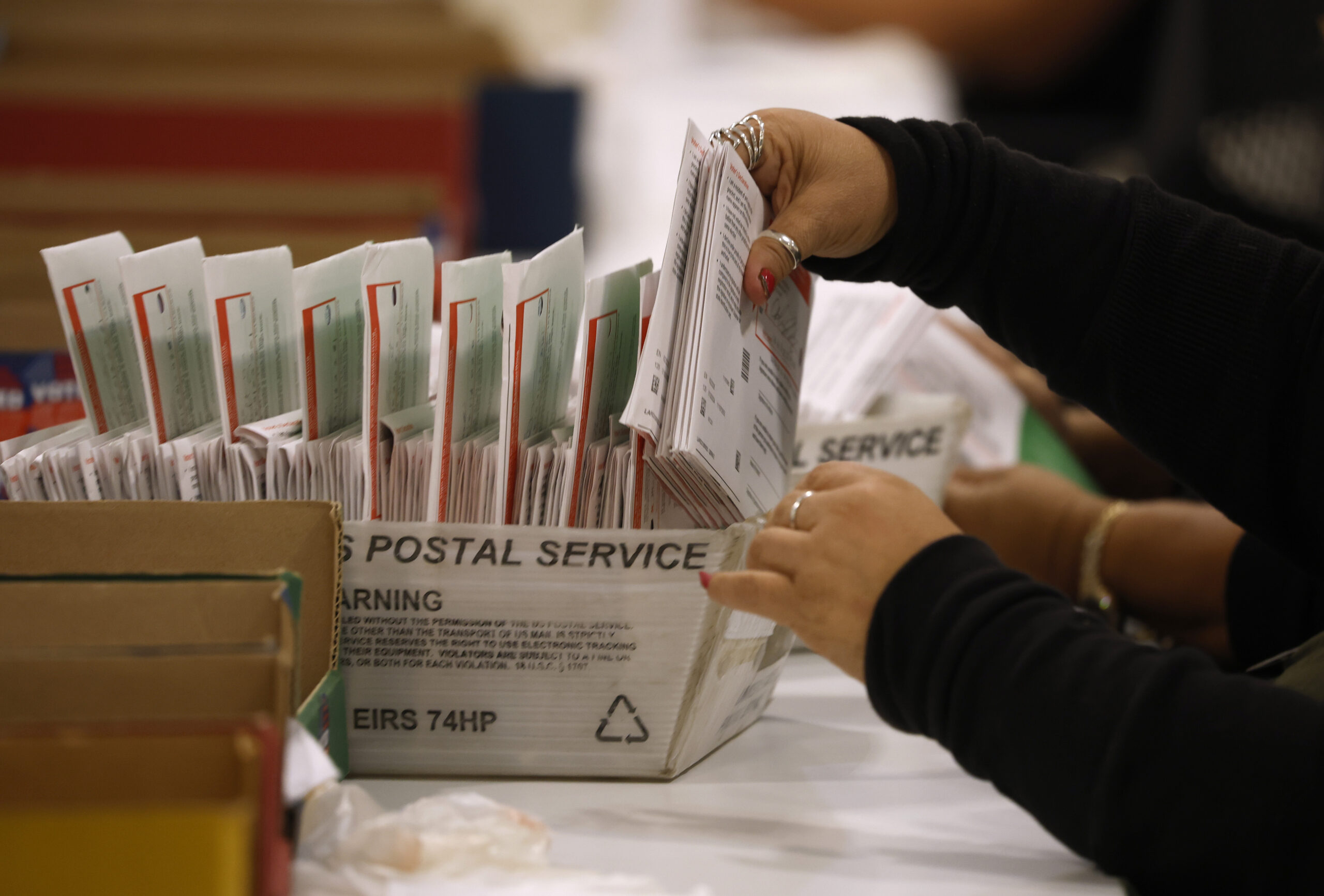
    A federal judge blocked major portions of President Donald Trump’s executive order restricting voting by mail on Thursday, finding he had exceeded his constitutional authority.

    The decision halts, at least until a nearly certain appeal is heard, efforts by the U.S. Postal Service to require states to submit the names of likely mail voters before it delivers ballots. It also stops the U.S. Department of Homeland Security from compiling lists of voting-age citizens in each state.

    U.S. District Judge Indira Talwani, an appointee of President Barack Obama in Massachusetts, is the first judge to block the March 31 executive order. State and local election officials have raised concerns that its requirements would inject chaos into preparations for the November midterm elections.

    Talwani ruled that Trump had asserted too much control over elections in several parts of the order as he directed federal officials to quickly take actions that he argues are needed to prevent noncitizen voting, which rarely occurs.

    “The Constitution does not grant the President any specific powers over elections,” Talwani wrote.

    Order overpowered states

    The executive order directed Postmaster General David Steiner to put forward a rule requiring states, at least 90 days before a federal election, notify the Postal Service whether they intended to allow ballots to be sent through the mail. States would then have to submit to USPS a list of voters planning to vote by mail at least 60 days before the election.

    Talwani wrote that the Postal Service lacks any authorization by Congress to put forward binding regulations on mail-in voting. The Constitution, she wrote, “reserves the power to determine voter eligibility to the States alone.”

    The executive order also required the Department of Homeland Security, with help from the Social Security Administration, to compile a list of voting-age U.S. citizens living in each state and then provide that information to state officials at least 60 days before each federal election. The order does not tell states how to use the data.

    The list of citizens would be drawn from naturalization and Social Security records, according to the order. It would also include data from SAVE, a powerful computer program maintained by Homeland Security that verifies citizenship by checking names against information in federal databases.

    The executive order pointed to no relevant constitutional or legal authority supporting the compilation of the citizenship lists, Talwani wrote. Trump “lacks any authority to compile voter lists for each State,” she wrote.

    A day before the decision, Steiner told a U.S. Senate committee that a proposed Postal Service rule to implement the executive order would lead to non-delivery of ballots in states that don’t provide lists of anticipated mail voters — a position condemned by Democrats.

    “Today’s decision is a very significant victory for free and fair elections and a defeat for Donald Trump’s vile efforts to make it harder for people to vote,” Senate Minority Leader Chuck Schumer, a New York Democrat, said in a statement.

    “Once again, the courts have reaffirmed that Trump’s efforts to subvert the election are patently unconstitutional.”

    White House spokesperson Abigail Jackson said in a statement that the Trump administration remains confident the executive order will be implemented by the November election.

    “The entire Trump Administration will continue lawfully enacting the agenda President Trump was elected to enact – which includes the safety and security of American elections,” Jackson said.

    Latest setback

    Trump has suffered a series of setbacks in recent days in his efforts to influence the administration of state-run elections.

    A federal appeals court on Wednesday ruled that the Department of Justice wasn’t entitled to state voter rolls. Senators also continues to rebuff the president’s attempts to pressure them into passing the SAVE America Act, which would require voters to show documents proving their citizenship.

    Talwani’s decision came in a lawsuit brought by Democratic state attorneys general. It is the second major district court ruling over the executive order, after a judge in Washington, D.C., declined to stop the order because the Trump administration hadn’t taken enough action to implement it.

    Under Thursday’s decision, federal officials must notify their employees within a week that sweeping portions of the executive order are void.

    And on Monday, a judge blocked the use of SAVE to search for noncitizen voters.

  • US Supreme Court rules Trump administration can end legal protections for 350,000 Haitians

    US Supreme Court rules Trump administration can end legal protections for 350,000 Haitians

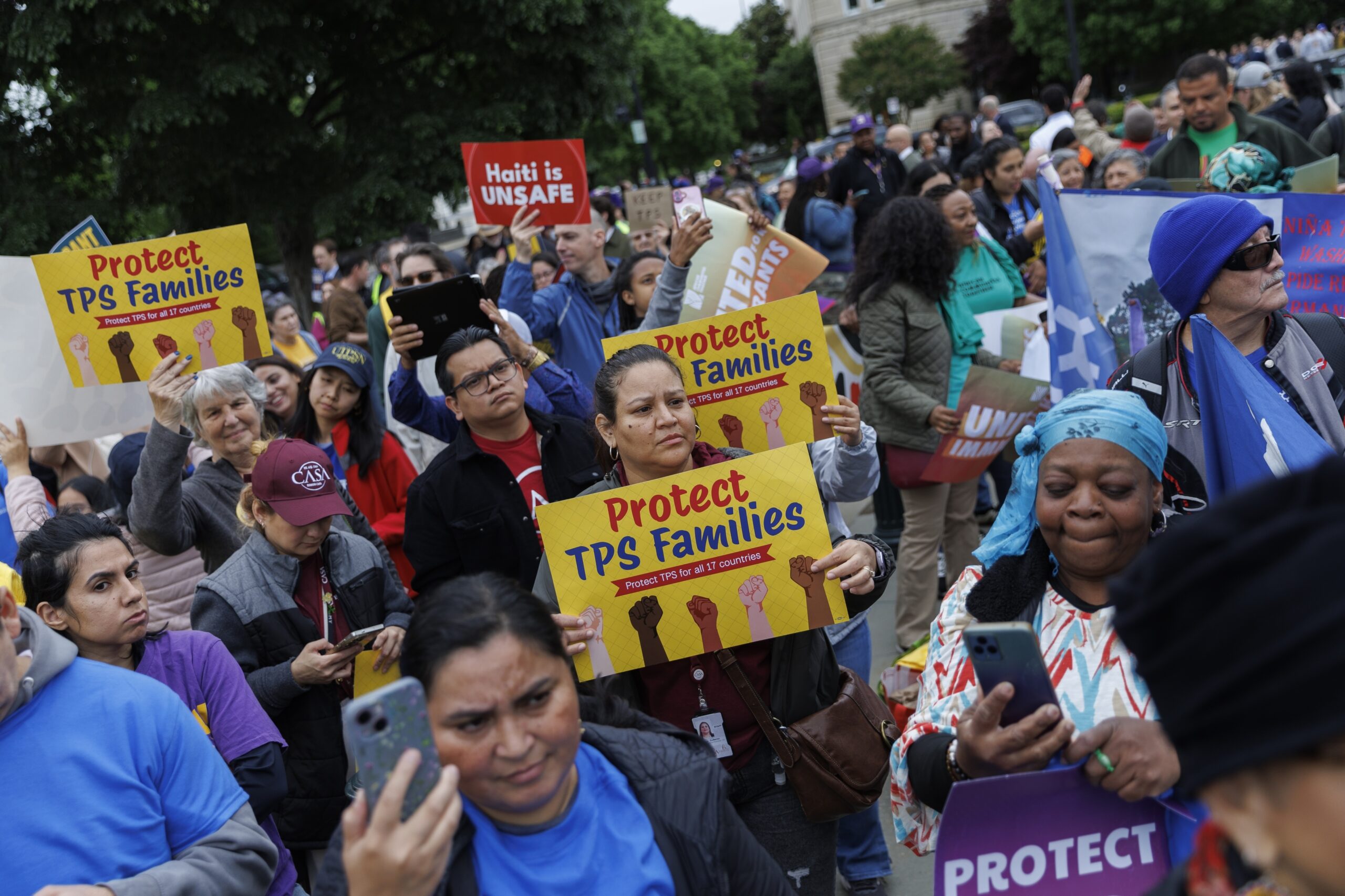
    WASHINGTON — The U.S. Supreme Court Thursday allowed the Trump administration to move forward with its plans to strip temporary legal status from 350,000 Haitians and 6,000 Syrians, a move that opens them up to deportation.

    The 6-3 conservative court ruled that the Haitian and Syrian immigrants are not “entitled” to orders postponing an end to their temporary protections while litigation is pending, arguing those are non-constitutional claims. It means their work permits and deportation protections are stripped.

    Conservative Justice Samuel Alito, who wrote for the majority, said that the Haitians’ claim — that their equal protection claim that their Temporary Protected Status was terminated on a racial bias — are unlikely to prevail in court.

    “None of the cited statements by either the President or the Secretary was overtly racial, and in substance all expressed policy views that could rest on race-neutral justifications,” Alito wrote.

    The liberal justices, Sonia Sotomayor, Elena Kagan and Ketanji Brown Jackson, joined in a dissent that argued the president made clear racial comments about Haitians for the purpose of terminating protections.

    “Haitians are Black. The references—of filth, disease, and primitiveness—are shot through with racial stereotypes and tropes,” they wrote. “It is hard to imagine the statements being made today of any White community.”

    The decision is likely to impact multiple lawsuits across the country in which federal judges have halted President Donald Trump’s efforts to strip legal protections granted to more than 1.3 million immigrants with TPS because they hail from countries the U.S. initially deemed too dangerous for return.

    It also opens hundreds of thousands of immigrants with TPS up to deportation, part of the president’s broader efforts to curtail immigration and strip legal status from immigrants.

    This is a breaking news story and will be updated.

  • Supreme Court sides with Trump administration’s efforts to curb asylum claims at southern border

    Supreme Court sides with Trump administration’s efforts to curb asylum claims at southern border

    WASHINGTON — The U.S. Supreme Court sided Thursday with the Trump administration’s request to turn away asylum-seekers who present themselves at ports of entry at the U.S.-Mexico border.

    The question the justices considered was whether migrants have to fully cross into the United States in order to have the right to apply for asylum and be processed, or if they can apply for asylum when they appear at a port of entry while on Mexico’s side of the border.

    In a 6-3 decision, the conservative justices agreed with the Trump administration that a noncitizen who is standing in Mexico doesn’t arrive in the U.S. “by attempting, and failing, to set foot in this country.”

    The justices held that a noncitizen only arrives in the U.S. “when he crosses the border,” and that the Immigration Nationality Act does not entitle that noncitizen who is standing on Mexico’s side of the border who wants to apply for asylum to be inspected by an immigration officer.

    Justice Samuel Alito, who wrote for the majority, said the case before the justices presented a “straightforward question.”

    “The phrase ‘arrives in the United States’ … carries its ordinary meaning: A person arrives in a geographic location only when he enters it,” he wrote. “A person arrives in a destination when he enters within its area—not before—and that conclusion does not change because someone or something blocks entry. Everyday examples of how people ordinarily use the phrase ‘arrives in’ confirm this understanding.”

    The policy requiring a full crossing, known as metering, is defunct, but Vivek Suri, assistant to the U.S. solicitor general, argued before the high court that it was a policy the federal government should be allowed to have in its toolbox for future uses at the southern border.

    Liberal Justice Sonia Sotomayor wrote a scathing dissent saying the ruling will allow the Trump administration to turn away asylum seekers, a policy she said violates Congress’ refugee law.

    “Because the Court today blesses the Executive Branch’s decision to slam the door shut on all who are fleeing persecution, despite the detailed inspection and asylum system that Congress enacted and commands, I respectfully dissent,” she wrote.

    During oral arguments in March, the justices seemed ideologically split, with the six conservative justices agreeing with the Trump administration. The three liberals of the Supreme Court — Sotomayor and Justices Elena Kagan and Ketanji Brown Jackson — questioned whether the policy violated federal law protecting refugees.

    This is a breaking news story and will be updated.

  • US Supreme Court hands win to Monsanto in case related to claims Roundup causes cancer

    US Supreme Court hands win to Monsanto in case related to claims Roundup causes cancer

    State courts cannot find liability for labeling shortcomings in pesticides and related products because such products are covered by federal law, the U.S. Supreme Court said Thursday in a decision backing agricultural giant Monsanto.

    The justices, in a 7-2 decision, threw out a $1.25 million verdict a Missouri court awarded to a man who said long-term use of the weedkiller Roundup caused him to develop non-Hodgkin lymphoma, a type of blood cancer.

    The herbicide, produced by Monsanto, does not include any warning of carcinogenic material and Monsanto and parent company Bayer deny there is any link.

    The decision created an unusual split for the conservative-dominated court, with Justice Brett Kavanaugh writing the majority opinion and his fellow conservative Justice Neil Gorsuch joining a dissent written by liberal Justice Ketanji Brown Jackson.

    The majority ruled that the Federal Insecticide, Fungicide, and Rodenticide Act, or FIFRA, which governs herbicide use, preempts state claims like the one awarded to John Durnell of St. Louis.

    Roundup’s label complied with U.S. Environmental Protection Agency regulations, to which states cannot add requirements, Kavanaugh wrote.

    “In sum, federal law requires Monsanto to sell Roundup with the label that EPA approved at the initial registration and that EPA has subsequently re-approved on multiple occasions—that is, the label without a cancer warning,” he wrote.

    “Durnell’s state tort claim, by contrast, would require Monsanto to add a cancer warning to its labels. That Missouri-law requirement is ‘in addition to’ and ‘different from’ Monsanto’s federal-law labeling obligations.”

    In her dissent, Jackson wrote that the majority’s decision improperly prioritized national uniformity over consumer protection.

    “In accepting Monsanto’s argument and holding that Durnell’s failure-to-warn claim is preempted, the Court misunderstands FIFRA’s requirements, misinterprets the scope of FIFRA’s preemption, and ultimately leaves Durnell without a remedy for the significant harms he has suffered,” she wrote.

    Durnell sued Monsanto and parent company Bayer in 2019, claiming that exposure to Roundup over two decades led to his cancer diagnosis. A Missouri trial court awarded him $1.25 million, and a state appeals courts affirmed the ruling.

    The Supreme Court was the first federal court to hear the case.

    Federal law typically trumps state law, which Monsanto and the Justice Department emphasized during April oral arguments. Industry groups across the economy tend to support federal supremacy because it saves companies from complying with 50 separate regulatory schemes across states.

    The EPA, which regulates labeling requirements for herbicides, does not require the kind of warning the Missouri jury said was appropriate.

    This is a breaking news story and will be updated.

  • Trump refashions campaign rhetoric for Freedom 250 kickoff

    Trump refashions campaign rhetoric for Freedom 250 kickoff

    WASHINGTON — President Donald Trump kicked off his administration’s celebration of America’s 250th anniversary Wednesday night with a rally speech nearly mirroring his days on the 2024 presidential campaign trail to a crowd of loyal supporters waving American flag placards.

    The president delivered remarks for roughly 25 minutes on the National Mall against the backdrop of the Washington Monument and exalted the Founding Fathers and valuable contributions to the world by American inventors.

    But Trump also spent significant time on his familiar refrains, declaring “America is back,” and that he rescued it from “total disaster,” he said, by closing the “most wide open, insecure” border along the U.S. southwest, “sending education back to the states where it belongs,” issuing an executive order requiring only two genders on federal documents, signing a bill that made tips non-taxable income for four years, among other policies.

    “We’re not a joke anymore, we’re the most powerful country in the world,” Trump said. “But just like those patriots of 1776, over the past 17 months, we have taken power back from the far-off political class. They’re trying to gain it back, but it’s not going to happen.”

    Trump also praised what he described as a military boom. The event featured music by the U.S. Marine Corps Band and five separate military flyovers of fighter jets and a B-2 stealth bomber.

    A B-2 stealth bomber accompanied by four fighter jets performs a flyover at the Freedom 250 kickoff on the National Mall on June 24, 2026. (Sam Gauntt/States Newsroom)

    A B-2 stealth bomber and four fighter jets perform a flyover at the Freedom 250 kickoff on the National Mall on June 24, 2026. (Photo by Sam Gauntt/States Newsroom)

    Military recruitment, he said, is “setting records,” well above the numbers under former President Joe Biden.

    “Then the thing happened on Nov. 5, it’s called a great election victory, and from that moment on, now you can’t even get into the military, we have waiting lists to get into the military,” he said.

    Trump also credited the war he launched in Iran for bringing peace to the Middle East “for the first time in 3,000 years,” and said the administration’s peace negotiations sent the stock market “skyrocketing upward.”

    The S&P 500 has actually dropped slightly since close on June 18, the day before the administration announced a peace deal with Iran.

    “How good is our military? How good? In one week, Iran was essentially finished in one hour, Venezuela was finished, and I guess we have other things in store, but we don’t want to get carried away,” he said.

    A man in the crowd wearing a U.S. Army shirt takes a selfie as President Donald Trump spoke Wednesday, June 24, 2026, for the administration's Freedom 250 kickoff event. (Photo by Ashley Murray/States Newsroom)

    A man in the crowd wearing a U.S. Army shirt takes a selfie as President Donald Trump spoke Wednesday, June 24, 2026, for the administration’s Freedom 250 kickoff event. (Photo by Ashley Murray/States Newsroom)

    Washington revamp

    He also touted his efforts to beautify Washington, D.C., highlighting projects including the restored Christopher Columbus statue outside Union Station, his planned ballroom that will replace the White House’s East Wing and the renovations to the Lincoln Memorial Reflecting Pool.

    After the pool was drained to paint the basin “American flag blue,” it has faced consistent problems with algae blooms and peeling paint, which Trump has said is the fault of vandals.

    Trump concluded his remarks by invoking imagery of early American settlers and revolutionary heroes. He described the American spirit as taking up the call to freedom, exploring the “most dangerous frontiers,” and fighting and winning the “most vicious battles.”

    Now, Trump said, America is expanding that “glory of American freedom into a horizon that’s never been seen before.”

    “We’ve never reached so high as we’re reaching right now,” he said. “This is our heritage, this is our history, and this is the destiny of America to be the greatest, most incredible country ever to grace the earth.”

    After Trump finished his speech, the band played the Village People’s YMCA, a staple at his rallies and events, and he danced off the stage.

    President Donald Trump pumps his fist to the crowd after his remarks during the Freedom 250 kick-off celebration on June 24, 2026. (Sam Gauntt/States Newsroom)

    President Donald Trump pumps his fist to the crowd after his remarks during the Freedom 250 kickoff celebration on June 24, 2026. (Photo by Sam Gauntt/States Newsroom)

    Supporters arrive early

    Attendees — wearing plenty of splashy outfits and historical costumes among a sea of red, white and blue and MAGA red — began to trickle through U.S. Secret Service security hours before Trump was set to give remarks initially scheduled for 7 p.m. Eastern.

    Excited guests shaded themselves from the sun with American flag placards until the U.S. Marine Corps band began to play a patriotic melody. Chairs in the front row at the stage’s edge were reserved for “Front Row Joes,” a nickname Trump gave to regulars at his 2024 presidential campaign rallies.

    The grounds weren’t quite ready for primetime. Construction continued on the National Mall where Freedom 250’s Great American State Fair was scheduled to begin Thursday.

    Workers hang up a menu, with drawn-on prices, in a concessions area along the National Mall ahead of the Freedom 250 kick-off celebration in Washington, D.C. on June 24, 2026. (Sam Gauntt/States Newsroom)

    Workers hang up a menu, with drawn-on prices, in a concessions area along the National Mall ahead of the Freedom 250 kickoff celebration in Washington, D.C. on June 24, 2026. (Photo by Sam Gauntt/States Newsroom)

    And food vendors hurried to hang menu signs as guests looked to see if food was ready for sale. Among the menu items were a $23 turkey leg, pretzel bites and plenty of Phorm, the energy drink owned by Dana White, the president of the Ultimate Fighting Championship and close ally of Trump.

    Bill Anderson, 64, of Plankinton, South Dakota, said he traveled to “just to take it in.”

    “I don’t know what Trump’s speech is going to be, but it’s always going to be uplifting, and maybe tell us some things (that) are going to happen in the future,” Anderson said, adding the semiquincentennial makes him feel hopeful for what’s ahead in the United States, which he predicted will be a stronger focus on Christianity.

    Anderson attended the Christian heritage “Rededicate 250” event on the National Mall in May, which featured appearances by several Cabinet members and Republican lawmakers, including U.S. House Speaker Mike Johnson.

    People in the crowd shaded themselves with American flag placards as they waited for President Donald Trump's speech at the Freedom 250 kick-off rally in Washington, D.C., on Wednesday, June 24, 2026. (Photo by Ashley Murray/States Newsroom)

    People in the crowd shaded themselves with American flag placards as they waited for President Donald Trump’s speech at the Freedom 250 kickoff rally in Washington, D.C., on Wednesday, June 24, 2026. (Photo by Ashley Murray/States Newsroom)

    ‘Beautiful turning point’

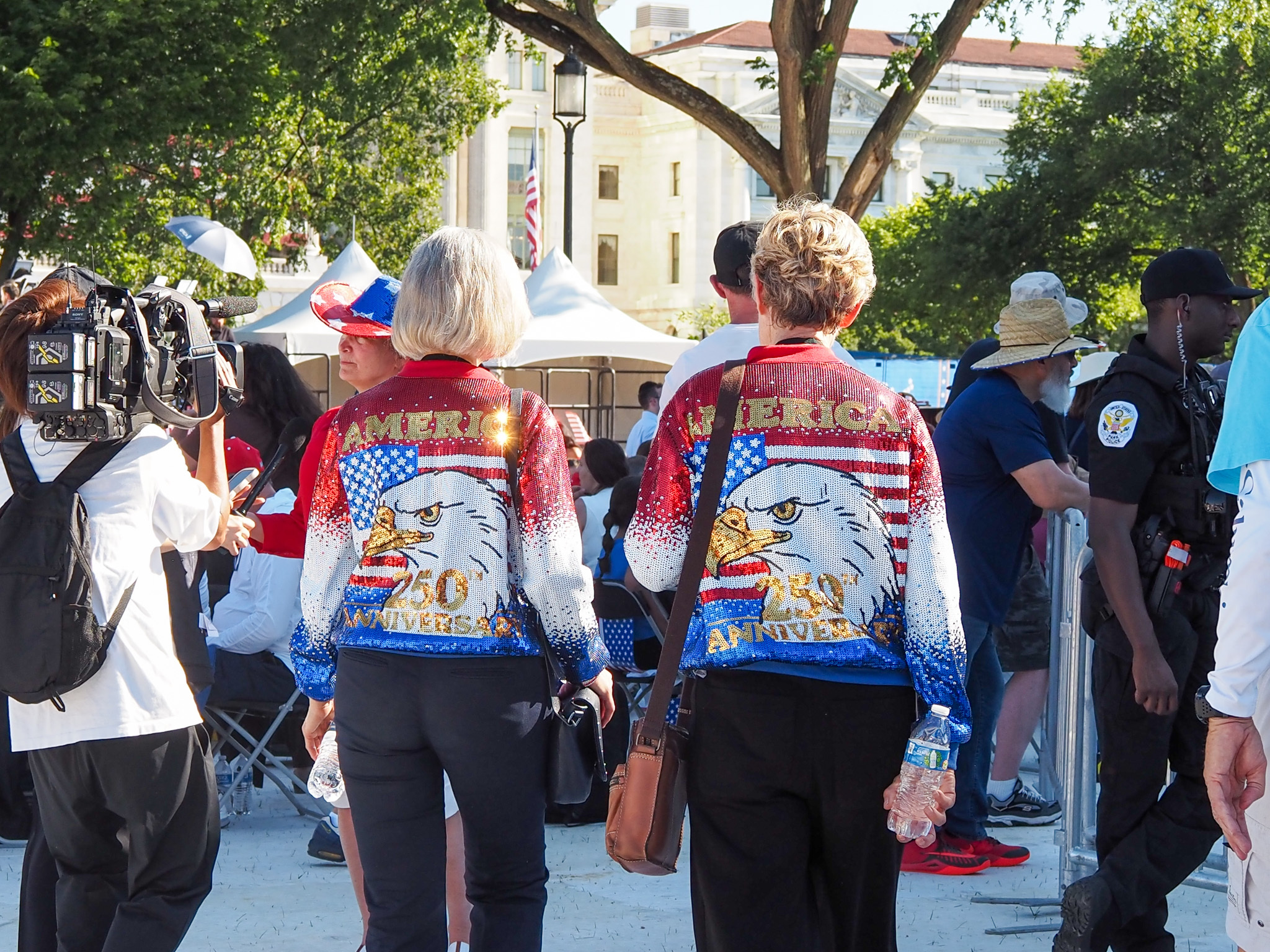
    Patti Gordon, 71, of Atlanta, wore matching red, white and blue sequined jackets with her friend from Texas. Each featured an eagle and stars and stripes on the back with the message, “America 250th Anniversary.”

    Gordon, a vice chair of the Fulton County, Georgia, Republican Party, sat in the third row and said the semiquincentennial is a “beautiful turning point for this country.”

    “I’m really hoping people become a little bit more patriotic and realize this country is worth saving,” she said. “I think a lot of people are trying to destroy this country and erase our history and say that we have a horrible history. We do not. We know we are the most generous country in the world, and we have helped people to freedom.”

    Fulton County is a focus of Trump’s unfounded claims that he won the 2020 presidential election. In January, the Trump administration deployed federal agents to the county to seize ballots from the 2020 election.

    Laura Strohmeyer, 37, a new resident of Washington, said she came out to the kickoff to see a B-2 stealth bomber fly by.

    “I think it’s pretty awesome,” the former Virginia resident said of the kickoff. “I think it’s cool to celebrate our country, our history — something to be very proud of.”

    Strohmeyer added that she hoped celebrating the country’s 250th would bring people together, rather than further separate them.

    Alex

    Alex, who declined to give his last name, dressed as “Honest Abe” takes photos with attendees at the Freedom 250 kickoff rally on the National Mall on June 24, 2026. (Photo by Sam Gauntt/States Newsroom)

    Honest Abe

    Many attendees came in customized outfits featuring sequins, American flag print or political slogans.

    One, dressed as Abraham Lincoln, called himself Honest Abe and said his real first name was Alex, but declined to provide States Newsroom his last name. He is a frequent presence at Trump’s rallies, and said he has twice been recognized by the president for his historical garb. The back of his jacket featured an image of the late conservative activist Charlie Kirk with the words “Martyr for Truth and Freedom.”

    As people milled about the kickoff celebration, many stopped to take their picture with the Lincoln impersonator who wore a “special guest” credential issued by Freedom 250. He gave several interviews.

    “We’ll be happy to see him again, and to celebrate America 250 years, to be here with the patriots,” he said of Trump.

    The impersonator said that, after George Washington and, of course, Lincoln, Trump ranks as the third-best president “in the Holy Story of America.”

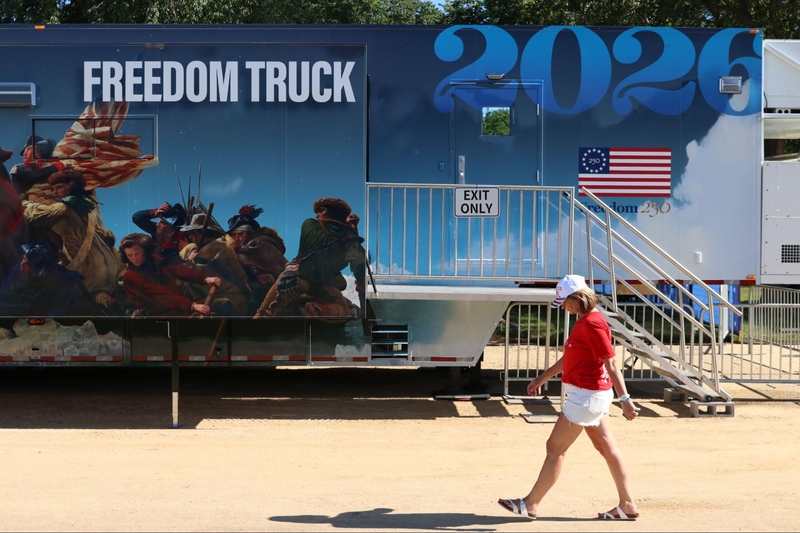
    a woman in red walks by a trailer that says

    An attendee of the Freedom 250 kickoff rally walks by a trailer on the National Mall. (Photo by Sam Gauntt/States Newsroom)

    Summer of celebration

    Freedom 250, the Trump administration’s iteration of semiquincentennial celebrations, will stretch through the summer, with the Great American State Fair on the National Mall until July 10 followed by a high school athletic competition and an INDYCAR race around the National Mall in August.

    The White House worked with the Las Vegas-based Ultimate Fighting Championship to promote a series of primetime mixed martial arts fights on Flag Day, and Trump’s 80th birthday, as a kickoff to the semiquincentennial.

    The administration’s Freedom 250 events are not part of the America250 commission created by Congress a decade ago that is hosting events and initiatives around the country on Independence Day and throughout 2026.

    President Donald Trump opened his administration’s days-long Freedom 250 event on the National Mall with a speech Wednesday, June 24, 2026. (Video by Ashley Murray/States Newsroom)
  • Trump wants $87.6 billion to pay for his war in Iran, aid to farmers and more

    Trump wants $87.6 billion to pay for his war in Iran, aid to farmers and more

    WASHINGTON — The Trump administration sent Congress a request Wednesday for $87.6 billion in emergency funding to cover the cost of the war in Iran and other expenses.

    White House budget director Russ Vought wrote in a letter that in addition to addressing “urgent needs” for the Defense Department, the funding would help the U.S. government assist with the Ebola outbreak and provide aid to American farmers.

    Funding for the Energy Department, he wrote, would “support nuclear and other energy security requirements, primarily for the National Nuclear Security Administration.”

    The supplemental spending request asks Congress to provide money for “restoration and construction projects in and around Washington, D.C.,” as well as the project that would modernize Penn Station in New York City.

    The proposal asks lawmakers to add a few policy changes, including the year-round sale of E-15 gasoline, to any supplemental spending bill they may approve in the weeks and months ahead. Sen. Charles Grassley, R-Iowa, praised the move on social media. “Pres Trump’s admin is exactly right 2say yr-round nationwide E15 is ‘urgent’ & ‘needed’ Congress MUST pass yr-round nationwide E15 by end of fiscal yr Im very glad 2 see it incl in Defense Dept’s supplemental request,” said Grassley.

    The proposals didn’t appear to have broad consensus among Democrats, who would likely be needed for any emergency funding to become law.

    Senate Appropriations Committee ranking member Patty Murray, D-Wash., wrote in a statement the administration’s request “is not merely meant to pay for the president’s disastrous war, but an attempt to secure tens of billions of additional dollars for unrelated Pentagon priorities that should rightly be considered through the annual appropriations process.”

    “I will closely review this request in its entirety and ensure we take care of our servicemembers, but I will not rubberstamp tens of billions more for this disastrous war of choice,” Murray added.

    Senate Appropriations Chairwoman Susan Collins, R-Maine, wrote in a statement she will “evaluate the Administration’s supplemental budget request.”

    “I plan to convene an Appropriations Committee hearing so that Senators can hear directly from the relevant Administration officials,” she said.

    The supplemental spending requests ask lawmakers to provide:

    • $67.15 billion for the Defense Department
    • $11.1 billion for the Agriculture Department to provide aid to farmers
    • $3.36 billion for the State Department for diplomatic, security and global health programs
    • $2.03 billion for the U.S. Coast Guard
    • $1 billion for the Transportation Department to “to assist in the final design and construction of a modernized Penn Station in New York City”
    • $1 billion for the Labor Department to “increase the benefit levels for participants of certain pension plans that were sponsored by Delphi Corporation and terminated as a result of General Motors’ bankruptcy in 2009″
    • $767.5 million for the Energy Department
    • $600 million for the General Services Administration’s federal buildings fund
    • $500 million for the National Park Service to upgrade a seawall and improve the World War II Memorial
    • $40.26 million for the FBI for its role in the Iran war and “other classified needs”
    • $36.18 million for the Treasury Department’s office of terrorism and financial intelligence
    • $13.1 million for the Homeland Security Department’s operations and support account that was part of a “classified request.”