Category: National News

  • Democrats in US Senate want ‘true costs’ of Iran war estimated by official scorekeeper

    Democrats in US Senate want ‘true costs’ of Iran war estimated by official scorekeeper

    WASHINGTON — A group of U.S. Senate Democrats has sent a letter to the head of the Congressional Budget Office, asking him to include outside projections for the cost of the Iran war in the agency’s official cost estimate.

    “The American people deserve to know the true costs of this conflict, and they deserve transparency and honesty when their government commits the nation to war,” the senators wrote in the May 27 letter to the nonpartisan agency. “Your timely and comprehensive estimate of the immediate and long-term budgetary consequences will help ensure that the Iran war remains subject to rigorous and appropriate legislative oversight.”

    House Budget Committee ranking member Brendan Boyle, D-Pa., sent a letter to the CBO in early March, asking the agency to estimate what the conflict would cost “under several scenarios, including scenarios of the war lasting longer than 4 to 5 weeks and deploying U.S. troops on the ground in Iran.”

    The senators’ letter asks CBO Director Phillip Swagel to “take into consideration the significant divergence between the administration’s public estimates and those produced by independent analysts and investigative journalists.”

    The senators wrote that while Pentagon officials said in mid-May they believed the war had cost about $29 billion, other estimates placed its total costs much higher.

    “It is essential that Congress and the American public receive accurate, comprehensive estimates of the costs of the war in Iran,” they wrote.

    Arizona Sen. Mark Kelly, California Sen. Alex Padilla, Colorado Sen. Michael Bennet, Connecticut Sens. Richard Blumenthal and Chris Murphy, Georgia Sen. Jon Ossoff, Illinois Sens. Dick Durbin and Tammy Duckworth, Maryland Sens. Angela Alsobrooks and Chris Van Hollen, Massachusetts Sens. Ed Markey and Elizabeth Warren, New Jersey Sen. Cory Booker and Andy Kim, New York Sens. Chuck Schumer and Kirsten Gillibrand, Oregon Sens. Jeff Merkley and Ron Wyden, Vermont Sen. Peter Welch and Virginia Sen. Tim Kaine all signed the letter.

  • Trump order limiting voting by mail will stand for now, federal judge rules

    Trump order limiting voting by mail will stand for now, federal judge rules

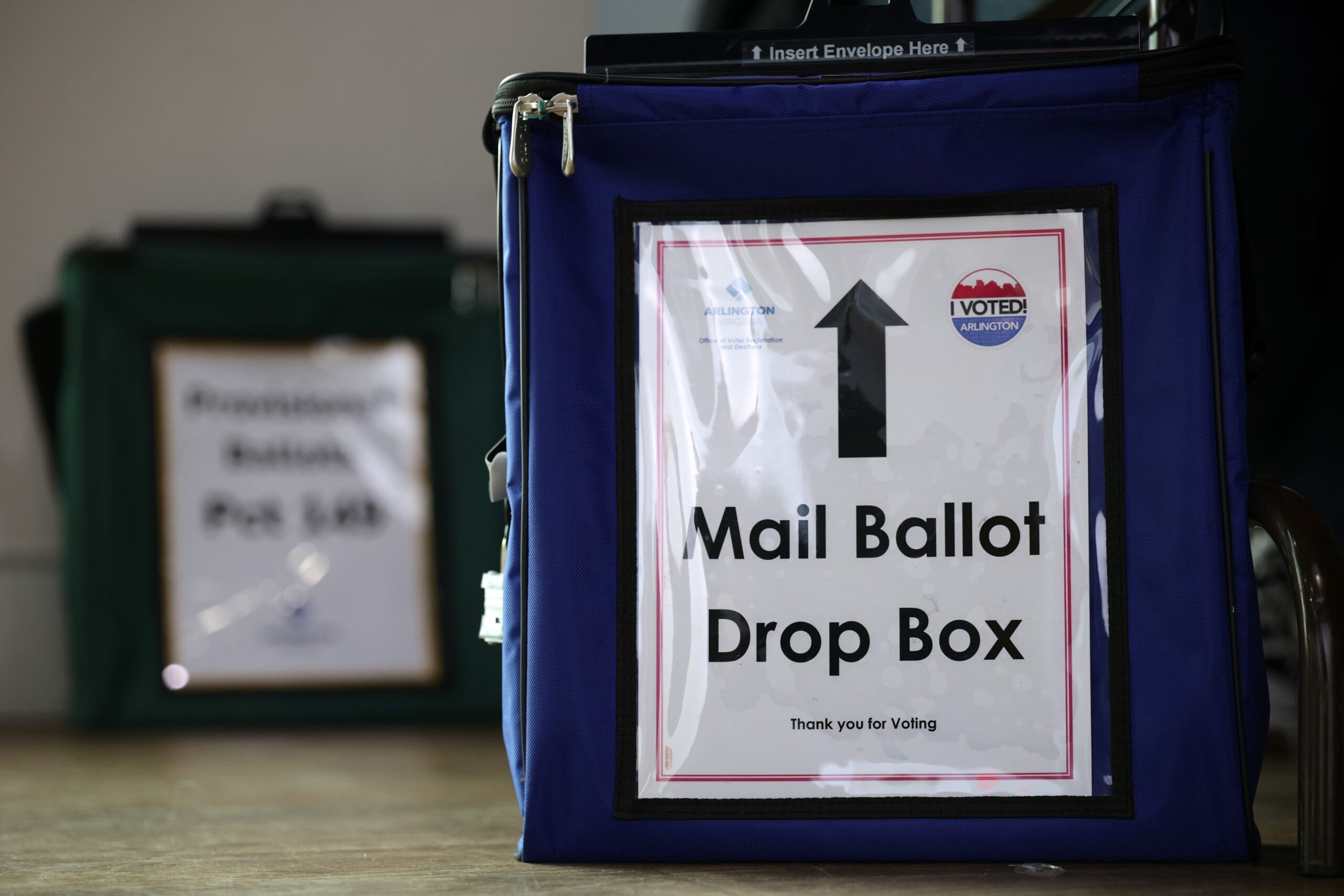
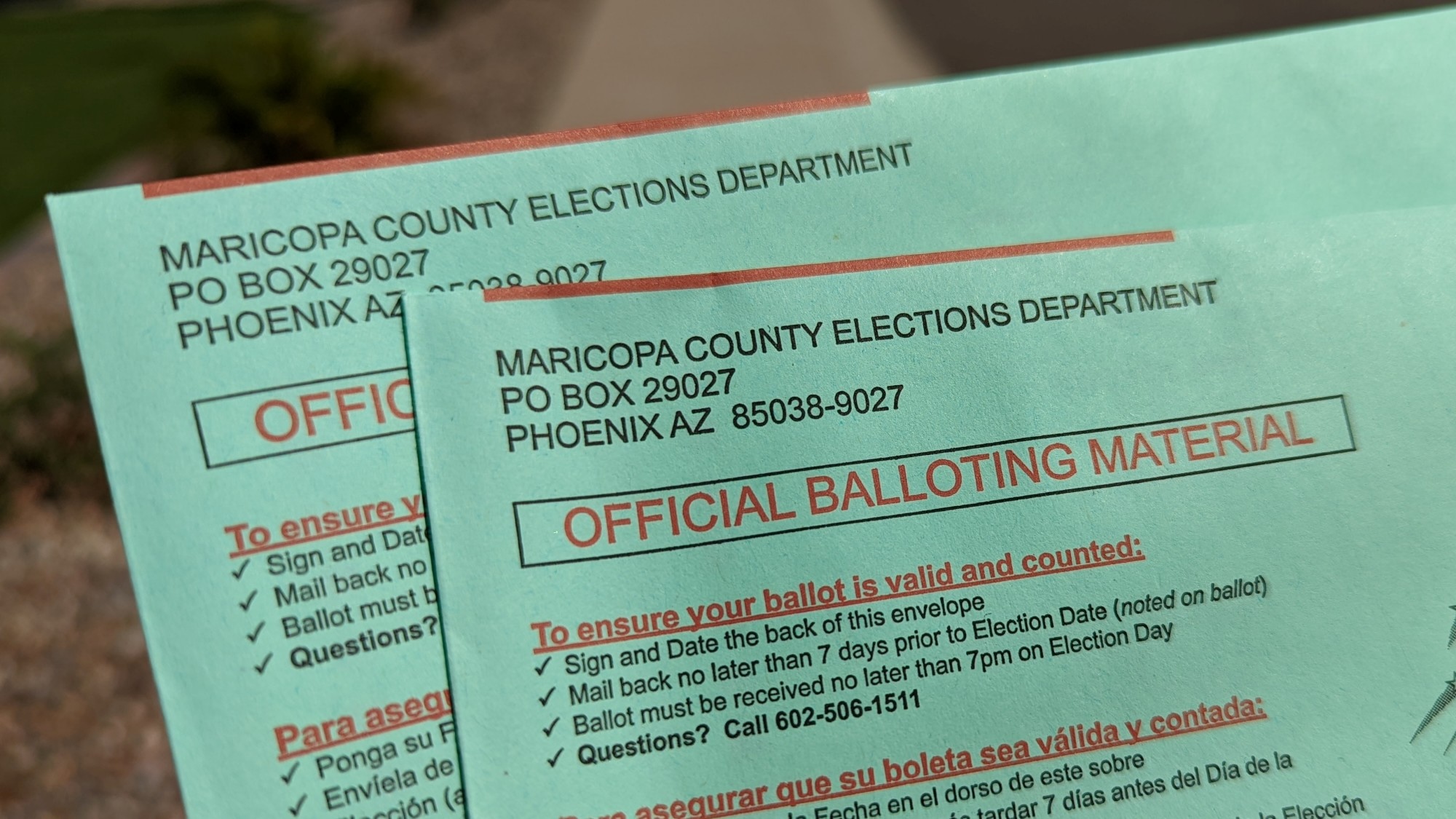
    A federal judge on Thursday declined to block President Donald Trump’s executive order restricting voting by mail, finding that it was too early to challenge the directive.

    The decision by D.C. District Court Judge Carl Nichols, a Trump appointee, represents a setback for Democratic groups, lawmakers and other groups including the NAACP that have sued to stop the order ahead of the midterm elections in November. The March 31 order faces at least five lawsuits.

    The executive order directs the postmaster general, who leads the Postal Service, to propose a rule that would block states from sending ballots through the mail except to voters on lists provided by the state to the Postal Service. Under the order, the proposed rule is due this week.

    The order also instructs the Department of Homeland Security to compile lists of voting-age U.S. citizens in each state, with the help of the Social Security Administration. Democrats allege the Trump administration is building an unauthorized national voter list, despite the U.S. Constitution giving states the responsibility of running federal elections.

    The Department of Justice had told the judge that the federal government hadn’t yet implemented the directive. The judge’s opinion, released just after midnight in Washington, D.C., makes clear that he could arrive at a different decision if the Trump administration moves forward with enforcing the order.

    “The Court recognizes that the Postal Service may ultimately issue a final rule that directly affects Plaintiffs or their members, or that the Government may develop State Citizenship Lists that omit specific individuals due to particularized flaws,” Nichols wrote in a 26-page opinion.

    “Plaintiffs may, of course, renew their motions if and when those future actions occur,” he wrote. “Until then, however, Plaintiffs cannot show that preliminary injunctive relief is warranted.”

    Implications for midterms

    Nichols’ decision is the first ruling in what is likely to be a protracted legal battle that could eventually reach the U.S. Supreme Court. Thursday’s opinion dealt only with whether the executive order should be blocked immediately — the underlying lawsuit to decide if the directive is unconstitutional and illegal will continue.

    Whether Trump can successfully implement the order holds major consequences for the midterm elections. If the White House is able to block the Postal Service from sending or receiving mail ballots from voters not on state-provided lists, it could upend elections in states where voting by mail is the norm and disrupt procedures in others.

    About 30% of voters cast mail ballots in 2024, according to data gathered by the U.S. Election Assistance Commission.

    Trump has framed the order as a needed measure to combat noncitizen voting, though it’s exceedingly rare. The directive marks the White House’s latest effort to assert authority over elections as the SAVE America Act, which would require voters to show documents proving their citizenship, stalls in the U.S. Senate.

    Democrats and voting rights advocates argue the executive order is unconstitutional. Under the U.S. Constitution, states administer elections and Congress has the power to pass regulations on them, but the president has no power to act unilaterally.

    Postal Service targeted

    The battle over the executive order also carries ramifications for the future of the Postal Service. While the president used to appoint the postmaster general, since 1970 the Postal Service has operated as an independent corporation — a change intended to shield mail delivery from politics.

    Postal law experts say that if Trump is able to enforce an order against the postmaster general, who now is appointed by a Postal Service Board of Governors, it will shatter the agency’s independence.

    “Today’s ruling is a decisive victory for the rule of law and deals a blow against the Democrat strategy of suing first and finding legal arguments later. The Trump Administration will continue fighting for the safety and security of American elections,” White House spokesperson Abigail Jackson said in a statement.

    The Democratic groups suing over the order, including the Democratic National Committee, in a joint statement expressed confidence they would eventually prevail. They said the decision doesn’t change the principle that the executive branch cannot infringe on Americans’ voting rights.

    The Democratic groups suing over the order, including the Democratic National Committee, in a joint statement expressed confidence they would eventually prevail. They said the decision doesn’t change the principle that the executive branch cannot infringe on Americans’ voting rights.

    Senate Minority Leader Chuck Schumer, Democrat of New York and one of the plaintiffs, in a statement called mail voting safe and secure. He emphasized that presidents don’t get to rewrite election law “by decree.”

    “Trump’s strategy is simple: if he can’t win voters, he’ll silence them — and now a MAGA judge is enabling him,” Schumer said.

    A group of Republican state attorneys general has also intervened in the case to defend the order. They argue that Trump has authority to gather and organize information within the executive branch. They say Trump can direct the Postal Service to propose rules.

    Missouri Attorney General Catherine Hanaway, who is leading the Republican legal effort, didn’t immediately respond to a request for comment on Nichols’ decision.

    Opponents look to Massachusetts

    With Nichols’ decision, a federal judge in Massachusetts offers opponents their next opportunity to quickly halt the directive.

    Massachusetts District Court Judge Indira Talwani, appointed by President Barack Obama, will hold a hearing on Tuesday in a legal challenge brought by Democratic state attorneys general, led by California, along with the League of Women Voters and other civic groups.

    Some legal analysts anticipate states may have an easier time challenging the order because its requirements, such as requiring states to submit lists of voters to send ballots through the mail, directly affect them. David Becker, director of the nonpartisan Center for Election Innovation & Research, wrote on social media that the states have “much stronger standing claims” heading into the hearing.

    After federal agencies begin acting on the order, the challenge in Massachusetts “will be the case to watch,” he wrote.

    ‘Maximum amount of confusion’

    At a mid-May hearing before Nichols, lawyers for the Democratic National Committee, Democratic leaders Schumer and Rep. Hakeem Jeffries of New York, and other interest groups had argued that, with the midterm elections less than six months away, there was no time to see how the Trump administration executes the order.

    The proposal would result in a “maximum amount of confusion” and be a “nightmare for election officials,” Danielle Lang, who argued on behalf of the League of United Latin American Citizens, told Nichols. “Waiting will only erode public confidence in elections.”

    At the time, Nichols warned Justice Department lawyers to notify him of “anything even approaching a material change” on implementing the order.

    Justice Department senior trial counsel Stephen Pezzi told Nichols the plaintiffs have a right to “prepare for the darkest fears,” but, he argued, they can’t win a preliminary injunction based on speculation about error-prone citizenship lists and a postal rule not yet created.

    Ultimately, Nichols agreed.

    “In any event, given that the Executive Order does not command Plaintiffs to do anything, and that no agency has yet acted pursuant to the Order in a way that could harm Plaintiffs,” Nichols wrote, “they have not suffered any harm at present, much less harm that is ‘certain,’ ‘great,’ and imminent.”

  • States could purge voter rolls close to elections if Supreme Court takes Trump’s side in Arizona case

    States could purge voter rolls close to elections if Supreme Court takes Trump’s side in Arizona case

    The Trump administration wants the U.S. Supreme Court to empower states to review their voter rolls for noncitizens just days before elections, a change that voting rights advocates say would risk disenfranchising Americans.

    The U.S. Department of Justice asked the Supreme Court on Tuesday to wade into a legal fight between the Republican National Committee and a host of Democratic and voting rights groups over a series of voting restrictions in Arizona.

    If the court takes the case, it could lead to a significant decision granting states greater leeway to purge alleged noncitizen voters close to elections and mandate that voters prove their citizenship — a key aim of the SAVE America Act, President Donald Trump’s signature elections legislation that’s stalled in Congress.

    The high court’s decision could arrive prior to the 2028 presidential election.

    Voting in Arizona

    Arizona requires individuals to provide proof of citizenship, such as a birth certificate or passport, to vote in state elections. Residents who don’t offer documentation can still use a federal form to register, but can only vote in federal elections.

    Election officials must run the names of federal-only voters through a U.S. Department of Homeland Security computer program that can identify possible noncitizens.

    The Justice Department argues that the Supreme Court should affirm the Arizona law and find that it doesn’t violate the National Voter Registration Act, a 1993 federal law that sets rules for how voters are registered and when states can remove them from their rolls. The NVRA imposes strict limits on canceling registrations in the 90 days before a federal election.

    The U.S. 9th Circuit Court of Appeals previously ruled that Arizona’s law violates the NVRA.

    “But that decision eliminates the flexibility the Act promises to States when enforcing their voter qualifications,” the Justice Department says in its brief.

    While the Trump administration wants the Supreme Court to take the case, the underlying petition was filed by the Republican National Committee. Its chairman, Joe Gruters, in a statement said it was “unacceptable” that the RNC was still having to defend the Arizona law.

    “Federal law is clear: only U.S. citizens have the right to vote in American elections,” Gruters said.

    Appeals court ruling

    Mi Familia Vota, a Latino voting rights group that’s opposing the RNC in court, said in a statement the Justice Department’s brief shows “MAGA Republicans and their friends in the Trump Administration are once again trying to disenfranchise Latino voters in Arizona.”

    Opponents of Arizona’s law argue the 9th Circuit decision was correct. The state law, they say, goes well beyond what’s allowed under the NVRA. Election officials may remove individual voters in certain circumstances in the run-up to an election but the law prohibits sweeping purges.

    “States cannot circumvent the limits on systematic removals that Congress — exercising its express constitutional authority to regulate federal elections — put in place to ensure that eligible voters have adequate time to correct erroneous removal procedures, thereby protecting Americans’ fundamental right to vote,” the Democratic National Committee and the Arizona Democratic Party argued in a brief filed Tuesday.

    Democrats and voting rights groups warn about expanding use of Homeland Security’s SAVE system, short for Systematic Alien Verification for Entitlements, that’s mandated under Arizona law.

    Initially a program used by states to check whether individual noncitizens were eligible for government benefits, the Trump administration has overhauled it into a tool that can verify citizenship by checking information in federal databases.

    SAVE can now check millions of names simultaneously. Many Republican states have begun uploading their voter rolls into SAVE to search for potential noncitizens.

    Critics of the program say SAVE has falsely flagged U.S. citizens, a problem that could be exacerbated if the Supreme Court allows its widespread use in the weeks before an election. Last-minute misidentifications could leave little time for voters to prove their citizenship.

    Justin Levitt, who served as senior policy adviser for democracy and voting rights in the Biden White House and is now a law professor at Loyola Marymount University, said in an interview that the 90-day period serves as a “pencils down” time to minimize the possibility of errors just before elections.

    “Anytime you’re matching one giant list to another giant list, you’re going to have mistakes,” Levitt said. “If you execute this systemic list maintenance two days before the election, those mistakes are going to keep eligible voters from voting.”

    Voter purges

    At a U.S. House hearing on the NVRA in December, Sophia Lin Lakin, director of the ACLU’s Voting Rights Project, pointed to several voter purges, including a 2024 effort in Virginia, to highlight the dangers of last-minute removals.

    That August, Virginia’s Republican governor at the time, Glenn Youngkin, ordered election officials to scrub the state’s voter list for noncitizens. More than 1,600 voter registrations were canceled, with citizens swept up in the purge. The Supreme Court in October 2024 declined to overturn the purge.

    “There is no dispute that states and localities must keep their voter rolls accurate and up to date,” Lakin wrote in her opening statement. “But the integrity of our elections is not threatened by the phantom menace of widespread noncitizen voting — it is threatened by aggressive purge practices that wrongfully strike legitimate voters from the rolls and by unnecessary barriers to registration that prevent eligible Americans from getting on those rolls in the first place.

    Noncitizen voting

    The specter of noncitizen voting has been a central focus of Trump’s second term, despite studies showing it’s an extremely rare occurrence. One study of the 2016 election placed the prevalence of noncitizen voting at 0.0001% of votes cast.

    Utah recently announced that a review of its 2 million registered voters identified just 27 confirmed noncitizens and an additional 25 “probable” noncitizens — a miniscule percentage of voters.

    The Justice Department has sued 30 states and the District of Columbia in a so-far unsuccessful effort to force them to hand over private voter data so the information can be run through the SAVE system to search for noncitizens. In late March, Trump signed an executive order to restrict the transmission of ballots through the mail, though several lawsuits have been filed against it.

    Trump also continues to demand that senators pass the SAVE America Act, even though it has stalled in the U.S. Senate. While the legislation would set a national proof of citizenship rule, some states have enacted or are weighing their own requirements.

    Republican attorneys general

    Five states — Alabama, Arizona, Louisiana, New Hampshire and South Dakota — ask for proof of citizenship when voters register for the first time, according to the National Conference of State Legislatures. One state, Wyoming, also requires proof when voters update their registration.

    But Arizona was the only state before 2025 to maintain two separate voter rolls to enforce its proof of citizenship rules, according to the Brennan Center for Justice at New York University. The distinction helps explain why the Arizona case is now poised for consideration by the Supreme Court.

    A host of Republican state attorneys general, led by Kansas’ Kris Kobach, have filed a brief urging the Supreme Court to take the Arizona case. They say the 9th Circuit gutted Arizona’s “common-sense measures” to protect its elections.

    “This case presents yet another assault on State efforts to promote election security,” the states’ brief says.

    In addition to Kansas, Alabama, Alaska, Arkansas, Florida, Georgia, Idaho, Indiana, Iowa, Kentucky, Louisiana, Mississippi, Missouri, Montana, Nebraska, New Hampshire, North Dakota, Ohio, Oklahoma, South Carolina, South Dakota, Tennessee, Texas, Utah and West Virginia signed on to the brief.

    The Supreme Court has sent conflicting signals about proof of citizenship laws in the past. In August 2024, the court issued an unsigned order on its “shadow docket” allowing Arizona to enforce its proof of citizenship requirements for the 2024 election.

    But four years earlier, the justices declined to take a case over a Kansas proof of citizenship law. That left in place an appeals court decision blocking the law, which remains unenforceable.

    The Arizona case would offer the Supreme Court a way to provide a more definitive opinion. If the justices decide soon to take it, they would likely hold oral arguments in the fall and potentially issue a decision next spring, more than a year before the 2028 presidential election.

    The Justice Department’s brief says the case “offers an opportunity to resolve these important election-law issues outside the setting of a contested election.”
  • Trump struck a deal for China to buy $17B a year in US ag products. Farmers are skeptical.

    By Rebecka Pieder/Medill News Service

    WASHINGTON – In a deal that could provide a major trade boost for American farmers, the White House said that during the recent summit, China committed to buying at least $17 billion in additional U.S. agricultural products annually for three years.

    But Beijing has not confirmed the figure and farm groups expressed skepticism that the deal would materialize.

    “I think we are cautiously optimistic when it comes to these things because we’ve been on both sides of this equation. You know, the first time we went through the tariff crisis, we lost 20% market share,” said Todd Main, director of market development at the Illinois Soybean Association.

    President Donald Trump visited Beijing in May for talks. Two days after the U.S. delegation returned, the White House shared a list of achievements reached between the two countries.

    This included a commitment that China would increase U.S. beef imports and buy at least $17 billion per year in additional U.S. agricultural products over the next three years. In a statement to Medill News Service on May 20, the Chinese Embassy in Washington did not confirm the $17 billion or the time frame. However, it discussed progress on the trade of beef and other agricultural products.

    Tariffs hit hard

    American farmers have been caught in a cost pinch for years. Grain prices are down, and the costs of machinery and fertilizer are up, making it harder for farmers to break even.

    Last year, these pressures were exacerbated as the Trump administration placed high tariffs on Chinese imports, sparking Beijing to retaliate by halting imports of U.S. agricultural products.

    China is the world’s largest importer of agricultural products. This hit Midwestern farmers particularly hard. Iowa and Illinois produce the most soybeans in the United States, and China is their largest market by far.

    If Beijing were to follow through on the commitments announced by the White House, it would increase total U.S. farm exports to China to $28 billion to $30 billion a year, according to Reuters. While this would be below the $38 billion exported in 2022, it would be higher than the $24 billion in 2024 and much higher than last year’s $8 billion.

    A return to predictable trade relations between the U.S. and China would benefit farmers, said Chris Chinn, Director of the Missouri Department of Agriculture.

    “This announcement is a great first step in what we hope is a full commitment to purchasing American products,” he said.

    Jerry Costello II, director of the Illinois Department of Agriculture, echoed this sentiment while expressing doubts at the likelihood of the deal panning out.

    “If China truly committed to purchasing an additional $17 billion in U.S. agricultural products for three years and followed through on the purchases, it would provide meaningful support for Illinois farmers,” he said. “Unfortunately, it’s not that simple.”

    When asked to confirm the $17 billion number, a spokesperson for the Chinese embassy notably omitted any mention of the figure or the time frame.

    “It is hoped that both sides will create favorable conditions for two-way agricultural trade by jointly reducing tariffs, removing non-tariff barriers, and expanding market access, so as to promote the recovery and continuous expansion of cooperation in agricultural trade,” the spokesperson said.

    China also resumed registration of U.S. beef suppliers after the summit, according to the spokesperson.

    Soybean imports cut off

    After the Trump administration imposed sprawling tariffs on China last year, China halted imports of U.S. soybeans for several months. In November, the U.S and China reached a trade agreement in which China committed to purchasing 12 million metric tons of soybeans by the end of February. The order represented a sharp decrease from 2024 levels.

    “The ag industry has heard big promises before, but the actual trade commitments have often failed to materialize,” Costello said. “During previous trade agreements, China fell well short of its pledged purchases, leaving farmers to suffer the economic impact.”

    Lance Muirhead, a seventh generation farmer in Macon County, Illinois, has felt the costs of the trade war first hand. As a direct result of ongoing trade disputes, he has had to tighten the budget on the farm he operates together with his family, he said.

    “It has put a halt on us buying any new equipment we might have been in the market for,” Muirhead said. “I run a 16-year-old combine that I’d like to upgrade to a slightly newer model, but that’s just not in the budget the way commodity prices have been.”

    He is “skeptically optimistic” about the new proposed trade agreement. While a tweet or a promise can have positive effects on the market, that hype is short-lived unless commitments are followed through with concrete purchases the way they were last fall, he said.

    “I think the proof will be in the pudding and only time will tell, but I sure hope the agreement is executed,” he said. “When China has that big of a basket, it’s hard not to want to put all of your eggs, or soybeans, into it.”

    ‘Just fluff’?

    Senator Adam Schiff, D-Calif., also expressed skepticism.

    “There’s a long history of the president coming back and misrepresenting what he’s achieved. My first question is, are any of these commitments real or are they just fluff?” Schiff, a member of the Senate Agriculture Committee, told Medill News Service.

    When China halted imports last year, it was a massive blow to U.S. soybean exports, said Main, of the Illinois Soybean Association. It’s a market that has been built up over the last 30 years, and establishing new markets takes time.

    Even if the deal were to pan out, soybean farmers still should diversify their buyers so they are no longer so reliant on China, he said.

    “If you look out a decade or so, we know that long-term China is not going to be the dominant buyer that it once was,” Main said. “And so we have to pivot.”

    Medill News Service articles are reported and written by graduate student journalists in the Washington program of the Medill School at Northwestern University.

  • Democratic state AGs say their staff excluded from Vance anti-fraud meeting

    Democratic state AGs say their staff excluded from Vance anti-fraud meeting

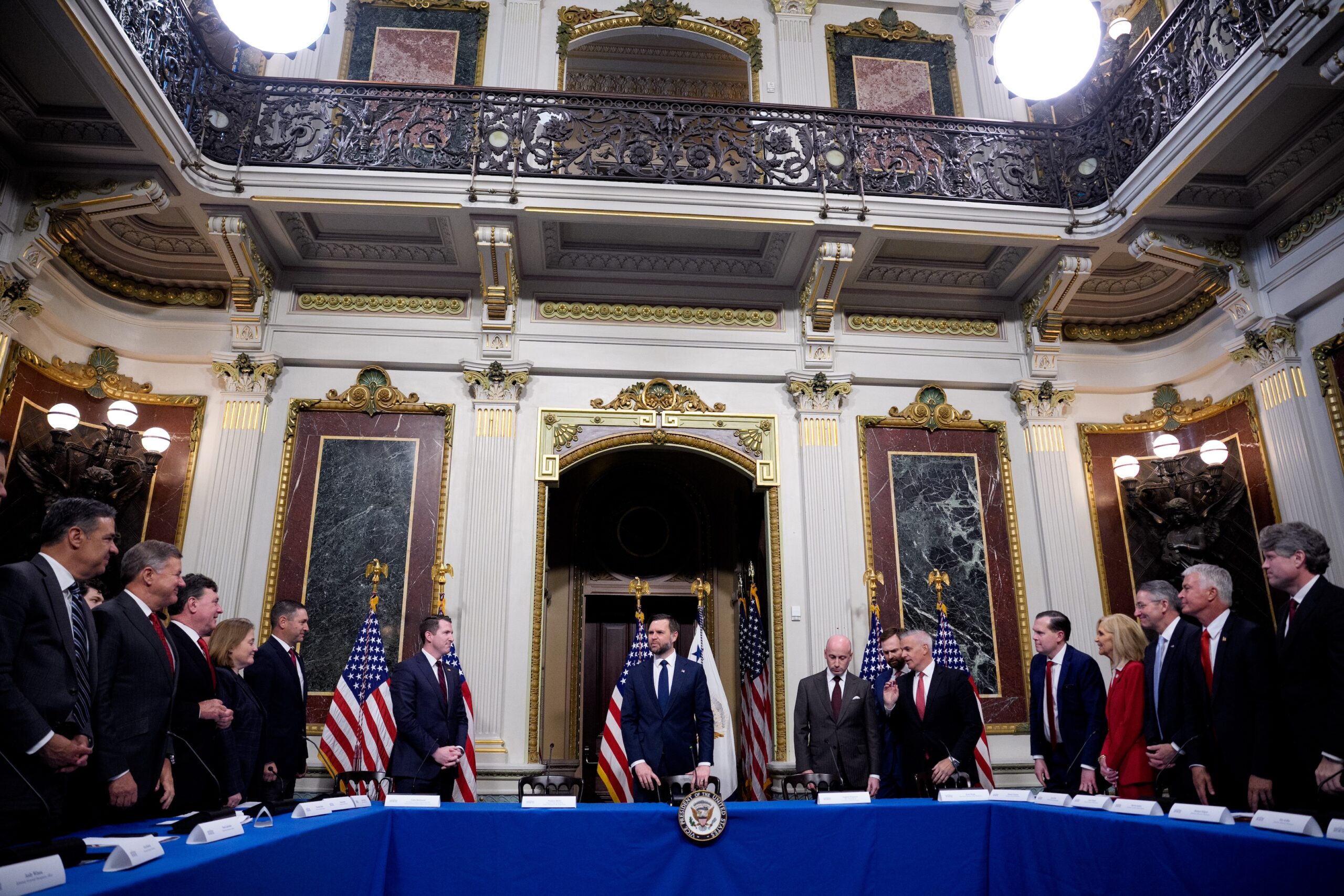
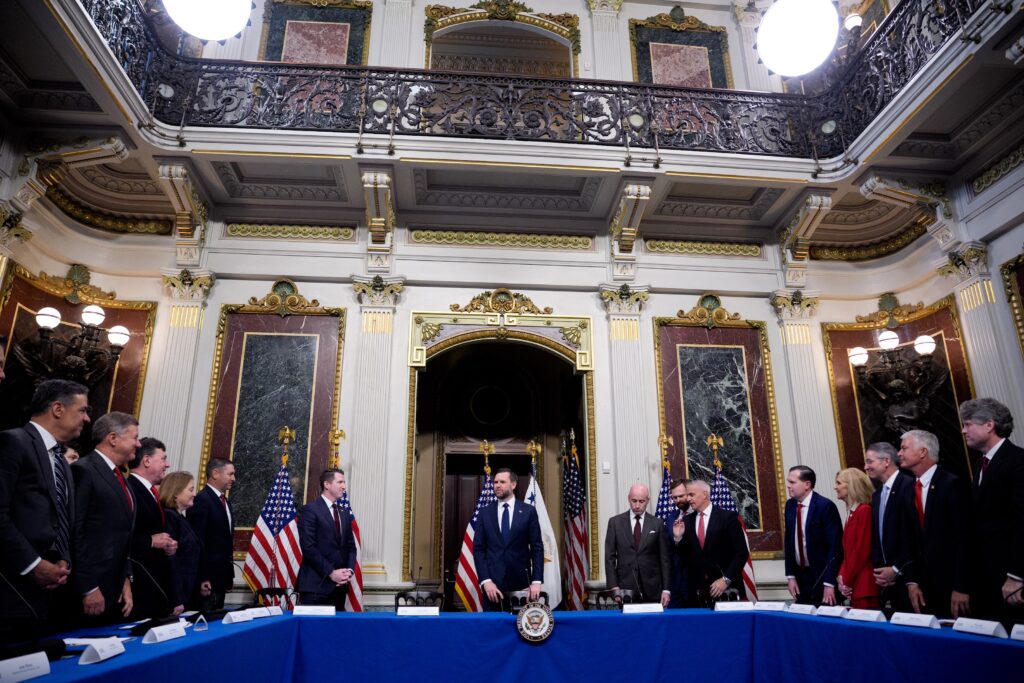
    WASHINGTON — A handful of Democratic state attorneys general said Tuesday that expert officials from their offices were denied access to a major White House anti-fraud meeting convened by Vice President JD Vance and attended by Republican AGs.

    Two dozen Democratic attorneys general had earlier declined invitations for their own attendance at the White House anti-fraud roundtable, citing extremely short notice and a lack of an agenda in a letter to Vance, who has helmed the Trump administration’s sweeping anti-fraud effort.

    Instead, some sent top officials from their offices to Washington. Democratic attorneys general in California, New York and New Jersey said at a press conference later Tuesday that officials from their states were not allowed to attend the anti-fraud meeting.

    New York Attorney General Letitia James said officials from Minnesota, Massachusetts, Maryland and Nevada were also turned away and that part of the reason apparently had to do with the officials’ titles.

    “They gave various reasons that conflicted, and that didn’t really make sense,” James said. “At the end of the day, the message is, is, that there were experts who have been working on complex fraud cases, that have worked in our respective offices over the year — they have engaged in successful criminal prosecutions, investigations and settlements resulting in millions and millions of dollars, and they were all turned away, despite the fact that they had RSVP’d on Friday evening, and in some cases on Saturday.”

    California Attorney General Rob Bonta, who led the press conference, said “we won’t be used as props in Vance’s political performance.”

    Bonta was joined by James, along with Hawaii Attorney General Anne Lopez, New Jersey Attorney General Jennifer Davenport and Wisconsin Attorney General Josh Kaul.

    “The truth is, Democratic AGs have recovered billions of taxpayer dollars, secured criminal convictions and implemented reforms to strengthen the security of our programs,” Bonta added.

    The California attorney general noted that “the short notice we were given sends a clear message that we were either an afterthought or we weren’t really welcome.”

    Though the initial invitation was made to AGs only, exceptions were made for chiefs of staff or deputy attorneys general, according to an individual familiar with the fraud roundtable.

    Lower ranking staff members, both Republican and Democrat, did not participate and guidelines were made clear in advance of the roundtable, that individual said, speaking on background.

    Trump administration anti-fraud campaign

    At the meeting, Vance and administration officials gave brief remarks before ushering out the press so that they could have “the real conversation.”

    Minnesota has taken center stage in the administration’s efforts to combat alleged fraud. Just last week, administration officials announced they were charging 15 people in the state for alleged Medicaid fraud schemes totaling millions of dollars in intended loss.

    In a list provided by the Republican Attorneys General Association ahead of the event, the attorneys general slated to attend the Vance meeting included: Tim Griffin of Arkansas; Raúl Labrador of Idaho; Todd Rokita of Indiana; Brenna Bird of Iowa; Kris Kobach of Kansas; Russell Coleman of Kentucky; Lynn Fitch of Mississippi; Austin Knudsen of Montana; Mike Hilgers of Nebraska; Drew Wrigley of North Dakota; Andy Wilson of Ohio, Gentner Drummond of Oklahoma; Marty Jackley of South Dakota; and Derek Brown of Utah.

    Bird, of Iowa, said in a press release that she attended the fraud task force meeting with other AGs to “discuss collaborative efforts between the White House and state attorneys general on combating benefits fraud, as well as the resources needed by attorneys general to fight fraud in their states.”

    She added, “When bad actors commit fraud—whether it’s against the government, against businesses, or against individuals, the American taxpayer always ends up on the hook. I’ve been fighting to protect Iowans against fraud for the last four years as attorney general, and I don’t intend to stop.”

    Dems complain about short notice

    The two dozen state Democratic attorneys general had written to Vance earlier Tuesday that while they “would appreciate the opportunity to engage in serious discussions, the invitation was provided with less than one business day’s notice with no agenda,” per a letter obtained by States Newsroom.

    The group added that “this short notice does not match the spirit of collaboration that has long defined our joint efforts with federal partners.”

    POLITICO, which first reported on the letter and the Democrats’ choice to not partake in the meeting, noted that Republican attorneys general were invited days earlier and initially the event was only supposed to include them.

    “As I’ve said repeatedly, this does not need to be — this should not be — a partisan effort,” Vance said during the roundtable.

    “Everybody should care about fraud, everybody should care about rooting out fraud, everybody should care about saving the American taxpayers money, and importantly, everybody should care about actually protecting the programs that only work and are only properly funded if the money funding those programs isn’t being stolen by fraudsters.”

    The vice president said at the meeting that representatives from the attorneys general in Connecticut and Oregon were in attendance.

    In a statement after the meeting, the executive director of the Republican Attorneys General Association bashed Democrats.

    “While Republican Attorneys General are aggressively fighting fraud, waste, and abuse, Democrat AGs like Keith Ellison in Minnesota and Letitia James in New York knowingly aid and abet scams and fraud in their states,” said Adam Piper, the executive director. “Republican AGs are thrilled to roll up our sleeves and work with JD Vance, Republican AG staff alum Andrew Ferguson, Scott Brady, and the White House Task Force to save taxpayers billions of dollars and deliver maximum accountability. Vice President Vance is right – this is not a partisan issue. However, historical Democrat inaction speaks volumes.”

  • Trump administration seizes on shooting to make case again for White House ballroom

    Trump administration seizes on shooting to make case again for White House ballroom

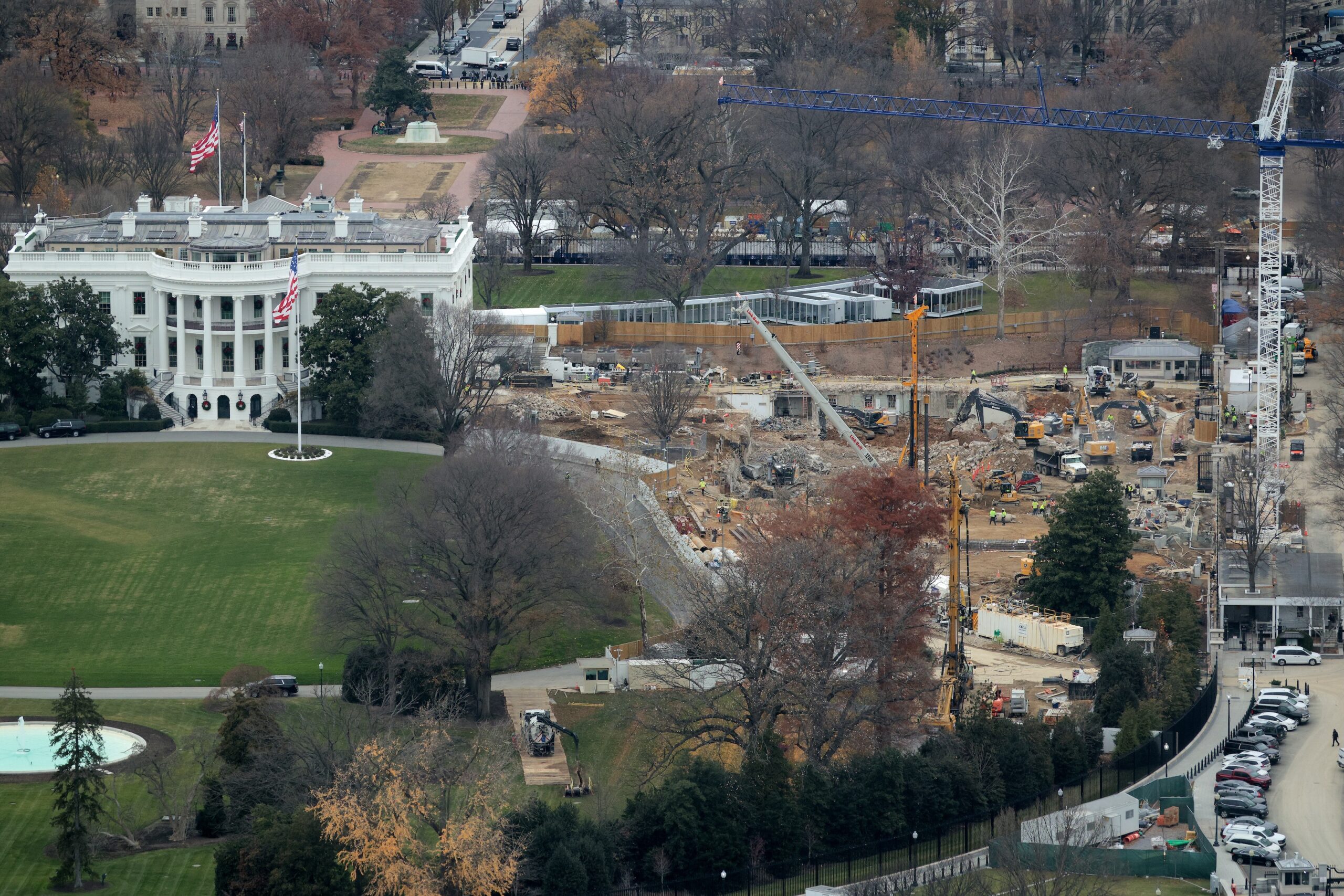
    WASHINGTON — Acting Attorney General Todd Blanche argued in a court filing that a shooting Saturday in the vicinity of the White House further proves the need for an East Wing ballroom with “a heavy steel, drone proof roof, missile resistant and drone proof columns, bullet, ballistic, and blast proof glass,” among other features.

    A gunman opened fire at a U.S. Secret Service checkpoint at 17th Street and Pennsylvania Avenue and was killed when agents returned fire. One bystander was also shot and injured, according to the Secret Service.

    President Donald Trump was inside the White House during the incident but was unharmed, and no ongoing operations were impacted, according to the agency.

    “This second attack on the President this month underscores the critical need for top level, state of the art security at the White House, including the Ballroom, a knitted, unified, cohesive part of the East Wing Project, which is vital for National Security, and is being constructed to ensure that the President can perform his constitutional duties in a safe and heavily secured facility,” Blanche argued.

    The acting attorney general, Trump’s former personal defense lawyer, filed the supplemental brief Sunday opposing a federal court order that temporarily halted any above-ground construction on the ballroom.

    Shooting at press dinner

    The proposed ballroom “will provide a ‘SAFE HAVEN’ from attackers such as the one last night, and on April 25th,” Blanche wrote, referring to the gunman who opened fire at the White House Correspondents’ Dinner last month.

    The alleged shooter, Cole Tomas Allen, who pleaded not guilty, is charged with attempting to assassinate the president and is being held in jail in Washington, D.C., awaiting trial.

    The Trump administration and his supporters in Congress amped up calls for a secure ballroom following the shooting at the historic annual dinner where Trump, the first lady and several Cabinet officials safely evacuated.

    But skepticism among some Senate Republicans of using taxpayer dollars has all but scuttled a $1 billion Secret Service funding proposal — $220 million of which was earmarked for the ballroom.

    Trump maintains the ballroom will be funded by private donors and routinely speaks about the project at unrelated events.

    Drone port, sniper facilities

    Blanche slammed the lawsuit against the White House construction project as “meritless.” The National Trust for Historic Preservation filed the suit in December, less than two months after Trump demolished the White House East Wing to make way for the large structure.

    The lawsuit, Blanche argued, “has been a great attack on our Country in that the Military, Secret Service, and Law Enforcement are not happy that all of these Top Secret features have been revealed to potential enemies, criminals, and all others, including the fact that there will be a major drone port and Government sniper facilities on the heavily secured roof of the Ballroom.”

    The proposed ballroom is slated to have “bomb shelters, a state of the art hospital and medical facilities, Top Secret military installations, structures, and equipment,” according to the court filing.

    Trump posted an image of the filing on his Truth Social platform Monday morning.

    The president also thanked the Secret Service on Truth Social in the wee hours of Sunday.

    “This event is one month removed from the (White House Correspondents’ Dinner) shooting, and goes to show how important it is, for all future Presidents, to get, what will be, the most safe and secure space of its kind ever built in Washington, D.C. The National Security of our Country demands it!” he wrote.

    The National Trust for Historic Preservation did not immediately respond to a request for comment.

  • Congressional Black Caucus calls for corporate leaders to speak out for voting rights

    Congressional Black Caucus calls for corporate leaders to speak out for voting rights

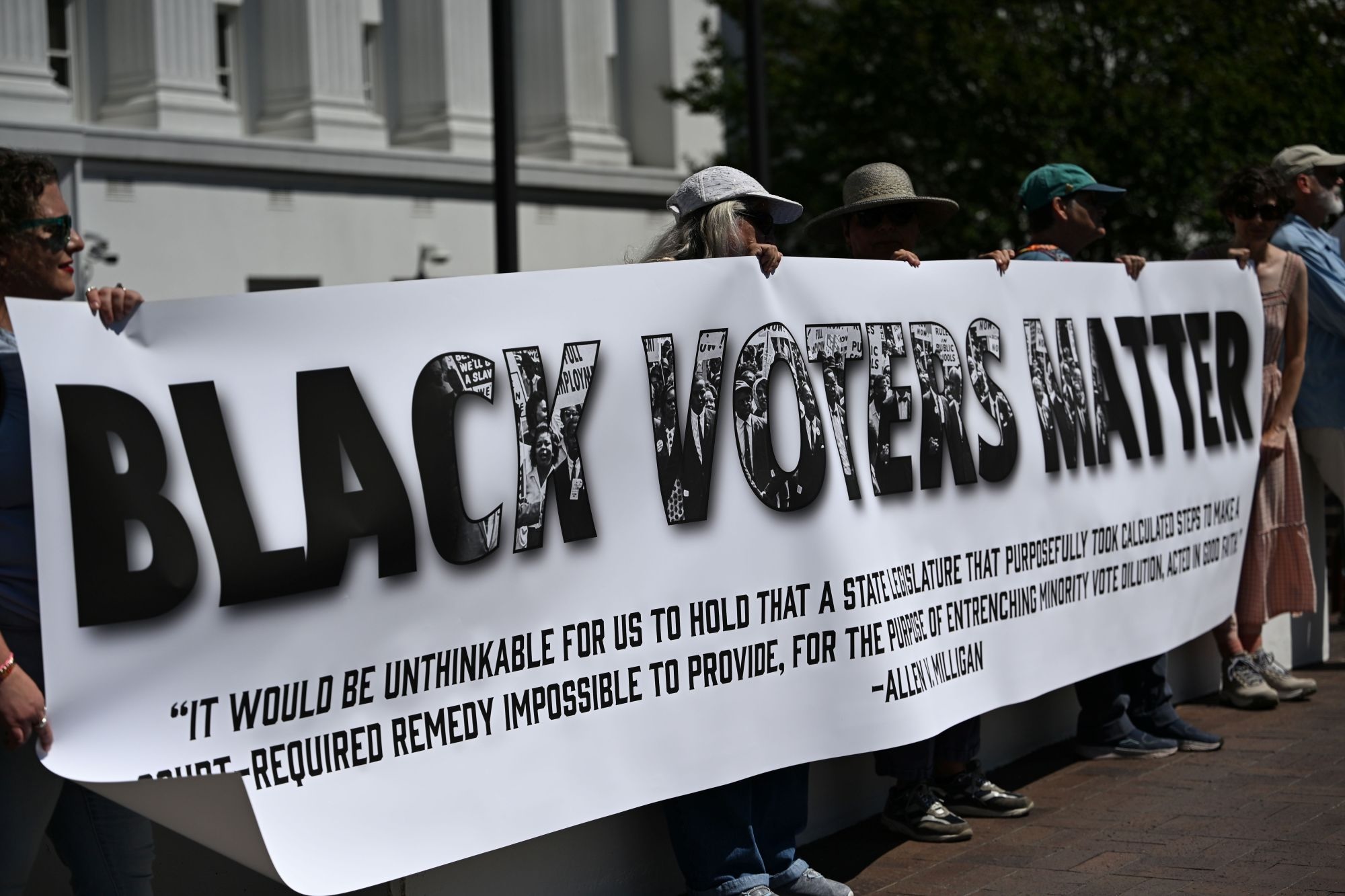
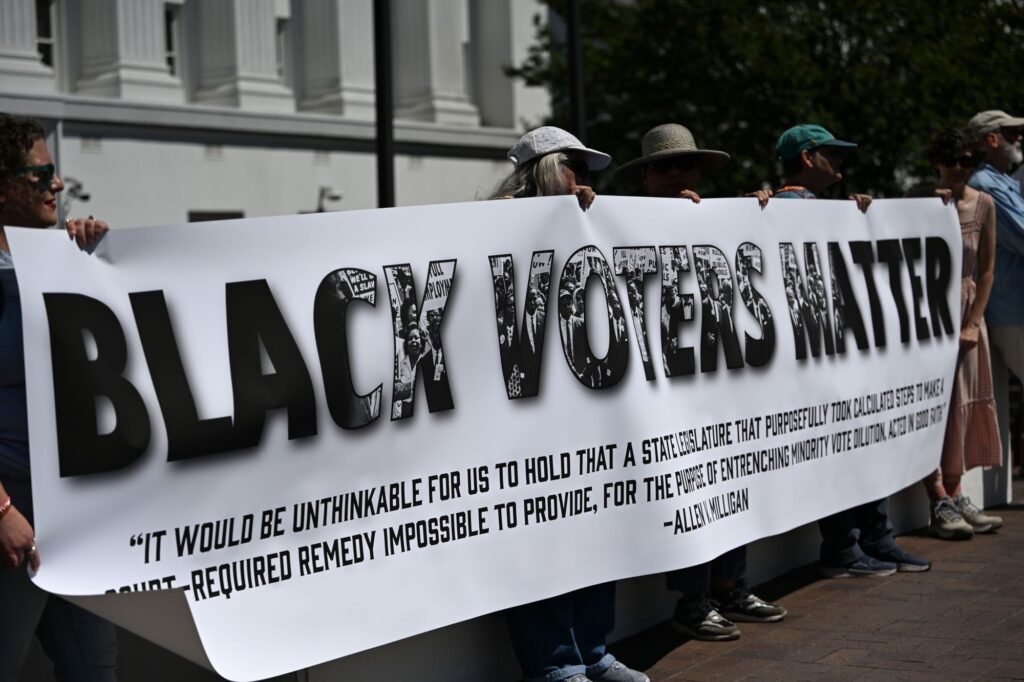
    The Congressional Black Caucus on Tuesday urged American corporations to condemn efforts to dilute Black voting strength, as Southern states eliminate congressional districts where most residents are Black.

    The CBC’s attempt to mobilize the business community comes as Black representation in Congress potentially faces its most severe threat since the end of Reconstruction following the Civil War. But some business leaders have taken a friendlier tone with President Donald Trump, who backs the gerrymandering.

    A U.S. Supreme Court decision in April, in a case called Louisiana v. Callais, sharply weakened the federal Voting Rights Act, which had blocked states from breaking apart majority-minority districts. It limited the use of race in redistricting, prompting several Southern states to advance new maps targeting these districts, which are mostly held by Black Democrats.

    “These actions are not routine political exercises,” the letter reads. “They are coordinated efforts to silence Black voices at the ballot box and strip communities of representation in American democracy.”

    The message is addressed to more than 200 corporations and business groups that signed on to a 2021 letter in support of voting rights, as well as an unnamed number of other corporate leaders. Among the signatories were Amazon, Apple, Cisco, Facebook, Intel, Microsoft, Nike, PepsiCo, Starbucks, Target, Tesla and Unilever USA.

    That letter called on Congress to update the Voting Rights Act, including changes that would restore the federal government’s ability to review changes to election and voting laws in states and local governments with a history of discrimination, a practice called preclearance that the Supreme Court effectively halted in 2013.

    On Tuesday, the CBC said those companies should issue individual or joint public statements opposing efforts to dilute Black voting strength and dismantle protections in the Voting Rights Act.

    The lawmakers also want companies to report on corporate political spending and relationships connected to attacks on voting rights and “discriminatory redistricting schemes.” Companies should accept an invitation to participate in a national gathering alongside civil rights leaders and advocates to discuss voting rights and Black political power, the lawmakers wrote.

    The letter asks businesses to respond by June 9.

    “Five years ago, corporations across America publicly affirmed that democracy, racial equity, and voting rights matter. Today, in the wake of the Supreme Court’s Callais decision, those commitments are being tested in real time,” Rep. Yvette Clarke, a New York Democrat who chairs the CBC, said in a statement.

    “Corporations that have profited from Black consumers, relied on Black workers, and benefited from Black communities cannot remain silent while Black political representation is dismantled in plain sight,” Clarke said. “Silence in this moment is not neutrality — it is complicity.”

    Corporate leaders warm to Trump

    But political attitudes in parts of corporate America, especially among tech firms, have shifted since 2021.

    When businesses signed the July 2021 letter, they were acting after the May 2020 murder of George Floyd, a Black man, by a white police officer in Minneapolis, and the Jan. 6, 2021, storming of the Capitol by Trump supporters. Six years later, some titans of American business have taken a more conciliatory approach to Trump and the Make America Great Again movement.

    Elon Musk, who leads Tesla, spearheaded the Department of Governmental Efficiency, or DOGE, initiative in 2025 that resulted in the firings and layoffs of thousands of federal workers. Facebook founder Mark Zuckerberg has spoken positively about the president. Jeff Bezos, Amazon’s CEO, called Trump “more mature” in his second term.

    Trump has also led a push against diversity, equity and inclusion efforts. In March, the president signed an executive order targeting DEI practices by federal contractors. The directive followed another anti-DEI order in January 2025 that encouraged the private sector to “end illegal DEI discrimination and preferences.”

    Since the Supreme Court’s decision in Callais, some Republicans have portrayed eliminating majority-minority districts as a constitutional imperative. The current districts should be tossed because they were drawn with their racial makeup in mind, they say.

    “I don’t think race should be used to help a person because of his race, and I don’t think race should be used to harm a person because of his or her race,” Sen. John Kennedy, a Louisiania Republican, said at a Senate hearing on racial gerrymandering last week.

    Rapid remaps

    Since the release of the Callais decision on April 29, Florida and Tennessee have changed their maps and Louisiana is expected to follow soon. South Carolina lawmakers tried but failed to advance a new map and Alabama has taken steps to implement a 2023 gerrymander after the Supreme Court lifted a lower court order that had blocked it.

    A panel of three federal judges on Tuesday issued a new order halting the Alabama map, which would likely force out one of the state’s two Black Democratic members of Congress if enacted. The judges found that the map was racially discriminatory, even in light of Callais.

    Alabama has appealed the decision to the Supreme Court.

    “I applaud the three-judge panel for upholding the rule of law and reaffirming that racial discrimination has no place in our redistricting process,” Rep. Terri Sewell, an Alabama Democrat who also signed Tuesday’s CBC letter, said in a statement.

    “While we know that this legal battle is far from over, today’s ruling sends a clear message: Black voters in Alabama cannot and will not be silenced.”