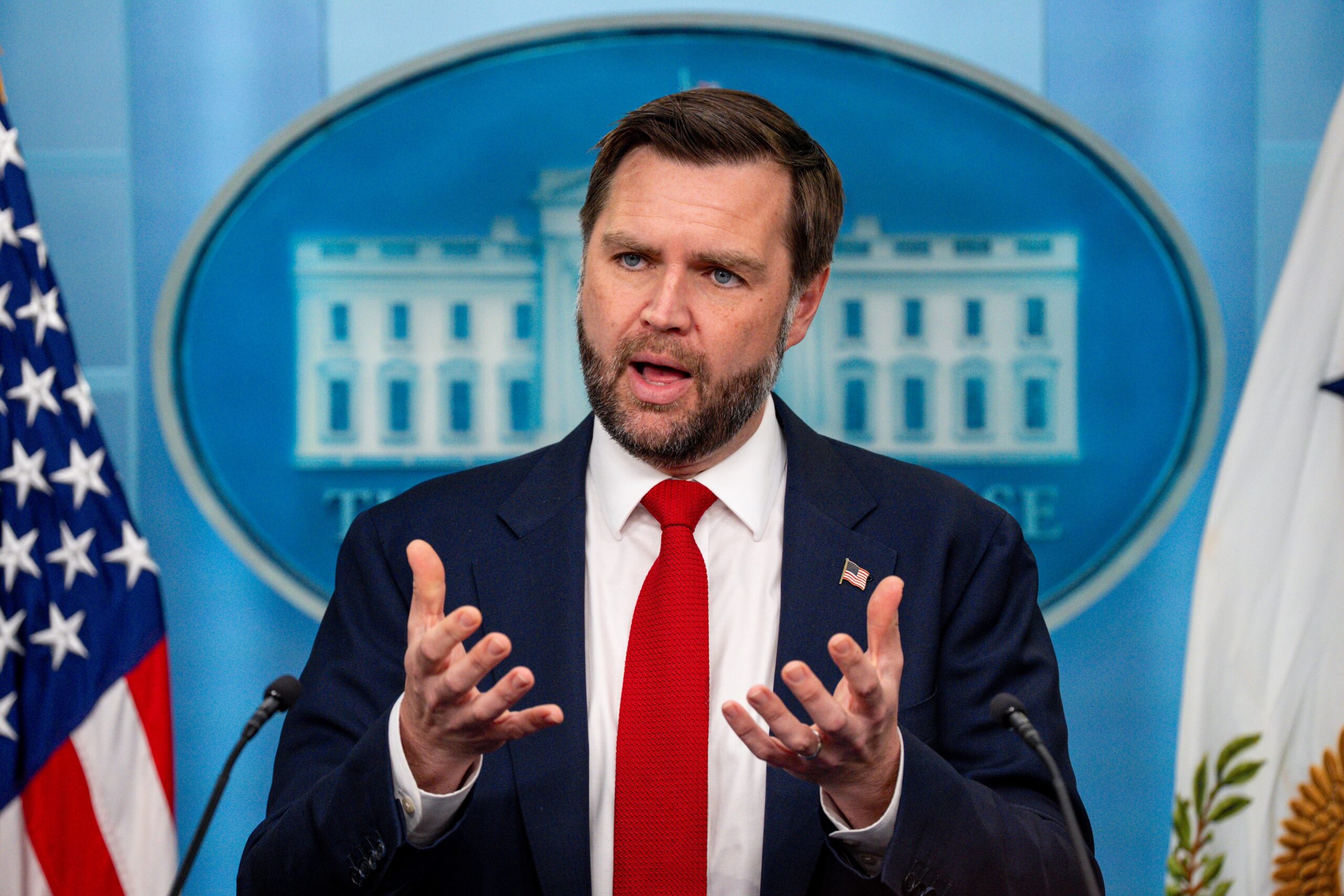
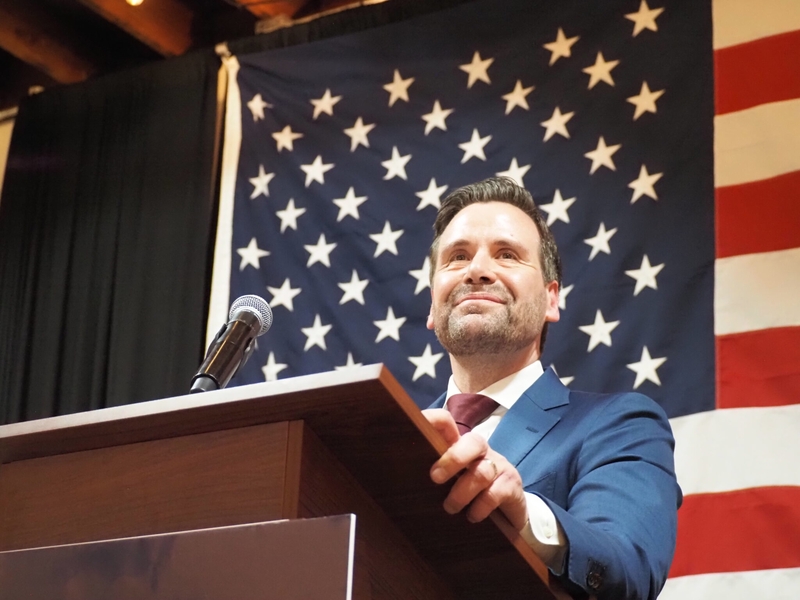
WASHINGTON, DC – JUNE 18: Vice President J.D. Vance speaks during a news conference in the Brady Press Briefing Room at the White House on June 18, 2026 in Washington, DC. Vance is expected to travel to Lucerne, Switzerland tomorrow for follow up talks after a memorandum of understanding (MOU) to end the conflict between the United States and Iran was signed between U.S. President Donald Trump and Iranian President Masoud Pezeshkian. (Photo by Andrew Harnik/Getty Images)
Final peace negotiations between the United States and Iran officially began Thursday, Vice President JD Vance said at a late morning press conference in Washington, starting a 60-day countdown for the Islamic Republic to safely open the Strait of Hormuz, the U.S. to lift a blockade on Iranian oil, and for the two nations to hammer out a nuclear deal.
The agreement is “a win-win situation” for the U.S., Vance said.
“If they change their behavior, big things are going to happen for Iran and for the world,” Vance said. “If they don’t, no skin off our backs” because Iran’s nuclear program and military are “still destroyed.”
The agreement immediately stops hostilities that began Feb. 28. The war claimed the lives of 13 U.S. service members, thousands of civilians in Iran, Lebanon and across the Gulf region, and disrupted the global economy.
Vance said the “Israelis, just like everybody else, have to respect this process,” highlighting that the agreement binds Israel to ceasing its bombing campaign in Lebanon against Iranian-backed Hezbollah fighters.
Without specifying a date, Vance said he expects to brief Congress but is “quite confident” the administration does not need congressional approval on terms of the deal that will lift sanctions on Iran, despite the claims of some U.S. senators.
‘Just signed it’
Vance was slated to finalize the 14-point memorandum of understanding in Switzerland Friday, but President Donald Trump unexpectedly announced early Thursday morning that he had signed the deal while attending a state dinner hosted by French President Emmanuel Macron at the Palace of Versailles after the G7 summit among the world’s wealthiest nations concluded.
“Just signed it,” Trump told journalists after hugging and saying goodbye to France’s president and first lady Brigitte Macron just after 1 a.m. local time, according to the traveling press.
Iranian President Masoud Pezeshkian posted images on social media early Thursday of the signed agreement in English and Farsi.
“This text is the reflection of the voice of a nation that did not trade its dignity and independence for any threat or pressure. What was recorded today was the result of national resilience, political rationality, and responsible diplomacy,” he wrote, according to a translation on X.
Trump posted a series of messages about the signed memorandum on his own social media site, Truth Social, Thursday morning, including a link to a news article about Pope Leo commending the deal. The Trump administration engaged in a public war of words with Leo in April.
“These fools, who think I haven’t been tough enough on Iran, when the Stock Market Just Hit A RECORD HIGH, and Oil prices are ‘tumbling’ down, are either jealous, bad people, or stupid. MAKE AMERICA GREAT AGAIN!!! President DJT” the president posted online early Thursday.
Hours later, in all caps, he wrote: “OIL IS FLOWING, IRAN CAN NEVER HAVE A NUCLEAR WEAPON (THE WORLD WILL BE SAFE!), THE STOCK MARKETS ARE ROARING, JOBS ARE AT RECORDS, AND PRICES ARE DROPPING (AFFORDABILITY!). OUR COUNTRY IS STRONG, SAFE, AND RESPECTED LIKE NEVER BEFORE. ‘YOU’RE WELCOME!’ President DJT”
‘Foreign policy blunder’
Several, including some from the president’s own party, have been critical of the agreement.
Sen. Bill Cassidy, a Louisiana Republican who recently lost his primary after Trump endorsed an opponent, said in a statement on social media the deal “is the worst foreign policy blunder in decades.”
“Reagan is rolling over in his grave. Iran’s nuclear ambitions were not curbed, and they have learned that threatening the Strait of Hormuz works and will undoubtedly leverage it in the future. Now, Iran gets to build brand-new infrastructure under this deal.
“Before the war, the strait was open, Iran was being crushed by sanctions, and 13 service members were still alive. Now, 13 Americans are dead, families have paid billions at the pump, sanctions will be lifted, and the bombing has stopped.”
Sen. John Kennedy, also a Louisiana Republican, said on the Senate floor Thursday morning “We ought to give peace a chance. It’s only 60 days and we’re going to just have to trust the president on this one.”
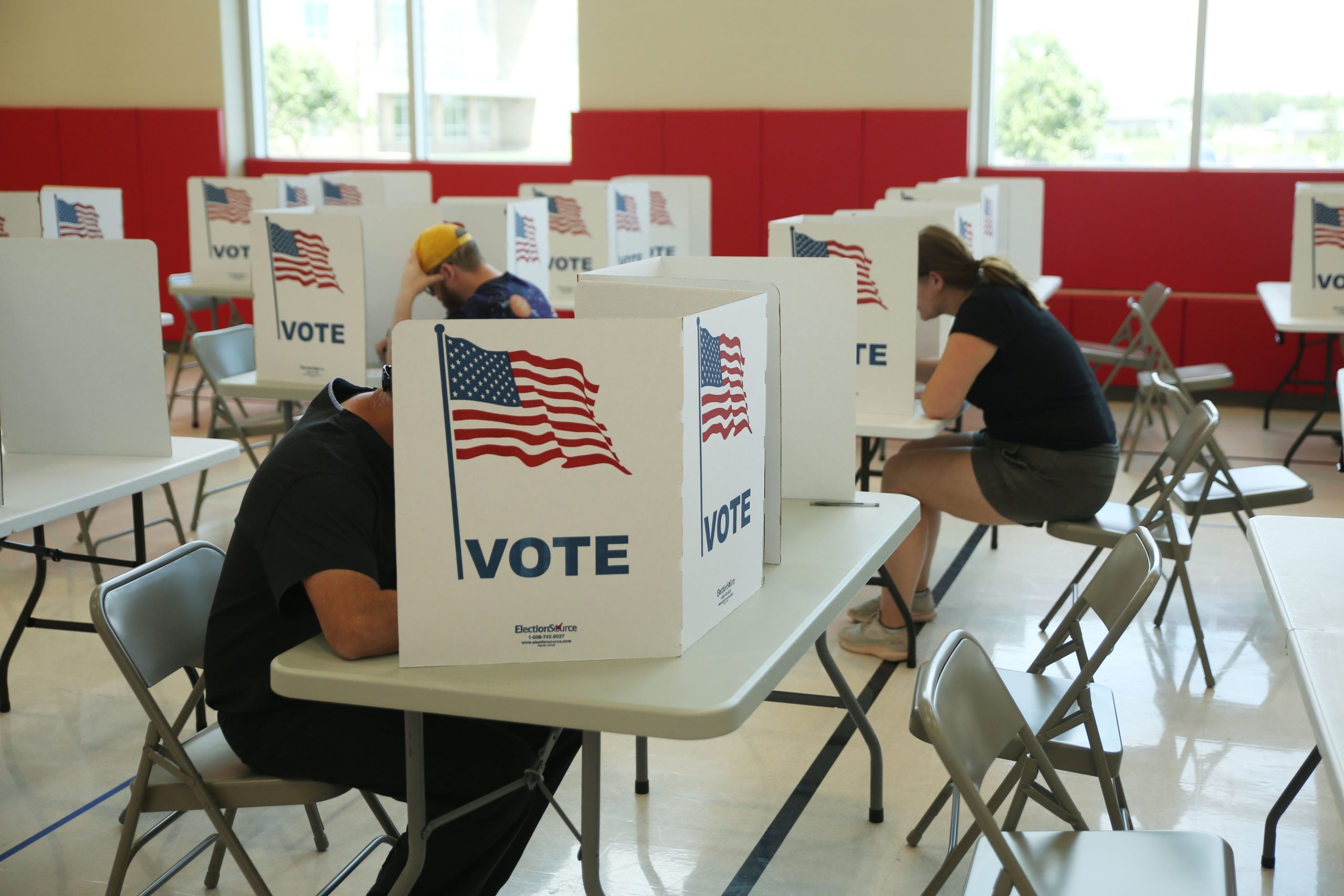
Voters fill out their ballots at a Sioux Falls polling place during the South Dakota primary election on June 2, 2026. (Photo by Makenzie Huber/South Dakota Searchlight)
U.S. Senate Democrats introduced legislation on Thursday to require Congress to sign off on any deployment of federal troops to the polls, as President Donald Trump and his administration refuse to rule out the idea.
Fears of troops or other federal agents at voting sites have long loomed over the approaching midterm elections in November. Democrats and voting rights advocates have grown alarmed in recent months as Trump has publicly entertained the possibility. Other administration officials have mocked or sidestepped questions about possible deployments.
The legislation, the Protect Our Polls Act, would require Congress to pass a resolution approving any deployment beforehand. Federal law prohibits troops and other armed federal personnel from polling places, but contains an exception to “repel armed enemies of the United States” — fueling speculation that Trump could invoke this exception to bypass the ban.
“He is trying to nationalize the elections and he is telling us in his own words what he is trying to do,” Sen. Elissa Slotkin, a Michigan Democrat, said at a news conference at the Capitol. “On top of that, Trump’s nominees for his Cabinet positions have come up here and refused to rule out uniformed military or federal law enforcement being sent to the polls on Election Day.”
White House justification
The bill would require the White House, 48 hours before any deployment, to provide Congress with intelligence, legal justifications, deployment plans and evidence that state and local officials are unable to address the threat themselves.
It also prohibits military personnel from using federal funds to access election records, a provision designed to block troops from seizing ballots.
Slotkin is offering the bill alongside Sens. Tammy Baldwin of Wisconsin, Ruben Gallego and Mark Kelly of Arizona, Amy Klobuchar of Minnesota, Alex Padilla of California, Jacky Rosen of Nevada and Raphael Warnock of Georgia.
“One of the things I’m very proud of is that I served to protect the Constitution of the United States and our democracy,” said Gallego, a Marine veteran. “I swore that oath, and the last thing any Marine, sailor, Army, Coastie, Air Force, spacemen — whatever they call them nowadays — wants to do is to undermine that. We’re here to protect democracy, we’re not here to undermine democracy.”
White House spokesperson Abigail Jackson said in a statement that if Democrats “really cared about securing our elections,” the party would pass the SAVE America Act.
The legislation would require voters to provide documents, such as a birth certificate or passport, proving their citizenship. The measure has stalled in the Senate amid opposition from Democrats and a handful of Republicans.
In May, Trump told reporters that he would “do anything necessary to make sure we have honest elections,” in response to questions about sending National Guard personnel or federal immigration agents to voting locations in November.
Amendments blocked
At a Senate hearing in April, Slotkin pressed Defense Secretary Pete Hegseth on sending troops to the polls. He called the questions “another gotcha hypothetical.”
The Democratic legislation comes a week after Slotkin said Republicans on the Senate Armed Services Committee blocked two amendments to ban troops at the polls during work on the National Defense Authorization Act. The committee typically works on the defense spending bill behind closed doors.
The Protect Our Polls Act has virtually no chance of passing the Republican-controlled Congress. Still, its introduction underscores the level of concern among Democrats as Trump’s efforts to influence the midterm elections come into focus.
The Department of Justice has spent a year demanding states turn over unredacted copies of their voter rolls, including sensitive personal data on voters. DOJ officials have said in court that the department wants to share the data with the Department of Homeland Security, which operates a powerful computer program that can identify possible noncitizen voters.
The DOJ has sued 30 states and the District of Columbia for the data, but no judge has so far ruled in the administration’s favor.
Investigations
The Department of Justice is also engaged in several election-related investigations over past elections.
The FBI raided a Georgia elections warehouse in January and seized ballots from the 2020 election. Election officials have been subpoenaed in Minneapolis and the FBI last week searched the office of an Ohio voting rights group.
And Trump signed an executive order that restricts voting by mail. It would require states to provide lists of voters to the U.S. Postal Service before using the mail to send ballots and directs Homeland Security to share lists of voting-age citizens with every state. The order remains in effect for now, despite a series of lawsuits challenging it.
“There’s a common theme here,” Padilla said at a Democratic forum on election security on Tuesday. “All of these things are illegal and many unconstitutional.”
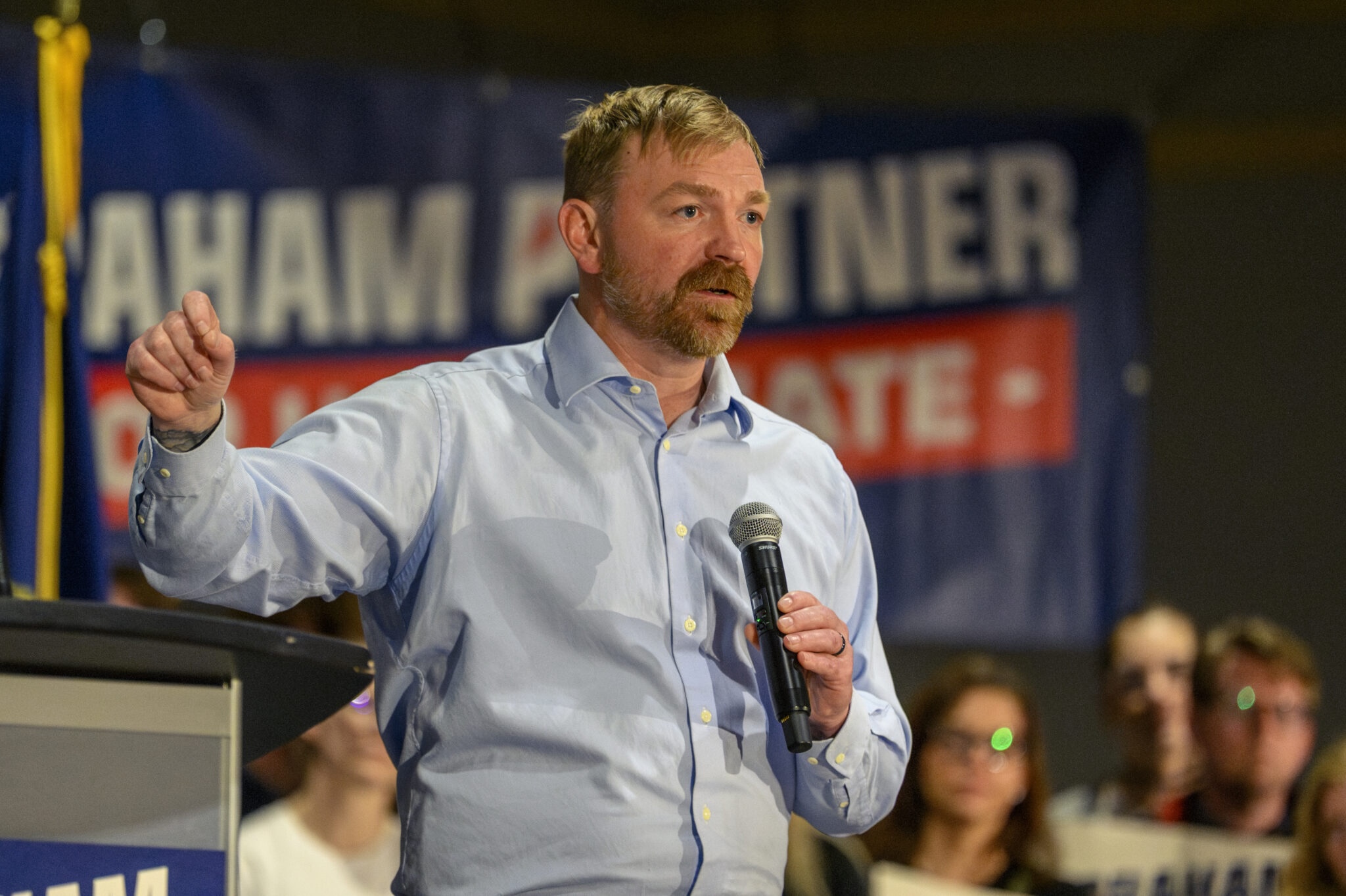
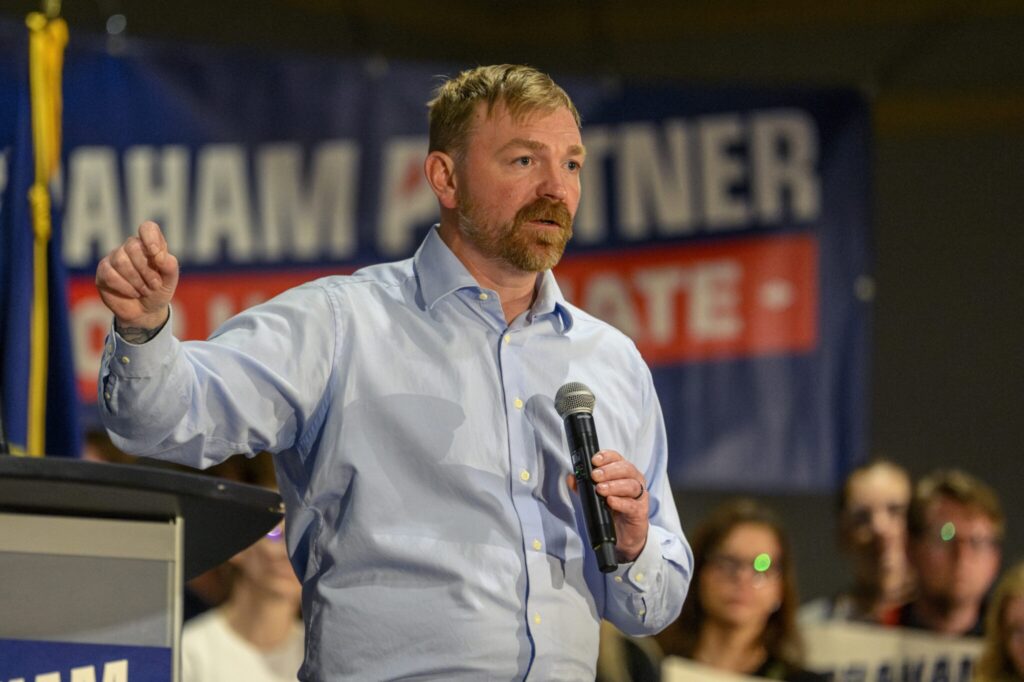
Maine's Graham Platner is the Democratic candidate for what's considered the nation's most competitive battle for the U.S. Senate. Platner, who is challenging incumbent Sen. Susan Collins, is shown at a rally at the Holiday Inn by the Bay in Portland on April 18, 2026. (Photo by Jim Neuger/ Maine Morning Star)
Democrats are growing hopeful they can recapture the U.S. Senate in this fall’s midterm elections amid President Donald Trump’s plummeting approval ratings.
But they still need nearly everything to break their way against a map that put them at a starting disadvantage, analysts and campaign officials say.
At the outset of this election cycle, Republicans appeared highly likely to hold their majority. Democrats would need to flip four seats, and competitive races this year are in states that are more Republican than average.
(Getty Photos)
But as election watchers increasingly expect a blue tint to the November midterms, the question is now whether it will be blue enough to put Democrats back in the Senate majority, where they are now at a 53-47 disadvantage.
Democrats are mounting competitive campaigns in Republican-run states typically seen as stretches, including Texas and Iowa. But analysts say scandals surrounding the party’s nominee in Maine, Graham Platner, have exposed how dependent Democrats are on a rising tide of voter anger with Trump and Republicans to lift their candidates to victory.
“Is 2026 gonna be a mildly blue lean year, like 2018, or a kind of tsunami blue year, like 2006 or 2008?” J. Miles Coleman, the associate editor at Sabato’s Crystal Ball, a University of Virginia-based election forecaster, said. “I think the answer to that question is still kind of, we’ll see.”
Strong candidates, high prices
Thirty-five Senate seats will be on the ballot during the November midterm elections.
Of the nine deemed most competitive — Alaska, Georgia, Iowa, Maine, Michigan, New Hampshire, North Carolina, Ohio and Texas — that will likely decide control of the chamber, Trump won all but Maine and New Hampshire in 2024. Democrats would have to retain their current seats and flip others in some combination of seven of those Senate races to take over control of the chamber.
But Democrats have also offset their geographic disadvantage by fielding strong candidates in a few of the most important races, making pink-to-red states such as Alaska, Ohio and North Carolina ultra-competitive.
Democrats’ optimism comes as Trump has made a series of moves they believe could prove toxic for Republicans. Potentially most damaging, the war with Iran sent gas prices soaring and inflation rising, calling into question his handling of the economy as voters continue to rate affordability as a top issue.Trump has signed a ceasefire agreement and gas prices are dropping, but the question is whether there’s enough time left to erase the damage.
The president’s approval rating was near 50% when he won the 2024 election, Coleman said, but has since sunk as the cost of living keeps rising.
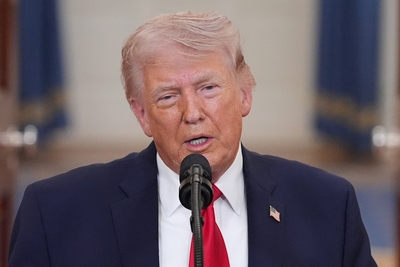
U.S. President Donald Trump spoke about the war in Iran from the Cross Hall of the White House on April 1, 2026 in Washington, D.C. (Photo by Alex Brandon-Pool/Getty Images)
Trump continues to turn off voters, with elections now less than five months away. A New York Times daily average of polling placed the president’s approval rating at 39% as of June 17.
A switch in Senate control would have major implications for the remainder of Trump’s term.
Democratic senators, assuming they vote together, would have the power to block any U.S. Supreme Court nominees put forward by Trump in the final two years of his term, as well as executive branch nominees and federal judges, and to shut down major party-line legislation enacted by Republicans twice already in the past year through the budget reconciliation process.
The combination of an unpopular president and a strong crop of candidates gives Democrats a fighting chance to win the majority, even if they still face long odds, Coleman said.
“If you asked me a year ago if Democrats had a path to the Senate, I would have said the chances aren’t zero, but they’re very hard,” Coleman said. “Now, I think there are several paths that the Democrats have to take the Senate, but I think the Republicans just have an easier path holding it.”
Moderates put red states in play
Alvin Tillery, a Democratic pollster and consultant who is also a professor in Northwestern University’s political science department, said strong candidates in North Carolina, Ohio and Alaska give his party the edge in those states
Former North Carolina Gov. Roy Cooper, former Ohio Sen. Sherrod Brown and former Alaska Rep. Mary Peltola are “moderates who have won statewide,” Tillery said.
Though the Democratic candidates in those states are establishment-friendly, Tillery said Democrats generally should look to motivate younger voters and voters of color by leaning in to issues that the No Kings protests have elevated, as well as keeping affordability in focus.
But, despite the apparent quality of Democratic candidates, those states are still purple at best. Trump has won each state in each of his three White House runs.
The president’s drooping approval may not be as big a factor as Democrats need, a national Republican campaign operative said.
“Yes, approval ratings, obviously, have gone down,” the operative, who declined to be identified by name, said. “However, when it comes to the Republican base, they are still showing up for Trump, and he will make sure to turn them out … At the end of the day, we have an advantage when it comes to the state-specific electorates that we’re looking at.”
Control of the Senate may come down to the Democratic candidates’ strength against the overall partisan lean of the states in play.
“They’ve by and large done a good job of recruiting the candidates they need to to put those states in play,” Coleman said of Democrats. “It’s just a question of: Are those states too red?”
Democrats are also defending open seats in Michigan and New Hampshire, while Sen. Jon Ossoff is seeking reelection in Georgia. Sabato’s Crystal Ball rates the Michigan race as a toss-up and the contests in New Hampshire and Georgia, where Ossoff will face Trump-endorsed Rep. Mike Collins after his win in the June 16 GOP primary, as leaning toward Democrats.
A Maine street fight
On paper, Maine could be seen as the bluest state on the map this year because of its state’s record in presidential elections.
But its Senate race also may be the most immune from the national environment, with a battle-tested Republican incumbent running in a lightly populated state where retail politics can still swing an election.
The matchup, which may be the single most competitive in the country, pits a controversial newcomer in Platner against Sen. Susan Collins, a moderate and powerful Republican with proven electoral appeal who has occasionally criticized the president during the Trump era but also voted for conservative Supreme Court Justice Brett Kavanaugh.
Independent U.S. Sen. Bernie Sanders of Vermont and U.S. Senate candidate Graham Platner rally together in Portland, Maine, on May 25, 2026. (Photo by Emma Davis/ Maine Morning Star)
Democrats are betting that Maine voters want more full-throated opposition to Trump. Primary voters formally made Platner the nominee in June after Democratic Gov. Janet Mills, seen as a more establishment candidate, suspended her campaign.
Platner, a gruff-looking oyster farmer and Marine veteran, has connected with voters with a populist, outsider message. But he has faced an array of flaps, including over a tattoo with Nazi associations and that Platner had sexted several women while married. The New York Times also reported on women who said they were disturbed by Platner’s behavior while dating him.
He faces a difficult matchup with Collins, who has won other races in the face of significant national headwinds. In 2020, even as Trump lost the presidential election nationwide and in Maine, Collins won reelection while outperforming Trump by 18 points.
Senate math
The president’s party typically does poorly in midterm elections. Republicans are seen as likely to lose the House, though gerrymandering may make the fight for control of that chamber tighter than before. Republicans losing the Senate, too, would be seen as a stinging rebuke of Trump and GOP lawmakers.
In Ohio, Republican Sen. Jon Husted is seeking election after he was appointed to the Senate last year to replace JD Vance, who resigned to become vice president. Brown is running against Husted after losing reelection in 2024 to Sen. Bernie Moreno.
Brown, who promotes a populist message, hearkens back to an earlier era of Ohio politics, when Democrats were more popular. President Barack Obama won the state in 2008 and 2012 but Republicans have since become ascendant, with Trump winning the state all three times he’s run for president.
While Husted hasn’t won a Senate race, he’s won statewide races for lieutenant governor and secretary of state.
In North Carolina, Cooper is now favored in a contest with Republican Michael Whatley, a former chairman of the Republican National Committee. Sabato’s Crystal Ball and the Cook Political Report have said the race leans Democratic, though another forecaster, Inside Elections, rates it as a tossup.
They are battling to flip the seat and succeed Sen. Thom Tillis, a Republican who chose not to run for reelection after repeatedly clashing with Trump. He has publicly said Trump is harming Republican chances in November.
“We need Republicans to do well in November, but the stupid stuff is killing our chances!” Tillis wrote on social media in late May.
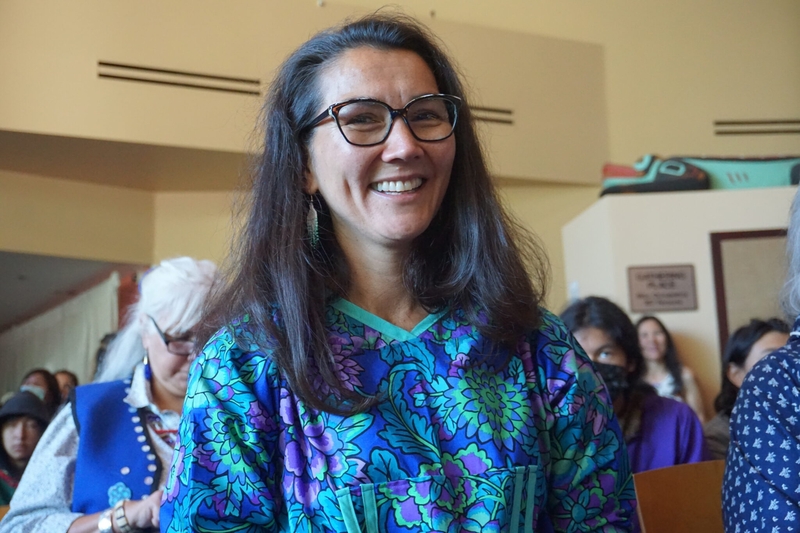
Former U.S. Rep. Mary Peltola at a July 28, 2022 ceremony at the Alaska Native Heritage Center. (Photo by Yereth Rosen/Alaska Beacon)
Alaska’s Senate race pits two well-known politicians in the state against each other. Incumbent Republican Sen. Dan Sullivan is facing Peltola, who was the state’s lone U.S. House member for more than two years.
Peltola represents a hope by Democrats that a familiar face will resonate with voters in a state where the party has struggled. She was the first Democrat to win statewide in Alaska since 2008. Peltola, who was first elected to Congress in a 2022 special election, lost her race for reelection in 2024.
Sullivan’s campaign got a boost after Alaska election officials disqualified a different Dan Sullivan from appearing on the ballot. Alaska Elections Division Director Carol Beecher wrote that the other Sullivan had filed “with a purpose to confuse or mislead” voters.
In Iowa, Republican U.S. Rep. Ashley Hinson and Democrat Josh Turek, a state representative, are running for an open seat created after Sen. Joni Ernst, a Republican, declined to run for reelection.
Iowa state Rep. Josh Turek celebrated his primary election victory to become the Democratic nominee for Iowa’s U.S. Senate seat at an Iowa Democratic Party election night party in Des Moines June 2, 2026. (Photo by Robin Opsahl/Iowa Capital Dispatch)
Iowa was once a major swing state and home of long-serving Democratic U.S. Sen. Tom Harkin, and helped power President Barack Obama’s rise in 2008. It has since become solidly Republican, but anger over Trump’s tariffs and concerns that the war in Iran will send fertilizer prices rising have potentially created an opening for Democrats.
Lone Star longing
After Maine, no race has perhaps attracted as much attention as Texas.
Republicans are emerging from a bruising primary battle between Sen. John Cornyn and Ken Paxton, the scandal-plagued and previously indicted state attorney general. Paxton won and will face Democrat James Talarico, a state lawmaker and seminary student who speaks openly about his faith, a progressive form of Christianity.
A Democratic victory would represent a political earthquake. Democrats haven’t won a Senate seat in Texas since the 1980s and haven’t won a statewide election since the 1990s.
Trump won 56% of the vote in Texas in 2024. A Talarico victory — a statewide Democratic victory — would open up the possibility that the party might one day again compete at the presidential level in Texas, the state that sent President Lyndon B. Johnson to Washington. Texas has 40 Electoral College votes, the second-biggest prize after California’s 54.
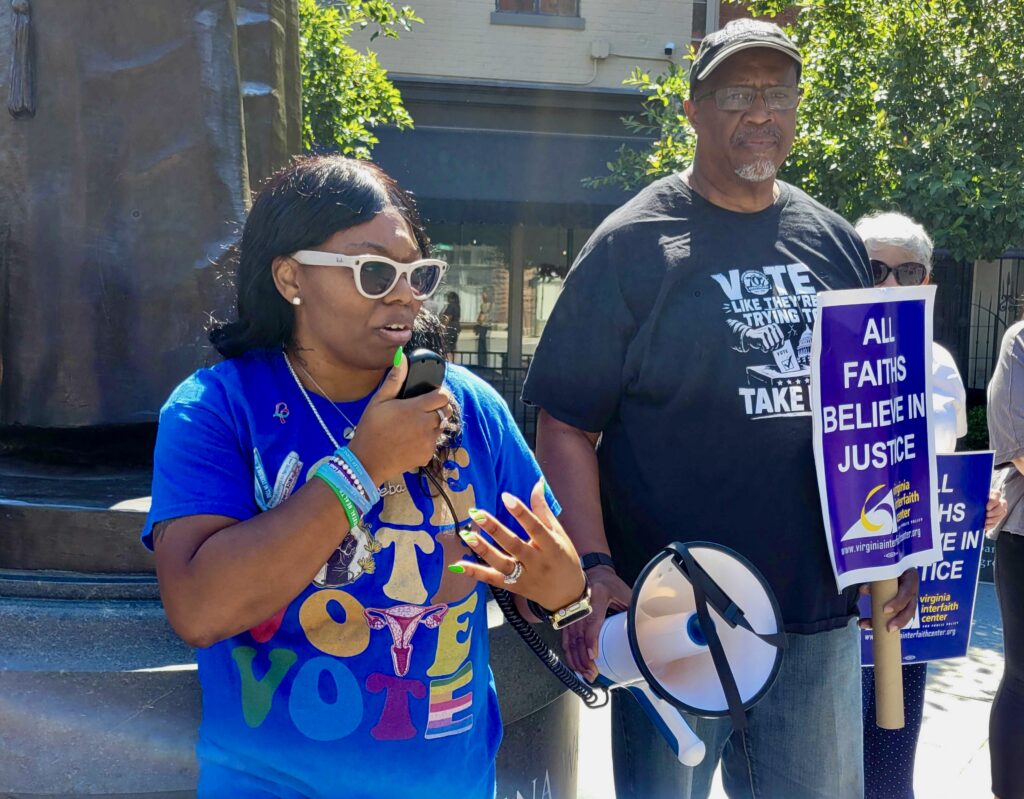
Nolef Turns director Sheba Williams speaks at a press conference in Richmond on June 17, 2026. (Photo by Charlotte Rene Woods/Virignia Mercury)
While a pending constitutional amendment to automatically restore voting rights to people with felony convictions who have served their sentences awaits Virginians’ approval or rejection in a statewide referendum later this year, thousands of people who should never have lost their right to vote in the first place remain in limbo during this summer’s congressional primary elections.
After a court ruled earlier this year that certain felony convictions should not have resulted in loss of voting rights, Virginia’s Department of Elections had until June 1 to comply with the order to rectify the situation.
Instead, on June 1, the department sent an advisory to election officials indicating that they should not deny peoples’ applications but to not fully process them either.
“Please note that records available through the felon search may have been affected by the updates to the Agency Felony Prohibited table. ELECT will provide additional guidance on reviewing felony history soon,” the June 2 advisory obtained by The Mercury read.
The crux, Nolef Turns director Sheba Williams said, is that some people with felony convictions who should be eligible to vote this summer are nervous to register because it is a crime to lie on applications.
“When they get to their application, there is a question about whether or not you have been convicted of a felony,” Williams explained.
For people whose felonies don’t count towards prohibition of voting, they are unsure if they should check the box or not. So, with early voting for the congressional midterms beginning June 18, relevant applicants are stuck waiting as the process plays out.
Williams organized a press conference in Richmond on Wednesday along with the Virginia Interfaith Center For Public Policy and Bridging the Gap Virginia. Each group has advocated for criminal justice reform and voting rights laws and some have helped returning citizens navigate post-incarceration life.
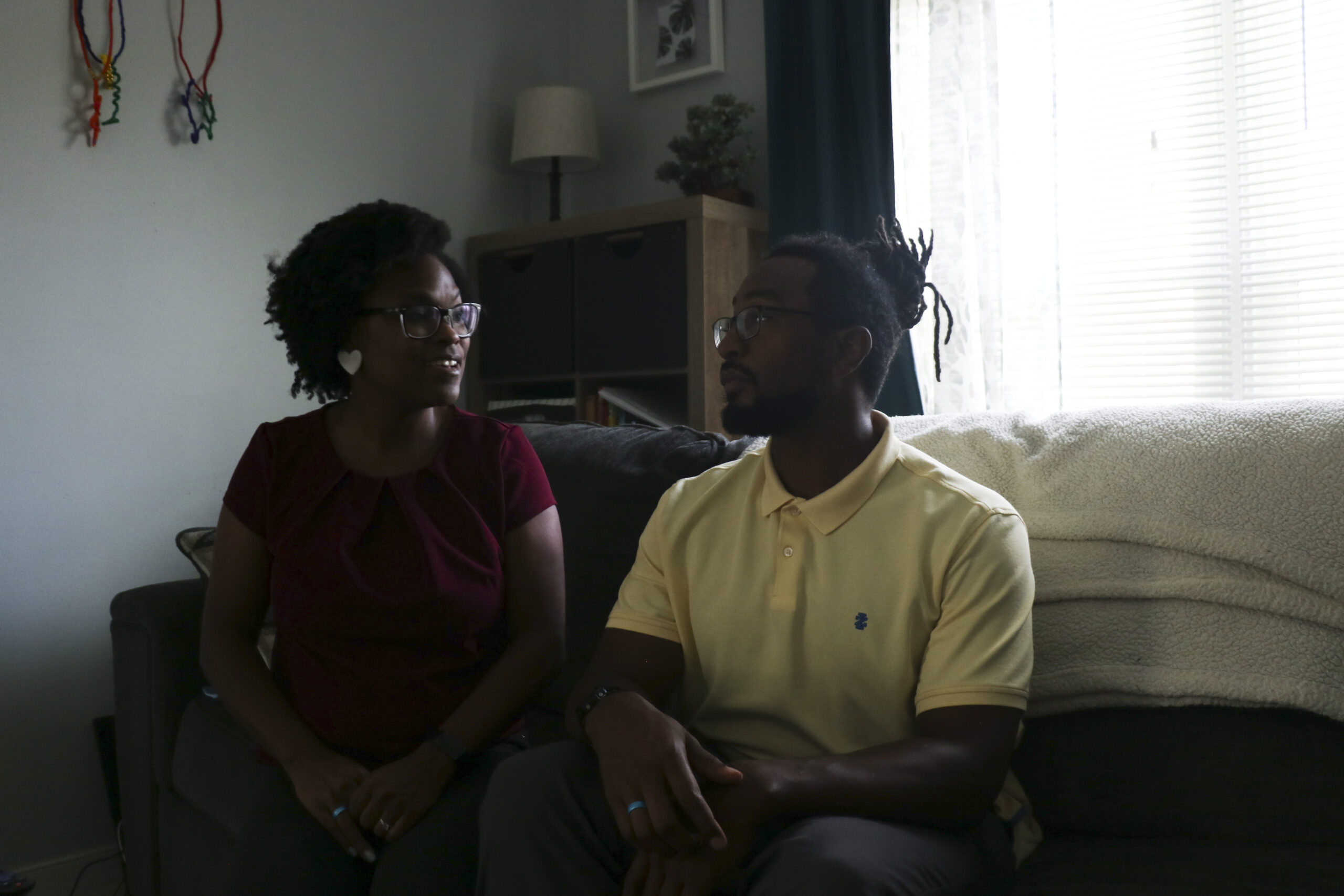
Quadaire Patterson and his wife Santia Nance attended the event. The couple has ramped up their criminal justice advocacy, starting when Patterson was still incarcerated. Though he’s helped shape laws before and after his 2024 release, he has still been unable to vote.
Santia Nance (left) sits with husband Quadaire Patterson (right) in their living room in Henrico County in September 2024. (Photo by Charlotte Rene Woods/Virginia Mercury)
“As I think back to my crime when I was 19 years old, I had no awareness of the political systems that are in play,” Patterson said. But now at 38, having spent about half of his life behind bars, Patterson said he understands how important it is to engage in democracy. The importance of the right to vote hits closer to home now that he and his wife have a 14-month-old daughter, Trinity.
“If we ever want to repair this broken system, if we ever want to repair our broken communities, we have to fully allow returning citizens to participate in the civic processes,” Patterson said.
The case at the core of the matter stemmed from a series of 1870 laws called the Readmission Acts, which allowed former Confederate states to re-enter U.S. Congress after the Civil War. The laws had barred states from constitutionally disenfranchising people other than those convicted of crimes considered common law at the time.
“We create crimes every year but we never revisit and say ‘what did we get wrong?’ and I think that is a barrier too,” Williams said.
Following the suit, Attorney General Jay Jones’ office has been drafting lists of crimes that could be applicable to the ruling.
Congressional primaries will take place Aug. 4 and the deadline to register to vote in those elections is July 24.
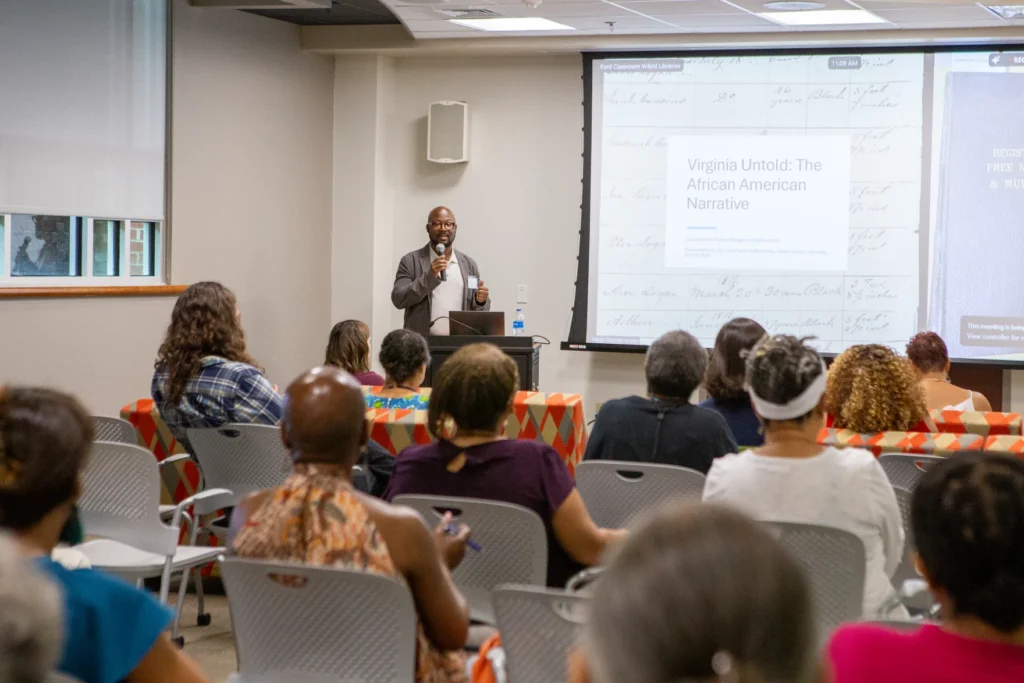
Interim Robert Francis Engs Director of the Lemon Project Jajuan Johnson presents at the Summer Sankofa Workshop in July 2025. (Photo courtesy The Lemon Project)
William & Mary’s Lemon Project helps African Americans in Williamsburg uncover their families’ histories and the role their relatives played in shaping the college, the city and the landscape of the early United States.
On Thursday morning, the Lemon Project is taking its services to the college’s Juneteenth Celebration in the Sadler Center.
“It resonates deeply if you have been told for generations that you did not make a substantive contribution to the building of a nation and now you have records that say ‘Yes, I did, I did build this place,’” said Jajuan Johnson, interim director of the Lemon Project. “We think that they’re worth the search, they’re worth the labor.”
The Lemon Project was created in 2009 to investigate William & Mary’s ties to slavery, starting with its founding in 1693. The college’s historic campus was built by enslaved people, and its founding president, James Blair, was instrumental in the institutionalization of slavery in Colonial Virginia.
The project was inspired by similar work at Brown University and pushed forward with advocacy by faculty and students such as Tiseme Zegeye, who in 2007 proposed a resolution in the Student Assembly that called on William & Mary to research and publicize the college’s role in slavery and create a memorial to the enslaved. The Board of Visitors agreed in 2009. “Hearth: Memorial to the Enslaved” was dedicated in 2022.
“We wouldn’t be here without students; they are key to our success,” said Sarah Thomas, associate director of the Lemon Project.
Johnson helped establish the project’s public genealogical research work about five years ago. Members of the Descendant community, African Americans with roots in Williamsburg’s earliest days, had been asking for it for years.
A $1 million grant created a foundation to get started during the COVID-19 pandemic.
“People were wanting to connect,” Johnson said. “They are in place, sheltered and they’re wanting to connect with family.”
Interest in genealogy predated the pandemic, Johnson said, but as historical records were digitized and made available online, it became easier for Black people to investigate unanswered questions about their lineage.
For people who descend from enslaved people, however, ancestry work can be difficult. Many records were lost or destroyed during the Civil War. In other cases, records pertaining to the enslaved were sparse or nonexistent, sometimes noting the presence of an enslaved worker but not their name.
“Slavery was injustice against family lines,” Johnson said. “So much is not recorded because you were considered property.”
Despite the challenges, many records do exist in William & Mary’s Swem Library special collections. The Lemon Project also makes use of Library of Virginia records and Freedmen’s Bureau records, which Johnson said have been instrumental in their work.
“Although people are told that they can’t find anything prior to 1865, I would say 80% of the time they do, they find some type of clue,” Johnson said.
The Lemon Project collaborates on genealogy work with other groups, including the Bray School Lab, the Afro-American Historical and Genealogical Society of Hampton Roads and Black residents, Johnson said. Where institutional records fell short, records from historical church congregations in Williamsburg, such as First Baptist Church, Oak Grove Baptist Church and Bruton Parish, sometimes provide new leads.
“African American cemeteries and the structures as well are major testimonies of African American life and history and family history in this region,” Johnson said. “These are places that are repositories of information that tell the story of people and the communities they built.”
The project doesn’t always start in the distant past and move forward. Using a mix of oral history, death certificates and payroll documents from the 1900s at the college, Johnson said, the project was able to follow lineages backward.
“We see that not only are these people in the early 1900s on this payroll list working at William & Mary, but they have children who are working at the college,” Johnson said. “We can trace back to find that there was this labor lineage at the college.”
Thomas said the project’s work builds community and connects people.
“We had a genealogy roundtable and cousins met each other for the first time,” Thomas said. “We didn’t plan it, it just happened; those kinds of stories are priceless.”
Those moments and demonstrating the Black community’s role in building early Williamsburg and overcoming oppression make the project’s work resonate with people, Johnson said.
“They built the churches, they cared for their dead, they reproduced, they established businesses, they did everything that people have told them — that institutions have told them — they did not do,” he said. “It’s sustaining when you consistently live in a world that tells you you don’t matter, it reaffirms ‘No, this is my place; this, too, is my nation; this is my institution.’”
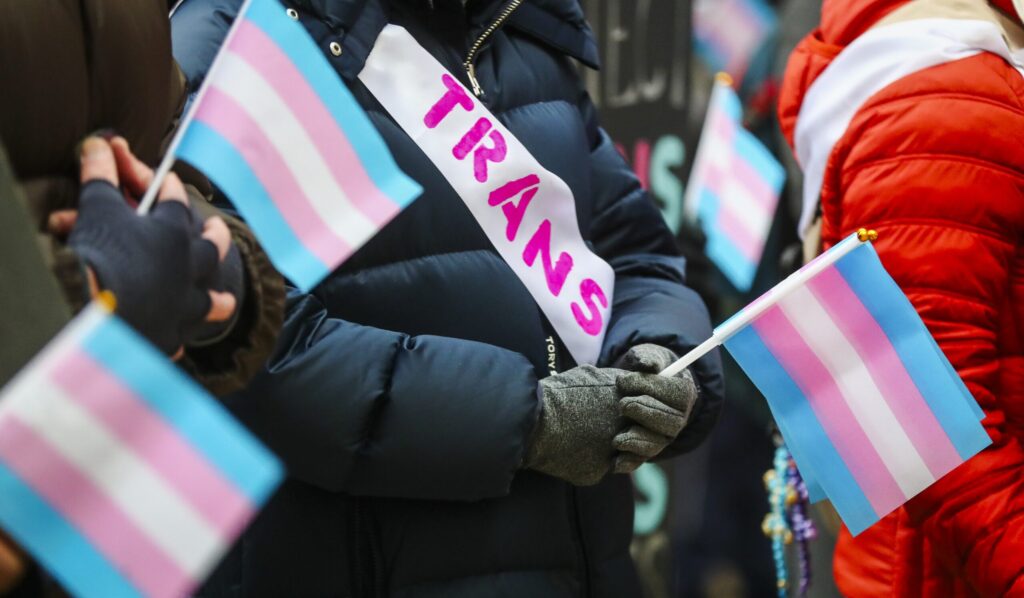
Advocates for transgender rights rallied outside the Statehouse in Trenton, New Jersey, on Jan. 5, 2026, to demand lawmakers pass a bill that would protect gender-affirming care in New Jersey. (Photo by Dana DiFilippo / New Jersey Monitor)
WASHINGTON — The Federal Trade Commission filed a lawsuit against a transgender healthcare nonprofit Wednesday, accusing it of misleading and coercing parents over gender-affirming treatment for their children.
The FTC’s complaint against the World Professional Association of Transgender Health is the latest in a series of legal actions from the Trump administration against organizations that provide gender-affirming treatment or work on transgender healthcare issues.
“WPATH deceived parents and children about the medical and scientific basis for such services, as well as their medical necessity, safety and efficacy,” a senior FTC official, who wished not to be identified, said in a call with reporters Wednesday.
The FTC was joined by Alaska, Iowa, Nebraska and Texas in the lawsuit, which was filed in federal court in Texas. Another senior FTC official on the call Wednesday said that the suit is seeking to prevent the nonprofit from making “future false, misleading, or unsubstantiated claims to parents and children.”
The suit alleges that the association’s standards of care, which are widely adopted by healthcare providers, were crafted with the specific goal of guaranteeing that insurance companies would cover the treatment as medically necessary, in turn generating profit for the association’s members.
But the association described the complaint as “baseless,” and said in a statement Wednesday that it’s just another example of the Trump administration’s attempts to “interfere with Americans’ rights to seek and obtain the healthcare that should be decided between a patient and their physician.”
The guidelines are informed by established scientific standards, expert consensus, and patient-centered values, the association said, adding that it supports individualized patient care, rather than a “one size fits all” approach.
The association also said the FTC is not a medical provider, and as such, has no right to interfere with individualized medical decision-making and doesn’t have jurisdiction over WPATH or its speech. It said the states’ claims have similar factual and legal flaws.
WPATH likes its chances
The lawsuit comes after the association filed its own suit against the FTC in February, seeking to block an investigation which it described as being part of an “all-of-government campaign to undermine access to gender-affirming care and attack the First Amendment rights of medical organizations.”
The association said Wednesday it’s predicting a similar outcome this go-around as well.
“A federal district court has already found WPATH is in a strong position to prove that the FTC is acting out of pure retaliation as part of the federal government’s relentless and targeted campaign to undermine gender-affirming care by attacking the First Amendment rights and the independence of professional medical organizations,” the organization said in its statement. “We expect the same result when we oppose this latest attack on WPATH and its mission to promote evidence-informed care and guidance for doctors and their patients.”
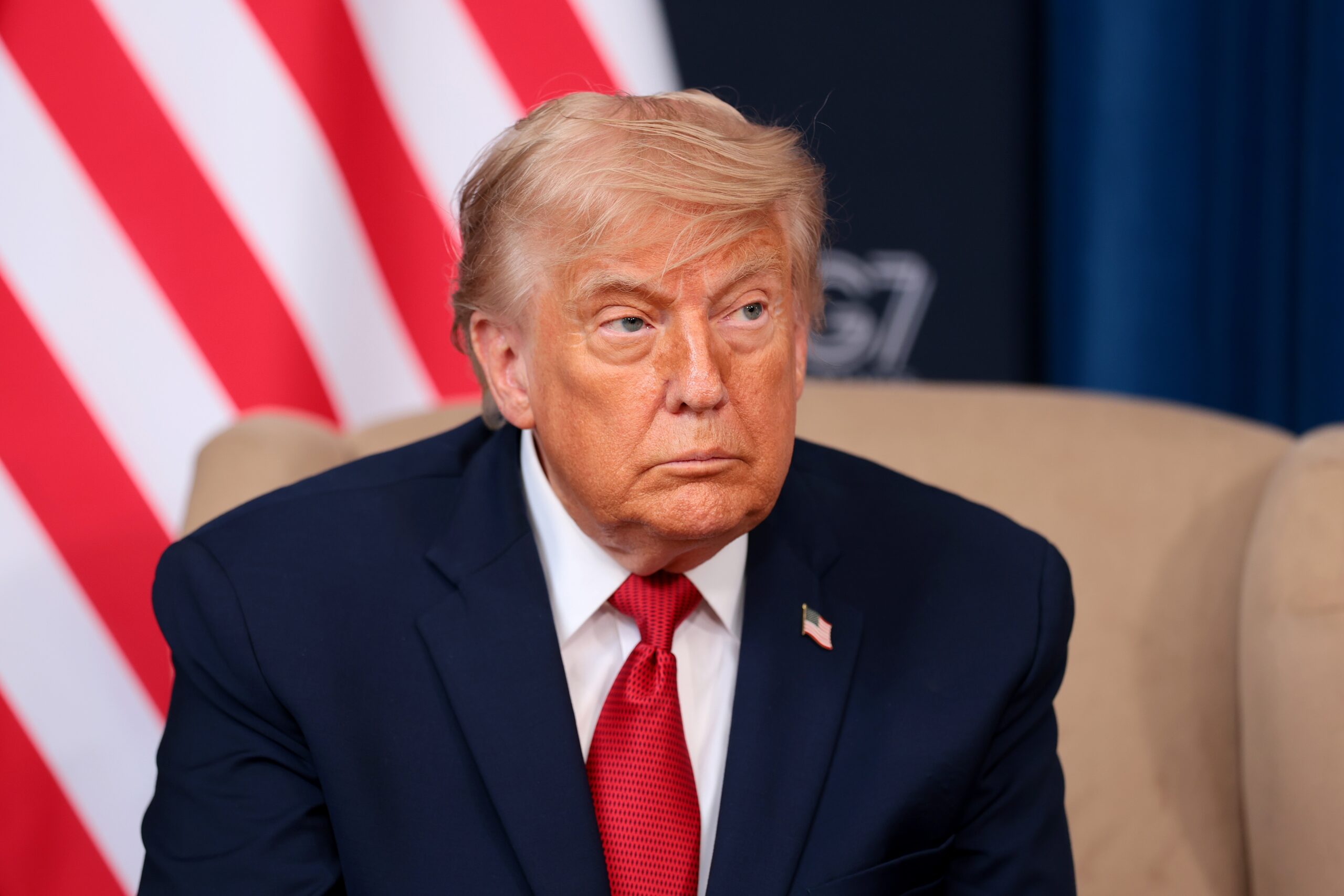
President Donald Trump attends a bilateral meeting with Egyptian President Abdel Fattah el-Sisi on the sidelines of the G7 Summit on June 17, 2026 in Evian-les-Bains, France. (Photo by Anna Moneymaker/Getty Images)
WASHINGTON — The White House on Wednesday read to reporters a 14-point memorandum of understanding with Iran to stop the ongoing war and allow for further negotiations, but did not release the exact text.
The 60-day MOU outlines the opening of the Strait of Hormuz, sanctions relief and reconstruction funds for Iran, and the promise of negotiations on Iran ending its nuclear program. Senior administration officials say economic and sanctions relief will only occur if Iran is on “good behavior.”
“If we think that they’re just dragging us along and kind of bull- – – -ting us, then we’ll be very quick to pull the plug on it and go back to tightening the screws on them very, very aggressively,” a senior administration official who did not want to be identified said on a Wednesday afternoon call with reporters.
President Donald Trump told reporters in France he “might” stay in Europe for the ceremonial signing of the memo, but doubted it.
“This is a memorandum of understanding. It’s very important, but it might not be the kind of a document that I should be signing,” Trump told reporters at his final press conference of the G7 summit, a meeting of the world’s wealthiest capitalist economies.
Earlier Wednesday he told reporters at the G7, “If I don’t like it, we’ll go back to shooting at them, dropping bombs on their head.”
Trump announced Monday he had reached a ceasefire agreement with Iranian officials to temporarily end the war, which has lasted longer than 100 days, but the administration had not released any part of the agreement until Wednesday. Members of the U.S. Senate complained they had not seen the details and some said they wanted to vote on a final agreement.
Iran’s Prime Minister Shehbaz Sharif confirmed in a social media post Monday that a deal had been reached.
Iranians requested the United States not release the text until language was finalized, according to a second senior administration official who added “it was obviously unfortunate we weren’t able to put it out right away.”
“We were trying to accommodate their domestic messaging and their domestic politics. We’re trying to build trust with them, and that’s what they asked us to do, so we agreed to do it.”
Iran’s Foreign Minister Seyed Abbas Araghchi warned on social media June 12 against speculation on the deal which “has never been closer” and said details would be shared with the public “in due course.”
Nuclear weapons
The 14-paragraph “Islamabad memorandum of understanding between the United States of America and the Islamic Republic of Iran,” which the second senior administration official read on the call, declares an “immediate and permanent termination of military operations on all fronts, including in Lebanon.”
The White House declined to provide a written copy of the MOU to reporters.
Israel’s Prime Minister Benjamin Netanyahu has not agreed publicly to withdraw forces from Lebanon, which emerged as a second front of the war that the U.S. launched in tandem with Israel in February.
The U.S. and Iran have 60 days, “extendable with consent” to reach a final deal.
According to the agreement, Iran “reaffirms that it shall not procure or develop nuclear weapons.”
The document charges the U.S. and Iran to agree on how to deal with Iran’s buried stockpile of enriched uranium, with the minimum arrangement being the “down blending” of the material on site under the supervision of the International Atomic Energy Agency.
“The two parties also agreed to discuss the issue of enrichment and other mutually agreed matters related to the Islamic Republic of Iran’s nuclear needs based on a satisfactory framework being agreed upon in the final deal,” according to the MOU.
In 2018, Trump pulled the U.S. out of a previous nuclear agreement brokered by former President Barack Obama’s administration.
Obama appeared skeptical Saturday of Trump’s nuclear negotiations with Iran.
“It is doubtful that any agreement that arises is going to be significantly different or a significant improvement from the deal that we had in the first place and had worked for, for a long stretch of time before we, the United States, pulled out of it,” he told ABC News’ Robin Roberts.
Reopening Strait of Hormuz
The agreement also commits the U.S. to “immediately” begin the removal of its naval blockade on Iranian ports, with a full and final stoppage to occur within 30 days.
The U.S. will also have to remove military forces from the vicinity of Iran, meaning the American forces “will return our force posture in the region to that which existed before the conflict started,” according to the administration official.
Roughly 40,000 troops were in the region prior to the war. That number increased to approximately 50,000 after Feb. 28.
For its part, Iran must “make arrangements using its best efforts for the safe passage of commercial vessels with no charge for 60 days only from the Persian Gulf to the Sea of Oman and vice versa,” according to the agreement.
However, the MOU continues: “The traffic of commercial vessels will immediately start in considering the need for removing the technical and military obstacles, and demining by the Islamic Republic of Iran will be instated within 30 days.”
From there, Iranian officials agreed to negotiate a plan with the sultan of Oman and Persian Gulf states on “future administration and maritime services in the Strait of Hormuz.”
The war’s de facto closing of the strait has rocked economies across the globe, as 20% of the world’s petroleum exports passed uninterrupted through the narrow waterway prior to the conflict. Oil prices reached $120 per barrel during the height of the conflict but have fallen to roughly $79 this week.
Article 38 of the United Nations Convention on the Law of Sea declares passage through straits a right that should not be impeded, though neither the U.S. nor Iran are party to the international agreement.
$300B in reconstruction funds
In perhaps one of the most “controversial” parts of the MOU, according to the senior official, Iran could see up to $300 billion in reconstruction funds.
The White House official was quick to downplay the prospect of Iran reaping billions of U.S. dollars.
“Note that it doesn’t require us to do anything to, one, to ever pay a cent of money to the Iranians, (and) to ever contribute money to this reconstruction fund,” the official said.
“What it says is that if we get to a final deal, and if the Iranians behave, we will permit the sanctions relief that would allow, for example, the Emiratis to build a power plant in Iran. That’s all it says. If they do what they have to do, we will permit the investment and the reconstruction of their country,” the official said.
Additionally, upon the signing of the MOU, the U.S. Department of Treasury will immediately issue waivers for the export of Iranian crude oil and other petroleum products, as well as associated activities, including bank transactions and insurance, according to the document.
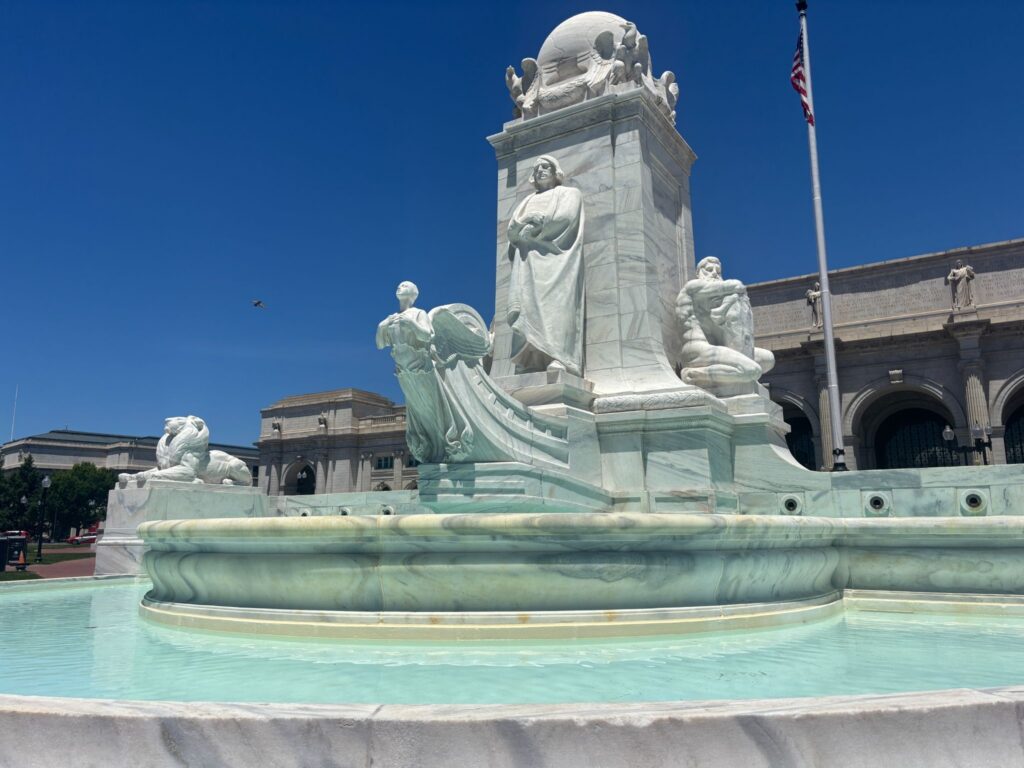
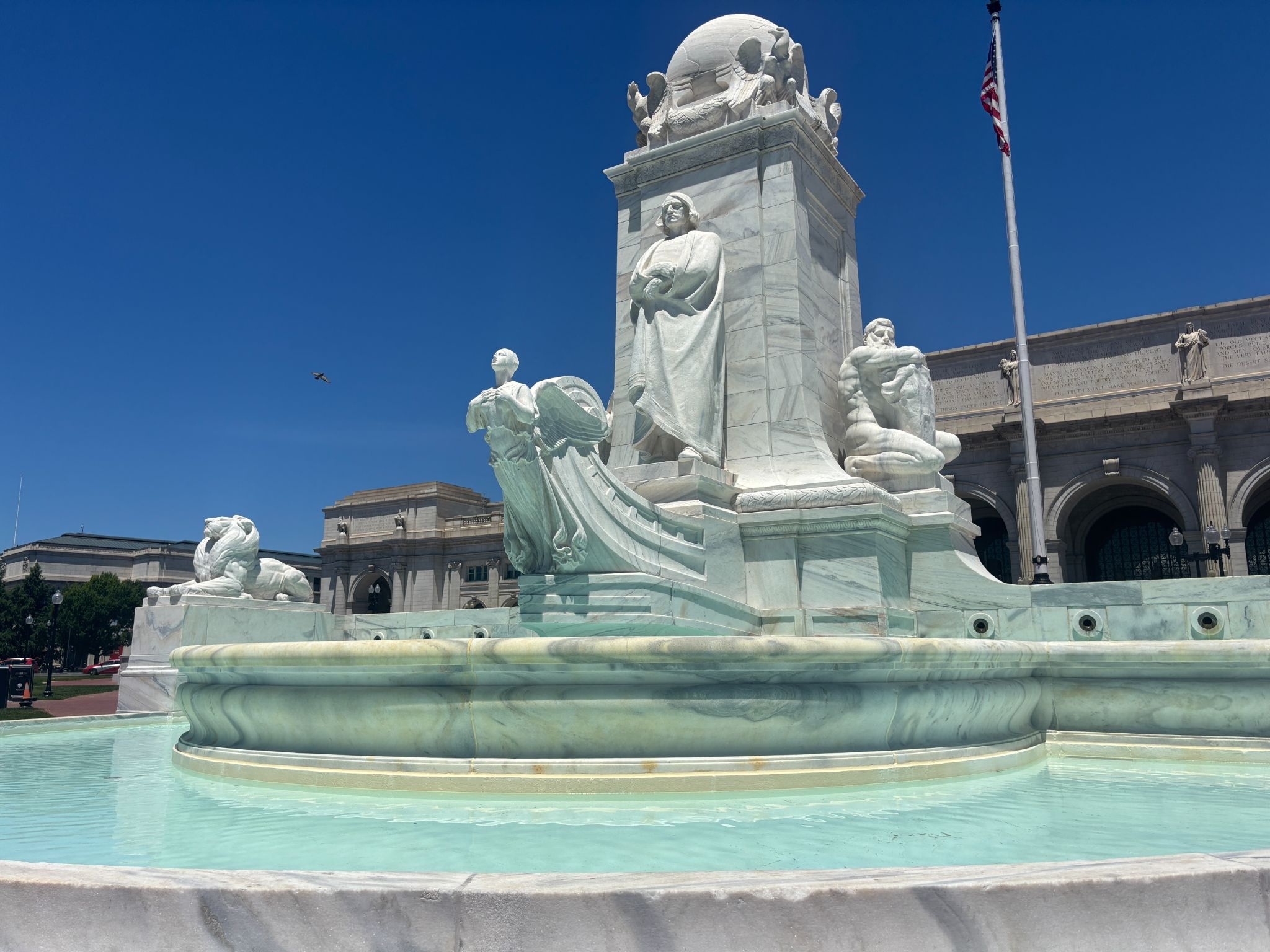
The Christopher Columbus Memorial Fountain outside of Union Station in Washington, D.C., on June 16, 2026. The Columbus Circle fountain is one of nine ornamental fountains in Washington, D.C. that have recently undergone improvements reportedly funded in part by National Park Service fees. (Photo by Amelia Twyman/States Newsroom)
WASHINGTON — U.S. House and Senate Democrats, mostly from Western states, are demanding transparency from the Interior Department after media reports revealed the Trump administration redirected roughly $90 million in national parks fees to help fund renovations and upcoming celebratory displays in Washington, D.C.
The administration’s use of fee revenues to pay for fountain repairs, statue upgrades and fireworks shows in preparation for America’s 250th birthday on July 4 diverts money from national parks in desperate need of billions of dollars in maintenance, lawmakers wrote in two separate early-June letters to Secretary of the Interior Doug Burgum.
“The public deserves to know how their park fees are being spent, and Congress cannot conduct appropriate oversight without basic information about these transactions,” Rep. Gabe Vasquez of New Mexico and seven other Democratic representatives wrote in their letter, dated June 12.
A group of 11 Senate Democrats, led by Sen. Adam Schiff of California, sent a similar letter to Burgum on June 10.
According to a DOI spokesperson, the National Park Service “has not only been focused on beautifying the district but has also been working on many deferred maintenance projects throughout the country,” pooling money from “endowment funds” and the sale of park passes.
How the funding stream works
The National Park Service, housed within Interior, gets a portion of its funding from entry fees and visitors’ purchase of recreational passes. Under the Federal Lands Recreation Enhancement Act, at least 80% of the fee money must go back to the national park where it is collected.
The remaining 20% is available for overall Park Service use, a policy meant to help support parks that do not charge entry fees or only make a small amount of revenue, according to NPS. Just over 100 parks charge an entrance fee out of the more than 400 that make up the National Park System.
The National Mall in Washington and various memorial sites are part of the crop that do not charge visitors to enter, meaning it is legal for the DOI to spend leftover revenue on projects in its own backyard.
But the amount the department has allocated to renovations so far this year appears to greatly exceed how much it has put toward maintaining the district’s public spaces in the past, according to Tony Irish, a former Interior senior attorney under Trump and attorney under earlier presidents who is now senior counsel with the nonprofit Public Employees for Environmental Responsibility.
Reflecting pool repair
Multiple news outlets, including The New York Times and The Washington Post, reported NPS is using at least $60 million in fees paid by parkgoers to fund the repair of nine ornamental fountains across Washington, D.C.
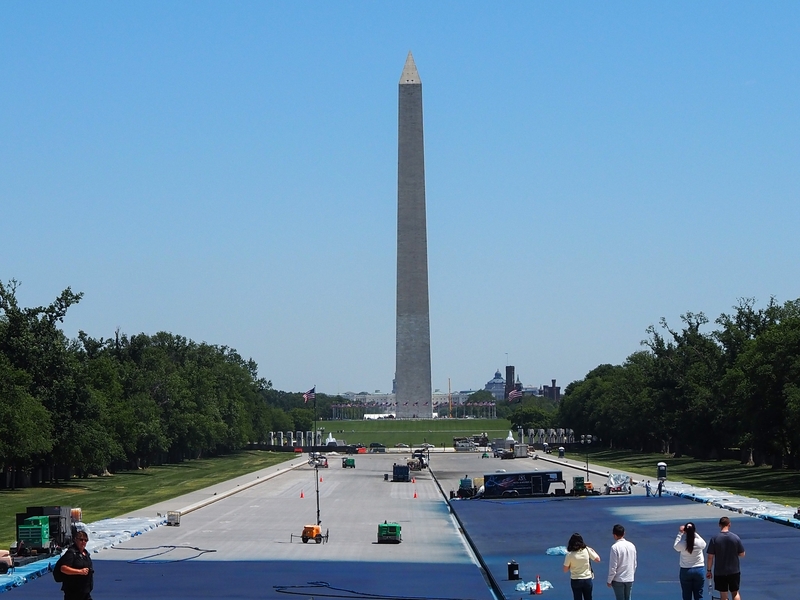
Documents showed an additional $7 million was redirected to help pay for the renovation of the Lincoln Memorial Reflecting Pool, while more will be put toward funding a $1.6 million Fourth of July fireworks display.
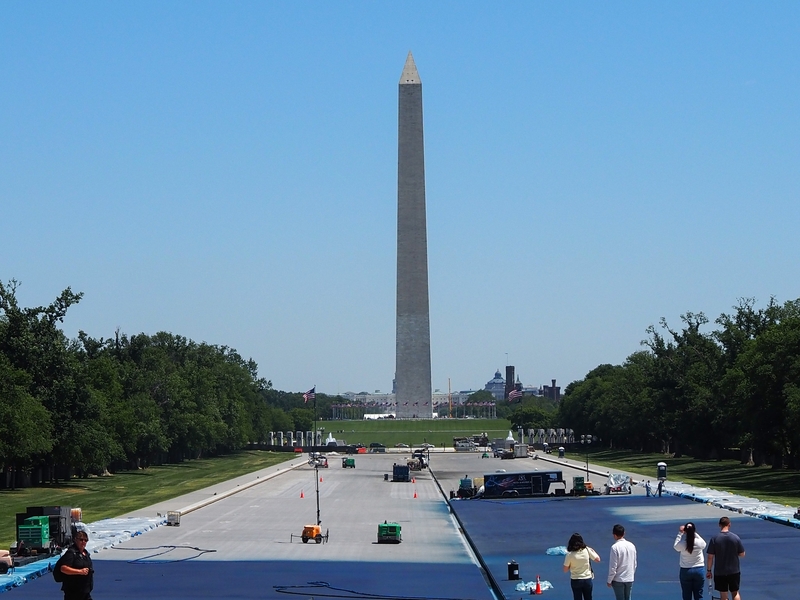
The Lincoln Memorial Reflecting Pool while under renovation on May 5, 2026. (Photo by Ashley Murray/States Newsroom)
“While other administrations have let the city fall into decay, President Trump has made Washington, D.C. Safe and Beautiful again and we should all be grateful,” the Interior spokesperson said in an emailed statement on June 16.
In their letters to Burgum, lawmakers also demanded clarity on the reported use of revenue from the sale of digital park passes—called “America the Beautiful Passes”—as there is no current law that requires those funds be spent in a specific place.
“Credible sources with direct knowledge of these matters have now reported to Congress that much, if not all, fee revenue from online America the Beautiful Passes is being used to fund the President’s ‘beautification’ projects in Washington,” they wrote.
Along with Vasquez, the House letter was signed by Reps. Sarah Elfreth of Maryland, Darren Soto of Florida, Adelita Grijalva of Arizona, Dina Titus and Susie Lee of Nevada, Joe Neguse of Colorado and Jill Tokuda of Hawaii.
Joining Schiff in signing the Senate letter were Sens. Martin Heinrich and Ben Luján of New Mexico, Angus King of Maine, Kirsten Gillibrand of New York, Ron Wyden and Jeffrey Merkley of Oregon, Edward Markey of Massachusetts, Jack Reed of Rhode Island and Michael Bennet and John Hickenlooper of Colorado.
Delayed park maintenance
Many critics are pushing back against the Trump administration for not channeling fee funds back into the national parks that need them, including popular travel destinations such as Grand Teton and Yellowstone.
“Last month, I was in Joshua Tree exploring one of our beautiful national parks and was again reminded what a treasured legacy these lands represent,” said Schiff in a June 17 statement to States Newsroom.
“This is just the latest scheme by the President to put himself before the American people, and it will have devastating impacts on parks that millions of people visit every year,” he added.
The National Park System is backlogged with about $24 billion worth of repairs to buildings and infrastructure, according to NPS.
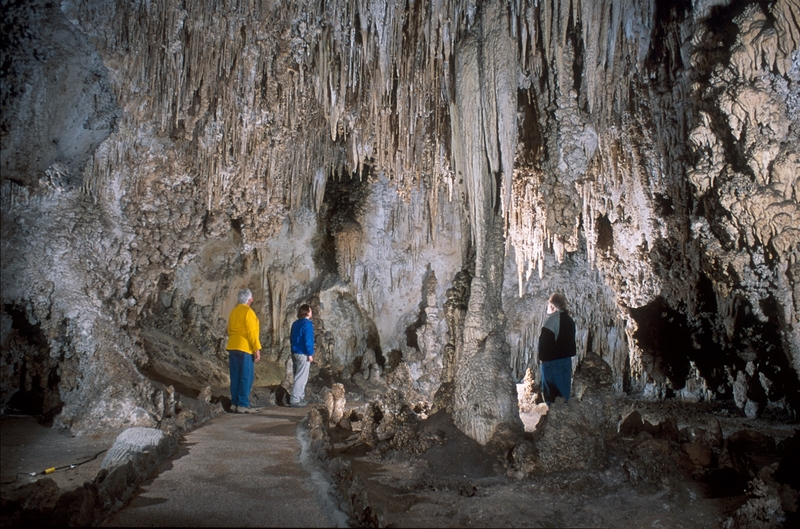
Vasquez said New Mexico’s Carlsbad Caverns National Park, which runs through his district, “has over $45 million in deferred maintenance” alone.
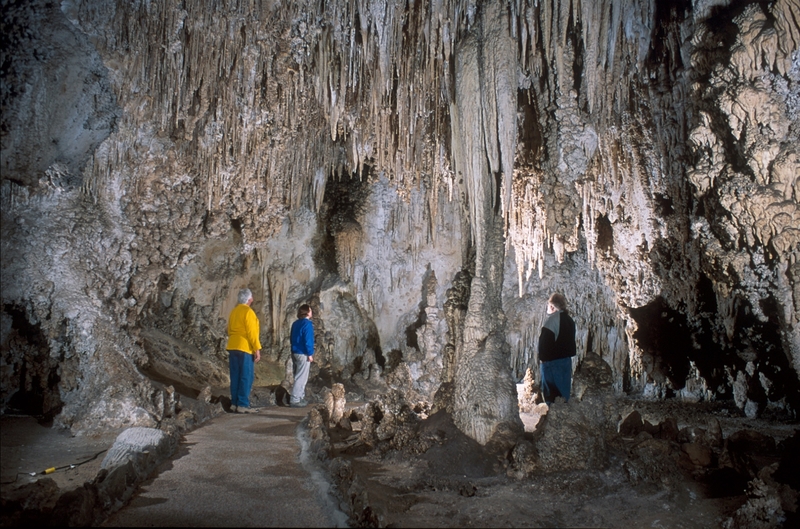
Part of the most popular tour at Carlsbad Caverns, the King’s Palace is home to massive amounts of cave formations of all shapes and sizes. (Photo by Peter Jones/National Park Service)
“The Administration is choosing to let roads, trails, and wastewater systems in the park fall into disrepair amidst the peak summer visitor season so it can paint statues gold in Washington,” he said in a June 15 statement to States Newsroom. “This is unacceptable, and I am demanding action from the Department of Interior to correct course.”
Irish also said the DOI’s current use of fee revenues for D.C.-area renovations could lead to more money being spent in the long run because of the rush to complete some projects, like the $14 million reflecting pool. Completed just at the beginning of June, the reflecting pool has already amassed clumps of green algae.
“Not only are we displacing higher-priority needs right now, but we’re still going to have unmet needs in the future at an additional cost to the taxpayer, the fee payers within that,” Irish said.
Vasquez and his colleagues in their letter asked that NPS restore funding to national parks to help preserve them for future generations.
U.S. senators went even further, including a list of detailed questions about park funding in their letter for the DOI to respond to by June 23.
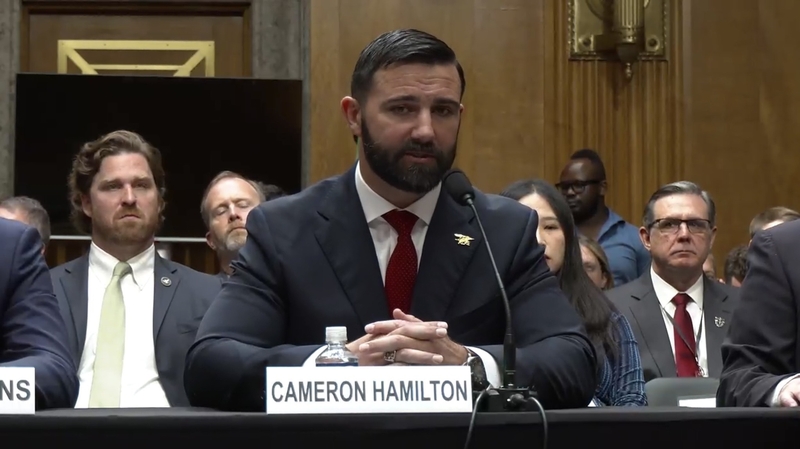
WASHINGTON — President Donald Trump’s nominee to lead the Federal Emergency Management Agency testified before a U.S. Senate committee Wednesday that if confirmed he would ensure natural disaster recovery efforts are “objective” and “fair.”
Cameron Hamilton, who worked as acting head of the agency before being fired and ultimately nominated for Senate confirmation by the president, faced criticism from members of both political parties about the agency’s response time.
But it was Democrats who repeatedly pressed Hamilton about whether states controlled by Republicans should receive a disproportionately higher number of disaster declarations than blue states.
“I certainly appreciate your concern,” Hamilton said. “What I can tell you is that if confirmed, my focus will be to ensure that FEMA is objective, is fair and reasonable, follows the law, and is consistent in the approach to how we adjudicate and process claims and requests for disasters.”
FEMA nominee Cameron Hamilton testifies before the Homeland Security and Governmental Affairs Committee on June 17, 2026. (Screenshot from committee webcast)
Hamilton was the acting head of FEMA earlier in the Trump administration but was ousted after he testified before Congress that he didn’t believe the agency should be eliminated.
Almost exactly a year after being pushed out, Trump formally nominated Hamilton to become the FEMA administrator by sending his paperwork to the Senate without any fanfare.
Trump has repeatedly raised grievances with how the federal government prepares for and responds to natural disasters during his second term, saying he believes much of the responsibility should be moved to states.
“We want to wean off of FEMA and we want to bring it down to the state level,” Trump said in June 2025. “We’re moving it back to the states so the governors can handle it. That’s why they’re governors. Now, if they can’t handle it, they shouldn’t be governor.”
A review council established by Trump to propose overhauls to FEMA released its recommendations in May, calling on state governments to carry more of the responsibility. Lawmakers, so far, haven’t taken any significant actions to implement any of the proposals.
Red state favoritism?
Senators on the Homeland Security and Governmental Affairs Committee didn’t ask Hamilton about his ousting during the confirmation hearing, though they did question him about staffing reductions at FEMA and why the Trump administration seems to favor Republican states.
Michigan Democratic Sen. Gary Peters, the committee’s ranking member, referenced a news article Politico published in March that concluded Democratic states had 23% of their disaster funding requests approved, compared to 89% for Republican-controlled states.
“No other president has created such a disparity in states that receive federal disaster aid,” Peters said. “Denying over 75% of requests from states that are led by representatives of another party is unconscionable.”
New Hampshire Democratic Sen. Maggie Hassan also questioned Hamilton about the disparity, saying it’s “unacceptable” that federal disaster aid would be approved based on how people voted.
“The idea that Americans, who need help in the wake of a tornado, or a flood, or a hurricane, should be treated differently based upon politics is shameful,” she said.
Hassan then asked Hamilton if he agreed “that politics and partisan considerations should play no part in approving disaster assistance.”
Hamilton said he did, later adding that he doesn’t believe Trump would withhold disaster declarations or aid for political reasons.
Hawley finds FEMA ‘slow’ and ‘often ill-informed’
Democrats weren’t the only members of the committee to voice frustrations with FEMA during the confirmation hearing.
Missouri Republican Sen. Josh Hawley showed an enlarged photograph of St. Louis following tornadoes, saying it took FEMA far too long to provide aid for residents.
“As you can see, the devastation is absolutely unbelievable,” Hawley said. “I walked these streets myself. You’ve got buildings completely destroyed, homes absolutely razed to the ground, churches whose roofs were lifted off, whose sanctuaries were completely destroyed, streets that were ripped up. And the problem is that many of these neighborhoods don’t look a lot different now because in some cases they’re still waiting for relief.”
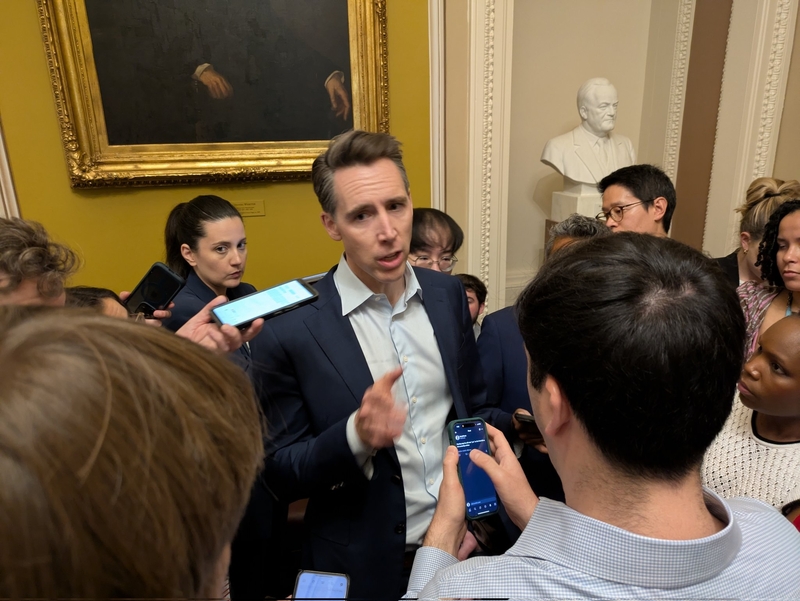
U.S. Sen. Josh Hawley, R-Mo., talks to reporters at the U.S. Capitol on Saturday, June 28, 2025. (Photo by Ashley Murray/States Newsroom)
Hawley said that wasn’t an isolated incident and that he finds FEMA’s response to natural disasters is “slow” and “often ill-informed.”
Hamilton said he believes the agency’s “disaster declaration process and also the federal mentorship that goes into it needs to be improved.”
“I believe states need to receive better customer service. I have full faith and confidence in the FEMA workforce, but we can do better,” Hamilton said. “And there’s a significant amount of areas where that process should be simplified, better understood and we owe you answers, I think, much faster.”
Positions being restored
Connecticut Democratic Sen. Richard Blumenthal pressed Hamilton about whether staffing reductions “jeopardize the response of FEMA.”
“I think certainly FEMA operates in a unique environment where there are challenges and setbacks that impact our ability to respond,” Hamilton said.
Blumenthal then asked whether Hamilton believed there are enough employees at FEMA and whether lower staffing could lead the agency to lose more people.
“I would agree that the FEMA workforce needs to be scalable in such a way to best meet the needs of the agency and the execution of the program and mission,” Hamilton said.
Blumenthal pressed again, asking whether agency leadership needs “to restore the staff levels essential to their morale as well as their responsiveness.”
Hamilton said that Department of Homeland Security Secretary Markwayne Mullin had approved bringing back nearly 350 positions “to fill critical vacancies in key program offices and key responsibilities.”
Western states need different approach
Arizona Democratic Sen. Ruben Gallego urged Hamilton, if confirmed, to approach aid to Western states that hold large swaths of federal land differently than states on the East Coast.
“I just want to make sure I emphasize, the one-size-fits-all approach to disaster response just is not working for the West,” he said. “And this is not a red state versus blue state or anything like that.”
Gallego urged Hamilton to ensure the agency considers states’ special characteristics, saying when his state gets hit by a wildfire, it needs FEMA to replant trees so there isn’t severe flooding.
“Sometimes FEMA does not pay for the replanting and reseeding of our forests, which end up causing even greater disasters a year from now,” he said.
Hamilton said that he understood the “unique paradigm” some states face since he grew up on the West Coast and has “family who’ve lost homes from fires and other significant natural disasters out West.”
Hamilton said he believes FEMA’s pre-disaster grants, which are intended to reduce risk and prepare states for future natural disasters, “should be uniquely suited to handle the challenges and threats facing each state on the nuanced issues.”
The Christopher Columbus Memorial Fountain outside of Union Station in Washington, D.C., on June 16, 2026. The Columbus Circle fountain is one of nine ornamental fountains in Washington, D.C. that have recently undergone improvements reportedly funded in part by National Park Service fees. (Photo by Amelia Twyman/States Newsroom)
WASHINGTON — U.S. House and Senate Democrats, mostly from Western states, are demanding transparency from the Interior Department after media reports revealed the Trump administration redirected roughly $90 million in national parks fees to help fund renovations and upcoming celebratory displays in Washington, D.C.
The administration’s use of fee revenues to pay for fountain repairs, statue upgrades and fireworks shows in preparation for America’s 250th birthday on July 4 diverts money from national parks in desperate need of billions of dollars in maintenance, lawmakers wrote in two separate early-June letters to Secretary of the Interior Doug Burgum.
“The public deserves to know how their park fees are being spent, and Congress cannot conduct appropriate oversight without basic information about these transactions,” Rep. Gabe Vasquez of New Mexico and seven other Democratic representatives wrote in their letter, dated June 12.
A group of 11 Senate Democrats, led by Sen. Adam Schiff of California, sent a similar letter to Burgum on June 10.
According to a DOI spokesperson, the National Park Service “has not only been focused on beautifying the district but has also been working on many deferred maintenance projects throughout the country,” pooling money from “endowment funds” and the sale of park passes.
How the funding stream works
The National Park Service, housed within Interior, gets a portion of its funding from entry fees and visitors’ purchase of recreational passes. Under the Federal Lands Recreation Enhancement Act, at least 80% of the fee money must go back to the national park where it is collected.
The remaining 20% is available for overall Park Service use, a policy meant to help support parks that do not charge entry fees or only make a small amount of revenue, according to NPS. Just over 100 parks charge an entrance fee out of the more than 400 that make up the National Park System.
The National Mall in Washington and various memorial sites are part of the crop that do not charge visitors to enter, meaning it is legal for the DOI to spend leftover revenue on projects in its own backyard.
But the amount the department has allocated to renovations so far this year appears to greatly exceed how much it has put toward maintaining the district’s public spaces in the past, according to Tony Irish, a former Interior senior attorney under Trump and attorney under earlier presidents who is now senior counsel with the nonprofit Public Employees for Environmental Responsibility.
Reflecting pool repair
Multiple news outlets, including The New York Times and The Washington Post, reported NPS is using at least $60 million in fees paid by parkgoers to fund the repair of nine ornamental fountains across Washington, D.C.
Documents showed an additional $7 million was redirected to help pay for the renovation of the Lincoln Memorial Reflecting Pool, while more will be put toward funding a $1.6 million Fourth of July fireworks display.
The Lincoln Memorial Reflecting Pool while under renovation on May 5, 2026. (Photo by Ashley Murray/States Newsroom)
“While other administrations have let the city fall into decay, President Trump has made Washington, D.C. Safe and Beautiful again and we should all be grateful,” the Interior spokesperson said in an emailed statement on June 16.
In their letters to Burgum, lawmakers also demanded clarity on the reported use of revenue from the sale of digital park passes—called “America the Beautiful Passes”—as there is no current law that requires those funds be spent in a specific place.
“Credible sources with direct knowledge of these matters have now reported to Congress that much, if not all, fee revenue from online America the Beautiful Passes is being used to fund the President’s ‘beautification’ projects in Washington,” they wrote.
Along with Vasquez, the House letter was signed by Reps. Sarah Elfreth of Maryland, Darren Soto of Florida, Adelita Grijalva of Arizona, Dina Titus and Susie Lee of Nevada, Joe Neguse of Colorado and Jill Tokuda of Hawaii.
Joining Schiff in signing the Senate letter were Sens. Martin Heinrich and Ben Luján of New Mexico, Angus King of Maine, Kirsten Gillibrand of New York, Ron Wyden and Jeffrey Merkley of Oregon, Edward Markey of Massachusetts, Jack Reed of Rhode Island and Michael Bennet and John Hickenlooper of Colorado.
Delayed park maintenance
Many critics are pushing back against the Trump administration for not channeling fee funds back into the national parks that need them, including popular travel destinations such as Grand Teton and Yellowstone.
“Last month, I was in Joshua Tree exploring one of our beautiful national parks and was again reminded what a treasured legacy these lands represent,” said Schiff in a June 17 statement to States Newsroom.
“This is just the latest scheme by the President to put himself before the American people, and it will have devastating impacts on parks that millions of people visit every year,” he added.
The National Park System is backlogged with about $24 billion worth of repairs to buildings and infrastructure, according to NPS.
Vasquez said New Mexico’s Carlsbad Caverns National Park, which runs through his district, “has over $45 million in deferred maintenance” alone.
Part of the most popular tour at Carlsbad Caverns, the King’s Palace is home to massive amounts of cave formations of all shapes and sizes. (Photo by Peter Jones/National Park Service)
“The Administration is choosing to let roads, trails, and wastewater systems in the park fall into disrepair amidst the peak summer visitor season so it can paint statues gold in Washington,” he said in a June 15 statement to States Newsroom. “This is unacceptable, and I am demanding action from the Department of Interior to correct course.”
Irish also said the DOI’s current use of fee revenues for D.C.-area renovations could lead to more money being spent in the long run because of the rush to complete some projects, like the $14 million reflecting pool. Completed just at the beginning of June, the reflecting pool has already amassed clumps of green algae.
“Not only are we displacing higher-priority needs right now, but we’re still going to have unmet needs in the future at an additional cost to the taxpayer, the fee payers within that,” Irish said.
Vasquez and his colleagues in their letter asked that NPS restore funding to national parks to help preserve them for future generations.
U.S. senators went even further, including a list of detailed questions about park funding in their letter for the DOI to respond to by June 23.