Author: admin

  • Free lemonade to be served just in time for approaching heat wave

    Free lemonade to be served just in time for approaching heat wave

    By Charles Owens
    For Bluefield Daily Telegraph

    Bluefield — Free lemonade will be served next week in Nature’s Air-Conditioned City just in time for an approaching heat wave.

    Temperatures next week are expected to climb close to 90 degrees for several days, including on Thursday, July 2. That’s when free lemonade was already scheduled to be served as part of the Chamber Night at the Ballpark promotion.

    The Bluefield Ridge Runners baseball game starts at 5:30 p.m. at Bowen Field and will feature free lemonade and free t-shirts, along with a fireworks show later that evening, according to Jeff Disibbio, president and chief executive officer of the Chamber of Commerce of the two Virginias.

    “We are happy to celebrate our Chamber Night at the Ballpark,” Disibbio said. “We have partnered with East River Psychiatry. We will have free t-shirts available as well as free lemonade. We are also going to have fireworks that night. So it should be an exciting night packed full of fun and baseball. We hope we have a great crowd to come out and participate.”

    I’ve already spoken with Kwik Kafe who we partner with on this and they are aware of the potential of us hitting 90 degrees, and they are prepared to deliver and help us serve ice cold lemonade to help cool all of us off during those 90 day temperatures,” — Jeff Disibbio, president and chief executive officer of the Chamber of Commerce of the Two Virginias.

    The approaching heat wave is simply a coincidence, as the event had been scheduled well in advance.

    “I’ve already spoken with Kwik Kafe who we partner with on this and they are aware of the potential of us hitting 90 degrees, and they are prepared to deliver and help us serve ice cold lemonade to help cool all of us off during those 90 day temperatures,” Disibbio said.

    The heat wave is expected to last for several days with temperatures climbing into the high 80s and near 90.

    Dissibio said Bluefield has recorded 90 degree reading during past chamber events, including the coal show and the chamber’s golf tournament.

    While it is too early right now to say whether or not Bluefield can expect an official 90 degree reading next week, Dissibio said free lemonade will still be served at Bowen Field on July 2 regardless of the actual temperature.

    “Guaranteed regardless,” Disibbio said. “There will be lemonade served next week, somehow and someway.”

    The combination of free lemonade, free t-shirts to the first 200 people through the gate and free fireworks at dusk means a large crowd will be expected on July 2 at Bowen Field.

    “It (fireworks) generally draws a big crowd,” Disbbio said. “The fireworks draws a big crowd to the stadium as well as the parking lot. Some people watch from East River Mountain. It’s very well attended.”

    According to AccuWeather, millions across the country will face widespread 90-degree weather next week as a “heat dome” sets up over the eastern United States ahead of the long Fourth of July weekend. This pattern will bring extreme heat to the central and eastern states, according to AccuWeather.

    A heat dome is a sprawling area of high pressure that creates hot and humid conditions for days or weeks at a time, according to a AccuWeather press release. Heat domes can prevent clouds from forming, resulting in abundant sunshine that boosts temperatures, potentially toward record levels.

    The last time Bluefield hit 90 degrees was July 15, 2024.

    Bluefield’s nationally recognized lemonade promotion dates back to 1939.

    That was when the late Edward H. “Eddie” Steele, the chamber president at the time, came up with the promotion as a way to bring increased attention to the city of Bluefield.

    As the story goes, Steele initially proposed offering free rooms at the West Virginian Hotel if the local temperature reached the 90-degree mark. But Steele had to scrap that idea when an Odd Fellows convention was in town, and the temperature hit 90 degrees. The initial promotion proved to be too expensive for the chamber, according to local history.

    Steele then came up with the idea of serving free lemonade in the city when the mercury climbed above 90 degrees. At about that same time, Steele authored Bluefield’s time-tested slogan, “Nature’s Air-Conditioned City.”
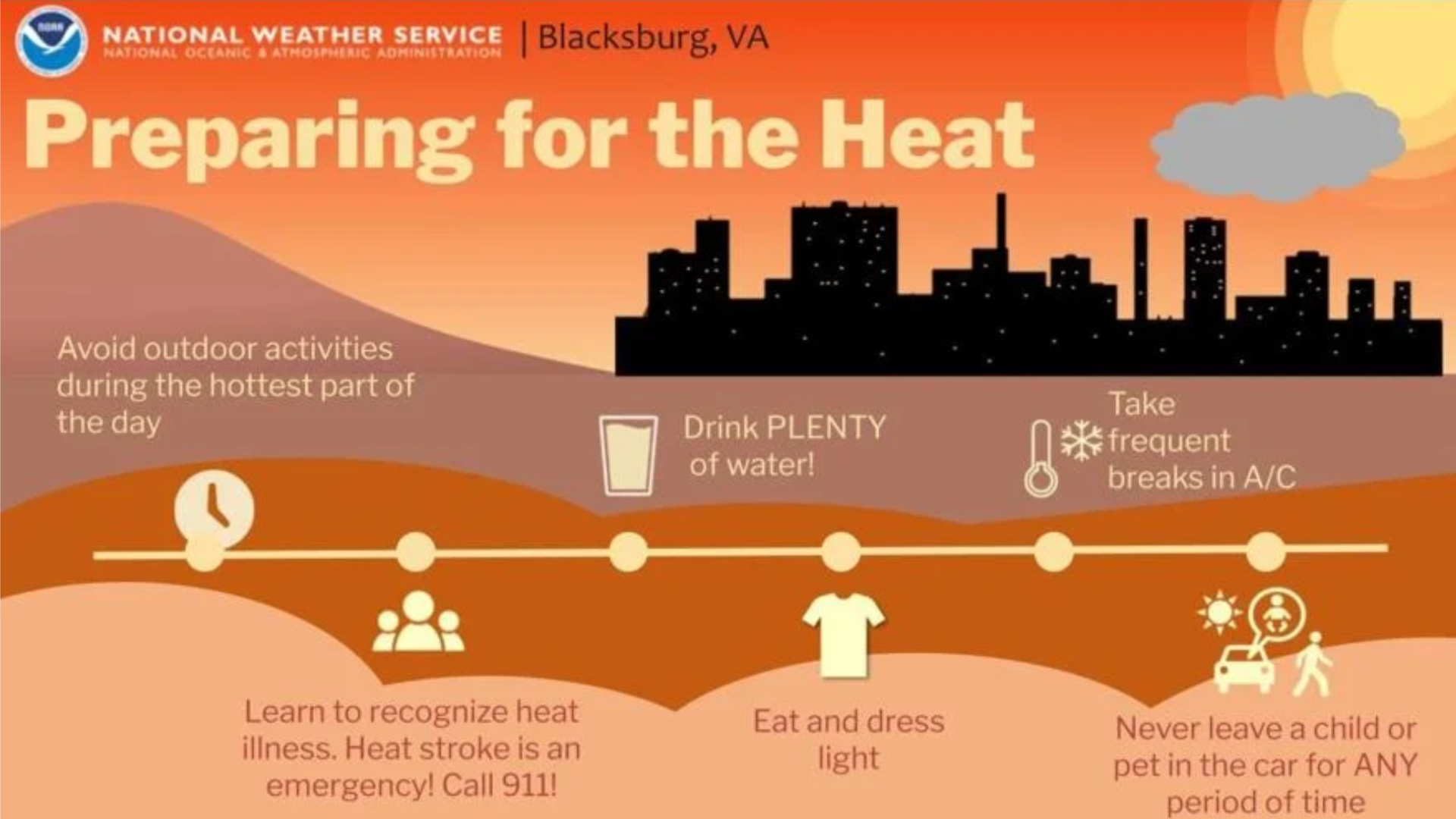
    National Weather Service graphic: Temperatures next week are expected to climb close to 90 degrees for several days, including on Thursday, July 2. That’s when free lemonade was already scheduled to be served as part of the Chamber Night at the Ballpark promotion.

    At that point, the chamber would have to wait another two years before the mercury would hit 90 degrees again in Bluefield. It finally happened during the pre-war summer of 1941.

    Since that time the lemonade promotion has garnered national attention for Bluefield and in more recent years, the town of Bluefield, Va.

    The lemonade tradition in Nature’s Air-Conditioned City has endured throughout the ages, despite a number of challenges over the decades, including a lemon and sugar shortage during World War II, criticism from area clergymen, a strike by the Lemonade Lassies, controversy that still flares up from time to time to this very day over what constitutes an actual 90-degree reading in Bluefield.

    Read more from Bluefield Daily Telegraph, here.

    The post Free lemonade to be served just in time for approaching heat wave appeared first on West Virginia Press Association.

  • Virginia joins initiative to create three-year bachelor’s degree model

    Virginia joins initiative to create three-year bachelor’s degree model

    Higher education leaders in Virginia and Ohio announced Thursday that they will join forces to create a model for three-year bachelor’s degrees, cutting the traditional timeframe of obtaining the credential by one year.

    The move reflects Virginia’s strategic plan to better align higher education with student and employer needs and increase affordability.

    Currently, the laws in Virginia and Ohio require at least 120 semester credit hours to earn a bachelor’s degree. By spring 2028, participating institutions are expected to propose two 90-credit degree programs.

    If successful, the 90-credit undergraduate degree would likely require legislative action, depending on how programs are structured.

    “Virginia’s higher education institutions continue to lead the way in innovation, demonstrating a statewide commitment to ensuring higher education delivers on its value proposition to students and families,” said Scott Fleming, the State Council on Higher Education for Virginia’s executive director, in a statement on Thursday.

    “Colleges and universities throughout the country are already offering three-year degrees, but there is no national model. This effort will create new pathways for students to pursue their life and career goals while ensuring a rigorous education experience,” he added.

    The effort emanates from a joint venture with Jobs for the Future, Arnold Ventures, Strada Education Foundation, the American Association of Colleges and Universities, and Ithaka S+R on the “Scaling College in 3” initiative.

    The three-year degree initiative builds on the work of higher-education researchers Robert Zemsky, Lori Carrell, and colleagues through the National Center for Inquiry & Improvement. The group argued in 2023 that college takes longer and costs more than it needs to, and many students are paying for credits that aren’t essential for a degree or a career.

    Higher education representatives from Virginia and Ohio will meet with national experts over the next year to discuss the program’s design.

    Potential legislative changes may be required in some states that have statutory or regulatory minimum credit-hour requirements.

    In Virginia, however, state officials indicate that the code does not prescribe credit-hour requirements for public institutions or exempt nonprofit private institutions, so any impact would likely depend on accreditation standards and institutional policies rather than state law.

    The General Assembly has already supported goals to improve affordability and encourage expedited degree completion.

  • GOP dreams of another big budget bill dashed by Trump demands for SAVE America Act

    GOP dreams of another big budget bill dashed by Trump demands for SAVE America Act

    WASHINGTON — Republicans have one more opportunity to use the complex process they relied on to enact their “big, beautiful” law and provide tens of billions in additional funding for immigration enforcement — a chance that becomes less likely the more divisions over a voter identification bill splinter the party.

    Debate over a third reconciliation bill has been simmering in the background for months, though GOP lawmakers have yet to reach consensus about whether they should draft another massive package, like they approved last year, or a more narrow one that could help the party boost defense spending.

    That budget reconciliation process gives Republican leaders a way to get around Senate rules that would otherwise force bipartisanship, giving them a loophole out of negotiating major legislation with Democrats.

    But it comes with several hurdles in order to get that special treatment, including that each provision in the bill have an impact on federal revenue or spending that is not deemed “merely incidental” by the Senate parliamentarian.

    Those in-the-weeds restrictions aren’t especially important to President Donald Trump, who wants Republicans in Congress to prioritize a voter identification bill, which cannot move through reconciliation, over everything else.

    House Speaker Mike Johnson, R-La., tried to find middle ground in late June, proposing lawmakers use reconciliation to create a grant program for states that implement voter identification requirements.

    Johnson acknowledged the challenges to using reconciliation amid narrow majorities in each chamber, but said he thinks Republicans can accomplish their goals if they “stick together.”

    He, however, didn’t have details to share.

    “Stay tuned. We’re working through that,” Johnson said. “Doing a reconciliation bill is a very complicated process of consensus building, where we have a collection of ideas that, I think, every Republican, certainly, agrees with in principle.”

    A few hours later, sitting in the Oval Office, the president batted down the idea of any compromise on the elections bill, creating more public disagreement between the top Republicans in the country.

    “Not really. No,” Trump said when asked whether he’d “be open to a compromise measure” moving through the reconciliation process.

    Hardball tactics

    Lobbying for the full bill, which would require people show proof of citizenship to register to vote and a photo ID when casting a ballot, isn’t only coming from the president.

    Far-right Republicans in both chambers are using hardball tactics to cajole their leaders to get the legislation to Trump’s desk, even if it means delaying work on their colleagues’ priorities.

    Utah Sen. Mike Lee is one of several Republicans posting on social media and holding press conferences. He recently called for Americans to “encourage your senators to resume debate on the Senate floor—with a plan to keep debating it until it passes.”

    “Tell your senators: Pass the SAVE America Act,” Lee wrote in another post. “Accept no excuses or half measures.”

    Senate Majority Leader John Thune, R-S.D., has become somewhat frustrated with constant pressure from some of his members, who are diverting time and resources to a bill that cannot pass.

    “At the end of the day, I have to deal with reality,” Thune said. “And sometimes the alternative universe that is X doesn’t reflect the facts on the ground.”

    Thune said it’s been “very clear” for some time there isn’t enough support among Republicans to change the Senate rule that requires at least 60 lawmakers vote to limit debate on most bills. That legislative filibuster forces bipartisanship and gives the minority party, which could be Republicans as soon as next year, a seat at the table.

    “There are not the votes to nuke the filibuster and there aren’t going to be 10 Democrat votes to all of a sudden support the SAVE America Act,” Thune said. “Those are just hard realities and I think people at some point have to come to grips with that.”

    Trump cancels signing for housing bill

    West Virginia Republican Sen. Shelley Moore Capito said that despite months of effort, the voter identification bill doesn’t have the votes to become law.

    “If you can’t get to 60, you can’t pass it. I mean, that’s pretty simple,” she said. “Now, he says talk it to death and people will change their minds. I don’t think that’s a strategy that’s going to be in success. We tried that earlier this year to keep talking, we didn’t get to the end.”

    Capito said voters want to see Republicans focus on issues that can improve people’s lives, like the broadly bipartisan housing affordability bill both chambers approved this month. Trump was set to sign that bill during a ceremony on Capitol Hill but canceled at the last minute to try to push through the election bill.

    “So, yeah, they want to see us do something,” she said. “They don’t want to see us sitting up there yakking all the time.”

    Senate Appropriations Chairwoman Susan Collins, R-Maine, wants to use the time to avoid another government shutdown when the next fiscal year begins Oct. 1 — no easy feat following three shutdowns over the last year.

    Senate Agriculture Committee Chairman John Boozman, R-Ark., hopes to reach final agreement on the farm bill in the months ahead after years of delays and stopgap measures for those agriculture and food safety net programs.

    He brushed aside demands from some other GOP lawmakers to use the budget reconciliation process to pass another party-line package.

    “We had trouble with the one that we just did and that was very, very narrow. I mean, that was strictly Homeland Security,” Boozman said. “When you start doing a bigger package, like they’re talking about and you start involving various committees, it becomes a lot more issues involved that you have to work out. And so it just gets very complex.”

    Boozman added that working through the several steps of that process takes weeks, which lawmakers may not have.

    Other priorities

    Missouri Republican Sen. Josh Hawley said the party needs to focus on legislation that would lower “the cost of everything,” in part, by eliminating taxes on gasoline and health care.

    “That’s something that would be a huge benefit to every working person out there immediately,” he said. “Let them take all health care costs off of their federal taxes, so they paid no taxes on it.”

    Louisiana Republican Sen. John Kennedy said he thinks lawmakers should use the budget reconciliation process to significantly bolster defense funding. But he said “duh” when asked by States Newsroom whether the limited number of days in session would make that difficult.

    Lawmakers are set to be out of session for nearly all of August and September.

    “I think if we want to get more money for defense, we have to do it through reconciliation, which means we need to start immediately,” he said.

    Ohio Sen. Bernie Moreno has a lengthy list of issues he wants to see Republicans address before November, including a bill he’s set to release later this summer with Massachusetts Democratic Sen. Elizabeth Warren that would shore up the Social Security trust fund.

    “It’s not really a third-rail issue, because what we’re saying is that everybody should pay the same amount of money for Social Security,” he said. “When you have something that literally 90% of Americans support, I think we should be able to get something on that across the finish line.”

    The two lawmakers wrote in an op-ed published in The New York Times the bill would raise the cap that ensures people don’t pay into Social Security on earnings more than $184,500.

    “Since the vast majority of Americans make less than that, most people are paying Social Security taxes on 100 percent of their earnings while the highest earners are paying on only part of theirs,” they wrote.

    “Why should a middle-class nurse pay a larger share of her paycheck — than a wealthy corporate lawyer?” they added. “This is doubly unfair in an economy in which top earners’ wages, over time, have pulled far ahead of those of the average worker.”

    Iowa Republican Sen. Chuck Grassley said he’d like lawmakers to ensure E15 gasoline, a blend that includes 15% ethanol and is usually unavailable in summer, can be sold year-round, though he hadn’t thought about any other issues the party should press for ahead of November.

    “I guess I can’t answer your question,” he said. “I just haven’t thought about it.”

  • States show their stuff: The Great American State Fair opens in D.C.

    States show their stuff: The Great American State Fair opens in D.C.

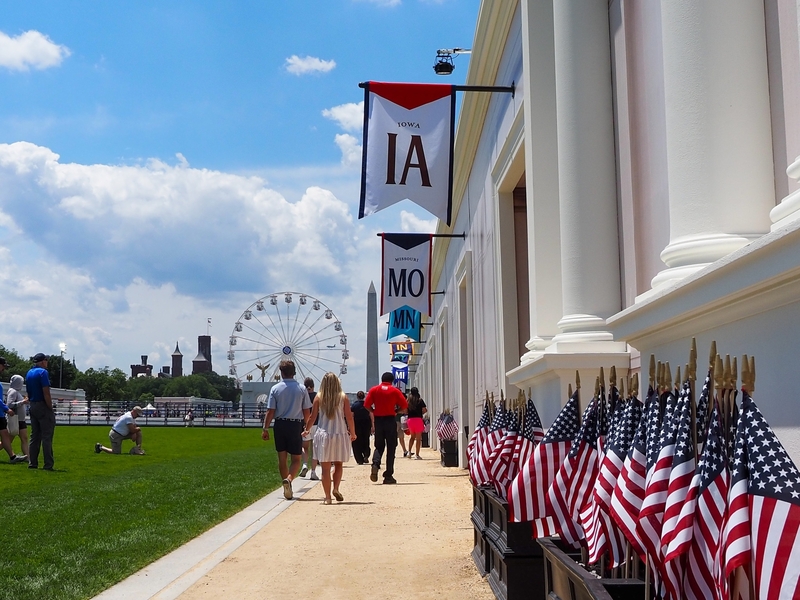
    WASHINGTON — Visitors from across the United States traveled to the National Mall Thursday for the opening day of the Great American State Fair, a days-long event that is part of President Donald Trump’s Freedom 250 celebration of the nation’s semiquincentennial.

    States and territories showed off cultural and agricultural exports at exhibits stretching nearly a mile. Attendees snapped photos on the small Grand Ole Opry stage in the Tennessee booth, kids tried putt-putt at Indiana’s miniature golf course and cowboys rode horses at Montana’s rodeo.

    A crowd watches a rodeo on the National Mall as part of Montana's exhibit for the Freedom 250 Great American State Fair on Thursday, June 25, 2026. (Photo by Ashley Murray/States Newsroom)

    A crowd watches a rodeo on the National Mall as part of Montana’s exhibit for the Freedom 250 Great American State Fair on Thursday, June 25, 2026. (Photo by Ashley Murray/States Newsroom)

    A 110-foot Ferris wheel slowly turned at the center of the freshly manicured lawn, framing the Washington Monument and the U.S. Capitol in the distance on either side. Nearby stood a model of Trump’s controversial “triumphal arch.”

    People collected swag from each state — drawstring bags from Ohio, stickers from South Dakota, snacks from Tennessee — and could receive a stamp on state fair passports.

    The Trump administration's Freedom 250 Great American State Fair opened on the National Mall on Thursday, June 25, 2026. (Photo by Ashley Murray/States Newsroom

    The Trump administration’s Freedom 250 Great American State Fair opened on the National Mall on Thursday, June 25, 2026. (Photo by Ashley Murray/States Newsroom

    The fair is part of the larger Freedom 250 programming and kicked off Wednesday night with a rally on the mall featuring a speech from the president that closely resembled his remarks along the 2024 presidential campaign trail. The festivities will continue over Independence Day, when Trump will deliver a second speech followed by what is promised to be an impressive fireworks display.

    The president will visit North and South Dakota as part of his Freedom 250 tour for the opening of the Teddy Roosevelt presidential library and Independence Day eve fireworks above Mount Rushmore.

    Emma Francus, 10, of Detroit, Michigan, plays mini golf at Indiana's golf-themed exhibit at the Freedom 250 Great American State Fair on the National Mall on Thursday, June 25, 2026. (Photo by Ashley Murray)

    Emma Francus, 10, of Detroit, Michigan, plays mini golf at Indiana’s golf-themed exhibit at the Freedom 250 Great American State Fair on the National Mall on Thursday, June 25, 2026. (Photo by Ashley Murray)

    Freedom 250 then extends into August with a high school athletic competition in Washington, D.C., dubbed the “Patriot Games” and a Freedom 250 INDYCAR race around the National Mall.

    The administration’s celebration is separate from the America250 commission, created by Congress a decade ago, and which has its own nationwide programming this year.

    From Lake Erie to the Ohio River

    Ohio Gov. Mike DeWine and first lady Fran DeWine greeted guests in Ohio’s pavilion. The couple posed for photos in front of a map of the Buckeye State.

    “We wanted to see on the wall all the different things, from Lake Erie to the Ohio River, all the different fun things you can do in Ohio,” the Republican governor said, adding the state has local celebrations and initiatives planned for the 250th anniversary, including “Movies in Ohio” for community showings of films that feature the state.

    From left, Ohio first lady Fran DeWine and Gov. Mike DeWine take a photo with Miles Armiger, 12, of Severn, Maryland, and his grandmother, Robyn Toman, on Thursday, June 25, 2026, at the Ohio exhibit, part of the Trump administration's Freedom 250 Great American State Fair. (Photo by Ashley Murray/States Newsroom)

    From left, Ohio first lady Fran DeWine and Gov. Mike DeWine take a photo with Miles Armiger, 12, of Severn, Maryland, and his grandmother, Robyn Toman, on Thursday, June 25, 2026, at the Ohio exhibit, part of the Trump administration’s Freedom 250 Great American State Fair. (Photo by Ashley Murray/States Newsroom)

    Ohio’s first lady showcased a children’s literacy exhibit on the opposite wall and touted the roughly 427,000 participants in the state’s partnership with the Dolly Parton Imagination Library, a program that mails free children’s books monthly to households with kids under age 5.

    “We’ve mailed out 27 million books. We know that a child’s brain is 80% developed by age 3, so we want to get them those books early,” she said.

    Reflecting on America’s milestone birthday, the governor said, “We’re always a work in progress, Ohio’s a work in progress, this country is a work in progress.”

    “I think you know the thing we need to keep in mind, all of us, is there’s some essential core principles that we all believe in. … We may disagree about different policies, but the core principles are the same,” he said.

    Cartwheels on the lawn

    People from various states walked from exhibit to exhibit, while stopped in the nation’s capital during road trip vacations.

    Tanya Geders, 43, of St. Louis, Missouri, did a cartwheel in the mall lawn, trying to persuade her son to join in. The family stopped at the state fair on their way to Virginia Beach.

    Tanya Geders, 43, of St. Louis, Missouri, modeled a cartwheel for her son on the National Mall at the Freedom 250 Great American State Fair on Thursday, June 25, 2026. (Photo by Ashley Murray/States Newsroom)

    Tanya Geders, 43, of St. Louis, Missouri, modeled a cartwheel for her son on the National Mall at the Freedom 250 Great American State Fair on Thursday, June 25, 2026. (Photo by Ashley Murray/States Newsroom)

    “We’re like, well, if we go to the ocean, we can go to D.C. and what a better time to be here than the 250th anniversary,” Geders said.

    Faith Eliza, of Grand Junction, Colorado, performed on the National Endowment for the Arts stage at the Freedom 250 Great American State Fair on the National Mall on Thursday, June 25, 2026. (Photo by Ashley Murray)

    Faith Eliza, of Grand Junction, Colorado, performed on the National Endowment for the Arts stage at the Freedom 250 Great American State Fair on the National Mall on Thursday, June 25, 2026. (Photo by Ashley Murray)

    Robyn Toman, 71, of Severn, Maryland, escorted her 12-year-old grandson Miles to meet DeWine and grab a photo with the governor.

    Toman said she remembers the country’s bicentennial.

    “I was a kid about his age, and I came in 1976. I said, ‘We’re gonna go, let’s go down to D.C. for a couple days and see this,’” she said.

    “We’ve enjoyed it. We went over to the archives yesterday, and saw the Constitution, and the Declaration of Independence, and the Bill of Rights. And, oh, that was so nice, that was fantastic.”

  • Maryland’s members of Congress stress affordable housing needs after Trump stalls bill

    WASHINGTON — U.S. lawmakers from Maryland vowed to continue focusing on affordable housing initiatives for state residents and beyond at a Capitol press conference Thursday, taking stabs at President Donald Trump’s refusal to sign a landmark bipartisan bill.

    Sen. Chris Van Hollen, along with Democratic Reps. April McClain Delaney, Johnny Olszewski, Kweisi Mfume, Sarah Elfreth and Steny Hoyer, took questions on a wide range of topics following their afternoon meeting with Maryland Gov. Wes Moore, though housing was at the center of the discussion.

    Rep. Andy Harris, the lone Republican at the event, did not speak.

    Van Hollen on Thursday noted the state program, but reiterated the federal legislation would be key to addressing Maryland’s housing woes. He highlighted the bill’s provisions meant to increase the supply of affordable homes, limit hedge funds buying single-family homes and help veterans buy property.

    “I do know that the governor has a major affordable housing initiative, and I’ve discussed that with him many times,” Van Hollen said. “But Congress had an opportunity, and still has an opportunity, to do its part.”

    Trump on Wednesday abruptly canceled the signing ceremony for the housing overhaul that passed with broad margins in the Senate Monday and the House Tuesday.

    Shortly before he was set to sign the bill, Trump first discredited the measure, then announced his refusal to sign it altogether, saying that he first wanted Congress to adopt his hallmark noncitizen voting act.

    “Today’s Housing News Conference and Signing is hereby cancelled until such time as we pass the desperately needed SAVE AMERICA ACT, which I consider to be a National Emergency,” Trump wrote on Truth Social Wednesday, much to the surprise of many lawmakers who had been awaiting his signature.

    ‘Release this bill’

    Van Hollen on Thursday also called on U.S. House Speaker Mike Johnson, R-La., to send the measure straight to the White House, where Trump can decide to either veto, sign or not sign the bill, and allow Congress to “go home.”

    If the president does not sign or veto a bill within 10 days of Congress sending it to their desk, it automatically becomes law. But Johnson, who was responsible for sending the enrolled housing bill to Trump because it originated in the House, had not sent it to the White House before a meeting there Thursday.

    “The speaker of the House needs to release this bill that has been passed by his body and by the United States Senate, and we need to do it now,” Van Hollen said during the press conference.

    “People are suffering because of the lack of affordable housing,” he added. “This isn’t going to solve the whole thing, but it is one important step in the right direction.”

    Shortly after Van Hollen’s comment, media outlets reported that Johnson returned from his White House meeting saying he would send the housing bill to Trump.

    Maryland housing

    Maryland is facing a severe housing crisis as residents grapple with a nearly 100,000-unit shortage, rising costs and issues of unequal access.

    Moore and his administration have responded by proposing to carve out millions for multiple housing-focused initiatives as part of their proposed fiscal 2027 budget.

    Elfreth said Thursday lawmakers should work to expand housing supply to make it easier for younger generations to buy their first homes.

    She said the bipartisan housing bill could help solve that issue, which she called a symptom of “the greatest issue facing Americans today, which is affordability.”

    But instead of signing the bill, she said, “the president is currently holding it hostage.”

  • Narrowed Education Department definition of ‘professional’ degrees stopped in federal court

    Narrowed Education Department definition of ‘professional’ degrees stopped in federal court

    WASHINGTON — A federal judge on Wednesday temporarily blocked the U.S. Department of Education’s new definition of “professional” fields of study, which set stricter borrowing caps for graduate students pursuing certain degrees.

    The ruling from U.S. District Judge Beryl Howell specifically halts the department’s new definition of “professional” degrees, which was limited to 11 fields and would impose lower loan caps for groups not included in its definition, including nursing, teaching and social work.

    The ruling, which covers two consolidated lawsuits, came just a week before the provision was slated to take effect July 1. It marks a setback for a key part of President Donald Trump’s administration’s forthcoming overhaul of the federal student loan system.

    The department finalized regulations, published May 1, that implement sweeping changes outlined in the GOP’s “big, beautiful” law, including new caps on federal student loans, with different limits based on whether a degree was “professional.”

    But it overreached by narrowing what degrees qualified as professional, Howell wrote, saying Congress intended to keep the definition in place when the law passed in July 2025.

    “The Rule is likely contrary to law,” Howell wrote. “The Rule’s definition of ‘professional degree,’ and thus the category of students benefiting from the high loan caps, is likely narrower (than) what Congress intended.”

    But she declined to halt the department from enforcing the forthcoming loan caps because they were written into the law.

    Howell wrote that “this litigation cannot remedy plaintiffs’ primary frustration over the elimination of uncapped borrowing to pursue graduate education and the concomitant benefits of enabling more students from working families to earn a graduate degree in a chosen career field and attracting students more broadly to enter the American workforce in fields understaffed and in areas underserved.”

    Challenge from health professionals

    Wednesday’s ruling stems from a pair of combined challenges by associations representing people in fields that do not fall under the new “professional” definition and would thus face lower annual and lifetime borrowing caps.

    One suit was filed in May by the American Association of Nurse Practitioners; the National Association of Pediatric Nurse Practitioners; the American Association of Colleges of Nursing; the Association of Schools and Programs of Public Health; the National Education Association; and the American Association for Marriage and Family Therapy.

    The other lawsuit was filed earlier in June by the PA Education Association and the American Academy of Physician Associates.

    In the May suit, the challengers argued that “the final rule’s definition of ‘professional degree’ excludes many degree programs that prepare students for a specific profession, and that may qualify as a professional degree under the 2007 regulatory definition adopted by Congress, including degrees in nursing, education, public health, and marriage and family therapy.”

    Unlimited borrowing eliminated

    Part of the regulations eliminate a key loan program for graduate and professional students that allowed for unlimited borrowing and establish new annual and aggregate loan limits for those students.

    Graduate student loans will be capped at $20,500 annually and have a $100,000 aggregate limit, while professional student loans would have a $50,000 annual limit and $200,000 aggregate cap.

    But the programs within the department’s “professional” category and thus subject to the higher loan cap are limited to: pharmacy, dentistry, veterinary medicine, chiropractic, law, medicine, optometry, osteopathic medicine, podiatry, theology and clinical psychology.

    In response to a request for comment, the department said in a statement it was “reviewing the order and will take appropriate action,” adding that “we look forward to implementing the RISE student loan provisions and offering new, affordable repayment plans on July 1.”

  • Trump order limiting voting by mail halted by federal court

    Trump order limiting voting by mail halted by federal court

    A federal judge on Thursday blocked major portions of President Donald Trump’s executive order restricting voting by mail, finding he had exceeded his constitutional authority.

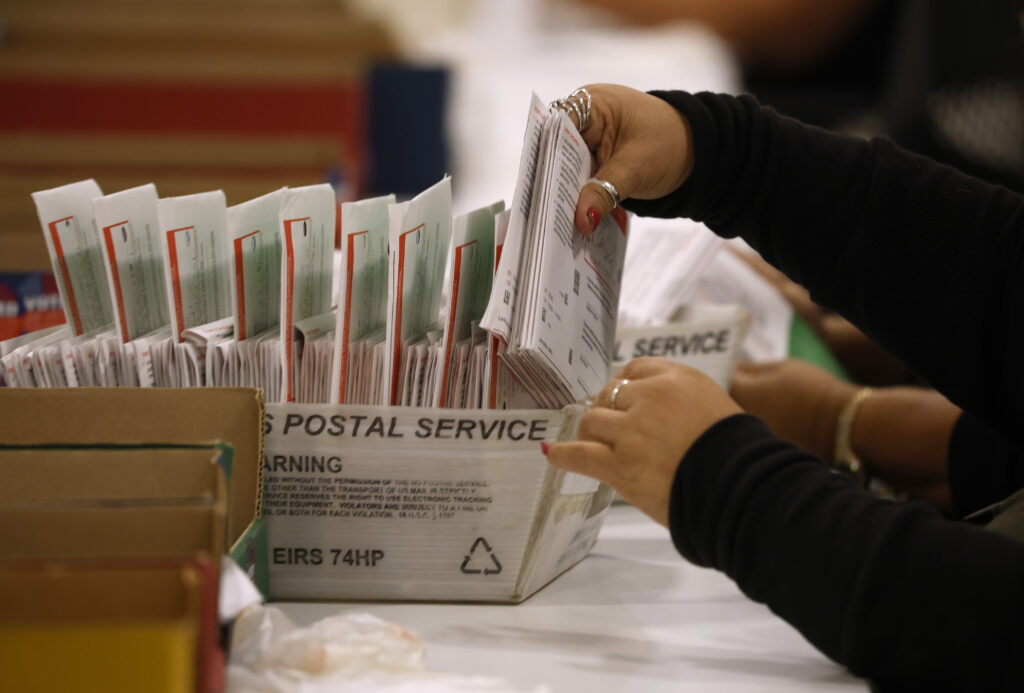
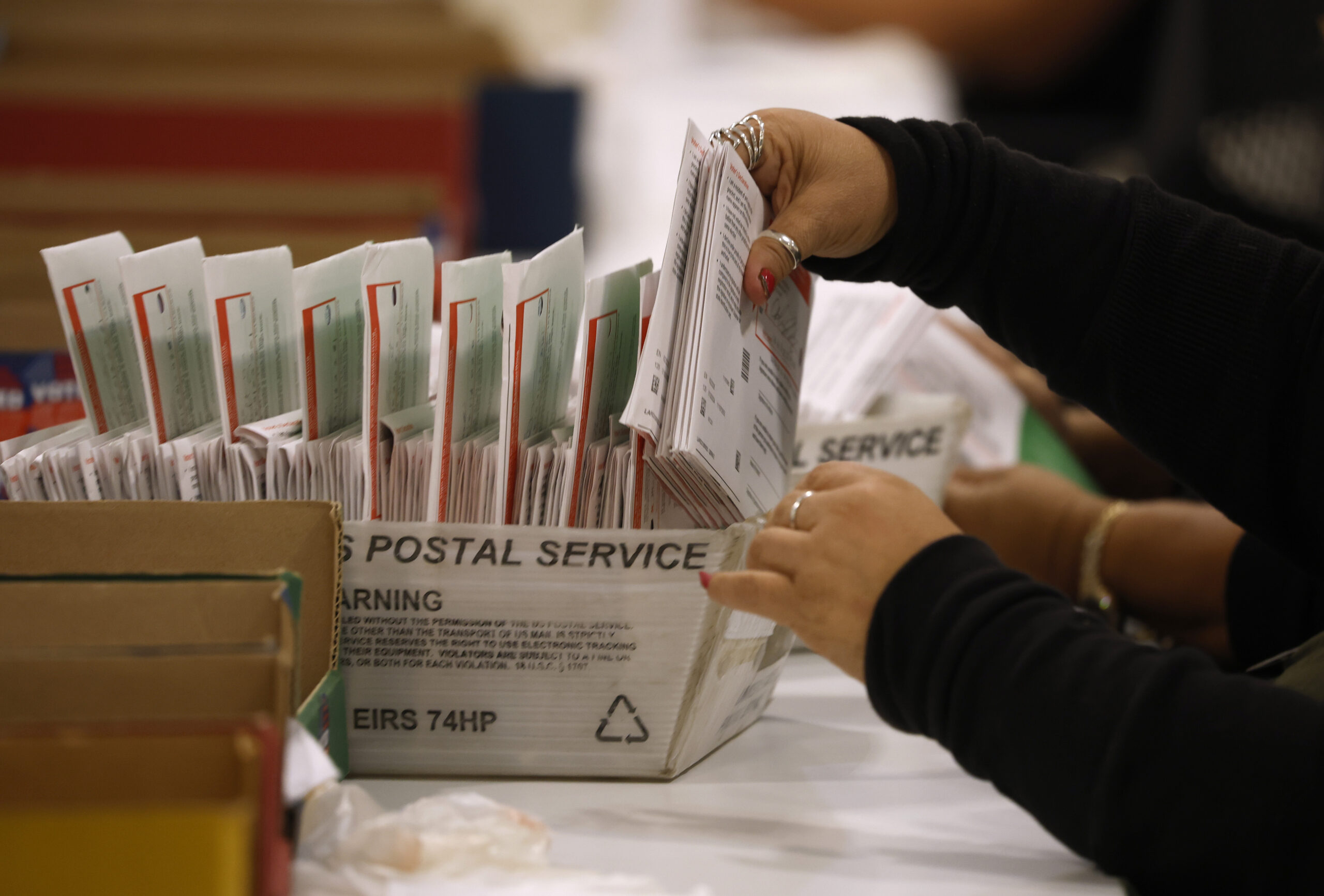
    The decision halts, at least until a nearly certain appeal is heard, efforts by the U.S. Postal Service to require states to submit the names of likely mail voters before it delivers ballots. It also stops the U.S. Department of Homeland Security from compiling lists of voting-age citizens in each state.

    U.S. District Judge Indira Talwani, an appointee of President Barack Obama in Massachusetts, is the first judge to block the March 31 executive order. State and local election officials have raised concerns that its requirements would inject chaos into preparations for the November midterm elections.

    Talwani ruled that Trump had asserted too much control over elections in several parts of the order as he directed federal officials to quickly take actions that he argues are needed to prevent noncitizen voting, which rarely occurs.

    “The Constitution does not grant the President any specific powers over elections,” Talwani wrote.

    Order overpowered states

    The executive order directed Postmaster General David Steiner to put forward a rule requiring states, at least 90 days before a federal election, notify the Postal Service whether they intended to allow ballots to be sent through the mail. States would then have to submit to USPS a list of voters planning to vote by mail at least 60 days before the election.

    Talwani wrote that the Postal Service lacks any authorization by Congress to put forward binding regulations on mail-in voting. The Constitution, she wrote, “reserves the power to determine voter eligibility to the States alone.”

    The executive order also required the Department of Homeland Security, with help from the Social Security Administration, to compile a list of voting-age U.S. citizens living in each state and then provide that information to state officials at least 60 days before each federal election. The order does not tell states how to use the data.

    The list of citizens would be drawn from naturalization and Social Security records, according to the order. It would also include data from SAVE, a powerful computer program maintained by Homeland Security that verifies citizenship by checking names against information in federal databases.

    The executive order pointed to no relevant constitutional or legal authority supporting the compilation of the citizenship lists, Talwani wrote. Trump “lacks any authority to compile voter lists for each State,” she wrote.

    A day before the decision, Steiner told a U.S. Senate committee that a proposed Postal Service rule to implement the executive order would lead to non-delivery of ballots in states that don’t provide lists of anticipated mail voters — a position condemned by Democrats.

    “Today’s decision is a very significant victory for free and fair elections and a defeat for Donald Trump’s vile efforts to make it harder for people to vote,” Senate Minority Leader Chuck Schumer, a New York Democrat, said in a statement.

    “Once again, the courts have reaffirmed that Trump’s efforts to subvert the election are patently unconstitutional.”

    White House spokesperson Abigail Jackson said in a statement that the Trump administration remains confident the executive order will be implemented by the November election.

    “The entire Trump Administration will continue lawfully enacting the agenda President Trump was elected to enact – which includes the safety and security of American elections,” Jackson said.

    Latest setback

    Trump has suffered a series of setbacks in recent days in his efforts to influence the administration of state-run elections.

    A federal appeals court on Wednesday ruled that the Department of Justice wasn’t entitled to state voter rolls. Senators also continues to rebuff the president’s attempts to pressure them into passing the SAVE America Act, which would require voters to show documents proving their citizenship.

    Talwani’s decision came in a lawsuit brought by Democratic state attorneys general. It is the second major district court ruling over the executive order, after a judge in Washington, D.C., declined to stop the order because the Trump administration hadn’t taken enough action to implement it.

    Under Thursday’s decision, federal officials must notify their employees within a week that sweeping portions of the executive order are void.

    And on Monday, a judge blocked the use of SAVE to search for noncitizen voters.

  • Trump order limiting voting by mail halted by federal court

    Trump order limiting voting by mail halted by federal court

    A federal judge blocked major portions of President Donald Trump’s executive order restricting voting by mail on Thursday, finding he had exceeded his constitutional authority.

    The decision halts, at least until a nearly certain appeal is heard, efforts by the U.S. Postal Service to require states to submit the names of likely mail voters before it delivers ballots. It also stops the U.S. Department of Homeland Security from compiling lists of voting-age citizens in each state.

    U.S. District Judge Indira Talwani, an appointee of President Barack Obama in Massachusetts, is the first judge to block the March 31 executive order. State and local election officials have raised concerns that its requirements would inject chaos into preparations for the November midterm elections.

    Talwani ruled that Trump had asserted too much control over elections in several parts of the order as he directed federal officials to quickly take actions that he argues are needed to prevent noncitizen voting, which rarely occurs.

    “The Constitution does not grant the President any specific powers over elections,” Talwani wrote.

    Order overpowered states

    The executive order directed Postmaster General David Steiner to put forward a rule requiring states, at least 90 days before a federal election, notify the Postal Service whether they intended to allow ballots to be sent through the mail. States would then have to submit to USPS a list of voters planning to vote by mail at least 60 days before the election.

    Talwani wrote that the Postal Service lacks any authorization by Congress to put forward binding regulations on mail-in voting. The Constitution, she wrote, “reserves the power to determine voter eligibility to the States alone.”

    The executive order also required the Department of Homeland Security, with help from the Social Security Administration, to compile a list of voting-age U.S. citizens living in each state and then provide that information to state officials at least 60 days before each federal election. The order does not tell states how to use the data.

    The list of citizens would be drawn from naturalization and Social Security records, according to the order. It would also include data from SAVE, a powerful computer program maintained by Homeland Security that verifies citizenship by checking names against information in federal databases.

    The executive order pointed to no relevant constitutional or legal authority supporting the compilation of the citizenship lists, Talwani wrote. Trump “lacks any authority to compile voter lists for each State,” she wrote.

    A day before the decision, Steiner told a U.S. Senate committee that a proposed Postal Service rule to implement the executive order would lead to non-delivery of ballots in states that don’t provide lists of anticipated mail voters — a position condemned by Democrats.

    “Today’s decision is a very significant victory for free and fair elections and a defeat for Donald Trump’s vile efforts to make it harder for people to vote,” Senate Minority Leader Chuck Schumer, a New York Democrat, said in a statement.

    “Once again, the courts have reaffirmed that Trump’s efforts to subvert the election are patently unconstitutional.”

    White House spokesperson Abigail Jackson said in a statement that the Trump administration remains confident the executive order will be implemented by the November election.

    “The entire Trump Administration will continue lawfully enacting the agenda President Trump was elected to enact – which includes the safety and security of American elections,” Jackson said.

    Latest setback

    Trump has suffered a series of setbacks in recent days in his efforts to influence the administration of state-run elections.

    A federal appeals court on Wednesday ruled that the Department of Justice wasn’t entitled to state voter rolls. Senators also continues to rebuff the president’s attempts to pressure them into passing the SAVE America Act, which would require voters to show documents proving their citizenship.

    Talwani’s decision came in a lawsuit brought by Democratic state attorneys general. It is the second major district court ruling over the executive order, after a judge in Washington, D.C., declined to stop the order because the Trump administration hadn’t taken enough action to implement it.

    Under Thursday’s decision, federal officials must notify their employees within a week that sweeping portions of the executive order are void.

    And on Monday, a judge blocked the use of SAVE to search for noncitizen voters.

  • ‘This is my new Kroger:’ Customers react to new South Charleston Kroger Marketplace

    ‘This is my new Kroger:’ Customers react to new South Charleston Kroger Marketplace

    By Amanda Larch Hinchman
    For HDMedia

    Brands like Carhartt, Hot Wheels and KitchenAid can all be found alongside grocery staples at the new Kroger Marketplace in South Charleston, which opened to the public Wednesday morning.

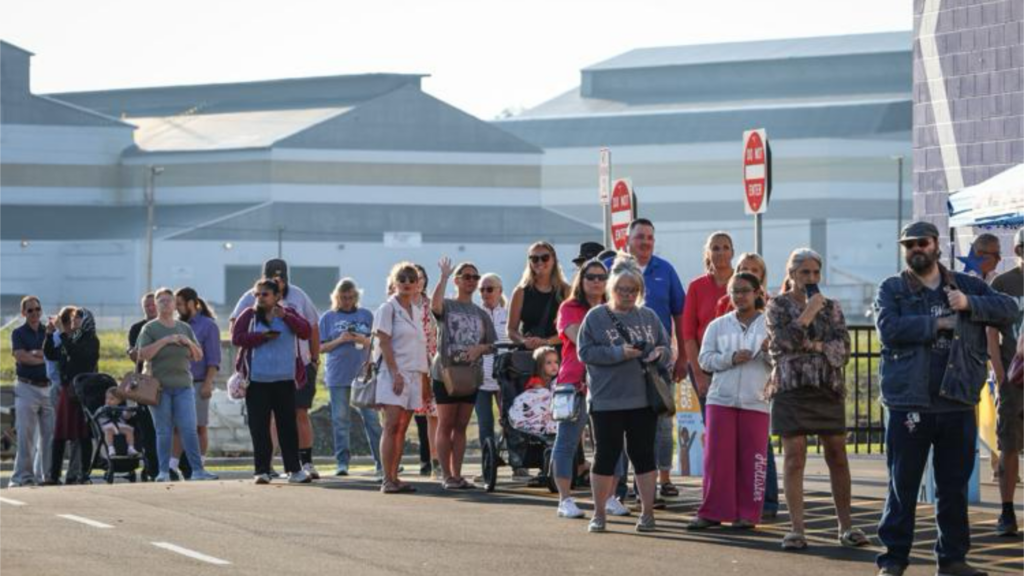
    Dozens of people waited in line to shop at the 122,000-square-foot facility, including South Charleston resident Ryan Jenkins.

    “I’ve been looking forward to it,” Jenkins said. “I think it’s going to be great, especially bringing in the Dunbar community. I think it’s going to do great for South Charleston and Park Place.”

    The Dunbar Kroger closed in May, and the 50,000-square-foot Riverwalk Plaza Kroger closed Tuesday.

    Photo by Laura Bilson | South Charleston resident Carol Eplin walks out of the grand opening of Kroger Marketplace in South Charleston, Wednesday, June 24, 2026.

    Jenkins, who formerly shopped at the Riverwalk Kroger, said while it was sad to see that store empty out, he’s happy with the new shopping center.

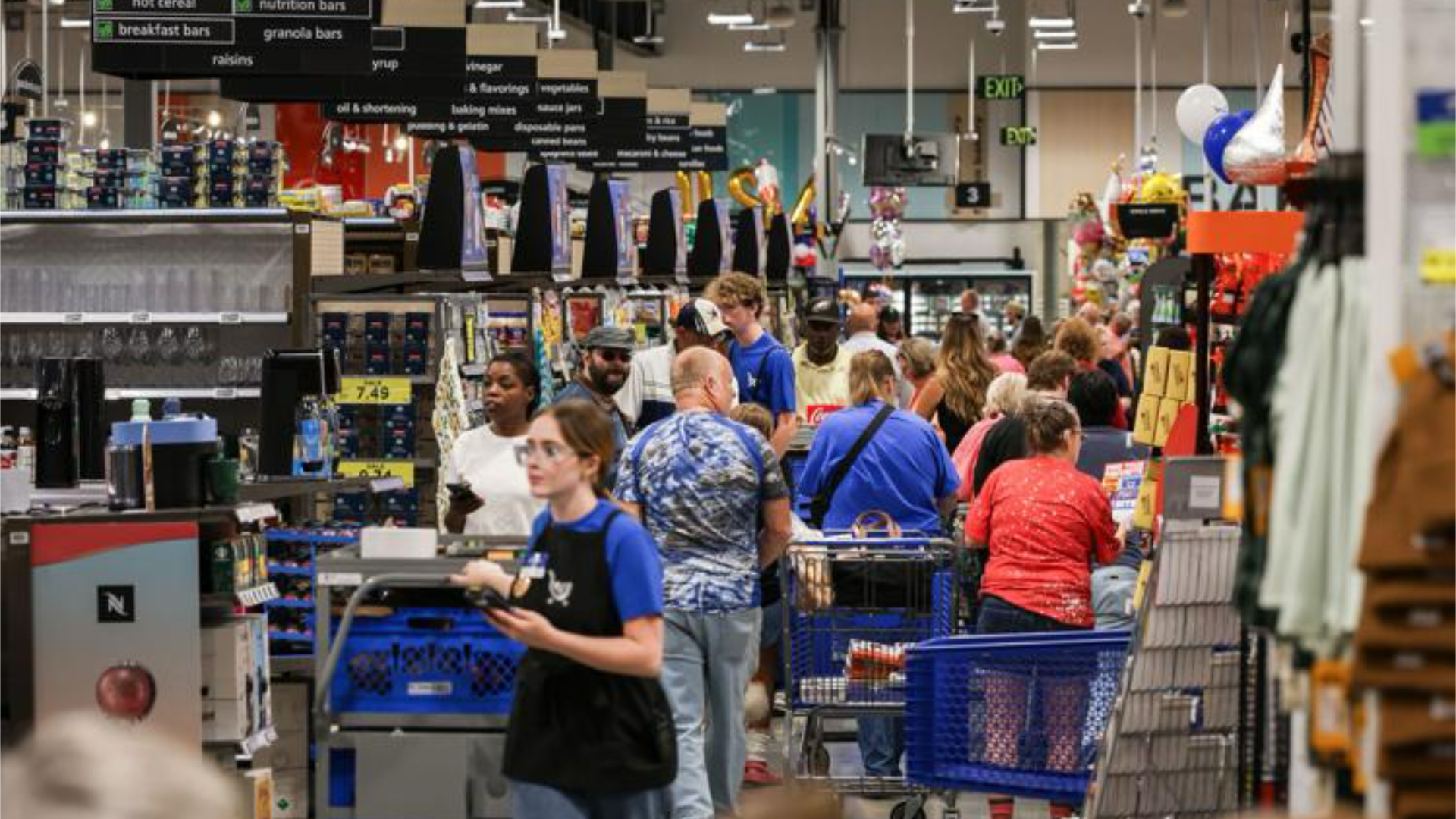
    “It’s going to take a while to figure out where everything is, but I love that it’s big and wide open,” Jenkins said. “You don’t have to crowd through all the aisles.”

    Featuring an expanded selection in every department, as well as the addition of clothing, customers could taste free samples and participate in gift card giveaways after a ribbon cutting Wednesday.

    Lifelong South Charleston resident Kelly Gray said the new Kroger Marketplace reminded her of what can be found in bigger cities.

    “It’s so convenient,” Gray said. “I just love it. I shopped at Riverwalk before; this is my new Kroger. I don’t think I’m going to dislike anything. I think the whole town’s excited about it. It’s going to be really good for the community.”

    Another customer impressed by the array of options was Ashley Crum, who compared Kroger Marketplace to other large shopping centers.

    Photo by Mary Everett | A display of free cupcakes is shown in bakery section in Kroger Marketplace at Park Place during the grand opening in South Charleston on Wednesday, June 24, 2026.

    “It’s extremely well stocked, and one thing that I’ve been impressed with are the options for making espresso,” Crum said. “They have so many, not just coffees, but they have machines, like espresso machines and French presses and better selection than Walmart or Target.”

    While Crum shops at the Ashton Place Kroger in Charleston, she said she will return to South Charleston more often, especially for bigger grocery trips.

    “I’m just really impressed and happy to see the store here,” Crum said.

    Largest Kroger in West Virginia

    The Riverwalk Kroger, which closed its doors Tuesday evening, had 20 aisles. The new Kroger Marketplace boasts 65, with more room between each, as well as additional room between registers. The marketplace also increased its number of employees to 370, many of which are from the former Dunbar and Riverwalk Kroger locations, according to store leader James Mullins.

    Photo by Laura Bilson | People shop at the grand opening of Kroger Marketplace in South Charleston, Wednesday, June 24, 2026.

    “(We) combined both stores, and we hired another 150 plus to get us to where we needed to open,” Mullins said. “So not only did we try our best to retain all the associates from both stores, but we also created some new jobs.”

    With more than 50,000 items in stock, this is the largest Kroger in the state and the first Kroger Marketplace in West Virginia.

    South Charleston Mayor Frank Mullens said it represents the completion of a 10-year project.

    “We like being first in South Charleston,” Mullens said. “To get to this point is very rewarding.”

    During the ribbon cutting ceremony, Mullens thanks Kroger representatives for investing in the South Charleston community.

    Photo by Mary Everett | Customers walk through aisles at the Kroger Marketplace Grand Opening at Park Place in South Charleston on Wednesday, June 24, 2026.

    “[You’ve] been part of our community for almost 100 years,” Mullens said. “It’s always a special day when you cut a ribbon, but when a company like this reinvests and wants to stay here for a long period of time, that’s the ultimate compliment.

    “This project is a result of state, county, city government working together as we always should, and when we do and we have a common goal, good things happen,” he continued. “Let’s remember that.”

    Kate Mora, president of Kroger Mid-Atlantic Division, said the new Kroger represents a significant investment and continued commitment to growing alongside the customers they serve.

    Photo by Laura Bilson | A Chester the Cheetah mascot high fives Sissonville resident Bonnie Bonar, 4, as her mother, Sarah Bonar, laughs at the grand opening of Kroger Marketplace in South Charleston, Wednesday, June 24, 2026.

    “This store showcases the very best of Kroger,” Mora said. “It’s designed for more than just a place to shop, it’s a place to discover, to gather, to enjoy. You’re going to love shopping here.”

    Mora said it’s also important to create an environment where associates feels supported, valued and inspired.

    “Because when our associates have great experience, they’re able to create meaningful, memorable experiences for our customers,” she said. “That connection is at the heart of everything that we do.”

    What’s next for Park Place, Riverwalk

    New tenants at Park Place have signed letters of intent, but these are not binding, Mullens said, so they are waiting to make official announcements.

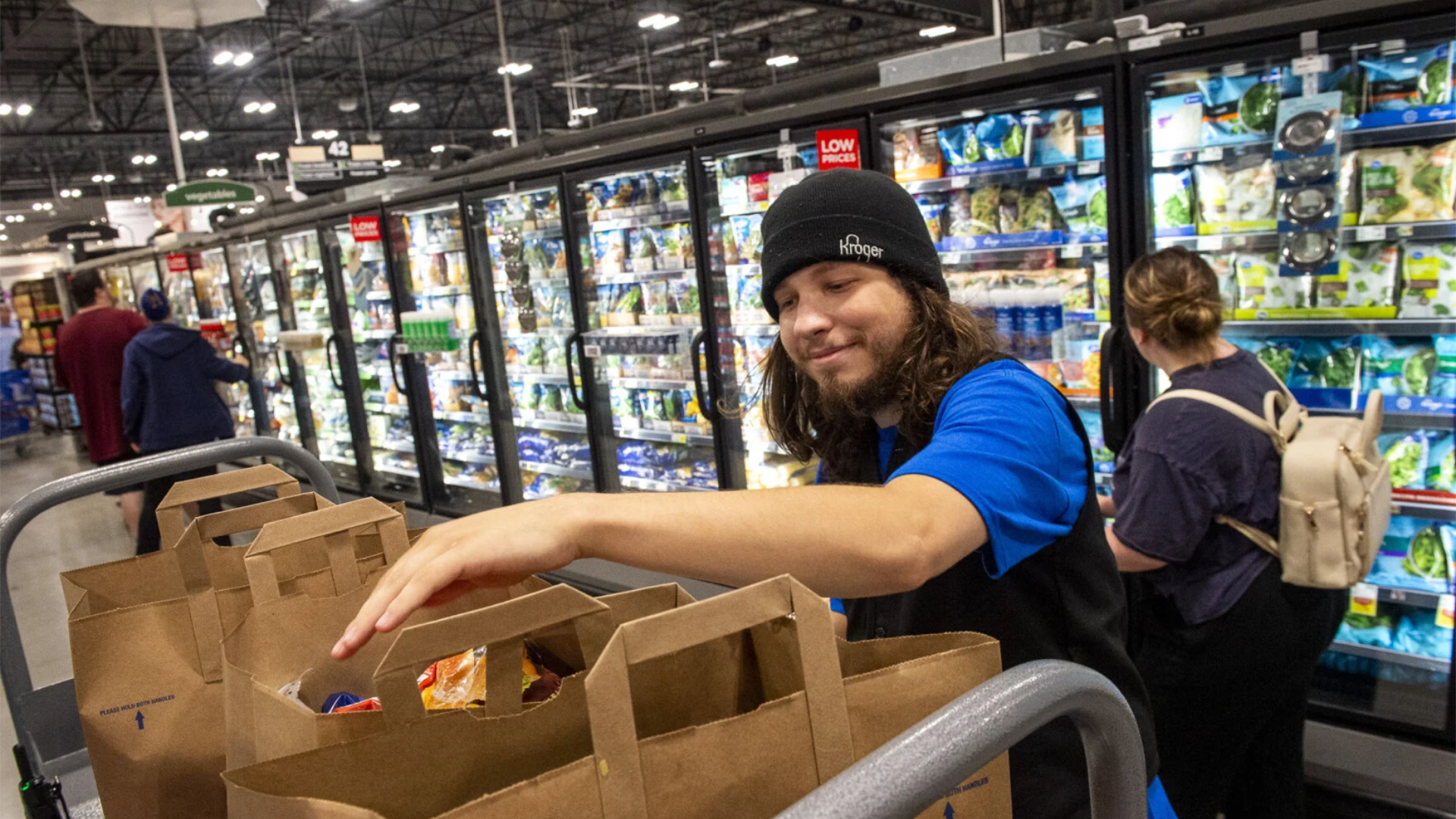
    Photo by Laura Bilson | Kroger employee Jonathan Reveal loads online orders into bags at the grand opening of Kroger Marketplace in South Charleston, Wednesday, June 24, 2026

    “We want to wait until we get them signed, sealed and delivered,” he said.

    Additionally, Mullens said he can’t make the official announcement just yet about the two businesses coming to the former Kroger location at Riverwalk Plaza.

    “Hopefully we’ll make that announcement soon as well, but it’s my understanding it’s going to happen pretty swiftly,” he said.

    Other stores announced for Park Place Shopping Center include:

    • 7 Brew Coffee
    • Chipotle Mexican Grill
    • Great Clips
    • Huey Magoo’s
    • Menards
    • Mission BBQ
    • Nothing Bundt Cakes
    • Opulent Nails
    • Pigtails and Crew Cuts
    • Pizzas and Cream
    • Skechers Outlet

    Teamsters on strike

    About two dozen representatives of Teamsters Local 175 picketed outside the Kroger Marketplace, encouraging customers not to purchase products delivered by the Beverage Market, located near Sissonville. The picketers left around 10:30 a.m.

    Local 175 is currently on strike against the Beverage Market, a beer distributor. Kroger is not striking, nor is the strike related to Kroger, whose hourly employees are unionized.

    Read more from HDMedia, here.

    The post ‘This is my new Kroger:’ Customers react to new South Charleston Kroger Marketplace appeared first on West Virginia Press Association.
  • W.Va. Governor’s Office disappointed in ruling pausing SNAP waiver banning soda purchases

    W.Va. Governor’s Office disappointed in ruling pausing SNAP waiver banning soda purchases

    By Steven Allen Adams
    For The Parkersburg News and Sentinel

    Charleston – The office of Gov. Patrick Morrisey expressed disappointment in a federal ruling pausing West Virginia’s waiver prohibiting the use of welfare benefits for sugary drinks and sodas.

    The U.S. District Court for the District of Columbia released a memorandum opinion Monday halting the implementation of Supplemental Nutrition Assistance Program (SNAP) waivers approved by the U.S. Department of Agriculture for five states: Colorado, Iowa, Nebraska, Tennessee, and West Virginia.

    These waivers restricted the purchase of certain items like soda and candy. The legal challenge was brought in March by SNAP participants against the U.S. Department of Agriculture.

    U.S. District Judge Amy Berman Jackson ruled that Secretary of Agriculture Brooke Rollins exceeded her statutory authority by approving these projects under a provision meant for administrative efficiency rather than health-based restrictions. The court also found the USDA failed to follow mandatory notice procedures, as the projects were likely to have a significant impact on the public.

    “The Court’s analysis should not be taken as a comment on whether the pilot projects are a good idea or not,” Jackson wrote. “That is a question of policy that is not before the Court. The federal defendants and the states may have a genuine desire to improve the health of SNAP households by encouraging healthy choices at the store, and they can take lawful steps to meet those goals. But what they cannot do is violate the law and their own regulations along the way.”

    Lars Dalseide, communications director for Gov. Patrick Morrisey, issued a statement Wednesday morning saying Monday’s decision would not discourage the administration from working to improve the health of West Virginians.

    “We are disappointed by the court’s decision but remain convinced that precious taxpayer subsidized resources should only be spent on healthy, nutritious food for those who need help the most,” Dalseide said. “Our commitment to improving the health of West Virginians has not changed, and we will continue to advance commonsense policies that encourage healthier choices and better outcomes.”

    Morrisey joined Rollins and U.S. Department of Health and Human Services Secretary Robert F. Kennedy Jr. in Washington, D.C., for an August 2025 signing ceremony for West Virginia’s SNAP waiver. West Virginia was one of six states that had its SNAP waivers approved by Rollins at that event.

    “There’s no way around it when it comes to West Virginia. Unfortunately, we’re ranked at or near the bottom of a lot of the tough public health metrics,” Morrisey said. “Now, that’s the bad news, and I believe in telling the truth to the American people about where we are, because that’s going to make the rise all the more better when West Virginia is able to reach her potential and to get healthy again. The good news today is that we all have the power to change it.”

    Morrisey submitted a formal waiver request to the USDA in May 2025 to remove regular, diet and sugar-free soda as food products that can be purchased on SNAP, the program that replaced food stamps.

    According to the waiver request, there are 146,458 households and 273,981 individual recipients receiving SNAP benefits in West Virginia.

    Morrisey’s focus on SNAP is part of his “Four Pillars of a Healthy West Virginia.” Those pillars include a ban on food dyes and additives with the passage of House Bill 2354 during this year’s legislative session (a law that is on pause due to a separate federal judicial ruling), increasing access to affordable healthy food choices for West Virginians, and the Mountaineer Mile challenge with Mountain Mile Trails being designated in 32 of West Virginia’s state parks.

    Encouraging healthy lifestyles among West Virginians is also a priority of the first tranche of the nearly $200 million federal Rural Health Transformation program. The state’s program focuses on seven core initiatives, including a Personal Health Accelerator, an initiative to build statewide wellness infrastructure and incentivize nutrition, physical activity, and “food as medicine” programs.

    Read more from The Parkersburg News and Sentinel, here.

    The post W.Va. Governor’s Office disappointed in ruling pausing SNAP waiver banning soda purchases appeared first on West Virginia Press Association.