Tag: Government + Politics

  • FOIA Friday: Richmond city and schools face scrutiny

    FOIA Friday: Richmond city and schools face scrutiny

    One of the less noticed features of the Virginia Way is the long-running tendency of the commonwealth’s leaders to conduct their decision-making behind closed doors. While the Virginia Freedom of Information Act presumes all government business is by default public and requires officials to justify why exceptions should be made, too many Virginia leaders in practice take the opposite stance, acting as if records are by default private and the public must prove they should be handled otherwise.

    In this feature, we aim to highlight the frequency with which officials around Virginia are resisting public access to records on issues large and small — and note instances when the release of information under FOIA gave the public insight into how government bodies are operating.

    The Mercury’s efforts to track FOIA and other transparency cases in Virginia are indebted to the work of the Virginia Coalition for Open Government, a nonprofit alliance dedicated to expanding access to government records, meetings and other state and local proceedings.

    Richmond fails to uphold transparency plan

    Richmond is facing new transparency questions after the city failed for seven years to follow its own law requiring routine publication of financial transactions, The Richmonder reported in May.

    The outlet found the city followed the law for about four years before it stopped posting new data in 2019. In 2024, it also removed older data because it contained confidential information that had been missed during earlier reviews.

    Mayor Danny Avula’s administration republished most of the information in April after The Richmonder filed a records request for the transactions. The administration took office in January 2025. The Richmonder said the data detailed a range of financial transactions, from a $55 million debt service payment to a $600 paint job for a bathroom in the mayor’s office.

    The administration said concerns over confidential information have prevented the city from ”complying with a law meant to help assure Richmond taxpayers that public funds are spent wisely,” The Richmonder wrote. City officials have said reviewing the records takes significant time as a result.

    The news outlet also reported that Councilmember Kenya Gibson planned to introduce an oversight resolution asking the council to investigate the city’s failure to publish the payment register.

    Courthouse News Service challenges court practices

    A federal judge’s ruling allows a closely watched over access to Virginia to move forward, after court officials argued the case should be thrown out before evidence could be examined.

    The suit, filed by Courthouse News Service, challenges restrictions tied to the Virginia’s Officer of the Court Remote Access system, known as OCRA, which gives attorneys and government workers access to non-confidential court filings that journalists and the public cannot directly access.

    In a May 5 ruling, U.S. District Judge James Jones said the plaintiffs had sufficiently alleged that Virginia’s policies may improperly delay or restrict public access to newly filed civil complaints. Jones wrote that disputes over how the OCRA system functions are issues for the later stages of the case, not grounds for dismissal at the outset.

    Shortly after the ruling, Karl Hade, executive secretary of the Supreme Court of Virginia, appealed the decision on behalf of court officials to the U.S. Court of Appeals for the Fourth Circuit.

    Public allowed to hear complaints against board

    Complaints involving Suffolk County School Board members are now open to the public, the Suffolk News Herald reports.

    The news outlet said in May that the board revised its regulations to allow such matters to be addressed in public rather than in closed session.

    The change also addresses disputes over board norms, member discipline and transparency.

    Some of the issues included court rulings finding FOIA violations, litigation over public access to meetings, and the censure of former board member Sherri Story when the board’s operations and practices became subject of public debate.

    Richmond schools defend redactions in facilities department probe

    Richmond City Public Schools is standing by a personnel exemption after redacting an internal investigation report on its facilities department, which is responsible for maintaining school buildings.

    According to WTVR, which requested the records, the school system’s report revealed little about allegations of mismanagement under former director Bobby Hathaway, who left during the probe.

    Virginia Coalition for Open Government Director Megan Rhyne told the network that “the personnel exemption was never designed and never intended to cover up wrongdoing by public employees, particularly when that wrongdoing has to do with the misappropriation of public funds or taxpayer dollars.”

    She said the exemption should apply to human resources matters or performance reviews, not alleged wrongdoing. She believes RPS applied the exemption too broadly.

    In 2024, a circuit court judge ruled that the district improperly withheld the report on the Huguenot High School graduation shooting investigation, forcing its release. In that case, RPS relied on a different FOIA exemption.

    WTVR requested records tied to the facilities investigation, which revealed operational failures.

    The news outlet reported the investigation uncovered misuse of purchase card accounts, including instances in which non-facilities personnel used the department’s account for purchases at Lowe’s.

    Investigators also found that parts of the work order system were ”completely ignored,” and materials were not properly recorded and stored. The report said a lack of protocols “created an environment susceptible to loss and misuse of assets.”

    Investigators recommended operational reforms and a forensic review of all purchases made by the facilities department to determine the “full scope of financial impact.”

    Much of the remainder of the report was heavily redacted.

    Asked about the redactions, RPS spokesperson Alyssa Schwenk told WTVR that “the division must balance public interest and legal obligations to current and former employees. Our consistent practice is to protect information directly concerning personnel.”
  • Virginia measles cases surge past 70, concentrated in Central Virginia

    Virginia measles cases surge past 70, concentrated in Central Virginia

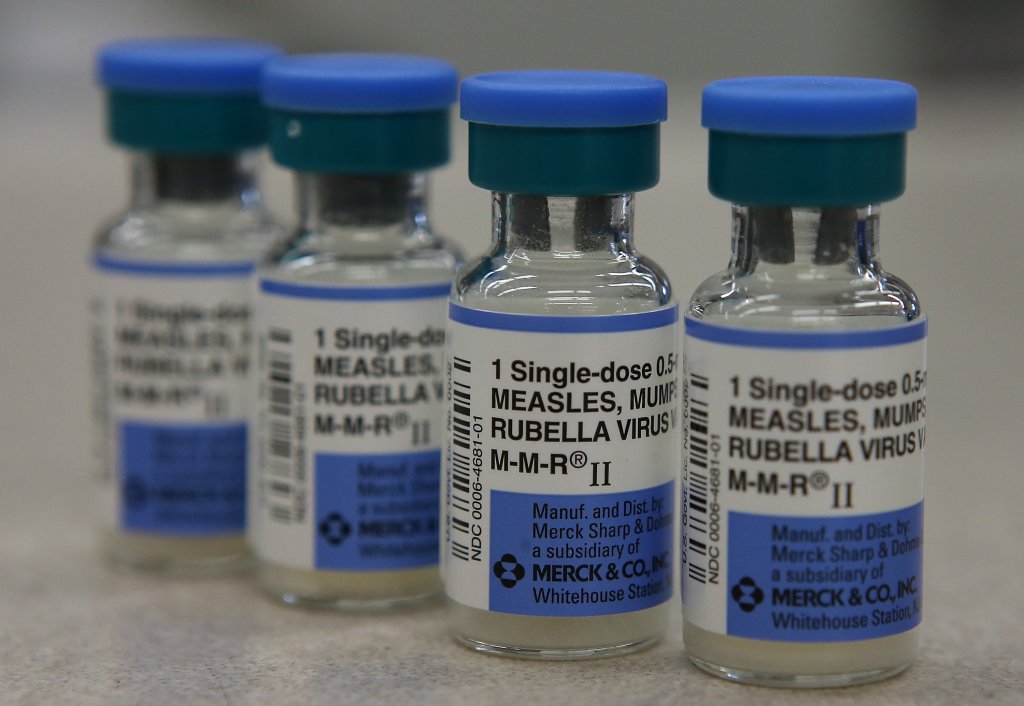
    Virginia’s measles count has jumped by more than 30 cases in recent weeks, with most of the infections centered in Central Virginia around Buckingham County. Data from the Virginia Department of Health shows that there have been 77 cases this year, most involving unvaccinated people.

    The bulk of the cases are babies and children younger than 12, aligning with how some parents were more likely to follow anti-vaccine trends that emerged in the earlier 2000s and have resurfaced more recently.

    During a visit to Virginia Wednesday, U.S. Health and Human Services Secretary Robert F. Kennedy Jr. recommended measles vaccines as a key preventative measure — a relatively recent endorsement following years of national prominence in anti-vaccine movements.

    About two decades ago, measles was considered eliminated in the U.S., but anti-vaccine rhetoric became more mainstream and misinformation about vaccines spread, leading to confusion and hesitancy among some people.

    Kennedy’s comments to Virginia reporters this week follow an acknowledgement he made during Congressional testimony in late April. It marks a relatively new stance after he did not recommend vaccination during a measles outbreak in Texas last year and instead advised Americans to “do your own research.

    Despite the U.S. being among the countries that previously eradicated measles, Kennedy noted this week that new cases are “happening all over the world.”

    “At (the Center for Disease Control and Prevention), we encourage people to get their measles vaccination,” he added. “That’s the best way to prevent yourself from getting measles.”

    Piedmont Health District Director Maria Almond said in an email that local health officials continue recommending vaccinations. Her health district is responding to the region of the state where most measles cases are occurring.

    Virginia Department of Health Commissioner Cameron Webb reiterated that people who remain unsure should speak with their doctors.

    “If you’re still not sure about the MMR vaccine, you should talk to your trusted health care provider immediately,” Webb said. “They can answer all your questions and address any concerns you may have.”

    About a month ago, Virginia’s measles cases were still in the two-dozen range as infections also climbed in other states. The increase prompted the CDC to issue summer travel guidance to encourage vaccinations and other preventive measures.

    Almond said the outbreak in the Piedmont region “has “not yet overburdened the local healthcare systems.”

    Hospitals and clinics are more likely to face strain during epidemics and pandemics.

    In Virginia and across the country, health systems and health departments have also dealt with staff turnover and burnout. Virginia’s health department has spent years addressing internal challenges following the COVID-19 pandemic.

    “According to the CDC, one in five people infected by measles requires hospitalization for complications, including pneumonia and dehydration,” Almond said.

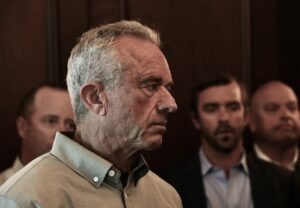
    U.S. Secretary of Health and Human Services Robert F. Kennedy Jr. during a press conference in Doswell Wednesday. (Photo by Charlotte Rene Woods/Virginia Mercury)
  • Congress nears major bipartisan housing bill with support from Virginia lawmakers

    Congress nears major bipartisan housing bill with support from Virginia lawmakers

    Last summer, U.S. Sen. Mark Warner, D-Va., criticized Congress for often “kicking the can” on federal housing policy. One year later, federal lawmakers are close to sending a large bipartisan housing bill to President Donald Trump’s desk.

    Dubbed the 21st Century ROAD To Housing Act, the effort is led by Sens. Tom Scott, R-S.C., and Elizabeth Warren, D-Mass. along with U.S. Reps. French Hill, R-Ark., and Maxine Waters, D-Calif.

    A key provision of the bill aligns with one of Trump’s goals to restrict large investment firms from buying up too many single-family homes. The practice has stifled first-time homebuyers, and state lawmakers from both parties in Virginia have previously introduced similar restrictions.

    Trump’s administration has expressed it “strongly supports” the federal bill — a clue that he would likely sign it.

    Other provisions in the bill encourage housing development in underused or vacant commercial properties like strip malls.

    “They can be converted to housing because they’ve already got power, parking and utilities around,” said Warner, who spearheaded that portion of the bill.

    The concept, along with incentives to build manufactured homes, drew inspiration from legislation also introduced in Virginia.

    A “housing near jobs” bill by Sen. Schuyler VanValkenburg, D-Henrico, and Del. Dan Helmer, D-Fairfax, did not become law, but its similarity to Warner’s proposal could give supporters hope to try again, VanValkenburg said. The bill would encourage multifamily and mixed-use development by right in certain commercial corridors so more people can live closer to where they work and reduce suburban sprawl.

    VanValkenburg’s manufactured homes bill, which was recently signed into law by Gov. Abigail Spanberger, can help bring those types of homes onto the market in areas that need or want them. Likewise, Congress’ pending bill would treat the factory-built style of home the same as a site-built home when it comes to zoning and financing.

    Slate of new Virginia laws address health care and housing affordability

    “Housing is tricky because a lot of it is local, but of course state and federal governments play a role too,” VanValkenburg said.

    To guide local governments, which typically control land use decisions like housing, the federal bill would also direct the U.S. Department of Housing and Urban Development to publish model zoning guidelines for states and localities to explore in their communities.

    “We also have to be honest that zoning is a local prerogative — too often, it’s a local prerogative to say ‘no,’” Housing Opportunities Made Equal Director Thomas Okuda Fitzpatrick said. “That’s why we need strong state actions and policy solutions in parallel with the 21st Century Road to Housing Act.”

    All of Virginia’s congressional representatives from both parties voted to advance the bill. But with differences between the House and Senate versions still unresolved, lawmakers cautioned that final passage — and Trump’s signature — are not guaranteed yet.

    ‘Devil’s in the details’

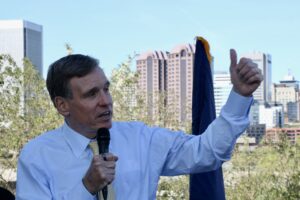
    U.S. Sen. Mark Warner, D-Va., speaks on the patio of Legend Brewing Co. in Richmond on April 9, 2026. (Photo by Charlotte Rene Woods/Virginia Mercury)

    One major sticking point involves a provision the House stripped from its version of the bill that would have required developers of build-to-rent housing to sell properties within seven years of construction completion.

    Build-to-rent developments allow tenants to rent single-family homes instead of apartments and can serve people who are not ready to buy or cannot yet afford home ownership but need more space. Supporters of the original provision argued it could help create a path to homeownership for renters, while developers warned the time limit could discourage investment in that type of housing altogether.

    The National Association of Home Builders praised the House changes and said it hopes the Senate accepts them.

    In a statement, Chairman Bill Owens said that keeping the original provision would have “reduced supply.”

    The House version of the bill also includes provisions to streamline examinations for smaller banks, which Owens called “meaningful relief to community banks.”

    “We urge the Senate to move quickly to send a once-in-a-generation housing bill to President Trump to expand housing supply and address America’s housing affordability challenges,” Owens wrote.

    Warner said he is cautiously optimistic the Senate can get the legislation across the finish line.

    “Never underestimate the ability of Congress to screw up a sure thing,” Warner said in a recent phone call.

    He added that the compromise feels “fairly reasonable, so I think we’ll get it done, but there are some strong personalities involved.”

    Fitzpatrick said corporate ownership has long concerned his organization, particularly when investors target low-income neighborhoods to “change the ownership landscape there.” But he described build-to-rent housing as “more nuanced” because “they provide a housing option.”

    “As with so many things, the devil’s in the details,” he said.

    Still, Fitzpatrick said his organization is pleased to see federal lawmakers exploring solutions to the country’s housing shortage. He also praised provisions aimed at boosting federal funding streams local governments and housing groups rely on, even as some of those programs face proposed cuts from Trump.

    Community Development Block Grants, for example, have long provided funding for local governments to build affordable housing, revitalize neighborhoods and support economic development projects in low-and-moderate-income communities.

    Warner’s fellow Democratic Virginia senator, Tim Kaine, said Congress has repeatedly blocked Trump’s attempts to eliminate the grants because lawmakers hear how “enormously popular” they are with local governments across the country. Kaine, a former Richmond mayor, said he saw their impact firsthand.

    Overall, Kaine said he does not view the differences between the House and Senate bills as insurmountable and is prepared to help colleagues “get this done.”

    With congressional midterm elections later this year expected to intensify partisan fights, lawmakers may soon return to attacking one another over policy differences.

    But VanValkenburg said the housing bill shows bipartisan cooperation is still possible.

    “In a day and age where we all have, rightfully, a lot of cynicism about Congress and its ability to act, this seems like a bipartisan action on an issue that needs action,” VanValkenburg said.

  • Virginia officials urge hurricane preparedness as 2026 storm season begins

    Virginia officials urge hurricane preparedness as 2026 storm season begins

    With the 2026 Atlantic hurricane season underway, Virginia officials are urging residents to prepare now for severe weather that can bring flooding, damaging winds, tornadoes and prolonged power outages across the commonwealth.

    State leaders gathered Wednesday at the Virginia Emergency Operations Center in Richmond for hurricane preparedness briefings and tabletop simulations meant to test coordination among emergency management agencies, first responders and state officials ahead of the busiest stretch of storm season.

    The Atlantic hurricane season began June 1 and runs through Nov. 30, with Virginia typically facing its greatest risk from late summer into early fall.

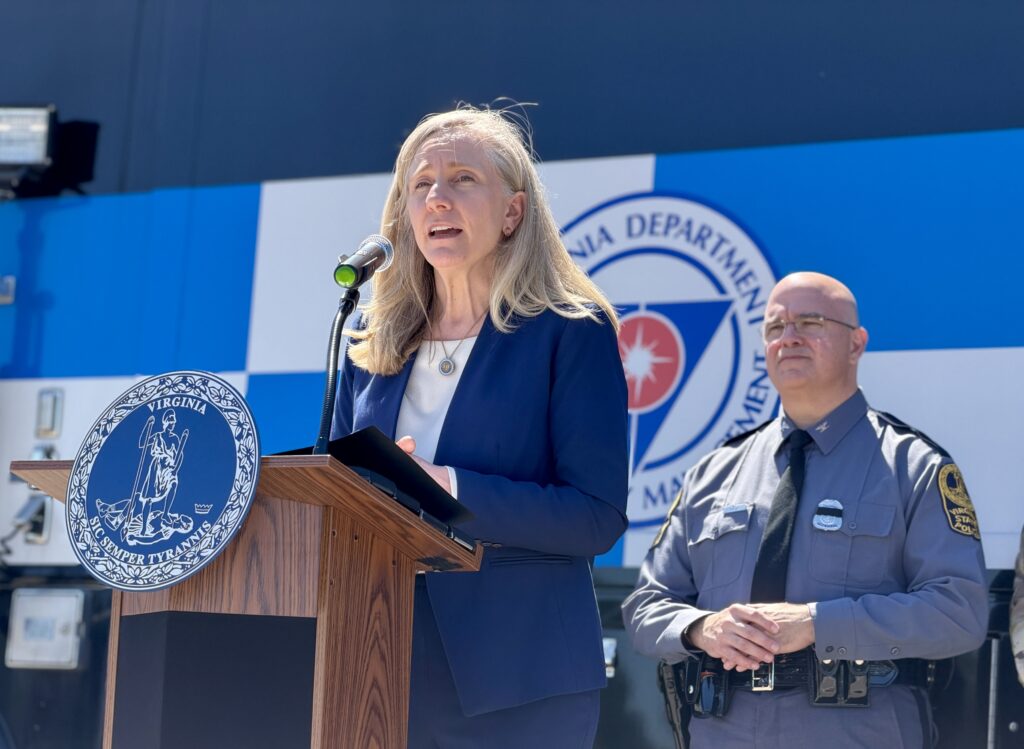
    “We spent the morning here in the emergency operations center, going through briefings and preparedness simulations,” Gov. Abigail Spanberger told reporters after the briefing. “While it is beautiful outside today, we know that now is the time for us to begin preparing.”

    Spanberger pointed to the lingering damage left by Hurricane Helene, which tore through parts of Southwest Virginia after moving inland through the Southeast in September 2024.

    “We know that storms that started in the Atlantic or the Gulf can come north and cause severe damage in Virginia,” she said. “We saw this with the devastation caused by Hurricane Helene, and communities are still working to recover and rebuild.”

    The storm caused catastrophic flooding, road washouts and widespread damage, particularly in Damascus along the Virginia Creeper Trail corridor in the southwestern part of the state, prompting a federal major disaster declaration.

    In Damascus, business is down but hopes are high one year after Hurricane Helene

    Virginia later estimated roughly $4 billion in damage statewide. Nearly two years later, some communities are still rebuilding infrastructure and tourism economies.

    Emergency management officials said preparing before storms remains one of the most effective ways to reduce injuries, property damage and service disruptions during severe weather.

    “Preparedness starts long before a storm appears on the forecast map,” said Lauren Opett, acting state coordinator of emergency management. “The best time to gather supplies, review evacuation plans, and discuss emergency procedures with your household is now.”

    Opett said residents should focus on practical steps that can be handled before severe weather threatens the state.

    “Small steps taken today can make a tremendous difference when severe weather impacts Virginia,” she said. “Our team at VDEM stands ready to support communities across the Commonwealth throughout hurricane season.”

    Emergency officials further warned that tropical systems do not need to make landfall in Virginia to create dangerous conditions. Hurricanes and tropical storms can trigger inland flooding, tornadoes, storm surge, heavy rain and power outages far from the coast.

    Spanberger also encouraged Virginians to begin by developing emergency plans for their households. That includes identifying evacuation routes, choosing meeting locations if family members become separated and signing up for wireless emergency alerts.

    “The first thing that we can all do to get prepared is to just make a plan,” she said. “If you need to evacuate this hurricane season, you can get your family to safety faster if you have already thought about what to do. Where would you go? How will you get there? And figure out how to reconnect with family if you’re not together at the time that a storm hits.”

    Residents in coastal and flood-prone areas are also being encouraged to review evacuation zones before storms threaten the state.

    Spanberger directed Virginians to KnowYourZoneVA.org for evacuation information while emphasizing the importance of building emergency kits with supplies to last at least 72 hours.

    Emergency management materials released Wednesday advises Virginians to stock flashlights, batteries, medications and other essentials. The governor urged home owners to secure loose outdoor objects, clean gutters, trim damaged tree limbs and inspect backup power equipment ahead of severe weather.

    State officials also emphasized generator safety, reminding residents to check carbon monoxide detector batteries before storms arrive and operate generators outdoors and away from homes.

    Flood insurance was another major focus of Wednesday’s briefing. Spanberger warned that many standard property insurance policies do not cover flood damage and noted that flood insurance policies can take up to 30 days before becoming active.

    “It’s better not to wait until a storm is imminently coming our way,” Spanberger said.

    Just one inch of water inside a home or office can cause thousands of dollars in damage, including repairs to drywall, flooring and furniture.

    Businesses are also encouraged to review emergency response plans, communicate with vendors about possible supply chain disruptions and protect important records and computer systems before storms develop.

    But Virginia, Spanberger said, remains prepared for hurricane season.

    “We are working together to collaborate across state agencies,” she said. “First responders, community organizations and individual Virginians are essential to our effective disaster response.”

    The Virginia Department of Emergency Management is encouraging residents to monitor trusted weather forecasts and visit VAEmergency.gov for preparedness guidance and emergency information throughout hurricane season.

  • Aging at home drives growing demand for Virginia caregivers

    Aging at home drives growing demand for Virginia caregivers

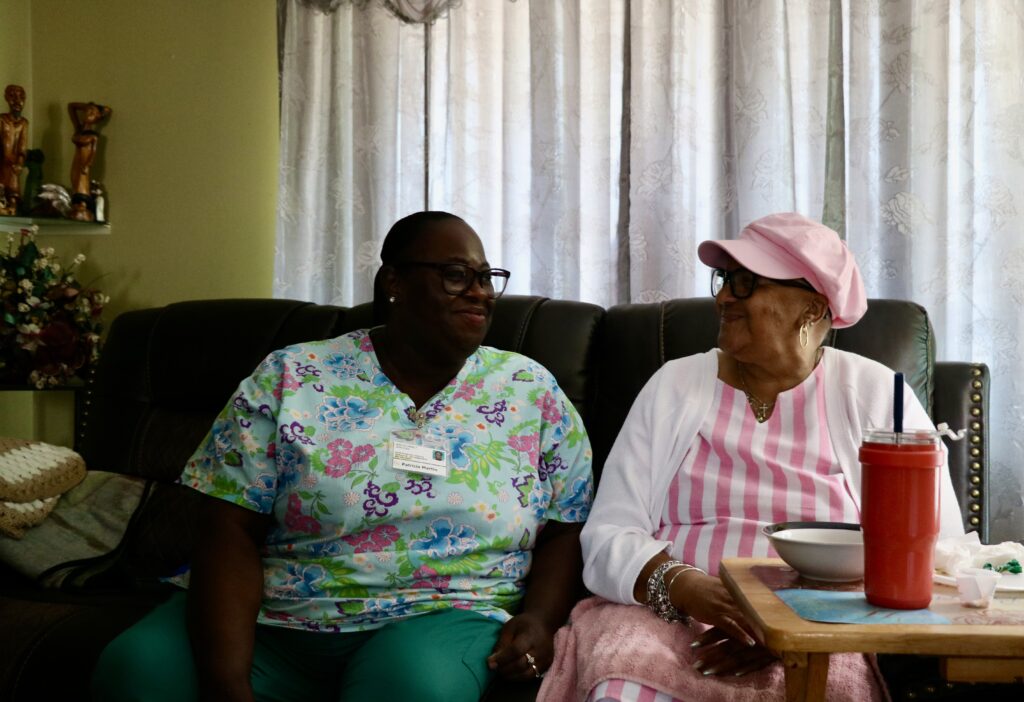
    Decked out in a matching pink shirt and hat with layers of bracelets and necklaces, Clara Hatcher’s dialysis appointment doubles as a fashion event.

    She spends three and a half hours, three mornings a week, receiving the treatment, so the 77-year-old likes to dress up for the occasion. Having been a dialysis patient for 12 years, she also shares her expertise with newer patients about how to handle the procedure.

    “I like to warn people how tired it can make you feel and what to expect,” Hatcher said.

    While she likes helping others prepare for it, she receives help of her own through her caregiver Pat Martin and nurse Belinda Hensley.

    The trio reflected on how healthcare “takes a village” as they helped her slowly walk back into her ranch-style Henrico County home after an appointment.

    Hatcher’s home health workers help her age in place in the house she bought to do just that.

    Much of Martin’s work involves making sure Hatcher sticks to her medication schedule, handling light housekeeping, ensuring she gets to medical appointments and assisting with tasks like dressing or cooking.

    “She likes to cook but her hands have tremors and I need to make sure she doesn’t fall,” Martin said.

    Hensley makes occasional visits to check in, as nurse supervision is required by Medicaid.

    As a nurse and a caregiver, Hensley and Martin are part of an evolving home healthcare landscape. As more people choose to age in place longer or avoid nursing homes altogether, demand for services is growing.

    Staffing organizations are innovating to hire and retain workers while coping with low Medicaid reimbursement rates at a time where the state-federal program is bracing for funding losses. That’s why two Richmond-area nonprofits hope that a grant-funded pilot program they participated in could become a model for other parts of the state.

    Supported staff, supported clients

    With $700,000 in funding from the Richmond Memorial Health Foundation and the Bob and Anna Lou Schaberg Foundation, Family Lifeline and Jewish Family Services were able to grow their staff numbers by 69% and 43%, respectively. They also raised caregivers’ starting wages to $15 an hour, predating the benchmark that state legislators passed this year.

    “This is a workforce where the wages have historically been very low,” Family Lifeline CEO Jennifer Case said.

    Raising pay was important for both attracting and retaining staff. The funding also helped the organizations modernize technology to make paperwork easier for nurses and caregivers, improve professional development training and assist workers facing transportation issues.

    Case emphasized that many caregivers do not have cars and rely on public transportation to get to work.

    If a client lives along a bus route, that may not be a problem, she said. But when clients live deeper into Henrico or Chesterfield counties, transportation can become a challenge.

    Even within Richmond city limits, Southside resident Regina Carter said what would normally be a short drive to the East End can sometimes take her more than an hour because she relies on the bus.

    “Sometimes the bus will not even come, so I have to wait for a whole other one,” she said. “And that’s almost like I don’t want to say an hour, but it’s an hour.”

    In recent years, the city and surrounding counties have expanded bus routes, but building that infrastructure takes time.

    For caregivers whose clients live farther out, the pilot program helped offset some Lyft and Uber costs for workers who needed it.

    Wendy Kreuter, CEO of Jewish Family Services, said both organizations continue supporting workers with transportation needs and plan to advocate on the issue with state and local governments while exploring public-private partnerships.

    Transportation barriers have long been an issue in healthcare, particularly in rural communities. State lawmakers have backed a pilot program providing Medicaid coverage for non-emergency transportation to help rural patients reach appointments. But challenges getting workers into patients’ homes have not yet been addressed.

    “This is something we should explore,” said Del. Rodney Willett, D-Henrico, who chairs the House Health and Human Services Committee, where healthcare legislation is reviewed each year.

    Medicaid issues

    Another longstanding issue has been Medicaid reimbursement rates. For Family Lifeline and Jewish Family Services, that means both organizations have had to rely on other funding sources to support staff.

    Generally, reimbursement rates range from $20 to $23 per hour. But Kreuter and Case said the “village” includes more than direct care workers. Administrative staff are also needed to coordinate scheduling and transportation for clients.

    “I think it’s just going to get harder,” Hensley said of a reconciliation bill Congress passed last summer that puts thousands of Virginians at risk of losing Medicaid coverage.

    A KFF survey released earlier this year found that 41 states have reported home health agency closures, though Virginia was not among them.

    Case and Kreuter said their organizations seek private philanthropy of all sizes to continue supporting workers and clients.

    Though the reconciliation bill could affect Medicaid coverage and services across Virginia, federal lawmakers also negotiated the Rural Health Transformation Fund as an opportunity to address longstanding challenges.

    Outgoing Gov. Glenn Youngkin secured $189 million from the fund, which Gov. Abigail Spanberger’s administration is now responsible for administering.

    LeadingAge Virginia, which represents organizations like Kreuter’s and Case’s, has applied for the funding.

    Betsy Archer, director of the association’s PositiveAge branch, said the charitable pilot offers a strong blueprint.

    “We definitely see it as a replication or a replicable pilot that we think can be strengthened,” she said.

  • Another year, another Va. retail cannabis market veto leaves businesses, the public with few options

    Another year, another Va. retail cannabis market veto leaves businesses, the public with few options

    By Yiqing Wang and Toby Cox/WHRO

    Throughout her bid for governor, Gov. Abigail Spanberger said she would support a bill to set up a legal, adult-use cannabis market — which is why her veto on May 19 caught many rooting for such a market by surprise.

    “I thought it was a joke, honestly,” said Julian Redcross, a Hampton-based hemp grower. “When I saw it going around on fire on social media, I was like, ‘Oh, this is not real. This is AI.’”

    Spanberger said her decision was based on the need for stronger tools to enforce the law and regulate a legal cannabis market.

    Spanberger vetoes cannabis bill, stalling legal sales again

    “Virginians deserve a system that replaces the illicit cannabis market with one that prioritizes our children’s health and safety, public safety, product integrity, and accountability,” she wrote in her veto statement.

    The veto left Virginia cannabis businesses facing another year in limbo after many spent years preparing for a legal market following the 2021 legalization of personal possession. Now, some hemp growers are having to make tough calls about the future of their businesses.

    It also left the state’s safety questions unresolved: Regulators say they cannot finalize licensing, monitoring or inspection rules without a law in place, while health experts warn consumers are likely to keep buying products that are hard to test, label and trace.

    The bill Virginia lawmakers sent to the governor’s desk this year would have allowed adults 21 and older to buy marijuana starting in January 2027. The legislation proposed capping the number of licenses to a few hundred to limit the number of retail cannabis stores. It included policies for labeling and testing, said Jason Blanchette, president of the Virginia Cannabis Association and a hemp grower in Hampton Roads.

    Spanberger sent back changes that pushed the starting sale date to July 2027, capped the number of stores at 200, reduced the personal possession limit to two ounces and recommended new criminal penalties, VPM reported.

    The new penalties, especially, gave lawmakers and lobbyists pause.

    “The way that she wrote those back in, we are now recriminalizing a product that we have already made legal in the state of Virginia, so to a lot of those groups it appears that we are moving backwards when it comes to justice,” Blanchette said.

    A sliver of hope remains that a compromise could still be reached when lawmakers meet later this month to talk about the state budget, Blanchette said, but it’s a long-shot.

    “We’ll be lucky to be up and running by 2028,” he said.

    That will be too late for some businesses.

    ‘Up in smoke’


    Brad Wynne started growing hemp in Virginia Beach in 2023 for his company Veg Out Organics, which sells topical CBD products.

    He stopped growing hemp in 2024, biding his time for the state to get the ball rolling on a retail cannabis market. But he said he can’t afford to wait any longer.

    “I’m shutting down end of June,” Wynne said.

    He said his operation was as small as they come, but he spent years building it.

    “If you were to start from scratch with no land, no building, no nothing, each business, whether it’s retail, growing or dispensing, is about $500,000 to $1 million,” he said.

    Va. hemp growers worry about the future of their industry amid state and federal shifts

    The high startup cost makes sure the business can stay afloat while the plant is growing, which takes roughly six months.

    “This is a living plant, so this is not something you just buy from out of state, throw onto a shelf of a dispensary overnight, and you’re open the next morning,” Blanchette said.

    Wynne said he wished Spanberger sent her changes as line items lawmakers could have addressed individually, rather than as a substitute that had to be accepted or rejected as a whole.

    Blanchette said he disagreed with Spanberger’s assessment that the legislation was rushed.

    “I’ve been personally working on this for five years, so I know that we’ve put plenty of time and effort into this, and it has not been rushed,” he said.

    Julian Redcross said he was angry at Spanberger’s decision at first. But the anger soon gave way to acceptance and hope that a better bill will be proposed in the future.

    He and his twin brother Jonathan Redcross co-own Yoagie Enterprises and started growing hemp in 2019, while keeping their day jobs. They stopped growing operations this year when new hemp regulations strained their business. Julian said they plan to keep waiting.

    “We just have an empty space right now that’s costing money, but we didn’t jump over the edge just yet,” he said.

    Julian and Jonathan said they hope when the state eventually sets up a retail market, it gives small businesses like theirs a fighting chance. As for Spanberger, Julian said doesn’t take this year’s veto as her backtracking on her support of the legal market — yet.

    “She said she would pass it,” he said. “She didn’t say when.”

    A regulatory dilemma


    One of Spanberberger’s reasons for vetoing the bill was the need for stronger regulations.

    “That includes clear enforcement authority and sufficient resources for compliance, testing, and inspections, and robust tools to crack down on bad actors who continue to profit from the illicit market,” she wrote in her veto statement.

    But the illicit market will continue to reign supreme with no competition from a legal market, said Wynne, the Virginia Beach grower.

    Some businesses and public health experts say the commonwealth needs stronger safety rules before opening a retail cannabis market, but in practice, regulators are limited in how much they can prepare before lawmakers pass a final bill.

    Barbara Biddle, a hemp business owner from Northern Virginia and the founder of the Cannabis Small Business Association, said she supports legalization, but did not think the vetoed bill was the right vehicle to create the market.

    “It was a necessary action that needed to happen,” Biddle said. “But we don’t think that this was the right vehicle for it.”

    Biddle said Virginia needs clearer rules for testing, labeling and industry compliance, as well as more training for police and first responders before retail sales begin.

    Jamie Patten, chief administrative officer at the Virginia Cannabis Control Authority, has previously told WHRO that the authority is ready to implement additional regulation and resources if lawmakers approve a retail market.

    Those measures will include specific rules for licensing, monitoring and data collection in an adult-use retail market.

    But without finalized legislation, she said, the agency can’t settle the details of how that market would be monitored.

    In the interim, Patten said the authority has been focused on public education, including warnings about impaired driving, after a survey found nearly a third of Virginia drivers believe cannabis makes them safer behind the wheel.

    Michelle Peace, a forensic science professor at Virginia Commonwealth University who specializes in cannabis testing, said without a regulated retail market, consumers have fewer ways to know whether cannabis products are accurately labeled, properly tested or made under consistent safety standards.

    She’s repeatedly found products with THC levels that did not match their labels.

    “My laboratory has demonstrated over and over again that products are either more concentrated than what’s on the label or significantly less concentrated than what’s on the label,” Peace said.

    The risk will also be hard to track because consumers may not know where to report adverse reactions from unregulated products, Peace said.

  • Virginia revenue forecast jumps by $1.5 billion as budget talks continue

    Virginia revenue forecast jumps by $1.5 billion as budget talks continue

    Virginia’s revenue outlook has improved by $1.5 billion over the next three fiscal years, giving lawmakers more breathing room as negotiations over a stalled state budget are set to continue in Richmond later this month.

    Gov. Abigail Spanberger on Monday afternoon released the updated revenue forecast she ordered last month, telling top legislative budget writers that Virginia is projected to collect substantially more General Fund revenue through fiscal year 2028 than previously expected.

    The revised forecast projects revenues for fiscal year 2026 will exceed the official estimate by $585.5 million. Another $922.6 million in General Fund revenue is projected for fiscal years 2027 and 2028, including $582.4 million in 2027 and $340.2 million in 2028.

    The new projections arrive while lawmakers remain stuck in negotiations over Virginia’s next two-year budget, with disagreements over data center tax incentives and spending priorities continuing to hold up a final deal.

    In a letter to Sen. Louise Lucas, D-Portsmouth, and Del. Luke Torian, D-Prince William — the chairs of the legislature’s money committees — Spanberger said lawmakers need updated economic information as they work toward a budget deal.

    “As General Assembly leadership and budget conferees continue their important work, it is critical they have the most current and accurate information available,” Spanberger said in a statement.

    “While forecasted General Fund revenues have increased, I remain concerned by rising national economic instability, the ongoing conflict in Iran, and the continued impacts of federal workforce cuts. We must account for these evolving economic conditions as we plan for the long-term strength of our commonwealth.”

    The updated forecast arrives as lawmakers prepare to return to Richmond later this month for another attempt to break the budget impasse before the start of the new fiscal year.

    The House is scheduled to reconvene its special session June 18, followed by the Senate on June 22, as budget conferees continue working toward a compromise spending plan that can pass both chambers and reach Spanberger’s desk before the June 30 deadline.

    The revised forecast reflects strong tax collections even as parts of Virginia’s economy show signs of slowing.

    General Fund revenues have grown 7.3% on a fiscal year-to-date basis and are running 3.3% ahead of forecast. Virginia is currently $851 million ahead of expectations, though nearly 70% of that amount — about $578 million — comes from nonwithheld income tax payments and individual refunds, two of the state’s most volatile revenue categories.

    Virginia Secretary of Finance Mark Sickles said the revised forecast attempts to balance the state’s recent revenue growth against growing uncertainty in the national economy.

    “The updated forecast confirms that the commonwealth’s revenue performance remains solid but also factors in the deteriorating economic conditions and increased uncertainty in the national outlook,” Sickles said in a statement.

    “The additional $1.5 billion in updated projected revenues should provide the General Assembly with enough resources to craft a structurally balanced budget that mitigates any potential risks related to national market volatility.”

    The updated forecast follows warnings from state finance officials last month that Virginia’s economy is facing slower job growth, persistent inflation and weakening consumer confidence even as tax revenues continue to exceed expectations.

    During a May presentation of the Senate Finance & Appropriations Committee, Sickles said Virginia had lost 41,900 jobs since the beginning of fiscal year 2026 while General Fund revenues remained more than $850 million ahead of forecast.

    At the time, Sickles suggested the surplus could help lawmakers move past the budget stalemate.

    “It would not be unprecedented for us to use some of this money to get past this impasse, if we needed to,” Sickles told the committee.

    Spanberger ordered the updated forecast May 19 while budget negotiations remained unsolved. The revised projections extend through fiscal year 2031 and are intended to give lawmakers updated economic data before final spending decisions are made.

    The prolonged budget standoff has raised concerns about whether lawmakers will finish work on a revised spending plan before the new fiscal year begins July 1.

    Lawmakers adjourned a special session in April without an agreement. Disputes over data center tax incentives, transportation funding and competing priorities between the Democratic-controlled House and Senate have remained major obstacles.

    The stronger revenue forecast could give negotiators additional flexibility on spending priorities including education, transportation, healthcare and state employee compensation. But administration officials cautioned that economic risks remain.

    Federal workforce reductions continue weighing heavily on Northern Virginia and Hampton Roads, both of which have large concentrations of federal employees and contractors. State officials have also pointed to instability in financial markets and international tensions as possible threats to future economic growth.

    Even with revenues ahead of forecast, Virginia officials have repeatedly noted that much of the current surplus comes from revenue streams that can fluctuate significantly from year to year.

  • Virginia marriage equality amendment campaign launches at start of Pride Month

    Virginia marriage equality amendment campaign launches at start of Pride Month

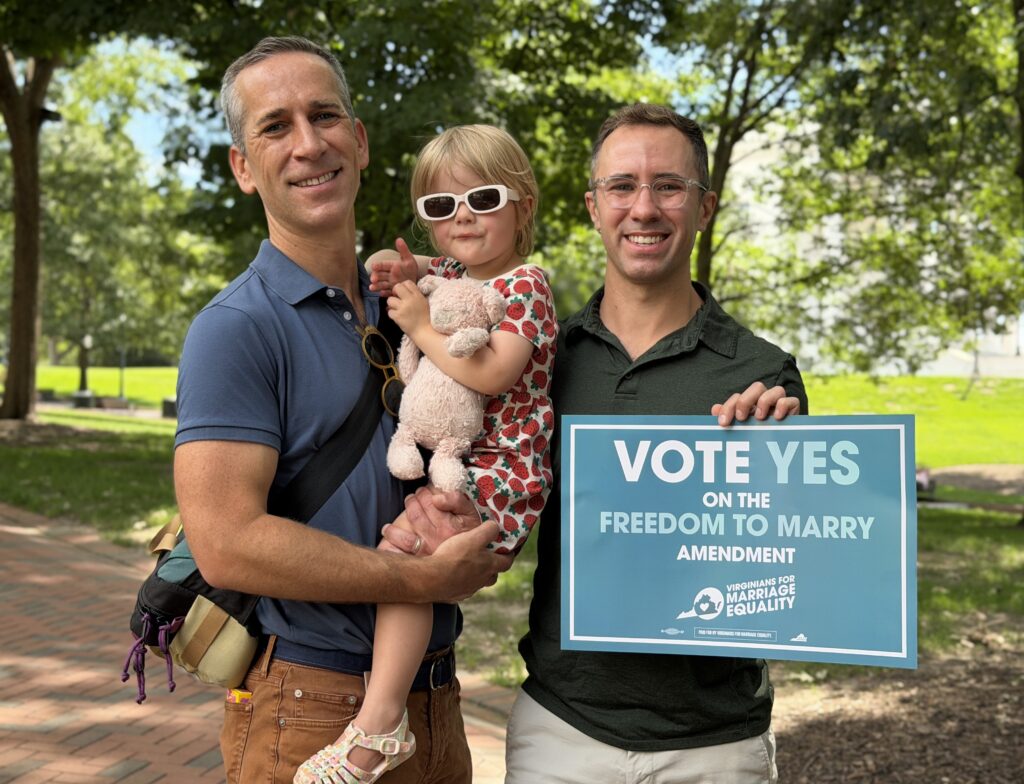
    Chad Stewart and Blake McDonald met in college in 2007 and began dating two years later, eventually building a life together in Richmond after settling in Virginia more than a decade ago.

    By 2015, the couple married — just one week before the U.S. Supreme Court’s landmark Obergefell v. Hodges decision legalized same-sex marriage nationwide.

    “We didn’t want to have to think about politics or court cases,” McDonald said Monday outside the Bell Tower in Richmond’s Capitol Square. “We just wanted to dream about the future we’re going to build together.”

    The couple spoke as Virginians for Marriage Equality formally launched its statewide campaign to pass a constitutional amendment referendum in November that would permanently protect same-sex marriage in the Virginia Constitution.

    The coalition gathered at the start of LGBTQ Pride Month to rally support for the amendment, which would repeal Virginia’s dormant constitutional ban on same-sex marriage and replace it with language requiring the commonwealth to recognize all marriages, regardless of sex, gender or race.

    Advocates say the amendment is needed in case federal protections for same-sex marriage are ever overturned.

    Concerns intensified after the U.S. Supreme Court overturned Dobbs vs. Jackson Women’s Health Organization in 2022 and Justice Clarence Thomas later suggested the court should reconsider other rulings involving privacy and due process rights, including same-sex marriage protections.

    Over time, Stewart said, the future he and McDonald imagined together in Virginia expanded beyond the two of them. During the pandemic, they began the adoption process. In 2023, they received a call, giving them just 16 hours notice before bringing home their daughter, Flora.

    “And so now our life is daycare drop offs, bedtime routines, holidays together, play dates with neighbors, and our daughter proudly calling the people down the street family, too,” Stewart said.

    From Marshall-Newman to Obergefell

    Virginia’s fight over marriage equality has spanned two decades, from one of the country’s strictest constitutional bans to this year’s referendum effort to permanently protect those marriages in state law.

    Voters approved the Marshall-Newman amendment in 2006 after legislation introduced by then-Del. Bob Marshall, R-Manassass, and then-Sen. Steve Newman, R-Bedford County.

    The amendment defined marriage exclusively as a union between “one man and one woman” and barred the state from recognizing same-sex relationships or similar legal arrangements.

    Roughly 57% of voters backed the amendment at the time.

    The issue later became the subject of federal lawsuits including Bostic vs. Schaefer and Harris vs. Rainey, in which same-sex couples argued Virginia’s ban violated the Equal Protection and Due Process clauses of the 14th Amendment.

    A federal judge struck down Virginia’s ban in 2014, and the 4th U.S. Circuit Court of Appeals later upheld the ruling. When the U.S. Supreme Court declined to hear Virginia’s appeal later that year, same-sex marriages began statewide.

    The following year, the high court’s Obergefell ruling established a nationwide constitutional right to same-sex marriage under the 14th Amendment’s guarantees of due process and equal protection. Although the decision invalidated Virginia’s constitutional ban, the language itself remained in the state constitution.

    The amendment before voters in the 2026 midterm elections passed the General Assembly in 2025 and again during the 2026 legislative session, satisfying the constitutional requirement that amendments pass in two separately elected legislatures before reaching the ballot.

    If approved by voters this fall, the amendment would repeal the Marshall-Newman language and replace it with protections requiring Virginia to recognize marriages regardless of sex, gender or race.

    Former state senator Adam Ebbin speaks during the launch of the Virginians for Marriage Equality campaign in Richmond Monday. (Photo by Markus Schmidt/Virginia Mercury)

    ‘Dignity, respect, and equal treatment under the law’

    In Richmond Monday, several speakers described the referendum as the culmination of decades of legislative efforts and legal battles.

    Former state senator Adam Ebbin, a Democrat from Alexandria and the first openly gay legislator elected to Virginia’s General Assembly in 2003, recalled watching lawmakers approve the constitutional ban more than 20 years ago.

    “For Mark and me, today is deeply personal,” Ebbin said, referring to Virginia Secretary of Finance Mark Sickles, another openly gay former lawmaker standing next to him.

    “Twenty years ago, we stood in the General Assembly and watched Virginia write discrimination into its constitution. We argued against it, we voted against it, and for 20 years, we worked to undo that mistake.”

    Ebbin said same-sex couples across Virginia have spent more than a decade building families while the constitutional ban remained written into state law.

    “Back in 2006, Virginians were told that marriage equality would somehow threaten our community,” Ebbin said. “But today, for more than a decade, same-sex couples have been building marriages, raising children, buying homes, and growing all together across the commonwealth.”

    Sickles said public attitudes shifted over time as LGBTQ Virginians became more visible in communities and families across the state.

    “People keep organizing,” Sickles said. “Families kept showing up. Virginia has changed because people got to know their neighbors, their coworkers, their friends, their siblings, their children more fully.”

    Narissa Rahaman, executive director of Equality Virginia and a committee member of Virginians for Marriage Equality, described the campaign as centered on dignity, family and personal freedom.

    “This November, Virginians have the opportunity to protect the Freedom to marry and affirm what so many of us already know,” Rahaman said. “Every Virginia family deserves dignity, respect, and equal treatment under the law.”

    Rahaman referred to her marriage to her wife, Brianna, as “a million little decisions and a million little moments” built around love, commitment and stability.

    “No family in Virginia should have to wonder whether their rights will be protected tomorrow,” she said.

    Marshall, the sponsor of Virginia’s 2006 same-sex marriage ban, declined to comment when reached by phone Monday.

    But the political landscape around the issue has since shifted dramatically. In 2024, then-Gov. Glenn Youngkin, a Republican, signed legislation sponsored by Democratic lawmakers aimed at ensuring same-sex marriage would remain legal in Virginia regardless of future federal court decisions.

    Still, Youngkin’s office at the time emphasized provisions protecting religious liberties, including language allowing clergy members and religious organizations to decline to perform same-sex weddings.

    Campaign heads into election season

    Organizers said they plan to spend the coming months traveling across Virginia to build support ahead of the November elections.

    Alexandria Democrat Del. Kirk McPike, who is also campaign co-chair, said marriage equality advocates will engage voters in communities statewide in the coming months.

    “My own husband, Jason, and I have built a life together here in Virginia, just like thousands of other couples and families across the commonwealth,” McPike said. “Every Virginian has a place in this campaign and a place in this commonwealth.”

    Mary Bauer, executive director of the American Civil Liberties Union of Virginia, tied the amendment effort to Virginia’s broader civil rights history, including the 1967 U.S. Supreme Court decision in Loving v. Virginia, which struck down interracial marriage bans.

    “This amendment is about making clear that the government has no business deciding which marriages or which families are worthy of recognition,” Bauer said.

    For Stewart and McDonald, the constitutional debate ultimately comes back to protecting and honoring their union.

    “When you build a family like that, legal recognition stops feeling abstract very quickly,” Stewart said. “Marriage equality is what allows families like ours to navigate healthcare, school enrollment, parenting, and all the ordinary parts of life that come with making a home together.”

  • Virginia lawmakers are set to return to Richmond as budget deadline nears

    Virginia lawmakers are set to return to Richmond as budget deadline nears

    Virginia lawmakers are set to return to Richmond this month for another attempt to reach a budget deal, with just days until the start of the new fiscal year and no agreement yet on the state’s next two-year spending plan.

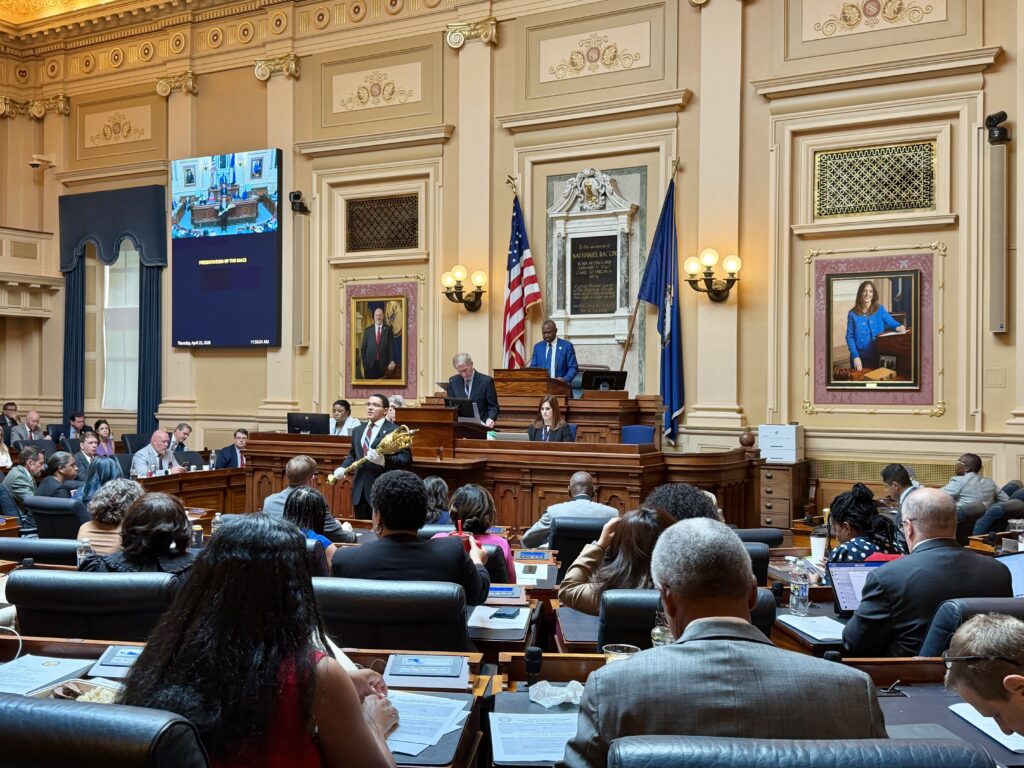
    The House of Delegates is scheduled to reconvene its special session June 18 at 10 a.m., followed by the Senate on June 22 at noon, as negotiators continue working toward a compromise budget that can pass both chambers and reach Gov. Abigail Spanberger’s desk before the June 30 deadline.

    Failure to enact a budget before the new fiscal year begins would result in a government shutdown, creating fiscal uncertainty for state agencies, local governments and school divisions that depend on state funding. Spanberger has repeatedly warned against allowing negotiations to extend beyond the deadline.

    “It’s absolutely unacceptable if the General Assembly would allow for the state to go past July 1,” she told Cardinal News last month.

    Lawmakers have remained at an impasse since the regular 2026 General Assembly session ended without a budget, despite Democrats controlling both chambers of the legislature. A special session in April also ended without a deal.

    The biggest sticking point is a Senate-backed proposal to begin phasing out the state’s sales and use tax exemption for data centers before it expires nine years from now.

    Senate Finance and Appropriations Committee Chair Louise Lucas, D-Portsmouth, has argued the fast-growing industry places increasing demands on Virginia’s electrical grid and water resources while producing relatively few long-term jobs.

    Spanberger and House Democrats have opposed ending the incentive prematurely, arguing it could damage Virginia’s reputation with businesses and discourage future investment.

    The tax exemption was approved in 2008 and is authorized through 2035. Lawmakers originally estimated it would reduce state revenue by about $1.5 million annually. Today, its value is estimated at nearly $2 billion a year, as Virginia has become the world’s largest data center market.

    Spanberger said she is open to discussions about what happens after 2035.

    “There are efforts afoot in the General Assembly, as it relates to the budget, to ensure that data centers are paying their fair share, as I think everyone broadly agrees is necessary,” Spanberger said in mid-April. ”And so that will continue to play out in those negotiations.”

    But the governor said she opposes changing the policy before the exemption lapses.

    “If Virginia were to take an adversarial stance towards any particular industry, it sends the wrong signal broadly, and we’re already seeing it with the decision to move away from the tax abatement,” she told Cardinal News in an interview published last week.

    “It is the absolute prerogative of the General Assembly to look towards the future and to have conversations about incentives they do or do not want to give into the future.”

    She also warned that ending the incentive early could invite legal challenges.

    “As governor, I’m not going to break a contract that the state has signed — one, because who’s going to fund those lawsuits when we have to defend ourselves from broken contracts?” Spanberger said.

    The dispute has put the governor at odds with Lucas, one of the Senate’s most powerful members.

    In a series of posts Wednesday on X, formerly Twitter, Lucas blamed the administration and House Democrats for the continued stalemate.

    “The Governor and the House are the ones that are gambling with our future by allowing the data centers to expand without concern for power, water, or paying their fair share of taxes,” Lucas wrote.

    “The Governor should be honest and tell the public what she won’t do — she won’t tax billion dollar corporations to provide long term revenue to help pay for K12 and public safety and to backfill the federal cuts from Trump.”

    “That’s the budget hold up!! Once again, the Governor is wrong on the policy and knows Virginians will cook her if there is a government shutdown.”

    Lucas has repeatedly defended the Senate proposal during budget discussions.

    At a Senate Finance Committee meeting in May, she argued the state should not continue providing the incentive without additional policy changes.

    “Data centers will employ very few permanent jobs for a sizable tax giveaway,” Lucas said.

    “This is imperative to encourage responsible growth in the commonwealth to protect our electric grid and natural resources, while also ensuring hard working Virginians are not asked to pick up higher utility costs to fund a higher share of our existing core services,” she added.

    Despite the disagreement, Lucas said at the time that she expects lawmakers to reach a deal before the new fiscal year begins.

    “Virginia will have a budget by June 30,” she said. “We will have to get this right for Virginians.”

    Meanwhile, state officials are preparing updated financial projections to aid negotiations.

    Earlier this month, Spanberger directed state finance officials to roll out a revised revenue forecast that will include projections through fiscal year 2031. The administration said the updated forecast is intended to give budget conferees a clearer picture of the state’s fiscal outlook.

    “When making long-term budget commitments, it is important that policymakers have the most current and accurate information available,” Spanberger said in a statement. “This updated forecast will help provide budget conferees and the public with greater confidence as negotiations continue on the commonwealth’s next two-year budget.”

    The request came as Virginia Secretary of Finance Mark Sickles warned that parts of the state’s economy are showing signs of weakness.

    During last month’s meeting of the Senate’s money committee, Sickles pointed to slower job growth, persistent inflation and declining consumer confidence, even as state revenues continue to exceed expectations.

    Those stronger revenues have given negotiators additional room as they work toward a budget agreement before July 1.

  • Virginians suffer as callous, major cuts to food stamps become entrenched

    Virginians suffer as callous, major cuts to food stamps become entrenched

    President Donald Trump’s Darwinian food stamp modifications – abetted last year by supine Republican congresspeople whose constituents are now suffering – is working out just as critics had predicted. Low-income and disabled residents in Virginia and elsewhere are forced to choose between food, shelter, and healthcare.

    ‘Trying to do the best we can’: Va. lawmakers, beneficiaries brace for SNAP changes

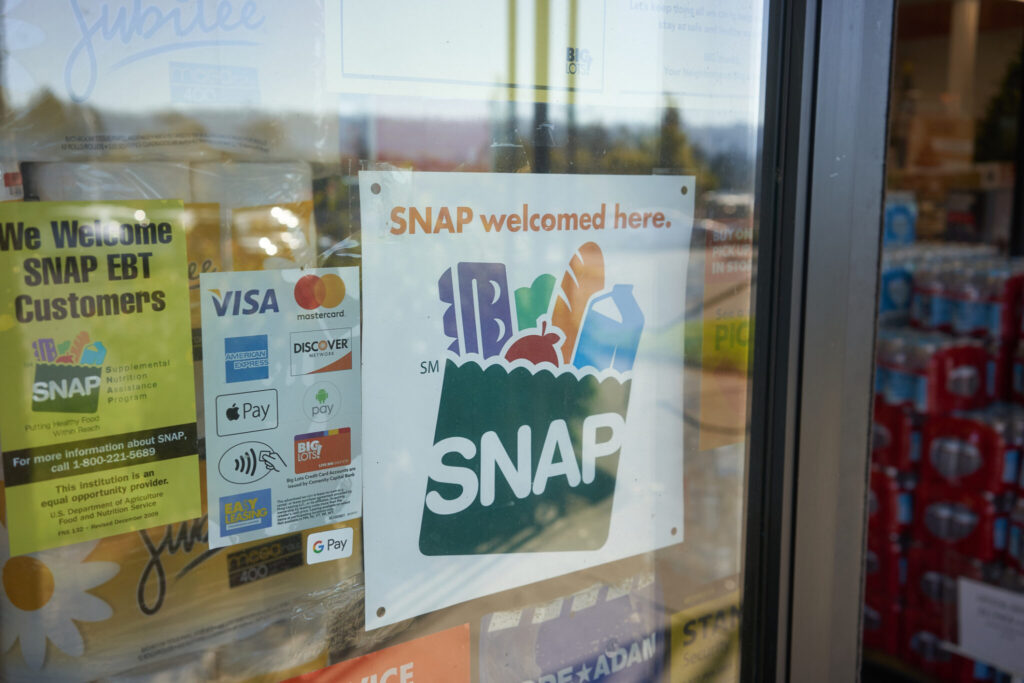
    Roughly 867,000 Virginians received Supplemental Nutrition Assistance Program benefits in March 2025. The figure a year later is down to almost 754,000, a spokesman with the Virginia Department of Social Services said Friday. That’s a nearly 14% drop.

    Some $187 billion will be cut from the federal food stamps program over a decade because of the changes. It’s as if Inspector Javert is running the program.

    Don’t just take my word for the calamity these heartless cuts have caused – all to mostly benefit wealthy Americans. Listen to the people on the front lines in the commonwealth who assist the poor, unemployed and others who are overwhelmed by decreasing federal aid, a stagnant economy and higher gas prices because of the poorly planned war against Iran:

    Patrice Smallwood, chair of the board of Virginia Organizing, said Trump’s H.R. 1 bill was supposed to take money from scammers and those committing fraud to redirect money to the truly needy. “That’s not what I’m seeing,” she continued. “That was deception.

    “The biggest thing really is the propaganda … about how Virginians and people all across the country were going to be helped,” Smallwood said.

    Though some decline in enrollment occurred before H.R. 1 passed (I refuse to call it by Trump’s risible slogan), the demand on area food pantries has rocketed in recent years, said Eddie Oliver, executive director of the Federation of Virginia Food Banks. The group is a collaboration among seven regional food banks and hundreds of agency partners around the state.

    “We’ve seen a pretty steady rise in food pantry usage since 2023,” Oliver said. Some food banks are seeing all-time record demand now, he added, which was supercharged by the government shutdown late last year.

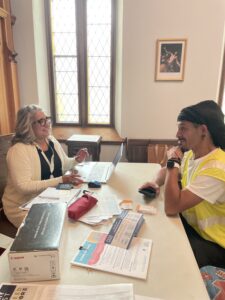
    Social worker Erika Nunez, of the Feed More food bank in Richmond, visits the St. Thomas Episcopal Church Food and Wellness Pantry in Richmond twice a month to assist people applying for SNAP benefits. Here she is working with volunteer Quentin Atkins. (Photo courtesy of the St. Thomas Food and Wellness Pantry)

    The federation notes that eight of the 10 localities with the highest rates of food insecurity are rural and concentrated in Southwest Virginia. Those areas typically select Republicans in Congress – and GOP congresspersons almost unanimously supported cuts to SNAP and Medicaid last year.

    All five Virginia Republicans in the U.S. House of Representatives – Ben Cline, Morgan Griffith, Jennifer Kiggans, John McGuire and Rob Wittman – voted to slash the social safety net. All of them are up for re-election this fall.

    Many Virginians who remain eligible for food stamps are exasperated because of stricter application and work requirements, noted Hannah Wyatt, a staff attorney who specializes in food security and public benefits with the Virginia Poverty Law Center.

    “Some are kind of just giving up,” Wyatt said.

    Able-bodied adults without dependents, for example, already faced a three-month time limit on SNAP participation if they weren’t working at least 80 hours per month. But the legislation increased the age that adults must adhere to those work requirements and time limits, from 54 years old before to 64 now.

    So older adults will be forced back into the workforce to remain eligible, even if it’s a chore because of age and general creakiness to get up, get out and get to a job.

    This is just one of the regulations in the legislation that tilt away from compassion for average Americans. The law also made eligibility stricter for non-citizens and reduced exemptions for certain requirements.

    Other states face the same problems. For example, NBC News recently reported on the upheaval in Arizona, where applicants must fight to prove their eligibility. Some were even quizzed about monetary birthday gifts sent by Zelle, and whether they were one time or recurring.

    The article told of recipients who had to turn over even more documents to prove they’re eligible – forcing people off the rolls who should get food aid. Folks needed to visit food pantries more often. The number of Arizonans getting food stamps in March was about half the total from the same time last year; 200,000 children have lost benefits, state data showed.

    The claims by toadies for the Trump administration that the new regs are ending “fraud, waste and abuse” have been illusory – especially since those receiving aid are jumping through more hurdles to receive what they deserve.

    Plus, the Center on Budget and Policy Priorities, a nonpartisan research and policy institute, previously reported that “cases of intentional fraud by participants or SNAP authorized retailers are relatively rare.”

    VDSS has published a webpage with a dedicated list of resources for SNAP participants that covers employment and volunteer opportunities, medical resources and more information.

    “The primary impact of this law on the Commonwealth is that now more families are going hungry when nobody should have to go hungry,” the spokesman said.

    Contrast the amount of documentation that SNAP recipients must provide to the lack of oversight involving repairs to the Lincoln Memorial Reflecting Pool in D.C. Trump put a proverbial thumb on the scale to help a contractor that he knew. (Trump later claimed he didn’t know the firm. But we’ve seen this story before.)

    Atlantic Industrial Coatings, a Virginia firm, received a no-bid contract, bypassing a requirement to seek competing offers – reportedly because a delay would cause “serious injury” to the government. The president wants the repairs done before the nation’s 250th birthday on July 4.

    The New York Times has reported that Trump promised the repairs would cost nearly $2 million; the total is now more than $13 million. The company also has an inflated profit margin of 20%, a government analysis found.

    Trump said he chose the company because it had worked on swimming pools at his golf club in Sterling, Virginia. He doesn’t even try to disguise his obvious conflict of interest.

    It’s too bad that millions of Americans, desperate for food, don’t have such a chummy relationship with the president. They’re just trying to survive.

    The callousness is a disgrace. Trump’s cuts are heartless and have endangered lives and livelihoods.

    The government’s contempt for the poor is a blight on our nation.