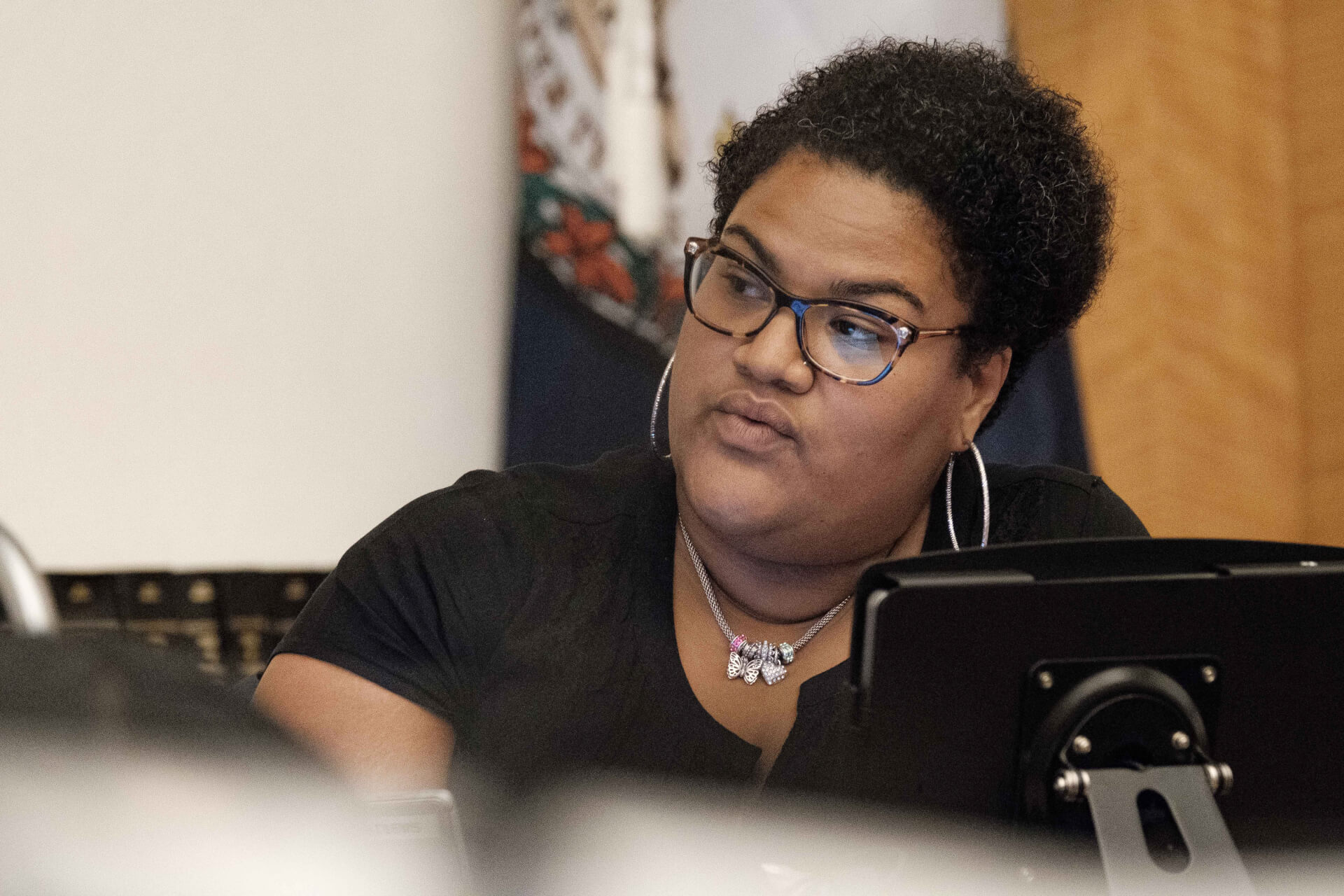
Casey Oakley, who needed an abortion after an unsuccessful IVF embryo transfer. She and her husband have two biological children and she has been a surrogate mom for two families. The couple has also foster parented four girls. (Photo courtesy Casey Oakey)
Editor’s note: This story mentions pregnancy loss.
Miscarriages were common for Albemarle County resident Casey Oakley during her in vitro fertilization process. Some embryo transfers weren’t successful and her body would expel the remnants, a process she had always handled safely at home, until an irregular delay.
Her bloodwork had indicated her pregnancy hormones were not elevating properly, signaling an imminent miscarriage. But two weeks later nothing had happened.
“(Doctors) didn’t know where the embryo had implanted in my body, so I was scheduled for an abortion, and I was told before my surgery that if they couldn’t find products of conception in my uterus, that they were going to be taking my tubes,” she said.
The fallback option was meant to spare her the deadly infections that can arise when miscarriages fail to complete.
“It wasn’t a question that they asked, it was more of a ‘this is what we have to do to make sure that you live,’” Oakley said.
Doctors eventually discovered that her body had maintained a gestational sac but no fetal DNA.
“My body had fought so hard for a pregnancy that would have no baby and then I was going into sepsis,” she said. “The abortion saved my life.”
Her experience is foundational to her support for a pending constitutional amendment heading to Virginia voters statewide in November.
If approved, it will permanently embed reproductive rights into Virginia’s constitution.
The amendment would protect people’s access to contraception, IVF and abortion, four years after the Supreme Court overturned federal protections for abortion and more states have restricted access to the procedure and birth control.
Virginia remains the least restrictive Southern state for reproductive healthcare in the era after Dobbs v. Jackson Women’s Health Organization, the abortion protection case that justice struck down in 2022.
State lawmakers weigh in
Del. Cia Price, D-Newport News. (Ned Oliver/Virginia Mercury)
Del. Cia Price, D-Newport News, was diagnosed with polyendocrine metabolic ovarian syndrome at 16 years old. She recalled debilitating cramps that made it hard for her to focus in school and days she could not get out of bed.
Formerly known as polycystic ovarian syndrome, PMOS is a full body disorder that affects people’s metabolism and reproductive organs. It can also cause infertility. Contraception has long been a standard treatment for the disorder to improve quality of life.
Though Price doesn’t need contraception for family planning as she is in a same-sex relationship and does not want biological children, the treatment lessens her PMOS symptoms.
She said her and others’ access to the medication could be at risk.
After Dobbs, Justice Clarence Thomas suggested the court revisit cases that have protected contraception, as well.
Gov. Abigail Spanberger signed Price’s Right To Contraception Act into law this summer, after the bill was vetoed multiple times by former Gov. Glenn Youngkin.
It will protect contraception access in the interim, though the pending reproductive rights amendment would shore matters up longterm.
Price said she understands some of her constituents’ and legislative colleagues’ reasons for not supporting contraception or abortion — from religious objections to debates over life-at-conception. But she underscored the healthcare utility of each.
“It’s just really disheartening for your quality of life to be at the intersection of an argument,” she said.
“This is a difficult topic for a lot of people,” Sen. Emily Jordan, R-Suffolk, said during a floor speech earlier this year amid debate over the amendment.
Jordan was among the Virginia Republicans who unsuccessfully sought to alter the amendment to reinforce existing state code outlining restrictions for minors and outlining care for infants when they are born.
The amendment advanced due to Democrats’ majority in the Virginia statehouse. Now, it’s in voters’ hands.
Price believes her contraception bill and the amendment “takes the conversation out of the political sphere and puts it in the medical sphere and the personal decision sphere.”
The medical cost
Dr. Kimi Chernoby, an emergency medicine doctor and lawyer, noted that emergency abortion care can happen at all stages of pregnancy if things go awry with the fetus or parent.
She added that many first trimester abortions stem from miscarriages or ectopic pregnancies, and that restrictive state laws increase margins for death.
“These laws are written by lawyers who have no medical training,” she said. “They actually prohibit a lot of care around miscarriages and ectopics, unless they fall within certain exceptions, and so that’s the care that is getting tangled up.”
As chief operating officer for a nonprofit called FemInEM, Chernoby organizes training around the country for emergency physicians to handle reproductive health emergencies.
The national patchwork of bans and restrictions with scant exceptions has complicated her and other physicians’ work, she said.
Legal challenges to mifepristone further muddle matters, as the abortion pill is also critical for managing miscarriages to prevent sepsis. FemInEM has submitted amicus briefs as a key court case that could affect abortions and miscarriage care nationwide unfolds.
Ahead of the fall referendum and pending court rulings, Oakley reflected on how an abortion allowed her to become a mother, surrogate and foster parent many times over.
“I was able to further the lives of my children and four other little girls,” she said. “There will be many other children to come into our lives afterwards.”
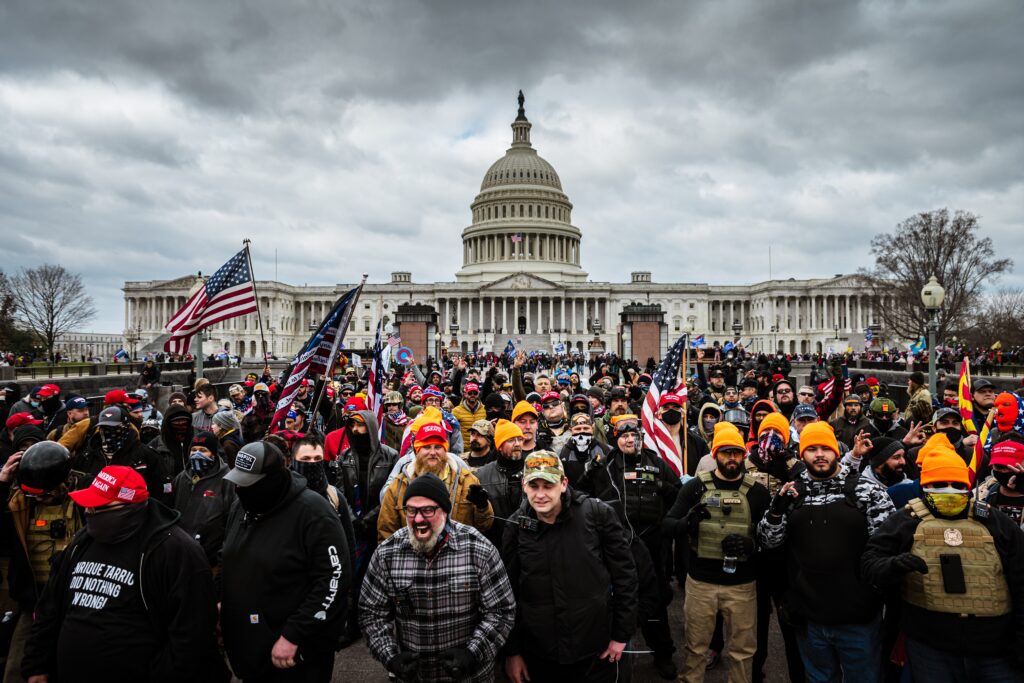
Supporters of President Donald Trump gather outside the U.S. Capitol on Jan. 6, 2021, in Washington, before a mob breached the building during the certification of the 2020 presidential election results. Critics of a proposed settlement tied to Trump’s lawsuit against the IRS have raised concerns that a planned “Anti-Weaponization” fund could ultimately benefit Jan. 6 defendants. (Photo by Jon Cherry/Getty Images)
Virginia Attorney Jay Jones joined a coalition of 22 Democratic attorneys general Wednesday urging a federal judge in Florida to closely examine a controversial settlement tied to President Donald Trump’s lawsuit against the Internal Revenue Service, arguing the agreement raises serious constitutional and ethics concerns.
The filing, submitted to the U.S. District Court for the Southern District of Florida, asks the court to scrutinize what the coalition describes as a potentially “collusive” settlement between Trump and the U.S. Department of Justice in the case known as Trump v. IRS.
The attorneys general argue the agreement would grant broad protections to Trump, his family and business interests while creating a proposed $1.776 billion “Anti-Weaponization” fund that the president’s critics say could steer taxpayer money toward Trump allies and others claiming they were unfairly targeted by the government.
The multi-state effort is led by California Attorney General Rob Bonta.
“This proposed ‘settlement’ is yet another appalling example of Donald Trump’s belief that he is above the law, and that his presidency allows him to evade accountability for his illegal actions,” Jones said in a statement.
“The people of the commonwealth are fed up with his schemes, and they are fed up with elected leaders who believe they are above the people they serve. This office will use every resource available to speak up for and act on behalf of Virginians, who deserve better than a president who only serves himself.”
The filing comes as legal scholars, former federal judges and watchdog groups nationwide continue questioning both the settlement itself and the unusual circumstances surrounding the case.
Trump, his sons Donald Trump Jr. and Eric Trump and the Trump Organization filed the lawsuit in January against the U.S. Treasury Department and IRS over the disclosure of Trump tax return information by a government contractor. The lawsuit sought billions in damages tied to the release of tax records later published by several news organizations.
The suit drew immediate attention because Trump, as president, oversees the federal agencies he sued.
U.S. District Court Judge Kathleen Williams had previously questioned whether the parties were genuinely adversarial and ordered a briefing on whether the court even had jurisdiction over the dispute. According to Wednesday’s filing, Trump voluntarily dismissed the lawsuit and entered into a settlement agreement with the U.S. Justice Department shortly before those issues were set to be argued.
The coalition said that timing raises additional concerns.
According to the attorneys general, the agreement appears to be “an attempted end-run around constitutional limits on Executive Branch authority.” The brief argues the settlement bears little connection to the legal merits of the original lawsuit and may exceed the Justice Department’s authority.
The filing also argues the arrangement risks undermining public confidence in the courts by allowing a president to negotiate favorable legal protections with agencies under his own control.
The dispute has sparked growing political and legal backlash since details of the settlement became public last month, with Democrats and some Republicans questioning whether taxpayer money could eventually benefit Jan. 6 defendants or political allies of the president.
Former federal judges also urged the court to reopen the case, accusing the parties of potentially misleading the judiciary.
The controversy escalated further after reports that the settlement included provisions shielding Trump, members of his family and related businesses from certain future tax investigations or audits.
The Justice Department initially defended the proposal, describing the fund as a mechanism to address alleged government “weaponization.”
“The machinery of government should never be weaponized against any American, and it is this Department’s intention to make right the wrongs that were previously done while ensuring this never happens again,” Acting U.S. Attorney General Todd Blanche said in a statement last month.
But the Trump administration has since faced growing political and legal pressure over the arrangement and has begun backing away from the proposed fund.
Legal fights connected to the settlement, however, are continuing in federal court. A federal judge in Virginia last month blocked the proposed fund from moving forward.
The Florida court is now considering whether to reopen Trump v. IRS under Rule 60 of the Federal Rules of Civil Procedure, which allows courts to revisit judgments in cases involving alleged fraud, misconduct or deception.
In this week’s filing, the coalition argued that state attorneys general have a particular interest in preserving public confidence in the legal system and guarding against abuses of executive authority.
“The self-dealing and corrupt nature of this settlement agreement is antithetical to the responsibilities of attorneys general and the rule of law,” the coalition wrote.
The Florida court has not yet ruled on whether the case will be reopened.
Tom Dunlap, a Riverkeeper with the James River Association, looks over Swift Creek where toxic leachate from the Shoosmith Landfill is leaking in June 2026. (Photo by Shannon Heckt/Virginia Mercury)
The Virginia General Assembly allocated $10.6 million in the two-year budget lawmakers passed this week for the Department of Environmental Quality to help contain toxic leachate spilling from the bankrupt Shoosmith Landfill in Chesterfield County.
The emergency funds will be used “to prevent it from becoming a catastrophe”, according the Sen. Glen Sturtevant, R-Chesterfield.
It represents a fraction of the $173 million needed to fully close down the landfill located off of Route 10 in Chester. The landfill, which has not taken in new trash since 2022 and whose owners filed for bankruptcy in 2025, reportedly generates about 50,000 gallons of leachate a day, a toxic wastewater made up of runoff from the garbage in the landfill.
View of Shoosmith Landfill through trees surrounding a nearby neighborhood along Swift Creek. June 2026. (Photo by Shannon Heckt/Virginia Mercury)
The creek flows into the Appomattox River and eventually into the James River at Hopewell – where drinking water is collected. Tom Dunlap, a riverkeeper with the James River Association, emphasized that if the leachate continues flowing into the environment it could lead to a major disaster, impacting clean drinking water and healthy streams for wildlife.
“You have to treat that discharged waste fluid to protect the environment,” Dunlap said. “It can be laden with all sorts of things from heavy metals to PFAS chemicals, and on and on. To have that leachate wind up directly in the environment is one of the worst case scenarios that we could be experiencing.”
The leachate is part of normal operations when managing a landfill, but must be treated before being discharged into wastewater treatment systems. In 2018, the county board of supervisors denied a request to expand the landfill by including a lined disposal cell in a nearby rock quarry.
Supervisors said the disposal of the wastewater below the water table could pose serious health and safety risks for residents.
The landfill has a history of improperly managing the leachate from the facility.
Chesterfield County reported that between 2019 and 2023, elevated levels of ammonia were found in the wastewater treatment plant that were traced back to Shoosmith. The landfill wasn’t properly treating the leachate it was discharging into the municipal system, an investigation found, which is a violation of its permit and the Clean Water Act.
This led the county to suspend Shoosmith’s permit to discharge the leachate into the county system; the liquid had to then be hauled offsite to be disposed of.
When filing for bankruptcy, DEQ approved the surety bonds from the facility’s owners to the tune of $19 million. This money was earmarked for the bankruptcy trustee to oversee the continued clean up of the leachate. In a May 26 letter to DEQ, the senator asked what could be done to make sure taxpayers are not left holding the bag to close this private facility.
Local residents in the surrounding neighborhoods have warned for years that the leachate has been getting into streams and odors have been permeating from the landfill.
A group called Chesterfield Citizens for Responsible Government said that the $10.6 million in state funding is not enough to cover the environmental and infrastructure needs laid out in the bankruptcy filings and engineers budget report for the closure of the landfill.
“These are not theoretical concerns. They are documented operational deficiencies at a landfill located adjacent to critical waterways. Immediate action is needed to protect public health, groundwater, and the environment,” the group said in a statement.
The James River Association estimates that about $50 million is needed over the next two years to establish an on-site leachate and treatment facility to slow the spread into the local environment.
“That engineering report cited elevated temperatures and all the knock-on effects of that which includes potential gases that are coming out of it, concerns with the stability of the landfill overall, identifying some of the more rapid-than-expected subsidence and collapses in the landfill,” among other concerns, Dunlap said.
Sturtevant said that the $10 million is just the first step and that the state – alongside the EPA and local officials – are evaluating other revenue streams to help shut down the landfill and manage the leachate before it gets too dangerous.
“This allows the federal, state and local folks the time to develop a plan to stop the leachate to prevent it from becoming a catastrophe, which is where it was headed, because they told us we’re gonna run out of money as soon as August,” Sturtevant said.
The bipartisan delegation of lawmakers that represent the Chesterfield area have been engaging with DEQ and Secretary of Natural and Historic Resources David Bulova on how to protect residents in the interim.
They are also considering how to claw back more funds from the company that abandoned the landfill when bankruptcy was filed.
“It would appear that there were a lot of things that failed along the way, and we have these governmental rules and regulations and agencies in place for the purpose of not allowing that to happen,” Sturtevant said. “So it’s going to require some legislative changes to make sure that there’s not an opportunity for this kind of thing to happen again.”
Map of potential lease site locations for offshore mineral mining. (Image by the Bureau of Ocean Energy Management)
The Bureau of Ocean Energy Management has pitched the possibility of leasing areas of the outer continental shelf off Virginia’s shores for mineral mining. Over the next month, the agency will seek comments from seabed mining industries interested in leasing portions of the coast.
The move is part of President Donald Trump’s effort to increase domestic production of minerals, which are needed for the production of electronics and defense materials.
“Virginia’s offshore mineral resources present a pathway to lessen foreign dependence and reinforce America’s strategic position by establishing secure domestic supply chains,” BOEM Acting Director Matt Diacona said in a statement.
The area that is under consideration for the lease sale is a massive swath next to the Eastern Shore that the Southern Environmental Law Center noted is larger than the state of Delaware.
The entire zone under consideration would not be leased, but if the mining industry shows interest in extracting minerals off the coast, BOEM would then identify areas that could be available for a lease. From there, environmental tests and potential impacts would be analyzed before a lease is granted.
The SELC and Environment Virginia quickly condemned the idea of allowing private companies to conduct industrial dredging to remove large amounts of sediment from the ocean floor with heavy machinery. Both groups cited the major environmental risks it could pose.
“From dolphins breaching the waves to seabirds soaring above our heads, a visit to Virginia’s coast is a reminder of the vibrant ecosystems we are lucky enough to have right over the horizon. Ripping up vast swaths of the seafloor puts this ocean heritage at risk,” said Elly Wilson, the state director of Environment Virginia.
Virginia has not conducted offshore mineral mining before. The SELC is gearing up to fight the potential lease and likened it to proposals for offshore drilling.
Following 2015 and 2018 proposals by BOEM to offer offshore leases for oil and gas production, the Virginia General Assembly passed a law in 2020 banning the permitting and leasing of seabeds within 50 miles of the commonwealth’s shores for oil and gas production. But that law still allows for mineral mining.
“This beloved public resource belongs to the people, not private, extractive industry. Opening Virginia’s federal waters to seabed mining would put countless essential resources at risk, and that’s not a risk we can or should take,” said Megan Huynh with SELC’s wetlands and coasts program.
Environment Virginia suggested that mining companies would be interested in heavy mineral sands in the deep water locations and phosphorites in the shallower waters.
The United States Geological Survey states that “titanium, zirconium, and rare earth elements, needed to manufacture, for example, modern electronics for consumer and defense applications” are commonly found in those heavy mineral sands.
The nation relies on imports of these minerals from foreign countries across the globe, which the Trump administration wants to end..
A public comment period on the potential interest in this mining effort will be open on the Federal Register website until July 23.
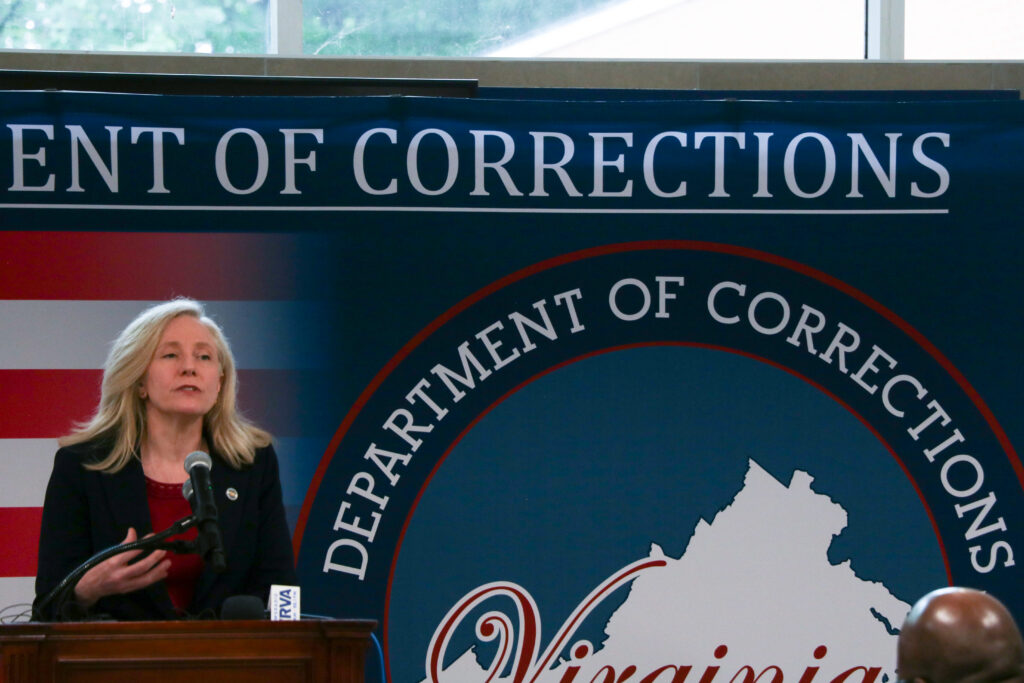
Gov. Abigail Spanberger announced she has created the Governor’s Community Partnership Council On Corrections on June 23 at the Virginia Department of Corrections headquarters in Richmond. (Photo by Charlotte Rene Woods/Virginia Mercury)
A new council convened by Gov. Abigail Spanberger aims to help solve longstanding issues in Virginia’s prisons that residents and correctional officers have expressed concerns about for years.
The Governor’s Community Partnership Council On Corrections, which Spanberger announced Tuesday, will bring together representatives from advocacy groups, faith-based organizations, healthcare and public safety groups and former prisoners to share their experiences and work towards solutions.
Two years ago a handful of prisoners at Red Onion State Prison, the most embattled correctional institution in the state, burned themselves in protest of living conditions and in attempts to transfer elsewhere.
Allegations of racism and retaliation by correctional officers were not ruled out by a state watchdog investigation at the prison and a class action lawsuit on behalf of prisoners who say they were abused will head to trial later this year.
“The people living in Virginia’s prisons are not forgotten on our watch,” Spanberger said at a press conference announcing the new council held at theVirginia Department of Corrections headquarters in Richmond.
Virginia Public Safety and Homeland Security Secretary Stanley Meador emphasized that the council will empower participants to propose solutions to problems and help the administration “see things we can’t see.”
Shawn Weneta, a policy strategist who has helped shape some criminal justice law changes in recent years, commended the creation of the council. He noted that some VADOC changes first began under the previous director but is pleased with the progress that the new administration is building.
Speaking as a formerly incarcerated person, he emphasized that the council’s mission can best succeed by including “those most directly impacted by the system.”
Ahead of assembling the official council, Spanberger’s administration has already conducted engagement within prisons and implemented her Executive Order 12, which entailed enhanced training for correctional officers and building partnerships with communities.
From January to May of this year, Spanberger said use of force across all VADOC facilities has declined by 39%, serious inmate-on-staff assaults dropped 56%, lockdowns decreased by 27%, confirmed overdoses dropped 47%, while suspected overdoses dipped 12%.
Virginia prisons have stopped using five-point restraints, which can be harmful for people in mental health crises, she said.
The practice of isolating inmates in restorative housing, a persistent problem, has dropped by 20%.
Restorative housing is Virginia state code’s euphemism for solitary confinement. It removes inmates from general populations and houses them in solitary cells.
Restorative housing is used when there’s a threat of gang violence and as a disciplinary measure for inmates who violate prison rules.
When asked how the reduction in restorative housing was made possible, Spanberger shared that staff training refreshers since she took office have focused on deescalation, which doesn’t exacerbate situations where an inmate may be in crisis or agitated.
Spanberger also said her administration is considering how to fine tune the state’s Step Down program.
Step Down is supposed to offer people placed in restorative housing a pathway out by helping address root causes of why they were placed in solitary housing and giving them measures to transition out of it.
Several current and former inmates have relayed to The Mercury in recent years that restorative housing has been heavily utilized and people sometimes spend weeks or years, rather than days, in it.
A third-party report to state lawmakers in late 2024 confirmed that at least one facility had placed the majority of its residents under solitary housing.
Spanberger said her administration wants to be “making sure that every movement is documented on why someone is in restorative housing and their pathways out of it.”
Under her direction, VADOC has also started to solve visitor access issues.
After hearing tales of disparate visitation access, Spanberger identified COVID-era restrictions — like less seating and fewer visitor time slots — as a contributing factor.
In recent months, VADOC has worked to restore past seating capacities in prisons’ visitor centers and expand visitor time slots, the governor said. She alsosigned a law that creates more guidance and takes into account the needs of long-distance travelers who come to see their loved ones behind bars.
This “benefits, not just the family, but the person who is incarcerated,” she said.
With Joseph Walters now serving as director of VADOC, Spanberger’s administration established a new code of ethics for VADOC employees and mandated refreshed training.
Staffing issues have also plagued Virginia’s prisons. Walters and Meador shared that they’re very proud that their agencies’ work so far has been achieved even with a 21% staffing vacancy.
This means, they said, that current staffers are working longer hours and pledging deeper commitment to their tasks. But rebuilding employee teams will be critical to halt turnover and alleviate burnout.
Walters, Meador and Spanberger also hosted in-person engagement sessions with 13 advocacy groups that the governor said had gone unheard by the state’s top leaders for years.
She called it “stunning” how long some groups had tried to relay concerns to previous administrations and that she hopes her efforts to strengthen communication can “build a foundation for after I am no longer in office.”
Editor’s note: This story has been updated to correct the spelling of Walters.
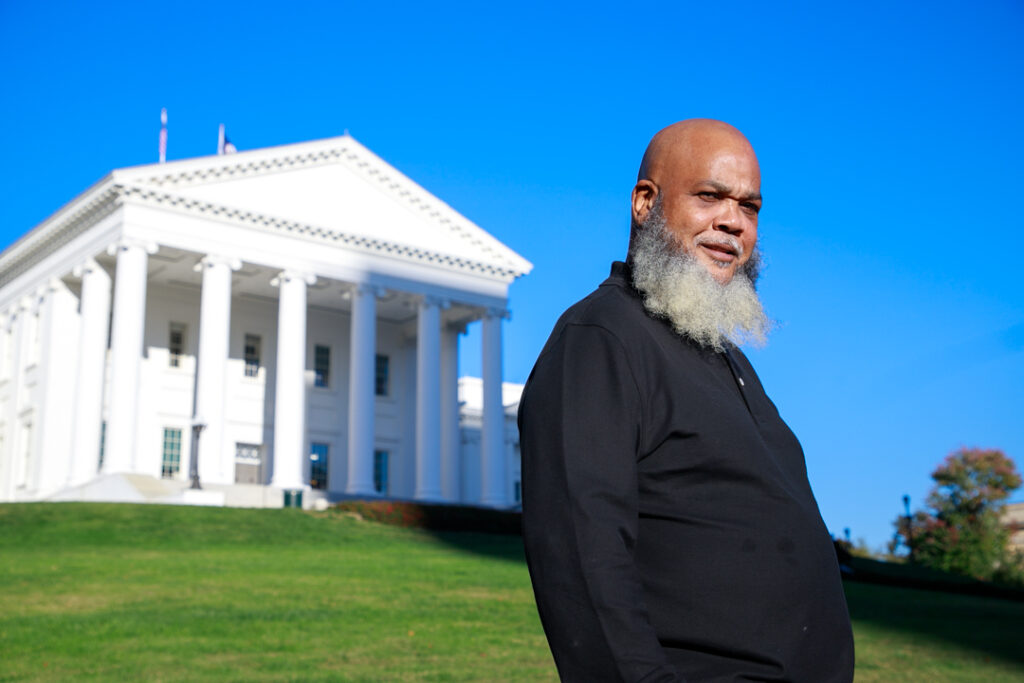
Virginia resident Tati King, a former felon who helped lead a major lawsuit to win back his and others’ voting rights, stands outside of Virginia’s Capitol. (Photo courtesy of Phuong Tran/ACLU of Virginia)
As thousands of Virginians with certain past felony convictions remain in a voting registration limbo, a civil rights group filed a motion on June 18 seeking an expedited remedy.
The group accused election officials of violating a voting rights lawsuit previously won earlier this year.
The voting access issue stems from a series of 1870 laws called the Readmission Acts, which banned states from constitutionally disenfranchising people other than those convicted of crimes considered common law at the time.
In Virginia, people with felony convictions lose their right to vote unless they successfully petition a governor for it to be restored or are pardoned — both subjective processes which haven’t always had clear guidelines.
Virginia’s chapter of the American Civil Liberties Union argued in King v. O’Bannon that Virginians with a variety of felony convictions should have never lost their right to vote in the first place. A judge ruled in their favor earlier this year and ordered the state to comply by May.
Attorney General Jay Jones then successfully sought an extension to June 1 so that the state could compile guidance for registrars and ascertain which modern-day felonies might bar someone from registering to vote.
For instance, illegally using tear gas was included on a list of such crimes from Jones’ office, “even though tear gas was not invented in 1870,” ACLU attorney Eden Heilman said in an interview.
While the legal organization “has serious questions” about how the lists were determined and whether eligible people will be able to vote this year, the group has tried for months to glean a better understanding from Jones’ office.
Since June, registrars have been instructed to not fully process new voter registrations of people with felony convictions, according to documents obtained by The Mercury that are now exhibited in the new motion.
In May, ACLU Virginia wrote a letter to Jones and Solicitor General Tillman Breckenridge asking why revisions to registration forms were not feasible for registrars, and for more details on challenges preventing the state from fully complying with the court order.
The organization also asked for more clarity on conviction types that may require individualized review by Jones’ office.
Breckenridge responded two days later to confirm receipt of the letter and end the conversation.
“While we appreciate the information you’ve provided to us to this point, we do not believe further engagement on the topics in your letter would be constructive at this time,” he wrote.
Heilman said that previous meetings with Jones’ office had not been successful.
“It became clear that we were not making progress and had different understandings of what the court order was requiring,” she said.
Jones’ office has not responded to requests for comment on the situation.
With early voting for congressional primary elections underway, plaintiffs hope that the situation can be resolved before the Aug. 4 election so that eligible voters can participate.
This fall, Virginia voters will also approve or reject a constitutional amendment that would allow all ex-felons the right to vote, so long as they have served their sentences.
Outdated forms and web portals another hurdle
The apparent lack of full compliance with King v. O’Bannon sparked a period of uncertainty for ex-felons in the state, Nolef Turns director Sheba Williams said. The nonprofit shares resources with formerly incarcerated people and advocates for ways to reduce recidivism.
Voter registration applications question whether or not someone has committed a felony, which Williams said has confused formerly incarcerated people who want to cast a ballot. Many don’t know if they’re eligible or if they should answer the question or not, since it’s a crime to lie on applications.
Northern Virginia resident Tati King, who’s been a lead plaintiff on the King v. O’Bannon case, claims that his registration was placed in limbo and as of the time of the motion filing on June 18, he was not yet able to vote.
Fellow plaintiff Toni Heath Johnson, a Southwest Virginia resident, encountered the same “on hold” status.
While in-person applicants were told their registrations won’t be processed right away, virtual applicants like Southwest Virginia resident Jared Rose relayed via lawyers that he could not proceed in the online process after clicking the felony conviction box.
Rose is quoted in the filing saying he was “nervous” about additional prosecution if he didn’t indicate his past felony status despite being able to vote.
“We’re in a pivotal moment where we have been seeing trust in our courts be eroded,” Williams said. “Virignia has an opportunity to restore faith by upholding the ruling of Judge (John) Gibney.”
Gibney ruled that Virginia can’t take away someone’s voting rights, except for specific common law felonies from 1870. Those are arson, burglary, escape and rescue from a prison or jail, manslaughter, mayhem, murder, rape, robbery, sodomy and suicide.
As part of their motion to enforce, ACLU suggests forms be amended to ask “only whether the applicant had been convicted of an offense corresponding to one of the 11 common law felonies set forth in the final order.”
For now, the state has 14 days from the June 18 filing of the motion to respond.
A view of the Alexandria Transit Company’s electric buses in Northern Virginia (Courtesy Alexandria Transit Company)
Virginia lawmakers want to examine consolidating Northern Virginia’s transit agencies to assess potential cost savings and service improvements.
The proposal, which is included in the two-year budget lawmakers passed Monday, directs the Department of Rail and Public Transportation to include in its report not only the cost savings and long-term financial impacts of merging multiple systems, but also how potential changes would affect riders through fare structures, service reliability and accessibility.
The transportation study emerged as legislators work to avoid a shutdown and finalize a two-year spending plan ahead of the July 1 deadline, which includes state funds for the Washington Metropolitan Area Transit Authority, or Metro.
The outcome of the study could reshape transit for four agencies — DASH Alexandria Transit, Fairfax Connector, ART Arlington Transit, and CUE Fairfax City — by identifying potential efficiencies and improvements through consolidation.
On Monday, Senate Majority Leader Scott Surovell, D-Fairfax, stressed that merging transit systems could eliminate redundant operations and boost efficiency, similarly to a widespread, unified system that existed in previous decades.
He argued that the current fragmentation hinders the delivery of better services and responsible spending.
“In this budget, we are asking taxpayers to step up and provide more funding to WMATA, and I think as we do that, it’s important that we demand that WMATA and other transit agencies in Northern Virginia try to do business more efficiently,” said Surovell.
He said that in Northern Virginia, every locality has its own bus system, which he calls “incredibly inefficient,” with multiple garages, purchasing systems, fare systems and contracts with different operators.
“Before 1980, all these services were operated under WMATA as one sole entity,” he said, “and I think we need to look at a way that we can make these systems more efficient, so we don’t have to keep revisiting how to fund them every seven years.”
The agency must also gather rider and community input, assess the potential effects of any consolidation on public access and daily transportation options and examine similar changes in other regions and states to inform the public about possible impacts.
The proposed study aligns with broader efforts by area leaders to support the region’s transit network.
At the culmination of their work, regional leaders encouraged Virginia, Maryland, and Washington, D.C. to contribute to a $460 million new capital funding package starting in fiscal year 2028, which aims to stabilize service, support investments and provide budget certainty for all three jurisdictions.
Virginia also created a committee that urged the General Assembly to consider “net new” revenue sources, avoid reductions in current transportation funding or the use of existing transportation funding and minimize impacts on low-income Virginians.
In response, lawmakers proposed allocating $153 million in the budget for additional operating assistance for Metro. It also requires Metro to produce a 20-year capital plan and annual performance reports.
Metro and other public transit services in Northern Virginia could also generate funding through a plan that would allow localities to use a 1% sales tax to pay for transportation projects that address the region’s public transit needs.
If the study language remains in the budget after the governor’s review, a report is due to the Chairs of the Senate and House Transportation Committees by Dec. 15.
Lawmakers are scheduled to return to finalize the budget on Monday, after Gov. Abigail Spanberger examines it.
By Nathaniel Cline, Shannon Heckt, Charlotte Rene Woods, Samantha Willis Virginia Mercury
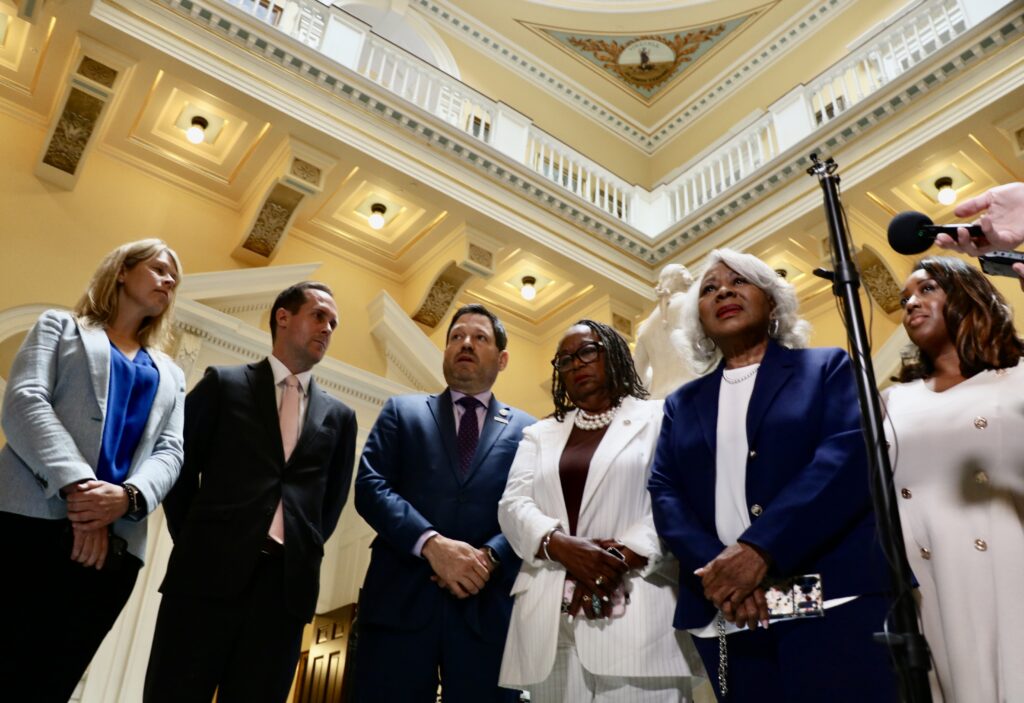
Members of Virginia’s Senate Finance and Appropriations Committee speak with the press in the Capitol Rotunda on June 22, 2026. The legislature advanced a $205 billion, two-year spending plan the same day. (Photo by Charlotte Rene Woods/Virignia Mercury)
On Monday, Virginia legislators approved a two-year, $205 billion budget proposal to fund healthcare and public education, provide 4% teacher raises and a 3.5% pay bump to state employees, establish a retail weed marketplace and hedge against decreased federal dollars.
The spending plan also includes a provision to tax data centers for their energy consumption, which is slated to generate a maximum of $600 million each year but doesn’t include the environmental standards the House of Delegates wanted to impose on the industry or the end of the sales tax exemption that the Senate sought.
Senate Finance Committee chair Louise Lucas, D-Portsmouth, said after her chamber’s morning session that she “didn’t love” the data center compromise and framed it as a necessity — but not the final solution.
“I would have preferred another method, but we had to get a budget. We were not going to let the government be shut down, and so this was a good start,” Lucas said.
“This is a compromise proposal — one my administration helped craft — and it builds a strong foundation for further discussions about the future of this industry in Virginia on issues like environmental and community impact,” Gov. Abigail Spanberger said of the data center provision in a statement.
The Senate passed the budget proposal 23-16 vote, while the House advanced it 71-22.
With both chambers finally on the same page after months of gridlock over data centers, the plan will now be reviewed by Spanberger. She can sign it as-is, recommend changes or veto line items. The whole process must be finalized by July 1, when the new budget will take effect.
Here are the key priorities addressed by the spending plan.
Data centers
The amended budget proposal creates an energy consumption tax for data centers which totals $.011 per kilowatt hour used per month.
The state will collect up to $600 million a year from this new tax, according to budget language. Any funds collected over that cap would be put into a fund and given back to data centers at the end of each fiscal year.
This is only a fraction of what the state could have made if they had ended the sales and use tax exemption, but, after months of arguing, lawmakers ultimately didn’t agree to that measure. Spanberger supported keeping the exemption in place through the end of the agreement’s term in 2035.
Additionally, language was put into the budget to direct the Department of Environmental Quality to study the groundwater impacts of non-closed loop data centers, which use millions of gallons of water each year.
DEQ will locate “cooling water scarcity areas” where the use of potable water for computer cooling systems could be detrimental to surrounding areas’ water quality and availability.
The department will have until July 2027 to create regulations for the scarcity areas. After they are developed, future data centers in that area will be required to “use air cooling, closed loop cooling systems, or more efficient cooling systems that become available.”
After July 1, 2027, data centers in the Eastern Groundwater Management Area will have to “use air cooling systems, 100% recycled water and/or stormwater for cooling, or use a closed loop system.” A study will be released in October 2026 on how to retrofit existing data centers in those areas to align with the new regulations.
Some Republican lawmakers characterized the measure as inconsistent.
“The budget does not create one strong statewide water usage standard for data centers. Some parts of Virginia get stronger protections and other parts get weaker protection or no protection at all,” said Sen. Glen Sturtevant, R-Chesterfield. “That should concern every locality that is concerned about becoming the next target for a massive data center.”
Budget language also directs DEQ to put in place noise abatement regulations for data centers before the end of 2029. The department will determine the lowest possible noise level for data centers and make it the standard starting in 2030.
After that date, facilities who violate the noise standard will face a fine of $32,500 per day.
“The noise issues are some of the things we hear the most from people that live next to data centers,” said Sen. Scott Surovell, D-Fairfax, whose district contains dozens of data centers. “Water is a rising concern, especially for any data centers that are gonna be put east of I-95, where we already have a real problem with our declining aquifer.”
Lucas told reporters that this is not the end of the conversation about doing away with the sales and use tax exemption, and that a study group will look closer at the issue and provide a report on their findings in November.
Health and human services
Overall, the pending budget will earmark $158.3 million in the state’s general fund for fiscal year 2027 and $245.1 million in 2028 for healthcare and social services.
The money was set aside both for healthcare and social services the state typically handles along with support to comply with new federal mandates and partially plug holes created by federal funding shortfalls.
As thousands of Virginians have fallen off Affordable Care Act health insurance this year, Virginia’s new budget entails $150 million to support a state-level version of the expired federal assistance for people between 138% and 250% of the federal poverty level.
Sen. Danica Roem, D-Manassas, a former journalist and restaurant worker, described the difficulty of living uninsured for two years in a floor speech on Monday.
“I don’t want anyone to live like that,” she said.
She added that the budget “puts major money” into making sure that the state is “taking care” of people.
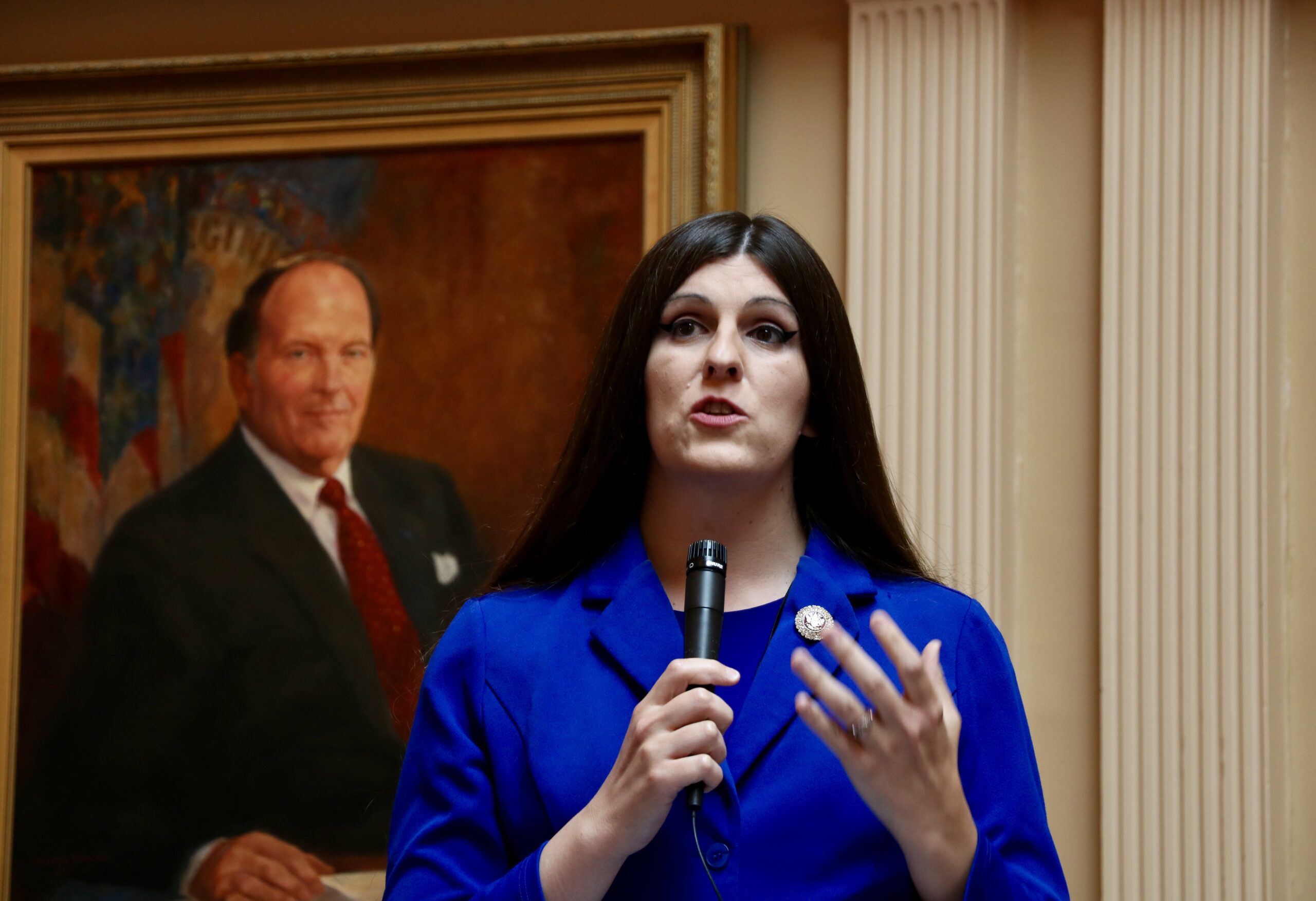
Sen. Danica Roem, D-Prince William, speaks on the Senate floor during the special budget session on June 22, 2026. (Photo by Charlotte Rene Woods/Virginia Mercury)
The plan calls for $3.5 million to determine ways the state can ensure eligible people remain on Medicaid amid forthcoming eligibility requirement shifts and additional verification work.
Virginia’s roughly 850,000 Supplemental Nutrition Assistance Program beneficiaries went without their food stamps last fall during the federal shutdown. And due to a reconciliation bill Congress passed last summer, states like Virginia are attempting to reduce their error rates.
State lawmakers have designated $135 million to handle SNAP, should the error rate not fall to the required 6% by the end of the calendar year.
Sometimes SNAP households are overpaid or underpaid because of paperwork mistakes by government staff or outdated information from beneficiaries. Work in social service departments is already underway to reduce error rates.
Free clinics will receive $20 million in state funding over the next two years while federally qualified health centers will get $10 million in that time.
While federally qualified health centers offer sliding scale fees for low-income patients, free clinics are also a resource for uninsured patients. Both entities have been bracing for additional clients as Virginians lose their ACA or Medicaid insurance.
A little over $1 million is allocated to help local health departments statewide handle rent increases. The regional centers help fill healthcare access gaps and are often tailored to the local communities they serve.
As federal dollars for HIV/AIDS care are slashed, the state budget also contains over $26 million for that specific type of healthcare over the next two years. Staying on top of medication is critical in preventing the spread of the disease.
Education
Under the newly approved budget proposal, K-12 education funding would increase by $1.4 billion, including a 4% increase for teachers in each of the next two years.
Lawmakers propose $590 million for rebenchmarking, declining enrollment, and high-need groups, including $28.9 million for at-risk and $148.4 million for special education students.
Also included: $500,000 for grants to help schools purchase Automated External Defibrillators (AEDs) and implement cardiac emergency response plans.
In higher education, the budget proposes restoring funding for affordable access and tuition moderation, as well as expanding nursing programs at several public universities. The Internships Virginia (InVA) initiative to provide paid internships for postsecondary students would also be funded.
To support educational infrastructure, lawmakers also agreed to expand the authority to allow all localities to use a 1% sales tax to pay for construction costs, contingent on a referendum that must pass in each jurisdiction. The language also permits jurisdictions in Northern Virginia to use the funds for transportation projects to address public transit needs.
Tax deductions
Taxpayers will be able to keep a bit more of their cash, as the new budget increases the standard income tax deduction from $8,750 for single filers and $17,500 for joint filers to $9,200 and $18,400 in 2027 and $9,300 and $18,600 in 2028.
RGGI/environment
A budget amendment was added into the conference report that would divert 45% of the funds earned from the Regional Greenhouse Gas Initiative back to ratepayers.
The funds come from carbon credit sales, which utilities must purchase if they want to burn carbon-based fuels sources that release emissions. Those costs are then passed down to utility customers.
When former Gov. Glenn Youngkin removed the state from the agreement in 2021, it cost about $4 a month on the average residential customer’s bill. Recently, Dominion Energy filed for the “RGGI Rider” to be added back to monthly bills as mandated by a law to rejoin the agreement, signed by Spanberger in recent weeks.
Dominion is required to begin purchasing from the carbon credit auction in July but the charge to customers won’t begin until March should the State Corporation Commission approve the application by the utility. This will lead to an increased charge of $10-$13 monthly.
The state previously earned about $800 million from the RGGI funds that had to go towards community flood preparedness projects and low-income energy efficiency projects. The new budget language includes the rebate for customers, which would put money back in wallets but detract from the funds for flood and efficiency projects.
The rebate will not apply to co-op utility customers.
Housing
While a handful of housing bills passed the 2026 session and have since been signed into law, the new spending plan includes measures to ensure bills with fiscal impacts get off the ground.
The state budget proposal directs $60 million overall for housing initiatives, $40 million of which will go to the state’s Housing Trust Fund and $20 million that will go towards a mixed-income housing pilot program.
Additionally, lawmakers set aside $11.5 million for the Virginia Eviction Reduction Program and $10 million for the Clean Energy Innovation Bank.
Cannabis
Spanberger and lawmakers announced June 16 a reworked proposal for a retail cannabis marketplace that included key compromises between legislators’ and the governor’s visions. The marketplace is set to launch July 1, 2027 and will be limited to 350 stores statewide.
State sales tax on retail weed will be 6% at launch and will increase to 8% in 2029. Localities also have the option to add an additional tax of 1 to 3.5%.
Because lawmakers added a Part 5 amendment, the market will be permanently established in the state.
The new framework includes a $250 public consumption civil penalty that will not take effect until 2027.
“We had serious concerns about creating extreme new penalties that would not have meaningfully reduced the illicit market,” Sen. Lashrecse Aird, D-Henrico, said at a press conference announcing the framework last week.
“But we believe this final framework strikes the right balance for enforcement mechanisms, but also in accountability, but also not harming those who just choose to participate in the market.”
Child care
The budget sets aside $137.6 million for the state-subsidized child care program slots, which will be devoted to families making 85% or less of the state median income.
This follows legislation carried by Del. Briana Sewell, D-Prince Wiliam, requiring the state education department to update how it calculates the cost of childcare for Virginia families. A majority of Virginia parents and employers say child care costs are prohibitive.
Spanberger signed the bill into law last month.
A new cost-sharing program for child care will be funded through the budget, with lawmakers allocating $25 million for the initiative to spread the price of child care between families, employers and the state.
Transportation
Lawmakers included $153 million in the budget for additional operating assistance for the Washington Metropolitan Area Transit Authority, or Metro, with the caveat that Metro must produce a 20-year capital plan and annual performance reports.
The action comes as inflation has driven up the costs of operating transit services.
Lawmakers also proposed directing the secretary of transportation to evaluate options, including public-private partnerships, to accelerate large-scale improvements to the I-81 corridor.
The legislature allocated $7 million for the Route 460 Phase IIA Finish Grade Project and directed stakeholder engagement to prioritize improvements along the U.S. Route 220 corridor.
The budget also directs the state to identify federal funds to support rural electric-vehicle charging infrastructure and provides $500,000 to continue developing Advanced Air Aviation Test Sites to enable advanced air mobility.
What’s next
The proposal will now head to Spanberger, who said it contained “a lot to be proud of” in a Monday afternoon statement.
“Today, the General Assembly has moved forward with a budget proposal — and that means we are keeping our government open and delivering for the 8.8 million people who call our Commonwealth home,” she added.
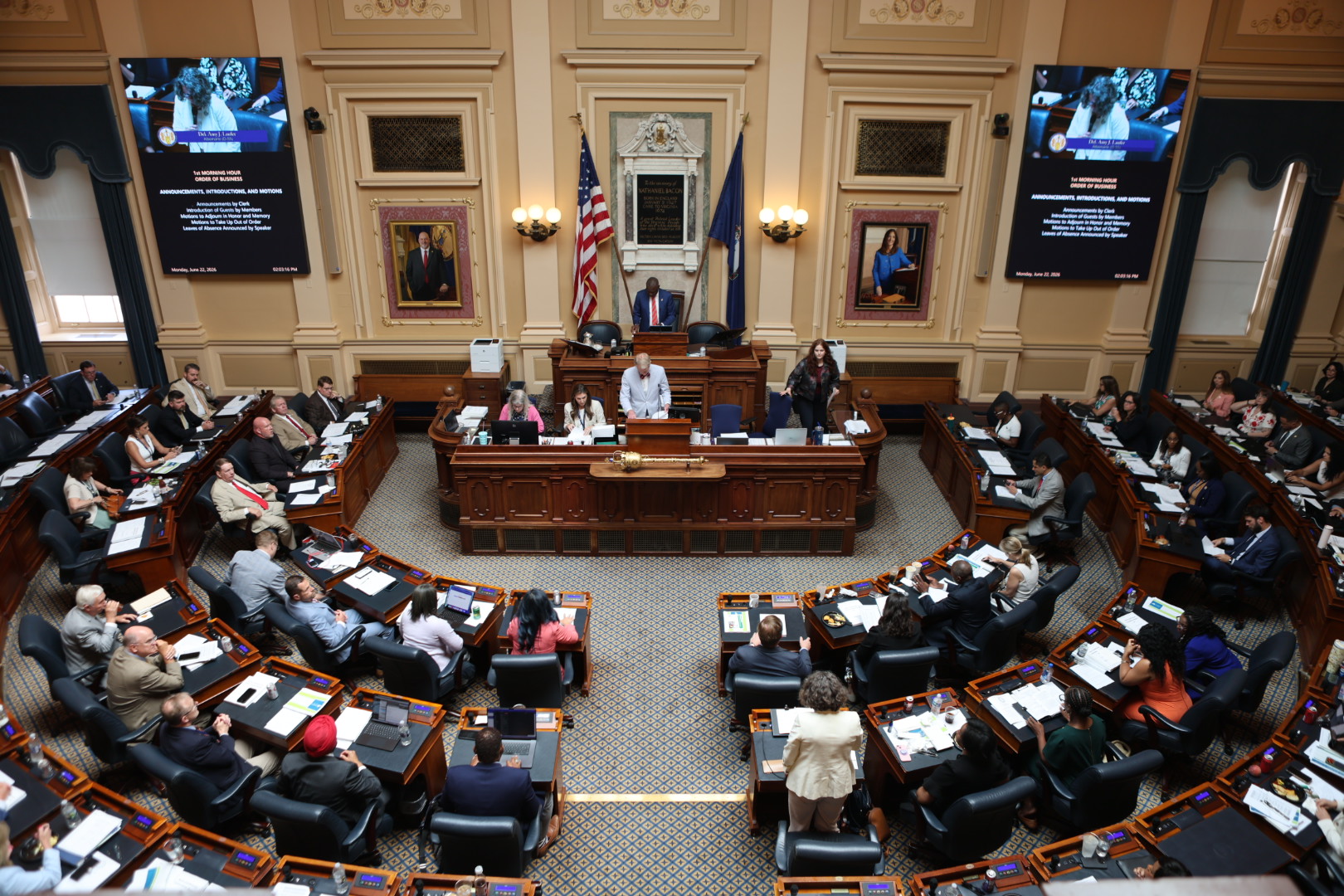
A view from inside the Virginia House of Delegates chamber on June 22, 2026. (Photo by Nathaniel Cline/Virginia Mercury)
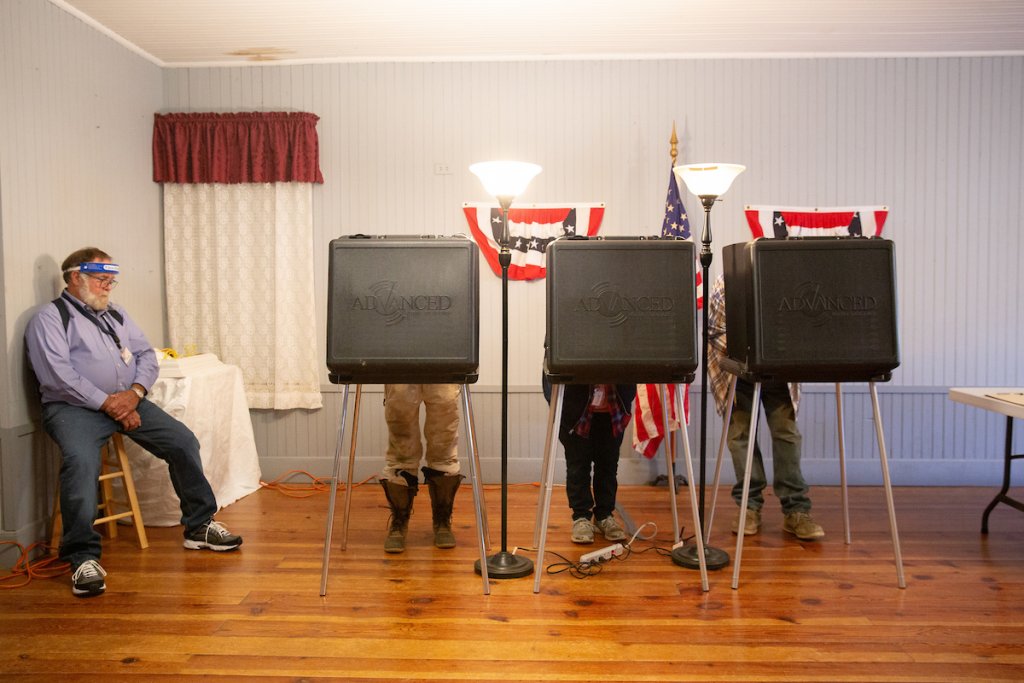
Voters cast ballots in Scottsville, Virginia in Nov. 2020. (Photo by Parker Michels-Boyce for The Virginia Mercury)
U.S. Rep. John McGuire may have breathed a sigh of relief after courts last month invalidated Virginia’s voter-approved redistricting amendment, which would have made the state’s 5th congressional District more favorable to Democrats.
But the Goochland Republican still enters his first reelection campaign facing turbulence, including accusations that he has done little for constituents and a Democratic field trying to flip a district where affordability concerns and dissatisfaction with Washington could reshape the race heading into the 2026 midterms.
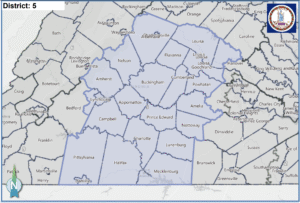
The 5th District covers a vast stretch of Central and Southside Virginia, running from Charlottesville and Albemarle County through Lynchburg and Danville and south toward the North Carolina border. It also extends east into parts of Goochland, Hanover and Powhatan counties near Richmond.
Roughly 760,000 people live in the district, including about 575,000 registered voters.
Republicans still hold a clear advantage there. President Donald Trump carried the district by 11 points in 2024 after Glenn Youngkin, the GOP’s 2021 gubernatorial nominee, won it by an even wider margin that year. But Democrats believe changing suburban voting patterns and economic frustration could give them an opening this cycle.
Under the redistricting amendment invalidated last month by the Supreme Court of Virginia — a ruling later left in place by the U.S. Supreme Court — Democrats had expected the district to become friendlier to their party. Instead, the race will move forward under the current court-drawn congressional map from 2021.
The Aug. 4 primary election will determine nominees in one of Virginia’s most closely watched congressional races this year.
The race quickly became a loyalty test tied to President Donald Trump — then running for a second term — after Good backed Florida Gov. Ron DeSantis during the 2024 presidential primary. Trump later endorsed McGuire, helping push him past the conservative incumbent by a narrow margin that triggered a recount.
Now McGuire faces a Republican challenger in Louisa County real estate broker Melanie Lucero, who has focused much of her campaign on constituent services and what she describes as McGuire’s lack of accomplishments in Congress.
“We need to send representatives who are going to help the 5th district and who are going to fight for us,” Lucero told Charlottesville’s WVIR earlier this month.
Lucero has also argued that many voters across the sprawling district — the state’s largest — feel disconnected from McGuire and unable to get responses from his office.
McGuire has closely aligned himself with Trump and Republican leadership in Congress, emphasizing border security, tax cuts and reducing federal spending. On his campaign website, McGuire says he is focused on “putting America first” while fighting inflation and government overreach.
By May 27, McGuire had raised just over $1.4 million for his reelection bid and reported roughly $497,000 cash on hand. Lucero had raised a little more than $64,000 and reported about $34,000 cash on hand.
David Richards, a political science professor at the University of Lynchburg, said the existence of a Republican primary challenge is notable for a Republican congressman from the 5th District.
“Normally, an incumbent would not draw a serious challenger, but Lucero seems pretty serious,” he said. “She has really driven home McGuire’s lack of accomplishments in Washington and his general lack of interest in his own constituents.”
Richards said McGuire has increased campaign appearances around the district but may still struggle to point to major legislative achievements, which “may hurt him in the primary or the general election.”
Still, Richards said he does not expect McGuire to be defeated in the nomination contest.
“I don’t see him losing the primary, especially since Bob Good is no longer running,” he said.
Virginia’s 5th congressional District. (Photo courtesy of the Supreme Court of Virginia)
Democrats consolidate around Perriello
On the Democratic side, former U.S. Rep. Tom Perriello has emerged as the clear frontrunner in a field that once looked likely to become much larger under the proposed redistricting map.
Perriello represented the 5th District from 2009 until 2011 after defeating longtime Republican U.S. Rep. Virgil Goode on the coattails of Barack Obama’s 2008 presidential wave. He launched his latest campaign late last year with a message heavily focused on affordability and economic pressure facing Virginia families.
“It is not right that Virginians are working harder and harder just to afford the rising cost of food, electricity, and health care,” Perriello said at the time.
After leaving Congress, Perriello served in the Obama and Biden administrations and later became president and CEO of the Open Society Foundations. He also mounted an unsuccessful run for governor in 2017.
Several Democrats who had considered campaigns in a potentially redrawn district abandoned those plans after courts invalidated the redistricting amendment last month.
Krzyzanowski, a physician and cancer researcher, has centered her campaign on healthcare, reproductive rights and scientific research funding. On her campaign website, she describes herself as a “doctor, scientist and advocate” focused on lowering costs and defending democratic institutions.
Tracinski, a writer, political commentator and former Republican-turned-Democrat, has emphasized congressional independence and constitutional checks on executive power.
Richards described Tracinski as an unconventional candidate whose message could still resonate with some voters.
“Tracinski is an interesting alternative; he seems odd because he was part of the Tea Party, which tended to break with Republicans,” Richards said. “However, his message has been around reinforcing the powers and duties of Congress, and that squares with the Tea Party’s focus on constitutional rights.”
However, Richards said Perriello’s name recognition and fundraising advantage make him the clear favorite for the nomination.
“On the Democratic side, it seems like Perriello has the nomination locked up,” Richards said.
The latest campaign finance reports reinforce that advantage.
By May 27, Perriello had raised more than $1.4 million and reported roughly $1.1 million cash on hand, according to the latest campaign finance filings. Tracinski had raised about $44,000 with nearly $40,000 cash on hand, while Krzyzanowski had raised close to $16,000 and reported about $14,000 remaining.
Affordability shapes the race
Like many competitive congressional contests around the country, the race in Virginia’s 5th District is increasingly centered on affordability and cost-of-living concerns.
Richards said both parties are trying to tap into voter frustration over prices and economic uncertainty, even though they blame very different causes.
“The big issue in the 5th, as elsewhere, is affordability,” he said. “This seems to mean different things to each of the front-runners.”
According to Richards, McGuire has largely embraced Republican arguments that tax cuts and deregulation will reduce economic pressure, while Democrats have tied rising prices and uncertainty to Republican control in Washington and the war against Iran.
“McGuire wants to focus on tax cuts by the current administration, while Perriello wants to blame that same administration for the rise in prices,” Richards said. “Both are talking past each other in a way, both noting the affordability crisis but blaming different sources.”
The district’s political makeup could ultimately determine how much room Democrats have to grow.
Much of the district remains heavily conservative and rural, but Democrats have steadily improved in suburban and university-centered communities such as Charlottesville and Albemarle County. Lynchburg has also become somewhat more competitive in recent statewide elections.
Richards said Perriello’s earlier victory in the district could help him, though he cautioned that both the lines and the political environment have changed significantly since 2008.
“He did win the 5th in 2008, but that was a 5th with very different boundaries, plus he had the coattails of President Barack Obama’s big win,” Richards said. “This time will be different.”
Richards said that Perriello would need overwhelming Democratic turnout, strong support from independents and at least some crossover Republican voters unhappy with Washington to seriously compete in November.
“All of that is a tall order, but Perriello probably has a better shot at it than almost anyone else in the commonwealth,” he said.
Even so, Richards said the race could remain competitive regardless of who emerges from the August primaries.
“The question becomes, will enough voters in the middle vote for Perriello if things are still bad in the fall?” Richards said. “I am dubious that enough will swing to the Democrats, but it will be a close thing, even if McGuire wins in November.”
Lawmakers, who will meet at the state Capitol on Monday, June 22, have closed in on a budget deal. (Photo by Charlotte Rene Woods/Virginia Mercury)
After months of debate and an increasingly fraught battle over how to tax and regulate data centers, Virginia budget negotiators announced Friday evening that they’d reached a deal featuring a new energy consumption tax for the industry that’s expected to generate $1.2 billion over the biennium.
The new plan also includes 4% raises for teachers each year, and roughly $285 million for health insurance from the state marketplace and food assistance funding for low-income families. It will also give localities authority to impose a 1% sales tax for school construction and renovation, if they choose. Nearly $1 billion has been allocated in the revised budget as contingency reserve to cover anticipated gaps from reduced federal funding.
The Virginia House of Delegates will convene Monday afternoon in Richmond and the state Senate will meet the same day, as both chambers vote to finalize the budget, which will take effect July 1.
“This budget agreement reflects our shared commitment to making Virginia more affordable for families,” Sen. Louise Lucas, D-Portsmouth, and Appropriations Chair Del. Luke Torian, D-Prince William, said in a joint statement.
“At a time when too many households are feeling squeezed by rising costs and economic uncertainty, this conference report makes historic investments to lower costs, strengthen our schools, protect access to healthcare, expand economic opportunity, and maintain the Commonwealth’s strong fiscal foundation,” they added.
The House had been scheduled to meet last Thursday but Speaker Don Scott, D-Portsmouth, canceled the session, citing budget negotiators’ failure to reach an agreement. By Thursday, leaders in both bodies had signaled negotiations were progressing and legislators were closing in on a deal, the Richmond Time-Dispatch reported.
The issue that paralyzed the process for weeks was whether data centers should continue to be exempt from paying sales and use tax. Lucas proposed eliminating the exemption and was the most fierce defender of that stance until last week, when the Senate released an updated budget that removed the provision to revoke the exemption,
Lucas instead pitched a tiered tax for data centers based on their generator use and traveled statewide in recent days, drumming up public support for her chamber’s plan to levy more costs onto data centers, which they said would net the state $1.8 billion.
“We know technology is not bad,” Lucas said Tuesday on a tour stop in Chesterfield. “You know, we all can benefit from technology, but we, as a government, have not done a good job in managing the regulations and the impact on our communities and that’s what we’ve got to rein in.”
The House released a reworked budget proposal last Friday that stripped environmental stipulations the body had previously recommended but preserved the tax exemption for the digital facilities that now number in the dozens statewide.
The Senate is set to gavel in at 10 a.m. Monday and the House will convene at 2 p.m.
Editor’s note: This story has been updated to include details from lawmakers’ budget deal, released Friday evening. Stay tuned for The Mercury’s in-depth budget coverage this week.