Category: VA State News

  • Aging at home drives growing demand for Virginia caregivers

    Aging at home drives growing demand for Virginia caregivers

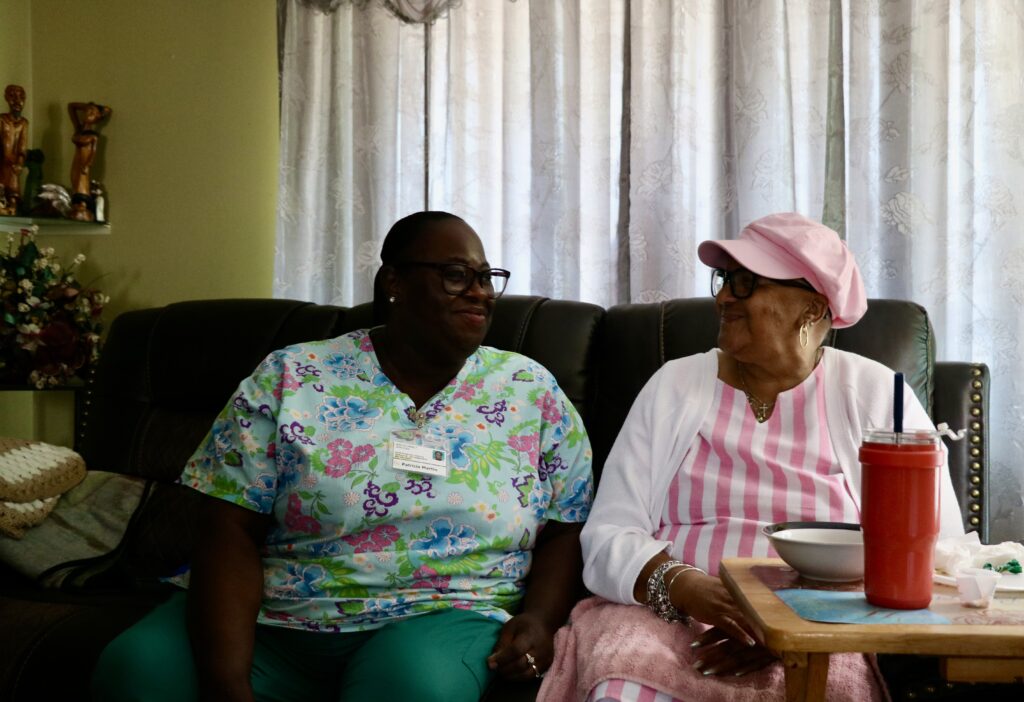
    Decked out in a matching pink shirt and hat with layers of bracelets and necklaces, Clara Hatcher’s dialysis appointment doubles as a fashion event.

    She spends three and a half hours, three mornings a week, receiving the treatment, so the 77-year-old likes to dress up for the occasion. Having been a dialysis patient for 12 years, she also shares her expertise with newer patients about how to handle the procedure.

    “I like to warn people how tired it can make you feel and what to expect,” Hatcher said.

    While she likes helping others prepare for it, she receives help of her own through her caregiver Pat Martin and nurse Belinda Hensley.

    The trio reflected on how healthcare “takes a village” as they helped her slowly walk back into her ranch-style Henrico County home after an appointment.

    Hatcher’s home health workers help her age in place in the house she bought to do just that.

    Much of Martin’s work involves making sure Hatcher sticks to her medication schedule, handling light housekeeping, ensuring she gets to medical appointments and assisting with tasks like dressing or cooking.

    “She likes to cook but her hands have tremors and I need to make sure she doesn’t fall,” Martin said.

    Hensley makes occasional visits to check in, as nurse supervision is required by Medicaid.

    As a nurse and a caregiver, Hensley and Martin are part of an evolving home healthcare landscape. As more people choose to age in place longer or avoid nursing homes altogether, demand for services is growing.

    Staffing organizations are innovating to hire and retain workers while coping with low Medicaid reimbursement rates at a time where the state-federal program is bracing for funding losses. That’s why two Richmond-area nonprofits hope that a grant-funded pilot program they participated in could become a model for other parts of the state.

    Supported staff, supported clients

    With $700,000 in funding from the Richmond Memorial Health Foundation and the Bob and Anna Lou Schaberg Foundation, Family Lifeline and Jewish Family Services were able to grow their staff numbers by 69% and 43%, respectively. They also raised caregivers’ starting wages to $15 an hour, predating the benchmark that state legislators passed this year.

    “This is a workforce where the wages have historically been very low,” Family Lifeline CEO Jennifer Case said.

    Raising pay was important for both attracting and retaining staff. The funding also helped the organizations modernize technology to make paperwork easier for nurses and caregivers, improve professional development training and assist workers facing transportation issues.

    Case emphasized that many caregivers do not have cars and rely on public transportation to get to work.

    If a client lives along a bus route, that may not be a problem, she said. But when clients live deeper into Henrico or Chesterfield counties, transportation can become a challenge.

    Even within Richmond city limits, Southside resident Regina Carter said what would normally be a short drive to the East End can sometimes take her more than an hour because she relies on the bus.

    “Sometimes the bus will not even come, so I have to wait for a whole other one,” she said. “And that’s almost like I don’t want to say an hour, but it’s an hour.”

    In recent years, the city and surrounding counties have expanded bus routes, but building that infrastructure takes time.

    For caregivers whose clients live farther out, the pilot program helped offset some Lyft and Uber costs for workers who needed it.

    Wendy Kreuter, CEO of Jewish Family Services, said both organizations continue supporting workers with transportation needs and plan to advocate on the issue with state and local governments while exploring public-private partnerships.

    Transportation barriers have long been an issue in healthcare, particularly in rural communities. State lawmakers have backed a pilot program providing Medicaid coverage for non-emergency transportation to help rural patients reach appointments. But challenges getting workers into patients’ homes have not yet been addressed.

    “This is something we should explore,” said Del. Rodney Willett, D-Henrico, who chairs the House Health and Human Services Committee, where healthcare legislation is reviewed each year.

    Medicaid issues

    Another longstanding issue has been Medicaid reimbursement rates. For Family Lifeline and Jewish Family Services, that means both organizations have had to rely on other funding sources to support staff.

    Generally, reimbursement rates range from $20 to $23 per hour. But Kreuter and Case said the “village” includes more than direct care workers. Administrative staff are also needed to coordinate scheduling and transportation for clients.

    “I think it’s just going to get harder,” Hensley said of a reconciliation bill Congress passed last summer that puts thousands of Virginians at risk of losing Medicaid coverage.

    A KFF survey released earlier this year found that 41 states have reported home health agency closures, though Virginia was not among them.

    Case and Kreuter said their organizations seek private philanthropy of all sizes to continue supporting workers and clients.

    Though the reconciliation bill could affect Medicaid coverage and services across Virginia, federal lawmakers also negotiated the Rural Health Transformation Fund as an opportunity to address longstanding challenges.

    Outgoing Gov. Glenn Youngkin secured $189 million from the fund, which Gov. Abigail Spanberger’s administration is now responsible for administering.

    LeadingAge Virginia, which represents organizations like Kreuter’s and Case’s, has applied for the funding.

    Betsy Archer, director of the association’s PositiveAge branch, said the charitable pilot offers a strong blueprint.

    “We definitely see it as a replication or a replicable pilot that we think can be strengthened,” she said.

  • Another year, another Va. retail cannabis market veto leaves businesses, the public with few options

    Another year, another Va. retail cannabis market veto leaves businesses, the public with few options

    By Yiqing Wang and Toby Cox/WHRO

    Throughout her bid for governor, Gov. Abigail Spanberger said she would support a bill to set up a legal, adult-use cannabis market — which is why her veto on May 19 caught many rooting for such a market by surprise.

    “I thought it was a joke, honestly,” said Julian Redcross, a Hampton-based hemp grower. “When I saw it going around on fire on social media, I was like, ‘Oh, this is not real. This is AI.’”

    Spanberger said her decision was based on the need for stronger tools to enforce the law and regulate a legal cannabis market.

    Spanberger vetoes cannabis bill, stalling legal sales again

    “Virginians deserve a system that replaces the illicit cannabis market with one that prioritizes our children’s health and safety, public safety, product integrity, and accountability,” she wrote in her veto statement.

    The veto left Virginia cannabis businesses facing another year in limbo after many spent years preparing for a legal market following the 2021 legalization of personal possession. Now, some hemp growers are having to make tough calls about the future of their businesses.

    It also left the state’s safety questions unresolved: Regulators say they cannot finalize licensing, monitoring or inspection rules without a law in place, while health experts warn consumers are likely to keep buying products that are hard to test, label and trace.

    The bill Virginia lawmakers sent to the governor’s desk this year would have allowed adults 21 and older to buy marijuana starting in January 2027. The legislation proposed capping the number of licenses to a few hundred to limit the number of retail cannabis stores. It included policies for labeling and testing, said Jason Blanchette, president of the Virginia Cannabis Association and a hemp grower in Hampton Roads.

    Spanberger sent back changes that pushed the starting sale date to July 2027, capped the number of stores at 200, reduced the personal possession limit to two ounces and recommended new criminal penalties, VPM reported.

    The new penalties, especially, gave lawmakers and lobbyists pause.

    “The way that she wrote those back in, we are now recriminalizing a product that we have already made legal in the state of Virginia, so to a lot of those groups it appears that we are moving backwards when it comes to justice,” Blanchette said.

    A sliver of hope remains that a compromise could still be reached when lawmakers meet later this month to talk about the state budget, Blanchette said, but it’s a long-shot.

    “We’ll be lucky to be up and running by 2028,” he said.

    That will be too late for some businesses.

    ‘Up in smoke’


    Brad Wynne started growing hemp in Virginia Beach in 2023 for his company Veg Out Organics, which sells topical CBD products.

    He stopped growing hemp in 2024, biding his time for the state to get the ball rolling on a retail cannabis market. But he said he can’t afford to wait any longer.

    “I’m shutting down end of June,” Wynne said.

    He said his operation was as small as they come, but he spent years building it.

    “If you were to start from scratch with no land, no building, no nothing, each business, whether it’s retail, growing or dispensing, is about $500,000 to $1 million,” he said.

    Va. hemp growers worry about the future of their industry amid state and federal shifts

    The high startup cost makes sure the business can stay afloat while the plant is growing, which takes roughly six months.

    “This is a living plant, so this is not something you just buy from out of state, throw onto a shelf of a dispensary overnight, and you’re open the next morning,” Blanchette said.

    Wynne said he wished Spanberger sent her changes as line items lawmakers could have addressed individually, rather than as a substitute that had to be accepted or rejected as a whole.

    Blanchette said he disagreed with Spanberger’s assessment that the legislation was rushed.

    “I’ve been personally working on this for five years, so I know that we’ve put plenty of time and effort into this, and it has not been rushed,” he said.

    Julian Redcross said he was angry at Spanberger’s decision at first. But the anger soon gave way to acceptance and hope that a better bill will be proposed in the future.

    He and his twin brother Jonathan Redcross co-own Yoagie Enterprises and started growing hemp in 2019, while keeping their day jobs. They stopped growing operations this year when new hemp regulations strained their business. Julian said they plan to keep waiting.

    “We just have an empty space right now that’s costing money, but we didn’t jump over the edge just yet,” he said.

    Julian and Jonathan said they hope when the state eventually sets up a retail market, it gives small businesses like theirs a fighting chance. As for Spanberger, Julian said doesn’t take this year’s veto as her backtracking on her support of the legal market — yet.

    “She said she would pass it,” he said. “She didn’t say when.”

    A regulatory dilemma


    One of Spanberberger’s reasons for vetoing the bill was the need for stronger regulations.

    “That includes clear enforcement authority and sufficient resources for compliance, testing, and inspections, and robust tools to crack down on bad actors who continue to profit from the illicit market,” she wrote in her veto statement.

    But the illicit market will continue to reign supreme with no competition from a legal market, said Wynne, the Virginia Beach grower.

    Some businesses and public health experts say the commonwealth needs stronger safety rules before opening a retail cannabis market, but in practice, regulators are limited in how much they can prepare before lawmakers pass a final bill.

    Barbara Biddle, a hemp business owner from Northern Virginia and the founder of the Cannabis Small Business Association, said she supports legalization, but did not think the vetoed bill was the right vehicle to create the market.

    “It was a necessary action that needed to happen,” Biddle said. “But we don’t think that this was the right vehicle for it.”

    Biddle said Virginia needs clearer rules for testing, labeling and industry compliance, as well as more training for police and first responders before retail sales begin.

    Jamie Patten, chief administrative officer at the Virginia Cannabis Control Authority, has previously told WHRO that the authority is ready to implement additional regulation and resources if lawmakers approve a retail market.

    Those measures will include specific rules for licensing, monitoring and data collection in an adult-use retail market.

    But without finalized legislation, she said, the agency can’t settle the details of how that market would be monitored.

    In the interim, Patten said the authority has been focused on public education, including warnings about impaired driving, after a survey found nearly a third of Virginia drivers believe cannabis makes them safer behind the wheel.

    Michelle Peace, a forensic science professor at Virginia Commonwealth University who specializes in cannabis testing, said without a regulated retail market, consumers have fewer ways to know whether cannabis products are accurately labeled, properly tested or made under consistent safety standards.

    She’s repeatedly found products with THC levels that did not match their labels.

    “My laboratory has demonstrated over and over again that products are either more concentrated than what’s on the label or significantly less concentrated than what’s on the label,” Peace said.

    The risk will also be hard to track because consumers may not know where to report adverse reactions from unregulated products, Peace said.

  • States face tight timeline as feds unveil new Medicaid work requirement rules

    States face tight timeline as feds unveil new Medicaid work requirement rules

    The federal government released new guidance this week on how states should roll out the Medicaid work requirements that will affect healthcare coverage for millions of Americans.

    The new interim rule, issued by the federal Centers for Medicare & Medicaid Services, is intended to give states more details on how they’re supposed to verify the work status for about 20 million adults enrolled in Medicaid, the publicly funded health insurance program for people with low incomes.

    The new details come as states are staring down the January 1, 2027, deadline to put the new work requirements in place, and have requested more clarity from the feds on how they’re supposed to implement them.

    “States are being asked to carry out a complicated federal mandate without clear rules, without enough time, and with the risk that eligible people lose health care because of paperwork problems and system failures,” Oregon Democratic Gov. Tina Kotek said last week in a statement.

    Kotek led a six-state coalition of Democratic governors in asking the Trump administration last week to slow the rollout of the new work requirements, calling the timeline unworkable.

    Congress built the new work requirements into last year’s so-called One Big Beautiful Bill Act. Under the measure, states that have expanded Medicaid eligibility to more adults under the Affordable Care Act — 40 states plus the District of Columbia and another two that have partially expanded — will have to require those adults to prove they’re working, going to school or serving their communities for at least 80 hours a month to receive Medicaid.

    The rules released this week are intended to clarify key parts of the new law, including exemptions for people who are considered “medically frail,” how to reach out to Medicaid beneficiaries, and methods for verifying Medicaid eligibility.

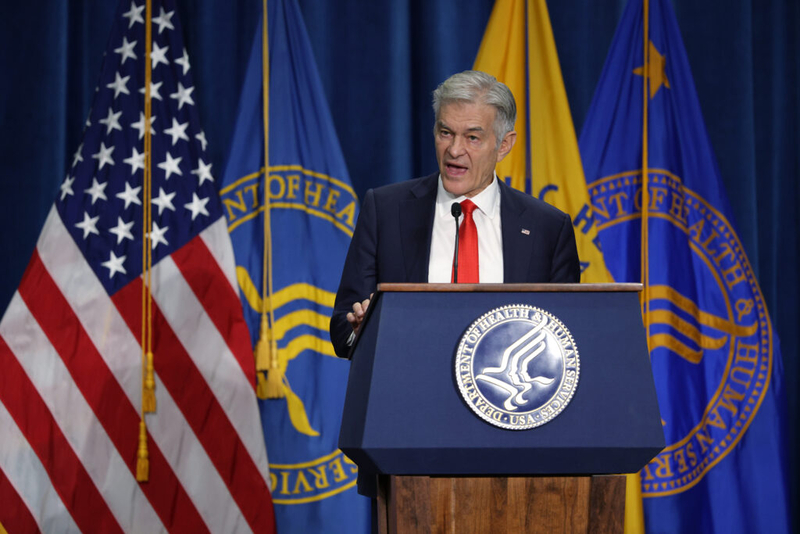
    “This rule helps Americans build skills and independence through work, education, job training, or community service, creating new opportunities for themselves and their families,” said Dr. Mehmet Oz, director for the Centers for Medicare & Medicaid Services, in a statement announcing the new guidance.

    But critics of work requirements point to evidence that it kicks people off Medicaid who are otherwise entitled to it without meaningfully increasing the share of adults who are working.

    For example, Arkansas tried instituting work requirements for Medicaid recipients during Trump’s first term in 2018. By the time a federal judge halted the policy less than a year later, 18,000 adults had already lost coverage and reported problems paying off medical debt, delaying healthcare and delaying medications due to cost. Studies later found that Arkansas’ work requirements didn’t increase employment. And data shows that most adults on Medicaid under age 65 are already working.

    Supporters say the new requirements are flexible. They say the feds have created a broad category of “medically frail” people who are exempt from the work requirements, and they’re permitting states to allow people to self-attest that they’re exempt one time before documentation is required.

    The new work requirements will apply to about 20 million people who are eligible for Medicaid through expansion, according to estimates from health research organization KFF. These expansion enrollees make up about 30% of all Medicaid enrollees.

    A recent analysis from the Urban Institute projects that 3-7 million people could lose coverage because of the new work requirements.

    Stateline reporter Anna Claire Vollers can be reached at [email protected].

    This story was originally produced by Stateline, which is part of States Newsroom, a nonprofit news network which includes Virginia Mercury, and is supported by grants and a coalition of donors as a 501c(3) public charity.

  • Virginia revenue forecast jumps by $1.5 billion as budget talks continue

    Virginia revenue forecast jumps by $1.5 billion as budget talks continue

    Virginia’s revenue outlook has improved by $1.5 billion over the next three fiscal years, giving lawmakers more breathing room as negotiations over a stalled state budget are set to continue in Richmond later this month.

    Gov. Abigail Spanberger on Monday afternoon released the updated revenue forecast she ordered last month, telling top legislative budget writers that Virginia is projected to collect substantially more General Fund revenue through fiscal year 2028 than previously expected.

    The revised forecast projects revenues for fiscal year 2026 will exceed the official estimate by $585.5 million. Another $922.6 million in General Fund revenue is projected for fiscal years 2027 and 2028, including $582.4 million in 2027 and $340.2 million in 2028.

    The new projections arrive while lawmakers remain stuck in negotiations over Virginia’s next two-year budget, with disagreements over data center tax incentives and spending priorities continuing to hold up a final deal.

    In a letter to Sen. Louise Lucas, D-Portsmouth, and Del. Luke Torian, D-Prince William — the chairs of the legislature’s money committees — Spanberger said lawmakers need updated economic information as they work toward a budget deal.

    “As General Assembly leadership and budget conferees continue their important work, it is critical they have the most current and accurate information available,” Spanberger said in a statement.

    “While forecasted General Fund revenues have increased, I remain concerned by rising national economic instability, the ongoing conflict in Iran, and the continued impacts of federal workforce cuts. We must account for these evolving economic conditions as we plan for the long-term strength of our commonwealth.”

    The updated forecast arrives as lawmakers prepare to return to Richmond later this month for another attempt to break the budget impasse before the start of the new fiscal year.

    The House is scheduled to reconvene its special session June 18, followed by the Senate on June 22, as budget conferees continue working toward a compromise spending plan that can pass both chambers and reach Spanberger’s desk before the June 30 deadline.

    The revised forecast reflects strong tax collections even as parts of Virginia’s economy show signs of slowing.

    General Fund revenues have grown 7.3% on a fiscal year-to-date basis and are running 3.3% ahead of forecast. Virginia is currently $851 million ahead of expectations, though nearly 70% of that amount — about $578 million — comes from nonwithheld income tax payments and individual refunds, two of the state’s most volatile revenue categories.

    Virginia Secretary of Finance Mark Sickles said the revised forecast attempts to balance the state’s recent revenue growth against growing uncertainty in the national economy.

    “The updated forecast confirms that the commonwealth’s revenue performance remains solid but also factors in the deteriorating economic conditions and increased uncertainty in the national outlook,” Sickles said in a statement.

    “The additional $1.5 billion in updated projected revenues should provide the General Assembly with enough resources to craft a structurally balanced budget that mitigates any potential risks related to national market volatility.”

    The updated forecast follows warnings from state finance officials last month that Virginia’s economy is facing slower job growth, persistent inflation and weakening consumer confidence even as tax revenues continue to exceed expectations.

    During a May presentation of the Senate Finance & Appropriations Committee, Sickles said Virginia had lost 41,900 jobs since the beginning of fiscal year 2026 while General Fund revenues remained more than $850 million ahead of forecast.

    At the time, Sickles suggested the surplus could help lawmakers move past the budget stalemate.

    “It would not be unprecedented for us to use some of this money to get past this impasse, if we needed to,” Sickles told the committee.

    Spanberger ordered the updated forecast May 19 while budget negotiations remained unsolved. The revised projections extend through fiscal year 2031 and are intended to give lawmakers updated economic data before final spending decisions are made.

    The prolonged budget standoff has raised concerns about whether lawmakers will finish work on a revised spending plan before the new fiscal year begins July 1.

    Lawmakers adjourned a special session in April without an agreement. Disputes over data center tax incentives, transportation funding and competing priorities between the Democratic-controlled House and Senate have remained major obstacles.

    The stronger revenue forecast could give negotiators additional flexibility on spending priorities including education, transportation, healthcare and state employee compensation. But administration officials cautioned that economic risks remain.

    Federal workforce reductions continue weighing heavily on Northern Virginia and Hampton Roads, both of which have large concentrations of federal employees and contractors. State officials have also pointed to instability in financial markets and international tensions as possible threats to future economic growth.

    Even with revenues ahead of forecast, Virginia officials have repeatedly noted that much of the current surplus comes from revenue streams that can fluctuate significantly from year to year.

  • Virginia Tech rector refuses to resign after Spanberger’s dismissal

    Virginia Tech rector refuses to resign after Spanberger’s dismissal

    Virginia Tech governing board member John Rocovich has refused to resign after Gov. Abigail Spanberger removed him last week after 16 years.

    Rocovich stated in a four-page letter addressed to the Secretary of the Commonwealth that he will not resign before his term ends on June 30, 2027. There was no sign of him at the board’s committee meetings on Monday in Blacksburg.

    Spanberger’s decision is the latest effort by her administration to shake up governing boards at Virginia’s colleges and universities, amid concerns within the higher education community about the politicization of public university governing bodies. She recently appointed four new members to Tech’s governing board.

    Governor fires Virginia Tech Rector Rocovich, appoints Dominion Energy’s Edward Baine as replacement

    Spanberger removed Rocovich, citing “misconduct” in a letter sent last Wednesday, but the letter did not specify the details of Rocovich’s alleged violations, only stating that the findings provided “sufficient cause” for his removal. Rocovich pushed back on that claim.

    “I was appointed to serve a term, I have served that term faithfully, and I intend to fulfill my obligations to the students, faculty, and people of Virginia who depend upon the proper governance of this great university,” Rocovich wrote. “Governor Spanberger’s letter failed to state my specific cause, as the law requires. I am confident she will find no such grounds.”

    Board member William Holtzman, who was appointed by former Gov. Glenn Youngkin and will complete his term next year, said he was “disappointed” with the governor’s decision.

    “I think all of us were disappointed because I think it’s a unanimous feeling of our group that he has done a phenomenal job, and I didn’t understand at all why she removed him, and I don’t think there was any cause for it,” Holzman said.

    Lawmakers have also urged the governor to explicitly state her reasons for the termination.

    Senate Republican Caucus Chair Mark Obenshain, R-Harrisonburg, said Rocovich deserves “fairness,” and emphasized that transparency is “not optional” concerning the governor’s decision to boot Rocovich from the board.

    “What makes this decision especially disappointing is that Governor Spanberger campaigned on a promise to depoliticize higher education governance and to reduce executive involvement in the affairs of Virginia’s universities,” Obenshain said in a statement on Friday. “Removing the sitting rector of Virginia Tech without publicly stating a lawful basis appears inconsistent with those commitments.”

    Edward Baine, executive vice president of utility operations and president of Dominion Energy Virginia, who was appointed to replace Rocovich, attended the first committee meeting on Monday.

    He did not comment on his appointment on Monday morning, but asked Provost Julie Ross about the university’s efforts to address enrollment, which the board expressed interest in growing.

    Rocovich’s dismissal followed the board’s vote to grant an exception allowing him to serve a third one-year term as rector during the search for Virginia Tech’s next president, following Tim Sands’s departure in April, Cardinal News reported last month.

    The board minutes noted that Rocovich was elected rector because no other nominees were available and he was willing to serve.

    A native of Roanoke and a Virginia Tech graduate, Rocovich founded a law firm and specializes in taxation as well as trusts and estates law. He served on the board of visitors from 1997 to 2005, was appointed for a term from 2010 to 2014, and was rector from 2002 to 2004.

    According to the Virginia Public Access Project, Rocovich has donated to several Republican campaigns and candidates, including formerRepublican gubernatorial nominee and Spanberger rival Winsome Earle-Sears.

    In his letter, Rocovich criticized the termination and the governor, expressing his “disappointment” with her use of a “subordinate“ to deliver the message, which he said was the opposite of the respect he showed Spanberger by calling her directly to discuss the board.

    “Virginia Tech deserves better than to be made a political football,” Rocovich wrote. “I have given too much of my life to this institution to stand by silently while its independence is threatened—regardless of which party holds the governor’s office.”

    The governor and attorney general’s offices did not immediately respond for comment on whether they will enforce the termination.

    The board’s committee meetings continued on Monday. The board will have a full meeting on Tuesday. The body will vote on a new rector and vice rector to replace Rocovich and Sandy Davis, who died on March 17.

  • Valley Link unveils reworked routes for high-voltage transmission line

    Valley Link unveils reworked routes for high-voltage transmission line

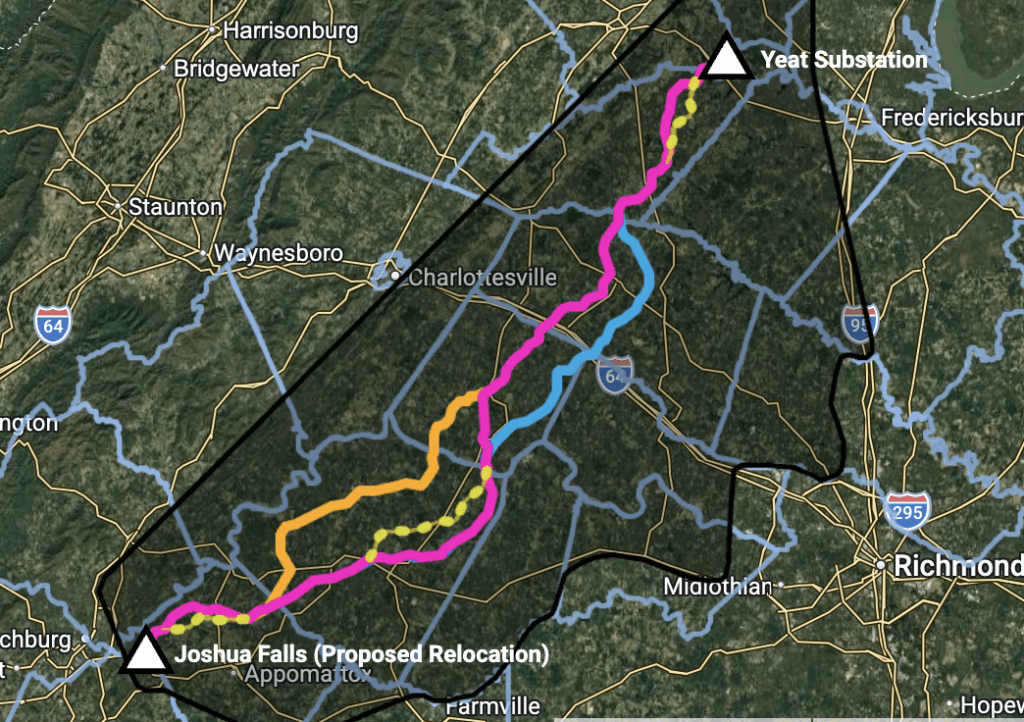
    Valley Link Transmission has released a new set of potential routes for the controversial project ahead of the first public meetings across the nine-county region that may be impacted by the 765 kilovolt, 115-mile transmission line.

    The power line will stretch from just outside of Lynchburg to Culpeper County. Dominion Energy, Transource, and FirstEnergy are developing the line to help move power from the Ohio River Valley to Northern Virginia, where major energy demands are spiking.

    The Valley Link project was identified by PJM, the regional grid operator for 13 states and Washington, D.C., as crucial to maintain grid reliability.

    Since the project was unveiled, residents across Campbell, Appomattox, Buckingham, Fluvanna, Louisa, Orange, Goochland, Spotsylvania, and Culpeper counties have sounded off about the potential impacts the project will have on the environment and historic preservation of certain sensitive locations, including Civil War battlefields.

    Valley Link refined the routes through the public feedback from the initial hearings about the project. The final route for the power line will be determined by the State Corporation Commission.

    The new routes will reportedly reduce the number of residences that come within 500 feet of the corridor to 75. There are no homes that come within 150 feet of the route. Developers also considered wetlands, environmental resources, recreational areas, conservation easements, and historical and architectural resources.

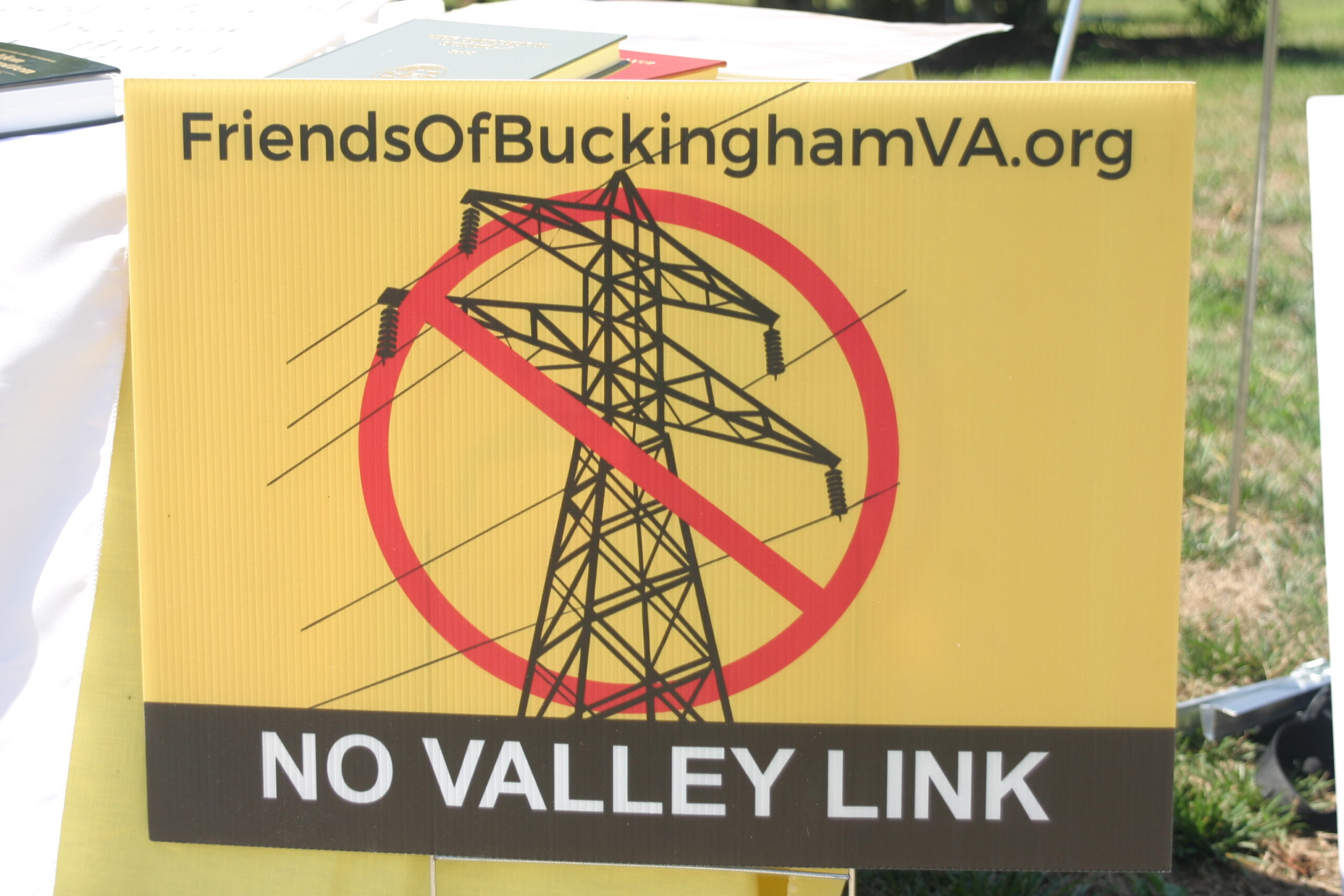
    A sign showing community opposition to the Valley Link transmission line project, May 2026. (Photo by Shannon Heckt/Virginia Mercury)

    Residents along the route have also voiced concerns about possible future energy infrastructure construction, since the transmission line is meant to act as highway with on and off ramps to hook up other energy projects.

    “Property owners along the refined routes are now receiving letters about the route updates and have been invited to a second round of open houses in June. We look forward to sharing the refined routes in person and continuing our dialogue with the communities we serve,” a Valley Link representative said in a statement Monday.

    Even with the newly proposed routes, environmental groups and residents said they are wary.

    “The potential impacts are enormous. Over 2,600 acres of land that is currently forested, farmed, providing critical wildlife habitat and contributing to the rural economy and character of the region would be cleared and converted to utility right-of-way,” the Piedmont Environmental Council said in a statement. “Tens of thousands of acres more along the line are likely to face pressure for new development.”

    The first community meeting will be June 10 in Orange County at the Orange County High School, and may be attended in person. Additional community meetings will be held in the coming months in various locations near the proposed routes; you may find the full list here.

  • Trump ‘slush fund’ echoes scorned 19th-century spoils system, academics say

    Trump ‘slush fund’ echoes scorned 19th-century spoils system, academics say

    President Donald Trump’s extraordinary $1.776 billion fund to pay off allies and others who say they have been wronged by past administrations has drawn widespread condemnation by opponents, including some Republicans, who characterize it as an act of brazen corruption.

    But the Trump administration’s push to reward its supporters also harkens back to an earlier era of American cronyism, experts say, while expanding the frontiers of political favoritism.

    From the early years of the United States until well into the 19th century, a spoils system dominated the federal government. Presidents handed out jobs to supporters, filling the bureaucracy with workers who had demonstrated loyalty to the administration in power.

    President Andrew Jackson (Courtesy Library of Congress)

    President Andrew Jackson (Courtesy Library of Congress)

    Trump’s political idol, President Andrew Jackson, replaced large numbers of federal officials after his 1829 inauguration, for instance. One appointee to a role at the Port of New York made out with more than $1 million, valued at tens of millions today.

    The comparison isn’t exact. The spoils system was associated with the distribution of government jobs to political allies, a practice called patronage. Trump’s new fund would instead deliver taxpayer dollars directly to favored individuals.

    Yet, academics who have studied the spoils system and the presidency see parallels between the past and present — with a desire to reward allies and build allegiance at the center of it all.

    “It seems to me that may be the common element here,” said Sidney Shapiro, a professor of law at Wake Forest University who wrote before the 2024 election that Trump wanted to reinstate the spoils system. “It appears President Trump is thinking about using the fund to reward people unfairly punished, but I think in his mind it’s unfairly punished because they were trying to support him.”

    Five-member board to be named by Trump

    The Department of Justice announced the “anti-weaponization fund,” which critics call a “slush fund,” on May 18 as it moved to settle a lawsuit Trump had filed in his personal capacity against the IRS over the leaking of his tax returns by a former agency contractor.

    The suit placed Trump in the extremely unusual position of effectively negotiating with himself because he has erased the DOJ’s post-Watergate tradition of independence from the White House.

    Even before the settlement, the Justice Department under Trump had taken actions that would have been unheard of in other recent administrations. For instance, federal prosecutors have brought a case against former FBI Director James Comey and tried to pursue criminal charges against New York Democratic Attorney General Letitia James.

    The DOJ has also obtained an indictment against the Southern Poverty Law Center, a frequent critic of GOP politicians.

    Trump’s settlement agreement provides for the creation of the fund overseen by a board of five members chosen by acting Attorney General Todd Blanche, who previously served as Trump’s personal attorney. Trump can fire the members for any reason.

    The fund’s board will have the power to make decisions about payments, as well as issue formal apologies. Claims submitted to the fund must be processed by Dec. 1, 2028, prior to the end of Trump’s term.

    Jan. 6 rioters line up

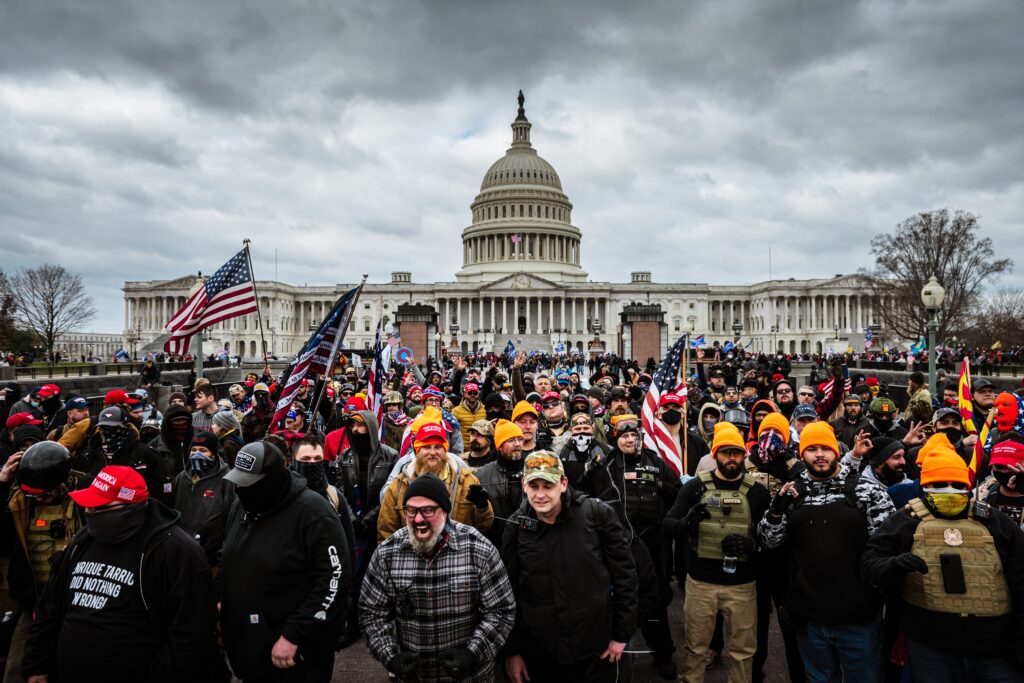
    A bevy of Trump supporters and hangers-on have said they plan to apply for compensation. They include individuals who stormed the U.S. Capitol on Jan. 6, 2021, disrupting Congress’ certification of President Joe Biden’s Electoral College victory. Trump previously pardoned rioters when he took office in January 2025.

    Former Proud Boys leader Enrique Tarrio, who was convicted of seditious conspiracy and sentenced to 22 years in prison before Trump pardoned him, predicted on a recent podcast that a “lot of J6ers are going to spend their money on firearms.”

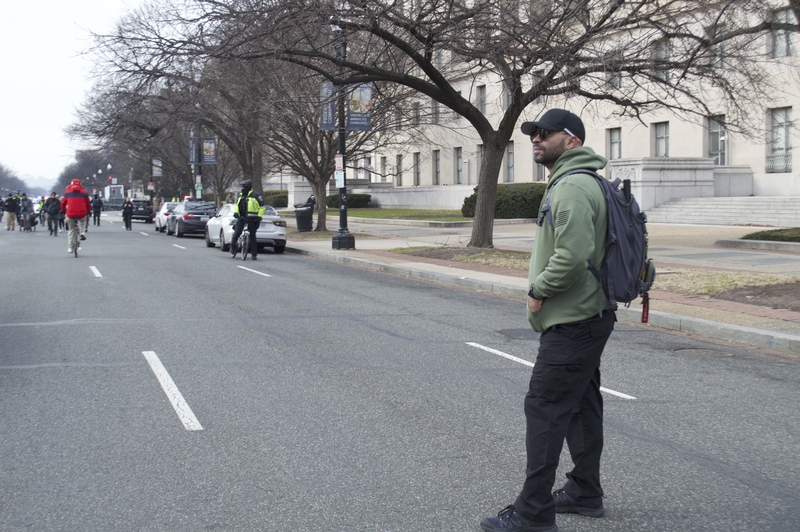
    Former national Proud Boys leader Enrique Tarrio looked on as far-right activists celebrating the Jan. 6 Capitol attack marched down Constitution Avenue on Tuesday, Jan. 6, 2026. Tarrio was sentenced to 22 years in prison on sedition charges related to the attack, but President Donald Trump commuted his sentence. (Photo by Ashley Murray/States Newsroom)

    Former national Proud Boys leader Enrique Tarrio looked on as far-right activists celebrating the Jan. 6 Capitol attack marched down Constitution Avenue on Tuesday, Jan. 6, 2026. Tarrio was sentenced to 22 years in prison on sedition charges related to the attack, but President Donald Trump commuted his sentence. (Photo by Ashley Murray/States Newsroom)

    Trump has cast the fund as an act of magnanimity on his part because the settlement agreement doesn’t include a monetary payout to him.

    However, Blanche also signed a document barring any additional scrutiny of the president’s past tax history, a move that shields him from audits. The New York Times and ProPublica reported in 2024 that Trump could have owed $100 million if he lost an audit battle over improper tax breaks.

    “I gave up a lot of money in allowing the just announced Anti-Weaponization Fund to go forward. I could have settled my case, including the illegal release of my Tax Returns and the equally illegal BREAK IN of Mar-a-Lago, for an absolute fortune,” Trump wrote on Truth Social, referring to the FBI search of his Florida residence in 2022.

    “Instead, I am helping others, who were so badly abused by an evil, corrupt, and weaponized Biden Administration, receive, at long last, JUSTICE!”

    Trump has adopted a “patrimonial” approach to governing, James Pfiffner, a professor emeritus at George Mason University who has studied the presidency, wrote in an email to States Newsroom.

    Benefits, like federal contracts, go to those who are loyal, Pfiffner wrote, and the government is treated as if it were a family business and the state’s resources were his personal property.

    The “anti-weaponization fund” represents an extension of that approach, Pfiffner wrote, but also goes further than past presidents. He wrote that he could think of no past precedents in the modern presidency for such a blatant use of taxpayer money to potentially reward loyalists.

    “At least in the spoils system, the people hired by the government were working and presumably doing their jobs,” Pfiffner wrote. “The beneficiaries of this fund have done nothing to earn their benefits, and presumably some will be rewarded for having committed crimes to overturn the 2020 election.”

    Congress began curbing the spoils system after the 1881 assassination of President James Garfield by a spurned job seeker.

    Over the next two decades, many federal positions were moved into a civil service system. While the federal government still includes some 4,000 political appointees today, the vast majority of the bureaucracy is staffed by civil servants.

    Critics and defenders in Congress

    But it’s unclear whether Congress will block Trump’s fund, despite an intense backlash.

    Anger among Republican senators has stalled action on budget legislation funding immigration enforcement, which Democrats would have used to force votes on amendments to block the fund. Democrats have introduced multiple bills aimed at halting it.

    “Congress cannot stand by while Trump turns the federal government into a political operation for his friends and cronies,” Sen. Michael Bennet, a Colorado Democrat, said in a statement.

    Obstacles exist to congressional action. Even if Republicans who control both chambers voted with Democrats, Trump could veto bills passed placing restrictions on the fund, which would require two-thirds majorities in the House and Senate to override.

    And some GOP lawmakers have defended the fund.

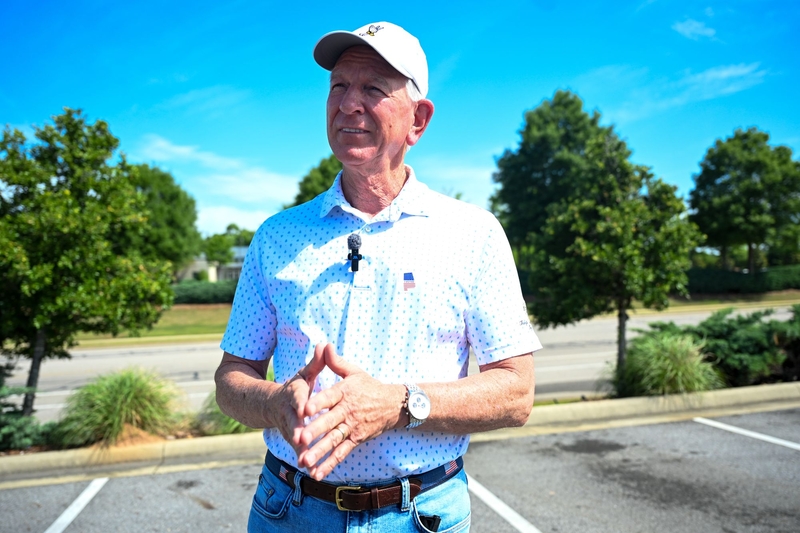
    U.S. Sen. Tommy Tuberville, R-Ala., speaks to reporters after voting in the GOP primary in Auburn, Alabama on May 19, 2026. (Photo by Anna Barrett/Alabama Reflector)

    U.S. Sen. Tommy Tuberville, R-Ala., speaks to reporters after voting in the GOP primary in Auburn, Alabama on May 19, 2026. Tuberville has defended President Donald Trump’s “anti-weaponization” fund. (Photo by Anna Barrett/Alabama Reflector)

    On May 21, Sen. Tommy Tuberville, an Alabama Republican, objected to a unanimous consent request by Sen. Alex Padilla, a California Democrat, to pass a bill that would prohibit payments to Jan. 6 rioters.

    “Thankfully, acting Attorney General Todd Blanche and the Trump Department of Justice established a standard and lawful process to hear from American citizens who suffered lawfare or weaponization under the Biden administration,” Tuberville said on the Senate floor.

    Lawsuits have been filed challenging the fund and how it’s structured. Two police officers who defended the Capitol on Jan. 6 have sued, warning that rioters could use the money to organize.

    Fund blocked temporarily

    On Friday, a federal judge in Virginia ordered the Trump administration to halt work on the fund for at least two weeks while she considers ordering a lengthier pause.

    The decision came in a lawsuit brought by a former federal prosecutor fired by the DOJ and a California professor who was charged but acquitted of assaulting a federal officer after protesting an immigration raid.

    Legal advocacy groups also argue Congress didn’t intend for federal money to be used for these kinds of payoffs.

    “Another commonality is we the taxpayers are funding both,” Shapiro, the Wake Forest professor, said of the spoils system and the Trump fund. “We certainly fund the jobs that people have and now we’re funding this fund.”

  • Virginia marriage equality amendment campaign launches at start of Pride Month

    Virginia marriage equality amendment campaign launches at start of Pride Month

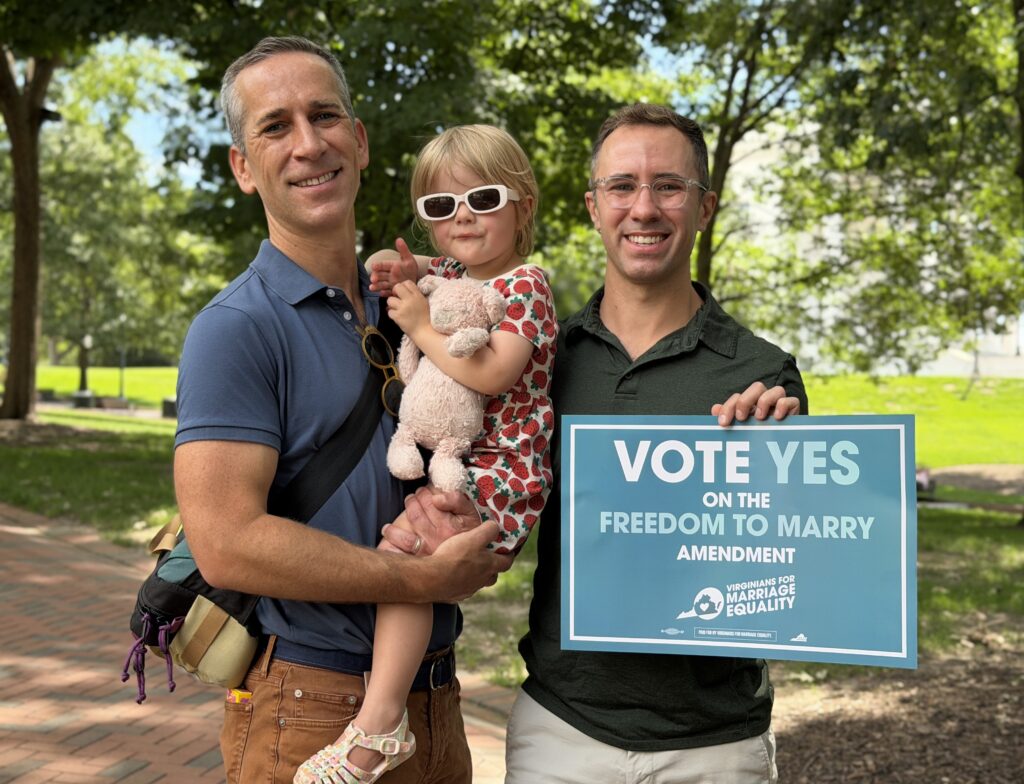
    Chad Stewart and Blake McDonald met in college in 2007 and began dating two years later, eventually building a life together in Richmond after settling in Virginia more than a decade ago.

    By 2015, the couple married — just one week before the U.S. Supreme Court’s landmark Obergefell v. Hodges decision legalized same-sex marriage nationwide.

    “We didn’t want to have to think about politics or court cases,” McDonald said Monday outside the Bell Tower in Richmond’s Capitol Square. “We just wanted to dream about the future we’re going to build together.”

    The couple spoke as Virginians for Marriage Equality formally launched its statewide campaign to pass a constitutional amendment referendum in November that would permanently protect same-sex marriage in the Virginia Constitution.

    The coalition gathered at the start of LGBTQ Pride Month to rally support for the amendment, which would repeal Virginia’s dormant constitutional ban on same-sex marriage and replace it with language requiring the commonwealth to recognize all marriages, regardless of sex, gender or race.

    Advocates say the amendment is needed in case federal protections for same-sex marriage are ever overturned.

    Concerns intensified after the U.S. Supreme Court overturned Dobbs vs. Jackson Women’s Health Organization in 2022 and Justice Clarence Thomas later suggested the court should reconsider other rulings involving privacy and due process rights, including same-sex marriage protections.

    Over time, Stewart said, the future he and McDonald imagined together in Virginia expanded beyond the two of them. During the pandemic, they began the adoption process. In 2023, they received a call, giving them just 16 hours notice before bringing home their daughter, Flora.

    “And so now our life is daycare drop offs, bedtime routines, holidays together, play dates with neighbors, and our daughter proudly calling the people down the street family, too,” Stewart said.

    From Marshall-Newman to Obergefell

    Virginia’s fight over marriage equality has spanned two decades, from one of the country’s strictest constitutional bans to this year’s referendum effort to permanently protect those marriages in state law.

    Voters approved the Marshall-Newman amendment in 2006 after legislation introduced by then-Del. Bob Marshall, R-Manassass, and then-Sen. Steve Newman, R-Bedford County.

    The amendment defined marriage exclusively as a union between “one man and one woman” and barred the state from recognizing same-sex relationships or similar legal arrangements.

    Roughly 57% of voters backed the amendment at the time.

    The issue later became the subject of federal lawsuits including Bostic vs. Schaefer and Harris vs. Rainey, in which same-sex couples argued Virginia’s ban violated the Equal Protection and Due Process clauses of the 14th Amendment.

    A federal judge struck down Virginia’s ban in 2014, and the 4th U.S. Circuit Court of Appeals later upheld the ruling. When the U.S. Supreme Court declined to hear Virginia’s appeal later that year, same-sex marriages began statewide.

    The following year, the high court’s Obergefell ruling established a nationwide constitutional right to same-sex marriage under the 14th Amendment’s guarantees of due process and equal protection. Although the decision invalidated Virginia’s constitutional ban, the language itself remained in the state constitution.

    The amendment before voters in the 2026 midterm elections passed the General Assembly in 2025 and again during the 2026 legislative session, satisfying the constitutional requirement that amendments pass in two separately elected legislatures before reaching the ballot.

    If approved by voters this fall, the amendment would repeal the Marshall-Newman language and replace it with protections requiring Virginia to recognize marriages regardless of sex, gender or race.

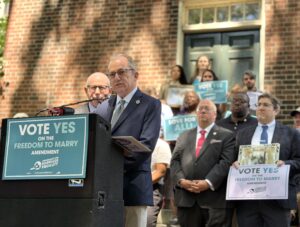
    Former state senator Adam Ebbin speaks during the launch of the Virginians for Marriage Equality campaign in Richmond Monday. (Photo by Markus Schmidt/Virginia Mercury)

    ‘Dignity, respect, and equal treatment under the law’

    In Richmond Monday, several speakers described the referendum as the culmination of decades of legislative efforts and legal battles.

    Former state senator Adam Ebbin, a Democrat from Alexandria and the first openly gay legislator elected to Virginia’s General Assembly in 2003, recalled watching lawmakers approve the constitutional ban more than 20 years ago.

    “For Mark and me, today is deeply personal,” Ebbin said, referring to Virginia Secretary of Finance Mark Sickles, another openly gay former lawmaker standing next to him.

    “Twenty years ago, we stood in the General Assembly and watched Virginia write discrimination into its constitution. We argued against it, we voted against it, and for 20 years, we worked to undo that mistake.”

    Ebbin said same-sex couples across Virginia have spent more than a decade building families while the constitutional ban remained written into state law.

    “Back in 2006, Virginians were told that marriage equality would somehow threaten our community,” Ebbin said. “But today, for more than a decade, same-sex couples have been building marriages, raising children, buying homes, and growing all together across the commonwealth.”

    Sickles said public attitudes shifted over time as LGBTQ Virginians became more visible in communities and families across the state.

    “People keep organizing,” Sickles said. “Families kept showing up. Virginia has changed because people got to know their neighbors, their coworkers, their friends, their siblings, their children more fully.”

    Narissa Rahaman, executive director of Equality Virginia and a committee member of Virginians for Marriage Equality, described the campaign as centered on dignity, family and personal freedom.

    “This November, Virginians have the opportunity to protect the Freedom to marry and affirm what so many of us already know,” Rahaman said. “Every Virginia family deserves dignity, respect, and equal treatment under the law.”

    Rahaman referred to her marriage to her wife, Brianna, as “a million little decisions and a million little moments” built around love, commitment and stability.

    “No family in Virginia should have to wonder whether their rights will be protected tomorrow,” she said.

    Marshall, the sponsor of Virginia’s 2006 same-sex marriage ban, declined to comment when reached by phone Monday.

    But the political landscape around the issue has since shifted dramatically. In 2024, then-Gov. Glenn Youngkin, a Republican, signed legislation sponsored by Democratic lawmakers aimed at ensuring same-sex marriage would remain legal in Virginia regardless of future federal court decisions.

    Still, Youngkin’s office at the time emphasized provisions protecting religious liberties, including language allowing clergy members and religious organizations to decline to perform same-sex weddings.

    Campaign heads into election season

    Organizers said they plan to spend the coming months traveling across Virginia to build support ahead of the November elections.

    Alexandria Democrat Del. Kirk McPike, who is also campaign co-chair, said marriage equality advocates will engage voters in communities statewide in the coming months.

    “My own husband, Jason, and I have built a life together here in Virginia, just like thousands of other couples and families across the commonwealth,” McPike said. “Every Virginian has a place in this campaign and a place in this commonwealth.”

    Mary Bauer, executive director of the American Civil Liberties Union of Virginia, tied the amendment effort to Virginia’s broader civil rights history, including the 1967 U.S. Supreme Court decision in Loving v. Virginia, which struck down interracial marriage bans.

    “This amendment is about making clear that the government has no business deciding which marriages or which families are worthy of recognition,” Bauer said.

    For Stewart and McDonald, the constitutional debate ultimately comes back to protecting and honoring their union.

    “When you build a family like that, legal recognition stops feeling abstract very quickly,” Stewart said. “Marriage equality is what allows families like ours to navigate healthcare, school enrollment, parenting, and all the ordinary parts of life that come with making a home together.”

  • Virginia lawmakers are set to return to Richmond as budget deadline nears

    Virginia lawmakers are set to return to Richmond as budget deadline nears

    Virginia lawmakers are set to return to Richmond this month for another attempt to reach a budget deal, with just days until the start of the new fiscal year and no agreement yet on the state’s next two-year spending plan.

    The House of Delegates is scheduled to reconvene its special session June 18 at 10 a.m., followed by the Senate on June 22 at noon, as negotiators continue working toward a compromise budget that can pass both chambers and reach Gov. Abigail Spanberger’s desk before the June 30 deadline.

    Failure to enact a budget before the new fiscal year begins would result in a government shutdown, creating fiscal uncertainty for state agencies, local governments and school divisions that depend on state funding. Spanberger has repeatedly warned against allowing negotiations to extend beyond the deadline.

    “It’s absolutely unacceptable if the General Assembly would allow for the state to go past July 1,” she told Cardinal News last month.

    Lawmakers have remained at an impasse since the regular 2026 General Assembly session ended without a budget, despite Democrats controlling both chambers of the legislature. A special session in April also ended without a deal.

    The biggest sticking point is a Senate-backed proposal to begin phasing out the state’s sales and use tax exemption for data centers before it expires nine years from now.

    Senate Finance and Appropriations Committee Chair Louise Lucas, D-Portsmouth, has argued the fast-growing industry places increasing demands on Virginia’s electrical grid and water resources while producing relatively few long-term jobs.

    Spanberger and House Democrats have opposed ending the incentive prematurely, arguing it could damage Virginia’s reputation with businesses and discourage future investment.

    The tax exemption was approved in 2008 and is authorized through 2035. Lawmakers originally estimated it would reduce state revenue by about $1.5 million annually. Today, its value is estimated at nearly $2 billion a year, as Virginia has become the world’s largest data center market.

    Spanberger said she is open to discussions about what happens after 2035.

    “There are efforts afoot in the General Assembly, as it relates to the budget, to ensure that data centers are paying their fair share, as I think everyone broadly agrees is necessary,” Spanberger said in mid-April. ”And so that will continue to play out in those negotiations.”

    But the governor said she opposes changing the policy before the exemption lapses.

    “If Virginia were to take an adversarial stance towards any particular industry, it sends the wrong signal broadly, and we’re already seeing it with the decision to move away from the tax abatement,” she told Cardinal News in an interview published last week.

    “It is the absolute prerogative of the General Assembly to look towards the future and to have conversations about incentives they do or do not want to give into the future.”

    She also warned that ending the incentive early could invite legal challenges.

    “As governor, I’m not going to break a contract that the state has signed — one, because who’s going to fund those lawsuits when we have to defend ourselves from broken contracts?” Spanberger said.

    The dispute has put the governor at odds with Lucas, one of the Senate’s most powerful members.

    In a series of posts Wednesday on X, formerly Twitter, Lucas blamed the administration and House Democrats for the continued stalemate.

    “The Governor and the House are the ones that are gambling with our future by allowing the data centers to expand without concern for power, water, or paying their fair share of taxes,” Lucas wrote.

    “The Governor should be honest and tell the public what she won’t do — she won’t tax billion dollar corporations to provide long term revenue to help pay for K12 and public safety and to backfill the federal cuts from Trump.”

    “That’s the budget hold up!! Once again, the Governor is wrong on the policy and knows Virginians will cook her if there is a government shutdown.”

    Lucas has repeatedly defended the Senate proposal during budget discussions.

    At a Senate Finance Committee meeting in May, she argued the state should not continue providing the incentive without additional policy changes.

    “Data centers will employ very few permanent jobs for a sizable tax giveaway,” Lucas said.

    “This is imperative to encourage responsible growth in the commonwealth to protect our electric grid and natural resources, while also ensuring hard working Virginians are not asked to pick up higher utility costs to fund a higher share of our existing core services,” she added.

    Despite the disagreement, Lucas said at the time that she expects lawmakers to reach a deal before the new fiscal year begins.

    “Virginia will have a budget by June 30,” she said. “We will have to get this right for Virginians.”

    Meanwhile, state officials are preparing updated financial projections to aid negotiations.

    Earlier this month, Spanberger directed state finance officials to roll out a revised revenue forecast that will include projections through fiscal year 2031. The administration said the updated forecast is intended to give budget conferees a clearer picture of the state’s fiscal outlook.

    “When making long-term budget commitments, it is important that policymakers have the most current and accurate information available,” Spanberger said in a statement. “This updated forecast will help provide budget conferees and the public with greater confidence as negotiations continue on the commonwealth’s next two-year budget.”

    The request came as Virginia Secretary of Finance Mark Sickles warned that parts of the state’s economy are showing signs of weakness.

    During last month’s meeting of the Senate’s money committee, Sickles pointed to slower job growth, persistent inflation and declining consumer confidence, even as state revenues continue to exceed expectations.

    Those stronger revenues have given negotiators additional room as they work toward a budget agreement before July 1.

  • Virginia budget impasse threatens school funding, poses potential staffing challenges

    Virginia budget impasse threatens school funding, poses potential staffing challenges

    Virginia’s education leaders say they are optimistic about the proposed K-12 funding in the state budget, but their outlook is tempered by uncertainty as state leaders and the governor have yet to reach an agreement on a new two-year spending plan.

    Passing a new budget as quickly as possible is crucial for education leaders and localities because it guides their priorities including funding programs, facility projects, and, most importantly, staffing during a nationwide educator shortage.

    School boards are feeling the pressure as they collaborate with local officials and administrators to prepare for the upcoming school year.

    “Budget certainty is critical for school boards and school divisions,” Gina Patterson, executive director of the Virginia School Board Association, representing the largest group of board members in the commonwealth, said in a statement to the Mercury.

    “At this time, our hope is simply that state leaders can come to a resolution on the budget in a timely manner so divisions across the commonwealth can move forward with greater clarity and stability.”

    The main issue delaying an agreement among lawmakers is how to handle revenue from one of the most successful industries — data centers.

    The Senate passed a budget that would end data centers’ sales and use tax exemption and redirect an estimated $1.6 billion annually towards other areas, including education and transportation.

    The House budget, however, would maintain the exemption, which is set to end in 2035. Gov. Abigail Spanberger aligns with the House budget and preservation of data centers’ tax break.

    Meanwhile, the cost of living for Virginians has risen since the budgets were proposed, largely due to factors such as the start of a U.S. war with Iran, which has increased costs for food and gasoline. The state is also facing a July 1 deadline before government operations could shut down.

    Neither chair of the House or Senate appropriations committees responded to the Mercury’s requests for comment on the status of budget negotiations.

    Education carveouts in the budget

    The packages proposed by both chambers include line items to support students, schools and employees. But they differ in how to do so.

    In the House, lawmakers proposed a flat $1,500 one-time payment for eligible school employees in 2026, instead of a small percentage bonus. In addition, eligible employees would also receive a total 4% raise, with 2% increases in both 2027 and 2028.

    The Senate proposal differs from the House plan by providing eligible employees with a roughly 6% raise over the next two years and increasing funding for teaching scholarships and residency programs.

    Another area of interest for localities is financial assistance for school construction, which can be costly, especially in areas with a local composite index (LCI) that determines what each locality can pay for its schools.

    If the language in the Senate budget is approved by the governor, the state would allow localities to approve, by vote, up to a 1% local sales tax to pay for school construction costs, a central factor in an ongoing debate about aging school buildings.

    “It’s an important mechanism for addressing our school construction needs in the state, which really, the quality of our infrastructure, despite recent investments by the General Assembly, has been in continual decline,” Chad Stewart, director of government relations and research with the Virginia Education Association, said.

    In special education, the House recommended an additional $1.7 billion over the previous biennium’s budget to support students with disabilities and those at risk. The funds would also help families access affordable early childhood education and promote stability for students, teachers and the K-12 system.

    As part of the proposed investment, the House is dedicating $400 million in one-time use for school divisions to provide fiscal stability and meet local needs by funding school renovation, addressing teacher recruitment challenges, or continuing tutoring programs, including some created under a statewide initiative launched by former Gov. Glenn Youngkin’s administration.

    The Senate recommended an additional $60 million to improve school operations and infrastructure.

    Stewart said lawmakers have work to do to address the different ideas in both budgets.

    “Virginia really needs an education budget that meets the moment and one that’s actually responding to our educator shortages, our staff vacancies, and the serious student learning challenges that schools have faced over the last six years.

    Other investment recommendations made by the House include a $160 million increase in funding for students with disabilities. Compared to the House proposal, the Senate is recommending $118.7 million more for at-risk students, $12.8 million more in each of the next two years for special education services.

    The House committee also recommended $163 million to create 11,591 additional early childhood slots to clear child care waitlists. Moreover, this investment is intended to ensure all families with incomes below 85% of the state’s median income can access affordable child care.

    The House budget also provides funds to support employer partnerships to share child care costs.

    The Senate proposed $50 million for a pilot program that would partner with businesses to expand early childhood care.

    To support its commitment to high-quality education, the House is recommending dedicating $437.8 million to rebenchmarking and other technical updates.

    Finally, the Senate budgeted $17.6 million to provide free school breakfasts and $1.3 million to review and possibly redesign the state’s school funding system.

    Sarah Calveric, board president for the Virginia Association of School Superintendents, said the urgency of the matter “cannot be overstated” as lawmakers continue to deliberate.

    “I believe the state budget doesn’t just serve as a financial document, it really is a foundation or a roadmap for educational planning, and of course, staffing,” Calveric said.

    Delayed budget highlights existing challenges

    If state leaders don’t finalize the budget by July 1, school leaders say there will be insufficient funding for special education, at-risk students, educator compensation and student services.

    Even with the proposed raises and school funding, some education leaders said they’re unable to keep pace with inflation, rising costs, and broader economic uncertainty.

    And without knowing how much they will have to work with over the next two years, hiring and retaining employees is harder for school districts. Some divisions have been able to address the matter with financial support from their localities, but others in tighter, financially strapped jurisdictions are not able to follow suit.

    Depending on when the budget is settled, leaders said multi-layered processes between local school boards and government leaders are likely to delay approving budgets, hiring or allocating staff and starting or revising programs, among other things.

    The pressure to maintain services increases as expiring grant funds may lead to program cuts, and school construction and infrastructure backlogs limit the ability to address local needs.

    Lawmakers to reconvene

    The House is scheduled to meet June 18 and the Senate on June 22. Both bodies will be armed with an updated budget forecast, ordered by Spanberger in May. The budget must be finalized by June 30 or the state government will lapse into a shutdown. Educators are watching the clock as they anticipate students’ return to school in the late summer.

    “I think the timing is critical. I appreciate the thought that the General Assembly is putting into the process, but we are very eager and anxious to receive the green light to proceed,” Calveric said.

    “This is a critical aspect to being in a state of preparedness and readiness for the 26–27 school year, and so we’re looking forward to hopefully receiving some positive outcomes in the very near future.”