Montana district court blocks law restricting voter registration hours, allows voter ID law
The U.S. Senate rejected the SAVE America Act on Thursday, dealing a blow to President Donald Trump’s efforts to impose voting restrictions ahead of the November midterm elections.
Senators voted 48-50 against advancing an amendment that would have incorporated Trump’s top legislative priority into an immigration-focused spending bill. The vote offered the clearest sign yet that despite pressure from the president, a handful of Republican senators continue to resist advancing the bill, which critics say would unleash immense chaos ahead of elections this fall.
The SAVE America Act would require voters to offer documents, such as a birth certificate or passport, proving their citizenship when registering to vote. It would also mandate voters show photo ID when casting a ballot and restrict where voters can register, effectively eliminating voter registration drives.
Democrats and voting rights groups have assailed the bill, saying it would disenfranchise voters and upend the midterms because the new rules would take effect immediately. Trump and the bill’s GOP supporters say it’s needed to combat noncitizen voting, an extremely rare phenomenon.
Since taking office last year, Trump has made a series of attempts to shape how elections are run. An executive order that would limit voting by mail remains in effect for now as opponents challenge it in federal court, and the Department of Justice continues to seek to force states to hand over sensitive voter data, so far unsuccessfully.
The Senate amendment, offered by Republican Sen. Lindsey Graham of South Carolina, also included restrictions on sports participation by transgender athletes. On social media after the vote, Graham called the SAVE America Act “one of the most consequential” pieces of legislation developed by Trump and his team.
“All Democrats voted no, and they will eventually pay a price,” Graham wrote.
Republicans also vote no
But the proposal fell short among a small group of Republicans, too. Sens. Susan Collins of Maine, Mitch McConnell of Kentucky, Lisa Murkowski of Alaska and Thom Tillis of North Carolina joined Democrats in voting no.
Collins is seeking reelection in what is one of the most competitive Senate races in the country. McConnell and Tillis have both opted against seeking reelection, while Murkowski has said the bill would set up barriers for voters in her large, rural state.
Sixty votes would have been needed to advance the amendment — the same threshold to overcome a filibuster.
The vote came after the Senate spent weeks debating the SAVE America Act earlier this year before moving on to other business without a vote. Trump has urged Republicans to abandon the filibuster to pass the bill, without success.
“We will squash this blatant attempt at voter suppression,” Sen. Mark Warner, a Virginia Democrat, wrote on social media after the vote.
The Senate also rejected, 50-49, a separate amendment offered by Sen. Mike Lee, a Utah Republican, that included a different version of the SAVE America Act. According to Lee, the amendment was the version of the bill passed by the House, which didn’t include provisions on transgender athletes.
Collins voted in favor of the amendment after earlier opposing Graham’s amendment.
California
Both amendments failed hours after Trump asserted, without evidence, that Democrats were stealing “the vote” in California. The state held primary elections earlier this week, but vote counting is often slow in the state, meaning vote totals reported on election night don’t always reflect the final outcome of a race.
Trump linked California’s elections to his push for the SAVE America Act, writing on social media that “I hope Republicans are watching” so they could pass the legislation.
“They found a lot of mail-in ballots last night, shockingly,” Trump said at an unrelated Oval Office event on Thursday. “So we don’t want that.”
With the Senate unwilling to advance the SAVE America Act, some GOP lawmakers have begun offering alternative election-related bills.
Republican Reps. Julie Fedorchak of North Dakota and Laurel Lee of Florida on Thursday introduced the SAVE America Through REAL ID Act, which would create a grant program to help states provide REAL ID-compliant driver’s license and identification cards to residents for free to low-income Americans.
On Tuesday, Sen. Marsha Blackburn, a Tennessee Republican, and Graham introduced the Election Security Partnership Act, designed to encourage states to submit their voter rolls to a computer program operated by the Department of Homeland Security that can identify possible noncitizens.
States can already upload voter data to the program, called Systematic Alien Verification for Entitlements or SAVE, but the legislation would provide $20 million in grants for states to offset any costs related to using SAVE.
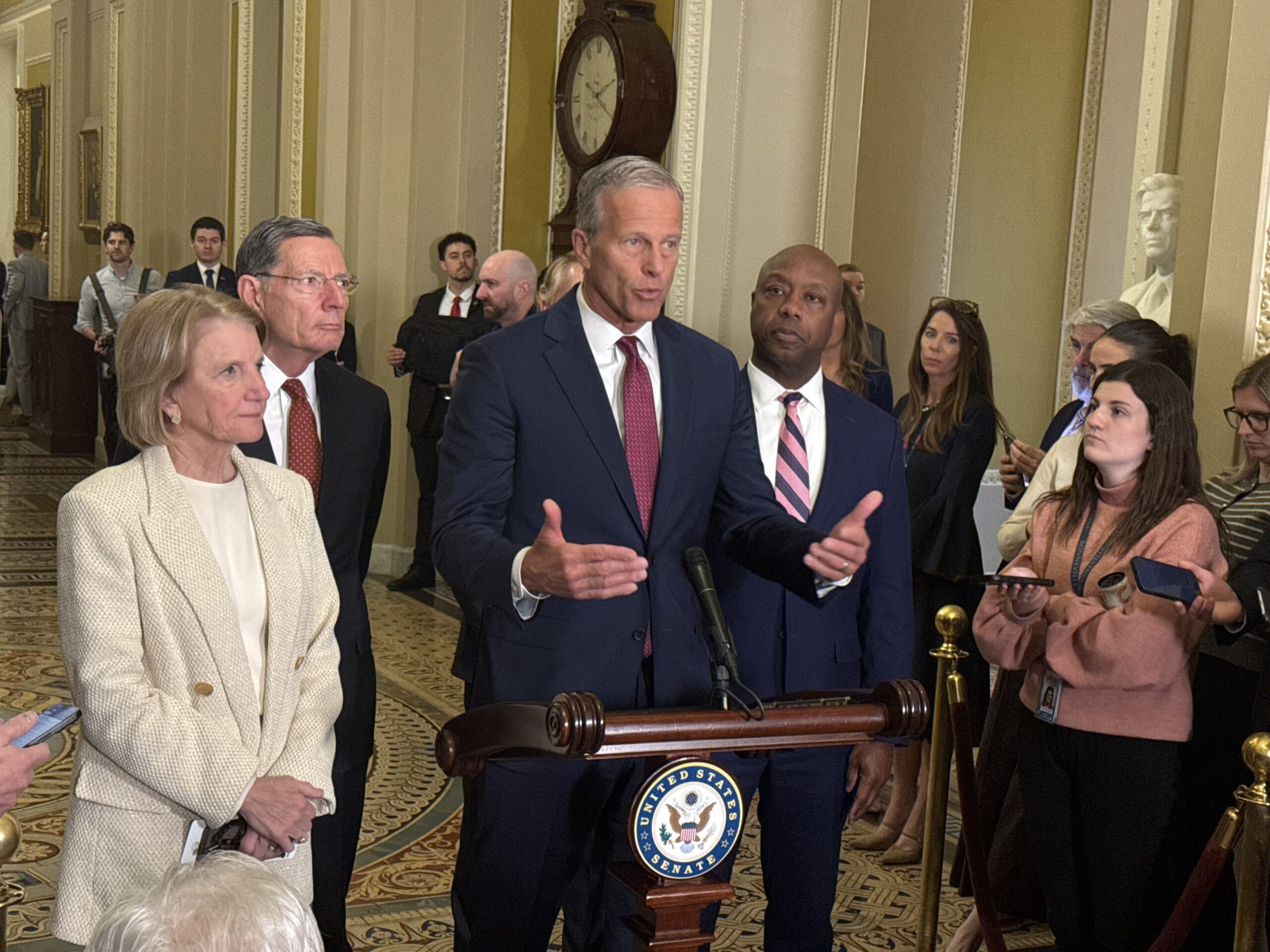
The U.S. Senate early June 5, 2026, passed a package of $70 billion in funding for immigration enforcement. Majority Leader John Thune, seen speaking on March 3, 2026, said GOP leaders were forced to draft the package after Democrats “walked away” from negotiations that could have placed restrictions on federal immigration agents. (Photo by Jennifer Shutt/States Newsroom)
WASHINGTON — The U.S. Senate approved a nearly $70 billion package early Friday, moving Republicans one step closer to funding immigration and deportation activities for the next three years without negotiating new constraints on federal agents with Democrats.
The 52-47 mostly party-line vote sends the measure to the House, where GOP lawmakers could send it to President Donald Trump for his signature as soon as next week.
Alaska Sen. Lisa Murkowski was the only Republican to vote no. Colorado Democratic Sen. Michael Bennet, who participated in a debate in his bid to become his state’s next governor, did not vote.
Murkowski said in a statement she opposed the legislation because it bypassed the annual government funding process that forces the two political parties to debate issues and find compromise.
“By choosing to appropriate funding for three fiscal years instead of one, this measure weakens the normal budgeting process and sets another precedent for avoiding it when we find ourselves in disagreement,” she said. “In doing so, it reduces Congress’ ability to apply reasonable checks on immigration policy for the remainder of this administration and into the next.”
Murkowski added that she would have voted for the package had it “provided immigration funding for one year, included clear restrictions on what those funds can be used for, and eliminated any potential for taxpayer dollars to be allocated to the administration’s brazen ‘anti-weaponization’ fund.”
Majority Leader John Thune said during floor debate GOP leaders were forced to draft the package after Democrats “walked away” from negotiations that could have placed restrictions on federal immigration agents.
“Republicans are going to continue to ensure that these agencies have the funding that they need to fulfill their national security responsibilities,” the South Dakota Republican said.
Minority Leader Chuck Schumer, D-N.Y., argued the measure shows that Republicans are more focused on funding deportations than lowering the cost of living.
“Apparently, Republicans think we cannot afford a single penny to help Americans cover the skyrocketing costs of gasoline, of healthcare, of housing, of food, of energy, you name it,” he said. “But somehow we can afford to give another $70 billion to Trump’s rogue agencies.”
Senate approval followed a marathon amendment voting session that stretched throughout Thursday and overnight as Democrats sought to challenge Republican senators on policy differences just months before the November midterm elections. No amendments were approved.
Building on “big, beautiful” law
The bill would provide a second hefty cash infusion to the agencies carrying out the president’s immigration crackdown, building on the $170 billion Republicans included in their “big, beautiful” law.
This legislation would appropriate:
$38.53 billion for Immigration and Customs Enforcement
$26.02 billion for Customs and Border Protection
$5 billion for the secretary of Homeland Security.
The money would be available through Sept. 30, 2029, the end of the fiscal year. Republicans decided not to place any new guardrails on immigration agents.
The measure Republican senators approved was somewhat different from the original version released in early May, which included $1 billion for the Secret Service to make security upgrades associated with the president’s ballroom, dubbed the East Wing Modernization Project.
Republicans also removed $1.46 billion that would have increased funding for several Justice Department programs.
Additionally, GOP lawmakers bolstered ICE funding by $350 million compared to the earlier version of the bill.
Republican leaders are moving the package through the complex budget reconciliation process, avoiding the need to secure Democratic votes in the Senate that would otherwise be required to end debate on the measure.
GOP leaders opted to use the special legislative maneuver after they were unable to broker agreement with Democrats to place constraints on immigration officers.
Democratic lawmakers said new guardrails, including body cameras and preventing the use of masks, were necessary after federal agents shot and killed two U.S. citizens in Minneapolis in January.
The impasse led to a 76-day shutdown at the Department of Homeland Security that didn’t end until late April, when Congress approved the annual spending bill without funding for ICE or the Border Patrol.
June 1 deadline missed
The reconciliation process comes with several strict rules that require each section of the legislation to address revenue, spending, or the debt limit. Proposals also cannot be deemed “merely incidental” to the federal budget.
Trump wanted Congress to approve the funding package ahead of a self-imposed June 1 deadline. But work on the measure ground to a halt after the administration announced plans to establish a $1.776 billion fund to pay people who believe they were wrongly prosecuted by the Justice Department.
Floor debate on the bill resumed again this week after acting Attorney General Todd Blanche testified before a House subcommittee Tuesday the administration was “not moving forward with the fund, period.”
Trump, however, muddied the waters a bit Wednesday when asked during an Oval Office event whether the fund was “dead or on hold.”
“I’d have to ask my lawyers. I don’t know,” he said. “Are you talking about the weaponization fund? The weaponization fund, as far as I’m concerned, was a beautiful thing.”
Tough amendment votes
The Justice Department’s “anti-weaponization” account was one of many issues senators sought to address during a marathon voting session that began Thursday morning and lasted until just before sunrise Friday.
Several Republicans, including those facing tough reelection bids, sided with Democrats on proposals and offered changes of their own, though none were added.
South Carolina Republican Sen. Lindsey Graham tried unsuccessfully to include language that would have required people registering to vote provide proof of U.S. citizenship and later present a photo ID to cast a ballot.
Senators voted 48-50 to reject Graham’s attempt to add the SAVE America Act, showing the legislation doesn’t have the votes to clear Congress, despite pressure from the president.
Republican Sens. Susan Collins of Maine, Mitch McConnell of Kentucky, Murkowski and Thom Tillis of North Carolina voted with Democrats.
A majority of senators backed an attempt by Delaware’s Chris Coons that would have barred the DOJ from paying anyone convicted of assaulting police on Jan. 6, 2021, when Trump supporters attacked the Capitol.
The 54-45 vote, however, wasn’t enough to add the provision to the package. It needed the support of at least 60 senators to move past a procedural hurdle since it didn’t address language in the immigration bill. Republican Sens. Bill Cassidy of Louisiana, Collins, Jon Husted of Ohio, Ashley Moody of Florida, Jerry Moran of Kansas, Murkowski, Dan Sullivan of Alaska and Tillis voted with Democrats.
An amendment from Cassidy to compensate “law enforcement officers who defended the United States Capitol” on Jan. 6 was unable to reach the 60 votes it needed following a 52-47 vote. Cassidy as well as Collins, Husted, Murkowski, Sullivan and Tillis voted along with Democrats.
Oregon Democratic Sen. Jeff Merkley proposed an amendment that would have required congressional authorization before construction could continue on the White House ballroom, but it wasn’t adopted following a 53-46 vote.
Cassidy, Collins, Husted, Moran, Murkowski, Sullivan and Tillis voted with Democrats, but it needed at least 60 votes to move past an objection.
Health insurance
Georgia Democratic Sen. Jon Ossoff tried to use a maneuver that would have sent the bill back to the Judiciary Committee in order to create “a task force to conduct investigations into health insurance companies that are found to routinely deny and delay patients’ access to medically necessary care.”
Ossoff told the story of a woman named Ellen from Atlanta who struggled with her insurance company after being diagnosed with a form of blood cancer known as multiple myeloma.
“As Ellen told me, quote, ‘for a corporation to have a finger on the button of your life is ridiculous. They have their minds on profit margins. I just want to be healthy and alive,’” he said. “Thankfully, Ellen’s cancer is now in remission. But across America, insurance companies continue to deny and delay medically necessary healthcare.”
Iowa Republican Sen. Chuck Grassley said the issue was “worthy of review” but disagreed with addressing it during debate on the immigration and deportation bill.
“The Justice Department already performs investigations into healthcare insurance fraud. The Senate also confirmed a new assistant attorney general to fight fraud,” he said. “Further, sending the reconciliation bill back to the Judiciary Committee would essentially kill it.”
The Senate did not agree with Ossoff’s motion following a 47-50 vote. Collins was the sole Republican to vote with Democrats.
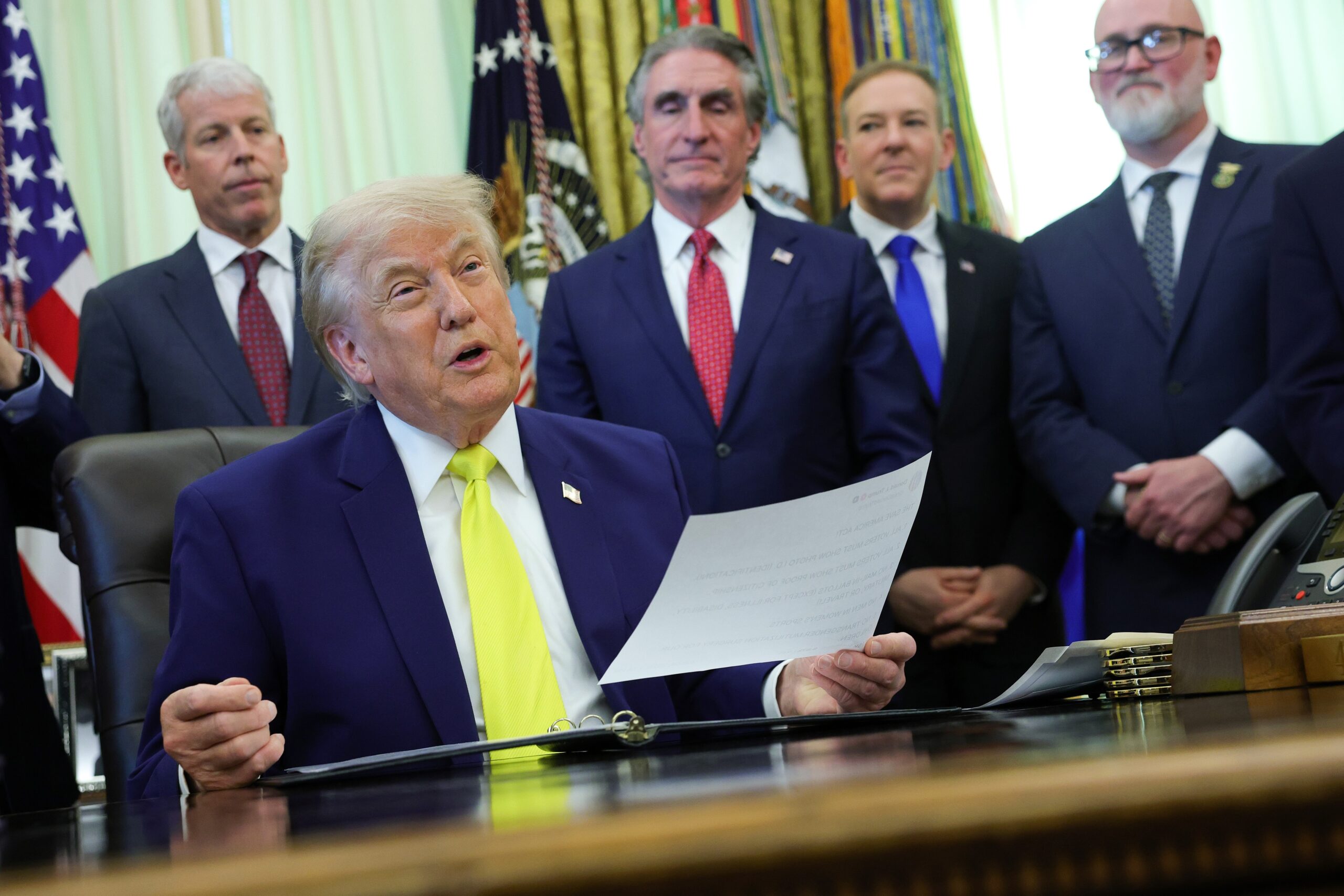
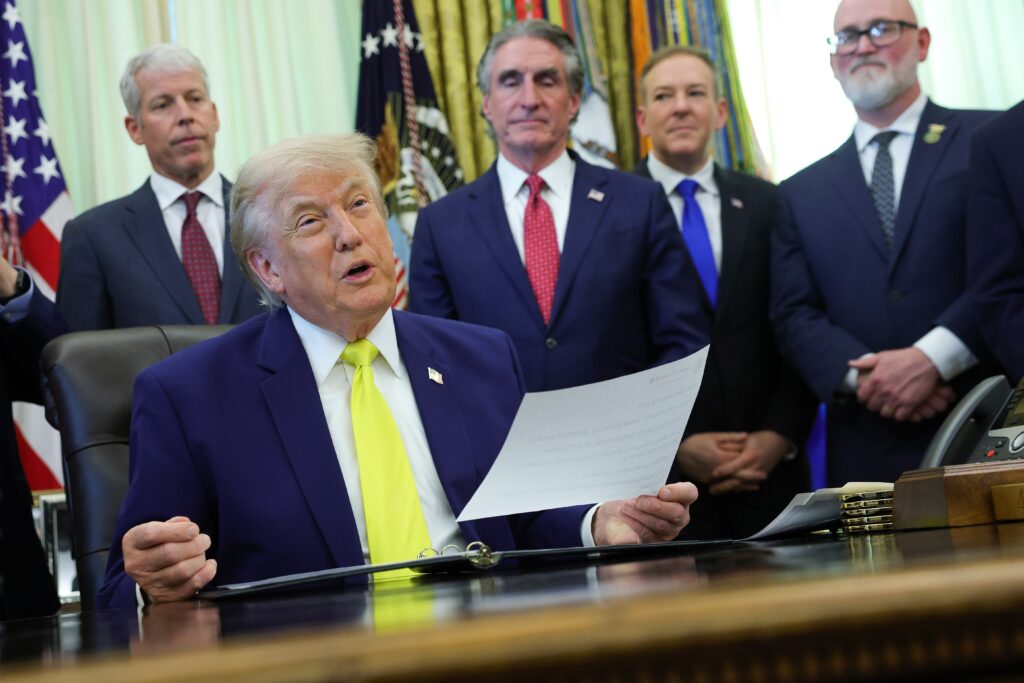
President Donald Trump speaks during a "Beautiful, Clean Coal" event in the Oval Office of the White House on June 4, 2026 in Washington, D.C. Behind him, left to right, are Energy Secretary Chris Wright, Interior Secretary Doug Burgum and EPA Administrator Lee Zeldin. (Photo by Kevin Dietsch/Getty Images)
The federal government will spend $700 million on building or refurbishing coal power infrastructure across the country in a boost to “clean, beautiful coal,” President Donald Trump said Thursday in the Oval Office.
Trump said he was invoking the Cold War-era Defense Production Act, which gives the president authority over domestic industry, to save 13 existing power plants and build two new ones. He said the move would save 14,000 coal jobs and lower energy costs, though the spending will not lower the price of gasoline or diesel fuel, which has spiked since Trump launched a war with Iran in February.
Trump criticized subsidies for wind power championed by Democrats, including his predecessor, Joe Biden, characterizing coal as the most important energy source to cultivate.
“It’s real power,” Trump said. “In terms of power, there’s really nothing like it. We have so many different alternatives. You talk about some, there’s no real alternative.”
New coal plants would be built in Alaska and West Virginia, Trump said. A defunct plant in Maryland would also be restarted. Those projects would be funded with $200 million in Department of Energy grants.
Coal plants receiving a combined $425 million in Defense Production Act funding are in West Virginia, Kentucky, North Carolina, Indiana, Tennessee, Arkansas, Arizona, Oklahoma, North Dakota and Wisconsin, according to the White House.
Coal mines benefiting from the move are in Pennsylvania, Kentucky, West Virginia, Ohio, Indiana, Illinois, Wyoming, North Dakota and New Mexico, according to the White House.
The administration would also spend $75 million, authorized by the Defense Production Act, to help open a long-delayed new coal export terminal in Oakland, California, the White House said.
Administration officials said Thursday’s announcement built on a record of the past 18 months in which the administration has saved dozens of coal production facilities.
“It is hard to overstate the magnitude of this,” Energy Secretary Chris Wright said. “If you look at our efforts across the whole government, so far 45 coal plants are open today that would not be open.”
Republican approval
Trump Cabinet members, congressional Republicans and two governors, Wyoming’s Mark Gordon and West Virginia’s Patrick Morrissey, joined Trump for the Oval Office announcement, with several extolling the importance of the coal industry after Trump spoke.
Wright, Interior Secretary Doug Burgum and Environmental Protection Agency Administrator Lee Zeldin praised Trump for intervening to help the industry and refocusing federal energy policy away from renewables.
Wright said Democratic policies were more responsible for high energy costs than the war in Iran, even though Republicans have held unified control of the federal government since January 2025 and the Trump administration has consistently touted its moves to encourage fossil fuel production.
“We wish they were lower, but gasoline prices in the U.S. are a little over $4. They’re $10 in Europe, they’re higher in Asia, they’re very high in California,” Wright said. The national average price for regular gasoline Thursday was $4.24 per gallon.
“The bigger threat to energy prices in the United States is Democratic green energy policies,” Wright continued. “They have driven up energy prices far more than a conflict in Iran.”
Burgum said the president was perhaps the strongest advocate for coal in the country’s history.
He echoed Trump’s statements that the coal industry needed to be reinvigorated after the Biden administration focused more on renewable energy production.
“The prior administration, under Biden, had gone so far down the path of pursuing the highly subsidized, intermittent, weather-dependent sources of electricity that our grid was at risk. You understood that and you understood how key coal is,” Burgum told Trump. “It’s the backbone of having affordable, reliable and secure American energy to power our country, our electric grid, power our competitiveness in AI, and power all the manufacturing that’s coming back.”
Morrissey said the moves would benefit his state.
“We believe your policies are going to allow America to compete and win,” Morrissey said. “West Virginia is going to supply the coal, the gas, the nuclear to help make that happen. So I’m very excited by everything you’re doing.”
Greens decry ‘polluter handout’
Environmental groups blasted the move, saying it propped up a failing industry and would have little long-term impact on energy prices or reliability.
Jesse Lee, a senior adviser with the advocacy group Climate Power, said the spending on coal projects would not lower utility prices, which he said have climbed 18% during Trump’s second term.
“He’s gaslighting the American people by claiming that this move will lower electricity prices in the middle of an energy affordability crisis that he created,” Lee said.
Environmental groups noted the coal industry heavily contributed to Trump’s 2024 campaign.
Several environmental advocates, including Lena Moffitt, the executive director of the climate group Evergreen Action, suggested that relationship drove Trump to promote coal at the expense of renewable energy sources.
“Spending $700 million to bail out the coal industry is like throwing a lifeline to a ship that has already sunk,” Moffitt wrote. “Trump is handing out taxpayer money to coal barons and leaving us with nothing but higher energy costs. … There’s no coal revival waiting around the corner—just polluters collecting a handout while their friends run the White House and Americans foot the bill.”
The U.S. Capitol building in Washington, D.C., amid fog on Tuesday, Dec. 10, 2024. (Photo by Jennifer Shutt/States Newsroom)
WASHINGTON — U.S. Senate Republicans fended off an attempt Thursday to block the Department of Justice from using an “anti-weaponization” fund to pay people who feel they were wrongly prosecuted, as well as another proposal that sought to require congressional authorization for a new White House ballroom.
Debate on amendments and motions, by Democrats and Republicans, is a required part of the special process GOP leaders are using to approve nearly $70 billion for immigration enforcement and deportation activities, including Immigration and Customs Enforcement and the Border Patrol, through the end of President Donald Trump’s term.
Votes were expected to last into the evening and possibly overnight as Democrats look to challenge their Republican counterparts on policy while also making their case for control of Congress ahead of this year’s November midterm elections. The U.S. House adjourned for the week Thursday, meaning the measure will not head to the president’s desk until next week at the earliest.
Senators voted 49-50 to reject an amendment from Minority Leader Chuck Schumer, D-N.Y., that would have prevented the Department of Justice from carrying out the “anti-weaponization” proposal by Trump to use $1.776 billion to pay people who feel they were wrongly prosecuted.
Several Republicans facing tough reelection campaigns joined Democrats in voting for the amendment, including Alaska’s Dan Sullivan, Maine’s Susan Collins and Ohio’s Jon Husted.
Acting Attorney General Todd Blanche testified earlier this week the administration had scrapped plans for the “anti-weaponization” fund, following intense criticism from both Republicans and Democrats, but Trump later said he wasn’t sure and would have to check with his attorneys.
“Trump won’t give Americans a penny to help offset the skyrocketing costs he brought on our country,” Schumer said. “But he’s more than happy to charge them nearly $2 billion to line the pockets of his families, his billionaire friends, and the criminals who mauled police officers on January 6. If Republicans truly oppose this corruption, then prove it.”
North Carolina Republican Sen. Thom Tillis then offered an amendment of his own that would have transferred the funding the administration had proposed for its so-called “anti-weaponization” fund to the Justice Department’s fraud division.
“We heard over the last 48 hours that the acting attorney general said that this fund’s not moving forward,” Tillis said. “All this amendment does is codify what I believe the policy of the DOJ is.”
South Carolina Republican Sen. Lindsey Graham raised a procedural objection to Tillis’ amendment, arguing it didn’t comply with the strict rules of the process.
Tillis tried to waive that maneuver, but a 15-84 vote didn’t achieve those goals and the amendment failed.
White House ballroom construction
Oregon Sen. Jeff Merkley offered an amendment that would have required congressional authorization to proceed with Trump’s White House ballroom renovations.
“All of us here have a responsibility to follow the power of the purse responsibility in the Constitution. Let’s all support the idea that it must proceed, if it’s to proceed, with a congressional authorization,” the Democrat said.
Kentucky GOP Sen. Rand Paul called the amendment a “poison pill” and raised a procedural issue on the grounds that Merkley’s measure is not under the jurisdiction of the Judiciary Committee.
“There is no money in this bill for a ballroom,” Paul said.
Merkley tried to waive the procedural objection, but it failed in a 53-46 vote, which required at least 60 to agree in order to move forward.
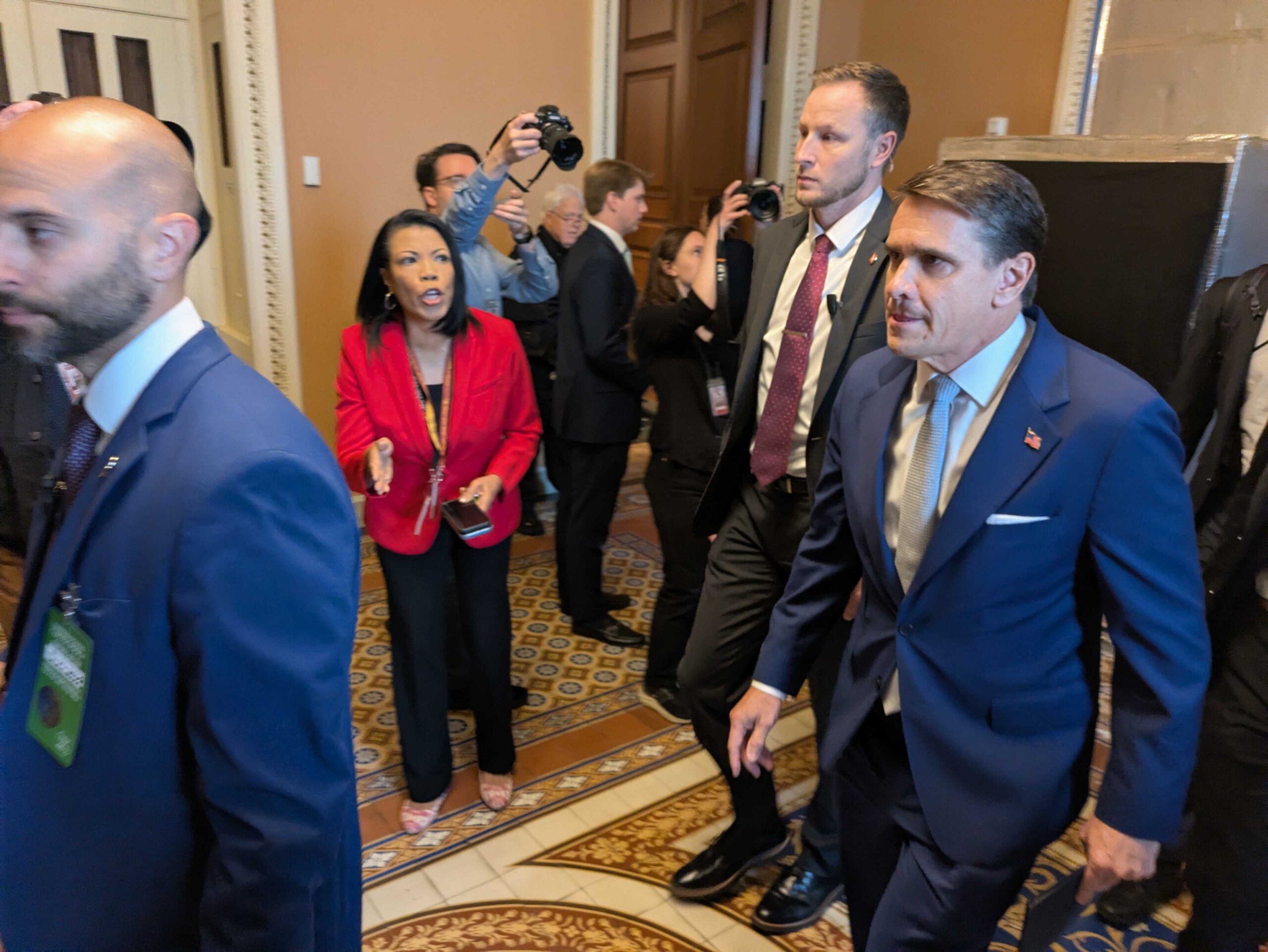
Acting Attorney General Todd Blanche walks by reporters at the U.S. Capitol on May 21, 2026. (Photo by Ashley Murray/States Newsroom)
WASHINGTON — President Donald Trump will nominate acting Attorney General Todd Blanche, his former personal lawyer, to fill the top role at the Department of Justice on a permanent basis, he said Wednesday night.
Trump revealed Blanche as his choice at an outdoor event at the White House, saying “we are going to make him permanent attorney general” and adding that he expects Blanche’s nomination process to “go very quickly.”
Blanche has been leading the department in an acting capacity since former Attorney General Pam Bondi exited the administration in early April.
Blanche, of Florida, will almost certainly have that state’s two Republican senators, Rick Scott and Ashley Moody, supporting his nomination.
The GOP-led Senate confirmed Blanche as deputy attorney general in early March 2025 on a party-line vote.
Blanche represented Trump in 2023 and 2024 during a New York state hush money case. A jury convicted Trump two years ago on 34 first-degree felony counts of falsifying business records.
The close tie between the president and his pick for attorney general is a major reason Democrats will oppose the nomination, U.S. Senate Minority Leader Chuck Schumer of New York said Thursday.
“Trump picked Blanche because he’s loyal to the president alone – not the Constitution, not the rule of law, and certainly not the American people, and not to the values that this country has had for 250 years,” Schumer said on the Senate floor. “For years, Blanche has been Trump’s personal lawyer and attack dog, and that didn’t stop when Blanche joined the department.”
Anti-weaponization fund
Blanche has taken heat in recent weeks, including from Republicans, for the department’s settlement in Trump’s $10 billion lawsuit against his own IRS.
Trump dropped the suit in exchange for the department establishing a nearly $1.8 billion “anti-weaponization” fund for persons Blanche described on May 18 as “victims of lawfare.” The settlement revealed that the fund would be governed by five commissioners hand-chosen by Blanche, with only one involving consultation from congressional leadership.
Members of Congress from both sides of the aisle quickly objected to the proposal, noting the possibility that people convicted — then pardoned by Trump — of assaulting police during the Jan. 6, 2021 attack on the U.S. Capitol could receive reparations from the fund.
When pressed at a May 27 Senate hearing on whether violent Jan. 6 defendants who were pardoned could reap taxpayer dollars from the fund, Blanche replied, “Anybody can apply.
“The commission will set rules, I’m sure,” he continued. “That’s not for me to set, that’s for the commissioners, and whether an individual, an Oath Keeper, as you just mentioned, applies for compensation, anybody in this country can apply.”
Several lawsuits quickly challenged the legality of the fund, including one from former police officers who deployed to the Capitol on Jan.6, and another from legal advocates who argued the fund would be illegally shielded from transparency laws.
After intense pressure, Blanche testified to a House Appropriations subcommittee Tuesday that the administration was “not moving forward with the fund, period.”
The concession cleared the way for reluctant Senate Republicans to support a roughly $70 billion immigration enforcement package. Senate Democrats plan to stall the bill on the floor Thursday with a marathon of amendments, including proposals to curtail or outright ban such funds going forward.
The administration is still facing questions from lawmakers about a provision in Trump’s IRS settlement that absolves him, his sons Donald Trump Jr. and Eric Trump, and the Trump Organization, from tax audits.
Epstein files
Blanche has also come under scrutiny for the DOJ’s handling of the release of files related to the deceased sex offender Jeffrey Epstein. The botched release last year, when Bondi headed the department, initially exposed names of sexual abuse victims.
Democrats claimed Bondi told the House Oversight and Government Reform Committee during a closed-door interview last week that Blanche oversaw the legally mandated release of the files and made the decision to not investigate any possible leads.
Bondi refuted the claim on social media following the interview.
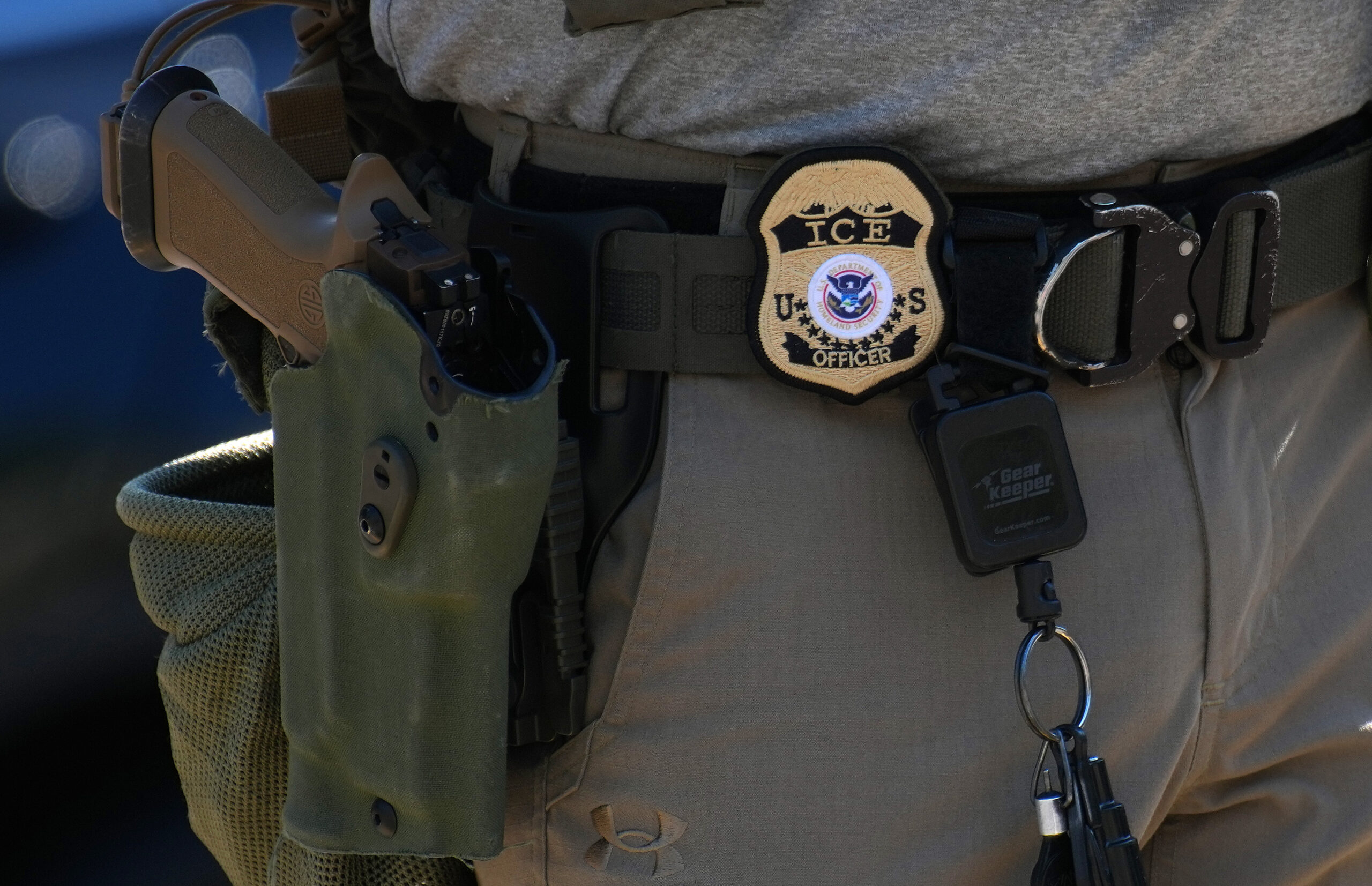
An Immigration and Customs Enforcement (ICE) officer's badge and weapon are seen as ICE conducts a vehicle checkpoint on Georgia Ave. on August 30, 2025 in Washington, DC. The Trump administration has deployed federal officers and the National Guard to the District in order to place the DC Metropolitan Police Department under federal control and assist in crime prevention in the nation's capital. (Photo by Kevin Dietsch/Getty Images)
WASHINGTON — A Louisiana detention center that houses roughly 1,500 immigrants failed to ensure sanitary conditions, properly store perishable food, properly notify use-of-force incidents and maintain medical records of detainees, according to a report published Thursday by the Department of Homeland Security’s internal watchdog.
The findings stem from an unannounced visit from federal inspectors in March 2025 to the Winn Correctional Center in Winnfield, Louisiana.
In a statement, a Department of Homeland Security spokesperson characterized the report as showing only “minor infractions” at the facility, but did not address the reports of improper use of force.
“These minor infractions included failing to provide detainees exercise equipment, record keeping errors, and leaking vents,” the DHS spokesperson said. “Another infraction included providing a shared computer for legal research that would allow other detainees to see other detainees’ case information.”
The spokesperson said that U.S. Immigration and Customs Enforcement is working to address the issues laid out in the report, including “by adding additional training to facility staff.”
Use-of-force reporting
Facility staff did not properly notify the ICE field office of several use-of-force incidents, and videos of the incidents that inspectors tried to review were incomplete, according to the report.
The incidents the OIG reviewed included “applying a choke hold around a detainee’s neck,” and “puncturing a detainee’s skin with a pen to gain compliance.”
In the first video reviewed by inspectors, an officer applied a chokehold to stop an altercation between detainees. OIG investigators noted that the facility agreed “that the officer should receive remedial training.”
In a second video, “an officer could not close and secure a housing unit because a detainee would not remove his hand from the unit’s door. After verbally ordering the detainee to remove his hand, the officer then stabbed the detainee’s right thumb with a pen, puncturing the skin.”
OIG detailed that the “facility investigated the incident and determined that the officer required disciplinary action.”
But because the facility does not have a process to document when staff received extra training or disciplinary actions, inspectors argued they could not tell if staff who used prohibited practices or did not follow standards during use-of-force incidents received the appropriate follow-up training or disciplinary actions.
“This could lead to staff repeating inappropriate use-of-force tactics that could potentially result in property damage, injury, and death,” according to the report.
Sanitation and recreation
The report recommended that detainees be provided some recreational activities or equipment and noted that ICE complied, adding soccer balls, beanbag toss and pull-up bars.
The OIG report also found three leaking vents in the kitchen area, and raised concerns about sanitation.
“Because Winn did not conduct maintenance sufficient to prevent the leaks or repair or remove these leaking items, the facility risks food-safety hazards, such as residue leaking onto food preparation materials or into prepared food,” according to the report.
Inspectors also found the refrigerators and freezers that stored the food were not at proper temperatures.
“Storing perishable food at temperatures above the required ranges could cause food spoilage or rotting and potentially place staff and detainees at risk of food borne illnesses if served and consumed,” according to the report.
OIG made recommendations to ICE to fix the leaks and food temperature, and the agency agreed. OIG could not determine if ICE fixed the leaks, but did find ICE resolved the issue of food being stored at the proper temperature.
President Donald Trump salutes as a U.S. Army carry team moves a flag-draped transfer case containing the remains of Sgt. Declan J. Coady at Dover Air Force Base on March 07, 2026 in Dover, Delaware. Six soldiers from the 103rd Sustainment Command were killed in action by an Iranian drone strike on March 1 in Port Shuaiba, Kuwait during "Operation Epic Fury". (Photo by Roberto Schmidt/Getty Images)
WASHINGTON — The U.S. House passed a resolution Wednesday to force President Donald Trump to withdraw from the war with Iran and require congressional approval for further military action in the country.
The 215-208 vote, in which four Republicans voted with all Democrats to adopt the resolution, is the strongest rebuke to date against Trump’s handling of the months-long war that has left more than a dozen military troops dead, killed thousands of Iranian civilians and disrupted global supply chains of fertilizer and oil with the blockage of the Strait of Hormuz.
Republican Reps. Tom Barrett of Michigan, Warren Davidson of Ohio, Brian Fitzpatrick of Pennsylvania and Thomas Massie of Kentucky voted in favor.
The War Powers Resolution nearly passed the House last month, but failed on a 212-212 tie. The measure is a tool for Congress to limit the president’s ability to initiate or escalate military actions.
Several similar efforts in the Senate have failed. However, following the Republican primary loss of Sen. Bill Cassidy, the Louisianan joined with Democrats and several GOP senators in a vote to move the measure forward. A vote on final passage on the Senate measure has not been scheduled.
Rep. Gregory Meeks of New York, the top Democrat on the House Foreign Affairs Committee, sponsored the resolution in that chamber.
Michigan Democratic Rep. Rashida Tlaib has a separate War Powers Resolution that would force the president to withdraw troops from Lebanon. Israel, with weapons and funding from the United States, has launched an assault on that nation.
The passage of the resolution in the GOP-controlled House was the latest sign of growing dissent against Trump among congressional Republicans.
Senate Republicans balked at Trump’s effort to create a nearly $1.8 billion fund to pay people who believe they were wrongly prosecuted by the Justice Department, including those who were convicted and later pardoned by the president for attacking the U.S. Capitol in January 2021.
The Trump administration backed away from the fund after disputes over it halted work on legislation to fund immigration and deportation activities for the rest of the president’s second term.
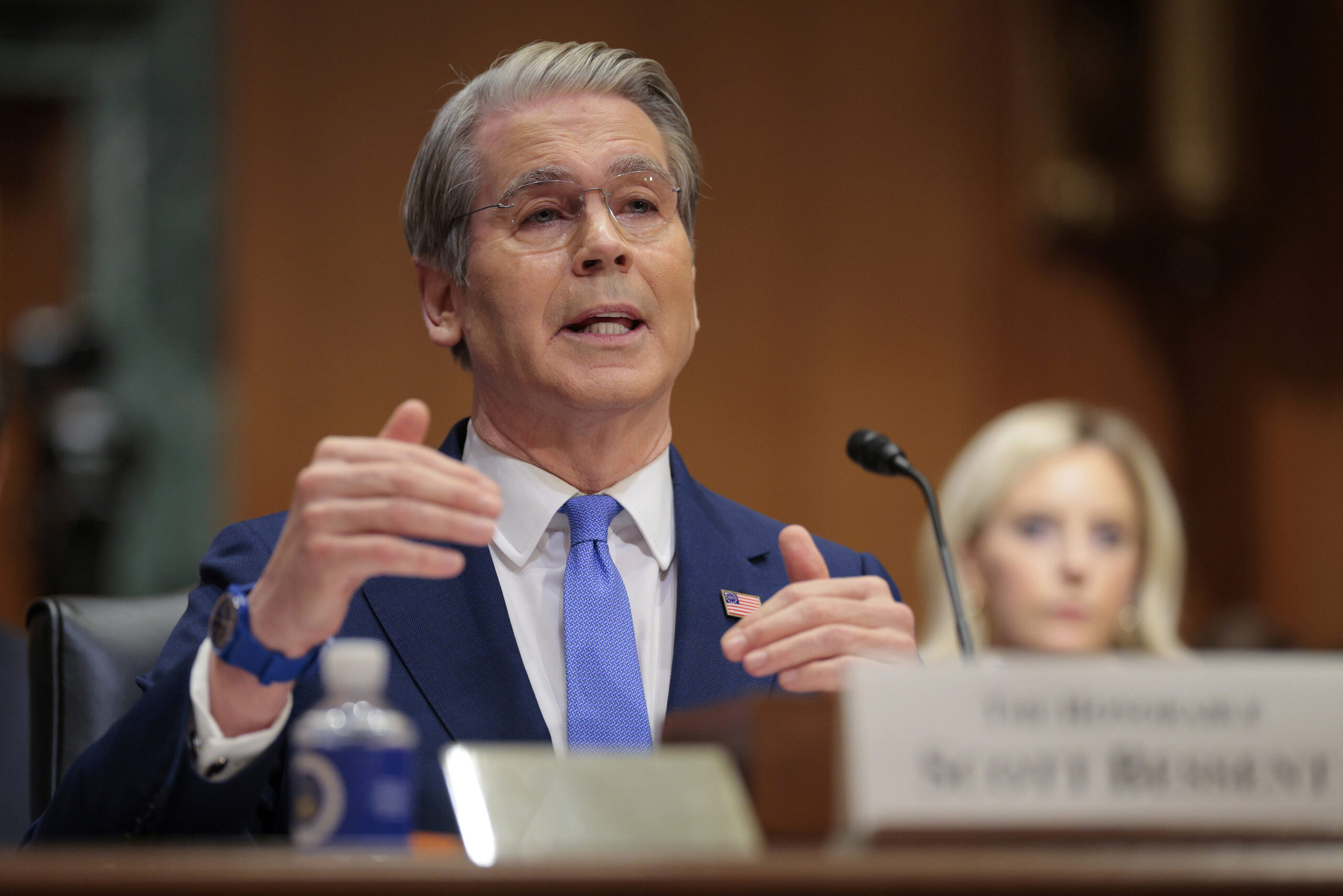
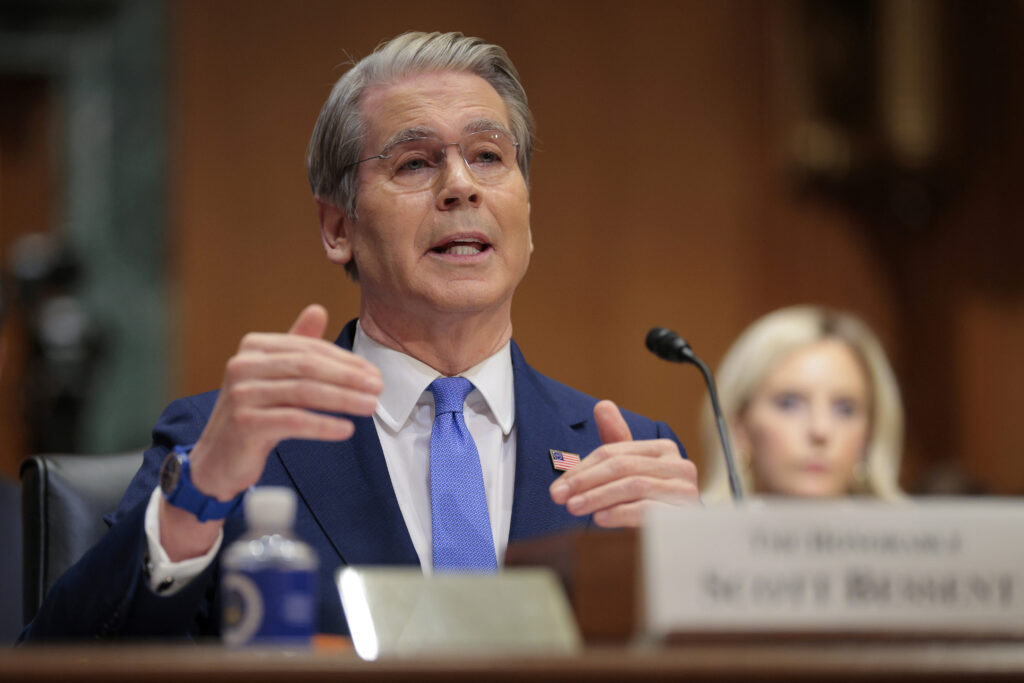
Treasury Secretary Scott Bessent testifies during a Senate Committee on Finance hearing in the Dirksen Senate Office Building on Capitol Hill on June 03, 2026 in Washington, DC. The hearing was held to examine the Treasury Department's budget request for fiscal year 2027. (Photo by Chip Somodevilla/Getty Images)
WASHINGTON — The day after acting Attorney General Todd Blanche said the Trump administration’s “anti-weaponization” fund was dead, Treasury Secretary Scott Bessent evaded questions on Capitol Hill Wednesday about whether President Donald Trump, his family and the Trump Organization would be absolved from future tax enforcement, another part of the president’s IRS settlement.
During a budget oversight hearing before the U.S. Senate Committee on Finance, Bessent repeatedly cited “ongoing litigation” to sidestep lawmakers’ inquiries into the settlement details the administration negotiated to voluntarily drop Trump’s multibillion-dollar lawsuit against the IRS for the 2019 leak of his tax returns.
Committee Chair Mike Crapo said he wanted to give Bessent a chance to “set the record straight, understanding there is ongoing litigation.”
“What can you share with us about Treasury and the IRS role in the settlement agreement, specifically since IRS CEO Frank Bisignano signed the settlement agreement?” Crapo of Idaho asked.
Bessent responded that Treasury was represented in the case by the Department of Justice and so “any additional questions about the settlement or the fund should be addressed to the Justice Department and acting Attorney General Todd Blanche.”
Sen. Ron Wyden, the committee’s top Democrat, said during opening remarks that Bessent “owes the committee an explanation of what the Treasury knows about the dirty settlement.”
“That’s because his department was involved from beginning to end,” the Oregon senator added. “Treasury was a defendant and a negotiator in the lawsuit.”
Moments later, Wyden asked, “Does the IRS audit immunity given to Trump, his family, and his businesses still stand? I’d like a yes-or-no answer to that. I got five minutes, I’m gonna use them for these questions, okay, so that we understand what’s at stake here. This immunity deal is the biggest scam against the taxpayer in American history.”
Bessent responded: “As Albert Einstein said, that doing the same thing, expecting a different answer is the definition of insanity.”
“You’ve given no answers on this subject, and that’s why I’m going to ask these questions,” Wyden said.
“Because, as I said, there’s ongoing litigation,” Bessent replied.
Fund fails to launch
Trump, his sons Donald Trump Jr. and Eric Trump, as well as the Trump Organization sued the IRS and the Department of Treasury for $10 billion in damages for leaking his tax returns to news outlets. The contractor responsible for the leak was sentenced in early 2024.
On May 18, the Department of Justice announced the creation of a nearly $1.8 billion “anti-weaponization” fund for “victims of lawfare.”
Under intense worry, even from Republicans, that Jan. 6 defendants who assaulted police could receive reparations, Blanche told lawmakers Tuesday that the DOJ would “not be moving forward with the fund.”
The creation of the fund had mired Senate Republicans’ path to approving a bill that would fund immigration enforcement for multiple years. Trump had wanted the bill on his desk by June 1.
‘FOREVER BARRED’
But lawmakers are still searching for a clear answer on the department’s May 19 settlement addendum declaring “The United States RELEASES, WAIVES, ACQUITS, and FOREVER DISCHARGES each of the Plaintiffs from, and is hereby FOREVER BARRED and PRECLUDED from prosecuting or pursuing, any and all claims, counterclaims, causes of action, appeals or requests for relief … including tax returns filed before the Effective Date.”
Senate Democrats and legal advocates representing multiple plaintiffs in lawsuits challenging the settlement criticized the arrangement Tuesday.
The Department of Justice did respond to a request for comment, and the White House referred States Newsroom to the DOJ and the Trump Organization.
Ahead of the November midterm elections, President Donald Trump and his Republican allies have demanded Congress pass sweeping voting restrictions, including showing proof of citizenship to register — all in the name of election security.
At the same time, the only federal agency dedicated solely to helping states and localities run smooth and secure elections operates on a meager budget. It provides grants for election security far smaller than in the past. And U.S. House Republicans have signaled they want sizable further cuts.
The agency, the U.S. Election Assistance Commission, sits at the center of a fight playing out in Congress over how to best ensure secure elections. The debate has thrown into sharp relief a yawning gap between GOP rhetoric over election tampering and actual congressional support for election security efforts.
“If my colleagues truly cared about protecting our elections from foreign interference, they’d put the resources behind it,” Rep. Sanford Bishop, a Georgia Democrat, said at a House Appropriations Committee meeting this spring. “Instead, we get empty rhetoric, zero urgency, while putting the right of citizens to vote at risk.”
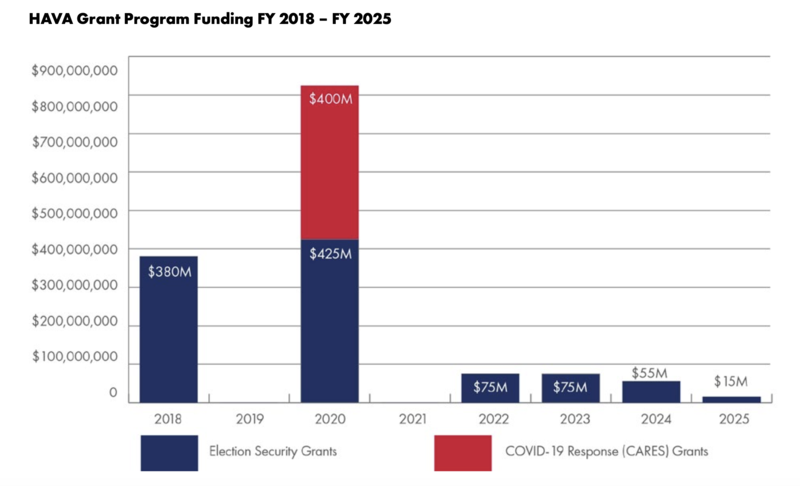
Congressional support of the EAC’s election security grant program has fluctuated over time, but has generally trended downward.
Congress has approved election security grant funding at much lower levels than the program’s early years. (Credit: U.S. Election Assistance Commission 2025 Annual Report)
Lawmakers approved $380 million in 2018 and $425 million in 2020, along with an additional $400 million in election-related pandemic aid that year.
Since then, grant funding has slowed to a trickle. Congress appropriated $75 million in 2022 and again in 2023. That was followed by $55 million in 2024 and $15 million in 2025.
This year’s amount, $45 million, is an increase from the previous year — consistent with enhanced needs in an election year — but substantially lower than other recent years and a far cry from the program’s early years.
Trump and many GOP lawmakers support the SAVE America Act, which would impose new restrictions on voting. It would require voters to show a photo ID at the polls, as well as require them to bring documents proving their citizenship, such as a passport or birth certificate, with them when they register to vote.
The requirements are needed, the bill’s supporters say, to combat noncitizen voting, an extremely rare occurrence.
“The cheating is rampant in our elections,” Trump asserted without evidence in his 2026 State of the Union address. He has called the SAVE America Act “commonsense, country-saving legislation.”
The House passed the bill in February but it has floundered in the Senate amid opposition from Democrats and a handful of Republicans. Trump continues to seek new avenues to advance the measure, including urging lawmakers to attach it to housing legislation.
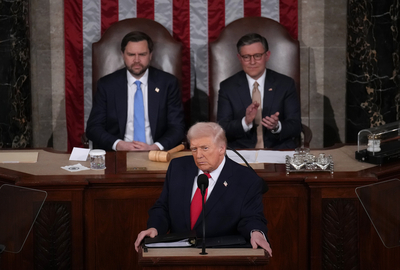
President Donald Trump delivers his State of the Union address on Feb. 24, 2026. During the address, Trump claimed, without evidence, “cheating is rampant” in U.S. elections. (Photo by Andrew Harnik/Getty Images)
Cuts to election security agency
The Trump-led push for voting restrictions has largely ignored concrete election security needs in favor of chasing the phantom specter of noncitizen voting, Democrats and experts on election administration say. The result, they say, has been the possibility of sharp cuts at the EAC.
The House Appropriations Committee in April approved a bill that would cut the EAC’s salaries and expenses from $23.86 million to $17 million. It would mark the first time in four years the agency’s budget has dropped below $20 million.
The bill would also sharply cut the EAC’s election security grant program from $45 million to $15 million, the same as the last non-election year.
Since 2018, the agency has distributed the grants to election officials for technology upgrades, including cybersecurity, physical security improvements at election sites and efforts to combat voter misinformation. Lawmakers created the election security grants in response to foreign interference in the 2016 election.
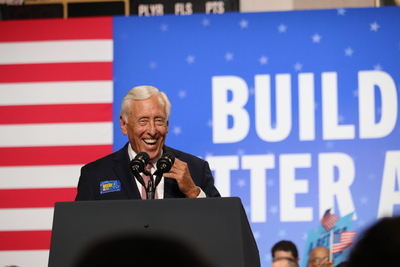
U.S. Rep. Steny Hoyer, a Maryland Democrat, at a Democratic rally in 2022. (Photo by Danielle E. Gaines/Maryland Matters)
“Republicans claim falsely that our elections are plagued by fraud and that more needs to be done to secure the vote,” Rep. Steny Hoyer, a Maryland Democrat, said in a statement to States Newsroom.
“Yet, they have consistently undermined the security of our elections, including by proposing to cut election-security grants by two-thirds and the Election Assistance Commission’s (EAC) overall budget by almost 30% in Fiscal Year 2027,” Hoyer said. “This will leave states without critical resources to secure their voting systems and adopt the latest in voting technology and best practices.”
Hoyer, who helped spearhead the 2002 legislation creating the EAC and is the ranking Democrat on the Appropriations subcommittee that oversees the agency’s budget, said it has been a tremendous benefit to state and local election officials and to the integrity of the vote.
“I will continue to oppose Republican efforts to cut its funding,” he said.
Congressional GOP embraces Trump
The bill represents only one, early step in the appropriations process. The House hasn’t voted on it and the Senate could eliminate or alter the cuts, with any differences eventually worked out in a conference committee.
The House Appropriations Committee, which is not burdened with the Senate’s need for bipartisan approval of most legislation, in past years has also put forward cuts to election security grant funding that have been abandoned later.
Still, the measure this year demonstrates how House Republicans have embraced Trump’s focus on noncitizen voting.
While cutting the EAC and election security funding, the bill includes a provision prohibiting the use of funds to register noncitizens to vote. Noncitizens are already prohibited from voting in federal elections and only a very small number of municipalities allow noncitizens to vote in local contests.
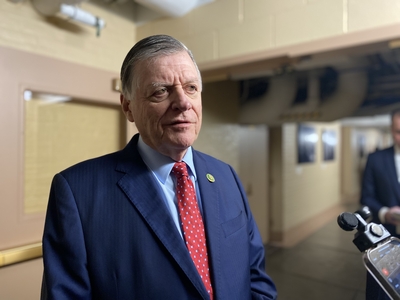
Oklahoma Republican Rep. Tom Cole speaks with reporters at the U.S. Capitol in January 2024. (Photo by Jennifer Shutt/States Newsroom)
“The people demanded a new mandate, we’re carrying it forward. That includes reinforcing President Trump’s work to … ensure that only citizens vote in our elections,” Rep. Tom Cole, an Oklahoma Republican and the Appropriations Committee chairman, said at an April meeting.
A spokesperson for Rep. Dave Joyce, an Ohio Republican who chairs the Appropriations subcommittee that developed the bill, didn’t respond to a request for comment.
Funding ebb
Congress created the EAC in the 2002 Help America Vote Act, passed in the wake of the 2000 presidential election and the Florida recount.
A bipartisan commission leads the agency, which has about 70 employees, according to its 2025 annual report. It focuses on aiding state and local election officials with training and other resources, certifying voting equipment and overseeing grant programs.
Gideon Cohn-Postar, director of federal affairs at the Institute for Responsive Government, said election officials generally want Congress to provide about $400 million a year, a figure that reflects lawmakers’ initial commitment to the grant program in 2018 and would allow states to make significant strides in bolstering their election infrastructure.
Each year’s grants are split between states and territories based on a formula. In practice, most receive the minimum amount. The $45 million grant for 2026 translated into $819,000 for most states, with a mandatory 20% match.
“It’s absolutely insufficient,” Cohn-Postar said.
State spending
A December 2024 report from the Bipartisan Policy Center measuring the impact of the grant program found that cybersecurity constituted the single largest category of grant spending, at over $200 million, followed by nearly $150 million on voting equipment.
Some states save up their grant money over several years to help pay for larger purchases, like voter registration systems, with the money earning interest in the meantime. As of March 2025, states had collectively spent 69% of their grant dollars, according to the latest data available from the EAC.
Two states — Nevada and Ohio — have spent 100% of their funds. Only Louisiana has spent none, ahead of a future elections system overhaul.
In Connecticut, election officials have spent 95% of the $13.8 million it has received in election security grants over the years, according to the EAC data. The funds have helped towns conduct security audits, Connecticut Democratic Secretary of State Stephanie Thomas said in an interview.
As an example, Thomas said when she took office in 2023 not all of the town’s systems were on a government online domain but most have now adopted one.
“Someting like that, it never gets the headlines but hugely important from a security perspective,” Thomas said.
Commission warns against cuts
EAC commissioners have been warning Congress that unstable funding and budget cuts would harm their agency’s work. All three current commissioners and a recent former commissioner testified at a House Administration Committee hearing on election security in May, where they cautioned lawmakers against reduced and unpredictable resources.
Commissioner Benjamin Hovland, a Democratic appointee of Trump, noted that while Congress has provided “significant” funding since the 2002 law, federal dollars have covered less than 5% of the total cost of running elections during that time.
Election officials today face challenges that would have been unimaginable when the law was passed, he said, adding that commissioners heard enthusiasm for the EAC’s work in recent meetings with officials.
“But the agency is nearing a point where funding cuts will impact what we can accomplish, and the support we can provide election officials, especially related to election security,” Hovland said.
States frequently tell the EAC they want federal funding that is “predictable, consistent, and sufficient” to support long-term planning, said Christy McCormick, a Republican commissioner appointed by President Barack Obama.
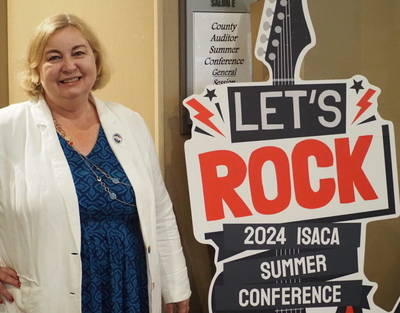
U.S. Election Assistance Commissioner Christy McCormick spoke at the Iowa State Association of County Auditors summer conference in Des Moines in June 2024 about federal resources available to local election officials. (Photo by Robin Opsahl/Iowa Capital Dispatch)
The EAC’s adoption of newer, more rigorous standards for election equipment illustrates the importance of funding for state and local election officials.
In 2021, the EAC adopted the Voluntary Voting System Guidelines 2.0, or VVSG 2.0, replacing the earlier 1.0 guidelines. The technical standards are designed to enhance security, such as requiring air gapped systems, and greater accessibility for voters with disabilities.
While states are not required to use VVSG-certified machines, many states have followed the EAC’s lead and mandated the use of machines that meet these standards. Upgrading is expensive, however.
In the meantime, election technology continues to age. By 2028, the average age of modern voting equipment will rise to 9.3 years old, up from just 4.9 years old in 2020, according to a report from the Bipartisan Policy Center released in late May. The report identified “episodic and unpredictable” federal funding as one obstacle to states purchasing VVSG 2.0 equipment.
“Federal support is absolutely key to making sure that election infrastructure is functioning well at the state and local levels,” Will Adler, a co-author of the report, said in an interview.
‘Don’t give me any more money’
To be sure, some state election officials are skeptical of accepting grant funding. Kansas Republican Secretary of State Scott Schwab told a congressional hearing in April that elections are best run and funded locally.
He said he previously accepted grant dollars but that state lawmakers then didn’t approve the required matching funds, leaving his office in a bind.
“I would rather, because of the strings attached, just don’t give me any more money,” Schwab said. “If we need more money, we can handle it locally.”
But since the House Appropriations Committee advanced cuts to the EAC and the election security grants in April, numerous election officials and voting rights groups have urged lawmakers to reconsider.
On May 12, the Project for Election Infrastructure sent a letter signed by several dozen local election officials asking senators for $400 million in election security grants, with at least two-thirds directed to localities. The true cost of modernizing and fully securing American election systems will run billions of dollars, the letter warned.
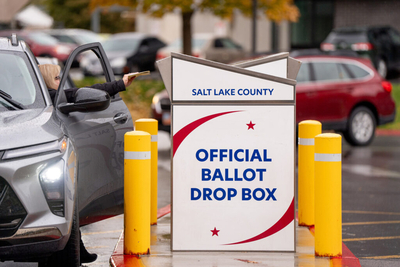
Bollards surround a ballot drop box at the Salt Lake County Government Center in Salt Lake City on Election Day, Tuesday, Nov. 5, 2024. (Photo by Spenser Heaps for Utah News Dispatch)
The National Association of Counties on June 2 asked House and Senate appropriations leaders to not cut funding. The years between presidential elections are when “critical groundwork is laid,” the association’s CEO and executive director, Matt Chase, wrote in a letter.
Chase ticked through typical security expenses that can quickly add up. Bollards to protect remote drop boxes can cost $500 to $4,000 per bollard. Key card access at election facilities can cost $1,500 to $5,000 per door. Video surveillance cameras can run hundreds to thousands of dollars.
“Federal investment scaled only to presidential cycles leaves counties without the resources needed to be ready when turnout surges,” Chase wrote.
Thomas, the Connecticut secretary of state, echoed the sentiment.
“I feel that many people use the term election security almost like a slogan,” Thomas said. “But election security is actually year-round work.”
Sen. Andy Kim questions nominee about proposed Roxbury ICE facility
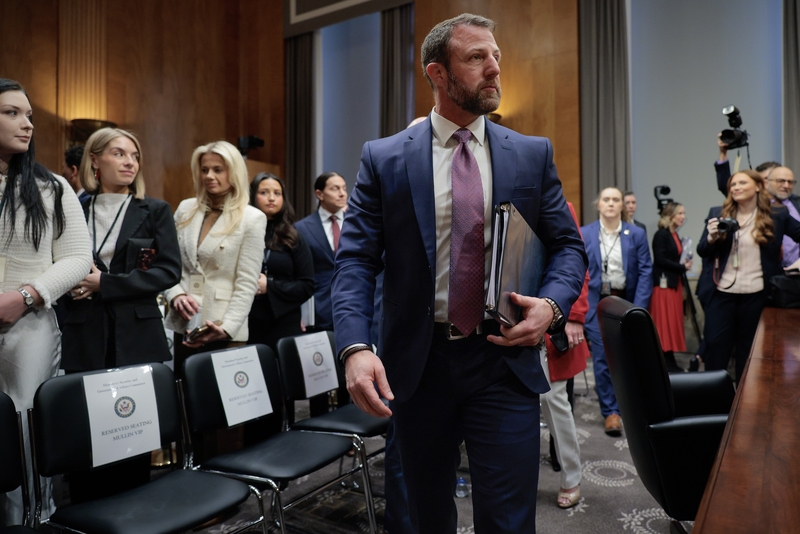
WASHINGTON — Homeland Security Secretary Markwayne Mullin appeared before the U.S. Senate Appropriations Homeland Security panel Tuesday and defended his threats to cripple international air travel into some cities led by Democrats.
Democratic senators on the panel also pressed Mullin about aggressive immigration tactics from federal officers; whether the department would follow court orders from federal judges; and his recent televised comments floating plans to pull customs employees from airports in cities that don’t cooperate with federal immigration enforcement.
Republicans also probed Mullin about visa issues affecting rural hospitals and employers in the hospitality industry.
It was the first time Mullin, who was advocating for President Donald Trump’s fiscal 2027 budget request, has appeared before Congress since the Senate confirmed his nomination to lead the Department of Homeland Security in March.
The top Democrat on the panel, Chris Murphy of Connecticut, asked Mullin if DHS would implement court orders from federal judges.
Mullin did not answer the question, but said he would “never break the Constitution.”
Murphy pressed him several more times, but Mullin only argued that some judges make a “political opinion from the bench.”
“If we didn’t think the courts were politicized then I’d be able to answer that,” he said.
Airspace in ‘chaos’?
Murphy criticized Mullin’s first few months in his role, citing repeated statements he would suspend arrivals of international flights to cities and states that are governed by Democrats.
“Not only would that throw our airspace into chaos, it’s illegal,” Murphy said. “Do not ask us to fund an agency that makes up its own laws.”
Mullin pushed back on Murphy’s characterizations, calling them “outlandish claims” that “are flat wrong.”
“What’s unconstitutional that we’re doing?” Mullin said. “We’re doing the job that Congress gave us.”
Mullin said in interviews on Fox News and Newsmax last week that he was considering a plan to remove customs officers from airports in cities that do not cooperate with federal immigration enforcement.
“Listen, these sanctuary cities where the local radical left Democrats aren’t allowing us to do our job and enforce federal laws, then we shouldn’t be processing international flights into their cities, either,” he told Fox’s Sean Hannity May 26.
The move would severely harm customs processing.
The top Democrat on the full Appropriations Committee, Sen. Patty Murray of Washington, said it would be “insane.”
“It is not only dangerous but would spell economic crisis for blue and red states,” Murray said.
Kilmar Abrego Garcia
Maryland Democratic Sen. Chris Van Hollen brought up the high-profile case of Kilmar Abrego Garcia, the Salvadoran immigrant who was wrongly deported to a brutal mega-prison in El Salvador last year. Abrego Garcia fought to be returned to the United States, where the Trump administration continues to try to deport him.
Van Hollen asked Mullin if he was aware that Abrego Garcia has agreed to be removed to Costa Rica, and that Costa Rica will accept him.
Mullin said he was not aware of that.
In a federal court in Maryland, Abrego Garcia is challenging the Trump administration’s efforts to remove him to several African countries, rejecting his offer of moving to Costa Rica.
Abrego Garcia’s wrongful deportation cast a national spotlight on the Trump administration’s aggressive deportation campaign. Several courts ruled his deportation illegal and the Supreme Court ruled Abrego Garcia should be returned to the U.S., but stopped short of requiring it.
The Justice Department indicted Abrego Garcia on human-smuggling charges stemming from a 2022 traffic stop, but a federal judge in Tennessee last month found the move to be vindictive and dismissed the charges.
Prior to the charges being dismissed, the Justice Department offered for Abrego Garcia to be removed to Costa Rica if he were to plead guilty to those initial charges. He refused. Since then, the Trump administration has tried to remove him to Eswatini, Liberia and Uganda.
Van Hollen told Mullin that Abrego Garcia had agreed to be deported to Costa Rica.
“Great. If he’s willing to do that, we’ll send him,” Mullin said.
Visa restrictions
Appropriations Committee Chair Susan Collins of Maine asked Mullin about two visa programs, H-1B for high-skill workers and H-2B for seasonal workers. She said the newly imposed visa fee for highly skilled workers the Trump administration placed – $100,000 – is impacting rural hospitals in her state.
She asked Mullin if the Trump administration would consider making a carveout for healthcare workers on a H-1B visa.
Mullin said DHS has looked into that issue, but said his ability to address it was limited.
“To have a carveout would be difficult,” he said. “We still have to do our due diligence.”
Collins asked Mullin if DHS would consider reinstating a visa policy that allowed repeat seasonal workers to not be included in the annual cap for H-2B visas.
Mullin said his hands were tied and said Congress would have to give him a higher cap.
New Hampshire Democratic Sen. Jeanne Shaheen asked Mullin for a followup on visa processing for international students on F-1 visas, citing her state’s New England College as an example.
“Without approval by July 1 they will lose 2,000 graduate students,” she said.
Mullin said he had looked into the issue and alerted U.S. Citizenship and Immigration Services, the agency that processes legal immigration paperwork. DHS is “working on it,” he added.