Tag: Health

  • High-potency cannabis fuels state debates over psychosis and addiction risks

    High-potency cannabis fuels state debates over psychosis and addiction risks

    When her son was a teenager, Connecticut mom Amy Wadsworth said, he was the type of kid parents rarely worry about.

    He played sports, cared about his health and stayed away from drugs. In 2018, when he left West Hartford to start his freshman year at American University in Washington, D.C., she expected his biggest challenge would be adjusting to college life.

    Instead, she said, he began using cannabis to cope with social anxiety and as a sleep aid.

    Within months, Wadsworth’s son was calling home in the middle of the night, terrified and disoriented.

    Over the next several years, his behavior became increasingly erratic, he had psychotic episodes and he was eventually diagnosed with severe cannabis use disorder. That’s when a person’s marijuana use becomes difficult to control and begins interfering with daily life.

    Now 25, Wadsworth’s son has spent much of the past several years cycling through hospitals and treatment programs across the country.

    “It’s definitely changed the trajectory of his life,” Wadsworth said. “It did nothing but harm him, literally harm every facet of his life — every facet, physical, mental, everything.”

    States have spent the past several decades debating whether to legalize cannabis. Now, they are debating how intoxicating legal products should be.

    A growing body of research suggests that frequent use of high-THC cannabis increases the risk of cannabis use disorder, psychosis and other mental health problems for users, particularly adolescents and young adults. In response, lawmakers in some states this year have moved to impose stricter potency caps, while others have scaled back or rejected such measures amid industry opposition and uncertainty over research findings.

    While cannabis flower once commonly contained THC levels in the single digits, many products sold legally today contain 15% to 20% THC or more. Concentrates — such as waxes, oils and shatter — can exceed 80%.

    About 15% of Americans ages 12 and older reported using marijuana in the past month in 2024, according to the Substance Abuse and Mental Health Services Administration. And about 3 in 10 people who use cannabis have cannabis use disorder, according to the federal Centers for Disease Control and Prevention.

    Some public health researchers and addiction specialists argue that public perceptions of marijuana have not kept pace with the growing availability of high potency products. They say broader legalization efforts — including the federal government’s recent move to reclassify medical marijuana as a less restrictive drug under the Controlled Substances Act — may reinforce the belief that cannabis is harmless.

    “Moving cannabis from Schedule I to Schedule III doesn’t help me save lives by decreasing the perception of that risk,” said Dr. Alta DeRoo, the chief medical officer of the Hazelden Betty Ford Foundation, one of the largest nonprofit treatment providers for addiction and mental health. DeRoo also is a board-certified addiction medicine physician and OB-GYN.

    Some state efforts to impose potency limits have been stalled by resistance from the cannabis industry and questions about how far governments should go in regulating a legal product.

    In Connecticut, lawmakers this year reinstated a 35% THC cap on flower just weeks after voting to eliminate it. Lawmakers from both sides of the aisle said they were concerned about the potential public health effects of increasingly potent marijuana products.

    At the same time, the legislation moved forward with other cannabis market expansions. Lawmakers removed a 70% THC cap on concentrates, increased the amount of THC allowed in certain cannabis-infused beverages and expanded the market to include products such as topicals, tablets and capsules.

    Proposals to cap THC potency have surfaced in statehouses across the country for years. This year, lawmakers in California, Georgia, Mississippi, Oklahoma, Oregon and South Dakota introduced similar measures, though most did not advance.

    Georgia Republican Gov. Brian Kemp signed a law in May that removes the state’s previous 5% THC potency cap starting July 1. The new law will also add a 12,000 mg possession limit for registered medical cannabis patients and allow patients over 21 to vaporize medical marijuana.

    ‘A perennial debate’

    Lawmakers across the country have proposed a range of measures aimed at limiting the potency of cannabis products.

    In Washington state, Democratic state Rep. Lauren Davis has spent years trying to place guardrails on high-potency cannabis products. Since 2020, she has introduced at least five bills that would have capped THC levels in concentrates or imposed safeguards, including age restrictions, warning labels and a higher tax rate on products with elevated THC levels.

    Most of those measures were thwarted by opposition from the cannabis industry, Davis told Stateline.

    Industry groups and cannabis businesses argued that Washington’s existing regulations already protected consumers and kept cannabis away from minors. Opponents also warned that limiting high-THC products would drive consumers to the illicit market, hurting legal businesses and exposing users to unregulated, possibly contaminated products.

    “(The industry) then went on to basically rain down all fire and brimstone and crush every bill that I’ve ever attempted in this area,” Davis said.

    The only proposal to become law was a 2024 measure that requires retailers to warn customers about the association between high-potency THC products and psychotic disorders.

    Washington state does not currently impose THC caps on flower or concentrates, but it does set limits on edibles and beverages.

    Nearly all states have some form of medical-only or hybrid medical and recreational cannabis program, but just eight states, Connecticut, Mississippi, Montana, Nevada, New Mexico, Oregon, Rhode Island and Vermont, have potency caps on some products, including flower, according to the National Conference of State Legislatures. Potency limits on edibles are far more common.

    “This is a perennial debate that comes up in Vermont and elsewhere around higher potency products,” said James Pepper, who chairs the Vermont Cannabis Control Board, the agency that regulates the state’s market.

    “I feel like the concerns are certainly real,” he added.

    In Oklahoma, a recent incident in which a 4-year-old boy was hospitalized and remained unconscious for more than a day after his parents said he ingested a 1,000 mg edible found at a playground has added to growing debate over high-potency cannabis products in the state.

    “We know that some of our medical patients truly do need higher potency products, but do we really need a 2,000 milligram gummy available for anyone with a patient license to purchase in an Oklahoma dispensary?” said Adria Berry, the executive director of the Oklahoma Medical Marijuana Authority, which oversees the state’s medical market.

    Oklahoma Republican Gov. Kevin Stitt also signed a measure into law last month that will take effect in November, adding stricter packaging and labeling requirements, including restrictions intended to prevent products from resembling candy or appealing to children.

    While some industry experts acknowledge the potential harms, they say the focus should be on consumer education and clear information about potency and effects, rather than new restrictions.

    An official with Trulieve, a cannabis company that operates dispensaries in eight states, told Stateline that its products are independently tested and that potency information is available for customers to review and ask questions about, including a product’s effects.

    “We believe that that piece of information is critical for a consumer to make an educated decision on what type and what potency of product they are looking to consume,” said Lauren Niehaus, Trulieve’s executive director of government relations.

    Some advocacy and trade groups, such as the National Cannabis Industry Association and the National Organization for the Reform of Marijuana Laws (NORML), argue that policymakers should steer consumers into tightly regulated legal markets rather than imposing blanket THC caps that could push some users back to illicit sellers. They say that accurate labeling, child-resistant packaging and public education campaigns are the best strategies to protect public health and prevent youth access.

    “It’s undoubtedly safer and better for public health outcomes to regulate these products,” said Adam Rosenberg, who chairs the board of the National Cannabis Industry Association.

    Paul Armentano, NORML’s deputy director, said potency caps oversimplify the risks of cannabis products and fail to account for how consumers actually use them. Consumers view ultra-potent products as a novelty, he said, and ultimately gravitate toward lower-potency options.

    “When you look at state-tracked sales in legal states, cannabis flower or botanical cannabis still outsells every other product, and I would dare say it’s because that is the most moderate to low potency product available on the shelf, and that’s what most people want,” Armentano said.

    Armentano also argued that some of the strongest calls for THC limits come from opponents of legalization, who see potency restrictions as a way to gradually roll back access to legal cannabis.

    What the research says

    A study published earlier this year in JAMA Health Forum found that adolescents who use cannabis, including products with higher potencies, had a significantly increased risk of developing psychotic and bipolar disorders, along with higher risks of depression and anxiety. The research followed about 463,000 adolescents in Northern California between ages 13 and 17 and tracked outcomes into early adulthood. The study did not, however examine whether the use of higher-potency products is more likely to cause psychotic and bipolar disorders.

    But other research has linked frequent use of high-potency cannabis to a greater risk of psychosis and psychotic disorders, particularly among heavy users. Several studies have found a dose-response relationship, meaning the risk tends to rise as THC concentration and frequency of use increase. Experts caution, however, that many studies cannot definitively prove that cannabis causes psychosis and that individual risk varies widely.

    Other research suggests the risk of developing psychosis may be higher for adolescents and young adults, whose brains are still developing, as well as people with existing mental health conditions or a family history of psychotic disorders.

    “I’ve seen patients come through our facilities where they haven’t done any other drugs other than just high-potency marijuana, and their psychosis is remarkable,” said DeRoo, of the Hazelden Betty Ford Foundation. “They don’t have a grasp of reality. They come in seeing things, they come in believing things, alternate realities.”

    John Puls, a psychotherapist and addiction specialist in Florida, has seen similar patterns in his practice at Full Life Comprehensive Care, particularly among adolescents and young adults using high-potency products.

    He said families often don’t believe cannabis alone could be driving such dramatic changes. Beyond psychosis, he added, cannabis can chip away at more ordinary parts of life: Motivation drops, executive functioning suffers, patients miss appointments or forget obligations, and short‑term memory and relationships start to fray.

    Some medical and industry experts say that cannabis can provide meaningful relief for some people, including those undergoing cancer treatment or who have chronic pain. But there is very little consensus on appropriate medical uses, dosing and long-term effects, particularly as products vary widely in potency.

    “If there’s no standardized testing of products, or if there’s no enforcement of potency limits, then we might be putting people at more risk,” said Dr. Smita Das, an adult addiction psychiatrist and a clinical professor at Stanford University School of Medicine.

    Stateline reporter Amanda Watford can be reached at [email protected].

    This story was originally produced by Stateline, which is part of States Newsroom, a nonprofit news network which includes Virginia Mercury, and is supported by grants and a coalition of donors as a 501c(3) public charity.

  • Virginia measles cases surge past 70, concentrated in Central Virginia

    Virginia measles cases surge past 70, concentrated in Central Virginia

    Virginia’s measles count has jumped by more than 30 cases in recent weeks, with most of the infections centered in Central Virginia around Buckingham County. Data from the Virginia Department of Health shows that there have been 77 cases this year, most involving unvaccinated people.

    The bulk of the cases are babies and children younger than 12, aligning with how some parents were more likely to follow anti-vaccine trends that emerged in the earlier 2000s and have resurfaced more recently.

    During a visit to Virginia Wednesday, U.S. Health and Human Services Secretary Robert F. Kennedy Jr. recommended measles vaccines as a key preventative measure — a relatively recent endorsement following years of national prominence in anti-vaccine movements.

    About two decades ago, measles was considered eliminated in the U.S., but anti-vaccine rhetoric became more mainstream and misinformation about vaccines spread, leading to confusion and hesitancy among some people.

    Kennedy’s comments to Virginia reporters this week follow an acknowledgement he made during Congressional testimony in late April. It marks a relatively new stance after he did not recommend vaccination during a measles outbreak in Texas last year and instead advised Americans to “do your own research.

    Despite the U.S. being among the countries that previously eradicated measles, Kennedy noted this week that new cases are “happening all over the world.”

    “At (the Center for Disease Control and Prevention), we encourage people to get their measles vaccination,” he added. “That’s the best way to prevent yourself from getting measles.”

    Piedmont Health District Director Maria Almond said in an email that local health officials continue recommending vaccinations. Her health district is responding to the region of the state where most measles cases are occurring.

    Virginia Department of Health Commissioner Cameron Webb reiterated that people who remain unsure should speak with their doctors.

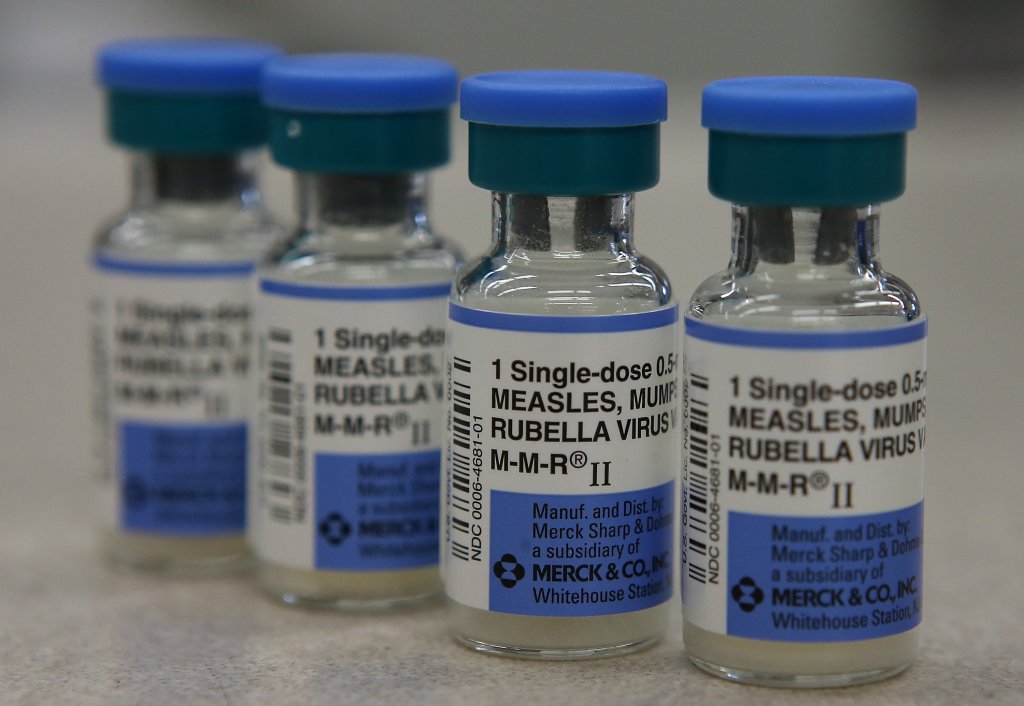
    “If you’re still not sure about the MMR vaccine, you should talk to your trusted health care provider immediately,” Webb said. “They can answer all your questions and address any concerns you may have.”

    About a month ago, Virginia’s measles cases were still in the two-dozen range as infections also climbed in other states. The increase prompted the CDC to issue summer travel guidance to encourage vaccinations and other preventive measures.

    Almond said the outbreak in the Piedmont region “has “not yet overburdened the local healthcare systems.”

    Hospitals and clinics are more likely to face strain during epidemics and pandemics.

    In Virginia and across the country, health systems and health departments have also dealt with staff turnover and burnout. Virginia’s health department has spent years addressing internal challenges following the COVID-19 pandemic.

    “According to the CDC, one in five people infected by measles requires hospitalization for complications, including pneumonia and dehydration,” Almond said.

    U.S. Secretary of Health and Human Services Robert F. Kennedy Jr. during a press conference in Doswell Wednesday. (Photo by Charlotte Rene Woods/Virginia Mercury)
  • Aging at home drives growing demand for Virginia caregivers

    Aging at home drives growing demand for Virginia caregivers

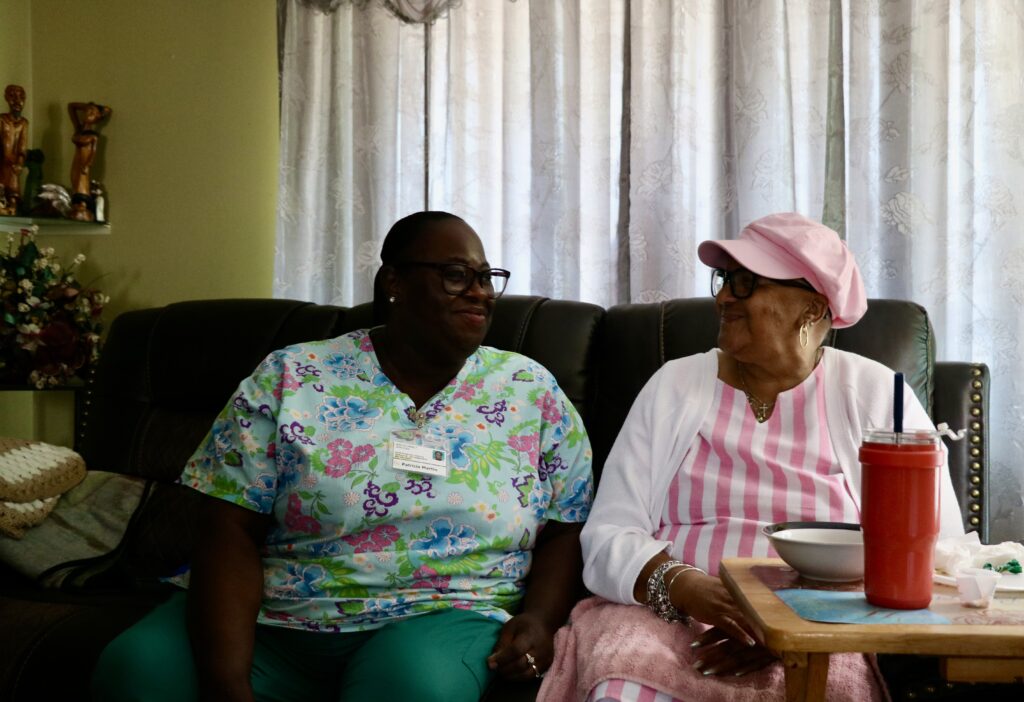
    Decked out in a matching pink shirt and hat with layers of bracelets and necklaces, Clara Hatcher’s dialysis appointment doubles as a fashion event.

    She spends three and a half hours, three mornings a week, receiving the treatment, so the 77-year-old likes to dress up for the occasion. Having been a dialysis patient for 12 years, she also shares her expertise with newer patients about how to handle the procedure.

    “I like to warn people how tired it can make you feel and what to expect,” Hatcher said.

    While she likes helping others prepare for it, she receives help of her own through her caregiver Pat Martin and nurse Belinda Hensley.

    The trio reflected on how healthcare “takes a village” as they helped her slowly walk back into her ranch-style Henrico County home after an appointment.

    Hatcher’s home health workers help her age in place in the house she bought to do just that.

    Much of Martin’s work involves making sure Hatcher sticks to her medication schedule, handling light housekeeping, ensuring she gets to medical appointments and assisting with tasks like dressing or cooking.

    “She likes to cook but her hands have tremors and I need to make sure she doesn’t fall,” Martin said.

    Hensley makes occasional visits to check in, as nurse supervision is required by Medicaid.

    As a nurse and a caregiver, Hensley and Martin are part of an evolving home healthcare landscape. As more people choose to age in place longer or avoid nursing homes altogether, demand for services is growing.

    Staffing organizations are innovating to hire and retain workers while coping with low Medicaid reimbursement rates at a time where the state-federal program is bracing for funding losses. That’s why two Richmond-area nonprofits hope that a grant-funded pilot program they participated in could become a model for other parts of the state.

    Supported staff, supported clients

    With $700,000 in funding from the Richmond Memorial Health Foundation and the Bob and Anna Lou Schaberg Foundation, Family Lifeline and Jewish Family Services were able to grow their staff numbers by 69% and 43%, respectively. They also raised caregivers’ starting wages to $15 an hour, predating the benchmark that state legislators passed this year.

    “This is a workforce where the wages have historically been very low,” Family Lifeline CEO Jennifer Case said.

    Raising pay was important for both attracting and retaining staff. The funding also helped the organizations modernize technology to make paperwork easier for nurses and caregivers, improve professional development training and assist workers facing transportation issues.

    Case emphasized that many caregivers do not have cars and rely on public transportation to get to work.

    If a client lives along a bus route, that may not be a problem, she said. But when clients live deeper into Henrico or Chesterfield counties, transportation can become a challenge.

    Even within Richmond city limits, Southside resident Regina Carter said what would normally be a short drive to the East End can sometimes take her more than an hour because she relies on the bus.

    “Sometimes the bus will not even come, so I have to wait for a whole other one,” she said. “And that’s almost like I don’t want to say an hour, but it’s an hour.”

    In recent years, the city and surrounding counties have expanded bus routes, but building that infrastructure takes time.

    For caregivers whose clients live farther out, the pilot program helped offset some Lyft and Uber costs for workers who needed it.

    Wendy Kreuter, CEO of Jewish Family Services, said both organizations continue supporting workers with transportation needs and plan to advocate on the issue with state and local governments while exploring public-private partnerships.

    Transportation barriers have long been an issue in healthcare, particularly in rural communities. State lawmakers have backed a pilot program providing Medicaid coverage for non-emergency transportation to help rural patients reach appointments. But challenges getting workers into patients’ homes have not yet been addressed.

    “This is something we should explore,” said Del. Rodney Willett, D-Henrico, who chairs the House Health and Human Services Committee, where healthcare legislation is reviewed each year.

    Medicaid issues

    Another longstanding issue has been Medicaid reimbursement rates. For Family Lifeline and Jewish Family Services, that means both organizations have had to rely on other funding sources to support staff.

    Generally, reimbursement rates range from $20 to $23 per hour. But Kreuter and Case said the “village” includes more than direct care workers. Administrative staff are also needed to coordinate scheduling and transportation for clients.

    “I think it’s just going to get harder,” Hensley said of a reconciliation bill Congress passed last summer that puts thousands of Virginians at risk of losing Medicaid coverage.

    A KFF survey released earlier this year found that 41 states have reported home health agency closures, though Virginia was not among them.

    Case and Kreuter said their organizations seek private philanthropy of all sizes to continue supporting workers and clients.

    Though the reconciliation bill could affect Medicaid coverage and services across Virginia, federal lawmakers also negotiated the Rural Health Transformation Fund as an opportunity to address longstanding challenges.

    Outgoing Gov. Glenn Youngkin secured $189 million from the fund, which Gov. Abigail Spanberger’s administration is now responsible for administering.

    LeadingAge Virginia, which represents organizations like Kreuter’s and Case’s, has applied for the funding.

    Betsy Archer, director of the association’s PositiveAge branch, said the charitable pilot offers a strong blueprint.

    “We definitely see it as a replication or a replicable pilot that we think can be strengthened,” she said.

  • Virginians suffer as callous, major cuts to food stamps become entrenched

    Virginians suffer as callous, major cuts to food stamps become entrenched

    President Donald Trump’s Darwinian food stamp modifications – abetted last year by supine Republican congresspeople whose constituents are now suffering – is working out just as critics had predicted. Low-income and disabled residents in Virginia and elsewhere are forced to choose between food, shelter, and healthcare.

    ‘Trying to do the best we can’: Va. lawmakers, beneficiaries brace for SNAP changes

    Roughly 867,000 Virginians received Supplemental Nutrition Assistance Program benefits in March 2025. The figure a year later is down to almost 754,000, a spokesman with the Virginia Department of Social Services said Friday. That’s a nearly 14% drop.

    Some $187 billion will be cut from the federal food stamps program over a decade because of the changes. It’s as if Inspector Javert is running the program.

    Don’t just take my word for the calamity these heartless cuts have caused – all to mostly benefit wealthy Americans. Listen to the people on the front lines in the commonwealth who assist the poor, unemployed and others who are overwhelmed by decreasing federal aid, a stagnant economy and higher gas prices because of the poorly planned war against Iran:

    Patrice Smallwood, chair of the board of Virginia Organizing, said Trump’s H.R. 1 bill was supposed to take money from scammers and those committing fraud to redirect money to the truly needy. “That’s not what I’m seeing,” she continued. “That was deception.

    “The biggest thing really is the propaganda … about how Virginians and people all across the country were going to be helped,” Smallwood said.

    Though some decline in enrollment occurred before H.R. 1 passed (I refuse to call it by Trump’s risible slogan), the demand on area food pantries has rocketed in recent years, said Eddie Oliver, executive director of the Federation of Virginia Food Banks. The group is a collaboration among seven regional food banks and hundreds of agency partners around the state.

    “We’ve seen a pretty steady rise in food pantry usage since 2023,” Oliver said. Some food banks are seeing all-time record demand now, he added, which was supercharged by the government shutdown late last year.

    Social worker Erika Nunez, of the Feed More food bank in Richmond, visits the St. Thomas Episcopal Church Food and Wellness Pantry in Richmond twice a month to assist people applying for SNAP benefits. Here she is working with volunteer Quentin Atkins. (Photo courtesy of the St. Thomas Food and Wellness Pantry)

    The federation notes that eight of the 10 localities with the highest rates of food insecurity are rural and concentrated in Southwest Virginia. Those areas typically select Republicans in Congress – and GOP congresspersons almost unanimously supported cuts to SNAP and Medicaid last year.

    All five Virginia Republicans in the U.S. House of Representatives – Ben Cline, Morgan Griffith, Jennifer Kiggans, John McGuire and Rob Wittman – voted to slash the social safety net. All of them are up for re-election this fall.

    Many Virginians who remain eligible for food stamps are exasperated because of stricter application and work requirements, noted Hannah Wyatt, a staff attorney who specializes in food security and public benefits with the Virginia Poverty Law Center.

    “Some are kind of just giving up,” Wyatt said.

    Able-bodied adults without dependents, for example, already faced a three-month time limit on SNAP participation if they weren’t working at least 80 hours per month. But the legislation increased the age that adults must adhere to those work requirements and time limits, from 54 years old before to 64 now.

    So older adults will be forced back into the workforce to remain eligible, even if it’s a chore because of age and general creakiness to get up, get out and get to a job.

    This is just one of the regulations in the legislation that tilt away from compassion for average Americans. The law also made eligibility stricter for non-citizens and reduced exemptions for certain requirements.

    Other states face the same problems. For example, NBC News recently reported on the upheaval in Arizona, where applicants must fight to prove their eligibility. Some were even quizzed about monetary birthday gifts sent by Zelle, and whether they were one time or recurring.

    The article told of recipients who had to turn over even more documents to prove they’re eligible – forcing people off the rolls who should get food aid. Folks needed to visit food pantries more often. The number of Arizonans getting food stamps in March was about half the total from the same time last year; 200,000 children have lost benefits, state data showed.

    The claims by toadies for the Trump administration that the new regs are ending “fraud, waste and abuse” have been illusory – especially since those receiving aid are jumping through more hurdles to receive what they deserve.

    Plus, the Center on Budget and Policy Priorities, a nonpartisan research and policy institute, previously reported that “cases of intentional fraud by participants or SNAP authorized retailers are relatively rare.”

    VDSS has published a webpage with a dedicated list of resources for SNAP participants that covers employment and volunteer opportunities, medical resources and more information.

    “The primary impact of this law on the Commonwealth is that now more families are going hungry when nobody should have to go hungry,” the spokesman said.

    Contrast the amount of documentation that SNAP recipients must provide to the lack of oversight involving repairs to the Lincoln Memorial Reflecting Pool in D.C. Trump put a proverbial thumb on the scale to help a contractor that he knew. (Trump later claimed he didn’t know the firm. But we’ve seen this story before.)

    Atlantic Industrial Coatings, a Virginia firm, received a no-bid contract, bypassing a requirement to seek competing offers – reportedly because a delay would cause “serious injury” to the government. The president wants the repairs done before the nation’s 250th birthday on July 4.

    The New York Times has reported that Trump promised the repairs would cost nearly $2 million; the total is now more than $13 million. The company also has an inflated profit margin of 20%, a government analysis found.

    Trump said he chose the company because it had worked on swimming pools at his golf club in Sterling, Virginia. He doesn’t even try to disguise his obvious conflict of interest.

    It’s too bad that millions of Americans, desperate for food, don’t have such a chummy relationship with the president. They’re just trying to survive.

    The callousness is a disgrace. Trump’s cuts are heartless and have endangered lives and livelihoods.

    The government’s contempt for the poor is a blight on our nation.