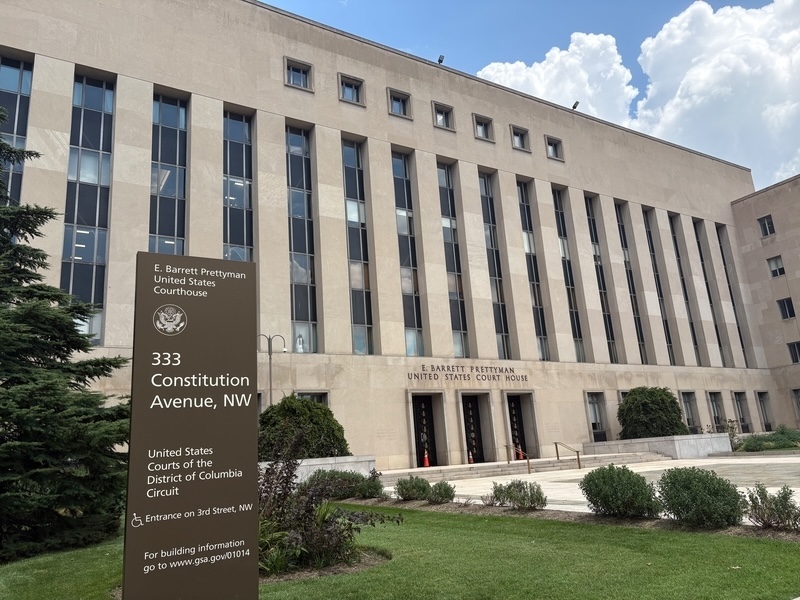
The E. Barrett Prettyman U.S. Courthouse in Washington, D.C., home of the U.S. District Court for the District of Columbia, on July 14, 2025. (Photo by Jacob Fischler/States Newsroom)
WASHINGTON — Transgender military members won a temporary victory against the Trump administration in federal appeals court Monday when two judges ruled a policy banning them from service violated their constitutional right to equal protection under the law.
Judges Judith W. Rogers and Robert L. Wilkins for the U.S. Court of Appeals in the District of Columbia upheld a lower court ruling allowing those plaintiffs involved in the case to continue their service. The decision is a preliminary injunction, meaning the case will continue to play out in court.
The policy, issued by President Donald Trump in an executive order in January 2025 and carried out by Secretary of Defense Pete Hegseth, “appears to be driven by the bare desire to harm a politically unpopular group: persons who identify as transgender,” Wilkins wrote for the 2-1 decision.
“As such, at this preliminary stage, I conclude that the Hegseth Policy is both arbitrary and based upon animus, and for those reasons the Policy violates Plaintiff-Appellees’ constitutional right to equal protection of the law,” continued Wilkins, who was appointed by President Barack Obama in 2014.
Rogers was appointed by President Bill Clinton in 1994.
Judge Justin R. Walker, a 2019 Trump appointee, dissented.
Walker argued U.S. Supreme Court precedent dictates “the military can deprive its members of rights that the Constitution may well guarantee to civilians.”
“Like today’s majority, I cherish those rights, and so I understand the impulse behind the majority’s unprecedented intervention into military affairs. But because the plaintiffs are service members not civilians, and because we are judges not generals, I respectfully dissent,” Walker wrote.
Jennifer Levi, the lead attorney for the eight military plaintiffs, said Monday’s appeals ruling is an “enormous victory.”
“I will say that the plaintiffs in this case have just served their country with incredible honor and courage, and this decision is a recognition of that fact,” Levi, senior director for GLAD Law, told States Newsroom in an interview.
“And really it’s important because (it is) recognizing that those who are capable of serving should be able to continue.”
States Newsroom reached out to the Pentagon and the White House for comment.
Eight active-duty service members and transgender individuals who are actively pursuing enlistment in the armed forces initially brought the case, Talbott et al v. Trump, against Trump and Hegseth, among other officials and three branches of the U.S. military. The number of plaintiffs has since grown.
The preliminary injunction does not extend to the plaintiffs pursuing enlistment, and does not extend universally to all active transgender service members beyond those who filed the case.
Kara Corcoran, executive director of SPARTA Pride, an advocacy organization for transgender service members, said many transgender service members, including her, are uncertain about the future of their careers.
“While today’s decision provides important relief for certain named plaintiffs, it does not extend protection to the broader transgender military community. Thousands of service members remain subject to ongoing administrative actions, involuntary separation processes, and significant uncertainty about their futures,” said Corcoran, an 18-year Army veteran who is awaiting the military’s decision on whether they will allow her to claim retirement instead of a separation because she is transgender.
Corcoran said “there’s a lot of unknowns to the future” for named plaintiffs and others as the government could seek an emergency stay on the ruling as they did in a separate case, Shilling et al v. Trump.
In Shilling, the 9th U.S. Circuit Court of Appeals on April 18, 2025, upheld a lower court’s ruling that allowed transgender troops to continue serving, denying the government’s appeal.
In May 2025, the U.S. Supreme Court allowed Trump to ban transgender people from the military.
“This is now two appellate courts from both Schilling and Talbot who have now signaled to the Supreme Court that yes, this is irreparable harm to people who are in (this situation), and at the same time, it’s discrimination,” she said.
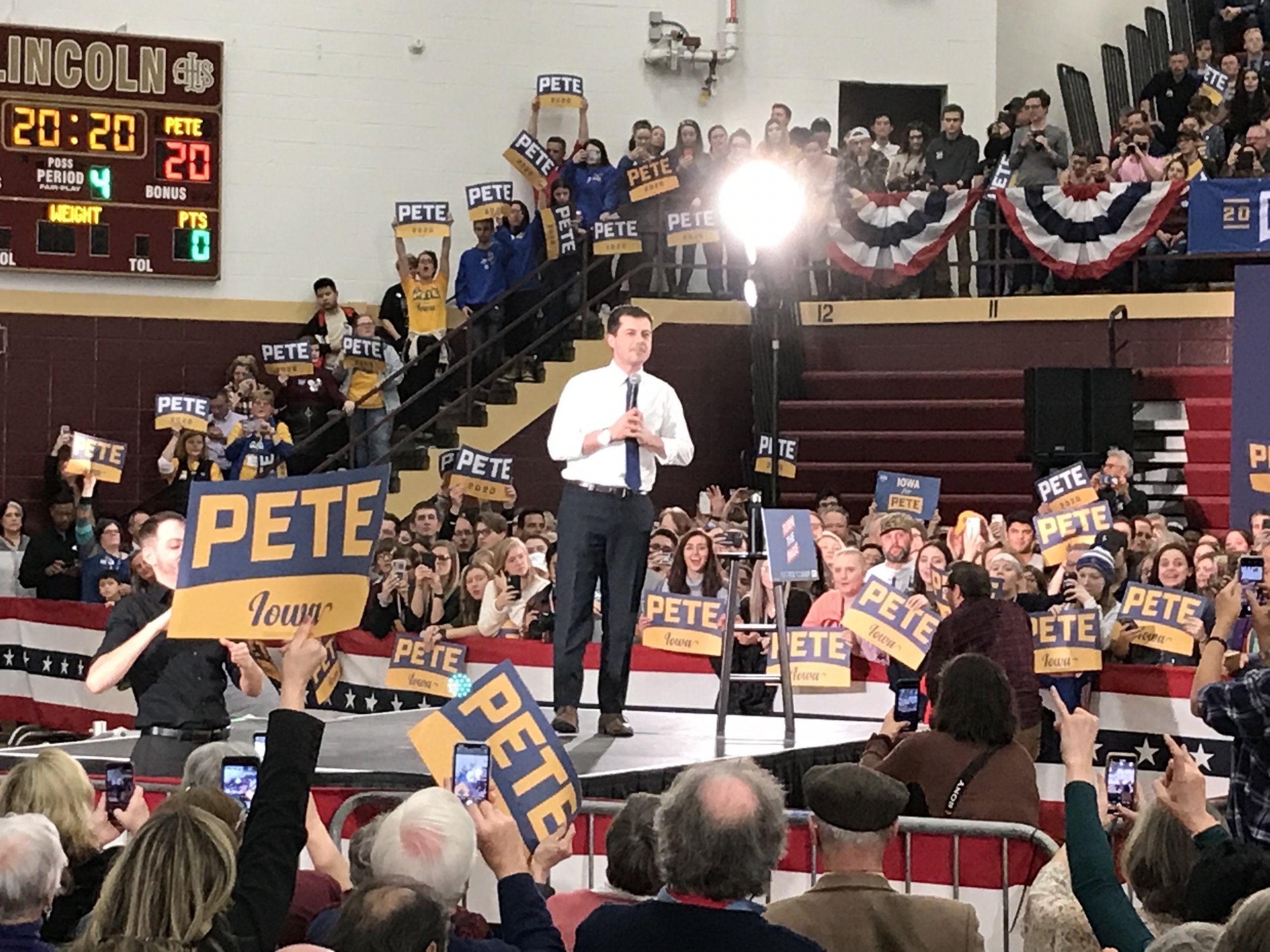
Pete Buttigieg speaks at a rally the day before the Iowa Caucuses at Lincoln High School in Des Moines, on Feb. 2, 2020. (Photo by Kathie Obradovich/Iowa Capital Dispatch)
WASHINGTON — Democratic Party leaders from a dozen states traveled to Washington, D.C., at the end of May to press for their voters to cast the first ballots in the next presidential primary.
State representatives argued that diversifying the early states would ensure Democrats nominate a presidential candidate who not only holds broad appeal among the base, but can ultimately win over independent voters in swing states and the White House in November 2028.
A final decision from the Democratic National Committee’s Rules and Bylaws Committee will, however, have to contend with state laws and the officials who actually set primary dates.
Iowa and New Hampshire traditionally hold the first caucus and first primary election for presidential candidates — though South Carolina had the first DNC-sanctioned primary in 2024 — and both states argued it’s better to stay that way.
“Look, New Hampshire will make every effort it can to comply with the Rules and Bylaws Committee, but there are some factors outside of our control,” said U.S. Sen. Maggie Hassan. “Our secretary of state is required by law to schedule the New Hampshire primary before other states.”
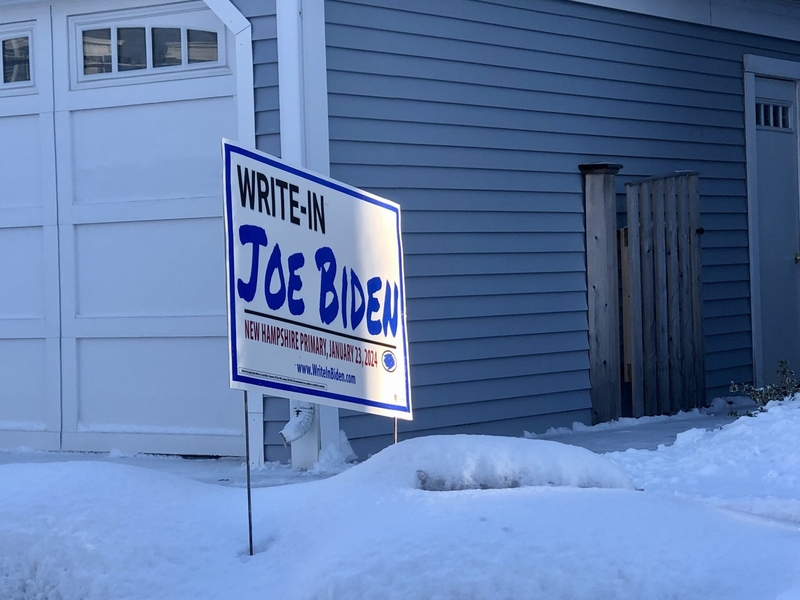
A “Write-In Joe Biden” campaign sign in a Portsmouth, New Hampshire, snow bank in 2024, when New Hampshire held its primary first in the nation in defiance of the Democratic National Committee. (Photo by Hadley Barndollar/New Hampshire Bulletin)
New Hampshire Democrats, she said, don’t believe their voters should pick the nominee, but would instead vet “the nominee so that they are better prepared for the states that follow, which will by definition be larger, more diverse and that’s really important too.”
“The one other thing I will add is that the Republicans are going to have the first-in-the-nation primary be New Hampshire,” Hassan added. “And there is a big vacuum when a whole bunch of Republican presidential candidates are coming into our state, highlighting local candidates who are Republicans and there isn’t the same fulsome, evenly balanced Democratic response. And I think that can put us at a disadvantage at the local level and occasionally at the federal level as well.”
Iowa Democrat Scott Brennan told panel members that state law “requires that we be a caucus and that we go before any competing process.”
Iowa Democratic Party Chair Rita Hart also noted that Republicans and the journalists who cover their campaigns will be in the state for months ahead of the GOP presidential primary.
“In 2028, no matter what your decision is regarding the nominating calendar, Iowa will be the center of politics because the Republicans will be here right along with scads of national reporters,” she said.
Members of the DNC’s Rules and Bylaws Committee asked questions throughout the two days of presentations, including what states were doing to protect voter privacy, whether states had implemented restrictions on abortion and how much rent will cost campaign staffers for a one-bedroom apartment in larger cities.
State Democratic Party members repeatedly told the committee that voters in their home states are best positioned to winnow down what is expected to be a large group of presidential candidates. Here’s some of what they argued:
South Carolina
South Carolina Democratic Party Chair Christale Spain said her presentation wasn’t about keeping the state toward the front of the calendar for “nostalgia,” but “about whether the Democratic Party understands where the fight for democracy actually is.”
“This is not a routine calendar debate,” she said. “Republicans are not debating theory, they’re moving in real time to weaken voting rights, redraw maps, dilute Black political power and change the rules where they don’t like the voters’ choices.”
The Democratic Party, Spain said, must ensure that Black voters “help shape the nomination from the beginning” and argued South Carolina is best positioned to do that.
“If Black voters are the backbone of the Democratic Party, then the calendar should reflect that,” she added.
Spain also called on the national party to recognize that Southern states hold crucial Democratic voters, despite the fact that region of the country typically gives its Electoral College votes to Republican presidential candidates during the general election.
“If Democrats want a long-term national majority, we cannot write off the deep South and then act surprised when the math doesn’t work,” she said.
Drawing a contrast with many of the other states, Spain noted that in South Carolina, the Democratic Party’s executive committee picks the date of its primary, not state law or the secretary of state.
New Mexico
New Mexico Gov. Michelle Lujan Grisham told the panel her state had “everything to offer” the party and its presidential candidates.
“We’re a minority-majority state,” she said. “We have demonstrated getting Democratic value-led policies on the ground in ways that no other poor state in this country’s history has done.”
The state’s economy, she said, would give Democrats the chance to dispel the notion that the two political parties offer a “binary choice” on key issues that could determine the outcome of the next presidential race.
“If you want truth and fairness, it’s got to be Democrats, but if you’re worried about jobs and if you’re working in oil and gas then you can’t vote for a Democrat. That’s just not true,” she said. “New Mexico outpaced Texas in oil and gas production last year and we have the lowest methane emissions of any state doing high-energy production. Guess what else? All of the energy to power the eastern United States is in New Mexico and what is it? It’s solar, it’s wind.”
The state would give Democratic presidential candidates the opportunity to talk about immigration and border security, which have been central to Republicans in the last several election cycles, she said.
“We can talk about public safety and the border and we can talk about energy in a way that renews our commitment to Democratic values and engages minority voters,” Lujan Grisham said, later adding that voters “want a cohesive approach to public safety, border security and fair support.”
The Trump administration’s “indiscriminate, unjust, unconstitutional deportation effort,” she said, has left voters from both political parties in the state “unhappy.”
“And it’s enough to get solid Republican voters to vote in a general election for a Democrat,” she said.
Georgia
Georgia Democratic Party Chair Charlie Bailey told the committee that having voters in the state go first during the next presidential primary would accomplish the “twin objectives of having a diverse electorate and being a battleground state.”
“No state better fits the stated goals that the DNC has for competitiveness, diversity and the accessibility that our infrastructure provides,” he said. “And our nationally recognized voter protection department has already proven its ability to guarantee fair, transparent and inclusive elections.”
Bailey told the panel that Georgia is the only state in the South with two Democratic U.S. senators and represents the party’s best chance to gain a foothold in that region.
Whether the secretary of state would actually move the primary date depends on whom voters elect to the role this November, he said.
A Democrat winning the seat would very likely schedule whatever the DNC chooses, but a Republican keeping that role would need to decide whether it’s in their party’s best interest to move the presidential primary election earlier in the year.
Michigan
Michigan Democratic Party Chair Curtis Hertel said his state’s history as a battleground in the general election and its demographics make it a strong candidate for the early window.
“There are very few states that represent the entire political spectrum of what the Democratic Party is. Michigan is one of them,” he said. “We’re the most diverse battleground state in the country. We look like America.”
Michigan, he said, would give presidential candidates a platform to talk about the party’s support for unions, wages and other cost-of-living issues.
Hertel said that every investment a Democratic presidential candidate makes in the state would be “important to winning the general election.”
North Carolina
North Carolina Democratic Party Chair Anderson Clayton said the state’s location, diversity and rural communities make it a strong choice.
“Democrats have been losing rural America. It’s no secret to anybody we have not been engaging in these communities,” she said. “And to me one of the biggest ways that we can put a priority on them again is investing in a state that, again, besides Texas, has the second-highest rural population.”
Clayton said the state also represents a chance for Democratic presidential candidates to speak with a cross-section of the party’s base.
“If you can win races in North Carolina, presidents that are battleground and battle tested here can win in other states across the country that we have not consistently won as Democrats, but we used to and we need to win back,” she said.
Nevada
Nevada U.S. Rep. Steven Horsford said the state has everything a Democratic presidential candidate needs to win both the primary and then the general election.
“Elevating a union-strong, diverse and highly competitive battleground state will lay the foundation to help Democrats win back the trust of working class voters and voters of color,” he said. “We are the working class. We are the coalition Democrats must win to win America and we represent the future of our party.”
Virginia
Former Virginia Gov. Terry McAuliffe said the purple state holds the different types of voters Democratic candidates need to hone their policy goals and their message.
“I promise you if you put Virginia early in that calendar, they are going to put every presidential candidate through the toughest set of questions,” he said. “You’re going to have to answer military questions, urban questions, rural questions. And if you can’t do that you’re not going to be successful. That’s what we want as our nominee in 2028 and we have the ability to do that.”
Democrats throughout Virginia, including those just outside Washington, D.C., whose lives were affected by the Trump administration’s cuts to the federal workforce, are well suited to ensure any nominee is ready to win a general election, he said.
Tennessee
Tennessee state Sen. London Lamar told panel members voters in that state shouldn’t be “afterthoughts” when it comes to vetting presidential candidates.
“Tennessee sits at the center of the South. We border eight states, which means our influence is not just local, not just statewide, but it’s regional,” she said. “What happens in Tennessee has the power to reach across the South and shape national momentum, because we all know the South is the last battleground of this nation. And if we win the South, we take the nation every single presidential election.”
Voters in and around Memphis, she said, represent “the very people Democrats say we are fighting for — working families; Black voters; young people; communities demanding affordability, representation, justice and opportunity.”
“Memphis is one of the largest majority Black cities in America,” she added. “And African American voters remain the backbone of the Democratic Party.”
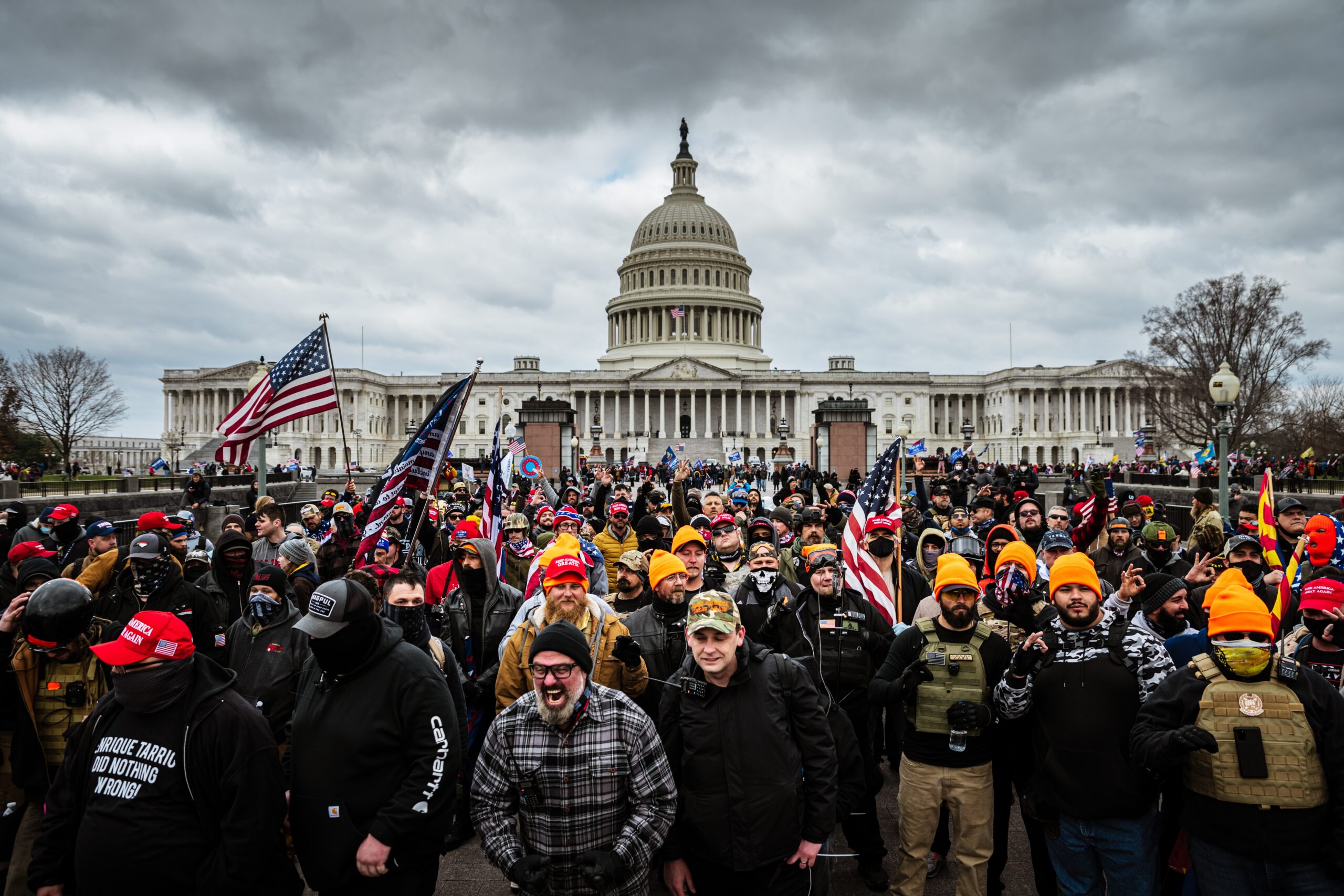
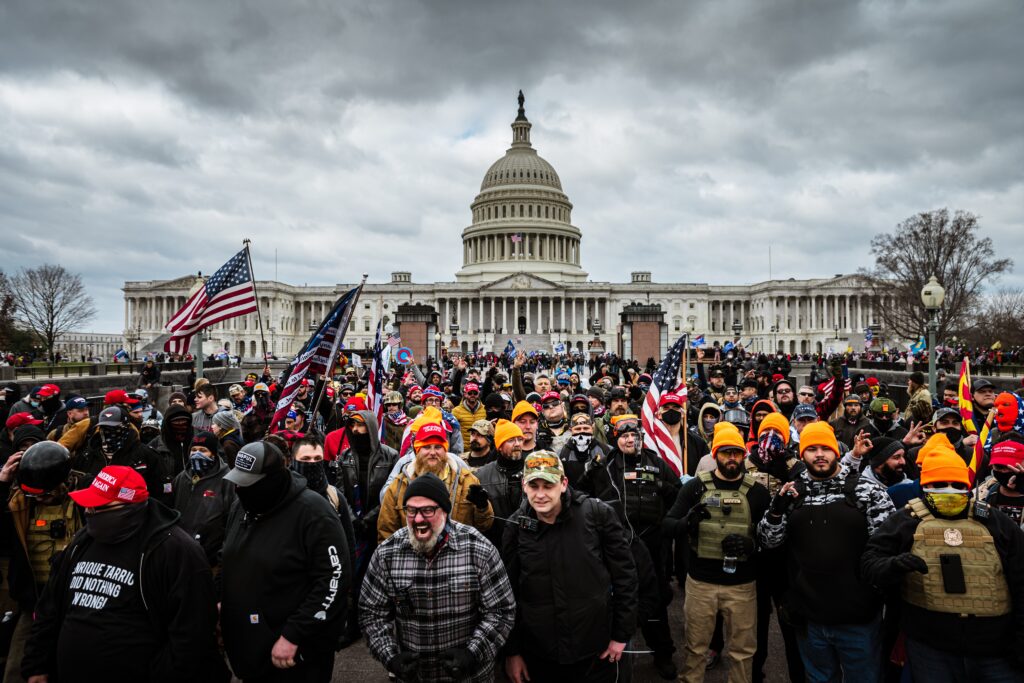
A mob of Trump supporters gathers in front of the U.S. Capitol Building on Jan. 6, 2021 in Washington, DC. An "anti-weaponization" fund was created by the Department of Justice in May 2026 that could make payments to those who took part in the Jan. 6 attack. (Photo by Jon Cherry/Getty Images
President Donald Trump’s extraordinary $1.776 billion fund to pay off allies and others who say they have been wronged by past administrations has drawn widespread condemnation by opponents, including some Republicans, who characterize it as an act of brazen corruption.
But the Trump administration’s push to reward its supporters also harkens back to an earlier era of American cronyism, experts say, while expanding the frontiers of political favoritism.
From the early years of the United States until well into the 19th century, a spoils system dominated the federal government. Presidents handed out jobs to supporters, filling the bureaucracy with workers who had demonstrated loyalty to the administration in power.
President Andrew Jackson (Courtesy Library of Congress)
Trump’s political idol, President Andrew Jackson, replaced large numbers of federal officials after his 1829 inauguration, for instance. One appointee to a role at the Port of New York made out with more than $1 million, valued at tens of millions today.
The comparison isn’t exact. The spoils system was associated with the distribution of government jobs to political allies, a practice called patronage. Trump’s new fund would instead deliver taxpayer dollars directly to favored individuals.
Yet, academics who have studied the spoils system and the presidency see parallels between the past and present — with a desire to reward allies and build allegiance at the center of it all.
“It seems to me that may be the common element here,” said Sidney Shapiro, a professor of law at Wake Forest University who wrote before the 2024 election that Trump wanted to reinstate the spoils system. “It appears President Trump is thinking about using the fund to reward people unfairly punished, but I think in his mind it’s unfairly punished because they were trying to support him.”
Five-member board to be named by Trump
The Department of Justice announced the “anti-weaponization fund,” which critics call a “slush fund,” on May 18 as it moved to settle a lawsuit Trump had filed in his personal capacity against the IRS over the leaking of his tax returns by a former agency contractor.
The suit placed Trump in the extremely unusual position of effectively negotiating with himself because he has erased the DOJ’s post-Watergate tradition of independence from the White House.
Even before the settlement, the Justice Department under Trump had taken actions that would have been unheard of in other recent administrations. For instance, federal prosecutors have brought a case against former FBI Director James Comey and tried to pursue criminal charges against New York Democratic Attorney General Letitia James.
The DOJ has also obtained an indictment against the Southern Poverty Law Center, a frequent critic of GOP politicians.
Trump’s settlement agreement provides for the creation of the fund overseen by a board of five members chosen by acting Attorney General Todd Blanche, who previously served as Trump’s personal attorney. Trump can fire the members for any reason.
The fund’s board will have the power to make decisions about payments, as well as issue formal apologies. Claims submitted to the fund must be processed by Dec. 1, 2028, prior to the end of Trump’s term.
Jan. 6 rioters line up
A bevy of Trump supporters and hangers-on have said they plan to apply for compensation. They include individuals who stormed the U.S. Capitol on Jan. 6, 2021, disrupting Congress’ certification of President Joe Biden’s Electoral College victory. Trump previously pardoned rioters when he took office in January 2025.
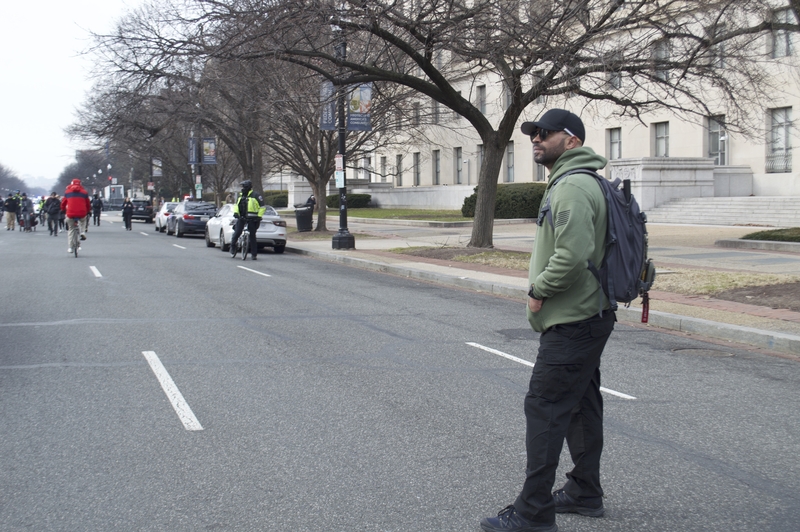
Former Proud Boys leader Enrique Tarrio, who was convicted of seditious conspiracy and sentenced to 22 years in prison before Trump pardoned him, predicted on a recent podcast that a “lot of J6ers are going to spend their money on firearms.”
Former national Proud Boys leader Enrique Tarrio looked on as far-right activists celebrating the Jan. 6 Capitol attack marched down Constitution Avenue on Tuesday, Jan. 6, 2026. Tarrio was sentenced to 22 years in prison on sedition charges related to the attack, but President Donald Trump commuted his sentence. (Photo by Ashley Murray/States Newsroom)
Trump has cast the fund as an act of magnanimity on his part because the settlement agreement doesn’t include a monetary payout to him.
However, Blanche also signed a document barring any additional scrutiny of the president’s past tax history, a move that shields him from audits. The New York Times and ProPublica reported in 2024 that Trump could have owed $100 million if he lost an audit battle over improper tax breaks.
“I gave up a lot of money in allowing the just announced Anti-Weaponization Fund to go forward. I could have settled my case, including the illegal release of my Tax Returns and the equally illegal BREAK IN of Mar-a-Lago, for an absolute fortune,” Trump wrote on Truth Social, referring to the FBI search of his Florida residence in 2022.
“Instead, I am helping others, who were so badly abused by an evil, corrupt, and weaponized Biden Administration, receive, at long last, JUSTICE!”
Trump has adopted a “patrimonial” approach to governing, James Pfiffner, a professor emeritus at George Mason University who has studied the presidency, wrote in an email to States Newsroom.
Benefits, like federal contracts, go to those who are loyal, Pfiffner wrote, and the government is treated as if it were a family business and the state’s resources were his personal property.
The “anti-weaponization fund” represents an extension of that approach, Pfiffner wrote, but also goes further than past presidents. He wrote that he could think of no past precedents in the modern presidency for such a blatant use of taxpayer money to potentially reward loyalists.
“At least in the spoils system, the people hired by the government were working and presumably doing their jobs,” Pfiffner wrote. “The beneficiaries of this fund have done nothing to earn their benefits, and presumably some will be rewarded for having committed crimes to overturn the 2020 election.”
Congress began curbing the spoils system after the 1881 assassination of President James Garfield by a spurned job seeker.
Over the next two decades, many federal positions were moved into a civil service system. While the federal government still includes some 4,000 political appointees today, the vast majority of the bureaucracy is staffed by civil servants.
Critics and defenders in Congress
But it’s unclear whether Congress will block Trump’s fund, despite an intense backlash.
Anger among Republican senators has stalled action on budget legislation funding immigration enforcement, which Democrats would have used to force votes on amendments to block the fund. Democrats have introduced multiple bills aimed at halting it.
“Congress cannot stand by while Trump turns the federal government into a political operation for his friends and cronies,” Sen. Michael Bennet, a Colorado Democrat, said in a statement.
Obstacles exist to congressional action. Even if Republicans who control both chambers voted with Democrats, Trump could veto bills passed placing restrictions on the fund, which would require two-thirds majorities in the House and Senate to override.
And some GOP lawmakers have defended the fund.
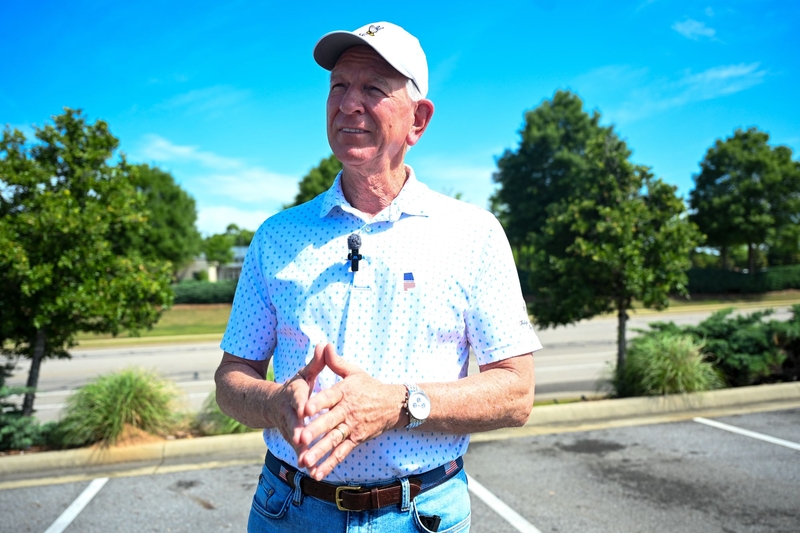
U.S. Sen. Tommy Tuberville, R-Ala., speaks to reporters after voting in the GOP primary in Auburn, Alabama on May 19, 2026. Tuberville has defended President Donald Trump’s “anti-weaponization” fund. (Photo by Anna Barrett/Alabama Reflector)
On May 21, Sen. Tommy Tuberville, an Alabama Republican, objected to a unanimous consent request by Sen. Alex Padilla, a California Democrat, to pass a bill that would prohibit payments to Jan. 6 rioters.
“Thankfully, acting Attorney General Todd Blanche and the Trump Department of Justice established a standard and lawful process to hear from American citizens who suffered lawfare or weaponization under the Biden administration,” Tuberville said on the Senate floor.
Lawsuits have been filed challenging the fund and how it’s structured. Two police officers who defended the Capitol on Jan. 6 have sued, warning that rioters could use the money to organize.
Fund blocked temporarily
On Friday, a federal judge in Virginia ordered the Trump administration to halt work on the fund for at least two weeks while she considers ordering a lengthier pause.
The decision came in a lawsuit brought by a former federal prosecutor fired by the DOJ and a California professor who was charged but acquitted of assaulting a federal officer after protesting an immigration raid.
Legal advocacy groups also argue Congress didn’t intend for federal money to be used for these kinds of payoffs.
“Another commonality is we the taxpayers are funding both,” Shapiro, the Wake Forest professor, said of the spoils system and the Trump fund. “We certainly fund the jobs that people have and now we’re funding this fund.”
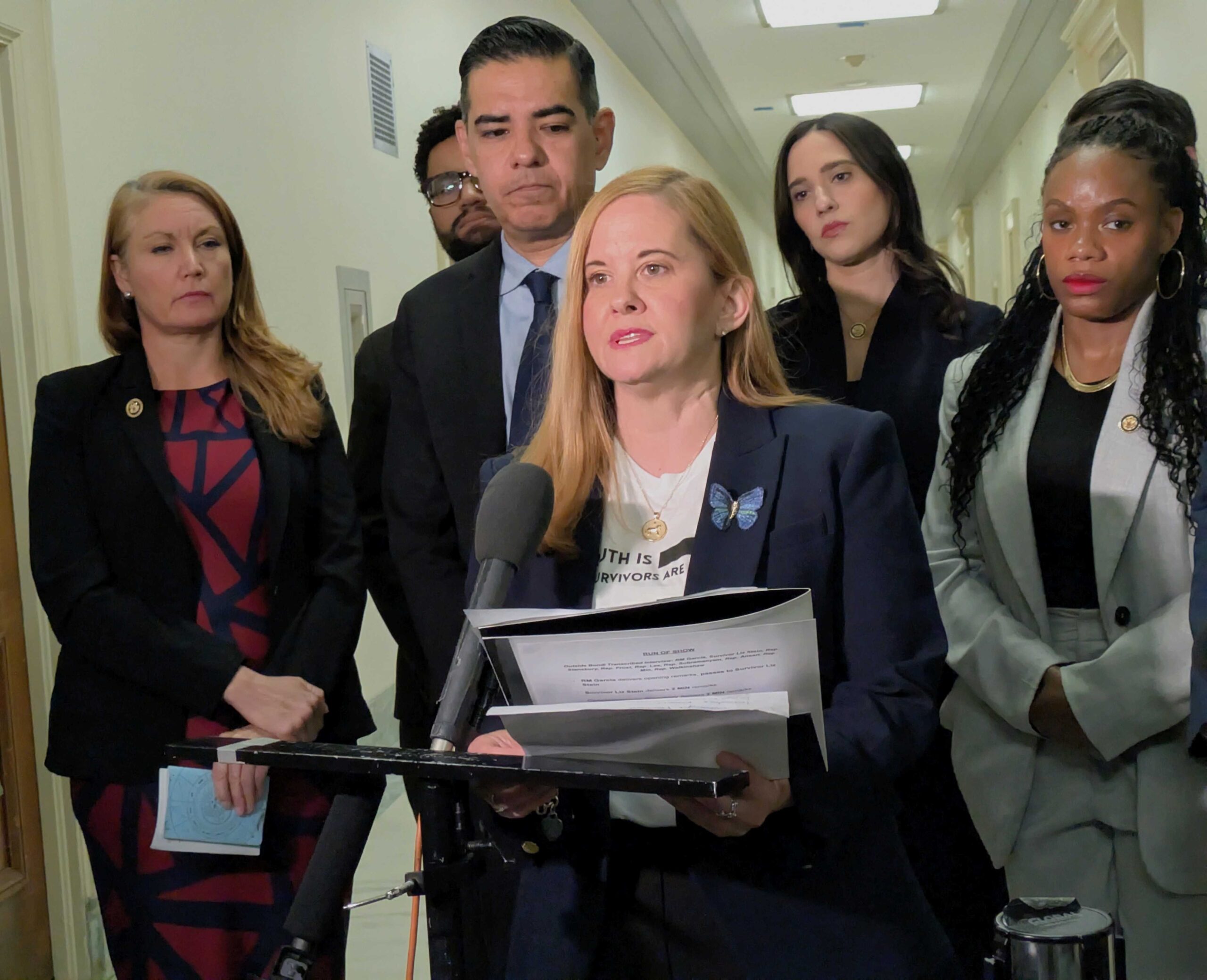
Liz Stein, a sexual abuse survivor advocate who has gone public about abuse by the late Jeffrey Epstein, spoke surrounded by U.S. House Oversight Committee Democrats on Friday, May 29, 2026, in the Rayburn House Office Buildin in Washington, D.C. (Photo by Ashley Murray/States Newsroom)
WASHINGTON — Former Attorney General Pam Bondi was on Capitol Hill Friday for a closed door interview with lawmakers about her role in the release of the federal investigation files of Jeffrey Epstein — the now deceased wealthy sex offender who surrounded himself with influential entrepreneurs, academics and celebrities, including President Donald Trump.
But Democrats speaking to reporters outside the session criticized Republicans for not conducting the interview under oath or on camera and said Bondi did not answer many questions and blamed acting Attorney General Todd Blanche for the chaotic release of files related to Epstein. Bondi later denied on social media she evaded questions or tried to target Blanche.
Bondi sat for a transcribed hours-long interview before the U.S. House Committee on Oversight and Government Reform as the panel continues its probe into the government’s handling of the Epstein case and sexual abuse survivors.
Epstein died in 2019 in a Manhattan jail cell awaiting trial on federal sex trafficking charges.
Committee Chair James Comer, R-Ky., told reporters before the early morning interview began that the panel is “continuing to move along, and hopefully today will be beneficial.”
Epstein estate subpoena
The committee subpoenaed Epstein’s estate in August 2025 and made public all documents it received, Comer said. He said the committee has since conducted more than a dozen interviews and has six more scheduled throughout the summer, including with Epstein’s former assistant Lesley Groff, Microsoft co-founder Bill Gates and private equity investor Leon Black.
“The government has failed the survivors. There’s no question about that, and that dates back five presidential administrations,” Comer said.
Comer credited Bondi for appearing a second time before the committee and criticized Democrats who he said “got up and walked out” of the first meeting in March while Republicans “asked questions for a couple of hours.”
Reps. Maxwell Frost, D-Fla., and Summer Lee, D-Pa., who sit on the U.S. House Committee on Oversight and Government Reform, spoke to reporters on Friday, May 29, 2026, outside the committee’s closed door interview with former Attorney General Pam Bondi. (Video by Ashley Murray/States Newsroom)
Committee Democrats were highly critical.
The panel’s ranking member, Robert Garcia, D-Calif., said the interview ground rules barring video and allowing Bondi to speak without taking an oath are a “disservice to the American people.”
House Oversight Democrats, and an Epstein abuse survivor, spoke to reporters outside the committee room for roughly 30 minutes following their portion of questioning.
The minority members said Bondi refused to answer any questions related to Trump’s knowledge of how the Department of Justice was handling the Epstein documents, and that a current DOJ lawyer was in the room with Bondi, choosing which questions she would answer.
They also said Bondi sidestepped responsibility for the mishandled release of the files that initially unmasked victims’ names.
“She continues to push all of the investigation and the blame on acting AG Todd Blanche. She said, and I quote, ‘Acting AG Blanche was managing the entire investigation,’ end quote,” Garcia said.
Blanche, whom the president named as the acting attorney general after Bondi’s exit, was Trump’s personal lawyer prior to his second term. Committee Democrats said they plan to request Blanche come before the panel for questioning.
Bondi fires back
Bondi denied Garcia’s statement to reporters that she pushed blame on Blanche for the Epstein files release.
In two posts on X Friday afternoon, Bondi wrote, “I praised Acting AG Blanche’s management of this Herculean task. I said his ethics are beyond reproach and that he is an incredible Attorney General.”
She also denied remarks to reporters by panel member Rep. James Walkinshaw, D-Va., that she was not forthcoming about the president’s knowledge of Epstein’s actions.
“MISREPRESENTATION by Walkinshaw. What the world knows to be true is President Trump banned Epstein from Mar a Lago decades ago bc Epstein was a despicable creep!!” Bondi wrote.
States Newsroom contacted the White House for comment but did not immediately receive a response. Trump has denied any wrongdoing or knowledge of Epstein’s crimes.
A Department of Justice spokesperson confirmed in a written statement to States Newsroom that department personnel accompanied Bondi to the interview.
“Assistant Attorney General Harmeet Dhillon and other Department of Justice personnel attended former Attorney General Bondi’s transcribed interview to assist the Committee in understanding the Department’s role in implementing and complying with the Epstein Files Transparency Act during her tenure,” according to the statement.
The spokesperson continued: “Because former Attorney General Bondi oversaw the Department at the time the Act was enacted and carried out, DOJ’s presence was solely to ensure accurate representation of Department processes, facilitate any necessary clarifications, and support a complete factual record for the Committee.
“As with any congressional engagement involving past Department actions, DOJ routinely provides staff with relevant institutional knowledge to support transparency, accuracy, and cooperation with oversight responsibilities.”
Survivor speaks out
Epstein survivor Liz Stein, now a human trafficking specialist and advocate for the organization World Without Exploitation, said outside the committee room that the Trump administration needs to do more to deliver justice to victims.
“These files contain leads, names, connections, friendships, patterns, witnesses, travel records, financial relationships and institutional failures,” Stein said. “In any other sex trafficking case of this magnitude, those leads would be aggressively pursued, but in this case they have not been.”
The U.S. Postal Service on May 29, 2026 proposed a rule to carry out President Donald Trump’s executive order restricting voting by mail. (Photo by Jane Norman/States Newsroom)
The U.S. Postal Service on Friday took its first major step to carry out President Donald Trump’s executive order restricting voting by mail, proposing a rule that would require states to submit lists of voters before mailing ballots.
But the proposed rule appears to smooth over some of the rougher edges of the executive order, which has been condemned by Democratic state officials as an intrusion on their constitutional authority to administer elections.
“The proposed rule would apply uniform standards for the mailing of absentee ballots to and from voters, which the Postal Service understands will facilitate the faithful execution of federal law,” the Postal Service said in a document posted on the Federal Register website.
The executive order faces at least five lawsuits. Experts on the Postal Service have also warned that Trump’s attempt to assert authority over the agency threatens its decades-long record of independence.
The order remains in effect for now ahead of the November midterm elections. A federal judge on Thursday declined to block it after finding the federal government had taken few steps to implement it. However, with Friday’s proposed rule, that’s beginning to change.
Some exemptions
Trump’s March 31 order directed the postmaster general, who leads the Postal Service, to propose a rule that would block states from sending ballots through the mail except to voters on lists provided by the state to the Postal Service. In effect, states would be blocked from allowing residents to vote by mail unless they provide their names to the federal government.
The proposed rule fulfills that directive, but it exempts overseas and military voters — a concession that wasn’t included in the executive order. Voting by citizens who are abroad and in the military is regulated by the federal Uniformed and Overseas Citizens Absentee Voting Act. The law sets strict deadlines for states to send ballots.
The rule also doesn’t require states to submit voter lists for primary elections.
“Primary elections largely involve political parties selecting nominees through their chosen procedures, rather than direct election of federal officials, and thus implicate different considerations that bear on the necessity for these provisions,” the Postal Service said in a document outlining the proposed rule.
The Postal Service document emphasizes that states retain full control of who gets to vote by mail or alter the information.
The proposed rule creates data reporting standards that “can provide information regarding the sending of ballots through the mails that would be available for use by law enforcement,” the document says.
The Postal Service plans to formally publish the rule on June 2.
Noncitizen voting
Trump and administration officials have framed the executive order as a way to combat noncitizen voting, which occurs very rarely. Trump has long attacked mail voting, though he has voted by mail multiple times.
“I think this will help a lot with elections,” Trump said when he signed the order.
But opponents of the executive order say it violates the U.S. Constitution, which gives states the responsibility of running elections and allows Congress to pass regulations. The order represents an attempt by Trump to unilaterally control elections, they say.
After a federal judge in Washington, D.C., declined to block the order, another federal judge in Massachusetts will hold a hearing on June 2 in a separate lawsuit challenging the directive brought by Democratic attorneys general.
“Widespread chaos and confusion is the goal of this executive order,” Cliff Albright, co-founder of Black Voters Matter, said in a statement.
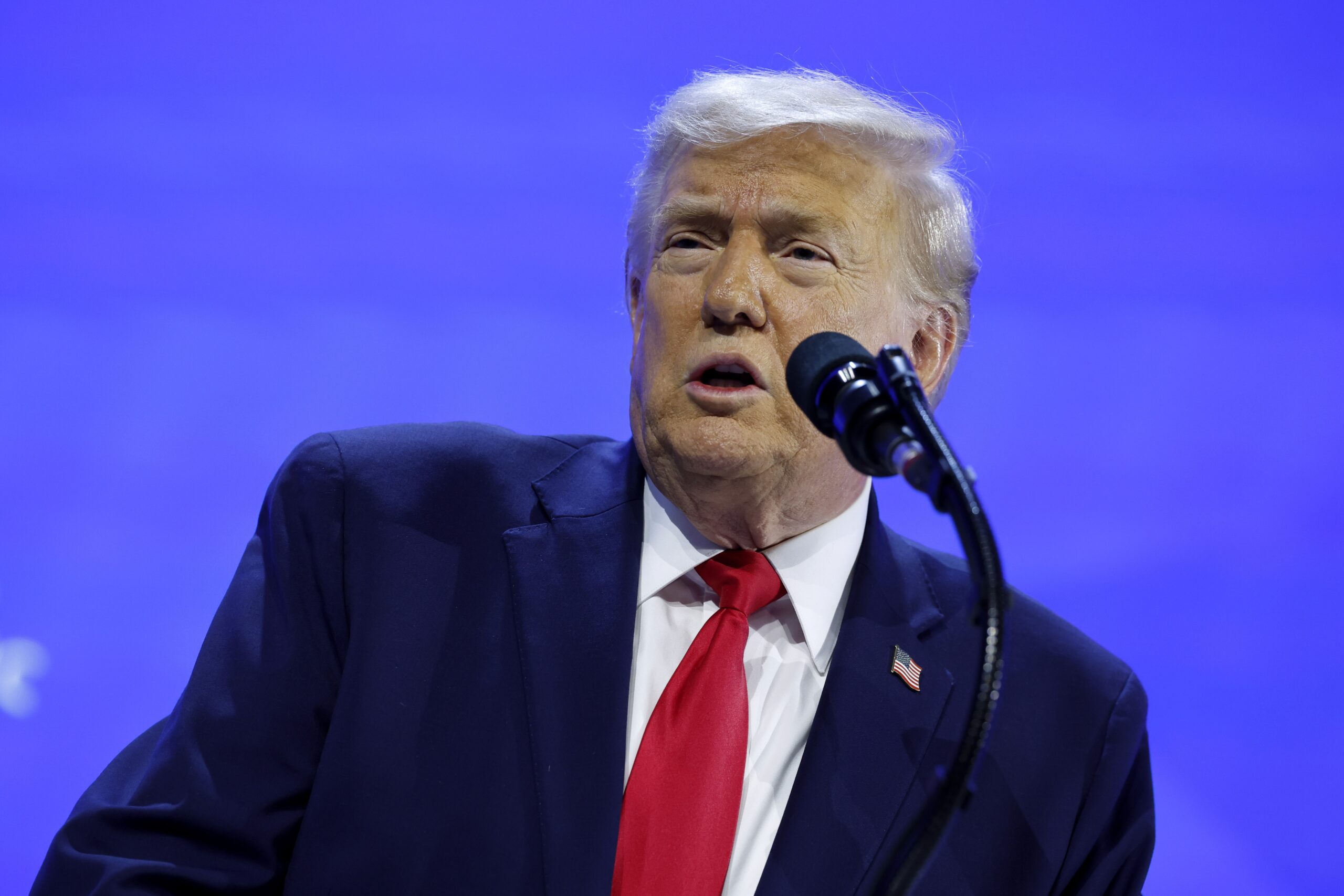
President Donald Trump gives a speech at the World Economic Forum on Jan. 21, 2026 in Davos, Switzerland. (Photo by Chip Somodevilla/Getty Images)
A federal judge on Friday temporarily blocked the Trump administration from moving forward with a fund that opponents fear will be used to pay off the president’s political allies.
Judge Leonie Brinkema in the Eastern District of Virginia issued a brief order halting the Department of Justice, the Treasury Department and other high-ranking administration officials from taking any additional actions to create the fund or make payments from it.
The order came in a lawsuit filed by a former federal prosecutor and a California professor. The plaintiffs are represented by the legal advocacy groups Democracy Forward and Common Cause. The lawsuit is part of a flurry of legal challenges against the fund.
The Justice Department on May 18 announced a nearly $1.8 billion “anti-weaponization fund” that will make payments to individuals who believe they have been wronged by past administrations. The fund came as part of a settlement agreement in a lawsuit filed by President Donald Trump over the leaking of his tax return information by a former IRS contractor.
Trump’s settlement agreement provides for the creation of the fund overseen by a board of five members chosen by acting Attorney General Todd Blanche, who previously served as Trump’s personal attorney. Trump can fire the members for any reason.
Brinkema, a President Bill Clinton appointee, took no position on the legality of the fund in her order. She wrote that her order is to ensure no money is “irreversibly disbursed” while the plaintiffs’ motion for a temporary restraining order is pending.
She also set a hearing for June 12 — likely ensuring the fund will remain blocked for at least the next two weeks.
The plaintiffs in the lawsuit include Andrew Floyd, a former federal Jan. 6 case prosecutor who was fired by the DOJ in June 2025, and Joseph Caravello, a California university professor who was charged with felony assault on a federal officer after protesting an immigration raid last summer. A jury acquitted Caravello in April.
The nine-count lawsuit alleges in part the fund violates the plaintiffs’ First and Fifth Amendment rights, and violates the authority of Congress.
“Since its inception, this fund has been on a collision course with the United States Constitution,” their complaint says.
Trump has written on social media that the fund will help those “who were so badly abused by an evil, corrupt, and weaponized Biden Administration” receive justice.
Two senators have reached a bipartisan deal on legislation dealing with college athletes' name, image and likeness compensation. (Photo by Getty Images)
WASHINGTON — A pair of U.S. senators reached a bipartisan agreement on a sweeping bill aimed at tackling many of the biggest issues surrounding how to compensate players in college sports.
GOP Sen. Ted Cruz of Texas and Democratic Sen. Maria Cantwell of Washington state — the top members of the Senate committee with jurisdiction over the matter — unveiled legislation this week that aims to “restore order in college athletics.”
Meanwhile, a separate bill to set a national framework for college athletes’ compensation remains stalled in the House after being yanked from the voting schedule earlier in May following unanimous opposition from the Congressional Black Caucus.
The major voting bloc rallied behind the NAACP’s call to push back against GOP-led redistricting efforts in Southern states via college sports, including a boycott of public universities by athletes and supporters.
The senators’ proposal marks the latest congressional push to overhaul the college sports world, which continues to grapple with the fallout from the NCAA’s 2021 guidelines that allowed student-athletes to profit from their name, image and likeness, or NIL.
Colleges, businesses and marketers are also wrestling with a patchwork of state NIL laws, gender inequity in NIL deals and the NCAA’s controversial transfer portal, among other issues.
A federal judge in 2025 also approved the terms of a nearly $2.8 billion antitrust settlement that paved the way for schools to directly pay athletes.
Cruz, who chairs the Senate Commerce, Science and Transportation Committee, said “student athletes can profit from their name, image, and likeness, but college sports still needs real rules, competitive balance, rivalries, and a true connection to education,” in a statement.
The Texas Republican added that the bill — set to be formally introduced the week of June 1, when Congress is back in session — “protects athletes and fans and keeps college sports from becoming a two-conference minor league.”
Cantwell, ranking member of the panel, said the legislation “puts new tools and new rules on the table to rein in runaway costs while still preserving NIL, revenue sharing,” as well as women’s sports and the Olympics.
GOP Sen. Eric Schmitt of Missouri and Democratic Sen. Chris Coons of Delaware both played a part in the legislation and are co-sponsoring the forthcoming bill.
Aspects of the bill
The legislation would create a national NIL standard that preempts the patchwork of state laws, provides certain antitrust protections to the NCAA and college sports conferences and establishes a five-year eligibility timeline for athletes, among other major changes.
The legislation would also prevent football coaches from leaving mid-season to coach another program, per a section-by-section summary of the bill.
Under the bill, athletes would also be guaranteed one transfer without losing eligibility.
The bill also establishes “a targeted antitrust exemption allowing schools and conferences to voluntarily form a covered entity to pool and sell certain college sports media rights.”
Employment status issue
Though the House’s bill seeks to bar college athletes from being recognized as employees, the senators’ proposal is notably neutral as to how the athletes would be classified.
GOP Reps. Tim Walberg of Michigan and Brett Guthrie of Kentucky took aim at the bill’s neutral stance, saying in a statement that “any lasting framework must confront the central issue that continues to cast uncertainty over the future of college sports: whether student-athletes will ultimately be treated as employees.”
Walberg and Guthrie are the respective chairs of the House Education and Workforce and Energy and Commerce committees, which share jurisdiction over the matter.
“Congress cannot deliver real stability, consistency, or certainty to schools, conferences, and student-athletes while leaving that question unresolved,” the chairs said. “Without addressing employment, smaller universities along with women’s and Olympic programs may face massive financial burdens and be forced to cut programs and scholarships across their athletic departments.”
Trump admin ‘reviewing’
President Donald Trump’s administration has also sought to impose solutions at the federal level for the toughest issues facing the college sports world, including through a sweeping executive order signed by Trump in April.
Part of the order also urged Congress to “expeditiously pass legislation that satisfactorily addresses these issues.”
A White House official, speaking on background, told States Newsroom the White House is “reviewing” the senators’ legislation and “soliciting input from important stakeholders.”
“We appreciate Congress’ efforts to move forward on this important issue to save college sports,” the official added.
President Donald Trump looks on during a Cabinet meeting at the White House on May 27, 2026 in Washington, D.C. (Photo by Win McNamee/Getty Images)
WASHINGTON — The Trump administration’s nearly $1.8 billion “anti-weaponization” fund has attracted scrutiny for its corruption potential, even splitting congressional Republicans who rarely confront President Donald Trump’s decisions and policies.
Among the top concerns: Could pardoned Jan. 6, 2021, riot defendants who assaulted police officers claim a slice of the pie and essentially be rewarded for committing political violence?
Advocates are also legally challenging the fund’s structure that will conceal details from the public, including claimants’ names and amounts paid out.
Nikhel Sus, chief counsel for Citizens for Responsibility and Ethics in Washington, otherwise known as CREW, which has filed suit against the fund, told States Newsroom the administration’s order is a “flagrant power grab of congressional authority.”
The fund, established by the Department of Justice to settle Trump’s multibillion dollar lawsuit against the IRS, has also complicated Senate Republicans’ plans to pass a simple majority immigration enforcement funding package. Some GOP senators are withholding votes unless guardrails for the fund are included in the legislation.
Acting Attorney General Todd Blanche met with Republican senators on Capitol Hill on May 21 to defend the fund, but many GOP lawmakers left unconvinced and with multiple questions remaining.
Retiring Sen. Thom Tillis, R-N.C., told reporters the fund is “stupid on stilts” and resembles “tyranny.”
Others were sweating out questions at town halls during the congressional recess.
“I do not think one penny of any fund should ever go to any January 6 insurrectionist that was in the Capitol on January 6, 2021 … I want to be very clear … I clearly think Congress needs to have an oversight role in this before I can sign off or support this,” U.S. Rep. Mike Flood, R-Neb., said at a town hall in Norfolk, Nebraska, on May 26.
The fund hit a road bump on May 29 when it was temporarily blocked in the courts. Judge Leonie Brinkema in the Eastern District of Virginia, in a suit in which plaintiffs are represented by the advocacy groups Democracy Forward and Common Cause, issued a brief order halting the Department of Justice, the Treasury Department and other high-ranking administration officials from taking any additional actions to create the fund or make payments from it.
Brinkema, who made no decisions on the merits of the case, set a June 12 hearing.
What is the “anti-weaponization” fund?
In exchange for Trump and his family dropping a $10 billion lawsuit against the IRS for the 2019 leak of tax returns, the DOJ ordered the establishment of a settlement fund in the amount of $1.776 billion — a nod to the country’s founding.
As part of the arrangement, Trump also agreed to drop an administrative claim for damages related to what Blanche described as an “unlawful” FBI raid of the president’s Mar-a-Lago residence, part of the Biden administration’s case against Trump for allegedly hoarding classified documents after leaving office.
Trump also agreed to drop a claim for damages related to the DOJ’s 2019 inquiry into Russian meddling in Trump’s 2016 presidential campaign.
Blanche introduced the fund on May 18 as a path to restitution for “victims of lawfare.”
“The machinery of government should never be weaponized against any American, and it is this Department’s intention to make right the wrongs that were previously done while ensuring this never happens again,” Blanche said in a press release.
The fund will be led by five commissioners chosen by the attorney general, one of them in consultation with Congress. The president has the power to remove any member, according to the DOJ.
The department maintains the fund is nonpartisan. In addition to money, the DOJ will also issue formal apologies to eligible claimants, according to officials.
Who is trying to limit or shut down the fund?
House Democrats tried to intervene in the president’s IRS case settlement, but U.S. District Judge Kathleen Williams dismissed the case on Trump’s terms. Williams was appointed to the bench in the Southern District of Florida in 2010 by President Barack Obama.
On May 27, nearly three dozen former federal judges urged Williams to reopen the case, arguing the Trump administration “deceived” the court by not sharing with the judge details of the “anti-weaponization” fund.
Further, the judges argued, the DOJ also claims the settlement forever absolves Trump and his family from tax audits and any other claims by a federal agency.
“The parties to this case are using this lawsuit as the legal justification for these actions,” the judges argued.
Legislative proposals have also popped up in the House and Senate.
A bipartisan bill from Reps. Tom Suozzi, D-N.Y., and Brian Fitzpatrick, R-Pa., both up for re-election in swing districts, proposes to ban the use of federal money to pay claims submitted to the “anti-weaponization” fund.
“The Bipartisan Transparency for American Taxpayers Act ensures federal funds cannot be used for this fund without the transparency, oversight, and legal safeguards the American people deserve. Taxpayer dollars will not become a discretionary payout fund. Transparency is not optional. Accountability is not negotiable,” Fitzpatrick said in a press release.
Suozzi characterized the arrangement as a “slush fund to pay off January 6th criminals and other maladjusted minions!”
When pressed during a May 19 Senate hearing on whether Jan. 6 defendants who were convicted of assaulting police officers would be eligible for the fund, Blanche said “anybody in this country can apply” and final decisions will be made by the fund’s commissioners.
Sen. Chris Van Hollen, D-Md., announced plans to introduce painful amendments when and if the Senate GOP brings its immigration enforcement funding bill to the floor.
Van Hollen said he will call for votes on an amendment to block payment to Jan. 6 defendants who have been convicted of violent crimes and sexual abuse of children.
The Maryland senator also said he will introduce an amendment that would prohibit members of Congress from receiving payouts.
“And as it currently stands, Members of Congress have the chance to benefit from this corrupt scheme. If Republicans won’t put an end to this fund entirely, they should at least join with us to bar Members of Congress from cashing in on it,” Van Hollen said May 21 in a written statement.
Who is suing?
Multiple lawsuits have been filed against the fund.
U.S. Capitol Police Officer Harry Dunn and Washington Metropolitan Police Officer Daniel Hodges, who defended the U.S. Capitol on Jan. 6, 2021, argued in federal court that the pardoned rioters could use payout money to organize.
“In the most brazen act of presidential corruption this century, President Donald J. Trump has created a $1.776 billion taxpayer-funded slush fund to finance the insurrectionists and paramilitary groups that commit violence in his name,” they argued in a complaint filed in U.S. District Court for the District of Columbia.
Legal advocacy groups, including CREW, Democracy Forward and Common Cause have also challenged the fund in court.
Through the order, the administration has granted itself “final unreviewable authority to disperse nearly $1.8 billion in money that Congress did not appropriate for that purpose to people that they subjectively determine are victims of so-called lawfare or weaponization,” Sus, of CREW, said in an interview.
The fund’s structure also flouts transparency laws, Sus said, not least of which includes moving $1.776 billion from the government’s legal judgment fund in a single transaction to a separate, unaccountable pot of money.
As the law stands now, the Department of Treasury publicly updates a website at least once per month with judgment award amounts paid to claimants by the U.S. government.
By withdrawing one lump sum, “they are wholly circumventing disclosure law that Congress passed specifically for that purpose to require disclosure for each settlement,” said Sus, whose organization filed the complaint in U.S. District Court for the District of Columbia.
CREW also argues DOJ’s order is arbitrary and capricious.
“I think arbitrarily picking 1776 as the number for their (fund) valuation is the definition of an arbitrary capricious action — like they just did it because they thought it was cool,” he said.
“And that’s not how the government’s supposed to operate. They’re supposed to actually consider the facts, they’re supposed to have a reasoned explanation for why they’re doing things.”
In the Virginia case, another group of plaintiffs is represented by Democracy Forward and Common Cause.
Among the plaintiffs are Andrew Floyd, a former federal Jan. 6 case prosecutor who was fired by the DOJ in June 2025, and Joseph Caravello, a California university professor who was charged with felony assault on a federal officer after protesting an immigration raid last summer. A jury acquitted Caravello in April.
The nine-count lawsuit alleges in part the fund violates the plaintiffs’ First and Fifth Amendment rights, and violates the authority of Congress.
The fund “does not offer benefits to victims of ideological targeting by Democrats and Republicans alike; instead, it offers benefits to those who have espoused views that were, or were perceived to be, oppositional to Democratic administrations, but not to those who have espoused views that were, or were perceived to be, oppositional to Republican administrations,” according to the complaint filed in the Eastern District of Virginia.
Juan Salinas II of the Nebraska Examiner contributed to this report.
WASHINGTON — Following a dismissal of criminal charges the Trump administration lodged against Kilmar Abrego Garcia, the wrongly deported Maryland resident Thursday pressed a federal judge to prevent his removal to any country that is not Costa Rica, which has agreed to accept him as a refugee.
The filing in the federal District Court for the District of Maryland comes after a federal judge in Nashville, Tennessee, on May 22 dismissed the U.S. Department of Justice’s criminal indictment charges of human smuggling that stemmed from a 2022 traffic stop. The judge called the prosecution “vindictive and selective.”
Abrego Garcia’s habeas petition before Maryland federal Judge Paula Xinis argues that the Trump administration did not make a genuine effort to remove him to a country where he would not be harmed, persecuted, or potentially sent back to his home country of El Salvador. He has had protections against deportation to El Salvador since 2019.
The Trump administration is trying to again deport Abrego Garcia to the west African country of Liberia.
Abrego Garcia, whose wrongful deportation to a brutal Salvadoran mega-prison known as CECOT cast a national spotlight on the Trump administration’s aggressive deportation campaign, has agreed to be removed to Costa Rica because the Central American country will grant him protections and refugee status.
But the Trump administration would only allow for his removal if he pleaded guilty to the Tennessee criminal indictment, which was dismissed last week. Abrego Garcia pleaded not guilty and since then, the Trump administration has tried to remove him to the African nations of Eswatini and Uganda.
“Considered cumulatively, the Government’s message is clear: because Abrego Garcia successfully challenged his unlawful removal to CECOT, declined the Government’s plea offer, and has continued to prevail in courts, the Government would rather seek to unlawfully remove him to a distant third country than lawfully remove him to the country he has designated,” according to the filing. “That is not a removal policy. It is punishment.”
The new filing asks Xinis to make a final order to resolve Abrego Garcia’s habeas petition by barring the Trump administration from deporting him to Liberia, or any country that is not Costa Rica. The filing also asks for the Trump administration to be prevented from redetaining Abrego Garcia, unless he will be removed to Costa Rica.
Abrego Garcia was brought back to the U.S. from El Salvador to face the criminal indictment. Several courts, including the Supreme Court, found his removal to that country illegal, but the high court stopped short of requiring the Trump administration to return him to the United States.
Plumes of smoke rise following an explosion on March 5, 2026 in Tehran, Iran. Democrats in the U.S. Senate on May 27, 2026, asked that the Congressional Budget Office provide the "true costs" of the Iran war. (Photo by Majid Saeedi/Getty Images)
WASHINGTON — A group of U.S. Senate Democrats has sent a letter to the head of the Congressional Budget Office, asking him to include outside projections for the cost of the Iran war in the agency’s official cost estimate.
“The American people deserve to know the true costs of this conflict, and they deserve transparency and honesty when their government commits the nation to war,” the senators wrote in the May 27 letter to the nonpartisan agency. “Your timely and comprehensive estimate of the immediate and long-term budgetary consequences will help ensure that the Iran war remains subject to rigorous and appropriate legislative oversight.”
House Budget Committee ranking member Brendan Boyle, D-Pa., sent a letter to the CBO in early March, asking the agency to estimate what the conflict would cost “under several scenarios, including scenarios of the war lasting longer than 4 to 5 weeks and deploying U.S. troops on the ground in Iran.”
The senators’ letter asks CBO Director Phillip Swagel to “take into consideration the significant divergence between the administration’s public estimates and those produced by independent analysts and investigative journalists.”
The senators wrote that while Pentagon officials said in mid-May they believed the war had cost about $29 billion, other estimates placed its total costs much higher.
“It is essential that Congress and the American public receive accurate, comprehensive estimates of the costs of the war in Iran,” they wrote.
Arizona Sen. Mark Kelly, California Sen. Alex Padilla, Colorado Sen. Michael Bennet, Connecticut Sens. Richard Blumenthal and Chris Murphy, Georgia Sen. Jon Ossoff, Illinois Sens. Dick Durbin and Tammy Duckworth, Maryland Sens. Angela Alsobrooks and Chris Van Hollen, Massachusetts Sens. Ed Markey and Elizabeth Warren, New Jersey Sen. Cory Booker and Andy Kim, New York Sens. Chuck Schumer and Kirsten Gillibrand, Oregon Sens. Jeff Merkley and Ron Wyden, Vermont Sen. Peter Welch and Virginia Sen. Tim Kaine all signed the letter.