Tag: Gov & Politics

  • Actor who played Dwight on ‘The Office’ promotes religious freedom on Capitol Hill

    Actor who played Dwight on ‘The Office’ promotes religious freedom on Capitol Hill

    WASHINGTON — As various officials and groups aim to use the upcoming 250th anniversary of the United States’ founding, a bipartisan group of lawmakers, with the help of a famed sitcom actor, turned the spotlight Tuesday to a central tenet of U.S. democracy: religious freedom.

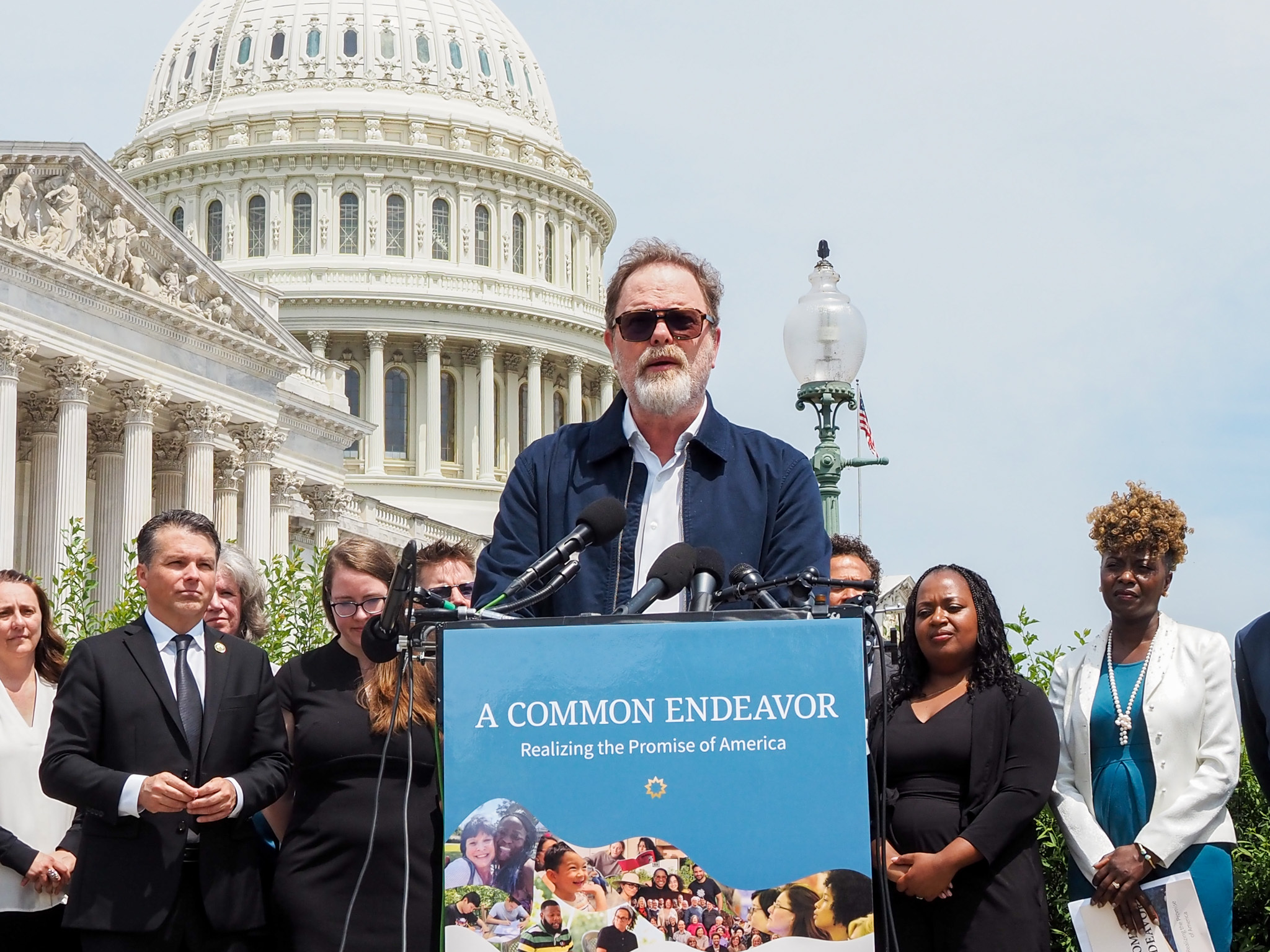
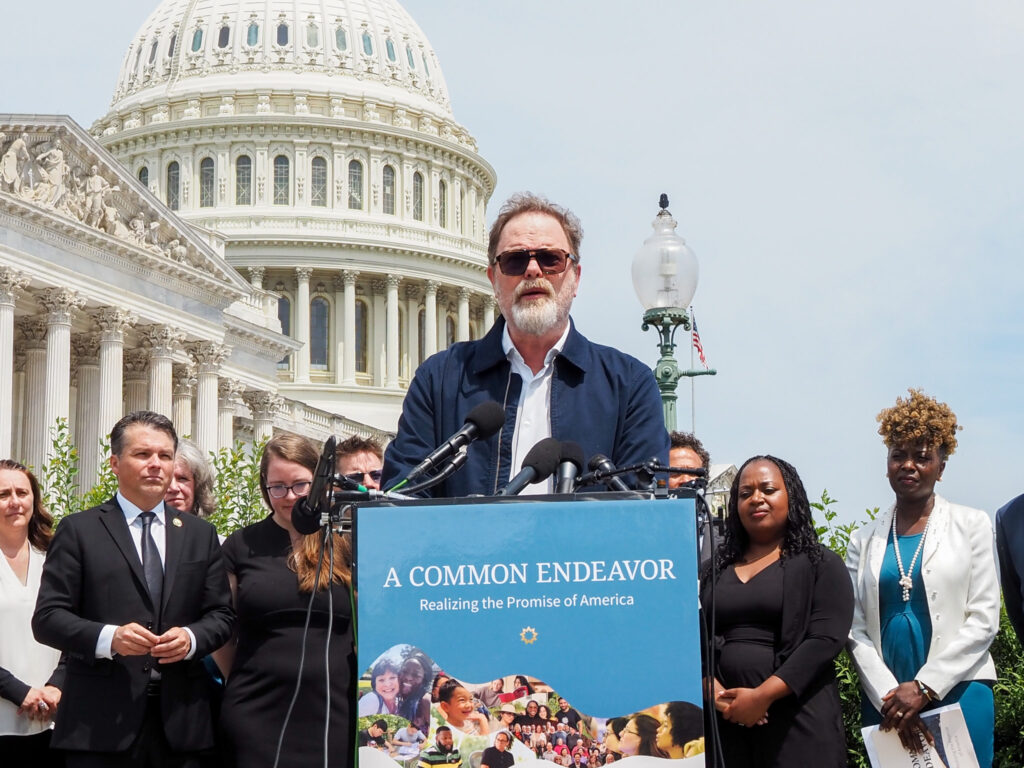
    Actor Rainn Wilson, widely known for playing Dwight Schrute on NBC’s “The Office,” joined a press conference that U.S. Reps. Brendan Boyle, D-Pa., and Gus Bilirakis, R-Fla., hosted along with religious leaders to advocate for the American tradition of religious freedom.

    Reading from the Declaration of Independence, Wilson, an outspoken member of the Baha’i faith that originated in 19th-century Persia, now Iran, said the nation’s 250th anniversary “is an opportunity to ask profound questions.”

    “How can we give fresh expression to the ideals in the declaration?” he asked. “How can we leave behind tendencies that divide us and replace them with a widening circle of concern? We need to be able to speak and think in terms of spiritual and moral dimensions of individual and collective life.

    “We need to do that in ways that are meaningful across different perspectives, both religious and secular,” he continued.

    Wilson’s appearance marked the public release of the Baha’i faith’s five-part letter “A Common Endeavor,” which argues for the realization of “ideals, like freedom, equality, and justice” as many Americans have become “exhausted and disillusioned by polarization.”

    The press conference was attended by members of several denominations, and is among numerous independent events ahead of the 250th anniversary of the United States.

    ‘A universal human right’

    Boyle cited Baha’i writings that “beautifully” emphasize unity.

    U.S. Rep. Brendan Boyle, D-Pa., co-led at an event Tuesday, June 9, 2026, on Capitol Hill, marking 250 years of religious freedom in United States. (Photo by Ashley Murray/States Newsroom)

    U.S. Rep. Brendan Boyle, D-Pa., co-led at an event Tuesday, June 9, 2026, on Capitol Hill, marking 250 years of religious freedom in United States. (Photo by Ashley Murray/States Newsroom)

    “My own Catholic faith teaches a similar truth. Pope Francis reminded us that we are called to come together as brothers and sisters, quote, ‘as children from the same earth,’” Boyle said.

    “My hope is that for America’s 250th anniversary, this will be more of a focus on what our next 250 years look like, rather than just a wonderful commemoration of the past quarter of a millennium.”

    Bilirakis, an Orthodox Christian who co-chairs the Congressional International Religious Freedom Caucus, said, “Religious freedom is not simply an American value, it is a universal human right, and I truly believe that.”

    “Whether we are speaking out on behalf of the persecuted Christians, Muslims, Jews, Baha’is, Hindus, Buddhists, Uyghurs, or members of other faith communities, our message must remain clear,” he said. “Every person is endowed with inherent dignity and deserves the freedom to live according to their conscience.”

    U.S. Rep. Gus Bilirakis, R-Fla., co-led at an event Tuesday, June 9, 2026, on Capitol Hill, marking 250 years of religious freedom in United States. (Photo by Ashley Murray/States Newsroom)

    U.S. Rep. Gus Bilirakis, R-Fla., co-led at an event Tuesday, June 9, 2026, on Capitol Hill, marking 250 years of religious freedom in United States. (Photo by Ashley Murray/States Newsroom)

    Bilirakis is an original cosponsor of a House resolution condemning the Iran government’s persecution of Baha’is. The resolution was introduced in December 2025, just months before the U.S. escalated war in Iran.

    Pentagon list

    The event on Capitol Hill, though unrelated, happened just one day after the Pentagon modified its list of recognized religions following criticism from the Church of Jesus Christ of Latter-day Saints, widely known as the Mormon church.

    Utah’s two Republican Sens. Mike Lee and John Curtis directly appealed to the administration to change the Department of Defense list, which did not categorize the Latter-day Saints as Christian.

    On Friday, the Pentagon revised its list of recognized religions for service members to 31, down from roughly 200.

    The Pentagon’s shortened list includes the Baha’i faith.

  • Trump launches new strikes on Iran after US Army helicopter downed

    Trump launches new strikes on Iran after US Army helicopter downed

    WASHINGTON — U.S. forces launched renewed strikes on Iran late Tuesday, in response to the downing of a U.S. Apache helicopter a day earlier, according to U.S. Central Command.

    President Donald Trump ordered the operation, which began at 5 p.m. Eastern and was “a proportional response to unjustified Iranian aggression,” a social media account for U.S. Central Command posted Tuesday evening.

    Trump said earlier Tuesday the United States would retaliate after Iran shot down the helicopter late Monday over the Strait of Hormuz, and that the two American pilots aboard were unharmed.

    Trump announced the cause of the helicopter’s downing in a Truth Social post just before 1 p.m. Eastern. As of early Tuesday morning, the incident had still been under investigation, according to U.S. Central Command.

    “I have just been informed by our Great Military that last night the Iranians shot down one of our highly sophisticated Apache Helicopters while patrolling over the Strait of Hormuz. There were two pilots involved, both are safe and uninjured. Nevertheless, the United States must, of necessity, respond to this attack. Thank you for your attention to this matter! President DONALD J. TRUMP,” the president wrote.

    Despite recent exchanges of fire, the administration maintains the war, named by the Pentagon as Operation Epic Fury, is over and that an April 7 ceasefire agreement between the U.S. and Iran remains in place.

    On Sunday’s “Meet the Press” with moderator Kristen Welker of NBC News, Trump said, before abruptly walking out of the interview a short time later, “I call it a military exercise because people would rather have it called that. It’s not a big war for us.”

    The two military pilots were rescued at 7:33 p.m. Eastern time after the AH-64 Apache went down off the coast of Oman while the military was patrolling regional waters, according to U.S. Central Command.

    “The Soldiers were safely rescued within approximately two hours and are in stable condition. The cause of the incident is under investigation.

    “Rescue efforts were led by U.S. Naval Forces Central Command and the 82nd Airborne Division, with support from U.S. Air Force and Navy units including U.S. 5th Fleet’s Task Force 59,” according to the command’s statement posted on social media just after 6 a.m. Eastern.

    The U.S. continues to block traffic to and from Iranian ports, and as recently as Monday fired on an empty oil tanker in the Gulf of Oman the military said was breaking the blockade just southeast of the Strait of Hormuz.

    According to U.S. Central Command, American forces have disabled seven non-compliant vessels, redirected 134 ships that complied, and allowed 42 vessels supporting humanitarian aid to pass since initiating the blockade on April 13.

    Iran has all but choked off international shipping through the Strait of Hormuz, where one-fifth of the world’s petroleum supply traveled before the war.

    War status

    Thirteen U.S. service members have died in the conflict, which began on Feb. 28.

    The Pentagon’s tally for service members injured stands at 411 as of Tuesday. Despite the administration’s stance that the war is over, the Defense Casualty Analysis System lists one U.S. sailor as “wounded in action” in June as part of Operation Epic Fury.

    Secretary of State Marco Rubio testified last week before the House Committee on Foreign Affairs that the U.S. war in Iran was “over.”

    In response to a question from Rep. Sara Jacobs, D-Calif., about who won the war, Rubio answered, “Epic Fury is over, which is what you would consider the war.”

    The U.S. launched the conflict in conjunction with Israel, and the Israeli government’s continued bombardment of southern Lebanon has stymied further peace talks — though Trump has repeatedly claimed Iran wants to make a deal.

    Iran and Israel exchanged rocket fire Sunday into Monday for the first time since April.

    Despite a U.S.-brokered ceasefire between Israel and Lebanon in mid-April, Israel’s bombing campaign has continued in southern Lebanon, as Iran-backed Hezbollah fighters refuse to recognize the agreement.

  • GAO finds millions of dollars wasted, safety and security at risk in Texas detention center

    GAO finds millions of dollars wasted, safety and security at risk in Texas detention center

    WASHINGTON — A hastily constructed immigrant detention facility on a military base in Texas wasted millions in federal funding and failed to meet basic standards, according to a report released Tuesday by a nonpartisan government watchdog.

    The report by the Government Accountability Office documenting problems at Camp East Montana is one of the first independent investigations into a facility quickly constructed from the $170 billion in immigration enforcement and detention funding provided by Republicans’ “big beautiful” law enacted in July 2025 as part of the president’s mass deportation campaign. The camp is considered the largest immigrant detention center in the United States.

    The Department of Defense and U.S. Immigration and Customs Enforcement in August 2025 set up the soft-sided detention site of Camp East Montana at Fort Bliss in El Paso, Texas. It was intended to hold as many as 5,000 immigrants and is still currently operating under a private contractor as well as ICE.

    The facility was plagued with several tuberculosis cases and at least four detainee deaths, with one ruled a homicide by the local coroner. The American Civil Liberties Union filed a suit against the government over inhumane conditions.

    “The facility also did not meet key detention standards, risking the safety and security of detained noncitizens and staff,” GAO said.

    The report came as the U.S. House this week prepares to take final steps to pass a $70 billion package to fund immigration enforcement until the end of fiscal year 2029. President Donald Trump is expected to sign the legislation into law.

    Congressional Democrats requested that GAO do a report on Camp East Montana, including Sens. Dick Durbin of Illinois, Jack Reed of Rhode Island and Gary Peters of Michigan and Rep. Bennie Thomspon of Mississippi.

    Reed, the top Democrat on the Senate Armed Services Committee, said in a statement that he was concerned the U.S. military was responsible for the quick construction of the detention camp.

    “Preventable deaths, inhumane conditions, and millions of dollars in waste are the direct result of the Pentagon cutting corners and handing a billion-dollar contract to an inexperienced vendor that wrote its own performance standards,” Reed said.

    $1.3 billion contract

    GAO investigators found that the Department of Defense’s contracting vehicle used to handle the $1.3 billion contract for Camp East Montana provided no flexibility and resulted in paying for meals and employee services during times when no immigrants were detained at the facility, resulting in millions of dollars wasted.

    For example, the Army paid the full cost for guards, medical services, transportation, meals and other services from Aug. 1, 2025 to Aug. 15, 2025, when there were no detainees at the facility, wasting up to $11.5 million, GAO said.

    “Further, because the Army set a fixed price for meals based on the capacity of the facility, it paid about an additional $423,000 for meals it did not need when the facility was operating below its designated capacity from August 16, 2025, through September 30, 2025,” according to the GAO report.

    Same failures could repeat, GAO says

    GAO investigators also noted that the same mistakes could be made with the Department of Homeland Security’s ongoing move to spend $38 billion to convert warehouses for the purpose of detaining thousands of immigrants.

    “GAO points out that ICE’s planned facility expansion—a $38 billion program to convert warehouses into detention facilities using the same contracting vehicle—risks repeating every one of these failures at a dramatically larger scale,” according to the report.

    Investigators made four recommendations, including that ICE consider tiered pricing for food to account for fluctuations in populations of detained immigrants and that ICE ensure that new facilities meet detention standards before housing immigrants.

    The report notes that DHS and DOD agreed with the recommendations. DOD deferred comment to DHS, which did not immediately respond to States Newsroom’s request for comment.

    Homicide investigated

    Investigators also raised use-of-force concerns, including one in January in which an autopsy found the death of a detainee to be due to asphyxia and ruled it a homicide.

    “However, the contractor did not provide use of force and death reports to ICE, as required,” according to the report. “In addition, evidence associated with the incident was missing or destroyed.”

    Durbin, who is the top Democrat on the Senate Judiciary Committee, called the GAO report “damning.”

    “We now know even more details of how dangerous and irresponsible the Trump Administration’s mass deportation campaign truly is,” he said in a statement. “Excessive use of force, lacking medical and mental health care, and wasted taxpayer dollars are emblematic of this mass deportation scheme. The American people have rightfully expressed outrage at these policies, and it’s time to hold ICE and their private contractors responsible.”

    GAO investigators noted several health issues. They pointed out that none of the detainees with HIV or diabetes had treatment plans in place.

    Also, facility employees did not follow proper procedure for tuberculosis screening. One contractor used a questionnaire rather than administering the required skin tests for tuberculosis.

    Investigators found that as a result in November, a detained immigrant with tuberculosis was housed with the general immigrant population.

  • Projected Social Security benefits cliff creeps up to 2032

    Projected Social Security benefits cliff creeps up to 2032

    WASHINGTON — Congress must act to shore up Social Security during the next six years to avoid an automatic drop-off in benefits in 2032, according to a report released Tuesday.

    The annual update on the Old Age and Survivors Insurance trust fund shows that it will “become depleted” in the fourth quarter of that year, a few months earlier than projected in last year’s report.

    That would lead to recipients receiving 78% of their benefits — the projected yearly income to the trust fund — unless Congress acts before then. By 2100, benefits would be only 62%, according to the report.

    That decrease would have a significant impact on the tens of millions of Americans who rely on the program to stay out of poverty, especially retirees.

    Social Security Commissioner Frank J. Bisignano wrote in a statement that in order to “protect the promise of Social Security, it is important for lawmakers and the Social Security Administration to work together to ensure the trust funds continue to provide financial stability now and for future generations.”

    Bisignano is scheduled to testify before the House Ways and Means Committee on Wednesday, where he will likely face several questions about the new report and whether the administration has policy suggestions for Congress.

    More than 68 million Americans received Social Security payments in April, according to data from the administration. More than 56 million of the beneficiaries were 65 or older.

    Michael A. Peterson, CEO of the Peter G. Peterson Foundation, wrote in a statement November’s midterm elections will have an impact on who is in the Senate, where lawmakers have six-year terms, in the lead-up to the deadline.

    “It’s important to recognize that the Senators we elect this year will be in office when Social Security becomes unable to pay out full benefits, so this must be a central campaign issue,” he wrote.

    Peterson added that “there are many well-known solutions available” and that it’s “time for responsible, bipartisan leadership to strengthen Social Security and Medicare, ensuring the stability of these programs for generations of Americans to come.”

    Maya MacGuineas, president of the Committee for a Responsible Federal Budget, wrote in a statement that “Washington is sleepwalking into a retirement crisis, allowing our nation’s most important trust funds to go insolvent at the expense of over 70 million beneficiaries who count on these programs.”

    MacGuineas added that there is “no shortage of options out there to avoid this.”

    “It’s time for our leaders to start telling the truth on Social Security and Medicare, and working on real plans to save these programs,” she wrote. “Time is running out.”

  • Critics warn of years in prison for young adults under carjacking bill before Congress

    Critics warn of years in prison for young adults under carjacking bill before Congress

    By Elena Tittel/Medill News Service

    WASHINGTON – A North Carolina jury convicted a man for carjacking a truck from a McDonald’s parking lot by holding something “cold and hard” on the driver’s neck. A federal appeals court overturned the conviction in 2016, citing insufficient evidence.

    “The evidence was insufficient to support a rational finding beyond a reasonable doubt that (Kenneth) Bailey possessed the specific intent, conditional or otherwise, to kill or seriously harm his victim when he took control of the vehicle,” a panel of the U.S. Court of Appeals for the 4th Circuit wrote in its ruling.

    Cases like that inspired some in Congress to propose a federal law that would make it easier for prosecutors to convict people of carjackings. That could result in harsher sentences, even the death penalty.

    People younger than 25 make up most of the carjackers, causing advocates and Democratic legislators to argue that a lower threshold for proving carjackings could result in many young adults, especially Black men, spending decades in prison.

    “These tough on crime, really extreme sentencing schema don’t really work, and they only end up incarcerating more youth and perpetuating racial disparities,” said Malik Pickett, a senior attorney at the Juvenile Law Center, a nonprofit public interest law firm and national advocacy organization.

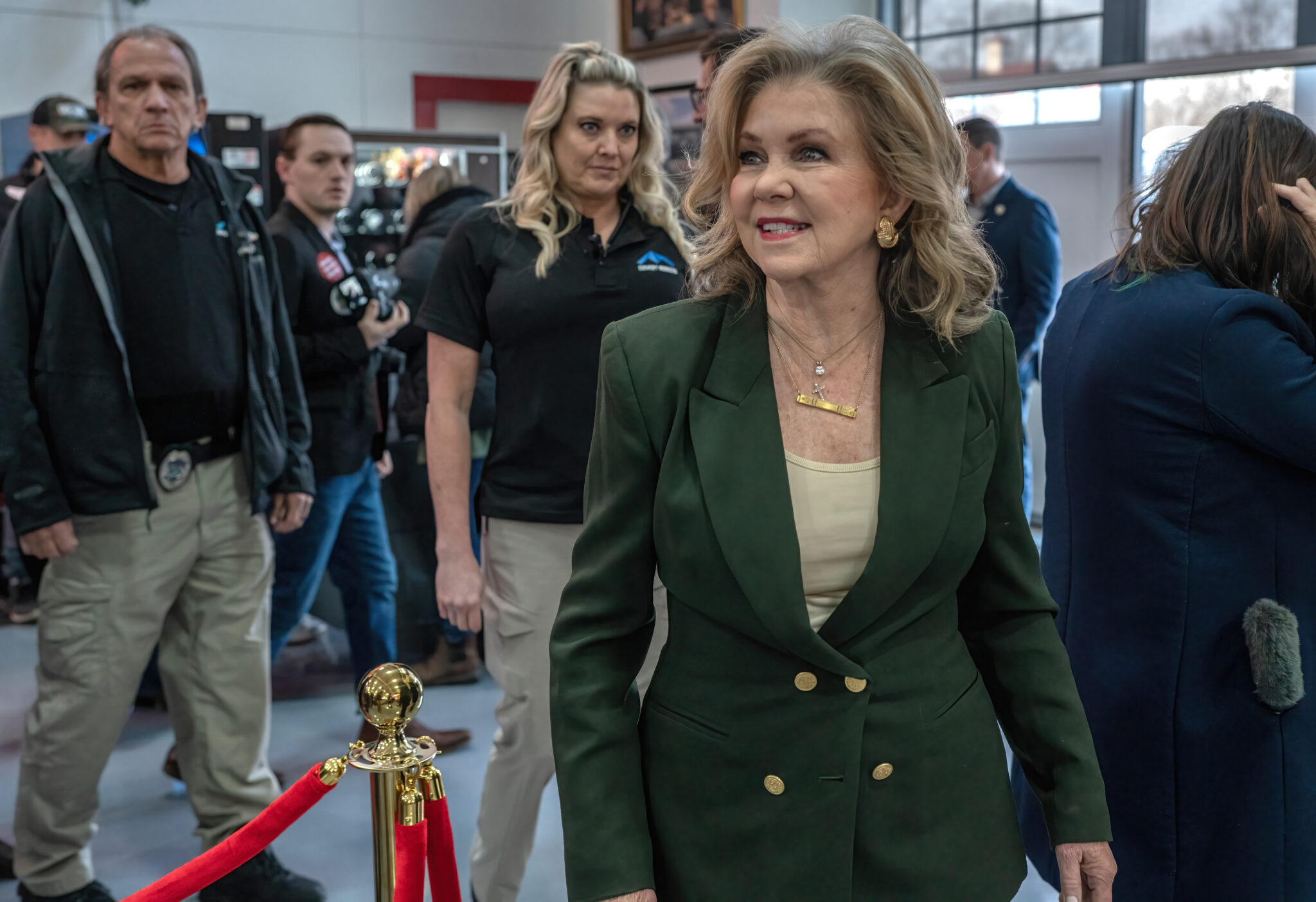
    The bill, dubbed the Federal Carjacking Enforcement Act, was introduced on May 1, 2025, by Sen. Marsha Blackburn, R-Tenn. The Senate Judiciary Committee on April 30 advanced the measure with an 18-4 vote. But the measure has not yet faced a floor vote. An identical House version introduced by Rep. Barry Moore, R-Ala., in November has not had any action yet.

    According to data reported by the Council on Criminal Justice, across nine U.S.cities, carjackings rose during the COVID-19 pandemic and peaked in 2023. Since 2024, carjackings have declined.

    In Washington, D.C., which has a higher-than-average carjacking rate, there have been 1,751 carjacking offenses between January 2023 and the end of May 2026, 1,273 of which involved a firearm, according to the Metropolitan Police Department.

    Proving intent

    The federal carjacking statute first came into effect in October 1992. On Sep. 13, 1994, the statute was amended to include “Whoever, with intent to cause death or serious bodily harm takes a motor vehicle” and added the possibility of the death penalty in cases when someone was killed.

    However, some lawmakers said the need to prove intent made it difficult for prosecutors to convict carjackers.

    “We need to make it easier for federal prosecutors to combat and prevent carjackings,” Blackburn said in a statement following an April hearing. “My Federal Carjacking Enforcement Act would make our streets safer for Tennesseans and all Americans by fixing a broken statute that has hindered federal prosecutors from holding carjacking offenders accountable.”

    The bill would change the required standard of proof so that prosecutors would instead need to show a defendant acted “knowingly,” rather than needing to prove the defendant acted “with intent” to cause harm.

    In some previous cases, prosecutors failed to prove intent, making prosecution difficult. For instance, in the North Carolina case, Kenneth Lee Bailey Jr. stole someone’s truck in a McDonald’s parking lot. In Bailey’s testimony, he claimed he approached the witness’s car and asked for a ride, promising payment. However, when the witness refused, Bailey forced his way into the car and placed something “cold and hard” on the driver’s neck. The prosecutor failed to prove that it was a weapon.

    Intent requires prosecutors to prove that the defendant wanted to inflict harm, whereas knowingly only requires the prosecutor to prove the defendant was aware that their actions would result in harm, even if that was not their goal.

    “Federal prosecutors shouldn’t have to read minds to put dangerous criminals behind bars,” Moore said in a press release.

    Penalties for carjackings too harsh, some argue

    People convicted of serious carjacking crimes can face between 15 to 25 years in prison, depending on if serious bodily injury results. If death results, the defendant could face life in prison or the death penalty, the statue states.

    Sen. Cory Booker, D-N.J., said during the April hearing that easier convictions and stricter sentences for carjackings might do more harm than good.

    “Federal prison does not put young people on a better path,” Booker said. “Carjackings are a serious crime … but I think here this bill is doing some things that have been proven to be misguided, that undermine a sense of fairness and decency.”

    Youth criminal justice advocates argued against the change in the federal carjacking legislation to make it stricter.

    Carjackings “are traditionally local offenses that should be left in the hands of communities,” said Liz Komar, senior policy counsel at The Sentencing Project, an advocacy group. “They don’t need more aggressive federal penalties.”

    Young people convicted

    Research from The Sentencing Project shows carjacking convictions disproportionately involve young adults. From 2020 to 2024, nearly half of carjacking convictions involved individuals 24 or younger.

    Data from the Council on Criminal Justice also shows that Black men are disproportionately convicted of carjackings. Between 2018 and 2022 across 10 U.S. cities, the Black offending rate was higher than the white offending rate for carjacking, robbery and motor vehicle theft.

    Komar said that young people committing these crimes might not realize what they are doing is a serious crime.

    “I think we’ve seen on social media, particularly in some cities, for carjacking to be related to young people engaging in risk-seeking behavior who don’t understand that what they’re doing is a crime,” Komar said. “They’re certainly not entering into it with the intent to seriously harm someone and then spend decades in prison, and nonetheless, that’s what may result.”

    Democrats and youth advocates argued against the new legislation, citing research that showed that for those convicted under the age of 25, their brains are still developing. Research cited by The Sentencing Project has shown that young people are most at-risk for committing crimes in their late teenage years to their mid-twenties, raising questions as to whether lengthy prison sentences are appropriate for young defendants

    However, this hasn’t stopped federal prosecutors from prosecuting youths and imposing long sentences:

    • In January 2020, 19-year-old Elijah Roberts from St. Louis was sentenced to 11 years and two months in federal prison for his involvement in a February 2018 armed carjacking, which would have made Roberts 17 at the time.
    • In May 2025, 20-year-old Bryant Hoskins and 19-year-old Samuel Fancher, Jr. of Indianapolis were sentenced to 17 years in federal prison each after pleading guilty to two counts of armed carjacking that took place in May 2024.
    • In April 2026, 21-year-old Jaquell Blackwell – a member of the “5zzly” crew, a Bronx-based gang – was sentenced to 63 months in prison for committing three armed carjackings. Another member, 21-year-old Abodul Azika, was sentenced to 87 months in December 2025 for his participation in an armed carjacking with Blackwell and two other armed carjackings. The carjackings took place between June 2022 and June 2023, which would have made the men around 18 at the time.

    Difficult to be released

    Once incarcerated, it can be difficult to be released. Deandre Govan in February 2024 was sentenced to nine years in federal prison at the age of 21 for a string of armed carjackings he committed three years prior. His motion for compassionate release was denied on March 11, 2026.

    In his motion, he argued that these offenses were committed prior to the age of 25, “placing him squarely within the class of youthful offenders now recognized by the Sentencing Commission and courts as possessing heightened capacity for rehabilitation.”

    The U.S. Sentencing Commission, an independent federal agency, was created to respond to widespread disparity in federal sentencing.

    Govan also argued that the effects of the COVID-19 pandemic made his sentence more severe than the U.S. District Court for the Southern District of Indiana originally intended and that he had “endured prolonged lockdowns, suspension of rehabilitative programming and heightened exposure to illness all while suffering from multiple mental health condition[s] which he was diagnosed [with] as a child,” according to court filings.

    Still, the court ruled that such circumstances do not constitute extraordinary and compelling reasons for release.

    Medill News Service articles are reported and written by graduate student journalists in the Washington program of the Medill School at Northwestern University.

  • Trump administration swiftly moves ahead on plans to restrict voting by mail in the states

    Trump administration swiftly moves ahead on plans to restrict voting by mail in the states

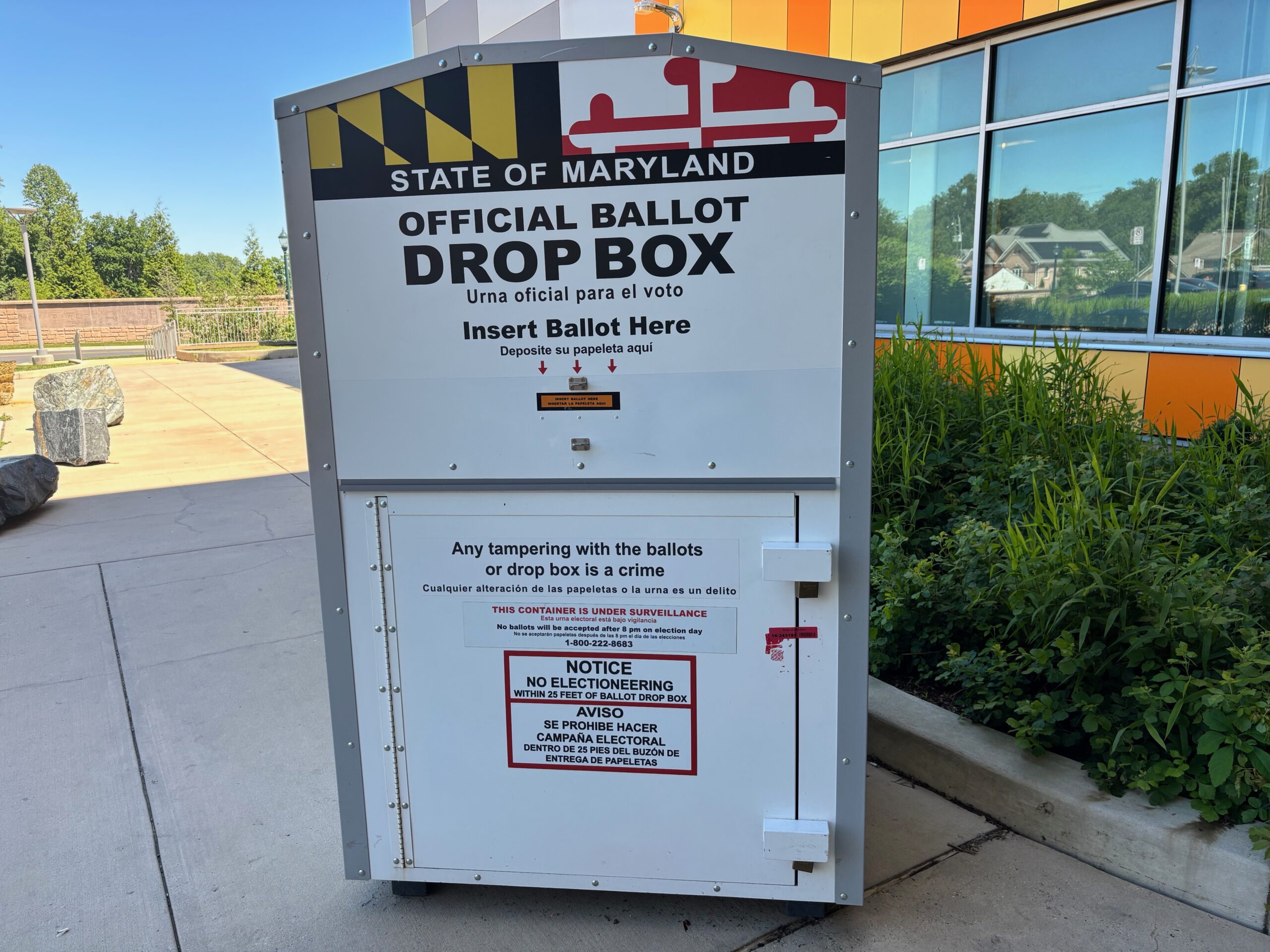
    The U.S. Department of Homeland Security will allow states to access federal citizenship data by June 30 and plans to monitor the flow of mail ballots for signs of voter fraud, according to a court document.

    Amid a series of lawsuits, President Donald Trump’s administration is now moving to carry out a March 31 executive order restricting voting by mail ahead of the November midterm elections.

    Democrats and voting rights advocates oppose the directive as unconstitutional election meddling by Trump and have sued to stop him. The president, who has long attacked mail ballots but votes by mail himself, says the additional rules will fight noncitizen voting, a rare phenomenon.

    “No president has the authority to unilaterally rewrite election rules or dictate how states administer their elections,” Marcia Johnson, chief of activation and justice at the League of Women Voters, said in a statement last week. The League of Women Voters filed one of at least five lawsuits challenging the order.

    Potential disruptions

    The order could carry major consequences for the midterm elections. Any new restrictions on mail ballots would risk disrupting how tens of millions of voters cast their ballots. About 30% of voters cast mail ballots in 2024, according to data gathered by the U.S. Election Assistance Commission.

    But despite several legal challenges, the order remains in effect.

    A federal judge in Washington, D.C., in late May ruled against a request by Democratic groups to pause the order, finding that it was too soon to weigh in because federal officials hadn’t taken enough action yet. A second judge in Massachusetts held a hearing last week, but didn’t immediately issue a decision.

    “The Trump Administration will continue fighting for the safety and security of American elections,” White House spokesperson Abigail Jackson said in a statement shortly after the D.C. judge’s decision.

    One portion of the order demands the postmaster general enact new restrictions on mailed ballots and not transmit ballots from states that refuse to provide the names of absentee voters. The U.S. Postal Service, despite its status as an independent corporation, has put forward a proposal in line with the order to require states to submit lists of voters before mailing ballots.

    Now, Homeland Security is responding to another part of the order that requires the creation of lists of voting-age citizens in every state, which the Trump administration calls “state citizenship lists.” State election officials would receive the lists, which they could compare to their voter rolls in a search for noncitizen voters.

    Homeland Security’s plans for the citizenship lists came into focus on June 5, when the U.S. Department of Justice filed a notice in federal court that briefly outlines the administration’s plans. The notice describes a two-part effort by Homeland Security and its subsidiary agency, U.S. Citizenship and Immigration Services, to comply with the order.

    First, Homeland Security will implement a “State Voter Roll Verification” that allows state election officials to submit their voter rolls to the Systematic Alien Verification for Entitlements, or SAVE, system.

    SAVE is a powerful computer program that checks names against citizenship information held in a variety of government databases. It can flag registered voters as possible noncitizens, but faces criticism for incorrect identifications.

    For the past year, states have already had the option to upload their voter rolls into SAVE. Some Republican-led states, such as Indiana, Texas and Wyoming, have used the system, while Democratic states have declined. It’s unclear how the State Voter Roll Verification would be different, if at all, from states’ current SAVE access.

    Homeland Security and U.S. Citizenship and Immigration Services didn’t respond to questions from States Newsroom.

    Second, the Justice Department notice says Homeland Security will set up a registry for state election officials to securely access “citizenship-related data” from USCIS, the Social Security Administration and the State Department.

    According to the notice, the “underlying data would remain in each agency’s respective system.” No other details were provided.

    The notice also outlines Homeland Security’s intention to use the lists of voters that states provide to the Postal Service for investigations. It says DHS wants to “integrate” data on those voters “to monitor mail-in and absentee ballot flows, identify anomalies that may suggest voter fraud or misuse, and generate authorized investigative leads.”

    California elections

    The notice comes as Trump renews his attacks on mail-in voting. Last week he alleged, without evidence, voter fraud in California, which held primary elections last week. California relies heavily on mail ballots and often counts votes at a slow pace — meaning final results sometimes don’t match election night vote totals.

    “Do you know why they’re doing that? Because they’re cheating on the election,” Trump said in an interview on NBC’s “Meet the Press.”

    While the executive order already faces a slew of lawsuits, the NAACP on June 3 filed a motion in federal court seeking to specifically block the Postal Service’s proposed regulations of mail ballots. The NAACP alleges the regulations violate a 2021 settlement agreement that requires timely delivery of election mail to all voters.

    The Postal Service has until Thursday to respond.

    The American Postal Workers Union in a statement on June 5 denounced the executive order, saying the Postal Service serves all Americans. It is “not a tool for politicians” to pick which Americans receive which benefits, the union said.

    “The Executive Order is an unconstitutional attack on the millions of Americans who vote by mail,” the union said, “and another front in an ongoing assault on voting rights in the United States of America.”

  • Trump administration $100,000 visa fee for highly skilled foreign workers struck down

    Trump administration $100,000 visa fee for highly skilled foreign workers struck down

    WASHINGTON — A federal judge in Massachusetts Monday struck down the Trump administration’s efforts to require a $100,000 visa fee for highly skilled immigrant workers, finding the policy is an unlawful tax.

    Judge Leo T. Sorokin found the hefty fee placed on the H-1B visa by President Donald Trump exceeded his authority by creating a tax, something that falls under Congress’ authority.

    “The President has no authority to levy a tax unless such a power is delegated by Congress through statute,” Sorokin, who was nominated by former President Barack Obama, wrote. “For these reasons, the Court finds that the Policy imposes a tax on H-1B petitions without the requisite delegation by Congress.”

    The H-1B program allows a U.S. employer to hire a noncitizen worker in a specialty occupation for a maximum of six years, ranging from the technology industry to healthcare workers. At a minimum, visa applicants have to hold a bachelor’s degree.

    A Department of Homeland Security spokesperson said in a statement to States Newsroom that the agency disagrees “with this blatant judicial activism dismantling President Trump’s historic efforts for immigration reform.”

    “The recent changes to the H-1B visa program, including the increased fee, are intended to address concerns about program integrity and the impact on the U.S. workforce,” the spokesperson said. “The policy aims to ensure that employers prioritize hiring U.S. workers, particularly in high-skilled fields. The Trump Administration remains committed to safeguarding opportunities for American workers and maintaining the integrity of employment-based visa programs.”

    The suit was brought by 20 states: California, Massachusetts, Arizona, Colorado, Connecticut, Delaware, Hawaii, Illinois, Maryland, Michigan, Minnesota, Nevada, New Jersey, New York, North Carolina, Oregon, Rhode Island, Vermont, Washington state and Wisconsin.

    In September the Department of Homeland Security issued a proclamation requiring employers to pay a $100,000 fee for a noncitizen to enter the U.S. under a H-1B visa.

  • Trump administration processing freeze on asylum seekers violated law, judge rules

    Trump administration processing freeze on asylum seekers violated law, judge rules

    WASHINGTON — A federal judge in Rhode Island Friday struck down several Trump administration policies that halted processing for asylum seekers following a shooting in Washington, D.C., that left one West Virginia National Guard member dead and another seriously injured.

    In a searing opinion, Judge John J. McConnell Jr. said the Trump administration “threw the lives of countless immigrants living in the United States into indeterminate legal limbo” when it directed U.S. Citizenship and Immigration Services to pause asylum applications and green card paperwork for immigrants hailing from 39 African, Asian, Latin American and Middle Eastern countries subject to the president’s travel ban.

    The policy was announced in November after the two National Guard members were shot. Authorities later charged Rahmanullah Lakanwal, an Afghan national who was granted asylum, with the shooting. He has pleaded not guilty in federal court. A status conference is set for June 10 in the U.S. District Court for the District of Columbia.

    McConnell, who was nominated by former President Barack Obama, said the policy “violated the very immigration laws that Congress has charged it with administering.”

    USCIS is an agency within the Department of Homeland Security that oversees processing of legal immigration, ranging from asylum seekers to work authorization forms.

    “USCIS’s hold on adjudications cannot be attributed to anything that these individuals did wrong; rather, it arises solely by the happenstance of their birth,” McConnell wrote.

    He added that “the Court is reminded of a line often repeated in discussions around immigration policy: If people wish to immigrate to the United States, they ought to ‘follow the law’ and ‘do things the right way.’ This case serves as a perfect example of immigrants doing just that.”

    New policy paused processing

    Labor unions and immigration advocacy groups in Rhode Island sued the Trump administration over the policies. They brought the suit on behalf of their members, immigrants who had the processing of their work visas and travel documents paused after the new policy following last year’s shooting in Washington, D.C.

    After the November shooting, on the eve of Thanksgiving, one guard member, U.S. Army Spc. Sarah Beckstrom, 20, died, and U.S. Air Force Staff Sgt. Andrew Wolfe, 24, was critically wounded, but recovered.

    One of the groups that sued, Democracy Forward, praised the decision.

    “This ruling reaffirms a basic principle: the federal government cannot shut down lawful immigration pathways or discriminate against people based on where they come from,” Skye Perryman, president and CEO of Democracy Forward, said in a statement. “These unlawful policies caused enormous harm to families, workers, asylum seekers, and communities across the country who were left in limbo, unable to work, access protections, or move forward with their lives.”

  • US Senate blocks Trump’s SAVE America Act, thwarting restrictions on voting

    US Senate blocks Trump’s SAVE America Act, thwarting restrictions on voting

    The U.S. Senate rejected the SAVE America Act on Thursday, dealing a blow to President Donald Trump’s efforts to impose voting restrictions ahead of the November midterm elections.

    Senators voted 48-50 against advancing an amendment that would have incorporated Trump’s top legislative priority into an immigration-focused spending bill. The vote offered the clearest sign yet that despite pressure from the president, a handful of Republican senators continue to resist advancing the bill, which critics say would unleash immense chaos ahead of elections this fall.

    The SAVE America Act would require voters to offer documents, such as a birth certificate or passport, proving their citizenship when registering to vote. It would also mandate voters show photo ID when casting a ballot and restrict where voters can register, effectively eliminating voter registration drives.

    Democrats and voting rights groups have assailed the bill, saying it would disenfranchise voters and upend the midterms because the new rules would take effect immediately. Trump and the bill’s GOP supporters say it’s needed to combat noncitizen voting, an extremely rare phenomenon.

    Since taking office last year, Trump has made a series of attempts to shape how elections are run. An executive order that would limit voting by mail remains in effect for now as opponents challenge it in federal court, and the Department of Justice continues to seek to force states to hand over sensitive voter data, so far unsuccessfully.

    The Senate amendment, offered by Republican Sen. Lindsey Graham of South Carolina, also included restrictions on sports participation by transgender athletes. On social media after the vote, Graham called the SAVE America Act “one of the most consequential” pieces of legislation developed by Trump and his team.

    “All Democrats voted no, and they will eventually pay a price,” Graham wrote.

    Republicans also vote no

    But the proposal fell short among a small group of Republicans, too. Sens. Susan Collins of Maine, Mitch McConnell of Kentucky, Lisa Murkowski of Alaska and Thom Tillis of North Carolina joined Democrats in voting no.

    Collins is seeking reelection in what is one of the most competitive Senate races in the country. McConnell and Tillis have both opted against seeking reelection, while Murkowski has said the bill would set up barriers for voters in her large, rural state.

    Sixty votes would have been needed to advance the amendment — the same threshold to overcome a filibuster.

    The vote came after the Senate spent weeks debating the SAVE America Act earlier this year before moving on to other business without a vote. Trump has urged Republicans to abandon the filibuster to pass the bill, without success.

    “We will squash this blatant attempt at voter suppression,” Sen. Mark Warner, a Virginia Democrat, wrote on social media after the vote.

    The Senate also rejected, 50-49, a separate amendment offered by Sen. Mike Lee, a Utah Republican, that included a different version of the SAVE America Act. According to Lee, the amendment was the version of the bill passed by the House, which didn’t include provisions on transgender athletes.

    Collins voted in favor of the amendment after earlier opposing Graham’s amendment.

    California

    Both amendments failed hours after Trump asserted, without evidence, that Democrats were stealing “the vote” in California. The state held primary elections earlier this week, but vote counting is often slow in the state, meaning vote totals reported on election night don’t always reflect the final outcome of a race.

    Trump linked California’s elections to his push for the SAVE America Act, writing on social media that “I hope Republicans are watching” so they could pass the legislation.

    “They found a lot of mail-in ballots last night, shockingly,” Trump said at an unrelated Oval Office event on Thursday. “So we don’t want that.”

    With the Senate unwilling to advance the SAVE America Act, some GOP lawmakers have begun offering alternative election-related bills.

    Republican Reps. Julie Fedorchak of North Dakota and Laurel Lee of Florida on Thursday introduced the SAVE America Through REAL ID Act, which would create a grant program to help states provide REAL ID-compliant driver’s license and identification cards to residents for free to low-income Americans.

    On Tuesday, Sen. Marsha Blackburn, a Tennessee Republican, and Graham introduced the Election Security Partnership Act, designed to encourage states to submit their voter rolls to a computer program operated by the Department of Homeland Security that can identify possible noncitizens.

    States can already upload voter data to the program, called Systematic Alien Verification for Entitlements or SAVE, but the legislation would provide $20 million in grants for states to offset any costs related to using SAVE.

  • Republicans push $70B for immigration enforcement through US Senate, with no limits on ICE

    Republicans push $70B for immigration enforcement through US Senate, with no limits on ICE

    WASHINGTON — The U.S. Senate approved a nearly $70 billion package early Friday, moving Republicans one step closer to funding immigration and deportation activities for the next three years without negotiating new constraints on federal agents with Democrats.

    The 52-47 mostly party-line vote sends the measure to the House, where GOP lawmakers could send it to President Donald Trump for his signature as soon as next week.

    Alaska Sen. Lisa Murkowski was the only Republican to vote no. Colorado Democratic Sen. Michael Bennet, who participated in a debate in his bid to become his state’s next governor, did not vote.

    Murkowski said in a statement she opposed the legislation because it bypassed the annual government funding process that forces the two political parties to debate issues and find compromise.

    “By choosing to appropriate funding for three fiscal years instead of one, this measure weakens the normal budgeting process and sets another precedent for avoiding it when we find ourselves in disagreement,” she said. “In doing so, it reduces Congress’ ability to apply reasonable checks on immigration policy for the remainder of this administration and into the next.”

    Murkowski added that she would have voted for the package had it “provided immigration funding for one year, included clear restrictions on what those funds can be used for, and eliminated any potential for taxpayer dollars to be allocated to the administration’s brazen ‘anti-weaponization’ fund.”

    Majority Leader John Thune said during floor debate GOP leaders were forced to draft the package after Democrats “walked away” from negotiations that could have placed restrictions on federal immigration agents.

    “Republicans are going to continue to ensure that these agencies have the funding that they need to fulfill their national security responsibilities,” the South Dakota Republican said.

    Minority Leader Chuck Schumer, D-N.Y., argued the measure shows that Republicans are more focused on funding deportations than lowering the cost of living.

    “Apparently, Republicans think we cannot afford a single penny to help Americans cover the skyrocketing costs of gasoline, of healthcare, of housing, of food, of energy, you name it,” he said. “But somehow we can afford to give another $70 billion to Trump’s rogue agencies.”

    Senate approval followed a marathon amendment voting session that stretched throughout Thursday and overnight as Democrats sought to challenge Republican senators on policy differences just months before the November midterm elections. No amendments were approved.

    Building on “big, beautiful” law

    The bill would provide a second hefty cash infusion to the agencies carrying out the president’s immigration crackdown, building on the $170 billion Republicans included in their “big, beautiful” law.

    This legislation would appropriate:

    • $38.53 billion for Immigration and Customs Enforcement
    • $26.02 billion for Customs and Border Protection
    • $5 billion for the secretary of Homeland Security.

    The money would be available through Sept. 30, 2029, the end of the fiscal year. Republicans decided not to place any new guardrails on immigration agents.

    The measure Republican senators approved was somewhat different from the original version released in early May, which included $1 billion for the Secret Service to make security upgrades associated with the president’s ballroom, dubbed the East Wing Modernization Project.

    Republicans also removed $1.46 billion that would have increased funding for several Justice Department programs.

    Additionally, GOP lawmakers bolstered ICE funding by $350 million compared to the earlier version of the bill.

    Republican leaders are moving the package through the complex budget reconciliation process, avoiding the need to secure Democratic votes in the Senate that would otherwise be required to end debate on the measure.

    GOP leaders opted to use the special legislative maneuver after they were unable to broker agreement with Democrats to place constraints on immigration officers.

    Democratic lawmakers said new guardrails, including body cameras and preventing the use of masks, were necessary after federal agents shot and killed two U.S. citizens in Minneapolis in January.

    The impasse led to a 76-day shutdown at the Department of Homeland Security that didn’t end until late April, when Congress approved the annual spending bill without funding for ICE or the Border Patrol.

    June 1 deadline missed

    The reconciliation process comes with several strict rules that require each section of the legislation to address revenue, spending, or the debt limit. Proposals also cannot be deemed “merely incidental” to the federal budget.

    Trump wanted Congress to approve the funding package ahead of a self-imposed June 1 deadline. But work on the measure ground to a halt after the administration announced plans to establish a $1.776 billion fund to pay people who believe they were wrongly prosecuted by the Justice Department.

    Floor debate on the bill resumed again this week after acting Attorney General Todd Blanche testified before a House subcommittee Tuesday the administration was “not moving forward with the fund, period.”

    Trump, however, muddied the waters a bit Wednesday when asked during an Oval Office event whether the fund was “dead or on hold.”

    “I’d have to ask my lawyers. I don’t know,” he said. “Are you talking about the weaponization fund? The weaponization fund, as far as I’m concerned, was a beautiful thing.”

    Tough amendment votes

    The Justice Department’s “anti-weaponization” account was one of many issues senators sought to address during a marathon voting session that began Thursday morning and lasted until just before sunrise Friday.

    Several Republicans, including those facing tough reelection bids, sided with Democrats on proposals and offered changes of their own, though none were added.

    South Carolina Republican Sen. Lindsey Graham tried unsuccessfully to include language that would have required people registering to vote provide proof of U.S. citizenship and later present a photo ID to cast a ballot.

    Senators voted 48-50 to reject Graham’s attempt to add the SAVE America Act, showing the legislation doesn’t have the votes to clear Congress, despite pressure from the president.

    Republican Sens. Susan Collins of Maine, Mitch McConnell of Kentucky, Murkowski and Thom Tillis of North Carolina voted with Democrats.

    A majority of senators backed an attempt by Delaware’s Chris Coons that would have barred the DOJ from paying anyone convicted of assaulting police on Jan. 6, 2021, when Trump supporters attacked the Capitol.

    The 54-45 vote, however, wasn’t enough to add the provision to the package. It needed the support of at least 60 senators to move past a procedural hurdle since it didn’t address language in the immigration bill. Republican Sens. Bill Cassidy of Louisiana, Collins, Jon Husted of Ohio, Ashley Moody of Florida, Jerry Moran of Kansas, Murkowski, Dan Sullivan of Alaska and Tillis voted with Democrats.

    An amendment from Cassidy to compensate “law enforcement officers who defended the United States Capitol” on Jan. 6 was unable to reach the 60 votes it needed following a 52-47 vote. Cassidy as well as Collins, Husted, Murkowski, Sullivan and Tillis voted along with Democrats.

    Oregon Democratic Sen. Jeff Merkley proposed an amendment that would have required congressional authorization before construction could continue on the White House ballroom, but it wasn’t adopted following a 53-46 vote.

    Cassidy, Collins, Husted, Moran, Murkowski, Sullivan and Tillis voted with Democrats, but it needed at least 60 votes to move past an objection.

    Health insurance

    Georgia Democratic Sen. Jon Ossoff tried to use a maneuver that would have sent the bill back to the Judiciary Committee in order to create “a task force to conduct investigations into health insurance companies that are found to routinely deny and delay patients’ access to medically necessary care.”

    Ossoff told the story of a woman named Ellen from Atlanta who struggled with her insurance company after being diagnosed with a form of blood cancer known as multiple myeloma.

    “As Ellen told me, quote, ‘for a corporation to have a finger on the button of your life is ridiculous. They have their minds on profit margins. I just want to be healthy and alive,’” he said. “Thankfully, Ellen’s cancer is now in remission. But across America, insurance companies continue to deny and delay medically necessary healthcare.”

    Iowa Republican Sen. Chuck Grassley said the issue was “worthy of review” but disagreed with addressing it during debate on the immigration and deportation bill.

    “The Justice Department already performs investigations into healthcare insurance fraud. The Senate also confirmed a new assistant attorney general to fight fraud,” he said. “Further, sending the reconciliation bill back to the Judiciary Committee would essentially kill it.”

    The Senate did not agree with Ossoff’s motion following a 47-50 vote. Collins was the sole Republican to vote with Democrats.