Tag: exclusive

  • Trump picks acting AG Blanche to stay on full time

    Trump picks acting AG Blanche to stay on full time

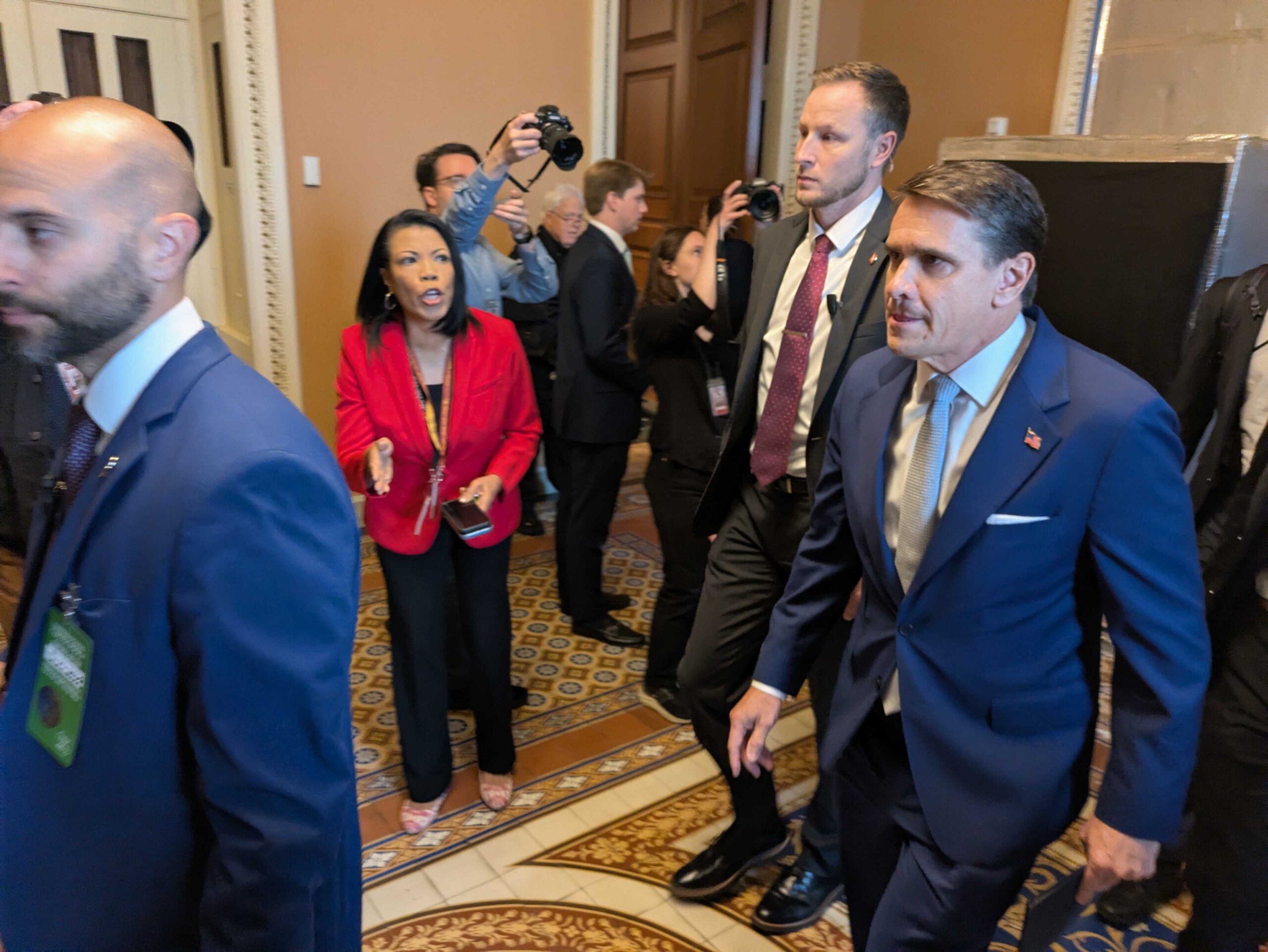
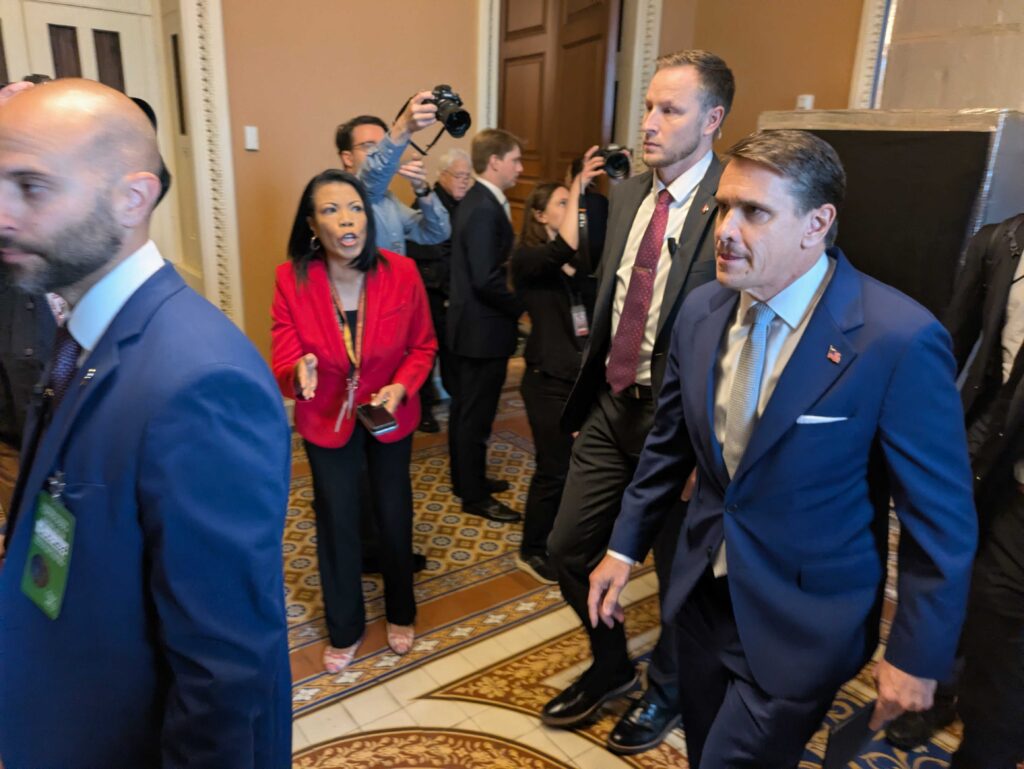
    WASHINGTON — President Donald Trump will nominate acting Attorney General Todd Blanche, his former personal lawyer, to fill the top role at the Department of Justice on a permanent basis, he said Wednesday night.

    Trump revealed Blanche as his choice at an outdoor event at the White House, saying “we are going to make him permanent attorney general” and adding that he expects Blanche’s nomination process to “go very quickly.”

    Blanche has been leading the department in an acting capacity since former Attorney General Pam Bondi exited the administration in early April.

    Blanche, of Florida, will almost certainly have that state’s two Republican senators, Rick Scott and Ashley Moody, supporting his nomination.

    The GOP-led Senate confirmed Blanche as deputy attorney general in early March 2025 on a party-line vote.

    Blanche represented Trump in 2023 and 2024 during a New York state hush money case. A jury convicted Trump two years ago on 34 first-degree felony counts of falsifying business records.

    The close tie between the president and his pick for attorney general is a major reason Democrats will oppose the nomination, U.S. Senate Minority Leader Chuck Schumer of New York said Thursday.

    “Trump picked Blanche because he’s loyal to the president alone – not the Constitution, not the rule of law, and certainly not the American people, and not to the values that this country has had for 250 years,” Schumer said on the Senate floor. “For years, Blanche has been Trump’s personal lawyer and attack dog, and that didn’t stop when Blanche joined the department.”

    Anti-weaponization fund

    Blanche has taken heat in recent weeks, including from Republicans, for the department’s settlement in Trump’s $10 billion lawsuit against his own IRS.

    Trump dropped the suit in exchange for the department establishing a nearly $1.8 billion “anti-weaponization” fund for persons Blanche described on May 18 as “victims of lawfare.” The settlement revealed that the fund would be governed by five commissioners hand-chosen by Blanche, with only one involving consultation from congressional leadership.

    Members of Congress from both sides of the aisle quickly objected to the proposal, noting the possibility that people convicted — then pardoned by Trump — of assaulting police during the Jan. 6, 2021 attack on the U.S. Capitol could receive reparations from the fund.

    When pressed at a May 27 Senate hearing on whether violent Jan. 6 defendants who were pardoned could reap taxpayer dollars from the fund, Blanche replied, “Anybody can apply.

    “The commission will set rules, I’m sure,” he continued. “That’s not for me to set, that’s for the commissioners, and whether an individual, an Oath Keeper, as you just mentioned, applies for compensation, anybody in this country can apply.”

    Several lawsuits quickly challenged the legality of the fund, including one from former police officers who deployed to the Capitol on Jan.6, and another from legal advocates who argued the fund would be illegally shielded from transparency laws.

    After intense pressure, Blanche testified to a House Appropriations subcommittee Tuesday that the administration was “not moving forward with the fund, period.”

    The concession cleared the way for reluctant Senate Republicans to support a roughly $70 billion immigration enforcement package. Senate Democrats plan to stall the bill on the floor Thursday with a marathon of amendments, including proposals to curtail or outright ban such funds going forward.

    The administration is still facing questions from lawmakers about a provision in Trump’s IRS settlement that absolves him, his sons Donald Trump Jr. and Eric Trump, and the Trump Organization, from tax audits.

    Epstein files

    Blanche has also come under scrutiny for the DOJ’s handling of the release of files related to the deceased sex offender Jeffrey Epstein. The botched release last year, when Bondi headed the department, initially exposed names of sexual abuse victims.

    Democrats claimed Bondi told the House Oversight and Government Reform Committee during a closed-door interview last week that Blanche oversaw the legally mandated release of the files and made the decision to not investigate any possible leads.

    Bondi refuted the claim on social media following the interview.

  • Virginia measles cases surge past 70, concentrated in Central Virginia

    Virginia measles cases surge past 70, concentrated in Central Virginia

    Virginia’s measles count has jumped by more than 30 cases in recent weeks, with most of the infections centered in Central Virginia around Buckingham County. Data from the Virginia Department of Health shows that there have been 77 cases this year, most involving unvaccinated people.

    The bulk of the cases are babies and children younger than 12, aligning with how some parents were more likely to follow anti-vaccine trends that emerged in the earlier 2000s and have resurfaced more recently.

    During a visit to Virginia Wednesday, U.S. Health and Human Services Secretary Robert F. Kennedy Jr. recommended measles vaccines as a key preventative measure — a relatively recent endorsement following years of national prominence in anti-vaccine movements.

    About two decades ago, measles was considered eliminated in the U.S., but anti-vaccine rhetoric became more mainstream and misinformation about vaccines spread, leading to confusion and hesitancy among some people.

    Kennedy’s comments to Virginia reporters this week follow an acknowledgement he made during Congressional testimony in late April. It marks a relatively new stance after he did not recommend vaccination during a measles outbreak in Texas last year and instead advised Americans to “do your own research.

    Despite the U.S. being among the countries that previously eradicated measles, Kennedy noted this week that new cases are “happening all over the world.”

    “At (the Center for Disease Control and Prevention), we encourage people to get their measles vaccination,” he added. “That’s the best way to prevent yourself from getting measles.”

    Piedmont Health District Director Maria Almond said in an email that local health officials continue recommending vaccinations. Her health district is responding to the region of the state where most measles cases are occurring.

    Virginia Department of Health Commissioner Cameron Webb reiterated that people who remain unsure should speak with their doctors.

    “If you’re still not sure about the MMR vaccine, you should talk to your trusted health care provider immediately,” Webb said. “They can answer all your questions and address any concerns you may have.”

    About a month ago, Virginia’s measles cases were still in the two-dozen range as infections also climbed in other states. The increase prompted the CDC to issue summer travel guidance to encourage vaccinations and other preventive measures.

    Almond said the outbreak in the Piedmont region “has “not yet overburdened the local healthcare systems.”

    Hospitals and clinics are more likely to face strain during epidemics and pandemics.

    In Virginia and across the country, health systems and health departments have also dealt with staff turnover and burnout. Virginia’s health department has spent years addressing internal challenges following the COVID-19 pandemic.

    “According to the CDC, one in five people infected by measles requires hospitalization for complications, including pneumonia and dehydration,” Almond said.

    U.S. Secretary of Health and Human Services Robert F. Kennedy Jr. during a press conference in Doswell Wednesday. (Photo by Charlotte Rene Woods/Virginia Mercury)
  • Inspection shows sanitation, use-of-force transparency lacking at La. ICE detention center

    Inspection shows sanitation, use-of-force transparency lacking at La. ICE detention center

    WASHINGTON — A Louisiana detention center that houses roughly 1,500 immigrants failed to ensure sanitary conditions, properly store perishable food, properly notify use-of-force incidents and maintain medical records of detainees, according to a report published Thursday by the Department of Homeland Security’s internal watchdog.

    The findings stem from an unannounced visit from federal inspectors in March 2025 to the Winn Correctional Center in Winnfield, Louisiana.

    The report from the DHS Office of Inspector General comes on the heels of multiple hunger strikes from immigrants at detention centers, protests outside facilities, a rise in deaths in detention and calls from Democratic lawmakers to shut down certain sites due to poor and inhumane conditions.

    In a statement, a Department of Homeland Security spokesperson characterized the report as showing only “minor infractions” at the facility, but did not address the reports of improper use of force.

    “These minor infractions included failing to provide detainees exercise equipment, record keeping errors, and leaking vents,” the DHS spokesperson said. “Another infraction included providing a shared computer for legal research that would allow other detainees to see other detainees’ case information.”

    The spokesperson said that U.S. Immigration and Customs Enforcement is working to address the issues laid out in the report, including “by adding additional training to facility staff.”

    Use-of-force reporting

    Facility staff did not properly notify the ICE field office of several use-of-force incidents, and videos of the incidents that inspectors tried to review were incomplete, according to the report.

    The incidents the OIG reviewed included “applying a choke hold around a detainee’s neck,” and “puncturing a detainee’s skin with a pen to gain compliance.”

    In the first video reviewed by inspectors, an officer applied a chokehold to stop an altercation between detainees. OIG investigators noted that the facility agreed “that the officer should receive remedial training.”

    In a second video, “an officer could not close and secure a housing unit because a detainee would not remove his hand from the unit’s door. After verbally ordering the detainee to remove his hand, the officer then stabbed the detainee’s right thumb with a pen, puncturing the skin.”

    OIG detailed that the “facility investigated the incident and determined that the officer required disciplinary action.”

    But because the facility does not have a process to document when staff received extra training or disciplinary actions, inspectors argued they could not tell if staff who used prohibited practices or did not follow standards during use-of-force incidents received the appropriate follow-up training or disciplinary actions.

    “This could lead to staff repeating inappropriate use-of-force tactics that could potentially result in property damage, injury, and death,” according to the report.

    Sanitation and recreation

    The report recommended that detainees be provided some recreational activities or equipment and noted that ICE complied, adding soccer balls, beanbag toss and pull-up bars.

    The OIG report also found three leaking vents in the kitchen area, and raised concerns about sanitation.

    “Because Winn did not conduct maintenance sufficient to prevent the leaks or repair or remove these leaking items, the facility risks food-safety hazards, such as residue leaking onto food preparation materials or into prepared food,” according to the report.

    Inspectors also found the refrigerators and freezers that stored the food were not at proper temperatures.

    “Storing perishable food at temperatures above the required ranges could cause food spoilage or rotting and potentially place staff and detainees at risk of food borne illnesses if served and consumed,” according to the report.

    OIG made recommendations to ICE to fix the leaks and food temperature, and the agency agreed. OIG could not determine if ICE fixed the leaks, but did find ICE resolved the issue of food being stored at the proper temperature.

  • Congress nears major bipartisan housing bill with support from Virginia lawmakers

    Congress nears major bipartisan housing bill with support from Virginia lawmakers

    Last summer, U.S. Sen. Mark Warner, D-Va., criticized Congress for often “kicking the can” on federal housing policy. One year later, federal lawmakers are close to sending a large bipartisan housing bill to President Donald Trump’s desk.

    Dubbed the 21st Century ROAD To Housing Act, the effort is led by Sens. Tom Scott, R-S.C., and Elizabeth Warren, D-Mass. along with U.S. Reps. French Hill, R-Ark., and Maxine Waters, D-Calif.

    A key provision of the bill aligns with one of Trump’s goals to restrict large investment firms from buying up too many single-family homes. The practice has stifled first-time homebuyers, and state lawmakers from both parties in Virginia have previously introduced similar restrictions.

    Trump’s administration has expressed it “strongly supports” the federal bill — a clue that he would likely sign it.

    Other provisions in the bill encourage housing development in underused or vacant commercial properties like strip malls.

    “They can be converted to housing because they’ve already got power, parking and utilities around,” said Warner, who spearheaded that portion of the bill.

    The concept, along with incentives to build manufactured homes, drew inspiration from legislation also introduced in Virginia.

    A “housing near jobs” bill by Sen. Schuyler VanValkenburg, D-Henrico, and Del. Dan Helmer, D-Fairfax, did not become law, but its similarity to Warner’s proposal could give supporters hope to try again, VanValkenburg said. The bill would encourage multifamily and mixed-use development by right in certain commercial corridors so more people can live closer to where they work and reduce suburban sprawl.

    VanValkenburg’s manufactured homes bill, which was recently signed into law by Gov. Abigail Spanberger, can help bring those types of homes onto the market in areas that need or want them. Likewise, Congress’ pending bill would treat the factory-built style of home the same as a site-built home when it comes to zoning and financing.

    Slate of new Virginia laws address health care and housing affordability

    “Housing is tricky because a lot of it is local, but of course state and federal governments play a role too,” VanValkenburg said.

    To guide local governments, which typically control land use decisions like housing, the federal bill would also direct the U.S. Department of Housing and Urban Development to publish model zoning guidelines for states and localities to explore in their communities.

    “We also have to be honest that zoning is a local prerogative — too often, it’s a local prerogative to say ‘no,’” Housing Opportunities Made Equal Director Thomas Okuda Fitzpatrick said. “That’s why we need strong state actions and policy solutions in parallel with the 21st Century Road to Housing Act.”

    All of Virginia’s congressional representatives from both parties voted to advance the bill. But with differences between the House and Senate versions still unresolved, lawmakers cautioned that final passage — and Trump’s signature — are not guaranteed yet.

    ‘Devil’s in the details’

    U.S. Sen. Mark Warner, D-Va., speaks on the patio of Legend Brewing Co. in Richmond on April 9, 2026. (Photo by Charlotte Rene Woods/Virginia Mercury)

    One major sticking point involves a provision the House stripped from its version of the bill that would have required developers of build-to-rent housing to sell properties within seven years of construction completion.

    Build-to-rent developments allow tenants to rent single-family homes instead of apartments and can serve people who are not ready to buy or cannot yet afford home ownership but need more space. Supporters of the original provision argued it could help create a path to homeownership for renters, while developers warned the time limit could discourage investment in that type of housing altogether.

    The National Association of Home Builders praised the House changes and said it hopes the Senate accepts them.

    In a statement, Chairman Bill Owens said that keeping the original provision would have “reduced supply.”

    The House version of the bill also includes provisions to streamline examinations for smaller banks, which Owens called “meaningful relief to community banks.”

    “We urge the Senate to move quickly to send a once-in-a-generation housing bill to President Trump to expand housing supply and address America’s housing affordability challenges,” Owens wrote.

    Warner said he is cautiously optimistic the Senate can get the legislation across the finish line.

    “Never underestimate the ability of Congress to screw up a sure thing,” Warner said in a recent phone call.

    He added that the compromise feels “fairly reasonable, so I think we’ll get it done, but there are some strong personalities involved.”

    Fitzpatrick said corporate ownership has long concerned his organization, particularly when investors target low-income neighborhoods to “change the ownership landscape there.” But he described build-to-rent housing as “more nuanced” because “they provide a housing option.”

    “As with so many things, the devil’s in the details,” he said.

    Still, Fitzpatrick said his organization is pleased to see federal lawmakers exploring solutions to the country’s housing shortage. He also praised provisions aimed at boosting federal funding streams local governments and housing groups rely on, even as some of those programs face proposed cuts from Trump.

    Community Development Block Grants, for example, have long provided funding for local governments to build affordable housing, revitalize neighborhoods and support economic development projects in low-and-moderate-income communities.

    Warner’s fellow Democratic Virginia senator, Tim Kaine, said Congress has repeatedly blocked Trump’s attempts to eliminate the grants because lawmakers hear how “enormously popular” they are with local governments across the country. Kaine, a former Richmond mayor, said he saw their impact firsthand.

    Overall, Kaine said he does not view the differences between the House and Senate bills as insurmountable and is prepared to help colleagues “get this done.”

    With congressional midterm elections later this year expected to intensify partisan fights, lawmakers may soon return to attacking one another over policy differences.

    But VanValkenburg said the housing bill shows bipartisan cooperation is still possible.

    “In a day and age where we all have, rightfully, a lot of cynicism about Congress and its ability to act, this seems like a bipartisan action on an issue that needs action,” VanValkenburg said.

  • Virginia schools push for local tax option as aging buildings strain rural divisions

    Virginia schools push for local tax option as aging buildings strain rural divisions

    Every time storms threaten the Tidewater region, Superintendent David Daniel worries the next round of severe weather could cripple Mathews County Public Schools’ aging environmental system, forcing classroom closures and creating safety risks for students.

    In one case, the storm did just that. Moisture overwhelmed the elementary school’s heating, ventilation and cooling system, causing water to collect on the floors and forcing staff to close the school for three days because of safety concerns. Daniel said the infrastructure is decades behind where it needs to be.

    Now, Mathews and other localities hope to change that if lawmakers and the governor approve changes to state law that would allow all localities to generate tax revenue for school construction projects, which have historically been costly for jurisdictions.

    If approved, voters in each locality decide through a referendum whether to adopt an additional local sales tax to fund school construction and maintenance.

    “I think having appropriate facilities and funding for public education is critical,” Daniel said. “Localities can’t do it alone, especially as small rural localities aren’t able to equitably prepare their students to compete in a statewide or a global economy without the help of Richmond.”

    The legislative process

    As a Dillon’s Rule state, Virginia only allows local governments to exercise powers granted by the legislature. Localities can adjust property tax rates but need General Assembly approval to change sales taxes.

    Currently, only nine localities — including the city of Danville and the counties of Charlotte, Gloucester, Halifax, Henry, Mecklenburg, Northampton, Patrick and Pittsylvania — can levy a 1% sales tax for school projects. Efforts to expand the authority to other areas, such as Newport News and Prince Edward County, have failed.

    Former Gov. Glenn Youngkin vetoed similar bills in previous years, citing concerns about adding to Virginians’ tax burden. He also noted that lawmakers and his administration had already appropriated millions of dollars for school construction.

    A view of the conditions from inside one of the schools in Mathews County. (Courtesy of Mathews County Public Schools)

    A 2021 Virginia Department of Education survey found that more than half of the state’s schools are over 50 years old, with replacement costs into the billions.

    Keith Perrigan, president of the Coalition for Small and Rural Schools, hosted federal, state, and local leaders for a “Crumbling Schools Tour” five years ago that highlighted schools in need of updates or replacement.

    “Obviously, there’s a lot of work to be done, and based on our information with the Coalition of Small and Rural Schools, a large percentage of those schools that need improvements are in rural areas,” Perrigan said in a recent interview.

    “To have the opportunity to generate the revenue that it would take to improve those facilities and have taxpayers make that decision themselves is certainly, we think, a win-win for not only the commonwealth, but especially for rural schools in the commonwealth.”

    Summer school, maintenance time

    As schools prepare for summer break, some divisions are balancing maintenance projects with getting facilities ready for summer instruction.

    Henrico County Public Schools is preparing 16 sites for summer school while continuing to address persistent air conditioning and heating issues.

    “With summer academy season upon us, ensuring the comfort, well-being and ability of students and staff to fully engage in teaching and learning remains a top priority,” Mike Dunavant, a spokesperson for Henrico Schools, said in a statement, adding that “those sites will be prioritized for repair if any arise.”

    In Mathews County, Daniel said the school system will not offer summer school this year — a program that provides academic support and credit recovery — because of costs associated with buses, bus drivers, cafeteria workers and teachers, which total about $650,000.

    Instead, the division will use the summer for critical infrastructure and safety upgrades, including electrical work, HVAC improvements, lighting, boilers, and light poles.

    The middle school will also merge with the elementary and high school due to low enrollment and high repair costs.

    The tax benefits

    Last summer, Gloucester completed a $65 million renovation on its high school, likely aided by revenue from the 1% school construction tax.

    The project included roof upgrades, all-new HVAC systems and ductwork, and modernization of electrical, plumbing and stormwater systems.

    The school also added a new 1,250 kW generator to support critical operations during power outages.

    Safety and security improvements included new doors and windows, an upgraded fire sprinkler system and alarm network, and a redesigned secure main entrance vestibule.

    “The one percent has allowed us to repair an aging high school,” Gloucester County Supervisor Ashley Chriscoe said in a statement. “The excess revenue from the one percent has allowed us to add some additional projects with the excess revenue, to tackle some other qualifying projects. It has been an amazing asset.”

    Compared with neighboring Mathews County, Gloucester has substantially larger revenue-generating capacity because of its broader business sector and more diversified commercial tax base.

    Mathews, on the other hand, relies heavily on revenue from high-value waterfront property and loses residents — and shopping dollars — to neighboring localities, where they pay the one-cent sales tax on purchases made outside the county.

    “Whether that’s through the annual operations support that we get through the local composite index, the state can’t leave all of that burden on the locality because localities don’t have the same economic leverage to provide the same experiences for their kids,” Daniel said.

    “We talk about equity an awful lot, but it shouldn’t matter what your zip code is to determine whether or not you have access to all of the opportunities that kids in other zip codes would have.”

    Time crunch

    To place the referendum on the November ballot, lawmakers will have to adopt the language by June 29 so it can be properly advertised. State law requires referendums to be ordered at least 81 days before the election.

    The House is scheduled to meet again on June 18, followed by the Senate on June 22. The state also faces a July 1 deadline before government operations could shut down.

  • Virginia farmers talk meat production, fertilizer costs with USDA officials

    Virginia farmers talk meat production, fertilizer costs with USDA officials

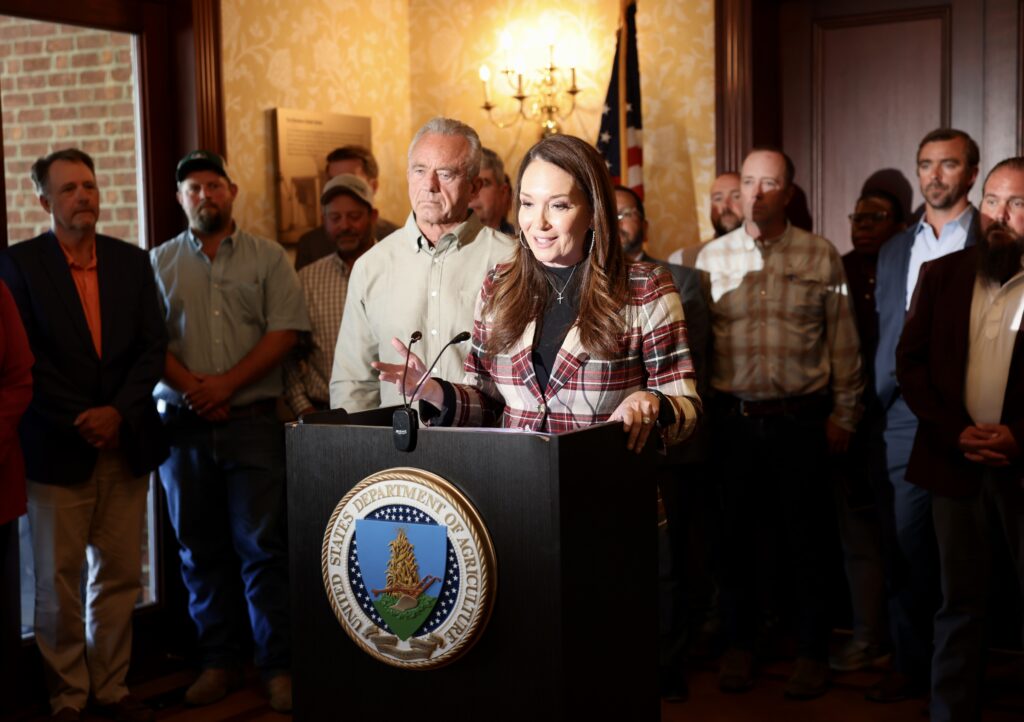
    United States Department of Agriculture Secretary Brooke Rollins and Health and Human Services Secretary Robert F. Kennedy traveled to Doswell Wednesday to meet with Virginia farmers and meat producers and discuss the challenges they face – and what the federal government can do to help.

    Limited access to local meat processors is a persistent challenge for cattle and poultry producers in Virginia and elsewhere, they said. Production facilities that are USDA approved are often overburdened with the amount of work they have.

    Rollins announced on Wednesday an action plan to reduce regulatory burdens on processors and that the fourth phase of the Meat and Poultry Processing Expansion Program has just opened.

    “Several of the comments we heard here were: why are we shipping these beautiful beef cattle from Virginia all the way to the middle of the country to get processed?” Rollins told reporters. “Obviously, this won’t change overnight. We have a country to feed, and the world loves our beef from this country, but this is the way, as we deconsolidate a lot of the processing industry.”

    The grant program, allotted $60 million in this phase, allows small meat processors to apply for grants that can aid them in buying machinery, upgrades, renovations and other needs.

    The grants range from $50,000 to $2 million for expansion projects and $10,000 to $250,000 for equipment-only applications.

    After meeting with the secretaries, the newly elected president of the Virginia Cattlemen’s Association Dave Norford said increasing the number of small processors is critical to help local producers get their products to the market.

    “There’s not a lot (of small processors). There’s some, but they stay pretty busy. So, if we had access to more of that, then I think the idea is there will be more opportunity for people to directly market their beef,” Norford said.

    Virginia farmers are also grappling with the rising cost of fertilizer. As the Strait of Hormuz remains a choke point for the global supply chain amid the Iran war, some fertilizer costs have skyrocketed about 40%. Fuel, a necessary component of fertilizer production, has also experienced a major price jump.

    This has led producers to cut back on the amount of fertilizer they buy and spread on their land, which ultimately will impact their yield for this year and next, while corn bushels are already at a low price.

    Rollins said she has met with some American-based fertilizer companies and asked them not to raise their prices during this fraught time, and outlined other measures the agency is taking to try and shore up availability of fertilizer. She said it is a long-term issue the Trump administration will continue working on.

    “For the short term, we waived the Jones Act, we opened up lines from Venezuela,” Rollins said. “I had American fertilizer companies, there (were) still a few left, come into my office at USDA and basically I said, for the good of the American farmer, will you consider freezing your prices.”

    Virginia is also in its fourth year of drier-than-normal conditions, Norford said. This year the drought persists, with an unusually warm spring and a dry winter compounding challenges to groundwater availability.

    Norford has about 1000 head of cattle at his Albemarle County farm. He said the USDA offers some programs to help farmers and herd owners with potential feed shortages due to the drought.

    “From a cattle standpoint, there’s a program that’s just come online, at least in my area, to help you with some costs,” Norford said. “They would pay you so much per head for your cattle to help you buy feed, buy hay, buy corn from a different area.”

    The USDA has several other programs aimed to help provide relief to producers dealing with drought, the leaders said.

    Rollins added that the agency is working to process Gov. Abigail Spanberger’s request for a secretarial disaster declaration, which will unleash financial aid to farmers who experienced harsh freeze and frost events earlier this year following a warm spell that set up crops to be in a vulnerable state when the cold returned.

    In addition to Rollins and Kennedy, U.S. National Advisor for Nutrition of Agriculture Dr. Ben Carson attended the roundtable event.

  • US House approves measure to restrain Trump action in Iran

    US House approves measure to restrain Trump action in Iran

    WASHINGTON — The U.S. House passed a resolution Wednesday to force President Donald Trump to withdraw from the war with Iran and require congressional approval for further military action in the country.

    The 215-208 vote, in which four Republicans voted with all Democrats to adopt the resolution, is the strongest rebuke to date against Trump’s handling of the months-long war that has left more than a dozen military troops dead, killed thousands of Iranian civilians and disrupted global supply chains of fertilizer and oil with the blockage of the Strait of Hormuz.

    Republican Reps. Tom Barrett of Michigan, Warren Davidson of Ohio, Brian Fitzpatrick of Pennsylvania and Thomas Massie of Kentucky voted in favor.

    The War Powers Resolution nearly passed the House last month, but failed on a 212-212 tie. The measure is a tool for Congress to limit the president’s ability to initiate or escalate military actions.

    Several similar efforts in the Senate have failed. However, following the Republican primary loss of Sen. Bill Cassidy, the Louisianan joined with Democrats and several GOP senators in a vote to move the measure forward. A vote on final passage on the Senate measure has not been scheduled.

    Rep. Gregory Meeks of New York, the top Democrat on the House Foreign Affairs Committee, sponsored the resolution in that chamber.

    Michigan Democratic Rep. Rashida Tlaib has a separate War Powers Resolution that would force the president to withdraw troops from Lebanon. Israel, with weapons and funding from the United States, has launched an assault on that nation.

    The passage of the resolution in the GOP-controlled House was the latest sign of growing dissent against Trump among congressional Republicans.

    Senate Republicans balked at Trump’s effort to create a nearly $1.8 billion fund to pay people who believe they were wrongly prosecuted by the Justice Department, including those who were convicted and later pardoned by the president for attacking the U.S. Capitol in January 2021.

    The Trump administration backed away from the fund after disputes over it halted work on legislation to fund immigration and deportation activities for the rest of the president’s second term.

  • Treasury’s Bessent mum on Trump’s IRS immunity deal

    Treasury’s Bessent mum on Trump’s IRS immunity deal

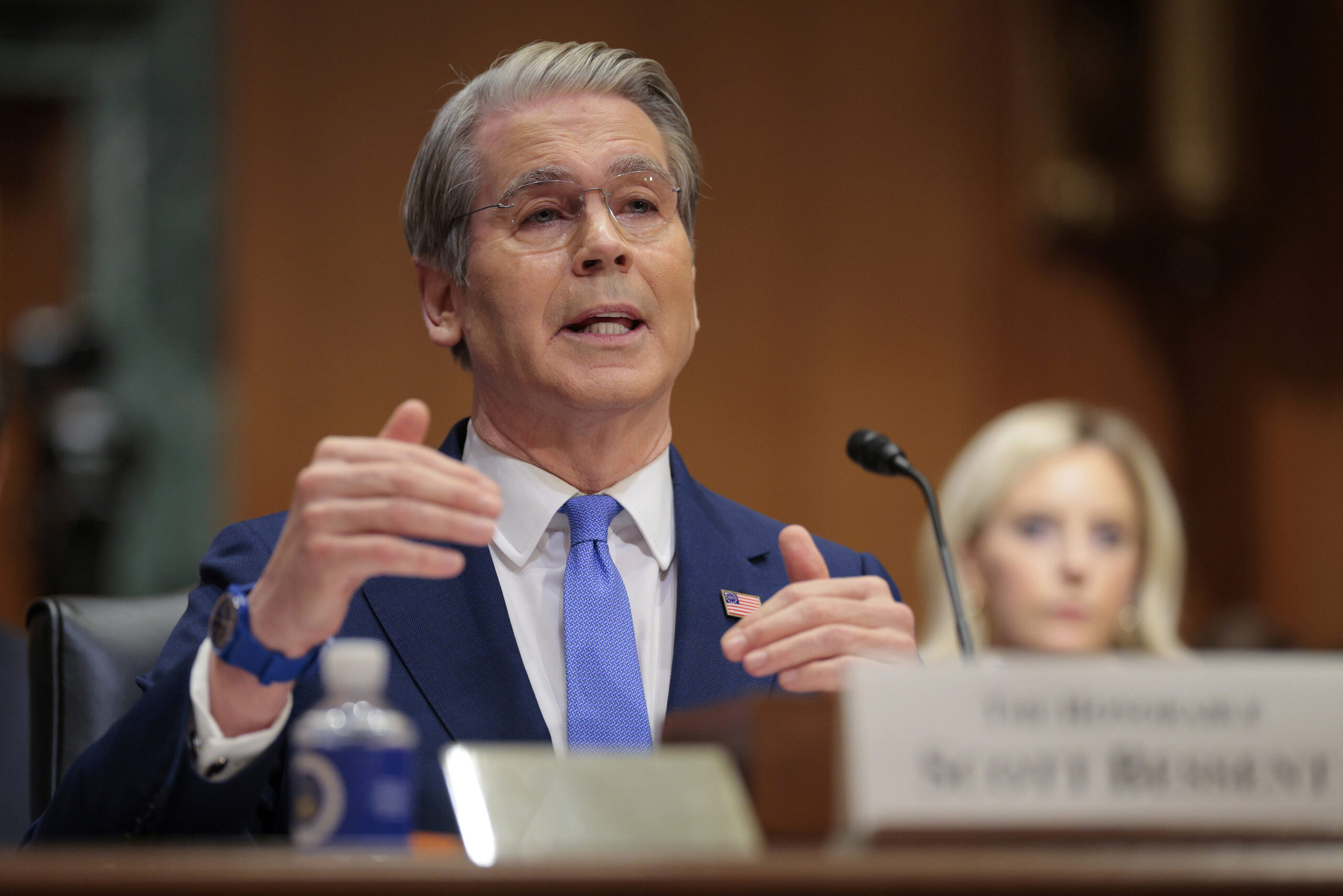
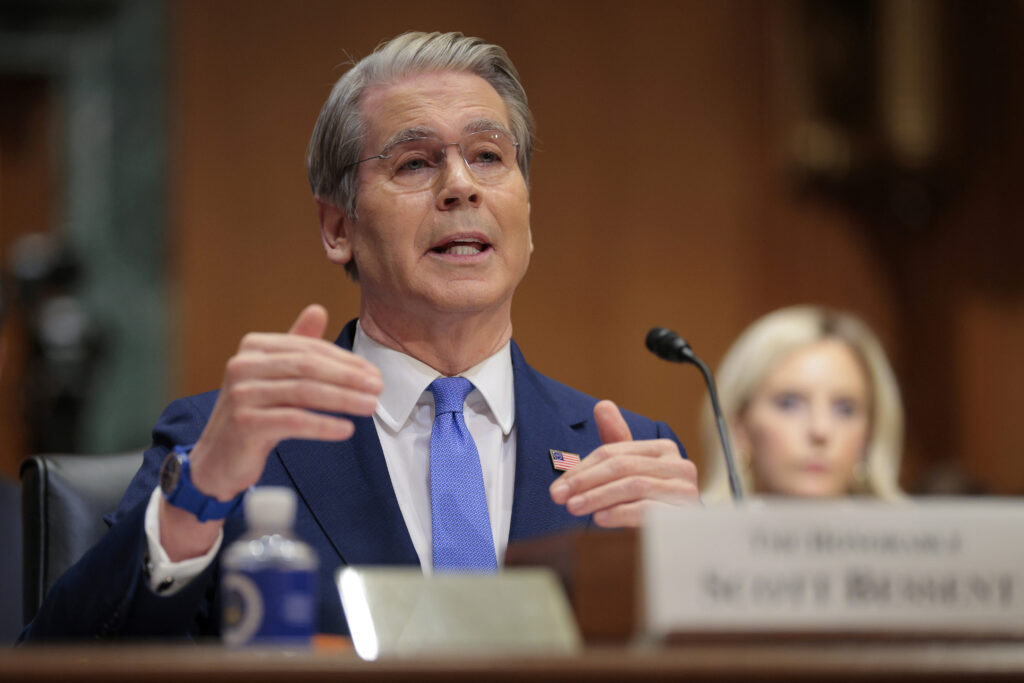
    WASHINGTON — The day after acting Attorney General Todd Blanche said the Trump administration’s “anti-weaponization” fund was dead, Treasury Secretary Scott Bessent evaded questions on Capitol Hill Wednesday about whether President Donald Trump, his family and the Trump Organization would be absolved from future tax enforcement, another part of the president’s IRS settlement.

    During a budget oversight hearing before the U.S. Senate Committee on Finance, Bessent repeatedly cited “ongoing litigation” to sidestep lawmakers’ inquiries into the settlement details the administration negotiated to voluntarily drop Trump’s multibillion-dollar lawsuit against the IRS for the 2019 leak of his tax returns.

    Committee Chair Mike Crapo said he wanted to give Bessent a chance to “set the record straight, understanding there is ongoing litigation.”

    “What can you share with us about Treasury and the IRS role in the settlement agreement, specifically since IRS CEO Frank Bisignano signed the settlement agreement?” Crapo of Idaho asked.

    Bessent responded that Treasury was represented in the case by the Department of Justice and so “any additional questions about the settlement or the fund should be addressed to the Justice Department and acting Attorney General Todd Blanche.”

    Sen. Ron Wyden, the committee’s top Democrat, said during opening remarks that Bessent “owes the committee an explanation of what the Treasury knows about the dirty settlement.”

    “That’s because his department was involved from beginning to end,” the Oregon senator added. “Treasury was a defendant and a negotiator in the lawsuit.”

    Moments later, Wyden asked, “Does the IRS audit immunity given to Trump, his family, and his businesses still stand? I’d like a yes-or-no answer to that. I got five minutes, I’m gonna use them for these questions, okay, so that we understand what’s at stake here. This immunity deal is the biggest scam against the taxpayer in American history.”

    Bessent responded: “As Albert Einstein said, that doing the same thing, expecting a different answer is the definition of insanity.”

    “You’ve given no answers on this subject, and that’s why I’m going to ask these questions,” Wyden said.

    “Because, as I said, there’s ongoing litigation,” Bessent replied.

    Fund fails to launch

    Trump, his sons Donald Trump Jr. and Eric Trump, as well as the Trump Organization sued the IRS and the Department of Treasury for $10 billion in damages for leaking his tax returns to news outlets. The contractor responsible for the leak was sentenced in early 2024.

    On May 18, the Department of Justice announced the creation of a nearly $1.8 billion “anti-weaponization” fund for “victims of lawfare.”

    Under intense worry, even from Republicans, that Jan. 6 defendants who assaulted police could receive reparations, Blanche told lawmakers Tuesday that the DOJ would “not be moving forward with the fund.”

    The creation of the fund had mired Senate Republicans’ path to approving a bill that would fund immigration enforcement for multiple years. Trump had wanted the bill on his desk by June 1.

    ‘FOREVER BARRED’

    But lawmakers are still searching for a clear answer on the department’s May 19 settlement addendum declaring “The United States RELEASES, WAIVES, ACQUITS, and FOREVER DISCHARGES each of the Plaintiffs from, and is hereby FOREVER BARRED and PRECLUDED from prosecuting or pursuing, any and all claims, counterclaims, causes of action, appeals or requests for relief … including tax returns filed before the Effective Date.”

    Senate Democrats and legal advocates representing multiple plaintiffs in lawsuits challenging the settlement criticized the arrangement Tuesday.

    The Department of Justice did respond to a request for comment, and the White House referred States Newsroom to the DOJ and the Trump Organization.

  • Virginia officials urge hurricane preparedness as 2026 storm season begins

    Virginia officials urge hurricane preparedness as 2026 storm season begins

    With the 2026 Atlantic hurricane season underway, Virginia officials are urging residents to prepare now for severe weather that can bring flooding, damaging winds, tornadoes and prolonged power outages across the commonwealth.

    State leaders gathered Wednesday at the Virginia Emergency Operations Center in Richmond for hurricane preparedness briefings and tabletop simulations meant to test coordination among emergency management agencies, first responders and state officials ahead of the busiest stretch of storm season.

    The Atlantic hurricane season began June 1 and runs through Nov. 30, with Virginia typically facing its greatest risk from late summer into early fall.

    “We spent the morning here in the emergency operations center, going through briefings and preparedness simulations,” Gov. Abigail Spanberger told reporters after the briefing. “While it is beautiful outside today, we know that now is the time for us to begin preparing.”

    Spanberger pointed to the lingering damage left by Hurricane Helene, which tore through parts of Southwest Virginia after moving inland through the Southeast in September 2024.

    “We know that storms that started in the Atlantic or the Gulf can come north and cause severe damage in Virginia,” she said. “We saw this with the devastation caused by Hurricane Helene, and communities are still working to recover and rebuild.”

    The storm caused catastrophic flooding, road washouts and widespread damage, particularly in Damascus along the Virginia Creeper Trail corridor in the southwestern part of the state, prompting a federal major disaster declaration.

    In Damascus, business is down but hopes are high one year after Hurricane Helene

    Virginia later estimated roughly $4 billion in damage statewide. Nearly two years later, some communities are still rebuilding infrastructure and tourism economies.

    Emergency management officials said preparing before storms remains one of the most effective ways to reduce injuries, property damage and service disruptions during severe weather.

    “Preparedness starts long before a storm appears on the forecast map,” said Lauren Opett, acting state coordinator of emergency management. “The best time to gather supplies, review evacuation plans, and discuss emergency procedures with your household is now.”

    Opett said residents should focus on practical steps that can be handled before severe weather threatens the state.

    “Small steps taken today can make a tremendous difference when severe weather impacts Virginia,” she said. “Our team at VDEM stands ready to support communities across the Commonwealth throughout hurricane season.”

    Emergency officials further warned that tropical systems do not need to make landfall in Virginia to create dangerous conditions. Hurricanes and tropical storms can trigger inland flooding, tornadoes, storm surge, heavy rain and power outages far from the coast.

    Spanberger also encouraged Virginians to begin by developing emergency plans for their households. That includes identifying evacuation routes, choosing meeting locations if family members become separated and signing up for wireless emergency alerts.

    “The first thing that we can all do to get prepared is to just make a plan,” she said. “If you need to evacuate this hurricane season, you can get your family to safety faster if you have already thought about what to do. Where would you go? How will you get there? And figure out how to reconnect with family if you’re not together at the time that a storm hits.”

    Residents in coastal and flood-prone areas are also being encouraged to review evacuation zones before storms threaten the state.

    Spanberger directed Virginians to KnowYourZoneVA.org for evacuation information while emphasizing the importance of building emergency kits with supplies to last at least 72 hours.

    Emergency management materials released Wednesday advises Virginians to stock flashlights, batteries, medications and other essentials. The governor urged home owners to secure loose outdoor objects, clean gutters, trim damaged tree limbs and inspect backup power equipment ahead of severe weather.

    State officials also emphasized generator safety, reminding residents to check carbon monoxide detector batteries before storms arrive and operate generators outdoors and away from homes.

    Flood insurance was another major focus of Wednesday’s briefing. Spanberger warned that many standard property insurance policies do not cover flood damage and noted that flood insurance policies can take up to 30 days before becoming active.

    “It’s better not to wait until a storm is imminently coming our way,” Spanberger said.

    Just one inch of water inside a home or office can cause thousands of dollars in damage, including repairs to drywall, flooring and furniture.

    Businesses are also encouraged to review emergency response plans, communicate with vendors about possible supply chain disruptions and protect important records and computer systems before storms develop.

    But Virginia, Spanberger said, remains prepared for hurricane season.

    “We are working together to collaborate across state agencies,” she said. “First responders, community organizations and individual Virginians are essential to our effective disaster response.”

    The Virginia Department of Emergency Management is encouraging residents to monitor trusted weather forecasts and visit VAEmergency.gov for preparedness guidance and emergency information throughout hurricane season.

  • Aging at home drives growing demand for Virginia caregivers

    Aging at home drives growing demand for Virginia caregivers

    Decked out in a matching pink shirt and hat with layers of bracelets and necklaces, Clara Hatcher’s dialysis appointment doubles as a fashion event.

    She spends three and a half hours, three mornings a week, receiving the treatment, so the 77-year-old likes to dress up for the occasion. Having been a dialysis patient for 12 years, she also shares her expertise with newer patients about how to handle the procedure.

    “I like to warn people how tired it can make you feel and what to expect,” Hatcher said.

    While she likes helping others prepare for it, she receives help of her own through her caregiver Pat Martin and nurse Belinda Hensley.

    The trio reflected on how healthcare “takes a village” as they helped her slowly walk back into her ranch-style Henrico County home after an appointment.

    Hatcher’s home health workers help her age in place in the house she bought to do just that.

    Much of Martin’s work involves making sure Hatcher sticks to her medication schedule, handling light housekeeping, ensuring she gets to medical appointments and assisting with tasks like dressing or cooking.

    “She likes to cook but her hands have tremors and I need to make sure she doesn’t fall,” Martin said.

    Hensley makes occasional visits to check in, as nurse supervision is required by Medicaid.

    As a nurse and a caregiver, Hensley and Martin are part of an evolving home healthcare landscape. As more people choose to age in place longer or avoid nursing homes altogether, demand for services is growing.

    Staffing organizations are innovating to hire and retain workers while coping with low Medicaid reimbursement rates at a time where the state-federal program is bracing for funding losses. That’s why two Richmond-area nonprofits hope that a grant-funded pilot program they participated in could become a model for other parts of the state.

    Supported staff, supported clients

    With $700,000 in funding from the Richmond Memorial Health Foundation and the Bob and Anna Lou Schaberg Foundation, Family Lifeline and Jewish Family Services were able to grow their staff numbers by 69% and 43%, respectively. They also raised caregivers’ starting wages to $15 an hour, predating the benchmark that state legislators passed this year.

    “This is a workforce where the wages have historically been very low,” Family Lifeline CEO Jennifer Case said.

    Raising pay was important for both attracting and retaining staff. The funding also helped the organizations modernize technology to make paperwork easier for nurses and caregivers, improve professional development training and assist workers facing transportation issues.

    Case emphasized that many caregivers do not have cars and rely on public transportation to get to work.

    If a client lives along a bus route, that may not be a problem, she said. But when clients live deeper into Henrico or Chesterfield counties, transportation can become a challenge.

    Even within Richmond city limits, Southside resident Regina Carter said what would normally be a short drive to the East End can sometimes take her more than an hour because she relies on the bus.

    “Sometimes the bus will not even come, so I have to wait for a whole other one,” she said. “And that’s almost like I don’t want to say an hour, but it’s an hour.”

    In recent years, the city and surrounding counties have expanded bus routes, but building that infrastructure takes time.

    For caregivers whose clients live farther out, the pilot program helped offset some Lyft and Uber costs for workers who needed it.

    Wendy Kreuter, CEO of Jewish Family Services, said both organizations continue supporting workers with transportation needs and plan to advocate on the issue with state and local governments while exploring public-private partnerships.

    Transportation barriers have long been an issue in healthcare, particularly in rural communities. State lawmakers have backed a pilot program providing Medicaid coverage for non-emergency transportation to help rural patients reach appointments. But challenges getting workers into patients’ homes have not yet been addressed.

    “This is something we should explore,” said Del. Rodney Willett, D-Henrico, who chairs the House Health and Human Services Committee, where healthcare legislation is reviewed each year.

    Medicaid issues

    Another longstanding issue has been Medicaid reimbursement rates. For Family Lifeline and Jewish Family Services, that means both organizations have had to rely on other funding sources to support staff.

    Generally, reimbursement rates range from $20 to $23 per hour. But Kreuter and Case said the “village” includes more than direct care workers. Administrative staff are also needed to coordinate scheduling and transportation for clients.

    “I think it’s just going to get harder,” Hensley said of a reconciliation bill Congress passed last summer that puts thousands of Virginians at risk of losing Medicaid coverage.

    A KFF survey released earlier this year found that 41 states have reported home health agency closures, though Virginia was not among them.

    Case and Kreuter said their organizations seek private philanthropy of all sizes to continue supporting workers and clients.

    Though the reconciliation bill could affect Medicaid coverage and services across Virginia, federal lawmakers also negotiated the Rural Health Transformation Fund as an opportunity to address longstanding challenges.

    Outgoing Gov. Glenn Youngkin secured $189 million from the fund, which Gov. Abigail Spanberger’s administration is now responsible for administering.

    LeadingAge Virginia, which represents organizations like Kreuter’s and Case’s, has applied for the funding.

    Betsy Archer, director of the association’s PositiveAge branch, said the charitable pilot offers a strong blueprint.

    “We definitely see it as a replication or a replicable pilot that we think can be strengthened,” she said.