Tag: exclusive

  • No way out: How Virginia law fails vulnerable renters

    No way out: How Virginia law fails vulnerable renters

    Lanika Hester had just fallen asleep when a chilling scream woke her.

    She leapt out of bed and bolted into the next room, where she found her daughter, Elesia Cooper, doubled over in pain.

    “I’m fine Mom, I’m fine,” Cooper cried, tears streaming down her face.

    Hester knew her daughter wasn’t fine. She’d lost count of the number of times the 18-year-old had woken up in their Albemarle County apartment this way in spring 2023, and the number of times they’d gone to the emergency room. Every time, she said, doctors declared Cooper dehydrated, gave her IV fluids, and sent her home with directions to drink more water, only to have it happen again a few days later.

    Cooper had enrolled in her first year of college at Hampton University the previous fall. But she became desperately ill when she returned to their home in the Park’s Edge complex near Albemarle High School for winter break. By the time she was supposed to return in late January, she was too ill to go back, Cooper said. She ended up dropping out.

    Cooper’s illness continued through the spring. She was weak and couldn’t keep food or liquids down — she’d lost almost a quarter of her body weight, Hester said.

    The family was desperate for a diagnosis. Then, in June 2023, a new nurse practitioner came back with a shocking theory.

    “Immune suppression and symptoms consistent with mold exposure,” the nurse wrote in her visit summary. “I strongly suspect that the current mold exposure is contributing to your symptoms. I am medically requiring past home/mold testing.”

    Mold.

    For more than two years, Hester and Cooper had watched it creep down their kitchen wall, a splatter of spores re-growing from the corner of the ceiling in their basement apartment every time property maintenance claimed to have removed it. Hester had suspected, after at least half a dozen floods covered the floors of her apartment with cloudy, foul-smelling brown water, that it was sewage.

    What she didn’t realize was that the mold could be the reason her daughter was so sick.

    Prince George resident files lawsuit against apartment management over mold

    The nurse’s letter prompted Hester to push hard for property management to test her apartment for mold. It took months, and dozens of emails back and forth, for them to agree. And when a well-respected mold inspector finally visited her apartment, his test confirmed it: mold in the kitchen and on the HVAC vents.

    The solution seemed obvious: Remove the mold and fix its causes — likely a leak and a badly-installed HVAC filter. A mold inspector even recommended this. But the leak wasn’t a quick fix, and the mold in Hester’s apartment was just one on a long list of maintenance and safety issues plaguing the Park’s Edge apartment complex.

    Hester and her neighbors had been trying for years to correct these issues, with little success. They had even enlisted the help of local pro bono attorneys, but the attorneys also struggled to move the needle.

    Why?

    The Virginia Residential Landlord and Tenant Act makes it difficult for anyone to force a landlord to address poor living conditions, even dangerous ones like black mold. Tenants can technically sue landlords, but the requirements for filing such a suit either disqualifies or discourages many tenants from doing so.

    Add that to the fact that tenants — especially those with low incomes — don’t often have access to legal assistance to help them navigate the justice system. Tenants can’t band together to sue their landlords, either — Virginia is one of just two states in the U.S. that does not allow class-action lawsuits. The other is Mississippi.

    The Virginia General Assembly has tried to change that. In 2024, the state legislature passed a bill that would allow class-action suits, but then-Governor Glenn Youngkin vetoed it. State lawmakers passed a similar bill during its 2026 session, but Governor Abigail Spanberger vetoed it when the General Assembly did not accept her amendments to the bill.

    Virginia class action proposal dies after Spanberger veto

    Local governments aren’t always much help, either. Under Virginia law, the only way a local government can effectively hold a landlord accountable for conditions inside a building is through a rental inspection program. Some Virginia localities have created those programs. Albemarle County is not one of them.

    In recent years, county leaders have said state law makes it too difficult to start one here. But since Charlottesville Tomorrow began reporting this series, and reaching out to public officials about conditions at Park’s Edge, conversations about rental inspections have begun.

    “I have always been told that we don’t, that we can’t do anything for renters and tenant protections and holding landlords accountable,” Supervisor Sally Duncan, who represents the Jack Jouett District where Park’s Edge is located, said during the May 20 Board meeting. “I was made aware last week that that’s actually not the case.”

    Supervisor Mike Pruitt represents the Scottsville district and is an attorney who has worked in housing law. He cited Charlottesville Tomorrow’s investigation in his remarks.

    “This is something that I think most, several members of the Board have thought about previously, because Erin O’Hare, doing great work, doing the Lord’s work, has been hounding this issue for a while and doing a really long-term investigative report on it,” Pruitt said. Though he has some reservations about rental inspection programs, particularly around costs and potential unintended consequences for tenants, he wanted to know what was possible.

    Until Albemarle County and others make policy changes, though, it’s up to tenants to advocate for themselves.

    “You’re basically counting on tenants to do this individually,” said former Del. Sally Hudson, a public policy professor at the University of Virginia who represented all of Charlottesville and parts of Albemarle County in the General Assembly from 2020 to 2024. “And we all know this is beyond the reach of most of the tenants who need the safety protections.”

    Even if a single tenant does manage to take a landlord to court and win their case, all they can hope to receive are damages, which is a legal term for financial compensation for whatever the tenant lost. There is no way for them to force the landlord to fix a problem as it is happening.

    It’s a fairly common position for renters with low incomes to find themselves in, said Victoria Horrock, an attorney with the Charlottesville office of the Legal Aid Justice Center.

    “Inside the legal system, it’s very frustrating,” Horrock said. “A lot of tenants will get blamed for problems in their unit. But then it turns out that everyone in the building has that exact same problem.”

    And beginning in at least 2020, this was precisely what Hester and her neighbors say was happening at Park’s Edge.


  • US Senate Dems press federal agency to increase oversight of prediction markets

    US Senate Dems press federal agency to increase oversight of prediction markets

    WASHINGTON — A group of 16 U.S. Senate Democrats is calling on the Commodity Futures Trading Commission to tighten its regulation of prediction markets, citing concerns over insider trading and other consumer harms as betting on future events grows in popularity.

    The senators, led by Agriculture, Nutrition and Forestry Committee ranking Democrat Amy Klobuchar, of Minnesota, asked the CFTC to offer guidance to those participating in bustling prediction markets such as Kalshi and Polymarket in an effort to restrict event contract manipulation and insider trading, according to the June 1 letter.

    “The volume of event contracts trading on prediction markets has grown exponentially over the past 18 months,” the senators wrote. “These markets have a significantly higher proportion of retail participants than traditional derivatives markets, heightening customer protection concerns.”

    The senators sent the letter before the CFTC proposed rules Wednesday that would ban bets on war, assassination and other extreme events, which critics said did not do enough to rein in the industry.

    Lawmakers also want the CFTC to conduct detailed reviews of participating futures markets to ensure that their policies and procedures are clearly outlined and that they are equipped with adequate resources to prevent market abuse.

    On a similar note, they wrote that the commission should instruct the markets to monitor the terms and conditions of event contracts, as ambiguous contract language can lead to conflicts over resolution and payout once an outcome has occurred.

    “Sufficient resources should be devoted to anticipating and addressing such issues prior to contract listing, rather than after problems arise,” the senators wrote.

    In addition to Klobuchar, the letter was signed by Sens. Lisa Blunt Rochester and Chris Coons of Delaware, Elissa Slotkin of Michigan, John Hickenlooper and Michael Bennet of Colorado, Dick Durbin of Illinois, Richard Blumenthal of Connecticut, Sheldon Whitehouse of Rhode Island, Ben Ray Luján of New Mexico, Cory Booker and Andy Kim of New Jersey, Chris Van Hollen of Maryland, Raphael Warnock of Georgia, John Fetterman of Pennsylvania and Kirsten Gillibrand of New York.

    Concerns around insider trading

    Prediction markets allow consumers to bet on the outcomes of future events and trade in products commonly called event contracts.

    Most event contracts offer two possible outcomes, presenting traders with the option to bet either “yes” or “no.” The price of each outcome at any given time, expressed as a fraction of a dollar, corresponds to the market’s forecast of an outcome occurring, with $1 meaning 100%. Consumers who correctly predict an outcome then earn a profit equal to the difference between the price at which they bought and the end fixed payout, typically $1, according to the CFTC.

    That system leaves the markets vulnerable to manipulation by people with inside knowledge of an event, which is partly what prompted the Democratic senators to write the letter, they said.

    For example, a U.S. soldier was charged in April with making more than $400,000 on Polymarket by betting the United States would launch a military operation to capture Venezuelan President Nicolás Maduro. Prosecutors say the soldier used classified information to make the wagers in advance of the operation.

    The senators did not give the CFTC a deadline to carry out their requests. Rather, they urged the commission in their letter to consider their recommendations as it continues to “develop rules and guidance for the prediction market industry.”

    The CFTC did not respond to States Newsroom’s request for comment in time for publication.

  • Case against Trump weaponization fund paused following Blanche reversal

    Case against Trump weaponization fund paused following Blanche reversal

    WASHINGTON — A federal judge denied a temporary restraining order Wednesday on President Donald Trump’s nearly $1.8 billion “anti-weaponization” fund, saying the issue is moot after acting Attorney General Todd Blanche said last week the administration is “not moving forward” with the controversial plan.

    U.S. District Judge Richard Leon said during an afternoon hearing he’s “not persuaded that such a live controversy exists.” Leon said he was relying on Blanche’s public statements and DOJ’s court filings as proof the fund is dead.

    The legal advocacy group Citizens for Responsibility and Ethics in Washington, or CREW, brought the lawsuit just days after Blanche issued the May 18 order to establish the fund, in the amount of $1.776 billion, for “victims of lawfare.”

    Nikhel Sus, senior counsel for CREW, argued Blanche’s June 2 statements to the House Appropriations Committee are “not a legally valid rescission” until the DOJ puts in writing the fund is canceled.

    “Even (Blanche’s) testimony was equivocal. … He refused to memorialize that rescission,” Sus said, adding it was “highly unusual.”

    “This whole case is highly unusual, to say the least,” Leon responded.

    Sus also argued Trump’s comments to reporters a day later praising the fund “directly contradicted” Blanche’s statement to Congress.

    “I love it,” Trump said of the fund in his first public remarks after Blanche’s Capitol Hill testimony. “I think it’s so important.”

    “These words carry immense significance,” Sus said Wednesday, noting the president oversees the DOJ and is plaintiff in the lawsuit against the IRS that resulted in the settlement fund.

    Leon pressed back, saying that Trump’s comments do not mean the fund is going forward.

    “He might be doing what he’s doing for political benefit to himself,” Leon said.

    Termination in writing?

    Andrew Block, senior counsel to the U.S. associate attorney general, criticized CREW for arguing that Blanche was “outright lying to Congress.”

    “Why doesn’t he rescind the May 18 order?” Leon asked.

    “I don’t know the reason for that,” Block responded.

    Block panned CREW’s case as “simply not ripe for judicial review,” and dismissed the group’s argument that the fund evades transparency laws and is not structured to reveal information on awards or claimants.

    “No money has been transferred and certainly no money has been sent out to claimants,” Block said.

    Again, Leon asked: “So why not rescind it?”

    “Your honor, I don’t know. All I know is what the acting attorney general said,” Block replied.

    “Our briefs are our assurances in writing,” he added.

    Upon his bench order denying CREW’s motion to immediately block the fund, Leon said he would soon issue his ruling on the group’s request for a preliminary injunction, which would block the fund during further litigation.

    Leon warned Block that the DOJ should be forthcoming as the case proceeds.

    “Don’t play possum with the court,” he said.

    The DOJ did not immediately reply to a request for comment.

    CREW President Donald K. Sherman said in a statement following Leon’s decision that “the court clearly committed to hold the DOJ and its attorneys to acting Attorney General Todd Blanche’s promise that the fund is not moving forward.”

    “This is an important step. Although the court did not grant another temporary restraining order today, it made clear that if the government goes back on its commitment to shut down the fund that the court will hold it accountable,” Sherman said.

    Fund jammed congressional work

    The case before Leon is not the only legal challenge to the fund. A federal judge in the Eastern District of Virginia temporarily blocked the fund until Friday when the government and plaintiffs will appear in court. A former DOJ Jan. 6 prosecutor who was fired last year is among the plaintiffs.

    The fund sparked multiple lawsuits and intense protest from Democrats and two police officers who deployed to the Capitol on Jan. 6, 2021.

    The former officers, U.S. Capitol Police officer Harry Dunn and Washington Metropolitan Police officer Daniel Hodges, also sued.

    The prospect that the fund could pay Jan. 6 defendants who assaulted police roiled Republicans as well. The GOP-led $70 billion immigration enforcement package was stalled in the Senate for over a week until Blanche’s testimony that the administration was “not moving forward” broke the logjam.

    Ultimately, Senate Republicans did not adopt any restrictions to limit or ban the fund structure.

    Trump’s announcement last week that Blanche, who was his personal attorney in 2023 and 2024, was his pick for attorney general has further fueled intense scrutiny from Democrats. Trump formally nominated Blanche, of Florida, Monday.

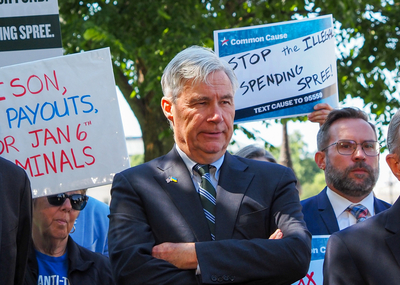
    U.S. Sen. Sheldon Whitehouse, D-R.I., at a press conference opposing the Trump administration's $1.776 billion

    U.S. Sen. Sheldon Whitehouse, D-R.I., at a press conference opposing the Trump administration’s $1.776 billion “anti-weaponization” fund on Tuesday, June 2, 2026. (Photo by Ashley Murray/States Newsroom)

    During a virtual press conference Wednesday opposing the nomination, Sen. Sheldon Whitehouse, D-R.I., said “Blanche’s dirty fingerprints (are) all over the cop beaters slush fund, which may actually have been intended as a payroll account for Trump’s November election interference for his thugs to go hit the polling places.”

    He added the fund “landed with a huge thud among Republicans, and so he’s going to carry that stone as he tries to move through confirmation.”

    The fund was part of a deal for Trump to voluntarily drop his $10 billion lawsuit against the IRS for the leak of his tax returns nearly seven years ago. As part of the settlement, Trump, his two sons and the Trump Organization will be immune from tax audits and other criminal prosecution going forward.

    Treasury Secretary Scott Bessent was mum about the IRS immunity deal when pressed by bipartisan members of the Senate Finance Committee on June 3.

    A federal judge in the Southern District of Florida reopened the case after 35 former federal judges intervened, arguing the Trump administration deceived the court by not sharing all details of the settlement. The judge will hear arguments Friday.

  • Head of Social Security challenged by lawmakers over long lines, wait times

    Head of Social Security challenged by lawmakers over long lines, wait times

    WASHINGTON — The head of the Social Security Administration testified before Congress on Wednesday that customer service has drastically improved during the last year, though he declined to offer ways to address the program’s dire financial situation.

    Commissioner Frank Bisignano instead deferred to lawmakers, who will need to make changes to the safety net program for tens of millions of Americans before it reaches insolvency in six years.

    Bisignano’s testimony came just one day after the Social Security trustees said in their annual report the Old Age and Survivors Insurance trust fund will “become depleted” in the fourth quarter of 2032, earlier than previously expected. Once that happens, benefits will automatically drop by 22% and gradually decrease from there.

    “I always thought my job was to make it perform as well as possible so you all have a set of options and choices to decide on how this great American program, which is, you know, fundamentally called by some the largest insurance program out there, others could call it the largest retirement program out there. Anyway, the idea is to make it perform well so you all can make the decisions,” Bisignano said.

    Republicans on the House Ways and Means Committee’s subcommittee on Social Security and subcommittee on Work and Welfare, who held the two-hour hearing, were pleased with the statistics Bisignano shared about his administration of Social Security.

    Democrats on the panels, however, were skeptical that he was giving a full picture of the delays that some Americans face when trying to apply for benefits or ask about an issue they’re having with the program.

    Illinois Democratic Rep. Danny Davis, ranking member on the Work and Welfare subcommittee, said the Social Security Administration’s “statements about customer service do not always appear to reflect the reality Americans experience.”

    “Press releases claiming dramatic improvements in SSA customer service, particularly on the 800-number, conflict with reports from AARP and our constituents,” Davis said. “People across the country report waiting in long lines at Social Security offices or being turned away and told to make appointments, only to discover no appointments are available.

    “Similarly, it seems misleading to claim a zero call wait time for seniors that waited hours or days for a call back, or to praise short call wait times for people whose problems are not resolved.”

    Debate over statistics

    Bisignano testified that he ushered in “the best all-around performance ever at the Social Security Administration.”

    “More than 99% of our field offices are open and serving the public, with average wait times reduced to 20 minutes, a 30% improvement. No field offices closed due to staffing,” he said. “We now answer 90% of calls to our 800-number and have reduced average wait time to five minutes, a 75% improvement.”

    Bisignano added that “web transactions” have risen by 37% and that there has been a 21% rise in account creations.

    California Democratic Rep. Judy Chu said she found the statistics Bisignano shared “extremely misleading,” in part, because the administration classifies anyone who requests a call back instead of waiting on hold as a zero minute hold time.

    “The American people deserve accurate information on how long they can expect to wait when trying to get help for their benefits,” she said.

    Chu then shared the story of a woman who tried to schedule an in-person appointment to apply for survivor benefits after her husband died in July but was unable to get one until October.

    “Once she finally got an appointment, she then had to wait at least four months,” she said.

    Nevada Democratic Rep. Steven Horsford pressed Bisignano about wait times at the Las Vegas field office for disability hearings, which he said take nearly a year.

    “My office continues to hear from seniors, people with disabilities and working families who cannot get answers and cannot access benefits that they deserve,” Horsford said. “Last year, you promised improvements. Today, Las Vegas disability applicants are waiting nearly 11 months.”

    Horsford then asked if Bisignano would “designate a senior SSA point person to work directly with me and my office on unresolved constituent cases.”

    Bisignano said he would send the head of disability to come see Horsford in his office.

    Social Security solvency

    While the subcommittees and Bisignano barely scratched the surface of Social Security’s financial problems during the hearing, a separate event hosted by the Committee for a Responsible Federal Budget delved into those struggles.

    Karen Glenn, chief actuary at the Social Security Administration, said during her presentation on the trustees report that addressing the program’s budget woes is “a simple math problem” but “a difficult political problem.”

    “We can either raise scheduled revenue by about one-third, reduce scheduled benefits by about one-fourth or some combination of the two,” she said. “So it sounds simple, but not so easy in practice.”

    Glenn said one of the purposes of the annual report to Congress is to “provide information to assess solvency and the changes needed to eliminate those shortfalls.”

    “The trustees have consistently advised that Congress should act sooner rather than later,” she said. “We are just about out of time for that sooner. We are basically at the later.”

    Mark Sarney, director of Social Security policy at CRFB, said he doesn’t believe Congress will be able to add to the annual deficit in order to avoid a drop-off in benefits since “we’ll probably have debt problems way before 2032.”

    That leaves lawmakers in the House and Senate with complex choices to make during the next few years.

    “Hopefully there will be a growing call within Congress to actually get serious and do something,” Sarney said. “Because if you let the cut happen, that’s like 1% of the national economy that suddenly doesn’t go out in checks, which may matter less in some parts of the country, but in others, where most of the population is depending on Social Security, that’s going to be a hammer blow to both people’s lives and the economy. And nobody wants that.”

  • USDA Secretary Rollins blames Biden border policies for screwworm threat

    USDA Secretary Rollins blames Biden border policies for screwworm threat

    WASHINGTON — Agriculture Secretary Brooke Rollins on Wednesday blamed the Biden administration’s “open-border policies” for the six confirmed cases of the New World screwworm that have reached the United States, repeating a theme among Republicans.

    Speaking to members of the Senate Agriculture, Nutrition and Forestry Committee during an oversight hearing, Rollins said it was the previous administration as well as Mexican cartels’ “refusal to crack down” that allowed the New World screwworm fly to migrate north. The pests can be transported via infested livestock or pets.

    “Everyone took their eye off the ball years ago, and unfortunately, because of the border policies, it’s coming our way,” Rollins said.

    According to Rollins, there are now six confirmed cases of the New World screwworm in the U.S., with five in South Texas and one in New Mexico.

    The New World screwworm is a devastating pest that can wreak havoc on cattle herds and other livestock. The screwworm is a type of fly that spreads by laying eggs in other animals, with the eggs then hatching into larvae that will eat the animal’s flesh, causing significant harm and even potential death, according to the Centers for Disease Control and Prevention.

    The fly had been eradicated in the U.S. since 1966.

    USDA staff reductions

    Throughout the hearing, committee members and Rollins agreed on the importance of working to eradicate the screwworm in the U.S.

    But some Democrats said recent Trump administration decisions could hinder the department’s ability to carry out that task.

    Sen. Amy Klobuchar, D-Minn., voiced concerns about the impact of recent layoffs at the U.S. Department of Agriculture on the department’s ability to combat issues like the screwworm threat. She noted that the department’s Animal and Plant Health Inspection Service lost 25% of its staff, including more than 300 veterinary services employees.

    “Clearly, we need a long-term response,” Klobuchar, the committee’s ranking member, said. “I continue to be concerned about some of the reorganization’s cuts to USDA. How that could affect our long-term response.”

    Since President Donald Trump returned to office last year, the USDA has lost more than 21,000 employees, according to data from the Office of Personnel Management. It ranks among the largest decreases of any federal department or agency.

    But Rollins reiterated that the staff dedicated to preventing the spread of the screwworm has actually increased. At the beginning of last year, she said, the USDA had 10 full-time staff members working on screwworm prevention, while it now has more than 120.

    She said the department has allocated $1.3 billion to combat the screwworm.

    “We’re prioritizing where the big threats are as we’re working to ensure that we’re meeting all of the needs across the country,” she said.

    During the hearing, Sen. Roger Marshall, R-Kansas, also pointed the blame toward the Biden administration.

    “We saw this coming under the previous administration, and they refused to respond,” he said. “When you let millions of people migrate through Central America this way, we saw the screwworm just come with them — whether it was on their pets or maybe they were bringing livestock.”

    USDA slowed screwworm spread

    The agency’s internal predictions, according to Rollins, were that the screwworm, which is still widespread throughout South and Central America, would have reached the U.S. by last summer. But she said the department was able to slow the devastating pest’s arrival by closing all ports across the Southern border to livestock trade last summer.

    USDA is primarily combating the spread of the New World screwworm by breeding and releasing sterile screwworm flies, which will limit the number of flies that can reproduce and ultimately reduce the population.

    She said the U.S. currently produces about 100 million sterilized flies a week, but needs to increase its production to 500 million a week to eradicate the fly.

    But Rollins stressed that while the screwworm poses a threat to U.S. livestock, particularly cattle herds, it doesn’t risk tainting the food supply itself.

    “The food supply is 100% safe,” she said. “This is not a disease. It’s not a virus. It’s a fly.”

  • US House passes bill to combat ‘ghost’ federal student aid applicants

    US House passes bill to combat ‘ghost’ federal student aid applicants

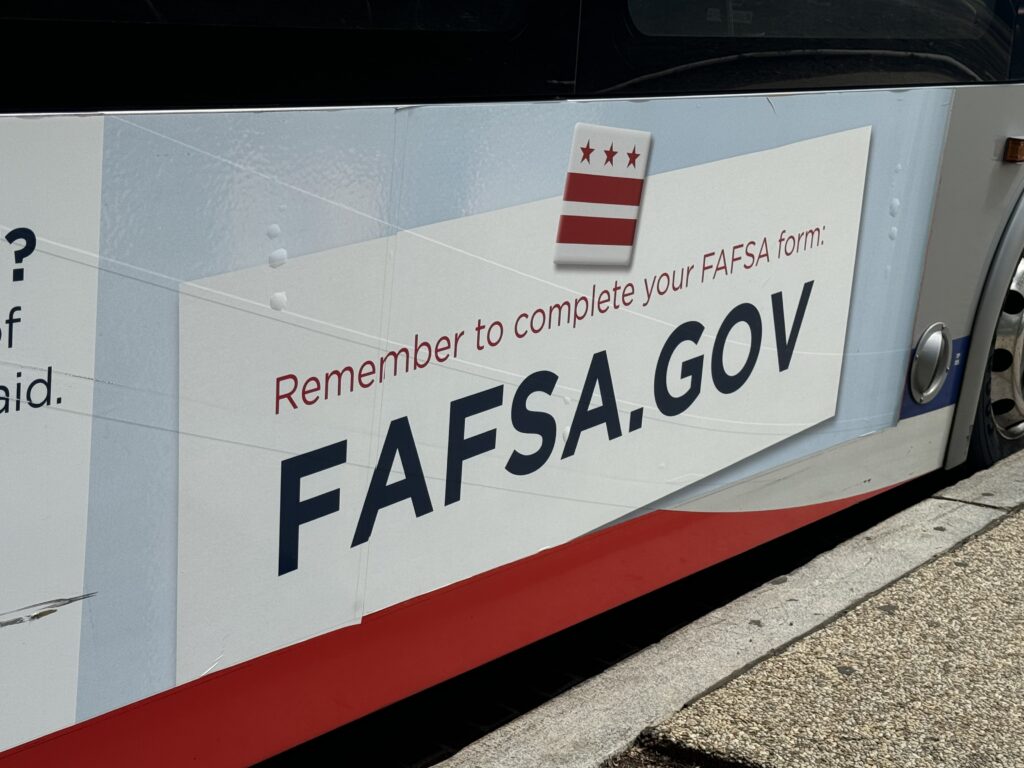
    WASHINGTON — A bill to crack down on financial aid fraud passed the U.S. House on Wednesday.

    The measure, which passed 249-172, would require the U.S. Department of Education to set up an identity fraud detection system for the Free Application for Federal Student Aid, better known as FAFSA.

    Nearly 40 Democrats voted for the GOP-led bill.

    The bill safeguards against fraudulent “ghost students,” which lawmakers say have cost taxpayers millions of dollars by applying for federal student aid and college under stolen identities and enrolling in classes, only to later disappear with such funds.

    The measure would codify a FAFSA fraud detection tool already underway at the Education Department and comes as President Donald Trump’s administration pursues a sweeping anti-fraud effort across the federal government.

    Rep. Burgess Owens, who sponsored the measure, said during floor debate Tuesday that his bill “builds on the good work already done by the Trump administration to protect taxpayer dollars and help safeguard the integrity of the student aid system by ensuring federal aid goes to real students.”

    The Utah Republican added that his legislation “takes a straightforward approach, identifies suspicious student aid applications and ensures these applications are for who they say they are before dollars go out the door.”

    A similar, bipartisan effort was introduced in the U.S. Senate earlier this year.

    Education Secretary Linda McMahon said her department was “proud” to see the House pass the bill, which she said “will cement our ongoing efforts to eliminate fraud, waste, and abuse by requiring screening for suspicious federal student aid applications,” in a Wednesday statement.

    “Since Day One, the Trump Administration has been committed to restoring existing fraud detection capabilities while building the most comprehensive fraud-detection system in the Department’s history,” she said.

    Fraud detection system

    Under the bill, the Education secretary would be required to use the identity fraud detection system to assess each FAFSA submitted on or after Oct. 1.

    If a “reasonable suspicion of identity fraud” on the FAFSA is presented, the secretary must notify the applicant and the schools designated on the application that they are subject to “additional identity verification requirements” before they can receive federal financial aid.

    The bill also requires both an annual audit of the system and a report to Congress on its effectiveness.

    The measure loops in provisions from a separate bill from Pennsylvania GOP Rep. Glenn “GT” Thompson that also aims to combat student aid fraud.

    That includes a requirement that the Education secretary prioritize program reviews of institutions that have “demonstrated a pattern” of providing federal financial aid to students whose FAFSA “presented a reasonable suspicion of identity fraud.”

    ‘Vague enforcement standards’

    Rep. Bobby Scott, ranking member of the House Committee on Education and Workforce, voiced his opposition to the measure during floor debate Tuesday, saying the bill “could reasonably be viewed as part of a broader strategy to weaponize student aid.”

    The Virginia Democrat noted that while preventing federal student aid fraud and protecting taxpayer dollars “is always a good idea,” the bill’s “creation of vague enforcement standards and punitive mandates without clear guidance” for schools and students could make it more difficult for legitimate students to access aid in order to attend college.

    Scott also pointed to the Education Department’s April launch of an identity fraud detection system, saying Congress should allow the tool to operate and wait for the agency to evaluate the results.

    “Codifying this new system without assessing its effectiveness just doesn’t make any sense,” he said.

  • US House Dems urge Congress to increase protections for trans and diverse students

    WASHINGTON — Democrats in the U.S. House on Wednesday called for greater protections for transgender and diverse students, criticizing congressional Republican and Trump administration efforts to dissolve diversity, equity and inclusion initiatives.

    “Today I tell you, rain or shine, we’re standing up for Chicago,” Rep. Delia Ramirez of Illinois said at the early-morning press conference at the Capitol, attended by supporters including advocates from the Chicago Public Schools. “We won’t betray the fundamental belief that every single child is precious and deserving … of love, care and opportunity.”

    Ramirez was joined by Rep. Mark Takano, chair of the Congressional Equality Caucus, and Rep. Summer Lee of Pennsylvania. All three are members of the House Education and Workforce Committee, which held a hearing shortly after the press conference about parental rights, inappropriate content and legal mistreatments in schools.

    The lawmakers blasted the focus of the committee hearing for not relating more to increased funding for public schools and strengthened protections for transgender and diverse students.

    They also denounced the recent approach by Congress to dealing with topics of gender identity and diversity in educational settings.

    ‘Gender ideology’ bill

    Just last month, the House passed a major bill that would bar federal funding provided under the Elementary and Secondary Education Act of 1965 from public elementary and middle schools unless they require a parental sign-off to update a student’s pronouns, gender markers or preferred name on their records.

    The measure would also prohibit schools from using federal funds to “teach or advance concepts related to gender ideology,” a term defined in a January 2025 executive order as “the idea that there is a vast spectrum of genders that are disconnected from one’s sex.”

    “The very school districts that have taken steps to make sure trans kids aren’t bullied, aren’t harassed and aren’t teased have received the ire of this administration,” Takano said at Wednesday’s press conference.

    “I am disgusted by this political agenda that attacks the rights of school districts and parents to decide the policies of their schools in their own backyards,” he added, as advocates holding signs that read “hands off our schools” and “we need investment not investigation” nodded along in agreement behind him.

    Ruling on trans athletes coming soon

    Others spoke out in addition to the three House members on Wednesday, including a parent and a teacher representing Chicago Public Schools, Senior National Director of Advocacy for the NAACP Wisdom Cole and Senior Vice President of Equality Programs at the Human Rights Campaign Ellen Kahn.

    Their comments came as the U.S. Supreme Court appears poised to soon rule on two landmark cases from Idaho and West Virginia involving laws that ban transgender athletes from participating on women’s sports teams.

    “Congress should be addressing the real issues of families like mine, instead of trying to erase my child’s very existence,” said Mary Kay Devine, a Chicago mother whose children attend the city’s public schools. “Leave our schools and our families alone. Congress, do your job and I’ll do mine.”

  • ‘What’s the alternative?’: US Sens. Cruz, Cantwell urge buy-in on college sports bill

    ‘What’s the alternative?’: US Sens. Cruz, Cantwell urge buy-in on college sports bill

    WASHINGTON — A bipartisan pair of U.S. senators promoted their legislation Wednesday to set national standards for college athletes’ compensation, calling the compromise bill the best available option.

    GOP Sen. Ted Cruz of Texas and Democratic Sen. Maria Cantwell of Washington state — the top members of the Senate committee with jurisdiction over the matter — convened a roundtable of coaches, leaders and college athletes over their bill introduced this month to “restore order in college athletics.”

    The sweeping bill is meant to combat many of the biggest challenges in college sports, but faces a long road to becoming law amid opposition from key figures, including major sports conferences.

    Cruz noted the opposition, but urged support for the bipartisan compromise.

    “My view is this is the only train leaving the station, which is, this bill, I believe, has a real prospect of passage — it is bipartisan,” said Cruz, acknowledging that at least 60 senators are needed to advance a bill past the filibuster.

    Republicans hold just 53 seats.

    “In my view, anyone who’s a critic, anyone who is attacking this bill, has the burden of saying, ‘What’s the alternative?’” he added.

    Cantwell said that while she and Cruz disagree on several things, even on issues within the committee’s jurisdiction, “we agree on this issue of setting some rules.”

    The Washington state Democrat said she and Cruz were “kind of disappointed that this universe of institutions and organizations couldn’t get there, but we’re an example of people who don’t agree but can agree.”

    New reality in college sports

    The bill marks the latest congressional push to overhaul the college sports world, which continues to grapple with the fallout from the NCAA’s 2021 guidelines that allowed student-athletes to profit from their name, image and likeness, or NIL.

    Colleges, businesses and marketers are also wrestling with a patchwork of state NIL laws, gender inequity in NIL deals and the NCAA’s controversial transfer portal, among other issues.

    Among several major changes, the Senate bill would create a national NIL standard that preempts the patchwork of state laws, provides certain antitrust protections to the NCAA and college sports conferences and establishes a five-year eligibility timeline for athletes.

    GOP Sen. Eric Schmitt of Missouri and Democratic Sen. Chris Coons of Delaware co-sponsored the bill.

    Sherika Montgomery, commissioner of the Big South Conference, said “the things that are enclosed (in the bill) will provide a level of stability as well as sustainability, while also providing an opportunity and a pathway for success that I know our current 4,300 student-athletes really value.”

    The conference includes nine member institutions across North Carolina, South Carolina and Virginia and is affiliated with NCAA’s Division I.

    Montgomery pointed to a patchwork of state laws just in those three states that have prompted a “level of instability,” noting that “as our coaches recruit not only against themselves in our conference, but across other coaches in those respective states, there has been a widening of the gap with the current rules that we have.”

    Under the bill, athletes would also be guaranteed one transfer without losing eligibility.

    Gannon Flynn, a swimmer at Boston University, said the bill “does a good job of regulating the transfer industry,” adding that “as you see more and more athletes do one year, two years (at a school), transfer four, five, six times, it’s impossible to get those degrees.”

    When asked by Cruz what would be the consequences of Congress doing nothing, Flynn said “we will continue to see rules that the NCAA still has, one by one, start to get knocked down by the courts every time someone does something against the rule, and then goes to the judge of their choice to rule in their favor, and then we have each state regulating to how it helps them.”

    He added: “If we continue down this route, we’re not going to have rules, there’s going to be no integrity left in the game, and without clear, enforceable and fair rules, then there’s no point in us even competing.”

    Mounting opposition

    Though members of Wednesday’s roundtable pointed to the “stability” the bill could bring to college athletics, the measure already faces pushback from powerful athletic organizations such as the Big Ten and Southeastern conferences, which have said they do not support the bill as drafted and that the legislation “leaves critical issues unresolved.”

    Cruz and Cantwell later met with the presidents and chancellors of schools in both conferences.

    The Congressional Black Caucus also sent a letter this month to Cruz and Cantwell urging the Senate Commerce, Science and Transportation Committee to pause consideration of the bill and related college sports legislation “until athletic leaders meaningfully engage with concerns about attacks on Black political representation.”

    The major voting bloc rallied behind the NAACP’s call to push back against GOP-led redistricting efforts in Southern states via college sports, including a boycott of public universities by athletes and supporters.

    A competing bill to address college athletes’ compensation remains stalled in the House after being yanked from the voting schedule in May following unanimous opposition from the caucus.

  • Billions for the next 3 years of Trump’s mass deportation campaign signed into law

    Billions for the next 3 years of Trump’s mass deportation campaign signed into law

    WASHINGTON — President Donald Trump significantly bolstered funding for immigration enforcement Wednesday when he signed into law a nearly $70 billion package that will keep key federal agencies operating without any new restrictions.

    Democrats pressed for guardrails after immigration officers shot and killed two U.S. citizens in Minneapolis in January. But when talks broke down, Republican lawmakers drafted their own bill without any additional constraints.

    “The bill provides crucial funding for domestic law enforcement investigations and combating child exploitation, continuing our work to restore law and order across our nation, and to protect America’s youth,” Trump said during an Oval Office event.

    The measure moved through Congress this month with nearly every Republican voting to approve the additional spending, which will last through September 2029.

    Democratic lawmakers argued immigration officers should adhere to the standards other federal law enforcement agencies follow, like wearing body cameras, getting a warrant from a judge before entering someone’s home and identifying themselves by removing masks.

    Republican leaders said during talks they were open to instituting limitations on how immigration officers behave, but opted not to include any curbs in their party-line bill.

    ICE, CBP funded

    The law will provide Immigration and Customs Enforcement with another $38.53 billion. Customs and Border Protection will receive an additional $26.02 billion and the secretary of Homeland Security will be given $5 billion more in funding.

    The money is in addition to the $170 billion Republicans included in their “big, beautiful” law, as well as the funding approved in the annual DHS appropriations package.

    Nearly every Republican in the House voted to approve the measure, though New Jersey Rep. Thomas H. Kean, Jr., who has been absent due to an undisclosed illness, and South Carolina Reps. Nancy Mace and Ralph Norman, who were competing in their state’s gubernatorial primary, missed the vote.

    Alaska Sen. Lisa Murkowski was the sole Republican to vote against approving the legislation in that chamber, writing in a statement negotiators should have worked out a bipartisan solution in the annual funding bill instead of using the complex budget reconciliation process to get around procedural votes that would otherwise have required the support of 60 senators.

    “By choosing to appropriate funding for three fiscal years instead of one, this measure weakens the normal budgeting process and sets another precedent for avoiding it when we find ourselves in disagreement,” she wrote. “In doing so, it reduces Congress’ ability to apply reasonable checks on immigration policy for the remainder of this administration and into the next.”

    Murkowski added that she would have voted for the package had it “provided immigration funding for one year, included clear restrictions on what those funds can be used for, and eliminated any potential for taxpayer dollars to be allocated to the administration’s brazen ‘anti-weaponization’ fund.”

    That $1.776 billion account would have paid restitution to people who believe they were wrongly prosecuted by the Justice Department. Acting Attorney General Todd Blanche testified before Congress the administration wasn’t planning to proceed with that proposal after Republicans on Capitol Hill voiced opposition.

    Trump, however, hasn’t completely retracted his support for the fund, saying in an NBC News interview this weekend that he and other Republicans believe it “is a great idea.”

    “You have to get it approved,” he said. “If they get it approved, that’s great. If they don’t get it approved, I’d be disappointed.”

  • Wittman seeks to keep 1st District seat, as Democratic challengers face crowded primary

    Wittman seeks to keep 1st District seat, as Democratic challengers face crowded primary

    After a grueling redistricting battle that spanned months and cost millions, the congressional district lines Virginia adopted in 2021 remain in place as Democratic contenders line up to challenge longtime Republican incumbent Robb Wittman in this fall’s race to represent the state’s 1st Congressional District.

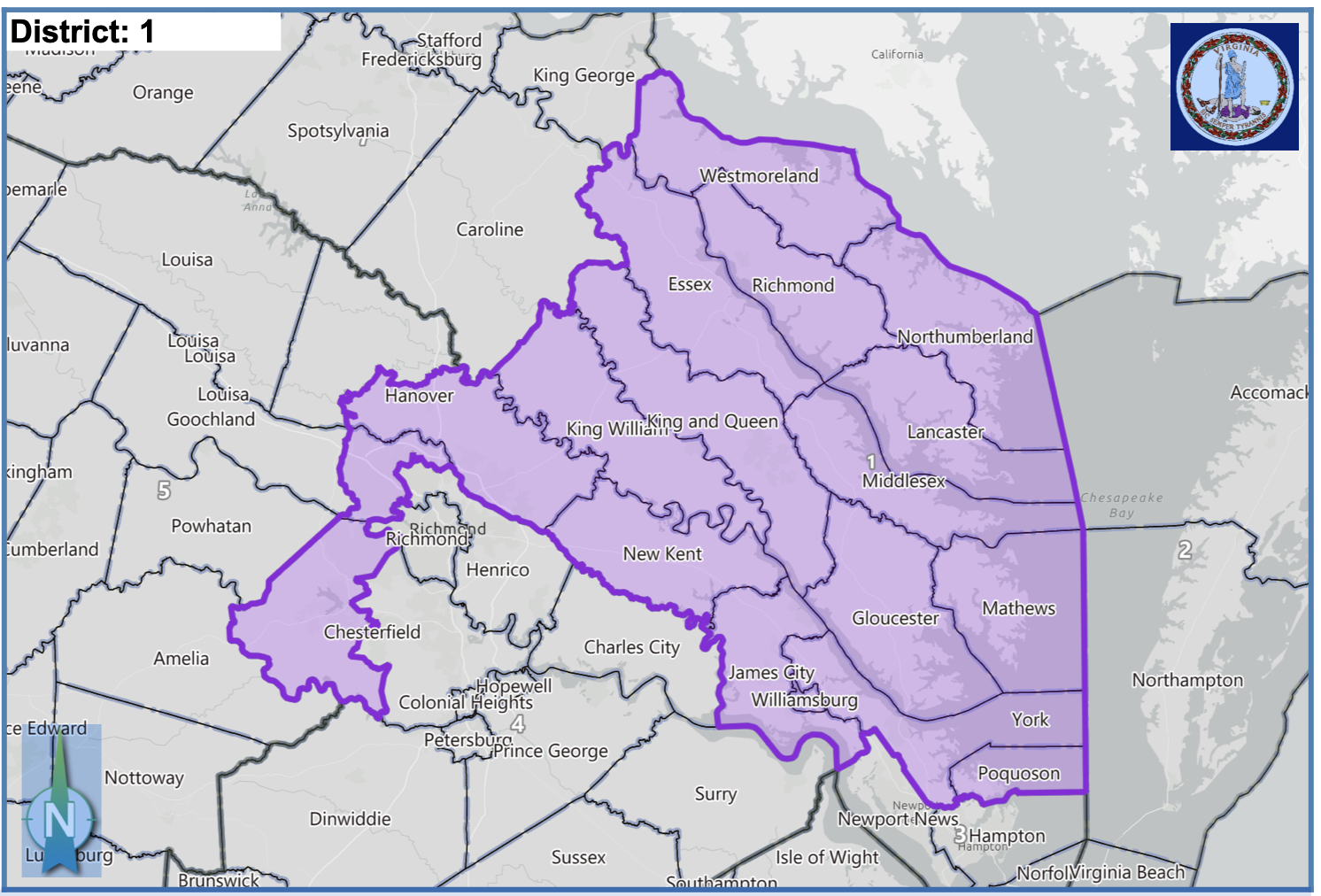
    The 1st District stretches from Colonial Beach down the eastern coast of the state to Williamsburg, and hooks over the north side of Henrico County into part of Chesterfield.

    Over 615,000 registered voters live in the 1st District, with the largest portions of the population in Henrico, Chesterfield, Hanover, and James City counties. The majority of voters there are white, but U.S. Census Bureau data shows diverse demographics: nearly 13% of voters are Black, almost 7% identify as multiracial and 6% are Asian. About 6% of voters are Hispanic or Latino.

    Voters in the area have historically favored Republicans, with 51.6% choosing Donald Trump in the 2024 presidential election and 57.8% voting for Glenn Youngkin in 2021, helping send the GOP newcomer to the governor’s mansion.

    That tide shifted in 2025, when Abigail Spanberger was elected governor with a margin of 51% in the district. Spanberger’s victory supercharged scrutiny from up-ballot Democrats, who saw it as a sign the district could be flipped in the 2026 midterm elections.

    Virginia Congressional District 1 (Photo courtesy Supreme Court of Virginia)

    Wittman to defend seat of nearly two decades

    U.S. Rep. Rob Wittman, R-Westmoreland, has represented the 1st District in Congress since 2007. Before taking office, he served in the Virginia Department of Health’s Division of Shellfish Sanitation for 26 years, which has shaped his policies and tenure on the House Natural Resources Committee.

    Wittman was one of just a handful of House Republicans nationwide to join Democrats in voting to extend the Enhanced Premium Tax Credits through the Affordable Care Act for three years. The measure ultimately failed.

    Wittman has consistently supported H.R. 1, the One Big Beautiful Bill, which excluded the credits when passed last summer, critics have highlighted. The congressman also faced blowback from constituents last year who said he avoided in-person town halls amid sweeping federal budget cuts and layoffs.

    Promising to guard against “reckless government spending” on his website, Wittman also supports enhanced border security – including the construction of a wall bordering Mexico to staunch illegal immigration.

    Wittman constituents host town hall in his absence to address immigration, federal funding concerns

    Wittman did not respond to requests for comment on his campaign and has not completed The Virginia Mercury’s candidate questionnaire, sent to all contenders on June 1.

    Seven Democrats vie to take on Wittman

    Shannon Taylor, the frontrunner in the race to flip the 1st District to blue, is an experienced prosecutor and has spent the last 13 years as the Henrico Commonwealth’s Attorney. She was the first woman to hold the position and the first Democrat to be elected to the seat in 40 years.

    Her courtroom experience undergirds one of her key campaign priorities: managing political corruption. She also advocates for congressional stock trading to be made illegal.

    Taylor is also committed to protecting healthcare access in the wake of the sweeping changes from H.B. 1, she said.

    “More than 44,000 Virginians have lost their ACA coverage, and rural hospitals like Rappahannock General are at risk of closure,” Taylor said. “I’ll fight to lower health care costs by extending the ACA tax credits, expand Medicare’s ability to negotiate drug prices, and protect Medicaid.”

    Shannon Taylor launches bid to represent Virginia’s 1st Congressional District

    She previously ran for the office of the Attorney General but lost the primary to Jay Jones, who was elected to the seat last fall. Taylor’s campaign has raised $1,300,040, as of the latest campaign finance reporting.

    Political newcomer and lawyer Salaam Bhatti’s priorities center on expanding Medicare access, increasing taxes for the highest earners and reforming political candidates’ campaign finance process.

    The former Virginia Poverty Law Center attorney is a child of immigrants who relied on programs like WIC and free school meals while growing up. Bhatti focused his VPLC work on expanding SNAP access and at the Food Research and Action Center, worked against a farm bill addition that would have made major cuts to SNAP.

    Wittman has had more than enough time to better address issues of poverty and healthcare access in the district, Bhatti said.

    “Rob Wittman has been in office for nearly 20 years and in that time our neighbors have gotten poorer, healthcare has become more expensive, corporate donors have gotten more access, and Rob has become a multimillionaire through stock trades,” he said.

    Bhatti has raised $184,834 as of March 31 reporting.

    Tim Cywinski, another Democratic challenger, is not new to the political sphere. He spent years as a community advocate and has worked on the political side as an intern for the Obama campaign when he was 17.

    Cywinski’s brother was born with a heart defect, and the cost of his care contributed to his family’s skyrocketing medical debt and eventual loss of their home. That experience, Cywinski said, gave him personal experience with the challenges of America’s healthcare system and fuels his interest in addressing it via federal legislation.

    Wittman represents what Cywinski characterized as the political establishment, which doesn’t provide solutions for constituents’ healthcare needs, tax burdens and other priorities. His campaign is about finding ways to take big money out of politics, he said.

    “My main platform is what I call the fair shot agenda because unless you’re already powerful or unless you’re really wealthy and well connected, no one feels like they have a fair shot in this country and our politics upholds that reality,” Cywinski said.

    As of March 31, Cywinski has raised just over $8,113, the smallest campaign coffer of any candidate in the race. He lives in the greater Richmond area.

    Jason Knapp has served his country for 21 years as a naval officer and said his military background shapes his policy goals.

    A former defense fellow assigned to the Armed Services Committee and deputy director of legislative affairs for the U.S. European Command, Knapp has taken aim at the cost Virginians and Americans are paying for the Iran war, a conflict Wittman has supported.

    “Food, fuel, energy, housing, and medical costs are skyrocketing and people are literally choosing between buying food, buying medicine, or paying bills — and the man who represents this district is at worst complicit in these hardships, and at best, apathetic to the real problems people are facing,” Knapp said.

    Universal healthcare is another top priority for Knapp, who aims to counter the privatization of the Veterans Administration, which he said creates barriers for servicemembers to access essential care.

    Knapp has raised $501,287 as of March 31.

    Ericka Kopp, a healthcare attorney and a caregiver to her husband who is a disabled veteran, said Wittman’s support of the congressional bill that stripped funding for Medicaid compelled her to run to replace him.

    Kopp earned her law degree from the University of Richmond and clerked for a Virginia circuit court judge. She said she never considered running for office until her frustrations with Wittman bubbled to the surface because he did not attend several town hall meetings in her district in 2025.

    “He’s not accessible to the people, let alone accountable to us. In April of last year, I started thinking that anyone could do a better job, even me. And then I thought, ‘Why not me?’” Kopp said.

    Her campaign priorities include expanding Medicaid and healthcare access. She has raised $13,867 so far.

    Business lawyer and small law firm owner, Mel Tull believes he can help bridge the partisan divide in Congress and said his experience successfully navigating competing interests can earn the trust of other lawmakers and the people they represent.

    Like several other Democratic contenders, Tull said Wittman’s 18 years in Congress is too long a time to serve without better addressing issues like healthcare, affordability, and government functionality.

    “My job has been to evaluate competing interests, understand risks and consequences, and help people make sound decisions. I’ve spent my career bringing people together to solve difficult problems, not score political points,” Tull said.

    Tull served in the Army before branching into business law. His campaign has raised $179,991, to date.

    Elizabeth Dempsey Beggs, the final Democratic contender in the contest, was one of the first women to serve as a tank commander in a combat role in the U.S. Army. The veteran now works in the package and manufacturing industry.

    She said concerns about affordability and government transparency drove her to enter the race. Her campaign priorities also include protecting the right to vote and reproductive healthcare access.

    As a mother, foster parent, and business leader, I’ve seen firsthand how decisions made in Washington affect families every single day,” Beggs said. “Whether it’s the cost of childcare, access to healthcare, housing affordability, or the lack of accountability in government, people are working harder than ever and feeling like they have less and less to show for it.”

    Public office should be a service and not a long-standing career, Beggs added, pointing out Wittman’s tenure in the seat. So far, she has raised $64,494.

    Early voting for the primary election for the first congressional district begins on June 18. Election day is Aug. 4.