Water tower for the town of Tangier, VA. June, 8 2026. (Photo by Shannon Heckt/Virginia Mercury)
TANGIER ISLAND, CHESAPEAKE BAY — On a windy June morning, the Chesapeake Bay Foundation’s boat rocked violently on the waves of its namesake watershed, brackish drops splashing into the vessel as it sped towards Tangier Island, a 1.2 square mile land mass that was first settled in colonial times but whose future is now uncertain.
On the hour ride from the Crisfield, Maryland marina, Tangier Island Mayor James “Ooker” Eskridge detailed how much the land of his home has been battered away by storms and rising sea levels. Tangier has reportedly lost two-thirds of its land mass since 1850.
It’s not clear exactly how many residents live there; the 2020 U.S. Census Bureau indicated 430 people, while other sources place it closer to 252. What’s undeniable, Eskridge said, is that more people leave each year.
The island needs greater financial investment from the federal government if it is to survive, he added.
“But I know there’s billions of dollars being spent on creating islands like Poplar Island,” a similarly eroded island off the coast of Maryland, Eskridge said. ”They built that island back up for nothing. Nobody lives there. … Now here we are, we have a working waterman’s community, and we’re having a struggle just to protect it.”
Tangier Mayor James “Ooker” Eskridge shows map of the island’s land-loss. June 8, 2026. (Photo by Shannon Heckt/Virginia Mercury)
For generations, the island has been home to people who made their living crabbing and fishing. The residents have a unique cadence, with “ a tendency to prolong a vowel,” Tangier Island native and linguist David L. Shores told The National Geographic. The island can only be reached by boat or plane.
“We’ve been here for hundreds of years and we’d like to stay. Tangier is very savable now. I know it’s a lot of money to the community, but to the (federal) government it’s not,” Eskridge said.
Tangier Island comes into view on the horizon of the Chesapeake Bay. June 8, 2026. (Photo by Shannon Heckt/Virginia Mercury)
Homes here stand just a few feet above sea level on some parts of the island. Port Isobel, which rests on the smaller island east of Tangier, serves as a research and education hub, with breakwaters allowing the beach to hold its shape and forested land.
Wave erosion on the coast of Tangier Island off the Virginia coast, June 8, 2026. (Photo by Shannon Heckt/Virginia Mercury)
Tangier is not just a singular aspect of Virginia’s coastal culture and history. The marshes surrounding the island also serve as essential habitat for crabs, fish and oysters who need seagrasses to survive.
“We’re working to try to make sure that this really unique archipelago out in the middle of the Bay that anchors the bay-grasses, that anchors the oyster reefs, that is comprised of marshes that are incredibly important habitat to the Chesapeake Bay … is preserved,” Tom Ackerman, the Chesapeake Bay Foundation’s vice president for environmental education, said. “Because if we lose the land, everything else is gonna just get blown out.”
Crab pots lined up on pier on Tangier Island off the Virginia coast. June 8, 2026. (Photo by Shannon Heckt/Virginia Mercury)
The island’s economy is sustained by blue crab and oyster fishing.
Tangier’s fishermen are estimated to harvest about 13% of the entire Chesapeake’s blue crabs. Oysters harvesting made a major comeback when authorities halted winter crab dredging, allowing the oyster populations to rebound. It’s a welcome change from prior decades, locals and conservationists say.
In the 1970s and 1980s, oysters in the Bay struggled to survive. Chris Moore with CBF explained that three main factors contributed to the former decrease: over-harvesting, pollution and disease.
Recent efforts to restore the species in the Bay have been incredibly successful and enable a profitable winter business for the Tangier watermen.
“Today, the only way for the waterman to make a living (in the winter) is oysters. And it’s vital that we maintain a healthy population, which we do have now. Oysters are doing exceptionally well now,” Eskridge said.
Oyster beds in the Chesapeake Bay off the coast of Tangier Island, June 8, 2026. (Photo by Shannon Heckt/Virginia Mercury)
The oysters also serve as natural coastal protection.
Oyster reefs can help slow down incoming stormwater and serve as natural breakwaters. State and federal agencies are putting them to use through a massive oyster habitat restoration effort, the Tangier-Pocomoke Sound Oyster Recovery Project.
At full capacity, the project will reserve over 4,000 acres of the Bay for oyster habitat, some of which will be available for harvesting by local fishermen. Work on the first 275 acres of the project will begin in 2028.
“I think it’ll actually be a really good example of how we can continue to … think about how we do restoration differently and how it can support more uses as we continue to get better at it,” Moore said.
Several groups have banded together to create a shoreline protection plan to guide federal and state funding to projects that buffer the beaches and staunch erosion.
The consulting and design group Bay Land has been meeting with locals to identify key areas where berms should be built, dredged materials could build up marshes and natural infrastructure can be planted. The roadmap is anticipated to be completed later this year.
The town had previously been awarded $356,500 from the National Fish and Wildlife Foundation (NFWF) through the National Coastal Resilience Fund, to begin the community engagement to identify priorities for the roadmap.
This year, the group didn’t receive additional funding of $1.2 million from NFWF to start moving some of the plans in the roadmap into the design phase, which they called “a disappointment.”
Without that money, Bay Land representatives said, projects will be delayed another year before design finalization, time that many on the island say they don’t have. Bay Land will apply again in February when the funding applications reopen.
As the boat curved around the island, a lighthouse appeared far in the distance. Terry Parks, a life-long resident of the island, said his grandfather told stories of being able to walk on land almost all the way to the lighthouse when he was young.
Parks piloted the boat along that same land, which is now only a few feet below the water’s surface.
Lighthouse off the coast of Tangier Island, VA. June 8, 2026. (Photo by Shannon Heckt/Virginia Mercury)
The boat pulled up along the northwestern portion of the island, where a breach in the shoreline in a place called Tom’s Gut allows water to freely flow inland, aiding erosion.
The Army Corps of Engineers tried to fix the breach by using some of the materials dredged annually from the island’s central canal. It wasn’t enough to fill the gap and washed away.
“I think it’s critical to see if you can fix that breach. Just stop that velocity to help that erosion on the marshes on the backside,” said Jeff Swallow with the Army Corps of Engineers.
Tangier Island coastline. June 8, 2026. (Photo by Shannon Heckt/Virginia Mercury)
The boat docked downtown and passengers disembarked to walk along the island’s narrow streets, most just wide enough for one golf cart – the main mode of transportation on Tangier Island.
Narrow street in the town of Tangier, VA. June, 8 2026. (Photo by Shannon Heckt/Virginia Mercury)
The visitors, from various state and federal agencies, piled into Lorraine’s, a popular seafood restaurant. Before heading in, Tangier Councilmember Anna Pruitt-Parks admitted the island’s financial struggles have been paramount for residents in recent years.
The focus on generating money and keeping the island’s government and public services afloat may have partially obscured the reality of erosion, Pruitt-Parks said, but the environmental threats can no longer be downplayed.
“As a kid, you don’t notice (changes) as much, but the older I’ve got, I’ll say every week I see a change, especially like in the ditches in the middle of the island,” she noted. “All of that’s been widening and big chunks of marsh are just breaking off and it’s really hard to watch. Very hard to watch.”
Cemetery in Tangier, VA. June, 8 2026. (Photo by Shannon Heckt/Virginia Mercury)
Inside the eatery, agency representatives shared the latest on state funding for the resiliency plan and new laws that could help Tangier.
Del. Robert Bloxom, R-Accomack, successfully passed House Bill 52 to the Virginia General Assembly this year. The measure requires materials that are dredged up from canals and other projects to be reused for resiliency projects, like building up marshes, starting in 2027.
There are some exceptions that would limit the use of some materials. Maryland already has a similar policy in place, which has helped the state pursue coastal projects such as the one on Poplar Island.
Eskridge advocated for urgent action, not endless legislative debate.
“I know many studies have been done…but we’re losing the land at such a rapid rate. We don’t really have the time to play around,” Eskridge said. “And I believe there’s probably been enough money spent on studies that you could actually have protected all this by now.”
Tangier Mayor James “Ooker” Eskridge, June 8, 2026. (Photo by Shannon Heckt/Virginia Mercury)
After feasting on cuisine that originated from the waters surrounding them, the groups conclude their meeting by pinpointing other funding sources and potential partner organizations to help them preserve the island.
Even as the clock ticked, Eskridge said he was encouraged to see state, local, and federal agencies try to find solutions to protect Tangier.
While the visitors boarded the boat to leave, skiffs shook in the waves while seabirds picked at empty crab pots. Locals’ casual conversations carry over the harbor lined with “for sale” signs.
People have suggested Eskridge follow the droves who have departed the island for good, looking for more opportunity in a place that isn’t being swallowed up by the sea. He always tells them the same thing: “There is no place like home.”
View of the Chesapeake Bay from downtown pier in Tangier Island, June, 8 2026. (Photo by Shannon Heckt/Virginia Mercury)
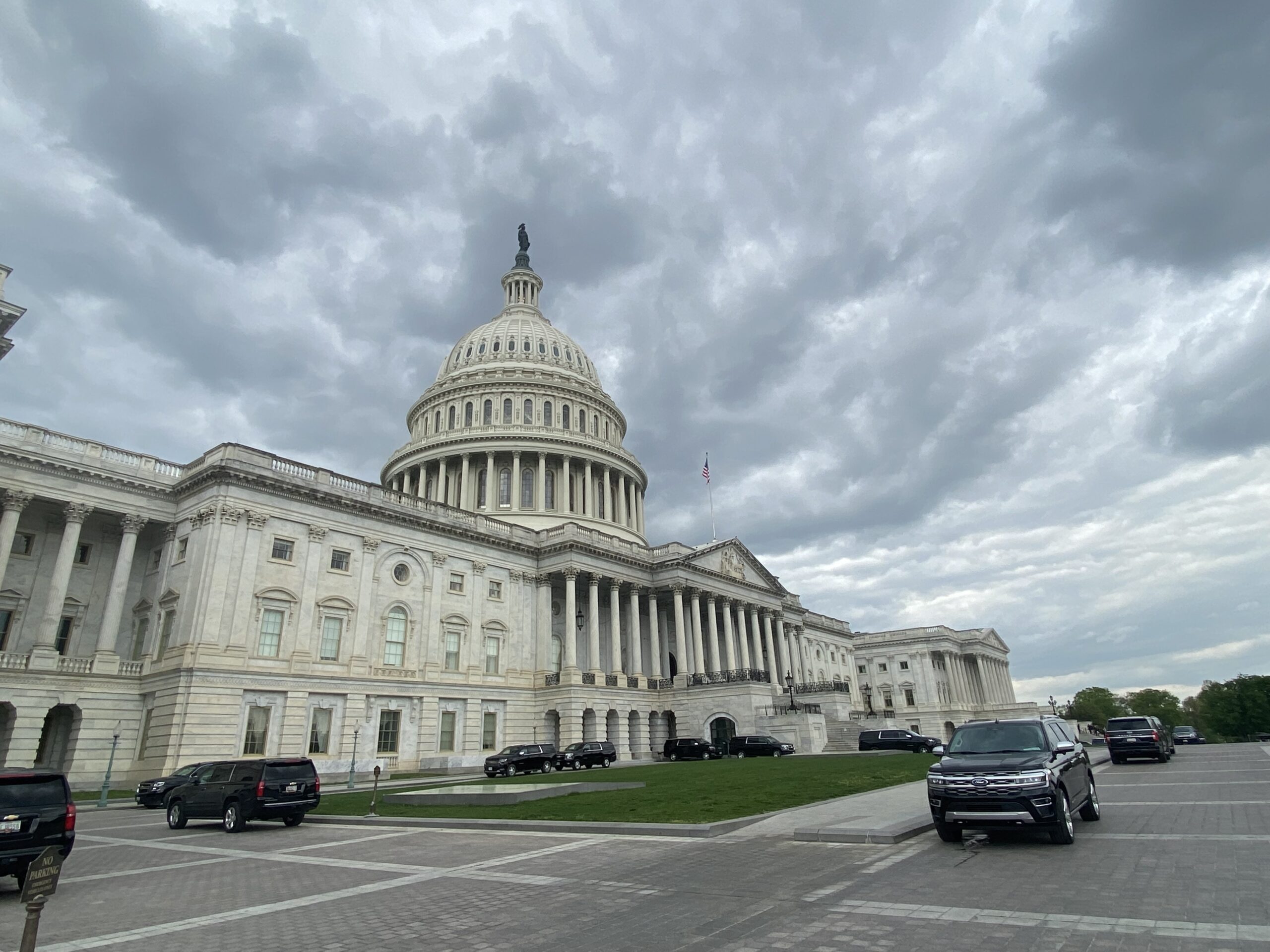
The U.S. Capitol in Washington, D.C., on April 18, 2024. (Photo by Jennifer Shutt/States Newsroom)
WASHINGTON — For the first time in nearly two decades, Congress missed a deadline for reauthorization of a key surveillance authority, raising questions about whether the U.S. government can continue to monitor certain communications.
Lawmakers have regularly approved short- and long-term extensions for Section 702 of the Foreign Intelligence Surveillance Act since 2008, clearing the way for intelligence agencies to collect and analyze electronic communications from people living in other countries.
The government says it uses the program to secure information that can protect the United States or its citizens from attacks by foreign powers, terrorism, weapons of mass destruction, the trafficking of illegal drugs and other threats.
Intelligence agencies aren’t supposed to target U.S. citizens but lawmakers across the political spectrum and civil liberties organizations have repeatedly raised grievances with how officials handle the information they get when an American is part of a targeted conversation.
Even though lawmakers let Section 702 lapse on June 12, the annual certification from the court that oversees the program should allow intelligence agencies to keep collecting data, experts say.
Kia Hamadanchy, senior policy counsel at the American Civil Liberties Union, said during an interview with States Newsroom that Congress included a safety net in a previous authorization that planned for this exact scenario.
“We feel pretty confident that there will be no immediate consequences,” he said. “The way the statute is crafted, it basically says if there is an existing certification, you can continue Section 702 surveillance until that certification expires.”
That won’t happen until March 2027.
Senate Judiciary Committee Chairman Chuck Grassley, R-Iowa, agreed with the assessment there are safeguards in place, but he contended members of Congress should not have taken the risk of letting that section of the Foreign Intelligence Surveillance Act expire.
“There’s a dangerous assumption that the program will function seamlessly if this statute expires on Friday,” he said. “While I hope the certifications issued a few months ago will still apply in the event of the statute lapsing. This is not a certainty. There will be high-stakes litigation and a very real possibility that intelligence collection will cease at least temporarily. And in this work of intelligence gathering, minutes do matter.”
Pulte announcement
Republicans and Democrats have worked for the past few months to broker consensus on another years-long reauthorization with overhauls. Those negotiations included significant debate about what the government should do when Americans are part of the conversations swept up by intelligence agencies.
But President Donald Trump’s announcement that Bill Pulte would temporarily run the Office of the Director of National Intelligence following Tulsi Gabbard’s exit raised concerns on Capitol Hill and stopped negotiations.
Democrats said someone trustworthy must lead the ODNI even for a brief amount of time, while Republicans argued the two issues shouldn’t be linked and that letting Section 702 lapse represents a national security risk.
Senate Select Committee on Intelligence Chairman Tom Cotton, R-Ark., said not extending the program for a few weeks while lawmakers work out their differences on a longer-term bill could have severe, even fatal, consequences.
“Well over half of every item in the president’s daily brief is derived from Section 702,” he said. “It has stopped terrorist attacks, it stopped the flow of deadly drugs into our country, it’s protected our troops overseas, it’s allowed us to rescue troops overseas.”
Senate Minority Leader Chuck Schumer, D-N.Y., contended that having Pulte temporarily run the ODNI even though he has “zero relevant experience” would place “Americans in danger.”
“We need real leadership in the intelligence community, not a national security novice sent to undermine the work of intelligence professionals,” he said.
Schumer added that Pulte couldn’t be expected “to speak truth to power, to conduct objective analysis, to resist efforts to politicize the intelligence community in a job where facts are so important, and the president knowing the real facts are so important.”
Trump’s choice of Jay Clayton as his official nominee for the role June 11 as both chambers of Congress ended their work week didn’t ease concerns or clear the way for a short-term extension of Section 702.
“Pulte has to go. He cannot be in the DNI role,” Schumer said. “Our national security is too important.”
More problems
Pulte’s short-term assignment, however, isn’t the only roadblock to a long-term reauthorization.
Oregon Democratic Sen. Ron Wyden said substantial changes must be made and that “there just have been too many abuses of Americans’ rights across multiple administrations” under the authorities provided by Section 702.
“Every day that 702 is in effect without reforms is a day that Americans’ rights are under threat,” he said. “I believe Americans deserve new guardrails. If Congress is going to extend these authorities, and that is what we’re talking about, those guardrails are essential. And at a minimum, Americans deserve transparency about how these surveillance powers have been abused.”
The House Freedom Caucus, a group of far-right Republicans led by Maryland Rep. Andy Harris, has also pressed for overhauls.
“Congress can, and should, continue seeking reforms to Section 702 without endangering national security,” it posted on social media. “Necessary reforms – including warrant requirements for searching Americans’ private communications, consistent with the Fourth Amendment – can also be passed by Congress without endangering national security.”
The Freedom Caucus added that it’s “nonsense” for anyone to “claim that once Section 702 expires, lawsuits by communications and tech companies could suspend intelligence collection.”
Court certification
One of the reasons some members of Congress have raised dire concerns about a lapse of Section 702 even with the certification in place is to lobby for a years-long reauthorization, Hamadanchy of the ACLU said.
“They’re trying to use that fear-mongering to force people to vote for something that they may not like otherwise,” he said.
The sense of urgency created by waiting until the last minute to hold floor votes on a reauthorization bill and raising the possibility of terrorist attacks, Hamadanchy said, can also be used to prevent amendment votes.
That, for example, could block floor debate on whether to require a warrant for Americans’ data that does get collected as part of other Section 702 surveillance.
“There’s been repeated requests under both administrations of both parties in terms of that number of Americans. They’ve never told us,” Hamadanchy said. “But what we do know is they routinely search through that database for the communications of Americans without a warrant.”
A view of the damaged B1 bridge, a day after it was destroyed by an airstrike, on April 3, 2026 west of Tehran in Karaj, Iran. (Photo by Majid Saeedi/Getty Images)
WASHINGTON — The Trump administration still needs to determine how it will remove nuclear materials from Iran after officials from both countries sign documents to end the war, a senior official said Friday.
“This is very combustible stuff, very volatile stuff. We’re not just going to, like, go down there with a backhoe and a guy with a backpack and start taking it out,” the official, who did not want to be identified by name, said on a call with reporters organized by the White House. “The technical details need to be figured out, but I think there’s a commitment to do that.”
Iranian Foreign Minister Seyed Abbas Araghchi wrote in a social media post a few hours before the call that a memorandum of understanding with the United States “has never been closer.”
“Pending its finalization, the media should refrain from entering speculation about its content,” he added. “In line with our responsible and transparent approach, all details will be shared with the public in due course.”
The officials’ comments came one day after President Donald Trump said negotiators had “just made a great settlement of the war with Iran” that would be “subject to finalization of documents” over the next few days.
Possible meeting in Europe
The U.S. official said the administration is 80% to 85% sure leaders from the two countries would gather sometime this month to sign a memorandum of understanding to end the war, possibly in Europe.
Those documents will create a framework to reopen the Strait of Hormuz, destroy enriched nuclear materials and establish inspections to ensure Iran doesn’t possess a nuclear weapon, the official said.
The MOU will also start a 60-day technical negotiation where leaders from both countries work out more specifics of what the United States wants to see Iran accomplish in order to lift economic sanctions, the official said.
The step-by-step process with verification requirements is designed to build trust and “accomplish something meaningful for both Iran and the United States of America,” the official said.
“I don’t think the Iranians trust us and I don’t think the United States trusts the Iranians,” the official said.
Whether or not Iran could have a civilian nuclear program for energy production will remain to be seen, though the official didn’t entirely rule it out.
“We’re not bothered at all by the idea of civilian power plants in Iran,” the official said. “What we’re bothered by is the type of infrastructure that would allow them to jump from civilian power generation to nuclear weapons development and that’s what they’ve had for a very long time.”
A digital sign above a busy highway alerts drivers to a current Amber Alert.
WASHINGTON — U.S. House Rep. Rudy Yakym is pursuing changes to the nation’s Amber Alert notification system after a 17-year-old girl from his home state of Indiana went missing and was later found dead.
The Republican has introducedlegislation named for the victim in the case, Hailey Buzbee of Fishers, Indiana. It would allow police to issue Amber Alerts, which widely publicize missing children cases, for all children under 18 thought to be “high-risk missing persons.”
Currently, alerts only go off for individuals confirmed by law enforcement as abducted and recognized to be in immediate danger, according to a press release announcing Yakym’s bill.
An Amber Alert for Buzbee was never issued because her disappearance was classified as a runaway rather than an abduction, the press release added.
“I spoke with Hailey’s parents this week,” Yakym said in a statement to States Newsroom. “They are some of the bravest, strongest people I’ve ever met, turning the most unimaginable pain a parent can feel into action so no other family has to go through what they’ve been through.”
Hailey’s case
Buzbee went missing from her home in early January and was pronounced dead nearly a month later after her remains were found in an Ohio forest.
Hailey Buzbee. (Photo courtesy of Buzbee family)
Authorities say she was taken away and later killed by Tyler Thomas, a 39-year-old man from Columbus, whom they say she’d met playing video games online.
“Her family knew she was in danger. Her community knew she was in danger,” Yakym said. “But because there was no confirmed abduction, no AMBER Alert went out — and because she didn’t have a qualifying disability, a Silver Alert didn’t apply.”
Thomas has since been charged with “sexually exploiting a minor and traveling interstate with the intent to engage in illicit sexual conduct,” according to a press release from the U.S. Attorney’s office for the Southern District of Ohio.
He would face up to 30 years in prison if convicted on those charges, the release said.
State laws
The case has attracted much publicity and led state lawmakers in Indiana and Ohio to introduce bills aimed at making online forums a safer place for minors.
Indiana Gov. Mike Braun, a Republican, signed a law April 1 that places parental consent requirements, age-verification guidelines and algorithm limits on certain social media platforms for children under 16.
He then approved a law that strengthens penalties for child exploiters.
In Ohio, two state senators are moving to present a bill that would require parental approval and increase safeguards for children on online gaming platforms. The measure would also create an enhanced version of the Amber Alert notification and work to educate young people about grooming.
Hailey’s parents, Beau and Ronya Buzbee, have been heavily involved in both states’ legislative efforts. They are now working with Yakym to get the HAILEY Act passed.
“Real change for families like ours — who just want to keep our children safe — is now one step closer,” the Buzbee family said in Yakym’s press release. “We strongly encourage the U.S. House of Representatives to pass this commonsense legislation that could protect the next child before it’s too late.”
“The system that’s supposed to protect kids didn’t have a box to put her in,” Yakym said. “That cost her life.”
The Ultimate Fighting Championship branded its upcoming mix martial arts fight on the White House South Lawn, on Thursday, June 11, 2026, as a celebration of America's 250th birthday. (Photo by Ashley Murray/States Newsroom)
The Ultimate Fighting Championship cage matches set to take place on the White House South Lawn on Sunday will go on as scheduled, a federal judge in Washington, D.C., ruled Friday.
U.S. District Judge Amit Mehta denied an emergency petition from two Virginia plaintiffs to stop the fight until the court litigates allegations that the Trump administration illegally allowed the Las Vegas-based sports promotion company to build its towering structure, called “The Claw,” on the White House grounds, and use the Ellipse and Lincoln Memorial for related events.
UFC began constructing the 92-foot-tall, 154-foot-wide steel staging area on May 26, and corporate organizers were placing the final touches on the temporary 4,300-seat structure this week.
According to government court filings, organizers expect up to 120,000 guests to watch the fights on large screens on the Ellipse in addition to the guests under “The Claw.”
In all, organizers have spent $60 million on preparation for the event, which is part of the Donald Trump administration-organized “Freedom 250” celebration — separate and apart from the bipartisan “America250” governed by a congressional commission — to mark the country’s 250th anniversary.
In a 15-page order, Mehta wrote that the plaintiffs’ “unreasonable delay in filing suit, though not dispositive, undercuts their claims of irreparable harm.”
“The public has known that the White House would be hosting a UFC fight event since President Trump first announced it in July 2025. Equipment and materials for the event began arriving at the White House around May 20, 2026, … and construction of the Claw began six days later. Plaintiffs, however, waited until June 7, 2026 — more than two weeks after visible preparations commenced at the White House — to seek emergency relief,” according to the order.
Additionally, Mehta wrote that the plaintiffs’ claims of harm — aesthetic and First Amendment — are not irreparable because they are “decidedly temporary.”
White House spokesperson Davis Ingle praised the ruling.
“The court rightly rejected an untimely and frivolous effort to halt the historic UFC event hosted to honor the 250th anniversary of our Nation. The White House is thankful for this correct decision and looks forward to hosting this once-in-a-lifetime celebration on the South Lawn,” Ingle said in a written statement to States Newsroom.
Brendan Ballou, founder of the Public Integrity Project, an anti-corruption legal advocacy organization that represented the plaintiffs, said the decision wasn’t the one they wanted.
“This isn’t a case about a sporting event, it’s about corruption, as a handful of people and companies stand to profit from our public monuments. While we’re disappointed in this decision, we of course respect it, and we’ll keep bringing cases to raise the cost of corruption in America,” Ballou said in a written statement to States Newsroom.
Speaker of the House Don Scott, D-Portsmouth, presents the chamber's latest budget proposal on June 12, 2026 in downtown Richmond. (Photo by Shannon Heckt/Virginia Mercury)
Speaker of the House of Delegates Don Scott, flanked by Appropriations Chair Del. Luke Torian, D-Prince William, and other bipartisan house members, unveiled the chamber’s latest budget proposal in Richmond on Friday, which they framed as a “compromise package” that they urged the state Senate to accept.
The updated spending plan no longer includes environmental standards data centers would need to meet in order to be exempted from the state’s sales and use tax, an issue that has stalled budget negotiations for weeks and sparked speculation about a government shutdown if the parties can’t finalize the budget by June 30.
“This budget comes through for Virginians in a real and meaningful way without introducing a single new tax,” Torian said in a statement. “It anticipates future federal funding cuts by establishing a reserve – so when Washington turns its back again on Virginians we are prepared to step in.”
The dueling House and Senate budget proposals differ over whether data centers should continue to be exempt from the state’s 5.3% sales and use tax. State data shows the industry saves about $1.6 billion annually through the exemption, money Senate lawmakers say the state should recoup by ending the tax break.
Data centers have to routinely upgrade and replace pricey computer equipment, which is the bulk of where they save with the exemption.
The new House proposal removes the previous measures that would have mandated developers limit data centers from co-locating with power facilities that emit carbon emissions.
The previous proposal also outlined energy efficiency requirements for the digital warehouses, including using newer backup generator models that emit less carbon.
The new House budget instead proposes creating a commission of stakeholders and lawmakers to study the impacts and benefits of the data center industry in Virginia.
The commission would be required to report to the General Assembly by Nov. 1 on ways to ensure energy demands don’t put extra costs onto residential utility customers. The commission would also scrutinize local tax revenue impacts and “other ways to generate revenue from the industry”.
“(It will be a) full investigation into energy costs, financial impacts, air quality, water conservation, renewable energy, and community impacts,” Scott said, “So the 2027 General Assembly can pass real national reform. Or if the governor would like, we could come back right after that report … for a special session.”
Scott has staunchly supported preserving data centers’ exemption, he said, because of the local tax revenue the centers generate and the union jobs that come with the construction of the facilities.
Gov. Abigail Spanberger has also publicly supported keeping the exemption, saying the state should “honor its commitments” to businesses that have located in the commonwealth. She praised the updated House budget on Friday.
“This proposal creates a clear roadmap for evaluating the impact of the data center industry in Virginia and for reassessing the state’s incentives into the future, with a focus on fairness to ratepayers and the needs of local communities,” Spanberger said in a statement.
Senate members’ response to the updated House budget was unclear Friday afternoon, with no comment from Finance Chairwoman Sen. Louise Lucas, D-Portsmouth.
Lucas has been adamant about ending the tax exemption for data centers since the Senate spending plan was introduced earlier this year.
“I want (the money) to go towards hard working families. We’ve got people who are struggling to put food on the table, to put a roof over their heads, pay for their car payment, their kids school. I want that money to go back to them,” Lucas said then.
The House is slated to return to Richmond to debate this proposal on June 18, while the Senate, who has not yet released an updated budget proposal, will return on June 22. If a budget is not passed by the end of the month, state services and employee pay will be interrupted.
President Donald Trump gives a speech at the World Economic Forum on Jan. 21, 2026 in Davos, Switzerland. (Photo by Chip Somodevilla/Getty Images)
ALEXANDRIA, Va. — A federal judge in the Eastern District of Virginia issued a preliminary injunction Friday halting the Trump administration’s nearly $1.8 billion “anti-weaponization” fund for one week, giving the government time to sign a “clear, unambiguous” agreement that the fund is dead.
U.S. District Judge Leonie Brinkema said from the bench the agreement must be signed by acting Attorney General Todd Blanche and Treasury Secretary Scott Bessent.
“The balance of harms tips in the favor of the plaintiff,” said Brinkema, a Clinton administration appointee.
Brinkema had already temporarily blocked the fund on May 29 on an emergency basis.
The prospect that the fund would pay Trump’s supporters, including those who assaulted police officers during the Jan. 6, 2021, U.S. Capitol riot, sparked multiple lawsuits, including the filing in Virginia.
Challengers included a former Department of Justice Jan. 6 prosecutor who was fired last year and a protester at an immigration raid last year who was charged with a felony, and has since been acquitted by a jury. The plaintiffs are represented by the legal advocacy groups Democracy Forward and Common Cause.
The Department of Justice announced the creation of the fund, in the amount of $1.776 billion, on May 18 in exchange for President Donald Trump voluntarily dropping his $10 billion lawsuit against the IRS for the leak of his tax returns nearly seven years ago.
Issue not moot, judge says
During a hearing that lasted less than an hour, Brinkema swiftly called Andrew Block, senior counsel to the U.S. associate attorney general, to speak first.
“You’re a brave man, Mr. Block. You’re all by yourself. Frankly, you’re in the hot seat,” Brinkema said, noting that Block was the only representative for the government in the courtroom.
Brinkema kicked off questioning by asking Block if he’d had a chance to find an answer to why Blanche has not formally rescinded the “anti-weaponization” fund in writing.
The question had been posed to Block by U.S. District Judge Richard Leon in U.S. District Court for the District of Columbia less than 48 hours ago during a hearing for a separate lawsuit against the fund. Block, who also appeared alone before Leon, told the judge he did not know the reason Blanche had not issued a written order.
“Do you have an answer to that question now?” Brinkema asked.
“Your honor, I don’t. I don’t have the ability to speak to the AG,” he responded.
As he did in federal court June 10, Block argued that Blanche testified publicly before Congress that the administration was not moving forward with the fund, and that Blanche had signed legal briefs on the matter.
Acknowledging those arguments, Leon denied an emergency request to block the fund, saying the case appeared “moot.”
Brinkema, however, said she does not agree with Leon’s assessment.
Doubting whether any of Blanche’s verbal or written statements to stop the fund had been made under penalty of perjury, Brinkema said, “that means the issue, in my view, is not moot.”
Brinkema also cited Trump’s public comments praising the fund, even after Blanche’s declaration it would not move forward.
“When the president of the United States says he’s going to be disappointed if something doesn’t happen, that’s a pretty good indication that it (could) happen,” Brinkema said.
“There are a lot of people out there who think this fund is up and running,” she added.
Block responded: “People may think a lot of things.” He said “what I can tell you” is that no commissioners have been appointed to the fund to establish a claim system.
No lawful business restrained
Block, as he did before Judge Leon, dismissed the plaintiffs’ allegations as “what-ifs,” based on a “loose factual record that is premature.”
Referring to the departments of Justice and Treasury, Brinkema asked, “What injury do they face if the court issues a preliminary injunction at this point?”
Block argued any temporary order to block the fund would mean the government was being “restrained” in conducting business.
“You think this is lawful business? This is a serious issue,” Brinkema said, adding the “only reason this fund exists” is because it’s a settlement in the president’s IRS case, which is “under severe scrutiny.”
U.S. District Judge Kathleen Williams, in the Southern District of Florida, has asked for the government’s response by day’s end to a May 27 request from 35 former federal judges to reopen the case. The judges allege the government deceived the court by not sharing all details of the settlement.
Blanche on Capitol Hill
The Department of Justice declined to comment Friday.
The department maintains the fund does not exist, based on Blanche’s June 2 statements before a House Appropriations subcommittee that the department was “not moving forward with the fund, period.”
Skye Perryman, president and CEO of Democracy Forward, wrote in a statement the “ruling is a significant victory for the Constitution, the rule of law, and people in America.”
“The court recognized the serious legal concerns raised by the Trump-Vance administration’s attempt to create a secretive, taxpayer-funded compensation program,” she continued. “Despite the administration’s shifting explanations about the future of the slush fund, the court’s order ensures that taxpayer dollars cannot be distributed through this unlawful scheme while the courts fully consider the serious constitutional issues at stake.”
President Donald Trump gives a speech at the World Economic Forum on Jan. 21, 2026 in Davos, Switzerland. (Photo by Chip Somodevilla/Getty Images)
ALEXANDRIA, Va. — A federal judge in the Eastern District of Virginia issued a preliminary injunction Friday halting the Trump administration’s nearly $1.8 billion “anti-weaponization” fund for one week, giving the government time to sign a “clear, unambiguous” agreement that the fund is dead.
U.S. District Judge Leonie Brinkema said from the bench the agreement must be signed by acting Attorney General Todd Blanche and Treasury Secretary Scott Bessent.
“The balance of harms tips in the favor of the plaintiff,” said Brinkema, a Clinton administration appointee.
Brinkema had already temporarily blocked the fund on May 29 on an emergency basis.
The prospect that the fund would pay Trump’s supporters, including those who assaulted police officers during the Jan. 6, 2021, U.S. Capitol riot, sparked multiple lawsuits, including the filing in Virginia.
Challengers included a former Department of Justice Jan. 6 prosecutor who was fired last year and a protester at an immigration raid last year who was charged with a felony, and has since been acquitted by a jury. The plaintiffs are represented by the legal advocacy groups Democracy Forward and Common Cause.
The Department of Justice announced the creation of the fund, in the amount of $1.776 billion, on May 18 in exchange for President Donald Trump voluntarily dropping his $10 billion lawsuit against the IRS for the leak of his tax returns nearly seven years ago.
Issue not moot, judge says
During a hearing that lasted less than an hour, Brinkema swiftly called Andrew Block, senior counsel to the U.S. associate attorney general, to speak first.
“You’re a brave man, Mr. Block. You’re all by yourself. Frankly, you’re in the hot seat,” Brinkema said, noting that Block was the only representative for the government in the courtroom.
Brinkema kicked off questioning by asking Block if he’d had a chance to find an answer to why Blanche has not formally rescinded the “anti-weaponization” fund in writing.
The question had been posed to Block by U.S. District Judge Richard Leon in U.S. District Court for the District of Columbia less than 48 hours ago during a hearing for a separate lawsuit against the fund. Block, who also appeared alone before Leon, told the judge he did not know the reason Blanche had not issued a written order.
“Do you have an answer to that question now?” Brinkema asked.
“Your honor, I don’t. I don’t have the ability to speak to the AG,” he responded.
As he did in federal court June 10, Block argued that Blanche testified publicly before Congress that the administration was not moving forward with the fund, and that Blanche had signed legal briefs on the matter.
Acknowledging those arguments, Leon denied an emergency request to block the fund, saying the case appeared “moot.”
Brinkema, however, said she does not agree with Leon’s assessment.
Doubting whether any of Blanche’s verbal or written statements to stop the fund had been made under penalty of perjury, Brinkema said, “that means the issue, in my view, is not moot.”
Brinkema also cited Trump’s public comments praising the fund, even after Blanche’s declaration it would not move forward.
“When the president of the United States says he’s going to be disappointed if something doesn’t happen, that’s a pretty good indication that it (could) happen,” Brinkema said.
“There are a lot of people out there who think this fund is up and running,” she added.
Block responded: “People may think a lot of things.” He said “what I can tell you” is that no commissioners have been appointed to the fund to establish a claim system.
No lawful business restrained
Block, as he did before Judge Leon, dismissed the plaintiffs’ allegations as “what-ifs,” based on a “loose factual record that is premature.”
Referring to the departments of Justice and Treasury, Brinkema asked, “What injury do they face if the court issues a preliminary injunction at this point?”
Block argued any temporary order to block the fund would mean the government was being “restrained” in conducting business.
“You think this is lawful business? This is a serious issue,” Brinkema said, adding the “only reason this fund exists” is because it’s a settlement in the president’s IRS case, which is “under severe scrutiny.”
U.S. District Judge Kathleen Williams, in the Southern District of Florida, has asked for the government’s response by day’s end to a May 27 request from 35 former federal judges to reopen the case. The judges allege the government deceived the court by not sharing all details of the settlement.
Blanche on Capitol Hill
The Department of Justice declined to comment Friday.
The department maintains the fund does not exist, based on Blanche’s June 2 statements before a House Appropriations subcommittee that the department was “not moving forward with the fund, period.”
Skye Perryman, president and CEO of Democracy Forward, wrote in a statement the “ruling is a significant victory for the Constitution, the rule of law, and people in America.”
“The court recognized the serious legal concerns raised by the Trump-Vance administration’s attempt to create a secretive, taxpayer-funded compensation program,” she continued. “Despite the administration’s shifting explanations about the future of the slush fund, the court’s order ensures that taxpayer dollars cannot be distributed through this unlawful scheme while the courts fully consider the serious constitutional issues at stake.”
Virginia Gov. Abigail Spanberger stands outside the Executive Mansion in Richmond as her administration faces growing tensions with some fellow Democrats over a series of high-profile vetoes and amendments to major legislation. (Photo by Markus Schmidt/Virginia Mercury)
Virginia Democrats spent years waiting for unified control of state government after an unprecedented string of bruising vetoes under Republican Gov. Glenn Youngkin.
But nearly six months into Gov. Abigail Spanberger’s four-year term, some Democratic lawmakers and progressive allies say the former congresswoman is governing less like the leader of a blue-state trifecta and more like the cautious centrist Virginians elected to Congress eight years ago.
The pushback has exposed ideological and procedural tensions inside Virginia’s Democratic Party at a moment when lawmakers had hoped to capitalize on full control of Richmond after years of divided government.
Spanberger, however, rejects the idea that her vetoes reflect dysfunction or political drift.
“As I view it, I’m doing my job,” Spanberger said during a lengthy interview with The Mercury at her office at the Patrick Henry Building in Richmond Thursday. “The General Assembly passes bills, the governor has the responsibility to amend, sign, or veto.”
The governor argued that Democrats entered the 2026 legislative session with what she described as “some sort of pent-up interest” after four years of Youngkin, noting that she has signed more than 100 bills previously vetoed by her Republican predecessor.
“My focus is on implementation,” Spanberger said. “Especially some of the larger bills that need to be implemented and people will feel or see if they are not implemented well. That is on my administration.”
Tensions emerge inside Democratic trifecta
The friction has become increasingly public in recent weeks.
Labor groups blasted Spanberger after she vetoed collective bargaining legislation backed heavily by unions. Progressive lawmakers privately complained that the governor’s office failed to engage during the legislative session, only to unveil sweeping substitute proposals after bills had already reached her desk.
Sen. Louise Lucas, D-Portsmouth, the Senate’s president pro tempore, continues to air her frustration with the governor on social media.
And Senate Majority Leader Scott Surovell, one of the chamber’s most vocal lawmakers, said Spanberger’s approach differs significantly from the four prior governors he has worked with since he was first elected to public office.
“In the 17 years I’ve served, governors just tend to leave the details of a bill to the legislature,” Surovell said in a recent phone interview. “And if they have issues with details, they’re usually raised during session.”
But this year, he said, lawmakers were often presented with late-stage substitute proposals that fundamentally rewrote legislation without time for enough public debate or negotiation.
“It’s hard to work with a governor’s office that has opinions when they don’t share them before they act, or they don’t share them during the legislative process,” Surovell said. “Governor Spanberger’s proposals were serious policy proposals, but they were made about two months too late.”
The criticism reflects a growing complaint among some Democrats that Spanberger, who served three terms in Congress before winning the governorship last year, brought a more executive-driven style to Richmond that clashes with the relationship-heavy culture of the Virginia legislature.
In a strongly-worded resolution, the Virginia AFL-CIO accused Spanberger of abandoning campaign commitments after she vetoed the collective bargaining proposal for public employees.
The labor federation said Spanberger campaigned on ending what it called a “historic injustice” and noted that unions had agreed to changes requested by her administration during negotiations over the bill.
The resolution said the governor later offered a substitute measure containing “poison-pill terms” before ultimately rejecting it, which they framed as Spanberger choosing “to betray her commitment and vetoing the legislation.”
Spanberger, who said she supported the core idea of the proposal, dismissed suggestions that the criticism reflects a wider collapse in Democratic support.
“Here’s a place where I will say, there’s a backlash among some organized groups and advocates, and then there’s the opinions of people and communities,” she said in the interview.
Spanberger said local governments raised concerns about the cost and complexity of implementing collective bargaining systems, particularly in smaller jurisdictions.
“Those concerns were significant,” she said. “People can react to their anger or their disappointment in me as they choose, but I’m going to do what I think is right.”
Virginia Senate Majority Leader Scott Surovell, D-Fairfax, has emerged as one of the most vocal Democratic critics of Gov. Abigail Spanberger’s approach to vetoes and late-stage amendments during her first months in office. (Photo by Nathaniel Cline/Virginia Mercury)
Governor defends cannabis veto
Spanberger’s veto of legislation establishing a legal cannabis retail market by early next year became another major source of tension.
Virginia legalized adult possession of marijuana in 2021 but never created a legal framework for commercial sales, leaving the state in what many lawmakers have described as a legal gray area.
Spanberger said she supports eventually creating a regulated market and called the current system “not optimal.” But she argued the legislation moved too quickly and did not give regulators enough time to build enforcement systems.
“There’s not enough time to stand up the CCA,” she said, referring to the Virginia Cannabis Control Authority. “There’s not enough time to train law enforcement under the CCA. There’s not enough time to get their regulations for the licenses in place.”
She also defended her decision to veto the bill and revisit changes at a later time. Conversations between her administrations and lawmakers to wrap a revised measure into the state budget are currently underway.
“I did have people say, why not just sign it and we’ll fix it later?” Spanberger said. “To which I said, I sent back a list of all the things I wanted to fix, but you didn’t vote them up or down.”
Surovell said lawmakers were alarmed by portions of the governor’s substitute proposal, including felony penalties tied to marijuana transportation offenses.
Spanberger’s proposed substitute, he said, had a Class 2 felony for carrying 50 pounds of marijuana over the state line.
“I don’t think I’ve ever voted for a Class 2 felony in 17 years,” he said.
Spanberger also vetoed or amended several immigration-related measures tied to federal Immigration and Customs Enforcement, drawing criticism from several top Democrats and immigrant-rights advocates.
The intra-party clashes have revived an old debate inside Virginia Democratic politics about how progressive statewide Democrats can afford to be.
“Virginia Democrats are continuing to struggle with a question of identity,” Steven Farnsworth, a political scientist at the University of Mary Washington, said. “How conservative or how moderate do you have to be to win a statewide election is a question that has bedeviled Virginia lawmakers since the days of (former Governor) Chuck Robb.”
Farnsworth noted that Spanberger campaigned and served in Congress as a centrist Democrat.
“If Virginia liberal Democrats were unhappy with that record, then why was the governor unopposed in the Democratic primary last year?” he said.
The governor’s approval ratings have also slipped since her election victory last November. A Washington Post-Schar School poll released in April found 47% of Virginia voters approved of her performance while 46% disapproved.
While she eventually backed the effort, some Democratic activists criticized what they viewed as a lukewarm embrace of a proposal designed to help Democrats pick up U.S. House seats in the 2026 midterms.
Farnsworth said Spanberger appears to be caught between different audiences.
“The governor’s current battle is really to persuade Virginians to support her over the Democratic majority of the Senate,” he said.
Still, Farnsworth said tensions between governors and legislatures are hardly unique.
“The first year for every new governor tends to be a rough one,” he said. “Even if members of the same party hold all the key positions of power, there are still significant differences of opinion between what the governor wants and what the legislature wants.”
Sen. Schuyler VanValkenburg, D-Henrico, one of the state Senate’s more liberal members, said lawmakers still accomplished major priorities this year despite disagreements with the governor.
“I think we had an incredibly productive session, the most productive session we’ve had in four years,” VanValkenburg said in a recent interview.
He acknowledged frustration over some vetoes but argued the broader picture remains positive.
“Every time a governor comes in, there’s growing pains, people have to feel each other out,” he said. “We’re going to get those other things done. Maybe it’s not all going to be this year, but this happens every four years.”
Virginia state Sen. Schuyler VanValkenburg, D-Henrico, said disagreements between Gov. Abigail Spanberger and Democratic lawmakers are part of the adjustment period that often comes with a new administration and legislature. (Photo by Markus Schmidt/Virginia Mercury)
Budget battle is governor’s, legislature’s next test
Spanberger and lawmakers are facing another looming challenge: a budget stalemate tied largely to disagreements over when Virginia should scale back tax incentives for data centers.
Democratic lawmakers are expected to return to Richmond in the coming weeks and pass a new biennial spending plan before the June 30 deadline to avoid a government shutdown.
Farnsworth said the budget fight may ultimately force both sides toward compromise.
“The idea of an impasse lasting past June 30 would be very unappealing for all Democrats,” he said.
For now, Spanberger insists her ties with her party remain intact despite the public criticism.
“I don’t think it’s in a difficult place, I think it’s in a strong place,” she said of her relationship with legislative Democrats.
“But a legislator who might think that I was going to come in and do everything they wanted me to do is probably not happy with the fact that I’m an executive who takes my role very seriously.”
By Erin O’Hare, Charlottesville Tomorrow Virginia Mercury
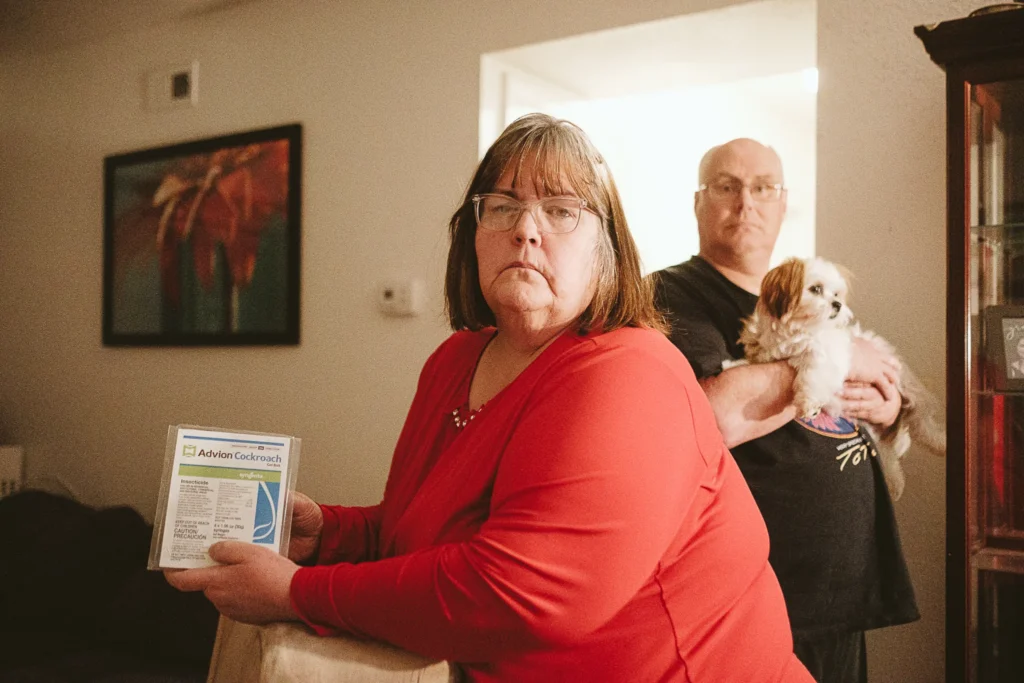
Jojo and Rick Robertson raised both of their children at the Park’s Edge apartment complex in Albemarle County, Virginia. In recent years, the conditions in the complex have deteriorated rapidly. But in the state, renters have limited options to compel landlords to make repairs especially in properties that serve low-income renters. Here, Jojo holds an insecticide kit that she bought in an attempt to deal with a roach infestation in the family’s apartment. (Photo by Ézé Amos/Charlottesville Tomorrow)
Real quick
Residents of Park’s Edge, an apartment complex in Albemarle County, have experienced poor and at times hazardous conditions in their homes for years.
Tenants have struggled to get their landlords to fix the problems, even with help from pro bono attorneys.
Often a tenant’s only option is to move out. But every Park’s Edge resident we spoke with said they can’t afford to.
“My toilet is leaking and draining all over my floor. In the master bedroom, with an odor,” Park’s Edge resident Lanika Hester emailed to her property manager at 9:55 a.m. on Monday, Sept. 12, 2022.
A foul-smelling substance — maybe sewage? — was spewing from the sink in the apartment next door, she wrote. It had seeped through the walls and leaked into the hallway and the other basement-level apartments. The neighbor across the hall was trying to mop it up.
“Do you have maintenance to take care of this asap? Or a hotel you can put me in until it is taken care of?”
Chunks of what appeared to be used toilet paper and reeking brown stuff floated in at least an inch of water in the hallway and her apartment, Hester later recalled to Charlottesville Tomorrow.
Waking up to such a disgusting mess was startling, Hester said, but it wasn’t necessarily surprising. It wasn’t the first time her apartment had flooded, and it was far from the only maintenance issue she and her neighbors have faced.
Since 2020, residents of the Park’s Edge apartment complex in Albemarle County have reported electrical outlets releasing sparks; broken smoke detectors; faulty appliances; exterior dryer vents bulging with dense, dark balls of lint; mold creeping along walls and growing in ceiling tiles; improperly ventilated and irregularly cleaned HVAC closets that sent dust, dirt and mold into apartments. Residents reported tripping on broken hallway stairs and on the parking lot’s split pavement. Children were waking up to rats in their rooms.
Many of these issues were documented by attorneys and organizers with the Legal Aid Justice Center. LAJC has worked with dozens of Park’s Edge residents who faced eviction, many of whom couldn’t pay rent after losing wages during the COVID-19 pandemic. But during their meetings, residents regularly mentioned poor living conditions, said LAJC attorney Victoria Horrock.
“For everything that we verify, clients are coming in and telling us other things,” she said.
Over the past three years, Charlottesville Tomorrow interviewed seven Park’s Edge residents about their experiences living in the complex, as well as some of the attorneys and housing advocates trying to help them and their neighbors.
Those residents, attorneys and advocates asked other residents if they wanted to speak publicly. Most said they didn’t out of fear of retaliation from their landlord or property manager.
Those who did speak tell the story of a quickly deteriorating apartment complex with limited and inconsistent maintenance — even when the problems were dire.
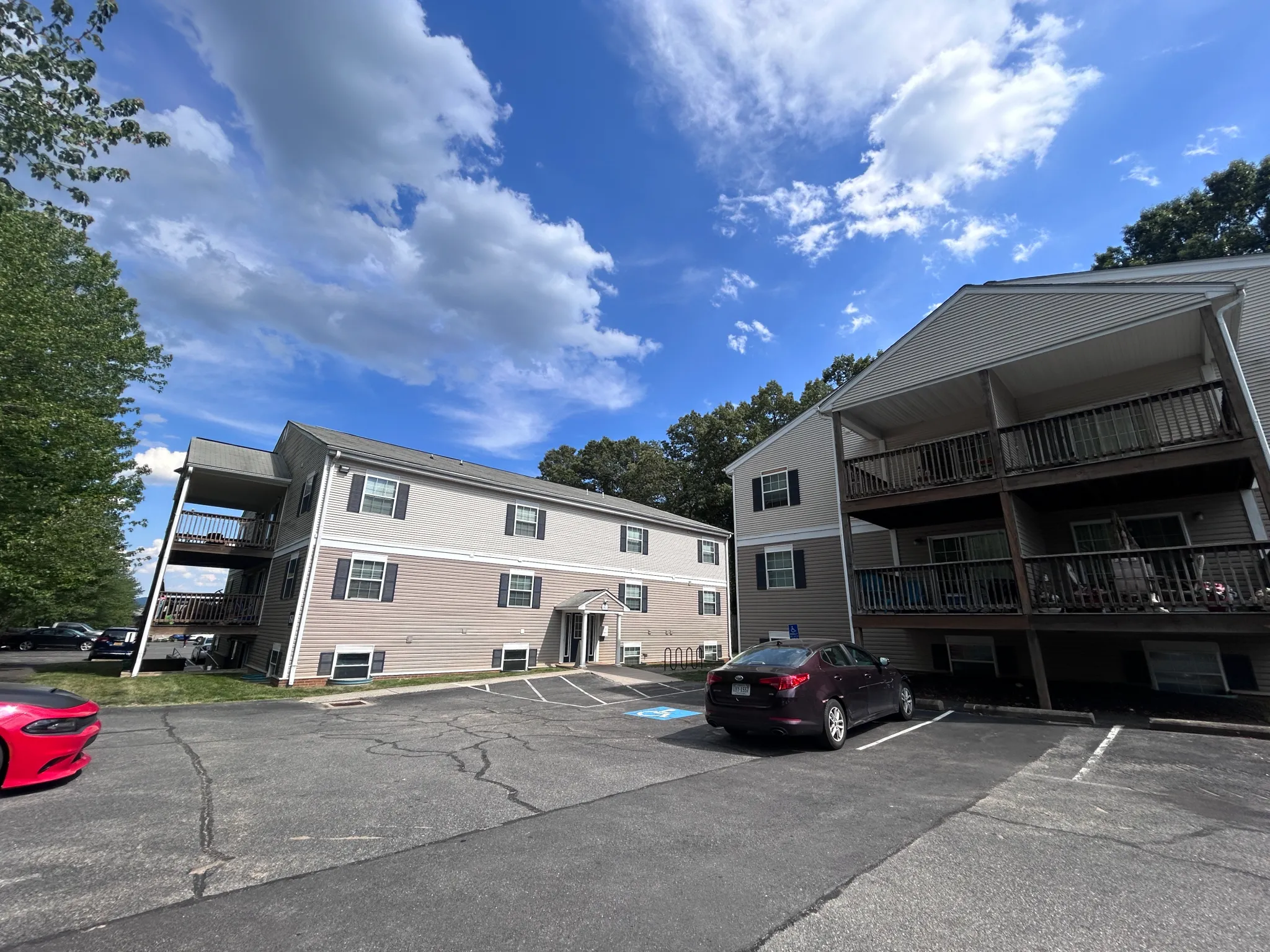
Built in 1977 and renovated in 2005, Park’s Edge is an eight-building, 96-unit apartment complex located on Whitewood Rd. in Albemarle County’s urban ring, very close to Albemarle High School. It has one-, two-, and three-bedroom apartments, all of which are relatively affordable compared to other places to live in Albemarle County.
Park’s Edge apartments are more affordable because the complex is part of a federal program called the Low-Income Housing Tax Credit program (or “LIHTC,” pronounced “lie tech”). LIHTC is a nationwide tax incentive program administered by the Internal Revenue Service and used by developers to acquire, build, or — as in Park’s Edge’s case — rehabilitate low-cost rental housing reserved specifically for low-income households.
The complex has had at least five different owners since it was built, including two different ones in the last five years, according to Albemarle County’s geographic data.
Residents say they noticed problems starting to pile up in 2020, the year Albemarle Housing Improvement Project sold the property to a company called TRC Park’s Edge LLC.
Charlottesville Tomorrow reporters made multiple calls and sent multiple emails to various individuals associated with TRC Park’s Edge LLC. No one responded. TRC Park’s Edge LLC owned the property for less than two years before selling it to RailField Realty.
Over the course of about five years, residents in several Park’s Edge buildings made different attempts — from emails and calls to legal action — to improve their living conditions. Even as conditions got worse in some cases, all said that they could not afford to move.(Photo by Erin O’Hare/Charlottesville Tomorrow)
RailField Realty responded to several emailed questions in 2024 and again in 2026, detailing the attempts it has made to address issues with the property since buying it in Sept. 2022.
In April 2024, a representative of the property management company, The Franklin Johnston Group, agreed to answer Charlottesville Tomorrow’s questions on a phone call. They did not respond to multiple messages through their website, emails and phone calls to schedule time for an interview, however. A few weeks later, the reporter received an automated email from the company marking the request “resolved.”
Over the course of about five years, residents in several Park’s Edge buildings made different attempts — from emails and calls to legal action — to improve their living conditions.
Most of the residents who spoke with Charlottesville Tomorrow were not satisfied with the responses they received, if they received them at all. Even as conditions got worse in some cases, all said that they could not afford to move. Even if they could, there are not enough affordable housing options in Albemarle County or Charlottesville for them to have any place to go. Now, they say, they’ve run out of options. They’re stuck.
Despite sparking outlets and expired fire extinguishers, residents say their landlords ‘just don’t care’
Jojo and Rick Robertson, who have lived for more than 12 years on the third floor of the same Park’s Edge building where Lanika Hester lives with her daughter, have documented a slew of issues in their family’s three-bedroom unit, which smells vaguely of cinnamon. Jojo makes homemade cinnamon air fresheners because it relaxes her and because it covers the mildew odor that permeates the entire building.
Sitting in their living room one January evening in 2024 with their dog, Coco, the Robertsons rattled off a list of things wrong with their apartment — it was clear they’d done this before. They pulled up photo after photo on their phones to show exactly what they were talking about. Jojo regularly stopped to take deep breaths before continuing.
“They just don’t care,” Jojo said repeatedly, shaking her head. “They just don’t care.”
To start, the Robertsons have been afraid to drink or cook with their tap water — it’s been brown or smelly several times, they said. And then there’s what’s happened downstairs with the putrid floods of what smelled like sewage. A few years ago, the Robertsons bought a water cooler and started to pay to have water delivered.
Jojo has photos of roaches the size of Sweet ‘n’ Low packets, and of an enormous ball of lint bulging from an exterior vent, one that the couple can’t reach themselves. They constantly worry the lint ball could catch on fire.
Over the past few years, Jojo and Rick Robertson documented issues in their three-bedroom Park’s Edge apartment and shared them with their landlords. They shared dozens of images with Charlottesville Tomorrow, documenting carpets in disrepair, cockroach infestations, mold and more. (Photos courtesy of Jojo and Rick Robertson)
The Robertsons have worried about fires quite a bit, actually. Their outlets sometimes sparked when they plugged in appliances. At least one of their outlets has caught fire. Sometimes, their smoke detectors haven’t worked.
In the fall of 2023, the Robertsons were sitting in their living room when they heard banging on their door.
“There’s a fire, there’s a fire! I don’t know what to do!” yelled the teenage boy who lives in the apartment below theirs. The garbage disposal was ablaze.
One neighbor told him to grab the fire extinguisher while another called the fire department.
After the fire department put it out, Jojo said, they noticed the fire extinguishers were dated 2000. Most have a lifespan of about 10 years.
Jojo said it took weeks for property management to give them new extinguishers.
“We were scared shitless,” she said.
Even though one resident took legal action and got repairs, others said the condition of their buildings got worse
Looking back, many residents say they noticed living conditions in the Park’s Edge complex started to deteriorate between 2020 and 2021, around the time the COVID-19 pandemic was accelerating.
The U.S. government declared a countrywide state of emergency in mid-March 2020, and by the end of the month, then-Virginia governor Ralph Northam issued a statewide stay-at-home order.
The following month, in April 2020, Lanika Hester emailed Albemarle Housing Improvement Program, the nonprofit organization that owned the building at the time, about having the carpets in her apartment cleaned after a flood. She received a prompt reply from the community manager, who explained that certain maintenance issues were on hold due to the state of emergency. Maintenance would address emergencies, including water leaks and flooding. Non-emergency requests, however, would be documented and taken care of once the government lifted the state of emergency.
But even after the state’s stay-at-home order ended in May 2020 and public health guidance allowed for non-essential, masked work to resume, conditions in Park’s Edge apartments continued to decline.
After TRC Parks Edge LLC bought the complex in December 2020, residents’ emails and their website show that they hired The Franklin Johnston Group, a Virginia Beach-based company, to manage it.
Fifteen months after the sale, a Park’s Edge resident took TRC Park’s Edge to court over the conditions in her unit.
A Charlottesville Tomorrow reporter learned about this case while reviewing cases in Albemarle County General District Court records. The lawsuit lists more than a dozen problems, including air filters that hadn’t been replaced in over a year; leaking windows; a rotting bathroom vanity; buckling floors; electrical outlets that didn’t work; a leaky sink; and a buckling kitchen floor.
“I am optimistic that the majority of these repairs can be done in a reasonable timeframe, preferably within/or about thirty (30) days,” Central Virginia Legal Aid Society attorney Katie Allen wrote to the property manager in December 2021. However, Allen added if the repairs were not made, the tenant she represented would take legal action.
In March 2022, the tenant filed a tenant’s assertion, a legal action a tenant can take against a landlord claiming that the landlord is in violation of the lease agreement. The point is usually to pressure a landlord to fix whatever is wrong with the unit.
It seems to have worked. In August 2022, Allen moved to dismiss the case because the repairs had been made.
But, while the apartment in the lawsuit was being fixed, the issues in Hester’s apartment were accumulating.
“I have put in several requests about the issues with my apartment,” Hester wrote in an email to Franklin Johnston Group on June 2, 2022. “It takes months to get anything done, if ever at all. The latest is that I can’t use my stove without it catching fire. My apartment floods regularly. And there has been nothing done. The [bathroom] tub is stopped up again but no service yet. The ceiling that you guys took pictures of is still in the same condition. These floors have suffered from years of flooding and no attention. No one has checked for mold in this basement apartment.”
Hester received a prompt reply to that email, and it seems some repairs were made, but they weren’t the end of her problems.
Hester shared four years of email correspondence between her and various property management staff with Charlottesville Tomorrow detailing the litany of maintenance issues her apartment had during that time.
Between the spring of 2022 and spring 2024, Hester sent more than 150 emails to employees of the property management company about issues with her apartment.
Hester’s emails show that sometimes the Franklin Johnston Group’s staff responded within hours. Other times, it took weeks — and multiple follow-up emails — for someone to reply. A few times, her records show, they didn’t respond at all.
Seven residents of Park’s Edge, along with attorneys and community organizers who talked to dozens more residents, said they had similar experiences trying to improve the condition of their apartments. All of this was particularly frustrating, they said, because it wasn’t always clear who they should be communicating with.
New “community managers” would cycle through every four to six months according to Hester’s email records. Additionally, at least two other people from Franklin Johnston Group filled in when that job was vacant. On top of that, the company used two separate — but similar — email addresses to communicate with Hester.
Whenever someone left the management office and a new person came into that role, Hester said she was back at square one. She had to explain what was going on with her apartment all over again, and justify her frustration to new staff.
Hester is a friendly, upbeat person who loves herbal teas and laughs with her whole body when her cat, Pep (short for Pepita) springs around her living room.
But when she talks about her experience living at Park’s Edge, particularly the last five years, her demeanor changes. She takes sharp, shallow breaths and talks quickly, rattling off a laundry list of things wrong with her home.
When Lanika Hester’s basement apartment flooded with stinking brown water in September 2022, she notified property management right away, but didn’t receive a response until the following day. Email records show that the incident set off a series of frustrating communications with property management that lasted for over a year. Hester is pictured here, playing with the family cat, Pepita, in February 2024. (Photo by Ézé Amos/Charlottesville Tomorrow)
The worst of the maintenance issues in Hester’s apartment at Park’s Edge started Sept. 12, 2022. She woke up that morning to a flood that she said smelled “old, mildewy and poopy.” She emailed property management about it right away, but by the following morning, nothing had been done.
“Sewage has flooded my apartment and they have yet to fix it. It’s madness here,” Hester wrote in an email to an eviction prevention case manager at Piedmont Housing Alliance’s Financial Opportunity Center the next morning. (Hester said she was struggling to keep up with rent after losing one of her two jobs, and at that point, PHA was no longer involved in the management of the property.)
Someone at Franklin Johnston Group replied to Hester on Sept. 13 at 10:56 a.m., about 25 hours after she first emailed them. The company cycled through at least a dozen on-site property managers over about four years, most of whom Charlottesville Tomorrow could not find contact information for after they left the property.
“Is your toilet still leaking? Is there water all on the floor still?” the property manager at the time wrote.
The toilet had stopped leaking, Hester replied. But the apartment was still soaked with foul smelling water.
Hester had to go to work, but she said someone told her they would clean the place. When she returned home, it didn’t appear clean.
“It smells so bad. Is there any way the office can pay for a hotel or refund hotel fees until this particular issue is resolved?” Hester wrote at 3:54 p.m. “The stuff in the tub hasn’t been cleaned. The laundry room, none of it is clean — all covered in the sewage that spewed. They said they did the carpet but the place smells horrid.”
Someone at Franklin Johnston Group replied that professional cleaners could come by the following morning, 48 hours after the flood.
The email did not acknowledge her request for a hotel.
Hester was concerned about what was in the water that soaked her carpet, floors, and some of her belongings and — unable to stand the putrid smell of it — paid to stay in a hotel for a few nights with her daughter.
Hester asked the property manager by email to pay for the hotel a few more times. Someone wrote back about a week later: “If you have renters insurance, I would strongly recommend reaching out to them as they may be able to help out with the refund for a hotel.”
Hester didn’t have rental insurance.
One resident is offered to exit her lease, but she can’t afford to
Hester was still emailing the property manager about the smell on Sept. 19, about a week after the flood, and days after a cleaning crew came and went.
“You can smell later at 3:15 when I’m home if you are available,” she wrote.
Eventually, the Franklin Johnston Group decided to just replace the carpet. They scheduled the work for Sept. 29, two weeks after the flood.
But that created an entirely new dilemma.
As the carpet replacement date neared, the Franklin Johnston Group told Hester that she had to move all her belongings out of her apartment in order for the work to be done. Hester panicked.
She barely had the money for the hotel stay, and she couldn’t afford to pay movers. She would have to take time off work to move things, and that meant lost wages. Plus, she didn’t have anywhere to move her stuff.
Hester asked management if she could move her things from room to room as the crew removed the old carpet and installed the new. She asked if someone could help her. The flood wasn’t her fault.
No, they couldn’t have anyone help due to liability issues, management wrote. They couldn’t answer for the carpet crew. And no, they wouldn’t put her in touch with them.
“Just to clarify on this email thread your carpet is being replaced due to age and how long you have been in the apartment,” the Franklin Johnston Group told Hester on Sept. 26. The email did not mention the flood.
Whenever Hester asked a question about the replacement process, management referred her to the agreement she signed for the carpet replacement. Among other things, the contract stipulated that all of her furniture must be moved in order for the carpet to be installed. If she didn’t have her apartment in the right order, they wouldn’t replace the carpet and Hester would be charged a fee.
Hester sent a final email a few days before the appointment with a few more questions.
“If this is an inconvenience,” management replied, “then you will have the choice to cancel your appointment.”
That is not what Hester wanted, she wrote. She only wanted to be prepared.
“We have gone over this with you,” an employee of the Franklin Johnston Group replied. “We cannot help unforeseen circumstances, all we can do is take care of it immediately, which we did. We are doing everything we can to rectify and remedy this situation. If you are still unhappy, then I will let you out of your lease with a 60-day notice.”
Hester couldn’t afford to move out. She did not have the money to pay movers, or to pay first and last month’s rent and a security deposit, likely thousands of dollars, for a new apartment. She wrote back that she did not want to cancel the appointment. Her apartment still smelled.
Hester and other residents say they never learned why their apartments flooded with sewage. But it wasn’t the last time it happened.
About a year and a half later, in mid-2024, another basement apartment at Park’s Edge flooded, this time in a different building in the complex.
Brittney, who has lived at Park’s Edge for about a decade, first with her mother and then on her own, told a story that mirrors Hester’s — mostly.
Brittney (not her real name) spoke with Charlottesville Tomorrow by phone in August 2024 on the condition that we not use her name. She said she feared losing her housing. Legally, a landlord cannot evict a tenant for speaking with a reporter about potential code violations. However, a landlord can decide at their discretion to not renew a tenant’s lease when that comes up.
Her apartment had flooded a couple of months earlier, she said. A chunky brown substance floated in the water. It stank. It inundated her hallway, her son’s bedroom and the small bathroom. She put on her rain boots to walk around inside.
“It smelled like sewage,” she said.
Property managers sent the company Roto Rooter to look at the problem, she said. The Roto Rooter employee told her the flood was caused by wipes clogging up the building’s pipes.
Management said that someone from the maintenance crew would come in after Roto Rooter to clean up the brown water, Brittney said.
“I was up until 4 in the morning waiting for people to come and fix the problem, get the water up,” she said. “But nobody came.”
By the time a maintenance worker knocked at her door the following morning, she’d already mopped up the stinking mess herself. But worse than all that, she said, has been the rats.
“I can deal with a lot of things, but the rats I cannot deal with.”
Park’s Edge residents said that a rat infestation made them lose hope
Rats disturbed, disgusted and eventually terrorized Park’s Edge residents between at least August 2023 and August 2024. By the end of 2024, residents were not only disappointed by how management handled it, they were feeling discouraged because they felt they had no choice but to live with the infestation.
It started sometime in summer 2023. In early September of that year, Jojo Robertson sent a text message to Charlottesville Tomorrow saying that the complex was dealing with a rat infestation. Brittney said she first noticed rats around that time, too. The rats were still around in December, when Hester emailed property management about them.
“It’s getting cold outside and I do not want them in my home,” she wrote.
None of management’s replies to Hester’s emails about rats mentioned rodents.
In January, Robertson said she heard from other residents that the Franklin Johnston Group hadn’t paid extermination bills, and so no one had come to the property to take care of the rats (or the roaches).
Charlottesville Tomorrow was unable to confirm that the property manager did not pay bills, nor did the company explain what actions they took to address the rodent problem. The Franklin Johnston Group did not respond to multiple requests for comment by email and phone from 2024 to just before publishing.
But what is clear is that trash was an issue at Park’s Edge that same month. A heap of it started to accumulate outside some of the buildings in the complex.
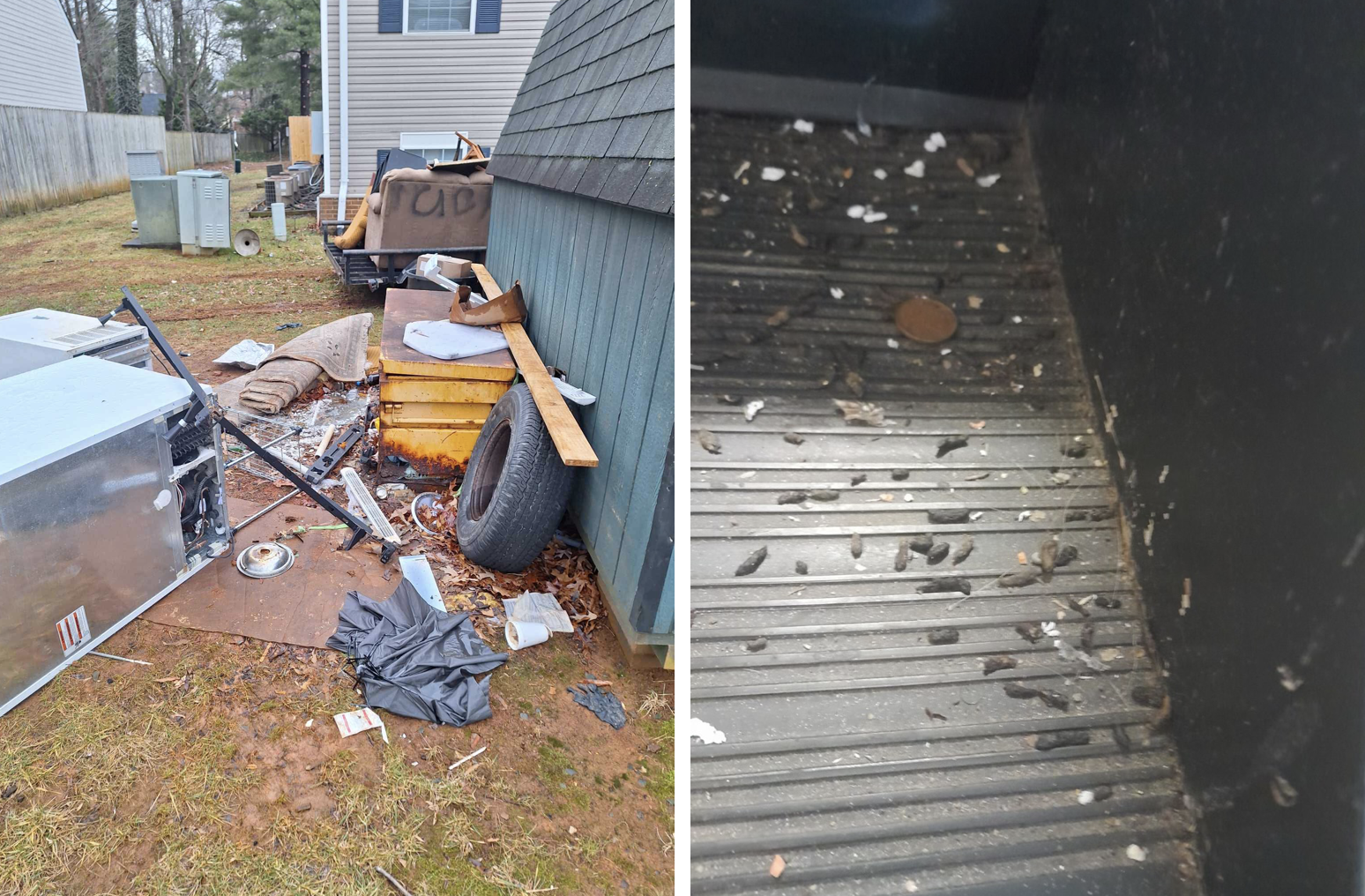
Residents chronicled maintenance issues at Park’s Edge apartment complex in Albemarle County over several years. In 2024, JoJo Robertson took an image of trash piling up (left) while residents were dealing with a rodent infestation. Another resident, who asked to remain anonymous because she worried she could lose her housing, documented rat droppings (right) under the chewed through fabric of her sofa. (Photos courtesy of Park’s Edge residents)
Robertson took photos of the discarded objects. Household appliances lay tipped over on the ground, their internal parts and wiring exposed. Someone had tossed half a bent bed frame over them. There were rolled-up rugs, chairs, a couch, a utility trailer, a rusted tool chest, and smaller bits dotting the ground.
By February, residents suspected that one of their neighbors was hoarding trash and other items inside their apartment. It is unclear whether or not the trash that accumulated outside of the complex was related.
Later that month, though, the outside trash was gone, Robertson said. Management had sent out a notice to residents asking them to tidy up their apartments and exterior areas in preparation for a visit from the owners, RailField Realty, that day.
But, not long after that visit the trash was back. This time it was appliances sitting in the yard next to an upside-down couch.
Trash is one of the things that can attract rats and foment an infestation, Denise G. Aranoff, vice president of American Pest, a national company, told Charlottesville Tomorrow in an email. The company is mentioned in emails between Hester and the property manager, but Aranoff said she was not commenting about Park’s Edge specifically.
“Trash in hallways and breezeways or around dumpsters and trash chutes will attract all sorts of pests,” Aranoff wrote.
As 2024 progressed, the rats became more pervasive, residents said. Fed up, Brittney bought her own traps. But they didn’t help in the way she’d hoped.
One night, Brittney woke to a horrible screeching sound coming from her young son’s bedroom — a rat was stuck to a glue trap. The scene petrified the three-year-old child, who refused to set foot in his bedroom afterward.
“He sleeps with me,” Brittney said. “He doesn’t even play in his room.”
That wasn’t the end of it, though. Rats got into Brittney’s clothes. They chewed up her couch.
Brittney spoke with Charlottesville Tomorrow in August 2024, about a year after she first noticed rodents around her building. By then, she estimated she’d caught about 30 rats in her apartment.
“I’m constantly catching them,” she said at the time, convinced that the rats were getting in through the HVAC system. “I’m catching, like, three a week now.”
It’s unclear how the Franklin Johnston Group was handling the situation before Charlottesville Tomorrow spoke with Brittney. But, by the time she spoke with a reporter, Brittney said she was getting weekly visits from property management, and a pest control company was also visiting the property regularly.
“They’re treating the outside and not really doing anything on the inside,” she said. “They put poison down, but then they’re crawling inside the walls and dying. We have these horrible smells, huge black flies. It’s just terrible.”
She said that property managers were coming into tenants’ apartments weekly to monitor interior conditions, checking to see if people were taking out their trash, warning them not to leave dishes in the sink, or leave laundry out.
But at the same time, she said, trash was all over the outside of the complex.
At one point, the dumpster was so full of furniture, residents had to put their trash on the ground, Brittney said.
“They say we can’t keep trash overnight, but everybody’s scared to take the trash out at night because we have rodents that run around the trash can,” Brittney said. “There’s trash all over the ground. That’s what’s causing rats. None of the maintenance team is picking it up.”
While the property management company did not respond to requests for information, the complex’s owner, RailField Realty, did respond just before this report was published.
“There was a rodent issue in 2023/2024. That issue resolved when two residents were evicted,” Todd Watkins, Railfield’s Chief Operating Officer, told Charlottesville Tomorrow in an email on May 25, 2026. “To my knowledge, the pest control contract was always in full force. We currently have monthly pest and rodent servicing at the property and have not seen a recurrence of the problem.”
But while the infestation was going on, residents began to realize that there wasn’t much they could do to force a faster response. They were learning that Virginia law makes it hard for renters to hold landlords accountable for the condition of their properties, even when there is flooding, rats and fire hazards.
The next report in the series shows what can happen when, against all odds, a resident manages to get a case against their landlord into court.