Tag: DC Bureau

  • Trump order limiting voting by mail halted by federal court

    Trump order limiting voting by mail halted by federal court

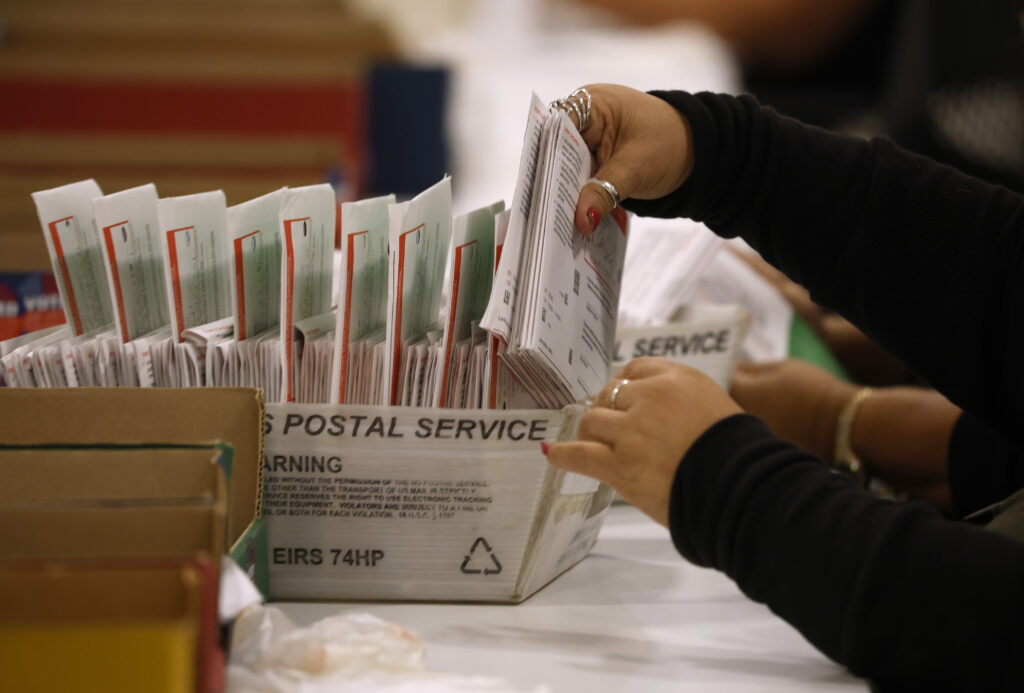
    A federal judge on Thursday blocked major portions of President Donald Trump’s executive order restricting voting by mail, finding he had exceeded his constitutional authority.

    The decision halts, at least until a nearly certain appeal is heard, efforts by the U.S. Postal Service to require states to submit the names of likely mail voters before it delivers ballots. It also stops the U.S. Department of Homeland Security from compiling lists of voting-age citizens in each state.

    U.S. District Judge Indira Talwani, an appointee of President Barack Obama in Massachusetts, is the first judge to block the March 31 executive order. State and local election officials have raised concerns that its requirements would inject chaos into preparations for the November midterm elections.

    Talwani ruled that Trump had asserted too much control over elections in several parts of the order as he directed federal officials to quickly take actions that he argues are needed to prevent noncitizen voting, which rarely occurs.

    “The Constitution does not grant the President any specific powers over elections,” Talwani wrote.

    Order overpowered states

    The executive order directed Postmaster General David Steiner to put forward a rule requiring states, at least 90 days before a federal election, notify the Postal Service whether they intended to allow ballots to be sent through the mail. States would then have to submit to USPS a list of voters planning to vote by mail at least 60 days before the election.

    Talwani wrote that the Postal Service lacks any authorization by Congress to put forward binding regulations on mail-in voting. The Constitution, she wrote, “reserves the power to determine voter eligibility to the States alone.”

    The executive order also required the Department of Homeland Security, with help from the Social Security Administration, to compile a list of voting-age U.S. citizens living in each state and then provide that information to state officials at least 60 days before each federal election. The order does not tell states how to use the data.

    The list of citizens would be drawn from naturalization and Social Security records, according to the order. It would also include data from SAVE, a powerful computer program maintained by Homeland Security that verifies citizenship by checking names against information in federal databases.

    The executive order pointed to no relevant constitutional or legal authority supporting the compilation of the citizenship lists, Talwani wrote. Trump “lacks any authority to compile voter lists for each State,” she wrote.

    A day before the decision, Steiner told a U.S. Senate committee that a proposed Postal Service rule to implement the executive order would lead to non-delivery of ballots in states that don’t provide lists of anticipated mail voters — a position condemned by Democrats.

    “Today’s decision is a very significant victory for free and fair elections and a defeat for Donald Trump’s vile efforts to make it harder for people to vote,” Senate Minority Leader Chuck Schumer, a New York Democrat, said in a statement.

    “Once again, the courts have reaffirmed that Trump’s efforts to subvert the election are patently unconstitutional.”

    White House spokesperson Abigail Jackson said in a statement that the Trump administration remains confident the executive order will be implemented by the November election.

    “The entire Trump Administration will continue lawfully enacting the agenda President Trump was elected to enact – which includes the safety and security of American elections,” Jackson said.

    Latest setback

    Trump has suffered a series of setbacks in recent days in his efforts to influence the administration of state-run elections.

    A federal appeals court on Wednesday ruled that the Department of Justice wasn’t entitled to state voter rolls. Senators also continues to rebuff the president’s attempts to pressure them into passing the SAVE America Act, which would require voters to show documents proving their citizenship.

    Talwani’s decision came in a lawsuit brought by Democratic state attorneys general. It is the second major district court ruling over the executive order, after a judge in Washington, D.C., declined to stop the order because the Trump administration hadn’t taken enough action to implement it.

    Under Thursday’s decision, federal officials must notify their employees within a week that sweeping portions of the executive order are void.

    And on Monday, a judge blocked the use of SAVE to search for noncitizen voters.
  • US Senate joins House in rebuke of Trump over his war in Iran

    US Senate joins House in rebuke of Trump over his war in Iran

    WASHINGTON — The Republican-led U.S. Senate served up a rare public check on President Donald Trump’s agenda Tuesday when it voted to approve a House-passed War Powers Resolution to end hostilities in Iran.

    Senate approval marked the first time both chambers have agreed in a rebuke of Trump over his war in Iran.

    The concurrent resolution, which passed 50-48, does not require the president’s signature and its enforceability has been a perennial topic of debate.

    The Senate’s approval occurred against the backdrop of the administration’s peace deal negotiations with Iran, which have been criticized from both sides of the aisle.

    Four Republicans joined Democrats in voting for the measure: Lisa Murkowski of Alaska; Rand Paul of Kentucky; Louisiana’s Bill Cassidy, who recently lost his primary race after Trump endorsed an opponent; and Susan Collins, who’s fighting a tough reelection campaign in Maine.

    Democrat John Fetterman of Pennsylvania voted no. Paul and Fetterman have broken ranks with their parties on several previous Iran War Powers Resolution votes.

    Republican Sens. Mitch McConnell of Kentucky, who was recently hospitalized, and Dave McCormick of Pennsylvania did not vote. McCormick was with Trump on a trip to Pennsylvania.

    Debate over impact

    Trump administration officials, including Secretary of State Marco Rubio, argue that War Powers Resolutions are not constitutional.

    The U.S. Supreme Court in 1983 ruled against the validity of congressional measures that do not require a president’s signature.

    Senate Minority Leader Chuck Schumer, D-N.Y., said Congress “stood up to Donald Trump and voted to end his costly, unnecessary, and devastating war with Iran.”

    “Let me be clear: for the first time, this resolution has passed both chambers of Congress and does not require the President’s signature. The message from the only branch of government with the power to declare war is unmistakable: the Trump administration must withdraw U.S. forces from hostilities in Iran. The pressure on Republicans mounts,” Schumer said in a statement following the vote.

    Rep. Gregory Meeks, D-N.Y., who sponsored the original resolution that passed the House on June 3, said the measure is binding and the president “must cease all hostilities against Iran.”

    “Regardless of what President Trump says, this measure is binding under the War Powers Resolution, and I will explore all legal avenues to ensure the Executive complies with the will of Congress. Congress never authorized this failed war, and the president certainly has no authority to continue it indefinitely without our consent as the Constitution demands,” Meeks, the top Democrat on the House Committee on Foreign Affairs, said in a statement.

    The White House declined to comment on the vote.

    Negotiations continue

    Administration officials, who maintain hostilities ended in early April, are on a 60-day clock to hammer out a final agreement with Iran.

    As part of a temporary memorandum of understanding in effect during talks, the administration lifted its naval blockade of Iranian ports and economic sanctions on Iranian oil, allowing the Islamic Republic to now sell on the global market.

    The interim deal also charges Iran with demining the Strait of Hormuz and allowing tankers and cargo ships to travel unimpeded while Iran and Oman create a scheme for passage through the narrow shipping route where one-fifth of the world’s petroleum traveled prior to the war.

    Trump issued social media threats to Iran over the weekend as Iran’s new Persian Gulf Strait Authority continued to impose certain requirements for ships to pass.

    Thirteen American service members died in the war launched by the U.S. and Israel on Feb. 28, and over 400 have been injured, according to the Pentagon. Thousands of civilians across Iran and the Gulf region were killed during the fighting.

  • When teens drive less, they don’t register to vote. Here’s how civic groups are adapting.

    When teens drive less, they don’t register to vote. Here’s how civic groups are adapting.

    American teens are driving less than in previous decades, prompting civic advocates to warn that fewer young people may register to vote.

    Yet at least one state — New Hampshire — offers insight into how civic groups can work around a lack of registration opportunities to ensure young people can register, as well as the challenges that remain.

    Since Congress passed the National Voter Registration Act in 1993, nearly all states must allow residents to register to vote at motor vehicle offices. But fewer teens are obtaining driver’s licenses today, translating into fewer trips to the local Department of Motor Vehicles and more missed chances to register.

    More than 7.5 million people ages 16 to 18 don’t have a driver’s license, according to data compiled by The Civics Center, a nonpartisan group focused on boosting youth voter registration. Three million of those youth will be old enough to vote this year and all will be eligible by 2028, the organization said in a June research report on how declines in teen driving, spurred in part by the rising cost of obtaining a license, could affect voting.

    Young people represent a large pool of potential voters for candidates ahead of the midterm elections this November and the presidential election in 2028. Still, voting advocates worry barriers to registration will keep many of them from the polls.

    “Our goal is to help people debunk these myths that it’s somehow young people’s fault that these systems aren’t working well for them,” said Laura Brill, founder and CEO of The Civics Center.

    Low registration rates

    In recent years about 60% of 18-year-olds have held driver’s licenses, according to the Federal Highway Administration. By contrast, in 1994, the year after the National Voter Registration Act was passed, about 74% had licenses.

    Even without declining visits to the DMV, registration rates among the youngest voters are low. During midterm election years, the percentage of 18-year-olds registered to vote typically remains under 30%, according to The Civics Center, compared to about 75% of Americans 45 and older.

    Some civic groups are pushing for more in-person voter registration drives, including in high schools, which may help offset the effects of fewer trips to the DMV. Without significant action, they fear registration rates will dip even lower.

    The League of Women Voters announced a partnership with The Civics Center in April to promote high school voter registration. The groups are offering state-specific training and toolkits to help members of the League, which has hundreds of chapters across the country, help students, teachers and school administrators hold registration drives.

    They also want states to provide teens more time to register before they can vote. About half of teens currently live in states that allow voter pre-registration at 16 or earlier, according to The Civics Center.

    These states include California, Colorado, Delaware, Florida, Illinois, Louisiana, Maine, Maryland, Massachusetts, Michigan, Minnesota, New York, North Carolina, Oregon, Rhode Island, Utah, Virginia and Washington.

    “Young people have a very short window of opportunity,” said Jeanette Senecal, chief of civic learning and impact at the League of Women Voters. “So when we increase that window of opportunity to allow for preregistration at 16 and 17, there’s a much longer kind of runway in order for us to get them registered to vote for that first election.”

    The focus on voter registration drives reflects, in part, an acknowledgement that online voter registration isn’t a panacea for fewer in-person DMV visits. Thirty-six states either offer no online voter registration option or allow voter registration only with a driver’s license or state-issued identification, according to information compiled by The Civics Center.

    “Paper forms, typically you only need a Social Security number and not a driver’s license. That’s one of the reasons that in-person efforts can be so effective,” Brill said.

    SAVE America Act

    Voter registration drives are under threat, however. President Donald Trump’s signature election legislation, the SAVE America Act, would effectively prohibit drives held by third-party organizations like the League of Women Voters because it would require individuals to present documents proving their citizenship, such as a passport or birth certificate, to government officials in person to register to vote.

    The bill has stalled in the U.S. Senate amid opposition from Democrats and a handful of Republican senators. Trump is still urging lawmakers to pass the measure and posted on social media recently that he opposes unrelated foreign surveillance legislation unless it also includes the SAVE America Act.

    As of late 2024, 24 states and the District of Columbia placed no restrictions on third-party voter registration drives, according to the Movement Advancement Project, a Colorado-based think tank. An additional 24 states impose some limits, while Wyoming and New Hampshire prohibit them.

    What worked in New Hampshire

    Because of its voter laws in the early 1990s, New Hampshire is one of six states exempt from the National Voter Registration Act, or NVRA, along with Idaho, Minnesota, North Dakota, Wisconsin, and Wyoming. The exemption means New Hampshire isn’t required to offer voter registration at motor vehicle offices.

    In New Hampshire, everyone — teens and older adults alike — registers in person with election officials and can also register at the polls on Election Day.

    Open Democracy, a New Hampshire voting rights group, has spent several years working to improve the registration rate among 18-year-olds.

    The organization hired an employee focused on high school voter registration and held 41 high school voter registration drives in 2024, said Olivia Zink, the group’s executive director. To hold the drives, it had to assure election officials were present to accept paperwork.

    In December 2023, an election off year, just 9% of New Hampshire 18-year-olds were registered. After the November 2024 election, nearly 64% of 18-year-olds were registered, according to data compiled by The Civics Center. Zink acknowledged that the presidential election was a major motivator, but she emphasized the importance of registering students every year.

    State laws can play a major role. Registrations plummeted last year, Zink said, after state lawmakers removed the ability of residents to sign an affidavit as proof of citizenship. She attributed the drop to students not regularly carrying their birth certificates or other documents proving citizenship with them.

    “Even with education and posters that are hung up at school and announcements and letters home to parents — we still saw so many fewer students register to vote in 2025 due to that law,” Zink said.

    In May, a federal judge blocked the New Hampshire law after a coalition of voting rights groups, including Open Democracy, challenged the measure.

    As part of her decision, Judge Samantha Elliott, a Biden appointee, found that Open Democracy registered fewer students in 2025 compared to 2023, even though the organization at that time didn’t have a full-time staff member dedicated to high school registration.

    Zink said that even in the first few weeks since the judge’s decision, she had heard of high school students once again registering by signing affidavits.

    Despite persistent barriers, Senecal cast the work of registering young people as critical. Each time someone votes, they’re more likely to vote again, she said.

    “So the earlier we can engage those people, we really help create these lifetime habits of voting,” Senecal said.

  • As Trump’s immigration dragnet grows, so do complaints of detention center conditions

    As Trump’s immigration dragnet grows, so do complaints of detention center conditions

    WASHINGTON — When the overhead lights turn off at the Farmville Detention Center in Virginia, it not only means that night has arrived for Aliaksei Scharbachenia, but that panic attacks will soon follow.

    The attacks, which started after his detention began last August, he said, have only grown worse, stemming from the fear that he will be returned to his country of Belarus and face persecution due to his opposition to the authoritarian government.

    “With the panic attacks, I was able to take care of myself before,” he said in Russian. “But now it’s kind of getting worse, so I really need some medication, which will help me.”

    States Newsroom interviewed Scharbachenia by video with the help of an interpreter.

    As the Trump administration increases the scale of its immigrant detention program, now up to 68,000 immigrants in custody, reports have surfaced of inhumane conditions and inadequate medical care at U.S. Immigration and Customs Enforcement detention facilities like the one housing Scharbachenia. Congress recently boosted funding for immigration enforcement by $70 billion over three years, through the end of President Donald Trump’s term.

    ICE acknowledged receiving, but did not respond to, a detailed list of questions from States Newsroom regarding Scharbachenia’s treatment at Farmville.

    Ailments ignored

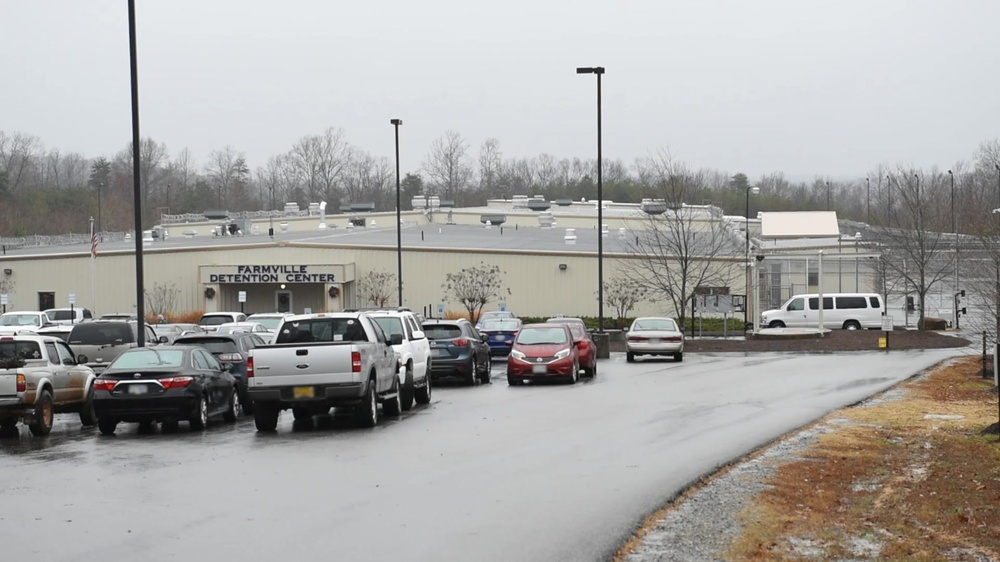
    Farmville 2010

    The front entrance to the ICE Farmville Detention Center in 2010. (Photo by Paul Caffrey/ICE)

    The nightly panic attacks, and the lack of medication to treat them, are not the only health issues that 37-year-old Scharbachenia said he has brought to medical staff at the Virginia facility.

    He’s lost feeling in his right pinky and ring fingers, which he attributes to an-egg sized mass that developed on the back of his biceps during his 11-month detention. The few items that he purchased at the center – earplugs and a small blanket – were confiscated after he spent two weeks in solitary confinement after sharing know-your-rights information to newly arrived immigrants, he said.

    “I totally understand that’s another way of punishment to beat me, you know, so I will be quiet,” Scharbachenia said of his two weeks in solitary confinement.

    Scharbachenia told States Newsroom that on May 20, ICE agents tried to deport him to Belarus, despite his active legal petition challenging his detention. He said he was eventually placed on a deportation flight back to the United States from Turkey, his hands and feet bound for the nine-hour journey, and returned to the Farmville detention.

    States Newsroom could not independently verify the May 20 deportation attempt, and ICE did not respond to questions about it.

    Poor conditions at multiple facilities

    Scharbachenia’s complaints fit a pattern of reports from independent government inspectors that have found unsafe conditions and inadequate medical care provided to immigrants detained in facilities in Texas and Louisiana.

    A recent report from the Department of Homeland Security’s internal watchdog found a detention center in Louisiana failed to ensure sanitary conditions, properly store perishable food, report use-of-force incidents and maintain medical records of detainees.

    Congress this month passed the three-year, $70 billion immigration enforcement package that contains no restraints on ICE activities. The tens of billions in funding is on top of roughly $170 billion provided to DHS last year for detention and deportations.

    Democratic lawmakers conducting oversight visits at some facilities have raised concerns about poor conditions and lack of medical care provided.

    U.S. Rep. Adriano Espaillat, a New York Democrat who chairs the Congressional Hispanic Caucus, said during a recent press conference that the additional $70 billion in funding will only continue a “detention and deportation industry that profits from human suffering.”

    New Jersey facility

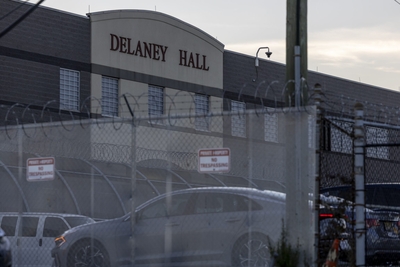
    State officials are demanding that health inspectors be given full access to the jail they say they have been unlawfully barred from entering. (Photo by Anne-Marie Caruso/New Jersey Monitor)

    Delaney Hall in New Jersey. (Photo by Anne-Marie Caruso/New Jersey Monitor)

    Civil rights groups have filed two major lawsuits charging poor and inadequate conditions at detention centers in Texas and New Jersey run by ICE and private contractors.

    In New Jersey, Sen. Andy Kim called for the Delaney Hall facility to be shut down after detained immigrants went on a hunger strike to protest their conditions. While Kim and dozens of advocates demonstrated at the facility, he was hit with pepper smoke deployed by immigration officers.

    “At Delaney Hall, we learned of unsanitary living conditions, lack of adequate medical care and unhealthy food,” House Minority Leader Hakeem Jeffries, D-N.Y., said after conducting oversight at the facility. “The situation is unacceptable. Delaney Hall must be shut down immediately.”

    In response to the criticism of poor conditions at Delaney Hall, Homeland Security Secretary Markwayne Mullin argued before lawmakers that the detention centers have higher standards than jails and prisons. He described the complaints about food as detainees wanting “ethnic food.”

    With House Democrats in the minority, the authority to make unannounced oversight visits at any federal facility that houses immigrants is one of the few tools they have. The power is codified in a 2019 appropriations law, but the Trump administration has not adhered to that policy.

    Democrats have sued to regain access in a case now before the U.S. Court of Appeals for the District of Columbia Circuit.

    Outbreaks at Farmville

    Prior to Trump’s current deportation push, lawmakers had raised concerns about issues at the detention center where Scharbachenia is held. In 2019, a mumps outbreak started at the facility, and in 2020, 93% of the detained population contracted the coronavirus.

    Roughly now three-quarters of the immigrants detained at Farmville, nearly 500, have no criminal record, according to the most recent government data. On the campaign trail, the president vowed to focus enforcement on immigrants with criminal records, but those in detention are there on a civil charge of violating U.S. immigration law.

    Virginia Democrats have continued to conduct oversight of the facility.

    U.S. Sen. Mark Warner went last August to visit Kilmar Abrego Garcia, who was transferred to Farmville after the Trump administration brought him back to the U.S. after erroneously deporting him to a brutal mega-prison in El Salvador.

    Warner also raised concerns about the facility during the coronavirus outbreak in 2020.

    During his August visit, Warner’s office said he “secured a commitment from the facility’s private operator to work with legislators to address concerns regarding food quality and access to health care.”

    Virginia Sen. Tim Kaine also visited the facility in March and his office said he “continues to track conditions there closely.”

    Scharbachenia, who is still detained at Farmville, has a pending habeas corpus petition, which is challenging his detention.

    He has a final order of removal from an immigration judge, but said if he is removed back to Belarus, the country’s special police force will be waiting for him, “along with electric shock torture and death.”

  • Lawmakers demand info on Trump use of national park fees to pay for D.C. repairs

    Lawmakers demand info on Trump use of national park fees to pay for D.C. repairs

    WASHINGTON — U.S. House and Senate Democrats, mostly from Western states, are demanding transparency from the Interior Department after media reports revealed the Trump administration redirected roughly $90 million in national parks fees to help fund renovations and upcoming celebratory displays in Washington, D.C.

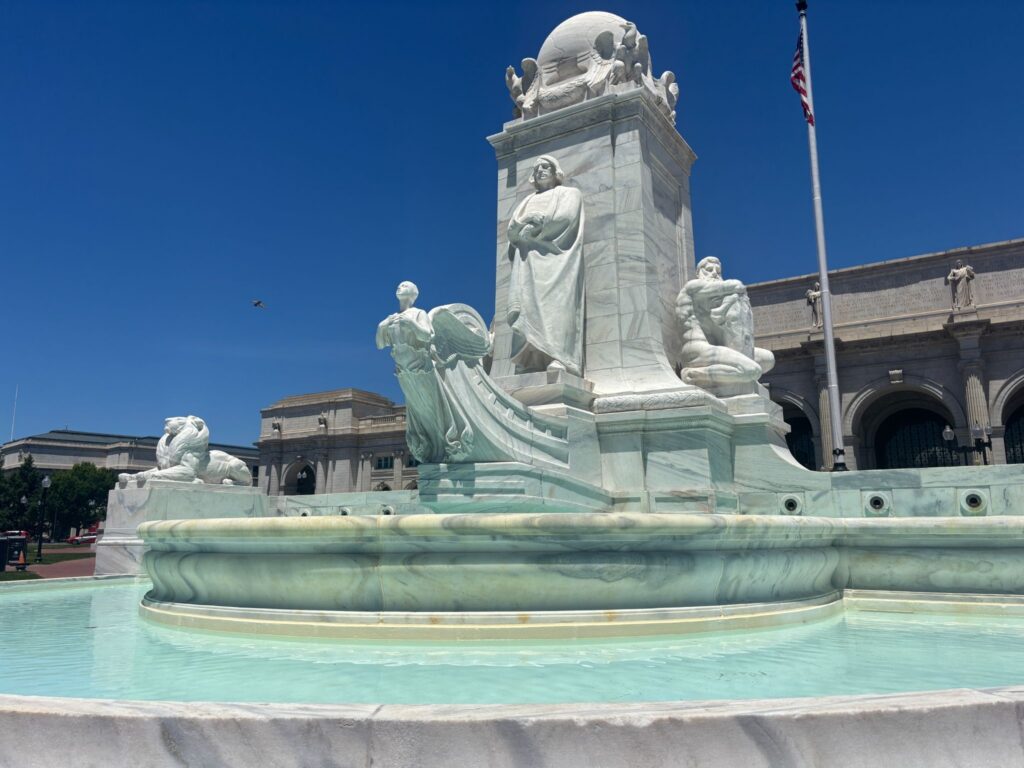
    The administration’s use of fee revenues to pay for fountain repairs, statue upgrades and fireworks shows in preparation for America’s 250th birthday on July 4 diverts money from national parks in desperate need of billions of dollars in maintenance, lawmakers wrote in two separate early-June letters to Secretary of the Interior Doug Burgum.

    “The public deserves to know how their park fees are being spent, and Congress cannot conduct appropriate oversight without basic information about these transactions,” Rep. Gabe Vasquez of New Mexico and seven other Democratic representatives wrote in their letter, dated June 12.

    A group of 11 Senate Democrats, led by Sen. Adam Schiff of California, sent a similar letter to Burgum on June 10.

    According to a DOI spokesperson, the National Park Service “has not only been focused on beautifying the district but has also been working on many deferred maintenance projects throughout the country,” pooling money from “endowment funds” and the sale of park passes.

    How the funding stream works

    The National Park Service, housed within Interior, gets a portion of its funding from entry fees and visitors’ purchase of recreational passes. Under the Federal Lands Recreation Enhancement Act, at least 80% of the fee money must go back to the national park where it is collected.

    The remaining 20% is available for overall Park Service use, a policy meant to help support parks that do not charge entry fees or only make a small amount of revenue, according to NPS. Just over 100 parks charge an entrance fee out of the more than 400 that make up the National Park System.

    The National Mall in Washington and various memorial sites are part of the crop that do not charge visitors to enter, meaning it is legal for the DOI to spend leftover revenue on projects in its own backyard.

    But the amount the department has allocated to renovations so far this year appears to greatly exceed how much it has put toward maintaining the district’s public spaces in the past, according to Tony Irish, a former Interior senior attorney under Trump and attorney under earlier presidents who is now senior counsel with the nonprofit Public Employees for Environmental Responsibility.

    Reflecting pool repair

    Multiple news outlets, including The New York Times and The Washington Post, reported NPS is using at least $60 million in fees paid by parkgoers to fund the repair of nine ornamental fountains across Washington, D.C.

    Documents showed an additional $7 million was redirected to help pay for the renovation of the Lincoln Memorial Reflecting Pool, while more will be put toward funding a $1.6 million Fourth of July fireworks display.

    The Lincoln Memorial Reflecting Pool while under renovation on May 5, 2026. (Photo by Ashley Murray/States Newsroom)

    The Lincoln Memorial Reflecting Pool while under renovation on May 5, 2026. (Photo by Ashley Murray/States Newsroom)

    “While other administrations have let the city fall into decay, President Trump has made Washington, D.C. Safe and Beautiful again and we should all be grateful,” the Interior spokesperson said in an emailed statement on June 16.

    In their letters to Burgum, lawmakers also demanded clarity on the reported use of revenue from the sale of digital park passes—called “America the Beautiful Passes”—as there is no current law that requires those funds be spent in a specific place.

    “Credible sources with direct knowledge of these matters have now reported to Congress that much, if not all, fee revenue from online America the Beautiful Passes is being used to fund the President’s ‘beautification’ projects in Washington,” they wrote.

    Along with Vasquez, the House letter was signed by Reps. Sarah Elfreth of Maryland, Darren Soto of Florida, Adelita Grijalva of Arizona, Dina Titus and Susie Lee of Nevada, Joe Neguse of Colorado and Jill Tokuda of Hawaii.

    Joining Schiff in signing the Senate letter were Sens. Martin Heinrich and Ben Luján of New Mexico, Angus King of Maine, Kirsten Gillibrand of New York, Ron Wyden and Jeffrey Merkley of Oregon, Edward Markey of Massachusetts, Jack Reed of Rhode Island and Michael Bennet and John Hickenlooper of Colorado.

    Delayed park maintenance

    Many critics are pushing back against the Trump administration for not channeling fee funds back into the national parks that need them, including popular travel destinations such as Grand Teton and Yellowstone.

    “Last month, I was in Joshua Tree exploring one of our beautiful national parks and was again reminded what a treasured legacy these lands represent,” said Schiff in a June 17 statement to States Newsroom.

    “This is just the latest scheme by the President to put himself before the American people, and it will have devastating impacts on parks that millions of people visit every year,” he added.

    The National Park System is backlogged with about $24 billion worth of repairs to buildings and infrastructure, according to NPS.

    Vasquez said New Mexico’s Carlsbad Caverns National Park, which runs through his district, “has over $45 million in deferred maintenance” alone.

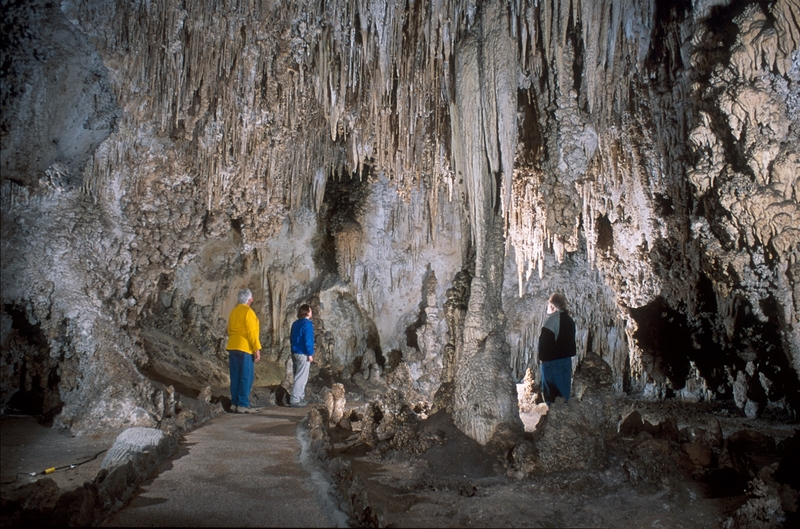
    Part of the most popular tour at Carlsbad Caverns, the King's Palace is home to massive amounts of cave formations of all shapes and sizes. (Photo by Peter Jones/National Park Service)

    Part of the most popular tour at Carlsbad Caverns, the King’s Palace is home to massive amounts of cave formations of all shapes and sizes. (Photo by Peter Jones/National Park Service)

    “The Administration is choosing to let roads, trails, and wastewater systems in the park fall into disrepair amidst the peak summer visitor season so it can paint statues gold in Washington,” he said in a June 15 statement to States Newsroom. “This is unacceptable, and I am demanding action from the Department of Interior to correct course.”

    Irish also said the DOI’s current use of fee revenues for D.C.-area renovations could lead to more money being spent in the long run because of the rush to complete some projects, like the $14 million reflecting pool. Completed just at the beginning of June, the reflecting pool has already amassed clumps of green algae.

    “Not only are we displacing higher-priority needs right now, but we’re still going to have unmet needs in the future at an additional cost to the taxpayer, the fee payers within that,” Irish said.

    Vasquez and his colleagues in their letter asked that NPS restore funding to national parks to help preserve them for future generations.

    U.S. senators went even further, including a list of detailed questions about park funding in their letter for the DOI to respond to by June 23.

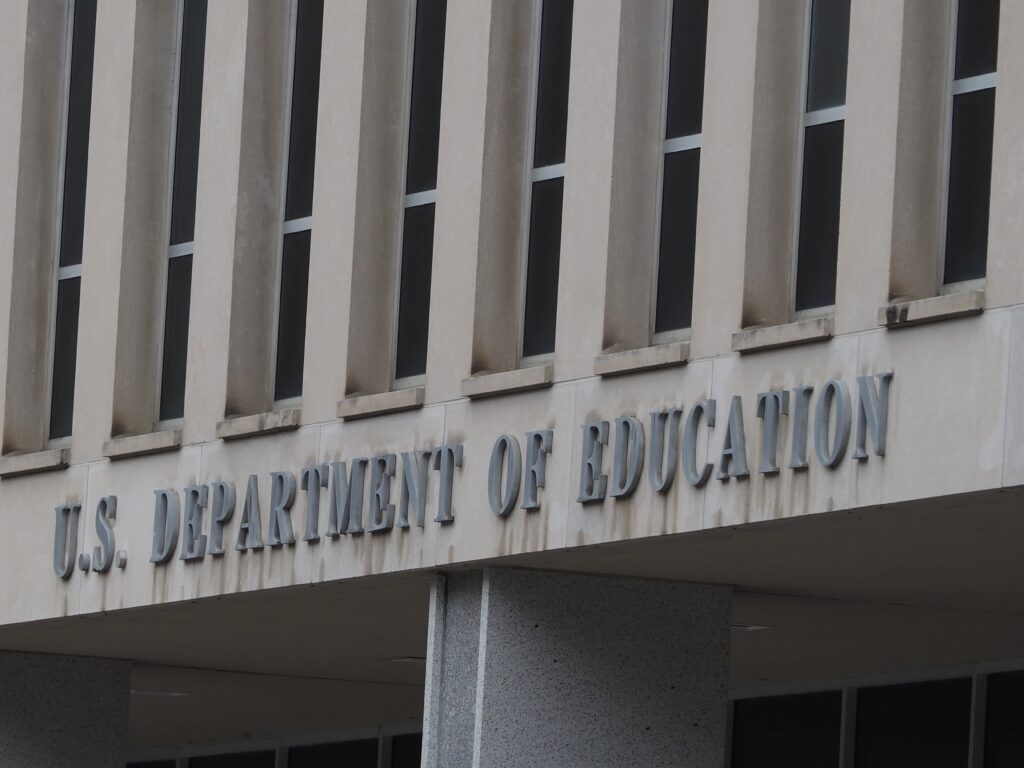
  • Special ed, civil rights to be shifted out of Trump’s shrinking Department of Education

    Special ed, civil rights to be shifted out of Trump’s shrinking Department of Education

    WASHINGTON — The U.S. Department of Education announced sweeping efforts Tuesday to outsource its special education programs and civil rights enforcement to other agencies, in another major step by President Donald Trump’s administration to dismantle the department.

    The Department of Health and Human Services will administer programs under the Education Department’s Office of Special Education and Rehabilitative Services, or OSERS, while civil rights enforcement under Education’s Office for Civil Rights, or OCR, will be transferred to the Department of Justice.

    The move follows 10 earlier interagency agreements, or IAAs, with the departments of Labor, Health and Human Services, Interior, State and Treasury that transfer several of Education’s responsibilities to those agencies.

    The Education Department clarified in fact sheets that in the agreements announced Tuesday, it “will continue to perform all statutorily required duties and responsibilities.”

    “The Trump Administration has been clear: as we scale back federal micromanagement when it hinders success, we are equally committed to bolstering the efficacy of federal oversight where it is essential,” U.S. Education Secretary Linda McMahon said in a statement Tuesday.

    The administration has sought to do away with the 46-year-old department as part of Trump’s quest to return education “back to the states.” That push continues despite much of the oversight and funding of schools already occurring at the state and local levels.

    Congress created the Department of Education, and only Congress has the authority to abolish the agency.

    Special education

    On a background call with reporters, a senior department official said OSERS “will maintain its independent statutory functions without interruption to vigorously enforce compliance with all of OSERS programs.”

    OSERS is responsible for administering the Individuals with Disabilities Education Act, or IDEA, which guarantees a free public education for students with disabilities. The umbrella unit OSERS includes the Office of the Assistant Secretary, Office of Special Education Programs and the Rehabilitation Services Administration.

    The official added that “students will not lose any rights, including their right to a free appropriate public education,” adding that “no agreement can alter the rights that students with disabilities are afforded under federal law.”

    “In coordination with and at the direction of OSERS, HHS will support meaningful stakeholder outreach; grant administration; enforcement, compliance, and monitoring activities; annual performance determinations and assessments; collection, reporting, and analyzing of data for monitoring compliance; and drawdowns of Federal funds,” according to a fact sheet.

    Civil rights oversight

    Meanwhile, Education’s agreement with the DOJ is intended to “support and bolster the federal government’s enforcement of federal civil rights laws,” a senior department official said.

    The Education Department’s Office for Civil Rights, or OCR, is tasked with investigating civil rights complaints from students and families.

    Under the agreement, “OCR will utilize the Civil Rights Division to evaluate, investigate and resolve complaints filed under the laws enforced by OCR,” the official said.

    The official also stressed that under the interagency agreement, OCR “retains management and leadership of OCR in accordance with federal law.”

    Education will also partner with the DOJ on student privacy protection, in which the Justice Department will “review complaints alleging privacy act violations, conduct necessary investigations and recommend potential resolutions,” per a fact sheet.

    In another agreement, the DOJ will “provide technical assistance” in training and advisory services regarding the desegregation of public schools, according to a fact sheet.

    ‘This isn’t efficiency — it’s chaos’

    The announcement sparked fierce condemnation from Democratic members of Congress, labor unions and advocacy groups Tuesday.

    Rachel Gittleman, president of American Federation of Government Employees Local 252, the union representing Education Department workers, said the interagency agreements regarding special ed programs and civil rights enforcement “will leave our most vulnerable students and families who have been shut out of our education system without the services they need and without protection when they face discrimination,” in a Tuesday statement.

    “This isn’t efficiency — it’s chaos,” Gittleman added. “Secretary McMahon is yet again targeting historically underserved students, eroding public trust, and sowing dysfunction for the federal employees who are trying to do their jobs on behalf of the public.”

    U.S. Sen. Patty Murray of Washington state, the top Democrat on the Senate Appropriations Committee, said that “instead of helping kids get a great education, this administration is spending its time, energy, and taxpayer resources fixated on where employees sit and illegally trying to shutter the Department of Education,” in a Tuesday statement.

    “It’s an outrageous betrayal that undoes decades of hard-won progress for students,” Murray added. “More kids with disabilities will be denied the education they are entitled to by law, and more college students who were harassed or assaulted will go without the justice they are owed.”

    Randi Weingarten, president of the American Federation of Teachers, one of the largest teachers unions in the country, said the decision “will have dire, real-world consequences.”

    “Congress — the only body that can legally take such actions — has refused to follow the whims of the White House when it comes to abolishing the Education Department,” Weingarten said. “And parents, educators, students, and the disability and civil rights communities are rising up — and will fight in every way possible to reverse this in the courts, at the ballot box and in the court of public opinion.”

  • Ceasefire reached with Iran, ending hostilities and opening Strait of Hormuz

    Ceasefire reached with Iran, ending hostilities and opening Strait of Hormuz

    WASHINGTON — President Donald Trump said Monday he had signed a ceasefire with Iran, moving the two countries one step closer to ending the war that began in February.

    Trump, speaking from the G7 conference in Europe, said the memorandum of understanding ensures Iran cannot possess a nuclear weapon and clears the way for ships to move through the Strait of Hormuz without paying a toll.

    Trump added he would like the U.S. and Iran to develop a more collegial diplomatic relation in the months and years ahead as additional details of the agreement are worked out.

    “Hopefully it’s going to be a good relationship and we’re going to get along,” he said. “And if we don’t, we go back to where we started but I don’t think that’s going to be necessary.”

    Trump said he expects the memorandum of understanding to pave the way for economic sanctions relief subject to several conditions. That document should be released publicly sometime after Friday, when Vice President JD Vance is scheduled to attend a ceremonial signing.

    One potential obstacle to a longer-term deal could be the ongoing Israeli war in Lebanon, which Pakistani Prime Minister Shehbaz Sharif wrote in a social media post is part of the agreement between the U.S. and Iran.

    “Both sides have declared the immediate and permanent termination of military operations on all fronts, including in Lebanon,” Sharif wrote.

    He added that a ceremonial signing event had been scheduled for Friday in Switzerland.

    “With the agreement now in place, mediators will facilitate a series of meetings this week,” Sharif wrote. “These pre-implementation discussions will lay the foundation for the technical talks and the official signing ceremony.”

    Trump said from the G7 conference that he would look into ways to end Israel’s war in Lebanon, but didn’t say that is part of the United States’ agreement with Iran.

    “We do want to see if we can straighten out the Lebanon thing because it just seems to just never end,” Trump said. “And that’s a mini version of what we were doing, but it should not be tough. So, Hezbollah we have to have a little talk with them.”

    Israel not part of agreement

    Israeli Prime Minister Benjamin Netanyahu said a couple hours after Trump spoke that he didn’t plan to withdraw troops from Gaza, Lebanon or Syria.

    “I’d like to clarify, we will stay there in the security zone as long as it takes in order to protect our country,” he said, according to a translator.

    Netanyahu added during his brief remarks that he believed the joint military campaign against Iran prevented that country from developing a nuclear weapon.

    “The most important thing is that we saved the state of Israel from clear and present nuclear danger because Iran was running toward it,” he said.

    But Netanyahu indicated his country’s military would not pull back in the days or months ahead, saying “the struggle has not finished yet.”

    “Today after we achieved all of that, there are those who want to belittle it and cancel these achievements and I’m telling you we are about to achieve many more great things and to eliminate threats,” Netanyahu said.

    The remarks were somewhat different from those posted earlier in the day by the Israeli minister of national security who appeared to oppose the agreement between the U.S. and Iran.

    “Trump’s agreement does not bind us,” Itamar Ben-Gvir wrote in a social media post. “Israel is not subject to the United States, and we are an independent and sovereign nation!”

    Israel and the United States began the war in Iran together, but the Israeli military has also struck targets and taken territory inside Lebanon during the past few months.

    Framework for peace

    Trump’s comments came just after two senior U.S. officials, who did not wish to be identified by name, told reporters on a call organized by the White House that Vance and Iran’s parliamentary Speaker Mohammad-Bagher Ghalibaf also signed the MOU.

    That document, one official said, creates a framework for how both countries will operate during the next few months as talks over some of the more complicated aspects continue.

    “The basic way it works is the more that the Iranians are willing to work with us on their nuclear program, on verifying that they’re not building a nuclear weapon, on not funding radicalism and terrorism in the region, the more that they’re going to be welcomed into the world economy through a combination of sanctions relief and other economic measures,” the official said.

    That official said it would take some time for oil tankers and other ships to operate in the Strait of Hormuz the way they did before the war due to the mines Iran placed in those waters during the past few months.

    “Some crews are ready to go now, and in fact, have been going over the last couple of weeks,” the official said. “Some crews want to see a little bit more stability for the next couple of days, maybe the next couple of weeks. But you will see a significant increase in traffic in the Strait of Hormuz.”

    The official noted the relationships built between negotiators from both countries could lead to a new phase of diplomatic relations that hasn’t occurred since before the Iranian revolution in the late 1970s.

    “One of the really cool things and interesting things about this entire process is that we actually have a direct relationship with a number of people at the highest levels of the Iranian government,” the official said. “That really hasn’t happened in 47 years of our relationship with Iran. And I think it’s one of the reasons why we’ve made significant progress and understood, you know, where they’re willing to give and where we still have some wood to chop.”

    The official said the heightened U.S. military presence will remain in the region as negotiations take place over how exactly inspectors can ensure Iran doesn’t try to rebuild its nuclear program.

    “The agreement contemplates the reduction of military forces in the region upon the agreement of a final deal, which again is the agreement that we assume we can make, so long as the Iranians make some concessions and give up some of their activities and some of their nuclear program,” the official said.

    Sanctions and Iran nuclear program

    The United States, so far, has not unfrozen any seized Iranian assets or lifted any sanctions, though that will likely change in the months ahead.

    “The way that I think about this is, Iran’s nuclear weapons program has been systematically destroyed. In order to rebuild it, they need a lot of money, and this deal really has two pathways,” the official said.

    “Option one for Iran is they don’t get any money, and so they don’t have the resources to rebuild their defense industrial base or the nuclear weapons program,” the official added. “Option two is they are invited into the world economy with all the prosperity that comes along with it, but only if they provide us the enforcement and verification mechanism to ensure they’re not going to rebuild that nuclear weapon.”

    The second official on the call gave a faster timeline for releasing text of the memorandum of understanding than the president, saying it would be shared publicly within 24 to 48 hours.

    “You’ll see in the MOU, we discussed the possibility of releasing frozen funds, sanctions relief, you know, a big $300 billion fund to rebuild their country,” the second official said. “And all of these things are going to be tied to performance.”

    That second official added this is “just the first MOU” and that negotiators from the U.S. and Iran are going to begin “technical discussions later this week.”

    The second official said that Israel withdrawing its troops from Lebanon “was not a condition” of the current deal between the U.S. and Iran.

    “The deal is a ceasefire. And it will not be a one-way ceasefire, meaning that if Iran is not able to control Hezbollah, and if they attack Israeli positions or Israeli towns, Israel will have the right to defend themselves and respond,” the second official said.

    There is hope within the Trump administration, the official said, that talks between Israel, Lebanon and Secretary of State Marco Rubio would also lead to a ceasefire in that war.

    “The first point in the MOU talks about how Iran and its allies and America and its allies seek to have a ceasefire and end hostilities, end the war and hopefully have a final peace that hopefully will include a lot of these proxy groups,” the second official said. “And hopefully this will help us get the Israel-Lebanon normalization and peace done properly.”

  • Judge blocks Trump’s ‘anti-weaponization’ fund until government agrees it’s been dissolved

    Judge blocks Trump’s ‘anti-weaponization’ fund until government agrees it’s been dissolved

    ALEXANDRIA, Va. — A federal judge in the Eastern District of Virginia issued a preliminary injunction Friday halting the Trump administration’s nearly $1.8 billion “anti-weaponization” fund for one week, giving the government time to sign a “clear, unambiguous” agreement that the fund is dead.

    U.S. District Judge Leonie Brinkema said from the bench the agreement must be signed by acting Attorney General Todd Blanche and Treasury Secretary Scott Bessent.

    “The balance of harms tips in the favor of the plaintiff,” said Brinkema, a Clinton administration appointee.

    Brinkema had already temporarily blocked the fund on May 29 on an emergency basis.

    The prospect that the fund would pay Trump’s supporters, including those who assaulted police officers during the Jan. 6, 2021, U.S. Capitol riot, sparked multiple lawsuits, including the filing in Virginia.

    Challengers included a former Department of Justice Jan. 6 prosecutor who was fired last year and a protester at an immigration raid last year who was charged with a felony, and has since been acquitted by a jury. The plaintiffs are represented by the legal advocacy groups Democracy Forward and Common Cause.

    The Department of Justice announced the creation of the fund, in the amount of $1.776 billion, on May 18 in exchange for President Donald Trump voluntarily dropping his $10 billion lawsuit against the IRS for the leak of his tax returns nearly seven years ago.

    Issue not moot, judge says

    During a hearing that lasted less than an hour, Brinkema swiftly called Andrew Block, senior counsel to the U.S. associate attorney general, to speak first.

    “You’re a brave man, Mr. Block. You’re all by yourself. Frankly, you’re in the hot seat,” Brinkema said, noting that Block was the only representative for the government in the courtroom.

    Brinkema kicked off questioning by asking Block if he’d had a chance to find an answer to why Blanche has not formally rescinded the “anti-weaponization” fund in writing.

    The question had been posed to Block by U.S. District Judge Richard Leon in U.S. District Court for the District of Columbia less than 48 hours ago during a hearing for a separate lawsuit against the fund. Block, who also appeared alone before Leon, told the judge he did not know the reason Blanche had not issued a written order.

    “Do you have an answer to that question now?” Brinkema asked.

    “Your honor, I don’t. I don’t have the ability to speak to the AG,” he responded.

    As he did in federal court June 10, Block argued that Blanche testified publicly before Congress that the administration was not moving forward with the fund, and that Blanche had signed legal briefs on the matter.

    Acknowledging those arguments, Leon denied an emergency request to block the fund, saying the case appeared “moot.”

    Brinkema, however, said she does not agree with Leon’s assessment.

    Doubting whether any of Blanche’s verbal or written statements to stop the fund had been made under penalty of perjury, Brinkema said, “that means the issue, in my view, is not moot.”

    Brinkema also cited Trump’s public comments praising the fund, even after Blanche’s declaration it would not move forward.

    “When the president of the United States says he’s going to be disappointed if something doesn’t happen, that’s a pretty good indication that it (could) happen,” Brinkema said.

    “There are a lot of people out there who think this fund is up and running,” she added.

    Block responded: “People may think a lot of things.” He said “what I can tell you” is that no commissioners have been appointed to the fund to establish a claim system.

    No lawful business restrained

    Block, as he did before Judge Leon, dismissed the plaintiffs’ allegations as “what-ifs,” based on a “loose factual record that is premature.”

    Referring to the departments of Justice and Treasury, Brinkema asked, “What injury do they face if the court issues a preliminary injunction at this point?”

    Block argued any temporary order to block the fund would mean the government was being “restrained” in conducting business.

    “You think this is lawful business? This is a serious issue,” Brinkema said, adding the “only reason this fund exists” is because it’s a settlement in the president’s IRS case, which is “under severe scrutiny.”

    U.S. District Judge Kathleen Williams, in the Southern District of Florida, has asked for the government’s response by day’s end to a May 27 request from 35 former federal judges to reopen the case. The judges allege the government deceived the court by not sharing all details of the settlement.

    Blanche on Capitol Hill

    The Department of Justice declined to comment Friday.

    The department maintains the fund does not exist, based on Blanche’s June 2 statements before a House Appropriations subcommittee that the department was “not moving forward with the fund, period.”

    Skye Perryman, president and CEO of Democracy Forward, wrote in a statement the “ruling is a significant victory for the Constitution, the rule of law, and people in America.”

    “The court recognized the serious legal concerns raised by the Trump-Vance administration’s attempt to create a secretive, taxpayer-funded compensation program,” she continued. “Despite the administration’s shifting explanations about the future of the slush fund, the court’s order ensures that taxpayer dollars cannot be distributed through this unlawful scheme while the courts fully consider the serious constitutional issues at stake.”

  • Strong candidates in Alaska, Ohio seen as moving US Senate races toward Dems

    Strong candidates in Alaska, Ohio seen as moving US Senate races toward Dems

    Democrats’ prospects in a trio of key U.S. Senate races are improving, an influential elections forecaster said Thursday, though Republicans are still favored to retain control of the chamber after the midterm elections.

    Sabato’s Crystal Ball, which predicts election outcomes, moved three races — in North Carolina, Alaska and Ohio — in Democrats’ favor. After the changes, the University of Virginia-based forecaster considers four contests pure toss-ups: Alaska, Ohio, Maine and Michigan.

    Democrats would have to sweep those races, and win competitive races in which they’re favored in Georgia, New Hampshire and Minnesota, to gain control of the Senate, which Republicans now hold with a 53-47 majority.

    That’s a tall task for Democrats, but it represents the best chance the party has seen this midterm cycle.

    In North Carolina, the race to succeed retiring Republican Thom Tillis is trending toward Democrats due to “big picture political factors” such as President Donald Trump’s poor approval ratings, the tip sheet said. Former Gov. Roy Cooper, a Democrat, easily won the state’s March primary and will face former Republican National Committee Chair Michael Whatley in November.

    The party that controls the White House is typically at a disadvantage in midterm races, and Trump’s underwater favorability in North Carolina only makes that race harder for Republicans, the Crystal Ball writers said.

    The three ratings changes make “Democrats’ path to the majority clearer, but we still favor Republicans in the overall race for the Senate,” authors Kyle Kondik and J. Miles Coleman wrote.

    Proven candidates

    Two Democratic candidates who have won statewide elections in Republican-leading Ohio and Alaska buoy Democrats’ chances there.

    In the Buckeye state, former U.S. Sen. Sherrod Brown is seeking to return for a fourth term in a favorable Democratic year after Republican Bernie Moreno ousted him in a GOP-dominated cycle two years ago. Brown will face Republican Sen. Jon Husted, who has never won election to the seat but was appointed to replace now-Vice President JD Vance after the 2024 election, in the fall.

    And former U.S. Rep. Mary Peltola, who in 2022 won a special election to become the first Democrat to represent Alaska in the House in a half-century, is challenging incumbent Dan Sullivan.

    Questions in Maine, Michigan

    The forecaster did not change its toss-up rating for Maine, which is the only Republican-held Senate seat contested this year in a state Trump lost in 2024 and was considered among Democrats’ best pickup opportunities at the start of the cycle.

    Political newcomer and Marine Corps veteran Graham Platner won the June 9 Democratic primary after his strongest opponent, Gov. Janet Mills, suspended her campaign. But some experts question his strength in a general election after more personal scandals were reported between Mills’ departure and primary Election Day.

    The Crystal Ball article Thursday compared Platner to weak Republican candidates who likely cost the GOP seats in favorable election years 2010 and 2022.

    The Maine race “features an embattled Democratic nominee, veteran Graham Platner, an anti-establishment candidate who may wind up being Democrats’ answer to weak, outsider GOP nominees from the Tea Party era (and, more recently, the 2022 midterm) that cost Republicans winnable races,” they wrote.

    The authors also said Democratic candidate quality will be a key factor in Michigan’s open seat.

    The race will likely keep the toss-up label at least until the Aug. 4 primary, they said.

    Former Wayne County health director Abdul El-Sayed has led some recent surveys in the three-way Democratic race, but polls the worst against GOP nominee former Rep. Mike Rogers. U.S. Rep. Haley Stevens appears to be Democrats’ strongest general election candidate, the forecasters said.

  • Trump launches new strikes on Iran after US Army helicopter downed

    Trump launches new strikes on Iran after US Army helicopter downed

    WASHINGTON — U.S. forces launched renewed strikes on Iran late Tuesday, in response to the downing of a U.S. Apache helicopter a day earlier, according to U.S. Central Command.

    President Donald Trump ordered the operation, which began at 5 p.m. Eastern and was “a proportional response to unjustified Iranian aggression,” a social media account for U.S. Central Command posted Tuesday evening.

    Trump said earlier Tuesday the United States would retaliate after Iran shot down the helicopter late Monday over the Strait of Hormuz, and that the two American pilots aboard were unharmed.

    Trump announced the cause of the helicopter’s downing in a Truth Social post just before 1 p.m. Eastern. As of early Tuesday morning, the incident had still been under investigation, according to U.S. Central Command.

    “I have just been informed by our Great Military that last night the Iranians shot down one of our highly sophisticated Apache Helicopters while patrolling over the Strait of Hormuz. There were two pilots involved, both are safe and uninjured. Nevertheless, the United States must, of necessity, respond to this attack. Thank you for your attention to this matter! President DONALD J. TRUMP,” the president wrote.

    Despite recent exchanges of fire, the administration maintains the war, named by the Pentagon as Operation Epic Fury, is over and that an April 7 ceasefire agreement between the U.S. and Iran remains in place.

    On Sunday’s “Meet the Press” with moderator Kristen Welker of NBC News, Trump said, before abruptly walking out of the interview a short time later, “I call it a military exercise because people would rather have it called that. It’s not a big war for us.”

    The two military pilots were rescued at 7:33 p.m. Eastern time after the AH-64 Apache went down off the coast of Oman while the military was patrolling regional waters, according to U.S. Central Command.

    “The Soldiers were safely rescued within approximately two hours and are in stable condition. The cause of the incident is under investigation.

    “Rescue efforts were led by U.S. Naval Forces Central Command and the 82nd Airborne Division, with support from U.S. Air Force and Navy units including U.S. 5th Fleet’s Task Force 59,” according to the command’s statement posted on social media just after 6 a.m. Eastern.

    The U.S. continues to block traffic to and from Iranian ports, and as recently as Monday fired on an empty oil tanker in the Gulf of Oman the military said was breaking the blockade just southeast of the Strait of Hormuz.

    According to U.S. Central Command, American forces have disabled seven non-compliant vessels, redirected 134 ships that complied, and allowed 42 vessels supporting humanitarian aid to pass since initiating the blockade on April 13.

    Iran has all but choked off international shipping through the Strait of Hormuz, where one-fifth of the world’s petroleum supply traveled before the war.

    War status

    Thirteen U.S. service members have died in the conflict, which began on Feb. 28.

    The Pentagon’s tally for service members injured stands at 411 as of Tuesday. Despite the administration’s stance that the war is over, the Defense Casualty Analysis System lists one U.S. sailor as “wounded in action” in June as part of Operation Epic Fury.

    Secretary of State Marco Rubio testified last week before the House Committee on Foreign Affairs that the U.S. war in Iran was “over.”

    In response to a question from Rep. Sara Jacobs, D-Calif., about who won the war, Rubio answered, “Epic Fury is over, which is what you would consider the war.”

    The U.S. launched the conflict in conjunction with Israel, and the Israeli government’s continued bombardment of southern Lebanon has stymied further peace talks — though Trump has repeatedly claimed Iran wants to make a deal.

    Iran and Israel exchanged rocket fire Sunday into Monday for the first time since April.

    Despite a U.S.-brokered ceasefire between Israel and Lebanon in mid-April, Israel’s bombing campaign has continued in southern Lebanon, as Iran-backed Hezbollah fighters refuse to recognize the agreement.