Blog

  • State report finds 13 rural hospitals vulnerable to closure

    State report finds 13 rural hospitals vulnerable to closure

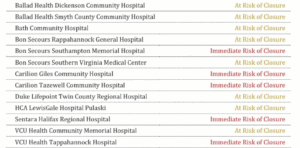
    A new report by Virginia’s Joint Commission on Health Care found 13 of Virginia’s 36 rural hospitals are at distant or immediate risk of closure, as state lawmakers and their constituents work to close healthcare access gaps in the commonwealth’s farthest-flung regions.

    The commission based its analysis on patients’ socioeconomic demographics and insurance types as well as hospitals’ financial information to determine risk levels for closure.

    King William resident Celeste Garrett’s go-to facility, VCU Health Tappahannock Hospital, is on the list. It takes her about 20 minutes to get there and she worries about an emergency if it were to close. That would make VCU’s Richmond location her closest resource, an hour or more away “depending on the traffic.”

    “Minutes matter. Seconds matter,” Franklin County resident Penny Blue said as she joined Garrett on a press call with the state’s health committee chairs Tuesday.

    After a brain aneurysm in 2021, Blue was taken 15 minutes to her nearest hospital and then air-lifted to another one in Roanoke (which otherwise would have been an hour commute).

    With rural hospitals already shoring up access in Southwest and South Side Virginia, the women expressed concern about themselves and their neighbors.

    Some hospitals’ struggles can be traced back years and include demographics and economic regional shifts. But, the current strains are attributed to recent Medicare and Medicaid reimbursement rate cuts, a reconciliation bill Congress passed last summer that makes thousands of Virginians vulnerable to losing health insurance, and Congress’ failure to renew expired Affordable Care Act credits.

    33,000 Virginians have already lost that form of insurance.

    Screenshot from a June 2026 Virginia Joint Commission on Health Care presentation.

    “(Rural hospitals) have always been living on the edge, but with H.R. 1 kicking in our hospitals across Virginia will lose about $2 billion dollars a year,” said Sen. Barbara Favola, D-Arlington, who chairs the Senate’s Education and Health Committee.

    Uninsured people are more likely to delay care until dire situations, so hospital ERs are bracing for surges of patients. Free clinics, long considered public health safety nets, are also preparing for people to rely on them more.

    “We have yet to feel the pain (of the bill) but it’s coming,” King William resident Garrett said on Tuesday’s call.

    After absorbing unpaid or under-paid care from uninsured patients, health systems will eventually negotiate insurance rates with private insurers. This may lead to higher premiums for people with private insurance down the line, health systems have warned.

    Sentara chief administrative operator Aubrey Layne said in a recent phone call that the hospital chain has become “more purposeful lately about getting the public to understand” the challenges.

    That chain has facilities around the state, with its Sentara Halifax Regional Hospital on the new at-risk list.

    Still, Virginia Hospital and Healthcare Association spokesman Julian Walker said hospitals will continue to adapt rather than close overnight or forever.

    “We will see what other measures might have to be taken to continue to sustain hospitals longterm,” he said.

    Those efforts are already playing out in some cases. Citing Congress’ bill as a contributing factor, Valley Health changed staffing contracts and trimmed services this spring. Last winter, Centra closed its labor and delivery unit at a hospital in Farmville. Last fall, Shenandoah Valley’s Augusta Health closed three clinics.

    House Health and Human Services chair Del. Rodney Willett, D-Henrico, emphasized that the federal government placed heavy burdens on state and local governments, calling it a “situation no one wants to be in.”

    The state’s pending budget has proposals to help the state comply with additional requirements for Medicaid and Supplemental Nutrition Assistance Program verifications and could support a state-level ACA subsidy to plug some holes.

    Favola and Willett said the efforts cannot fully heal what federal actions have created but are a reflection of bipartisan assistance.

    As both lawmakers have served on bipartisan health-focused committees and commissions, Willett said Congressional Republicans should be held accountable for pushing through the reconciliation bill but that going forward, both parties will have to work together to create lasting solutions.

    “This report is a nonpartisan report done by the joint commission, we all sit on that — Republicans and Democrats,” Willett said. “The facts are the facts and what’s being done to us by Washington is unconscionable.”

  • Kaine introduces legislation to address teacher shortage, equip new educators

    Kaine introduces legislation to address teacher shortage, equip new educators

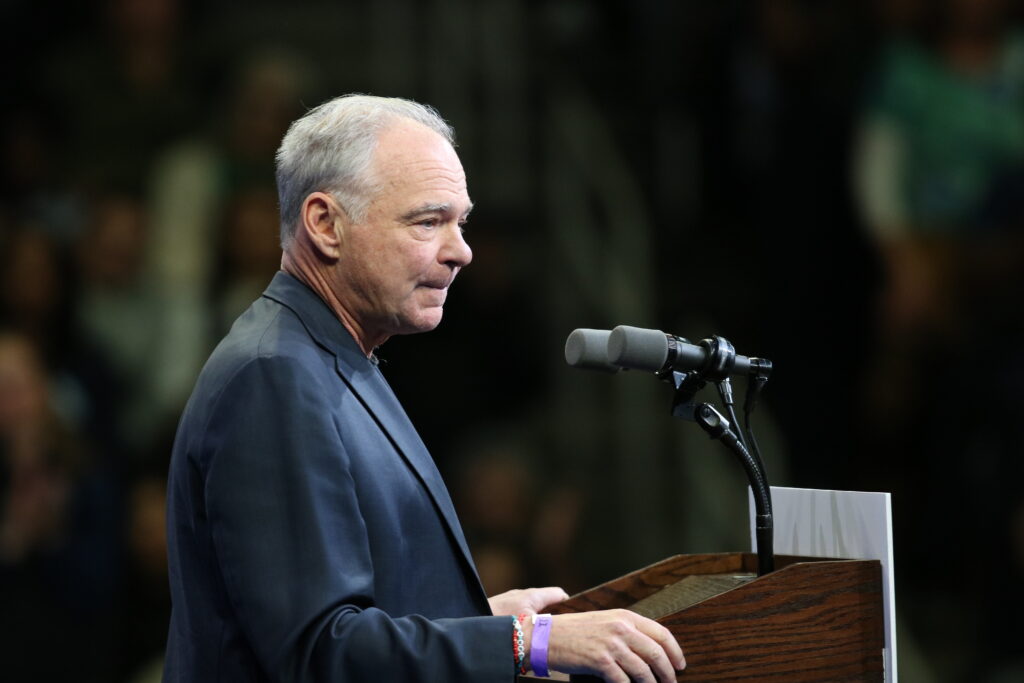
    One of Virginia’s federal lawmakers on Wednesday introduced a bill in Congress that would establish a grant program to address the national teacher shortage and better support early-career educators.

    U.S. Sen. Tim Kaine, D-Va., is leading the proposal with support from U.S. Rep. Jahana Hayes of Connecticut. Kaine told reporters on Thursday that the Better Education Through Mentoring Act would support teacher and school leader induction programs in K-12 schools.

    Kaine, who has introduced similar proposals to address teacher induction and retention in past years, said this bill is designed to reduce turnover rates.

    “It’s one solution, not the only solution, but one solution that will lead to filling up the ranks of classroom teachers,” said Kaine to reporters last week. “We have shortages virtually everywhere in the country and also a retirement bubble that’s likely to hit in the next few years that will make those shortages even more acute.”

    Teachers with the fewest years of experience have the highest turnover rate, with some moving to another school or leaving the profession, the bill reads. This can negatively impact student learning, disrupt school stability and detract from collegial relationships, collaboration and institutional knowledge.

    Schools also incur high costs to replace teachers who leave.

    Research cited in the bill text shows that comprehensive two-year mentoring and induction programs improve outcomes for educators and students, and boost teacher effectiveness, student achievement and retention.

    Students of color and those in rural areas are also likely to be taught by inexperienced teachers,the proposal highlighted, further illuminating why targeted mentoring and induction support are needed.

    Virginia’s legislature has appropriated millions in state funds to support such students, specifically in math and reading, due to low test scores.

    The proposed measure also pointed to research showing rural schools face unique barriers, including limited access to qualified mentors and greater professional isolation. Studies show induction programs for school leaders improve teacher retention and student outcomes, particularly in disadvantaged schools.

    If enacted, the proposal will promote mentorship, pairing early-career teachers with experienced mentors to help them become effective quickly. It will also include new support for teachers early in their careers and will offer new and expanded induction programs.

    “It’s both an educational effectiveness program, but also a teacher retention program,” Kaine said.

    The program will require funding, to help offset the cost of mentors’ time spent assisting other teachers. The proposal did not include an estimated amount.

    The funding will first go to the committee level for consideration before being put to a vote for approval.

  • Homeland Security retreats on plan to get data on mail-in voters

    Homeland Security retreats on plan to get data on mail-in voters

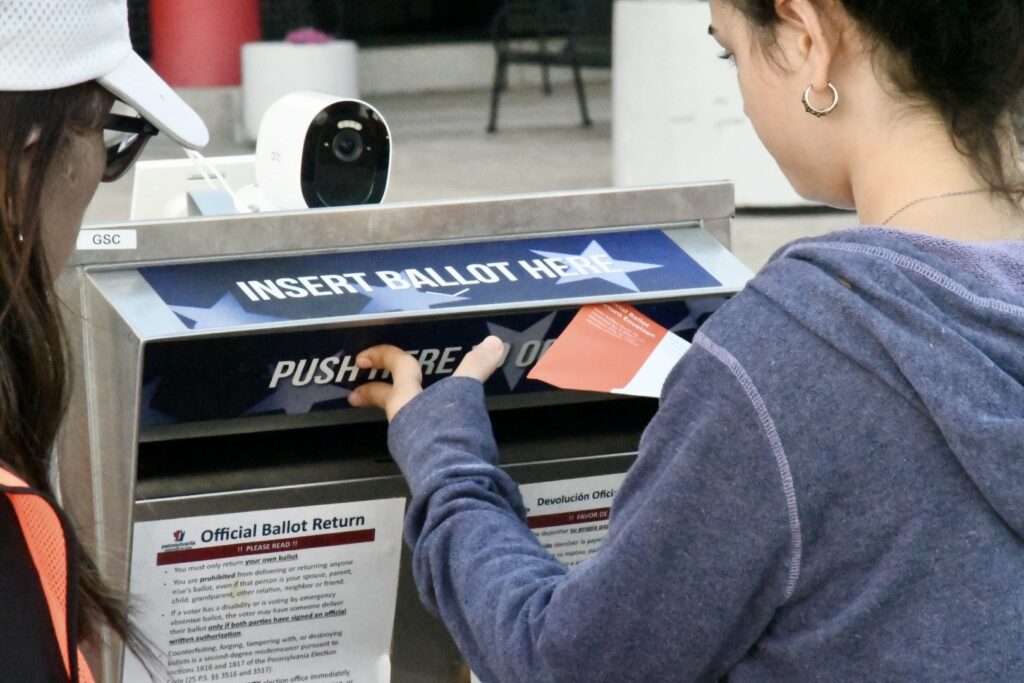
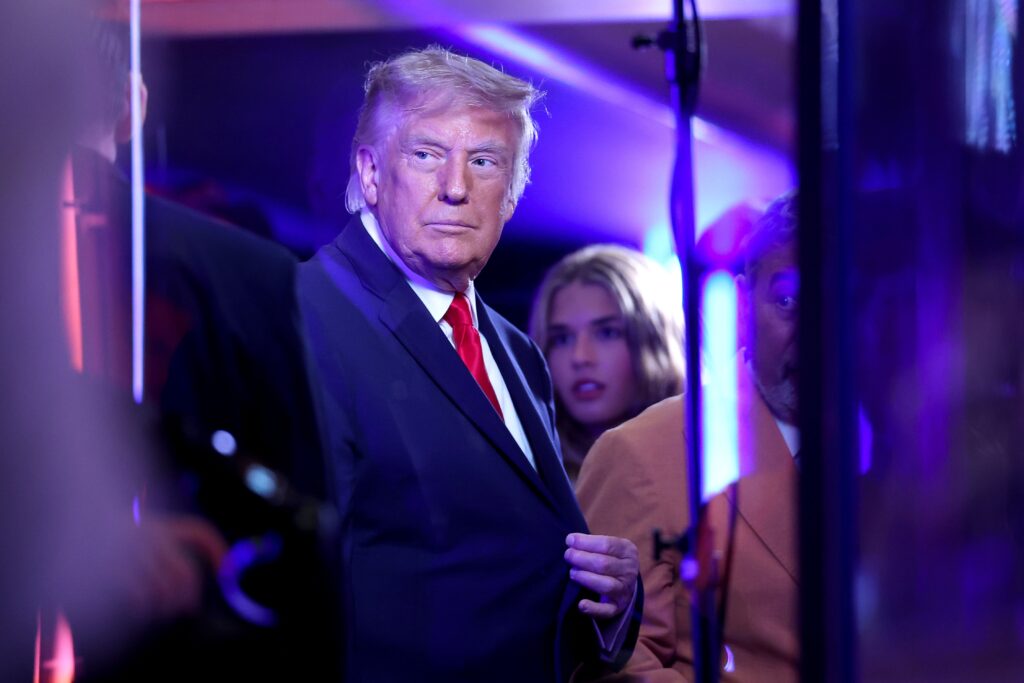
    The U.S. Department of Homeland Security is walking back, for now, a plan to sweep up data on millions of Americans who vote by mail under President Donald Trump’s executive order restricting mail ballots.

    In a federal court filing Monday night, the Justice Department significantly hedged the data-sharing plan, pulling back from a position the Trump administration advanced last week. DOJ lawyers now cast the idea as in the early stages and dependent on approval of a new U.S. Postal Service rule for mail ballots, citing a memo that Homeland Security Secretary Markwayne Mullin signed earlier Monday.

    “The Secretary authorized DHS to continue preliminary conversations with USPS concerning potential data-sharing arrangements, and should USPS finalize its rulemaking process, consider working to advance potential coordination to the extent feasible and consistent with applicable law and privacy protections,” the notice says.

    Mullin’s memo, the Monday court filing says, “more accurately reflects the current policy of the Administration with respect to the implementation” of the executive order, reversing a Friday notice that said Homeland Security “contemplates” working to “integrate” the Postal Service’s voter data in an effort to monitor the flow of mail ballots and identify possible fraud. Friday’s filing said Homeland Security would use the information to generate investigative leads.

    Trump’s March 31 executive order requires states to submit lists of potential mail voters to the Postal Service if they want ballots delivered and directs Homeland Security to compile lists of voting-age citizens in each state. The order faces several lawsuits ahead of the November midterm elections but so far hasn’t been paused by a federal judge.

    Trump signed the executive order amid an ongoing campaign to influence how states administer federal elections. Under the U.S. Constitution, states run elections. While Congress can pass regulations, the president has no unilateral authority over voting.

    Trump has long attacked mail voting and has also promoted the idea that noncitizen voting is rampant. In reality, it’s extremely rare.

    Democrats and voting rights groups say the order represents an unconstitutional attempt by Trump to assert authority over elections. They also argue the order endangers the independence of the Postal Service, which is overseen by a Board of Governors, not the president.

    Running out the clock

    Michael McNulty, the policy director at Issue One, a group focused on protecting American democracy, said the Justice Department’s second notice almost appears to anticipate that a court will block the Postal Service’s new rule, which would require states sending ballots through the mail to provide lists of voters.

    “It looks like they definitely walked back the USPS data-sharing language,” McNulty said in an interview.

    Downplaying the current effect of the rule could be part of a legal strategy to shield the administration from court challenges.

    Despite a series of legal challenges, the Trump administration has urged judges not to block the March order because federal officials haven’t taken major action to implement it — making the lawsuits premature. That argument will become more difficult to maintain as the Postal Service moves forward on the new rule for mail ballots and Homeland Security begins to take action.

    David Becker, a former Justice Department Voting Rights Section attorney who leads the nonpartisan Center for Election Innovation & Research, said that since the beginning of the second Trump administration, the Justice Department has sought to “run the clock out” in legal challenges until it’s too late for courts to act or judicial action would cause chaos.

    While Trump and his aides speak publicly about the alleged threat of noncitizen voting, in court the Justice Department seeks to minimize the extent of the actions the federal government has taken to carry out the executive order, Becker indicated.

    “So I think this is a case of the government trying to have it both ways,” Becker said. “The government is trying to satisfy an audience of one, the president, while at the same time trying to play this rope-a-dope game with the court so that the court might not rule against them, they might say that a case isn’t ripe yet.”

    In response to questions from States Newsroom, Homeland Security said in an unattributed statement that U.S. Citizenship and Immigration Services, an agency within DHS, is “lawfully implementing” the executive order.

    “President Trump has been clear: Nothing is more fundamental than the integrity and security of our elections,” the statement said.

    Quest for voter rolls

    The Trump administration has spent the past year attempting to obtain unredacted state voter rolls to feed into a powerful Homeland Security computer program that can identify potential noncitizen voters. The Justice Department has filed more than 30 lawsuits seeking to force states and the District of Columbia to turn over the information, but so far none have been successful.

    Eight states — including heavily Democratic California, Oregon and Washington — have all-mail elections, according to the National Conference of State Legislatures. For those states, complying with the executive order would effectively mean turning over the names of all or nearly all their voters to the Postal Service.

    It’s unclear if those lists would include voters’ sensitive personal data, like driver’s license and partial Social Security numbers, that the Justice Department has sued to obtain.

    In its Monday notice, the Justice Department appeared to suggest Homeland Security had been planning to go beyond the scope of the executive order.

    The executive order does not explicitly direct the Postal Service to share voter and mail ballot data with Homeland Security. Instead, it tells the Postal Service to coordinate with the Justice Department on investigations into suspected election crimes.

    Data-sharing arrangements between DHS and the Postal Service “are not directed” by the order, the Monday notice says. Any future sharing would be contingent upon both the Postal Service’s mail ballot rule and “any policy and legal determinations as to the desirability and feasibility of any such data-sharing” — in other words, a decision the Trump administration will make later.

    Computer system participation

    The Justice Department had also reported Friday that Homeland Security planned to launch a “State Voter Roll Verification” powered by the Systematic Alien Verification for Entitlements, or SAVE, system — the computer program that can flag possible noncitizen voters.

    The Friday notice said states would be able to upload their voter rolls to SAVE, but Homeland Security already allows states to voluntarily run this information through the program. Some Republican-led states have previously used SAVE to scan their voter rolls and it’s unclear how the new verification process would have been different.

    On Monday, the Justice Department reversed itself on that issue as well. DOJ lawyers wrote in the second notice that the executive order “does not direct that approach, and the new memorandum no longer includes that discussion.”

    The Justice Department’s Monday notice makes clear that Homeland Security still plans to create lists of citizens in each state, as mandated under the executive order. The agency plans to have a way for states to obtain citizenship information from federal agencies by June 30, the notice says.

    The executive order also requires Homeland Security to allow individuals to access their citizenship-related records and update or correct them ahead of elections. The Justice Department said Monday that Mullin approved a phased plan for a portal accessible to the public.

    Monday’s notice, citing Mullin’s memo, says only that those capabilities will be developed and launched later this year after the completion of legal, privacy and technical groundwork. That leaves open the possibility that states will have access to federal citizenship information weeks or months before individual voters will be able to view the same data and call attention to any errors.

    Questions linger

    What prompted Mullin to sign the memo on Monday is unclear. Homeland Security didn’t respond to a request for a copy of the memo.

    Early on Monday evening, lawyers for the League of Women Voters filed a court document in a separate lawsuit challenging Homeland Security’s use of the SAVE system that alerted the judge to the Justice Department’s Friday notice.

    “It remains unclear—from the Implementation Notice or otherwise—what specific legal authority either the USPS or DHS have to share, consolidate, and use data in this way,” the lawyers wrote, referring to the initial data sharing plan between Homeland Security and Postal Service.

    The Justice Department responded on Tuesday, saying in a court filing that information was “no longer accurate, as of yesterday evening.”

    Also unclear is what role, if any, Commerce Secretary Howard Lutnick has played in Mullin’s decision to change course. Trump’s executive order charges Lutnick with coordinating implementation efforts.

    The Commerce Department didn’t respond to States Newsroom’s questions.

    Sixteen Democratic senators last week demanded Lutnick halt implementation of the executive order. The letter, led by Sens. Maria Cantwell of Washington, Ben Ray Luján of New Mexico and Alex Padilla of California, urged Lutnick to preserve records related to the development of the order ahead of congressional oversight.

    “Vote-by-mail is safe, secure, and convenient, and it has been used successfully across the political spectrum over many election cycles,” the senators wrote.

  • Republicans in Congress clear final hurdle for $70B boost in immigration enforcement

    Republicans in Congress clear final hurdle for $70B boost in immigration enforcement

    WASHINGTON — U.S. House Republicans on Tuesday approved three years of funding for immigration enforcement without any new guardrails on how federal agents operate.

    The 214-212 vote sent the nearly $70 billion package to President Donald Trump, who is expected to sign the measure. Republican senators approved the bill earlier this month, with Alaska Sen. Lisa Murkowski the only member of the GOP in opposition.

    California independent Rep. Kevin Kiley, who conferences with Republicans, voted no, along with Democrats.

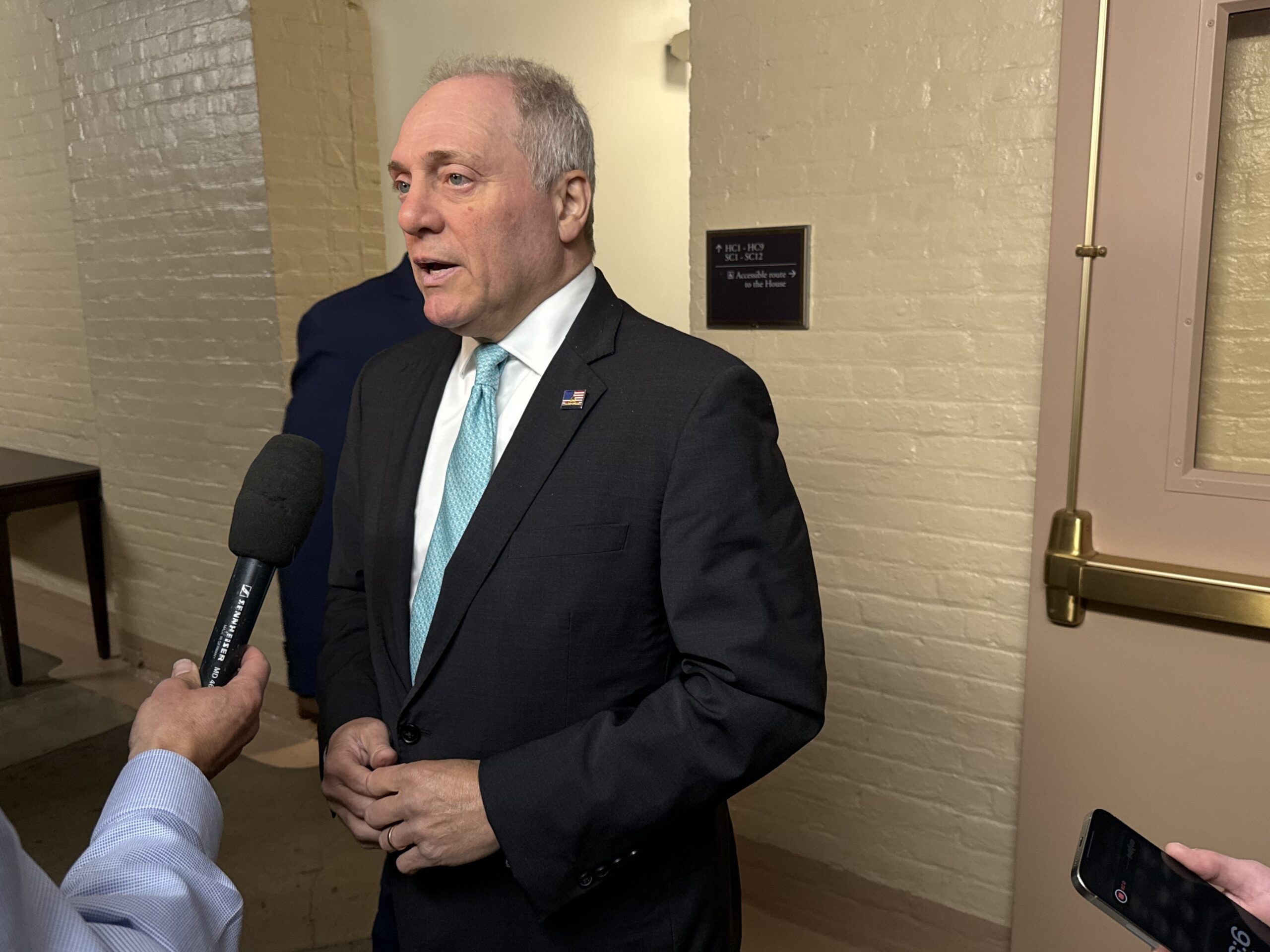
    Majority Leader Steve Scalise, R-La., argued Immigration and Customs Enforcement and the Border Patrol need the additional funding so they can deport anyone in the country without proper authorization.

    “They want you to think that it’s just everybody coming in to seek the American dream,” he said. “We have a legal method for that to happen.”

    Scalise then read a list of Americans killed by people who were present in the United States without legal status.

    “It’s not some hypothetical, it’s happened over and over and over again,” he said.

    Minority Leader Hakeem Jeffries, D-N.Y., said he opposed Republicans’ plans to “give a blank check to ICE without any guardrails, any oversight, or any accountability.”

    “Donald Trump promised America that he would target violent felons who are here illegally, but instead taxpayer dollars are being used by ICE and his violent mass deportation machine to target and brutalize American citizens, in some cases killing them,” he said.

    Jeffries contended that “immigration enforcement should be fair, just and humane” and that ICE “needs to conduct itself” according to the same standards other law enforcement agencies follow.

    Funds will stretch over 3 years

    The legislation will provide $38.53 billion for Immigration and Customs Enforcement, $26.02 billion for Customs and Border Protection and $5 billion for the secretary of Homeland Security.

    The funding, which lasts through September 2029, is in addition to the $170 billion Republicans provided in their “big, beautiful” law. About $100 billion of that remains unspent, according to Democrats.

    Republicans opted not to place any new constraints on how federal immigration agents operate or provide additional funding for oversight, despite officers killing two U.S. citizens in Minneapolis in January.

    Those shootings led Democrats in Congress to demand new restrictions on officers, which led to weeks of bipartisan negotiations amid a 76-day shutdown for the Department of Homeland Security.

    That stalemate ended in April after lawmakers approved DHS’ annual appropriations bill without funding for ICE or the Border Patrol. Republicans had to remove those provisions in order to move the legislation through procedural votes in the Senate that require the support of at least 60 lawmakers.

    A new path

    Republican leaders then turned to the complex budget reconciliation process to provide three years of funding for ICE, CBP and the secretary of DHS without requiring any changes to how they operate.

    The special legislative pathway allows bills to move through the Senate with simple majority votes as long as they adhere to certain rules.

    Senate Republicans originally included, but later removed, $1.46 billion for several Department of Justice Programs and $1 billion for the Secret Service to make security upgrades linked to the new White House ballroom, also called the East Wing Modernization Project.

    The funding for ICE, CBP and the DHS secretary clears the way for the Trump administration to continue its immigration crackdown until just a few months before his second term is scheduled to end.

  • Actor who played Dwight on ‘The Office’ promotes religious freedom on Capitol Hill

    Actor who played Dwight on ‘The Office’ promotes religious freedom on Capitol Hill

    WASHINGTON — As various officials and groups aim to use the upcoming 250th anniversary of the United States’ founding, a bipartisan group of lawmakers, with the help of a famed sitcom actor, turned the spotlight Tuesday to a central tenet of U.S. democracy: religious freedom.

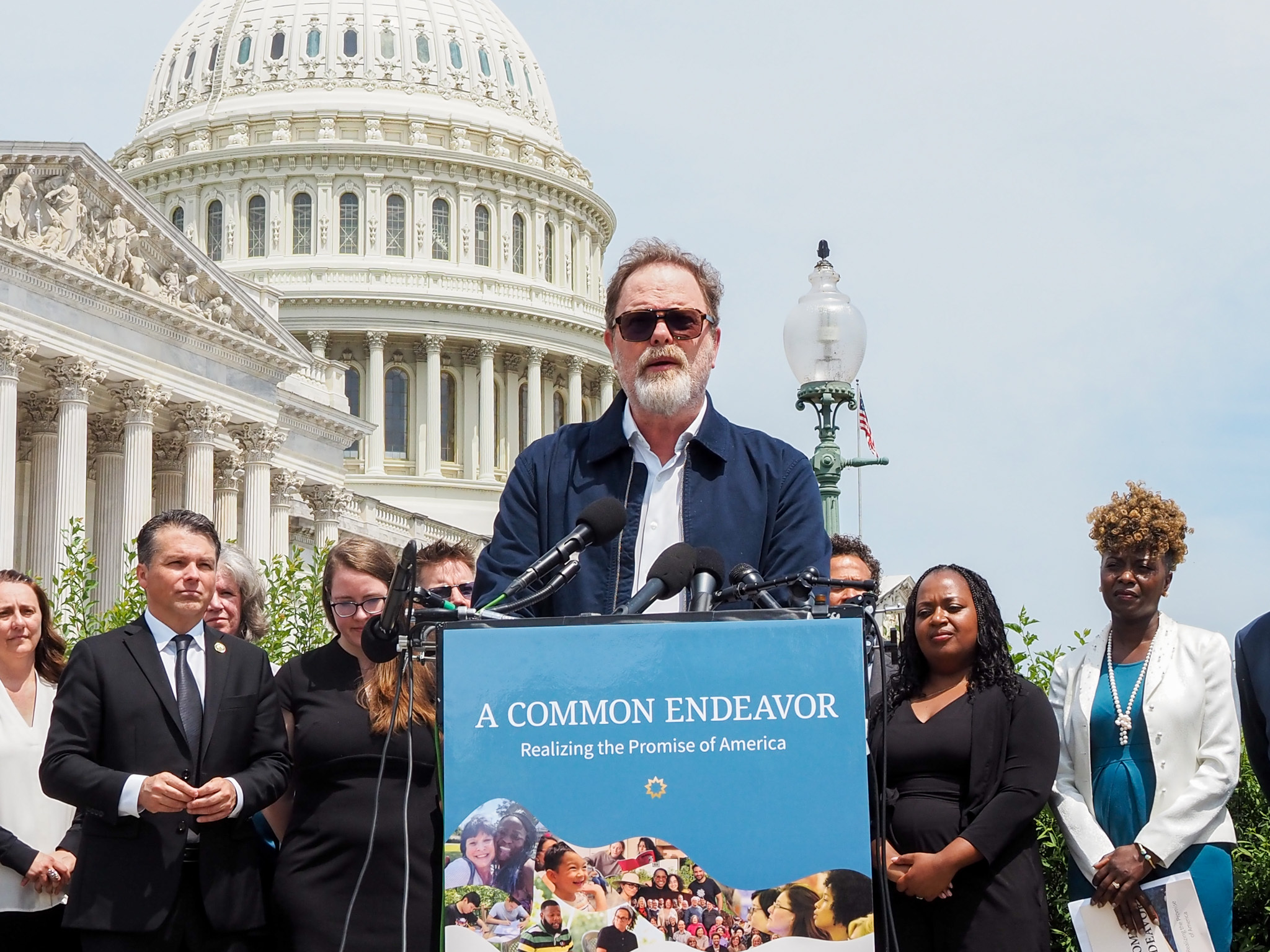
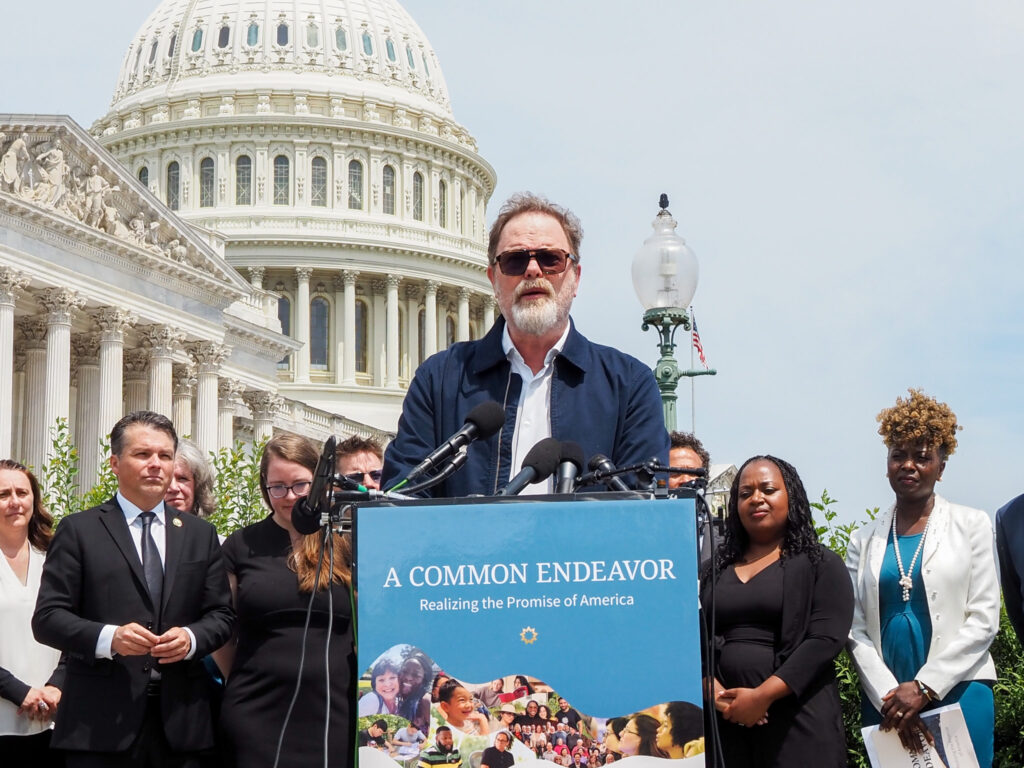
    Actor Rainn Wilson, widely known for playing Dwight Schrute on NBC’s “The Office,” joined a press conference that U.S. Reps. Brendan Boyle, D-Pa., and Gus Bilirakis, R-Fla., hosted along with religious leaders to advocate for the American tradition of religious freedom.

    Reading from the Declaration of Independence, Wilson, an outspoken member of the Baha’i faith that originated in 19th-century Persia, now Iran, said the nation’s 250th anniversary “is an opportunity to ask profound questions.”

    “How can we give fresh expression to the ideals in the declaration?” he asked. “How can we leave behind tendencies that divide us and replace them with a widening circle of concern? We need to be able to speak and think in terms of spiritual and moral dimensions of individual and collective life.

    “We need to do that in ways that are meaningful across different perspectives, both religious and secular,” he continued.

    Wilson’s appearance marked the public release of the Baha’i faith’s five-part letter “A Common Endeavor,” which argues for the realization of “ideals, like freedom, equality, and justice” as many Americans have become “exhausted and disillusioned by polarization.”

    The press conference was attended by members of several denominations, and is among numerous independent events ahead of the 250th anniversary of the United States.

    ‘A universal human right’

    Boyle cited Baha’i writings that “beautifully” emphasize unity.

    U.S. Rep. Brendan Boyle, D-Pa., co-led at an event Tuesday, June 9, 2026, on Capitol Hill, marking 250 years of religious freedom in United States. (Photo by Ashley Murray/States Newsroom)

    U.S. Rep. Brendan Boyle, D-Pa., co-led at an event Tuesday, June 9, 2026, on Capitol Hill, marking 250 years of religious freedom in United States. (Photo by Ashley Murray/States Newsroom)

    “My own Catholic faith teaches a similar truth. Pope Francis reminded us that we are called to come together as brothers and sisters, quote, ‘as children from the same earth,’” Boyle said.

    “My hope is that for America’s 250th anniversary, this will be more of a focus on what our next 250 years look like, rather than just a wonderful commemoration of the past quarter of a millennium.”

    Bilirakis, an Orthodox Christian who co-chairs the Congressional International Religious Freedom Caucus, said, “Religious freedom is not simply an American value, it is a universal human right, and I truly believe that.”

    “Whether we are speaking out on behalf of the persecuted Christians, Muslims, Jews, Baha’is, Hindus, Buddhists, Uyghurs, or members of other faith communities, our message must remain clear,” he said. “Every person is endowed with inherent dignity and deserves the freedom to live according to their conscience.”

    U.S. Rep. Gus Bilirakis, R-Fla., co-led at an event Tuesday, June 9, 2026, on Capitol Hill, marking 250 years of religious freedom in United States. (Photo by Ashley Murray/States Newsroom)

    U.S. Rep. Gus Bilirakis, R-Fla., co-led at an event Tuesday, June 9, 2026, on Capitol Hill, marking 250 years of religious freedom in United States. (Photo by Ashley Murray/States Newsroom)

    Bilirakis is an original cosponsor of a House resolution condemning the Iran government’s persecution of Baha’is. The resolution was introduced in December 2025, just months before the U.S. escalated war in Iran.

    Pentagon list

    The event on Capitol Hill, though unrelated, happened just one day after the Pentagon modified its list of recognized religions following criticism from the Church of Jesus Christ of Latter-day Saints, widely known as the Mormon church.

    Utah’s two Republican Sens. Mike Lee and John Curtis directly appealed to the administration to change the Department of Defense list, which did not categorize the Latter-day Saints as Christian.

    On Friday, the Pentagon revised its list of recognized religions for service members to 31, down from roughly 200.

    The Pentagon’s shortened list includes the Baha’i faith.

  • Trump launches new strikes on Iran after US Army helicopter downed

    Trump launches new strikes on Iran after US Army helicopter downed

    WASHINGTON — U.S. forces launched renewed strikes on Iran late Tuesday, in response to the downing of a U.S. Apache helicopter a day earlier, according to U.S. Central Command.

    President Donald Trump ordered the operation, which began at 5 p.m. Eastern and was “a proportional response to unjustified Iranian aggression,” a social media account for U.S. Central Command posted Tuesday evening.

    Trump said earlier Tuesday the United States would retaliate after Iran shot down the helicopter late Monday over the Strait of Hormuz, and that the two American pilots aboard were unharmed.

    Trump announced the cause of the helicopter’s downing in a Truth Social post just before 1 p.m. Eastern. As of early Tuesday morning, the incident had still been under investigation, according to U.S. Central Command.

    “I have just been informed by our Great Military that last night the Iranians shot down one of our highly sophisticated Apache Helicopters while patrolling over the Strait of Hormuz. There were two pilots involved, both are safe and uninjured. Nevertheless, the United States must, of necessity, respond to this attack. Thank you for your attention to this matter! President DONALD J. TRUMP,” the president wrote.

    Despite recent exchanges of fire, the administration maintains the war, named by the Pentagon as Operation Epic Fury, is over and that an April 7 ceasefire agreement between the U.S. and Iran remains in place.

    On Sunday’s “Meet the Press” with moderator Kristen Welker of NBC News, Trump said, before abruptly walking out of the interview a short time later, “I call it a military exercise because people would rather have it called that. It’s not a big war for us.”

    The two military pilots were rescued at 7:33 p.m. Eastern time after the AH-64 Apache went down off the coast of Oman while the military was patrolling regional waters, according to U.S. Central Command.

    “The Soldiers were safely rescued within approximately two hours and are in stable condition. The cause of the incident is under investigation.

    “Rescue efforts were led by U.S. Naval Forces Central Command and the 82nd Airborne Division, with support from U.S. Air Force and Navy units including U.S. 5th Fleet’s Task Force 59,” according to the command’s statement posted on social media just after 6 a.m. Eastern.

    The U.S. continues to block traffic to and from Iranian ports, and as recently as Monday fired on an empty oil tanker in the Gulf of Oman the military said was breaking the blockade just southeast of the Strait of Hormuz.

    According to U.S. Central Command, American forces have disabled seven non-compliant vessels, redirected 134 ships that complied, and allowed 42 vessels supporting humanitarian aid to pass since initiating the blockade on April 13.

    Iran has all but choked off international shipping through the Strait of Hormuz, where one-fifth of the world’s petroleum supply traveled before the war.

    War status

    Thirteen U.S. service members have died in the conflict, which began on Feb. 28.

    The Pentagon’s tally for service members injured stands at 411 as of Tuesday. Despite the administration’s stance that the war is over, the Defense Casualty Analysis System lists one U.S. sailor as “wounded in action” in June as part of Operation Epic Fury.

    Secretary of State Marco Rubio testified last week before the House Committee on Foreign Affairs that the U.S. war in Iran was “over.”

    In response to a question from Rep. Sara Jacobs, D-Calif., about who won the war, Rubio answered, “Epic Fury is over, which is what you would consider the war.”

    The U.S. launched the conflict in conjunction with Israel, and the Israeli government’s continued bombardment of southern Lebanon has stymied further peace talks — though Trump has repeatedly claimed Iran wants to make a deal.

    Iran and Israel exchanged rocket fire Sunday into Monday for the first time since April.

    Despite a U.S.-brokered ceasefire between Israel and Lebanon in mid-April, Israel’s bombing campaign has continued in southern Lebanon, as Iran-backed Hezbollah fighters refuse to recognize the agreement.

  • Trump launches new strikes on Iran after US Army helicopter downed

    Trump launches new strikes on Iran after US Army helicopter downed

    WASHINGTON — U.S. forces launched renewed strikes on Iran late Tuesday, in response to the downing of a U.S. Apache helicopter a day earlier, according to U.S. Central Command.

    President Donald Trump ordered the operation, which began at 5 p.m. Eastern and was “a proportional response to unjustified Iranian aggression,” a social media account for U.S. Central Command posted Tuesday evening.

    Trump said earlier Tuesday the United States would retaliate after Iran shot down the helicopter late Monday over the Strait of Hormuz, and that the two American pilots aboard were unharmed.

    Trump announced the cause of the helicopter’s downing in a Truth Social post just before 1 p.m. Eastern. As of early Tuesday morning, the incident had still been under investigation, according to U.S. Central Command.

    “I have just been informed by our Great Military that last night the Iranians shot down one of our highly sophisticated Apache Helicopters while patrolling over the Strait of Hormuz. There were two pilots involved, both are safe and uninjured. Nevertheless, the United States must, of necessity, respond to this attack. Thank you for your attention to this matter! President DONALD J. TRUMP,” the president wrote.

    Despite recent exchanges of fire, the administration maintains the war, named by the Pentagon as Operation Epic Fury, is over and that an April 7 ceasefire agreement between the U.S. and Iran remains in place.

    On Sunday’s “Meet the Press” with moderator Kristen Welker of NBC News, Trump said, before abruptly walking out of the interview a short time later, “I call it a military exercise because people would rather have it called that. It’s not a big war for us.”

    The two military pilots were rescued at 7:33 p.m. Eastern time after the AH-64 Apache went down off the coast of Oman while the military was patrolling regional waters, according to U.S. Central Command.

    “The Soldiers were safely rescued within approximately two hours and are in stable condition. The cause of the incident is under investigation.

    “Rescue efforts were led by U.S. Naval Forces Central Command and the 82nd Airborne Division, with support from U.S. Air Force and Navy units including U.S. 5th Fleet’s Task Force 59,” according to the command’s statement posted on social media just after 6 a.m. Eastern.

    The U.S. continues to block traffic to and from Iranian ports, and as recently as Monday fired on an empty oil tanker in the Gulf of Oman the military said was breaking the blockade just southeast of the Strait of Hormuz.

    According to U.S. Central Command, American forces have disabled seven non-compliant vessels, redirected 134 ships that complied, and allowed 42 vessels supporting humanitarian aid to pass since initiating the blockade on April 13.

    Iran has all but choked off international shipping through the Strait of Hormuz, where one-fifth of the world’s petroleum supply traveled before the war.

    War status

    Thirteen U.S. service members have died in the conflict, which began on Feb. 28.

    The Pentagon’s tally for service members injured stands at 411 as of Tuesday. Despite the administration’s stance that the war is over, the Defense Casualty Analysis System lists one U.S. sailor as “wounded in action” in June as part of Operation Epic Fury.

    Secretary of State Marco Rubio testified last week before the House Committee on Foreign Affairs that the U.S. war in Iran was “over.”

    In response to a question from Rep. Sara Jacobs, D-Calif., about who won the war, Rubio answered, “Epic Fury is over, which is what you would consider the war.”

    The U.S. launched the conflict in conjunction with Israel, and the Israeli government’s continued bombardment of southern Lebanon has stymied further peace talks — though Trump has repeatedly claimed Iran wants to make a deal.

    Iran and Israel exchanged rocket fire Sunday into Monday for the first time since April.

    Despite a U.S.-brokered ceasefire between Israel and Lebanon in mid-April, Israel’s bombing campaign has continued in southern Lebanon, as Iran-backed Hezbollah fighters refuse to recognize the agreement.

  • GAO finds millions of dollars wasted, safety and security at risk in Texas detention center

    GAO finds millions of dollars wasted, safety and security at risk in Texas detention center

    WASHINGTON — A hastily constructed immigrant detention facility on a military base in Texas wasted millions in federal funding and failed to meet basic standards, according to a report released Tuesday by a nonpartisan government watchdog.

    The report by the Government Accountability Office documenting problems at Camp East Montana is one of the first independent investigations into a facility quickly constructed from the $170 billion in immigration enforcement and detention funding provided by Republicans’ “big beautiful” law enacted in July 2025 as part of the president’s mass deportation campaign. The camp is considered the largest immigrant detention center in the United States.

    The Department of Defense and U.S. Immigration and Customs Enforcement in August 2025 set up the soft-sided detention site of Camp East Montana at Fort Bliss in El Paso, Texas. It was intended to hold as many as 5,000 immigrants and is still currently operating under a private contractor as well as ICE.

    The facility was plagued with several tuberculosis cases and at least four detainee deaths, with one ruled a homicide by the local coroner. The American Civil Liberties Union filed a suit against the government over inhumane conditions.

    “The facility also did not meet key detention standards, risking the safety and security of detained noncitizens and staff,” GAO said.

    The report came as the U.S. House this week prepares to take final steps to pass a $70 billion package to fund immigration enforcement until the end of fiscal year 2029. President Donald Trump is expected to sign the legislation into law.

    Congressional Democrats requested that GAO do a report on Camp East Montana, including Sens. Dick Durbin of Illinois, Jack Reed of Rhode Island and Gary Peters of Michigan and Rep. Bennie Thomspon of Mississippi.

    Reed, the top Democrat on the Senate Armed Services Committee, said in a statement that he was concerned the U.S. military was responsible for the quick construction of the detention camp.

    “Preventable deaths, inhumane conditions, and millions of dollars in waste are the direct result of the Pentagon cutting corners and handing a billion-dollar contract to an inexperienced vendor that wrote its own performance standards,” Reed said.

    $1.3 billion contract

    GAO investigators found that the Department of Defense’s contracting vehicle used to handle the $1.3 billion contract for Camp East Montana provided no flexibility and resulted in paying for meals and employee services during times when no immigrants were detained at the facility, resulting in millions of dollars wasted.

    For example, the Army paid the full cost for guards, medical services, transportation, meals and other services from Aug. 1, 2025 to Aug. 15, 2025, when there were no detainees at the facility, wasting up to $11.5 million, GAO said.

    “Further, because the Army set a fixed price for meals based on the capacity of the facility, it paid about an additional $423,000 for meals it did not need when the facility was operating below its designated capacity from August 16, 2025, through September 30, 2025,” according to the GAO report.

    Same failures could repeat, GAO says

    GAO investigators also noted that the same mistakes could be made with the Department of Homeland Security’s ongoing move to spend $38 billion to convert warehouses for the purpose of detaining thousands of immigrants.

    “GAO points out that ICE’s planned facility expansion—a $38 billion program to convert warehouses into detention facilities using the same contracting vehicle—risks repeating every one of these failures at a dramatically larger scale,” according to the report.

    Investigators made four recommendations, including that ICE consider tiered pricing for food to account for fluctuations in populations of detained immigrants and that ICE ensure that new facilities meet detention standards before housing immigrants.

    The report notes that DHS and DOD agreed with the recommendations. DOD deferred comment to DHS, which did not immediately respond to States Newsroom’s request for comment.

    Homicide investigated

    Investigators also raised use-of-force concerns, including one in January in which an autopsy found the death of a detainee to be due to asphyxia and ruled it a homicide.

    “However, the contractor did not provide use of force and death reports to ICE, as required,” according to the report. “In addition, evidence associated with the incident was missing or destroyed.”

    Durbin, who is the top Democrat on the Senate Judiciary Committee, called the GAO report “damning.”

    “We now know even more details of how dangerous and irresponsible the Trump Administration’s mass deportation campaign truly is,” he said in a statement. “Excessive use of force, lacking medical and mental health care, and wasted taxpayer dollars are emblematic of this mass deportation scheme. The American people have rightfully expressed outrage at these policies, and it’s time to hold ICE and their private contractors responsible.”

    GAO investigators noted several health issues. They pointed out that none of the detainees with HIV or diabetes had treatment plans in place.

    Also, facility employees did not follow proper procedure for tuberculosis screening. One contractor used a questionnaire rather than administering the required skin tests for tuberculosis.

    Investigators found that as a result in November, a detained immigrant with tuberculosis was housed with the general immigrant population.

  • Projected Social Security benefits cliff creeps up to 2032

    Projected Social Security benefits cliff creeps up to 2032

    WASHINGTON — Congress must act to shore up Social Security during the next six years to avoid an automatic drop-off in benefits in 2032, according to a report released Tuesday.

    The annual update on the Old Age and Survivors Insurance trust fund shows that it will “become depleted” in the fourth quarter of that year, a few months earlier than projected in last year’s report.

    That would lead to recipients receiving 78% of their benefits — the projected yearly income to the trust fund — unless Congress acts before then. By 2100, benefits would be only 62%, according to the report.

    That decrease would have a significant impact on the tens of millions of Americans who rely on the program to stay out of poverty, especially retirees.

    Social Security Commissioner Frank J. Bisignano wrote in a statement that in order to “protect the promise of Social Security, it is important for lawmakers and the Social Security Administration to work together to ensure the trust funds continue to provide financial stability now and for future generations.”

    Bisignano is scheduled to testify before the House Ways and Means Committee on Wednesday, where he will likely face several questions about the new report and whether the administration has policy suggestions for Congress.

    More than 68 million Americans received Social Security payments in April, according to data from the administration. More than 56 million of the beneficiaries were 65 or older.

    Michael A. Peterson, CEO of the Peter G. Peterson Foundation, wrote in a statement November’s midterm elections will have an impact on who is in the Senate, where lawmakers have six-year terms, in the lead-up to the deadline.

    “It’s important to recognize that the Senators we elect this year will be in office when Social Security becomes unable to pay out full benefits, so this must be a central campaign issue,” he wrote.

    Peterson added that “there are many well-known solutions available” and that it’s “time for responsible, bipartisan leadership to strengthen Social Security and Medicare, ensuring the stability of these programs for generations of Americans to come.”

    Maya MacGuineas, president of the Committee for a Responsible Federal Budget, wrote in a statement that “Washington is sleepwalking into a retirement crisis, allowing our nation’s most important trust funds to go insolvent at the expense of over 70 million beneficiaries who count on these programs.”

    MacGuineas added that there is “no shortage of options out there to avoid this.”

    “It’s time for our leaders to start telling the truth on Social Security and Medicare, and working on real plans to save these programs,” she wrote. “Time is running out.”

  • Judge approves settlement over rejected Virginia student voter registrations

    Judge approves settlement over rejected Virginia student voter registrations

    A federal judge has approved a consent decree requiring Virginia election officials to accept certain voter registration applications submitted by college students, resolving a lawsuit that alleged students were being improperly denied registration over missing dormitory-related details.

    The agreement, approved last week by the U.S. District Court for the Eastern District of Virginia, bars election officials from rejecting otherwise eligible student voter registration applications solely because they omit information such as dorm room numbers, dorm names or campus mailbox numbers when those details are not necessary to determine voting precincts.

    The lawsuit was filed in October by the NAACP Virginia State Conference and the Advancement Project against Virginia election officials shortly before the November 2025 general election.

    The civil rights groups alleged that election officials in multiple Virginia jurisdictions had rejected or delayed voter registration applications submitted by college students living on campus because the forms lacked dormitory-specific information not required under Virginia law.

    The plaintiffs argued the practice disproportionately affected students attending historically Black colleges and universities, including Norfolk State University and Virginia State University, along with students at schools including George Mason University, James Madison University, Old Dominion University, University of Richmond and Virginia Commonwealth University.

    What the settlement requires

    The lawsuit — titled NAACP Virginia State Conference v. John O’Bannon et al. — alleged that rejecting applications over missing dormitory details violated the Materiality Provision of the Civil Rights Act of 1964 as well as the First and Fourteenth Amendments of the U.S. Constitution.

    Under the consent decree, Virginia election officials must provide guidance and training to local registrars on how to handle student voter registration applications and amend the state voter registration form to clarify what address information is required for people living in dormitories and other group housing.

    The agreement also requires state officials to begin rulemaking efforts to formally incorporate the new standards in the Virginia Administrative Code.

    Andrea Gaines, a spokeswoman for the Virginia Department of Elections, said the State Board of Elections and the department approved the consent decree to promote “uniform processing” of voter registration applications and ensure people living in group housing such as college dormitories provide enough information to be assigned to the correct voting precinct.

    Gaines said additional guidance will be provided to local election officials before Virginia’s Aug. 4 primary election.

    John Powers, legal director for the Advancement Project, said the agreement removes barriers that had prevented some students from successfully registering to vote.

    “This consent decree is a major win for Virginia voters,” Powers said in a statement.

    “For too long, too many Virginia college students have been disenfranchised due to unnecessary and burdensome restrictions. This agreement removes those barriers and mandates important reforms that will allow more students to register successfully and cast ballots that count.”

    Anthony Ashton, senior associate general counsel for the NAACP, said the agreement makes clear that eligible voters cannot be denied registration over technical omissions unrelated to eligibility.

    “College students in Virginia — particularly those at historically Black colleges and universities — have faced unnecessary and unlawful barriers to voter registration,” Ashton said. “This consent decree sends a strong message that those practices will not stand.”

    Case reflects broader fights over student voter access

    The lawsuit was filed amid broader national debates over student voting access and efforts by voting-rights organizations to challenge policies they say place additional hurdles on younger voters.

    An analysis by the Brennan Center for Justice found that college students have long encountered voting obstacles involving residence verification and campus mailing addresses.

    In Indiana, a federal judge last year declined to dismiss a challenge to a law restricting student voter identification, ruling that students had plausibly alleged violations of the First, Fourteenth and Twenty-Sixth Amendments.

    Virginia voting rights advocates had also previously raised concerns that some local registrars were rejecting voter registration applications submitted by students listing university housing addresses without additional proof of residence.

    Supporters of last year’s lawsuit argued that the timing was particularly significant because the complaint was filed shortly before Virginia’s November 2025 statewide elections, which included races for governor, lieutenant governor, attorney general and all 100 seats in the House of Delegates.

    Editor’s note: This story has been updated to include a statement from the Virginia Department of Elections.