Tag: voting

  • Civil rights group files motion to speed up Va.’s reform of voter registration process for ex-felons

    Civil rights group files motion to speed up Va.’s reform of voter registration process for ex-felons

    As thousands of Virginians with certain past felony convictions remain in a voting registration limbo, a civil rights group filed a motion on June 18 seeking an expedited remedy.

    The group accused election officials of violating a voting rights lawsuit previously won earlier this year.

    Some former felons, eligible to vote this summer, are in registration limbo

    The voting access issue stems from a series of 1870 laws called the Readmission Acts, which banned states from constitutionally disenfranchising people other than those convicted of crimes considered common law at the time.

    In Virginia, people with felony convictions lose their right to vote unless they successfully petition a governor for it to be restored or are pardoned — both subjective processes which haven’t always had clear guidelines.

    Virginia’s chapter of the American Civil Liberties Union argued in King v. O’Bannon that Virginians with a variety of felony convictions should have never lost their right to vote in the first place. A judge ruled in their favor earlier this year and ordered the state to comply by May.

    Attorney General Jay Jones then successfully sought an extension to June 1 so that the state could compile guidance for registrars and ascertain which modern-day felonies might bar someone from registering to vote.

    For instance, illegally using tear gas was included on a list of such crimes from Jones’ office, “even though tear gas was not invented in 1870,” ACLU attorney Eden Heilman said in an interview.

    While the legal organization “has serious questions” about how the lists were determined and whether eligible people will be able to vote this year, the group has tried for months to glean a better understanding from Jones’ office.

    Since June, registrars have been instructed to not fully process new voter registrations of people with felony convictions, according to documents obtained by The Mercury that are now exhibited in the new motion.

    In May, ACLU Virginia wrote a letter to Jones and Solicitor General Tillman Breckenridge asking why revisions to registration forms were not feasible for registrars, and for more details on challenges preventing the state from fully complying with the court order.

    The organization also asked for more clarity on conviction types that may require individualized review by Jones’ office.

    Breckenridge responded two days later to confirm receipt of the letter and end the conversation.

    “While we appreciate the information you’ve provided to us to this point, we do not believe further engagement on the topics in your letter would be constructive at this time,” he wrote.

    Heilman said that previous meetings with Jones’ office had not been successful.

    “It became clear that we were not making progress and had different understandings of what the court order was requiring,” she said.

    Jones’ office has not responded to requests for comment on the situation.

    With early voting for congressional primary elections underway, plaintiffs hope that the situation can be resolved before the Aug. 4 election so that eligible voters can participate.

    This fall, Virginia voters will also approve or reject a constitutional amendment that would allow all ex-felons the right to vote, so long as they have served their sentences.


    Outdated forms and web portals another hurdle


    The apparent lack of full compliance with King v. O’Bannon sparked a period of uncertainty for ex-felons in the state, Nolef Turns director Sheba Williams said. The nonprofit shares resources with formerly incarcerated people and advocates for ways to reduce recidivism.

    Voter registration applications question whether or not someone has committed a felony, which Williams said has confused formerly incarcerated people who want to cast a ballot. Many don’t know if they’re eligible or if they should answer the question or not, since it’s a crime to lie on applications.

    Northern Virginia resident Tati King, who’s been a lead plaintiff on the King v. O’Bannon case, claims that his registration was placed in limbo and as of the time of the motion filing on June 18, he was not yet able to vote.

    Fellow plaintiff Toni Heath Johnson, a Southwest Virginia resident, encountered the same “on hold” status.

    While in-person applicants were told their registrations won’t be processed right away, virtual applicants like Southwest Virginia resident Jared Rose relayed via lawyers that he could not proceed in the online process after clicking the felony conviction box.

    Rose is quoted in the filing saying he was “nervous” about additional prosecution if he didn’t indicate his past felony status despite being able to vote.

    “We’re in a pivotal moment where we have been seeing trust in our courts be eroded,” Williams said. “Virignia has an opportunity to restore faith by upholding the ruling of Judge (John) Gibney.”

    Gibney ruled that Virginia can’t take away someone’s voting rights, except for specific common law felonies from 1870. Those are arson, burglary, escape and rescue from a prison or jail, manslaughter, mayhem, murder, rape, robbery, sodomy and suicide.

    As part of their motion to enforce, ACLU suggests forms be amended to ask “only whether the applicant had been convicted of an offense corresponding to one of the 11 common law felonies set forth in the final order.”

    For now, the state has 14 days from the June 18 filing of the motion to respond.
  • Some former felons, eligible to vote this summer, are in registration limbo

    Some former felons, eligible to vote this summer, are in registration limbo

    While a pending constitutional amendment to automatically restore voting rights to people with felony convictions who have served their sentences awaits Virginians’ approval or rejection in a statewide referendum later this year, thousands of people who should never have lost their right to vote in the first place remain in limbo during this summer’s congressional primary elections.

    After a court ruled earlier this year that certain felony convictions should not have resulted in loss of voting rights, Virginia’s Department of Elections had until June 1 to comply with the order to rectify the situation.

    Instead, on June 1, the department sent an advisory to election officials indicating that they should not deny peoples’ applications but to not fully process them either.

    “Please note that records available through the felon search may have been affected by the updates to the Agency Felony Prohibited table. ELECT will provide additional guidance on reviewing felony history soon,” the June 2 advisory obtained by The Mercury read.

    The crux, Nolef Turns director Sheba Williams said, is that some people with felony convictions who should be eligible to vote this summer are nervous to register because it is a crime to lie on applications.

    “When they get to their application, there is a question about whether or not you have been convicted of a felony,” Williams explained.

    For people whose felonies don’t count towards prohibition of voting, they are unsure if they should check the box or not. So, with early voting for the congressional midterms beginning June 18, relevant applicants are stuck waiting as the process plays out.

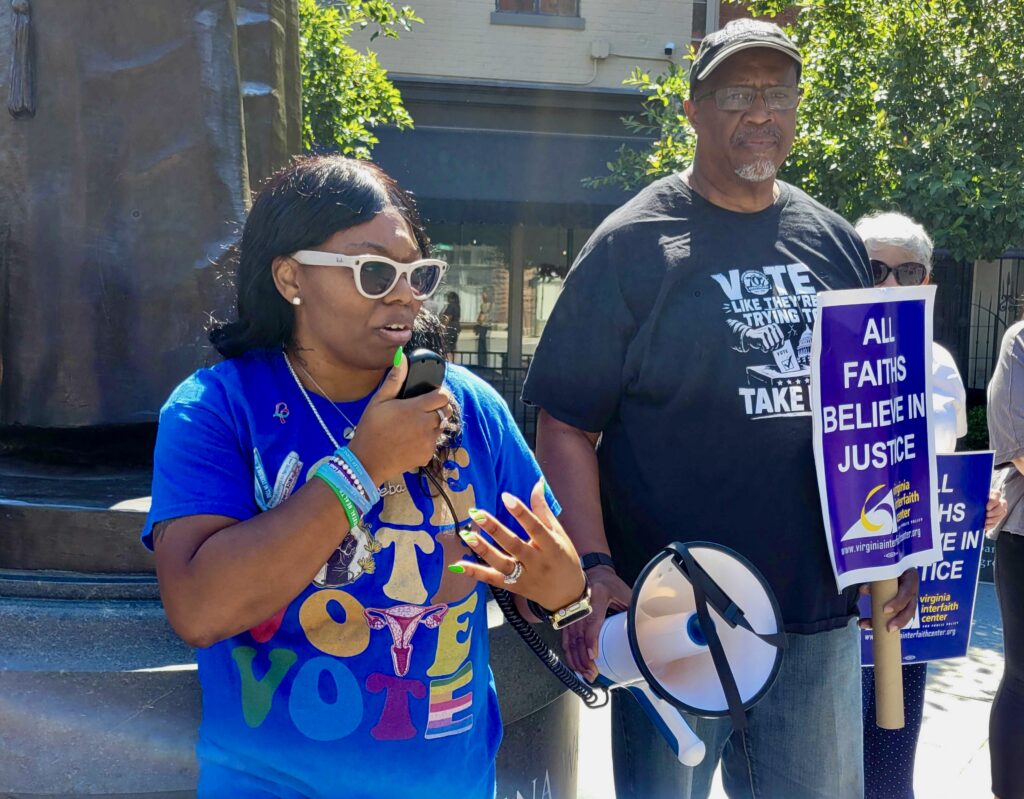
    Williams organized a press conference in Richmond on Wednesday along with the Virginia Interfaith Center For Public Policy and Bridging the Gap Virginia. Each group has advocated for criminal justice reform and voting rights laws and some have helped returning citizens navigate post-incarceration life.

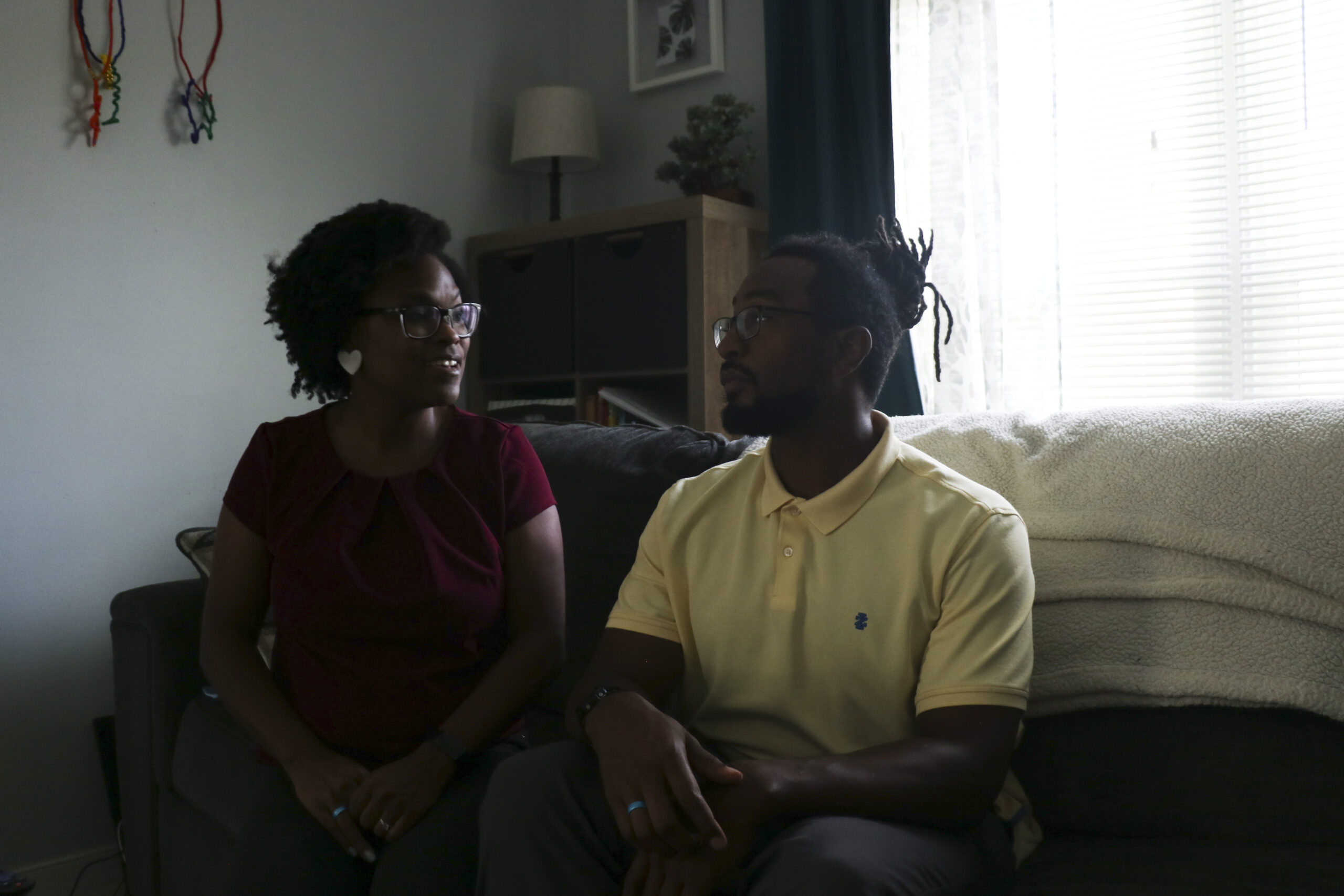
    Quadaire Patterson and his wife Santia Nance attended the event. The couple has ramped up their criminal justice advocacy, starting when Patterson was still incarcerated. Though he’s helped shape laws before and after his 2024 release, he has still been unable to vote.

    Santia Nance (left) sits with husband Quadaire Patterson (right) in their living room in Henrico County in September 2024. (Photo by Charlotte Rene Woods/Virginia Mercury)

    “As I think back to my crime when I was 19 years old, I had no awareness of the political systems that are in play,” Patterson said.

    But now at 38, having spent about half of his life behind bars, Patterson said he understands how important it is to engage in democracy. The importance of the right to vote hits closer to home now that he and his wife have a 14-month-old daughter, Trinity.

    “If we ever want to repair this broken system, if we ever want to repair our broken communities, we have to fully allow returning citizens to participate in the civic processes,” Patterson said.

    The case at the core of the matter stemmed from a series of 1870 laws called the Readmission Acts, which allowed former Confederate states to re-enter U.S. Congress after the Civil War. The laws had barred states from constitutionally disenfranchising people other than those convicted of crimes considered common law at the time.

    “We create crimes every year but we never revisit and say ‘what did we get wrong?’ and I think that is a barrier too,” Williams said.

    Following the suit, Attorney General Jay Jones’ office has been drafting lists of crimes that could be applicable to the ruling.

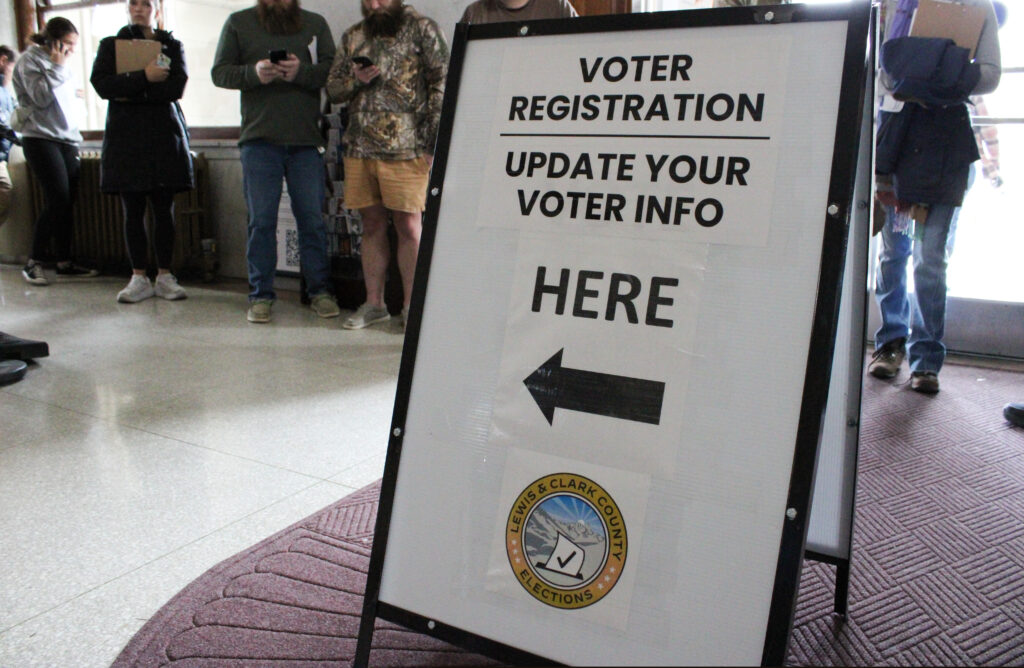
    Congressional primaries will take place Aug. 4 and the deadline to register to vote in those elections is July 24.

  • US Senate blocks Trump’s SAVE America Act, thwarting restrictions on voting

    US Senate blocks Trump’s SAVE America Act, thwarting restrictions on voting

    The U.S. Senate rejected the SAVE America Act on Thursday, dealing a blow to President Donald Trump’s efforts to impose voting restrictions ahead of the November midterm elections.

    Senators voted 48-50 against advancing an amendment that would have incorporated Trump’s top legislative priority into an immigration-focused spending bill. The vote offered the clearest sign yet that despite pressure from the president, a handful of Republican senators continue to resist advancing the bill, which critics say would unleash immense chaos ahead of elections this fall.

    The SAVE America Act would require voters to offer documents, such as a birth certificate or passport, proving their citizenship when registering to vote. It would also mandate voters show photo ID when casting a ballot and restrict where voters can register, effectively eliminating voter registration drives.

    Democrats and voting rights groups have assailed the bill, saying it would disenfranchise voters and upend the midterms because the new rules would take effect immediately. Trump and the bill’s GOP supporters say it’s needed to combat noncitizen voting, an extremely rare phenomenon.

    Since taking office last year, Trump has made a series of attempts to shape how elections are run. An executive order that would limit voting by mail remains in effect for now as opponents challenge it in federal court, and the Department of Justice continues to seek to force states to hand over sensitive voter data, so far unsuccessfully.

    The Senate amendment, offered by Republican Sen. Lindsey Graham of South Carolina, also included restrictions on sports participation by transgender athletes. On social media after the vote, Graham called the SAVE America Act “one of the most consequential” pieces of legislation developed by Trump and his team.

    “All Democrats voted no, and they will eventually pay a price,” Graham wrote.

    Republicans also vote no

    But the proposal fell short among a small group of Republicans, too. Sens. Susan Collins of Maine, Mitch McConnell of Kentucky, Lisa Murkowski of Alaska and Thom Tillis of North Carolina joined Democrats in voting no.

    Collins is seeking reelection in what is one of the most competitive Senate races in the country. McConnell and Tillis have both opted against seeking reelection, while Murkowski has said the bill would set up barriers for voters in her large, rural state.

    Sixty votes would have been needed to advance the amendment — the same threshold to overcome a filibuster.

    The vote came after the Senate spent weeks debating the SAVE America Act earlier this year before moving on to other business without a vote. Trump has urged Republicans to abandon the filibuster to pass the bill, without success.

    “We will squash this blatant attempt at voter suppression,” Sen. Mark Warner, a Virginia Democrat, wrote on social media after the vote.

    The Senate also rejected, 50-49, a separate amendment offered by Sen. Mike Lee, a Utah Republican, that included a different version of the SAVE America Act. According to Lee, the amendment was the version of the bill passed by the House, which didn’t include provisions on transgender athletes.

    Collins voted in favor of the amendment after earlier opposing Graham’s amendment.

    California

    Both amendments failed hours after Trump asserted, without evidence, that Democrats were stealing “the vote” in California. The state held primary elections earlier this week, but vote counting is often slow in the state, meaning vote totals reported on election night don’t always reflect the final outcome of a race.

    Trump linked California’s elections to his push for the SAVE America Act, writing on social media that “I hope Republicans are watching” so they could pass the legislation.

    “They found a lot of mail-in ballots last night, shockingly,” Trump said at an unrelated Oval Office event on Thursday. “So we don’t want that.”

    With the Senate unwilling to advance the SAVE America Act, some GOP lawmakers have begun offering alternative election-related bills.

    Republican Reps. Julie Fedorchak of North Dakota and Laurel Lee of Florida on Thursday introduced the SAVE America Through REAL ID Act, which would create a grant program to help states provide REAL ID-compliant driver’s license and identification cards to residents for free to low-income Americans.

    On Tuesday, Sen. Marsha Blackburn, a Tennessee Republican, and Graham introduced the Election Security Partnership Act, designed to encourage states to submit their voter rolls to a computer program operated by the Department of Homeland Security that can identify possible noncitizens.

    States can already upload voter data to the program, called Systematic Alien Verification for Entitlements or SAVE, but the legislation would provide $20 million in grants for states to offset any costs related to using SAVE.