
Tag: Uncategorized

  • ​Federal measure could undermine rideshare safety laws, Virginia, Colorado state legislators say

    ​Federal measure could undermine rideshare safety laws, Virginia, Colorado state legislators say

    Colorado state Rep. Jenny Willford is calling on congressional leadership to strike an amendment in a major federal transportation bill that could jeopardize new state-level safety protections around ride-hailing apps like Uber and Lyft.

    The amendment, added to the BUILD America 250 Act by a California House Republican during the federal bill’s committee hearing in May, would limit when ride-hailing companies can be held responsible for damages caused by their drivers by limiting vicarious liability — when an employer or superior is liable for an employee’s mistakes.

    “In plain terms, it would make it far harder and, in the cases that matter most, effectively impossible to hold multibillion-dollar rideshare corporations accountable in court when a passenger or a driver is sexually assaulted on its platform,” a letter to U.S. Speaker of the House Mike Johnson, signed by Willford and over 275 other state lawmakers, says. “We hold different views on many things. On this we do not differ: under no circumstances should any corporation be shielded from liability for sexual assault. The scale of the harm is not speculative.”

    Signers of the letter are women lawmakers from 42 states and one territory.

    A federal jury ordered Uber to pay $8.5 million to an Arizona passenger who said a driver raped her, and in April, a jury found Uber liable for a sexual assault in North Carolina.

    Willford, a Northglenn Democrat, is joined by 28 other Democratic state lawmakers from Colorado in the letter. The proposed amendment would preempt House Bill 26-1424, they contend, a new law sponsored by Willford that sets requirements for driver background checks and driver disqualifications and allows the Public Utilities Commission to impose penalties against the companies. The law explicitly allows a party to sue a company even if they are fined by the PUC. Willford worked for two years to pass the bill and have it signed into law following a case in which a man was charged with unlawful sexual contact against Willford during a Lyft ride in 2024.

    Uber and Lyft did not oppose the legislation. Gov. Jared Polis signed it into law earlier this month.

    The federal law could also conflict with House Bills 1273 and 1469 in Virginia.

    “In Virginia, we did the work. We held the hearings, we listened to survivors, and we passed real protections and the Governor signed them,” Virginia Delegate Jackie Glass said in a statement. “Now, a single amendment, slipped into a highway bill at two in the morning, would override what our states just built … Congress should be raising the bar on safety — not cutting the floor out from under us.”

    The letter goes on to say: “State legislatures must retain the ability to identify a problem in their communities and to enact meaningful, responsive policy. That is the constitutional design, and it is a practical one: these harms look different in Denver than in Norfolk, and the people closest to them are best positioned to respond. It is telling and deeply troubling that when Uber and Lyft could not prevail in state legislatures, city councils, or in the courtroom, they turned to Congress to change the rules for everyone at once.”

    The BUILD America 250 Act is a five-year surface transportation bill funding roads, bridges and other infrastructure. It will next head to the Republican-led House floor.

    This story was originally produced by Colorado Newsline, which is part of States Newsroom, a nonprofit news network which includes Virginia Mercury, and is supported by grants and a coalition of donors as a 501c(3) public charity.
  • States face tight timeline as feds unveil new Medicaid work requirement rules

    States face tight timeline as feds unveil new Medicaid work requirement rules

    The federal government released new guidance this week on how states should roll out the Medicaid work requirements that will affect healthcare coverage for millions of Americans.

    The new interim rule, issued by the federal Centers for Medicare & Medicaid Services, is intended to give states more details on how they’re supposed to verify the work status for about 20 million adults enrolled in Medicaid, the publicly funded health insurance program for people with low incomes.

    The new details come as states are staring down the January 1, 2027, deadline to put the new work requirements in place, and have requested more clarity from the feds on how they’re supposed to implement them.

    “States are being asked to carry out a complicated federal mandate without clear rules, without enough time, and with the risk that eligible people lose health care because of paperwork problems and system failures,” Oregon Democratic Gov. Tina Kotek said last week in a statement.

    Kotek led a six-state coalition of Democratic governors in asking the Trump administration last week to slow the rollout of the new work requirements, calling the timeline unworkable.

    Congress built the new work requirements into last year’s so-called One Big Beautiful Bill Act. Under the measure, states that have expanded Medicaid eligibility to more adults under the Affordable Care Act — 40 states plus the District of Columbia and another two that have partially expanded — will have to require those adults to prove they’re working, going to school or serving their communities for at least 80 hours a month to receive Medicaid.

    The rules released this week are intended to clarify key parts of the new law, including exemptions for people who are considered “medically frail,” how to reach out to Medicaid beneficiaries, and methods for verifying Medicaid eligibility.

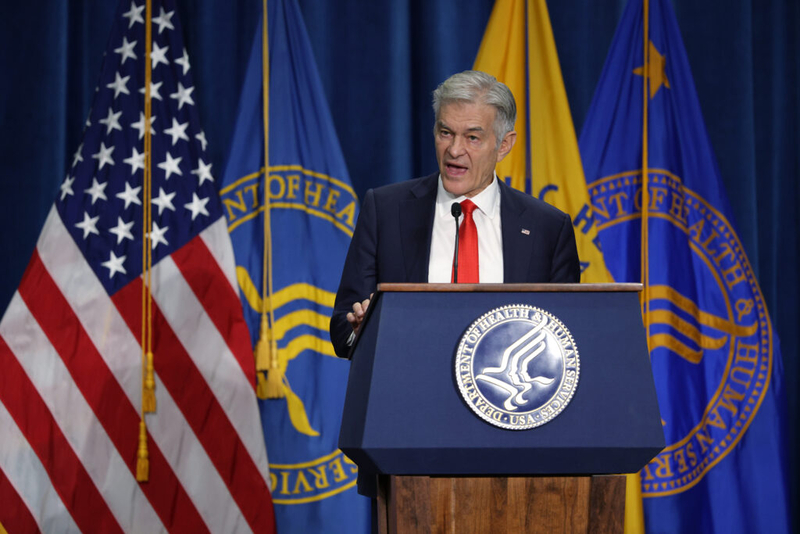
    “This rule helps Americans build skills and independence through work, education, job training, or community service, creating new opportunities for themselves and their families,” said Dr. Mehmet Oz, director for the Centers for Medicare & Medicaid Services, in a statement announcing the new guidance.

    But critics of work requirements point to evidence that it kicks people off Medicaid who are otherwise entitled to it without meaningfully increasing the share of adults who are working.

    For example, Arkansas tried instituting work requirements for Medicaid recipients during Trump’s first term in 2018. By the time a federal judge halted the policy less than a year later, 18,000 adults had already lost coverage and reported problems paying off medical debt, delaying healthcare and delaying medications due to cost. Studies later found that Arkansas’ work requirements didn’t increase employment. And data shows that most adults on Medicaid under age 65 are already working.

    Supporters say the new requirements are flexible. They say the feds have created a broad category of “medically frail” people who are exempt from the work requirements, and they’re permitting states to allow people to self-attest that they’re exempt one time before documentation is required.

    The new work requirements will apply to about 20 million people who are eligible for Medicaid through expansion, according to estimates from health research organization KFF. These expansion enrollees make up about 30% of all Medicaid enrollees.

    A recent analysis from the Urban Institute projects that 3-7 million people could lose coverage because of the new work requirements.

    Stateline reporter Anna Claire Vollers can be reached at [email protected].

    This story was originally produced by Stateline, which is part of States Newsroom, a nonprofit news network which includes Virginia Mercury, and is supported by grants and a coalition of donors as a 501c(3) public charity.