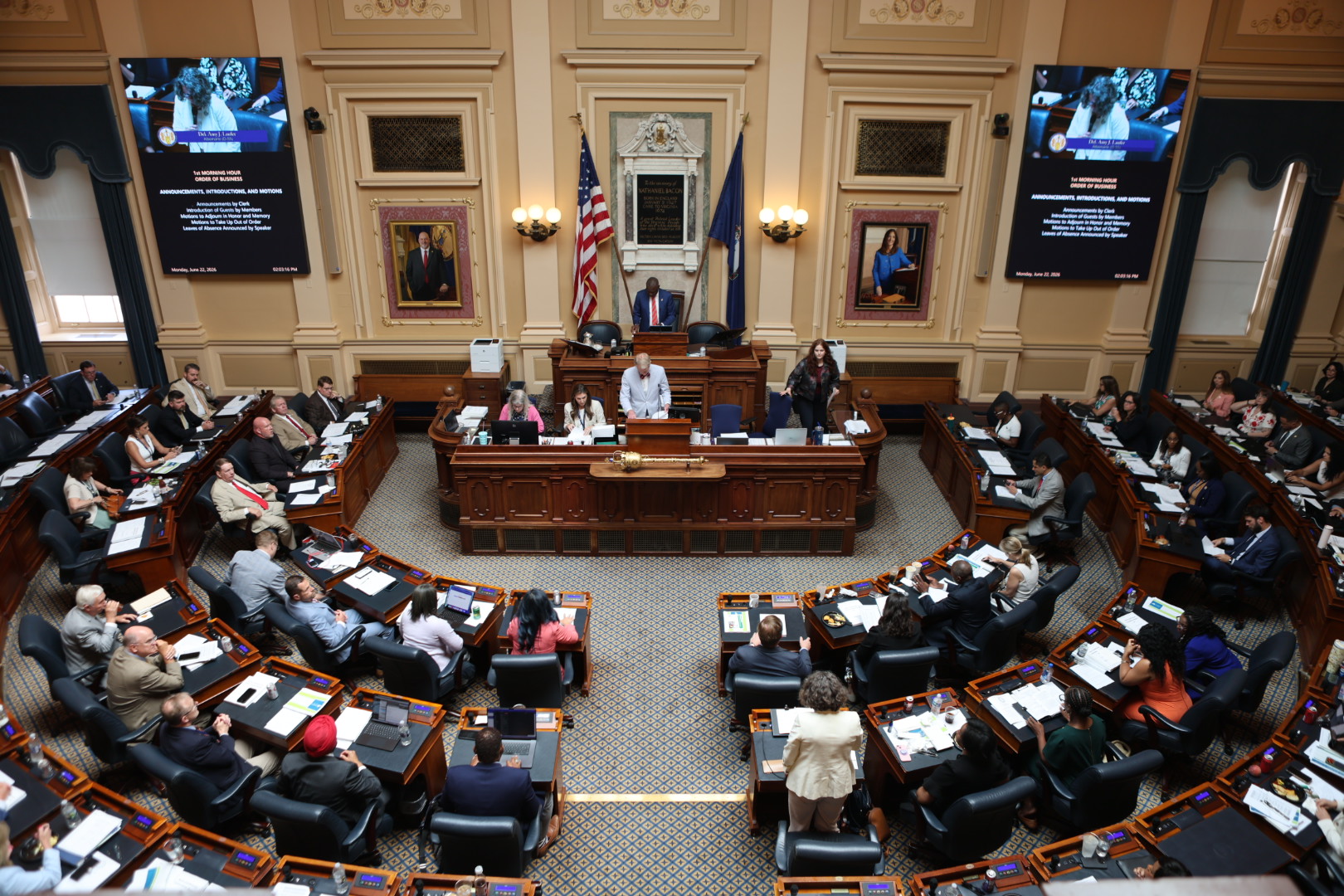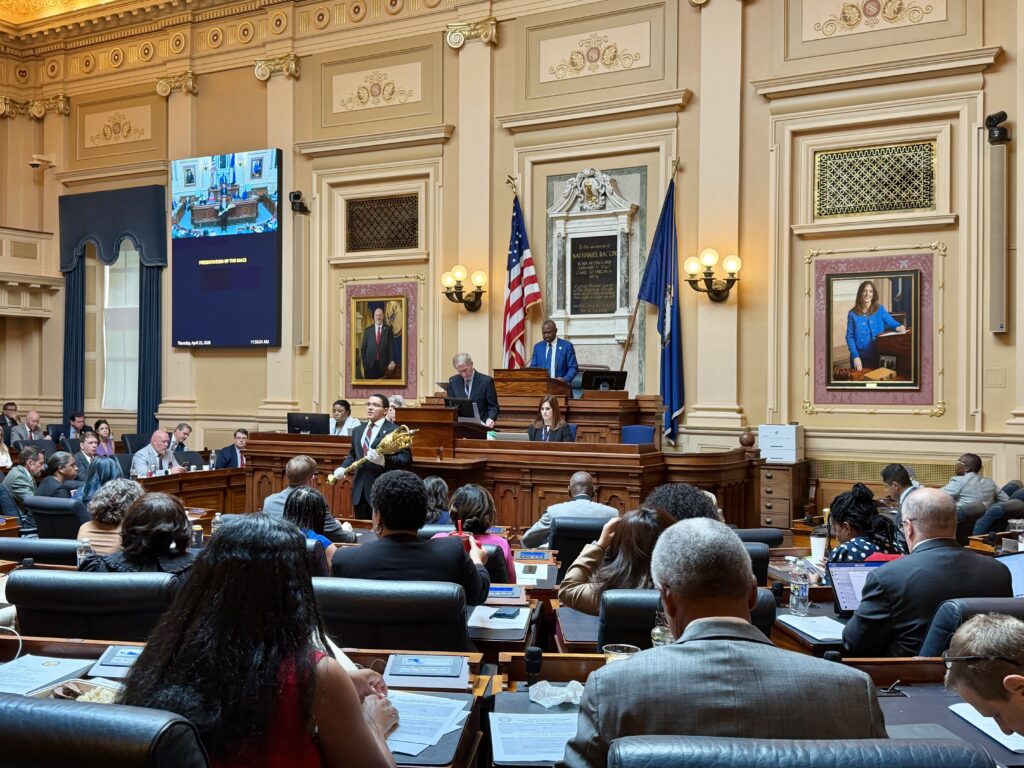
On Monday, Virginia legislators approved a two-year, $205 billion budget proposal to fund healthcare and public education, provide 4% teacher raises and a 3.5% pay bump to state employees, establish a retail weed marketplace and hedge against decreased federal dollars.
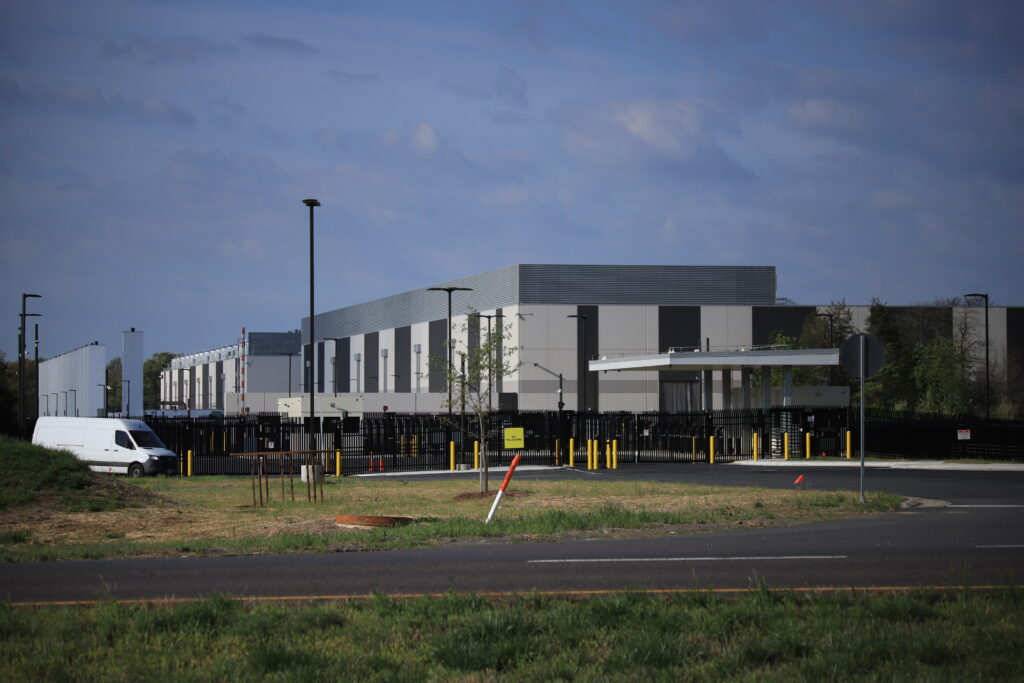
The spending plan also includes a provision to tax data centers for their energy consumption, which is slated to generate a maximum of $600 million each year but doesn’t include the environmental standards the House of Delegates wanted to impose on the industry or the end of the sales tax exemption that the Senate sought.
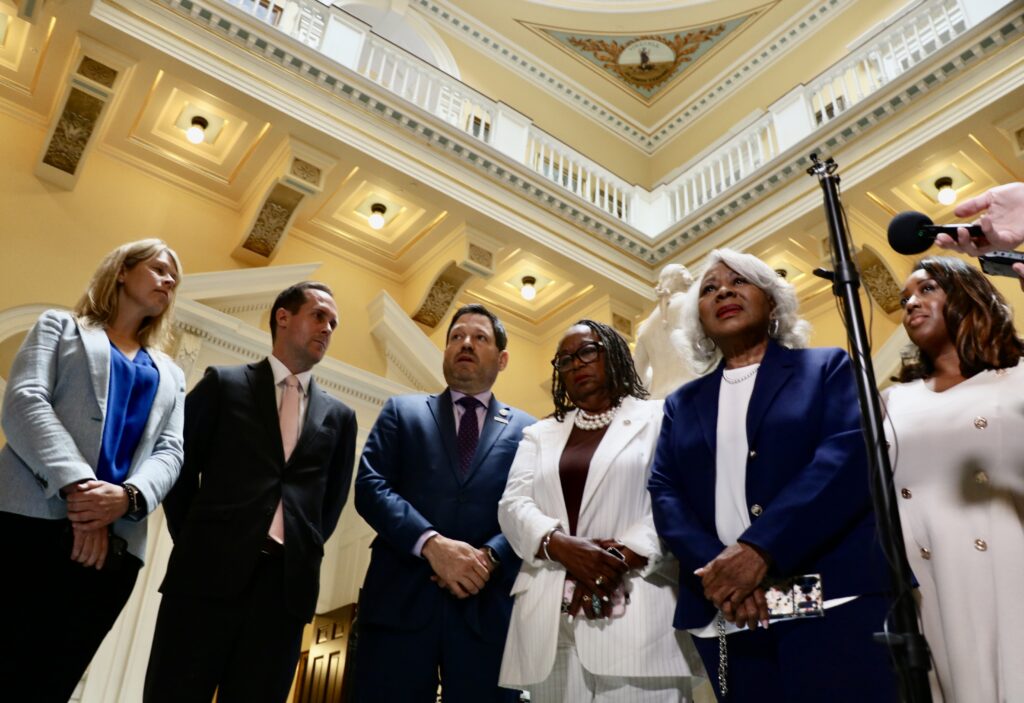
Senate Finance Committee chair Louise Lucas, D-Portsmouth, said after her chamber’s morning session that she “didn’t love” the data center compromise and framed it as a necessity — but not the final solution.
“I would have preferred another method, but we had to get a budget. We were not going to let the government be shut down, and so this was a good start,” Lucas said.
“This is a compromise proposal — one my administration helped craft — and it builds a strong foundation for further discussions about the future of this industry in Virginia on issues like environmental and community impact,” Gov. Abigail Spanberger said of the data center provision in a statement.
The Senate passed the budget proposal 23-16 vote, while the House advanced it 71-22.
With both chambers finally on the same page after months of gridlock over data centers, the plan will now be reviewed by Spanberger. She can sign it as-is, recommend changes or veto line items. The whole process must be finalized by July 1, when the new budget will take effect.
Here are the key priorities addressed by the spending plan.
Data centers
The amended budget proposal creates an energy consumption tax for data centers which totals $.011 per kilowatt hour used per month.
The state will collect up to $600 million a year from this new tax, according to budget language. Any funds collected over that cap would be put into a fund and given back to data centers at the end of each fiscal year.
This is only a fraction of what the state could have made if they had ended the sales and use tax exemption, but, after months of arguing, lawmakers ultimately didn’t agree to that measure. Spanberger supported keeping the exemption in place through the end of the agreement’s term in 2035.
Additionally, language was put into the budget to direct the Department of Environmental Quality to study the groundwater impacts of non-closed loop data centers, which use millions of gallons of water each year.
DEQ will locate “cooling water scarcity areas” where the use of potable water for computer cooling systems could be detrimental to surrounding areas’ water quality and availability.
The department will have until July 2027 to create regulations for the scarcity areas. After they are developed, future data centers in that area will be required to “use air cooling, closed loop cooling systems, or more efficient cooling systems that become available.”
After July 1, 2027, data centers in the Eastern Groundwater Management Area will have to “use air cooling systems, 100% recycled water and/or stormwater for cooling, or use a closed loop system.” A study will be released in October 2026 on how to retrofit existing data centers in those areas to align with the new regulations.
Some Republican lawmakers characterized the measure as inconsistent.
“The budget does not create one strong statewide water usage standard for data centers. Some parts of Virginia get stronger protections and other parts get weaker protection or no protection at all,” said Sen. Glen Sturtevant, R-Chesterfield. “That should concern every locality that is concerned about becoming the next target for a massive data center.”
Senate budget proposal keeps data center sales tax exemption, adds new tax for industry
Budget language also directs DEQ to put in place noise abatement regulations for data centers before the end of 2029. The department will determine the lowest possible noise level for data centers and make it the standard starting in 2030.
After that date, facilities who violate the noise standard will face a fine of $32,500 per day.
“The noise issues are some of the things we hear the most from people that live next to data centers,” said Sen. Scott Surovell, D-Fairfax, whose district contains dozens of data centers. “Water is a rising concern, especially for any data centers that are gonna be put east of I-95, where we already have a real problem with our declining aquifer.”
Lucas told reporters that this is not the end of the conversation about doing away with the sales and use tax exemption, and that a study group will look closer at the issue and provide a report on their findings in November.
Health and human services
Overall, the pending budget will earmark $158.3 million in the state’s general fund for fiscal year 2027 and $245.1 million in 2028 for healthcare and social services.
The money was set aside both for healthcare and social services the state typically handles along with support to comply with new federal mandates and partially plug holes created by federal funding shortfalls.
As thousands of Virginians have fallen off Affordable Care Act health insurance this year, Virginia’s new budget entails $150 million to support a state-level version of the expired federal assistance for people between 138% and 250% of the federal poverty level.
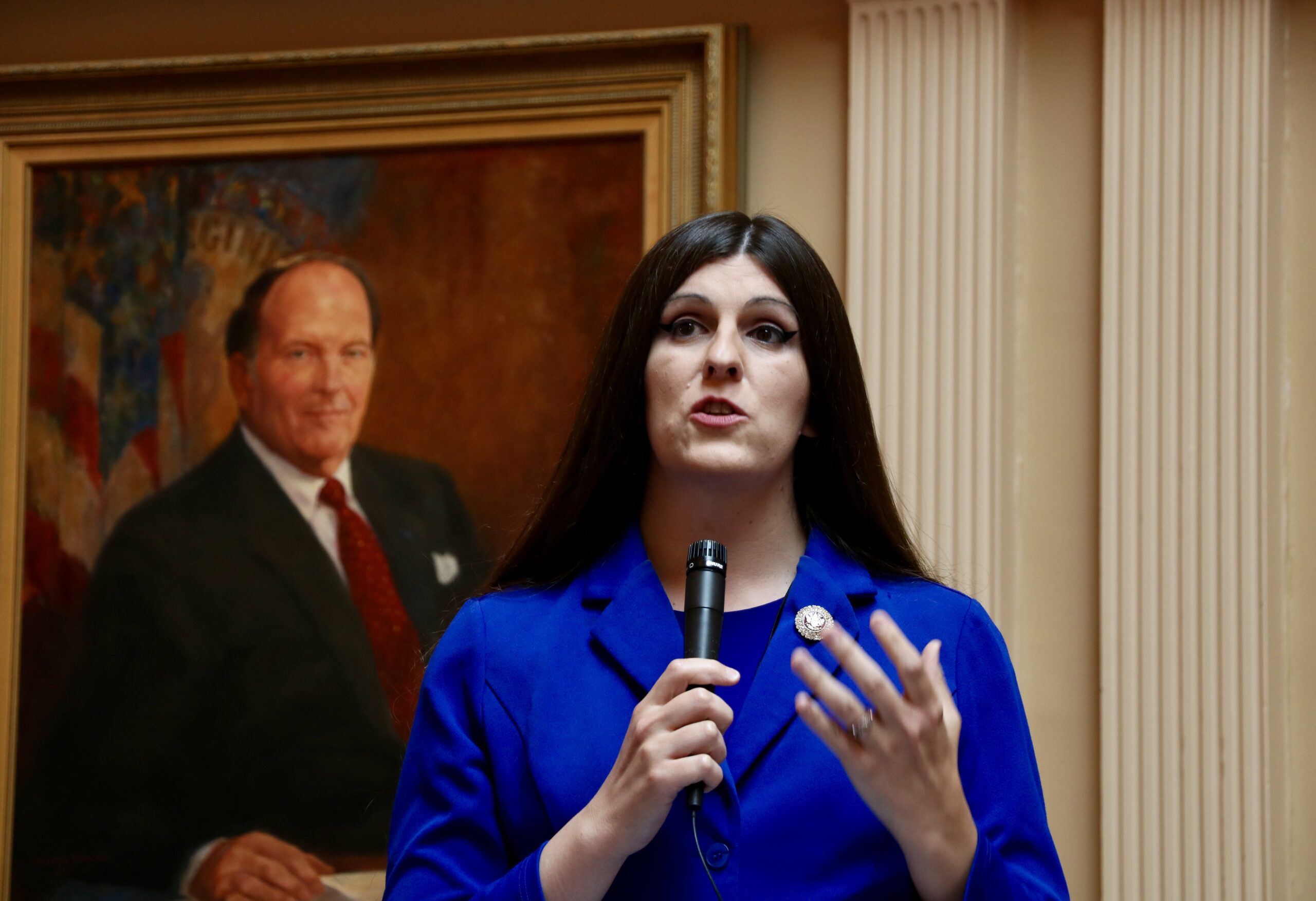
Sen. Danica Roem, D-Manassas, a former journalist and restaurant worker, described the difficulty of living uninsured for two years in a floor speech on Monday.
“I don’t want anyone to live like that,” she said.
She added that the budget “puts major money” into making sure that the state is “taking care” of people.
The plan calls for $3.5 million to determine ways the state can ensure eligible people remain on Medicaid amid forthcoming eligibility requirement shifts and additional verification work.
Virginia’s roughly 850,000 Supplemental Nutrition Assistance Program beneficiaries went without their food stamps last fall during the federal shutdown. And due to a reconciliation bill Congress passed last summer, states like Virginia are attempting to reduce their error rates.
State lawmakers have designated $135 million to handle SNAP, should the error rate not fall to the required 6% by the end of the calendar year.
Sometimes SNAP households are overpaid or underpaid because of paperwork mistakes by government staff or outdated information from beneficiaries. Work in social service departments is already underway to reduce error rates.
Free clinics will receive $20 million in state funding over the next two years while federally qualified health centers will get $10 million in that time.
While federally qualified health centers offer sliding scale fees for low-income patients, free clinics are also a resource for uninsured patients. Both entities have been bracing for additional clients as Virginians lose their ACA or Medicaid insurance.
A little over $1 million is allocated to help local health departments statewide handle rent increases. The regional centers help fill healthcare access gaps and are often tailored to the local communities they serve.
As federal dollars for HIV/AIDS care are slashed, the state budget also contains over $26 million for that specific type of healthcare over the next two years. Staying on top of medication is critical in preventing the spread of the disease.
Education
Under the newly approved budget proposal, K-12 education funding would increase by $1.4 billion, including a 4% increase for teachers in each of the next two years.
Lawmakers propose $590 million for rebenchmarking, declining enrollment, and high-need groups, including $28.9 million for at-risk and $148.4 million for special education students.
Also included: $500,000 for grants to help schools purchase Automated External Defibrillators (AEDs) and implement cardiac emergency response plans.
In higher education, the budget proposes restoring funding for affordable access and tuition moderation, as well as expanding nursing programs at several public universities. The Internships Virginia (InVA) initiative to provide paid internships for postsecondary students would also be funded.
Virginia localities raise $119M for school construction through targeted sales tax
To support educational infrastructure, lawmakers also agreed to expand the authority to allow all localities to use a 1% sales tax to pay for construction costs, contingent on a referendum that must pass in each jurisdiction. The language also permits jurisdictions in Northern Virginia to use the funds for transportation projects to address public transit needs.
Tax deductions
Taxpayers will be able to keep a bit more of their cash, as the new budget increases the standard income tax deduction from $8,750 for single filers and $17,500 for joint filers to $9,200 and $18,400 in 2027 and $9,300 and $18,600 in 2028.
RGGI/environment
A budget amendment was added into the conference report that would divert 45% of the funds earned from the Regional Greenhouse Gas Initiative back to ratepayers.
The funds come from carbon credit sales, which utilities must purchase if they want to burn carbon-based fuels sources that release emissions. Those costs are then passed down to utility customers.
When former Gov. Glenn Youngkin removed the state from the agreement in 2021, it cost about $4 a month on the average residential customer’s bill. Recently, Dominion Energy filed for the “RGGI Rider” to be added back to monthly bills as mandated by a law to rejoin the agreement, signed by Spanberger in recent weeks.
Dominion is required to begin purchasing from the carbon credit auction in July but the charge to customers won’t begin until March should the State Corporation Commission approve the application by the utility. This will lead to an increased charge of $10-$13 monthly.
The state previously earned about $800 million from the RGGI funds that had to go towards community flood preparedness projects and low-income energy efficiency projects. The new budget language includes the rebate for customers, which would put money back in wallets but detract from the funds for flood and efficiency projects.
The rebate will not apply to co-op utility customers.
Housing
While a handful of housing bills passed the 2026 session and have since been signed into law, the new spending plan includes measures to ensure bills with fiscal impacts get off the ground.
The state budget proposal directs $60 million overall for housing initiatives, $40 million of which will go to the state’s Housing Trust Fund and $20 million that will go towards a mixed-income housing pilot program.
Additionally, lawmakers set aside $11.5 million for the Virginia Eviction Reduction Program and $10 million for the Clean Energy Innovation Bank.
Cannabis
Spanberger and lawmakers announced June 16 a reworked proposal for a retail cannabis marketplace that included key compromises between legislators’ and the governor’s visions. The marketplace is set to launch July 1, 2027 and will be limited to 350 stores statewide.
Spanberger, legislators roll out retail weed plan, set to launch in July 2027
State sales tax on retail weed will be 6% at launch and will increase to 8% in 2029. Localities also have the option to add an additional tax of 1 to 3.5%.
Because lawmakers added a Part 5 amendment, the market will be permanently established in the state.
The new framework includes a $250 public consumption civil penalty that will not take effect until 2027.
“We had serious concerns about creating extreme new penalties that would not have meaningfully reduced the illicit market,” Sen. Lashrecse Aird, D-Henrico, said at a press conference announcing the framework last week.
“But we believe this final framework strikes the right balance for enforcement mechanisms, but also in accountability, but also not harming those who just choose to participate in the market.”
Child care
The budget sets aside $137.6 million for the state-subsidized child care program slots, which will be devoted to families making 85% or less of the state median income.
This follows legislation carried by Del. Briana Sewell, D-Prince Wiliam, requiring the state education department to update how it calculates the cost of childcare for Virginia families. A majority of Virginia parents and employers say child care costs are prohibitive.
Spanberger signed the bill into law last month.
A new cost-sharing program for child care will be funded through the budget, with lawmakers allocating $25 million for the initiative to spread the price of child care between families, employers and the state.
Transportation
Lawmakers included $153 million in the budget for additional operating assistance for the Washington Metropolitan Area Transit Authority, or Metro, with the caveat that Metro must produce a 20-year capital plan and annual performance reports.
The action comes as inflation has driven up the costs of operating transit services.
Lawmakers also proposed directing the secretary of transportation to evaluate options, including public-private partnerships, to accelerate large-scale improvements to the I-81 corridor.
The legislature allocated $7 million for the Route 460 Phase IIA Finish Grade Project and directed stakeholder engagement to prioritize improvements along the U.S. Route 220 corridor.
The budget also directs the state to identify federal funds to support rural electric-vehicle charging infrastructure and provides $500,000 to continue developing Advanced Air Aviation Test Sites to enable advanced air mobility.
What’s next
The proposal will now head to Spanberger, who said it contained “a lot to be proud of” in a Monday afternoon statement.
“Today, the General Assembly has moved forward with a budget proposal — and that means we are keeping our government open and delivering for the 8.8 million people who call our Commonwealth home,” she added.