Tag: Latest News

  • Free lemonade to be served just in time for approaching heat wave

    Free lemonade to be served just in time for approaching heat wave

    By Charles Owens
    For Bluefield Daily Telegraph

    Bluefield — Free lemonade will be served next week in Nature’s Air-Conditioned City just in time for an approaching heat wave.

    Temperatures next week are expected to climb close to 90 degrees for several days, including on Thursday, July 2. That’s when free lemonade was already scheduled to be served as part of the Chamber Night at the Ballpark promotion.

    The Bluefield Ridge Runners baseball game starts at 5:30 p.m. at Bowen Field and will feature free lemonade and free t-shirts, along with a fireworks show later that evening, according to Jeff Disibbio, president and chief executive officer of the Chamber of Commerce of the two Virginias.

    “We are happy to celebrate our Chamber Night at the Ballpark,” Disibbio said. “We have partnered with East River Psychiatry. We will have free t-shirts available as well as free lemonade. We are also going to have fireworks that night. So it should be an exciting night packed full of fun and baseball. We hope we have a great crowd to come out and participate.”

    I’ve already spoken with Kwik Kafe who we partner with on this and they are aware of the potential of us hitting 90 degrees, and they are prepared to deliver and help us serve ice cold lemonade to help cool all of us off during those 90 day temperatures,” — Jeff Disibbio, president and chief executive officer of the Chamber of Commerce of the Two Virginias.

    The approaching heat wave is simply a coincidence, as the event had been scheduled well in advance.

    “I’ve already spoken with Kwik Kafe who we partner with on this and they are aware of the potential of us hitting 90 degrees, and they are prepared to deliver and help us serve ice cold lemonade to help cool all of us off during those 90 day temperatures,” Disibbio said.

    The heat wave is expected to last for several days with temperatures climbing into the high 80s and near 90.

    Dissibio said Bluefield has recorded 90 degree reading during past chamber events, including the coal show and the chamber’s golf tournament.

    While it is too early right now to say whether or not Bluefield can expect an official 90 degree reading next week, Dissibio said free lemonade will still be served at Bowen Field on July 2 regardless of the actual temperature.

    “Guaranteed regardless,” Disibbio said. “There will be lemonade served next week, somehow and someway.”

    The combination of free lemonade, free t-shirts to the first 200 people through the gate and free fireworks at dusk means a large crowd will be expected on July 2 at Bowen Field.

    “It (fireworks) generally draws a big crowd,” Disbbio said. “The fireworks draws a big crowd to the stadium as well as the parking lot. Some people watch from East River Mountain. It’s very well attended.”

    According to AccuWeather, millions across the country will face widespread 90-degree weather next week as a “heat dome” sets up over the eastern United States ahead of the long Fourth of July weekend. This pattern will bring extreme heat to the central and eastern states, according to AccuWeather.

    A heat dome is a sprawling area of high pressure that creates hot and humid conditions for days or weeks at a time, according to a AccuWeather press release. Heat domes can prevent clouds from forming, resulting in abundant sunshine that boosts temperatures, potentially toward record levels.

    The last time Bluefield hit 90 degrees was July 15, 2024.

    Bluefield’s nationally recognized lemonade promotion dates back to 1939.

    That was when the late Edward H. “Eddie” Steele, the chamber president at the time, came up with the promotion as a way to bring increased attention to the city of Bluefield.

    As the story goes, Steele initially proposed offering free rooms at the West Virginian Hotel if the local temperature reached the 90-degree mark. But Steele had to scrap that idea when an Odd Fellows convention was in town, and the temperature hit 90 degrees. The initial promotion proved to be too expensive for the chamber, according to local history.

    Steele then came up with the idea of serving free lemonade in the city when the mercury climbed above 90 degrees. At about that same time, Steele authored Bluefield’s time-tested slogan, “Nature’s Air-Conditioned City.”

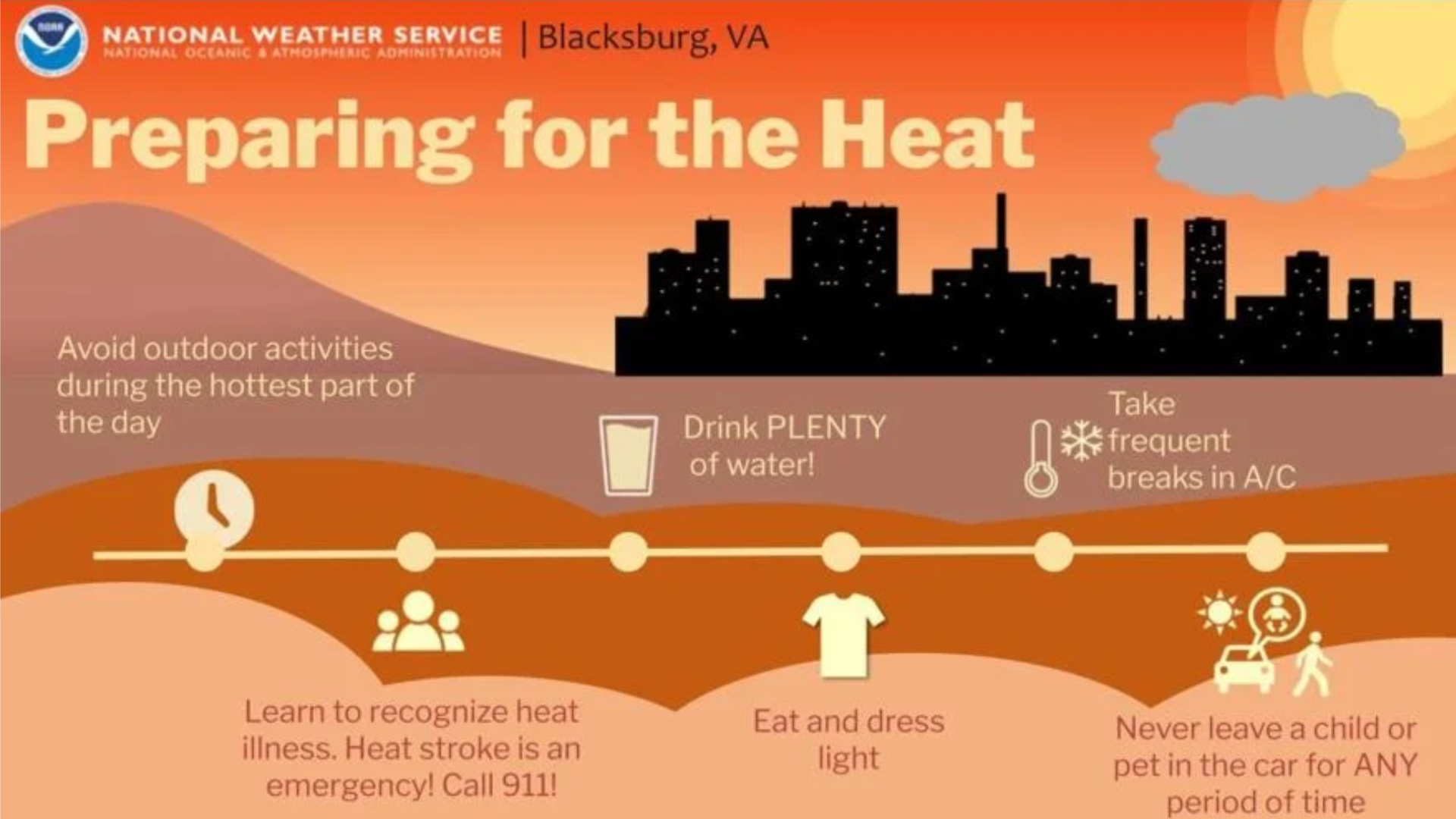
    National Weather Service graphic: Temperatures next week are expected to climb close to 90 degrees for several days, including on Thursday, July 2. That’s when free lemonade was already scheduled to be served as part of the Chamber Night at the Ballpark promotion.

    At that point, the chamber would have to wait another two years before the mercury would hit 90 degrees again in Bluefield. It finally happened during the pre-war summer of 1941.

    Since that time the lemonade promotion has garnered national attention for Bluefield and in more recent years, the town of Bluefield, Va.

    The lemonade tradition in Nature’s Air-Conditioned City has endured throughout the ages, despite a number of challenges over the decades, including a lemon and sugar shortage during World War II, criticism from area clergymen, a strike by the Lemonade Lassies, controversy that still flares up from time to time to this very day over what constitutes an actual 90-degree reading in Bluefield.

    Read more from Bluefield Daily Telegraph, here.

    The post Free lemonade to be served just in time for approaching heat wave appeared first on West Virginia Press Association.

  • ‘This is my new Kroger:’ Customers react to new South Charleston Kroger Marketplace

    ‘This is my new Kroger:’ Customers react to new South Charleston Kroger Marketplace

    By Amanda Larch Hinchman
    For HDMedia

    Brands like Carhartt, Hot Wheels and KitchenAid can all be found alongside grocery staples at the new Kroger Marketplace in South Charleston, which opened to the public Wednesday morning.

    Dozens of people waited in line to shop at the 122,000-square-foot facility, including South Charleston resident Ryan Jenkins.

    “I’ve been looking forward to it,” Jenkins said. “I think it’s going to be great, especially bringing in the Dunbar community. I think it’s going to do great for South Charleston and Park Place.”

    The Dunbar Kroger closed in May, and the 50,000-square-foot Riverwalk Plaza Kroger closed Tuesday.

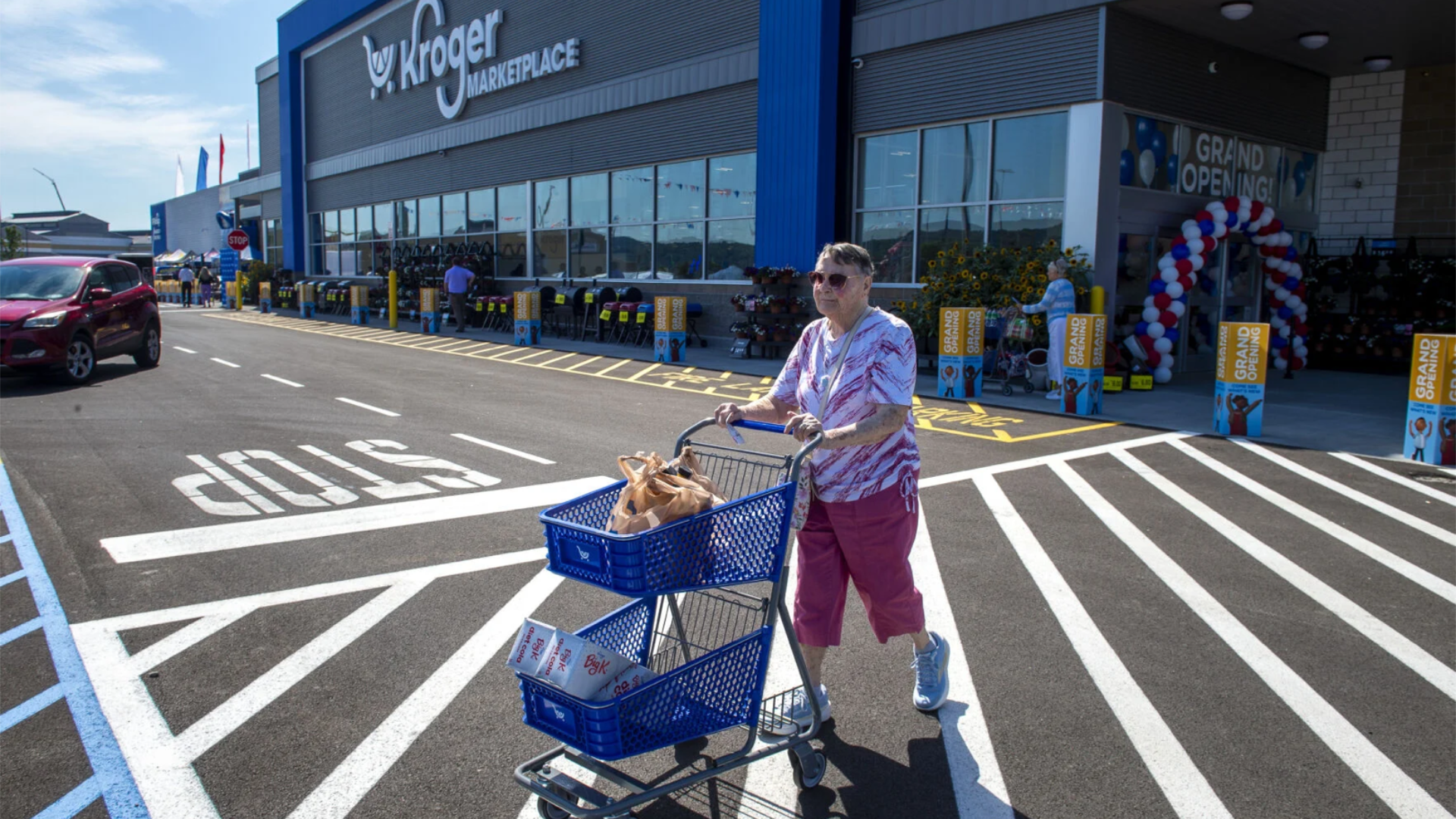
    Photo by Laura Bilson | South Charleston resident Carol Eplin walks out of the grand opening of Kroger Marketplace in South Charleston, Wednesday, June 24, 2026.

    Jenkins, who formerly shopped at the Riverwalk Kroger, said while it was sad to see that store empty out, he’s happy with the new shopping center.

    “It’s going to take a while to figure out where everything is, but I love that it’s big and wide open,” Jenkins said. “You don’t have to crowd through all the aisles.”

    Featuring an expanded selection in every department, as well as the addition of clothing, customers could taste free samples and participate in gift card giveaways after a ribbon cutting Wednesday.

    Lifelong South Charleston resident Kelly Gray said the new Kroger Marketplace reminded her of what can be found in bigger cities.

    “It’s so convenient,” Gray said. “I just love it. I shopped at Riverwalk before; this is my new Kroger. I don’t think I’m going to dislike anything. I think the whole town’s excited about it. It’s going to be really good for the community.”

    Another customer impressed by the array of options was Ashley Crum, who compared Kroger Marketplace to other large shopping centers.

    Photo by Mary Everett | A display of free cupcakes is shown in bakery section in Kroger Marketplace at Park Place during the grand opening in South Charleston on Wednesday, June 24, 2026.

    “It’s extremely well stocked, and one thing that I’ve been impressed with are the options for making espresso,” Crum said. “They have so many, not just coffees, but they have machines, like espresso machines and French presses and better selection than Walmart or Target.”

    While Crum shops at the Ashton Place Kroger in Charleston, she said she will return to South Charleston more often, especially for bigger grocery trips.

    “I’m just really impressed and happy to see the store here,” Crum said.

    Largest Kroger in West Virginia

    The Riverwalk Kroger, which closed its doors Tuesday evening, had 20 aisles. The new Kroger Marketplace boasts 65, with more room between each, as well as additional room between registers. The marketplace also increased its number of employees to 370, many of which are from the former Dunbar and Riverwalk Kroger locations, according to store leader James Mullins.

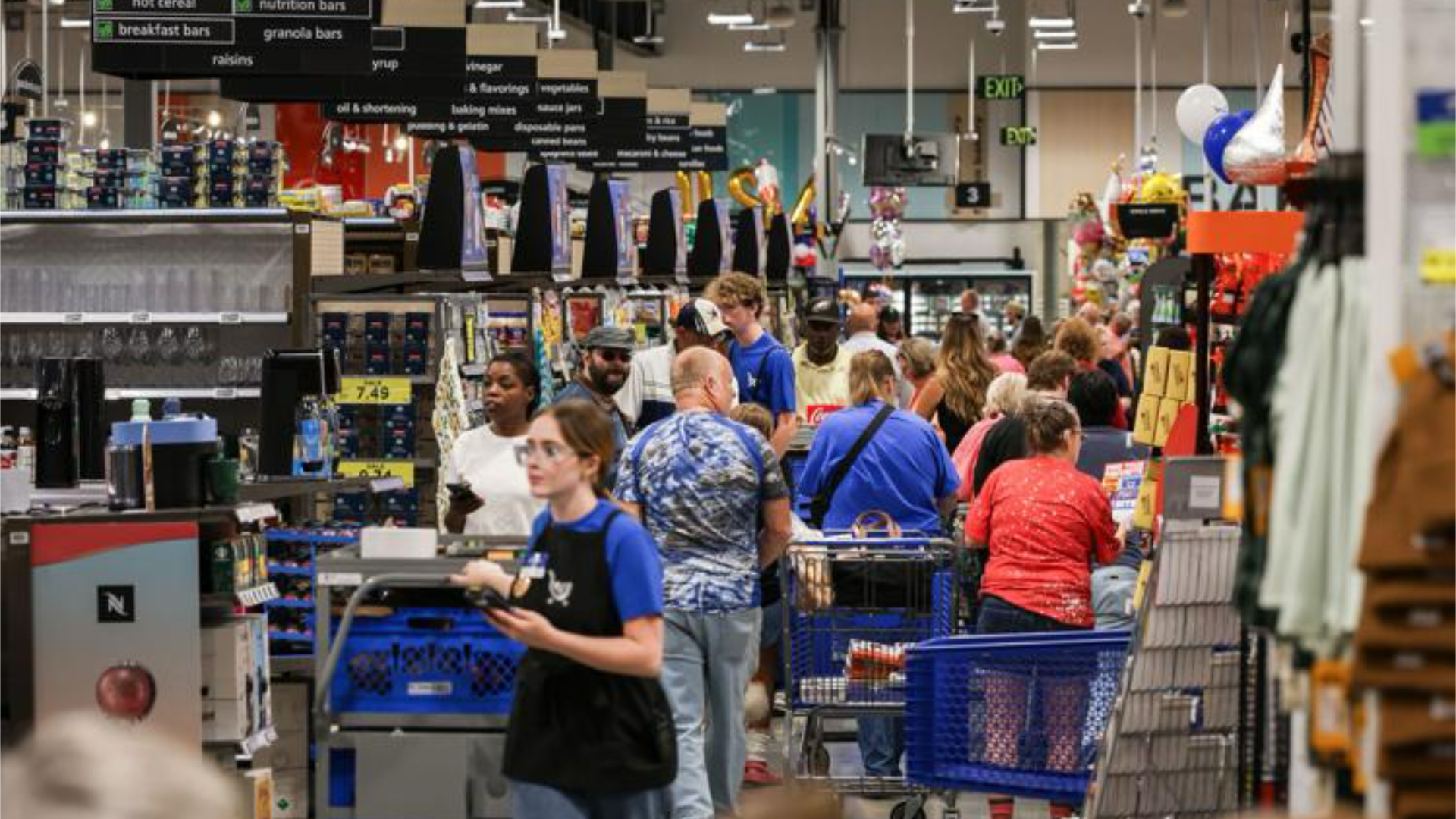
    Photo by Laura Bilson | People shop at the grand opening of Kroger Marketplace in South Charleston, Wednesday, June 24, 2026.

    “(We) combined both stores, and we hired another 150 plus to get us to where we needed to open,” Mullins said. “So not only did we try our best to retain all the associates from both stores, but we also created some new jobs.”

    With more than 50,000 items in stock, this is the largest Kroger in the state and the first Kroger Marketplace in West Virginia.

    South Charleston Mayor Frank Mullens said it represents the completion of a 10-year project.

    “We like being first in South Charleston,” Mullens said. “To get to this point is very rewarding.”

    During the ribbon cutting ceremony, Mullens thanks Kroger representatives for investing in the South Charleston community.

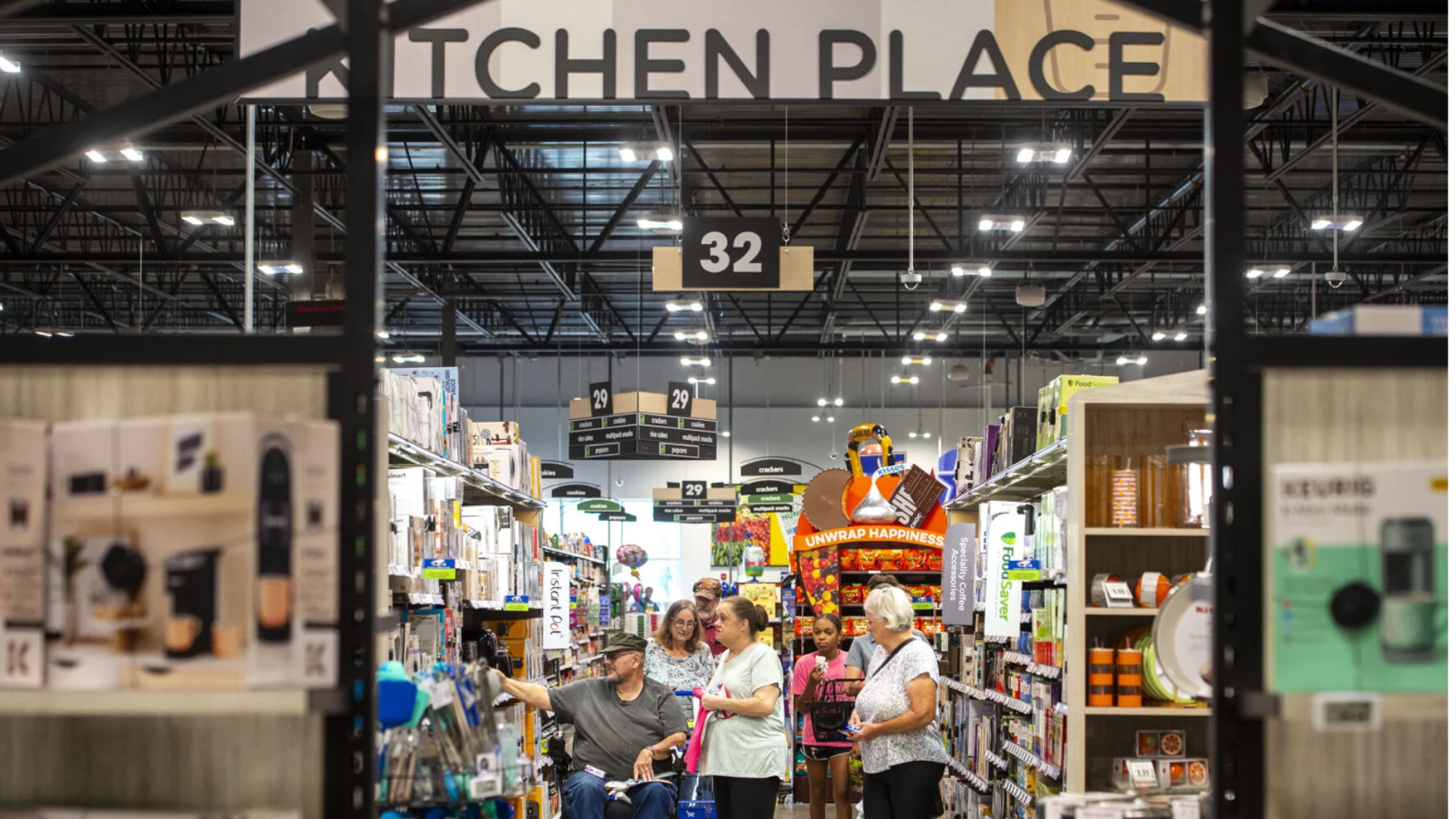
    Photo by Mary Everett | Customers walk through aisles at the Kroger Marketplace Grand Opening at Park Place in South Charleston on Wednesday, June 24, 2026.

    “[You’ve] been part of our community for almost 100 years,” Mullens said. “It’s always a special day when you cut a ribbon, but when a company like this reinvests and wants to stay here for a long period of time, that’s the ultimate compliment.

    “This project is a result of state, county, city government working together as we always should, and when we do and we have a common goal, good things happen,” he continued. “Let’s remember that.”

    Kate Mora, president of Kroger Mid-Atlantic Division, said the new Kroger represents a significant investment and continued commitment to growing alongside the customers they serve.

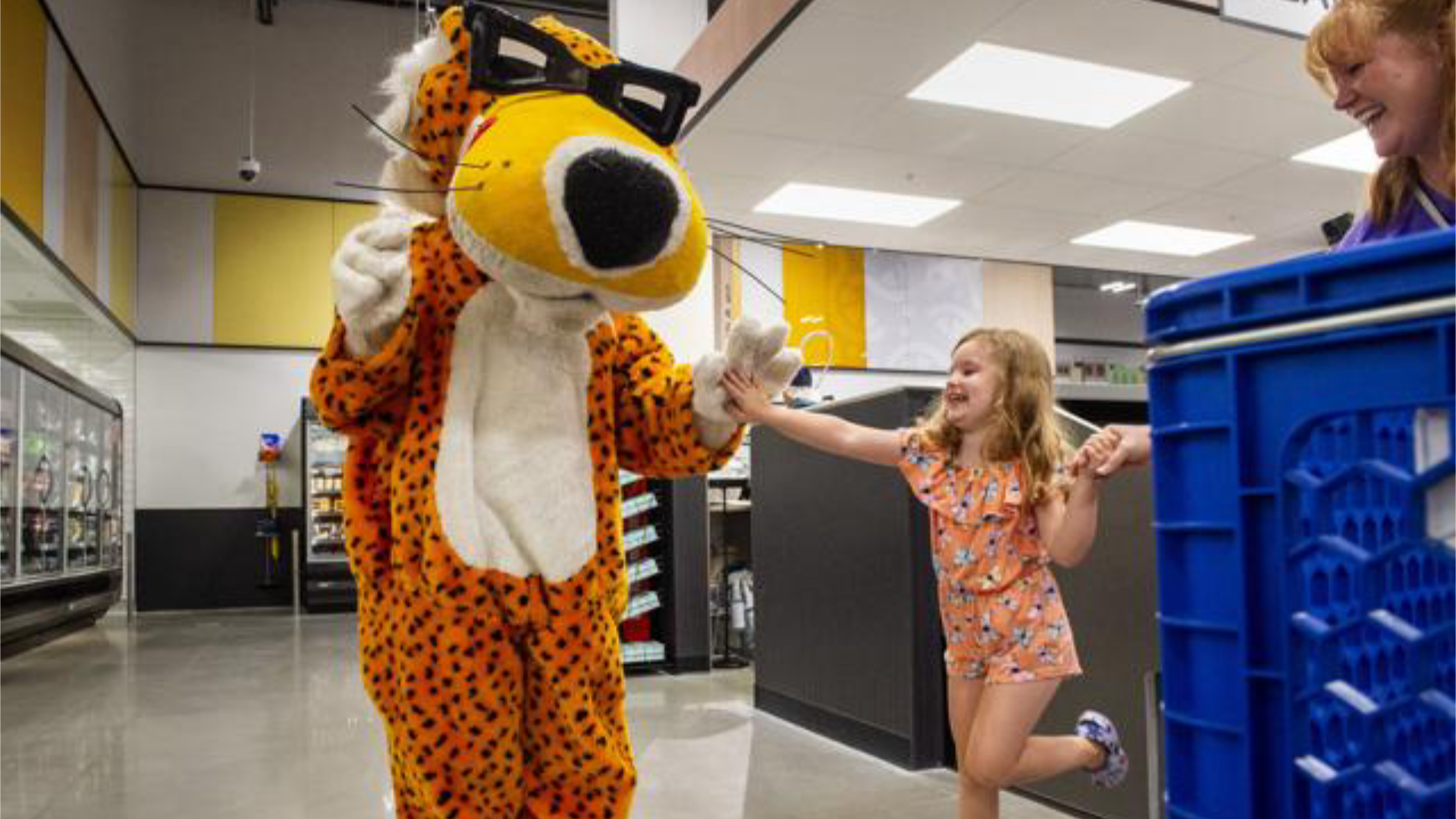
    Photo by Laura Bilson | A Chester the Cheetah mascot high fives Sissonville resident Bonnie Bonar, 4, as her mother, Sarah Bonar, laughs at the grand opening of Kroger Marketplace in South Charleston, Wednesday, June 24, 2026.

    “This store showcases the very best of Kroger,” Mora said. “It’s designed for more than just a place to shop, it’s a place to discover, to gather, to enjoy. You’re going to love shopping here.”

    Mora said it’s also important to create an environment where associates feels supported, valued and inspired.

    “Because when our associates have great experience, they’re able to create meaningful, memorable experiences for our customers,” she said. “That connection is at the heart of everything that we do.”

    What’s next for Park Place, Riverwalk

    New tenants at Park Place have signed letters of intent, but these are not binding, Mullens said, so they are waiting to make official announcements.

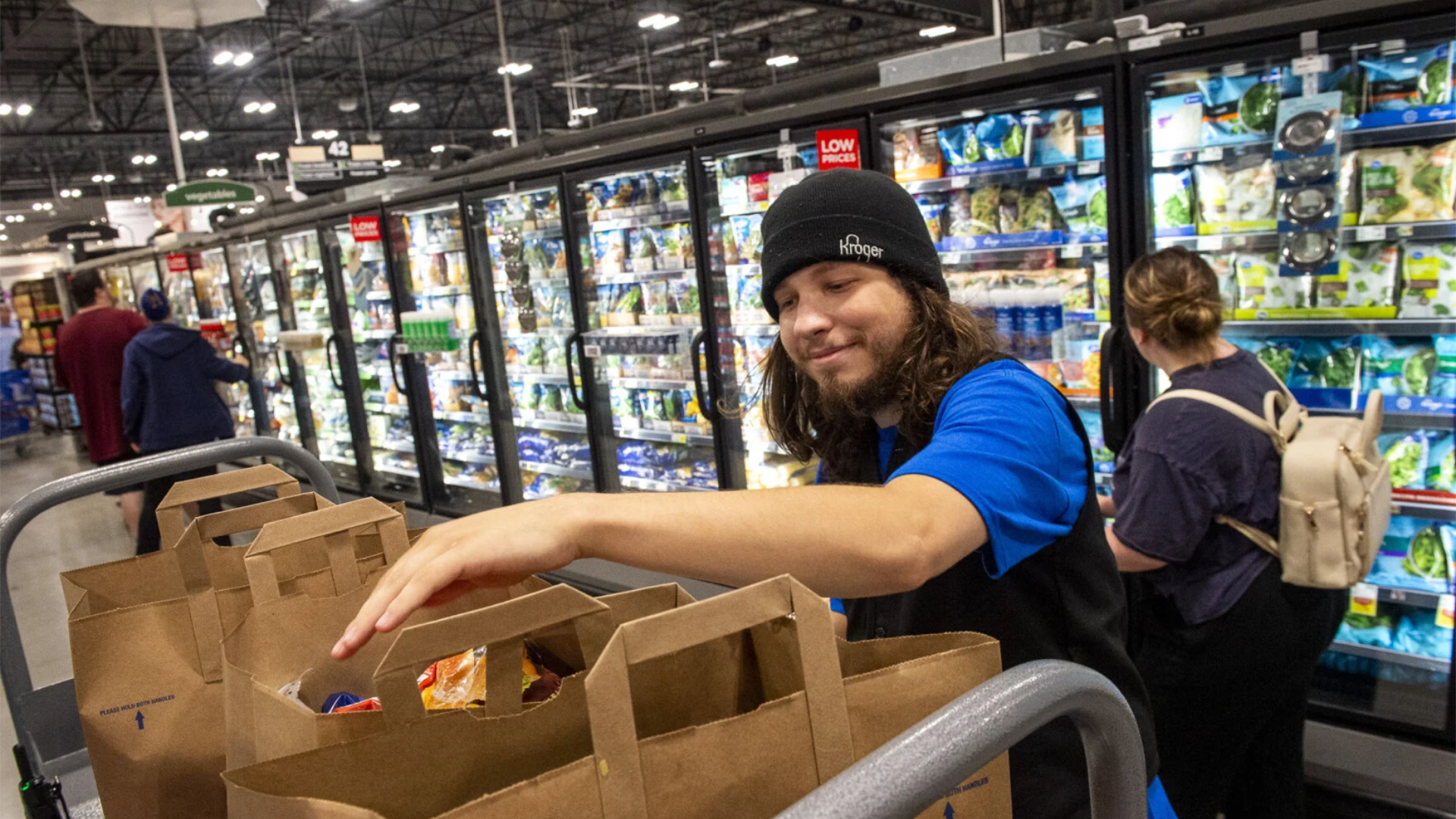
    Photo by Laura Bilson | Kroger employee Jonathan Reveal loads online orders into bags at the grand opening of Kroger Marketplace in South Charleston, Wednesday, June 24, 2026

    “We want to wait until we get them signed, sealed and delivered,” he said.

    Additionally, Mullens said he can’t make the official announcement just yet about the two businesses coming to the former Kroger location at Riverwalk Plaza.

    “Hopefully we’ll make that announcement soon as well, but it’s my understanding it’s going to happen pretty swiftly,” he said.

    Other stores announced for Park Place Shopping Center include:

    • 7 Brew Coffee
    • Chipotle Mexican Grill
    • Great Clips
    • Huey Magoo’s
    • Menards
    • Mission BBQ
    • Nothing Bundt Cakes
    • Opulent Nails
    • Pigtails and Crew Cuts
    • Pizzas and Cream
    • Skechers Outlet

    Teamsters on strike

    About two dozen representatives of Teamsters Local 175 picketed outside the Kroger Marketplace, encouraging customers not to purchase products delivered by the Beverage Market, located near Sissonville. The picketers left around 10:30 a.m.

    Local 175 is currently on strike against the Beverage Market, a beer distributor. Kroger is not striking, nor is the strike related to Kroger, whose hourly employees are unionized.

    Read more from HDMedia, here.

    The post ‘This is my new Kroger:’ Customers react to new South Charleston Kroger Marketplace appeared first on West Virginia Press Association.

  • W.Va. Governor’s Office disappointed in ruling pausing SNAP waiver banning soda purchases

    W.Va. Governor’s Office disappointed in ruling pausing SNAP waiver banning soda purchases

    By Steven Allen Adams
    For The Parkersburg News and Sentinel

    Charleston – The office of Gov. Patrick Morrisey expressed disappointment in a federal ruling pausing West Virginia’s waiver prohibiting the use of welfare benefits for sugary drinks and sodas.

    The U.S. District Court for the District of Columbia released a memorandum opinion Monday halting the implementation of Supplemental Nutrition Assistance Program (SNAP) waivers approved by the U.S. Department of Agriculture for five states: Colorado, Iowa, Nebraska, Tennessee, and West Virginia.

    These waivers restricted the purchase of certain items like soda and candy. The legal challenge was brought in March by SNAP participants against the U.S. Department of Agriculture.

    U.S. District Judge Amy Berman Jackson ruled that Secretary of Agriculture Brooke Rollins exceeded her statutory authority by approving these projects under a provision meant for administrative efficiency rather than health-based restrictions. The court also found the USDA failed to follow mandatory notice procedures, as the projects were likely to have a significant impact on the public.

    “The Court’s analysis should not be taken as a comment on whether the pilot projects are a good idea or not,” Jackson wrote. “That is a question of policy that is not before the Court. The federal defendants and the states may have a genuine desire to improve the health of SNAP households by encouraging healthy choices at the store, and they can take lawful steps to meet those goals. But what they cannot do is violate the law and their own regulations along the way.”

    Lars Dalseide, communications director for Gov. Patrick Morrisey, issued a statement Wednesday morning saying Monday’s decision would not discourage the administration from working to improve the health of West Virginians.

    “We are disappointed by the court’s decision but remain convinced that precious taxpayer subsidized resources should only be spent on healthy, nutritious food for those who need help the most,” Dalseide said. “Our commitment to improving the health of West Virginians has not changed, and we will continue to advance commonsense policies that encourage healthier choices and better outcomes.”

    Morrisey joined Rollins and U.S. Department of Health and Human Services Secretary Robert F. Kennedy Jr. in Washington, D.C., for an August 2025 signing ceremony for West Virginia’s SNAP waiver. West Virginia was one of six states that had its SNAP waivers approved by Rollins at that event.

    “There’s no way around it when it comes to West Virginia. Unfortunately, we’re ranked at or near the bottom of a lot of the tough public health metrics,” Morrisey said. “Now, that’s the bad news, and I believe in telling the truth to the American people about where we are, because that’s going to make the rise all the more better when West Virginia is able to reach her potential and to get healthy again. The good news today is that we all have the power to change it.”

    Morrisey submitted a formal waiver request to the USDA in May 2025 to remove regular, diet and sugar-free soda as food products that can be purchased on SNAP, the program that replaced food stamps.

    According to the waiver request, there are 146,458 households and 273,981 individual recipients receiving SNAP benefits in West Virginia.

    Morrisey’s focus on SNAP is part of his “Four Pillars of a Healthy West Virginia.” Those pillars include a ban on food dyes and additives with the passage of House Bill 2354 during this year’s legislative session (a law that is on pause due to a separate federal judicial ruling), increasing access to affordable healthy food choices for West Virginians, and the Mountaineer Mile challenge with Mountain Mile Trails being designated in 32 of West Virginia’s state parks.

    Encouraging healthy lifestyles among West Virginians is also a priority of the first tranche of the nearly $200 million federal Rural Health Transformation program. The state’s program focuses on seven core initiatives, including a Personal Health Accelerator, an initiative to build statewide wellness infrastructure and incentivize nutrition, physical activity, and “food as medicine” programs.

    Read more from The Parkersburg News and Sentinel, here.

    The post W.Va. Governor’s Office disappointed in ruling pausing SNAP waiver banning soda purchases appeared first on West Virginia Press Association.

  • W.Va. lawmakers urge Capito, Justice to support ending greyhound racing; Ohio County lawmakers oppose greyhound racing prohibitions

    W.Va. lawmakers urge Capito, Justice to support ending greyhound racing; Ohio County lawmakers oppose greyhound racing prohibitions

    By Steven Allen Adams
    For The Parkersburg News and Sentinel

    Charleston – Several Republican members of the West Virginia Legislature are encouraging the state’s two U.S. senators to back a ban on greyhound racing included in the latest version of the federal farm bill, while two lawmakers from Ohio County expressed support for the industry.

    In a letter sent Monday to U.S. Sens. Shelley Moore Capito and Jim Justice, both R-W.Va., eight members of the West Virginia Legislature urged the senators to endorse the Greyhound Protection Act within the Farm, Food and National Security Act of 2026. The letter was first reported by West Virginia Public Broadcasting.

    The Greyhound Protection Act would amend the Animal Welfare Act to ban greyhound racing in the country and make gambling on greyhound racing illegal. The bill would outlaw remote gambling on greyhound races and prohibit the transport and sale of greyhounds across state lines for the purpose of racing. Anyone violating these provisions would be fined and possibly imprisoned for up to seven years.

    Eight state lawmakers signed the letter: Senate Majority Leader Patrick Martin, R-Lewis; Sen. Chris Rose, R-Monongalia; Sen. Mike Azinger, R-Wood; Sen. Vince Deeds, R-Greenbrier; Sen. Anne Charnock, R-Kanawha; House Deputy Speaker Matthew Rohrbach, R-Cabell; Del. Jonathan Pinson, R-Mason; and Del. Jarred Cannon, R-Putnam.

    “As members of the West Virginia Legislature, we write to ask for your support of the Greyhound Protection Act and to urge its inclusion in the upcoming Farm Bill reauthorization,” the lawmakers wrote. “Federal action on this issue would help West Virginia follow the path that all other states have already taken, and most importantly, it will free up significant state tax revenues for unmet needs in our state.”

    Since 2020, West Virginia has the only remaining greyhound tracks in the nation at Mardi Gras Casino and Resort near Charleston and Wheeling Island Hotel Casino Racetrack. Both are owned by Delaware North. Voters in Ohio and Kanawha counties approved table games at Mardi Gras and Wheeling Island in 2007, but only as long as the casinos had racing. Wheeling Island will celebrate 50 years of greyhound racing in August.

    The two casinos employ more than 900 workers combined according to Delaware North, not including the number of businesses and support services that support the greyhound industry in West Virginia and other states.

    The farm bill, which is renewed roughly every five years, is awaiting action in the U.S. Senate. The bill passed the U.S. House of Representatives 224-200 with Rep. Carol Miller, R-W.Va., and Rep. Riley Moore, R-W.Va., voting for it. Moore offered an unsuccessful amendment to the farm bill – supported by Miller – that would have exempted West Virginia’s two greyhound tracks.

    According to the National Greyhound Association, the handle – the total amount of money – wagered on greyhound racing at West Virginia’s two tracks in 2025 was $353.4 million, a $5 million increase over 2024. Of that $353 million, more than $211 million was wagered at Wheeling Island and more than $142 million was wagered at Mardi Gras.

    West Virginia’s two greyhound tracks benefit from table game revenues. The West Virginia Lottery receives a privilege tax of 35% of adjusted gross receipts from each licensed racetrack which is deposited weekly into the Lottery’s racetrack table game fund. From the gross amounts deposited into the table games fund, the Lottery on a monthly basis retains 3% of the adjusted gross receipts for administrative expenses.

    The Lottery then transfers 2.25% of adjusted gross receipts from all thoroughbred and greyhound racetracks participating in licensed table games to the special funds established by each thoroughbred and greyhound racetrack table games licensee for the payment of regular racetrack purses to be divided equally among each licensee.

    A transfer of 1.8% of the adjusted gross receipts is made from all licensed racetracks to the thoroughbred development fund and the greyhound breeding development fund. Thoroughbred horse racing takes place at Mountaineer Casino Racetrack and Resort in New Cumberland and Hollywood Casino at Charleston Town Races.

    According to the West Virginia Lottery’s annual comprehensive financial report covering the 2024 and 2025 fiscal years, $2.08 million was distributed by the Lottery to racetrack purse funds in FY25, down from $2.107 million in FY24; while $1.664 was distributed to thoroughbred and greyhound development funds in FY25, down from $1.686 million in FY24. Past distributions to the West Virginia Greyhound Breeding Development Fund have ranged from $15 million per year to $17 million per year.

    This revenue from table game wagers is sometimes described as a subsidy. In the letter, the state lawmakers refer to studies from Ball State University and Spectrum Gaming Group that question the financial benefits of greyhound racing for West Virginia.

    “Every dollar that is diverted to greyhound purses is a dollar that does not flow to the state’s general revenue fund, lowering our citizens’ tax burden, paving state roads, or ensuring that local schools stay open,” the lawmakers wrote. “This arrangement is fundamentally inconsistent with the conservative principles we all share.”

    “The West Virginia greyhound program is, in plain terms, a government mandate paired with corporate welfare, and it has produced exactly the result one would predict: an industry that has collapsed everywhere it was allowed to compete on its own merits, kept on life support here only by force of law and support of subsidy,” the letter continued.

    State Sen. Laura Wakim Chapman, R-Ohio, disagreed with her fellow GOP lawmakers. In a statement Tuesday, Chapman compared federal involvement in ending greyhound racing to federal regulations on coal and coal-fired power generation.

    “This is just another example of federal overreach into West Virginia industries,” she said. “We saw it with the war on coal. This is a state issue under the separation of powers and must be addressed on the state level.”

    House Minority Whip Shawn Fluharty, Chapman’s Democratic opponent in the 1st Senatorial District, agreed, saying that support by state lawmakers for the Greyhound Protection Act was not an example of conservativism but an example of Republicans using the levers of big government to take away local control.

    “The irony is hard to miss,” said Fluharty, D-Ohio. “Many of the same politicians who routinely preach about states’ rights and keeping Washington out of West Virginia are now asking Congress to override our state’s authority and eliminate an industry that supports jobs and pensions for our police and fire in communities in the Northern Panhandle. They can’t even do it on facts.”

    State lawmakers attempted to push through a bill during the 2020 legislative session that would have eliminated the greyhound breeding development fund in hopes of hastening the industry’s demise in West Virginia. It would have eliminated the transfer of wagers on table games and video lottery machines to the fund and instead sent that money to the Excess Lottery Revenue Fund for distribution by the Legislature. But the legislation failed in the Senate in 2020 by an 11-23 vote.

    The bill would have also used the remaining money in the Greyhound Breeding Development Fund to retrain workers in the greyhound industries in the state, promote adoption of greyhounds used at the two racetracks, and provide a one-time $500 tax credit for West Virginians who adopted greyhounds.

    Fluharty said it was wrong to call table game revenues used for the Greyhound Breeding Development Fund “subsidies” when those funds are generated by casino patrons, not through taxes.

    “Zero taxpayer money is part of greyhound racing funding, yet they continue to call it a subsidy,” he said. “Bottom line, this is a West Virginia decision, not a Washington, D.C., decision and I find it embarrassing my colleagues want to delegate their duties. Maybe they should find a new line of work or move to D.C.”

    Chapman criticized members of Congress for sneaking the Greyhound Protection Act into the farm bill and inserting themselves into a local issue.

    “People are tired of these federal omnibus bills that are hundreds of pages long and do more than the title of the bill suggests,” she said. “Perhaps Congress should focus more on balancing budgets and lowering inflation than on an issue that only affects West Virginia.”

    Read more from The Parkersburg News and Sentinel, here.

    The post W.Va. lawmakers urge Capito, Justice to support ending greyhound racing; Ohio County lawmakers oppose greyhound racing prohibitions appeared first on West Virginia Press Association.

  • Bluefield loosens fireworks restrictions for America 250 celebration

    Bluefield loosens fireworks restrictions for America 250 celebration

    By Charles Owens
    For Bluefield Daily Telegraph

    Bluefield — With the big America 250 celebration at Lotito Park now less than two weeks away, city officials are taking steps to temporally loosen restrictions on fireworks.

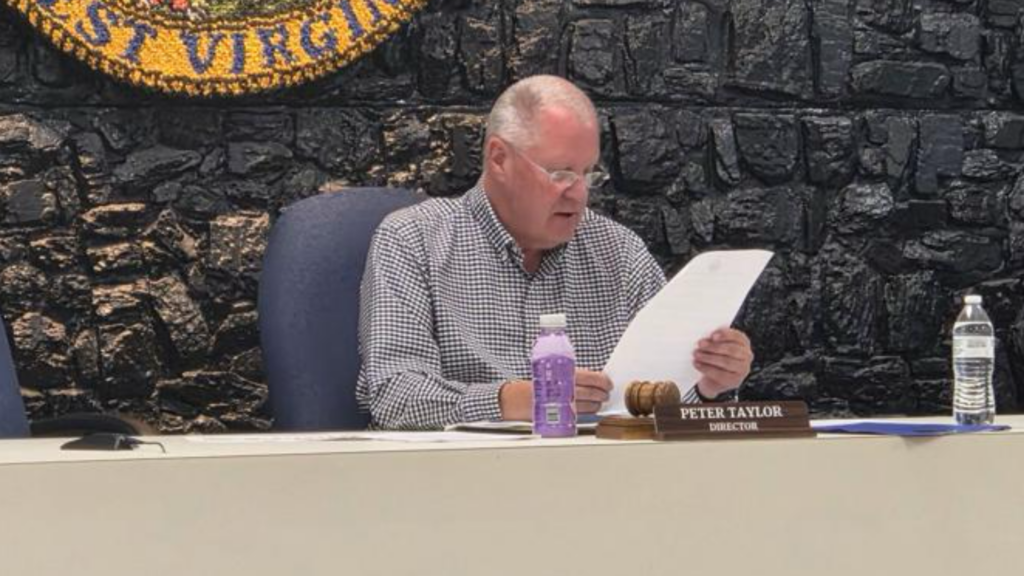
    The Bluefield Board of Directors voted 3-0 Tuesday to adopt a resolution honoring the 250th anniversary of the United States of America. The same resolution read by Vice Mayor Peter Taylor also said the city desired to provide additional opportunities for citizens to enjoy America’s 250th birthday while maintaining a spirit of community pride and patriotism.

    As a result, the resolution read by Taylor said the city board finds it appropriate to temporarily suspend enforcement of a section of city code regulating fireworks in recognition of the America 250 celebration.

    According to the proclamation, the board finds it appropriate during the nation’s semi quincentennial celebration to suspend Chapter 24, Section 24-33A of city code every Saturday and Sunday during the month of July, beginning at 9 p.m. on Saturday and continuing until 12:30 a.m. on Sunday.

    It’s the 250th and a lot of folks, for whatever reason, can’t get all their family together on the Fourth of July, so we wanted to give them the month to try to do something nice and also celebrate this great country,” — Bluefield City Manager Cecil Marson.

    City manager Cecil Marson clarified after the meeting to the Daily Telegraph that the section of code mentioned in the resolution deals with fireworks.

    “By ordinance of the city only the Fourth of July and New Year’s Eve can you shoot fireworks,” Marson said. “We’ve had a lot of requests come up in the last couple of months in the spirit of 250th (asking) if they could open that up for the month of July. So that was what the proclamation is about.”

    Marson said the proclamation basically establishes a limited window where fireworks can be discharged in July.

    “It’s the 250th and a lot of folks, for whatever reason, can’t get all their family together on the Fourth of July, so we wanted to give them the month to try to do something nice and also celebrate this great country,” Marson said.

    The proclamation celebrating the nation’s 250th, and temporarily loosening city code as it relates to fireworks, passed 3-0 with Mayor Ron Martin and board member Matt Knowles absent.

    Bluefield, in cooperation with the neighboring town of Bluefield, Va., is planning a America 250 celebration at Lotito Park on Saturday, July 4. The event will feature vendors, live music, a petting zoo, a parade, bounce houses, craft vendors, a dunk booth, food trucks and more.

    “There’s tons of vendors, bounce houses and a parade for all the kids,” Marson said. “It’s just going to be a great day down at the park, and a really great time to celebrate our 250th. I can’t think of a better way to spend your 250th with everybody together. So it will be a great day, and it all kind of ends up with a nice baseball game at night.”

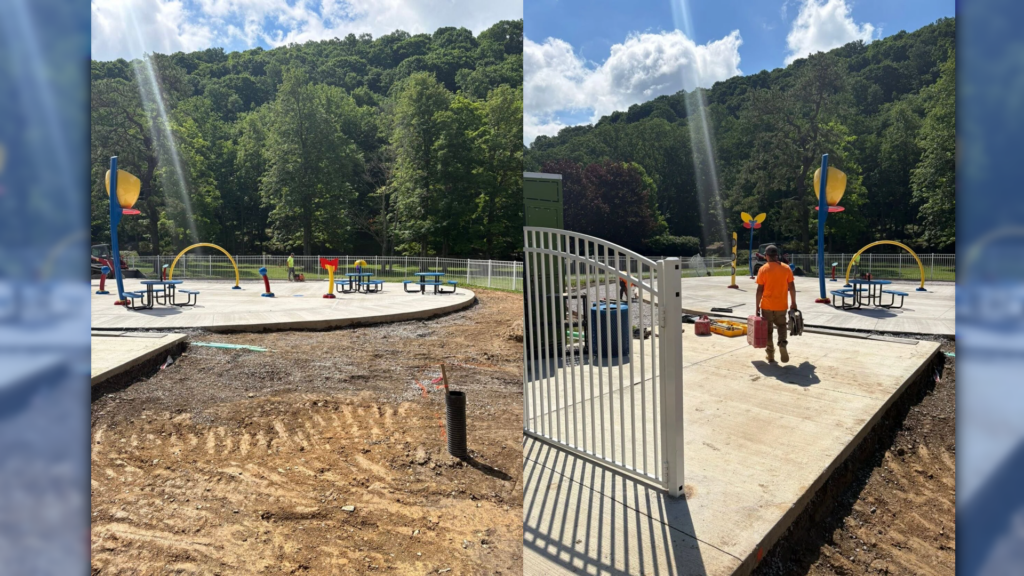
    The city’s splash pad also is still tentatively scheduled to reopen for the America 250 celebration with several new additions.

    Work has been ongoing on those additions, which will include new awnings, new shade structures, an expanded turf and a new concrete addition as well as a concession area.

    Marson said the new concession area for the splash pad is expected to arrive at city park next week.

    Other pre-Fourth of July events also are planned, including the Field of Honor event that will open on Wednesday, July 1, on the lower field area of Bluefield University that will feature more than 300 American flags, along with a fireworks show at the conclusion of the Ridge Runner baseball game at Bowen Field on July 2.

    Read more from Bluefield Daily Telegraph, here.

    The post Bluefield loosens fireworks restrictions for America 250 celebration appeared first on West Virginia Press Association.

  • Program providing free children’s beds adds Wood to counties served

    Program providing free children’s beds adds Wood to counties served

    By Staff Reports
    For The Parkersburg News and Sentinel

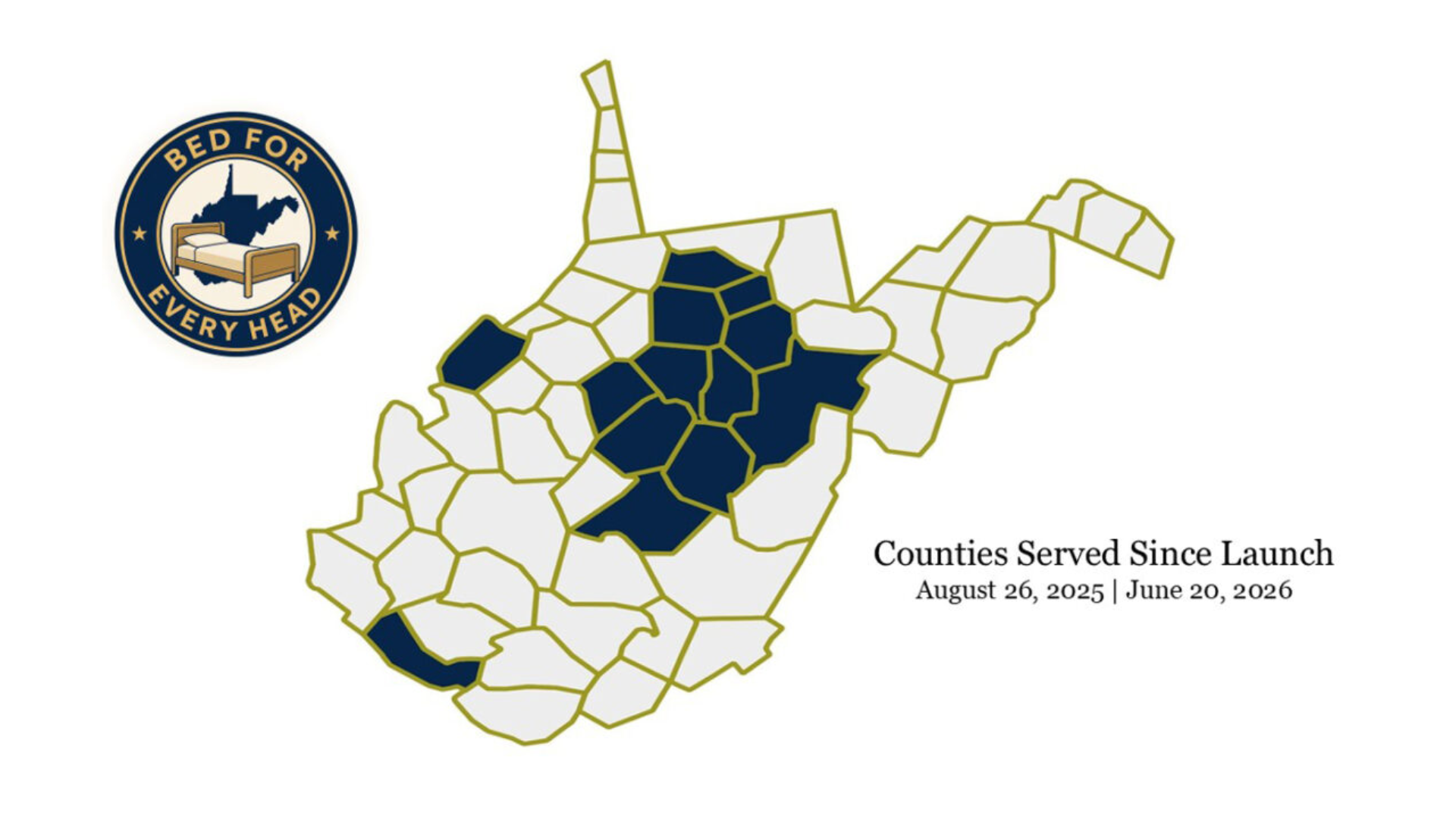
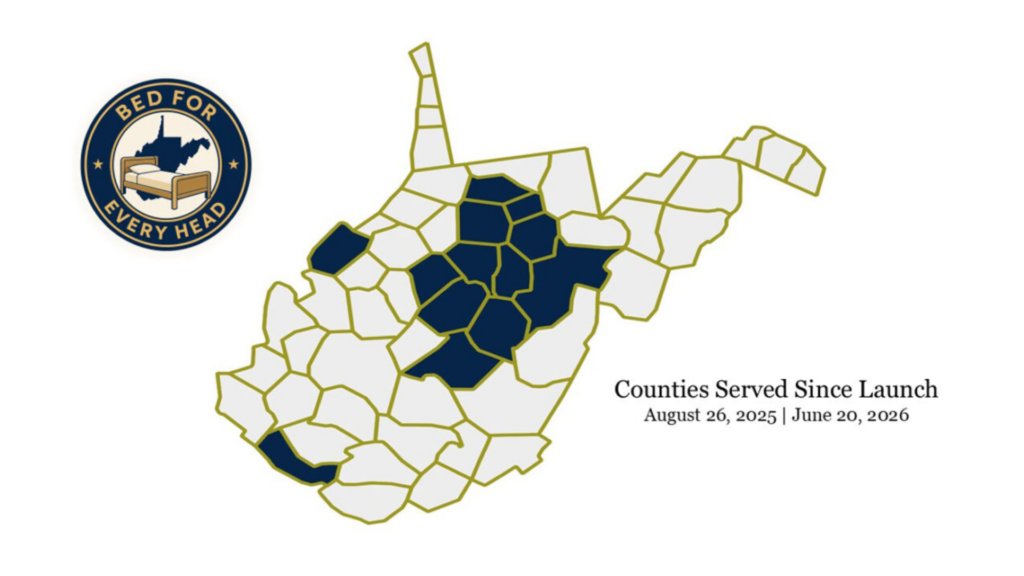
    Parkersburg – Wood County is the latest county in West Virginia reached by a statewide group that distributes complete beds for qualifying households.

    The Bed for Every Head program through Riverstone Community Services, part of the West Virginia State Hospital Initiative Inc., last week delivered a complete crib placement for a household in Wood County, the 12th county to be served by the organization since the program began Aug. 26, 2025.

    “It won’t be the last,” said Titus Swann, founder and chairman of the State Hospital Initiative.

    Bed for Every Head primarily provides complete cribs, bassinets and twin beds to qualifying households. Larger bed sizes may be considered when necessary due to age, height, weight or room-space, particularly when more than one child shares a room. Each placement is reviewed according to program policy and fulfilled as a complete placement when approved.

    Swan anticipates more beds will be needed in Wood County as word of their availability spreads and people become informed through agencies.

    “Then the floodgates open,” he said.

    The need is great here and in every county in the state, he said. Nearly 70 beds have been distributed, Swann said.

    The placement in Wood County was from a referral from Mission West Virginia.

    Bed for Every Head receives referrals through several pathways, including Mission West Virginia, West Virginia Department of Human Services caseworkers, schools, family support workers, housing-related contacts and households that apply directly. The program is child-first and built around rapid response, with the goal of moving from approval to placement in a matter of days whenever possible, according to a release from the State Hospital Initiative.

    Riverstone Community Services is encouraging Wood County residents, caseworkers, school staff, churches, civic organizations, and community advocates to help identify households where a child may be without a proper bed, crib, bassinet or safe sleep placement, the release said.

    “If there is a child in Wood County without a safe or proper place to sleep, we want the people around that child to know they can reach out,” Swann said in the release. “Sometimes the first step is simply making sure the right person knows help may be available.”

    Families and referral sources may learn more or contact the organization at [email protected] or visit www.wvshi.org.

    Donations to the program can be made by calling 304-460-5727 or at the program’s website, WVSHI.org.

    The West Virginia State Hospital Initiative Inc. is a 501(c)3 nonprofit organization focused on preserving the history of West Virginia’s state hospitals, advancing public education and carrying out related charitable work.

    Read more from The Parkersburg News and Sentinel, here.

    The post Program providing free children’s beds adds Wood to counties served appeared first on West Virginia Press Association.

  • Bluefield working to get splash pad improvements ready for July 4th celebration

    Bluefield working to get splash pad improvements ready for July 4th celebration

    By Charles Owens
    For Bluefield Daily Telegraph

    Bluefield — Planning for the big America 250 celebration at Bluefield’s Lotito Park is ongoing, and city officials are still hoping to reopen the city’s splash pad with its new amenities in conjunction with that event.

    Work has been ongoing on the splash pad improvements, which will include new awnings, new shade structures, an expanded turf and a new concrete addition as well as a concession area. The goal is to still have the splash pad reopened in time for the Fourth of July celebration, City Manager Cecil Marson said.

    “We’re pushing very hard and there will be more coming out in the press to ribbon cut the additions to the splash pad, the concession stand and the walkway project to do that on the second (of July),” Marson said.

    As long as the weather cooperates, Marson said everything should be ready with the splash pad in time for the America 250 celebration at city park, which will be held on Saturday, July 4, from 1 to 9 p.m.

    So right now depending on how the weather holds — if we get a ton of rain, it’s going to complicate things — but right now we’re holding fast that we’ll be able to get it done by the second (of July) and have a great opening.— City Manager Cecil Marson on the planned reopening of Bluefield’s splash pad with its new amenities in time for the Fourth of July.

    “The concession (stand) crew is in here next week,” Marson said. “The concrete has has been poured and laid. They were doing that yesterday. The turf crew is supposed to be out there as we speak. The weather has not been overly cooperative today. But so far we’ve finished up some of the gravel work and the grading for the walkway that goes through the park. So right now depending on how the weather holds — if we get a ton of rain, it’s going to complicate things — but right now we’re holding fast that we’ll be able to get it done by the second (of July) and have a great opening.”

    Marson said other pre-events also are planned, including the Field of Honor event that will open on Wednesday, July 1, on the lower field area of Bluefield University that will feature more than 300 American flags, followed by a fireworks show at the conclusion of the Ridge Runner baseball game at Bowen Field on July 2.

    “We got a really big kickoff on the first of July with the Bluefield, Va. Lions Club on the Field of Honor, which will be a great event,” Marson said. “On the second there will be a huge baseball game with a big fireworks show at Bowen field, which we are really happy about.”

    Rick Showwalter, director of parks and recreation, told members of the Bluefield Board of Directors at their June 9 meeting that the July 4th deadline will be tight, but is still the goal.

    “It really isn’t one big project there, it’s three,” Showwater said. “We have the bathroom that we started working on a year ago. It’s being delivered. And that has to go down and the concrete has to be done before then and the turfing and all of that has to happen before July 4th. I’m just warning you that is going to be tight. We are working through it trying to line everybody up.”

    Showwalter said the shade structures will be the fourth addition to the splash pad, adding that those are currently being prepared by public works crews.

    “So keep your fingers crossed,” Showwalter said. “We will open up the splash pad as soon as we can but it’s very tight.”

    The city board approved bids last month for the splash pad improvements and the walking trail project. The expanded walking trail will encompass much of city park’s interior.

    A $31,414 bid was awarded to Top Dog Concrete for the splash pad concrete project, and a $63,301.80 bid was awarded to Playground Professionals LLC for the splash pad turf project.

    The board also approved a bid of $96,800 with Exterior Services SWV Inc. for the walking trail project at city park.

    The American 250 celebration at Lotito Park, which is being jointly organized by the city of Bluefield and the town of Bluefield, Va., will include vendors, live music, a petting zoo, a parade, bounce houses, craft vendors, a dunk booth, food trucks and more.

    Read more from Bluefield Daily Telegraph, here.

    The post Bluefield working to get splash pad improvements ready for July 4th celebration appeared first on West Virginia Press Association.

  • New reports: WV at higher devastation risk under Trump decade after 2016 flood

    New reports: WV at higher devastation risk under Trump decade after 2016 flood

    By Mike Tony
    For HDMedia

    Tuesday marks 10 years since floodwaters devastated West Virginia, leaving 23 dead and displacing more than 2,000 people.

    A decade later, new reports present mounting evidence that West Virginia is more vulnerable to similar devastation due to sweeping Trump administration resource cuts to the federal agency whose mission is to reduce the loss of life and property and protect the nation from natural disasters.

    A report released by ReImagine Appalachia, a nonpartisan coalition of regional community and environmental groups, concluded that Trump administration changes in 2025 eroded the Federal Emergency Management Agency’s ability to help flood-prone West Virginia and neighboring states.

    The report released last month found delayed disaster responses, increased politicization of disaster funds, a destabilization of FEMA’s internal structure and lengthy legal battles revealed “heightened community vulnerability” in a central Appalachian region already susceptible to flood emergencies due to climate change intensifying the frequency and severity of catastrophic deluges.

    That report drew from official FEMA documents, research and news reports, and public government spending data.

    “FEMA’s changes and their impacts in 2025 ultimately harmed Appalachian communities, a region experiencing more frequent and more intense floods,” the report determined. “Appalachian communities cannot afford further instability.”

    A report released this month by Center for American Progress, a Washington, D.C.-based progressive think tank, found that Trump administration cuts to FEMA and other agencies meant to limit the havoc wreaked by natural disasters, including the National Weather Service, “have left families fending for themselves and rid American communities of a fighting chance against these fossil-fueled climate disasters and the health, economic, and environmental harms they bring.”

    Since the June 2016 flooding that washed through West Virginia, those harms have piled up.

    West Virginia experienced 1,052 flood events causing seven deaths and $14.9 million in property damage as well as 913 flash flood events causing 12 deaths and over $57.7 million in property damage from the June 2016 flood through February 2026, according to a Gazette-Mail analysis of available National Centers for Environmental Information data.

    Flash floods are the most dangerous type of floods, occurring when rainfall is too heavy for the ground to absorb or when water fills usually dry creeks or streams, triggering quick water level elevation, sometimes in just minutes.

    More than half of West Virginia’s critical infrastructure — including fire, police and power stations — was at risk of becoming inoperable due to flooding, according to a 2021 First Street Foundation study.

    West Virginia’s share of critical infrastructure at risk of being inoperable due to flooding was higher than any other state.

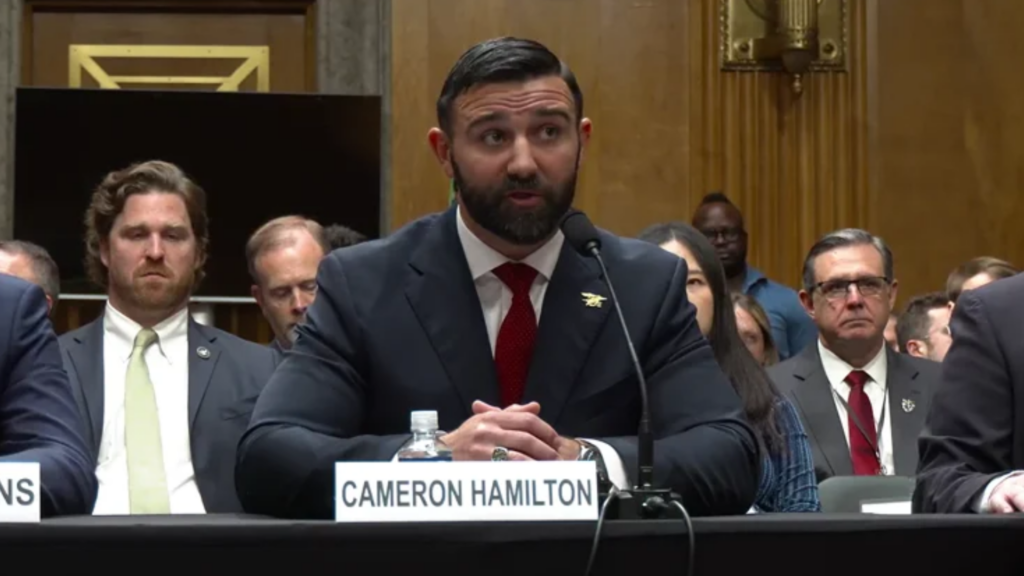
    Amid that risk, President Donald Trump’s nominee to take over a FEMA roiled by leadership changes throughout his administration, Cameron Hamilton, signaled a further shift of disaster response and recovery responsibilities to states at his nomination hearing before the Senate Homeland Security and Governmental Affairs Committee last week.

    “I think many states and local officials have had incentives to drive up costs [to be covered by the FEMA],” Hamilton, still a pending nominee but expected to be confirmed, told the committee, saying the agency needs to “strike a new balance to encourage cost reasonableness and cost savings.”

    The Appalachian Flood Resilience Coalition, a recently formed group of largely regional nonprofits, led by ReImagine Appalachia and the Appalachian Citizens’ Law Center, a nonprofit law firm that focuses on mine safety and environmental protection, had said in a news release prior to Hamilton‘s hearing it wanted to learn what he predicts FEMA’s role would be under him in supporting the buildup of state, local and tribal government capacity to respond to and recover from disasters.

    The coalition noted that a Trump-ordered FEMA Review Council report providing a full agency assessment released last month recommended that “internal workforce adjustments should be conducted over a 2-3 year phased approach that allows the agency to realize the efficiencies while reducing staff.“

    The FEMA Review Council report suggested proposed increasing cost thresholds used to evaluate the need for assistance for rebuilding public and nonprofit facilities to account for inflation.

    That report also noted the agency was managing more than 300,000 projects, namely subgrants, on over 600 open and active disasters, with roughly 25,000 open projects that had exceeded their regulatory or administrative timelines, representing more than $54.8 billion in unliquidated obligations.

    Evidence suggesting Trump ‘punish[ing]’ blue states

    ReImagine Appalachia’s study highlights a March 2026 Politico report offering evidence suggesting that Trump’s disaster declarations have been delayed or denied due to state-level political leadership.

    The report found Trump had rejected disaster aid for Democratic-run states at the highest rate in FEMA’s 47-year history, approving only 23% of disaster funding requests from states with a Democratic governor and two Democratic senators since returning to office in January 2025 while approving 89% of requests from states with a Republican governor and two Republican senators.

    “Given this stark data, what other conclusions can one draw other than the president is using federal disaster assistance to punish states that elect Democrats?” Sen. Gary Peters, the Homeland Security and Governmental Affairs Committee’s top-ranking Democrat, asked Hamilton during the panel’s hearing Wednesday referencing the Politico report.

    “If confirmed, my focus will be to ensure that FEMA is objective, is fair and reasonable, follows the law and is consistent in the approach to how we adjudicate claims and requests for disasters,” Hamilton told Peters.

    “[Y]ou still can’t answer questions about what happened while you were there,” Peters replied, alluding to Hamilton being FEMA’s acting administrator for part of 2025. “I don’t trust that that’s what you’re going to do because it didn’t seem like you did it when you were there before.”

    Hamilton’s nomination comes after Trump dismissed him as acting FEMA administrator last year the day after he testified to Congress that the agency shouldn’t be eliminated as previously proposed by Trump, whose administration has since backed off that stance.

    ‘We had to put more staffing in there’

    But FEMA’s responsiveness under Trump has been an issue in Republican-led West Virginia as well.

    A July 2025 Gazette-Mail investigation of years of FEMA records showed the agency’s rate of declaration approvals slowed significantly and its backlog of declaration requests from states and federally recognized tribes had doubled since Trump took office on Jan. 20, 2025.

    FEMA had slowed down in declaration approval frequency even compared with 2017, the first year of Trump’s first term, when the agency approved 31 declaration requests through July 13 — 24% more than it had at that point in 2025.

    FEMA denied a West Virginia request submitted June 20, 2025, for Public Assistance via an Emergency Declaration on July 22, according to a FEMA Daily Operations Briefing. FEMA approved a West Virginia Major Disaster Declaration for Individual Assistance for Marion and Ohio counties the same day, according to FEMA records — 33 days after the Morrisey administration submitted its request.

    Individual Assistance is a FEMA program that provides funds directly to eligible individuals and families. Public Assistance is a FEMA program that supports state and local governments and certain local nonprofits.

    The Governor’s Office has said West Virginia subsequently waited on a federal decision on a request the state submitted for Public Assistance on July 23 as an add-on to its request for a Major Disaster Declaration after a joint review between state and federal partners.

    On Sept. 11, 90 days after the June flooding hit northern West Virginia, Morrisey’s office announced Public Assistance had been approved for Marion and Ohio counties.

    West Virginia Department of Homeland Security Acting Secretary Doug Buffington told the Joint Legislative Flooding Committee in October that FEMA set up buildings and security on the ground in response to a February 2025 flood in southern West Virginia but didn’t do so following the June 2025 flood that hit Marion and Ohio counties, resulting in a greater operational burden on state officials.

    “So from flood one to flood two, we had to find the building to house FEMA, to house local officials to get information out,” Buffington told the committee. “We had to provide security. We had to put more staffing in there from the state.”

    Court finds ‘unlawful Executive encroachment’ under Trump

    ReImagine Appalachia noted in its report that FEMA grant obligations in West Virginia, Kentucky, Ohio and Pennsylvania plummeted from nearly $1.2 billion in 2024 to roughly $600 million in 2025.

    The group also highlighted an October 2025 analysis by Pew Charitable Trusts, a nonpartisan, global public policy research organization, that found that the highest year of federal aid West Virginia received in a study period spanning 2003 to 2025 would have cost 24.2% of the state’s reserves without federal support.

    The analysis drew from state-by-state data from the Carnegie Endowment for International Peace, a globally focused policy group in Washington, on a subset of federal disaster grants and from the National Association of State Budget Officers on state resources and spending,

    ReImagine Appalachia’s report flags the Trump administration’s obstruction of support for the Building Resilient Infrastructure and Communities program that makes federal funds available to states and local governments for hazard mitigation activities, including hardening utilities and relocating critical facilities out of flood areas.

    ReImagine Appalachia observed that a Trump administration move to block hundreds of millions of dollars in funding for the program nationwide “further jeopardized disaster resiliency efforts, leaving small communities more vulnerable to natural disasters at a time when they needed support most,” noting that affected flooding and dam or levee break projects throughout the region were those chiefly affected, accounting for over 88% of all obligated funds and totaling more than $74.2 million.

    The program known as BRIC has been revived after a December 2025 Massachusetts federal court order blocked its cancellation, finding the case to be “about unlawful Executive encroachment on the prerogative of Congress to appropriate funds for a specific and compelling purpose[.]”

    FEMA has published its Fiscal Years 2024-25 funding opportunity for BRIC, for which the submission deadline is July 23. But ReImagine Appalachia’s report states that communities have been left “in confusion and uncertainty” throughout the legal process allowing what were later found to be unlawful policies to stay in effect for long periods.

    Federal watchdog agency warns FEMA stretched too thin

    The FEMA personnel pool shrunk fell last year under the Trump administration’s initiative to slash the federal government workforce, falling 9.5% to 23,350 in a five-month period ending June 1, 2025, according to a September report from the U.S. Government Accountability Office, a federal watchdog agency that works for Congress.

    The Center for American Progress report notes that office’s finding that the agency had 710 open major disaster and emergency declarations still receiving some kind of federal support to begin last year’s hurricane season on June 1, 91 with support in the field — an increase from 495 open major disaster and emergency declarations in July 2022.

    “When new disasters hit and these staff are redeployed to respond to them, it diverts resources and potentially delays efforts on open disasters,” the office warned.

    FEMA claims it’s becoming ‘leaner’ and ‘faster’

    FEMA did not respond to a request for comment on the ReImagine Appalachia report. In response to the Center for American Progress report, a FEMA spokesperson said that FEMA and its parent agency, the Department of Homeland Security, are “ready for the 2026 hurricane season.”

    “We’re ensuring workforce stability and a strong, deployable force for upcoming national events and potential disasters; making the agency leaner, faster and laser-focused on supporting state, local, tribal and territorial partners before, during and after disasters,” the spokesperson said in an email. “FEMA continues to maintain a roster of experienced leadership and support staff across headquarters and regional offices, including through acting and career personnel serving in key roles to ensure continuity of operations and mission readiness.”

    Programs ReImagine Appalachia underlined as priorities for continued funding included BRIC, a FEMA flood hazard mapping and risk analysis program and emergency watershed and agricultural land conservation stewardship incentive programs, with the group noting that healthy soils act as a sponge to retain more water in drought scenarios and take in more water in flooding situations.

    “To build a truly flood-resilient region,” ReImagine Appalachia’s report concludes, “we must return to a model of robust, stable, and transparent federal investment.”

    Read more from HDMedia, here.

    The post New reports: WV at higher devastation risk under Trump decade after 2016 flood appeared first on West Virginia Press Association.

  • Moving West Virginia Forward: Leadership West Virginia continues work to inspire love for the Mountain State

    Moving West Virginia Forward: Leadership West Virginia continues work to inspire love for the Mountain State

    By Steven Allen Adams
    For The Parkersburg News and Sentinel

    Leadership West Virginia continues work to inspire love for the Mountain State

    Lansing – Nearly 60 men and women from across West Virginia gathered just a mile from the New River Gorge Bridge before the state’s 163rd birthday for a multi-week program aimed at instilling in them a love for their state and a fire to spread the word to others.

    This year’s Leadership West Virginia (LWV) class wrapped up their second two-day session Friday at Adventures on the Gorge in Lansing, Fayette County.

    LWV’s June session always takes place in the heart of West Virginia’s outdoor recreation economy, home to the newest national park – the New River Gorge National Park and Preserve. The region is filled with multiple opportunities to camp, go white water rafting, hiking, climbing, zip lining and other outdoor activities.

    While the Huntington session serves as the kickoff for each new LWV class, the New River Gorge session is often described by past class members where they really got to know their fellow classmates better and where their love for West Virginia grew by leaps and bounds.

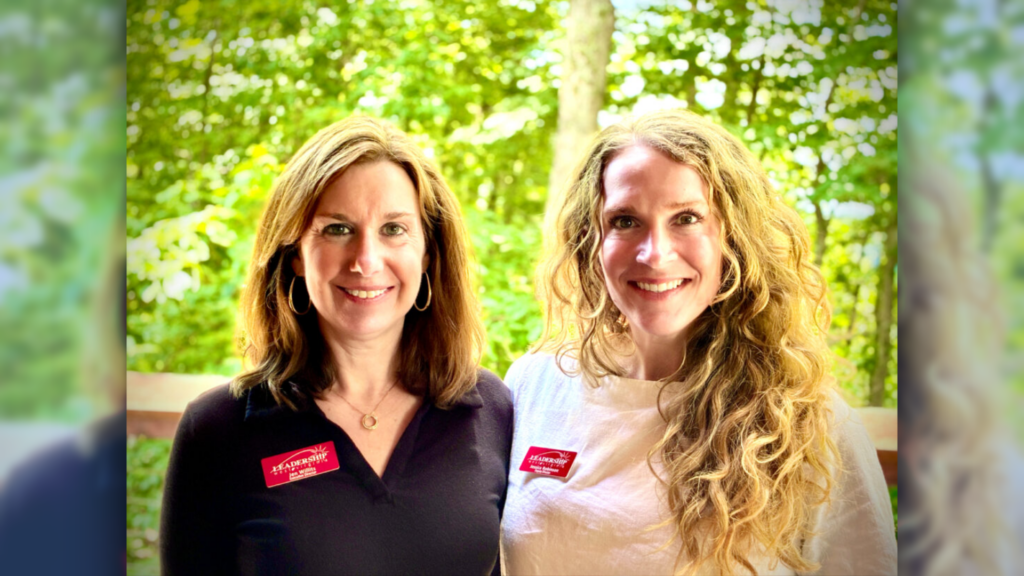
    Last year saw a changing of the guard for LWV, with Jen Willits (LWV Class of 2018) becoming the organization’s next executive director, succeeding Pam Ferris who retired in March 2025 after helming LWV for 20 years. Willits is a former financial services executive.

    “The organization had such a strong foundation in terms of how it’s brought people together and the connections,” Willits said. “We’re just really excited about the future of the organization in terms of really looking at our curriculum, in terms of strengthening it, to make sure we’re staying relevant … and just making sure that the program continues to be the place that people can come together and have the difficult conversations and have those face-to-face interactions that are so important to keep moving West Virginia forward.”

    Jessica Robinson, a former educator and LWV Class of 2023 alumna, joined Willits one month later to serve as deputy director, succeeding Kate Reed in that role.

    “I think that after going through the program myself in 2023, I think what made it so special is that it is a unique opportunity for learning and connecting that you can’t usually get as an adult,” Robinson said. “I don’t think that there is any other opportunity in the state where you can really get to know people, get to know West Virginia’s issues, and come together to form solutions with people from all over the state … That’s the type of thing that is going to move West Virginia forward.”

    Willits and Robinson have spent the last two years working to keep LWV doing what it does best while also changing the curriculum to keep things fresh. They have also worked aggressively to keep LWV alumni engaged in the organization, with plans for additional events and gatherings. LWV alumni and class members can now show off their LWV pride through a merchandise store.

    Each LWV class is diverse in race, gender and employment backgrounds. The organization, a program of the West Virginia Chamber of Commerce, attracts company CEOs, entrepreneurs, attorneys, marketing professionals, non-profit directors, healthcare leaders, West Virginia National Guard officers, architects, bankers and educators. Even a news reporter (the author of this article was part of the LWV Class of 2023).

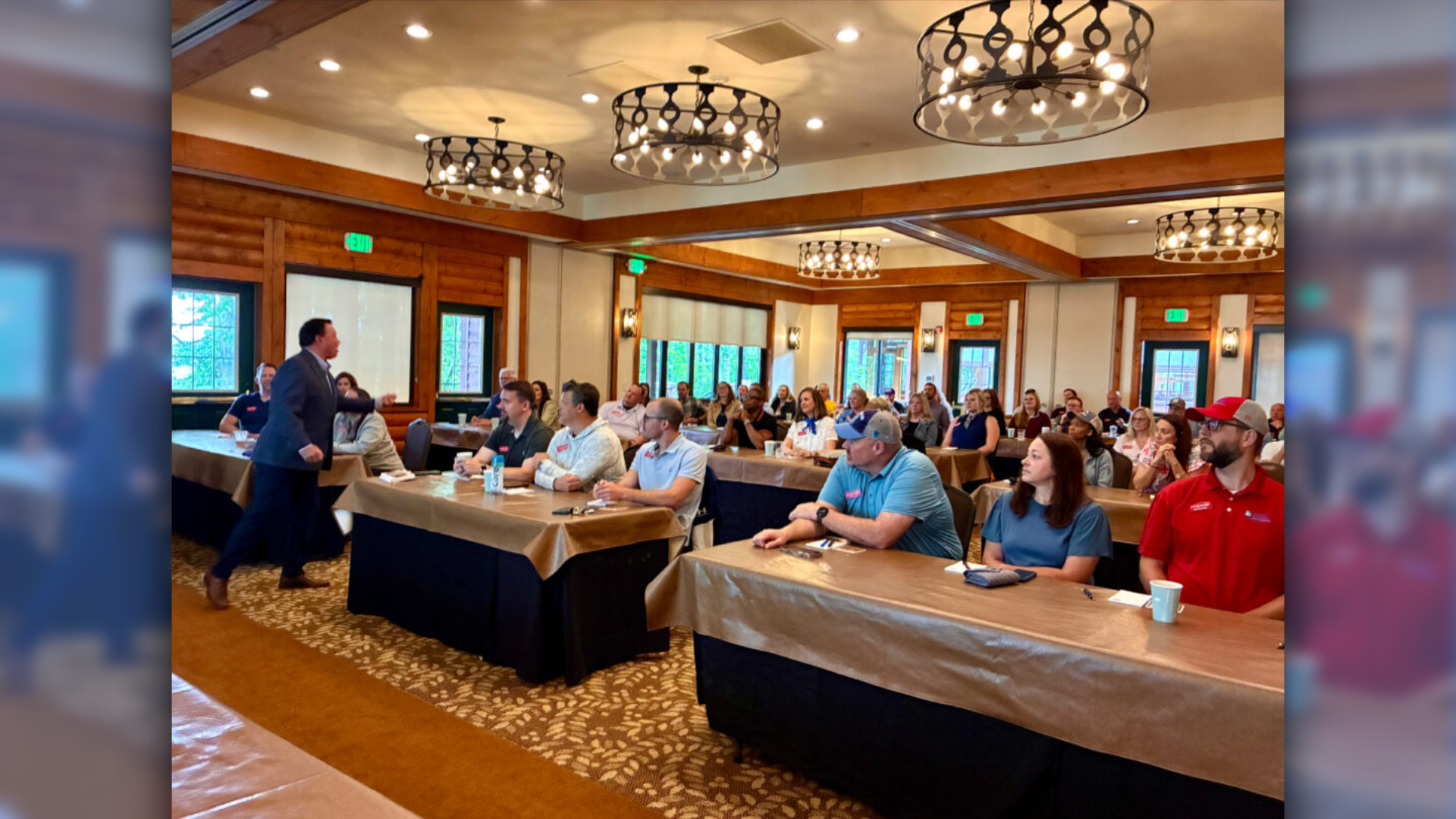
    Photo by Steven Allen Adams | Jim Strawn, owner and president of Jim Strawn and Company, gives a presentation Friday to members of the 2026 class of Leadership West Virginia on public speaking at Adventures on the Gorge.

    The goal of LWV is to train up leaders to help improve West Virginia for years and decades to come; to “move West Virginia forward.” LWV began in 1991 and 35 years later has more than 1,700 alumni all across West Virginia.

    Class members travel to different regions of West Virginia over a seven-week period between May and November. Each session focuses on a different subject, such as education, healthcare, tourism, the judiciary, energy and manufacturing, and the legislative process.

    While learning from experts on these various topics, LWV class members also learn about the success stories in different regions of the state, the challenges facing these areas and the state as a whole, and how to address those challenges. LWV class members also take part in service projects in the communities they visit each week.

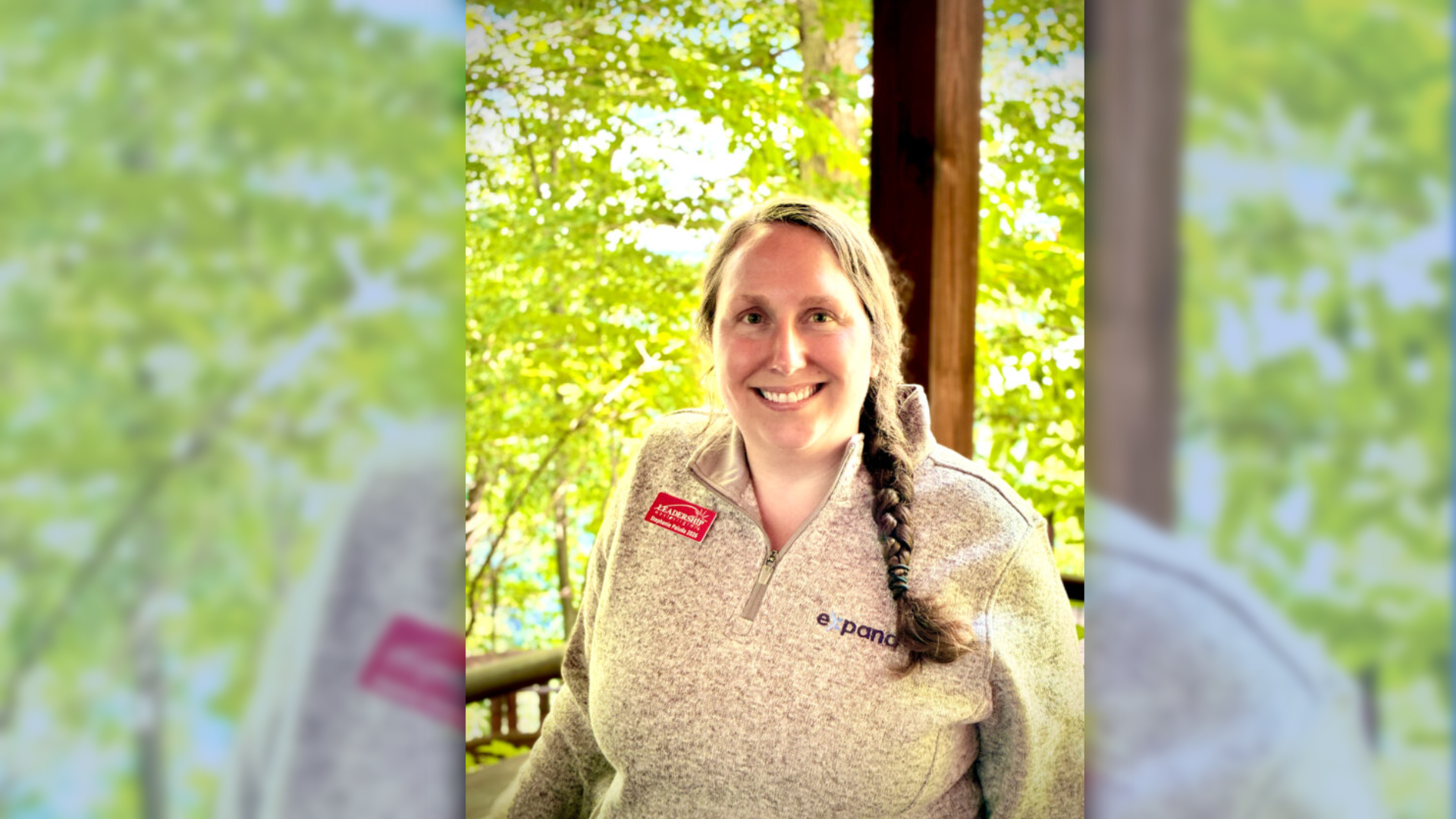
    Stephanie Paluda lives in Pittsburgh, but she works as the community affairs manager for Expand Energy Corporation with offices in Morgantown and Triadelphia. Paluda said she hopes to use her experiences in West Virginia to better inform her company’s charitable giving to better serve her region of the state.

    “I’m always trying to dive deep into what do people really need,” Paluda said. “How can we really solve the problems? So, one of the things here is learning from other people of how do you do it in your area? What are the issues? What are solutions you’ve done, and seeing, as an individual and as a company, how can I make sure that we’re giving to the right things? How can we make change?”

    Photo by Steven Allen Adams | Stephanie Paluda, the community affairs manager for Expand Energy Corporation, hopes to take what she learns in Leadership West Virginia to help her better serve the Northern Panhandle.

    Individuals can either apply to be part of LWV or can be nominated, but the selection process is rigorous, with the number of applications often exceeding the number of available slots. Applications must include clear answers to questions, show leadership growth in their industry, demonstrate community service, and include references.

    The program also has a $4,000 tuition not covering lodging or transportation, though need-based scholarships are also available. LWV candidates must attend an orientation and attend at least six out of eight sessions in order to graduate. The program is supported in part by the generous donations of individuals, companies, and organizations that believe in the mission of LWV.

    More information can be found at LeadershipWV.org

    Read more from The Parkersburg News and Sentinel, here.

    The post Moving West Virginia Forward: Leadership West Virginia continues work to inspire love for the Mountain State appeared first on West Virginia Press Association.
  • At Fort Gay PK-8 in Wayne County, it’s not the destination, it’s the (Jersey) Journey

    At Fort Gay PK-8 in Wayne County, it’s not the destination, it’s the (Jersey) Journey

    By Amanda Larch Hinchman
    For HDMedia

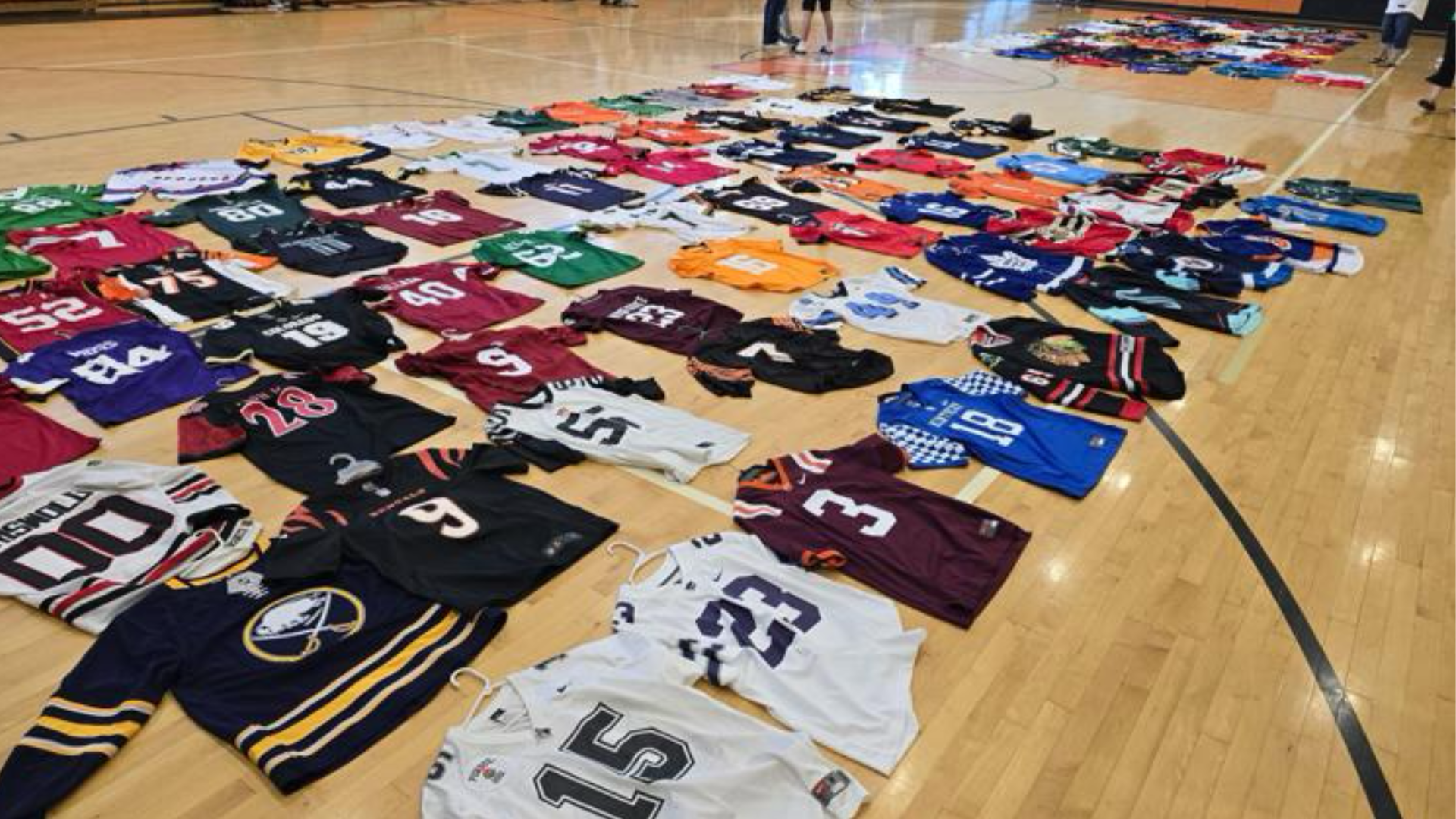
    During one snow day in January 2025, Fort Gay PK-8 Assistant Principal Shawn Ross decided to take inventory of all his jerseys.

    Counting and organizing them by sport — with 96 football jerseys alone — Ross sent a picture to Fort Gay Principal Kelly Bonar and his sister Erin Fitzpatrick, who also works at the school. Bonar challenged him to wear one every day of the next school year, as Ross, a self-proclaimed obsessive collector, normally wore a different jersey each Friday anyway.

    “I thought the idea was awesome,” Ross said. “The kids kind of picked up in the fall of 2024 that I had a lot of jerseys.”

    From that January day until the beginning of the 2025-26 school year last August, Ross said he thought of ways to make this challenge impactful and came up with three overarching messages to go along with what school administrators had named the Jersey Journey. The first was about embracing who you are.

    “That was the toughest part; I didn’t want to break dress code just for the sake of it,” he said. “As I introduced it in August, I told students, ‘It’s weird for a 42-year-old to have over 100 jerseys, I know that, but that’s cool, so just be you and own who you are.’”

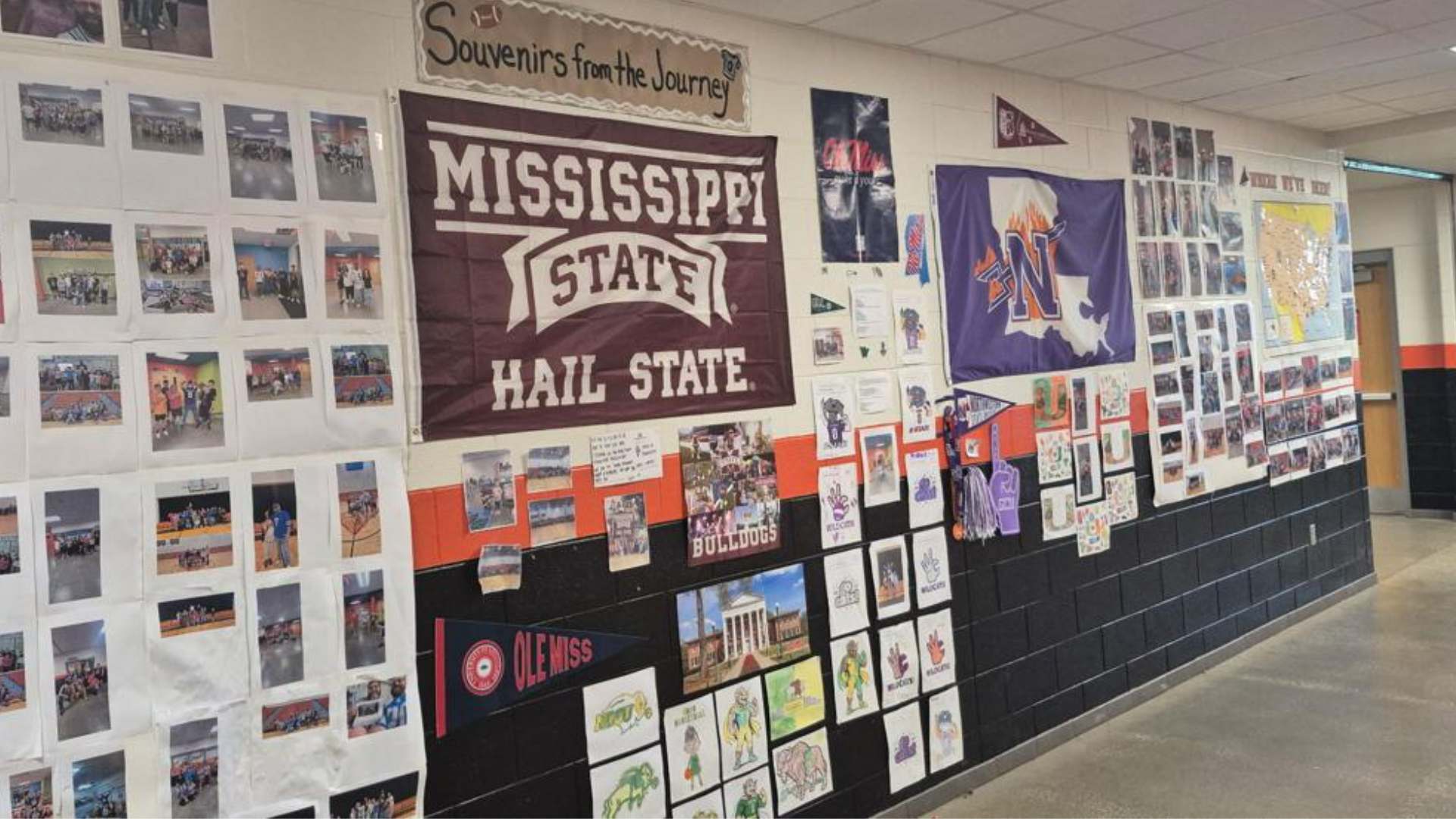
    Second, Ross wanted to introduce students to different colleges and higher learning opportunities, and he contacted several universities about his Jersey Journey. Mississippi State was the first to get back to him, with more following suit and sending souvenirs.

    “A lot of students don’t know anything beyond Fort Gay,” Ross said. “I thought this could work, and sure enough, throughout the year colleges sent pennants and informational things we hung on the wall for the kids.”

    Finally, Ross sought to make local connections and demonstrate what Fort Gay alums have gone on to accomplish. One former student he reached out to, Kyle Powers, is a trainer for the Pittsburgh Steelers.

    “I thought it’d be a great way to tie in some Wayne County kids who’ve done some great things with these professional organizations, so we were able to introduce them to folks like Kyle,” Ross said.

    A teachable initiative

    Ross created an educational element for the Jersey Journey as well, asking students a different trivia question each day, ranging in subjects from math and geography to social studies and literature. Students who gave correct answers could take photos with Ross to be posted on social media

    “I wanted to make it connected to the jersey, so it lasted in their memory, and to make it cross-curricular,” Ross said. “I didn’t want to go with straight sports trivia, so I kind of ran the gamut of questions. A lot of them were geography and history-based, because that’s an easy tie-in with team localities.”

    For example, Ross challenged students to calculate the perimeter of an ice hockey rink when he wore his Utah Mammoths jersey; he asked what the incubation period for turkey eggs was for Virginia Tech day; and when he featured the Arkansas Razorbacks in November, Ross asked students which city became the focal point for Brown v. Board of Education, the 1954 landmark school segregation case that originated in Topeka, Kansas.

    The issue eventually played out with the first instance of integration of Black students in 1957 in a public school in Little Rock, Arkansas. The nine students who enrolled in Little Rock Central High School became known as The Little Rock Nine.

    When no students could come up with the answer, Fort Gay social studies teacher Brooks Perry scrapped his plans for the day to teach about the court case and the Little Rock Nine.

    “That’s how a lot of the middle school kids got the answer, so that was probably one of the cooler days of the Jersey Journey and my favorite social studies question,” Ross said.

    Photo by Shawn Ross | Jerseys are laid out in the school gym during a last-day-of-school assembly at Fort Gay PK-8 in Fort Gay, Wayne County.

    ‘I had jerseys to spare’

    By the end of the school year, Ross had worn 176 different jerseys, having been absent for a few school days, and while some shared the same team, they were different numbers or players.

    “I had jerseys to spare,” he said. “We did have repeats, because I’m a Reds and a Bengals fan, so we had multiple Reds and Bengals jerseys.”

    On the last day of school, Ross delivered a message to students during an assembly that he believes is the most important of the Jersey Journey, he said.

    “I said, ‘Your paths are going to take you all over the world. Some of you are going to leave and not come back. That’s fine. Those of you that do come back, make your home better, and if you stick around Fort Gay, do your best to improve it and take care of it,’” Ross said.

    “I hope the kids remember years from now that if they take nothing else away from it, to chase their dream and take care of where they come from and remember their home,” he continued.

    Ross even presented to the Wayne County Board of Education on June 9 about the experience.

    “I told the board it started out as just a challenge to wear a different jersey, and by the time I delivered that final line of that message, it became everything,” Ross said.

    Photo by Shawn Ross | Universities like Mississippi State sent souvenirs to Fort Gay PK-8 in Fort Gay, Wayne County, as part of Assistant Principal Shawn Ross’s Jersey Journey initiative.

    What’s next for the Jersey Journey

    Students have already asked Ross about repeating the Jersey Journey in years to come. Though it would take time to collect the number of new jerseys needed, he may already have enough hats for a variation of the challenge in the meantime, he said.

    “I told them, as far as jerseys go, you’ve got to give me another five years — it took about five years to get the 170-plus jerseys — but I do own over 500 hats,” Ross said. “The challenge last time was making it impactful, and that took half a year to think about. So I’m going to stew on it, and we may do a sequel in a couple years.”

    Having worked at Fort Gay PK-8 since it opened in 2013 and recently finishing his eighth year as vice principal at the school, Ross said he’s always felt the purpose of his educational career is to encourage students to adopt ethical qualities.

    “Test scores are great, but I think the main goal is to produce kids who will be good human beings, and that’s what I wanted to do with this overarching message, to teach them it’s OK to be you, it’s OK to chase your dream,” he said.

    A Wayne native, after spending time away, Ross now lives closer to his hometown and resides in Fallsburg, Kentucky.

    “Fort Gay became my home, which is kind of why that final message all dealt with home, because sometimes home ain’t what you expected,” he said. “Because I thought I’d just be away my whole life, and then I ventured into Fort Gay, and I couldn’t imagine being anywhere else now.”

    Read more from HDMedia, here.

    The post At Fort Gay PK-8 in Wayne County, it’s not the destination, it’s the (Jersey) Journey appeared first on West Virginia Press Association.