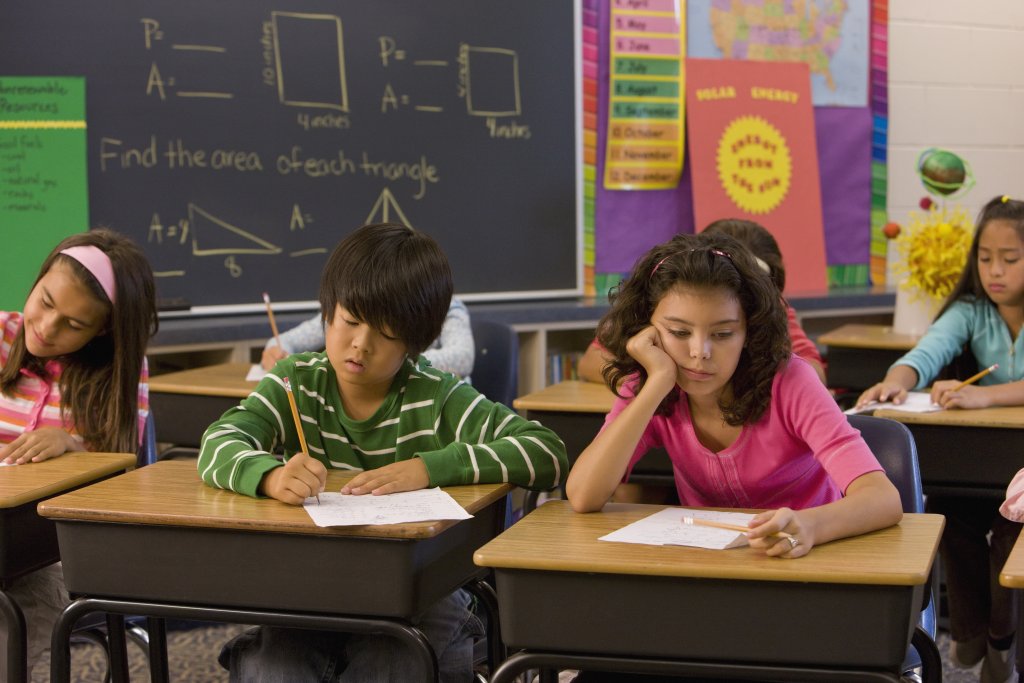
The Virginia Board of Education may delay the full implementation of the state’s plan to raise academic benchmarks for reading and math by two years, rather than gradually increasing them over a four-year period starting this year as scheduled.
The department briefed board members on the proposed delay at their work session on Wednesday at J. Sergeant Reynolds Community College in Henrico County, following a state study’s finding that the new K-12 accountability system, which includes the cut scores, could be refined.
Virginia will raise cut scores for its Standards of Learning assessments to boost student proficiency, a process that was slated to begin this school year. This initiative, led by former Gov. Glenn Youngkin, followed findings of declining reading and math scores among students in grades 3 through 8, a trend that began during the pandemic.
But critics are urging a slower rollout, saying a quicker shift could increase teacher burnout, lower graduation rates, and worsen inequitable access to education. Several members of the board said at Wednesday’s meeting that they wanted to keep to the original timeline.
Board member Amber Northern, an appointee of former Gov. Glenn Youngkin, said Virginia has received national praise for moving toward higher standards and accountability. She is concerned the proposal jeopardizes the board’s earlier work.
“Regardless of whether it’s a Republican or a Democrat in office … Virginia’s is for high standards and they’re going to work together with colleagues that are on the right, the left, the center .. to continue to do the right thing by kids on an aggressive, yet doable timeline,” said Northern.
Ida McPherson and Bill Hansen, both Youngkin appointees to the board, opposed delaying implementation of the accountability system that includes the cut scores, citing concerns that staving off implementation would negatively impact student outcomes.
Superintendent of Public Instruction Jenna Conway emphasized that higher proficiency cut scores would be in effect one year faster than the original plan.
She also added that staff would meet the request of some members for a side-by-side comparison of the proposal to the board’s original plan, which some — including Fairfax County Public Schools, representing the largest groups of students in the commonwealth — took issue with.
“These changes will have a significant and potentially detrimental impact on schools and students,” Fairfax said in a statement last fall about the original plan. “FCPS supports rigorous standards, but will continue to advocate for this work to be done in meaningful and measured ways.
Arlington Parents for Education, a group advocating for high academic expectations, said in a statement it opposes this proposed delay.
“This last-minute proposal to lower expectations would mislead parents and allow schools to keep delaying the improvements Virginia’s kids desperately need,” the group said in a statement. “Major changes to academic standards should be made through a transparent process focused on student outcomes – not rushed through at the eleventh hour.”
According to a study conducted by the Joint Legislative Audit and Review Commission, if the plan passes, schools’ overall scores will drop by about 8.5 points, while proficiency scores will fall by about 21 points in reading and 17 points in math.
The study stemmed from lawmakers directing the commission to examine the state’s K-12 accountability system, which was split into two parts: accreditation, which determines whether schools meet legal and regulatory requirements; and the School Performance and Support Framework (SPSF), which provides clear data on student and school performance.
The board praised the report that included recommendations to refine the accountability system. Overall, the recommendations urge the board and lawmakers to continue developing a more transparent and fair system that better reflects student growth and ensures stronger support for struggling schools.
The department is asking the board to consider the proposal to adjust the timeline for rolling out new cut scores to avoid “confusion” and to ensure divisions can fully prepare without having to manage multiple major changes each year.
If approved, the plan starts this upcoming school year. The Department of Education will provide divisions with a preview of results under the higher standards. Schools’ academic progress labels will also change, from “off track” to “approaching expectations,” and from “on track” to “meets expectations.”
Under the proposal, if a student recently moved to the U.S. and is still learning English, they are exempt from the reading assessment in their first year (2026-2027).
High school ratings will use current achievement data instead of longer-term cohort results. Elementary and middle schools won’t be penalized for having too few English Learner students to get a fair evaluation.
For the 2027-2028 school year, the department plans to preview updated School Performance and Support Framework results for divisions without consequences.
Implementation will start in 2028-2029 with a single increase in cut scores and the adoption of the new SPSF version.
Test data from the 2028-2029 school year will be released in the summer of 2029, and accountability data will be published in the fall of 2029, reflecting the new cut scores.
One area that wasn’t mentioned in the proposal was whether the board’s interest in having Virginia’s cut scores meet the “proficient” standard set by the National Assessment of Educational Progress would change.
This standard is defined as a student demonstrating a deeper understanding of complex topics and the ability to apply them in real-world situations.
Gov. Abigail Spanberger appointed four new members to the nine-member board, which remains controlled by Youngkin’s appointees, most of whom supported a gradual four-year increase last November that would have been completed during the 2029-2030 school year.
The proposal would wrap up during the 2028-2029 school year.
Hansen, the board’s vice president, will finish his term June 30 and his replacement will be appointed by Spanberger’s administration.
The board is not expected to take any action on the proposal on Thursday, their next scheduled meeting.
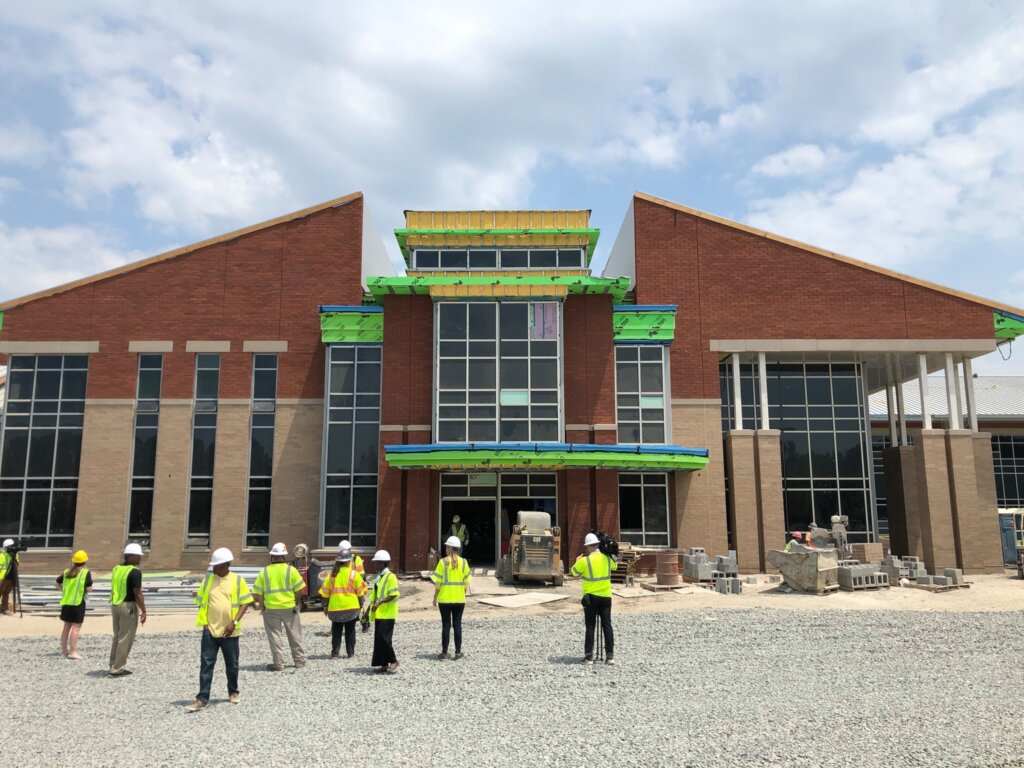
A 2021 tour of the construction of the new Highland Springs High School in Henrico, estimated to cost about $80 million. (Photo courtesy of Henrico County Public Schools)
Over the past five years, several Virginia localities have generated just $119 million total from a targeted sales tax to fund school construction and maintenance, fueling calls to expand the tax statewide.
When lawmakers first established the tax in 2021, a state survey showed over half of Virginia’s schools were more than 50 years old, with replacement costs in the billions.
House Education Committee Chair Sam Rasoul, D-Roanoke, said the totals further emphasize the need for the commonwealth to do more to address aging buildings.
Rasoul, along with Sen. Jeremy McPike, D-Prince William, proposed legislation to allow all counties and cities in the state to impose an additional local sales and use tax, at a max rate of 1%, strictly for public school capital projects. Both measures were ultimately added to their respective chamber’s budgets and is part of the combined budget legislative negotiators released Friday.
Rasoul said that while $119 million is a small fraction of what the commonwealth needs, “it’s a good start to be able to help localities have another tool in their toolbox.” He continued, “The commonwealth needs to do more to help with school construction, but one thing we can be doing is at least help some localities help themselves.”
Voters in each locality would decide through a referendum whether to adopt the additional local sales tax to fund school construction and maintenance.
Virginia’s localities are only allowed to exercise powers granted by the legislature, including changing sales taxes. As a result, only nine localities — including the city of Danville and the counties of Charlotte, Gloucester, Halifax, Henry, Mecklenburg, Northampton, Patrick, and Pittsylvania — can currently levy a 1% sales tax for school projects.
Danville has collected the most, with $30 million in three years, according to data from the Department of Taxation obtained through a FOIA request. In fiscal year 2025, tax revenue for school construction and maintenance varied unevenly across the nine localities, with significant per-student variation. Danville, which has levied the special tax for three years, generated the highest tax revenue per student enrolled in the district, at approximately $2,171.
That’s more than four times the per-student amount in Pittsylvania ($478). Most other localities collected between roughly $950 and $1,260 per enrolled student, while per-resident (total population) contributions ranged from $63 to $276.
McPike said that the state’s revenue figures highlight the urgent need for school construction funding and the proposal’s key feature—local option through voter referendums.
“The core of the issue is that we are billions behind, and we still have kids in classrooms with leaky roofs and air conditioning that often breaks,” McPike said, adding, “and we know that overall localities need ways to pay for school construction, and the beauty of it is, this is one thing they have the option to do.”
“I know (the proposal) in discussions of including it in the budget, which is great, because ultimately this also has to go to voters if the locality decides to move forward with it, and the voters get to decide—it’s the purest form of democracy.”
These figures indicate the amount of school tax revenue each area can generate based on its local tax base. The per-student numbers reflect the total tax revenue divided by the number of students enrolled in each district, rather than the amount spent or paid by any individual student or resident.
In a recently adopted resolution, the Charlottesville City School Board said it supported efforts to expand the 1% sales tax for school construction.
The board said in its resolution that utilizing a local option sales tax allows Charlottesville to diversify revenue streams and reduce the burden on local property owners by sharing school infrastructure costs with visitors and commuters who utilize the city’s commercial corridors.
Members added that if the city gains this legislative authority, the school board encourages “collaborative efforts with the city council to advance a local referendum, allowing the citizens of Charlottesville the opportunity to invest directly in the future of our children, our schools, and our community’s infrastructure.”
Del. Cia Price, D-Newport News, has lobbied for such a measure in her home district, but the effort wasn’t successful. Price emphasized the importance of funding safe, modern school facilities in Virginia, amid federal funding cuts.
Price said she would love for Newport News students to have schools like those she has toured elsewhere, where the environment is “welcoming and encouraging for creativity and not oppressive and dark and hard to breathe.” She added, “I think all Virginia students deserve that.”
The school tax proposal’s supporters are eager for the state budget to be finalized. To place the referendum on the November ballot, lawmakers must adopt the language by June 29 so it can be properly advertised. State law requires referendums to be ordered at least 81 days before the election.
Senate Majority Leader Scott Surovell, D-Fairfax, is cautiously supportive of the idea that a local sales tax has become a useful tool for certain localities that dislike raising real estate taxes, and acknowledges it has generated a “decent amount of revenue” for school construction.
Surovell stressed, however, that Virginia faces a multi‑billion‑dollar backlog in school construction and maintenance. He argued that a Northern Virginia casino, which he proposed, could have been one of the “easiest” ways to close part of that gap, but Gov. Abigail Spanberger vetoed it.
The proposal would have removed the Fairfax County Board of Supervisors’ authority to advance a casino referendum, Spanberger explained in her veto statement.
The Senate and House are set to return to Richmond Monday to deliberate the budget, which will take effect July 1.
On the cusp of the nation’s semiquincentennial, Virginia legislators, educators and communities are reflecting on how to meet the moment and overcome challenges that persist for public education and students here. (Photo by Getty Images)
Like the United States, Virginia’s K-12 education system has evolved over the last two and a half centuries to better meet family needs and prepare students for the future. In the 250 years since America declared its independence, changes in policy, instruction, and technology have continually reshaped Virginia’s public elementary, middle and high schools.
On the cusp of the nation’s semiquincentennial, Virginia legislators, educators and communities are reflecting on how to meet the moment and overcome challenges that persist for public education and students here.
Newport News Democratic Del. Shelly Simonds — who has experience as a classroom teacher, local school board advocate and a legislative lobbyist for educational change — suggested Virginia’s next chapter focus first on “making teaching a true profession.”
Accomplishing this requires better pay, benefits like paid family leave, and modernized school schedules that align with the workday, Simonds said.
“We haven’t professionalized the teacher work day,” said Simonds. “If we want to retain the best and brightest teachers — because every child deserves excellent, highly qualified teachers — we’re going to have to examine some of these outdated practices. I think essentially we’re taking advantage of the good will of our teachers.”
The state also needs to update schools’ curriculum for a tech-driven future and review federal policies that could threaten the state’s workforce and economy, Simonds and other legislators said.
Education policy changes made learning more inclusive, standardized achievement
Virginia has always served as a laboratory for education policy in the United States.
In the colonial era and ensuing decades, key policy changes redirected state funds from religious to public schools, which broadened access to public education.
In the 1950s and 1960s, desegregation opened public schools to all students regardless of skin color or background, diversifying school demographics and boosting educational equity.
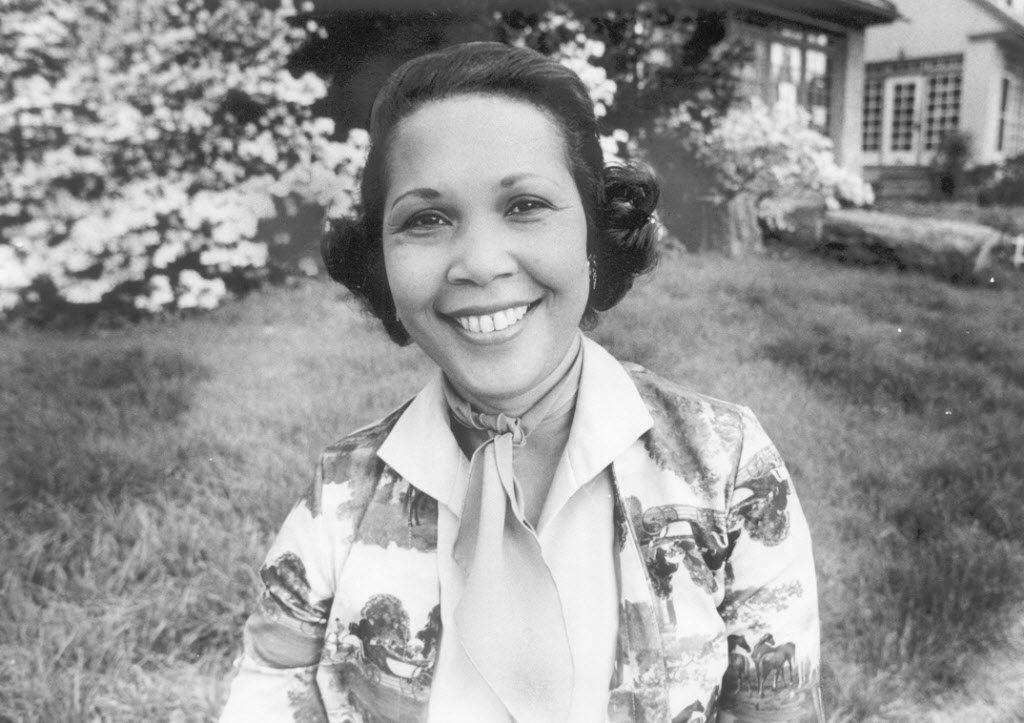
Barbara Johns, who, as a teenager, helped organize a strike to desegregate schools in Prince Edward County. (Library of Virginia)
House Education Committee Chair Sam Rasoul, D-Roanoke, said public education in the state has evolved from elitism toward broader access, but warned that challenges remain.
“Statutorily, we have equal access and equity in education; however, in practice, we see the remnants not only of redlining, but that many poor neighborhoods have to suffer from lower access to resources due to the way we fund our schools, heavily reliant on local property taxes,” he said.
“We’re still fighting for equity in education and equality in access,” Rasoul added.
These policy developments culminated in the introduction of defined educational standards, ensuring a statewide baseline of academic achievement.
In 1995, Virginia created the Standards of Learning, setting expectations for student learning before graduation from public schools. This policy standardized benchmark outcomes for students and influenced statewide curriculum planning.
Since then, the state Board of Education has routinely updated these standards for each course subject, affecting instructional priorities and assessment.
“The standards-based movement isn’t about standardizing education. It’s about clear guardrails and high expectations for what students should learn,” said Chris Jones, executive director for the Virginia Association for Teaching, Learning and Leading (VATLL), an education advocacy group.
Beau Dickenson, the National Social Studies Leaders Association’s 2025 leader of the year, said standardized assessments matter but currently overemphasize rote knowledge rather than measuring what students can do with that knowledge.
Relatedly, having a standard for students to live up to is “noble,” said Del. Mike Cherry, R-Colonial Heights, but striking the right policy balance is key.
“I think (SOLs) were well-intentioned,” Cherry said. “I think the actual outcome has been, on some levels, a detriment to the learning environment. It’s become, in essence, teaching the test, so that you make sure they pass the test, not necessarily teaching all of the skills necessary that go beyond the test.”
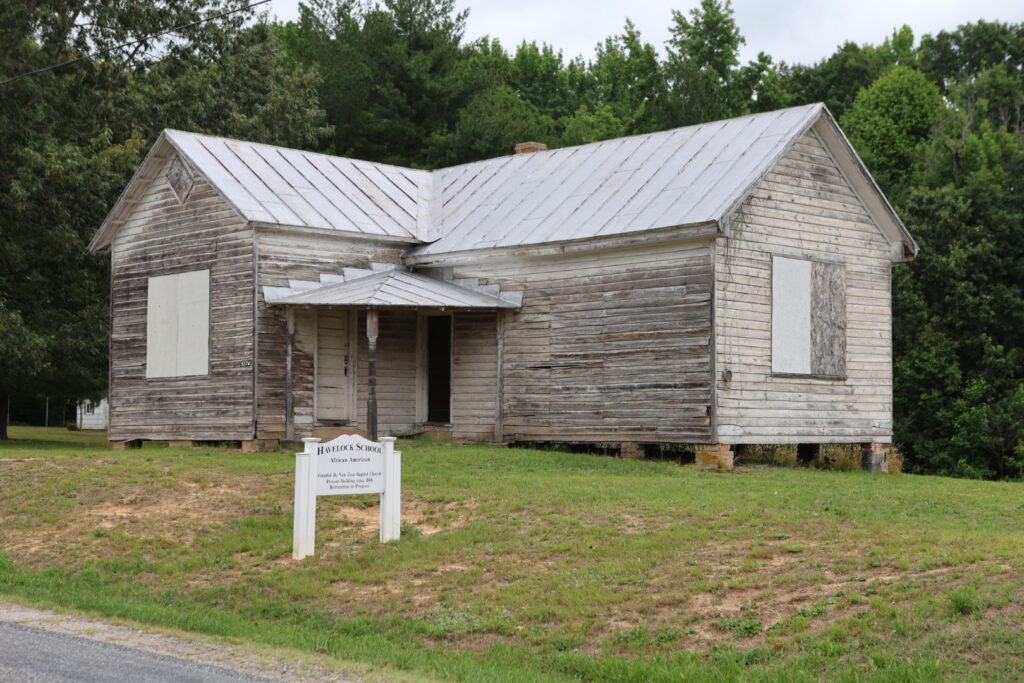
Havelock School, a historic two-room schoolhouse in Richmond County, Virginia, stands as a reminder of the region’s rural educational heritage and community history. (Nathaniel Cline/Virginia Mercury)
While state policies have led to expanded standards and accountability, recent policy debates and reforms have coincided with more families choosing to homeschool or attend private schools, affecting public school enrollment and funding.
According to data collected from the Virginia Department of Education by the Home Educators Association of Virginia, homeschooling increased by 5.34% this year compared to the previous school year bringing the total of students to 66,117.
Rasoul attributed declining public school enrollment to declining birth rates, continued exploration of alternatives during the COVID-19 pandemic and the hyper-politicization of schools.
“Whether you be on the right or the left, there is a small frustration in recent years about how hyper-politicized public schools have become,” Rasoul said.
Most Democrats say public funds should continue to support the state school system. But with students turning to non-public school alternatives, some Republican lawmakers have called for public funds to be funneled to voucher programs for private schooling.
Del. Tom Garrett, R-Buckingham, said Virginia’s schools should teach students “how to think, and not what to think,” and argued that schools have moved “too far into the social realm” by addressing topics that should be up to parents to tackle with their children.
“I want schools to empower kids to be successful learners and critical thinkers, but some topics should remain with families,” Garrett said.
Shifts in instruction
For most of the state’s existence, Virginia’s educators taught using simple tools — chalkboards, textbooks and experience. As access to other materials and resources has grown, so has teachers’ knowledge, which they continue passing along to students.
But in recent years, critical thinking and customization have played a larger role, with educators and lawmakers realizing that not every student learns the same way and viewing each student as an individual with unique strengths, interests, and cultural backgrounds.
“(Virginia) is trying to move away from the one size fits all,” Jones said, “and really thinking about each student one at a time, and how they’re entering into their learning experiences, and then taking that information to get to where those standards say that each student needs to be at the end of their 13 years.”
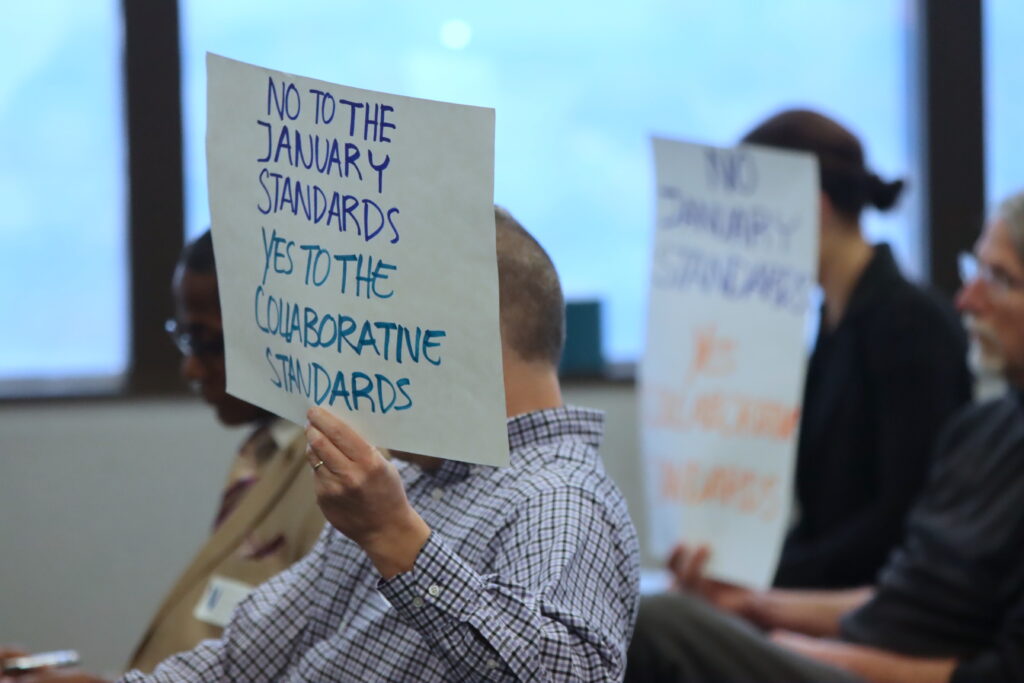
A speaker holds up a sign supporting a draft of the history standards different from the version completed by the staff at the Virginia Department of Education. (Nathaniel Cline / Virginia Mercury)
The state is now placing more emphasis on assessing students before instruction begins, understanding each student’s current skill level, and providing support for those who need additional help and for those who are ready to move on to advanced coursework, Jones said.
Cherry criticized the state’s teaching model, citing pandemic-related learning loss and low reading levels as evidence that current approaches aren’t working.
“I think the idea that every student in every neighborhood that’s the same age is ready to learn the same information at the same time, there’s a fallacy in that, and I think it’s one of the big problems with public education now,” Cherry said.
Garrett added that Virginia educators must better prepare students for a globalized workforce.
“This is always going to be a moving target, because the skills that a young person needs to enter the workforce … is different in 1990 than it was in 2010, different in 2026 than it was in 2010,” Garrett said. “So we should always be looking at those.”
History and social sciences instruction have received extra scrutiny over the last few years, as public perceptions of what should be taught and how to teach it changed.
Dickenson said the state now implements history and social sciences lessons through inquiry-based methods rather than rote memorization.
“I was taught social studies in a very rote fashion, that it was all about names, dates, and places, and memorizing that information … and while that’s important, it’s not instructional best practice to just cover information,” Dickenson said.
Technology transforms and challenges
Democratic Lt. Gov. Ghazala Hashmi, a career educator, said technology has radically transformed classrooms, offering benefits for learning and beefing up critical thinking but creating challenges for schools trying to keep up with rapidly evolving applications and tools.
“Virginia is continuing to work to address the technological shifts, and we still have much more to do as we keep up with the pace of change,” Hashmi said.
The internet transformed curricula by vastly expanding access to information, Hashmi said, which makes information literacy — learning to discern reliable from unreliable sources — essential for students and the general public.
The U.S. Education Department urged schools and districts on Tuesday to set policies governing smartphone use in schools. (Photo by SDI Productions via Getty Images)
“Access to a global community of information puts considerable challenges on our students, on our educators,” Hashmi said. “We have to teach not just our students in the classroom, but the entire public on how to be able to discern information, how to be able to identify what is reliable versus what is not, and then how to be able to apply it effectively.”
Cherry said he has been impressed by the speed of electronic curriculum updates compared to the old printed textbooks. Meanwhile, others like Simmonds are raising awareness that technology is pressuring schools to adopt new tools and to consider curriculum trade-offs.
Responding to these shifts, Garrett is advocating for balance, naming concerns about students getting too much screen time, overreliance on tech and reduced interpersonal interaction.
“There’s a balancing act here… because you want to make sure that young people know how to send an email and maybe enter a good query into AI … you (also) want to make sure that they know how to interact comfortably in a social setting with other humans (and) that AI is not writing their paper for them,” Garrett said.
Dickenson says technology has greatly expanded access to information, but the pandemic showed its limits.Tech tools should be used to enhance learning rather than replace teachers or relationships, he added.
“We need to find an appropriate balance for technology and utilize it not just for the sake of technology, but when it can amplify and advance learning.”
Virtual learning also has its place, Hashmi said.
Online education isn’t for everybody, that’s clear, but when you have educators that are prepared to teach online, and… students who are ready to learn online, it can be a very strong and positive application of the technology.”
What’s next
Education leaders said that while the state has made great strides in its public education landscape over the years, some areas still need improvement in terms of funding and readiness.
Rasoul said the basic structure of classrooms has not fundamentally changed since the industrial age.
“In general, I believe that the way we have structured public education largely is built for the industrial age and is not structured and conducive to the way public education needs to be in moving forward,” Rasoul said.
He added that Virginia has asked schools to do more, including supporting students with their mental health and socio-emotional well being, all the while preparing students and themselves for the workforce changes in the future.
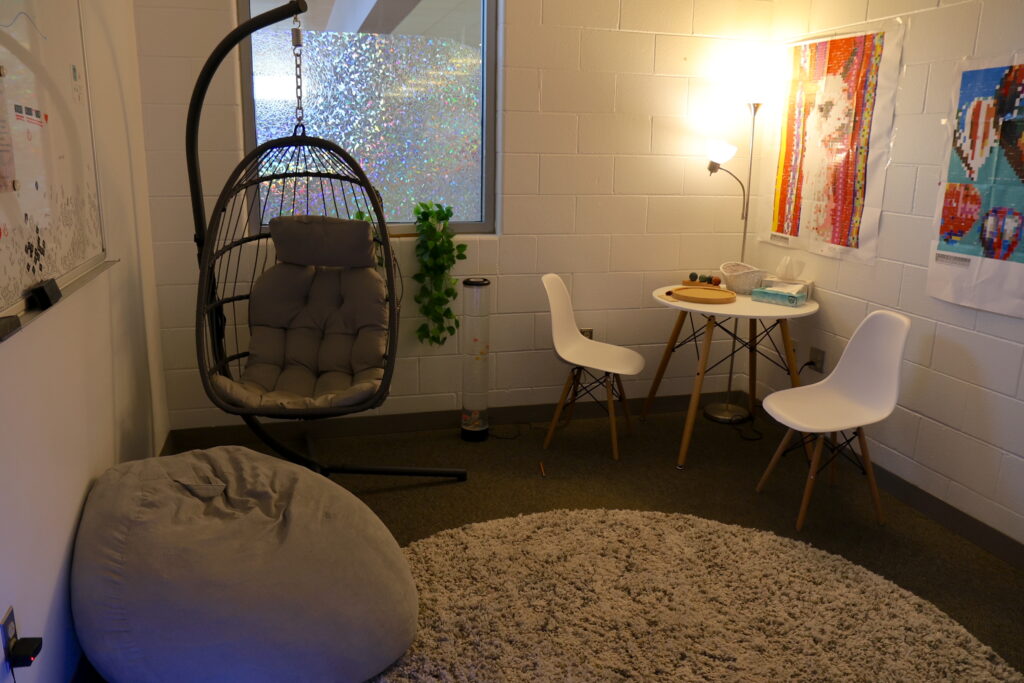
Hanover County Public Schools created calming rooms, which are spaces designed to relieve stress and anxiety for students, during its in-house mental health pilot program that started earlier this year. (Photo courtesy of Hanover County Public Schools)
“I don’t think that we have given the emotional and resiliency and the adaptability skills to students and adults alike to deal with the disruption that is coming,” Rasoul said.
Virginia’s K–12 funding formula is over 50 years old and outdated, Hashmi said, and called on lawmakers to continue their work to modernize it and target more resources to high-need student groups: economically disadvantaged students, English learners and students with disabilities.
The formula determines how much the state must allocate to school districts using staffing ratios rather than student need, Hashmi said, which puts some areas of the state and its students at a disadvantage.
“The huge disparities that we have in educational opportunities because of our outdated funding formula are causing a great deal of hardship in our rural counties,” Hashmi said.
Cherry countered that there is a disconnect between rising funding and declining outcomes, and challenged his colleagues to consider a new plan if something is not working.
“When we look at education in Virginia today, we’re investing a record level of funding, (and) our outcomes are getting worse,” Cherry said. “I think we as legislators need to look at what’s working, what’s not, and whether we are willing to admit what isn’t working and be willing to change those things.”
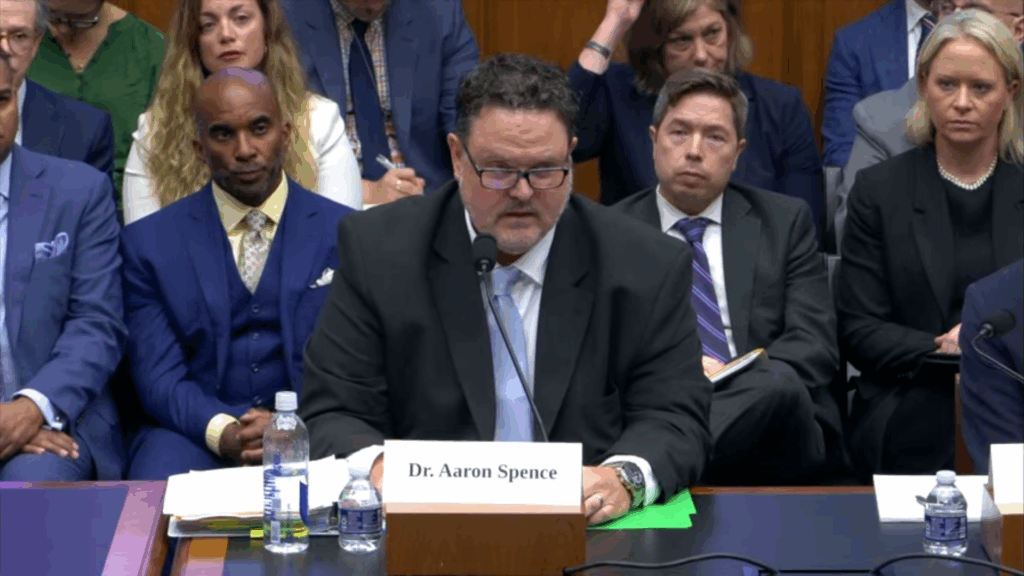
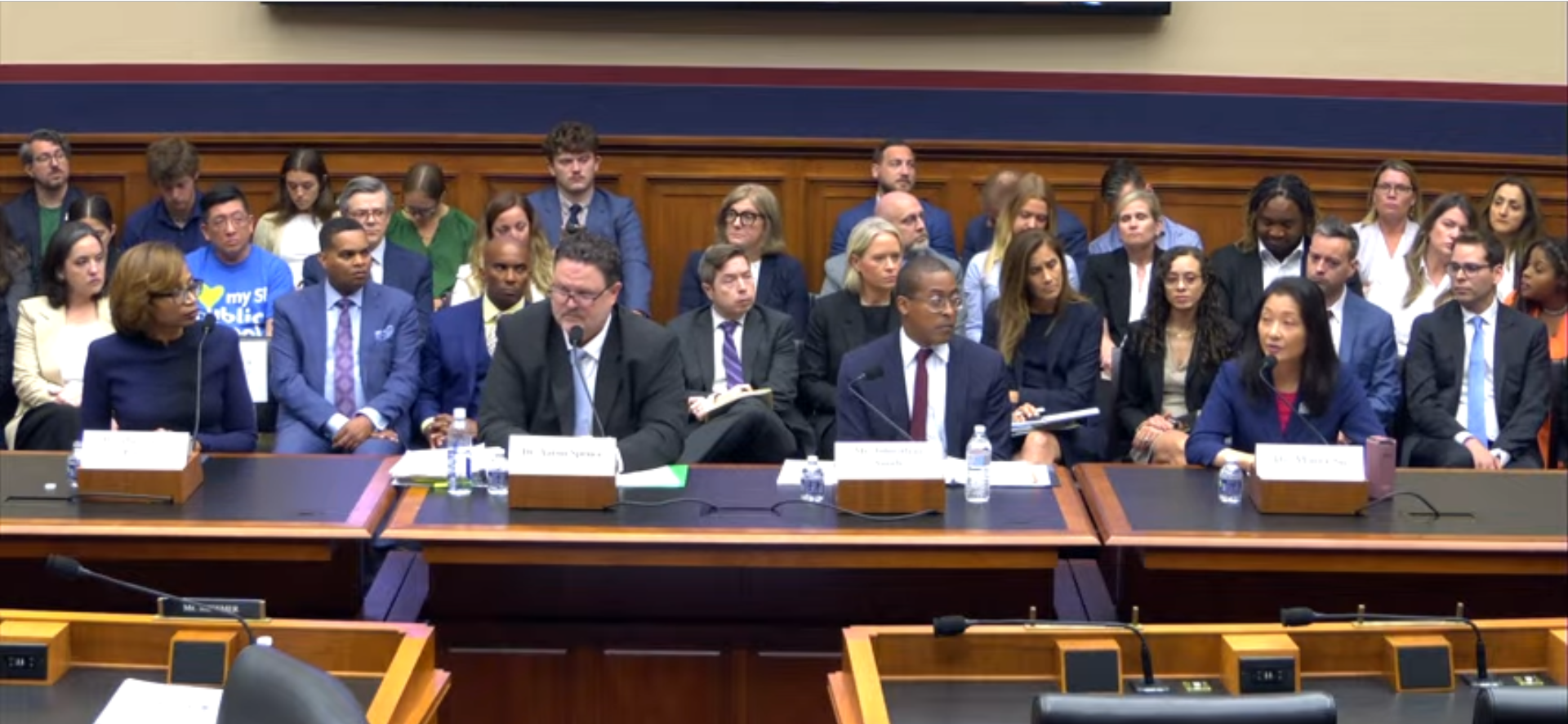
Loudoun County Public Schools Superintendent Aaron Spence testifies during a June 10, 2026, hearing. (Courtesy photo of House Committee on Education and Workforce)
The U.S. House Committee on Education and Workforce on Wednesday invited Loudoun County Public Schools Superintendent Aaron Spence and others to hear how K-12 schools in Virginia and other states manage sensitive educational content, student safety and the extent of parental control in classrooms, key issues in current national debates.
The hearing follows recent federal investigations of the school system, including one triggered after a high schooler reportedly recorded peers in bathroom stalls. Another probe focused on the district allowing students to use facilities based on gender identity rather than biological sex.
Loudoun Schools also faced a parent-led lawsuit for allegedly retaliating against male students who opposed a student assigned as female at birth changing in the male locker room.
Spence stated LCPS, serving 80,000 students in Northern Virginia, is committed to legal compliance, partnering with parents, providing rigorous coursework, removing learning barriers and centering student needs.
He also pushed back against the “parents vs. schools” framing that has dominated education debates nationally over the past five years.
“Too often, the public narrative frames schools and parents as adversaries,” said Spence. “That’s not the reality I see in our community, and it’s not the reality I see in public education more broadly,” Spence said. “As I mentioned earlier in the statement, I’m a parent, and I believe it’s critical that schools respect and listen to our parents as we work alongside them to educate our students.”
Committee Chair U.S. Rep. Tim Walberg, R-Michigan, said some districts are prioritizing controversial gender policies over student safety and educational fundamentals, raising concerns about parental rights and student well-being.
He pointed to national cases, including two in Loudoun County, the first where a teenager entered a girls bathroom and sexually assaulted a 15-year-old girl and the other over a teacher who was placed on leave after speaking out against what he called “radical gender ideology” in his personal capacity at a school board meeting.
“School districts seem to be losing sight of their core mission and that core mission is educating students,” Walberg said. “When school policies affect the safety, the privacy, and the well-being of children, Congress has a responsibility to ask questions.”
Spence, who joined LCPS in 2023 after these events, said state employees have a right to their “deeply held religious beliefs” but must also follow district policy. He added that LCPS does not discriminate, treats students according to the law and allows parent-requested rooming alternatives.
Spence has the full backing of his school board, which upholds inclusive policies, according to a letter cited by Ranking Member U.S. Rep. Bobby Scott, D-Newport News. The board recently reconfirmed Spence’s job after a five-hour meeting, the Loudoun Times-Mirror reported.
A view of the witnesses at June 10 hearing with the House Committee on Education & Workforce. (Courtesy Photo of House Committee on Education and Workforce)
Still, lawmakers questioned Spence on religious speech, parental curriculum access, room assignments, transgender rights, and the division’s handling of drug overdoses.
“LCPS isn’t perfect, no institution is, but the good ones will understand that and address concerns,” Spence responded. “We work hard to ensure that the education we provide meets the needs of our students and our families.”
Scott, the only Virginian on the committee, later argued Republicans are prioritizing “culture-war” issues over real student needs like affordability, gun violence, immigration enforcement, and learning loss.
He added the federal government must ensure inclusive, quality, and safe learning environments, but said this is difficult when the Trump administration undermines the Department of Education and Office for Civil Rights, shutters the Institute of Education Sciences, and fails to resolve civil rights complaints or protect students from discrimination.
“I’m disappointed the majority again ignores parents’ concerns, favoring divisive culture wars for political gain,” Scott said.
Spence’s testimony made him the most recent K-12 Virginia superintendent to speak before Congress.
In 2011, Robert P. Grimesey Jr., then the superintendent of Orange County Public Schools, spoke to federal lawmakers about how extensive federal regulations and reporting requirements affect teachers, administrators and students in elementary and secondary schools.
Wednesday’s hearing lasted for slightly over three hours. Other witnesses included: Maria Su, superintendent of San Francisco Unified School District; Macquline King, superintendent and CEO of Chicago Public Schools; and Johnathan Smith, managing director at the National Center for Youth Law.
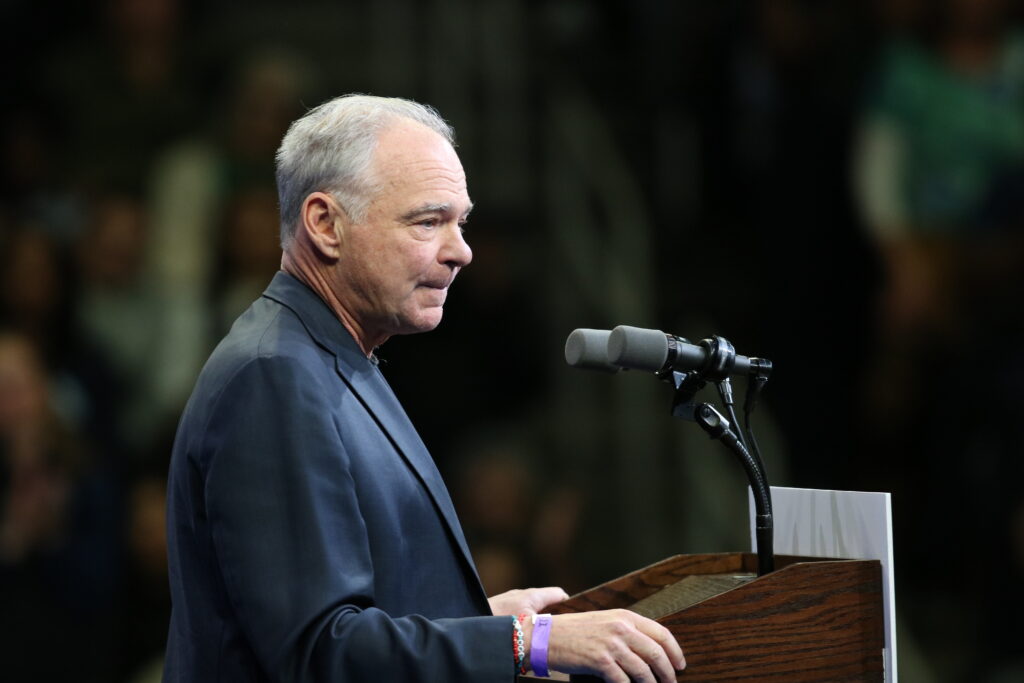
U.S. Sen. Tim Kaine, D-Virginia, seen here speaking at a rally in Norfolk for Democratic gubernatorial nominee Abigail Spanberger in 2025., said the Better Education Through Mentoring Act would support teacher and school leader induction programs in K-12 schools. (Photo by Charlotte Rene Woods/ Virginia Mercury)
One of Virginia’s federal lawmakers on Wednesday introduced a bill in Congress that would establish a grant program to address the national teacher shortage and better support early-career educators.
U.S. Sen. Tim Kaine, D-Va., is leading the proposal with support from U.S. Rep. Jahana Hayes of Connecticut. Kaine told reporters on Thursday that the Better Education Through Mentoring Act would support teacher and school leader induction programs in K-12 schools.
Kaine, who has introduced similar proposals to address teacher induction and retention in past years, said this bill is designed to reduce turnover rates.
“It’s one solution, not the only solution, but one solution that will lead to filling up the ranks of classroom teachers,” said Kaine to reporters last week. “We have shortages virtually everywhere in the country and also a retirement bubble that’s likely to hit in the next few years that will make those shortages even more acute.”
Teachers with the fewest years of experience have the highest turnover rate, with some moving to another school or leaving the profession, the bill reads. This can negatively impact student learning, disrupt school stability and detract from collegial relationships, collaboration and institutional knowledge.
Schools also incur high costs to replace teachers who leave.
Research cited in the bill text shows that comprehensive two-year mentoring and induction programs improve outcomes for educators and students, and boost teacher effectiveness, student achievement and retention.
Students of color and those in rural areas are also likely to be taught by inexperienced teachers,the proposal highlighted, further illuminating why targeted mentoring and induction support are needed.
Virginia’s legislature has appropriated millions in state funds to support such students, specifically in math and reading, due to low test scores.
The proposed measure also pointed to research showing rural schools face unique barriers, including limited access to qualified mentors and greater professional isolation. Studies show induction programs for school leaders improve teacher retention and student outcomes, particularly in disadvantaged schools.
If enacted, the proposal will promote mentorship, pairing early-career teachers with experienced mentors to help them become effective quickly. It will also include new support for teachers early in their careers and will offer new and expanded induction programs.
“It’s both an educational effectiveness program, but also a teacher retention program,” Kaine said.
The program will require funding, to help offset the cost of mentors’ time spent assisting other teachers. The proposal did not include an estimated amount.
The funding will first go to the committee level for consideration before being put to a vote for approval.
If state leaders don’t finalize the budget by July 1, Virginia school leaders say there will be insufficient funding for special education, at-risk students, educator compensation and student services. (Photo by Getty Images)
Virginia’s education leaders say they are optimistic about the proposed K-12 funding in the state budget, but their outlook is tempered by uncertainty as state leaders and the governor have yet to reach an agreement on a new two-year spending plan.
Passing a new budget as quickly as possible is crucial for education leaders and localities because it guides their priorities including funding programs, facility projects, and, most importantly, staffing during a nationwide educator shortage.
School boards are feeling the pressure as they collaborate with local officials and administrators to prepare for the upcoming school year.
“Budget certainty is critical for school boards and school divisions,” Gina Patterson, executive director of the Virginia School Board Association, representing the largest group of board members in the commonwealth, said in a statement to the Mercury.
“At this time, our hope is simply that state leaders can come to a resolution on the budget in a timely manner so divisions across the commonwealth can move forward with greater clarity and stability.”
The main issue delaying an agreement among lawmakers is how to handle revenue from one of the most successful industries — data centers.
The Senate passed a budget that would end data centers’ sales and use tax exemption and redirect an estimated $1.6 billion annually towards other areas, including education and transportation.
The House budget, however, would maintain the exemption, which is set to end in 2035. Gov. Abigail Spanberger aligns with the House budget and preservation of data centers’ tax break.
Meanwhile, the cost of living for Virginians has risen since the budgets were proposed, largely due to factors such as the start of a U.S. war with Iran, which has increased costs for food and gasoline. The state is also facing a July 1 deadline before government operations could shut down.
Neither chair of the House or Senate appropriations committees responded to the Mercury’s requests for comment on the status of budget negotiations.
Education carveouts in the budget
The packages proposed by both chambers include line items to support students, schools and employees. But they differ in how to do so.
In the House, lawmakers proposed a flat $1,500 one-time payment for eligible school employees in 2026, instead of a small percentage bonus. In addition, eligible employees would also receive a total 4% raise, with 2% increases in both 2027 and 2028.
The Senate proposal differs from the House plan by providing eligible employees with a roughly 6% raise over the next two years and increasing funding for teaching scholarships and residency programs.
Another area of interest for localities is financial assistance for school construction, which can be costly, especially in areas with a local composite index (LCI) that determines what each locality can pay for its schools.
If the language in the Senate budget is approved by the governor, the state would allow localities to approve, by vote, up to a 1% local sales tax to pay for school construction costs, a central factor in an ongoing debate about aging school buildings.
“It’s an important mechanism for addressing our school construction needs in the state, which really, the quality of our infrastructure, despite recent investments by the General Assembly, has been in continual decline,” Chad Stewart, director of government relations and research with the Virginia Education Association, said.
In special education, the House recommended an additional $1.7 billion over the previous biennium’s budget to support students with disabilities and those at risk. The funds would also help families access affordable early childhood education and promote stability for students, teachers and the K-12 system.
As part of the proposed investment, the House is dedicating $400 million in one-time use for school divisions to provide fiscal stability and meet local needs by funding school renovation, addressing teacher recruitment challenges, or continuing tutoring programs, including some created under a statewide initiative launched by former Gov. Glenn Youngkin’s administration.
The Senate recommended an additional $60 million to improve school operations and infrastructure.
Stewart said lawmakers have work to do to address the different ideas in both budgets.
“Virginia really needs an education budget that meets the moment and one that’s actually responding to our educator shortages, our staff vacancies, and the serious student learning challenges that schools have faced over the last six years.
Other investment recommendations made by the House include a $160 million increase in funding for students with disabilities. Compared to the House proposal, the Senate is recommending $118.7 million more for at-risk students, $12.8 million more in each of the next two years for special education services.
The House committee also recommended $163 million to create 11,591 additional early childhood slots to clear child care waitlists. Moreover, this investment is intended to ensure all families with incomes below 85% of the state’s median income can access affordable child care.
The House budget also provides funds to support employer partnerships to share child care costs.
The Senate proposed $50 million for a pilot program that would partner with businesses to expand early childhood care.
To support its commitment to high-quality education, the House is recommending dedicating $437.8 million to rebenchmarking and other technical updates.
Finally, the Senate budgeted $17.6 million to provide free school breakfasts and $1.3 million to review and possibly redesign the state’s school funding system.
Sarah Calveric, board president for the Virginia Association of School Superintendents, said the urgency of the matter “cannot be overstated” as lawmakers continue to deliberate.
“I believe the state budget doesn’t just serve as a financial document, it really is a foundation or a roadmap for educational planning, and of course, staffing,” Calveric said.
Delayed budget highlights existing challenges
If state leaders don’t finalize the budget by July 1, school leaders say there will be insufficient funding for special education, at-risk students, educator compensation and student services.
Even with the proposed raises and school funding, some education leaders said they’re unable to keep pace with inflation, rising costs, and broader economic uncertainty.
And without knowing how much they will have to work with over the next two years, hiring and retaining employees is harder for school districts. Some divisions have been able to address the matter with financial support from their localities, but others in tighter, financially strapped jurisdictions are not able to follow suit.
Depending on when the budget is settled, leaders said multi-layered processes between local school boards and government leaders are likely to delay approving budgets, hiring or allocating staff and starting or revising programs, among other things.
The pressure to maintain services increases as expiring grant funds may lead to program cuts, and school construction and infrastructure backlogs limit the ability to address local needs.
Lawmakers to reconvene
The House is scheduled to meet June 18 and the Senate on June 22. Both bodies will be armed with an updated budget forecast, ordered by Spanberger in May. The budget must be finalized by June 30 or the state government will lapse into a shutdown. Educators are watching the clock as they anticipate students’ return to school in the late summer.
“I think the timing is critical. I appreciate the thought that the General Assembly is putting into the process, but we are very eager and anxious to receive the green light to proceed,” Calveric said.
“This is a critical aspect to being in a state of preparedness and readiness for the 26–27 school year, and so we’re looking forward to hopefully receiving some positive outcomes in the very near future.”