Tag: Housing

  • Virginia legislators advance $205 billion budget including new tax on data centers

    Virginia legislators advance $205 billion budget including new tax on data centers

    On Monday, Virginia legislators approved a two-year, $205 billion budget proposal to fund healthcare and public education, provide 4% teacher raises and a 3.5% pay bump to state employees, establish a retail weed marketplace and hedge against decreased federal dollars.

    The spending plan also includes a provision to tax data centers for their energy consumption, which is slated to generate a maximum of $600 million each year but doesn’t include the environmental standards the House of Delegates wanted to impose on the industry or the end of the sales tax exemption that the Senate sought.

    Senate Finance Committee chair Louise Lucas, D-Portsmouth, said after her chamber’s morning session that she “didn’t love” the data center compromise and framed it as a necessity — but not the final solution.

    “I would have preferred another method, but we had to get a budget. We were not going to let the government be shut down, and so this was a good start,” Lucas said.

    “This is a compromise proposal — one my administration helped craft — and it builds a strong foundation for further discussions about the future of this industry in Virginia on issues like environmental and community impact,” Gov. Abigail Spanberger said of the data center provision in a statement.

    The Senate passed the budget proposal 23-16 vote, while the House advanced it 71-22.

    With both chambers finally on the same page after months of gridlock over data centers, the plan will now be reviewed by Spanberger. She can sign it as-is, recommend changes or veto line items. The whole process must be finalized by July 1, when the new budget will take effect.

    Here are the key priorities addressed by the spending plan.


    Data centers


    The amended budget proposal creates an energy consumption tax for data centers which totals $.011 per kilowatt hour used per month.

    The state will collect up to $600 million a year from this new tax, according to budget language. Any funds collected over that cap would be put into a fund and given back to data centers at the end of each fiscal year.

    This is only a fraction of what the state could have made if they had ended the sales and use tax exemption, but, after months of arguing, lawmakers ultimately didn’t agree to that measure. Spanberger supported keeping the exemption in place through the end of the agreement’s term in 2035.

    Additionally, language was put into the budget to direct the Department of Environmental Quality to study the groundwater impacts of non-closed loop data centers, which use millions of gallons of water each year.

    DEQ will locate “cooling water scarcity areas” where the use of potable water for computer cooling systems could be detrimental to surrounding areas’ water quality and availability.

    The department will have until July 2027 to create regulations for the scarcity areas. After they are developed, future data centers in that area will be required to “use air cooling, closed loop cooling systems, or more efficient cooling systems that become available.”

    After July 1, 2027, data centers in the Eastern Groundwater Management Area will have to “use air cooling systems, 100% recycled water and/or stormwater for cooling, or use a closed loop system.” A study will be released in October 2026 on how to retrofit existing data centers in those areas to align with the new regulations.

    Some Republican lawmakers characterized the measure as inconsistent.

    “The budget does not create one strong statewide water usage standard for data centers. Some parts of Virginia get stronger protections and other parts get weaker protection or no protection at all,” said Sen. Glen Sturtevant, R-Chesterfield. “That should concern every locality that is concerned about becoming the next target for a massive data center.”

    Senate budget proposal keeps data center sales tax exemption, adds new tax for industry

    Budget language also directs DEQ to put in place noise abatement regulations for data centers before the end of 2029. The department will determine the lowest possible noise level for data centers and make it the standard starting in 2030.

    After that date, facilities who violate the noise standard will face a fine of $32,500 per day.

    “The noise issues are some of the things we hear the most from people that live next to data centers,” said Sen. Scott Surovell, D-Fairfax, whose district contains dozens of data centers. “Water is a rising concern, especially for any data centers that are gonna be put east of I-95, where we already have a real problem with our declining aquifer.”

    Lucas told reporters that this is not the end of the conversation about doing away with the sales and use tax exemption, and that a study group will look closer at the issue and provide a report on their findings in November.


    Health and human services


    Overall, the pending budget will earmark $158.3 million in the state’s general fund for fiscal year 2027 and $245.1 million in 2028 for healthcare and social services.

    The money was set aside both for healthcare and social services the state typically handles along with support to comply with new federal mandates and partially plug holes created by federal funding shortfalls.

    As thousands of Virginians have fallen off Affordable Care Act health insurance this year, Virginia’s new budget entails $150 million to support a state-level version of the expired federal assistance for people between 138% and 250% of the federal poverty level.

    Sen. Danica Roem, D-Manassas, a former journalist and restaurant worker, described the difficulty of living uninsured for two years in a floor speech on Monday.

    “I don’t want anyone to live like that,” she said.

    She added that the budget “puts major money” into making sure that the state is “taking care” of people.
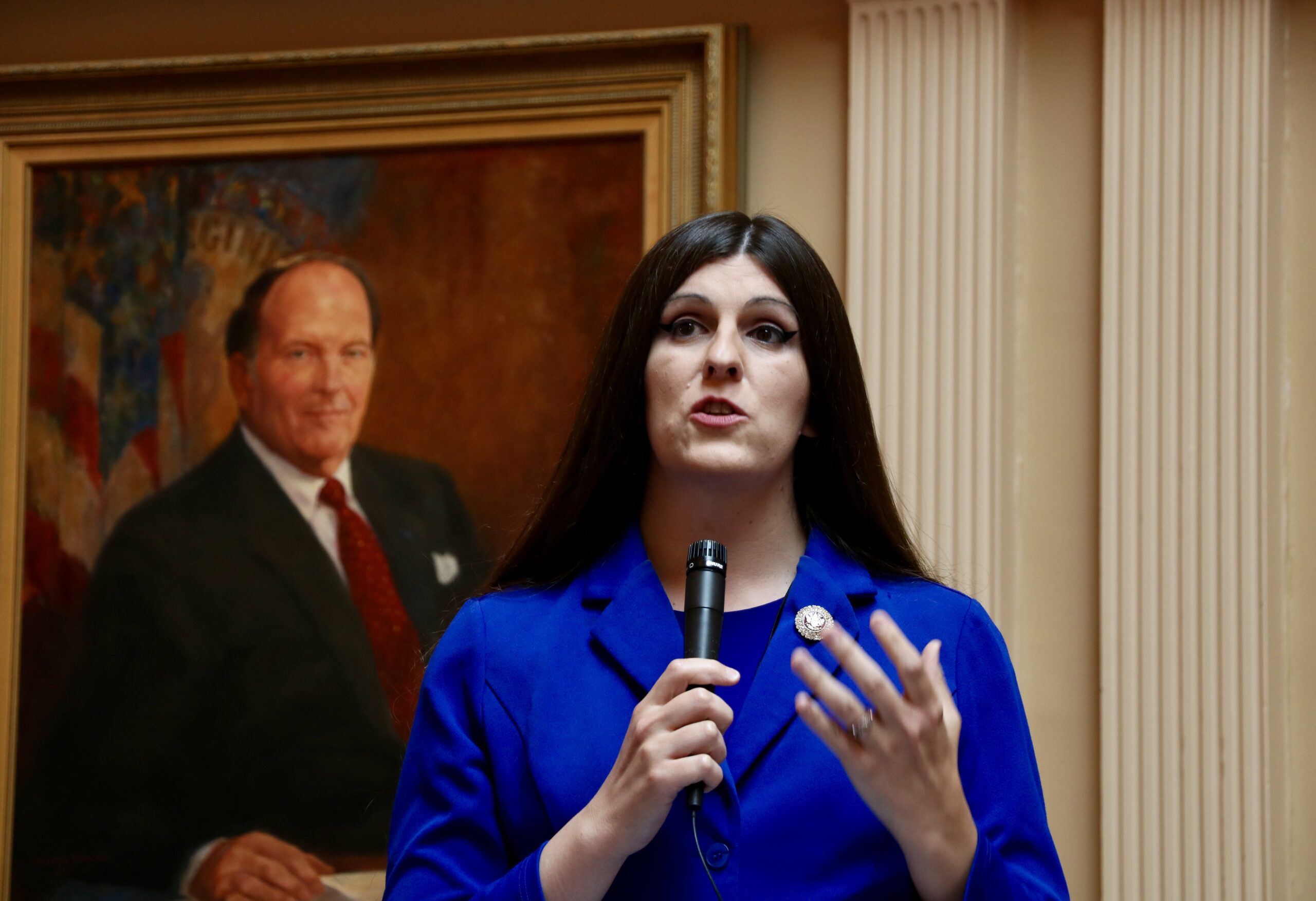
    Sen. Danica Roem, D-Prince William, speaks on the Senate floor during the special budget session on June 22, 2026. (Photo by Charlotte Rene Woods/Virginia Mercury)

    The plan calls for $3.5 million to determine ways the state can ensure eligible people remain on Medicaid amid forthcoming eligibility requirement shifts and additional verification work.

    Virginia’s roughly 850,000 Supplemental Nutrition Assistance Program beneficiaries went without their food stamps last fall during the federal shutdown. And due to a reconciliation bill Congress passed last summer, states like Virginia are attempting to reduce their error rates.

    State lawmakers have designated $135 million to handle SNAP, should the error rate not fall to the required 6% by the end of the calendar year.

    Sometimes SNAP households are overpaid or underpaid because of paperwork mistakes by government staff or outdated information from beneficiaries. Work in social service departments is already underway to reduce error rates.

    Free clinics will receive $20 million in state funding over the next two years while federally qualified health centers will get $10 million in that time.

    While federally qualified health centers offer sliding scale fees for low-income patients, free clinics are also a resource for uninsured patients. Both entities have been bracing for additional clients as Virginians lose their ACA or Medicaid insurance.

    A little over $1 million is allocated to help local health departments statewide handle rent increases. The regional centers help fill healthcare access gaps and are often tailored to the local communities they serve.

    As federal dollars for HIV/AIDS care are slashed, the state budget also contains over $26 million for that specific type of healthcare over the next two years. Staying on top of medication is critical in preventing the spread of the disease.


    Education


    Under the newly approved budget proposal, K-12 education funding would increase by $1.4 billion, including a 4% increase for teachers in each of the next two years.

    Lawmakers propose $590 million for rebenchmarking, declining enrollment, and high-need groups, including $28.9 million for at-risk and $148.4 million for special education students.

    Also included: $500,000 for grants to help schools purchase Automated External Defibrillators (AEDs) and implement cardiac emergency response plans.

    In higher education, the budget proposes restoring funding for affordable access and tuition moderation, as well as expanding nursing programs at several public universities. The Internships Virginia (InVA) initiative to provide paid internships for postsecondary students would also be funded.

    Virginia localities raise $119M for school construction through targeted sales tax

    To support educational infrastructure, lawmakers also agreed to expand the authority to allow all localities to use a 1% sales tax to pay for construction costs, contingent on a referendum that must pass in each jurisdiction. The language also permits jurisdictions in Northern Virginia to use the funds for transportation projects to address public transit needs.


    Tax deductions


    Taxpayers will be able to keep a bit more of their cash, as the new budget increases the standard income tax deduction from $8,750 for single filers and $17,500 for joint filers to $9,200 and $18,400 in 2027 and $9,300 and $18,600 in 2028.


    RGGI/environment


    A budget amendment was added into the conference report that would divert 45% of the funds earned from the Regional Greenhouse Gas Initiative back to ratepayers.

    The funds come from carbon credit sales, which utilities must purchase if they want to burn carbon-based fuels sources that release emissions. Those costs are then passed down to utility customers.

    When former Gov. Glenn Youngkin removed the state from the agreement in 2021, it cost about $4 a month on the average residential customer’s bill. Recently, Dominion Energy filed for the “RGGI Rider” to be added back to monthly bills as mandated by a law to rejoin the agreement, signed by Spanberger in recent weeks.

    Dominion is required to begin purchasing from the carbon credit auction in July but the charge to customers won’t begin until March should the State Corporation Commission approve the application by the utility. This will lead to an increased charge of $10-$13 monthly.

    The state previously earned about $800 million from the RGGI funds that had to go towards community flood preparedness projects and low-income energy efficiency projects. The new budget language includes the rebate for customers, which would put money back in wallets but detract from the funds for flood and efficiency projects.

    The rebate will not apply to co-op utility customers.


    Housing


    While a handful of housing bills passed the 2026 session and have since been signed into law, the new spending plan includes measures to ensure bills with fiscal impacts get off the ground.

    The state budget proposal directs $60 million overall for housing initiatives, $40 million of which will go to the state’s Housing Trust Fund and $20 million that will go towards a mixed-income housing pilot program.

    Additionally, lawmakers set aside $11.5 million for the Virginia Eviction Reduction Program and $10 million for the Clean Energy Innovation Bank.


    Cannabis


    Spanberger and lawmakers announced June 16 a reworked proposal for a retail cannabis marketplace that included key compromises between legislators’ and the governor’s visions. The marketplace is set to launch July 1, 2027 and will be limited to 350 stores statewide.

    Spanberger, legislators roll out retail weed plan, set to launch in July 2027

    State sales tax on retail weed will be 6% at launch and will increase to 8% in 2029. Localities also have the option to add an additional tax of 1 to 3.5%.

    Because lawmakers added a Part 5 amendment, the market will be permanently established in the state.

    The new framework includes a $250 public consumption civil penalty that will not take effect until 2027.

    “We had serious concerns about creating extreme new penalties that would not have meaningfully reduced the illicit market,” Sen. Lashrecse Aird, D-Henrico, said at a press conference announcing the framework last week.

    “But we believe this final framework strikes the right balance for enforcement mechanisms, but also in accountability, but also not harming those who just choose to participate in the market.”


    Child care


    The budget sets aside $137.6 million for the state-subsidized child care program slots, which will be devoted to families making 85% or less of the state median income.

    This follows legislation carried by Del. Briana Sewell, D-Prince Wiliam, requiring the state education department to update how it calculates the cost of childcare for Virginia families. A majority of Virginia parents and employers say child care costs are prohibitive.

    Spanberger signed the bill into law last month.

    A new cost-sharing program for child care will be funded through the budget, with lawmakers allocating $25 million for the initiative to spread the price of child care between families, employers and the state.


    Transportation


    Lawmakers included $153 million in the budget for additional operating assistance for the Washington Metropolitan Area Transit Authority, or Metro, with the caveat that Metro must produce a 20-year capital plan and annual performance reports.

    The action comes as inflation has driven up the costs of operating transit services.

    Lawmakers also proposed directing the secretary of transportation to evaluate options, including public-private partnerships, to accelerate large-scale improvements to the I-81 corridor.

    The legislature allocated $7 million for the Route 460 Phase IIA Finish Grade Project and directed stakeholder engagement to prioritize improvements along the U.S. Route 220 corridor.

    The budget also directs the state to identify federal funds to support rural electric-vehicle charging infrastructure and provides $500,000 to continue developing Advanced Air Aviation Test Sites to enable advanced air mobility.


    What’s next


    The proposal will now head to Spanberger, who said it contained “a lot to be proud of” in a Monday afternoon statement.

    “Today, the General Assembly has moved forward with a budget proposal — and that means we are keeping our government open and delivering for the 8.8 million people who call our Commonwealth home,” she added.
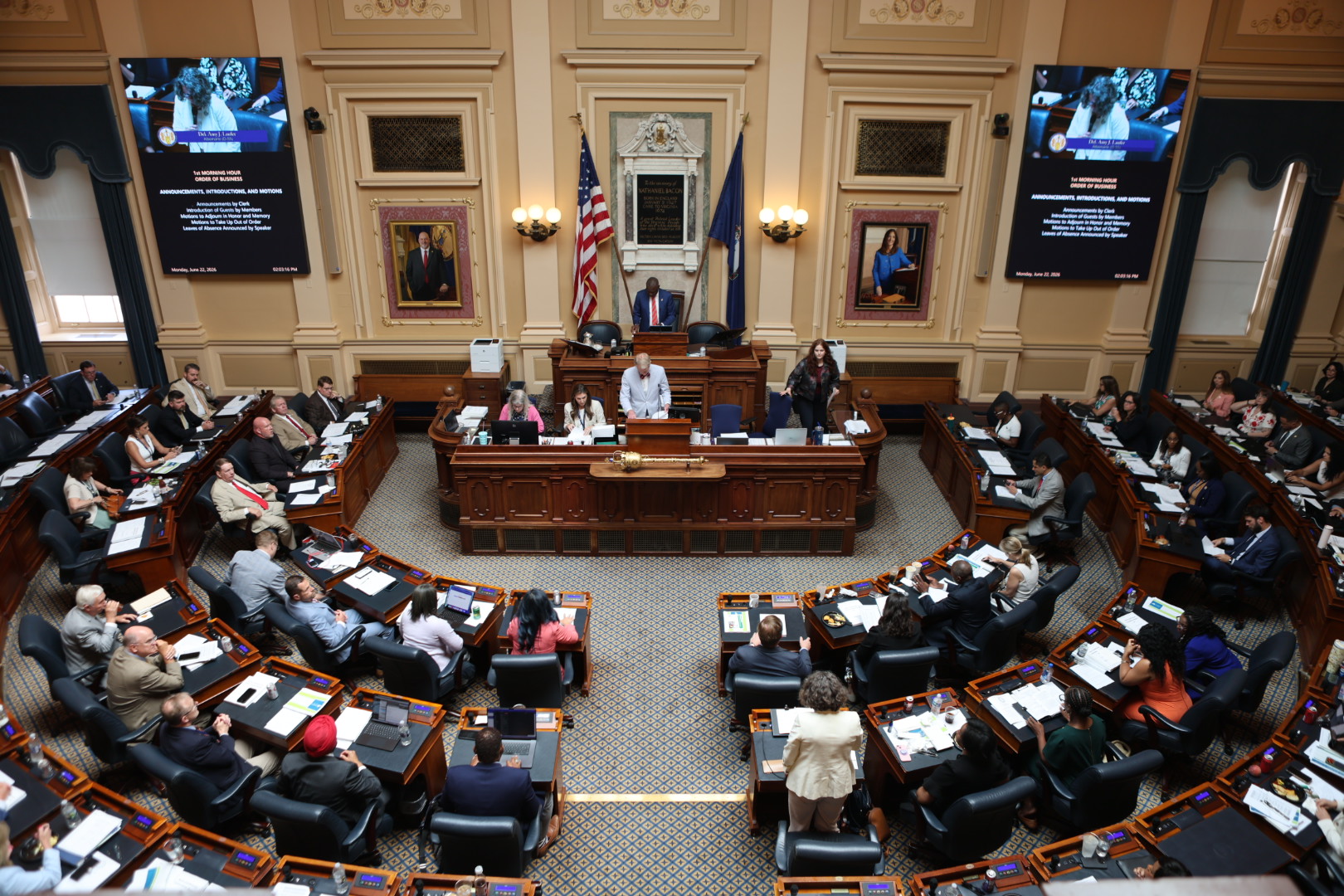
    A view from inside the Virginia House of Delegates chamber on June 22, 2026. (Photo by Nathaniel Cline/Virginia Mercury)
  • Luria to face Democratic challengers before a potential rematch with Kiggans in 2nd District

    Luria to face Democratic challengers before a potential rematch with Kiggans in 2nd District

    This summer, four Democratic candidates will face off in a primary for the chance to oust incumbent Republican representative Jen Kiggans in Virginia’s 2nd Congressional District.

    The Virginia Beach-anchored district is politically purple and often oscillates between partisan control, though in past years it had a decidedly Republican lean.

    Its nearly 600,000 residents backed Gov. Abigail Spanberger last year by 53% and analysts consider it flippable — making it a key contest that could help determine partisan control of Congress.

    All four Democratic primary candidates — which include the district’s former representative Elaine Luria, acute care doctor Nila Devanath, former USAID worker Patrick Mosolf and regional government official Bill Fleming — seek to hold Kiggans “accountable” and help congress provide a check and balance to the “corruption” of President Donald Trump.

    Who’s who

    Kiggans, a Navy veteran and nurse practitioner, has represented the district for two terms after ousting Luria, who also represented it for two terms. With no primary challenger, she did not do an interview for this story, but she did respond to questions by email.

    With Navy veteran Luria formerly representing the district, she already has backing from the Democratic Congressional Campaign Committee along with Democratic leadership in Virginia including Gov. Abigail Spanberger and Sen. Louise Lucas, D-Portsmouth.

    During her time in Congress Luria backed the creation of the Affordable Care Act’s Enhanced Premium Tax Credits — which have since expired but helped reach more people struggling to afford healthcare. She also backed the 2022 Inflation Reduction Act, a range of energy efficiency and healthcare affordability measures.

    Devanath,the daughter of Bangladesh immigrants, is an acute care doctor but previously worked as a lawyer at a legal clinic defending domestic violence survivors.

    If elected, she plans to bring her legal and medical insights to Congress. She has already made trips to D.C. to meet with members of finance committees, she said, to prepare for how she can help address economic issues if she earns a seat on Capitol Hill.

    Virginia Beach Soil and Water Conservation District director Bill Fleming hopes to join the U.S. House Committee on Agriculture if elected so that he can help advance environmental laws. He shares many progressive policy priorities with some of his primary opponents but considers himself an “independent democrat.”

    From serving as director of a homeless shelter to time spent working for USAID, Mosolf said his time spent solving problems has helped him prepare to take that work to the nation’s legislative body. He was motivated to run and find new routes to solve problems after losing his job to Trump’s closure of USAID.

    Addressing the cost of living

    The rising cost of living, from groceries to housing to healthcare, is a motivating factor for Kiggans and all four Democratic candidates.

    Each candidate criticized Kiggans’ support for Trump’s tariffs, war with Iran, and a reconciliation bill that entails changes to Medicaid and hospital funding mechanisms. They also pointed out Kiggans’ vote to not renew expired Affordable Care Act subsidies.

    Luria said Kiggans expressed interest in bipartisan collaboration after ousting Luria from the seat in 2022, a stance she said was in contrast with Kiggans’ votes in favor of Trump policies.

    Ahead of the passage of the One Big Beautiful Bill Act last summer, Kiggans joined an open letter in opposition to aspects of the bill she ultimately voted for.

    Kiggans was previously outspoken about the need to renew expiring ACA tax credits, Luria said, even writing a letter in support of extending the credits, but ultimately changed her tune.

    Virginia Congressman Wittman among just 17 Republicans nationally to back ACA credits extension

    “Writing a letter that is in opposition to something you’re voting for — it just doesn’t work that way,” Luria said.

    In an email, Kiggans said her initial support of renewing the credits was conditional on “meaningful reforms” to strengthen protections against “waste fraud and abuse.”

    All Democratic challengers said addressing affordability issues will be a priority for them, if elected.

    “I think it’s going to take a lot of small things. It’s not just pushing a magic button,” Mosolf said.

    All the Democratic contenders said they would work to extend the ACA subsidies and undo the healthcare provisions of the reconciliation bill.

    They are supportive of a massive bipartisan housing bill that is nearing Trump’s desk and could see his signature; if it doesn’t, though, they said they will try again.

    On healthcare, Devanath and Fleming are backing a growing Democratic embrace of universal healthcare. The idea is to replace private insurance companies with government-run insurance available to everyone.

    Because uninsured and underinsured people are more likely to put off primary care, Devanath said she’s increasingly treating people in critical condition or for whom more drastic measures could have been prevented.

    This is why she’ll back the Medicare For All Act, she said.

    “You have to have people who are willing to be bold,” Devanath said. “Instead of following incremental change, let’s go for the gold. Put it out there, stick to it, and see where we land.”

    Devanath and Fleming also support the Working Americans’ Tax Cut Act, which would create a tiered surtax on income over a million dollars.

    “It’s one thing to sit and grumble about something while you’re watching television, but it’s better to try to get a seat at the table, so that you can maybe affect change,” Fleming said.

    Stock trading crackdown, campaign finance reform

    Luria said Congress should hold itself accountable by banning stock trading of elected officials, pointing to what she called a “long list” of ways Trump has capitalized on his presidency to financially benefit his family or allies.

    As a congresswoman, Gov. Abigail Spanberger championed an effort to prevent lawmakers from capitalizing on sensitive information and disproportionately benefitting from their positions of power.

    Luria was not always on board with the proposal, calling it “bullsh-t,” but her stance has evolved into support.

    “Congress can set the example and actually walk the walk,” she said.

    Kiggans is co-sponsor of a similar, more recent effort.

    Wittman seeks to keep 1st District seat, as Democratic challengers face crowded primary

    All of the Democratic contenders want to address how candidates receive donations for their campaigns by reigning in large political action committees’ donations along with “dark money” contributions, large entities’ donations that are not publicly disclosed.

    Luria’s Democratic challengers have taken issue with her updated stance on campaign finance. In 2018, she’d signed a pledge to not take corporate money before accepting $34,000 from corporate PACs in 2020.

    Luria’s donors have included the Democratic Majority for Israel PAC and some of her donors have also contributed to American Israel Public Affairs Committee. After a United Nations committee concluded that Israel is committing genocide in Gaza, Luria’s challengers said it would be unethical for them to take money from groups that support Israel. (Israeli officials have denounced the report as “distorted and false,” according to NPR.)

    While AIPAC has historically supported both parties so long as candidates are “pro-Israel,” the group’s supporthas emerged as a rift among some Democratic candidates in recent election cycles.

    Kiggans, who has also been boosted by AIPAC, has supported U.S. involvement in Israel’s affairs. In 2024 she voted for military aid to Israel in a package of bills she said were “not perfect,” but needed at the time.

    Kiggans defends record, discusses future

    Kiggans recently reaffirmed that she “couldn’t be a stauncher supporter” of Trump and U.S. military actions against Iran.

    The conflict, initiated by America, has contributed to spiking gas prices because Iran is a critical global player in oil trades.

    “When the Iran conflict is over, gas prices will come down and we’ll work to get them even lower with American energy dominance,” Kiggans said.

    While Democrats have lambasted Kiggans for voting for the Big Beautiful Bill, she emphasized that the measure also “cut taxes on social security, tips and overtime” to “put more money in the pockets of Virginians.”

    The two-term congresswoman has bucked Trump’s administration over a new rule that will exclude post-baccalaureate nursing degrees from a “professional degrees” list, joining a bipartisan letter in opposition.

    Kiggans was also critical of the Trump administration’s efforts to stop construction of Dominion Energy’s offshore wind project, which is located in her district.

    Still, her Democratic opponents said she has too often aligned with GOP majorities and the president, including her endorsement of federal workforce trimming despite the 2nd district having among the largest concentration of federal workers in the state.

    “The bottom line is she has put Trump over the people of Hampton Roads,” Luria said. “People will hold her accountable at the ballot box in November.”

    The Democratic hopefuls will face off for the chance to defeat Kiggans in the Democratic state primary election on Aug. 4.

    Editor’s note: This story has been corrected to reflect that Luria has not received donations from AIPAC, as previously stated, but some of her donors have contributed to the organization.

  • The House and Senate both released new budgets. Here’s how they align and diverge.

    The House and Senate both released new budgets. Here’s how they align and diverge.

    With a June 30 deadline looming before a state government shutdown, Virginia legislators have released new budget proposals, the latest actions in a long-simmering debate over the state spending plan that has deadlocked over whether data centers should keep being exempt from the state’s sales and use tax.

    Virginia House of Delegates leaders presented their updated budget proposal Friday, revamping their $74 billion funding plan based on a new revenue forecast ordered by Gov. Abigail Spanberger last month. The House budget no longer includes environmental standards that data centers would have to meet to keep the exemption, which saves the industry nearly $2 billion annually.

    New House budget strips environmental standards for data centers, creates commission instead

    Hours after the new House budget was unveiled, Sen. Louise Lucas, D-Portsmouth, divulged an updated Senate budget proposal, with scant details, on social media.

    While Lucas didn’t outline the particulars of the plan, she said it included a 4% raise for teachers, $345 million for health and human services initiatives including food assistance for low-income Virginians and a $100 “fair share” rebate for individuals.

    Here’s how each chamber plans to address key issues in the next two-year state budget.

    Chambers still at odds over data centers

    The data center sales and use tax exemption remains the biggest bottle neck on state budget negotiations.. The state currently forgoes an average of $1.6 billion annually by allowing the industry to not pay the 5.3% state tax on their computer equipment and server racks.

    Lucas and some other lawmakers are pushing to end the exemption that began as an incentive to draw the industry to the commonwealth in 2008 and cost the state about $1.5 million at the time.

    Lawmakers in the House of Delegates, including Speaker Don Scott, consider the exemption a strong driver for union electrical and construction jobs, whose workers build the facilities that make major investments on the local level. The House’s previous budget would keep the exemption in place and require data centers to use cleaner back up generators, improve their energy efficiency, and take other environmental steps to keep the tax break.

    The House’s updated budget preserves the exemption through 2035 and eliminates the environmental standards. Instead, the House proposed creating a commission made up of legislators and stakeholders to examine data centers’ energy use and how the industry impacts the state and local tax revenues.

    A similar report was released by the Joint Legislative Audit and Review Commission in 2024. But Spanberger, who supports the House’s plan, said the new commission would dig deeper and produce more in-depth reports that would help drive policy decisions in the next regular session of the General Assembly.

    Concerning the proposed commission’s focus, Spanberger said Friday, “We want a little bit more help in understanding if we’re making good choices for our communities. (Such as) rules of the road, best practices, whether it’s setbacks or noise reductions, limits on diesel generators, requirements for battery backup.”

    The Senate has not released the full context of their new updated budget proposal but it includes a “tiered state impact fee,” Lucas said in her social media statement. The fee would be placed on the facilities according to their generator type and their energy capacity. Lucas said the system would generate an estimated $1.7 billion in tax revenue for the state but didn’t detail how. Her office did not have further details of the proposal available for clarification on Monday.

    Lucas also said the new Senate budget includes funding for a work group to study the tax exemption and other potential protections for ratepayers and local communities, similar to the house’s proposed commission.

    Cannabis market still hazy

    After Spanberger vetoed bipartisan legislation to create a retail market for recreational cannabis, House lawmakers said Friday that the proposal has been added to their updated budget.

    Few details were available Friday about the weed market plan, spearheaded by Del. Paul Krizek, D-Fairfax, but he confirmed “we have a deal, and it’s just a matter of finishing the legal edits” of the retail market framework. Krizek said more details would be released in a joint press conference with Spanberger on Tuesday.

    House lawmakers also added “$865,000 each year from the general fund and four positions to support workload increases” in the The Virginia Department of Agriculture and Consumer Services’ Office of Weights and Measures to their updated spending plan, “related to the establishment of an adult-use recreational cannabis market.”

    The overview of the new Senate budget shared by Lucas didn’t include the cannabis framework. However, the chamber passed SB 542, the companion measure to the House bill which would create the marketplace. And the Senate ’s two-year budget pitched before the end of this year’s legislative session includes over $12 million for the operation of the Virginia Cannabis Control Authority over two years.

    Navigating healthcare hurdles

    Because Virginia and other states are required to reduce their Supplemental Nutrition Assistance Program error rate to 6% by next year, House lawmakers earmarked $130 million to fund new cost share benefit allotments.

    Sometimes errors in overpaying or underpaying households arise from paperwork mistakes by government staff or outdated information from beneficiaries. A federal law passed last summer mandates states drop their error rates.

    That same law also entails verification changes to Medicaid, which is estimated to put thousands of Virginians at risk of losing coverage and add financial strains to hospitals.

    These shifts are why the state budget proposals from both chambers include money to help streamline compliance for social service workers around the state and mitigate insurance drop offs.

    The new proposal from the House maintains a $2.4 billion increase to fully fund Medicaid and Children’s Health Insurance Program forecasts. It would also add $39 million to partially restore proposed cuts to Medicaid and CHIP.

    House lawmakers earmarked $3 million to support social service staff compliance with the new SNAP and Medicaid federal standards.

    Where a previous version of the House budget entailed a $5 million increase in funding for the state’s free clinics, the new draft increased it to $13 million. An already “strained safety net,” free clinics are bracing for an influx in uninsured patients as people lose Medicaid or ACA and are a key partner for hospitals to reduce caseloads in emergency rooms.

    A holdover from the chamber’s previous proposal, lawmakers would direct $79.1 million towards a state-level version of the expired Affordable Care Act subsidies that Congress let expire last year.

    “We’ve never had this much of an onus on the state before,” Henrico Democratic Del. Rodney Willett, who chairs the House’s Health and Human Services Committee, said in a previous interview. “It will take a lot of work with the people, processes and systems to go with that.”

    Over 33,000 Virginians and counting have dropped their ACA insurance so far this year amid rising premiums. Of Virginia’s roughly 400,000 ACA clients, about 100,000 have been estimated to have lost the subsidies.

    Likewise, the Senate has its ideas for addressing the federal fallout too.

    Its newest version still includes $200 million for a state-level ACA subsidy along with a special enrollment period for people who dropped off and want to sign back up for insurance.

    Health and human services work in the state would receive $345 million and would address a range of programs, from Medicaid to SNAP to developmental disability waiver rates.

    It’s unclear how that will be divided up as the Senate had not fully released its next proposed version of the budget by the time of this publication. Initially, the chamber had settled on $135 million for SNAP, with lawmakers assuming the state cannot drop below a 10% error rate.

    More recently, the chamber suggested $190 million to offset future rate increases in state employee health insurance premiums.

    Housing support boosted

    As a flurry of housing bills passed the legislature and were signed into law by the governor, both budget proposals entail funding to help get them off the ground — but they differ in how that should happen.

    The House’s new draft would invest an additional $20 million into the Virginia Housing Trust Fund. The program offers loans for low-income housing projects and provides grants to organizations that serve unhoused people. The additional boost brings the House’s earmark for the fund up to $195 million over the next two years.

    The House also wants to add $14 million over the next two years to support organizations that work with unhoused populations or help people at risk of homelessness.

    As state lawmakers have refined Virginia’s Eviction Reduction Program, the House proposes $11.5 million in new resources for it, bringing total support to $18.5 million over the biennium.

    On housing, the preview of the Senate’s forthcoming new budget draft entails $110 million for housing-related initiatives “including eviction reduction, weatherization programs, and Housing Trust Fund deposits.”

    K-12, school construction funding reflects uncertainty

    Local governments and school leaders are waiting on the budget to be finalized to decide how they will be able to cover teacher pay raises, and how much those raises will be. The legislature’s dueling spending plans also address another key concern: covering construction and modernization costs for the upcoming school year.

    The House’s revised budget proposes a 3% raise for state and state-supported employees, including teachers, over the next two years, while the new Senate budget includes a 4% increase aimed at moving Virginia toward the national average teacher salary.

    “With inflation being over 4%, a 3% raise does not really end up being a raise, it’s a pay cut in practice, and the average teacher would lose money in buying power,” Carol Bauer, president of the Virginia Education Association, said.

    In the area of school construction, the House’s revised proposal includes an additional $299 million for school construction grants, bringing the biennial total to $519 million.

    In contrast, Lucas’ overview of the updated Senate budget did not mention school construction grants. In February, the body approved a plan to allocate $172 million from the Literary Fund to the School Construction Fund for construction and renovation grants.

    However, the Senate’s plans for the grants and the School Construction Fund remain uncertain, because its funding relied on expected casino tax revenues under the chamber’s previous budget.

    Additionally, the House is now proposing to move the $172 million originally from the Literary Fund to cover teacher retirement costs, adding to the unpredictability.

    Both chambers still proposed expanding a 1% sales tax to pay for construction costs; however, the House version goes further, permitting jurisdictions in Planning District 8, or Northern Virginia, to use these funds for transportation projects to address public transit needs in that region.

    Among other notable budget moves, the House announced that the previously proposed $400 million one-time flexible funding was removed and replaced by a $98.4 million one-time supplement for at-risk student programs.

    The amended House budget returned $10.1 million in unused laboratory school funds to the state’s main funding pool.

    Both budget proposals are similar in that they fund the state’s special education line item: the House proposes $148.4 million, compared to the $150 million Lucas mentioned in her letter about the Senate’s revamped plan.

    The delayed completion of the budget “puts hardship on school districts trying to get contracts out, puts a hardship on folks knowing what their actual compensation is going to be for the next year, and so we honestly would like things to get settled,” Bauer said.

    House meets this week, Senate the next

    The House reconvenes Thursday and the Senate is scheduled to meet in Richmond June 22. The chambers must reconcile their spending plans and approve a new budget before the June 30 deadline, or a state government shutdown — the first in the state’s history — will ensue.

  • In Albemarle County, Park’s Edge residents endure stinking floods, rat infestations, fire hazards

    In Albemarle County, Park’s Edge residents endure stinking floods, rat infestations, fire hazards

    Real quick

    • Residents of Park’s Edge, an apartment complex in Albemarle County, have experienced poor and at times hazardous conditions in their homes for years.
    • Tenants have struggled to get their landlords to fix the problems, even with help from pro bono attorneys.
    • Often a tenant’s only option is to move out. But every Park’s Edge resident we spoke with said they can’t afford to.

    “My toilet is leaking and draining all over my floor. In the master bedroom, with an odor,” Park’s Edge resident Lanika Hester emailed to her property manager at 9:55 a.m. on Monday, Sept. 12, 2022.

    A foul-smelling substance — maybe sewage? — was spewing from the sink in the apartment next door, she wrote. It had seeped through the walls and leaked into the hallway and the other basement-level apartments. The neighbor across the hall was trying to mop it up.

    “Do you have maintenance to take care of this asap? Or a hotel you can put me in until it is taken care of?”

    Chunks of what appeared to be used toilet paper and reeking brown stuff floated in at least an inch of water in the hallway and her apartment, Hester later recalled to Charlottesville Tomorrow.

    Waking up to such a disgusting mess was startling, Hester said, but it wasn’t necessarily surprising. It wasn’t the first time her apartment had flooded, and it was far from the only maintenance issue she and her neighbors have faced.

    Since 2020, residents of the Park’s Edge apartment complex in Albemarle County have reported electrical outlets releasing sparks; broken smoke detectors; faulty appliances; exterior dryer vents bulging with dense, dark balls of lint; mold creeping along walls and growing in ceiling tiles; improperly ventilated and irregularly cleaned HVAC closets that sent dust, dirt and mold into apartments. Residents reported tripping on broken hallway stairs and on the parking lot’s split pavement. Children were waking up to rats in their rooms.

    Many of these issues were documented by attorneys and organizers with the Legal Aid Justice Center. LAJC has worked with dozens of Park’s Edge residents who faced eviction, many of whom couldn’t pay rent after losing wages during the COVID-19 pandemic. But during their meetings, residents regularly mentioned poor living conditions, said LAJC attorney Victoria Horrock.

    “For everything that we verify, clients are coming in and telling us other things,” she said.

    Over the past three years, Charlottesville Tomorrow interviewed seven Park’s Edge residents about their experiences living in the complex, as well as some of the attorneys and housing advocates trying to help them and their neighbors.

    Those residents, attorneys and advocates asked other residents if they wanted to speak publicly. Most said they didn’t out of fear of retaliation from their landlord or property manager.

    Those who did speak tell the story of a quickly deteriorating apartment complex with limited and inconsistent maintenance — even when the problems were dire.

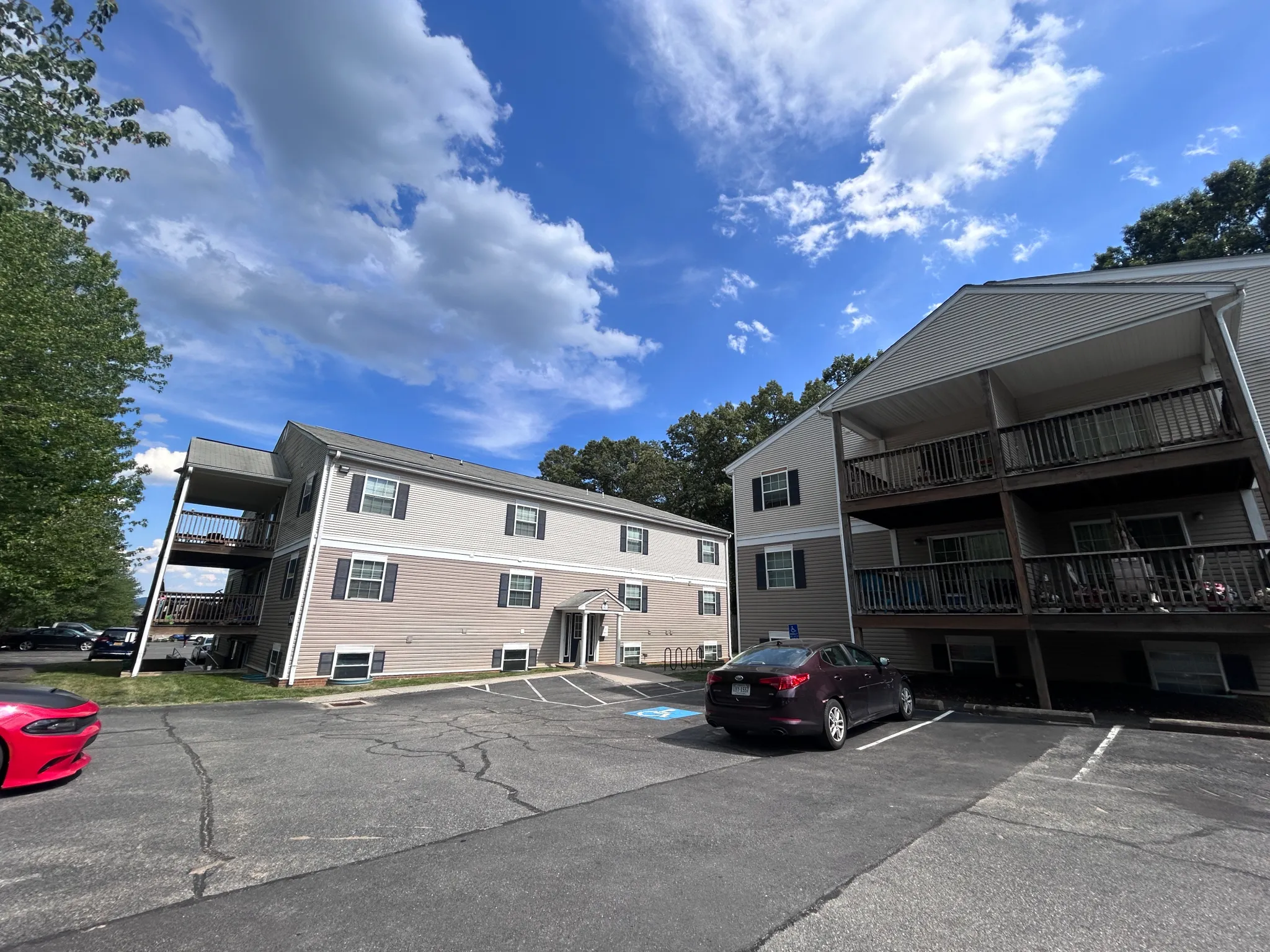
    Built in 1977 and renovated in 2005, Park’s Edge is an eight-building, 96-unit apartment complex located on Whitewood Rd. in Albemarle County’s urban ring, very close to Albemarle High School. It has one-, two-, and three-bedroom apartments, all of which are relatively affordable compared to other places to live in Albemarle County.

    Park’s Edge apartments are more affordable because the complex is part of a federal program called the Low-Income Housing Tax Credit program (or “LIHTC,” pronounced “lie tech”). LIHTC is a nationwide tax incentive program administered by the Internal Revenue Service and used by developers to acquire, build, or — as in Park’s Edge’s case — rehabilitate low-cost rental housing reserved specifically for low-income households.

    The complex has had at least five different owners since it was built, including two different ones in the last five years, according to Albemarle County’s geographic data.

    Residents say they noticed problems starting to pile up in 2020, the year Albemarle Housing Improvement Project sold the property to a company called TRC Park’s Edge LLC.

    Charlottesville Tomorrow reporters made multiple calls and sent multiple emails to various individuals associated with TRC Park’s Edge LLC. No one responded. TRC Park’s Edge LLC owned the property for less than two years before selling it to RailField Realty.

    Over the course of about five years, residents in several Park’s Edge buildings made different attempts — from emails and calls to legal action — to improve their living conditions. Even as conditions got worse in some cases, all said that they could not afford to move.(Photo by Erin O’Hare/Charlottesville Tomorrow)

    RailField Realty responded to several emailed questions in 2024 and again in 2026, detailing the attempts it has made to address issues with the property since buying it in Sept. 2022.

    In April 2024, a representative of the property management company, The Franklin Johnston Group, agreed to answer Charlottesville Tomorrow’s questions on a phone call. They did not respond to multiple messages through their website, emails and phone calls to schedule time for an interview, however. A few weeks later, the reporter received an automated email from the company marking the request “resolved.”

    Over the course of about five years, residents in several Park’s Edge buildings made different attempts — from emails and calls to legal action — to improve their living conditions.

    Most of the residents who spoke with Charlottesville Tomorrow were not satisfied with the responses they received, if they received them at all. Even as conditions got worse in some cases, all said that they could not afford to move. Even if they could, there are not enough affordable housing options in Albemarle County or Charlottesville for them to have any place to go. Now, they say, they’ve run out of options. They’re stuck.

    Despite sparking outlets and expired fire extinguishers, residents say their landlords ‘just don’t care’

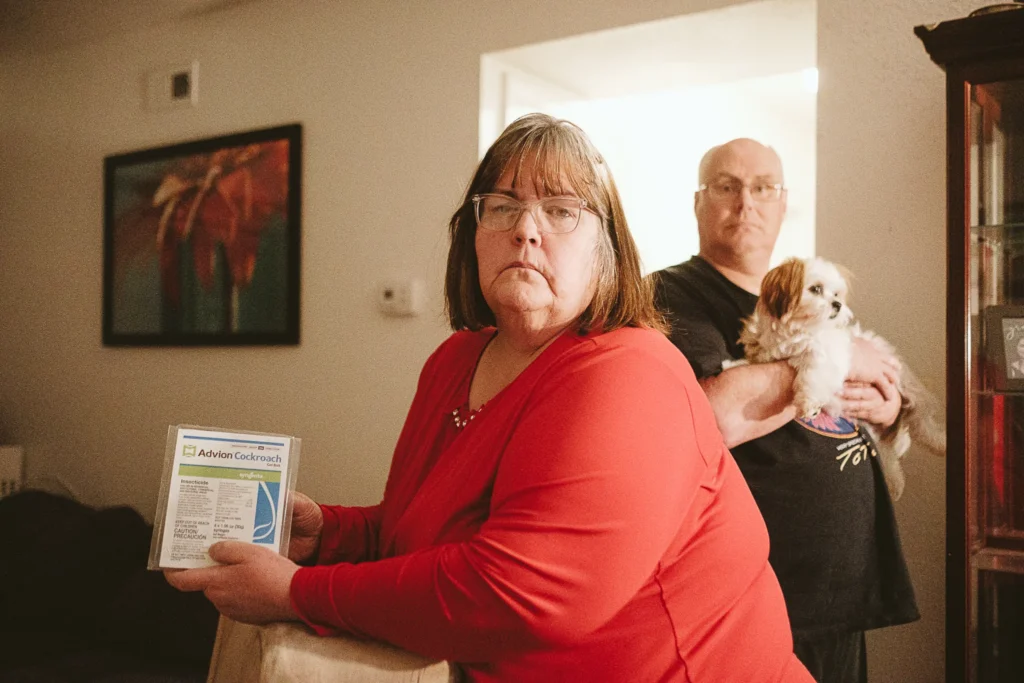
    Jojo and Rick Robertson, who have lived for more than 12 years on the third floor of the same Park’s Edge building where Lanika Hester lives with her daughter, have documented a slew of issues in their family’s three-bedroom unit, which smells vaguely of cinnamon. Jojo makes homemade cinnamon air fresheners because it relaxes her and because it covers the mildew odor that permeates the entire building.

    Sitting in their living room one January evening in 2024 with their dog, Coco, the Robertsons rattled off a list of things wrong with their apartment — it was clear they’d done this before. They pulled up photo after photo on their phones to show exactly what they were talking about. Jojo regularly stopped to take deep breaths before continuing.

    “They just don’t care,” Jojo said repeatedly, shaking her head. “They just don’t care.”

    To start, the Robertsons have been afraid to drink or cook with their tap water — it’s been brown or smelly several times, they said. And then there’s what’s happened downstairs with the putrid floods of what smelled like sewage. A few years ago, the Robertsons bought a water cooler and started to pay to have water delivered.

    Jojo has photos of roaches the size of Sweet ‘n’ Low packets, and of an enormous ball of lint bulging from an exterior vent, one that the couple can’t reach themselves. They constantly worry the lint ball could catch on fire.

    Over the past few years, Jojo and Rick Robertson documented issues in their three-bedroom Park’s Edge apartment and shared them with their landlords. They shared dozens of images with Charlottesville Tomorrow, documenting carpets in disrepair, cockroach infestations, mold and more. (Photos courtesy of Jojo and Rick Robertson)

    The Robertsons have worried about fires quite a bit, actually. Their outlets sometimes sparked when they plugged in appliances. At least one of their outlets has caught fire. Sometimes, their smoke detectors haven’t worked.

    In the fall of 2023, the Robertsons were sitting in their living room when they heard banging on their door.

    “There’s a fire, there’s a fire! I don’t know what to do!” yelled the teenage boy who lives in the apartment below theirs. The garbage disposal was ablaze.

    One neighbor told him to grab the fire extinguisher while another called the fire department.

    After the fire department put it out, Jojo said, they noticed the fire extinguishers were dated 2000. Most have a lifespan of about 10 years.

    Jojo said it took weeks for property management to give them new extinguishers.

    “We were scared shitless,” she said.

    Even though one resident took legal action and got repairs, others said the condition of their buildings got worse

    Looking back, many residents say they noticed living conditions in the Park’s Edge complex started to deteriorate between 2020 and 2021, around the time the COVID-19 pandemic was accelerating.

    The U.S. government declared a countrywide state of emergency in mid-March 2020, and by the end of the month, then-Virginia governor Ralph Northam issued a statewide stay-at-home order.

    The following month, in April 2020, Lanika Hester emailed Albemarle Housing Improvement Program, the nonprofit organization that owned the building at the time, about having the carpets in her apartment cleaned after a flood. She received a prompt reply from the community manager, who explained that certain maintenance issues were on hold due to the state of emergency. Maintenance would address emergencies, including water leaks and flooding. Non-emergency requests, however, would be documented and taken care of once the government lifted the state of emergency.

    But even after the state’s stay-at-home order ended in May 2020 and public health guidance allowed for non-essential, masked work to resume, conditions in Park’s Edge apartments continued to decline.

    After TRC Parks Edge LLC bought the complex in December 2020, residents’ emails and their website show that they hired The Franklin Johnston Group, a Virginia Beach-based company, to manage it.

    Fifteen months after the sale, a Park’s Edge resident took TRC Park’s Edge to court over the conditions in her unit.

    A Charlottesville Tomorrow reporter learned about this case while reviewing cases in Albemarle County General District Court records. The lawsuit lists more than a dozen problems, including air filters that hadn’t been replaced in over a year; leaking windows; a rotting bathroom vanity; buckling floors; electrical outlets that didn’t work; a leaky sink; and a buckling kitchen floor.

    “I am optimistic that the majority of these repairs can be done in a reasonable timeframe, preferably within/or about thirty (30) days,” Central Virginia Legal Aid Society attorney Katie Allen wrote to the property manager in December 2021. However, Allen added if the repairs were not made, the tenant she represented would take legal action.

    In March 2022, the tenant filed a tenant’s assertion, a legal action a tenant can take against a landlord claiming that the landlord is in violation of the lease agreement. The point is usually to pressure a landlord to fix whatever is wrong with the unit.

    It seems to have worked. In August 2022, Allen moved to dismiss the case because the repairs had been made.

    But, while the apartment in the lawsuit was being fixed, the issues in Hester’s apartment were accumulating.

    “I have put in several requests about the issues with my apartment,” Hester wrote in an email to Franklin Johnston Group on June 2, 2022. “It takes months to get anything done, if ever at all. The latest is that I can’t use my stove without it catching fire. My apartment floods regularly. And there has been nothing done. The [bathroom] tub is stopped up again but no service yet. The ceiling that you guys took pictures of is still in the same condition. These floors have suffered from years of flooding and no attention. No one has checked for mold in this basement apartment.”

    Hester received a prompt reply to that email, and it seems some repairs were made, but they weren’t the end of her problems.

    Hester shared four years of email correspondence between her and various property management staff with Charlottesville Tomorrow detailing the litany of maintenance issues her apartment had during that time.

    Between the spring of 2022 and spring 2024, Hester sent more than 150 emails to employees of the property management company about issues with her apartment.

    Hester’s emails show that sometimes the Franklin Johnston Group’s staff responded within hours. Other times, it took weeks — and multiple follow-up emails — for someone to reply. A few times, her records show, they didn’t respond at all.

    Seven residents of Park’s Edge, along with attorneys and community organizers who talked to dozens more residents, said they had similar experiences trying to improve the condition of their apartments. All of this was particularly frustrating, they said, because it wasn’t always clear who they should be communicating with.

    New “community managers” would cycle through every four to six months according to Hester’s email records. Additionally, at least two other people from Franklin Johnston Group filled in when that job was vacant. On top of that, the company used two separate — but similar — email addresses to communicate with Hester.

    Whenever someone left the management office and a new person came into that role, Hester said she was back at square one. She had to explain what was going on with her apartment all over again, and justify her frustration to new staff.

    Hester is a friendly, upbeat person who loves herbal teas and laughs with her whole body when her cat, Pep (short for Pepita) springs around her living room.

    But when she talks about her experience living at Park’s Edge, particularly the last five years, her demeanor changes. She takes sharp, shallow breaths and talks quickly, rattling off a laundry list of things wrong with her home.

    When Lanika Hester’s basement apartment flooded with stinking brown water in September 2022, she notified property management right away, but didn’t receive a response until the following day. Email records show that the incident set off a series of frustrating communications with property management that lasted for over a year. Hester is pictured here, playing with the family cat, Pepita, in February 2024. (Photo by Ézé Amos/Charlottesville Tomorrow)

    The worst of the maintenance issues in Hester’s apartment at Park’s Edge started Sept. 12, 2022. She woke up that morning to a flood that she said smelled “old, mildewy and poopy.” She emailed property management about it right away, but by the following morning, nothing had been done.

    “Sewage has flooded my apartment and they have yet to fix it. It’s madness here,” Hester wrote in an email to an eviction prevention case manager at Piedmont Housing Alliance’s Financial Opportunity Center the next morning. (Hester said she was struggling to keep up with rent after losing one of her two jobs, and at that point, PHA was no longer involved in the management of the property.)

    Someone at Franklin Johnston Group replied to Hester on Sept. 13 at 10:56 a.m., about 25 hours after she first emailed them. The company cycled through at least a dozen on-site property managers over about four years, most of whom Charlottesville Tomorrow could not find contact information for after they left the property.

    “Is your toilet still leaking? Is there water all on the floor still?” the property manager at the time wrote.

    The toilet had stopped leaking, Hester replied. But the apartment was still soaked with foul smelling water.

    Hester had to go to work, but she said someone told her they would clean the place. When she returned home, it didn’t appear clean.

    “It smells so bad. Is there any way the office can pay for a hotel or refund hotel fees until this particular issue is resolved?” Hester wrote at 3:54 p.m. “The stuff in the tub hasn’t been cleaned. The laundry room, none of it is clean — all covered in the sewage that spewed. They said they did the carpet but the place smells horrid.”

    Someone at Franklin Johnston Group replied that professional cleaners could come by the following morning, 48 hours after the flood.

    The email did not acknowledge her request for a hotel.

    Hester was concerned about what was in the water that soaked her carpet, floors, and some of her belongings and — unable to stand the putrid smell of it — paid to stay in a hotel for a few nights with her daughter.

    Hester asked the property manager by email to pay for the hotel a few more times. Someone wrote back about a week later: “If you have renters insurance, I would strongly recommend reaching out to them as they may be able to help out with the refund for a hotel.”

    Hester didn’t have rental insurance.

    One resident is offered to exit her lease, but she can’t afford to

    Hester was still emailing the property manager about the smell on Sept. 19, about a week after the flood, and days after a cleaning crew came and went.

    “You can smell later at 3:15 when I’m home if you are available,” she wrote.

    Eventually, the Franklin Johnston Group decided to just replace the carpet. They scheduled the work for Sept. 29, two weeks after the flood.

    But that created an entirely new dilemma.

    As the carpet replacement date neared, the Franklin Johnston Group told Hester that she had to move all her belongings out of her apartment in order for the work to be done. Hester panicked.

    She barely had the money for the hotel stay, and she couldn’t afford to pay movers. She would have to take time off work to move things, and that meant lost wages. Plus, she didn’t have anywhere to move her stuff.

    Hester asked management if she could move her things from room to room as the crew removed the old carpet and installed the new. She asked if someone could help her. The flood wasn’t her fault.

    No, they couldn’t have anyone help due to liability issues, management wrote. They couldn’t answer for the carpet crew. And no, they wouldn’t put her in touch with them.

    “Just to clarify on this email thread your carpet is being replaced due to age and how long you have been in the apartment,” the Franklin Johnston Group told Hester on Sept. 26. The email did not mention the flood.

    Whenever Hester asked a question about the replacement process, management referred her to the agreement she signed for the carpet replacement. Among other things, the contract stipulated that all of her furniture must be moved in order for the carpet to be installed. If she didn’t have her apartment in the right order, they wouldn’t replace the carpet and Hester would be charged a fee.

    Hester sent a final email a few days before the appointment with a few more questions.

    “If this is an inconvenience,” management replied, “then you will have the choice to cancel your appointment.”

    That is not what Hester wanted, she wrote. She only wanted to be prepared.

    “We have gone over this with you,” an employee of the Franklin Johnston Group replied. “We cannot help unforeseen circumstances, all we can do is take care of it immediately, which we did. We are doing everything we can to rectify and remedy this situation. If you are still unhappy, then I will let you out of your lease with a 60-day notice.”

    Hester couldn’t afford to move out. She did not have the money to pay movers, or to pay first and last month’s rent and a security deposit, likely thousands of dollars, for a new apartment. She wrote back that she did not want to cancel the appointment. Her apartment still smelled.

    Hester and other residents say they never learned why their apartments flooded with sewage. But it wasn’t the last time it happened.

    About a year and a half later, in mid-2024, another basement apartment at Park’s Edge flooded, this time in a different building in the complex.

    Brittney, who has lived at Park’s Edge for about a decade, first with her mother and then on her own, told a story that mirrors Hester’s — mostly.

    Brittney (not her real name) spoke with Charlottesville Tomorrow by phone in August 2024 on the condition that we not use her name. She said she feared losing her housing. Legally, a landlord cannot evict a tenant for speaking with a reporter about potential code violations. However, a landlord can decide at their discretion to not renew a tenant’s lease when that comes up.

    Her apartment had flooded a couple of months earlier, she said. A chunky brown substance floated in the water. It stank. It inundated her hallway, her son’s bedroom and the small bathroom. She put on her rain boots to walk around inside.

    “It smelled like sewage,” she said.

    Property managers sent the company Roto Rooter to look at the problem, she said. The Roto Rooter employee told her the flood was caused by wipes clogging up the building’s pipes.

    Management said that someone from the maintenance crew would come in after Roto Rooter to clean up the brown water, Brittney said.

    “I was up until 4 in the morning waiting for people to come and fix the problem, get the water up,” she said. “But nobody came.”

    By the time a maintenance worker knocked at her door the following morning, she’d already mopped up the stinking mess herself. But worse than all that, she said, has been the rats.

    “I can deal with a lot of things, but the rats I cannot deal with.”

    Park’s Edge residents said that a rat infestation made them lose hope

    Rats disturbed, disgusted and eventually terrorized Park’s Edge residents between at least August 2023 and August 2024. By the end of 2024, residents were not only disappointed by how management handled it, they were feeling discouraged because they felt they had no choice but to live with the infestation.

    It started sometime in summer 2023. In early September of that year, Jojo Robertson sent a text message to Charlottesville Tomorrow saying that the complex was dealing with a rat infestation. Brittney said she first noticed rats around that time, too. The rats were still around in December, when Hester emailed property management about them.

    “It’s getting cold outside and I do not want them in my home,” she wrote.

    None of management’s replies to Hester’s emails about rats mentioned rodents.

    In January, Robertson said she heard from other residents that the Franklin Johnston Group hadn’t paid extermination bills, and so no one had come to the property to take care of the rats (or the roaches).

    Charlottesville Tomorrow was unable to confirm that the property manager did not pay bills, nor did the company explain what actions they took to address the rodent problem. The Franklin Johnston Group did not respond to multiple requests for comment by email and phone from 2024 to just before publishing.

    But what is clear is that trash was an issue at Park’s Edge that same month. A heap of it started to accumulate outside some of the buildings in the complex.

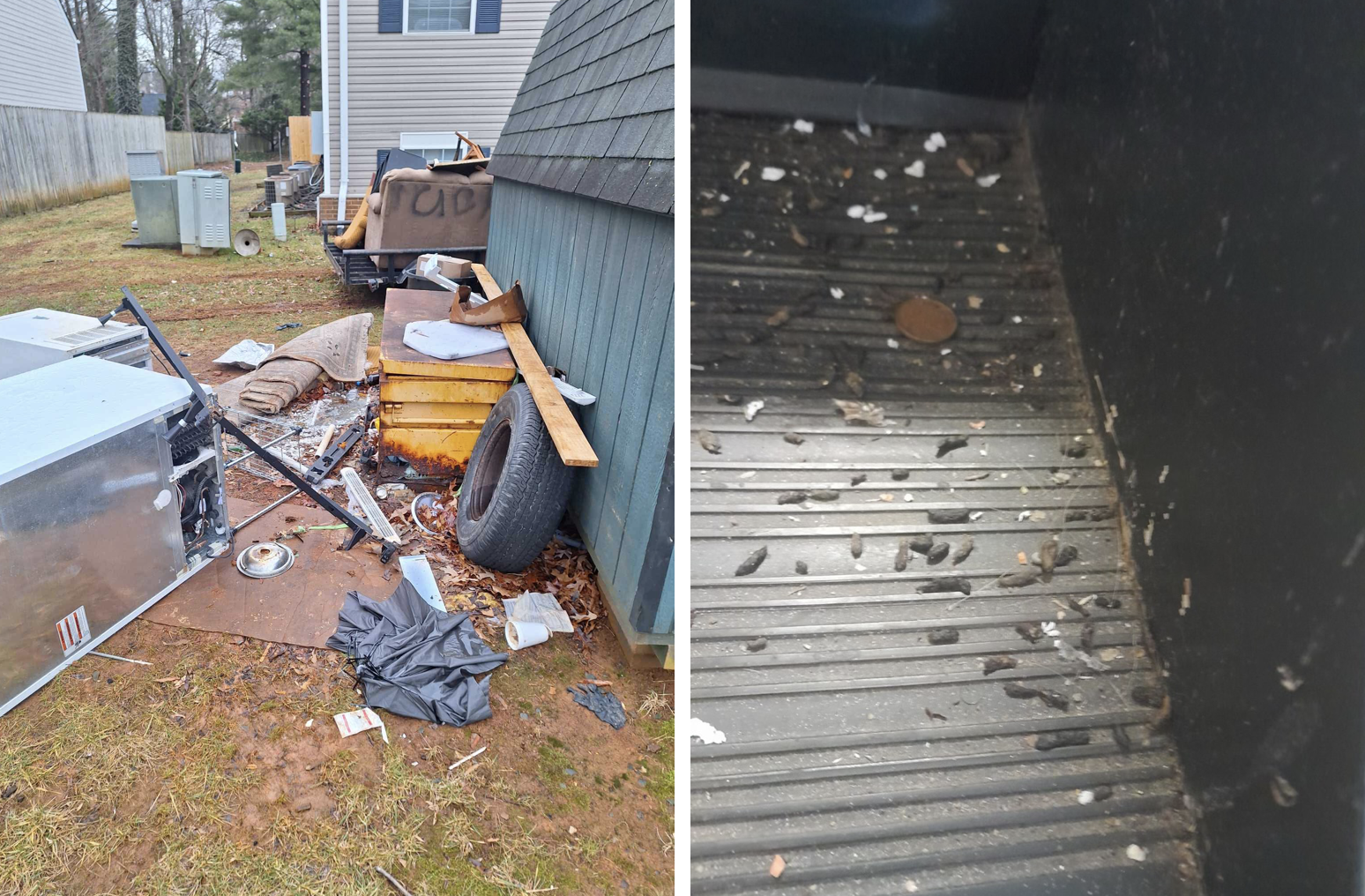
    Residents chronicled maintenance issues at Park’s Edge apartment complex in Albemarle County over several years. In 2024, JoJo Robertson took an image of trash piling up (left) while residents were dealing with a rodent infestation. Another resident, who asked to remain anonymous because she worried she could lose her housing, documented rat droppings (right) under the chewed through fabric of her sofa. (Photos courtesy of Park’s Edge residents)

    Robertson took photos of the discarded objects. Household appliances lay tipped over on the ground, their internal parts and wiring exposed. Someone had tossed half a bent bed frame over them. There were rolled-up rugs, chairs, a couch, a utility trailer, a rusted tool chest, and smaller bits dotting the ground.

    By February, residents suspected that one of their neighbors was hoarding trash and other items inside their apartment. It is unclear whether or not the trash that accumulated outside of the complex was related.

    Later that month, though, the outside trash was gone, Robertson said. Management had sent out a notice to residents asking them to tidy up their apartments and exterior areas in preparation for a visit from the owners, RailField Realty, that day.

    But, not long after that visit the trash was back. This time it was appliances sitting in the yard next to an upside-down couch.

    Trash is one of the things that can attract rats and foment an infestation, Denise G. Aranoff, vice president of American Pest, a national company, told Charlottesville Tomorrow in an email. The company is mentioned in emails between Hester and the property manager, but Aranoff said she was not commenting about Park’s Edge specifically.

    “Trash in hallways and breezeways or around dumpsters and trash chutes will attract all sorts of pests,” Aranoff wrote.

    As 2024 progressed, the rats became more pervasive, residents said. Fed up, Brittney bought her own traps. But they didn’t help in the way she’d hoped.

    One night, Brittney woke to a horrible screeching sound coming from her young son’s bedroom — a rat was stuck to a glue trap. The scene petrified the three-year-old child, who refused to set foot in his bedroom afterward.

    “He sleeps with me,” Brittney said. “He doesn’t even play in his room.”

    That wasn’t the end of it, though. Rats got into Brittney’s clothes. They chewed up her couch.

    Brittney spoke with Charlottesville Tomorrow in August 2024, about a year after she first noticed rodents around her building. By then, she estimated she’d caught about 30 rats in her apartment.

    “I’m constantly catching them,” she said at the time, convinced that the rats were getting in through the HVAC system. “I’m catching, like, three a week now.”

    It’s unclear how the Franklin Johnston Group was handling the situation before Charlottesville Tomorrow spoke with Brittney. But, by the time she spoke with a reporter, Brittney said she was getting weekly visits from property management, and a pest control company was also visiting the property regularly.

    “They’re treating the outside and not really doing anything on the inside,” she said. “They put poison down, but then they’re crawling inside the walls and dying. We have these horrible smells, huge black flies. It’s just terrible.”

    She said that property managers were coming into tenants’ apartments weekly to monitor interior conditions, checking to see if people were taking out their trash, warning them not to leave dishes in the sink, or leave laundry out.

    No way out: How Virginia law fails vulnerable renters

    But at the same time, she said, trash was all over the outside of the complex.

    At one point, the dumpster was so full of furniture, residents had to put their trash on the ground, Brittney said.

    “They say we can’t keep trash overnight, but everybody’s scared to take the trash out at night because we have rodents that run around the trash can,” Brittney said. “There’s trash all over the ground. That’s what’s causing rats. None of the maintenance team is picking it up.”

    While the property management company did not respond to requests for information, the complex’s owner, RailField Realty, did respond just before this report was published.

    “There was a rodent issue in 2023/2024. That issue resolved when two residents were evicted,” Todd Watkins, Railfield’s Chief Operating Officer, told Charlottesville Tomorrow in an email on May 25, 2026. “To my knowledge, the pest control contract was always in full force. We currently have monthly pest and rodent servicing at the property and have not seen a recurrence of the problem.”

    But while the infestation was going on, residents began to realize that there wasn’t much they could do to force a faster response. They were learning that Virginia law makes it hard for renters to hold landlords accountable for the condition of their properties, even when there is flooding, rats and fire hazards.

    The next report in the series shows what can happen when, against all odds, a resident manages to get a case against their landlord into court.

  • No way out: How Virginia law fails vulnerable renters

    No way out: How Virginia law fails vulnerable renters

    Lanika Hester had just fallen asleep when a chilling scream woke her.

    She leapt out of bed and bolted into the next room, where she found her daughter, Elesia Cooper, doubled over in pain.

    “I’m fine Mom, I’m fine,” Cooper cried, tears streaming down her face.

    Hester knew her daughter wasn’t fine. She’d lost count of the number of times the 18-year-old had woken up in their Albemarle County apartment this way in spring 2023, and the number of times they’d gone to the emergency room. Every time, she said, doctors declared Cooper dehydrated, gave her IV fluids, and sent her home with directions to drink more water, only to have it happen again a few days later.

    Cooper had enrolled in her first year of college at Hampton University the previous fall. But she became desperately ill when she returned to their home in the Park’s Edge complex near Albemarle High School for winter break. By the time she was supposed to return in late January, she was too ill to go back, Cooper said. She ended up dropping out.

    Cooper’s illness continued through the spring. She was weak and couldn’t keep food or liquids down — she’d lost almost a quarter of her body weight, Hester said.

    The family was desperate for a diagnosis. Then, in June 2023, a new nurse practitioner came back with a shocking theory.

    “Immune suppression and symptoms consistent with mold exposure,” the nurse wrote in her visit summary. “I strongly suspect that the current mold exposure is contributing to your symptoms. I am medically requiring past home/mold testing.”

    Mold.

    For more than two years, Hester and Cooper had watched it creep down their kitchen wall, a splatter of spores re-growing from the corner of the ceiling in their basement apartment every time property maintenance claimed to have removed it. Hester had suspected, after at least half a dozen floods covered the floors of her apartment with cloudy, foul-smelling brown water, that it was sewage.

    What she didn’t realize was that the mold could be the reason her daughter was so sick.

    Prince George resident files lawsuit against apartment management over mold

    The nurse’s letter prompted Hester to push hard for property management to test her apartment for mold. It took months, and dozens of emails back and forth, for them to agree. And when a well-respected mold inspector finally visited her apartment, his test confirmed it: mold in the kitchen and on the HVAC vents.

    The solution seemed obvious: Remove the mold and fix its causes — likely a leak and a badly-installed HVAC filter. A mold inspector even recommended this. But the leak wasn’t a quick fix, and the mold in Hester’s apartment was just one on a long list of maintenance and safety issues plaguing the Park’s Edge apartment complex.

    Hester and her neighbors had been trying for years to correct these issues, with little success. They had even enlisted the help of local pro bono attorneys, but the attorneys also struggled to move the needle.

    Why?

    The Virginia Residential Landlord and Tenant Act makes it difficult for anyone to force a landlord to address poor living conditions, even dangerous ones like black mold. Tenants can technically sue landlords, but the requirements for filing such a suit either disqualifies or discourages many tenants from doing so.

    Add that to the fact that tenants — especially those with low incomes — don’t often have access to legal assistance to help them navigate the justice system. Tenants can’t band together to sue their landlords, either — Virginia is one of just two states in the U.S. that does not allow class-action lawsuits. The other is Mississippi.

    The Virginia General Assembly has tried to change that. In 2024, the state legislature passed a bill that would allow class-action suits, but then-Governor Glenn Youngkin vetoed it. State lawmakers passed a similar bill during its 2026 session, but Governor Abigail Spanberger vetoed it when the General Assembly did not accept her amendments to the bill.

    Virginia class action proposal dies after Spanberger veto

    Local governments aren’t always much help, either. Under Virginia law, the only way a local government can effectively hold a landlord accountable for conditions inside a building is through a rental inspection program. Some Virginia localities have created those programs. Albemarle County is not one of them.

    In recent years, county leaders have said state law makes it too difficult to start one here. But since Charlottesville Tomorrow began reporting this series, and reaching out to public officials about conditions at Park’s Edge, conversations about rental inspections have begun.

    “I have always been told that we don’t, that we can’t do anything for renters and tenant protections and holding landlords accountable,” Supervisor Sally Duncan, who represents the Jack Jouett District where Park’s Edge is located, said during the May 20 Board meeting. “I was made aware last week that that’s actually not the case.”

    Supervisor Mike Pruitt represents the Scottsville district and is an attorney who has worked in housing law. He cited Charlottesville Tomorrow’s investigation in his remarks.

    “This is something that I think most, several members of the Board have thought about previously, because Erin O’Hare, doing great work, doing the Lord’s work, has been hounding this issue for a while and doing a really long-term investigative report on it,” Pruitt said. Though he has some reservations about rental inspection programs, particularly around costs and potential unintended consequences for tenants, he wanted to know what was possible.

    Until Albemarle County and others make policy changes, though, it’s up to tenants to advocate for themselves.

    “You’re basically counting on tenants to do this individually,” said former Del. Sally Hudson, a public policy professor at the University of Virginia who represented all of Charlottesville and parts of Albemarle County in the General Assembly from 2020 to 2024. “And we all know this is beyond the reach of most of the tenants who need the safety protections.”

    Even if a single tenant does manage to take a landlord to court and win their case, all they can hope to receive are damages, which is a legal term for financial compensation for whatever the tenant lost. There is no way for them to force the landlord to fix a problem as it is happening.

    It’s a fairly common position for renters with low incomes to find themselves in, said Victoria Horrock, an attorney with the Charlottesville office of the Legal Aid Justice Center.

    “Inside the legal system, it’s very frustrating,” Horrock said. “A lot of tenants will get blamed for problems in their unit. But then it turns out that everyone in the building has that exact same problem.”

    And beginning in at least 2020, this was precisely what Hester and her neighbors say was happening at Park’s Edge.

  • Congress nears major bipartisan housing bill with support from Virginia lawmakers

    Congress nears major bipartisan housing bill with support from Virginia lawmakers

    Last summer, U.S. Sen. Mark Warner, D-Va., criticized Congress for often “kicking the can” on federal housing policy. One year later, federal lawmakers are close to sending a large bipartisan housing bill to President Donald Trump’s desk.

    Dubbed the 21st Century ROAD To Housing Act, the effort is led by Sens. Tom Scott, R-S.C., and Elizabeth Warren, D-Mass. along with U.S. Reps. French Hill, R-Ark., and Maxine Waters, D-Calif.

    A key provision of the bill aligns with one of Trump’s goals to restrict large investment firms from buying up too many single-family homes. The practice has stifled first-time homebuyers, and state lawmakers from both parties in Virginia have previously introduced similar restrictions.

    Trump’s administration has expressed it “strongly supports” the federal bill — a clue that he would likely sign it.

    Other provisions in the bill encourage housing development in underused or vacant commercial properties like strip malls.

    “They can be converted to housing because they’ve already got power, parking and utilities around,” said Warner, who spearheaded that portion of the bill.

    The concept, along with incentives to build manufactured homes, drew inspiration from legislation also introduced in Virginia.

    A “housing near jobs” bill by Sen. Schuyler VanValkenburg, D-Henrico, and Del. Dan Helmer, D-Fairfax, did not become law, but its similarity to Warner’s proposal could give supporters hope to try again, VanValkenburg said. The bill would encourage multifamily and mixed-use development by right in certain commercial corridors so more people can live closer to where they work and reduce suburban sprawl.

    VanValkenburg’s manufactured homes bill, which was recently signed into law by Gov. Abigail Spanberger, can help bring those types of homes onto the market in areas that need or want them. Likewise, Congress’ pending bill would treat the factory-built style of home the same as a site-built home when it comes to zoning and financing.

    Slate of new Virginia laws address health care and housing affordability

    “Housing is tricky because a lot of it is local, but of course state and federal governments play a role too,” VanValkenburg said.

    To guide local governments, which typically control land use decisions like housing, the federal bill would also direct the U.S. Department of Housing and Urban Development to publish model zoning guidelines for states and localities to explore in their communities.

    “We also have to be honest that zoning is a local prerogative — too often, it’s a local prerogative to say ‘no,’” Housing Opportunities Made Equal Director Thomas Okuda Fitzpatrick said. “That’s why we need strong state actions and policy solutions in parallel with the 21st Century Road to Housing Act.”

    All of Virginia’s congressional representatives from both parties voted to advance the bill. But with differences between the House and Senate versions still unresolved, lawmakers cautioned that final passage — and Trump’s signature — are not guaranteed yet.

    ‘Devil’s in the details’

    U.S. Sen. Mark Warner, D-Va., speaks on the patio of Legend Brewing Co. in Richmond on April 9, 2026. (Photo by Charlotte Rene Woods/Virginia Mercury)

    One major sticking point involves a provision the House stripped from its version of the bill that would have required developers of build-to-rent housing to sell properties within seven years of construction completion.

    Build-to-rent developments allow tenants to rent single-family homes instead of apartments and can serve people who are not ready to buy or cannot yet afford home ownership but need more space. Supporters of the original provision argued it could help create a path to homeownership for renters, while developers warned the time limit could discourage investment in that type of housing altogether.

    The National Association of Home Builders praised the House changes and said it hopes the Senate accepts them.

    In a statement, Chairman Bill Owens said that keeping the original provision would have “reduced supply.”

    The House version of the bill also includes provisions to streamline examinations for smaller banks, which Owens called “meaningful relief to community banks.”

    “We urge the Senate to move quickly to send a once-in-a-generation housing bill to President Trump to expand housing supply and address America’s housing affordability challenges,” Owens wrote.

    Warner said he is cautiously optimistic the Senate can get the legislation across the finish line.

    “Never underestimate the ability of Congress to screw up a sure thing,” Warner said in a recent phone call.

    He added that the compromise feels “fairly reasonable, so I think we’ll get it done, but there are some strong personalities involved.”

    Fitzpatrick said corporate ownership has long concerned his organization, particularly when investors target low-income neighborhoods to “change the ownership landscape there.” But he described build-to-rent housing as “more nuanced” because “they provide a housing option.”

    “As with so many things, the devil’s in the details,” he said.

    Still, Fitzpatrick said his organization is pleased to see federal lawmakers exploring solutions to the country’s housing shortage. He also praised provisions aimed at boosting federal funding streams local governments and housing groups rely on, even as some of those programs face proposed cuts from Trump.

    Community Development Block Grants, for example, have long provided funding for local governments to build affordable housing, revitalize neighborhoods and support economic development projects in low-and-moderate-income communities.

    Warner’s fellow Democratic Virginia senator, Tim Kaine, said Congress has repeatedly blocked Trump’s attempts to eliminate the grants because lawmakers hear how “enormously popular” they are with local governments across the country. Kaine, a former Richmond mayor, said he saw their impact firsthand.

    Overall, Kaine said he does not view the differences between the House and Senate bills as insurmountable and is prepared to help colleagues “get this done.”

    With congressional midterm elections later this year expected to intensify partisan fights, lawmakers may soon return to attacking one another over policy differences.

    But VanValkenburg said the housing bill shows bipartisan cooperation is still possible.

    “In a day and age where we all have, rightfully, a lot of cynicism about Congress and its ability to act, this seems like a bipartisan action on an issue that needs action,” VanValkenburg said.