Tag: healthcare

  • Luria to face Democratic challengers before a potential rematch with Kiggans in 2nd District

    Luria to face Democratic challengers before a potential rematch with Kiggans in 2nd District

    This summer, four Democratic candidates will face off in a primary for the chance to oust incumbent Republican representative Jen Kiggans in Virginia’s 2nd Congressional District.

    The Virginia Beach-anchored district is politically purple and often oscillates between partisan control, though in past years it had a decidedly Republican lean.

    Its nearly 600,000 residents backed Gov. Abigail Spanberger last year by 53% and analysts consider it flippable — making it a key contest that could help determine partisan control of Congress.

    All four Democratic primary candidates — which include the district’s former representative Elaine Luria, acute care doctor Nila Devanath, former USAID worker Patrick Mosolf and regional government official Bill Fleming — seek to hold Kiggans “accountable” and help congress provide a check and balance to the “corruption” of President Donald Trump.

    Who’s who

    Kiggans, a Navy veteran and nurse practitioner, has represented the district for two terms after ousting Luria, who also represented it for two terms. With no primary challenger, she did not do an interview for this story, but she did respond to questions by email.

    With Navy veteran Luria formerly representing the district, she already has backing from the Democratic Congressional Campaign Committee along with Democratic leadership in Virginia including Gov. Abigail Spanberger and Sen. Louise Lucas, D-Portsmouth.

    During her time in Congress Luria backed the creation of the Affordable Care Act’s Enhanced Premium Tax Credits — which have since expired but helped reach more people struggling to afford healthcare. She also backed the 2022 Inflation Reduction Act, a range of energy efficiency and healthcare affordability measures.

    Devanath,the daughter of Bangladesh immigrants, is an acute care doctor but previously worked as a lawyer at a legal clinic defending domestic violence survivors.

    If elected, she plans to bring her legal and medical insights to Congress. She has already made trips to D.C. to meet with members of finance committees, she said, to prepare for how she can help address economic issues if she earns a seat on Capitol Hill.

    Virginia Beach Soil and Water Conservation District director Bill Fleming hopes to join the U.S. House Committee on Agriculture if elected so that he can help advance environmental laws. He shares many progressive policy priorities with some of his primary opponents but considers himself an “independent democrat.”

    From serving as director of a homeless shelter to time spent working for USAID, Mosolf said his time spent solving problems has helped him prepare to take that work to the nation’s legislative body. He was motivated to run and find new routes to solve problems after losing his job to Trump’s closure of USAID.

    Addressing the cost of living

    The rising cost of living, from groceries to housing to healthcare, is a motivating factor for Kiggans and all four Democratic candidates.

    Each candidate criticized Kiggans’ support for Trump’s tariffs, war with Iran, and a reconciliation bill that entails changes to Medicaid and hospital funding mechanisms. They also pointed out Kiggans’ vote to not renew expired Affordable Care Act subsidies.

    Luria said Kiggans expressed interest in bipartisan collaboration after ousting Luria from the seat in 2022, a stance she said was in contrast with Kiggans’ votes in favor of Trump policies.

    Ahead of the passage of the One Big Beautiful Bill Act last summer, Kiggans joined an open letter in opposition to aspects of the bill she ultimately voted for.

    Kiggans was previously outspoken about the need to renew expiring ACA tax credits, Luria said, even writing a letter in support of extending the credits, but ultimately changed her tune.

    Virginia Congressman Wittman among just 17 Republicans nationally to back ACA credits extension

    “Writing a letter that is in opposition to something you’re voting for — it just doesn’t work that way,” Luria said.

    In an email, Kiggans said her initial support of renewing the credits was conditional on “meaningful reforms” to strengthen protections against “waste fraud and abuse.”

    All Democratic challengers said addressing affordability issues will be a priority for them, if elected.

    “I think it’s going to take a lot of small things. It’s not just pushing a magic button,” Mosolf said.

    All the Democratic contenders said they would work to extend the ACA subsidies and undo the healthcare provisions of the reconciliation bill.

    They are supportive of a massive bipartisan housing bill that is nearing Trump’s desk and could see his signature; if it doesn’t, though, they said they will try again.

    On healthcare, Devanath and Fleming are backing a growing Democratic embrace of universal healthcare. The idea is to replace private insurance companies with government-run insurance available to everyone.

    Because uninsured and underinsured people are more likely to put off primary care, Devanath said she’s increasingly treating people in critical condition or for whom more drastic measures could have been prevented.

    This is why she’ll back the Medicare For All Act, she said.

    “You have to have people who are willing to be bold,” Devanath said. “Instead of following incremental change, let’s go for the gold. Put it out there, stick to it, and see where we land.”

    Devanath and Fleming also support the Working Americans’ Tax Cut Act, which would create a tiered surtax on income over a million dollars.

    “It’s one thing to sit and grumble about something while you’re watching television, but it’s better to try to get a seat at the table, so that you can maybe affect change,” Fleming said.

    Stock trading crackdown, campaign finance reform

    Luria said Congress should hold itself accountable by banning stock trading of elected officials, pointing to what she called a “long list” of ways Trump has capitalized on his presidency to financially benefit his family or allies.

    As a congresswoman, Gov. Abigail Spanberger championed an effort to prevent lawmakers from capitalizing on sensitive information and disproportionately benefitting from their positions of power.

    Luria was not always on board with the proposal, calling it “bullsh-t,” but her stance has evolved into support.

    “Congress can set the example and actually walk the walk,” she said.

    Kiggans is co-sponsor of a similar, more recent effort.

    Wittman seeks to keep 1st District seat, as Democratic challengers face crowded primary

    All of the Democratic contenders want to address how candidates receive donations for their campaigns by reigning in large political action committees’ donations along with “dark money” contributions, large entities’ donations that are not publicly disclosed.

    Luria’s Democratic challengers have taken issue with her updated stance on campaign finance. In 2018, she’d signed a pledge to not take corporate money before accepting $34,000 from corporate PACs in 2020.

    Luria’s donors have included the Democratic Majority for Israel PAC and some of her donors have also contributed to American Israel Public Affairs Committee. After a United Nations committee concluded that Israel is committing genocide in Gaza, Luria’s challengers said it would be unethical for them to take money from groups that support Israel. (Israeli officials have denounced the report as “distorted and false,” according to NPR.)

    While AIPAC has historically supported both parties so long as candidates are “pro-Israel,” the group’s supporthas emerged as a rift among some Democratic candidates in recent election cycles.

    Kiggans, who has also been boosted by AIPAC, has supported U.S. involvement in Israel’s affairs. In 2024 she voted for military aid to Israel in a package of bills she said were “not perfect,” but needed at the time.

    Kiggans defends record, discusses future

    Kiggans recently reaffirmed that she “couldn’t be a stauncher supporter” of Trump and U.S. military actions against Iran.

    The conflict, initiated by America, has contributed to spiking gas prices because Iran is a critical global player in oil trades.

    “When the Iran conflict is over, gas prices will come down and we’ll work to get them even lower with American energy dominance,” Kiggans said.

    While Democrats have lambasted Kiggans for voting for the Big Beautiful Bill, she emphasized that the measure also “cut taxes on social security, tips and overtime” to “put more money in the pockets of Virginians.”

    The two-term congresswoman has bucked Trump’s administration over a new rule that will exclude post-baccalaureate nursing degrees from a “professional degrees” list, joining a bipartisan letter in opposition.

    Kiggans was also critical of the Trump administration’s efforts to stop construction of Dominion Energy’s offshore wind project, which is located in her district.

    Still, her Democratic opponents said she has too often aligned with GOP majorities and the president, including her endorsement of federal workforce trimming despite the 2nd district having among the largest concentration of federal workers in the state.

    “The bottom line is she has put Trump over the people of Hampton Roads,” Luria said. “People will hold her accountable at the ballot box in November.”

    The Democratic hopefuls will face off for the chance to defeat Kiggans in the Democratic state primary election on Aug. 4.

    Editor’s note: This story has been corrected to reflect that Luria has not received donations from AIPAC, as previously stated, but some of her donors have contributed to the organization.

  • State report finds 13 rural hospitals vulnerable to closure

    State report finds 13 rural hospitals vulnerable to closure

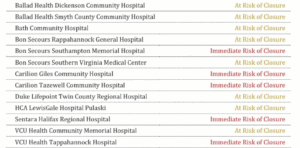
    A new report by Virginia’s Joint Commission on Health Care found 13 of Virginia’s 36 rural hospitals are at distant or immediate risk of closure, as state lawmakers and their constituents work to close healthcare access gaps in the commonwealth’s farthest-flung regions.

    The commission based its analysis on patients’ socioeconomic demographics and insurance types as well as hospitals’ financial information to determine risk levels for closure.

    King William resident Celeste Garrett’s go-to facility, VCU Health Tappahannock Hospital, is on the list. It takes her about 20 minutes to get there and she worries about an emergency if it were to close. That would make VCU’s Richmond location her closest resource, an hour or more away “depending on the traffic.”

    “Minutes matter. Seconds matter,” Franklin County resident Penny Blue said as she joined Garrett on a press call with the state’s health committee chairs Tuesday.

    After a brain aneurysm in 2021, Blue was taken 15 minutes to her nearest hospital and then air-lifted to another one in Roanoke (which otherwise would have been an hour commute).

    With rural hospitals already shoring up access in Southwest and South Side Virginia, the women expressed concern about themselves and their neighbors.

    Some hospitals’ struggles can be traced back years and include demographics and economic regional shifts. But, the current strains are attributed to recent Medicare and Medicaid reimbursement rate cuts, a reconciliation bill Congress passed last summer that makes thousands of Virginians vulnerable to losing health insurance, and Congress’ failure to renew expired Affordable Care Act credits.

    33,000 Virginians have already lost that form of insurance.

    Screenshot from a June 2026 Virginia Joint Commission on Health Care presentation.

    “(Rural hospitals) have always been living on the edge, but with H.R. 1 kicking in our hospitals across Virginia will lose about $2 billion dollars a year,” said Sen. Barbara Favola, D-Arlington, who chairs the Senate’s Education and Health Committee.

    Uninsured people are more likely to delay care until dire situations, so hospital ERs are bracing for surges of patients. Free clinics, long considered public health safety nets, are also preparing for people to rely on them more.

    “We have yet to feel the pain (of the bill) but it’s coming,” King William resident Garrett said on Tuesday’s call.

    After absorbing unpaid or under-paid care from uninsured patients, health systems will eventually negotiate insurance rates with private insurers. This may lead to higher premiums for people with private insurance down the line, health systems have warned.

    Sentara chief administrative operator Aubrey Layne said in a recent phone call that the hospital chain has become “more purposeful lately about getting the public to understand” the challenges.

    That chain has facilities around the state, with its Sentara Halifax Regional Hospital on the new at-risk list.

    Still, Virginia Hospital and Healthcare Association spokesman Julian Walker said hospitals will continue to adapt rather than close overnight or forever.

    “We will see what other measures might have to be taken to continue to sustain hospitals longterm,” he said.

    Those efforts are already playing out in some cases. Citing Congress’ bill as a contributing factor, Valley Health changed staffing contracts and trimmed services this spring. Last winter, Centra closed its labor and delivery unit at a hospital in Farmville. Last fall, Shenandoah Valley’s Augusta Health closed three clinics.

    House Health and Human Services chair Del. Rodney Willett, D-Henrico, emphasized that the federal government placed heavy burdens on state and local governments, calling it a “situation no one wants to be in.”

    The state’s pending budget has proposals to help the state comply with additional requirements for Medicaid and Supplemental Nutrition Assistance Program verifications and could support a state-level ACA subsidy to plug some holes.

    Favola and Willett said the efforts cannot fully heal what federal actions have created but are a reflection of bipartisan assistance.

    As both lawmakers have served on bipartisan health-focused committees and commissions, Willett said Congressional Republicans should be held accountable for pushing through the reconciliation bill but that going forward, both parties will have to work together to create lasting solutions.

    “This report is a nonpartisan report done by the joint commission, we all sit on that — Republicans and Democrats,” Willett said. “The facts are the facts and what’s being done to us by Washington is unconscionable.”

  • Aging at home drives growing demand for Virginia caregivers

    Aging at home drives growing demand for Virginia caregivers

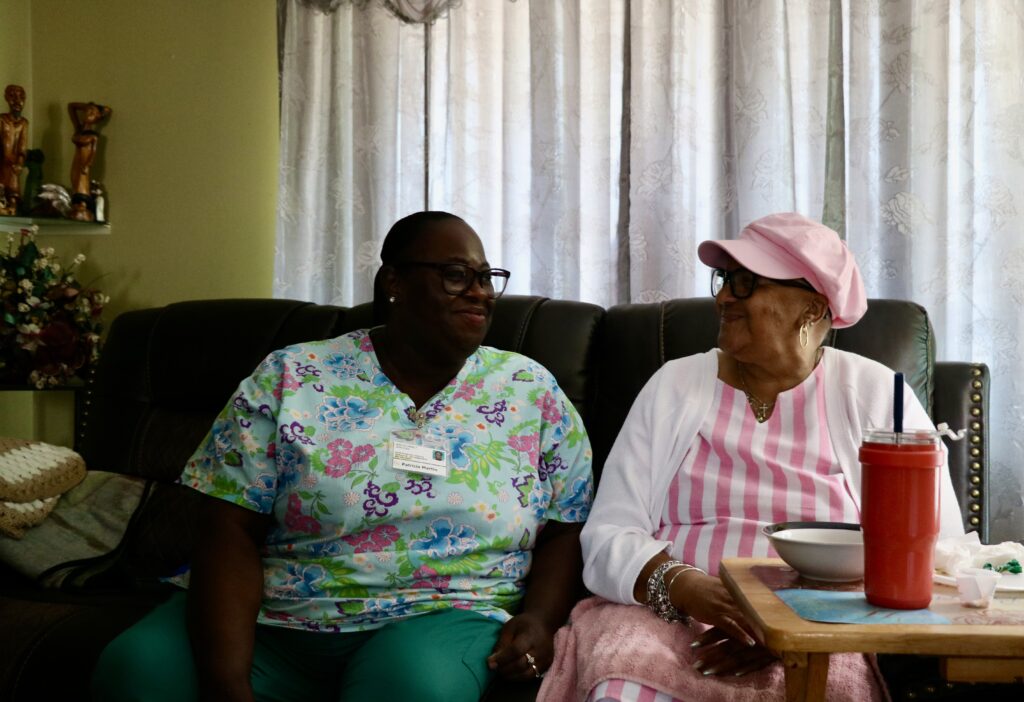
    Decked out in a matching pink shirt and hat with layers of bracelets and necklaces, Clara Hatcher’s dialysis appointment doubles as a fashion event.

    She spends three and a half hours, three mornings a week, receiving the treatment, so the 77-year-old likes to dress up for the occasion. Having been a dialysis patient for 12 years, she also shares her expertise with newer patients about how to handle the procedure.

    “I like to warn people how tired it can make you feel and what to expect,” Hatcher said.

    While she likes helping others prepare for it, she receives help of her own through her caregiver Pat Martin and nurse Belinda Hensley.

    The trio reflected on how healthcare “takes a village” as they helped her slowly walk back into her ranch-style Henrico County home after an appointment.

    Hatcher’s home health workers help her age in place in the house she bought to do just that.

    Much of Martin’s work involves making sure Hatcher sticks to her medication schedule, handling light housekeeping, ensuring she gets to medical appointments and assisting with tasks like dressing or cooking.

    “She likes to cook but her hands have tremors and I need to make sure she doesn’t fall,” Martin said.

    Hensley makes occasional visits to check in, as nurse supervision is required by Medicaid.

    As a nurse and a caregiver, Hensley and Martin are part of an evolving home healthcare landscape. As more people choose to age in place longer or avoid nursing homes altogether, demand for services is growing.

    Staffing organizations are innovating to hire and retain workers while coping with low Medicaid reimbursement rates at a time where the state-federal program is bracing for funding losses. That’s why two Richmond-area nonprofits hope that a grant-funded pilot program they participated in could become a model for other parts of the state.

    Supported staff, supported clients

    With $700,000 in funding from the Richmond Memorial Health Foundation and the Bob and Anna Lou Schaberg Foundation, Family Lifeline and Jewish Family Services were able to grow their staff numbers by 69% and 43%, respectively. They also raised caregivers’ starting wages to $15 an hour, predating the benchmark that state legislators passed this year.

    “This is a workforce where the wages have historically been very low,” Family Lifeline CEO Jennifer Case said.

    Raising pay was important for both attracting and retaining staff. The funding also helped the organizations modernize technology to make paperwork easier for nurses and caregivers, improve professional development training and assist workers facing transportation issues.

    Case emphasized that many caregivers do not have cars and rely on public transportation to get to work.

    If a client lives along a bus route, that may not be a problem, she said. But when clients live deeper into Henrico or Chesterfield counties, transportation can become a challenge.

    Even within Richmond city limits, Southside resident Regina Carter said what would normally be a short drive to the East End can sometimes take her more than an hour because she relies on the bus.

    “Sometimes the bus will not even come, so I have to wait for a whole other one,” she said. “And that’s almost like I don’t want to say an hour, but it’s an hour.”

    In recent years, the city and surrounding counties have expanded bus routes, but building that infrastructure takes time.

    For caregivers whose clients live farther out, the pilot program helped offset some Lyft and Uber costs for workers who needed it.

    Wendy Kreuter, CEO of Jewish Family Services, said both organizations continue supporting workers with transportation needs and plan to advocate on the issue with state and local governments while exploring public-private partnerships.

    Transportation barriers have long been an issue in healthcare, particularly in rural communities. State lawmakers have backed a pilot program providing Medicaid coverage for non-emergency transportation to help rural patients reach appointments. But challenges getting workers into patients’ homes have not yet been addressed.

    “This is something we should explore,” said Del. Rodney Willett, D-Henrico, who chairs the House Health and Human Services Committee, where healthcare legislation is reviewed each year.

    Medicaid issues

    Another longstanding issue has been Medicaid reimbursement rates. For Family Lifeline and Jewish Family Services, that means both organizations have had to rely on other funding sources to support staff.

    Generally, reimbursement rates range from $20 to $23 per hour. But Kreuter and Case said the “village” includes more than direct care workers. Administrative staff are also needed to coordinate scheduling and transportation for clients.

    “I think it’s just going to get harder,” Hensley said of a reconciliation bill Congress passed last summer that puts thousands of Virginians at risk of losing Medicaid coverage.

    A KFF survey released earlier this year found that 41 states have reported home health agency closures, though Virginia was not among them.

    Case and Kreuter said their organizations seek private philanthropy of all sizes to continue supporting workers and clients.

    Though the reconciliation bill could affect Medicaid coverage and services across Virginia, federal lawmakers also negotiated the Rural Health Transformation Fund as an opportunity to address longstanding challenges.

    Outgoing Gov. Glenn Youngkin secured $189 million from the fund, which Gov. Abigail Spanberger’s administration is now responsible for administering.

    LeadingAge Virginia, which represents organizations like Kreuter’s and Case’s, has applied for the funding.

    Betsy Archer, director of the association’s PositiveAge branch, said the charitable pilot offers a strong blueprint.

    “We definitely see it as a replication or a replicable pilot that we think can be strengthened,” she said.

  • States face tight timeline as feds unveil new Medicaid work requirement rules

    States face tight timeline as feds unveil new Medicaid work requirement rules

    The federal government released new guidance this week on how states should roll out the Medicaid work requirements that will affect healthcare coverage for millions of Americans.

    The new interim rule, issued by the federal Centers for Medicare & Medicaid Services, is intended to give states more details on how they’re supposed to verify the work status for about 20 million adults enrolled in Medicaid, the publicly funded health insurance program for people with low incomes.

    The new details come as states are staring down the January 1, 2027, deadline to put the new work requirements in place, and have requested more clarity from the feds on how they’re supposed to implement them.

    “States are being asked to carry out a complicated federal mandate without clear rules, without enough time, and with the risk that eligible people lose health care because of paperwork problems and system failures,” Oregon Democratic Gov. Tina Kotek said last week in a statement.

    Kotek led a six-state coalition of Democratic governors in asking the Trump administration last week to slow the rollout of the new work requirements, calling the timeline unworkable.

    Congress built the new work requirements into last year’s so-called One Big Beautiful Bill Act. Under the measure, states that have expanded Medicaid eligibility to more adults under the Affordable Care Act — 40 states plus the District of Columbia and another two that have partially expanded — will have to require those adults to prove they’re working, going to school or serving their communities for at least 80 hours a month to receive Medicaid.

    The rules released this week are intended to clarify key parts of the new law, including exemptions for people who are considered “medically frail,” how to reach out to Medicaid beneficiaries, and methods for verifying Medicaid eligibility.

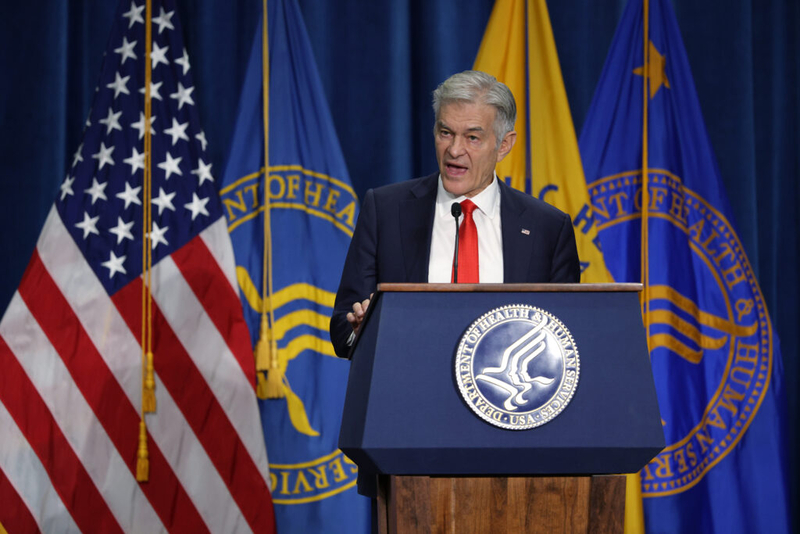
    “This rule helps Americans build skills and independence through work, education, job training, or community service, creating new opportunities for themselves and their families,” said Dr. Mehmet Oz, director for the Centers for Medicare & Medicaid Services, in a statement announcing the new guidance.

    But critics of work requirements point to evidence that it kicks people off Medicaid who are otherwise entitled to it without meaningfully increasing the share of adults who are working.

    For example, Arkansas tried instituting work requirements for Medicaid recipients during Trump’s first term in 2018. By the time a federal judge halted the policy less than a year later, 18,000 adults had already lost coverage and reported problems paying off medical debt, delaying healthcare and delaying medications due to cost. Studies later found that Arkansas’ work requirements didn’t increase employment. And data shows that most adults on Medicaid under age 65 are already working.

    Supporters say the new requirements are flexible. They say the feds have created a broad category of “medically frail” people who are exempt from the work requirements, and they’re permitting states to allow people to self-attest that they’re exempt one time before documentation is required.

    The new work requirements will apply to about 20 million people who are eligible for Medicaid through expansion, according to estimates from health research organization KFF. These expansion enrollees make up about 30% of all Medicaid enrollees.

    A recent analysis from the Urban Institute projects that 3-7 million people could lose coverage because of the new work requirements.

    Stateline reporter Anna Claire Vollers can be reached at [email protected].

    This story was originally produced by Stateline, which is part of States Newsroom, a nonprofit news network which includes Virginia Mercury, and is supported by grants and a coalition of donors as a 501c(3) public charity.