Tag: Gov. Abigail Spanberger

  • Virginia legislators advance $205 billion budget including new tax on data centers

    Virginia legislators advance $205 billion budget including new tax on data centers

    On Monday, Virginia legislators approved a two-year, $205 billion budget proposal to fund healthcare and public education, provide 4% teacher raises and a 3.5% pay bump to state employees, establish a retail weed marketplace and hedge against decreased federal dollars.

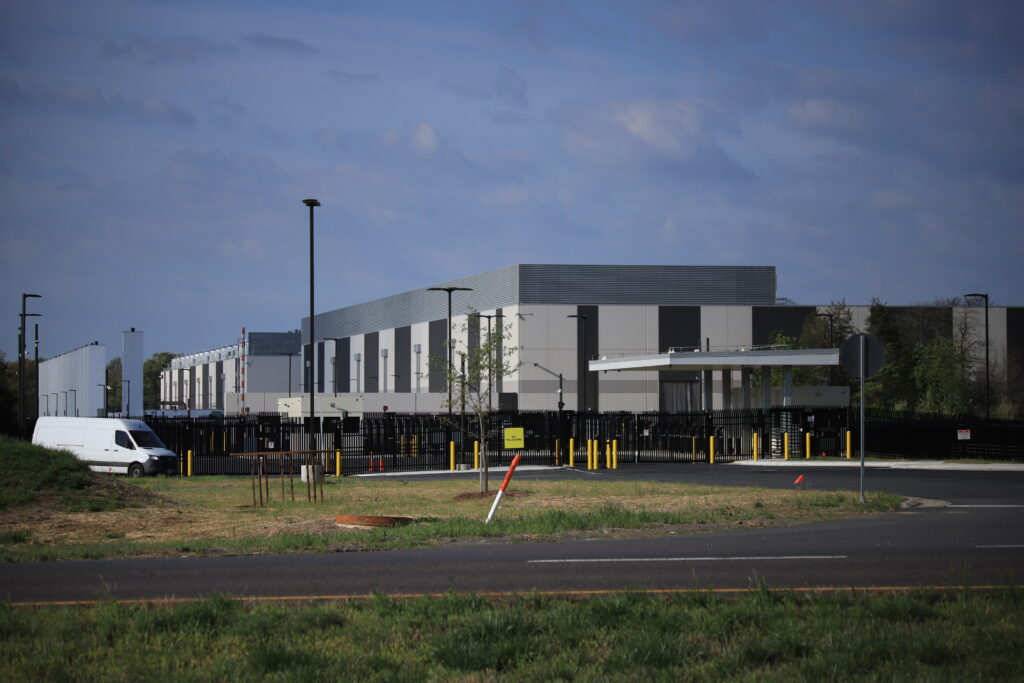
    The spending plan also includes a provision to tax data centers for their energy consumption, which is slated to generate a maximum of $600 million each year but doesn’t include the environmental standards the House of Delegates wanted to impose on the industry or the end of the sales tax exemption that the Senate sought.

    Senate Finance Committee chair Louise Lucas, D-Portsmouth, said after her chamber’s morning session that she “didn’t love” the data center compromise and framed it as a necessity — but not the final solution.

    “I would have preferred another method, but we had to get a budget. We were not going to let the government be shut down, and so this was a good start,” Lucas said.

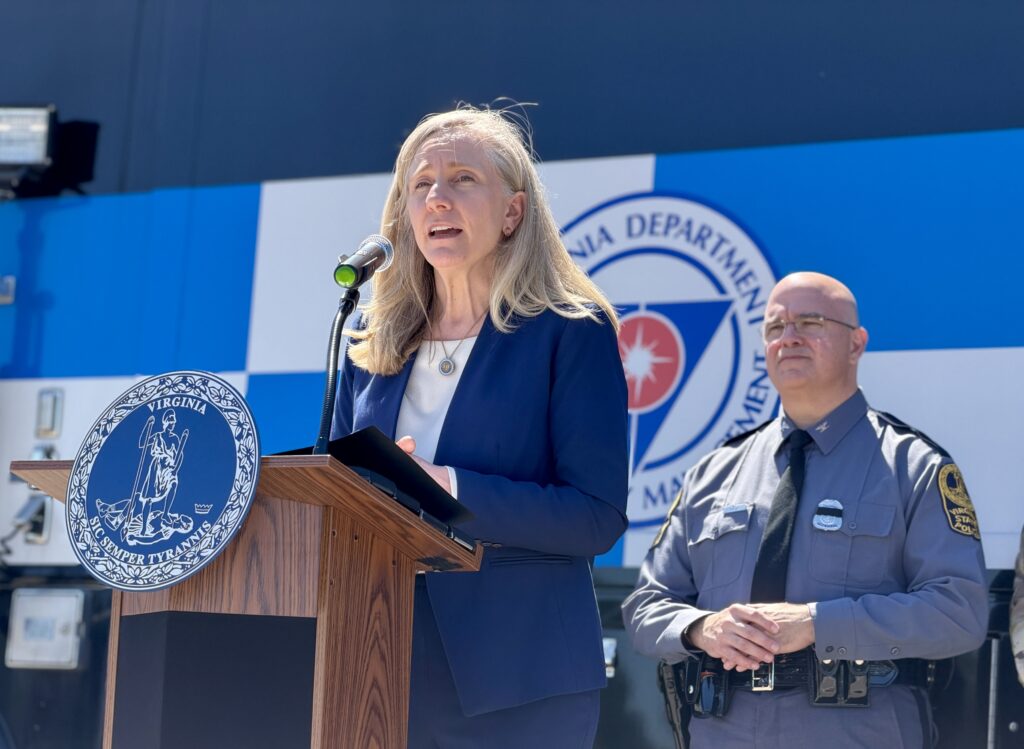
    “This is a compromise proposal — one my administration helped craft — and it builds a strong foundation for further discussions about the future of this industry in Virginia on issues like environmental and community impact,” Gov. Abigail Spanberger said of the data center provision in a statement.

    The Senate passed the budget proposal 23-16 vote, while the House advanced it 71-22.

    With both chambers finally on the same page after months of gridlock over data centers, the plan will now be reviewed by Spanberger. She can sign it as-is, recommend changes or veto line items. The whole process must be finalized by July 1, when the new budget will take effect.

    Here are the key priorities addressed by the spending plan.


    Data centers


    The amended budget proposal creates an energy consumption tax for data centers which totals $.011 per kilowatt hour used per month.

    The state will collect up to $600 million a year from this new tax, according to budget language. Any funds collected over that cap would be put into a fund and given back to data centers at the end of each fiscal year.

    This is only a fraction of what the state could have made if they had ended the sales and use tax exemption, but, after months of arguing, lawmakers ultimately didn’t agree to that measure. Spanberger supported keeping the exemption in place through the end of the agreement’s term in 2035.

    Additionally, language was put into the budget to direct the Department of Environmental Quality to study the groundwater impacts of non-closed loop data centers, which use millions of gallons of water each year.

    DEQ will locate “cooling water scarcity areas” where the use of potable water for computer cooling systems could be detrimental to surrounding areas’ water quality and availability.

    The department will have until July 2027 to create regulations for the scarcity areas. After they are developed, future data centers in that area will be required to “use air cooling, closed loop cooling systems, or more efficient cooling systems that become available.”

    After July 1, 2027, data centers in the Eastern Groundwater Management Area will have to “use air cooling systems, 100% recycled water and/or stormwater for cooling, or use a closed loop system.” A study will be released in October 2026 on how to retrofit existing data centers in those areas to align with the new regulations.

    Some Republican lawmakers characterized the measure as inconsistent.

    “The budget does not create one strong statewide water usage standard for data centers. Some parts of Virginia get stronger protections and other parts get weaker protection or no protection at all,” said Sen. Glen Sturtevant, R-Chesterfield. “That should concern every locality that is concerned about becoming the next target for a massive data center.”

    Senate budget proposal keeps data center sales tax exemption, adds new tax for industry

    Budget language also directs DEQ to put in place noise abatement regulations for data centers before the end of 2029. The department will determine the lowest possible noise level for data centers and make it the standard starting in 2030.

    After that date, facilities who violate the noise standard will face a fine of $32,500 per day.

    “The noise issues are some of the things we hear the most from people that live next to data centers,” said Sen. Scott Surovell, D-Fairfax, whose district contains dozens of data centers. “Water is a rising concern, especially for any data centers that are gonna be put east of I-95, where we already have a real problem with our declining aquifer.”

    Lucas told reporters that this is not the end of the conversation about doing away with the sales and use tax exemption, and that a study group will look closer at the issue and provide a report on their findings in November.


    Health and human services


    Overall, the pending budget will earmark $158.3 million in the state’s general fund for fiscal year 2027 and $245.1 million in 2028 for healthcare and social services.

    The money was set aside both for healthcare and social services the state typically handles along with support to comply with new federal mandates and partially plug holes created by federal funding shortfalls.

    As thousands of Virginians have fallen off Affordable Care Act health insurance this year, Virginia’s new budget entails $150 million to support a state-level version of the expired federal assistance for people between 138% and 250% of the federal poverty level.

    Sen. Danica Roem, D-Manassas, a former journalist and restaurant worker, described the difficulty of living uninsured for two years in a floor speech on Monday.

    “I don’t want anyone to live like that,” she said.

    She added that the budget “puts major money” into making sure that the state is “taking care” of people.
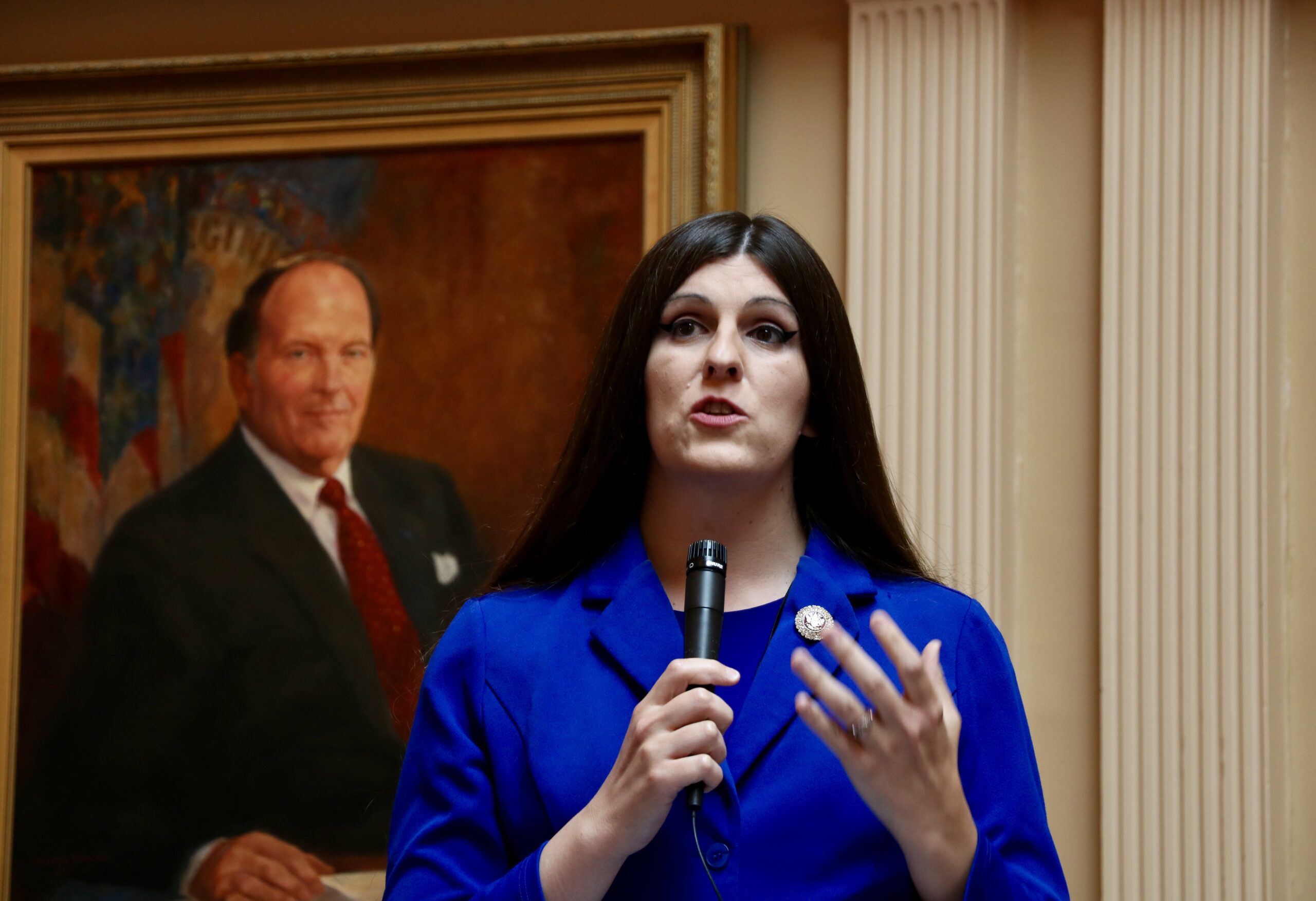
    Sen. Danica Roem, D-Prince William, speaks on the Senate floor during the special budget session on June 22, 2026. (Photo by Charlotte Rene Woods/Virginia Mercury)

    The plan calls for $3.5 million to determine ways the state can ensure eligible people remain on Medicaid amid forthcoming eligibility requirement shifts and additional verification work.

    Virginia’s roughly 850,000 Supplemental Nutrition Assistance Program beneficiaries went without their food stamps last fall during the federal shutdown. And due to a reconciliation bill Congress passed last summer, states like Virginia are attempting to reduce their error rates.

    State lawmakers have designated $135 million to handle SNAP, should the error rate not fall to the required 6% by the end of the calendar year.

    Sometimes SNAP households are overpaid or underpaid because of paperwork mistakes by government staff or outdated information from beneficiaries. Work in social service departments is already underway to reduce error rates.

    Free clinics will receive $20 million in state funding over the next two years while federally qualified health centers will get $10 million in that time.

    While federally qualified health centers offer sliding scale fees for low-income patients, free clinics are also a resource for uninsured patients. Both entities have been bracing for additional clients as Virginians lose their ACA or Medicaid insurance.

    A little over $1 million is allocated to help local health departments statewide handle rent increases. The regional centers help fill healthcare access gaps and are often tailored to the local communities they serve.

    As federal dollars for HIV/AIDS care are slashed, the state budget also contains over $26 million for that specific type of healthcare over the next two years. Staying on top of medication is critical in preventing the spread of the disease.


    Education


    Under the newly approved budget proposal, K-12 education funding would increase by $1.4 billion, including a 4% increase for teachers in each of the next two years.

    Lawmakers propose $590 million for rebenchmarking, declining enrollment, and high-need groups, including $28.9 million for at-risk and $148.4 million for special education students.

    Also included: $500,000 for grants to help schools purchase Automated External Defibrillators (AEDs) and implement cardiac emergency response plans.

    In higher education, the budget proposes restoring funding for affordable access and tuition moderation, as well as expanding nursing programs at several public universities. The Internships Virginia (InVA) initiative to provide paid internships for postsecondary students would also be funded.

    Virginia localities raise $119M for school construction through targeted sales tax

    To support educational infrastructure, lawmakers also agreed to expand the authority to allow all localities to use a 1% sales tax to pay for construction costs, contingent on a referendum that must pass in each jurisdiction. The language also permits jurisdictions in Northern Virginia to use the funds for transportation projects to address public transit needs.


    Tax deductions


    Taxpayers will be able to keep a bit more of their cash, as the new budget increases the standard income tax deduction from $8,750 for single filers and $17,500 for joint filers to $9,200 and $18,400 in 2027 and $9,300 and $18,600 in 2028.


    RGGI/environment


    A budget amendment was added into the conference report that would divert 45% of the funds earned from the Regional Greenhouse Gas Initiative back to ratepayers.

    The funds come from carbon credit sales, which utilities must purchase if they want to burn carbon-based fuels sources that release emissions. Those costs are then passed down to utility customers.

    When former Gov. Glenn Youngkin removed the state from the agreement in 2021, it cost about $4 a month on the average residential customer’s bill. Recently, Dominion Energy filed for the “RGGI Rider” to be added back to monthly bills as mandated by a law to rejoin the agreement, signed by Spanberger in recent weeks.

    Dominion is required to begin purchasing from the carbon credit auction in July but the charge to customers won’t begin until March should the State Corporation Commission approve the application by the utility. This will lead to an increased charge of $10-$13 monthly.

    The state previously earned about $800 million from the RGGI funds that had to go towards community flood preparedness projects and low-income energy efficiency projects. The new budget language includes the rebate for customers, which would put money back in wallets but detract from the funds for flood and efficiency projects.

    The rebate will not apply to co-op utility customers.


    Housing


    While a handful of housing bills passed the 2026 session and have since been signed into law, the new spending plan includes measures to ensure bills with fiscal impacts get off the ground.

    The state budget proposal directs $60 million overall for housing initiatives, $40 million of which will go to the state’s Housing Trust Fund and $20 million that will go towards a mixed-income housing pilot program.

    Additionally, lawmakers set aside $11.5 million for the Virginia Eviction Reduction Program and $10 million for the Clean Energy Innovation Bank.


    Cannabis


    Spanberger and lawmakers announced June 16 a reworked proposal for a retail cannabis marketplace that included key compromises between legislators’ and the governor’s visions. The marketplace is set to launch July 1, 2027 and will be limited to 350 stores statewide.

    Spanberger, legislators roll out retail weed plan, set to launch in July 2027

    State sales tax on retail weed will be 6% at launch and will increase to 8% in 2029. Localities also have the option to add an additional tax of 1 to 3.5%.

    Because lawmakers added a Part 5 amendment, the market will be permanently established in the state.

    The new framework includes a $250 public consumption civil penalty that will not take effect until 2027.

    “We had serious concerns about creating extreme new penalties that would not have meaningfully reduced the illicit market,” Sen. Lashrecse Aird, D-Henrico, said at a press conference announcing the framework last week.

    “But we believe this final framework strikes the right balance for enforcement mechanisms, but also in accountability, but also not harming those who just choose to participate in the market.”


    Child care


    The budget sets aside $137.6 million for the state-subsidized child care program slots, which will be devoted to families making 85% or less of the state median income.

    This follows legislation carried by Del. Briana Sewell, D-Prince Wiliam, requiring the state education department to update how it calculates the cost of childcare for Virginia families. A majority of Virginia parents and employers say child care costs are prohibitive.

    Spanberger signed the bill into law last month.

    A new cost-sharing program for child care will be funded through the budget, with lawmakers allocating $25 million for the initiative to spread the price of child care between families, employers and the state.


    Transportation


    Lawmakers included $153 million in the budget for additional operating assistance for the Washington Metropolitan Area Transit Authority, or Metro, with the caveat that Metro must produce a 20-year capital plan and annual performance reports.

    The action comes as inflation has driven up the costs of operating transit services.

    Lawmakers also proposed directing the secretary of transportation to evaluate options, including public-private partnerships, to accelerate large-scale improvements to the I-81 corridor.

    The legislature allocated $7 million for the Route 460 Phase IIA Finish Grade Project and directed stakeholder engagement to prioritize improvements along the U.S. Route 220 corridor.

    The budget also directs the state to identify federal funds to support rural electric-vehicle charging infrastructure and provides $500,000 to continue developing Advanced Air Aviation Test Sites to enable advanced air mobility.


    What’s next


    The proposal will now head to Spanberger, who said it contained “a lot to be proud of” in a Monday afternoon statement.

    “Today, the General Assembly has moved forward with a budget proposal — and that means we are keeping our government open and delivering for the 8.8 million people who call our Commonwealth home,” she added.
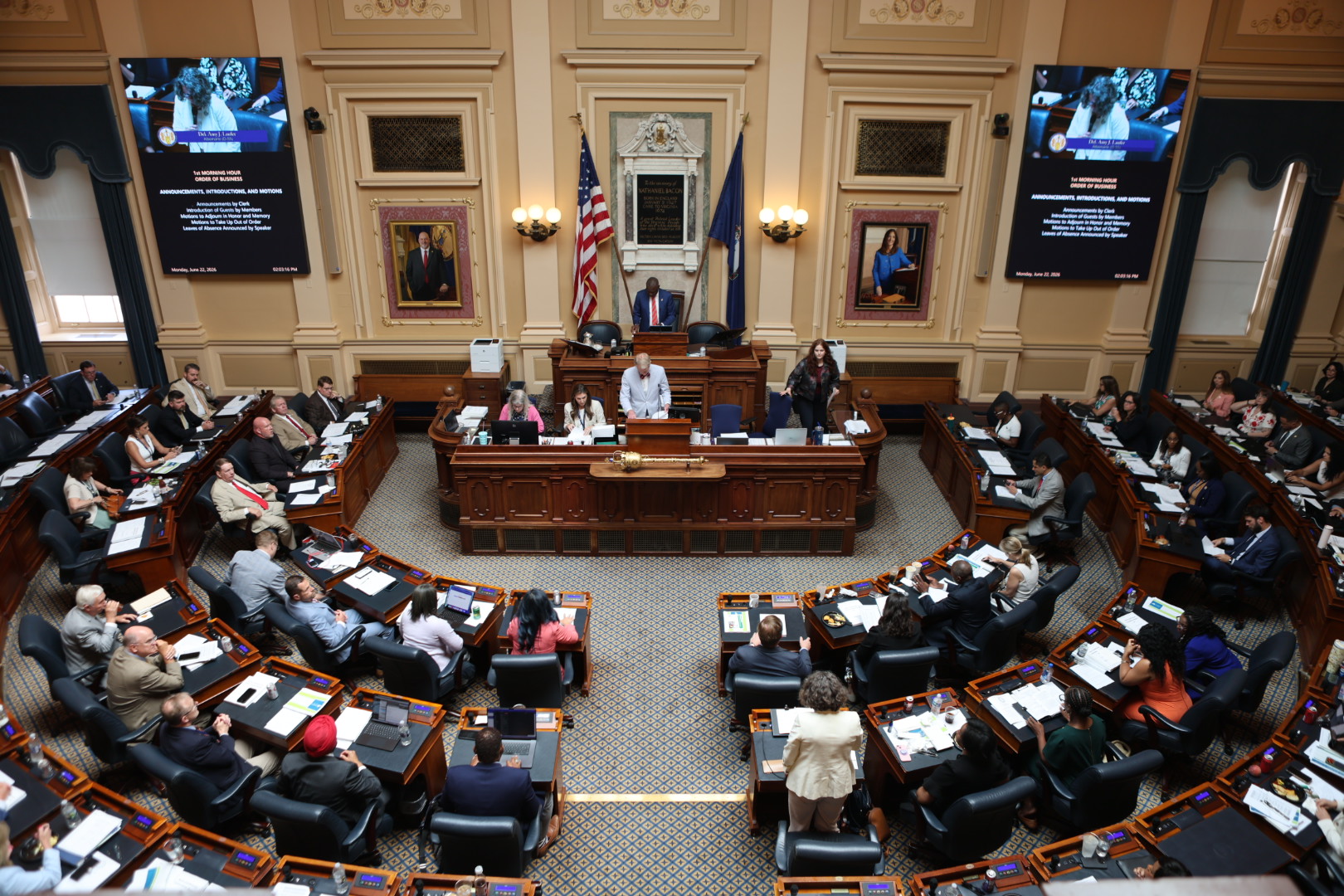
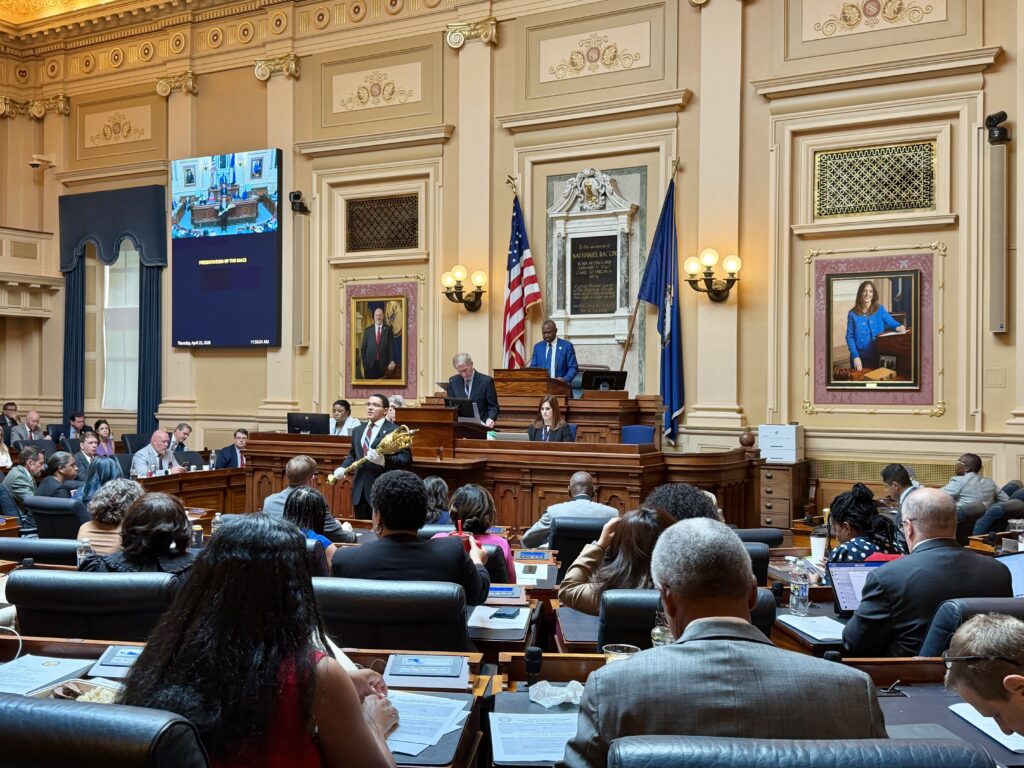
    A view from inside the Virginia House of Delegates chamber on June 22, 2026. (Photo by Nathaniel Cline/Virginia Mercury)
  • Spanberger, legislators roll out retail weed plan, set to launch in July 2027

    Spanberger, legislators roll out retail weed plan, set to launch in July 2027

    Tuesday morning, Gov. Abigail Spanberger and the legislative architects of a long-awaited retail weed framework presented a revamped plan for the recreational marketplace that they said is set to launch next summer, pending finalization of the state budget.

    The announcement marked a major shift, after Spanberger vetoed the cannabis marketplace plan approved by lawmakers in this year’s General Assembly session, five years after the state made adult simple possession legal.

    Spanberger vetoes cannabis bill, stalling legal sales again

    “I am excited to stand alongside Sen. Lashrecse Aird and Del. Paul Krizek to announce that we have agreed to a proposal that will create a safe, legal, and well-regulated cannabis market here in the commonwealth of Virginia, with recreational sales beginning on July 1, 2027,” Spanberger said at the press conference in Richmond.

    “Virginians have been waiting a long time for policymakers and a governor who wanted to do this and get it right. And today we are taking an important step forward,” Spanberger added.

    Aird, a Democrat from Henrico, said the state tax on cannabis sales will be 6% at launch and will increase to 8% in 2029. Localities also have the option to add an additional tax of 1 to 3.5%.

    “If our goal is to move consumers away from the illicit market, then the legal market has to be able to compete, and keeping the tax rate low at the start is not just an economic decision, it is a public safety strategy,” Aird said.

    The plan will also limit the total number of retail locations to 350 statewide, which Aird said wouldn’t all debut at once and will be geographically balanced.

    In a compromise between the original legislation and Spanberger’s tweaks that lawmakers rejected before her veto, the new framework includes a $250 public consumption civil penalty that will not take effect until 2027.

    “We had serious concerns about creating extreme new penalties that would not have meaningfully reduced the illicit market,” Aird said, “but we believe this final framework strikes the right balance for enforcement mechanisms, but also in accountability, but also not harming those who just choose to participate in the market.”

    Krizek, a Fairfax Democrat, announced several measures designed to make the marketplace more equitable and accessible to small businesses, including one that will direct 75% of license fee deposits in the first year of operation into the Cannabis Equity Business Loan Fund.

    “This is important because access to capital is one of the biggest barriers for small businesses entering a highly regulated marketplace,” Kirzek said.

    The Virginia Cannabis Control Authority will be allowed to issue up to 100 microbusiness licenses by May 1, 2027, Krizek added, which will “help prevent the market from being dominated solely by the largest and best capitalized ventures.”

    Microbusinesses will also be authorized to operate up to two locations under their license structure, which had been a key concern for small and rural entrepreneurs.

    Regulatory structures of the original plan like seed-to-sale tracking, a product testing framework, licensing administration, and reporting requirements related to ownership, equity, participation, and disciplinary actions are present in the updated framework, with Krizek framing them as tools to “create transparency and accountability as the market develops.”

    In contrast to the recent tensions between leading Democrats and Spanberger after she vetoed 31 bills that represented priority issues for the party, the governor, Aird and Krizek repeatedly emphasized the collaboration and compromise undergirding the new plan.

    “We have always had this same end goal, an end goal that has been years in the making, so I am proud to stand alongside these dedicated legislators and to be working alongside them to deliver a marketplace built to last,” Spanberger said.

    The House and Senate both released new budgets. Here’s how they align and diverge.

    The retail cannabis plan — released as the Senate money committee met nearby to unveil its reworked state spending proposal — hinges on finalization of the state budget, which has been stalled for weeks as lawmakers debate whether data centers’ sales tax exemption should continue.

    “I believe that the Senate is very much interested in also getting us a budget, and that we have shared goals on how to get there,” Aird said.

    The House revealed its new budget proposal on Friday; the chambers must work together to finalize the budget by June 30 to prevent a state government shutdown.

  • ‘It’s outrageous’: Spanberger navigates budget fight, Democratic unrest six months into governorship

    ‘It’s outrageous’: Spanberger navigates budget fight, Democratic unrest six months into governorship

    Back in January, Gov. Abigail Spanberger arrived in office promising pragmatism, affordability and a less combative style of politics.

    Fast forward a few months, and Virginia’s first woman governor finds herself navigating one of the rockiest starts to a Democratic administration in years, with budget negotiations intensifying weeks before a shutdown deadline, frustration simmering inside her own party over a wave of vetoes and lawmakers openly questioning her governing style.

    “I think it’s outrageous that we are where we are, and I hear from many legislators that they are displeased with the process,” Spanberger said during an interview with The Mercury at her office in Richmond Thursday, referring to the state’s still unfinished biennial spending plan.

    “And I know that they are making that known to their individual bodies. And we will get there, because we have to.”

    The impasse has overshadowed much of Spanberger’s opening months in office. Democratic leaders remain divided over whether to scale back Virginia’s lucrative data center tax incentives and how aggressively to regulate the fast-growing industry.

    Lawmakers face a June 30 deadline to approve a spending plan before the new fiscal year begins July 1. Without a deal, Virginia could enter an unprecedented government shutdown.

    The fight has also exposed tensions between Spanberger and some top Democrats in the legislature who expected a smoother relationship with a governor from their own party after four years of divided government under Republican Gov. Glenn Youngkin.

    Spanberger vetoed or amended a series of high-profile Democratic priorities this year, including legislation tied to collective bargaining, cannabis retail sales, immigration enforcement, prescription drug pricing and class-action lawsuits. The pushback triggered unusually public criticism from key Democrats and labor advocates.

    Political analyst Bob Holsworth said the administration’s first few months have been shakier than many Democrats anticipated.

    “By and large, I think it’s been a wobbly term for sure,” Holsworth said. “We’ve never seen the kind of vetoes that we had before, and the Democrats are in a position that’s almost embarrassing in terms of the budget.”

    Still, Spanberger rejects the idea that her administration so far has been defined mainly by conflict.

    In the interview, she instead pointed to Democratic priorities she signed into law, including paid family and medical leave, maternal health legislation, healthcare affordability measures and an assault weapons ban. She also backed constitutional amendments protecting reproductive rights and marriage equality.

    “I’ve signed more than 100 bills that Governor Youngkin had vetoed,” she said.

    Richmond versus the rest of Virginia

    Spanberger said one of the biggest surprises on the job has been the disconnect she sees between debates dominating Capitol Square and the concerns she hears while traveling the commonwealth.

    “How different things are here in Richmond, or even Capitol Square, versus everywhere else in Virginia,” she said, recalling recent visits to Abingdon, Washington County, Blacksburg and Surry County during Virginia Agriculture Week.

    “The things people are talking about at times are very, very different from the things that people are talking about in Richmond,” she said.

    Spanberger said that disconnect has influenced how she approaches many of the biggest issues coming out of the General Assembly.

    While progressive lawmakers pushed for sweeping changes on labor, environmental and criminal justice issues, Spanberger said she often evaluates legislation differently now as governor, focusing more heavily on implementation, agency capacity and long-term economic effects.

    “It’s important to me that not only are we getting it right, but when there’s clear places and areas for improvement in terms of how we can set up state agencies or entities for that implementation, we need to make those changes,” she said.

    Spanberger pointed to paid family and medical leave as an example of a policy she supports but also requires careful implementation.

    “Virginia is the 14th state in the country to adopt a policy like this. It’s a policy that I think people are going to feel in a positive way, but it is a major shift, and we have to get it right,” she said.

    But Holsworth said many lawmakers expected clearer guidance from the governor earlier in the legislative process, especially relating to the state budget.

    “She could have been involved earlier there,” he said. “Typically governors really try to do a more determined job of setting the parameters of the budget early on.”

    Holsworth also argued the tensions reflect ideological shifts within the Democratic Party of Virginia.

    “Virginia’s always had these pro-business governors, Democratic or Republicans,” he said. “But the legislative branch of the Democratic Party has moved a little further to the left.”

    The data center divide

    Sen. Louise Lucas on the Senate floor at the Virginia State Capitol in Richmond during this year’s legislative session. Lucas has emerged as one of the leading voices pushing to scale back Virginia’s data center tax incentives amid ongoing state budget negotiations. (Photo by Shannon Heckt/Virginia Mercury)

    Much of the budget dispute comes down to disagreements over Virginia’s sales and use tax exemption for data center equipment, an incentive credited with helping the commonwealth become the world’s largest data center hub.

    Sen. Louise Lucas, D-Portsmouth, the chair of the powerful Senate Finance and Appropriations Committee, wants to eliminate the incentive, arguing the state is subsidizing highly profitable corporations while residents face rising utility costs and environmental concerns.

    Last week, Lucas announced that she would take the data center debate directly to the voters, launching a statewide listening tour focused on the industry’s impact on communities statewide.

    Stops are planned across Virginia, including Hampton Roads on Sunday, Richmond and Northern Virginia as lawmakers continue weighing whether the state should scale back billions of dollars in tax incentives for the rapidly expanding sector.

    Spanberger, however, has taken a more cautious approach.

    “What is less part of the discussion is the end goal,” she said, warning that abruptly dismantling the tax break could trigger lawsuits, damage Virginia’s business reputation and destabilize local governments heavily dependent on data center revenue.

    “Look at Mecklenburg, where they’ve built multiple public schools fully with data center funding,” Spanberger said. “When you have localities with nearly half their local revenues coming in from data centers, there’s some localities that are saying, wait, why are you going to pull up the ladder behind you?”

    At the same time, she said the industry should face stricter standards on energy consumption, water usage and environmental impacts.

    “If energy generation and energy consumption is a problem — and I’ve been very clear that data centers need to pay their fair share as relates to energy consumption — well, how do we get there?” she said.

    Spanberger argued Virginia still holds leverage because companies want to locate in the commonwealth.

    “We have a pretty significant stance to be able to say we have these very high standards, and we want you all to meet them,” she said.

    On Friday, the House released a new budget proposal that would preserve the existing sales and use tax exemption for data centers while creating a commission to study the industry’s long-term impact on Virginia’s power grid, water resources and economy.

    The revised plan also eliminated earlier Senate-backed environmental requirements opposed by industry groups and some business advocates. Spanberger, who has repeatedly argued the state should “honor its commitments” to companies that invested in Virginia under the current incentive structure, praised the House approach Friday.

    “This proposal creates a clear roadmap for evaluating the impact of the data center industry in Virginia and for reassessing the state’s incentives into the future, with a focus on fairness to ratepayers and the needs of local communities,” Spanberger said in a statement.

    Meanwhile, Senate Minority Leader Ryan McDougle, R-Hanover, blamed Democrats broadly — and Spanberger specifically — for the ongoing impasse.

    “She’s the governor and it’s her party,” McDougle said in an interview Friday. “She should take the blame.”

    McDougle also criticized what he described as a lack of policy engagement from the administration during the session.

    “My conversations with the governor during the legislative process were always polite and courteous, but nothing substantive about policy. I would expect such conversations would have a significant policy component, and I did not see that from my perspective. And we did not see representatives of the administration at many of the committee hearings and debates,” McDougle said.

    Holsworth said the budget stalemate has exposed deeper tensions over Virginia’s economic identity.

    “You have one group of Democrats, with Spanberger leading it, saying that if we do this, our ranking, as the best state for business, is really going to take a hit,” he said.

    “On the other hand, you have Senator Louise Lucas and other people in the Senate, some Republicans included, saying, ‘Why in the world are we paying a couple of billion dollars a year to the richest people in the world as a tax exemption? We should get rid of it, or at least tone it down in some fashion.’”

    Senate Minority leader Ryan McDougle, R-Hanover, speaks with reporters outside the Virginia State Capitol in Richmond last month as lawmakers continued negotiations over the state budget and data center tax incentives. (Photo by Shannon Heckt/Virginia Mercury)

    Affordability and political pressure

    Spanberger campaigned heavily on affordability last year, but acknowledged many Virginians still don’t feel economic relief.

    “The measure of success keeps changing because all of the pressures that require us to work on issues of affordability and lowering costs keep getting worse,” she said.

    She highlighted insulin cost reforms, healthcare changes involving insurance pre-authorization and housing measures she said will help residents more directly.

    However, Spanberger acknowledged those gains collided with inflation and rising fuel prices.

    “The progress we’re making is muted by the fact that there’s still pressures and bad policies that are negatively impacting people,” she said.

    Republicans have repeatedly argued that Democratic policies are contributing to higher household costs.

    McDougle said the governor’s policies contradict her campaign messaging on affordability and bipartisanship.

    “She talked a lot about being for people and bipartisanness and affordability on the campaign trail. And then her initial policies, right out of the gate, were to raise everybody’s power bill through RGGI,” he said, referring to Democrats’ move to rejoin the Regional Greenhouse Gas Initiative.

    The Spanberger administration pointed out that 75% of the governor’s “Affordable Virginia Agenda” passed with bipartisan support.

    But Holsworth said Republicans moved quickly after Spanberger took office to define her politically before she could fully establish her governing identity.

    “They went after her early, and I think they caught that team a little unaware,” Holsworth said. He added that many of Spanberger’s affordability initiatives may ultimately prove popular but are not tangible to many voters.

    “The average person in the street knows that their electric bills and insurance bills are going up,” he said.

    What comes after the budget

    Even with the budget fight and criticism from some Democrats, Spanberger said she remains focused on longer-term priorities, particularly housing, childcare and administrative reforms.

    “There’s more to do to continue to really push on the supply side challenge,” she said, referring to housing and childcare.

    The governor is also closely watching Dominion Energy’s proposed merger with NextEra Energy, which would create one of the nation’s largest utility companies.

    Spanberger said she sees possible benefits if the merger expands renewable energy production and lowers costs for ratepayers, but she also expressed concerns about long-term impacts on Virginia jobs and consumers.

    “There also has to be some clear financial benefit for the fact that these two gigantic companies are endeavoring to merge to become even more enormous,” she said.

    Spanberger also acknowledged that, as Virginia’s first woman governor, some reactions to her leadership may be shaped by expectations that previous governors did not face.

    “I think that things are scrutinized differently, assumptions are made differently,” she said. “I might not be exactly in the model that people are used to.”

    Still, she suggested that some of the criticism surrounding her first few months in office reflects discomfort with a governing style that does not fit traditional expectations of Virginia governors.

    “The way that people will level critiques against me just objectively, they wouldn’t do it (to others),” Spanberger said. “They haven’t.”

  • Spanberger defends wave of vetoes as frustrated Democrats push back

    Spanberger defends wave of vetoes as frustrated Democrats push back

    Virginia Democrats spent years waiting for unified control of state government after an unprecedented string of bruising vetoes under Republican Gov. Glenn Youngkin.

    But nearly six months into Gov. Abigail Spanberger’s four-year term, some Democratic lawmakers and progressive allies say the former congresswoman is governing less like the leader of a blue-state trifecta and more like the cautious centrist Virginians elected to Congress eight years ago.

    Spanberger has vetoed 31 bills passed by the Democratic-controlled General Assembly — an unusually high number during one-party control of government. Several of those vetoes blocked high-profile Democratic priorities, including legislation expanding collective bargaining rights for public employees and a long awaited legal framework for cannabis sales.

    The pushback has exposed ideological and procedural tensions inside Virginia’s Democratic Party at a moment when lawmakers had hoped to capitalize on full control of Richmond after years of divided government.

    Spanberger, however, rejects the idea that her vetoes reflect dysfunction or political drift.

    “As I view it, I’m doing my job,” Spanberger said during a lengthy interview with The Mercury at her office at the Patrick Henry Building in Richmond Thursday. “The General Assembly passes bills, the governor has the responsibility to amend, sign, or veto.”

    The governor argued that Democrats entered the 2026 legislative session with what she described as “some sort of pent-up interest” after four years of Youngkin, noting that she has signed more than 100 bills previously vetoed by her Republican predecessor.

    “My focus is on implementation,” Spanberger said. “Especially some of the larger bills that need to be implemented and people will feel or see if they are not implemented well. That is on my administration.”

    Tensions emerge inside Democratic trifecta

    The friction has become increasingly public in recent weeks.

    Labor groups blasted Spanberger after she vetoed collective bargaining legislation backed heavily by unions. Progressive lawmakers privately complained that the governor’s office failed to engage during the legislative session, only to unveil sweeping substitute proposals after bills had already reached her desk.

    Sen. Louise Lucas, D-Portsmouth, the Senate’s president pro tempore, continues to air her frustration with the governor on social media.

    And Senate Majority Leader Scott Surovell, one of the chamber’s most vocal lawmakers, said Spanberger’s approach differs significantly from the four prior governors he has worked with since he was first elected to public office.

    “In the 17 years I’ve served, governors just tend to leave the details of a bill to the legislature,” Surovell said in a recent phone interview. “And if they have issues with details, they’re usually raised during session.”

    But this year, he said, lawmakers were often presented with late-stage substitute proposals that fundamentally rewrote legislation without time for enough public debate or negotiation.

    “It’s hard to work with a governor’s office that has opinions when they don’t share them before they act, or they don’t share them during the legislative process,” Surovell said. “Governor Spanberger’s proposals were serious policy proposals, but they were made about two months too late.”

    The criticism reflects a growing complaint among some Democrats that Spanberger, who served three terms in Congress before winning the governorship last year, brought a more executive-driven style to Richmond that clashes with the relationship-heavy culture of the Virginia legislature.

    In a strongly-worded resolution, the Virginia AFL-CIO accused Spanberger of abandoning campaign commitments after she vetoed the collective bargaining proposal for public employees.

    The labor federation said Spanberger campaigned on ending what it called a “historic injustice” and noted that unions had agreed to changes requested by her administration during negotiations over the bill.

    The resolution said the governor later offered a substitute measure containing “poison-pill terms” before ultimately rejecting it, which they framed as Spanberger choosing “to betray her commitment and vetoing the legislation.”

    Spanberger, who said she supported the core idea of the proposal, dismissed suggestions that the criticism reflects a wider collapse in Democratic support.

    “Here’s a place where I will say, there’s a backlash among some organized groups and advocates, and then there’s the opinions of people and communities,” she said in the interview.

    Spanberger said local governments raised concerns about the cost and complexity of implementing collective bargaining systems, particularly in smaller jurisdictions.

    “Those concerns were significant,” she said. “People can react to their anger or their disappointment in me as they choose, but I’m going to do what I think is right.”

    Virginia Senate Majority Leader Scott Surovell, D-Fairfax, has emerged as one of the most vocal Democratic critics of Gov. Abigail Spanberger’s approach to vetoes and late-stage amendments during her first months in office. (Photo by Nathaniel Cline/Virginia Mercury)

    Governor defends cannabis veto

    Spanberger’s veto of legislation establishing a legal cannabis retail market by early next year became another major source of tension.

    Virginia legalized adult possession of marijuana in 2021 but never created a legal framework for commercial sales, leaving the state in what many lawmakers have described as a legal gray area.

    Spanberger said she supports eventually creating a regulated market and called the current system “not optimal.” But she argued the legislation moved too quickly and did not give regulators enough time to build enforcement systems.

    “There’s not enough time to stand up the CCA,” she said, referring to the Virginia Cannabis Control Authority. “There’s not enough time to train law enforcement under the CCA. There’s not enough time to get their regulations for the licenses in place.”

    She also defended her decision to veto the bill and revisit changes at a later time. Conversations between her administrations and lawmakers to wrap a revised measure into the state budget are currently underway.

    “I did have people say, why not just sign it and we’ll fix it later?” Spanberger said. “To which I said, I sent back a list of all the things I wanted to fix, but you didn’t vote them up or down.”

    Surovell said lawmakers were alarmed by portions of the governor’s substitute proposal, including felony penalties tied to marijuana transportation offenses.

    Spanberger’s proposed substitute, he said, had a Class 2 felony for carrying 50 pounds of marijuana over the state line.

    “I don’t think I’ve ever voted for a Class 2 felony in 17 years,” he said.

    Other notable vetoes have included legislation expanding class-action lawsuits in Virginia courts, a legislative framework to create a cost-capping prescription advisory board, a measure to ban out-of-state transfers to Red Onion State Prison and a bill authorizing a casino project in Fairfax County.

    Spanberger also vetoed or amended several immigration-related measures tied to federal Immigration and Customs Enforcement, drawing criticism from several top Democrats and immigrant-rights advocates.

    Despite the criticism, Spanberger’s office pointed to a long list of Democratic priorities she did sign into law, including mandatory paid family and medical leave, healthcare affordability measures, maternal health bills, reproductive rights and marriage equality constitutional amendments and an assault weapons ban.

    Questions about political identity

    The intra-party clashes have revived an old debate inside Virginia Democratic politics about how progressive statewide Democrats can afford to be.

    “Virginia Democrats are continuing to struggle with a question of identity,” Steven Farnsworth, a political scientist at the University of Mary Washington, said. “How conservative or how moderate do you have to be to win a statewide election is a question that has bedeviled Virginia lawmakers since the days of (former Governor) Chuck Robb.”

    Farnsworth noted that Spanberger campaigned and served in Congress as a centrist Democrat.

    “If Virginia liberal Democrats were unhappy with that record, then why was the governor unopposed in the Democratic primary last year?” he said.

    The governor’s approval ratings have also slipped since her election victory last November. A Washington Post-Schar School poll released in April found 47% of Virginia voters approved of her performance while 46% disapproved.

    Spanberger has also frustrated some Democrats with her handling of the failed congressional redistricting amendment earlier this year.

    While she eventually backed the effort, some Democratic activists criticized what they viewed as a lukewarm embrace of a proposal designed to help Democrats pick up U.S. House seats in the 2026 midterms.

    Farnsworth said Spanberger appears to be caught between different audiences.

    “The governor’s current battle is really to persuade Virginians to support her over the Democratic majority of the Senate,” he said.

    Still, Farnsworth said tensions between governors and legislatures are hardly unique.

    “The first year for every new governor tends to be a rough one,” he said. “Even if members of the same party hold all the key positions of power, there are still significant differences of opinion between what the governor wants and what the legislature wants.”

    Sen. Schuyler VanValkenburg, D-Henrico, one of the state Senate’s more liberal members, said lawmakers still accomplished major priorities this year despite disagreements with the governor.

    “I think we had an incredibly productive session, the most productive session we’ve had in four years,” VanValkenburg said in a recent interview.

    He acknowledged frustration over some vetoes but argued the broader picture remains positive.

    “Every time a governor comes in, there’s growing pains, people have to feel each other out,” he said. “We’re going to get those other things done. Maybe it’s not all going to be this year, but this happens every four years.”

    Virginia state Sen. Schuyler VanValkenburg, D-Henrico, said disagreements between Gov. Abigail Spanberger and Democratic lawmakers are part of the adjustment period that often comes with a new administration and legislature. (Photo by Markus Schmidt/Virginia Mercury)

    Budget battle is governor’s, legislature’s next test

    Spanberger and lawmakers are facing another looming challenge: a budget stalemate tied largely to disagreements over when Virginia should scale back tax incentives for data centers.

    Democratic lawmakers are expected to return to Richmond in the coming weeks and pass a new biennial spending plan before the June 30 deadline to avoid a government shutdown.

    Farnsworth said the budget fight may ultimately force both sides toward compromise.

    “The idea of an impasse lasting past June 30 would be very unappealing for all Democrats,” he said.

    For now, Spanberger insists her ties with her party remain intact despite the public criticism.

    “I don’t think it’s in a difficult place, I think it’s in a strong place,” she said of her relationship with legislative Democrats.

    “But a legislator who might think that I was going to come in and do everything they wanted me to do is probably not happy with the fact that I’m an executive who takes my role very seriously.”

  • The exemption Virginia can’t price and won’t stop

    The exemption Virginia can’t price and won’t stop

    Virginia gave data centers a $928 million tax break in a single fiscal year, 2023, and the General Assembly cannot pass a budget because it can no longer agree on whether to keep doing it. That is the fight underneath the standoff in Richmond, with state spending set to expire June 30 and the conferees who should be writing a deal gone home without one.

    The state’s own auditors laid out the stakes more than a year ago. The Joint Legislative Audit and Review Commission studied the exemption in 2024 and found it provided $928 million in tax savings in fiscal 2023. About 90% of the state’s data center industry was using it. The exemption has been on the books since 2010 and is scheduled to expire in 2035.

    Local governments race to attract data centers, often in spite of concerns from their constituents

    The significance of JLARC’s findings about the return on that money has eluded the budget debate so far.

    The benefit is real but front-loaded. JLARC estimated the industry contributes 74,000 jobs, $5.5 billion in labor income, and $9.1 billion in GDP to the state economy, then added the qualifier that matters: most of it comes from construction, not from running the centers once built.

    A typical data center employs about 50 full-time workers, half of them contractors, JLARC’s report found. At the height of building one, roughly 1,500 workers are on site. The jobs that justify the break are mostly the jobs that end when the concrete cures.

    Then there is the cost that lands on people who will never own a server.

    JLARC commissioned an independent study of utility rates and found current rates correctly assign costs to the customers who cause them, data centers included. But the industry’s appetite for power changes the math going forward. Meeting it requires building generation and transmission that would not otherwise be built, and those fixed costs get spread across every ratepayer.

    JLARC put a number on it: a typical Dominion residential customer could see generation and transmission costs rise by $14 to $37 a month in today’s dollars by 2040. That is the quiet transfer inside this debate. An industry that buys its equipment tax-free helps drive a power buildout that shows up on household bills.

    This is where the Senate and the governor parted ways. Senate Finance Chair Louise Lucas has pushed to wind the exemption down rather than let it run untouched to 2035, and walked out of the meeting when that went nowhere.

    Gov. Abigail Spanberger and House Appropriations Chair Luke Torian have resisted early repeal, arguing the state must honor the agreements it signed. A single tax preference has been able to hold the whole budget hostage.

    Spanberger’s data center position is the test of her affordability message

    The contract argument deserves a closer look than it usually gets. Companies claiming the exemption sign a memorandum of understanding with the state, and Virginia law spells out what that document must contain: the company’s investment target, its job target, the timeline, and what it owes back if it falls short.

    The binding promises run from the company to the commonwealth, enforced by clawback. Nothing in that framework commits the state to keep the exemption alive for any set term. The life of the break is fixed by statute, and a statute can be amended by the body that wrote it.

    That points to an option neither side is championing, though JLARC named it plainly: The Assembly could apply a partial exemption after 2035, or end the full break early, drawing the line to protect existing commitments while changing the terms for what comes next.

    JLARC noted the Assembly could even narrow an expiration to one region, while warning a Northern Virginia-only approach would do little to slow statewide growth, since the industry is now spreading down the I-95 corridor into central Virginia. A prospective change avoids the contract objection entirely, because no facility can claim it relied on a benefit it was never offered.

    The reason the clean version isn’t on the table is the same reason the budget is stuck. Prospective-only changes raise little money now, and the money is the point.

    Lucas wants revenue this biennium for services that federal cuts are squeezing. Phasing the break out for the existing base delivers that; protecting the base does not. So the legally cautious path is the fiscally weak one, and the fiscally strong path invites the fight over the agreements. Both sides understand the tradeoff. Neither states it out loud.

    A skinny budget may keep the lights on past June 30. It will not resolve what the standoff revealed.

    Virginia built an incentive its own auditors say returns less to the state than it costs, watched it grow into a near-billion-dollar annual line, and has not decided whether it has the will to change course. Localities adopting their own budgets this month, waiting on state numbers that may not come, will feel that indecision first.

  • Virginia officials urge hurricane preparedness as 2026 storm season begins

    Virginia officials urge hurricane preparedness as 2026 storm season begins

    With the 2026 Atlantic hurricane season underway, Virginia officials are urging residents to prepare now for severe weather that can bring flooding, damaging winds, tornadoes and prolonged power outages across the commonwealth.

    State leaders gathered Wednesday at the Virginia Emergency Operations Center in Richmond for hurricane preparedness briefings and tabletop simulations meant to test coordination among emergency management agencies, first responders and state officials ahead of the busiest stretch of storm season.

    The Atlantic hurricane season began June 1 and runs through Nov. 30, with Virginia typically facing its greatest risk from late summer into early fall.

    “We spent the morning here in the emergency operations center, going through briefings and preparedness simulations,” Gov. Abigail Spanberger told reporters after the briefing. “While it is beautiful outside today, we know that now is the time for us to begin preparing.”

    Spanberger pointed to the lingering damage left by Hurricane Helene, which tore through parts of Southwest Virginia after moving inland through the Southeast in September 2024.

    “We know that storms that started in the Atlantic or the Gulf can come north and cause severe damage in Virginia,” she said. “We saw this with the devastation caused by Hurricane Helene, and communities are still working to recover and rebuild.”

    The storm caused catastrophic flooding, road washouts and widespread damage, particularly in Damascus along the Virginia Creeper Trail corridor in the southwestern part of the state, prompting a federal major disaster declaration.

    In Damascus, business is down but hopes are high one year after Hurricane Helene

    Virginia later estimated roughly $4 billion in damage statewide. Nearly two years later, some communities are still rebuilding infrastructure and tourism economies.

    Emergency management officials said preparing before storms remains one of the most effective ways to reduce injuries, property damage and service disruptions during severe weather.

    “Preparedness starts long before a storm appears on the forecast map,” said Lauren Opett, acting state coordinator of emergency management. “The best time to gather supplies, review evacuation plans, and discuss emergency procedures with your household is now.”

    Opett said residents should focus on practical steps that can be handled before severe weather threatens the state.

    “Small steps taken today can make a tremendous difference when severe weather impacts Virginia,” she said. “Our team at VDEM stands ready to support communities across the Commonwealth throughout hurricane season.”

    Emergency officials further warned that tropical systems do not need to make landfall in Virginia to create dangerous conditions. Hurricanes and tropical storms can trigger inland flooding, tornadoes, storm surge, heavy rain and power outages far from the coast.

    Spanberger also encouraged Virginians to begin by developing emergency plans for their households. That includes identifying evacuation routes, choosing meeting locations if family members become separated and signing up for wireless emergency alerts.

    “The first thing that we can all do to get prepared is to just make a plan,” she said. “If you need to evacuate this hurricane season, you can get your family to safety faster if you have already thought about what to do. Where would you go? How will you get there? And figure out how to reconnect with family if you’re not together at the time that a storm hits.”

    Residents in coastal and flood-prone areas are also being encouraged to review evacuation zones before storms threaten the state.

    Spanberger directed Virginians to KnowYourZoneVA.org for evacuation information while emphasizing the importance of building emergency kits with supplies to last at least 72 hours.

    Emergency management materials released Wednesday advises Virginians to stock flashlights, batteries, medications and other essentials. The governor urged home owners to secure loose outdoor objects, clean gutters, trim damaged tree limbs and inspect backup power equipment ahead of severe weather.

    State officials also emphasized generator safety, reminding residents to check carbon monoxide detector batteries before storms arrive and operate generators outdoors and away from homes.

    Flood insurance was another major focus of Wednesday’s briefing. Spanberger warned that many standard property insurance policies do not cover flood damage and noted that flood insurance policies can take up to 30 days before becoming active.

    “It’s better not to wait until a storm is imminently coming our way,” Spanberger said.

    Just one inch of water inside a home or office can cause thousands of dollars in damage, including repairs to drywall, flooring and furniture.

    Businesses are also encouraged to review emergency response plans, communicate with vendors about possible supply chain disruptions and protect important records and computer systems before storms develop.

    But Virginia, Spanberger said, remains prepared for hurricane season.

    “We are working together to collaborate across state agencies,” she said. “First responders, community organizations and individual Virginians are essential to our effective disaster response.”

    The Virginia Department of Emergency Management is encouraging residents to monitor trusted weather forecasts and visit VAEmergency.gov for preparedness guidance and emergency information throughout hurricane season.

  • Another year, another Va. retail cannabis market veto leaves businesses, the public with few options

    Another year, another Va. retail cannabis market veto leaves businesses, the public with few options

    By Yiqing Wang and Toby Cox/WHRO

    Throughout her bid for governor, Gov. Abigail Spanberger said she would support a bill to set up a legal, adult-use cannabis market — which is why her veto on May 19 caught many rooting for such a market by surprise.

    “I thought it was a joke, honestly,” said Julian Redcross, a Hampton-based hemp grower. “When I saw it going around on fire on social media, I was like, ‘Oh, this is not real. This is AI.’”

    Spanberger said her decision was based on the need for stronger tools to enforce the law and regulate a legal cannabis market.

    Spanberger vetoes cannabis bill, stalling legal sales again

    “Virginians deserve a system that replaces the illicit cannabis market with one that prioritizes our children’s health and safety, public safety, product integrity, and accountability,” she wrote in her veto statement.

    The veto left Virginia cannabis businesses facing another year in limbo after many spent years preparing for a legal market following the 2021 legalization of personal possession. Now, some hemp growers are having to make tough calls about the future of their businesses.

    It also left the state’s safety questions unresolved: Regulators say they cannot finalize licensing, monitoring or inspection rules without a law in place, while health experts warn consumers are likely to keep buying products that are hard to test, label and trace.

    The bill Virginia lawmakers sent to the governor’s desk this year would have allowed adults 21 and older to buy marijuana starting in January 2027. The legislation proposed capping the number of licenses to a few hundred to limit the number of retail cannabis stores. It included policies for labeling and testing, said Jason Blanchette, president of the Virginia Cannabis Association and a hemp grower in Hampton Roads.

    Spanberger sent back changes that pushed the starting sale date to July 2027, capped the number of stores at 200, reduced the personal possession limit to two ounces and recommended new criminal penalties, VPM reported.

    The new penalties, especially, gave lawmakers and lobbyists pause.

    “The way that she wrote those back in, we are now recriminalizing a product that we have already made legal in the state of Virginia, so to a lot of those groups it appears that we are moving backwards when it comes to justice,” Blanchette said.

    A sliver of hope remains that a compromise could still be reached when lawmakers meet later this month to talk about the state budget, Blanchette said, but it’s a long-shot.

    “We’ll be lucky to be up and running by 2028,” he said.

    That will be too late for some businesses.

    ‘Up in smoke’


    Brad Wynne started growing hemp in Virginia Beach in 2023 for his company Veg Out Organics, which sells topical CBD products.

    He stopped growing hemp in 2024, biding his time for the state to get the ball rolling on a retail cannabis market. But he said he can’t afford to wait any longer.

    “I’m shutting down end of June,” Wynne said.

    He said his operation was as small as they come, but he spent years building it.

    “If you were to start from scratch with no land, no building, no nothing, each business, whether it’s retail, growing or dispensing, is about $500,000 to $1 million,” he said.

    Va. hemp growers worry about the future of their industry amid state and federal shifts

    The high startup cost makes sure the business can stay afloat while the plant is growing, which takes roughly six months.

    “This is a living plant, so this is not something you just buy from out of state, throw onto a shelf of a dispensary overnight, and you’re open the next morning,” Blanchette said.

    Wynne said he wished Spanberger sent her changes as line items lawmakers could have addressed individually, rather than as a substitute that had to be accepted or rejected as a whole.

    Blanchette said he disagreed with Spanberger’s assessment that the legislation was rushed.

    “I’ve been personally working on this for five years, so I know that we’ve put plenty of time and effort into this, and it has not been rushed,” he said.

    Julian Redcross said he was angry at Spanberger’s decision at first. But the anger soon gave way to acceptance and hope that a better bill will be proposed in the future.

    He and his twin brother Jonathan Redcross co-own Yoagie Enterprises and started growing hemp in 2019, while keeping their day jobs. They stopped growing operations this year when new hemp regulations strained their business. Julian said they plan to keep waiting.

    “We just have an empty space right now that’s costing money, but we didn’t jump over the edge just yet,” he said.

    Julian and Jonathan said they hope when the state eventually sets up a retail market, it gives small businesses like theirs a fighting chance. As for Spanberger, Julian said doesn’t take this year’s veto as her backtracking on her support of the legal market — yet.

    “She said she would pass it,” he said. “She didn’t say when.”

    A regulatory dilemma


    One of Spanberberger’s reasons for vetoing the bill was the need for stronger regulations.

    “That includes clear enforcement authority and sufficient resources for compliance, testing, and inspections, and robust tools to crack down on bad actors who continue to profit from the illicit market,” she wrote in her veto statement.

    But the illicit market will continue to reign supreme with no competition from a legal market, said Wynne, the Virginia Beach grower.

    Some businesses and public health experts say the commonwealth needs stronger safety rules before opening a retail cannabis market, but in practice, regulators are limited in how much they can prepare before lawmakers pass a final bill.

    Barbara Biddle, a hemp business owner from Northern Virginia and the founder of the Cannabis Small Business Association, said she supports legalization, but did not think the vetoed bill was the right vehicle to create the market.

    “It was a necessary action that needed to happen,” Biddle said. “But we don’t think that this was the right vehicle for it.”

    Biddle said Virginia needs clearer rules for testing, labeling and industry compliance, as well as more training for police and first responders before retail sales begin.

    Jamie Patten, chief administrative officer at the Virginia Cannabis Control Authority, has previously told WHRO that the authority is ready to implement additional regulation and resources if lawmakers approve a retail market.

    Those measures will include specific rules for licensing, monitoring and data collection in an adult-use retail market.

    But without finalized legislation, she said, the agency can’t settle the details of how that market would be monitored.

    In the interim, Patten said the authority has been focused on public education, including warnings about impaired driving, after a survey found nearly a third of Virginia drivers believe cannabis makes them safer behind the wheel.

    Michelle Peace, a forensic science professor at Virginia Commonwealth University who specializes in cannabis testing, said without a regulated retail market, consumers have fewer ways to know whether cannabis products are accurately labeled, properly tested or made under consistent safety standards.

    She’s repeatedly found products with THC levels that did not match their labels.

    “My laboratory has demonstrated over and over again that products are either more concentrated than what’s on the label or significantly less concentrated than what’s on the label,” Peace said.

    The risk will also be hard to track because consumers may not know where to report adverse reactions from unregulated products, Peace said.

  • Virginia revenue forecast jumps by $1.5 billion as budget talks continue

    Virginia revenue forecast jumps by $1.5 billion as budget talks continue

    Virginia’s revenue outlook has improved by $1.5 billion over the next three fiscal years, giving lawmakers more breathing room as negotiations over a stalled state budget are set to continue in Richmond later this month.

    Gov. Abigail Spanberger on Monday afternoon released the updated revenue forecast she ordered last month, telling top legislative budget writers that Virginia is projected to collect substantially more General Fund revenue through fiscal year 2028 than previously expected.

    The revised forecast projects revenues for fiscal year 2026 will exceed the official estimate by $585.5 million. Another $922.6 million in General Fund revenue is projected for fiscal years 2027 and 2028, including $582.4 million in 2027 and $340.2 million in 2028.

    The new projections arrive while lawmakers remain stuck in negotiations over Virginia’s next two-year budget, with disagreements over data center tax incentives and spending priorities continuing to hold up a final deal.

    In a letter to Sen. Louise Lucas, D-Portsmouth, and Del. Luke Torian, D-Prince William — the chairs of the legislature’s money committees — Spanberger said lawmakers need updated economic information as they work toward a budget deal.

    “As General Assembly leadership and budget conferees continue their important work, it is critical they have the most current and accurate information available,” Spanberger said in a statement.

    “While forecasted General Fund revenues have increased, I remain concerned by rising national economic instability, the ongoing conflict in Iran, and the continued impacts of federal workforce cuts. We must account for these evolving economic conditions as we plan for the long-term strength of our commonwealth.”

    The updated forecast arrives as lawmakers prepare to return to Richmond later this month for another attempt to break the budget impasse before the start of the new fiscal year.

    The House is scheduled to reconvene its special session June 18, followed by the Senate on June 22, as budget conferees continue working toward a compromise spending plan that can pass both chambers and reach Spanberger’s desk before the June 30 deadline.

    The revised forecast reflects strong tax collections even as parts of Virginia’s economy show signs of slowing.

    General Fund revenues have grown 7.3% on a fiscal year-to-date basis and are running 3.3% ahead of forecast. Virginia is currently $851 million ahead of expectations, though nearly 70% of that amount — about $578 million — comes from nonwithheld income tax payments and individual refunds, two of the state’s most volatile revenue categories.

    Virginia Secretary of Finance Mark Sickles said the revised forecast attempts to balance the state’s recent revenue growth against growing uncertainty in the national economy.

    “The updated forecast confirms that the commonwealth’s revenue performance remains solid but also factors in the deteriorating economic conditions and increased uncertainty in the national outlook,” Sickles said in a statement.

    “The additional $1.5 billion in updated projected revenues should provide the General Assembly with enough resources to craft a structurally balanced budget that mitigates any potential risks related to national market volatility.”

    The updated forecast follows warnings from state finance officials last month that Virginia’s economy is facing slower job growth, persistent inflation and weakening consumer confidence even as tax revenues continue to exceed expectations.

    During a May presentation of the Senate Finance & Appropriations Committee, Sickles said Virginia had lost 41,900 jobs since the beginning of fiscal year 2026 while General Fund revenues remained more than $850 million ahead of forecast.

    At the time, Sickles suggested the surplus could help lawmakers move past the budget stalemate.

    “It would not be unprecedented for us to use some of this money to get past this impasse, if we needed to,” Sickles told the committee.

    Spanberger ordered the updated forecast May 19 while budget negotiations remained unsolved. The revised projections extend through fiscal year 2031 and are intended to give lawmakers updated economic data before final spending decisions are made.

    The prolonged budget standoff has raised concerns about whether lawmakers will finish work on a revised spending plan before the new fiscal year begins July 1.

    Lawmakers adjourned a special session in April without an agreement. Disputes over data center tax incentives, transportation funding and competing priorities between the Democratic-controlled House and Senate have remained major obstacles.

    The stronger revenue forecast could give negotiators additional flexibility on spending priorities including education, transportation, healthcare and state employee compensation. But administration officials cautioned that economic risks remain.

    Federal workforce reductions continue weighing heavily on Northern Virginia and Hampton Roads, both of which have large concentrations of federal employees and contractors. State officials have also pointed to instability in financial markets and international tensions as possible threats to future economic growth.

    Even with revenues ahead of forecast, Virginia officials have repeatedly noted that much of the current surplus comes from revenue streams that can fluctuate significantly from year to year.

  • Virginia lawmakers are set to return to Richmond as budget deadline nears

    Virginia lawmakers are set to return to Richmond as budget deadline nears

    Virginia lawmakers are set to return to Richmond this month for another attempt to reach a budget deal, with just days until the start of the new fiscal year and no agreement yet on the state’s next two-year spending plan.

    The House of Delegates is scheduled to reconvene its special session June 18 at 10 a.m., followed by the Senate on June 22 at noon, as negotiators continue working toward a compromise budget that can pass both chambers and reach Gov. Abigail Spanberger’s desk before the June 30 deadline.

    Failure to enact a budget before the new fiscal year begins would result in a government shutdown, creating fiscal uncertainty for state agencies, local governments and school divisions that depend on state funding. Spanberger has repeatedly warned against allowing negotiations to extend beyond the deadline.

    “It’s absolutely unacceptable if the General Assembly would allow for the state to go past July 1,” she told Cardinal News last month.

    Lawmakers have remained at an impasse since the regular 2026 General Assembly session ended without a budget, despite Democrats controlling both chambers of the legislature. A special session in April also ended without a deal.

    The biggest sticking point is a Senate-backed proposal to begin phasing out the state’s sales and use tax exemption for data centers before it expires nine years from now.

    Senate Finance and Appropriations Committee Chair Louise Lucas, D-Portsmouth, has argued the fast-growing industry places increasing demands on Virginia’s electrical grid and water resources while producing relatively few long-term jobs.

    Spanberger and House Democrats have opposed ending the incentive prematurely, arguing it could damage Virginia’s reputation with businesses and discourage future investment.

    The tax exemption was approved in 2008 and is authorized through 2035. Lawmakers originally estimated it would reduce state revenue by about $1.5 million annually. Today, its value is estimated at nearly $2 billion a year, as Virginia has become the world’s largest data center market.

    Spanberger said she is open to discussions about what happens after 2035.

    “There are efforts afoot in the General Assembly, as it relates to the budget, to ensure that data centers are paying their fair share, as I think everyone broadly agrees is necessary,” Spanberger said in mid-April. ”And so that will continue to play out in those negotiations.”

    But the governor said she opposes changing the policy before the exemption lapses.

    “If Virginia were to take an adversarial stance towards any particular industry, it sends the wrong signal broadly, and we’re already seeing it with the decision to move away from the tax abatement,” she told Cardinal News in an interview published last week.

    “It is the absolute prerogative of the General Assembly to look towards the future and to have conversations about incentives they do or do not want to give into the future.”

    She also warned that ending the incentive early could invite legal challenges.

    “As governor, I’m not going to break a contract that the state has signed — one, because who’s going to fund those lawsuits when we have to defend ourselves from broken contracts?” Spanberger said.

    The dispute has put the governor at odds with Lucas, one of the Senate’s most powerful members.

    In a series of posts Wednesday on X, formerly Twitter, Lucas blamed the administration and House Democrats for the continued stalemate.

    “The Governor and the House are the ones that are gambling with our future by allowing the data centers to expand without concern for power, water, or paying their fair share of taxes,” Lucas wrote.

    “The Governor should be honest and tell the public what she won’t do — she won’t tax billion dollar corporations to provide long term revenue to help pay for K12 and public safety and to backfill the federal cuts from Trump.”

    “That’s the budget hold up!! Once again, the Governor is wrong on the policy and knows Virginians will cook her if there is a government shutdown.”

    Lucas has repeatedly defended the Senate proposal during budget discussions.

    At a Senate Finance Committee meeting in May, she argued the state should not continue providing the incentive without additional policy changes.

    “Data centers will employ very few permanent jobs for a sizable tax giveaway,” Lucas said.

    “This is imperative to encourage responsible growth in the commonwealth to protect our electric grid and natural resources, while also ensuring hard working Virginians are not asked to pick up higher utility costs to fund a higher share of our existing core services,” she added.

    Despite the disagreement, Lucas said at the time that she expects lawmakers to reach a deal before the new fiscal year begins.

    “Virginia will have a budget by June 30,” she said. “We will have to get this right for Virginians.”

    Meanwhile, state officials are preparing updated financial projections to aid negotiations.

    Earlier this month, Spanberger directed state finance officials to roll out a revised revenue forecast that will include projections through fiscal year 2031. The administration said the updated forecast is intended to give budget conferees a clearer picture of the state’s fiscal outlook.

    “When making long-term budget commitments, it is important that policymakers have the most current and accurate information available,” Spanberger said in a statement. “This updated forecast will help provide budget conferees and the public with greater confidence as negotiations continue on the commonwealth’s next two-year budget.”

    The request came as Virginia Secretary of Finance Mark Sickles warned that parts of the state’s economy are showing signs of weakness.

    During last month’s meeting of the Senate’s money committee, Sickles pointed to slower job growth, persistent inflation and declining consumer confidence, even as state revenues continue to exceed expectations.

    Those stronger revenues have given negotiators additional room as they work toward a budget agreement before July 1.