Tag: exclusive

  • New reports: WV at higher devastation risk under Trump decade after 2016 flood

    New reports: WV at higher devastation risk under Trump decade after 2016 flood

    By Mike Tony
    For HDMedia

    Tuesday marks 10 years since floodwaters devastated West Virginia, leaving 23 dead and displacing more than 2,000 people.

    A decade later, new reports present mounting evidence that West Virginia is more vulnerable to similar devastation due to sweeping Trump administration resource cuts to the federal agency whose mission is to reduce the loss of life and property and protect the nation from natural disasters.

    A report released by ReImagine Appalachia, a nonpartisan coalition of regional community and environmental groups, concluded that Trump administration changes in 2025 eroded the Federal Emergency Management Agency’s ability to help flood-prone West Virginia and neighboring states.

    The report released last month found delayed disaster responses, increased politicization of disaster funds, a destabilization of FEMA’s internal structure and lengthy legal battles revealed “heightened community vulnerability” in a central Appalachian region already susceptible to flood emergencies due to climate change intensifying the frequency and severity of catastrophic deluges.

    That report drew from official FEMA documents, research and news reports, and public government spending data.

    “FEMA’s changes and their impacts in 2025 ultimately harmed Appalachian communities, a region experiencing more frequent and more intense floods,” the report determined. “Appalachian communities cannot afford further instability.”

    A report released this month by Center for American Progress, a Washington, D.C.-based progressive think tank, found that Trump administration cuts to FEMA and other agencies meant to limit the havoc wreaked by natural disasters, including the National Weather Service, “have left families fending for themselves and rid American communities of a fighting chance against these fossil-fueled climate disasters and the health, economic, and environmental harms they bring.”

    Since the June 2016 flooding that washed through West Virginia, those harms have piled up.

    West Virginia experienced 1,052 flood events causing seven deaths and $14.9 million in property damage as well as 913 flash flood events causing 12 deaths and over $57.7 million in property damage from the June 2016 flood through February 2026, according to a Gazette-Mail analysis of available National Centers for Environmental Information data.

    Flash floods are the most dangerous type of floods, occurring when rainfall is too heavy for the ground to absorb or when water fills usually dry creeks or streams, triggering quick water level elevation, sometimes in just minutes.

    More than half of West Virginia’s critical infrastructure — including fire, police and power stations — was at risk of becoming inoperable due to flooding, according to a 2021 First Street Foundation study.

    West Virginia’s share of critical infrastructure at risk of being inoperable due to flooding was higher than any other state.

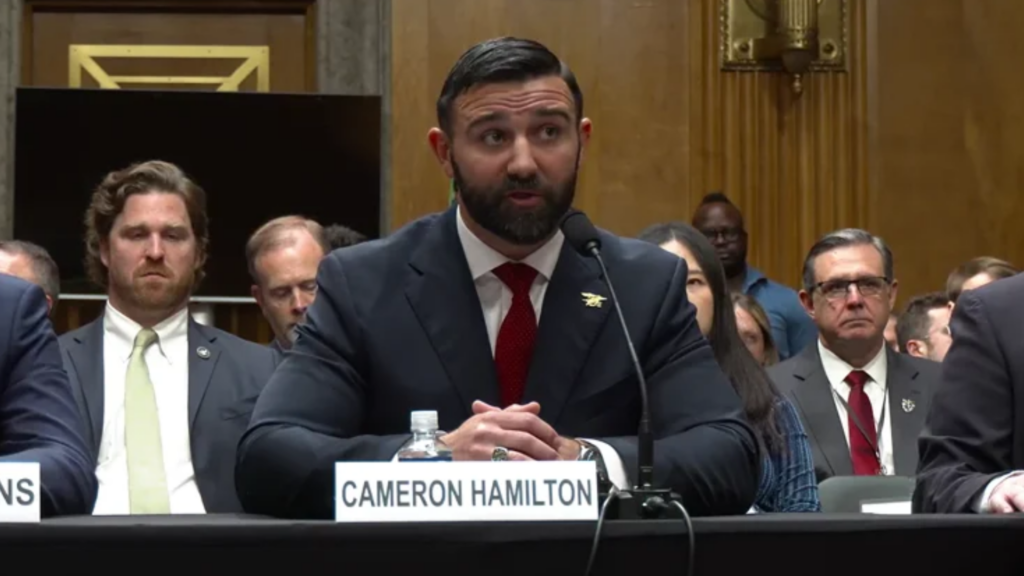
    Amid that risk, President Donald Trump’s nominee to take over a FEMA roiled by leadership changes throughout his administration, Cameron Hamilton, signaled a further shift of disaster response and recovery responsibilities to states at his nomination hearing before the Senate Homeland Security and Governmental Affairs Committee last week.

    “I think many states and local officials have had incentives to drive up costs [to be covered by the FEMA],” Hamilton, still a pending nominee but expected to be confirmed, told the committee, saying the agency needs to “strike a new balance to encourage cost reasonableness and cost savings.”

    The Appalachian Flood Resilience Coalition, a recently formed group of largely regional nonprofits, led by ReImagine Appalachia and the Appalachian Citizens’ Law Center, a nonprofit law firm that focuses on mine safety and environmental protection, had said in a news release prior to Hamilton‘s hearing it wanted to learn what he predicts FEMA’s role would be under him in supporting the buildup of state, local and tribal government capacity to respond to and recover from disasters.

    The coalition noted that a Trump-ordered FEMA Review Council report providing a full agency assessment released last month recommended that “internal workforce adjustments should be conducted over a 2-3 year phased approach that allows the agency to realize the efficiencies while reducing staff.“

    The FEMA Review Council report suggested proposed increasing cost thresholds used to evaluate the need for assistance for rebuilding public and nonprofit facilities to account for inflation.

    That report also noted the agency was managing more than 300,000 projects, namely subgrants, on over 600 open and active disasters, with roughly 25,000 open projects that had exceeded their regulatory or administrative timelines, representing more than $54.8 billion in unliquidated obligations.

    Evidence suggesting Trump ‘punish[ing]’ blue states

    ReImagine Appalachia’s study highlights a March 2026 Politico report offering evidence suggesting that Trump’s disaster declarations have been delayed or denied due to state-level political leadership.

    The report found Trump had rejected disaster aid for Democratic-run states at the highest rate in FEMA’s 47-year history, approving only 23% of disaster funding requests from states with a Democratic governor and two Democratic senators since returning to office in January 2025 while approving 89% of requests from states with a Republican governor and two Republican senators.

    “Given this stark data, what other conclusions can one draw other than the president is using federal disaster assistance to punish states that elect Democrats?” Sen. Gary Peters, the Homeland Security and Governmental Affairs Committee’s top-ranking Democrat, asked Hamilton during the panel’s hearing Wednesday referencing the Politico report.

    “If confirmed, my focus will be to ensure that FEMA is objective, is fair and reasonable, follows the law and is consistent in the approach to how we adjudicate claims and requests for disasters,” Hamilton told Peters.

    “[Y]ou still can’t answer questions about what happened while you were there,” Peters replied, alluding to Hamilton being FEMA’s acting administrator for part of 2025. “I don’t trust that that’s what you’re going to do because it didn’t seem like you did it when you were there before.”

    Hamilton’s nomination comes after Trump dismissed him as acting FEMA administrator last year the day after he testified to Congress that the agency shouldn’t be eliminated as previously proposed by Trump, whose administration has since backed off that stance.

    ‘We had to put more staffing in there’

    But FEMA’s responsiveness under Trump has been an issue in Republican-led West Virginia as well.

    A July 2025 Gazette-Mail investigation of years of FEMA records showed the agency’s rate of declaration approvals slowed significantly and its backlog of declaration requests from states and federally recognized tribes had doubled since Trump took office on Jan. 20, 2025.

    FEMA had slowed down in declaration approval frequency even compared with 2017, the first year of Trump’s first term, when the agency approved 31 declaration requests through July 13 — 24% more than it had at that point in 2025.

    FEMA denied a West Virginia request submitted June 20, 2025, for Public Assistance via an Emergency Declaration on July 22, according to a FEMA Daily Operations Briefing. FEMA approved a West Virginia Major Disaster Declaration for Individual Assistance for Marion and Ohio counties the same day, according to FEMA records — 33 days after the Morrisey administration submitted its request.

    Individual Assistance is a FEMA program that provides funds directly to eligible individuals and families. Public Assistance is a FEMA program that supports state and local governments and certain local nonprofits.

    The Governor’s Office has said West Virginia subsequently waited on a federal decision on a request the state submitted for Public Assistance on July 23 as an add-on to its request for a Major Disaster Declaration after a joint review between state and federal partners.

    On Sept. 11, 90 days after the June flooding hit northern West Virginia, Morrisey’s office announced Public Assistance had been approved for Marion and Ohio counties.

    West Virginia Department of Homeland Security Acting Secretary Doug Buffington told the Joint Legislative Flooding Committee in October that FEMA set up buildings and security on the ground in response to a February 2025 flood in southern West Virginia but didn’t do so following the June 2025 flood that hit Marion and Ohio counties, resulting in a greater operational burden on state officials.

    “So from flood one to flood two, we had to find the building to house FEMA, to house local officials to get information out,” Buffington told the committee. “We had to provide security. We had to put more staffing in there from the state.”

    Court finds ‘unlawful Executive encroachment’ under Trump

    ReImagine Appalachia noted in its report that FEMA grant obligations in West Virginia, Kentucky, Ohio and Pennsylvania plummeted from nearly $1.2 billion in 2024 to roughly $600 million in 2025.

    The group also highlighted an October 2025 analysis by Pew Charitable Trusts, a nonpartisan, global public policy research organization, that found that the highest year of federal aid West Virginia received in a study period spanning 2003 to 2025 would have cost 24.2% of the state’s reserves without federal support.

    The analysis drew from state-by-state data from the Carnegie Endowment for International Peace, a globally focused policy group in Washington, on a subset of federal disaster grants and from the National Association of State Budget Officers on state resources and spending,

    ReImagine Appalachia’s report flags the Trump administration’s obstruction of support for the Building Resilient Infrastructure and Communities program that makes federal funds available to states and local governments for hazard mitigation activities, including hardening utilities and relocating critical facilities out of flood areas.

    ReImagine Appalachia observed that a Trump administration move to block hundreds of millions of dollars in funding for the program nationwide “further jeopardized disaster resiliency efforts, leaving small communities more vulnerable to natural disasters at a time when they needed support most,” noting that affected flooding and dam or levee break projects throughout the region were those chiefly affected, accounting for over 88% of all obligated funds and totaling more than $74.2 million.

    The program known as BRIC has been revived after a December 2025 Massachusetts federal court order blocked its cancellation, finding the case to be “about unlawful Executive encroachment on the prerogative of Congress to appropriate funds for a specific and compelling purpose[.]”

    FEMA has published its Fiscal Years 2024-25 funding opportunity for BRIC, for which the submission deadline is July 23. But ReImagine Appalachia’s report states that communities have been left “in confusion and uncertainty” throughout the legal process allowing what were later found to be unlawful policies to stay in effect for long periods.

    Federal watchdog agency warns FEMA stretched too thin

    The FEMA personnel pool shrunk fell last year under the Trump administration’s initiative to slash the federal government workforce, falling 9.5% to 23,350 in a five-month period ending June 1, 2025, according to a September report from the U.S. Government Accountability Office, a federal watchdog agency that works for Congress.

    The Center for American Progress report notes that office’s finding that the agency had 710 open major disaster and emergency declarations still receiving some kind of federal support to begin last year’s hurricane season on June 1, 91 with support in the field — an increase from 495 open major disaster and emergency declarations in July 2022.

    “When new disasters hit and these staff are redeployed to respond to them, it diverts resources and potentially delays efforts on open disasters,” the office warned.

    FEMA claims it’s becoming ‘leaner’ and ‘faster’

    FEMA did not respond to a request for comment on the ReImagine Appalachia report. In response to the Center for American Progress report, a FEMA spokesperson said that FEMA and its parent agency, the Department of Homeland Security, are “ready for the 2026 hurricane season.”

    “We’re ensuring workforce stability and a strong, deployable force for upcoming national events and potential disasters; making the agency leaner, faster and laser-focused on supporting state, local, tribal and territorial partners before, during and after disasters,” the spokesperson said in an email. “FEMA continues to maintain a roster of experienced leadership and support staff across headquarters and regional offices, including through acting and career personnel serving in key roles to ensure continuity of operations and mission readiness.”

    Programs ReImagine Appalachia underlined as priorities for continued funding included BRIC, a FEMA flood hazard mapping and risk analysis program and emergency watershed and agricultural land conservation stewardship incentive programs, with the group noting that healthy soils act as a sponge to retain more water in drought scenarios and take in more water in flooding situations.

    “To build a truly flood-resilient region,” ReImagine Appalachia’s report concludes, “we must return to a model of robust, stable, and transparent federal investment.”

    Read more from HDMedia, here.

    The post New reports: WV at higher devastation risk under Trump decade after 2016 flood appeared first on West Virginia Press Association.

  • Civil rights group files motion to speed up Va.’s reform of voter registration process for ex-felons

    Civil rights group files motion to speed up Va.’s reform of voter registration process for ex-felons

    As thousands of Virginians with certain past felony convictions remain in a voting registration limbo, a civil rights group filed a motion on June 18 seeking an expedited remedy.

    The group accused election officials of violating a voting rights lawsuit previously won earlier this year.

    Some former felons, eligible to vote this summer, are in registration limbo

    The voting access issue stems from a series of 1870 laws called the Readmission Acts, which banned states from constitutionally disenfranchising people other than those convicted of crimes considered common law at the time.

    In Virginia, people with felony convictions lose their right to vote unless they successfully petition a governor for it to be restored or are pardoned — both subjective processes which haven’t always had clear guidelines.

    Virginia’s chapter of the American Civil Liberties Union argued in King v. O’Bannon that Virginians with a variety of felony convictions should have never lost their right to vote in the first place. A judge ruled in their favor earlier this year and ordered the state to comply by May.

    Attorney General Jay Jones then successfully sought an extension to June 1 so that the state could compile guidance for registrars and ascertain which modern-day felonies might bar someone from registering to vote.

    For instance, illegally using tear gas was included on a list of such crimes from Jones’ office, “even though tear gas was not invented in 1870,” ACLU attorney Eden Heilman said in an interview.

    While the legal organization “has serious questions” about how the lists were determined and whether eligible people will be able to vote this year, the group has tried for months to glean a better understanding from Jones’ office.

    Since June, registrars have been instructed to not fully process new voter registrations of people with felony convictions, according to documents obtained by The Mercury that are now exhibited in the new motion.

    In May, ACLU Virginia wrote a letter to Jones and Solicitor General Tillman Breckenridge asking why revisions to registration forms were not feasible for registrars, and for more details on challenges preventing the state from fully complying with the court order.

    The organization also asked for more clarity on conviction types that may require individualized review by Jones’ office.

    Breckenridge responded two days later to confirm receipt of the letter and end the conversation.

    “While we appreciate the information you’ve provided to us to this point, we do not believe further engagement on the topics in your letter would be constructive at this time,” he wrote.

    Heilman said that previous meetings with Jones’ office had not been successful.

    “It became clear that we were not making progress and had different understandings of what the court order was requiring,” she said.

    Jones’ office has not responded to requests for comment on the situation.

    With early voting for congressional primary elections underway, plaintiffs hope that the situation can be resolved before the Aug. 4 election so that eligible voters can participate.

    This fall, Virginia voters will also approve or reject a constitutional amendment that would allow all ex-felons the right to vote, so long as they have served their sentences.


    Outdated forms and web portals another hurdle


    The apparent lack of full compliance with King v. O’Bannon sparked a period of uncertainty for ex-felons in the state, Nolef Turns director Sheba Williams said. The nonprofit shares resources with formerly incarcerated people and advocates for ways to reduce recidivism.

    Voter registration applications question whether or not someone has committed a felony, which Williams said has confused formerly incarcerated people who want to cast a ballot. Many don’t know if they’re eligible or if they should answer the question or not, since it’s a crime to lie on applications.

    Northern Virginia resident Tati King, who’s been a lead plaintiff on the King v. O’Bannon case, claims that his registration was placed in limbo and as of the time of the motion filing on June 18, he was not yet able to vote.

    Fellow plaintiff Toni Heath Johnson, a Southwest Virginia resident, encountered the same “on hold” status.

    While in-person applicants were told their registrations won’t be processed right away, virtual applicants like Southwest Virginia resident Jared Rose relayed via lawyers that he could not proceed in the online process after clicking the felony conviction box.

    Rose is quoted in the filing saying he was “nervous” about additional prosecution if he didn’t indicate his past felony status despite being able to vote.

    “We’re in a pivotal moment where we have been seeing trust in our courts be eroded,” Williams said. “Virignia has an opportunity to restore faith by upholding the ruling of Judge (John) Gibney.”

    Gibney ruled that Virginia can’t take away someone’s voting rights, except for specific common law felonies from 1870. Those are arson, burglary, escape and rescue from a prison or jail, manslaughter, mayhem, murder, rape, robbery, sodomy and suicide.

    As part of their motion to enforce, ACLU suggests forms be amended to ask “only whether the applicant had been convicted of an offense corresponding to one of the 11 common law felonies set forth in the final order.”

    For now, the state has 14 days from the June 18 filing of the motion to respond.

  • Lawmakers weigh merging Northern Virginia transit agencies to cut costs

    Lawmakers weigh merging Northern Virginia transit agencies to cut costs

    Virginia lawmakers want to examine consolidating Northern Virginia’s transit agencies to assess potential cost savings and service improvements.

    The proposal, which is included in the two-year budget lawmakers passed Monday, directs the Department of Rail and Public Transportation to include in its report not only the cost savings and long-term financial impacts of merging multiple systems, but also how potential changes would affect riders through fare structures, service reliability and accessibility.

    The transportation study emerged as legislators work to avoid a shutdown and finalize a two-year spending plan ahead of the July 1 deadline, which includes state funds for the Washington Metropolitan Area Transit Authority, or Metro.

    The outcome of the study could reshape transit for four agencies — DASH Alexandria Transit, Fairfax Connector, ART Arlington Transit, and CUE Fairfax City — by identifying potential efficiencies and improvements through consolidation.

    On Monday, Senate Majority Leader Scott Surovell, D-Fairfax, stressed that merging transit systems could eliminate redundant operations and boost efficiency, similarly to a widespread, unified system that existed in previous decades.

    He argued that the current fragmentation hinders the delivery of better services and responsible spending.

    “In this budget, we are asking taxpayers to step up and provide more funding to WMATA, and I think as we do that, it’s important that we demand that WMATA and other transit agencies in Northern Virginia try to do business more efficiently,” said Surovell.

    He said that in Northern Virginia, every locality has its own bus system, which he calls “incredibly inefficient,” with multiple garages, purchasing systems, fare systems and contracts with different operators.

    “Before 1980, all these services were operated under WMATA as one sole entity,” he said, “and I think we need to look at a way that we can make these systems more efficient, so we don’t have to keep revisiting how to fund them every seven years.”

    The agency must also gather rider and community input, assess the potential effects of any consolidation on public access and daily transportation options and examine similar changes in other regions and states to inform the public about possible impacts.

    The proposed study aligns with broader efforts by area leaders to support the region’s transit network.

    At the culmination of their work, regional leaders encouraged Virginia, Maryland, and Washington, D.C. to contribute to a $460 million new capital funding package starting in fiscal year 2028, which aims to stabilize service, support investments and provide budget certainty for all three jurisdictions.

    Virginia also created a committee that urged the General Assembly to consider “net new” revenue sources, avoid reductions in current transportation funding or the use of existing transportation funding and minimize impacts on low-income Virginians.

    In response, lawmakers proposed allocating $153 million in the budget for additional operating assistance for Metro. It also requires Metro to produce a 20-year capital plan and annual performance reports.

    Metro and other public transit services in Northern Virginia could also generate funding through a plan that would allow localities to use a 1% sales tax to pay for transportation projects that address the region’s public transit needs.

    If the study language remains in the budget after the governor’s review, a report is due to the Chairs of the Senate and House Transportation Committees by Dec. 15.

    Lawmakers are scheduled to return to finalize the budget on Monday, after Gov. Abigail Spanberger examines it.

  • Trump changes pregnancy-prevention program to promote childbearing

    Trump changes pregnancy-prevention program to promote childbearing

    A federal poverty-fighting program focused on reducing unintended pregnancies is about to undergo a major overhaul.

    Reproductive health clinics use Title X federal grant money to provide birth control, cancer screenings and testing and treatment for sexually transmitted infections to people with little or no health insurance. Title X money cannot be used for abortions.

    The Guttmacher Institute estimates that Title X, which was signed into law by Republican President Richard Nixon in 1970, has prevented almost 20 million unintended pregnancies and 9 million abortions. It has also helped reduce child poverty, according to the group, which supports abortion rights.

    But President Donald Trump has taken aim at the program, which has long been a target for abortion opponents. Since regaining the White House, Trump has temporarily blocked and then restored grants to certain reproductive health clinics, and proposed a U.S. Department of Health and Human Services budget with no funding for the program.

    The department’s recently issued funding guidelines for Title X grants represent a significant mission shift.

    Instead of expanding access to contraception, the focus of Title X will be “to strengthen family formation and assist clients in achieving healthy pregnancies,” according to the new guidance. That will align the program with the administration’s efforts to increase the U.S. birth rate.

    The new rules say Title X will prioritize educating Americans about natural methods to avoid pregnancy and overcome infertility, and will promote “body literacy education” and “informed, preventive, and restorative approaches to reproductive health.” Some conservative groups tout an obscure alternative treatment for infertility called “restorative reproductive medicine,” which is based on the idea that the underlying causes of infertility can be treated through lifestyle changes and improving a person’s overall health.

    The guidance directs Title X clinics to promote “fertility-awareness-based methods,” such as period-tracking apps, which the American College of Obstetricians and Gynecologists says can be helpful for getting pregnant but less effective at preventing pregnancy. It also calls on clinics to offer counseling on male fertility issues and to address environmental causes of infertility, including pornography use. And it includes a prohibition on DEI efforts and warns grantees that federal money cannot be used to “facilitate or incentivize illegal immigration.”

    Anti-abortion groups support the changes, but many health policy researchers say they will disproportionately harm low-income and minority women, who are more reliant on Title X services and are more likely to have unintended pregnancies. Researchers also say the new guidelines are unlikely to achieve the administration’s “pronatalist” goal of reversing declining birth rates.

    Corinne Rocca, an epidemiology professor at the University of California, San Francisco, said the way to do that would be to spend more on childcare subsidies and other social programs to help new parents.

    “Policies that help people and families feel supported to meet their childbearing preferences … would actually help people who are open to the prospect of childbearing to do so,” Rocca said.

    Rocca co-authored a study published in JAMA Network Open last fall suggesting Black and Hispanic women are less likely than other racial groups to be able to choose if, when and how to start a family.

    Clinics must reapply for funding under these new guidelines by Jan. 9, 2027. HHS did not respond to a request for comment.

    During his first term, Trump banned Title X clinics from referring patients to other providers for an abortion or even mentioning it as an option. He also prohibited grantees from offering family planning services and abortions in the same building. As a result, many grantees quit the program, including about a dozen state health departments and all participating Planned Parenthood chapters.

    The program served about 844,000 fewer patients in 2019 than it did in 2018, when it served 3.9 million patients, according to HHS. About 225,000 fewer patients received oral contraceptives; about 50,000 fewer received hormonal implants; and about 86,000 fewer received IUDs.

    The reframing of Title X that is reflected in the new guidelines was a recommendation laid out in the controversial blueprint known as Project 2025, created by the conservative think tank Heritage Foundation as a guide for the second Trump administration.

    In line with Project 2025’s recommendations, HHS says Title X grantees will no longer be required to counsel or refer for abortions, and tells applicants that relationship counseling should encourage marriage as a precursor to having children.

    “In a time when we are facing a rapidly declining birth rate that falls far short of the replacement fertility rate, we should be doing all we can to encourage and support family formation and fertility,” Dr. Christina Francis, CEO of the American Association of Pro-Life Obstetricians and Gynecologists, told MedPage Today in April.

    “Women deserve accurate information about their fertility and their health — and this includes highlighting the many benefits of pregnancy and motherhood.”

    Some abortion opponents have criticized Title X for promoting certain forms of contraception, such as IUDs, that they view as abortifacients. A spokesperson for the National Right to Life Committee said the organization does not take a stance on contraception that prevents fertilization, “however, National Right to Life does oppose any device or drug that would destroy a life already created at fertilization.”

    “If there is any doubt, we recommend that a woman speak with her doctor to determine if an agent would cause an abortion,” the spokesperson said in an email.

    But Leonard Lopoo, a professor at the Maxwell School of Citizenship and Public Affairs at Syracuse University who has studied fertility and family policies for the past three decades, said the federal government could help families achieve their family planning goals by expanding pregnancy prevention and infertility treatments at all income levels.

    “When you’re trying to take away the funding for someone who doesn’t want to have a child, that’s not the same as providing funding to support someone who does,” Lopoo said.

    As a Black woman and researcher focused on Black maternal health at Ibis Reproductive Health, Terri-Ann Thompson is better informed than most on the ways having children can be disproportionately more dangerous and less affordable for women who look like her.

    But she says what she wasn’t expecting to uncover — during research for a study she co-authored in the journal Frontiers in Public Health this spring — is how much the fear of negative medical and criminal justice outcomes makes many Black women in Georgia and North Carolina scared of pregnancy.

    “I was very surprised to see that folks were actually thinking about the context within which a Black child is born and raised well before they even contemplated starting a family,” Thompson said. “We had a lot of, just, stories of folks saying, ‘Why would I want to bring a child into this context; how does one prepare Black women to bring a child into this context?’”

    Thompson said her team’s findings show how much Black women depend on low-cost access to long-acting reversible contraceptives such as IUDs.

    “We have people who drove very, very far just to get a sliding scale to either get an IUD placed, an IUD removed, or to even get on birth control pills,” Thompson said.

    “If the administration moves forward with these restrictions, what we are doing is we are removing access to contraceptives for a population that is at higher risk.”

    Stateline reporter Sofia Resnick can be reached at [email protected].

    This story was originally produced by Stateline, which is part of States Newsroom, a nonprofit news network which includes Virginia Mercury, and is supported by grants and a coalition of donors as a 501c(3) public charity.

  • Virginia legislators advance $205 billion budget including new tax on data centers

    Virginia legislators advance $205 billion budget including new tax on data centers

    On Monday, Virginia legislators approved a two-year, $205 billion budget proposal to fund healthcare and public education, provide 4% teacher raises and a 3.5% pay bump to state employees, establish a retail weed marketplace and hedge against decreased federal dollars.

    The spending plan also includes a provision to tax data centers for their energy consumption, which is slated to generate a maximum of $600 million each year but doesn’t include the environmental standards the House of Delegates wanted to impose on the industry or the end of the sales tax exemption that the Senate sought.

    Senate Finance Committee chair Louise Lucas, D-Portsmouth, said after her chamber’s morning session that she “didn’t love” the data center compromise and framed it as a necessity — but not the final solution.

    “I would have preferred another method, but we had to get a budget. We were not going to let the government be shut down, and so this was a good start,” Lucas said.

    “This is a compromise proposal — one my administration helped craft — and it builds a strong foundation for further discussions about the future of this industry in Virginia on issues like environmental and community impact,” Gov. Abigail Spanberger said of the data center provision in a statement.

    The Senate passed the budget proposal 23-16 vote, while the House advanced it 71-22.

    With both chambers finally on the same page after months of gridlock over data centers, the plan will now be reviewed by Spanberger. She can sign it as-is, recommend changes or veto line items. The whole process must be finalized by July 1, when the new budget will take effect.

    Here are the key priorities addressed by the spending plan.


    Data centers


    The amended budget proposal creates an energy consumption tax for data centers which totals $.011 per kilowatt hour used per month.

    The state will collect up to $600 million a year from this new tax, according to budget language. Any funds collected over that cap would be put into a fund and given back to data centers at the end of each fiscal year.

    This is only a fraction of what the state could have made if they had ended the sales and use tax exemption, but, after months of arguing, lawmakers ultimately didn’t agree to that measure. Spanberger supported keeping the exemption in place through the end of the agreement’s term in 2035.

    Additionally, language was put into the budget to direct the Department of Environmental Quality to study the groundwater impacts of non-closed loop data centers, which use millions of gallons of water each year.

    DEQ will locate “cooling water scarcity areas” where the use of potable water for computer cooling systems could be detrimental to surrounding areas’ water quality and availability.

    The department will have until July 2027 to create regulations for the scarcity areas. After they are developed, future data centers in that area will be required to “use air cooling, closed loop cooling systems, or more efficient cooling systems that become available.”

    After July 1, 2027, data centers in the Eastern Groundwater Management Area will have to “use air cooling systems, 100% recycled water and/or stormwater for cooling, or use a closed loop system.” A study will be released in October 2026 on how to retrofit existing data centers in those areas to align with the new regulations.

    Some Republican lawmakers characterized the measure as inconsistent.

    “The budget does not create one strong statewide water usage standard for data centers. Some parts of Virginia get stronger protections and other parts get weaker protection or no protection at all,” said Sen. Glen Sturtevant, R-Chesterfield. “That should concern every locality that is concerned about becoming the next target for a massive data center.”

    Senate budget proposal keeps data center sales tax exemption, adds new tax for industry

    Budget language also directs DEQ to put in place noise abatement regulations for data centers before the end of 2029. The department will determine the lowest possible noise level for data centers and make it the standard starting in 2030.

    After that date, facilities who violate the noise standard will face a fine of $32,500 per day.

    “The noise issues are some of the things we hear the most from people that live next to data centers,” said Sen. Scott Surovell, D-Fairfax, whose district contains dozens of data centers. “Water is a rising concern, especially for any data centers that are gonna be put east of I-95, where we already have a real problem with our declining aquifer.”

    Lucas told reporters that this is not the end of the conversation about doing away with the sales and use tax exemption, and that a study group will look closer at the issue and provide a report on their findings in November.


    Health and human services


    Overall, the pending budget will earmark $158.3 million in the state’s general fund for fiscal year 2027 and $245.1 million in 2028 for healthcare and social services.

    The money was set aside both for healthcare and social services the state typically handles along with support to comply with new federal mandates and partially plug holes created by federal funding shortfalls.

    As thousands of Virginians have fallen off Affordable Care Act health insurance this year, Virginia’s new budget entails $150 million to support a state-level version of the expired federal assistance for people between 138% and 250% of the federal poverty level.

    Sen. Danica Roem, D-Manassas, a former journalist and restaurant worker, described the difficulty of living uninsured for two years in a floor speech on Monday.

    “I don’t want anyone to live like that,” she said.

    She added that the budget “puts major money” into making sure that the state is “taking care” of people.

    Sen. Danica Roem, D-Prince William, speaks on the Senate floor during the special budget session on June 22, 2026. (Photo by Charlotte Rene Woods/Virginia Mercury)

    The plan calls for $3.5 million to determine ways the state can ensure eligible people remain on Medicaid amid forthcoming eligibility requirement shifts and additional verification work.

    Virginia’s roughly 850,000 Supplemental Nutrition Assistance Program beneficiaries went without their food stamps last fall during the federal shutdown. And due to a reconciliation bill Congress passed last summer, states like Virginia are attempting to reduce their error rates.

    State lawmakers have designated $135 million to handle SNAP, should the error rate not fall to the required 6% by the end of the calendar year.

    Sometimes SNAP households are overpaid or underpaid because of paperwork mistakes by government staff or outdated information from beneficiaries. Work in social service departments is already underway to reduce error rates.

    Free clinics will receive $20 million in state funding over the next two years while federally qualified health centers will get $10 million in that time.

    While federally qualified health centers offer sliding scale fees for low-income patients, free clinics are also a resource for uninsured patients. Both entities have been bracing for additional clients as Virginians lose their ACA or Medicaid insurance.

    A little over $1 million is allocated to help local health departments statewide handle rent increases. The regional centers help fill healthcare access gaps and are often tailored to the local communities they serve.

    As federal dollars for HIV/AIDS care are slashed, the state budget also contains over $26 million for that specific type of healthcare over the next two years. Staying on top of medication is critical in preventing the spread of the disease.


    Education


    Under the newly approved budget proposal, K-12 education funding would increase by $1.4 billion, including a 4% increase for teachers in each of the next two years.

    Lawmakers propose $590 million for rebenchmarking, declining enrollment, and high-need groups, including $28.9 million for at-risk and $148.4 million for special education students.

    Also included: $500,000 for grants to help schools purchase Automated External Defibrillators (AEDs) and implement cardiac emergency response plans.

    In higher education, the budget proposes restoring funding for affordable access and tuition moderation, as well as expanding nursing programs at several public universities. The Internships Virginia (InVA) initiative to provide paid internships for postsecondary students would also be funded.

    Virginia localities raise $119M for school construction through targeted sales tax

    To support educational infrastructure, lawmakers also agreed to expand the authority to allow all localities to use a 1% sales tax to pay for construction costs, contingent on a referendum that must pass in each jurisdiction. The language also permits jurisdictions in Northern Virginia to use the funds for transportation projects to address public transit needs.


    Tax deductions


    Taxpayers will be able to keep a bit more of their cash, as the new budget increases the standard income tax deduction from $8,750 for single filers and $17,500 for joint filers to $9,200 and $18,400 in 2027 and $9,300 and $18,600 in 2028.


    RGGI/environment


    A budget amendment was added into the conference report that would divert 45% of the funds earned from the Regional Greenhouse Gas Initiative back to ratepayers.

    The funds come from carbon credit sales, which utilities must purchase if they want to burn carbon-based fuels sources that release emissions. Those costs are then passed down to utility customers.

    When former Gov. Glenn Youngkin removed the state from the agreement in 2021, it cost about $4 a month on the average residential customer’s bill. Recently, Dominion Energy filed for the “RGGI Rider” to be added back to monthly bills as mandated by a law to rejoin the agreement, signed by Spanberger in recent weeks.

    Dominion is required to begin purchasing from the carbon credit auction in July but the charge to customers won’t begin until March should the State Corporation Commission approve the application by the utility. This will lead to an increased charge of $10-$13 monthly.

    The state previously earned about $800 million from the RGGI funds that had to go towards community flood preparedness projects and low-income energy efficiency projects. The new budget language includes the rebate for customers, which would put money back in wallets but detract from the funds for flood and efficiency projects.

    The rebate will not apply to co-op utility customers.


    Housing


    While a handful of housing bills passed the 2026 session and have since been signed into law, the new spending plan includes measures to ensure bills with fiscal impacts get off the ground.

    The state budget proposal directs $60 million overall for housing initiatives, $40 million of which will go to the state’s Housing Trust Fund and $20 million that will go towards a mixed-income housing pilot program.

    Additionally, lawmakers set aside $11.5 million for the Virginia Eviction Reduction Program and $10 million for the Clean Energy Innovation Bank.


    Cannabis


    Spanberger and lawmakers announced June 16 a reworked proposal for a retail cannabis marketplace that included key compromises between legislators’ and the governor’s visions. The marketplace is set to launch July 1, 2027 and will be limited to 350 stores statewide.

    Spanberger, legislators roll out retail weed plan, set to launch in July 2027

    State sales tax on retail weed will be 6% at launch and will increase to 8% in 2029. Localities also have the option to add an additional tax of 1 to 3.5%.

    Because lawmakers added a Part 5 amendment, the market will be permanently established in the state.

    The new framework includes a $250 public consumption civil penalty that will not take effect until 2027.

    “We had serious concerns about creating extreme new penalties that would not have meaningfully reduced the illicit market,” Sen. Lashrecse Aird, D-Henrico, said at a press conference announcing the framework last week.

    “But we believe this final framework strikes the right balance for enforcement mechanisms, but also in accountability, but also not harming those who just choose to participate in the market.”


    Child care


    The budget sets aside $137.6 million for the state-subsidized child care program slots, which will be devoted to families making 85% or less of the state median income.

    This follows legislation carried by Del. Briana Sewell, D-Prince Wiliam, requiring the state education department to update how it calculates the cost of childcare for Virginia families. A majority of Virginia parents and employers say child care costs are prohibitive.

    Spanberger signed the bill into law last month.

    A new cost-sharing program for child care will be funded through the budget, with lawmakers allocating $25 million for the initiative to spread the price of child care between families, employers and the state.


    Transportation


    Lawmakers included $153 million in the budget for additional operating assistance for the Washington Metropolitan Area Transit Authority, or Metro, with the caveat that Metro must produce a 20-year capital plan and annual performance reports.

    The action comes as inflation has driven up the costs of operating transit services.

    Lawmakers also proposed directing the secretary of transportation to evaluate options, including public-private partnerships, to accelerate large-scale improvements to the I-81 corridor.

    The legislature allocated $7 million for the Route 460 Phase IIA Finish Grade Project and directed stakeholder engagement to prioritize improvements along the U.S. Route 220 corridor.

    The budget also directs the state to identify federal funds to support rural electric-vehicle charging infrastructure and provides $500,000 to continue developing Advanced Air Aviation Test Sites to enable advanced air mobility.


    What’s next


    The proposal will now head to Spanberger, who said it contained “a lot to be proud of” in a Monday afternoon statement.

    “Today, the General Assembly has moved forward with a budget proposal — and that means we are keeping our government open and delivering for the 8.8 million people who call our Commonwealth home,” she added.

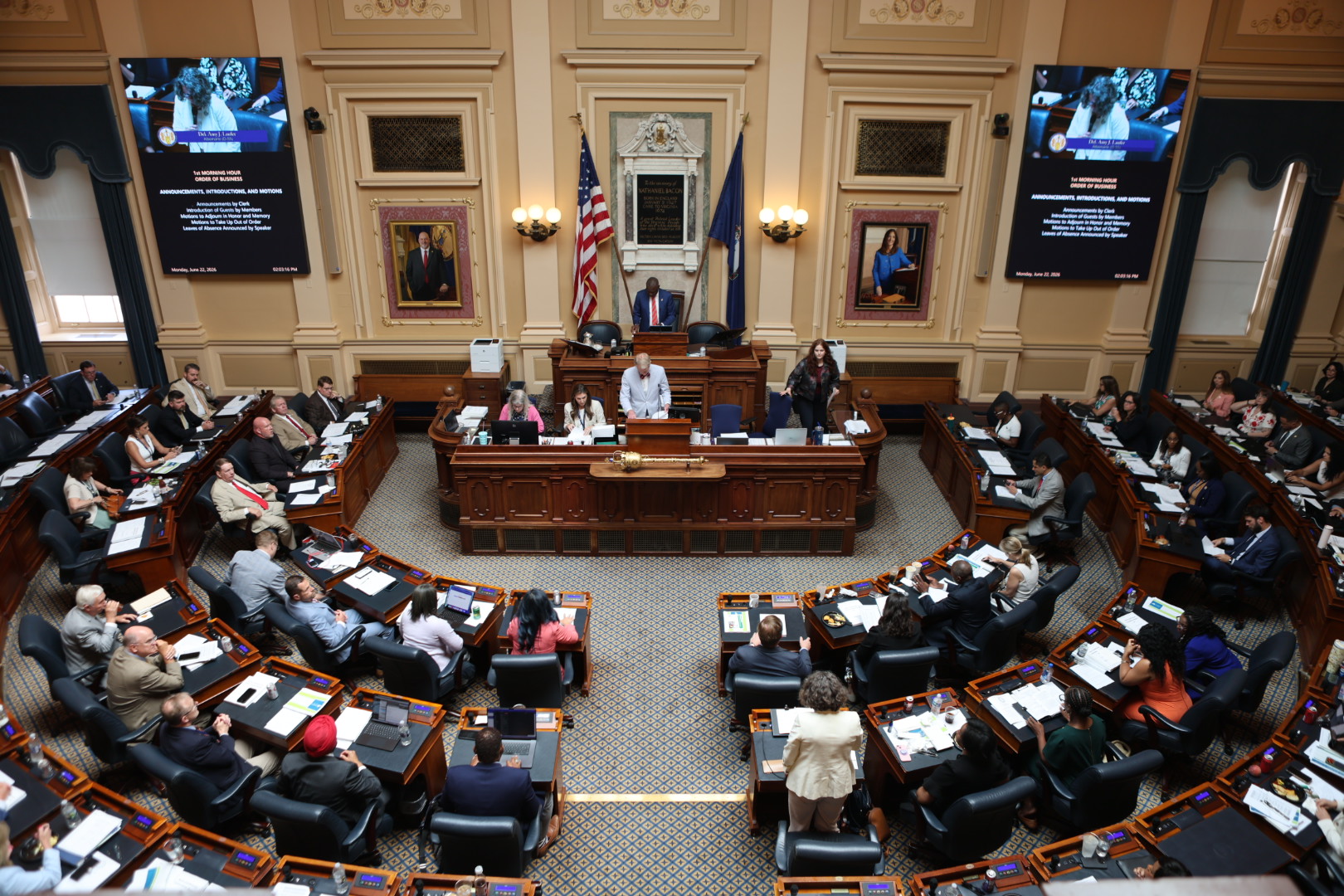
    A view from inside the Virginia House of Delegates chamber on June 22, 2026. (Photo by Nathaniel Cline/Virginia Mercury)
  • Trump ‘trampled’ voter privacy by feeding info into Homeland Security system, judge says

    Trump ‘trampled’ voter privacy by feeding info into Homeland Security system, judge says

    The Trump administration illegally overhauled a U.S. Department of Homeland Security computer program in its hunt for noncitizen voters, a judge ruled Monday in a stinging decision that laid into federal officials for violating the privacy of millions of Americans.

    The ruling struck at the core of President Donald Trump’s project to assert authority over state-run elections ahead of the November midterms. Under Trump’s control, the executive branch has spent the past year attempting to obtain state voter rolls to feed into the computer program, called Systematic Alien Verification for Entitlements, or SAVE.

    U.S. District Judge Sparkle Sooknanan, a President Joe Biden appointee for a district court based in Washington, D.C., condemned the Trump administration’s behavior over 75 pages and vacated a series of notices Homeland Security had published to implement the computer program.

    “All in all, the federal government has knowingly trampled on the privacy rights of American citizens in a manner that threatens the sacred right to vote,” Sooknanan wrote. “This Court cannot stand idly by while that happens.”

    Sooknanan’s decision, if upheld, could hamper the administration’s ability to implement an executive order aimed at restricting voting by mail. The order requires Homeland Security to compile lists of voting-age citizens in each state using information from SAVE, along with other federal databases.

    Homeland Security has long operated SAVE, but prior to the second Trump administration it was primarily a tool to check whether individual immigrants were eligible for various government benefits. Last year, the agency reconfigured SAVE to allow for simultaneous searches of millions of names and allowed states to upload their voter rolls for the purpose of identifying possible noncitizens.

    While some Republican-led states took Homeland Security up on the offer, most states have resisted demands to turn over their voter rolls to the Trump administration. In turn, the U.S. Department of Justice has sued 30 states for unredacted copies of their voter rolls, including sensitive personal data such as driver’s license and Social Security numbers.

    The Justice Department has been unsuccessful in forcing states to provide the information. DOJ attorneys have indicated that any data would be shared with Homeland Security for analysis by SAVE.

    “It’s amazing how hard the Left will fight to stop us from solving problems they insist do not exist. Judge Sparkle Soknanan’s latest ruling preventing DHS from addressing alien voting is just the latest example!” Homeland Security General Counsel James Percival wrote on social media.

    If Homeland Security appeals the decision, federal officials face a shrinking window to restore their ability to use SAVE before the midterms. Federal law prohibits sweeping purges of voters less than 90 days before federal elections — in this case early August ahead of November.

    Pamela Smith, president and CEO of Verified Voting, a group that advocates for the “responsible use of technology in elections,” acknowledged election officials are in a moment of uncertainty.

    “The closer we get to the midterms, it raises your blood pressure,” Smith said in an interview. “But I think most people are (saying), ‘well, we just have to wait and see.’”

    Concerns from Dems, voting groups

    Democrats and voting rights groups have warned about the dangers of SAVE, saying it makes errors and has wrongly flagged citizens. They hailed Monday’s decision as a victory for voters.

    “Efforts to create a federal voter database to facilitate voter purges threaten the fundamental right at the heart of our democracy,” Marcia Johnson, chief of activation and justice for the League of Women Voters, said in a statement.

    Sooknanan came to a similar conclusion in her decision, writing that federal agencies “haphazardly combined and repurposed the private information of millions of Americans, including citizenship data that they knew to be unreliable.”

    The judge pointed to sworn declarations by four naturalized citizens that Texas had threatened to revoke their voter registrations because of inaccurate Social Security data contained in the SAVE system. At least three citizens had their registrations revoked for at least some time.

    The Trump administration didn’t dispute the sworn testimony, Sooknanan noted. The administration also didn’t contest, she wrote, the findings of an independent investigation that found that 25% of possible noncitizens identified by SAVE in Travis County, Texas, which includes Austin, were people who had already proven their U.S. citizenship.

    The judge’s ruling came in a lawsuit filed against Homeland Security and other federal agencies last September by the League of Women Voters and the Electronic Privacy Information Center that challenged the repurposed SAVE system.

    “As the Trump-Vance administration continues its attack on the right to vote, this is an important victory for the American people and our democracy,” Skye Perryman, president and CEO of Democracy Forward, said in a statement.

    Democracy Forward Foundation, along with Citizens for Responsibility and Ethics in Washington and Fair Elections Center, represented the groups challenging the directive.

    Three violations

    The SAVE system violated federal law in three primary ways, Sooknanan wrote.

    First, it breached a ban on the Social Security Administration against disclosing Social Security numbers and related records. Second, it violated the federal Privacy Act, which restricts how the federal government shares information. And third, it violated the federal Administrative Procedure Act, which governs how federal agencies set policy.

    The record in the lawsuit “shows that the federal agencies that created this database knew that the database violates those statutory protections,” the judge wrote.

    Decision preempted expansion

    Before Monday’s decision, the agency was planning to expand the use of SAVE.

    CNN reported hours earlier that the agency later this summer planned to require states to run their voter rolls through SAVE as a condition of receiving full homeland security grant funding.

    Under the planned changes, states could also lose at least some funding if they don’t offer plans to move voting toward hand-marked paper ballots. Those changes could affect all voters in Delaware, Georgia, Louisiana, New Jersey, Nevada and South Carolina, nearly all voters in Arkansas and Indiana, and roughly two-thirds of voters in Tennessee, according to data from Verified Voting.

    Homeland Security didn’t dispute the report when asked about it by States Newsroom. In a statement, the department emphasized Secretary Markwayne Mullin’s focus on election security.

    “Under President Trump and Secretary Mullin, DHS and FEMA are committed to ensuring homeland security grant funding advances core national security priorities, to include the security and integrity of our nation’s election infrastructure,” the statement says, referring to the Federal Emergency Management Agency, an agency within Homeland Security.

    “Any recipient of federal funding should expect accountability for how taxpayer dollars are spent.”

  • Moving West Virginia Forward: Leadership West Virginia continues work to inspire love for the Mountain State

    Moving West Virginia Forward: Leadership West Virginia continues work to inspire love for the Mountain State

    By Steven Allen Adams
    For The Parkersburg News and Sentinel

    Leadership West Virginia continues work to inspire love for the Mountain State

    Lansing – Nearly 60 men and women from across West Virginia gathered just a mile from the New River Gorge Bridge before the state’s 163rd birthday for a multi-week program aimed at instilling in them a love for their state and a fire to spread the word to others.

    This year’s Leadership West Virginia (LWV) class wrapped up their second two-day session Friday at Adventures on the Gorge in Lansing, Fayette County.

    LWV’s June session always takes place in the heart of West Virginia’s outdoor recreation economy, home to the newest national park – the New River Gorge National Park and Preserve. The region is filled with multiple opportunities to camp, go white water rafting, hiking, climbing, zip lining and other outdoor activities.

    While the Huntington session serves as the kickoff for each new LWV class, the New River Gorge session is often described by past class members where they really got to know their fellow classmates better and where their love for West Virginia grew by leaps and bounds.

    Last year saw a changing of the guard for LWV, with Jen Willits (LWV Class of 2018) becoming the organization’s next executive director, succeeding Pam Ferris who retired in March 2025 after helming LWV for 20 years. Willits is a former financial services executive.

    “The organization had such a strong foundation in terms of how it’s brought people together and the connections,” Willits said. “We’re just really excited about the future of the organization in terms of really looking at our curriculum, in terms of strengthening it, to make sure we’re staying relevant … and just making sure that the program continues to be the place that people can come together and have the difficult conversations and have those face-to-face interactions that are so important to keep moving West Virginia forward.”

    Jessica Robinson, a former educator and LWV Class of 2023 alumna, joined Willits one month later to serve as deputy director, succeeding Kate Reed in that role.

    “I think that after going through the program myself in 2023, I think what made it so special is that it is a unique opportunity for learning and connecting that you can’t usually get as an adult,” Robinson said. “I don’t think that there is any other opportunity in the state where you can really get to know people, get to know West Virginia’s issues, and come together to form solutions with people from all over the state … That’s the type of thing that is going to move West Virginia forward.”

    Willits and Robinson have spent the last two years working to keep LWV doing what it does best while also changing the curriculum to keep things fresh. They have also worked aggressively to keep LWV alumni engaged in the organization, with plans for additional events and gatherings. LWV alumni and class members can now show off their LWV pride through a merchandise store.

    Each LWV class is diverse in race, gender and employment backgrounds. The organization, a program of the West Virginia Chamber of Commerce, attracts company CEOs, entrepreneurs, attorneys, marketing professionals, non-profit directors, healthcare leaders, West Virginia National Guard officers, architects, bankers and educators. Even a news reporter (the author of this article was part of the LWV Class of 2023).

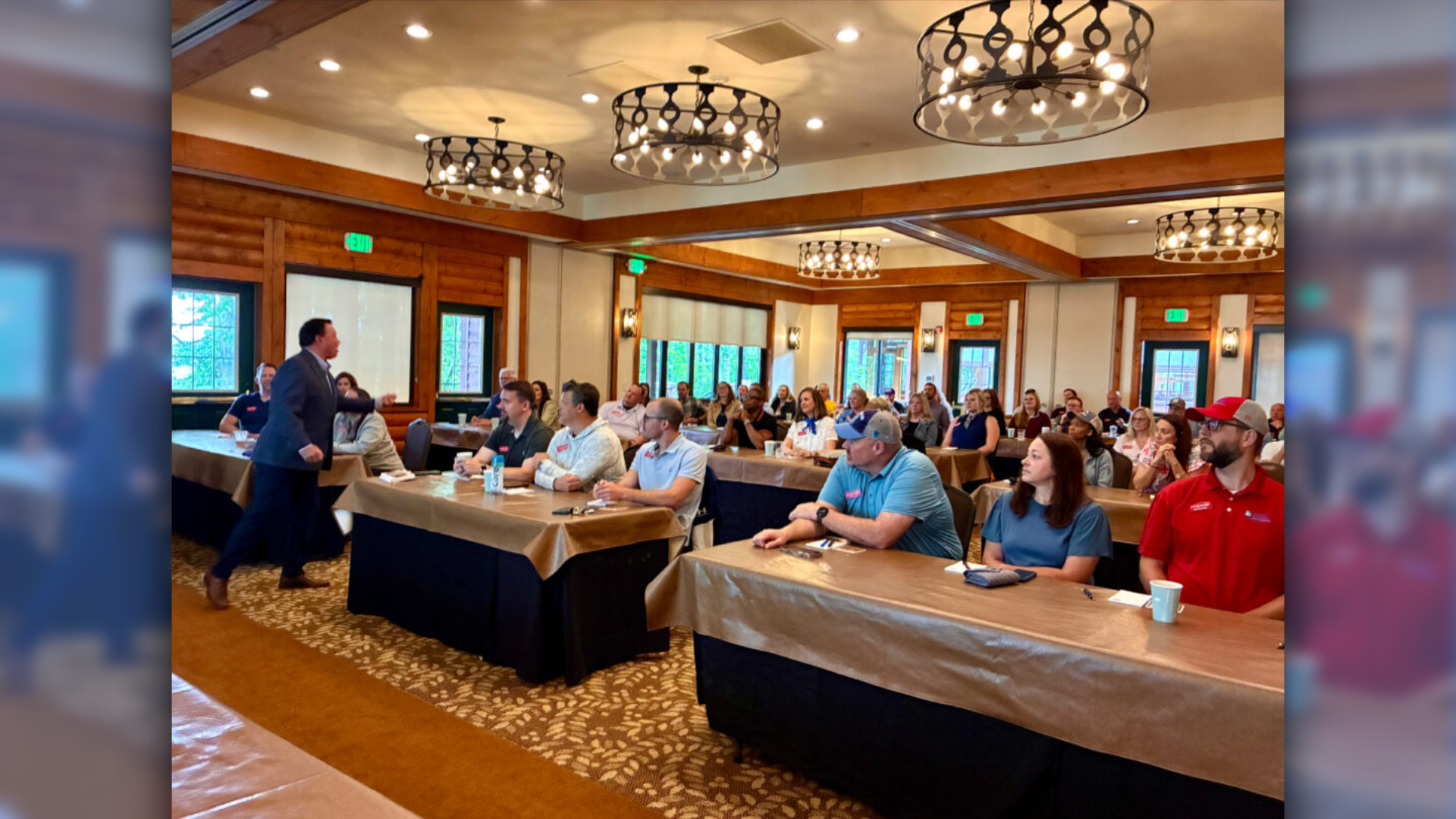
    Photo by Steven Allen Adams | Jim Strawn, owner and president of Jim Strawn and Company, gives a presentation Friday to members of the 2026 class of Leadership West Virginia on public speaking at Adventures on the Gorge.

    The goal of LWV is to train up leaders to help improve West Virginia for years and decades to come; to “move West Virginia forward.” LWV began in 1991 and 35 years later has more than 1,700 alumni all across West Virginia.

    Class members travel to different regions of West Virginia over a seven-week period between May and November. Each session focuses on a different subject, such as education, healthcare, tourism, the judiciary, energy and manufacturing, and the legislative process.

    While learning from experts on these various topics, LWV class members also learn about the success stories in different regions of the state, the challenges facing these areas and the state as a whole, and how to address those challenges. LWV class members also take part in service projects in the communities they visit each week.

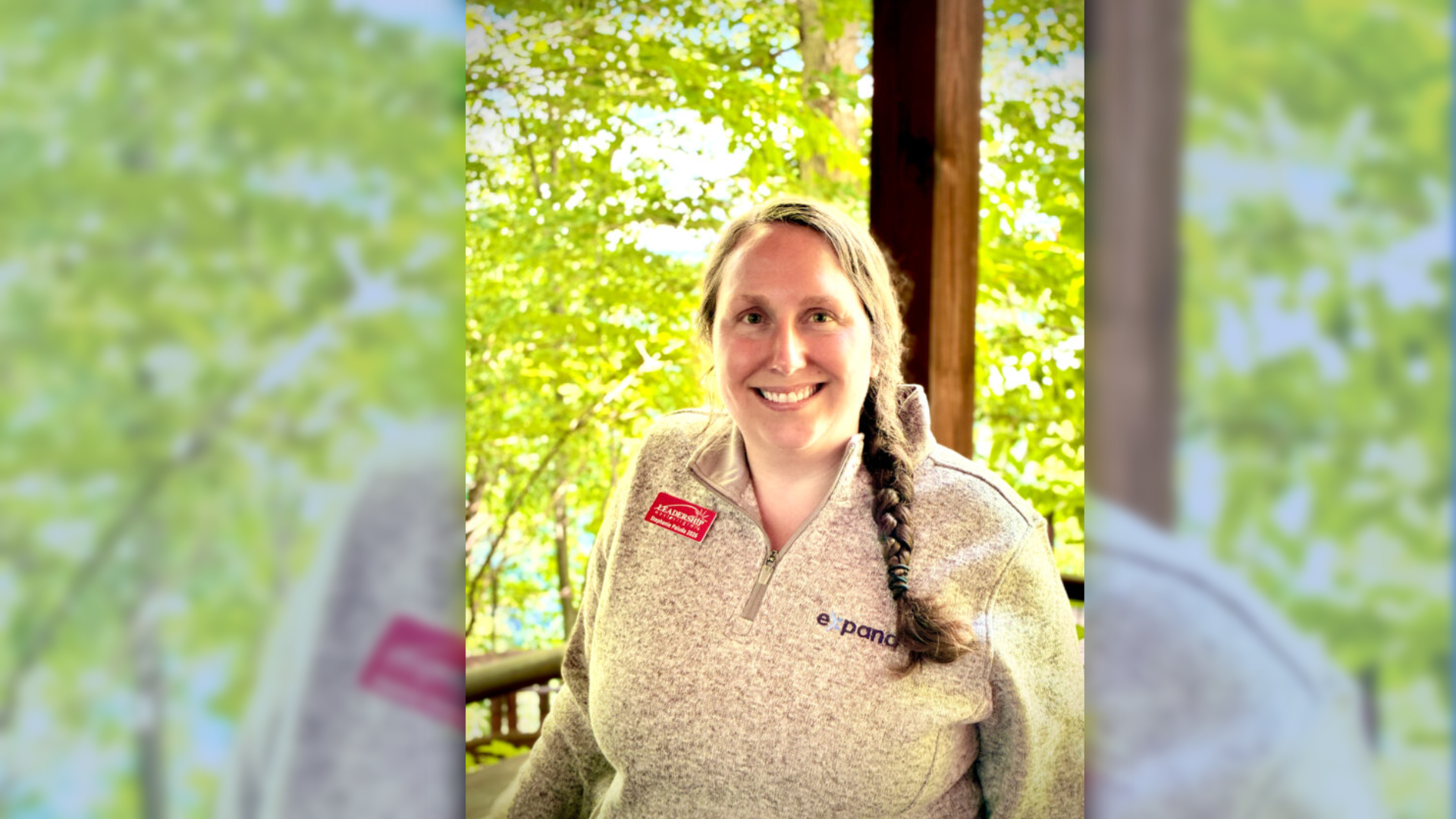
    Stephanie Paluda lives in Pittsburgh, but she works as the community affairs manager for Expand Energy Corporation with offices in Morgantown and Triadelphia. Paluda said she hopes to use her experiences in West Virginia to better inform her company’s charitable giving to better serve her region of the state.

    “I’m always trying to dive deep into what do people really need,” Paluda said. “How can we really solve the problems? So, one of the things here is learning from other people of how do you do it in your area? What are the issues? What are solutions you’ve done, and seeing, as an individual and as a company, how can I make sure that we’re giving to the right things? How can we make change?”

    Photo by Steven Allen Adams | Stephanie Paluda, the community affairs manager for Expand Energy Corporation, hopes to take what she learns in Leadership West Virginia to help her better serve the Northern Panhandle.

    Individuals can either apply to be part of LWV or can be nominated, but the selection process is rigorous, with the number of applications often exceeding the number of available slots. Applications must include clear answers to questions, show leadership growth in their industry, demonstrate community service, and include references.

    The program also has a $4,000 tuition not covering lodging or transportation, though need-based scholarships are also available. LWV candidates must attend an orientation and attend at least six out of eight sessions in order to graduate. The program is supported in part by the generous donations of individuals, companies, and organizations that believe in the mission of LWV.

    More information can be found at LeadershipWV.org

    Read more from The Parkersburg News and Sentinel, here.

    The post Moving West Virginia Forward: Leadership West Virginia continues work to inspire love for the Mountain State appeared first on West Virginia Press Association.
  • At Fort Gay PK-8 in Wayne County, it’s not the destination, it’s the (Jersey) Journey

    At Fort Gay PK-8 in Wayne County, it’s not the destination, it’s the (Jersey) Journey

    By Amanda Larch Hinchman
    For HDMedia

    During one snow day in January 2025, Fort Gay PK-8 Assistant Principal Shawn Ross decided to take inventory of all his jerseys.

    Counting and organizing them by sport — with 96 football jerseys alone — Ross sent a picture to Fort Gay Principal Kelly Bonar and his sister Erin Fitzpatrick, who also works at the school. Bonar challenged him to wear one every day of the next school year, as Ross, a self-proclaimed obsessive collector, normally wore a different jersey each Friday anyway.

    “I thought the idea was awesome,” Ross said. “The kids kind of picked up in the fall of 2024 that I had a lot of jerseys.”

    From that January day until the beginning of the 2025-26 school year last August, Ross said he thought of ways to make this challenge impactful and came up with three overarching messages to go along with what school administrators had named the Jersey Journey. The first was about embracing who you are.

    “That was the toughest part; I didn’t want to break dress code just for the sake of it,” he said. “As I introduced it in August, I told students, ‘It’s weird for a 42-year-old to have over 100 jerseys, I know that, but that’s cool, so just be you and own who you are.’”

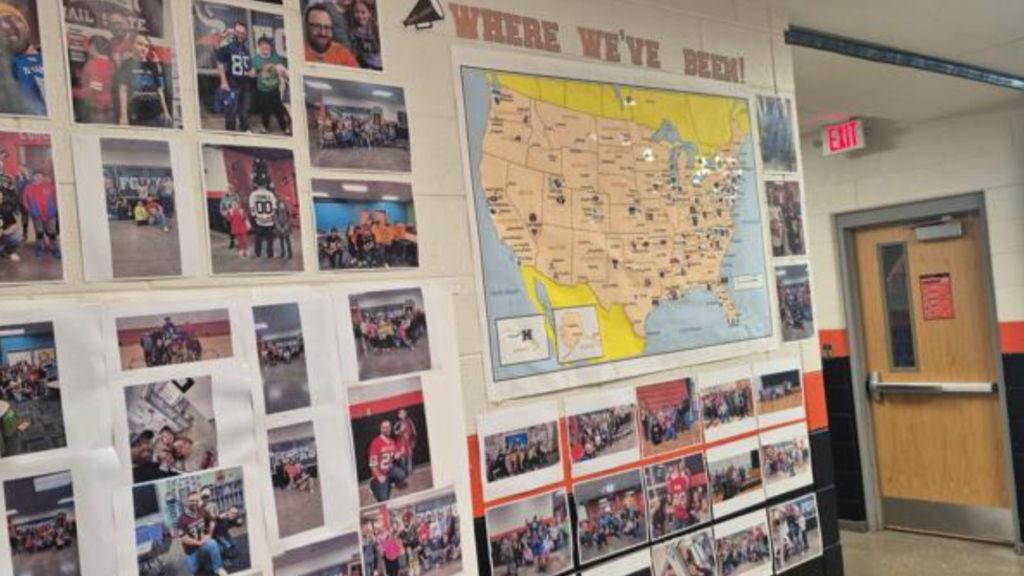
    Second, Ross wanted to introduce students to different colleges and higher learning opportunities, and he contacted several universities about his Jersey Journey. Mississippi State was the first to get back to him, with more following suit and sending souvenirs.

    “A lot of students don’t know anything beyond Fort Gay,” Ross said. “I thought this could work, and sure enough, throughout the year colleges sent pennants and informational things we hung on the wall for the kids.”

    Finally, Ross sought to make local connections and demonstrate what Fort Gay alums have gone on to accomplish. One former student he reached out to, Kyle Powers, is a trainer for the Pittsburgh Steelers.

    “I thought it’d be a great way to tie in some Wayne County kids who’ve done some great things with these professional organizations, so we were able to introduce them to folks like Kyle,” Ross said.

    A teachable initiative

    Ross created an educational element for the Jersey Journey as well, asking students a different trivia question each day, ranging in subjects from math and geography to social studies and literature. Students who gave correct answers could take photos with Ross to be posted on social media

    “I wanted to make it connected to the jersey, so it lasted in their memory, and to make it cross-curricular,” Ross said. “I didn’t want to go with straight sports trivia, so I kind of ran the gamut of questions. A lot of them were geography and history-based, because that’s an easy tie-in with team localities.”

    For example, Ross challenged students to calculate the perimeter of an ice hockey rink when he wore his Utah Mammoths jersey; he asked what the incubation period for turkey eggs was for Virginia Tech day; and when he featured the Arkansas Razorbacks in November, Ross asked students which city became the focal point for Brown v. Board of Education, the 1954 landmark school segregation case that originated in Topeka, Kansas.

    The issue eventually played out with the first instance of integration of Black students in 1957 in a public school in Little Rock, Arkansas. The nine students who enrolled in Little Rock Central High School became known as The Little Rock Nine.

    When no students could come up with the answer, Fort Gay social studies teacher Brooks Perry scrapped his plans for the day to teach about the court case and the Little Rock Nine.

    “That’s how a lot of the middle school kids got the answer, so that was probably one of the cooler days of the Jersey Journey and my favorite social studies question,” Ross said.

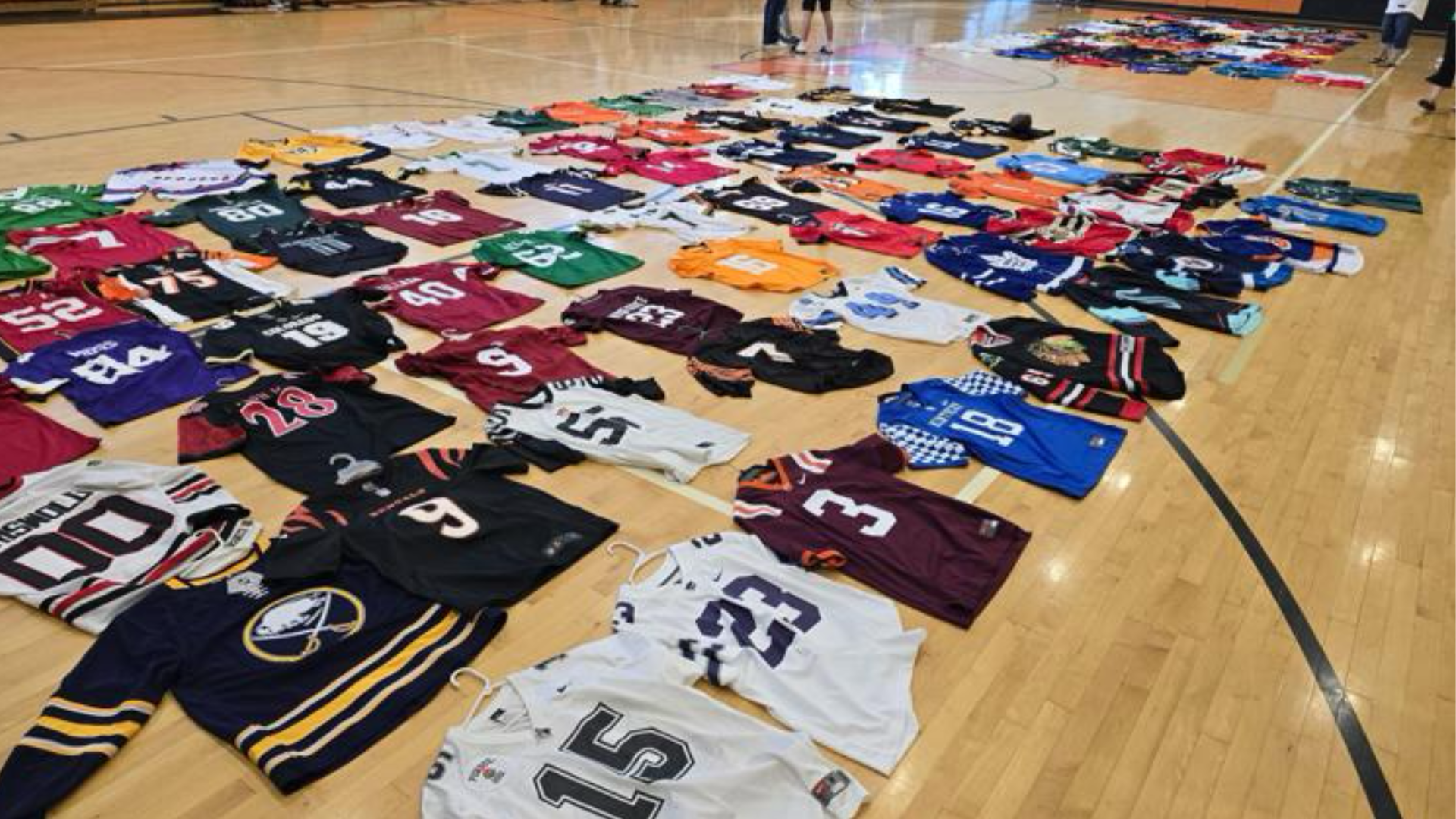
    Photo by Shawn Ross | Jerseys are laid out in the school gym during a last-day-of-school assembly at Fort Gay PK-8 in Fort Gay, Wayne County.

    ‘I had jerseys to spare’

    By the end of the school year, Ross had worn 176 different jerseys, having been absent for a few school days, and while some shared the same team, they were different numbers or players.

    “I had jerseys to spare,” he said. “We did have repeats, because I’m a Reds and a Bengals fan, so we had multiple Reds and Bengals jerseys.”

    On the last day of school, Ross delivered a message to students during an assembly that he believes is the most important of the Jersey Journey, he said.

    “I said, ‘Your paths are going to take you all over the world. Some of you are going to leave and not come back. That’s fine. Those of you that do come back, make your home better, and if you stick around Fort Gay, do your best to improve it and take care of it,’” Ross said.

    “I hope the kids remember years from now that if they take nothing else away from it, to chase their dream and take care of where they come from and remember their home,” he continued.

    Ross even presented to the Wayne County Board of Education on June 9 about the experience.

    “I told the board it started out as just a challenge to wear a different jersey, and by the time I delivered that final line of that message, it became everything,” Ross said.

    Photo by Shawn Ross | Universities like Mississippi State sent souvenirs to Fort Gay PK-8 in Fort Gay, Wayne County, as part of Assistant Principal Shawn Ross’s Jersey Journey initiative.

    What’s next for the Jersey Journey

    Students have already asked Ross about repeating the Jersey Journey in years to come. Though it would take time to collect the number of new jerseys needed, he may already have enough hats for a variation of the challenge in the meantime, he said.

    “I told them, as far as jerseys go, you’ve got to give me another five years — it took about five years to get the 170-plus jerseys — but I do own over 500 hats,” Ross said. “The challenge last time was making it impactful, and that took half a year to think about. So I’m going to stew on it, and we may do a sequel in a couple years.”

    Having worked at Fort Gay PK-8 since it opened in 2013 and recently finishing his eighth year as vice principal at the school, Ross said he’s always felt the purpose of his educational career is to encourage students to adopt ethical qualities.

    “Test scores are great, but I think the main goal is to produce kids who will be good human beings, and that’s what I wanted to do with this overarching message, to teach them it’s OK to be you, it’s OK to chase your dream,” he said.

    A Wayne native, after spending time away, Ross now lives closer to his hometown and resides in Fallsburg, Kentucky.

    “Fort Gay became my home, which is kind of why that final message all dealt with home, because sometimes home ain’t what you expected,” he said. “Because I thought I’d just be away my whole life, and then I ventured into Fort Gay, and I couldn’t imagine being anywhere else now.”

    Read more from HDMedia, here.

    The post At Fort Gay PK-8 in Wayne County, it’s not the destination, it’s the (Jersey) Journey appeared first on West Virginia Press Association.
  • Princeton sets public hearing for Reel Catch input

    Princeton sets public hearing for Reel Catch input

    By Charles Owens
    For Bluefield Daily Telegraph

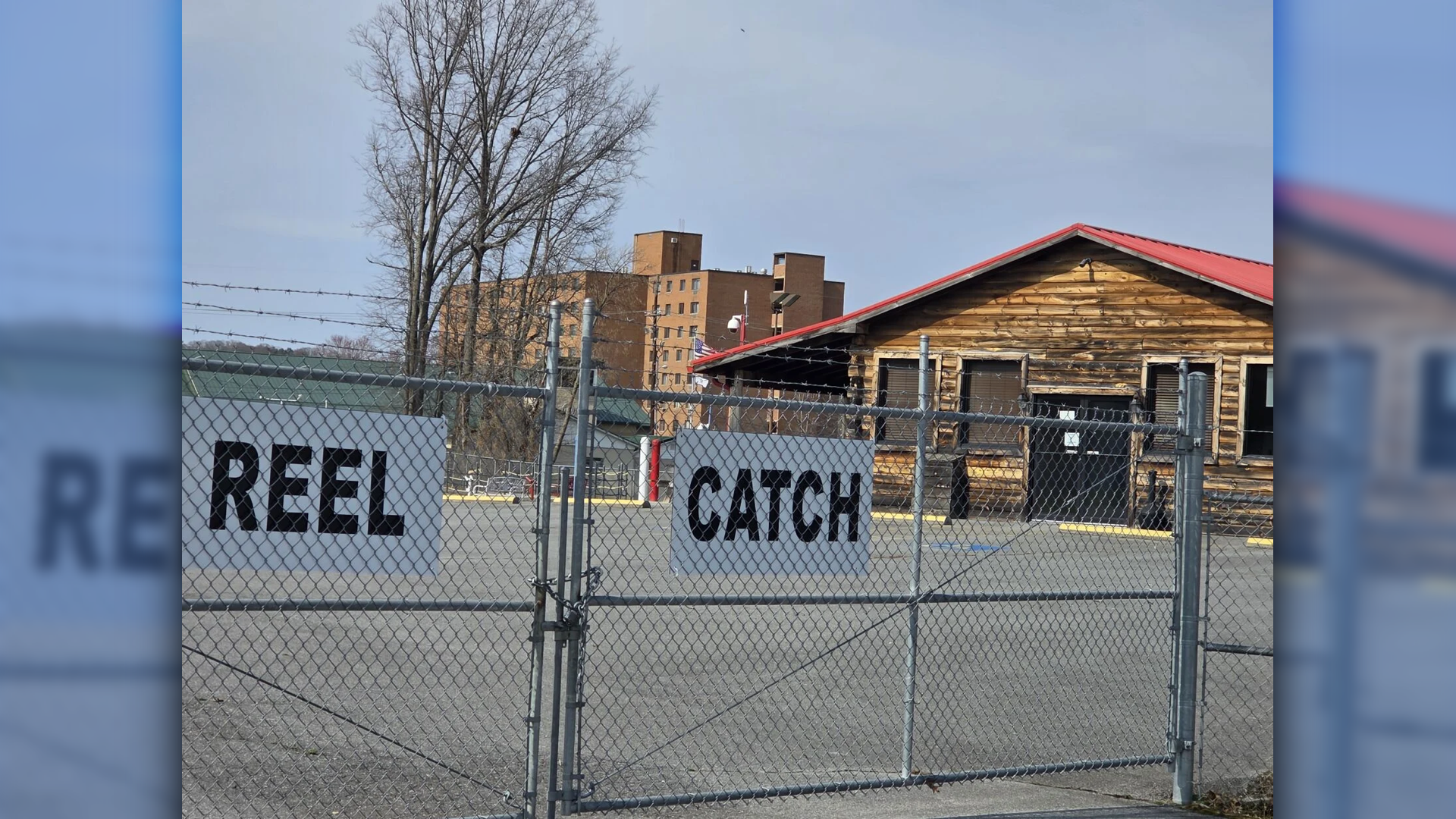
    Princeton — Efforts to reopen the former Reel Catch site in Princeton are ongoing.

    City crews have been busy in recent weeks making upgrades to the recreational site, including painting the dinosaurs that will once again be on display. Furthermore, the city is working to get a new restaurant opened at the site.

    A public hearing will be held on Wednesday, June 24, at 5 p.m. at Princeton City Hall to receive input on two applicants that have submitted plans for a restaurant at the site, according to Samuel Lusk, executive director of the Princeton Economic Development Authority.

    The restaurant is one of several upgrades planned at the Reel Catch site, which also includes miniature golf and a fishing pond. A golfing simulator also is being considered for the site, according to Lusk.

    Reel Catch was previously a privately-owned facility, but the city of Princeton was able to purchase the property earlier this year through a contribution provided by the Preservati Family Foundation.

    Lusk said two public hearings will be held on June 24 for the two applicants, which are Hall Hospitality, Inc. and Whitehouse Cafe LLC.

    “So with the Reel Catch property acquisition the space has great potential for recreation,” Lusk said. “Part of the property includes the restaurant building and the city is pursuing avenues to potentially lease out the building to potential occupants. That is what this public hearing is for is to explore the possibility with two potential applicants.”

    We are in the process of upgrading the dinosaurs and painting them and getting them prepared for the upcoming season. We hope to have the putt putt up and ready to go by this July. There is a lot of exciting improvements to the Reel Catch property with the restaurant, the putt putt, the pond and the walking trail.— Samuel Lusk, executive director of the Princeton Economic Development Authority.

    Lusk said city council may or may not make a decision at the June 24 meeting with regards to leasing out the restaurant portion of the property to a potential applicant.

    Other improvements also are underway at the Reel Catch site ahead of the planned reopening of the recreational area, including improvements to the miniature golf area.

    The city’s acquisition of the property included not only the fishing ponds and miniature golf, but also the large dinosaur models that were often on display along the Brick Street property where they were visible to motorists passing by.

    File Photo from BDT | Efforts to reopen the former Reel Catch site in Princeton are ongoing. City crews have been busy in recent weeks making upgrades to the recreational site, including painting the dinosaurs that will once again be on display. Furthermore, the city is working to get a new restaurant opened at the site.

    “We are in the process of upgrading the dinosaurs and painting them and getting them prepared for the upcoming season,” Lusk said. “We hope to have the putt putt up and ready to go by this July. There is a lot of exciting improvements to the Reel Catch property with the restaurant, the putt putt, the pond and the walking trail.”

    Lusk said the city would like to see a restaurant opened at Reel Catch as soon as possible.

    “What we are asking, and again this is subject to negotiation and change, but we are asking the tenant to move in as quickly as possible,” Lusk said. “If the tenant could move in this summer that would be ideal.”

    The Reel Catch property abuts an 11 acre site of land also owned by the city where the new wave pool and aquatic center, multi-purpose fields and dog park are being developed. Thus visitors to the wave pool site would be able to walk to the Reel Catch property site when it is reopened and vice versa.

    Princeton City Manager Mike Webb also said work is continuing on the Reel Catch site.

    “They are working on getting the dinosaurs cleaned up,” Webb said, adding that improvements also are underway to other parts of the property.

    Read more from Bluefield Daily Telegraph, here.

    The post Princeton sets public hearing for Reel Catch input appeared first on West Virginia Press Association.
  • Amid statewide drought conditions, data centers face same restrictions as all water customers

    Amid statewide drought conditions, data centers face same restrictions as all water customers

    About one-third of the state of Virginia is under extreme drought conditions, according to the U.S. Drought Monitor, and Gov. Abigail Spanberger is urging citizens to conserve water. So when local water authorities implement restrictions on water use, are there specific carve outs and rules for data centers, which use hundreds of thousands of gallons of water to cool their computer systems?

    No. Across multiple localities, they’re treated the same as all other commercial, industrial and residential customers, state and local officials revealed.

    The Department of Environmental Quality is responsible for permitting the groundwater withdrawal for public water authorities. Once that permit is granted it is up to each authority to manage their water use and limit customers as needed, based on the weather conditions.

    “Any of the permittees that are withdrawing are very cognizant of what they’re pulling out,” Weedon Cloe, manager of the Office of Water Supply at DEQ, said. “They have the limits and those limits are baked in during specific times of the year to ensure that the resource is not depleted.”

    There are provisions in the drought assessment and response plan that allow DEQ’s director to alter those permits in extreme circumstances. Cloe said that the department is reviewing those procedures, since the state is experiencing the worst drought they’ve seen in decades.

    Virginia hasn’t been this dry since 2002, when the extreme conditions triggered new standards.

    “The entire water supply program came (from) that drought. It was severe. It was like a huge swath through the center of the state running north south,” Cloe said.

    There are three main stages of drought that are declared by DEQ, which help localities decide on what water restrictions to implement.

    Under a drought watch, the state agency recommends localities minimize nonessential water use and to get a contingency plan in place.

    In the drought warning category, officials recommend local leaders to start voluntary water restrictions and aggressively identify any leaks or repairs needed.

    Once a drought emergency is declared, mandatory restrictions are put in place and if water customers don’t curb inessential water like irrigation, washing paved surfaces, or filling up pools, they could be fined.

    Some places, like Henrico County, have not needed to venture into the mandatory category for their customers in two decades.

    Bentley Chan, the director of Henrico’s department of public utilities, said that of the eleven data centers in the county, only one makes it into the list of their top ten water users. Apartment complexes and hospitals are the biggest water consumers there, and they don’t have specific usage rules in times of drought.

    “It’s not just on the residential customers (to restrict water use) and you’ll find that a lot of the industrial users have extraneous uses, such as irrigation, additional cleaning, and things of that nature,” Chan said. “And we do ask everybody to be a part of the mandatory restrictions … to preserve the flow in the James River.”

    Similar policies are used in Loudoun and Fairfax counties that house over 200 data centers combined. In Fairfax, the county follows guidance from the Metropolitan Washington Council of Governments that requires all customers to implement reductions under the mandatory orders.

    In Norfolk, there are no data centers online at this time that use water from their utilities, according to a utility representative. The representative went on to state that since they get their water from multiple sources, it is rare to have to implement restrictions.

    If there comes such a time (of data centers), the department would analyze the capacity versus the needs and factor in all conditions to ensure they’re able to adequately provide for all customers,” the representative said in a statement.

    Western Virginia Water Authority provides water to 69,000 customers in the Roanoke area, where there are also no data centers online yet. A representative told the Mercury that they are considering updating their policies once a data center is built – with one from Google expected to begin taking in water in 2028 that will be authorized to use up to 8 million gallons of water per day.

    Some localities have started mandatory restrictions heading into the official start of summer with precipitation totals for the rain year, which begins in October, to be about eight inches short.