Tag: Election 2026

  • More than abortion: What Va. patients and providers want you to know about reproductive health laws

    More than abortion: What Va. patients and providers want you to know about reproductive health laws

    Editor’s note: This story mentions pregnancy loss.

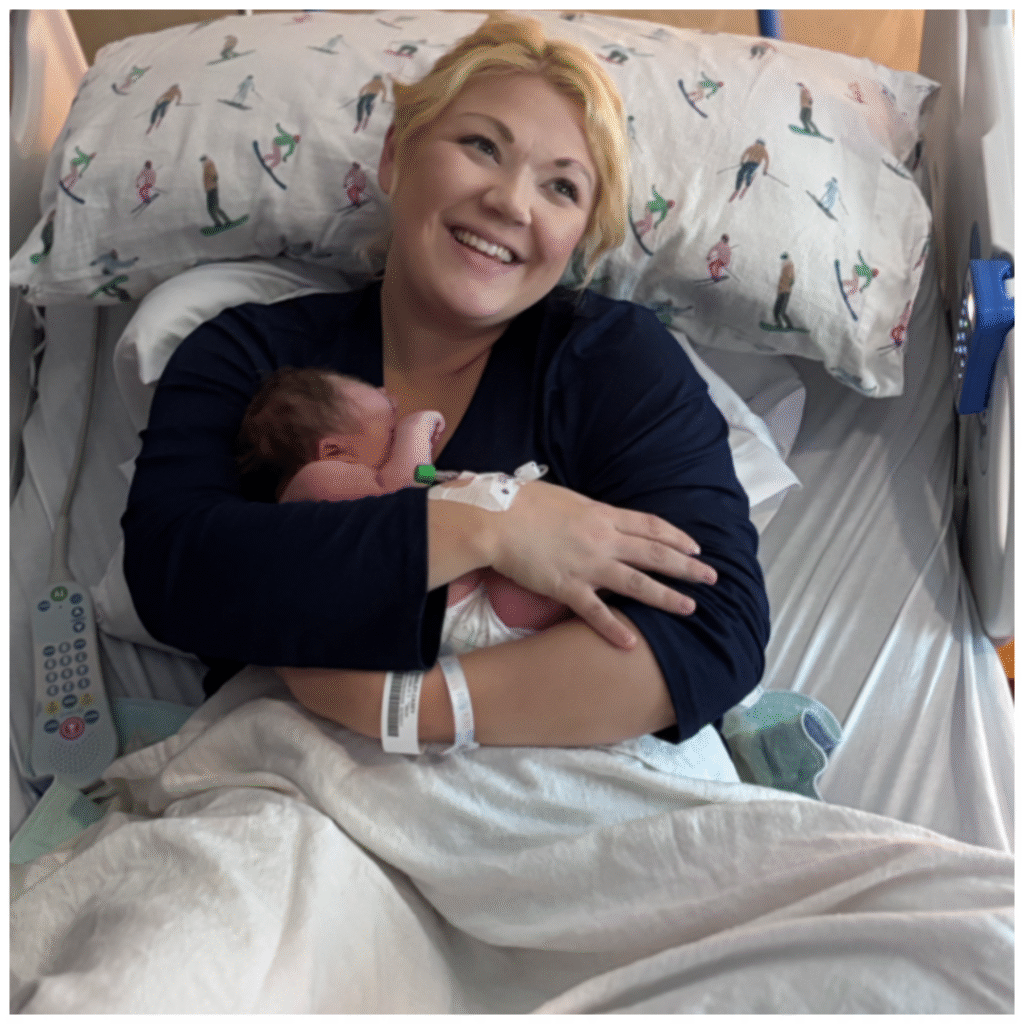
    Miscarriages were common for Albemarle County resident Casey Oakley during her in vitro fertilization process. Some embryo transfers weren’t successful and her body would expel the remnants, a process she had always handled safely at home, until an irregular delay.

    Her bloodwork had indicated her pregnancy hormones were not elevating properly, signaling an imminent miscarriage. But two weeks later nothing had happened.

    “(Doctors) didn’t know where the embryo had implanted in my body, so I was scheduled for an abortion, and I was told before my surgery that if they couldn’t find products of conception in my uterus, that they were going to be taking my tubes,” she said.

    Miscarriage management remains muddled 4 years after Dobbs

    The fallback option was meant to spare her the deadly infections that can arise when miscarriages fail to complete.

    “It wasn’t a question that they asked, it was more of a ‘this is what we have to do to make sure that you live,’” Oakley said.

    Doctors eventually discovered that her body had maintained a gestational sac but no fetal DNA.

    “My body had fought so hard for a pregnancy that would have no baby and then I was going into sepsis,” she said. “The abortion saved my life.”

    Her experience is foundational to her support for a pending constitutional amendment heading to Virginia voters statewide in November.

    If approved, it will permanently embed reproductive rights into Virginia’s constitution.

    The amendment would protect people’s access to contraception, IVF and abortion, four years after the Supreme Court overturned federal protections for abortion and more states have restricted access to the procedure and birth control.

    Virginia remains the least restrictive Southern state for reproductive healthcare in the era after Dobbs v. Jackson Women’s Health Organization, the abortion protection case that justice struck down in 2022.


    State lawmakers weigh in
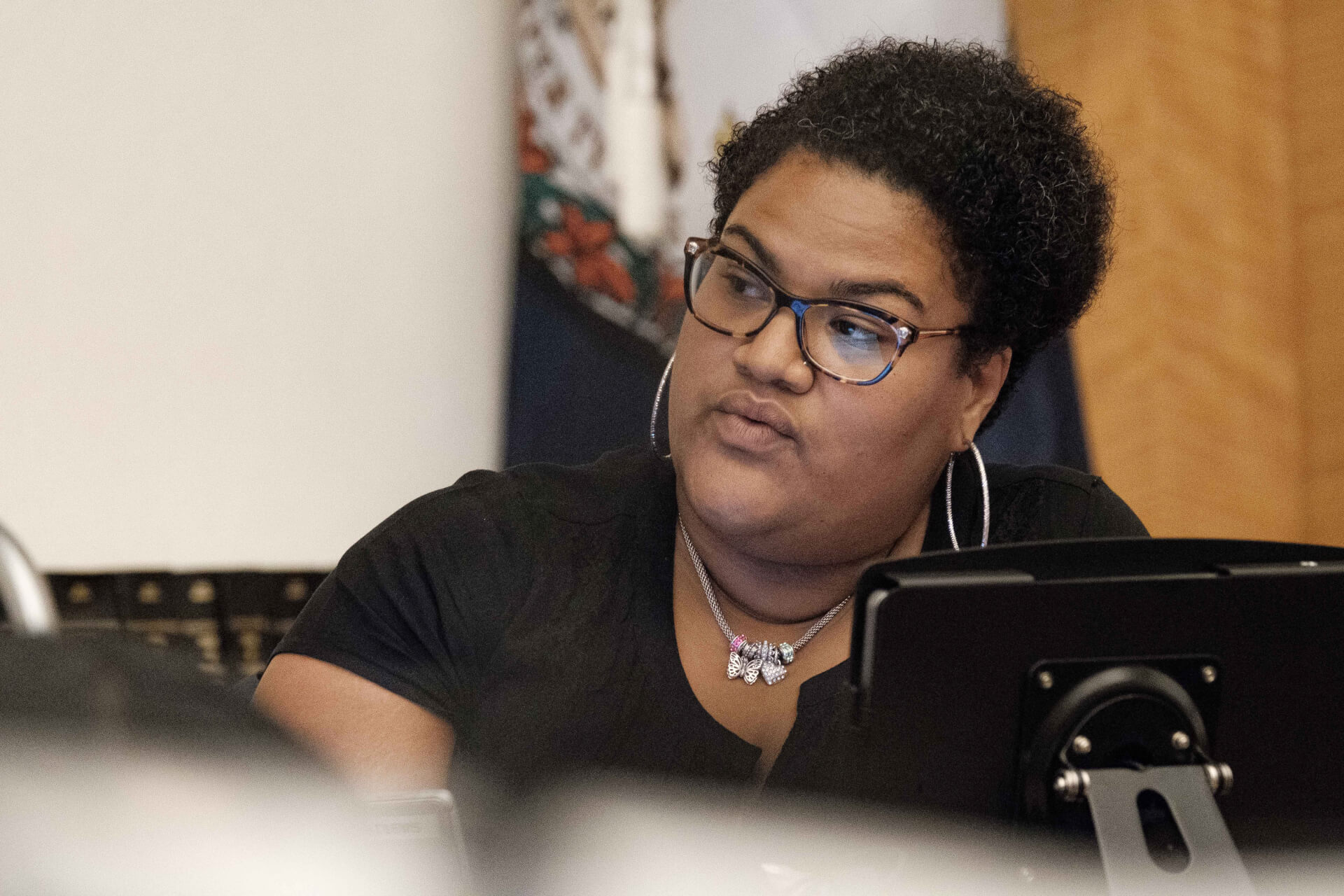
     

    Del. Cia Price, D-Newport News. (Ned Oliver/Virginia Mercury)

    Del. Cia Price, D-Newport News, was diagnosed with polyendocrine metabolic ovarian syndrome at 16 years old. She recalled debilitating cramps that made it hard for her to focus in school and days she could not get out of bed.

    Formerly known as polycystic ovarian syndrome, PMOS is a full body disorder that affects people’s metabolism and reproductive organs. It can also cause infertility. Contraception has long been a standard treatment for the disorder to improve quality of life.

    Though Price doesn’t need contraception for family planning as she is in a same-sex relationship and does not want biological children, the treatment lessens her PMOS symptoms.

    She said her and others’ access to the medication could be at risk.

    After Dobbs, Justice Clarence Thomas suggested the court revisit cases that have protected contraception, as well.

    Gov. Abigail Spanberger signed Price’s Right To Contraception Act into law this summer, after the bill was vetoed multiple times by former Gov. Glenn Youngkin.

    It will protect contraception access in the interim, though the pending reproductive rights amendment would shore matters up longterm.

    Price said she understands some of her constituents’ and legislative colleagues’ reasons for not supporting contraception or abortion — from religious objections to debates over life-at-conception. But she underscored the healthcare utility of each.

    “It’s just really disheartening for your quality of life to be at the intersection of an argument,” she said.

    “This is a difficult topic for a lot of people,” Sen. Emily Jordan, R-Suffolk, said during a floor speech earlier this year amid debate over the amendment.

    Jordan was among the Virginia Republicans who unsuccessfully sought to alter the amendment to reinforce existing state code outlining restrictions for minors and outlining care for infants when they are born.

    The amendment advanced due to Democrats’ majority in the Virginia statehouse. Now, it’s in voters’ hands.

    Price believes her contraception bill and the amendment “takes the conversation out of the political sphere and puts it in the medical sphere and the personal decision sphere.”


    The medical cost


    Dr. Kimi Chernoby, an emergency medicine doctor and lawyer, noted that emergency abortion care can happen at all stages of pregnancy if things go awry with the fetus or parent.

    She added that many first trimester abortions stem from miscarriages or ectopic pregnancies, and that restrictive state laws increase margins for death.

    “These laws are written by lawyers who have no medical training,” she said. “They actually prohibit a lot of care around miscarriages and ectopics, unless they fall within certain exceptions, and so that’s the care that is getting tangled up.”

    As chief operating officer for a nonprofit called FemInEM, Chernoby organizes training around the country for emergency physicians to handle reproductive health emergencies.

    The national patchwork of bans and restrictions with scant exceptions has complicated her and other physicians’ work, she said.

    Legal challenges to mifepristone further muddle matters, as the abortion pill is also critical for managing miscarriages to prevent sepsis. FemInEM has submitted amicus briefs as a key court case that could affect abortions and miscarriage care nationwide unfolds.

    Ahead of the fall referendum and pending court rulings, Oakley reflected on how an abortion allowed her to become a mother, surrogate and foster parent many times over.

    “I was able to further the lives of my children and four other little girls,” she said. “There will be many other children to come into our lives afterwards.”
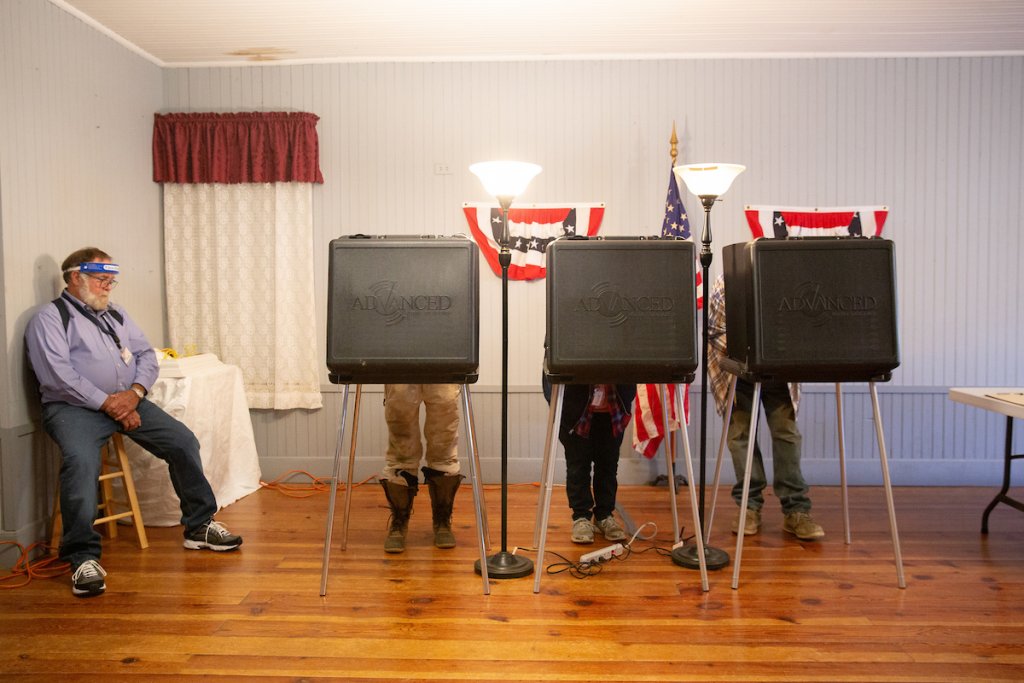
  • Civil rights group files motion to speed up Va.’s reform of voter registration process for ex-felons

    Civil rights group files motion to speed up Va.’s reform of voter registration process for ex-felons

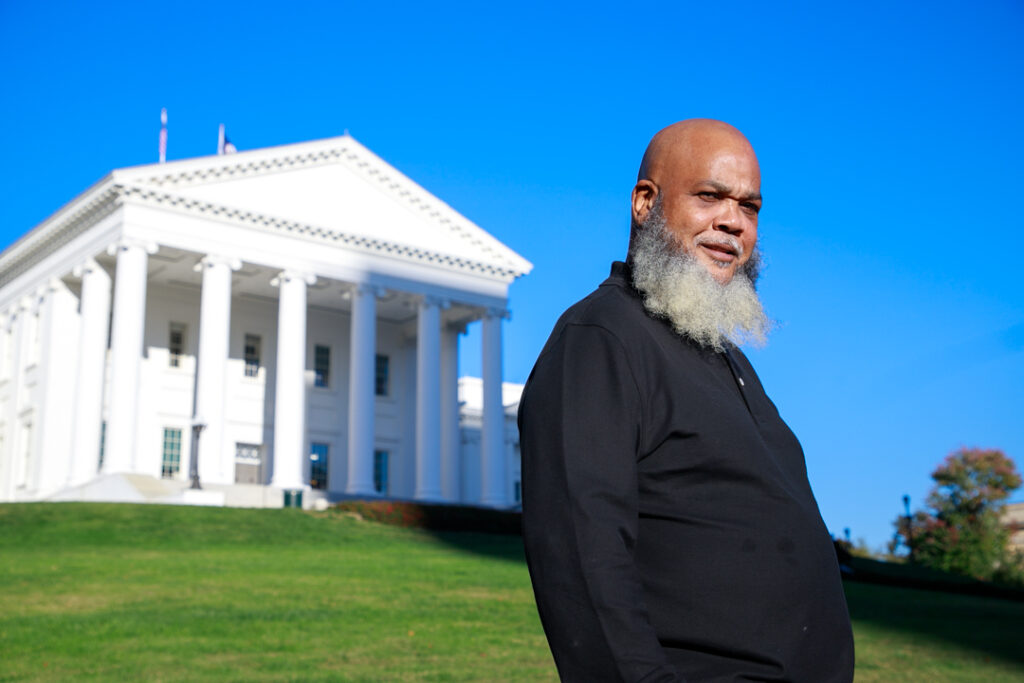
    As thousands of Virginians with certain past felony convictions remain in a voting registration limbo, a civil rights group filed a motion on June 18 seeking an expedited remedy.

    The group accused election officials of violating a voting rights lawsuit previously won earlier this year.

    Some former felons, eligible to vote this summer, are in registration limbo

    The voting access issue stems from a series of 1870 laws called the Readmission Acts, which banned states from constitutionally disenfranchising people other than those convicted of crimes considered common law at the time.

    In Virginia, people with felony convictions lose their right to vote unless they successfully petition a governor for it to be restored or are pardoned — both subjective processes which haven’t always had clear guidelines.

    Virginia’s chapter of the American Civil Liberties Union argued in King v. O’Bannon that Virginians with a variety of felony convictions should have never lost their right to vote in the first place. A judge ruled in their favor earlier this year and ordered the state to comply by May.

    Attorney General Jay Jones then successfully sought an extension to June 1 so that the state could compile guidance for registrars and ascertain which modern-day felonies might bar someone from registering to vote.

    For instance, illegally using tear gas was included on a list of such crimes from Jones’ office, “even though tear gas was not invented in 1870,” ACLU attorney Eden Heilman said in an interview.

    While the legal organization “has serious questions” about how the lists were determined and whether eligible people will be able to vote this year, the group has tried for months to glean a better understanding from Jones’ office.

    Since June, registrars have been instructed to not fully process new voter registrations of people with felony convictions, according to documents obtained by The Mercury that are now exhibited in the new motion.

    In May, ACLU Virginia wrote a letter to Jones and Solicitor General Tillman Breckenridge asking why revisions to registration forms were not feasible for registrars, and for more details on challenges preventing the state from fully complying with the court order.

    The organization also asked for more clarity on conviction types that may require individualized review by Jones’ office.

    Breckenridge responded two days later to confirm receipt of the letter and end the conversation.

    “While we appreciate the information you’ve provided to us to this point, we do not believe further engagement on the topics in your letter would be constructive at this time,” he wrote.

    Heilman said that previous meetings with Jones’ office had not been successful.

    “It became clear that we were not making progress and had different understandings of what the court order was requiring,” she said.

    Jones’ office has not responded to requests for comment on the situation.

    With early voting for congressional primary elections underway, plaintiffs hope that the situation can be resolved before the Aug. 4 election so that eligible voters can participate.

    This fall, Virginia voters will also approve or reject a constitutional amendment that would allow all ex-felons the right to vote, so long as they have served their sentences.


    Outdated forms and web portals another hurdle


    The apparent lack of full compliance with King v. O’Bannon sparked a period of uncertainty for ex-felons in the state, Nolef Turns director Sheba Williams said. The nonprofit shares resources with formerly incarcerated people and advocates for ways to reduce recidivism.

    Voter registration applications question whether or not someone has committed a felony, which Williams said has confused formerly incarcerated people who want to cast a ballot. Many don’t know if they’re eligible or if they should answer the question or not, since it’s a crime to lie on applications.

    Northern Virginia resident Tati King, who’s been a lead plaintiff on the King v. O’Bannon case, claims that his registration was placed in limbo and as of the time of the motion filing on June 18, he was not yet able to vote.

    Fellow plaintiff Toni Heath Johnson, a Southwest Virginia resident, encountered the same “on hold” status.

    While in-person applicants were told their registrations won’t be processed right away, virtual applicants like Southwest Virginia resident Jared Rose relayed via lawyers that he could not proceed in the online process after clicking the felony conviction box.

    Rose is quoted in the filing saying he was “nervous” about additional prosecution if he didn’t indicate his past felony status despite being able to vote.

    “We’re in a pivotal moment where we have been seeing trust in our courts be eroded,” Williams said. “Virignia has an opportunity to restore faith by upholding the ruling of Judge (John) Gibney.”

    Gibney ruled that Virginia can’t take away someone’s voting rights, except for specific common law felonies from 1870. Those are arson, burglary, escape and rescue from a prison or jail, manslaughter, mayhem, murder, rape, robbery, sodomy and suicide.

    As part of their motion to enforce, ACLU suggests forms be amended to ask “only whether the applicant had been convicted of an offense corresponding to one of the 11 common law felonies set forth in the final order.”

    For now, the state has 14 days from the June 18 filing of the motion to respond.

  • McGuire faces primary test as Democrats eye more competitive 5th District race

    McGuire faces primary test as Democrats eye more competitive 5th District race

    U.S. Rep. John McGuire may have breathed a sigh of relief after courts last month invalidated Virginia’s voter-approved redistricting amendment, which would have made the state’s 5th congressional District more favorable to Democrats.

    But the Goochland Republican still enters his first reelection campaign facing turbulence, including accusations that he has done little for constituents and a Democratic field trying to flip a district where affordability concerns and dissatisfaction with Washington could reshape the race heading into the 2026 midterms.

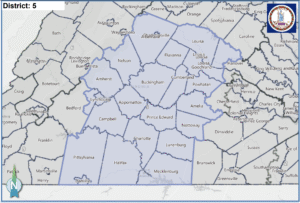
    The 5th District covers a vast stretch of Central and Southside Virginia, running from Charlottesville and Albemarle County through Lynchburg and Danville and south toward the North Carolina border. It also extends east into parts of Goochland, Hanover and Powhatan counties near Richmond.

    Roughly 760,000 people live in the district, including about 575,000 registered voters.

    Republicans still hold a clear advantage there. President Donald Trump carried the district by 11 points in 2024 after Glenn Youngkin, the GOP’s 2021 gubernatorial nominee, won it by an even wider margin that year. But Democrats believe changing suburban voting patterns and economic frustration could give them an opening this cycle.

    Under the redistricting amendment invalidated last month by the Supreme Court of Virginia — a ruling later left in place by the U.S. Supreme Court — Democrats had expected the district to become friendlier to their party. Instead, the race will move forward under the current court-drawn congressional map from 2021.

    The Aug. 4 primary election will determine nominees in one of Virginia’s most closely watched congressional races this year.


    Incumbent draws a GOP challenge


    McGuire, a former U.S. Navy SEAL and state senator first elected to Congress in 2024, defeated then-U.S. Rep. Bob Good, R-Campbell, in one of the country’s nastiest nomination contests.

    The race quickly became a loyalty test tied to President Donald Trump — then running for a second term — after Good backed Florida Gov. Ron DeSantis during the 2024 presidential primary. Trump later endorsed McGuire, helping push him past the conservative incumbent by a narrow margin that triggered a recount.

    Now McGuire faces a Republican challenger in Louisa County real estate broker Melanie Lucero, who has focused much of her campaign on constituent services and what she describes as McGuire’s lack of accomplishments in Congress.

    “We need to send representatives who are going to help the 5th district and who are going to fight for us,” Lucero told Charlottesville’s WVIR earlier this month.

    Lucero has also argued that many voters across the sprawling district — the state’s largest — feel disconnected from McGuire and unable to get responses from his office.

    McGuire has closely aligned himself with Trump and Republican leadership in Congress, emphasizing border security, tax cuts and reducing federal spending. On his campaign website, McGuire says he is focused on “putting America first” while fighting inflation and government overreach.

    By May 27, McGuire had raised just over $1.4 million for his reelection bid and reported roughly $497,000 cash on hand. Lucero had raised a little more than $64,000 and reported about $34,000 cash on hand.

    David Richards, a political science professor at the University of Lynchburg, said the existence of a Republican primary challenge is notable for a Republican congressman from the 5th District.

    “Normally, an incumbent would not draw a serious challenger, but Lucero seems pretty serious,” he said. “She has really driven home McGuire’s lack of accomplishments in Washington and his general lack of interest in his own constituents.”

    Richards said McGuire has increased campaign appearances around the district but may still struggle to point to major legislative achievements, which “may hurt him in the primary or the general election.”

    Still, Richards said he does not expect McGuire to be defeated in the nomination contest.

    “I don’t see him losing the primary, especially since Bob Good is no longer running,” he said.

    Virginia’s 5th congressional District. (Photo courtesy of the Supreme Court of Virginia)


    Democrats consolidate around Perriello


    On the Democratic side, former U.S. Rep. Tom Perriello has emerged as the clear frontrunner in a field that once looked likely to become much larger under the proposed redistricting map.

    Perriello represented the 5th District from 2009 until 2011 after defeating longtime Republican U.S. Rep. Virgil Goode on the coattails of Barack Obama’s 2008 presidential wave. He launched his latest campaign late last year with a message heavily focused on affordability and economic pressure facing Virginia families.

    “It is not right that Virginians are working harder and harder just to afford the rising cost of food, electricity, and health care,” Perriello said at the time.

    After leaving Congress, Perriello served in the Obama and Biden administrations and later became president and CEO of the Open Society Foundations. He also mounted an unsuccessful run for governor in 2017.

    Several Democrats who had considered campaigns in a potentially redrawn district abandoned those plans after courts invalidated the redistricting amendment last month.

    Perriello now faces two remaining primary opponents: Suzanne Krzyzanowski and Rob Tracinski.

    Krzyzanowski, a physician and cancer researcher, has centered her campaign on healthcare, reproductive rights and scientific research funding. On her campaign website, she describes herself as a “doctor, scientist and advocate” focused on lowering costs and defending democratic institutions.

    Tracinski, a writer, political commentator and former Republican-turned-Democrat, has emphasized congressional independence and constitutional checks on executive power.

    Richards described Tracinski as an unconventional candidate whose message could still resonate with some voters.

    “Tracinski is an interesting alternative; he seems odd because he was part of the Tea Party, which tended to break with Republicans,” Richards said. “However, his message has been around reinforcing the powers and duties of Congress, and that squares with the Tea Party’s focus on constitutional rights.”

    However, Richards said Perriello’s name recognition and fundraising advantage make him the clear favorite for the nomination.

    “On the Democratic side, it seems like Perriello has the nomination locked up,” Richards said.

    The latest campaign finance reports reinforce that advantage.

    By May 27, Perriello had raised more than $1.4 million and reported roughly $1.1 million cash on hand, according to the latest campaign finance filings. Tracinski had raised about $44,000 with nearly $40,000 cash on hand, while Krzyzanowski had raised close to $16,000 and reported about $14,000 remaining.


    Affordability shapes the race


    Like many competitive congressional contests around the country, the race in Virginia’s 5th District is increasingly centered on affordability and cost-of-living concerns.

    Richards said both parties are trying to tap into voter frustration over prices and economic uncertainty, even though they blame very different causes.

    “The big issue in the 5th, as elsewhere, is affordability,” he said. “This seems to mean different things to each of the front-runners.”

    According to Richards, McGuire has largely embraced Republican arguments that tax cuts and deregulation will reduce economic pressure, while Democrats have tied rising prices and uncertainty to Republican control in Washington and the war against Iran.

    “McGuire wants to focus on tax cuts by the current administration, while Perriello wants to blame that same administration for the rise in prices,” Richards said. “Both are talking past each other in a way, both noting the affordability crisis but blaming different sources.”

    The district’s political makeup could ultimately determine how much room Democrats have to grow.

    Much of the district remains heavily conservative and rural, but Democrats have steadily improved in suburban and university-centered communities such as Charlottesville and Albemarle County. Lynchburg has also become somewhat more competitive in recent statewide elections.

    Richards said Perriello’s earlier victory in the district could help him, though he cautioned that both the lines and the political environment have changed significantly since 2008.

    “He did win the 5th in 2008, but that was a 5th with very different boundaries, plus he had the coattails of President Barack Obama’s big win,” Richards said. “This time will be different.”

    Richards said that Perriello would need overwhelming Democratic turnout, strong support from independents and at least some crossover Republican voters unhappy with Washington to seriously compete in November.

    “All of that is a tall order, but Perriello probably has a better shot at it than almost anyone else in the commonwealth,” he said.

    Even so, Richards said the race could remain competitive regardless of who emerges from the August primaries.

    “The question becomes, will enough voters in the middle vote for Perriello if things are still bad in the fall?” Richards said. “I am dubious that enough will swing to the Democrats, but it will be a close thing, even if McGuire wins in November.”

  • Some former felons, eligible to vote this summer, are in registration limbo

    Some former felons, eligible to vote this summer, are in registration limbo

    While a pending constitutional amendment to automatically restore voting rights to people with felony convictions who have served their sentences awaits Virginians’ approval or rejection in a statewide referendum later this year, thousands of people who should never have lost their right to vote in the first place remain in limbo during this summer’s congressional primary elections.

    After a court ruled earlier this year that certain felony convictions should not have resulted in loss of voting rights, Virginia’s Department of Elections had until June 1 to comply with the order to rectify the situation.

    Instead, on June 1, the department sent an advisory to election officials indicating that they should not deny peoples’ applications but to not fully process them either.

    “Please note that records available through the felon search may have been affected by the updates to the Agency Felony Prohibited table. ELECT will provide additional guidance on reviewing felony history soon,” the June 2 advisory obtained by The Mercury read.

    The crux, Nolef Turns director Sheba Williams said, is that some people with felony convictions who should be eligible to vote this summer are nervous to register because it is a crime to lie on applications.

    “When they get to their application, there is a question about whether or not you have been convicted of a felony,” Williams explained.

    For people whose felonies don’t count towards prohibition of voting, they are unsure if they should check the box or not. So, with early voting for the congressional midterms beginning June 18, relevant applicants are stuck waiting as the process plays out.

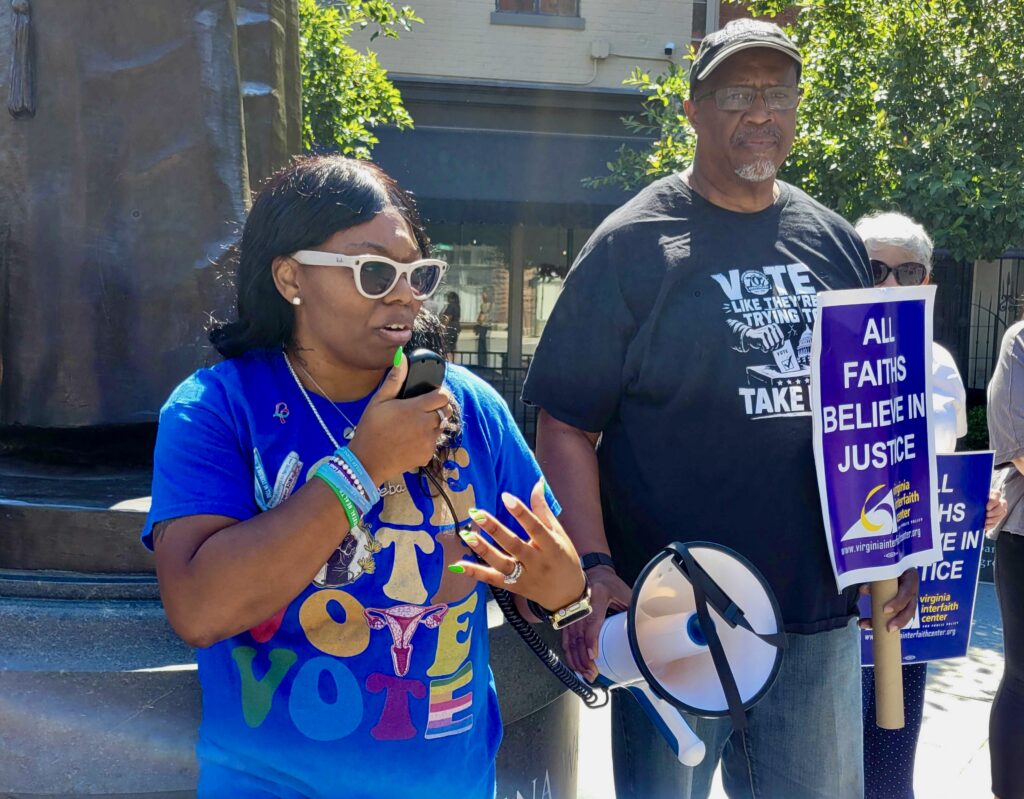
    Williams organized a press conference in Richmond on Wednesday along with the Virginia Interfaith Center For Public Policy and Bridging the Gap Virginia. Each group has advocated for criminal justice reform and voting rights laws and some have helped returning citizens navigate post-incarceration life.

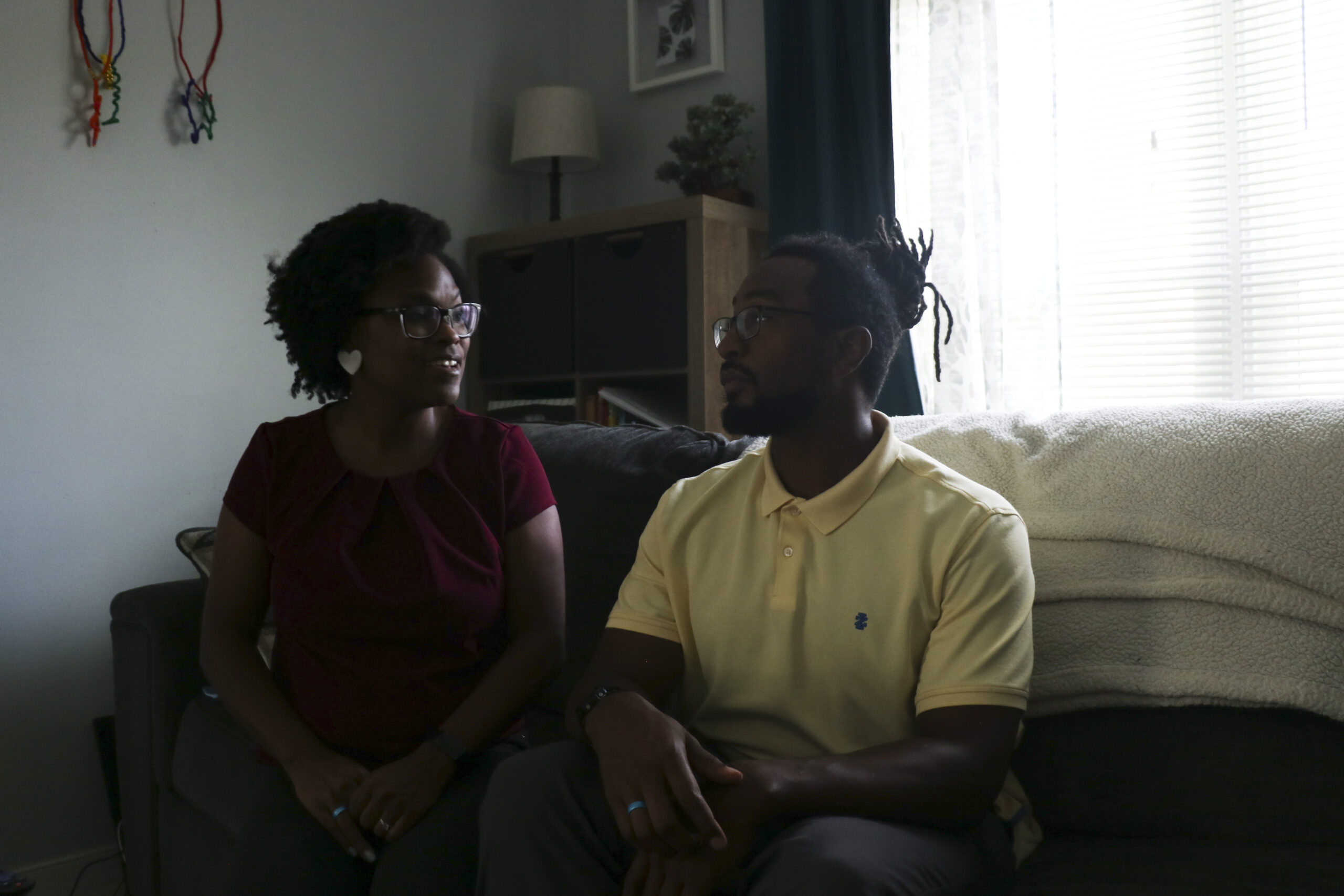
    Quadaire Patterson and his wife Santia Nance attended the event. The couple has ramped up their criminal justice advocacy, starting when Patterson was still incarcerated. Though he’s helped shape laws before and after his 2024 release, he has still been unable to vote.

    Santia Nance (left) sits with husband Quadaire Patterson (right) in their living room in Henrico County in September 2024. (Photo by Charlotte Rene Woods/Virginia Mercury)

    “As I think back to my crime when I was 19 years old, I had no awareness of the political systems that are in play,” Patterson said.

    But now at 38, having spent about half of his life behind bars, Patterson said he understands how important it is to engage in democracy. The importance of the right to vote hits closer to home now that he and his wife have a 14-month-old daughter, Trinity.

    “If we ever want to repair this broken system, if we ever want to repair our broken communities, we have to fully allow returning citizens to participate in the civic processes,” Patterson said.

    The case at the core of the matter stemmed from a series of 1870 laws called the Readmission Acts, which allowed former Confederate states to re-enter U.S. Congress after the Civil War. The laws had barred states from constitutionally disenfranchising people other than those convicted of crimes considered common law at the time.

    “We create crimes every year but we never revisit and say ‘what did we get wrong?’ and I think that is a barrier too,” Williams said.

    Following the suit, Attorney General Jay Jones’ office has been drafting lists of crimes that could be applicable to the ruling.

    Congressional primaries will take place Aug. 4 and the deadline to register to vote in those elections is July 24.

  • Spanberger joins governors in Reproductive Freedom Alliance, signs related Va. bills into law

    Spanberger joins governors in Reproductive Freedom Alliance, signs related Va. bills into law

    From support for legislation and ballot referendums to helping states stockpile abortion and miscarriage management drug mifepristone, a growing cohort of governors are banding together as the Reproductive Freedom Alliance. Virginia Gov. Abigail Spanberger announced Wednesday that she has joined the coalition.

    Members include California Gov. Gavin Newsom, New York Gov. Kathy Hochul, Gov. Wes Moore from Maryland and New Jersey Gov. Mikie Sherrill — who was elected the same night as Spanberger last fall — among 23 others so far.

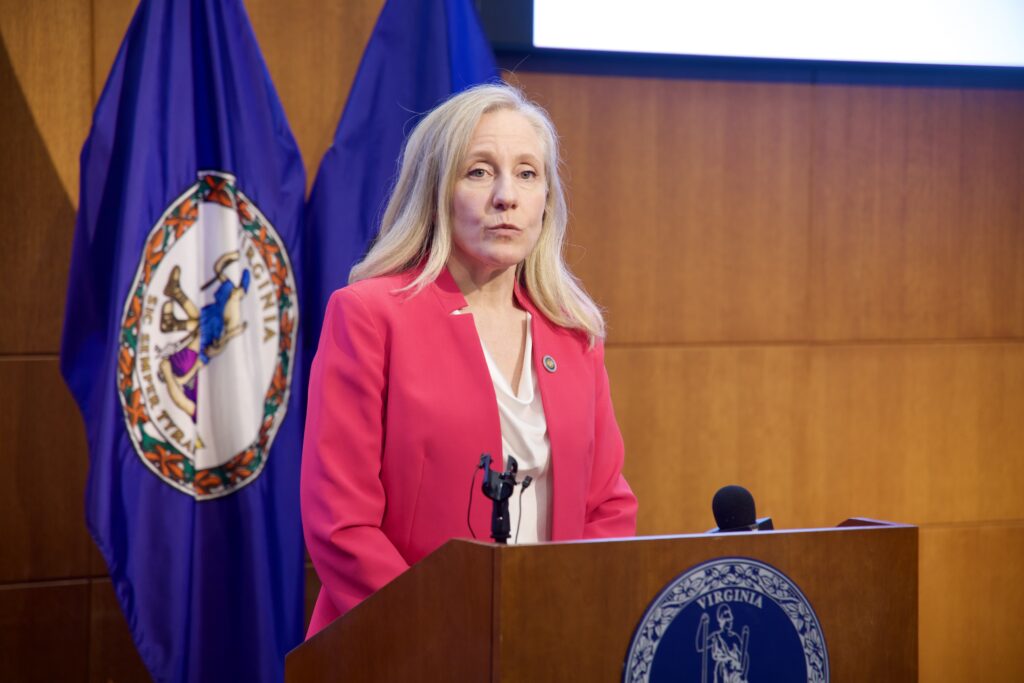
    As part of the alliance, Spanberger said she will “continue doing everything in my power to preserve the rights of Virginians seeking reproductive care and making sure families across our Commonwealth can continue making their own personal healthcare decisions.”

    Mifepristone has been subject to legal challenges, with opponents pushing for a national ban on mailing the medication. Several of the states are working to preserve access to the medication and have also enacted shield laws to protect patients’ privacy and expand coverage for over-the-counter contraception.

    On the heels of announcing she’d joined the governors’ group, Spanberger signed two new reproductive health bills into law in Lorton Wednesday. Years-long efforts dubbed the Right-To-Contraception Act and Contraception Equity Act will fortify people’s ability to access family planning measures.

    Del. Cia Price, D-Newport News, who carried the legislation, has emphasized that contraception is also used to treat conditions like polycystic ovarian syndrome and endometriosis. Price uses contraception to treat her own PCOS symptoms, she said.

    After signing the law Wednesday, Spanberger called contraception “vital for being able to contend with an ongoing health issue.”

    The coalition announcement and new laws preempt the fourth anniversary of the overturn of federal abortion protections by the U.S. Supreme Court and a ballot referendum in Virginia later this year to enshrine reproductive rights into the state’s constitution.

    How a 19th century law, central to a national telehealth abortion case, could impact Virginia

    With abortion drawing the most scrutiny, several states have enacted deep restrictions or bans on the procedure. Virginia, where abortion is legal to varying degrees in all three trimesters of pregnancy, is the least restrictive Southern state.

    As such, clinics and abortion funds have noted upticks in out-of-state patients in recent years.

    Blue Ridge Abortion Fund director April Greene said that 26% of people seeking assistance from her organization live outside Virginia, a 13% uptick since 2023. More people are relying on abortion funds for financial assistance, as rising fuel prices affect travel.

    “What this tells us is that abortion bans, anywhere, impact access everywhere,” Greene said.

    Spanberger, reproductive rights advocates, state lawmakers and congressional candidates will continue advocating for the constitutional amendment leading up to this fall’s election.

    Rising costs of fuel, other goods squeeze already strained abortion funds

    Despite some Republican-leaning states having already pursued similar measures, the amendment has fallen along partisan lines in Virginia. Every elected Republican in the state legislature has voted against the amendment, which had to clear the legislature two years in a row before it could appear on statewide ballots.

    “Once it becomes enshrined in our constitution it becomes harder to fight,” said Family Foundation president Victoria Cobb at the Virginia March For Life this past spring.

    Her organization, which staunchly opposes the amendment, has filed one of two lawsuits challenging the pending amendment.

  • Luria to face Democratic challengers before a potential rematch with Kiggans in 2nd District

    Luria to face Democratic challengers before a potential rematch with Kiggans in 2nd District

    This summer, four Democratic candidates will face off in a primary for the chance to oust incumbent Republican representative Jen Kiggans in Virginia’s 2nd Congressional District.

    The Virginia Beach-anchored district is politically purple and often oscillates between partisan control, though in past years it had a decidedly Republican lean.

    Its nearly 600,000 residents backed Gov. Abigail Spanberger last year by 53% and analysts consider it flippable — making it a key contest that could help determine partisan control of Congress.

    All four Democratic primary candidates — which include the district’s former representative Elaine Luria, acute care doctor Nila Devanath, former USAID worker Patrick Mosolf and regional government official Bill Fleming — seek to hold Kiggans “accountable” and help congress provide a check and balance to the “corruption” of President Donald Trump.

    Who’s who

    Kiggans, a Navy veteran and nurse practitioner, has represented the district for two terms after ousting Luria, who also represented it for two terms. With no primary challenger, she did not do an interview for this story, but she did respond to questions by email.

    With Navy veteran Luria formerly representing the district, she already has backing from the Democratic Congressional Campaign Committee along with Democratic leadership in Virginia including Gov. Abigail Spanberger and Sen. Louise Lucas, D-Portsmouth.

    During her time in Congress Luria backed the creation of the Affordable Care Act’s Enhanced Premium Tax Credits — which have since expired but helped reach more people struggling to afford healthcare. She also backed the 2022 Inflation Reduction Act, a range of energy efficiency and healthcare affordability measures.

    Devanath,the daughter of Bangladesh immigrants, is an acute care doctor but previously worked as a lawyer at a legal clinic defending domestic violence survivors.

    If elected, she plans to bring her legal and medical insights to Congress. She has already made trips to D.C. to meet with members of finance committees, she said, to prepare for how she can help address economic issues if she earns a seat on Capitol Hill.

    Virginia Beach Soil and Water Conservation District director Bill Fleming hopes to join the U.S. House Committee on Agriculture if elected so that he can help advance environmental laws. He shares many progressive policy priorities with some of his primary opponents but considers himself an “independent democrat.”

    From serving as director of a homeless shelter to time spent working for USAID, Mosolf said his time spent solving problems has helped him prepare to take that work to the nation’s legislative body. He was motivated to run and find new routes to solve problems after losing his job to Trump’s closure of USAID.

    Addressing the cost of living

    The rising cost of living, from groceries to housing to healthcare, is a motivating factor for Kiggans and all four Democratic candidates.

    Each candidate criticized Kiggans’ support for Trump’s tariffs, war with Iran, and a reconciliation bill that entails changes to Medicaid and hospital funding mechanisms. They also pointed out Kiggans’ vote to not renew expired Affordable Care Act subsidies.

    Luria said Kiggans expressed interest in bipartisan collaboration after ousting Luria from the seat in 2022, a stance she said was in contrast with Kiggans’ votes in favor of Trump policies.

    Ahead of the passage of the One Big Beautiful Bill Act last summer, Kiggans joined an open letter in opposition to aspects of the bill she ultimately voted for.

    Kiggans was previously outspoken about the need to renew expiring ACA tax credits, Luria said, even writing a letter in support of extending the credits, but ultimately changed her tune.

    Virginia Congressman Wittman among just 17 Republicans nationally to back ACA credits extension

    “Writing a letter that is in opposition to something you’re voting for — it just doesn’t work that way,” Luria said.

    In an email, Kiggans said her initial support of renewing the credits was conditional on “meaningful reforms” to strengthen protections against “waste fraud and abuse.”

    All Democratic challengers said addressing affordability issues will be a priority for them, if elected.

    “I think it’s going to take a lot of small things. It’s not just pushing a magic button,” Mosolf said.

    All the Democratic contenders said they would work to extend the ACA subsidies and undo the healthcare provisions of the reconciliation bill.

    They are supportive of a massive bipartisan housing bill that is nearing Trump’s desk and could see his signature; if it doesn’t, though, they said they will try again.

    On healthcare, Devanath and Fleming are backing a growing Democratic embrace of universal healthcare. The idea is to replace private insurance companies with government-run insurance available to everyone.

    Because uninsured and underinsured people are more likely to put off primary care, Devanath said she’s increasingly treating people in critical condition or for whom more drastic measures could have been prevented.

    This is why she’ll back the Medicare For All Act, she said.

    “You have to have people who are willing to be bold,” Devanath said. “Instead of following incremental change, let’s go for the gold. Put it out there, stick to it, and see where we land.”

    Devanath and Fleming also support the Working Americans’ Tax Cut Act, which would create a tiered surtax on income over a million dollars.

    “It’s one thing to sit and grumble about something while you’re watching television, but it’s better to try to get a seat at the table, so that you can maybe affect change,” Fleming said.

    Stock trading crackdown, campaign finance reform

    Luria said Congress should hold itself accountable by banning stock trading of elected officials, pointing to what she called a “long list” of ways Trump has capitalized on his presidency to financially benefit his family or allies.

    As a congresswoman, Gov. Abigail Spanberger championed an effort to prevent lawmakers from capitalizing on sensitive information and disproportionately benefitting from their positions of power.

    Luria was not always on board with the proposal, calling it “bullsh-t,” but her stance has evolved into support.

    “Congress can set the example and actually walk the walk,” she said.

    Kiggans is co-sponsor of a similar, more recent effort.

    Wittman seeks to keep 1st District seat, as Democratic challengers face crowded primary

    All of the Democratic contenders want to address how candidates receive donations for their campaigns by reigning in large political action committees’ donations along with “dark money” contributions, large entities’ donations that are not publicly disclosed.

    Luria’s Democratic challengers have taken issue with her updated stance on campaign finance. In 2018, she’d signed a pledge to not take corporate money before accepting $34,000 from corporate PACs in 2020.

    Luria’s donors have included the Democratic Majority for Israel PAC and some of her donors have also contributed to American Israel Public Affairs Committee. After a United Nations committee concluded that Israel is committing genocide in Gaza, Luria’s challengers said it would be unethical for them to take money from groups that support Israel. (Israeli officials have denounced the report as “distorted and false,” according to NPR.)

    While AIPAC has historically supported both parties so long as candidates are “pro-Israel,” the group’s supporthas emerged as a rift among some Democratic candidates in recent election cycles.

    Kiggans, who has also been boosted by AIPAC, has supported U.S. involvement in Israel’s affairs. In 2024 she voted for military aid to Israel in a package of bills she said were “not perfect,” but needed at the time.

    Kiggans defends record, discusses future

    Kiggans recently reaffirmed that she “couldn’t be a stauncher supporter” of Trump and U.S. military actions against Iran.

    The conflict, initiated by America, has contributed to spiking gas prices because Iran is a critical global player in oil trades.

    “When the Iran conflict is over, gas prices will come down and we’ll work to get them even lower with American energy dominance,” Kiggans said.

    While Democrats have lambasted Kiggans for voting for the Big Beautiful Bill, she emphasized that the measure also “cut taxes on social security, tips and overtime” to “put more money in the pockets of Virginians.”

    The two-term congresswoman has bucked Trump’s administration over a new rule that will exclude post-baccalaureate nursing degrees from a “professional degrees” list, joining a bipartisan letter in opposition.

    Kiggans was also critical of the Trump administration’s efforts to stop construction of Dominion Energy’s offshore wind project, which is located in her district.

    Still, her Democratic opponents said she has too often aligned with GOP majorities and the president, including her endorsement of federal workforce trimming despite the 2nd district having among the largest concentration of federal workers in the state.

    “The bottom line is she has put Trump over the people of Hampton Roads,” Luria said. “People will hold her accountable at the ballot box in November.”

    The Democratic hopefuls will face off for the chance to defeat Kiggans in the Democratic state primary election on Aug. 4.

    Editor’s note: This story has been corrected to reflect that Luria has not received donations from AIPAC, as previously stated, but some of her donors have contributed to the organization.

  • Wittman seeks to keep 1st District seat, as Democratic challengers face crowded primary

    Wittman seeks to keep 1st District seat, as Democratic challengers face crowded primary

    After a grueling redistricting battle that spanned months and cost millions, the congressional district lines Virginia adopted in 2021 remain in place as Democratic contenders line up to challenge longtime Republican incumbent Robb Wittman in this fall’s race to represent the state’s 1st Congressional District.

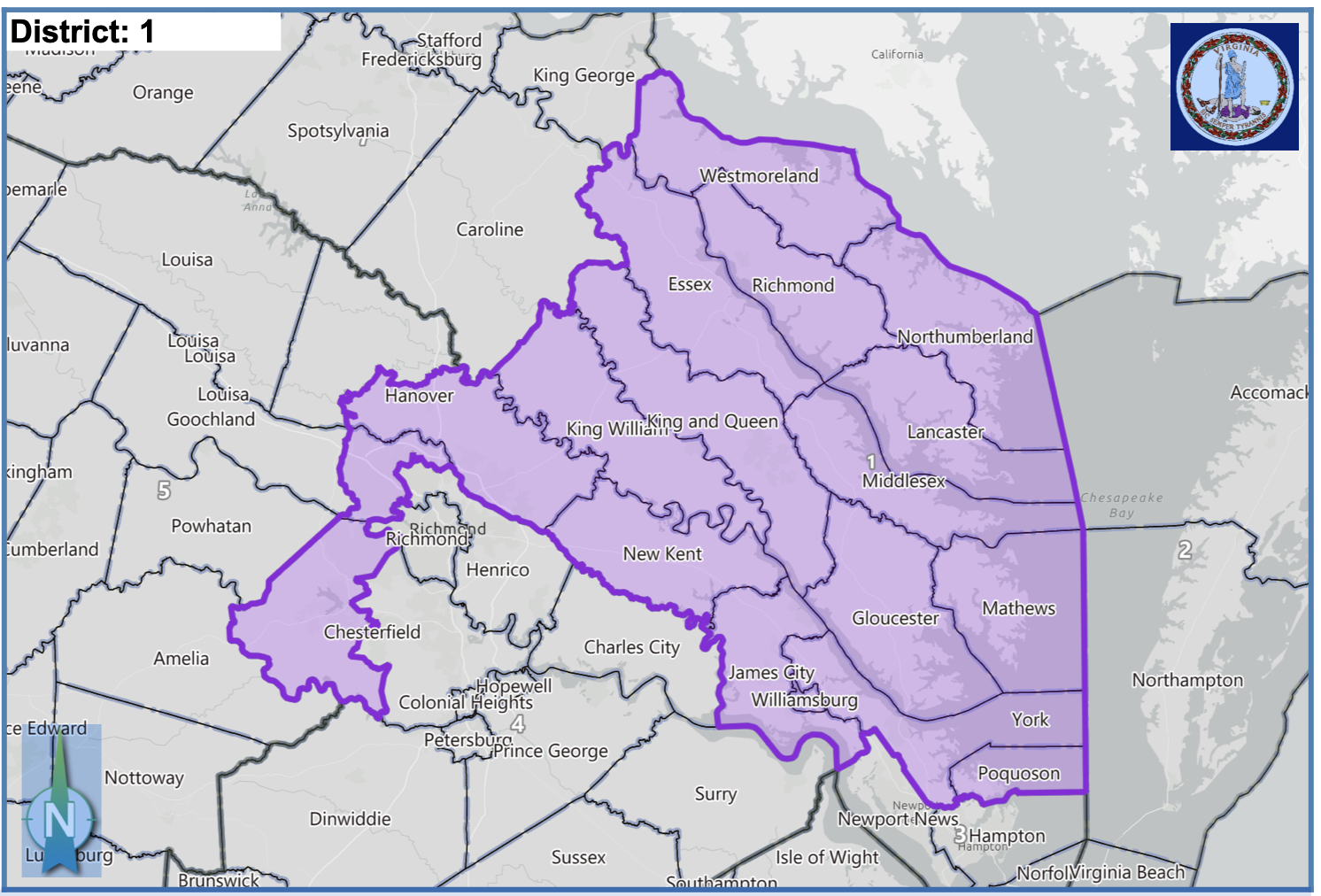
    The 1st District stretches from Colonial Beach down the eastern coast of the state to Williamsburg, and hooks over the north side of Henrico County into part of Chesterfield.

    Over 615,000 registered voters live in the 1st District, with the largest portions of the population in Henrico, Chesterfield, Hanover, and James City counties. The majority of voters there are white, but U.S. Census Bureau data shows diverse demographics: nearly 13% of voters are Black, almost 7% identify as multiracial and 6% are Asian. About 6% of voters are Hispanic or Latino.

    Voters in the area have historically favored Republicans, with 51.6% choosing Donald Trump in the 2024 presidential election and 57.8% voting for Glenn Youngkin in 2021, helping send the GOP newcomer to the governor’s mansion.

    That tide shifted in 2025, when Abigail Spanberger was elected governor with a margin of 51% in the district. Spanberger’s victory supercharged scrutiny from up-ballot Democrats, who saw it as a sign the district could be flipped in the 2026 midterm elections.

    Virginia Congressional District 1 (Photo courtesy Supreme Court of Virginia)

    Wittman to defend seat of nearly two decades

    U.S. Rep. Rob Wittman, R-Westmoreland, has represented the 1st District in Congress since 2007. Before taking office, he served in the Virginia Department of Health’s Division of Shellfish Sanitation for 26 years, which has shaped his policies and tenure on the House Natural Resources Committee.

    Wittman was one of just a handful of House Republicans nationwide to join Democrats in voting to extend the Enhanced Premium Tax Credits through the Affordable Care Act for three years. The measure ultimately failed.

    Wittman has consistently supported H.R. 1, the One Big Beautiful Bill, which excluded the credits when passed last summer, critics have highlighted. The congressman also faced blowback from constituents last year who said he avoided in-person town halls amid sweeping federal budget cuts and layoffs.

    Promising to guard against “reckless government spending” on his website, Wittman also supports enhanced border security – including the construction of a wall bordering Mexico to staunch illegal immigration.

    Wittman constituents host town hall in his absence to address immigration, federal funding concerns

    Wittman did not respond to requests for comment on his campaign and has not completed The Virginia Mercury’s candidate questionnaire, sent to all contenders on June 1.

    Seven Democrats vie to take on Wittman

    Shannon Taylor, the frontrunner in the race to flip the 1st District to blue, is an experienced prosecutor and has spent the last 13 years as the Henrico Commonwealth’s Attorney. She was the first woman to hold the position and the first Democrat to be elected to the seat in 40 years.

    Her courtroom experience undergirds one of her key campaign priorities: managing political corruption. She also advocates for congressional stock trading to be made illegal.

    Taylor is also committed to protecting healthcare access in the wake of the sweeping changes from H.B. 1, she said.

    “More than 44,000 Virginians have lost their ACA coverage, and rural hospitals like Rappahannock General are at risk of closure,” Taylor said. “I’ll fight to lower health care costs by extending the ACA tax credits, expand Medicare’s ability to negotiate drug prices, and protect Medicaid.”

    Shannon Taylor launches bid to represent Virginia’s 1st Congressional District

    She previously ran for the office of the Attorney General but lost the primary to Jay Jones, who was elected to the seat last fall. Taylor’s campaign has raised $1,300,040, as of the latest campaign finance reporting.

    Political newcomer and lawyer Salaam Bhatti’s priorities center on expanding Medicare access, increasing taxes for the highest earners and reforming political candidates’ campaign finance process.

    The former Virginia Poverty Law Center attorney is a child of immigrants who relied on programs like WIC and free school meals while growing up. Bhatti focused his VPLC work on expanding SNAP access and at the Food Research and Action Center, worked against a farm bill addition that would have made major cuts to SNAP.

    Wittman has had more than enough time to better address issues of poverty and healthcare access in the district, Bhatti said.

    “Rob Wittman has been in office for nearly 20 years and in that time our neighbors have gotten poorer, healthcare has become more expensive, corporate donors have gotten more access, and Rob has become a multimillionaire through stock trades,” he said.

    Bhatti has raised $184,834 as of March 31 reporting.

    Tim Cywinski, another Democratic challenger, is not new to the political sphere. He spent years as a community advocate and has worked on the political side as an intern for the Obama campaign when he was 17.

    Cywinski’s brother was born with a heart defect, and the cost of his care contributed to his family’s skyrocketing medical debt and eventual loss of their home. That experience, Cywinski said, gave him personal experience with the challenges of America’s healthcare system and fuels his interest in addressing it via federal legislation.

    Wittman represents what Cywinski characterized as the political establishment, which doesn’t provide solutions for constituents’ healthcare needs, tax burdens and other priorities. His campaign is about finding ways to take big money out of politics, he said.

    “My main platform is what I call the fair shot agenda because unless you’re already powerful or unless you’re really wealthy and well connected, no one feels like they have a fair shot in this country and our politics upholds that reality,” Cywinski said.

    As of March 31, Cywinski has raised just over $8,113, the smallest campaign coffer of any candidate in the race. He lives in the greater Richmond area.

    Jason Knapp has served his country for 21 years as a naval officer and said his military background shapes his policy goals.

    A former defense fellow assigned to the Armed Services Committee and deputy director of legislative affairs for the U.S. European Command, Knapp has taken aim at the cost Virginians and Americans are paying for the Iran war, a conflict Wittman has supported.

    “Food, fuel, energy, housing, and medical costs are skyrocketing and people are literally choosing between buying food, buying medicine, or paying bills — and the man who represents this district is at worst complicit in these hardships, and at best, apathetic to the real problems people are facing,” Knapp said.

    Universal healthcare is another top priority for Knapp, who aims to counter the privatization of the Veterans Administration, which he said creates barriers for servicemembers to access essential care.

    Knapp has raised $501,287 as of March 31.

    Ericka Kopp, a healthcare attorney and a caregiver to her husband who is a disabled veteran, said Wittman’s support of the congressional bill that stripped funding for Medicaid compelled her to run to replace him.

    Kopp earned her law degree from the University of Richmond and clerked for a Virginia circuit court judge. She said she never considered running for office until her frustrations with Wittman bubbled to the surface because he did not attend several town hall meetings in her district in 2025.

    “He’s not accessible to the people, let alone accountable to us. In April of last year, I started thinking that anyone could do a better job, even me. And then I thought, ‘Why not me?’” Kopp said.

    Her campaign priorities include expanding Medicaid and healthcare access. She has raised $13,867 so far.

    Business lawyer and small law firm owner, Mel Tull believes he can help bridge the partisan divide in Congress and said his experience successfully navigating competing interests can earn the trust of other lawmakers and the people they represent.

    Like several other Democratic contenders, Tull said Wittman’s 18 years in Congress is too long a time to serve without better addressing issues like healthcare, affordability, and government functionality.

    “My job has been to evaluate competing interests, understand risks and consequences, and help people make sound decisions. I’ve spent my career bringing people together to solve difficult problems, not score political points,” Tull said.

    Tull served in the Army before branching into business law. His campaign has raised $179,991, to date.

    Elizabeth Dempsey Beggs, the final Democratic contender in the contest, was one of the first women to serve as a tank commander in a combat role in the U.S. Army. The veteran now works in the package and manufacturing industry.

    She said concerns about affordability and government transparency drove her to enter the race. Her campaign priorities also include protecting the right to vote and reproductive healthcare access.

    As a mother, foster parent, and business leader, I’ve seen firsthand how decisions made in Washington affect families every single day,” Beggs said. “Whether it’s the cost of childcare, access to healthcare, housing affordability, or the lack of accountability in government, people are working harder than ever and feeling like they have less and less to show for it.”

    Public office should be a service and not a long-standing career, Beggs added, pointing out Wittman’s tenure in the seat. So far, she has raised $64,494.

    Early voting for the primary election for the first congressional district begins on June 18. Election day is Aug. 4.

  • Virginia marriage equality amendment campaign launches at start of Pride Month

    Virginia marriage equality amendment campaign launches at start of Pride Month

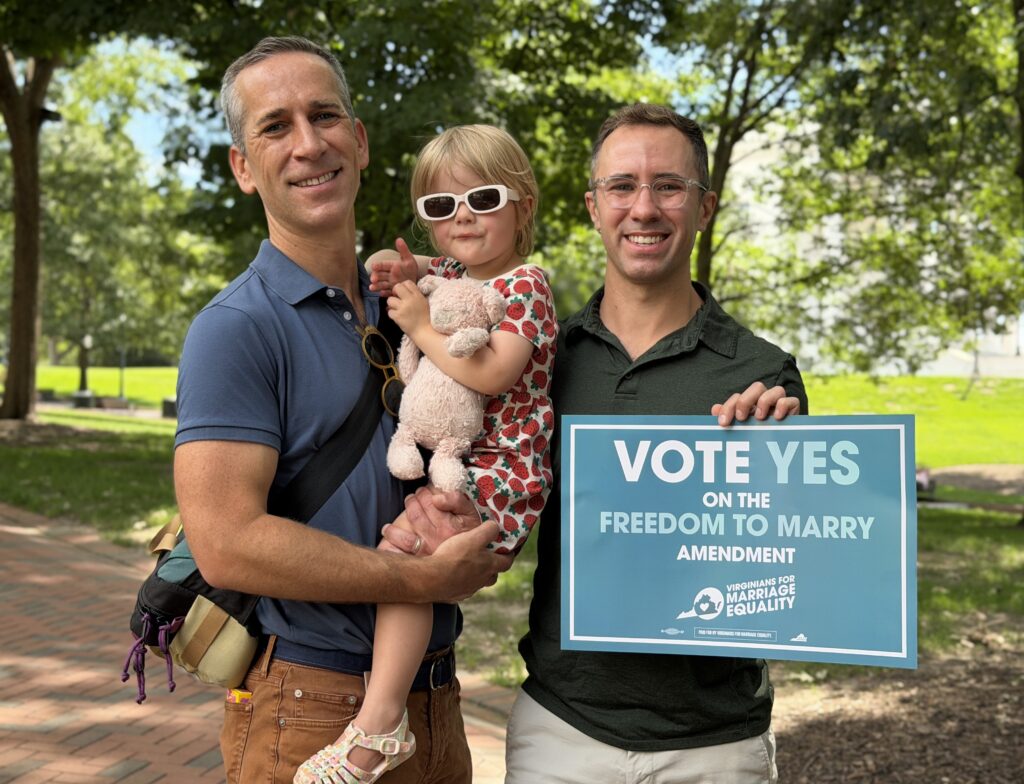
    Chad Stewart and Blake McDonald met in college in 2007 and began dating two years later, eventually building a life together in Richmond after settling in Virginia more than a decade ago.

    By 2015, the couple married — just one week before the U.S. Supreme Court’s landmark Obergefell v. Hodges decision legalized same-sex marriage nationwide.

    “We didn’t want to have to think about politics or court cases,” McDonald said Monday outside the Bell Tower in Richmond’s Capitol Square. “We just wanted to dream about the future we’re going to build together.”

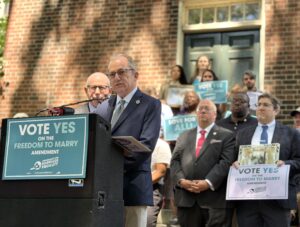
    The couple spoke as Virginians for Marriage Equality formally launched its statewide campaign to pass a constitutional amendment referendum in November that would permanently protect same-sex marriage in the Virginia Constitution.

    The coalition gathered at the start of LGBTQ Pride Month to rally support for the amendment, which would repeal Virginia’s dormant constitutional ban on same-sex marriage and replace it with language requiring the commonwealth to recognize all marriages, regardless of sex, gender or race.

    Advocates say the amendment is needed in case federal protections for same-sex marriage are ever overturned.

    Concerns intensified after the U.S. Supreme Court overturned Dobbs vs. Jackson Women’s Health Organization in 2022 and Justice Clarence Thomas later suggested the court should reconsider other rulings involving privacy and due process rights, including same-sex marriage protections.

    Over time, Stewart said, the future he and McDonald imagined together in Virginia expanded beyond the two of them. During the pandemic, they began the adoption process. In 2023, they received a call, giving them just 16 hours notice before bringing home their daughter, Flora.

    “And so now our life is daycare drop offs, bedtime routines, holidays together, play dates with neighbors, and our daughter proudly calling the people down the street family, too,” Stewart said.

    From Marshall-Newman to Obergefell

    Virginia’s fight over marriage equality has spanned two decades, from one of the country’s strictest constitutional bans to this year’s referendum effort to permanently protect those marriages in state law.

    Voters approved the Marshall-Newman amendment in 2006 after legislation introduced by then-Del. Bob Marshall, R-Manassass, and then-Sen. Steve Newman, R-Bedford County.

    The amendment defined marriage exclusively as a union between “one man and one woman” and barred the state from recognizing same-sex relationships or similar legal arrangements.

    Roughly 57% of voters backed the amendment at the time.

    The issue later became the subject of federal lawsuits including Bostic vs. Schaefer and Harris vs. Rainey, in which same-sex couples argued Virginia’s ban violated the Equal Protection and Due Process clauses of the 14th Amendment.

    A federal judge struck down Virginia’s ban in 2014, and the 4th U.S. Circuit Court of Appeals later upheld the ruling. When the U.S. Supreme Court declined to hear Virginia’s appeal later that year, same-sex marriages began statewide.

    The following year, the high court’s Obergefell ruling established a nationwide constitutional right to same-sex marriage under the 14th Amendment’s guarantees of due process and equal protection. Although the decision invalidated Virginia’s constitutional ban, the language itself remained in the state constitution.

    The amendment before voters in the 2026 midterm elections passed the General Assembly in 2025 and again during the 2026 legislative session, satisfying the constitutional requirement that amendments pass in two separately elected legislatures before reaching the ballot.

    If approved by voters this fall, the amendment would repeal the Marshall-Newman language and replace it with protections requiring Virginia to recognize marriages regardless of sex, gender or race.

    Former state senator Adam Ebbin speaks during the launch of the Virginians for Marriage Equality campaign in Richmond Monday. (Photo by Markus Schmidt/Virginia Mercury)

    ‘Dignity, respect, and equal treatment under the law’

    In Richmond Monday, several speakers described the referendum as the culmination of decades of legislative efforts and legal battles.

    Former state senator Adam Ebbin, a Democrat from Alexandria and the first openly gay legislator elected to Virginia’s General Assembly in 2003, recalled watching lawmakers approve the constitutional ban more than 20 years ago.

    “For Mark and me, today is deeply personal,” Ebbin said, referring to Virginia Secretary of Finance Mark Sickles, another openly gay former lawmaker standing next to him.

    “Twenty years ago, we stood in the General Assembly and watched Virginia write discrimination into its constitution. We argued against it, we voted against it, and for 20 years, we worked to undo that mistake.”

    Ebbin said same-sex couples across Virginia have spent more than a decade building families while the constitutional ban remained written into state law.

    “Back in 2006, Virginians were told that marriage equality would somehow threaten our community,” Ebbin said. “But today, for more than a decade, same-sex couples have been building marriages, raising children, buying homes, and growing all together across the commonwealth.”

    Sickles said public attitudes shifted over time as LGBTQ Virginians became more visible in communities and families across the state.

    “People keep organizing,” Sickles said. “Families kept showing up. Virginia has changed because people got to know their neighbors, their coworkers, their friends, their siblings, their children more fully.”

    Narissa Rahaman, executive director of Equality Virginia and a committee member of Virginians for Marriage Equality, described the campaign as centered on dignity, family and personal freedom.

    “This November, Virginians have the opportunity to protect the Freedom to marry and affirm what so many of us already know,” Rahaman said. “Every Virginia family deserves dignity, respect, and equal treatment under the law.”

    Rahaman referred to her marriage to her wife, Brianna, as “a million little decisions and a million little moments” built around love, commitment and stability.

    “No family in Virginia should have to wonder whether their rights will be protected tomorrow,” she said.

    Marshall, the sponsor of Virginia’s 2006 same-sex marriage ban, declined to comment when reached by phone Monday.

    But the political landscape around the issue has since shifted dramatically. In 2024, then-Gov. Glenn Youngkin, a Republican, signed legislation sponsored by Democratic lawmakers aimed at ensuring same-sex marriage would remain legal in Virginia regardless of future federal court decisions.

    Still, Youngkin’s office at the time emphasized provisions protecting religious liberties, including language allowing clergy members and religious organizations to decline to perform same-sex weddings.

    Campaign heads into election season

    Organizers said they plan to spend the coming months traveling across Virginia to build support ahead of the November elections.

    Alexandria Democrat Del. Kirk McPike, who is also campaign co-chair, said marriage equality advocates will engage voters in communities statewide in the coming months.

    “My own husband, Jason, and I have built a life together here in Virginia, just like thousands of other couples and families across the commonwealth,” McPike said. “Every Virginian has a place in this campaign and a place in this commonwealth.”

    Mary Bauer, executive director of the American Civil Liberties Union of Virginia, tied the amendment effort to Virginia’s broader civil rights history, including the 1967 U.S. Supreme Court decision in Loving v. Virginia, which struck down interracial marriage bans.

    “This amendment is about making clear that the government has no business deciding which marriages or which families are worthy of recognition,” Bauer said.

    For Stewart and McDonald, the constitutional debate ultimately comes back to protecting and honoring their union.

    “When you build a family like that, legal recognition stops feeling abstract very quickly,” Stewart said. “Marriage equality is what allows families like ours to navigate healthcare, school enrollment, parenting, and all the ordinary parts of life that come with making a home together.”