Tag: Data Centers

  • Virginia legislators advance $205 billion budget including new tax on data centers

    Virginia legislators advance $205 billion budget including new tax on data centers

    On Monday, Virginia legislators approved a two-year, $205 billion budget proposal to fund healthcare and public education, provide 4% teacher raises and a 3.5% pay bump to state employees, establish a retail weed marketplace and hedge against decreased federal dollars.

    The spending plan also includes a provision to tax data centers for their energy consumption, which is slated to generate a maximum of $600 million each year but doesn’t include the environmental standards the House of Delegates wanted to impose on the industry or the end of the sales tax exemption that the Senate sought.

    Senate Finance Committee chair Louise Lucas, D-Portsmouth, said after her chamber’s morning session that she “didn’t love” the data center compromise and framed it as a necessity — but not the final solution.

    “I would have preferred another method, but we had to get a budget. We were not going to let the government be shut down, and so this was a good start,” Lucas said.

    “This is a compromise proposal — one my administration helped craft — and it builds a strong foundation for further discussions about the future of this industry in Virginia on issues like environmental and community impact,” Gov. Abigail Spanberger said of the data center provision in a statement.

    The Senate passed the budget proposal 23-16 vote, while the House advanced it 71-22.

    With both chambers finally on the same page after months of gridlock over data centers, the plan will now be reviewed by Spanberger. She can sign it as-is, recommend changes or veto line items. The whole process must be finalized by July 1, when the new budget will take effect.

    Here are the key priorities addressed by the spending plan.


    Data centers


    The amended budget proposal creates an energy consumption tax for data centers which totals $.011 per kilowatt hour used per month.

    The state will collect up to $600 million a year from this new tax, according to budget language. Any funds collected over that cap would be put into a fund and given back to data centers at the end of each fiscal year.

    This is only a fraction of what the state could have made if they had ended the sales and use tax exemption, but, after months of arguing, lawmakers ultimately didn’t agree to that measure. Spanberger supported keeping the exemption in place through the end of the agreement’s term in 2035.

    Additionally, language was put into the budget to direct the Department of Environmental Quality to study the groundwater impacts of non-closed loop data centers, which use millions of gallons of water each year.

    DEQ will locate “cooling water scarcity areas” where the use of potable water for computer cooling systems could be detrimental to surrounding areas’ water quality and availability.

    The department will have until July 2027 to create regulations for the scarcity areas. After they are developed, future data centers in that area will be required to “use air cooling, closed loop cooling systems, or more efficient cooling systems that become available.”

    After July 1, 2027, data centers in the Eastern Groundwater Management Area will have to “use air cooling systems, 100% recycled water and/or stormwater for cooling, or use a closed loop system.” A study will be released in October 2026 on how to retrofit existing data centers in those areas to align with the new regulations.

    Some Republican lawmakers characterized the measure as inconsistent.

    “The budget does not create one strong statewide water usage standard for data centers. Some parts of Virginia get stronger protections and other parts get weaker protection or no protection at all,” said Sen. Glen Sturtevant, R-Chesterfield. “That should concern every locality that is concerned about becoming the next target for a massive data center.”

    Senate budget proposal keeps data center sales tax exemption, adds new tax for industry

    Budget language also directs DEQ to put in place noise abatement regulations for data centers before the end of 2029. The department will determine the lowest possible noise level for data centers and make it the standard starting in 2030.

    After that date, facilities who violate the noise standard will face a fine of $32,500 per day.

    “The noise issues are some of the things we hear the most from people that live next to data centers,” said Sen. Scott Surovell, D-Fairfax, whose district contains dozens of data centers. “Water is a rising concern, especially for any data centers that are gonna be put east of I-95, where we already have a real problem with our declining aquifer.”

    Lucas told reporters that this is not the end of the conversation about doing away with the sales and use tax exemption, and that a study group will look closer at the issue and provide a report on their findings in November.


    Health and human services


    Overall, the pending budget will earmark $158.3 million in the state’s general fund for fiscal year 2027 and $245.1 million in 2028 for healthcare and social services.

    The money was set aside both for healthcare and social services the state typically handles along with support to comply with new federal mandates and partially plug holes created by federal funding shortfalls.

    As thousands of Virginians have fallen off Affordable Care Act health insurance this year, Virginia’s new budget entails $150 million to support a state-level version of the expired federal assistance for people between 138% and 250% of the federal poverty level.

    Sen. Danica Roem, D-Manassas, a former journalist and restaurant worker, described the difficulty of living uninsured for two years in a floor speech on Monday.

    “I don’t want anyone to live like that,” she said.

    She added that the budget “puts major money” into making sure that the state is “taking care” of people.
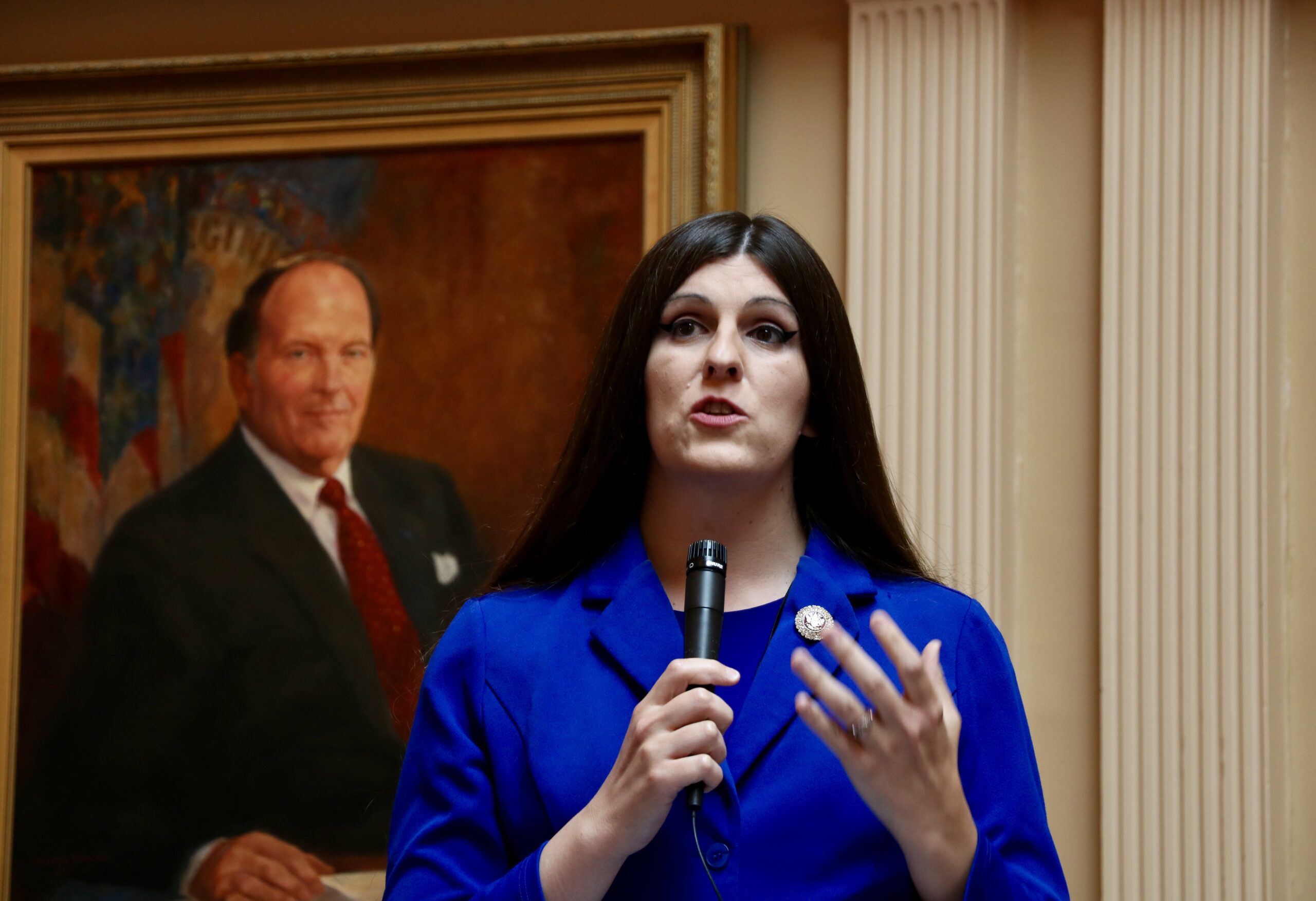
    Sen. Danica Roem, D-Prince William, speaks on the Senate floor during the special budget session on June 22, 2026. (Photo by Charlotte Rene Woods/Virginia Mercury)

    The plan calls for $3.5 million to determine ways the state can ensure eligible people remain on Medicaid amid forthcoming eligibility requirement shifts and additional verification work.

    Virginia’s roughly 850,000 Supplemental Nutrition Assistance Program beneficiaries went without their food stamps last fall during the federal shutdown. And due to a reconciliation bill Congress passed last summer, states like Virginia are attempting to reduce their error rates.

    State lawmakers have designated $135 million to handle SNAP, should the error rate not fall to the required 6% by the end of the calendar year.

    Sometimes SNAP households are overpaid or underpaid because of paperwork mistakes by government staff or outdated information from beneficiaries. Work in social service departments is already underway to reduce error rates.

    Free clinics will receive $20 million in state funding over the next two years while federally qualified health centers will get $10 million in that time.

    While federally qualified health centers offer sliding scale fees for low-income patients, free clinics are also a resource for uninsured patients. Both entities have been bracing for additional clients as Virginians lose their ACA or Medicaid insurance.

    A little over $1 million is allocated to help local health departments statewide handle rent increases. The regional centers help fill healthcare access gaps and are often tailored to the local communities they serve.

    As federal dollars for HIV/AIDS care are slashed, the state budget also contains over $26 million for that specific type of healthcare over the next two years. Staying on top of medication is critical in preventing the spread of the disease.


    Education


    Under the newly approved budget proposal, K-12 education funding would increase by $1.4 billion, including a 4% increase for teachers in each of the next two years.

    Lawmakers propose $590 million for rebenchmarking, declining enrollment, and high-need groups, including $28.9 million for at-risk and $148.4 million for special education students.

    Also included: $500,000 for grants to help schools purchase Automated External Defibrillators (AEDs) and implement cardiac emergency response plans.

    In higher education, the budget proposes restoring funding for affordable access and tuition moderation, as well as expanding nursing programs at several public universities. The Internships Virginia (InVA) initiative to provide paid internships for postsecondary students would also be funded.

    Virginia localities raise $119M for school construction through targeted sales tax

    To support educational infrastructure, lawmakers also agreed to expand the authority to allow all localities to use a 1% sales tax to pay for construction costs, contingent on a referendum that must pass in each jurisdiction. The language also permits jurisdictions in Northern Virginia to use the funds for transportation projects to address public transit needs.


    Tax deductions


    Taxpayers will be able to keep a bit more of their cash, as the new budget increases the standard income tax deduction from $8,750 for single filers and $17,500 for joint filers to $9,200 and $18,400 in 2027 and $9,300 and $18,600 in 2028.


    RGGI/environment


    A budget amendment was added into the conference report that would divert 45% of the funds earned from the Regional Greenhouse Gas Initiative back to ratepayers.

    The funds come from carbon credit sales, which utilities must purchase if they want to burn carbon-based fuels sources that release emissions. Those costs are then passed down to utility customers.

    When former Gov. Glenn Youngkin removed the state from the agreement in 2021, it cost about $4 a month on the average residential customer’s bill. Recently, Dominion Energy filed for the “RGGI Rider” to be added back to monthly bills as mandated by a law to rejoin the agreement, signed by Spanberger in recent weeks.

    Dominion is required to begin purchasing from the carbon credit auction in July but the charge to customers won’t begin until March should the State Corporation Commission approve the application by the utility. This will lead to an increased charge of $10-$13 monthly.

    The state previously earned about $800 million from the RGGI funds that had to go towards community flood preparedness projects and low-income energy efficiency projects. The new budget language includes the rebate for customers, which would put money back in wallets but detract from the funds for flood and efficiency projects.

    The rebate will not apply to co-op utility customers.


    Housing


    While a handful of housing bills passed the 2026 session and have since been signed into law, the new spending plan includes measures to ensure bills with fiscal impacts get off the ground.

    The state budget proposal directs $60 million overall for housing initiatives, $40 million of which will go to the state’s Housing Trust Fund and $20 million that will go towards a mixed-income housing pilot program.

    Additionally, lawmakers set aside $11.5 million for the Virginia Eviction Reduction Program and $10 million for the Clean Energy Innovation Bank.


    Cannabis


    Spanberger and lawmakers announced June 16 a reworked proposal for a retail cannabis marketplace that included key compromises between legislators’ and the governor’s visions. The marketplace is set to launch July 1, 2027 and will be limited to 350 stores statewide.

    Spanberger, legislators roll out retail weed plan, set to launch in July 2027

    State sales tax on retail weed will be 6% at launch and will increase to 8% in 2029. Localities also have the option to add an additional tax of 1 to 3.5%.

    Because lawmakers added a Part 5 amendment, the market will be permanently established in the state.

    The new framework includes a $250 public consumption civil penalty that will not take effect until 2027.

    “We had serious concerns about creating extreme new penalties that would not have meaningfully reduced the illicit market,” Sen. Lashrecse Aird, D-Henrico, said at a press conference announcing the framework last week.

    “But we believe this final framework strikes the right balance for enforcement mechanisms, but also in accountability, but also not harming those who just choose to participate in the market.”


    Child care


    The budget sets aside $137.6 million for the state-subsidized child care program slots, which will be devoted to families making 85% or less of the state median income.

    This follows legislation carried by Del. Briana Sewell, D-Prince Wiliam, requiring the state education department to update how it calculates the cost of childcare for Virginia families. A majority of Virginia parents and employers say child care costs are prohibitive.

    Spanberger signed the bill into law last month.

    A new cost-sharing program for child care will be funded through the budget, with lawmakers allocating $25 million for the initiative to spread the price of child care between families, employers and the state.


    Transportation


    Lawmakers included $153 million in the budget for additional operating assistance for the Washington Metropolitan Area Transit Authority, or Metro, with the caveat that Metro must produce a 20-year capital plan and annual performance reports.

    The action comes as inflation has driven up the costs of operating transit services.

    Lawmakers also proposed directing the secretary of transportation to evaluate options, including public-private partnerships, to accelerate large-scale improvements to the I-81 corridor.

    The legislature allocated $7 million for the Route 460 Phase IIA Finish Grade Project and directed stakeholder engagement to prioritize improvements along the U.S. Route 220 corridor.

    The budget also directs the state to identify federal funds to support rural electric-vehicle charging infrastructure and provides $500,000 to continue developing Advanced Air Aviation Test Sites to enable advanced air mobility.


    What’s next


    The proposal will now head to Spanberger, who said it contained “a lot to be proud of” in a Monday afternoon statement.

    “Today, the General Assembly has moved forward with a budget proposal — and that means we are keeping our government open and delivering for the 8.8 million people who call our Commonwealth home,” she added.
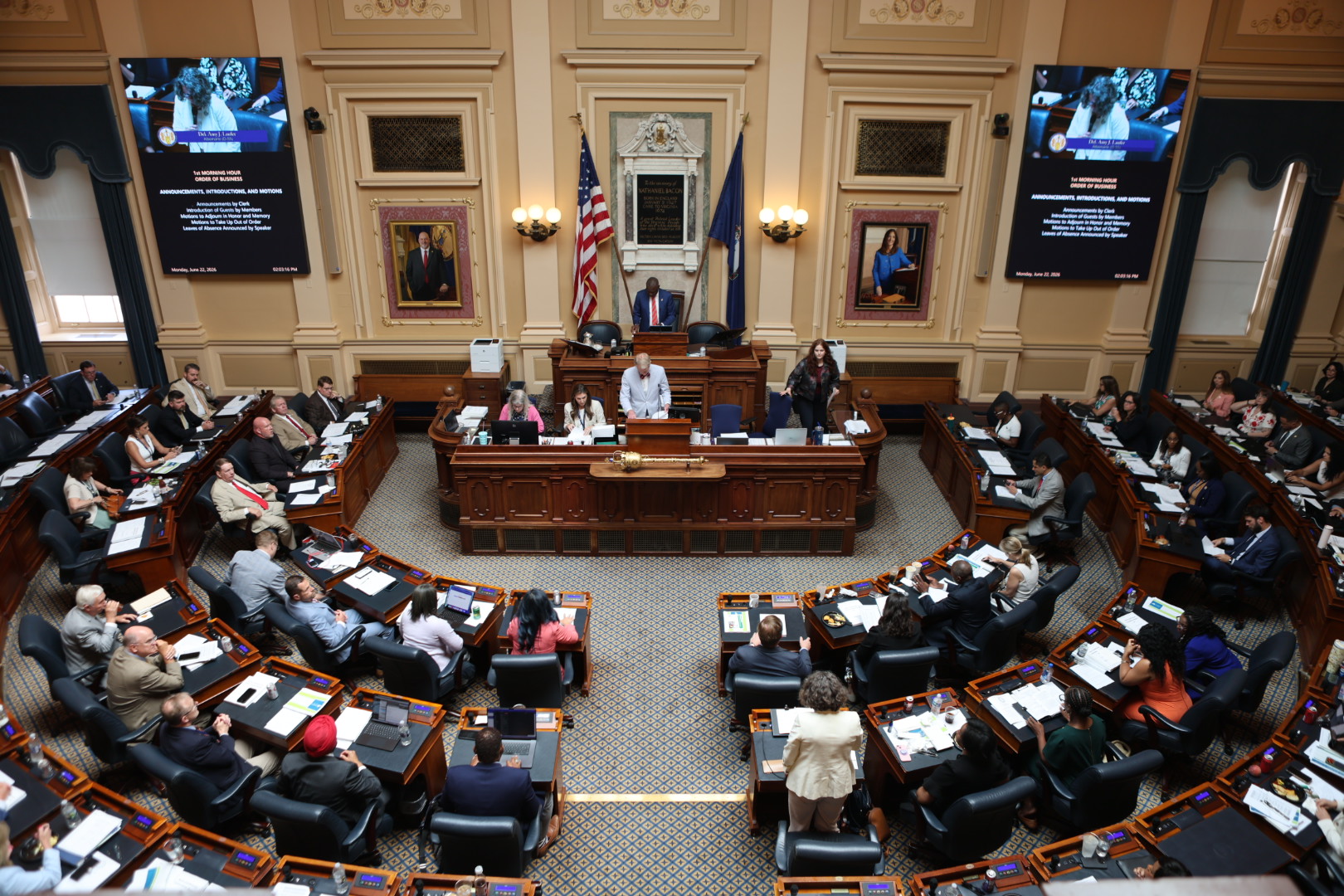

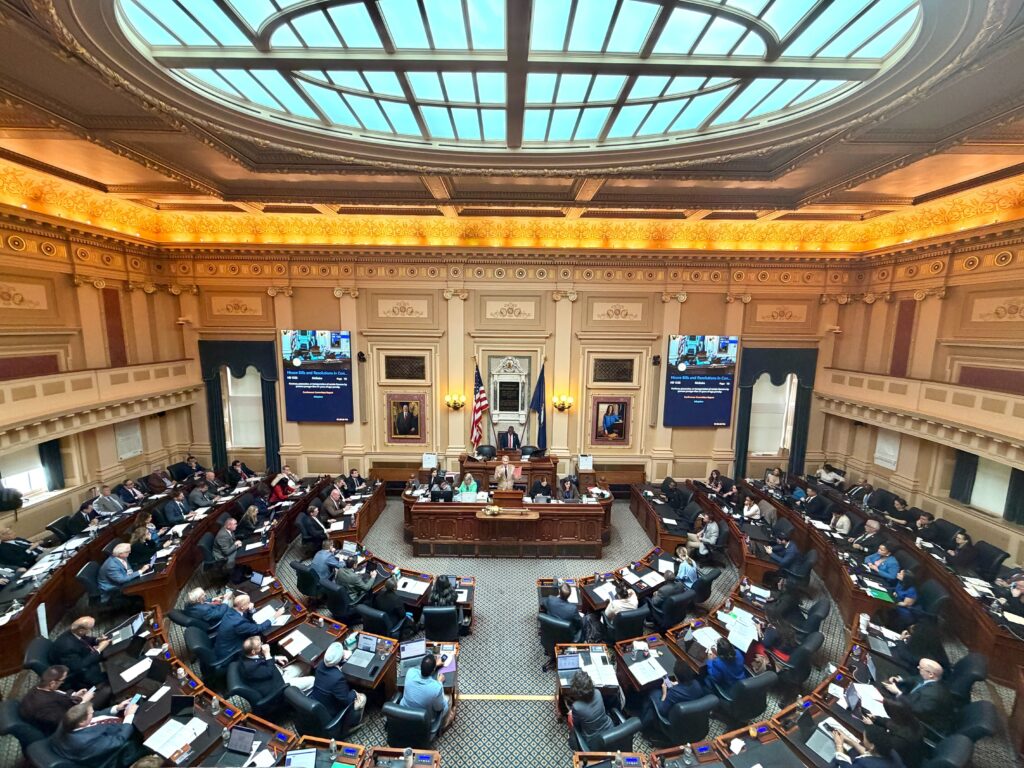
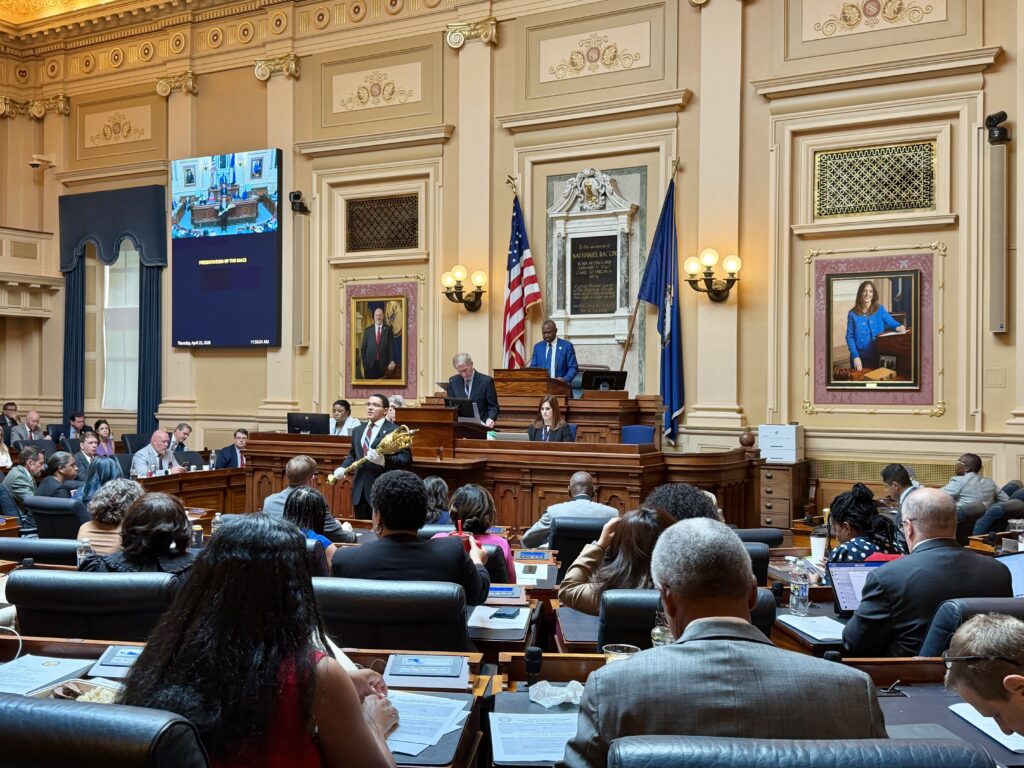
    A view from inside the Virginia House of Delegates chamber on June 22, 2026. (Photo by Nathaniel Cline/Virginia Mercury)
  • Amid statewide drought conditions, data centers face same restrictions as all water customers

    Amid statewide drought conditions, data centers face same restrictions as all water customers

    About one-third of the state of Virginia is under extreme drought conditions, according to the U.S. Drought Monitor, and Gov. Abigail Spanberger is urging citizens to conserve water. So when local water authorities implement restrictions on water use, are there specific carve outs and rules for data centers, which use hundreds of thousands of gallons of water to cool their computer systems?

    No. Across multiple localities, they’re treated the same as all other commercial, industrial and residential customers, state and local officials revealed.

    The Department of Environmental Quality is responsible for permitting the groundwater withdrawal for public water authorities. Once that permit is granted it is up to each authority to manage their water use and limit customers as needed, based on the weather conditions.

    “Any of the permittees that are withdrawing are very cognizant of what they’re pulling out,” Weedon Cloe, manager of the Office of Water Supply at DEQ, said. “They have the limits and those limits are baked in during specific times of the year to ensure that the resource is not depleted.”

    There are provisions in the drought assessment and response plan that allow DEQ’s director to alter those permits in extreme circumstances. Cloe said that the department is reviewing those procedures, since the state is experiencing the worst drought they’ve seen in decades.

    Virginia hasn’t been this dry since 2002, when the extreme conditions triggered new standards.

    “The entire water supply program came (from) that drought. It was severe. It was like a huge swath through the center of the state running north south,” Cloe said.

    There are three main stages of drought that are declared by DEQ, which help localities decide on what water restrictions to implement.

    Under a drought watch, the state agency recommends localities minimize nonessential water use and to get a contingency plan in place.

    In the drought warning category, officials recommend local leaders to start voluntary water restrictions and aggressively identify any leaks or repairs needed.

    Once a drought emergency is declared, mandatory restrictions are put in place and if water customers don’t curb inessential water like irrigation, washing paved surfaces, or filling up pools, they could be fined.

    Some places, like Henrico County, have not needed to venture into the mandatory category for their customers in two decades.

    Bentley Chan, the director of Henrico’s department of public utilities, said that of the eleven data centers in the county, only one makes it into the list of their top ten water users. Apartment complexes and hospitals are the biggest water consumers there, and they don’t have specific usage rules in times of drought.

    “It’s not just on the residential customers (to restrict water use) and you’ll find that a lot of the industrial users have extraneous uses, such as irrigation, additional cleaning, and things of that nature,” Chan said. “And we do ask everybody to be a part of the mandatory restrictions … to preserve the flow in the James River.”

    Similar policies are used in Loudoun and Fairfax counties that house over 200 data centers combined. In Fairfax, the county follows guidance from the Metropolitan Washington Council of Governments that requires all customers to implement reductions under the mandatory orders.

    In Norfolk, there are no data centers online at this time that use water from their utilities, according to a utility representative. The representative went on to state that since they get their water from multiple sources, it is rare to have to implement restrictions.

    If there comes such a time (of data centers), the department would analyze the capacity versus the needs and factor in all conditions to ensure they’re able to adequately provide for all customers,” the representative said in a statement.

    Western Virginia Water Authority provides water to 69,000 customers in the Roanoke area, where there are also no data centers online yet. A representative told the Mercury that they are considering updating their policies once a data center is built – with one from Google expected to begin taking in water in 2028 that will be authorized to use up to 8 million gallons of water per day.

    Some localities have started mandatory restrictions heading into the official start of summer with precipitation totals for the rain year, which begins in October, to be about eight inches short.

  • Virginia House, Senate leaders reach budget deal, chambers to meet Monday

    Virginia House, Senate leaders reach budget deal, chambers to meet Monday

    After months of debate and an increasingly fraught battle over how to tax and regulate data centers, Virginia budget negotiators announced Friday evening that they’d reached a deal featuring a new energy consumption tax for the industry that’s expected to generate $1.2 billion over the biennium.

    The new plan also includes 4% raises for teachers each year, and roughly $285 million for health insurance from the state marketplace and food assistance funding for low-income families. It will also give localities authority to impose a 1% sales tax for school construction and renovation, if they choose. Nearly $1 billion has been allocated in the revised budget as contingency reserve to cover anticipated gaps from reduced federal funding.

    The Virginia House of Delegates will convene Monday afternoon in Richmond and the state Senate will meet the same day, as both chambers vote to finalize the budget, which will take effect July 1.

    “This budget agreement reflects our shared commitment to making Virginia more affordable for families,” Sen. Louise Lucas, D-Portsmouth, and Appropriations Chair Del. Luke Torian, D-Prince William, said in a joint statement.

    “At a time when too many households are feeling squeezed by rising costs and economic uncertainty, this conference report makes historic investments to lower costs, strengthen our schools, protect access to healthcare, expand economic opportunity, and maintain the Commonwealth’s strong fiscal foundation,” they added.

    The House had been scheduled to meet last Thursday but Speaker Don Scott, D-Portsmouth, canceled the session, citing budget negotiators’ failure to reach an agreement. By Thursday, leaders in both bodies had signaled negotiations were progressing and legislators were closing in on a deal, the Richmond Time-Dispatch reported.

    Senate budget proposal keeps data center sales tax exemption, adds new tax for industry

    The issue that paralyzed the process for weeks was whether data centers should continue to be exempt from paying sales and use tax. Lucas proposed eliminating the exemption and was the most fierce defender of that stance until last week, when the Senate released an updated budget that removed the provision to revoke the exemption,

    Lucas instead pitched a tiered tax for data centers based on their generator use and traveled statewide in recent days, drumming up public support for her chamber’s plan to levy more costs onto data centers, which they said would net the state $1.8 billion.

    “We know technology is not bad,” Lucas said Tuesday on a tour stop in Chesterfield. “You know, we all can benefit from technology, but we, as a government, have not done a good job in managing the regulations and the impact on our communities and that’s what we’ve got to rein in.”

    The House released a reworked budget proposal last Friday that stripped environmental stipulations the body had previously recommended but preserved the tax exemption for the digital facilities that now number in the dozens statewide.

    The House and Senate both released new budgets. Here’s how they align and diverge.

    The Senate is set to gavel in at 10 a.m. Monday and the House will convene at 2 p.m.

    Editor’s note: This story has been updated to include details from lawmakers’ budget deal, released Friday evening. Stay tuned for The Mercury’s in-depth budget coverage this week.

  • Senate budget proposal keeps data center sales tax exemption, adds new tax for industry

    Senate budget proposal keeps data center sales tax exemption, adds new tax for industry

    On Tuesday, the Virginia Senate released its latest budget proposal that preserves a sales and use tax exemption for the data center industry, the major hangup that has gummed up negotiations between both legislative chambers.

    The revamped proposal also adds a tiered tax for the industry that targets diesel generators and would generate $1.8 billion for the state, Senate leaders said.

    Sen. Louise Lucas, D-Portsmouth, has advocated to axe the exemption for months but amid stalled negotiations that risk a government shutdown if a budget isn’t finalized by June 30, the new proposal from her chamber signals willingness to compromise, with a sustained goal of regaining money the state misses out on due to the exemption.

    “We know technology is not bad. You know, we all can benefit from technology, but we, as a government, have not done a good job in managing the regulations and the impact on our communities and that’s what we’ve got to rein in,” Lucas said Tuesday night at a middle school in Chesterfield at a stop on her data center listening tour.

    The new Senate spending plan would levy a tiered impact tax on the types of backup generators that data centers use. The diesel generators have been a point of contention for residents who live near data centers due to heightened concerns over the air pollution released from the generators.

    The older, Tier 1 and 2 model backup generators release the most pollution. A new state law requires all new data centers that apply for an air permit to use Tier 4 models, which, along with tier 3 models, are cleaner.

    The Senate’s proposed data center tax would be distributed this way:

    – $45.00 per permitted kilowatt electrical (kWe) on any Tier 1 and Tier 2 generator;

    – $37.00 per permitted kWe on any Tier 2 backup generator retrofitted to be a Tier 4-

    equivalent backup generator, Tier 3 generators, and any generator powered by natural gas

    – $35.00 per permitted kWe on any Tier 4 generator or any other generator.

    Each quarter, data centers would remit the fees to the Department of Taxation and deposited to the general fund.

    The key term is “permitted.” Data centers rarely run their backup generators unless there is an emergency power outage or for short periods for monthly testing. But they are permitted for vastly larger amounts than their actual use – which would mean more tax revenue under this plan.

    According to Senate finance committee officials, the new generator tax would bring in an estimated $1.8 billion over the biennium. This would be about half of what the state could make in tax revenue if the sales and use tax exemption for the industry was revoked.

    The Senate plan, similar to the House, would create a workgroup to generate policy recommendations on how to phase out the sales tax exemption for the industry and present a report to the General Assembly in the fall.

    When asked how this group’s report would differ from past reports, such as the 2024 JLARC study on data centers, Lucas said it won’t reveal more than what the state already knows about the impact of data centers across the commonwealth.

    “I don’t expect that there’s going to be anything new coming out of it. I actually think it’s a waste of time. But since they want to do it, we will accommodate them,” Lucas said Tuesday.

    Lucas said that the House and Senate conferees planned to meet late into the night on Tuesday to work out a deal.

    House Speaker Don Scott, D-Portsmouth, cancelled the chamber’s special session on the budget that had been scheduled for Thursday in Richmond, since a deal with the Senate has not been finalized.

    Lucas said that the goal for budget conferees of both bodies is to have a deal in place before the Senate is slated to return to the Capitol on Monday.

  • Amid budget battle, legislators pass the buck on concrete data center reforms. Again.

    Amid budget battle, legislators pass the buck on concrete data center reforms. Again.

    Oh yay, another commission.

    Leaders in the House of Delegates are continuing to tweak their version of a state budget, but they aren’t backing down from their fight with the Senate over data centers. What they are backing down from is their former insistence that data centers use clean energy. Instead, they propose to punt this and every other data center issue over to a commission.

    Is that supposed to resolve the budget impasse? Because if that’s the idea, it sure seems like an odd way to go about it.

    New House budget strips environmental standards for data centers, creates commission instead

    Recall that Senate Finance Chair Louise Lucas, D-Portsmouth, wants to terminate the sales tax exemption that data centers have exploited to the tune of $1.6 billion lost from state coffers. (The total subsidy rises to $1.9 if you include the exemption from local taxes, but what’s a few hundred million bucks among friends?)

    The tax isn’t something specific to data centers. It’s the same one all the rest of us pay. The argument that there are better ways to spend the money than to give it away to the world’s richest corporations has reaffirmed Lucas as a bonafide social media star at age 82, and she is enjoying it very much.

    In response to the new House budget proposal, Lucas tweeted out a tweak of her own: She now proposes to subject data centers to a nearly-equivalent fee that would generate $1.7 billion in revenue. Lucas and allies have launched a “listening tour” to build support for her approach.

    But the House budget does not eliminate the exemption, leaving the two sides at an impasse.

    The House is set to reconvene on June 18, and the Senate on June 22. The chambers will attempt to resolve their differences and adopt a budget before July 1 to avoid a government shutdown.

    House leaders argue that data center operators relied on this tax exemption when they chose to locate in Virginia. They signed memorandums of understanding agreeing to a few minor conditions, and in return they were promised they wouldn’t have to pay sales tax on computer chips and other equipment until 2035. (In the case of Amazon and any other corporation that sinks $50 billion into data centers in Virginia, the date has been extended out to 2045.)

    But the House budget proposal originally incorporated provisions drawn from legislation introduced by Del. Rip Sullivan, D-Fairfax, requiring data centers that take advantage of the tax exemption to buy increasing percentages of renewable energy, refrain from using onsite fossil fuels as their primary energy source, and begin phasing out the backup diesel generators that threaten air quality. The bill passed the House but died in the Senate around the same time Lucas decided there shouldn’t be a tax exemption at all.

    The disagreement left Virginia without a budget for the new year. Now suddenly the House has issued a new proposal that has the support of Gov. Abigail Spanberger. Instead of resolving the impasse, though, it actually goes backwards on regulating data centers.

    It still leaves the tax exemption intact, but now “includes explicit direction for the establishment of a Commission to thoroughly evaluate the direct and indirect costs and benefits of the data center industry.” The commission is to issue a report and recommendations for legislative and budgetary changes, which the General Assembly will then consider next year.

    Are you feeling a little prickle of déjà vu? That’s because we have seen this before, and not very long ago. In December 2023, the General Assembly headed off action for all of 2024 by directing the Joint Legislative Audit and Review Commission (JLARC) to assess the impact of the industry on energy demand, state revenue, natural resources – essentially, the same things this year’s commission is supposed to look at all over again.

    You remember the JLARC report. It sounded a dire warning against the consequences of “unconstrained” data center demand. The report made a stir in December of 2024 when it was issued. Statements were released, proposals were floated.

    And thus warned, the General Assembly went into the 2025 session and did . . . nothing.

    Doing nothing pretty much described 2026 legislative action on data centers, as well. Among the few reforms House and Senate Democrats seemed to agree on were that data centers needed to buy renewable energy and storage to limit the increase in Virginia’s carbon emissions and to decrease the pollution from diesel generators. The House did this by way of Sullivan’s bill; the Senate supported a different approach. Each chamber killed the other’s bill.

    That left the House budget as the only vehicle for progress this year on one of the central problems of the data center buildout. By backtracking now, House leaders and the governor show they are willing to capitulate entirely to the data center industry and its labor allies.

    Workers, Speaker Scott criticize plan to axe data center tax exemption as budgets advance

    To be sure, a budget amendment this year that puts conditions on tax exemptions in future years would need to be followed with new legislation to lock in the requirements. And for that purpose, House and Senate members should definitely work together this summer to align their proposals, ensuring both chambers agree on the terms of the legislation before it is introduced.

    A commission with that task could be useful. After all, the Commission on Electric Utility Regulation, now rebranded as the Energy Commission of Virginia, succeeded in bringing together House and Senate members around a striking number of good energy bills this year.

    But a commission that is thrown together suddenly and instructed to retrace the steps of a report issued barely 18 months ago seems suspiciously like a substitute for action.

    This is all too familiar. When it comes to data centers, inaction seems to be the point.

  • The House and Senate both released new budgets. Here’s how they align and diverge.

    The House and Senate both released new budgets. Here’s how they align and diverge.

    With a June 30 deadline looming before a state government shutdown, Virginia legislators have released new budget proposals, the latest actions in a long-simmering debate over the state spending plan that has deadlocked over whether data centers should keep being exempt from the state’s sales and use tax.

    Virginia House of Delegates leaders presented their updated budget proposal Friday, revamping their $74 billion funding plan based on a new revenue forecast ordered by Gov. Abigail Spanberger last month. The House budget no longer includes environmental standards that data centers would have to meet to keep the exemption, which saves the industry nearly $2 billion annually.

    New House budget strips environmental standards for data centers, creates commission instead

    Hours after the new House budget was unveiled, Sen. Louise Lucas, D-Portsmouth, divulged an updated Senate budget proposal, with scant details, on social media.

    While Lucas didn’t outline the particulars of the plan, she said it included a 4% raise for teachers, $345 million for health and human services initiatives including food assistance for low-income Virginians and a $100 “fair share” rebate for individuals.

    Here’s how each chamber plans to address key issues in the next two-year state budget.

    Chambers still at odds over data centers

    The data center sales and use tax exemption remains the biggest bottle neck on state budget negotiations.. The state currently forgoes an average of $1.6 billion annually by allowing the industry to not pay the 5.3% state tax on their computer equipment and server racks.

    Lucas and some other lawmakers are pushing to end the exemption that began as an incentive to draw the industry to the commonwealth in 2008 and cost the state about $1.5 million at the time.

    Lawmakers in the House of Delegates, including Speaker Don Scott, consider the exemption a strong driver for union electrical and construction jobs, whose workers build the facilities that make major investments on the local level. The House’s previous budget would keep the exemption in place and require data centers to use cleaner back up generators, improve their energy efficiency, and take other environmental steps to keep the tax break.

    The House’s updated budget preserves the exemption through 2035 and eliminates the environmental standards. Instead, the House proposed creating a commission made up of legislators and stakeholders to examine data centers’ energy use and how the industry impacts the state and local tax revenues.

    A similar report was released by the Joint Legislative Audit and Review Commission in 2024. But Spanberger, who supports the House’s plan, said the new commission would dig deeper and produce more in-depth reports that would help drive policy decisions in the next regular session of the General Assembly.

    Concerning the proposed commission’s focus, Spanberger said Friday, “We want a little bit more help in understanding if we’re making good choices for our communities. (Such as) rules of the road, best practices, whether it’s setbacks or noise reductions, limits on diesel generators, requirements for battery backup.”

    The Senate has not released the full context of their new updated budget proposal but it includes a “tiered state impact fee,” Lucas said in her social media statement. The fee would be placed on the facilities according to their generator type and their energy capacity. Lucas said the system would generate an estimated $1.7 billion in tax revenue for the state but didn’t detail how. Her office did not have further details of the proposal available for clarification on Monday.

    Lucas also said the new Senate budget includes funding for a work group to study the tax exemption and other potential protections for ratepayers and local communities, similar to the house’s proposed commission.

    Cannabis market still hazy

    After Spanberger vetoed bipartisan legislation to create a retail market for recreational cannabis, House lawmakers said Friday that the proposal has been added to their updated budget.

    Few details were available Friday about the weed market plan, spearheaded by Del. Paul Krizek, D-Fairfax, but he confirmed “we have a deal, and it’s just a matter of finishing the legal edits” of the retail market framework. Krizek said more details would be released in a joint press conference with Spanberger on Tuesday.

    House lawmakers also added “$865,000 each year from the general fund and four positions to support workload increases” in the The Virginia Department of Agriculture and Consumer Services’ Office of Weights and Measures to their updated spending plan, “related to the establishment of an adult-use recreational cannabis market.”

    The overview of the new Senate budget shared by Lucas didn’t include the cannabis framework. However, the chamber passed SB 542, the companion measure to the House bill which would create the marketplace. And the Senate ’s two-year budget pitched before the end of this year’s legislative session includes over $12 million for the operation of the Virginia Cannabis Control Authority over two years.

    Navigating healthcare hurdles

    Because Virginia and other states are required to reduce their Supplemental Nutrition Assistance Program error rate to 6% by next year, House lawmakers earmarked $130 million to fund new cost share benefit allotments.

    Sometimes errors in overpaying or underpaying households arise from paperwork mistakes by government staff or outdated information from beneficiaries. A federal law passed last summer mandates states drop their error rates.

    That same law also entails verification changes to Medicaid, which is estimated to put thousands of Virginians at risk of losing coverage and add financial strains to hospitals.

    These shifts are why the state budget proposals from both chambers include money to help streamline compliance for social service workers around the state and mitigate insurance drop offs.

    The new proposal from the House maintains a $2.4 billion increase to fully fund Medicaid and Children’s Health Insurance Program forecasts. It would also add $39 million to partially restore proposed cuts to Medicaid and CHIP.

    House lawmakers earmarked $3 million to support social service staff compliance with the new SNAP and Medicaid federal standards.

    Where a previous version of the House budget entailed a $5 million increase in funding for the state’s free clinics, the new draft increased it to $13 million. An already “strained safety net,” free clinics are bracing for an influx in uninsured patients as people lose Medicaid or ACA and are a key partner for hospitals to reduce caseloads in emergency rooms.

    A holdover from the chamber’s previous proposal, lawmakers would direct $79.1 million towards a state-level version of the expired Affordable Care Act subsidies that Congress let expire last year.

    “We’ve never had this much of an onus on the state before,” Henrico Democratic Del. Rodney Willett, who chairs the House’s Health and Human Services Committee, said in a previous interview. “It will take a lot of work with the people, processes and systems to go with that.”

    Over 33,000 Virginians and counting have dropped their ACA insurance so far this year amid rising premiums. Of Virginia’s roughly 400,000 ACA clients, about 100,000 have been estimated to have lost the subsidies.

    Likewise, the Senate has its ideas for addressing the federal fallout too.

    Its newest version still includes $200 million for a state-level ACA subsidy along with a special enrollment period for people who dropped off and want to sign back up for insurance.

    Health and human services work in the state would receive $345 million and would address a range of programs, from Medicaid to SNAP to developmental disability waiver rates.

    It’s unclear how that will be divided up as the Senate had not fully released its next proposed version of the budget by the time of this publication. Initially, the chamber had settled on $135 million for SNAP, with lawmakers assuming the state cannot drop below a 10% error rate.

    More recently, the chamber suggested $190 million to offset future rate increases in state employee health insurance premiums.

    Housing support boosted

    As a flurry of housing bills passed the legislature and were signed into law by the governor, both budget proposals entail funding to help get them off the ground — but they differ in how that should happen.

    The House’s new draft would invest an additional $20 million into the Virginia Housing Trust Fund. The program offers loans for low-income housing projects and provides grants to organizations that serve unhoused people. The additional boost brings the House’s earmark for the fund up to $195 million over the next two years.

    The House also wants to add $14 million over the next two years to support organizations that work with unhoused populations or help people at risk of homelessness.

    As state lawmakers have refined Virginia’s Eviction Reduction Program, the House proposes $11.5 million in new resources for it, bringing total support to $18.5 million over the biennium.

    On housing, the preview of the Senate’s forthcoming new budget draft entails $110 million for housing-related initiatives “including eviction reduction, weatherization programs, and Housing Trust Fund deposits.”

    K-12, school construction funding reflects uncertainty

    Local governments and school leaders are waiting on the budget to be finalized to decide how they will be able to cover teacher pay raises, and how much those raises will be. The legislature’s dueling spending plans also address another key concern: covering construction and modernization costs for the upcoming school year.

    The House’s revised budget proposes a 3% raise for state and state-supported employees, including teachers, over the next two years, while the new Senate budget includes a 4% increase aimed at moving Virginia toward the national average teacher salary.

    “With inflation being over 4%, a 3% raise does not really end up being a raise, it’s a pay cut in practice, and the average teacher would lose money in buying power,” Carol Bauer, president of the Virginia Education Association, said.

    In the area of school construction, the House’s revised proposal includes an additional $299 million for school construction grants, bringing the biennial total to $519 million.

    In contrast, Lucas’ overview of the updated Senate budget did not mention school construction grants. In February, the body approved a plan to allocate $172 million from the Literary Fund to the School Construction Fund for construction and renovation grants.

    However, the Senate’s plans for the grants and the School Construction Fund remain uncertain, because its funding relied on expected casino tax revenues under the chamber’s previous budget.

    Additionally, the House is now proposing to move the $172 million originally from the Literary Fund to cover teacher retirement costs, adding to the unpredictability.

    Both chambers still proposed expanding a 1% sales tax to pay for construction costs; however, the House version goes further, permitting jurisdictions in Planning District 8, or Northern Virginia, to use these funds for transportation projects to address public transit needs in that region.

    Among other notable budget moves, the House announced that the previously proposed $400 million one-time flexible funding was removed and replaced by a $98.4 million one-time supplement for at-risk student programs.

    The amended House budget returned $10.1 million in unused laboratory school funds to the state’s main funding pool.

    Both budget proposals are similar in that they fund the state’s special education line item: the House proposes $148.4 million, compared to the $150 million Lucas mentioned in her letter about the Senate’s revamped plan.

    The delayed completion of the budget “puts hardship on school districts trying to get contracts out, puts a hardship on folks knowing what their actual compensation is going to be for the next year, and so we honestly would like things to get settled,” Bauer said.

    House meets this week, Senate the next

    The House reconvenes Thursday and the Senate is scheduled to meet in Richmond June 22. The chambers must reconcile their spending plans and approve a new budget before the June 30 deadline, or a state government shutdown — the first in the state’s history — will ensue.

  • New House budget strips environmental standards for data centers, creates commission instead

    New House budget strips environmental standards for data centers, creates commission instead

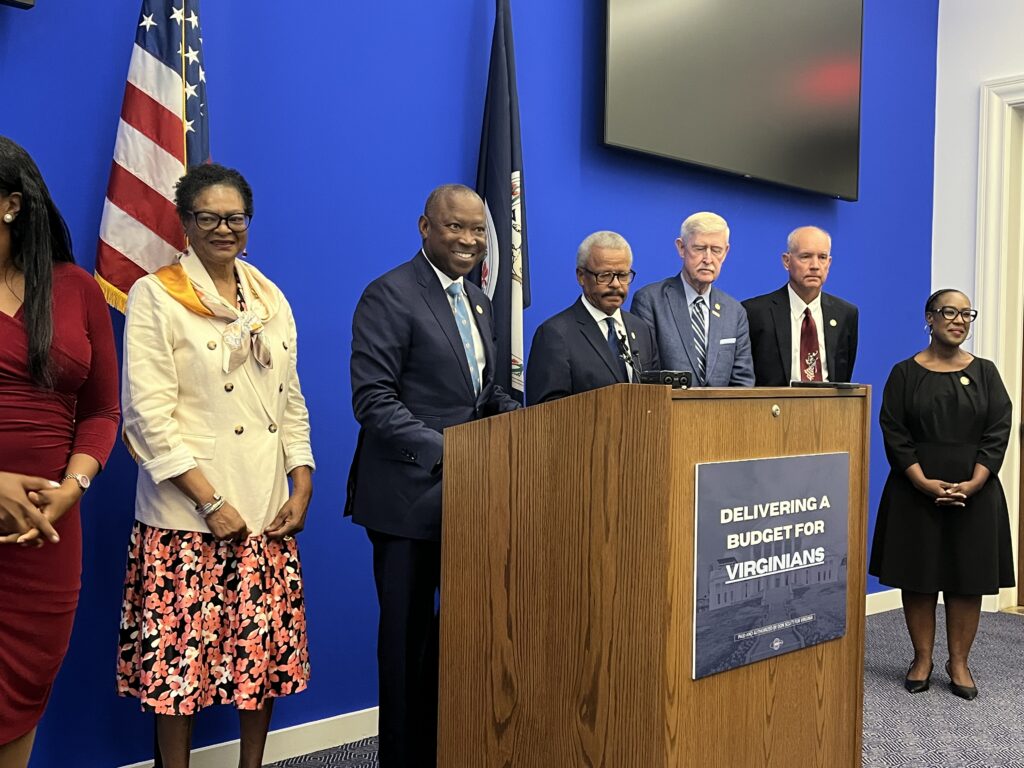
    Speaker of the House of Delegates Don Scott, flanked by Appropriations Chair Del. Luke Torian, D-Prince William, and other bipartisan house members, unveiled the chamber’s latest budget proposal in Richmond on Friday, which they framed as a “compromise package” that they urged the state Senate to accept.

    The updated spending plan no longer includes environmental standards data centers would need to meet in order to be exempted from the state’s sales and use tax, an issue that has stalled budget negotiations for weeks and sparked speculation about a government shutdown if the parties can’t finalize the budget by June 30.

    “This budget comes through for Virginians in a real and meaningful way without introducing a single new tax,” Torian said in a statement. “It anticipates future federal funding cuts by establishing a reserve – so when Washington turns its back again on Virginians we are prepared to step in.”

    The dueling House and Senate budget proposals differ over whether data centers should continue to be exempt from the state’s 5.3% sales and use tax. State data shows the industry saves about $1.6 billion annually through the exemption, money Senate lawmakers say the state should recoup by ending the tax break.

    Data centers have to routinely upgrade and replace pricey computer equipment, which is the bulk of where they save with the exemption.

    The new House proposal removes the previous measures that would have mandated developers limit data centers from co-locating with power facilities that emit carbon emissions.

    Here’s what House lawmakers want to require of data centers to keep their sales tax break

    The previous proposal also outlined energy efficiency requirements for the digital warehouses, including using newer backup generator models that emit less carbon.

    The new House budget instead proposes creating a commission of stakeholders and lawmakers to study the impacts and benefits of the data center industry in Virginia.

    The commission would be required to report to the General Assembly by Nov. 1 on ways to ensure energy demands don’t put extra costs onto residential utility customers. The commission would also scrutinize local tax revenue impacts and “other ways to generate revenue from the industry”.

    “(It will be a) full investigation into energy costs, financial impacts, air quality, water conservation, renewable energy, and community impacts,” Scott said, “So the 2027 General Assembly can pass real national reform. Or if the governor would like, we could come back right after that report … for a special session.”

    Scott has staunchly supported preserving data centers’ exemption, he said, because of the local tax revenue the centers generate and the union jobs that come with the construction of the facilities.

    Workers, Speaker Scott criticize plan to axe data center tax exemption as budgets advance

    Gov. Abigail Spanberger has also publicly supported keeping the exemption, saying the state should “honor its commitments” to businesses that have located in the commonwealth. She praised the updated House budget on Friday.

    “This proposal creates a clear roadmap for evaluating the impact of the data center industry in Virginia and for reassessing the state’s incentives into the future, with a focus on fairness to ratepayers and the needs of local communities,” Spanberger said in a statement.

    Senate members’ response to the updated House budget was unclear Friday afternoon, with no comment from Finance Chairwoman Sen. Louise Lucas, D-Portsmouth.

    Lucas has been adamant about ending the tax exemption for data centers since the Senate spending plan was introduced earlier this year.

    “I want (the money) to go towards hard working families. We’ve got people who are struggling to put food on the table, to put a roof over their heads, pay for their car payment, their kids school. I want that money to go back to them,” Lucas said then.

    The House is slated to return to Richmond to debate this proposal on June 18, while the Senate, who has not yet released an updated budget proposal, will return on June 22. If a budget is not passed by the end of the month, state services and employee pay will be interrupted.

  • The exemption Virginia can’t price and won’t stop

    The exemption Virginia can’t price and won’t stop

    Virginia gave data centers a $928 million tax break in a single fiscal year, 2023, and the General Assembly cannot pass a budget because it can no longer agree on whether to keep doing it. That is the fight underneath the standoff in Richmond, with state spending set to expire June 30 and the conferees who should be writing a deal gone home without one.

    The state’s own auditors laid out the stakes more than a year ago. The Joint Legislative Audit and Review Commission studied the exemption in 2024 and found it provided $928 million in tax savings in fiscal 2023. About 90% of the state’s data center industry was using it. The exemption has been on the books since 2010 and is scheduled to expire in 2035.

    Local governments race to attract data centers, often in spite of concerns from their constituents

    The significance of JLARC’s findings about the return on that money has eluded the budget debate so far.

    The benefit is real but front-loaded. JLARC estimated the industry contributes 74,000 jobs, $5.5 billion in labor income, and $9.1 billion in GDP to the state economy, then added the qualifier that matters: most of it comes from construction, not from running the centers once built.

    A typical data center employs about 50 full-time workers, half of them contractors, JLARC’s report found. At the height of building one, roughly 1,500 workers are on site. The jobs that justify the break are mostly the jobs that end when the concrete cures.

    Then there is the cost that lands on people who will never own a server.

    JLARC commissioned an independent study of utility rates and found current rates correctly assign costs to the customers who cause them, data centers included. But the industry’s appetite for power changes the math going forward. Meeting it requires building generation and transmission that would not otherwise be built, and those fixed costs get spread across every ratepayer.

    JLARC put a number on it: a typical Dominion residential customer could see generation and transmission costs rise by $14 to $37 a month in today’s dollars by 2040. That is the quiet transfer inside this debate. An industry that buys its equipment tax-free helps drive a power buildout that shows up on household bills.

    This is where the Senate and the governor parted ways. Senate Finance Chair Louise Lucas has pushed to wind the exemption down rather than let it run untouched to 2035, and walked out of the meeting when that went nowhere.

    Gov. Abigail Spanberger and House Appropriations Chair Luke Torian have resisted early repeal, arguing the state must honor the agreements it signed. A single tax preference has been able to hold the whole budget hostage.

    Spanberger’s data center position is the test of her affordability message

    The contract argument deserves a closer look than it usually gets. Companies claiming the exemption sign a memorandum of understanding with the state, and Virginia law spells out what that document must contain: the company’s investment target, its job target, the timeline, and what it owes back if it falls short.

    The binding promises run from the company to the commonwealth, enforced by clawback. Nothing in that framework commits the state to keep the exemption alive for any set term. The life of the break is fixed by statute, and a statute can be amended by the body that wrote it.

    That points to an option neither side is championing, though JLARC named it plainly: The Assembly could apply a partial exemption after 2035, or end the full break early, drawing the line to protect existing commitments while changing the terms for what comes next.

    JLARC noted the Assembly could even narrow an expiration to one region, while warning a Northern Virginia-only approach would do little to slow statewide growth, since the industry is now spreading down the I-95 corridor into central Virginia. A prospective change avoids the contract objection entirely, because no facility can claim it relied on a benefit it was never offered.

    The reason the clean version isn’t on the table is the same reason the budget is stuck. Prospective-only changes raise little money now, and the money is the point.

    Lucas wants revenue this biennium for services that federal cuts are squeezing. Phasing the break out for the existing base delivers that; protecting the base does not. So the legally cautious path is the fiscally weak one, and the fiscally strong path invites the fight over the agreements. Both sides understand the tradeoff. Neither states it out loud.

    A skinny budget may keep the lights on past June 30. It will not resolve what the standoff revealed.

    Virginia built an incentive its own auditors say returns less to the state than it costs, watched it grow into a near-billion-dollar annual line, and has not decided whether it has the will to change course. Localities adopting their own budgets this month, waiting on state numbers that may not come, will feel that indecision first.

  • Valley Link unveils reworked routes for high-voltage transmission line

    Valley Link unveils reworked routes for high-voltage transmission line

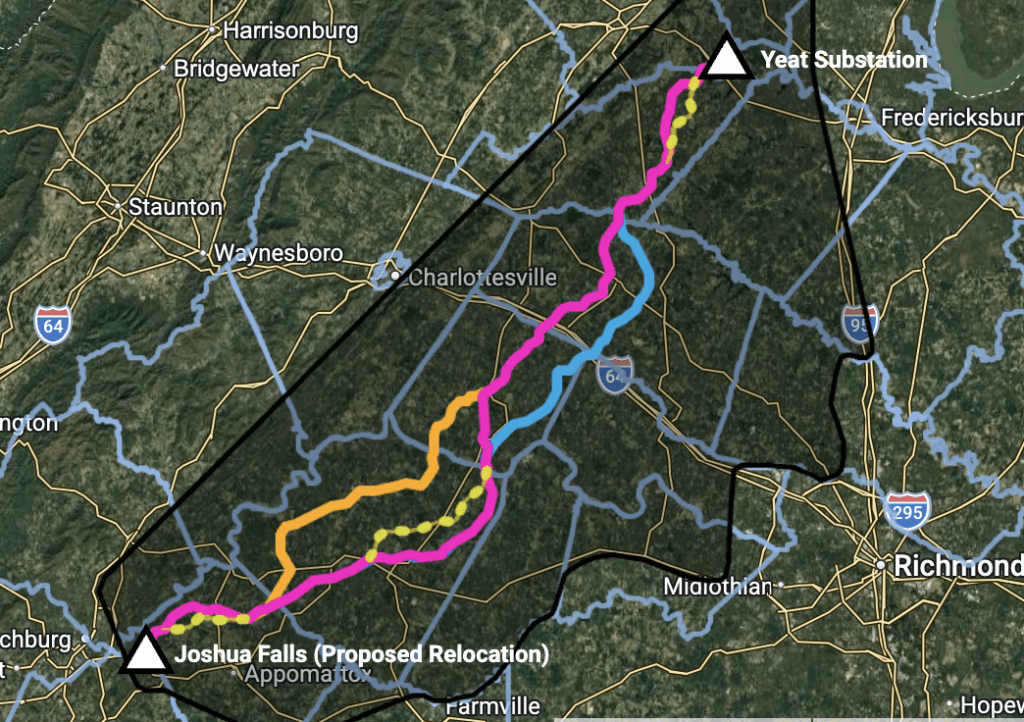
    Valley Link Transmission has released a new set of potential routes for the controversial project ahead of the first public meetings across the nine-county region that may be impacted by the 765 kilovolt, 115-mile transmission line.

    The power line will stretch from just outside of Lynchburg to Culpeper County. Dominion Energy, Transource, and FirstEnergy are developing the line to help move power from the Ohio River Valley to Northern Virginia, where major energy demands are spiking.

    The Valley Link project was identified by PJM, the regional grid operator for 13 states and Washington, D.C., as crucial to maintain grid reliability.

    Since the project was unveiled, residents across Campbell, Appomattox, Buckingham, Fluvanna, Louisa, Orange, Goochland, Spotsylvania, and Culpeper counties have sounded off about the potential impacts the project will have on the environment and historic preservation of certain sensitive locations, including Civil War battlefields.

    Valley Link refined the routes through the public feedback from the initial hearings about the project. The final route for the power line will be determined by the State Corporation Commission.

    The new routes will reportedly reduce the number of residences that come within 500 feet of the corridor to 75. There are no homes that come within 150 feet of the route. Developers also considered wetlands, environmental resources, recreational areas, conservation easements, and historical and architectural resources.

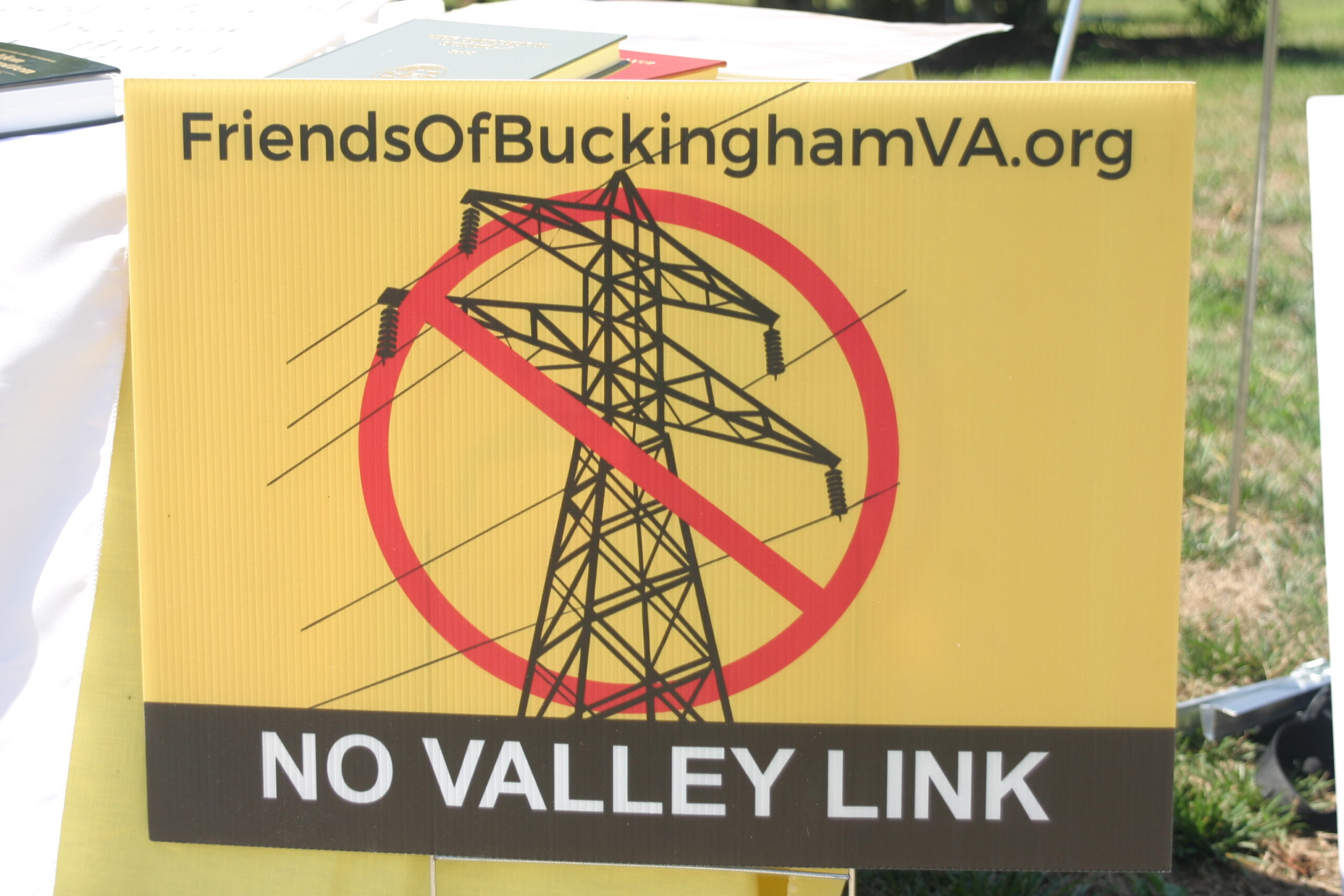
    A sign showing community opposition to the Valley Link transmission line project, May 2026. (Photo by Shannon Heckt/Virginia Mercury)

    Residents along the route have also voiced concerns about possible future energy infrastructure construction, since the transmission line is meant to act as highway with on and off ramps to hook up other energy projects.

    “Property owners along the refined routes are now receiving letters about the route updates and have been invited to a second round of open houses in June. We look forward to sharing the refined routes in person and continuing our dialogue with the communities we serve,” a Valley Link representative said in a statement Monday.

    Even with the newly proposed routes, environmental groups and residents said they are wary.

    “The potential impacts are enormous. Over 2,600 acres of land that is currently forested, farmed, providing critical wildlife habitat and contributing to the rural economy and character of the region would be cleared and converted to utility right-of-way,” the Piedmont Environmental Council said in a statement. “Tens of thousands of acres more along the line are likely to face pressure for new development.”

    The first community meeting will be June 10 in Orange County at the Orange County High School, and may be attended in person. Additional community meetings will be held in the coming months in various locations near the proposed routes; you may find the full list here.

  • Virginia lawmakers are set to return to Richmond as budget deadline nears

    Virginia lawmakers are set to return to Richmond as budget deadline nears

    Virginia lawmakers are set to return to Richmond this month for another attempt to reach a budget deal, with just days until the start of the new fiscal year and no agreement yet on the state’s next two-year spending plan.

    The House of Delegates is scheduled to reconvene its special session June 18 at 10 a.m., followed by the Senate on June 22 at noon, as negotiators continue working toward a compromise budget that can pass both chambers and reach Gov. Abigail Spanberger’s desk before the June 30 deadline.

    Failure to enact a budget before the new fiscal year begins would result in a government shutdown, creating fiscal uncertainty for state agencies, local governments and school divisions that depend on state funding. Spanberger has repeatedly warned against allowing negotiations to extend beyond the deadline.

    “It’s absolutely unacceptable if the General Assembly would allow for the state to go past July 1,” she told Cardinal News last month.

    Lawmakers have remained at an impasse since the regular 2026 General Assembly session ended without a budget, despite Democrats controlling both chambers of the legislature. A special session in April also ended without a deal.

    The biggest sticking point is a Senate-backed proposal to begin phasing out the state’s sales and use tax exemption for data centers before it expires nine years from now.

    Senate Finance and Appropriations Committee Chair Louise Lucas, D-Portsmouth, has argued the fast-growing industry places increasing demands on Virginia’s electrical grid and water resources while producing relatively few long-term jobs.

    Spanberger and House Democrats have opposed ending the incentive prematurely, arguing it could damage Virginia’s reputation with businesses and discourage future investment.

    The tax exemption was approved in 2008 and is authorized through 2035. Lawmakers originally estimated it would reduce state revenue by about $1.5 million annually. Today, its value is estimated at nearly $2 billion a year, as Virginia has become the world’s largest data center market.

    Spanberger said she is open to discussions about what happens after 2035.

    “There are efforts afoot in the General Assembly, as it relates to the budget, to ensure that data centers are paying their fair share, as I think everyone broadly agrees is necessary,” Spanberger said in mid-April. ”And so that will continue to play out in those negotiations.”

    But the governor said she opposes changing the policy before the exemption lapses.

    “If Virginia were to take an adversarial stance towards any particular industry, it sends the wrong signal broadly, and we’re already seeing it with the decision to move away from the tax abatement,” she told Cardinal News in an interview published last week.

    “It is the absolute prerogative of the General Assembly to look towards the future and to have conversations about incentives they do or do not want to give into the future.”

    She also warned that ending the incentive early could invite legal challenges.

    “As governor, I’m not going to break a contract that the state has signed — one, because who’s going to fund those lawsuits when we have to defend ourselves from broken contracts?” Spanberger said.

    The dispute has put the governor at odds with Lucas, one of the Senate’s most powerful members.

    In a series of posts Wednesday on X, formerly Twitter, Lucas blamed the administration and House Democrats for the continued stalemate.

    “The Governor and the House are the ones that are gambling with our future by allowing the data centers to expand without concern for power, water, or paying their fair share of taxes,” Lucas wrote.

    “The Governor should be honest and tell the public what she won’t do — she won’t tax billion dollar corporations to provide long term revenue to help pay for K12 and public safety and to backfill the federal cuts from Trump.”

    “That’s the budget hold up!! Once again, the Governor is wrong on the policy and knows Virginians will cook her if there is a government shutdown.”

    Lucas has repeatedly defended the Senate proposal during budget discussions.

    At a Senate Finance Committee meeting in May, she argued the state should not continue providing the incentive without additional policy changes.

    “Data centers will employ very few permanent jobs for a sizable tax giveaway,” Lucas said.

    “This is imperative to encourage responsible growth in the commonwealth to protect our electric grid and natural resources, while also ensuring hard working Virginians are not asked to pick up higher utility costs to fund a higher share of our existing core services,” she added.

    Despite the disagreement, Lucas said at the time that she expects lawmakers to reach a deal before the new fiscal year begins.

    “Virginia will have a budget by June 30,” she said. “We will have to get this right for Virginians.”

    Meanwhile, state officials are preparing updated financial projections to aid negotiations.

    Earlier this month, Spanberger directed state finance officials to roll out a revised revenue forecast that will include projections through fiscal year 2031. The administration said the updated forecast is intended to give budget conferees a clearer picture of the state’s fiscal outlook.

    “When making long-term budget commitments, it is important that policymakers have the most current and accurate information available,” Spanberger said in a statement. “This updated forecast will help provide budget conferees and the public with greater confidence as negotiations continue on the commonwealth’s next two-year budget.”

    The request came as Virginia Secretary of Finance Mark Sickles warned that parts of the state’s economy are showing signs of weakness.

    During last month’s meeting of the Senate’s money committee, Sickles pointed to slower job growth, persistent inflation and declining consumer confidence, even as state revenues continue to exceed expectations.

    Those stronger revenues have given negotiators additional room as they work toward a budget agreement before July 1.