Tag: Criminal Justice + Policing

  • Virginia joins challenge to Trump’s controversial IRS settlement

    Virginia joins challenge to Trump’s controversial IRS settlement

    Virginia Attorney Jay Jones joined a coalition of 22 Democratic attorneys general Wednesday urging a federal judge in Florida to closely examine a controversial settlement tied to President Donald Trump’s lawsuit against the Internal Revenue Service, arguing the agreement raises serious constitutional and ethics concerns.

    The filing, submitted to the U.S. District Court for the Southern District of Florida, asks the court to scrutinize what the coalition describes as a potentially “collusive” settlement between Trump and the U.S. Department of Justice in the case known as Trump v. IRS.

    The attorneys general argue the agreement would grant broad protections to Trump, his family and business interests while creating a proposed $1.776 billion “Anti-Weaponization” fund that the president’s critics say could steer taxpayer money toward Trump allies and others claiming they were unfairly targeted by the government.

    The multi-state effort is led by California Attorney General Rob Bonta.

    “This proposed ‘settlement’ is yet another appalling example of Donald Trump’s belief that he is above the law, and that his presidency allows him to evade accountability for his illegal actions,” Jones said in a statement.

    “The people of the commonwealth are fed up with his schemes, and they are fed up with elected leaders who believe they are above the people they serve. This office will use every resource available to speak up for and act on behalf of Virginians, who deserve better than a president who only serves himself.”

    The filing comes as legal scholars, former federal judges and watchdog groups nationwide continue questioning both the settlement itself and the unusual circumstances surrounding the case.

    Trump, his sons Donald Trump Jr. and Eric Trump and the Trump Organization filed the lawsuit in January against the U.S. Treasury Department and IRS over the disclosure of Trump tax return information by a government contractor. The lawsuit sought billions in damages tied to the release of tax records later published by several news organizations.

    The suit drew immediate attention because Trump, as president, oversees the federal agencies he sued.

    U.S. District Court Judge Kathleen Williams had previously questioned whether the parties were genuinely adversarial and ordered a briefing on whether the court even had jurisdiction over the dispute. According to Wednesday’s filing, Trump voluntarily dismissed the lawsuit and entered into a settlement agreement with the U.S. Justice Department shortly before those issues were set to be argued.

    The coalition said that timing raises additional concerns.

    According to the attorneys general, the agreement appears to be “an attempted end-run around constitutional limits on Executive Branch authority.” The brief argues the settlement bears little connection to the legal merits of the original lawsuit and may exceed the Justice Department’s authority.

    The filing also argues the arrangement risks undermining public confidence in the courts by allowing a president to negotiate favorable legal protections with agencies under his own control.

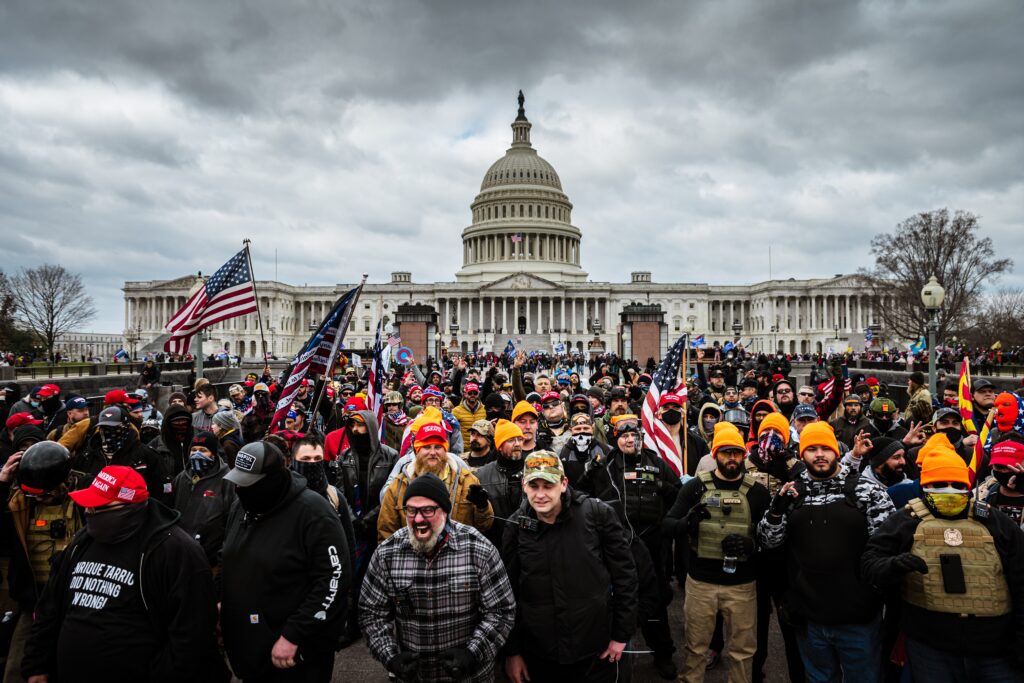
    The dispute has sparked growing political and legal backlash since details of the settlement became public last month, with Democrats and some Republicans questioning whether taxpayer money could eventually benefit Jan. 6 defendants or political allies of the president.

    Former federal judges also urged the court to reopen the case, accusing the parties of potentially misleading the judiciary.

    The controversy escalated further after reports that the settlement included provisions shielding Trump, members of his family and related businesses from certain future tax investigations or audits.

    The Justice Department initially defended the proposal, describing the fund as a mechanism to address alleged government “weaponization.”

    “The machinery of government should never be weaponized against any American, and it is this Department’s intention to make right the wrongs that were previously done while ensuring this never happens again,” Acting U.S. Attorney General Todd Blanche said in a statement last month.

    But the Trump administration has since faced growing political and legal pressure over the arrangement and has begun backing away from the proposed fund.

    Legal fights connected to the settlement, however, are continuing in federal court. A federal judge in Virginia last month blocked the proposed fund from moving forward.

    The Florida court is now considering whether to reopen Trump v. IRS under Rule 60 of the Federal Rules of Civil Procedure, which allows courts to revisit judgments in cases involving alleged fraud, misconduct or deception.

    In this week’s filing, the coalition argued that state attorneys general have a particular interest in preserving public confidence in the legal system and guarding against abuses of executive authority.

    “The self-dealing and corrupt nature of this settlement agreement is antithetical to the responsibilities of attorneys general and the rule of law,” the coalition wrote.

    The Florida court has not yet ruled on whether the case will be reopened.
  • Spanberger unveils reformed practices for Va. prisons and council on corrections

    Spanberger unveils reformed practices for Va. prisons and council on corrections

    A new council convened by Gov. Abigail Spanberger aims to help solve longstanding issues in Virginia’s prisons that residents and correctional officers have expressed concerns about for years.

    The Governor’s Community Partnership Council On Corrections, which Spanberger announced Tuesday, will bring together representatives from advocacy groups, faith-based organizations, healthcare and public safety groups and former prisoners to share their experiences and work towards solutions.

    Two years ago a handful of prisoners at Red Onion State Prison, the most embattled correctional institution in the state, burned themselves in protest of living conditions and in attempts to transfer elsewhere.

    Allegations of racism and retaliation by correctional officers were not ruled out by a state watchdog investigation at the prison and a class action lawsuit on behalf of prisoners who say they were abused will head to trial later this year.

    Federal judge allows Va. inmates rights’ lawsuits to move forward

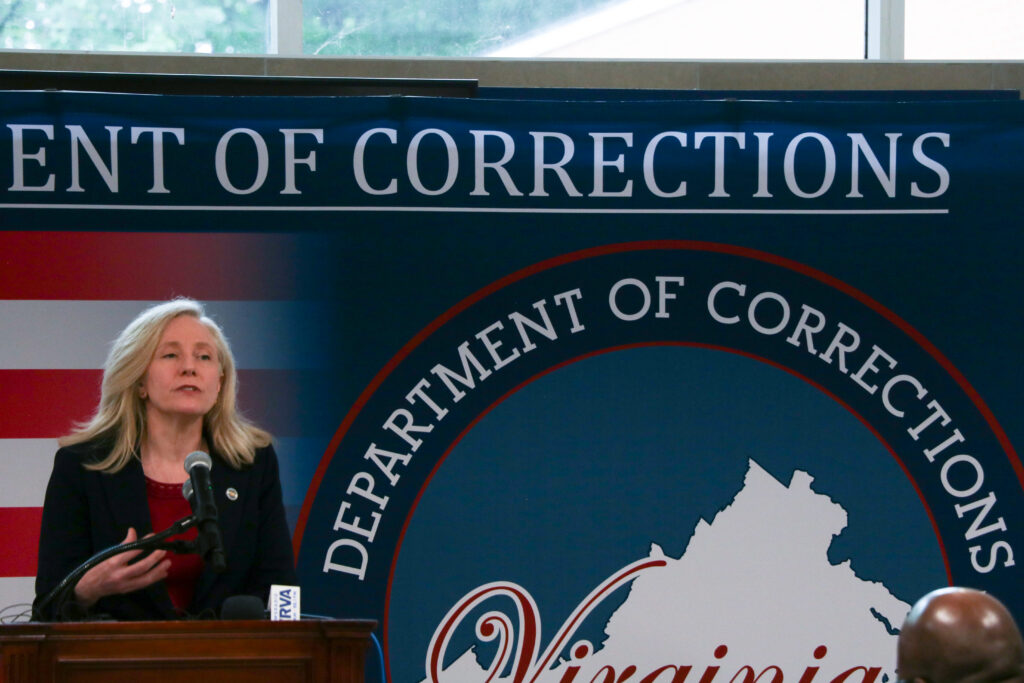
    “The people living in Virginia’s prisons are not forgotten on our watch,” Spanberger said at a press conference announcing the new council held at the Virginia Department of Corrections headquarters in Richmond.

    Virginia Public Safety and Homeland Security Secretary Stanley Meador emphasized that the council will empower participants to propose solutions to problems and help the administration “see things we can’t see.”

    Shawn Weneta, a policy strategist who has helped shape some criminal justice law changes in recent years, commended the creation of the council. He noted that some VADOC changes first began under the previous director but is pleased with the progress that the new administration is building.

    Speaking as a formerly incarcerated person, he emphasized that the council’s mission can best succeed by including “those most directly impacted by the system.”

    Ahead of assembling the official council, Spanberger’s administration has already conducted engagement within prisons and implemented her Executive Order 12, which entailed enhanced training for correctional officers and building partnerships with communities.

    From January to May of this year, Spanberger said use of force across all VADOC facilities has declined by 39%, serious inmate-on-staff assaults dropped 56%, lockdowns decreased by 27%, confirmed overdoses dropped 47%, while suspected overdoses dipped 12%.

    Virginia prisons have stopped using five-point restraints, which can be harmful for people in mental health crises, she said.

    The practice of isolating inmates in restorative housing, a persistent problem, has dropped by 20%.

    Restorative housing is Virginia state code’s euphemism for solitary confinement. It removes inmates from general populations and houses them in solitary cells.

    Restorative housing is used when there’s a threat of gang violence and as a disciplinary measure for inmates who violate prison rules.

    When asked how the reduction in restorative housing was made possible, Spanberger shared that staff training refreshers since she took office have focused on deescalation, which doesn’t exacerbate situations where an inmate may be in crisis or agitated.

    Spanberger also said her administration is considering how to fine tune the state’s Step Down program.

    Step Down is supposed to offer people placed in restorative housing a pathway out by helping address root causes of why they were placed in solitary housing and giving them measures to transition out of it.

    Several current and former inmates have relayed to The Mercury in recent years that restorative housing has been heavily utilized and people sometimes spend weeks or years, rather than days, in it.

    A third-party report to state lawmakers in late 2024 confirmed that at least one facility had placed the majority of its residents under solitary housing.

    Spanberger said her administration wants to be “making sure that every movement is documented on why someone is in restorative housing and their pathways out of it.”

    Under her direction, VADOC has also started to solve visitor access issues.

    After hearing tales of disparate visitation access, Spanberger identified COVID-era restrictions — like less seating and fewer visitor time slots — as a contributing factor.

    In recent months, VADOC has worked to restore past seating capacities in prisons’ visitor centers and expand visitor time slots, the governor said. She also signed a law that creates more guidance and takes into account the needs of long-distance travelers who come to see their loved ones behind bars.

    This “benefits, not just the family, but the person who is incarcerated,” she said.

    With Joseph Walters now serving as director of VADOC, Spanberger’s administration established a new code of ethics for VADOC employees and mandated refreshed training.

    Staffing issues have also plagued Virginia’s prisons. Walters and Meador shared that they’re very proud that their agencies’ work so far has been achieved even with a 21% staffing vacancy.

    This means, they said, that current staffers are working longer hours and pledging deeper commitment to their tasks. But rebuilding employee teams will be critical to halt turnover and alleviate burnout.

    Walters, Meador and Spanberger also hosted in-person engagement sessions with 13 advocacy groups that the governor said had gone unheard by the state’s top leaders for years.

    She called it “stunning” how long some groups had tried to relay concerns to previous administrations and that she hopes her efforts to strengthen communication can “build a foundation for after I am no longer in office.”

    Editor’s note: This story has been updated to correct the spelling of Walters.

  • Civil rights group files motion to speed up Va.’s reform of voter registration process for ex-felons

    Civil rights group files motion to speed up Va.’s reform of voter registration process for ex-felons

    As thousands of Virginians with certain past felony convictions remain in a voting registration limbo, a civil rights group filed a motion on June 18 seeking an expedited remedy.

    The group accused election officials of violating a voting rights lawsuit previously won earlier this year.

    Some former felons, eligible to vote this summer, are in registration limbo

    The voting access issue stems from a series of 1870 laws called the Readmission Acts, which banned states from constitutionally disenfranchising people other than those convicted of crimes considered common law at the time.

    In Virginia, people with felony convictions lose their right to vote unless they successfully petition a governor for it to be restored or are pardoned — both subjective processes which haven’t always had clear guidelines.

    Virginia’s chapter of the American Civil Liberties Union argued in King v. O’Bannon that Virginians with a variety of felony convictions should have never lost their right to vote in the first place. A judge ruled in their favor earlier this year and ordered the state to comply by May.

    Attorney General Jay Jones then successfully sought an extension to June 1 so that the state could compile guidance for registrars and ascertain which modern-day felonies might bar someone from registering to vote.

    For instance, illegally using tear gas was included on a list of such crimes from Jones’ office, “even though tear gas was not invented in 1870,” ACLU attorney Eden Heilman said in an interview.

    While the legal organization “has serious questions” about how the lists were determined and whether eligible people will be able to vote this year, the group has tried for months to glean a better understanding from Jones’ office.

    Since June, registrars have been instructed to not fully process new voter registrations of people with felony convictions, according to documents obtained by The Mercury that are now exhibited in the new motion.

    In May, ACLU Virginia wrote a letter to Jones and Solicitor General Tillman Breckenridge asking why revisions to registration forms were not feasible for registrars, and for more details on challenges preventing the state from fully complying with the court order.

    The organization also asked for more clarity on conviction types that may require individualized review by Jones’ office.

    Breckenridge responded two days later to confirm receipt of the letter and end the conversation.

    “While we appreciate the information you’ve provided to us to this point, we do not believe further engagement on the topics in your letter would be constructive at this time,” he wrote.

    Heilman said that previous meetings with Jones’ office had not been successful.

    “It became clear that we were not making progress and had different understandings of what the court order was requiring,” she said.

    Jones’ office has not responded to requests for comment on the situation.

    With early voting for congressional primary elections underway, plaintiffs hope that the situation can be resolved before the Aug. 4 election so that eligible voters can participate.

    This fall, Virginia voters will also approve or reject a constitutional amendment that would allow all ex-felons the right to vote, so long as they have served their sentences.


    Outdated forms and web portals another hurdle


    The apparent lack of full compliance with King v. O’Bannon sparked a period of uncertainty for ex-felons in the state, Nolef Turns director Sheba Williams said. The nonprofit shares resources with formerly incarcerated people and advocates for ways to reduce recidivism.

    Voter registration applications question whether or not someone has committed a felony, which Williams said has confused formerly incarcerated people who want to cast a ballot. Many don’t know if they’re eligible or if they should answer the question or not, since it’s a crime to lie on applications.

    Northern Virginia resident Tati King, who’s been a lead plaintiff on the King v. O’Bannon case, claims that his registration was placed in limbo and as of the time of the motion filing on June 18, he was not yet able to vote.

    Fellow plaintiff Toni Heath Johnson, a Southwest Virginia resident, encountered the same “on hold” status.

    While in-person applicants were told their registrations won’t be processed right away, virtual applicants like Southwest Virginia resident Jared Rose relayed via lawyers that he could not proceed in the online process after clicking the felony conviction box.

    Rose is quoted in the filing saying he was “nervous” about additional prosecution if he didn’t indicate his past felony status despite being able to vote.

    “We’re in a pivotal moment where we have been seeing trust in our courts be eroded,” Williams said. “Virignia has an opportunity to restore faith by upholding the ruling of Judge (John) Gibney.”

    Gibney ruled that Virginia can’t take away someone’s voting rights, except for specific common law felonies from 1870. Those are arson, burglary, escape and rescue from a prison or jail, manslaughter, mayhem, murder, rape, robbery, sodomy and suicide.

    As part of their motion to enforce, ACLU suggests forms be amended to ask “only whether the applicant had been convicted of an offense corresponding to one of the 11 common law felonies set forth in the final order.”

    For now, the state has 14 days from the June 18 filing of the motion to respond.

  • Some Virginians with past felonies can apply to seal their records, starting next month

    Some Virginians with past felonies can apply to seal their records, starting next month

    After years of fine-tuning and preparation, a 2021 law allowing Virginians with certain past felony convictions to have their criminal records sealed will take effect July 1. Lawmakers and advocates say this will allow former felons without new convictions to expand their housing and employment options.

    Under the “Clean Slate law,” when hiring managers and landlords run background checks on people whose criminal records have been sealed, they won’t be able to see some older convictions. It only applies if former felons don’t have new convictions within seven years of their petition date for certain misdemeanors and 10 years for certain felonies.

    “We know that people age out of crime and nobody should have to live with their record forever,” said Sheba Williams, director of recidivism reduction organization Nolef Turns.

    As someone who navigated hurdles from her past criminal record, Williams founded her organization to help people return to society after incarceration. She has helped craft numerous criminal justice reform laws over the years.

    Sheba Williams is a Richmond native and the founder and executive director of Nolef Turns, which provides direct service and advocates for criminal legal systems reform on behalf of survivors and victims of crime, incarcerated people, and their loved ones. (Provided photo)

    People with Class 1 or 2 felonies – typically violent crimes or charges that carry life sentences — aren’t eligible. And petitioners must not have been convicted of a Class 3 or 4 felony within 20 years.

    Critically, Sen. Scott Surovell, D-Fairfax said, is that the law also effectively eliminates many barrier crimes. Should someone have a cocaine charge and be able to petition, for instance, they would no longer be prohibited from entering medical or security career fields.

    Surovell, along with Del. Charniele Herring, D-Alexandra, had led the legislative charge on the law.

    Over 900,000 Virginians are estimated to be able to seal their misdemeanors under the new provision, while over 100,000 are able to seal their felonies, according to a Virginia State Police presentation to the state Crime Commission.

    Part of the delay in setting up the sealing ability was to give circuit courts time to modernize records and prepare for the additional workload.

    Charlottesville Circuit Court Clerk Llezelle Dugger noted that it has taken a combination of clerks, state police and the office of the executive secretary in the state’s judicial system to properly prepare.

    Nuances had to be sorted out, like how far back the law would permit court records to be sealed and which types of crime would be eligible.

    “I give kudos to the Crime Commission,” Dugger said, for helping lawmakers bring the required parties to the table in recent years.

    With petitions opening July 1, Dugger does still anticipate some hiccups because certain convictions will be eligible for automatic sealing by October of this year.

    For instance, people with past petit larceny, trespassing, shoplifting, disorderly conduct or marijuana distribution misdemeanors would be eligible for automatic sealing so long as they don’t have new convictions within the past seven years.

    “I can see a layperson filing for something that would actually become sealed by October,” she said.

    Surovell said he’s eager for his bill to begin helping people. During a discussion panel last summer on the pending law, he shared that a constituent reached out to him about how a larceny charge from his youth had “followed him around” for decades.

    The new law’s colloquial name is also a nod to a law firm called Clean Slate Virginia and the national movement of the same name. Founder George Townsend, who dedicated his career to helping ex-felons navigate reentry, was also involved in advocacy for Surovell’s and Herring’s bill.

    He’s called the law a “game changer” for many of his clients’ personal and professional lives.

    Beyond employment and stable housing, Williams said people’s records can bar them from certain civic engagement like volunteer work or helping to chaperone their children’s field trips or sporting trips.

    “There’s all these nuanced things that people don’t always think about unless it’s happening to them or their loved one,” she said.

    People with misdemeanors that may have been dismissed but still show up on records can also seek an expungement through local circuit courts. This is a related, but different process where a conviction is not simply sealed, but deleted.

    More details on automatic or petition-based criteria can be found here.