Tag: Courts

  • Virginia joins challenge to Trump’s controversial IRS settlement

    Virginia joins challenge to Trump’s controversial IRS settlement

    Virginia Attorney Jay Jones joined a coalition of 22 Democratic attorneys general Wednesday urging a federal judge in Florida to closely examine a controversial settlement tied to President Donald Trump’s lawsuit against the Internal Revenue Service, arguing the agreement raises serious constitutional and ethics concerns.

    The filing, submitted to the U.S. District Court for the Southern District of Florida, asks the court to scrutinize what the coalition describes as a potentially “collusive” settlement between Trump and the U.S. Department of Justice in the case known as Trump v. IRS.

    The attorneys general argue the agreement would grant broad protections to Trump, his family and business interests while creating a proposed $1.776 billion “Anti-Weaponization” fund that the president’s critics say could steer taxpayer money toward Trump allies and others claiming they were unfairly targeted by the government.

    The multi-state effort is led by California Attorney General Rob Bonta.

    “This proposed ‘settlement’ is yet another appalling example of Donald Trump’s belief that he is above the law, and that his presidency allows him to evade accountability for his illegal actions,” Jones said in a statement.

    “The people of the commonwealth are fed up with his schemes, and they are fed up with elected leaders who believe they are above the people they serve. This office will use every resource available to speak up for and act on behalf of Virginians, who deserve better than a president who only serves himself.”

    The filing comes as legal scholars, former federal judges and watchdog groups nationwide continue questioning both the settlement itself and the unusual circumstances surrounding the case.

    Trump, his sons Donald Trump Jr. and Eric Trump and the Trump Organization filed the lawsuit in January against the U.S. Treasury Department and IRS over the disclosure of Trump tax return information by a government contractor. The lawsuit sought billions in damages tied to the release of tax records later published by several news organizations.

    The suit drew immediate attention because Trump, as president, oversees the federal agencies he sued.

    U.S. District Court Judge Kathleen Williams had previously questioned whether the parties were genuinely adversarial and ordered a briefing on whether the court even had jurisdiction over the dispute. According to Wednesday’s filing, Trump voluntarily dismissed the lawsuit and entered into a settlement agreement with the U.S. Justice Department shortly before those issues were set to be argued.

    The coalition said that timing raises additional concerns.

    According to the attorneys general, the agreement appears to be “an attempted end-run around constitutional limits on Executive Branch authority.” The brief argues the settlement bears little connection to the legal merits of the original lawsuit and may exceed the Justice Department’s authority.

    The filing also argues the arrangement risks undermining public confidence in the courts by allowing a president to negotiate favorable legal protections with agencies under his own control.

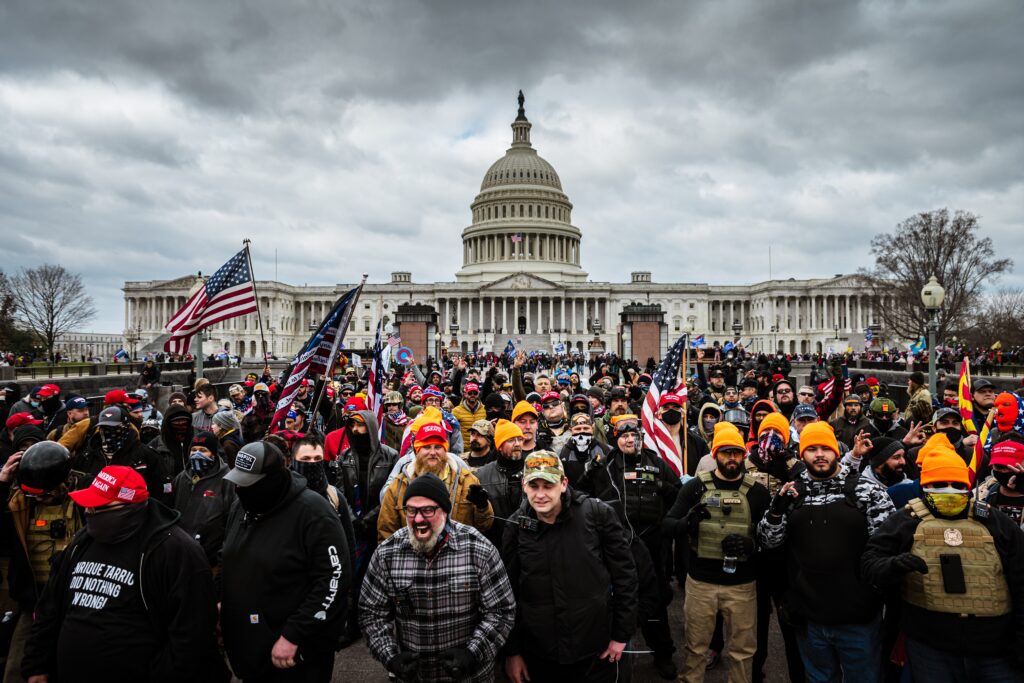
    The dispute has sparked growing political and legal backlash since details of the settlement became public last month, with Democrats and some Republicans questioning whether taxpayer money could eventually benefit Jan. 6 defendants or political allies of the president.

    Former federal judges also urged the court to reopen the case, accusing the parties of potentially misleading the judiciary.

    The controversy escalated further after reports that the settlement included provisions shielding Trump, members of his family and related businesses from certain future tax investigations or audits.

    The Justice Department initially defended the proposal, describing the fund as a mechanism to address alleged government “weaponization.”

    “The machinery of government should never be weaponized against any American, and it is this Department’s intention to make right the wrongs that were previously done while ensuring this never happens again,” Acting U.S. Attorney General Todd Blanche said in a statement last month.

    But the Trump administration has since faced growing political and legal pressure over the arrangement and has begun backing away from the proposed fund.

    Legal fights connected to the settlement, however, are continuing in federal court. A federal judge in Virginia last month blocked the proposed fund from moving forward.

    The Florida court is now considering whether to reopen Trump v. IRS under Rule 60 of the Federal Rules of Civil Procedure, which allows courts to revisit judgments in cases involving alleged fraud, misconduct or deception.

    In this week’s filing, the coalition argued that state attorneys general have a particular interest in preserving public confidence in the legal system and guarding against abuses of executive authority.

    “The self-dealing and corrupt nature of this settlement agreement is antithetical to the responsibilities of attorneys general and the rule of law,” the coalition wrote.

    The Florida court has not yet ruled on whether the case will be reopened.
  • Some former felons, eligible to vote this summer, are in registration limbo

    Some former felons, eligible to vote this summer, are in registration limbo

    While a pending constitutional amendment to automatically restore voting rights to people with felony convictions who have served their sentences awaits Virginians’ approval or rejection in a statewide referendum later this year, thousands of people who should never have lost their right to vote in the first place remain in limbo during this summer’s congressional primary elections.

    After a court ruled earlier this year that certain felony convictions should not have resulted in loss of voting rights, Virginia’s Department of Elections had until June 1 to comply with the order to rectify the situation.

    Instead, on June 1, the department sent an advisory to election officials indicating that they should not deny peoples’ applications but to not fully process them either.

    “Please note that records available through the felon search may have been affected by the updates to the Agency Felony Prohibited table. ELECT will provide additional guidance on reviewing felony history soon,” the June 2 advisory obtained by The Mercury read.

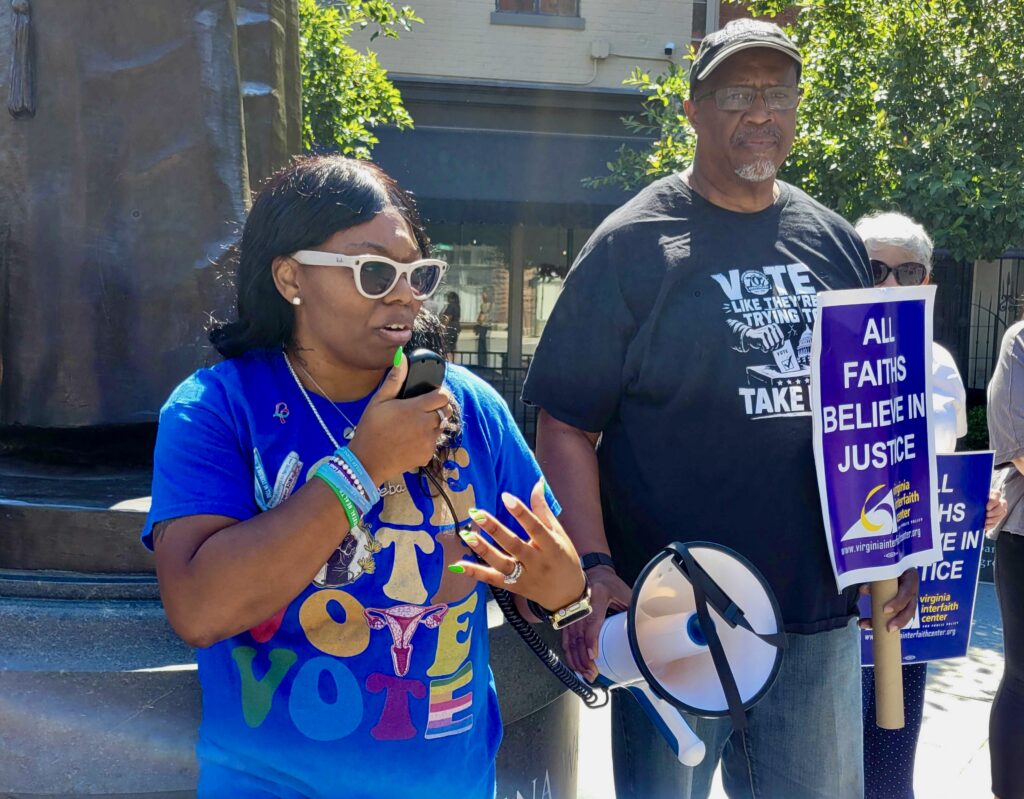
    The crux, Nolef Turns director Sheba Williams said, is that some people with felony convictions who should be eligible to vote this summer are nervous to register because it is a crime to lie on applications.

    “When they get to their application, there is a question about whether or not you have been convicted of a felony,” Williams explained.

    For people whose felonies don’t count towards prohibition of voting, they are unsure if they should check the box or not. So, with early voting for the congressional midterms beginning June 18, relevant applicants are stuck waiting as the process plays out.

    Williams organized a press conference in Richmond on Wednesday along with the Virginia Interfaith Center For Public Policy and Bridging the Gap Virginia. Each group has advocated for criminal justice reform and voting rights laws and some have helped returning citizens navigate post-incarceration life.

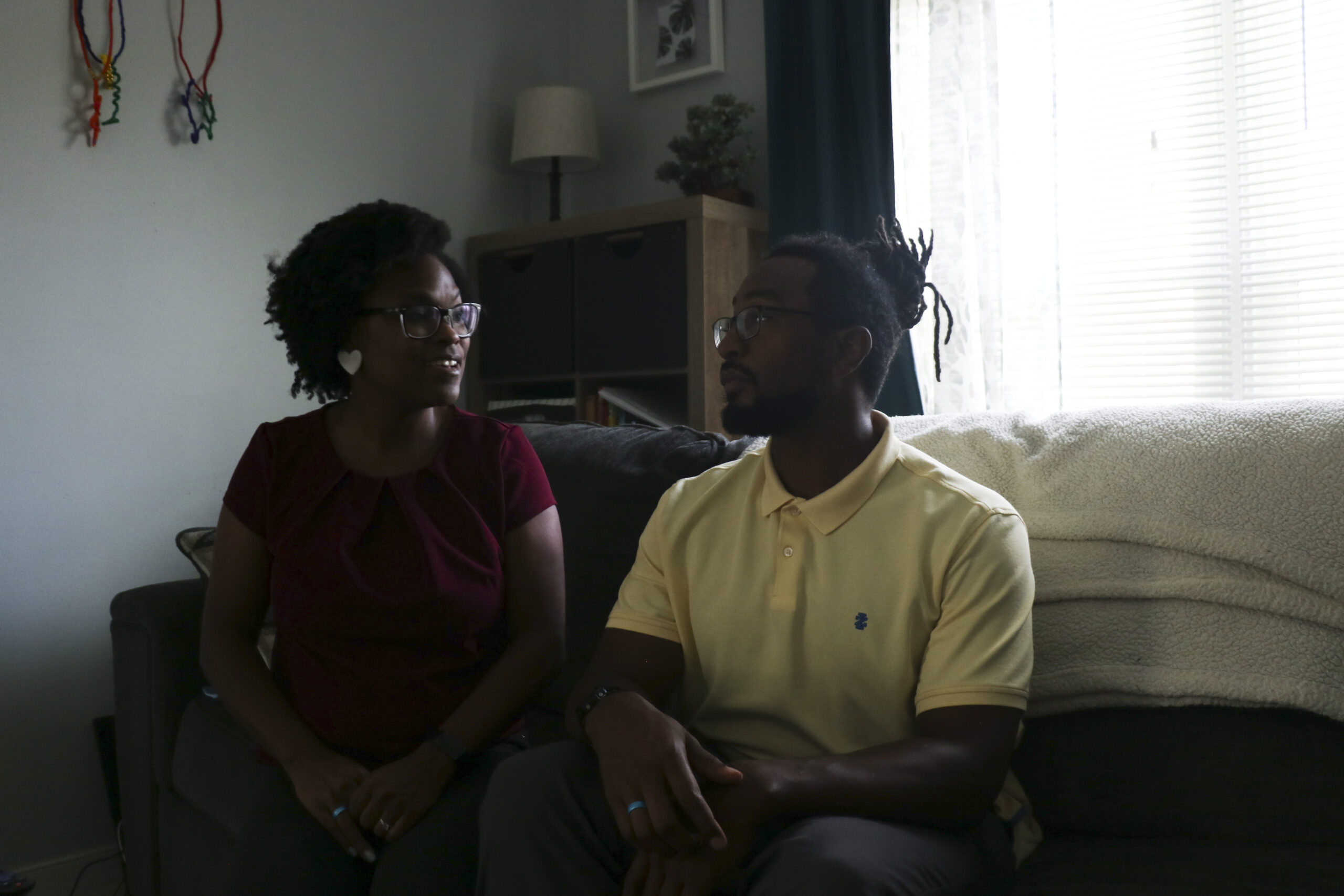
    Quadaire Patterson and his wife Santia Nance attended the event. The couple has ramped up their criminal justice advocacy, starting when Patterson was still incarcerated. Though he’s helped shape laws before and after his 2024 release, he has still been unable to vote.

    Santia Nance (left) sits with husband Quadaire Patterson (right) in their living room in Henrico County in September 2024. (Photo by Charlotte Rene Woods/Virginia Mercury)

    “As I think back to my crime when I was 19 years old, I had no awareness of the political systems that are in play,” Patterson said.

    But now at 38, having spent about half of his life behind bars, Patterson said he understands how important it is to engage in democracy. The importance of the right to vote hits closer to home now that he and his wife have a 14-month-old daughter, Trinity.

    “If we ever want to repair this broken system, if we ever want to repair our broken communities, we have to fully allow returning citizens to participate in the civic processes,” Patterson said.

    The case at the core of the matter stemmed from a series of 1870 laws called the Readmission Acts, which allowed former Confederate states to re-enter U.S. Congress after the Civil War. The laws had barred states from constitutionally disenfranchising people other than those convicted of crimes considered common law at the time.

    “We create crimes every year but we never revisit and say ‘what did we get wrong?’ and I think that is a barrier too,” Williams said.

    Following the suit, Attorney General Jay Jones’ office has been drafting lists of crimes that could be applicable to the ruling.

    Congressional primaries will take place Aug. 4 and the deadline to register to vote in those elections is July 24.

  • Injunction pauses ‘unconstitutional’ USDA conditions for SNAP, WIC funding to Virginia, other states

    Injunction pauses ‘unconstitutional’ USDA conditions for SNAP, WIC funding to Virginia, other states

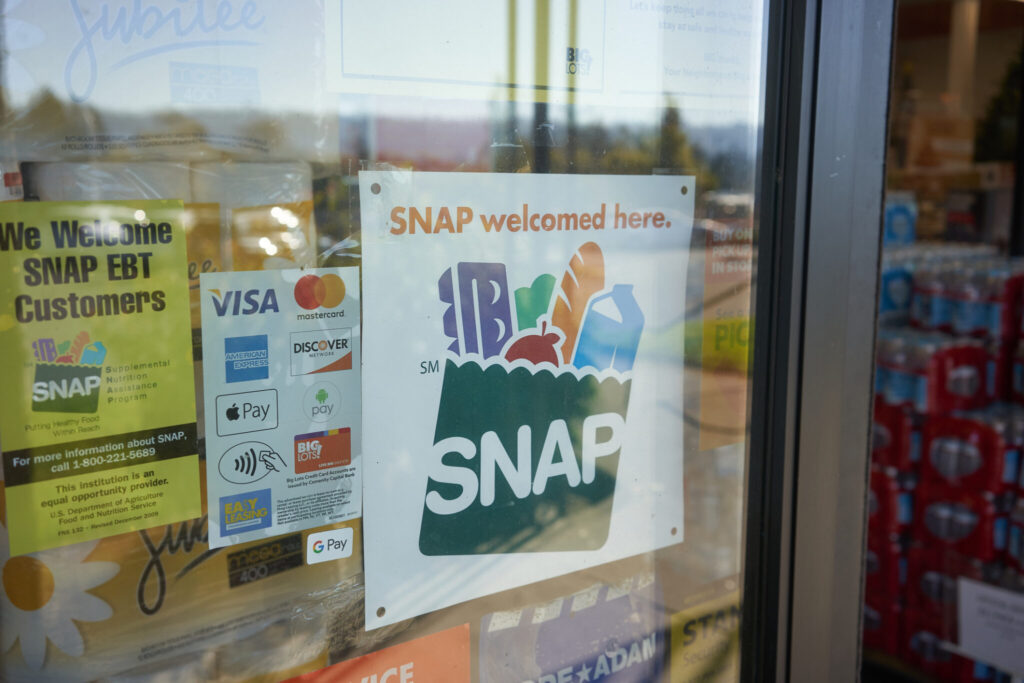
    Virginia Attorney General Jay Jones announced Thursday that a federal judge issued a preliminary injunction on June 5 amid a multi-state lawsuit challenging “vague, extraneous and unreasoned conditions” to how the U.S Department of Agriculture issues funding to states.

    “As Virginians face a growing cost crisis, President Trump is politicizing funding for critical USDA programs that help feed vulnerable children, hardworking families, senior citizens and rural communities,” Jones said in a statement, noting that nearly one million Virginians are facing hunger and rely on programs like SNAP and WIC, which are funded by the USDA.

    As part of its 2026 conditions, states receiving USDA grants must certify that they don’t operate “any programs that advance or promote Diversity, Equity and Inclusion,” do not “promote gender ideology” and that they do not permit funding disbursement to undocumented immigrants.

    Countering this, Virginia, 20 other states and the District of Columbia sued in March, stating they believe the impositions for compliance are unclear and unconstitutional.

    The injunction means that these conditions will not apply as the lawsuit continues to advance.

    Federal lawyers said in court filings that the new requirements would “help promote the sound stewardship of taxpayer dollars, strengthen USDA’s control and oversight of obligated funds, and ensure that grant recipients comply with federal laws, regulations and policies.”

    About 850,000 Virginians (and millions of people nationwide) use SNAP to help them purchase their groceries.

    USDA is also the federal umbrella agency for other social services like the Special Supplemental Nutrition Program for Women, Infants and Children, the Emergency Food Assistance Program, and the Volunteer Fire Capacity Program.

    With one in eight Virginians facing hunger, Jones’ office called the USDA conditions “unconstitutional,” and Jones pledged to “keep fighting for these crucial resources and the people who depend on them.”

  • Some Virginians with past felonies can apply to seal their records, starting next month

    Some Virginians with past felonies can apply to seal their records, starting next month

    After years of fine-tuning and preparation, a 2021 law allowing Virginians with certain past felony convictions to have their criminal records sealed will take effect July 1. Lawmakers and advocates say this will allow former felons without new convictions to expand their housing and employment options.

    Under the “Clean Slate law,” when hiring managers and landlords run background checks on people whose criminal records have been sealed, they won’t be able to see some older convictions. It only applies if former felons don’t have new convictions within seven years of their petition date for certain misdemeanors and 10 years for certain felonies.

    “We know that people age out of crime and nobody should have to live with their record forever,” said Sheba Williams, director of recidivism reduction organization Nolef Turns.

    As someone who navigated hurdles from her past criminal record, Williams founded her organization to help people return to society after incarceration. She has helped craft numerous criminal justice reform laws over the years.

    Sheba Williams is a Richmond native and the founder and executive director of Nolef Turns, which provides direct service and advocates for criminal legal systems reform on behalf of survivors and victims of crime, incarcerated people, and their loved ones. (Provided photo)

    People with Class 1 or 2 felonies – typically violent crimes or charges that carry life sentences — aren’t eligible. And petitioners must not have been convicted of a Class 3 or 4 felony within 20 years.

    Critically, Sen. Scott Surovell, D-Fairfax said, is that the law also effectively eliminates many barrier crimes. Should someone have a cocaine charge and be able to petition, for instance, they would no longer be prohibited from entering medical or security career fields.

    Surovell, along with Del. Charniele Herring, D-Alexandra, had led the legislative charge on the law.

    Over 900,000 Virginians are estimated to be able to seal their misdemeanors under the new provision, while over 100,000 are able to seal their felonies, according to a Virginia State Police presentation to the state Crime Commission.

    Part of the delay in setting up the sealing ability was to give circuit courts time to modernize records and prepare for the additional workload.

    Charlottesville Circuit Court Clerk Llezelle Dugger noted that it has taken a combination of clerks, state police and the office of the executive secretary in the state’s judicial system to properly prepare.

    Nuances had to be sorted out, like how far back the law would permit court records to be sealed and which types of crime would be eligible.

    “I give kudos to the Crime Commission,” Dugger said, for helping lawmakers bring the required parties to the table in recent years.

    With petitions opening July 1, Dugger does still anticipate some hiccups because certain convictions will be eligible for automatic sealing by October of this year.

    For instance, people with past petit larceny, trespassing, shoplifting, disorderly conduct or marijuana distribution misdemeanors would be eligible for automatic sealing so long as they don’t have new convictions within the past seven years.

    “I can see a layperson filing for something that would actually become sealed by October,” she said.

    Surovell said he’s eager for his bill to begin helping people. During a discussion panel last summer on the pending law, he shared that a constituent reached out to him about how a larceny charge from his youth had “followed him around” for decades.

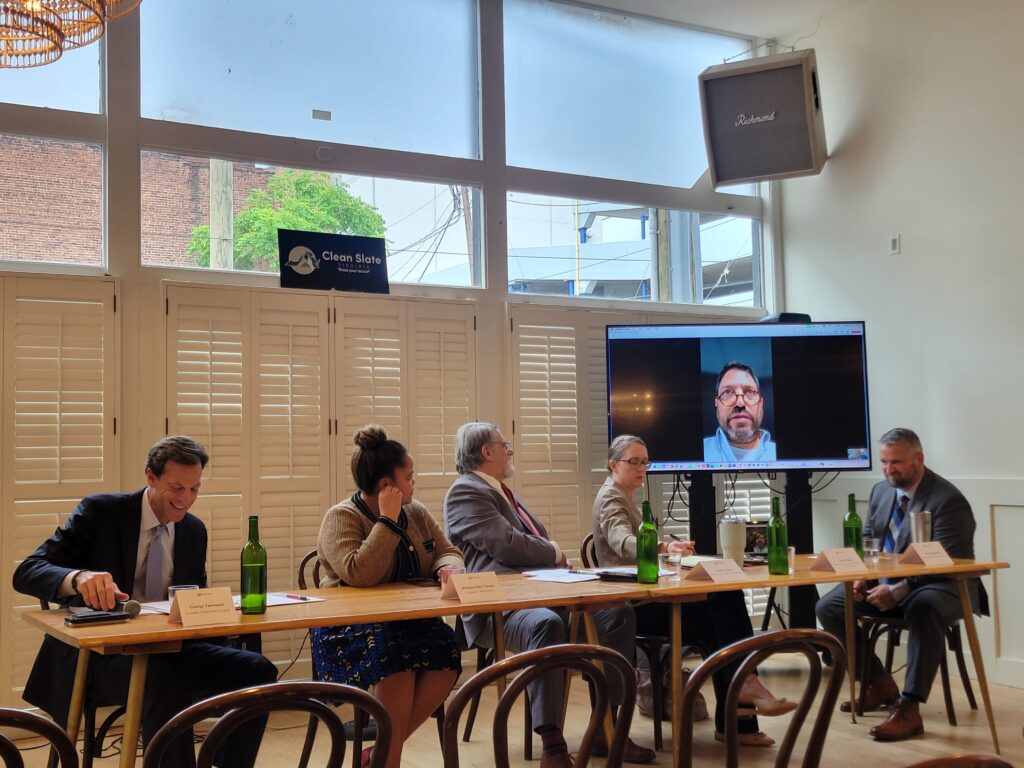
    The new law’s colloquial name is also a nod to a law firm called Clean Slate Virginia and the national movement of the same name. Founder George Townsend, who dedicated his career to helping ex-felons navigate reentry, was also involved in advocacy for Surovell’s and Herring’s bill.

    He’s called the law a “game changer” for many of his clients’ personal and professional lives.

    Beyond employment and stable housing, Williams said people’s records can bar them from certain civic engagement like volunteer work or helping to chaperone their children’s field trips or sporting trips.

    “There’s all these nuanced things that people don’t always think about unless it’s happening to them or their loved one,” she said.

    People with misdemeanors that may have been dismissed but still show up on records can also seek an expungement through local circuit courts. This is a related, but different process where a conviction is not simply sealed, but deleted.

    More details on automatic or petition-based criteria can be found here.

  • Judge approves settlement over rejected Virginia student voter registrations

    Judge approves settlement over rejected Virginia student voter registrations

    A federal judge has approved a consent decree requiring Virginia election officials to accept certain voter registration applications submitted by college students, resolving a lawsuit that alleged students were being improperly denied registration over missing dormitory-related details.

    The agreement, approved last week by the U.S. District Court for the Eastern District of Virginia, bars election officials from rejecting otherwise eligible student voter registration applications solely because they omit information such as dorm room numbers, dorm names or campus mailbox numbers when those details are not necessary to determine voting precincts.

    The lawsuit was filed in October by the NAACP Virginia State Conference and the Advancement Project against Virginia election officials shortly before the November 2025 general election.

    The civil rights groups alleged that election officials in multiple Virginia jurisdictions had rejected or delayed voter registration applications submitted by college students living on campus because the forms lacked dormitory-specific information not required under Virginia law.

    The plaintiffs argued the practice disproportionately affected students attending historically Black colleges and universities, including Norfolk State University and Virginia State University, along with students at schools including George Mason University, James Madison University, Old Dominion University, University of Richmond and Virginia Commonwealth University.

    What the settlement requires

    The lawsuit — titled NAACP Virginia State Conference v. John O’Bannon et al. — alleged that rejecting applications over missing dormitory details violated the Materiality Provision of the Civil Rights Act of 1964 as well as the First and Fourteenth Amendments of the U.S. Constitution.

    Under the consent decree, Virginia election officials must provide guidance and training to local registrars on how to handle student voter registration applications and amend the state voter registration form to clarify what address information is required for people living in dormitories and other group housing.

    The agreement also requires state officials to begin rulemaking efforts to formally incorporate the new standards in the Virginia Administrative Code.

    Andrea Gaines, a spokeswoman for the Virginia Department of Elections, said the State Board of Elections and the department approved the consent decree to promote “uniform processing” of voter registration applications and ensure people living in group housing such as college dormitories provide enough information to be assigned to the correct voting precinct.

    Gaines said additional guidance will be provided to local election officials before Virginia’s Aug. 4 primary election.

    John Powers, legal director for the Advancement Project, said the agreement removes barriers that had prevented some students from successfully registering to vote.

    “This consent decree is a major win for Virginia voters,” Powers said in a statement.

    “For too long, too many Virginia college students have been disenfranchised due to unnecessary and burdensome restrictions. This agreement removes those barriers and mandates important reforms that will allow more students to register successfully and cast ballots that count.”

    Anthony Ashton, senior associate general counsel for the NAACP, said the agreement makes clear that eligible voters cannot be denied registration over technical omissions unrelated to eligibility.

    “College students in Virginia — particularly those at historically Black colleges and universities — have faced unnecessary and unlawful barriers to voter registration,” Ashton said. “This consent decree sends a strong message that those practices will not stand.”

    Case reflects broader fights over student voter access

    The lawsuit was filed amid broader national debates over student voting access and efforts by voting-rights organizations to challenge policies they say place additional hurdles on younger voters.

    An analysis by the Brennan Center for Justice found that college students have long encountered voting obstacles involving residence verification and campus mailing addresses.

    In Indiana, a federal judge last year declined to dismiss a challenge to a law restricting student voter identification, ruling that students had plausibly alleged violations of the First, Fourteenth and Twenty-Sixth Amendments.

    Virginia voting rights advocates had also previously raised concerns that some local registrars were rejecting voter registration applications submitted by students listing university housing addresses without additional proof of residence.

    Supporters of last year’s lawsuit argued that the timing was particularly significant because the complaint was filed shortly before Virginia’s November 2025 statewide elections, which included races for governor, lieutenant governor, attorney general and all 100 seats in the House of Delegates.

    Editor’s note: This story has been updated to include a statement from the Virginia Department of Elections.

  • Judge weighs future of Confederate-linked school names in Shenandoah County

    Judge weighs future of Confederate-linked school names in Shenandoah County

    Shenandoah County is awaiting a closely watched court decision over whether the names of Confederate figures should remain on several school buildings, a dispute that has reignited debate over history, race and educational equity in Virginia schools.

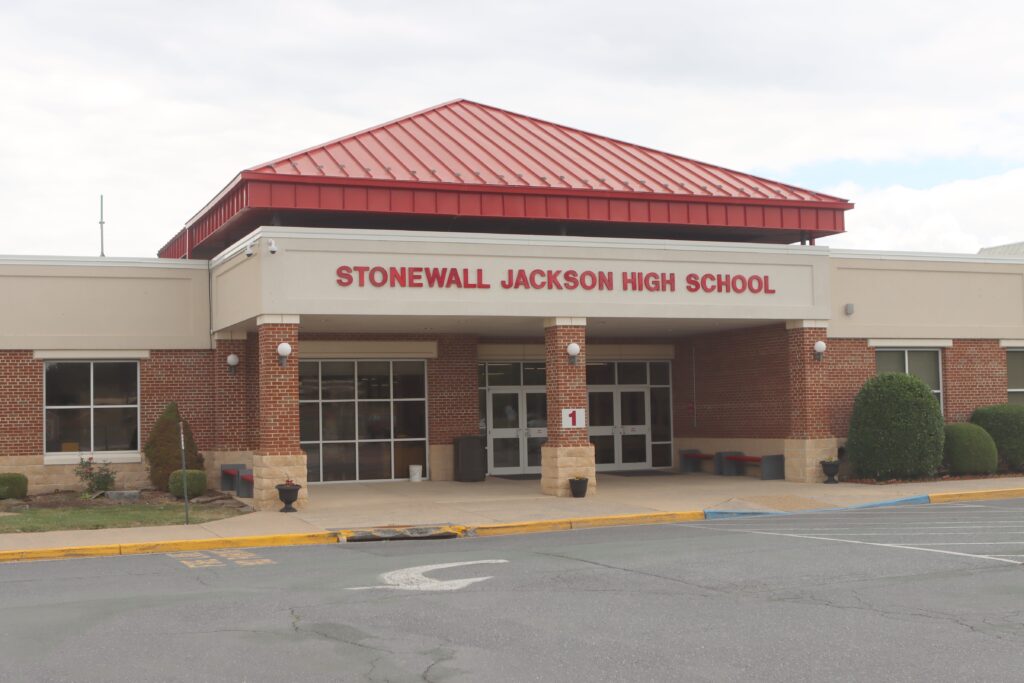
    Some residents view honoring Confederate generals, including Turner Ashby, Robert E. Lee, and Thomas “Stonewall” Jackson, as an important part of local heritage and history. Others see them as symbols of slavery and racism that deepen racial tensions.

    At the center of the case is whether the Shenandoah County School Board’s decision to restore the Confederate names violates federal law and undermines efforts to provide equal educational opportunities in Virginia.

    “I think the central theme that really kind of reverberates through this case is the overall educational equity,” said Marja Plater, senior counsel at the Washington Lawyers Committee for Civil Rights and Urban Affairs, representing the NAACP Virginia State Conference and five students.

    “Having students who are subjected to the harmful impacts of having to attend school aimed at Confederate generals, and the entire culture that it establishes, is not what we want students to be subjected to now, and it really hinders achieving educational equity.”

    Plater said she believes the U.S. is still working toward fully fully achieving the goals of the Supreme Court case Brown v. Board of Education, which sought to ensure equal education for students regardless of race.

    Because of that focus on equal educational opportunity, Plater said the names schools carry a— including those honoring Confederate generals — matter because they can affect fairness and equal treatment in education.

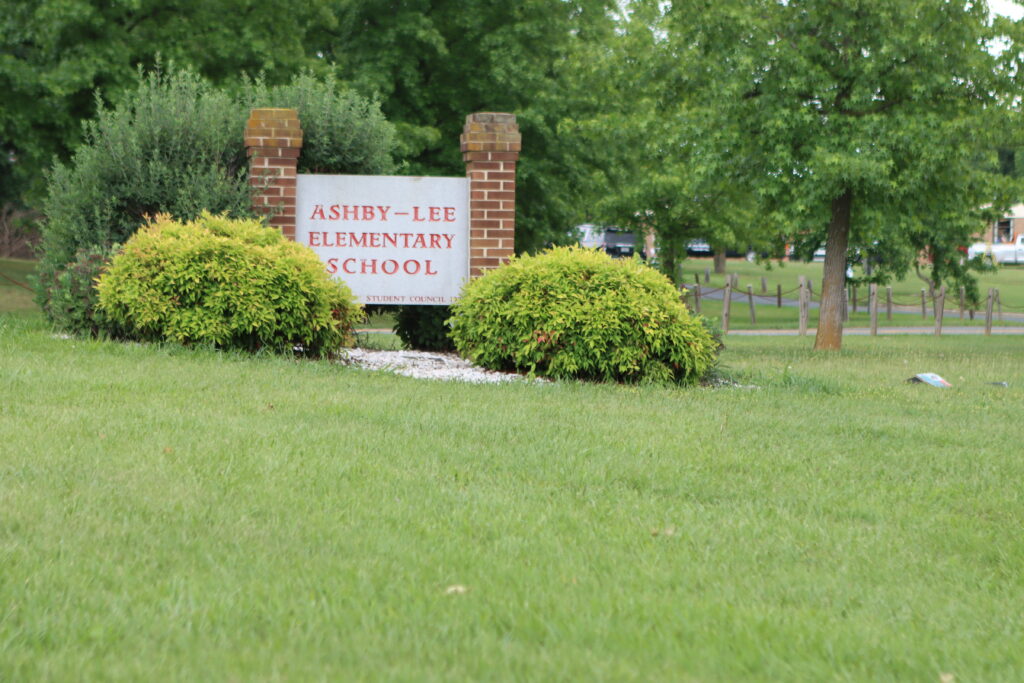
    A view from outside Ashby-Lee Elementary School in Shenandoah County. (Nathaniel Cline/Virginia Mercury)

    After the Shenandoah County School Board voted in May 2024 to restore the name, the NAACP state conference and several students filed a lawsuit the following month challenging the decision, including the restoration of the name Stonewall Jackson High School.

    The lawsuit alleges the board violated students’ First Amendment rights by forcing them to endorse a viewpoint they disagree with through the promotion of Confederate figures.

    Last September, U.S. District Court Judge Michael F. Urbanski sided with the students, writing that the board violated students’ First Amendment rights and that Jackson’s name “is expressive as a symbol of racial exclusion in public schools.”

    Both sides presented final arguments on March 31, and the court is now considering its ruling.

    Asked whether the case should be viewed through the lens of educational equity, Jim Guynn, an attorney representing the school board, said no evidence of inequity was presented during the trial and that the plaintiffs are thriving academically and socially while serving as leaders among their peers.

    Looking ahead, Guynn said an adverse ruling could set a precedent for challenges to school names beyond those tied to the Confederacy.

    In the board’s view, such challenges could eventually expand to a broad range of historical figures and institutions.

    “At some point, we have to stop focusing on the negative and start assessing historical figures in their time and not by our current standards,” Guynn said. “I might add that I hope not to be judged by the standards in place 50 or 100 years from now. We can’t predict what those standards will be.”

    Potential consequences

    It remains unclear what the remedies the court would impose after finding that the Shenandoah County School Board violated students’ rights, but the consequences could be significant, potentially including federal investigations, loss of federal funding and federal oversight.

    The board is also awaiting a decision on whether it illegally discriminated against students based on race through Title VI of the Civil Rights Act of 1964, which bars discrimination in federally funded programs, and the Equal Educational Opportunity Act, which requires equal access to education regardless of race, color, sex or national origin.

    Guynn said the board is concerned that an adverse ruling could mean “a school board acting with the overwhelming support of the public could never name a school after a person if some students claim that the name is discriminatory.”

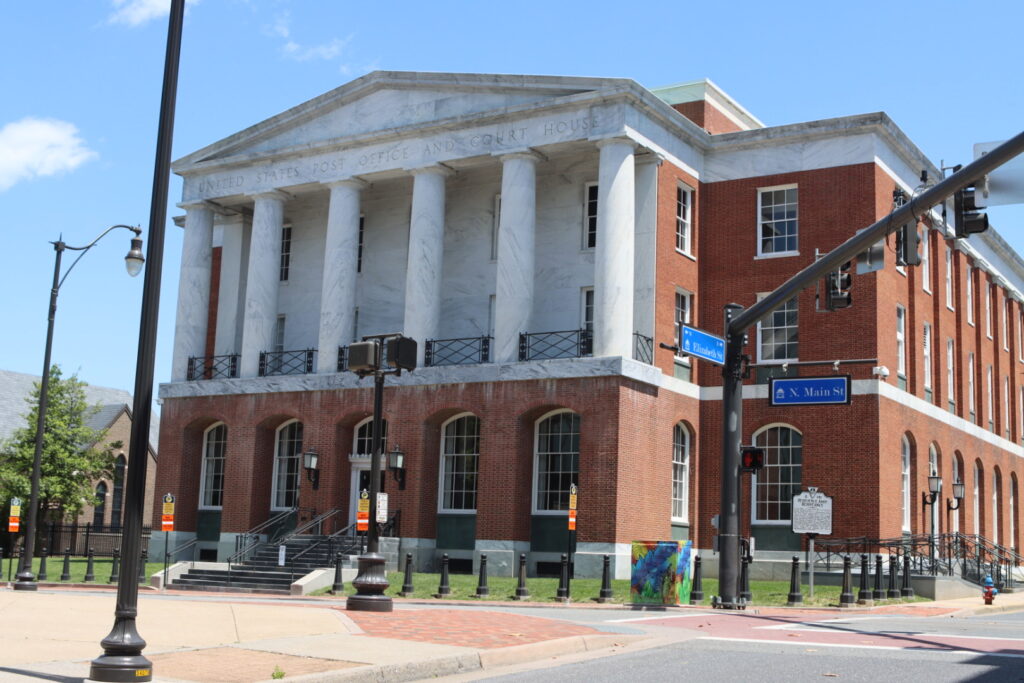
    A view outside the U.S. Courthouse in Virginia’s Western District. (Nathaniel Cline/Virginia Mercury)

    “Names are not discriminatory, especially when the facts in the case show that there has been no discrimination against any students,” he added.

    As the court weighs its decision, Urbanski has not yet ruled on the NAACP’s and students’ request to remove Confederate names, mascots, and other vestiges before the 2026-2027 school year. They also asked the court to bar the school board from using Confederate leaders’ names or references in future naming decisions.

    If the court orders the names changed, the ruling would further spotlight the community’s long-running divide over Confederate recognition, symbolizing a deeper conflict between heritage and educational equity.

    Public support for restoring the names helped reshape the school board. Only three current members served on the board before the reinstatement vote, and all three voted to restore the names.

    “The name of the school is important to county residents because Stonewall Jackson was an important figure in the history of the county and because it is the name of the high school that many residents attended and graduated from, and it has a sentimental place in their hearts,” Guynn said.

    Trust at the center of the case

    Trust emerged as a central theme for both the students challenging the names and the 2024 school board that restored them.

    The 2020 school board, which initially removed the Confederate names, argued its decision was intended to condemn racism and begin a renaming process. The 2024 school board argued restoring the names was necessary to “restore the public’s trust” after the earlier board’s actions.

    “This was not an innocent mistake by some inexperienced school board. No, this was carefully choreographed machinations of a school board colluding to ignore the people they represented,” Board member Gloria Carlineo said during a 2024 meeting. “This is what political indoctrination in our schools looks like.”

    Other board members described the 2020 name changes as a “slap in the face” to residents near the southern campus, where the three schools are located, saying they felt their heritage was being erased.

    On the plaintiffs’ side, one student testified that she no longer knows which adults at the school she can trust because many staff members wear clothing bearing the Stonewall Jackson name.

    Other students testified that the Confederate names made their academic experience more difficult and left them feeling “closed off” from classmates after the names were restored, fearing some peers might support segregation or not want them at the school.

    Final Ruling

    It is unclear when Urbanski will issue a final ruling. Court records show the parties met with the judge shortly after the March 31 hearing concluded.

    Urbanski previously announced he would take senior status beginning July 4, 2024, allowing him to remain a federal judge while potentially carrying a reduced caseload. His successor, Jasmine H. Yoon, was nominated and confirmed before the transition.

    The outcome of this case will not only affect Shenandoah County and the names of its schools, but also broader debates about history, equity, and trust in public education.

  • Virginia marriage equality amendment campaign launches at start of Pride Month

    Virginia marriage equality amendment campaign launches at start of Pride Month

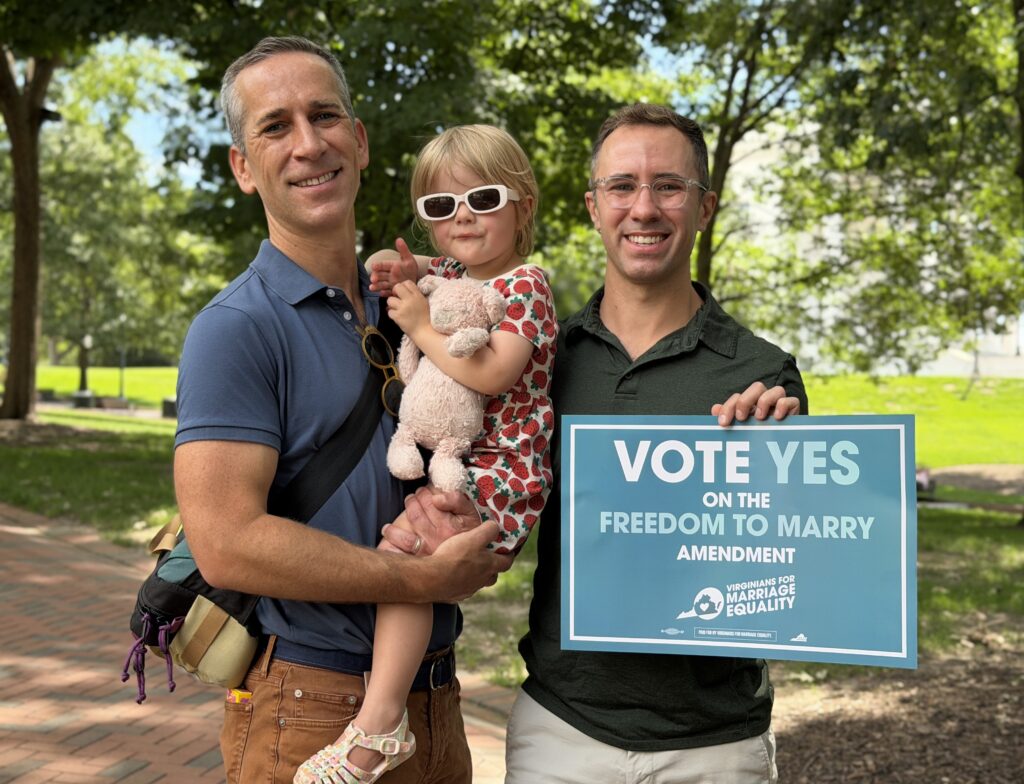
    Chad Stewart and Blake McDonald met in college in 2007 and began dating two years later, eventually building a life together in Richmond after settling in Virginia more than a decade ago.

    By 2015, the couple married — just one week before the U.S. Supreme Court’s landmark Obergefell v. Hodges decision legalized same-sex marriage nationwide.

    “We didn’t want to have to think about politics or court cases,” McDonald said Monday outside the Bell Tower in Richmond’s Capitol Square. “We just wanted to dream about the future we’re going to build together.”

    The couple spoke as Virginians for Marriage Equality formally launched its statewide campaign to pass a constitutional amendment referendum in November that would permanently protect same-sex marriage in the Virginia Constitution.

    The coalition gathered at the start of LGBTQ Pride Month to rally support for the amendment, which would repeal Virginia’s dormant constitutional ban on same-sex marriage and replace it with language requiring the commonwealth to recognize all marriages, regardless of sex, gender or race.

    Advocates say the amendment is needed in case federal protections for same-sex marriage are ever overturned.

    Concerns intensified after the U.S. Supreme Court overturned Dobbs vs. Jackson Women’s Health Organization in 2022 and Justice Clarence Thomas later suggested the court should reconsider other rulings involving privacy and due process rights, including same-sex marriage protections.

    Over time, Stewart said, the future he and McDonald imagined together in Virginia expanded beyond the two of them. During the pandemic, they began the adoption process. In 2023, they received a call, giving them just 16 hours notice before bringing home their daughter, Flora.

    “And so now our life is daycare drop offs, bedtime routines, holidays together, play dates with neighbors, and our daughter proudly calling the people down the street family, too,” Stewart said.

    From Marshall-Newman to Obergefell

    Virginia’s fight over marriage equality has spanned two decades, from one of the country’s strictest constitutional bans to this year’s referendum effort to permanently protect those marriages in state law.

    Voters approved the Marshall-Newman amendment in 2006 after legislation introduced by then-Del. Bob Marshall, R-Manassass, and then-Sen. Steve Newman, R-Bedford County.

    The amendment defined marriage exclusively as a union between “one man and one woman” and barred the state from recognizing same-sex relationships or similar legal arrangements.

    Roughly 57% of voters backed the amendment at the time.

    The issue later became the subject of federal lawsuits including Bostic vs. Schaefer and Harris vs. Rainey, in which same-sex couples argued Virginia’s ban violated the Equal Protection and Due Process clauses of the 14th Amendment.

    A federal judge struck down Virginia’s ban in 2014, and the 4th U.S. Circuit Court of Appeals later upheld the ruling. When the U.S. Supreme Court declined to hear Virginia’s appeal later that year, same-sex marriages began statewide.

    The following year, the high court’s Obergefell ruling established a nationwide constitutional right to same-sex marriage under the 14th Amendment’s guarantees of due process and equal protection. Although the decision invalidated Virginia’s constitutional ban, the language itself remained in the state constitution.

    The amendment before voters in the 2026 midterm elections passed the General Assembly in 2025 and again during the 2026 legislative session, satisfying the constitutional requirement that amendments pass in two separately elected legislatures before reaching the ballot.

    If approved by voters this fall, the amendment would repeal the Marshall-Newman language and replace it with protections requiring Virginia to recognize marriages regardless of sex, gender or race.

    Former state senator Adam Ebbin speaks during the launch of the Virginians for Marriage Equality campaign in Richmond Monday. (Photo by Markus Schmidt/Virginia Mercury)

    ‘Dignity, respect, and equal treatment under the law’

    In Richmond Monday, several speakers described the referendum as the culmination of decades of legislative efforts and legal battles.

    Former state senator Adam Ebbin, a Democrat from Alexandria and the first openly gay legislator elected to Virginia’s General Assembly in 2003, recalled watching lawmakers approve the constitutional ban more than 20 years ago.

    “For Mark and me, today is deeply personal,” Ebbin said, referring to Virginia Secretary of Finance Mark Sickles, another openly gay former lawmaker standing next to him.

    “Twenty years ago, we stood in the General Assembly and watched Virginia write discrimination into its constitution. We argued against it, we voted against it, and for 20 years, we worked to undo that mistake.”

    Ebbin said same-sex couples across Virginia have spent more than a decade building families while the constitutional ban remained written into state law.

    “Back in 2006, Virginians were told that marriage equality would somehow threaten our community,” Ebbin said. “But today, for more than a decade, same-sex couples have been building marriages, raising children, buying homes, and growing all together across the commonwealth.”

    Sickles said public attitudes shifted over time as LGBTQ Virginians became more visible in communities and families across the state.

    “People keep organizing,” Sickles said. “Families kept showing up. Virginia has changed because people got to know their neighbors, their coworkers, their friends, their siblings, their children more fully.”

    Narissa Rahaman, executive director of Equality Virginia and a committee member of Virginians for Marriage Equality, described the campaign as centered on dignity, family and personal freedom.

    “This November, Virginians have the opportunity to protect the Freedom to marry and affirm what so many of us already know,” Rahaman said. “Every Virginia family deserves dignity, respect, and equal treatment under the law.”

    Rahaman referred to her marriage to her wife, Brianna, as “a million little decisions and a million little moments” built around love, commitment and stability.

    “No family in Virginia should have to wonder whether their rights will be protected tomorrow,” she said.

    Marshall, the sponsor of Virginia’s 2006 same-sex marriage ban, declined to comment when reached by phone Monday.

    But the political landscape around the issue has since shifted dramatically. In 2024, then-Gov. Glenn Youngkin, a Republican, signed legislation sponsored by Democratic lawmakers aimed at ensuring same-sex marriage would remain legal in Virginia regardless of future federal court decisions.

    Still, Youngkin’s office at the time emphasized provisions protecting religious liberties, including language allowing clergy members and religious organizations to decline to perform same-sex weddings.

    Campaign heads into election season

    Organizers said they plan to spend the coming months traveling across Virginia to build support ahead of the November elections.

    Alexandria Democrat Del. Kirk McPike, who is also campaign co-chair, said marriage equality advocates will engage voters in communities statewide in the coming months.

    “My own husband, Jason, and I have built a life together here in Virginia, just like thousands of other couples and families across the commonwealth,” McPike said. “Every Virginian has a place in this campaign and a place in this commonwealth.”

    Mary Bauer, executive director of the American Civil Liberties Union of Virginia, tied the amendment effort to Virginia’s broader civil rights history, including the 1967 U.S. Supreme Court decision in Loving v. Virginia, which struck down interracial marriage bans.

    “This amendment is about making clear that the government has no business deciding which marriages or which families are worthy of recognition,” Bauer said.

    For Stewart and McDonald, the constitutional debate ultimately comes back to protecting and honoring their union.

    “When you build a family like that, legal recognition stops feeling abstract very quickly,” Stewart said. “Marriage equality is what allows families like ours to navigate healthcare, school enrollment, parenting, and all the ordinary parts of life that come with making a home together.”