Tag: constitutional amendment

  • More than abortion: What Va. patients and providers want you to know about reproductive health laws

    More than abortion: What Va. patients and providers want you to know about reproductive health laws

    Editor’s note: This story mentions pregnancy loss.

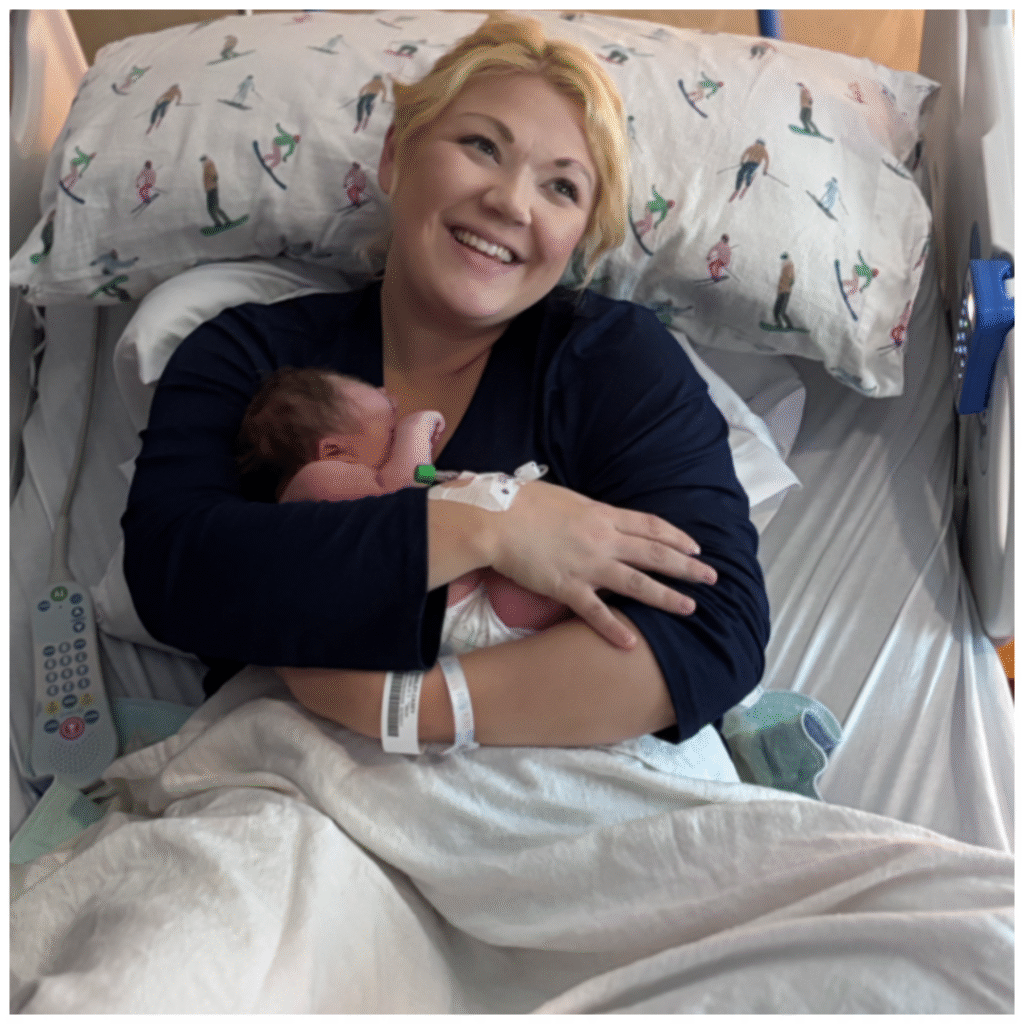
    Miscarriages were common for Albemarle County resident Casey Oakley during her in vitro fertilization process. Some embryo transfers weren’t successful and her body would expel the remnants, a process she had always handled safely at home, until an irregular delay.

    Her bloodwork had indicated her pregnancy hormones were not elevating properly, signaling an imminent miscarriage. But two weeks later nothing had happened.

    “(Doctors) didn’t know where the embryo had implanted in my body, so I was scheduled for an abortion, and I was told before my surgery that if they couldn’t find products of conception in my uterus, that they were going to be taking my tubes,” she said.

    Miscarriage management remains muddled 4 years after Dobbs

    The fallback option was meant to spare her the deadly infections that can arise when miscarriages fail to complete.

    “It wasn’t a question that they asked, it was more of a ‘this is what we have to do to make sure that you live,’” Oakley said.

    Doctors eventually discovered that her body had maintained a gestational sac but no fetal DNA.

    “My body had fought so hard for a pregnancy that would have no baby and then I was going into sepsis,” she said. “The abortion saved my life.”

    Her experience is foundational to her support for a pending constitutional amendment heading to Virginia voters statewide in November.

    If approved, it will permanently embed reproductive rights into Virginia’s constitution.

    The amendment would protect people’s access to contraception, IVF and abortion, four years after the Supreme Court overturned federal protections for abortion and more states have restricted access to the procedure and birth control.

    Virginia remains the least restrictive Southern state for reproductive healthcare in the era after Dobbs v. Jackson Women’s Health Organization, the abortion protection case that justice struck down in 2022.


    State lawmakers weigh in
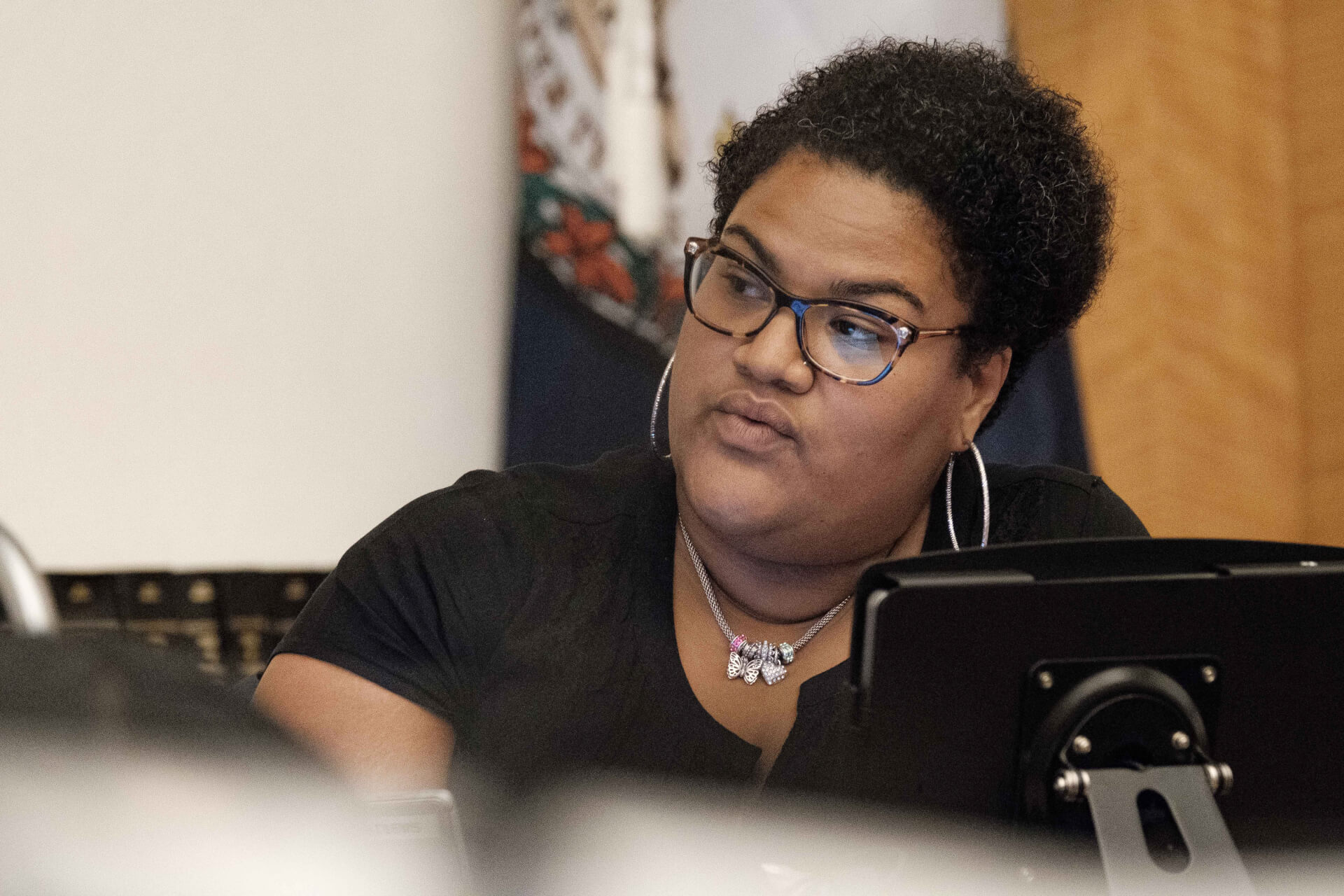
     

    Del. Cia Price, D-Newport News. (Ned Oliver/Virginia Mercury)

    Del. Cia Price, D-Newport News, was diagnosed with polyendocrine metabolic ovarian syndrome at 16 years old. She recalled debilitating cramps that made it hard for her to focus in school and days she could not get out of bed.

    Formerly known as polycystic ovarian syndrome, PMOS is a full body disorder that affects people’s metabolism and reproductive organs. It can also cause infertility. Contraception has long been a standard treatment for the disorder to improve quality of life.

    Though Price doesn’t need contraception for family planning as she is in a same-sex relationship and does not want biological children, the treatment lessens her PMOS symptoms.

    She said her and others’ access to the medication could be at risk.

    After Dobbs, Justice Clarence Thomas suggested the court revisit cases that have protected contraception, as well.

    Gov. Abigail Spanberger signed Price’s Right To Contraception Act into law this summer, after the bill was vetoed multiple times by former Gov. Glenn Youngkin.

    It will protect contraception access in the interim, though the pending reproductive rights amendment would shore matters up longterm.

    Price said she understands some of her constituents’ and legislative colleagues’ reasons for not supporting contraception or abortion — from religious objections to debates over life-at-conception. But she underscored the healthcare utility of each.

    “It’s just really disheartening for your quality of life to be at the intersection of an argument,” she said.

    “This is a difficult topic for a lot of people,” Sen. Emily Jordan, R-Suffolk, said during a floor speech earlier this year amid debate over the amendment.

    Jordan was among the Virginia Republicans who unsuccessfully sought to alter the amendment to reinforce existing state code outlining restrictions for minors and outlining care for infants when they are born.

    The amendment advanced due to Democrats’ majority in the Virginia statehouse. Now, it’s in voters’ hands.

    Price believes her contraception bill and the amendment “takes the conversation out of the political sphere and puts it in the medical sphere and the personal decision sphere.”


    The medical cost


    Dr. Kimi Chernoby, an emergency medicine doctor and lawyer, noted that emergency abortion care can happen at all stages of pregnancy if things go awry with the fetus or parent.

    She added that many first trimester abortions stem from miscarriages or ectopic pregnancies, and that restrictive state laws increase margins for death.

    “These laws are written by lawyers who have no medical training,” she said. “They actually prohibit a lot of care around miscarriages and ectopics, unless they fall within certain exceptions, and so that’s the care that is getting tangled up.”

    As chief operating officer for a nonprofit called FemInEM, Chernoby organizes training around the country for emergency physicians to handle reproductive health emergencies.

    The national patchwork of bans and restrictions with scant exceptions has complicated her and other physicians’ work, she said.

    Legal challenges to mifepristone further muddle matters, as the abortion pill is also critical for managing miscarriages to prevent sepsis. FemInEM has submitted amicus briefs as a key court case that could affect abortions and miscarriage care nationwide unfolds.

    Ahead of the fall referendum and pending court rulings, Oakley reflected on how an abortion allowed her to become a mother, surrogate and foster parent many times over.

    “I was able to further the lives of my children and four other little girls,” she said. “There will be many other children to come into our lives afterwards.”
  • Virginia marriage equality amendment campaign launches at start of Pride Month

    Virginia marriage equality amendment campaign launches at start of Pride Month

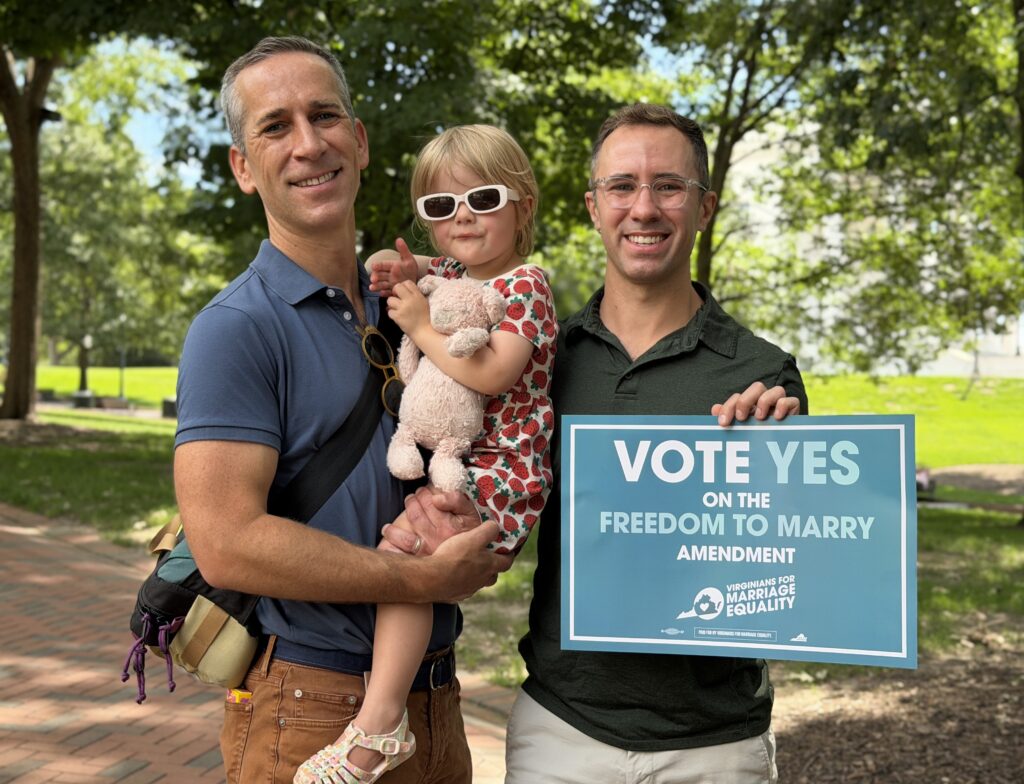
    Chad Stewart and Blake McDonald met in college in 2007 and began dating two years later, eventually building a life together in Richmond after settling in Virginia more than a decade ago.

    By 2015, the couple married — just one week before the U.S. Supreme Court’s landmark Obergefell v. Hodges decision legalized same-sex marriage nationwide.

    “We didn’t want to have to think about politics or court cases,” McDonald said Monday outside the Bell Tower in Richmond’s Capitol Square. “We just wanted to dream about the future we’re going to build together.”

    The couple spoke as Virginians for Marriage Equality formally launched its statewide campaign to pass a constitutional amendment referendum in November that would permanently protect same-sex marriage in the Virginia Constitution.

    The coalition gathered at the start of LGBTQ Pride Month to rally support for the amendment, which would repeal Virginia’s dormant constitutional ban on same-sex marriage and replace it with language requiring the commonwealth to recognize all marriages, regardless of sex, gender or race.

    Advocates say the amendment is needed in case federal protections for same-sex marriage are ever overturned.

    Concerns intensified after the U.S. Supreme Court overturned Dobbs vs. Jackson Women’s Health Organization in 2022 and Justice Clarence Thomas later suggested the court should reconsider other rulings involving privacy and due process rights, including same-sex marriage protections.

    Over time, Stewart said, the future he and McDonald imagined together in Virginia expanded beyond the two of them. During the pandemic, they began the adoption process. In 2023, they received a call, giving them just 16 hours notice before bringing home their daughter, Flora.

    “And so now our life is daycare drop offs, bedtime routines, holidays together, play dates with neighbors, and our daughter proudly calling the people down the street family, too,” Stewart said.

    From Marshall-Newman to Obergefell

    Virginia’s fight over marriage equality has spanned two decades, from one of the country’s strictest constitutional bans to this year’s referendum effort to permanently protect those marriages in state law.

    Voters approved the Marshall-Newman amendment in 2006 after legislation introduced by then-Del. Bob Marshall, R-Manassass, and then-Sen. Steve Newman, R-Bedford County.

    The amendment defined marriage exclusively as a union between “one man and one woman” and barred the state from recognizing same-sex relationships or similar legal arrangements.

    Roughly 57% of voters backed the amendment at the time.

    The issue later became the subject of federal lawsuits including Bostic vs. Schaefer and Harris vs. Rainey, in which same-sex couples argued Virginia’s ban violated the Equal Protection and Due Process clauses of the 14th Amendment.

    A federal judge struck down Virginia’s ban in 2014, and the 4th U.S. Circuit Court of Appeals later upheld the ruling. When the U.S. Supreme Court declined to hear Virginia’s appeal later that year, same-sex marriages began statewide.

    The following year, the high court’s Obergefell ruling established a nationwide constitutional right to same-sex marriage under the 14th Amendment’s guarantees of due process and equal protection. Although the decision invalidated Virginia’s constitutional ban, the language itself remained in the state constitution.

    The amendment before voters in the 2026 midterm elections passed the General Assembly in 2025 and again during the 2026 legislative session, satisfying the constitutional requirement that amendments pass in two separately elected legislatures before reaching the ballot.

    If approved by voters this fall, the amendment would repeal the Marshall-Newman language and replace it with protections requiring Virginia to recognize marriages regardless of sex, gender or race.

    Former state senator Adam Ebbin speaks during the launch of the Virginians for Marriage Equality campaign in Richmond Monday. (Photo by Markus Schmidt/Virginia Mercury)

    ‘Dignity, respect, and equal treatment under the law’

    In Richmond Monday, several speakers described the referendum as the culmination of decades of legislative efforts and legal battles.

    Former state senator Adam Ebbin, a Democrat from Alexandria and the first openly gay legislator elected to Virginia’s General Assembly in 2003, recalled watching lawmakers approve the constitutional ban more than 20 years ago.

    “For Mark and me, today is deeply personal,” Ebbin said, referring to Virginia Secretary of Finance Mark Sickles, another openly gay former lawmaker standing next to him.

    “Twenty years ago, we stood in the General Assembly and watched Virginia write discrimination into its constitution. We argued against it, we voted against it, and for 20 years, we worked to undo that mistake.”

    Ebbin said same-sex couples across Virginia have spent more than a decade building families while the constitutional ban remained written into state law.

    “Back in 2006, Virginians were told that marriage equality would somehow threaten our community,” Ebbin said. “But today, for more than a decade, same-sex couples have been building marriages, raising children, buying homes, and growing all together across the commonwealth.”

    Sickles said public attitudes shifted over time as LGBTQ Virginians became more visible in communities and families across the state.

    “People keep organizing,” Sickles said. “Families kept showing up. Virginia has changed because people got to know their neighbors, their coworkers, their friends, their siblings, their children more fully.”

    Narissa Rahaman, executive director of Equality Virginia and a committee member of Virginians for Marriage Equality, described the campaign as centered on dignity, family and personal freedom.

    “This November, Virginians have the opportunity to protect the Freedom to marry and affirm what so many of us already know,” Rahaman said. “Every Virginia family deserves dignity, respect, and equal treatment under the law.”

    Rahaman referred to her marriage to her wife, Brianna, as “a million little decisions and a million little moments” built around love, commitment and stability.

    “No family in Virginia should have to wonder whether their rights will be protected tomorrow,” she said.

    Marshall, the sponsor of Virginia’s 2006 same-sex marriage ban, declined to comment when reached by phone Monday.

    But the political landscape around the issue has since shifted dramatically. In 2024, then-Gov. Glenn Youngkin, a Republican, signed legislation sponsored by Democratic lawmakers aimed at ensuring same-sex marriage would remain legal in Virginia regardless of future federal court decisions.

    Still, Youngkin’s office at the time emphasized provisions protecting religious liberties, including language allowing clergy members and religious organizations to decline to perform same-sex weddings.

    Campaign heads into election season

    Organizers said they plan to spend the coming months traveling across Virginia to build support ahead of the November elections.

    Alexandria Democrat Del. Kirk McPike, who is also campaign co-chair, said marriage equality advocates will engage voters in communities statewide in the coming months.

    “My own husband, Jason, and I have built a life together here in Virginia, just like thousands of other couples and families across the commonwealth,” McPike said. “Every Virginian has a place in this campaign and a place in this commonwealth.”

    Mary Bauer, executive director of the American Civil Liberties Union of Virginia, tied the amendment effort to Virginia’s broader civil rights history, including the 1967 U.S. Supreme Court decision in Loving v. Virginia, which struck down interracial marriage bans.

    “This amendment is about making clear that the government has no business deciding which marriages or which families are worthy of recognition,” Bauer said.

    For Stewart and McDonald, the constitutional debate ultimately comes back to protecting and honoring their union.

    “When you build a family like that, legal recognition stops feeling abstract very quickly,” Stewart said. “Marriage equality is what allows families like ours to navigate healthcare, school enrollment, parenting, and all the ordinary parts of life that come with making a home together.”