Tag: Cannabis

  • Virginia legislators advance $205 billion budget including new tax on data centers

    Virginia legislators advance $205 billion budget including new tax on data centers

    On Monday, Virginia legislators approved a two-year, $205 billion budget proposal to fund healthcare and public education, provide 4% teacher raises and a 3.5% pay bump to state employees, establish a retail weed marketplace and hedge against decreased federal dollars.

    The spending plan also includes a provision to tax data centers for their energy consumption, which is slated to generate a maximum of $600 million each year but doesn’t include the environmental standards the House of Delegates wanted to impose on the industry or the end of the sales tax exemption that the Senate sought.

    Senate Finance Committee chair Louise Lucas, D-Portsmouth, said after her chamber’s morning session that she “didn’t love” the data center compromise and framed it as a necessity — but not the final solution.

    “I would have preferred another method, but we had to get a budget. We were not going to let the government be shut down, and so this was a good start,” Lucas said.

    “This is a compromise proposal — one my administration helped craft — and it builds a strong foundation for further discussions about the future of this industry in Virginia on issues like environmental and community impact,” Gov. Abigail Spanberger said of the data center provision in a statement.

    The Senate passed the budget proposal 23-16 vote, while the House advanced it 71-22.

    With both chambers finally on the same page after months of gridlock over data centers, the plan will now be reviewed by Spanberger. She can sign it as-is, recommend changes or veto line items. The whole process must be finalized by July 1, when the new budget will take effect.

    Here are the key priorities addressed by the spending plan.


    Data centers


    The amended budget proposal creates an energy consumption tax for data centers which totals $.011 per kilowatt hour used per month.

    The state will collect up to $600 million a year from this new tax, according to budget language. Any funds collected over that cap would be put into a fund and given back to data centers at the end of each fiscal year.

    This is only a fraction of what the state could have made if they had ended the sales and use tax exemption, but, after months of arguing, lawmakers ultimately didn’t agree to that measure. Spanberger supported keeping the exemption in place through the end of the agreement’s term in 2035.

    Additionally, language was put into the budget to direct the Department of Environmental Quality to study the groundwater impacts of non-closed loop data centers, which use millions of gallons of water each year.

    DEQ will locate “cooling water scarcity areas” where the use of potable water for computer cooling systems could be detrimental to surrounding areas’ water quality and availability.

    The department will have until July 2027 to create regulations for the scarcity areas. After they are developed, future data centers in that area will be required to “use air cooling, closed loop cooling systems, or more efficient cooling systems that become available.”

    After July 1, 2027, data centers in the Eastern Groundwater Management Area will have to “use air cooling systems, 100% recycled water and/or stormwater for cooling, or use a closed loop system.” A study will be released in October 2026 on how to retrofit existing data centers in those areas to align with the new regulations.

    Some Republican lawmakers characterized the measure as inconsistent.

    “The budget does not create one strong statewide water usage standard for data centers. Some parts of Virginia get stronger protections and other parts get weaker protection or no protection at all,” said Sen. Glen Sturtevant, R-Chesterfield. “That should concern every locality that is concerned about becoming the next target for a massive data center.”

    Senate budget proposal keeps data center sales tax exemption, adds new tax for industry

    Budget language also directs DEQ to put in place noise abatement regulations for data centers before the end of 2029. The department will determine the lowest possible noise level for data centers and make it the standard starting in 2030.

    After that date, facilities who violate the noise standard will face a fine of $32,500 per day.

    “The noise issues are some of the things we hear the most from people that live next to data centers,” said Sen. Scott Surovell, D-Fairfax, whose district contains dozens of data centers. “Water is a rising concern, especially for any data centers that are gonna be put east of I-95, where we already have a real problem with our declining aquifer.”

    Lucas told reporters that this is not the end of the conversation about doing away with the sales and use tax exemption, and that a study group will look closer at the issue and provide a report on their findings in November.


    Health and human services


    Overall, the pending budget will earmark $158.3 million in the state’s general fund for fiscal year 2027 and $245.1 million in 2028 for healthcare and social services.

    The money was set aside both for healthcare and social services the state typically handles along with support to comply with new federal mandates and partially plug holes created by federal funding shortfalls.

    As thousands of Virginians have fallen off Affordable Care Act health insurance this year, Virginia’s new budget entails $150 million to support a state-level version of the expired federal assistance for people between 138% and 250% of the federal poverty level.

    Sen. Danica Roem, D-Manassas, a former journalist and restaurant worker, described the difficulty of living uninsured for two years in a floor speech on Monday.

    “I don’t want anyone to live like that,” she said.

    She added that the budget “puts major money” into making sure that the state is “taking care” of people.
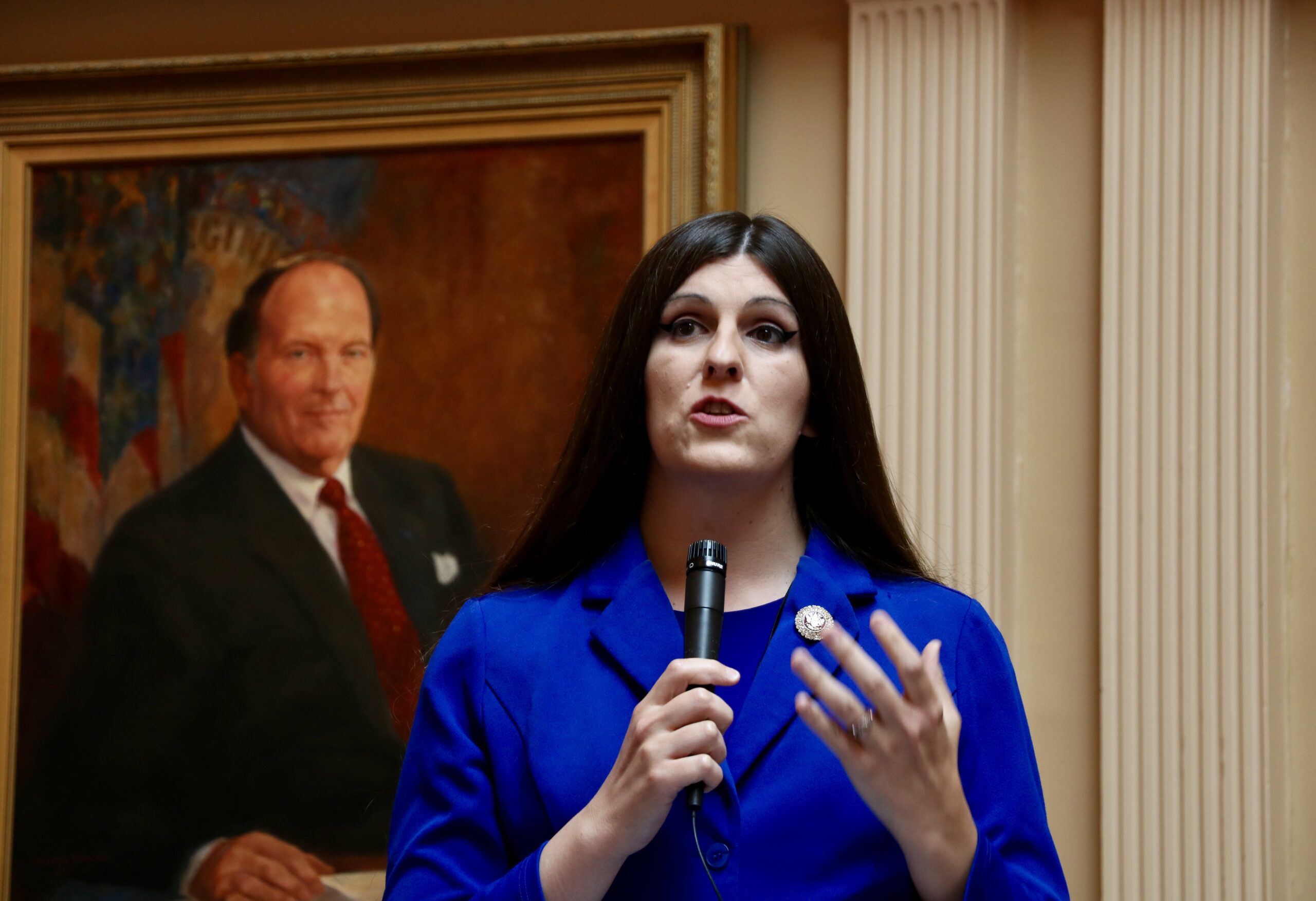
    Sen. Danica Roem, D-Prince William, speaks on the Senate floor during the special budget session on June 22, 2026. (Photo by Charlotte Rene Woods/Virginia Mercury)

    The plan calls for $3.5 million to determine ways the state can ensure eligible people remain on Medicaid amid forthcoming eligibility requirement shifts and additional verification work.

    Virginia’s roughly 850,000 Supplemental Nutrition Assistance Program beneficiaries went without their food stamps last fall during the federal shutdown. And due to a reconciliation bill Congress passed last summer, states like Virginia are attempting to reduce their error rates.

    State lawmakers have designated $135 million to handle SNAP, should the error rate not fall to the required 6% by the end of the calendar year.

    Sometimes SNAP households are overpaid or underpaid because of paperwork mistakes by government staff or outdated information from beneficiaries. Work in social service departments is already underway to reduce error rates.

    Free clinics will receive $20 million in state funding over the next two years while federally qualified health centers will get $10 million in that time.

    While federally qualified health centers offer sliding scale fees for low-income patients, free clinics are also a resource for uninsured patients. Both entities have been bracing for additional clients as Virginians lose their ACA or Medicaid insurance.

    A little over $1 million is allocated to help local health departments statewide handle rent increases. The regional centers help fill healthcare access gaps and are often tailored to the local communities they serve.

    As federal dollars for HIV/AIDS care are slashed, the state budget also contains over $26 million for that specific type of healthcare over the next two years. Staying on top of medication is critical in preventing the spread of the disease.


    Education


    Under the newly approved budget proposal, K-12 education funding would increase by $1.4 billion, including a 4% increase for teachers in each of the next two years.

    Lawmakers propose $590 million for rebenchmarking, declining enrollment, and high-need groups, including $28.9 million for at-risk and $148.4 million for special education students.

    Also included: $500,000 for grants to help schools purchase Automated External Defibrillators (AEDs) and implement cardiac emergency response plans.

    In higher education, the budget proposes restoring funding for affordable access and tuition moderation, as well as expanding nursing programs at several public universities. The Internships Virginia (InVA) initiative to provide paid internships for postsecondary students would also be funded.

    Virginia localities raise $119M for school construction through targeted sales tax

    To support educational infrastructure, lawmakers also agreed to expand the authority to allow all localities to use a 1% sales tax to pay for construction costs, contingent on a referendum that must pass in each jurisdiction. The language also permits jurisdictions in Northern Virginia to use the funds for transportation projects to address public transit needs.


    Tax deductions


    Taxpayers will be able to keep a bit more of their cash, as the new budget increases the standard income tax deduction from $8,750 for single filers and $17,500 for joint filers to $9,200 and $18,400 in 2027 and $9,300 and $18,600 in 2028.


    RGGI/environment


    A budget amendment was added into the conference report that would divert 45% of the funds earned from the Regional Greenhouse Gas Initiative back to ratepayers.

    The funds come from carbon credit sales, which utilities must purchase if they want to burn carbon-based fuels sources that release emissions. Those costs are then passed down to utility customers.

    When former Gov. Glenn Youngkin removed the state from the agreement in 2021, it cost about $4 a month on the average residential customer’s bill. Recently, Dominion Energy filed for the “RGGI Rider” to be added back to monthly bills as mandated by a law to rejoin the agreement, signed by Spanberger in recent weeks.

    Dominion is required to begin purchasing from the carbon credit auction in July but the charge to customers won’t begin until March should the State Corporation Commission approve the application by the utility. This will lead to an increased charge of $10-$13 monthly.

    The state previously earned about $800 million from the RGGI funds that had to go towards community flood preparedness projects and low-income energy efficiency projects. The new budget language includes the rebate for customers, which would put money back in wallets but detract from the funds for flood and efficiency projects.

    The rebate will not apply to co-op utility customers.


    Housing


    While a handful of housing bills passed the 2026 session and have since been signed into law, the new spending plan includes measures to ensure bills with fiscal impacts get off the ground.

    The state budget proposal directs $60 million overall for housing initiatives, $40 million of which will go to the state’s Housing Trust Fund and $20 million that will go towards a mixed-income housing pilot program.

    Additionally, lawmakers set aside $11.5 million for the Virginia Eviction Reduction Program and $10 million for the Clean Energy Innovation Bank.


    Cannabis


    Spanberger and lawmakers announced June 16 a reworked proposal for a retail cannabis marketplace that included key compromises between legislators’ and the governor’s visions. The marketplace is set to launch July 1, 2027 and will be limited to 350 stores statewide.

    Spanberger, legislators roll out retail weed plan, set to launch in July 2027

    State sales tax on retail weed will be 6% at launch and will increase to 8% in 2029. Localities also have the option to add an additional tax of 1 to 3.5%.

    Because lawmakers added a Part 5 amendment, the market will be permanently established in the state.

    The new framework includes a $250 public consumption civil penalty that will not take effect until 2027.

    “We had serious concerns about creating extreme new penalties that would not have meaningfully reduced the illicit market,” Sen. Lashrecse Aird, D-Henrico, said at a press conference announcing the framework last week.

    “But we believe this final framework strikes the right balance for enforcement mechanisms, but also in accountability, but also not harming those who just choose to participate in the market.”


    Child care


    The budget sets aside $137.6 million for the state-subsidized child care program slots, which will be devoted to families making 85% or less of the state median income.

    This follows legislation carried by Del. Briana Sewell, D-Prince Wiliam, requiring the state education department to update how it calculates the cost of childcare for Virginia families. A majority of Virginia parents and employers say child care costs are prohibitive.

    Spanberger signed the bill into law last month.

    A new cost-sharing program for child care will be funded through the budget, with lawmakers allocating $25 million for the initiative to spread the price of child care between families, employers and the state.


    Transportation


    Lawmakers included $153 million in the budget for additional operating assistance for the Washington Metropolitan Area Transit Authority, or Metro, with the caveat that Metro must produce a 20-year capital plan and annual performance reports.

    The action comes as inflation has driven up the costs of operating transit services.

    Lawmakers also proposed directing the secretary of transportation to evaluate options, including public-private partnerships, to accelerate large-scale improvements to the I-81 corridor.

    The legislature allocated $7 million for the Route 460 Phase IIA Finish Grade Project and directed stakeholder engagement to prioritize improvements along the U.S. Route 220 corridor.

    The budget also directs the state to identify federal funds to support rural electric-vehicle charging infrastructure and provides $500,000 to continue developing Advanced Air Aviation Test Sites to enable advanced air mobility.


    What’s next


    The proposal will now head to Spanberger, who said it contained “a lot to be proud of” in a Monday afternoon statement.

    “Today, the General Assembly has moved forward with a budget proposal — and that means we are keeping our government open and delivering for the 8.8 million people who call our Commonwealth home,” she added.
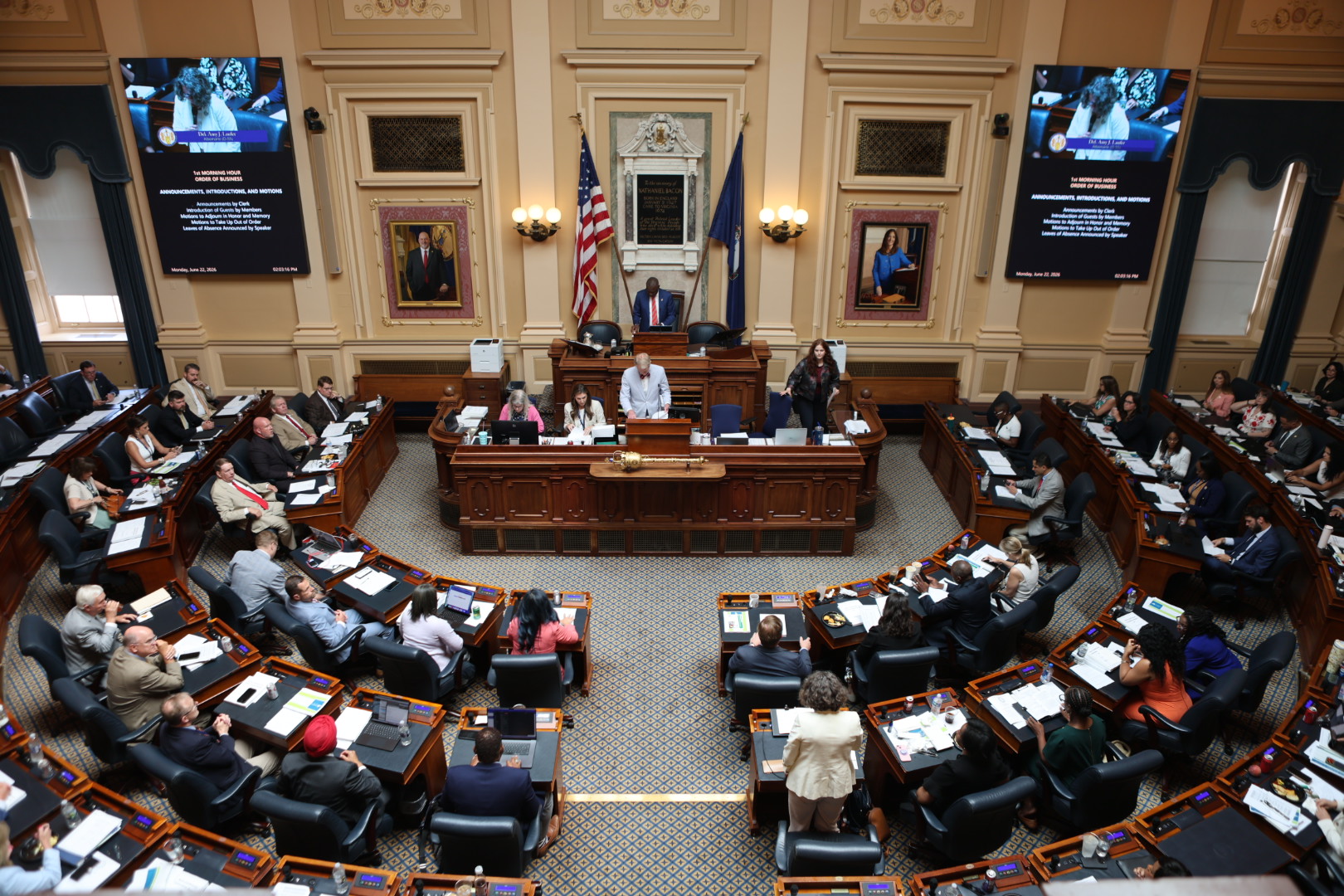
    A view from inside the Virginia House of Delegates chamber on June 22, 2026. (Photo by Nathaniel Cline/Virginia Mercury)
  • Spanberger, legislators roll out retail weed plan, set to launch in July 2027

    Spanberger, legislators roll out retail weed plan, set to launch in July 2027

    Tuesday morning, Gov. Abigail Spanberger and the legislative architects of a long-awaited retail weed framework presented a revamped plan for the recreational marketplace that they said is set to launch next summer, pending finalization of the state budget.

    The announcement marked a major shift, after Spanberger vetoed the cannabis marketplace plan approved by lawmakers in this year’s General Assembly session, five years after the state made adult simple possession legal.

    Spanberger vetoes cannabis bill, stalling legal sales again

    “I am excited to stand alongside Sen. Lashrecse Aird and Del. Paul Krizek to announce that we have agreed to a proposal that will create a safe, legal, and well-regulated cannabis market here in the commonwealth of Virginia, with recreational sales beginning on July 1, 2027,” Spanberger said at the press conference in Richmond.

    “Virginians have been waiting a long time for policymakers and a governor who wanted to do this and get it right. And today we are taking an important step forward,” Spanberger added.

    Aird, a Democrat from Henrico, said the state tax on cannabis sales will be 6% at launch and will increase to 8% in 2029. Localities also have the option to add an additional tax of 1 to 3.5%.

    “If our goal is to move consumers away from the illicit market, then the legal market has to be able to compete, and keeping the tax rate low at the start is not just an economic decision, it is a public safety strategy,” Aird said.

    The plan will also limit the total number of retail locations to 350 statewide, which Aird said wouldn’t all debut at once and will be geographically balanced.

    In a compromise between the original legislation and Spanberger’s tweaks that lawmakers rejected before her veto, the new framework includes a $250 public consumption civil penalty that will not take effect until 2027.

    “We had serious concerns about creating extreme new penalties that would not have meaningfully reduced the illicit market,” Aird said, “but we believe this final framework strikes the right balance for enforcement mechanisms, but also in accountability, but also not harming those who just choose to participate in the market.”

    Krizek, a Fairfax Democrat, announced several measures designed to make the marketplace more equitable and accessible to small businesses, including one that will direct 75% of license fee deposits in the first year of operation into the Cannabis Equity Business Loan Fund.

    “This is important because access to capital is one of the biggest barriers for small businesses entering a highly regulated marketplace,” Kirzek said.

    The Virginia Cannabis Control Authority will be allowed to issue up to 100 microbusiness licenses by May 1, 2027, Krizek added, which will “help prevent the market from being dominated solely by the largest and best capitalized ventures.”

    Microbusinesses will also be authorized to operate up to two locations under their license structure, which had been a key concern for small and rural entrepreneurs.

    Regulatory structures of the original plan like seed-to-sale tracking, a product testing framework, licensing administration, and reporting requirements related to ownership, equity, participation, and disciplinary actions are present in the updated framework, with Krizek framing them as tools to “create transparency and accountability as the market develops.”

    In contrast to the recent tensions between leading Democrats and Spanberger after she vetoed 31 bills that represented priority issues for the party, the governor, Aird and Krizek repeatedly emphasized the collaboration and compromise undergirding the new plan.

    “We have always had this same end goal, an end goal that has been years in the making, so I am proud to stand alongside these dedicated legislators and to be working alongside them to deliver a marketplace built to last,” Spanberger said.

    The House and Senate both released new budgets. Here’s how they align and diverge.

    The retail cannabis plan — released as the Senate money committee met nearby to unveil its reworked state spending proposal — hinges on finalization of the state budget, which has been stalled for weeks as lawmakers debate whether data centers’ sales tax exemption should continue.

    “I believe that the Senate is very much interested in also getting us a budget, and that we have shared goals on how to get there,” Aird said.

    The House revealed its new budget proposal on Friday; the chambers must work together to finalize the budget by June 30 to prevent a state government shutdown.

  • The House and Senate both released new budgets. Here’s how they align and diverge.

    The House and Senate both released new budgets. Here’s how they align and diverge.

    With a June 30 deadline looming before a state government shutdown, Virginia legislators have released new budget proposals, the latest actions in a long-simmering debate over the state spending plan that has deadlocked over whether data centers should keep being exempt from the state’s sales and use tax.

    Virginia House of Delegates leaders presented their updated budget proposal Friday, revamping their $74 billion funding plan based on a new revenue forecast ordered by Gov. Abigail Spanberger last month. The House budget no longer includes environmental standards that data centers would have to meet to keep the exemption, which saves the industry nearly $2 billion annually.

    New House budget strips environmental standards for data centers, creates commission instead

    Hours after the new House budget was unveiled, Sen. Louise Lucas, D-Portsmouth, divulged an updated Senate budget proposal, with scant details, on social media.

    While Lucas didn’t outline the particulars of the plan, she said it included a 4% raise for teachers, $345 million for health and human services initiatives including food assistance for low-income Virginians and a $100 “fair share” rebate for individuals.

    Here’s how each chamber plans to address key issues in the next two-year state budget.

    Chambers still at odds over data centers

    The data center sales and use tax exemption remains the biggest bottle neck on state budget negotiations.. The state currently forgoes an average of $1.6 billion annually by allowing the industry to not pay the 5.3% state tax on their computer equipment and server racks.

    Lucas and some other lawmakers are pushing to end the exemption that began as an incentive to draw the industry to the commonwealth in 2008 and cost the state about $1.5 million at the time.

    Lawmakers in the House of Delegates, including Speaker Don Scott, consider the exemption a strong driver for union electrical and construction jobs, whose workers build the facilities that make major investments on the local level. The House’s previous budget would keep the exemption in place and require data centers to use cleaner back up generators, improve their energy efficiency, and take other environmental steps to keep the tax break.

    The House’s updated budget preserves the exemption through 2035 and eliminates the environmental standards. Instead, the House proposed creating a commission made up of legislators and stakeholders to examine data centers’ energy use and how the industry impacts the state and local tax revenues.

    A similar report was released by the Joint Legislative Audit and Review Commission in 2024. But Spanberger, who supports the House’s plan, said the new commission would dig deeper and produce more in-depth reports that would help drive policy decisions in the next regular session of the General Assembly.

    Concerning the proposed commission’s focus, Spanberger said Friday, “We want a little bit more help in understanding if we’re making good choices for our communities. (Such as) rules of the road, best practices, whether it’s setbacks or noise reductions, limits on diesel generators, requirements for battery backup.”

    The Senate has not released the full context of their new updated budget proposal but it includes a “tiered state impact fee,” Lucas said in her social media statement. The fee would be placed on the facilities according to their generator type and their energy capacity. Lucas said the system would generate an estimated $1.7 billion in tax revenue for the state but didn’t detail how. Her office did not have further details of the proposal available for clarification on Monday.

    Lucas also said the new Senate budget includes funding for a work group to study the tax exemption and other potential protections for ratepayers and local communities, similar to the house’s proposed commission.

    Cannabis market still hazy

    After Spanberger vetoed bipartisan legislation to create a retail market for recreational cannabis, House lawmakers said Friday that the proposal has been added to their updated budget.

    Few details were available Friday about the weed market plan, spearheaded by Del. Paul Krizek, D-Fairfax, but he confirmed “we have a deal, and it’s just a matter of finishing the legal edits” of the retail market framework. Krizek said more details would be released in a joint press conference with Spanberger on Tuesday.

    House lawmakers also added “$865,000 each year from the general fund and four positions to support workload increases” in the The Virginia Department of Agriculture and Consumer Services’ Office of Weights and Measures to their updated spending plan, “related to the establishment of an adult-use recreational cannabis market.”

    The overview of the new Senate budget shared by Lucas didn’t include the cannabis framework. However, the chamber passed SB 542, the companion measure to the House bill which would create the marketplace. And the Senate ’s two-year budget pitched before the end of this year’s legislative session includes over $12 million for the operation of the Virginia Cannabis Control Authority over two years.

    Navigating healthcare hurdles

    Because Virginia and other states are required to reduce their Supplemental Nutrition Assistance Program error rate to 6% by next year, House lawmakers earmarked $130 million to fund new cost share benefit allotments.

    Sometimes errors in overpaying or underpaying households arise from paperwork mistakes by government staff or outdated information from beneficiaries. A federal law passed last summer mandates states drop their error rates.

    That same law also entails verification changes to Medicaid, which is estimated to put thousands of Virginians at risk of losing coverage and add financial strains to hospitals.

    These shifts are why the state budget proposals from both chambers include money to help streamline compliance for social service workers around the state and mitigate insurance drop offs.

    The new proposal from the House maintains a $2.4 billion increase to fully fund Medicaid and Children’s Health Insurance Program forecasts. It would also add $39 million to partially restore proposed cuts to Medicaid and CHIP.

    House lawmakers earmarked $3 million to support social service staff compliance with the new SNAP and Medicaid federal standards.

    Where a previous version of the House budget entailed a $5 million increase in funding for the state’s free clinics, the new draft increased it to $13 million. An already “strained safety net,” free clinics are bracing for an influx in uninsured patients as people lose Medicaid or ACA and are a key partner for hospitals to reduce caseloads in emergency rooms.

    A holdover from the chamber’s previous proposal, lawmakers would direct $79.1 million towards a state-level version of the expired Affordable Care Act subsidies that Congress let expire last year.

    “We’ve never had this much of an onus on the state before,” Henrico Democratic Del. Rodney Willett, who chairs the House’s Health and Human Services Committee, said in a previous interview. “It will take a lot of work with the people, processes and systems to go with that.”

    Over 33,000 Virginians and counting have dropped their ACA insurance so far this year amid rising premiums. Of Virginia’s roughly 400,000 ACA clients, about 100,000 have been estimated to have lost the subsidies.

    Likewise, the Senate has its ideas for addressing the federal fallout too.

    Its newest version still includes $200 million for a state-level ACA subsidy along with a special enrollment period for people who dropped off and want to sign back up for insurance.

    Health and human services work in the state would receive $345 million and would address a range of programs, from Medicaid to SNAP to developmental disability waiver rates.

    It’s unclear how that will be divided up as the Senate had not fully released its next proposed version of the budget by the time of this publication. Initially, the chamber had settled on $135 million for SNAP, with lawmakers assuming the state cannot drop below a 10% error rate.

    More recently, the chamber suggested $190 million to offset future rate increases in state employee health insurance premiums.

    Housing support boosted

    As a flurry of housing bills passed the legislature and were signed into law by the governor, both budget proposals entail funding to help get them off the ground — but they differ in how that should happen.

    The House’s new draft would invest an additional $20 million into the Virginia Housing Trust Fund. The program offers loans for low-income housing projects and provides grants to organizations that serve unhoused people. The additional boost brings the House’s earmark for the fund up to $195 million over the next two years.

    The House also wants to add $14 million over the next two years to support organizations that work with unhoused populations or help people at risk of homelessness.

    As state lawmakers have refined Virginia’s Eviction Reduction Program, the House proposes $11.5 million in new resources for it, bringing total support to $18.5 million over the biennium.

    On housing, the preview of the Senate’s forthcoming new budget draft entails $110 million for housing-related initiatives “including eviction reduction, weatherization programs, and Housing Trust Fund deposits.”

    K-12, school construction funding reflects uncertainty

    Local governments and school leaders are waiting on the budget to be finalized to decide how they will be able to cover teacher pay raises, and how much those raises will be. The legislature’s dueling spending plans also address another key concern: covering construction and modernization costs for the upcoming school year.

    The House’s revised budget proposes a 3% raise for state and state-supported employees, including teachers, over the next two years, while the new Senate budget includes a 4% increase aimed at moving Virginia toward the national average teacher salary.

    “With inflation being over 4%, a 3% raise does not really end up being a raise, it’s a pay cut in practice, and the average teacher would lose money in buying power,” Carol Bauer, president of the Virginia Education Association, said.

    In the area of school construction, the House’s revised proposal includes an additional $299 million for school construction grants, bringing the biennial total to $519 million.

    In contrast, Lucas’ overview of the updated Senate budget did not mention school construction grants. In February, the body approved a plan to allocate $172 million from the Literary Fund to the School Construction Fund for construction and renovation grants.

    However, the Senate’s plans for the grants and the School Construction Fund remain uncertain, because its funding relied on expected casino tax revenues under the chamber’s previous budget.

    Additionally, the House is now proposing to move the $172 million originally from the Literary Fund to cover teacher retirement costs, adding to the unpredictability.

    Both chambers still proposed expanding a 1% sales tax to pay for construction costs; however, the House version goes further, permitting jurisdictions in Planning District 8, or Northern Virginia, to use these funds for transportation projects to address public transit needs in that region.

    Among other notable budget moves, the House announced that the previously proposed $400 million one-time flexible funding was removed and replaced by a $98.4 million one-time supplement for at-risk student programs.

    The amended House budget returned $10.1 million in unused laboratory school funds to the state’s main funding pool.

    Both budget proposals are similar in that they fund the state’s special education line item: the House proposes $148.4 million, compared to the $150 million Lucas mentioned in her letter about the Senate’s revamped plan.

    The delayed completion of the budget “puts hardship on school districts trying to get contracts out, puts a hardship on folks knowing what their actual compensation is going to be for the next year, and so we honestly would like things to get settled,” Bauer said.

    House meets this week, Senate the next

    The House reconvenes Thursday and the Senate is scheduled to meet in Richmond June 22. The chambers must reconcile their spending plans and approve a new budget before the June 30 deadline, or a state government shutdown — the first in the state’s history — will ensue.

  • Another year, another Va. retail cannabis market veto leaves businesses, the public with few options

    Another year, another Va. retail cannabis market veto leaves businesses, the public with few options

    By Yiqing Wang and Toby Cox/WHRO

    Throughout her bid for governor, Gov. Abigail Spanberger said she would support a bill to set up a legal, adult-use cannabis market — which is why her veto on May 19 caught many rooting for such a market by surprise.

    “I thought it was a joke, honestly,” said Julian Redcross, a Hampton-based hemp grower. “When I saw it going around on fire on social media, I was like, ‘Oh, this is not real. This is AI.’”

    Spanberger said her decision was based on the need for stronger tools to enforce the law and regulate a legal cannabis market.

    Spanberger vetoes cannabis bill, stalling legal sales again

    “Virginians deserve a system that replaces the illicit cannabis market with one that prioritizes our children’s health and safety, public safety, product integrity, and accountability,” she wrote in her veto statement.

    The veto left Virginia cannabis businesses facing another year in limbo after many spent years preparing for a legal market following the 2021 legalization of personal possession. Now, some hemp growers are having to make tough calls about the future of their businesses.

    It also left the state’s safety questions unresolved: Regulators say they cannot finalize licensing, monitoring or inspection rules without a law in place, while health experts warn consumers are likely to keep buying products that are hard to test, label and trace.

    The bill Virginia lawmakers sent to the governor’s desk this year would have allowed adults 21 and older to buy marijuana starting in January 2027. The legislation proposed capping the number of licenses to a few hundred to limit the number of retail cannabis stores. It included policies for labeling and testing, said Jason Blanchette, president of the Virginia Cannabis Association and a hemp grower in Hampton Roads.

    Spanberger sent back changes that pushed the starting sale date to July 2027, capped the number of stores at 200, reduced the personal possession limit to two ounces and recommended new criminal penalties, VPM reported.

    The new penalties, especially, gave lawmakers and lobbyists pause.

    “The way that she wrote those back in, we are now recriminalizing a product that we have already made legal in the state of Virginia, so to a lot of those groups it appears that we are moving backwards when it comes to justice,” Blanchette said.

    A sliver of hope remains that a compromise could still be reached when lawmakers meet later this month to talk about the state budget, Blanchette said, but it’s a long-shot.

    “We’ll be lucky to be up and running by 2028,” he said.

    That will be too late for some businesses.

    ‘Up in smoke’


    Brad Wynne started growing hemp in Virginia Beach in 2023 for his company Veg Out Organics, which sells topical CBD products.

    He stopped growing hemp in 2024, biding his time for the state to get the ball rolling on a retail cannabis market. But he said he can’t afford to wait any longer.

    “I’m shutting down end of June,” Wynne said.

    He said his operation was as small as they come, but he spent years building it.

    “If you were to start from scratch with no land, no building, no nothing, each business, whether it’s retail, growing or dispensing, is about $500,000 to $1 million,” he said.

    Va. hemp growers worry about the future of their industry amid state and federal shifts

    The high startup cost makes sure the business can stay afloat while the plant is growing, which takes roughly six months.

    “This is a living plant, so this is not something you just buy from out of state, throw onto a shelf of a dispensary overnight, and you’re open the next morning,” Blanchette said.

    Wynne said he wished Spanberger sent her changes as line items lawmakers could have addressed individually, rather than as a substitute that had to be accepted or rejected as a whole.

    Blanchette said he disagreed with Spanberger’s assessment that the legislation was rushed.

    “I’ve been personally working on this for five years, so I know that we’ve put plenty of time and effort into this, and it has not been rushed,” he said.

    Julian Redcross said he was angry at Spanberger’s decision at first. But the anger soon gave way to acceptance and hope that a better bill will be proposed in the future.

    He and his twin brother Jonathan Redcross co-own Yoagie Enterprises and started growing hemp in 2019, while keeping their day jobs. They stopped growing operations this year when new hemp regulations strained their business. Julian said they plan to keep waiting.

    “We just have an empty space right now that’s costing money, but we didn’t jump over the edge just yet,” he said.

    Julian and Jonathan said they hope when the state eventually sets up a retail market, it gives small businesses like theirs a fighting chance. As for Spanberger, Julian said doesn’t take this year’s veto as her backtracking on her support of the legal market — yet.

    “She said she would pass it,” he said. “She didn’t say when.”

    A regulatory dilemma


    One of Spanberberger’s reasons for vetoing the bill was the need for stronger regulations.

    “That includes clear enforcement authority and sufficient resources for compliance, testing, and inspections, and robust tools to crack down on bad actors who continue to profit from the illicit market,” she wrote in her veto statement.

    But the illicit market will continue to reign supreme with no competition from a legal market, said Wynne, the Virginia Beach grower.

    Some businesses and public health experts say the commonwealth needs stronger safety rules before opening a retail cannabis market, but in practice, regulators are limited in how much they can prepare before lawmakers pass a final bill.

    Barbara Biddle, a hemp business owner from Northern Virginia and the founder of the Cannabis Small Business Association, said she supports legalization, but did not think the vetoed bill was the right vehicle to create the market.

    “It was a necessary action that needed to happen,” Biddle said. “But we don’t think that this was the right vehicle for it.”

    Biddle said Virginia needs clearer rules for testing, labeling and industry compliance, as well as more training for police and first responders before retail sales begin.

    Jamie Patten, chief administrative officer at the Virginia Cannabis Control Authority, has previously told WHRO that the authority is ready to implement additional regulation and resources if lawmakers approve a retail market.

    Those measures will include specific rules for licensing, monitoring and data collection in an adult-use retail market.

    But without finalized legislation, she said, the agency can’t settle the details of how that market would be monitored.

    In the interim, Patten said the authority has been focused on public education, including warnings about impaired driving, after a survey found nearly a third of Virginia drivers believe cannabis makes them safer behind the wheel.

    Michelle Peace, a forensic science professor at Virginia Commonwealth University who specializes in cannabis testing, said without a regulated retail market, consumers have fewer ways to know whether cannabis products are accurately labeled, properly tested or made under consistent safety standards.

    She’s repeatedly found products with THC levels that did not match their labels.

    “My laboratory has demonstrated over and over again that products are either more concentrated than what’s on the label or significantly less concentrated than what’s on the label,” Peace said.

    The risk will also be hard to track because consumers may not know where to report adverse reactions from unregulated products, Peace said.