Tag: Abortion Policy

  • More than abortion: What Va. patients and providers want you to know about reproductive health laws

    More than abortion: What Va. patients and providers want you to know about reproductive health laws

    Editor’s note: This story mentions pregnancy loss.

    Miscarriages were common for Albemarle County resident Casey Oakley during her in vitro fertilization process. Some embryo transfers weren’t successful and her body would expel the remnants, a process she had always handled safely at home, until an irregular delay.

    Her bloodwork had indicated her pregnancy hormones were not elevating properly, signaling an imminent miscarriage. But two weeks later nothing had happened.

    “(Doctors) didn’t know where the embryo had implanted in my body, so I was scheduled for an abortion, and I was told before my surgery that if they couldn’t find products of conception in my uterus, that they were going to be taking my tubes,” she said.

    Miscarriage management remains muddled 4 years after Dobbs

    The fallback option was meant to spare her the deadly infections that can arise when miscarriages fail to complete.

    “It wasn’t a question that they asked, it was more of a ‘this is what we have to do to make sure that you live,’” Oakley said.

    Doctors eventually discovered that her body had maintained a gestational sac but no fetal DNA.

    “My body had fought so hard for a pregnancy that would have no baby and then I was going into sepsis,” she said. “The abortion saved my life.”

    Her experience is foundational to her support for a pending constitutional amendment heading to Virginia voters statewide in November.

    If approved, it will permanently embed reproductive rights into Virginia’s constitution.

    The amendment would protect people’s access to contraception, IVF and abortion, four years after the Supreme Court overturned federal protections for abortion and more states have restricted access to the procedure and birth control.

    Virginia remains the least restrictive Southern state for reproductive healthcare in the era after Dobbs v. Jackson Women’s Health Organization, the abortion protection case that justice struck down in 2022.


    State lawmakers weigh in
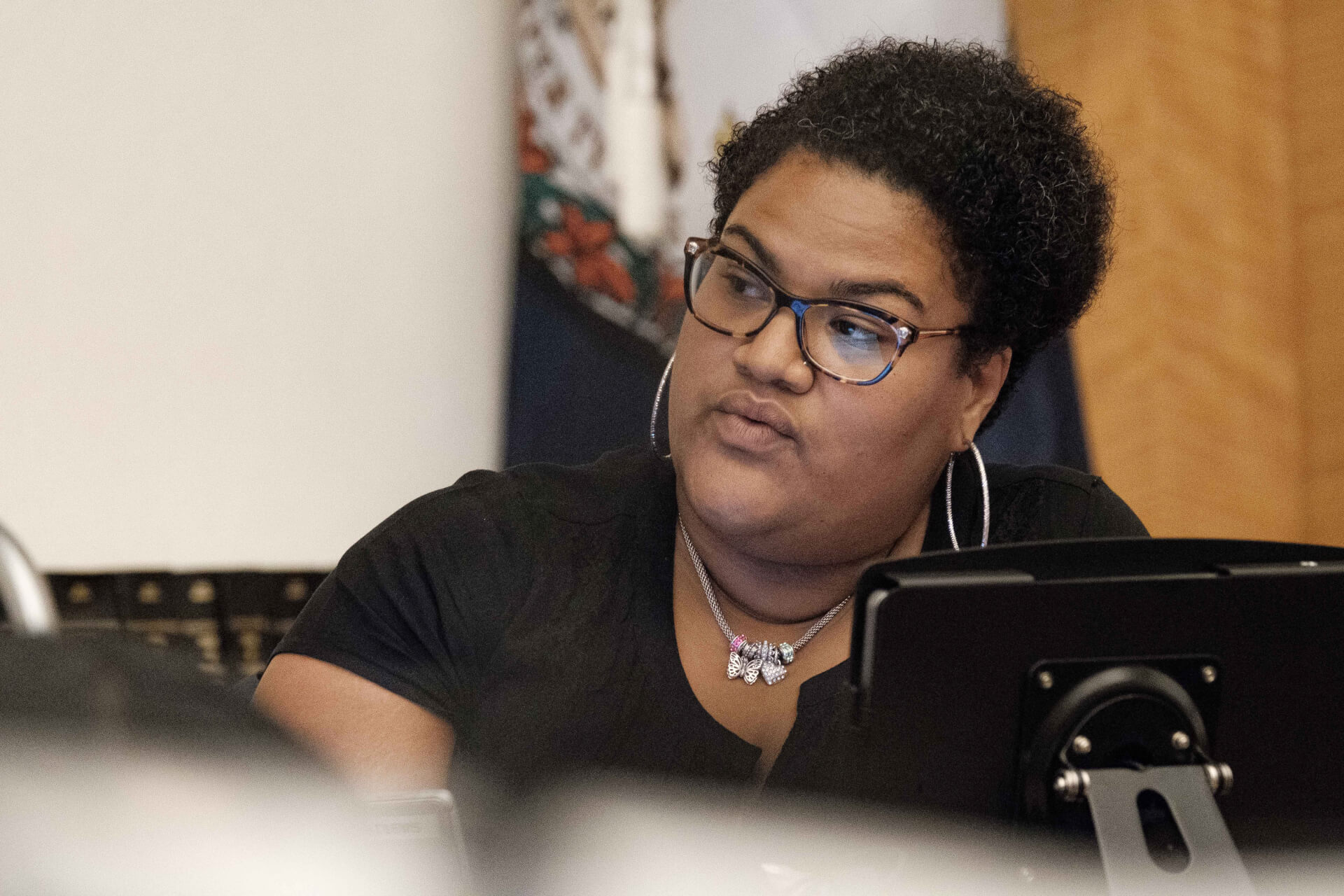
     

    Del. Cia Price, D-Newport News. (Ned Oliver/Virginia Mercury)

    Del. Cia Price, D-Newport News, was diagnosed with polyendocrine metabolic ovarian syndrome at 16 years old. She recalled debilitating cramps that made it hard for her to focus in school and days she could not get out of bed.

    Formerly known as polycystic ovarian syndrome, PMOS is a full body disorder that affects people’s metabolism and reproductive organs. It can also cause infertility. Contraception has long been a standard treatment for the disorder to improve quality of life.

    Though Price doesn’t need contraception for family planning as she is in a same-sex relationship and does not want biological children, the treatment lessens her PMOS symptoms.

    She said her and others’ access to the medication could be at risk.

    After Dobbs, Justice Clarence Thomas suggested the court revisit cases that have protected contraception, as well.

    Gov. Abigail Spanberger signed Price’s Right To Contraception Act into law this summer, after the bill was vetoed multiple times by former Gov. Glenn Youngkin.

    It will protect contraception access in the interim, though the pending reproductive rights amendment would shore matters up longterm.

    Price said she understands some of her constituents’ and legislative colleagues’ reasons for not supporting contraception or abortion — from religious objections to debates over life-at-conception. But she underscored the healthcare utility of each.

    “It’s just really disheartening for your quality of life to be at the intersection of an argument,” she said.

    “This is a difficult topic for a lot of people,” Sen. Emily Jordan, R-Suffolk, said during a floor speech earlier this year amid debate over the amendment.

    Jordan was among the Virginia Republicans who unsuccessfully sought to alter the amendment to reinforce existing state code outlining restrictions for minors and outlining care for infants when they are born.

    The amendment advanced due to Democrats’ majority in the Virginia statehouse. Now, it’s in voters’ hands.

    Price believes her contraception bill and the amendment “takes the conversation out of the political sphere and puts it in the medical sphere and the personal decision sphere.”


    The medical cost


    Dr. Kimi Chernoby, an emergency medicine doctor and lawyer, noted that emergency abortion care can happen at all stages of pregnancy if things go awry with the fetus or parent.

    She added that many first trimester abortions stem from miscarriages or ectopic pregnancies, and that restrictive state laws increase margins for death.

    “These laws are written by lawyers who have no medical training,” she said. “They actually prohibit a lot of care around miscarriages and ectopics, unless they fall within certain exceptions, and so that’s the care that is getting tangled up.”

    As chief operating officer for a nonprofit called FemInEM, Chernoby organizes training around the country for emergency physicians to handle reproductive health emergencies.

    The national patchwork of bans and restrictions with scant exceptions has complicated her and other physicians’ work, she said.

    Legal challenges to mifepristone further muddle matters, as the abortion pill is also critical for managing miscarriages to prevent sepsis. FemInEM has submitted amicus briefs as a key court case that could affect abortions and miscarriage care nationwide unfolds.

    Ahead of the fall referendum and pending court rulings, Oakley reflected on how an abortion allowed her to become a mother, surrogate and foster parent many times over.

    “I was able to further the lives of my children and four other little girls,” she said. “There will be many other children to come into our lives afterwards.”
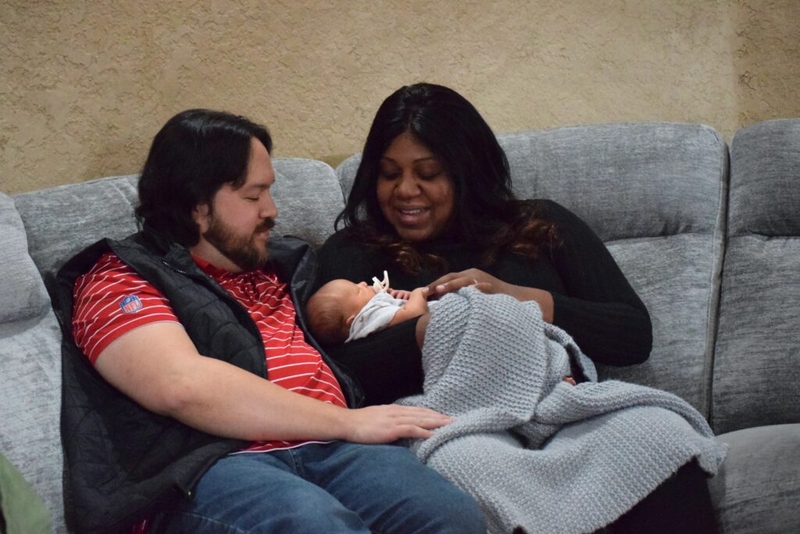
  • Miscarriage management remains muddled 4 years after Dobbs

    Miscarriage management remains muddled 4 years after Dobbs

    Mylissa McNeill never expected to be a mother. But when she learned she was pregnant in the spring of 2022, at age 41, she and her partner were happy and excited at the prospect of parenting a little girl they planned to name Maeve.

    On June 24, 2022, about one month after McNeill discovered she was pregnant, the U.S. Supreme Court overturned Roe v. Wade in its Dobbs ruling, eliminating the constitutional right to an abortion and empowering states to outlaw it. Missouri was the first state to enact a ban; at that time, McNeill was living in Joplin, Missouri.

    In August 2022, McNeill miscarried. It was the beginning of a health crisis that plagues her to this day and that she blames, at least in part, on hospitals’ reluctance to provide miscarriage management care that might run afoul of state abortion bans.

    Missouri’s law prohibited nearly all abortions, but it allowed abortion providers who were charged or sued under the law to escape punishment by arguing that they acted in a “medical emergency” to prevent the death of the pregnant woman or to avert “a serious risk of substantial and irreversible physical impairment of a major bodily function.”

    Missouri’s ban is no longer in effect — it was overturned by voters in 2024 — but such language is typical: All 13 states that currently have abortion bans allow the procedure to protect the life of the pregnant woman. Some, but not all, of the bans also have exceptions to protect the health of the woman.

    But patients and providers have argued in lawsuits challenging the bans that such exceptions are too ill defined to give doctors and hospitals enough confidence to provide timely care. McNeill believes that her persistent health problems are the result of delayed care.

    In early August 2022, less than two months after Missouri’s ban took effect, McNeill’s water broke at about 18 weeks. She says her OB-GYN told her the pregnancy was no longer viable, and she sought an abortion and miscarriage management procedure known as dilation and curettage, or D&C, in hospitals in both Missouri and Kansas (where abortion was legal). However, doctors declined to provide miscarriage care while they were able to detect fetal cardiac activity.

    After three days of bleeding and aching, McNeill finally received treatment at a hospital in Illinois. When she had a subsequent tubal ligation to prevent future pregnancies, McNeill said medical staff told her she had scar tissue resulting from an infection she developed after her water broke.

    “While they were in there, they saw what happened,” McNeill said. “The infection went outside of my uterus. It went to my liver, and my liver is permanently attached in multiple places. It’s attached to my uterus; it’s attached to my stomach lining.”

    McNeill says the lingering effects of that infection include severe bouts of vomiting and significant financial hardship as she has struggled to pay for care without steady health care coverage.

    “I literally break all the blood vessels in my skin. … This kind of pain is — there’s no word for it,” said McNeill, who shared with Stateline pictures of her face covered in red splotches, her nose magenta. “The delay is what really upset me, because women have died with less time than I had, and that delay and the infection that I did get from this by waiting three days, it destroyed my life.”

    Last year, states including Texas, Kentucky and Tennessee enacted laws designed to provide additional clarity on medical exceptions to their bans, but confusion persists in those states and others. Stories of denied miscarriage care continue to emerge, including in a brand-new lawsuit in Texas, and several deaths have been attributed in part to abortion restrictions, including in Georgia and Texas. Research has linked abortion restrictions to higher rates of maternal death and injury.

    “The four years since the Dobbs (v. Jackson Women’s Health Organization) decision have unfortunately proven what OB-GYNs already knew: abortion care is inextricable from reproductive health care,” Molly Meegan, chief legal officer and general counsel for the American College of Obstetricians and Gynecologists, wrote in a statement.

    “Bans and restrictions on abortion care have resulted in patients across the country being denied care, even in instances of pregnancy loss and miscarriage.”

    A new study published last month by the Journal of the American Medical Association found that since the Dobbs decision, in states where abortion bans took effect, miscarriage management has shifted away from medical intervention toward more of a “wait-and-see” approach.

    But anti-abortion groups blame doctors and abortion-rights advocates for creating confusion around the medical exceptions in abortion bans, insisting it is clear what is a medically indicated abortion and what is purely elective.

    “As architects of the majority of the nation’s pro-life laws, Americans United for Life has been very clear that none prevent women from receiving life-saving miscarriage care. Efforts to suggest otherwise are made in bad faith” said Gavin Oxley, a spokesperson for the group.

    “Doctors who delay or altogether deny medical treatment must be held accountable for the harm they inflict upon women. If doctors are not clear on this four years after Dobbs, they clearly have not been listening.”

    Dr. Susan Bane, an OB-GYN in Greenville, North Carolina, who is on the board of directors for the American Association of Pro-Life Obstetricians and Gynecologists, told Stateline that doctors — especially the American College of Obstetricians and Gynecologists — have unfairly blamed abortion bans for the denial of medical care to pregnant or miscarrying women.

    “There’s nothing, I mean zero, about any of these laws that say you have to have her dying or septic,” Bane said. “I’ve done this hundreds of times in the last 30 years, where the baby was alive, and I sat at the bedside and had an excruciating conversation with a woman to say, ‘I am so sorry, but if we don’t move towards delivery, I’m worried both of you will die.’”

    She said her organization supports state laws, like one signed in South Dakota earlier this year, that redefine “abortion” as the intentional ending of the life of the “unborn child.” Supporters say such laws will allow doctors to manage miscarriages, ectopic pregnancies and other pregnancy-related emergencies.

    “It’s sad that more clarification isn’t happening, but the blame really started right in my profession.” Bane said.

    But Meegan said attempts to legislate health exceptions fall short of protecting all patients.

    “There is no law or exception that can account for the immense variety of medical situations that can present in pregnancy,” she wrote. “And there is no additional legislation that can undo the harm created by abortion bans short of repealing the bans themselves.”

    McNeill said that following her miscarriage, she lost her job and the health insurance that came with it. She sued and then reached a settlement with the Missouri hospital that she believes denied her prompt care. But she continues to search for relief from her health problems, and says she has racked up substantial medical debt.

    She and her husband moved to Arkansas and then Kansas in search of the financial stability that has eluded them since her miscarriage almost four years ago.

    “My debt is in the millions with all of this illness without coverage for long periods,” McNeill said. “Now that my credit is destroyed, I’ll never be able to buy a house again while in this health.”

    Stateline reporter Sofia Resnick can be reached at [email protected].

    This story was originally produced by Stateline, which is part of States Newsroom, a nonprofit news network which includes Virginia Mercury, and is supported by grants and a coalition of donors as a 501c(3) public charity.

  • Trump changes pregnancy-prevention program to promote childbearing

    Trump changes pregnancy-prevention program to promote childbearing

    A federal poverty-fighting program focused on reducing unintended pregnancies is about to undergo a major overhaul.

    Reproductive health clinics use Title X federal grant money to provide birth control, cancer screenings and testing and treatment for sexually transmitted infections to people with little or no health insurance. Title X money cannot be used for abortions.

    The Guttmacher Institute estimates that Title X, which was signed into law by Republican President Richard Nixon in 1970, has prevented almost 20 million unintended pregnancies and 9 million abortions. It has also helped reduce child poverty, according to the group, which supports abortion rights.

    But President Donald Trump has taken aim at the program, which has long been a target for abortion opponents. Since regaining the White House, Trump has temporarily blocked and then restored grants to certain reproductive health clinics, and proposed a U.S. Department of Health and Human Services budget with no funding for the program.

    The department’s recently issued funding guidelines for Title X grants represent a significant mission shift.

    Instead of expanding access to contraception, the focus of Title X will be “to strengthen family formation and assist clients in achieving healthy pregnancies,” according to the new guidance. That will align the program with the administration’s efforts to increase the U.S. birth rate.

    The new rules say Title X will prioritize educating Americans about natural methods to avoid pregnancy and overcome infertility, and will promote “body literacy education” and “informed, preventive, and restorative approaches to reproductive health.” Some conservative groups tout an obscure alternative treatment for infertility called “restorative reproductive medicine,” which is based on the idea that the underlying causes of infertility can be treated through lifestyle changes and improving a person’s overall health.

    The guidance directs Title X clinics to promote “fertility-awareness-based methods,” such as period-tracking apps, which the American College of Obstetricians and Gynecologists says can be helpful for getting pregnant but less effective at preventing pregnancy. It also calls on clinics to offer counseling on male fertility issues and to address environmental causes of infertility, including pornography use. And it includes a prohibition on DEI efforts and warns grantees that federal money cannot be used to “facilitate or incentivize illegal immigration.”

    Anti-abortion groups support the changes, but many health policy researchers say they will disproportionately harm low-income and minority women, who are more reliant on Title X services and are more likely to have unintended pregnancies. Researchers also say the new guidelines are unlikely to achieve the administration’s “pronatalist” goal of reversing declining birth rates.

    Corinne Rocca, an epidemiology professor at the University of California, San Francisco, said the way to do that would be to spend more on childcare subsidies and other social programs to help new parents.

    “Policies that help people and families feel supported to meet their childbearing preferences … would actually help people who are open to the prospect of childbearing to do so,” Rocca said.

    Rocca co-authored a study published in JAMA Network Open last fall suggesting Black and Hispanic women are less likely than other racial groups to be able to choose if, when and how to start a family.

    Clinics must reapply for funding under these new guidelines by Jan. 9, 2027. HHS did not respond to a request for comment.

    During his first term, Trump banned Title X clinics from referring patients to other providers for an abortion or even mentioning it as an option. He also prohibited grantees from offering family planning services and abortions in the same building. As a result, many grantees quit the program, including about a dozen state health departments and all participating Planned Parenthood chapters.

    The program served about 844,000 fewer patients in 2019 than it did in 2018, when it served 3.9 million patients, according to HHS. About 225,000 fewer patients received oral contraceptives; about 50,000 fewer received hormonal implants; and about 86,000 fewer received IUDs.

    The reframing of Title X that is reflected in the new guidelines was a recommendation laid out in the controversial blueprint known as Project 2025, created by the conservative think tank Heritage Foundation as a guide for the second Trump administration.

    In line with Project 2025’s recommendations, HHS says Title X grantees will no longer be required to counsel or refer for abortions, and tells applicants that relationship counseling should encourage marriage as a precursor to having children.

    “In a time when we are facing a rapidly declining birth rate that falls far short of the replacement fertility rate, we should be doing all we can to encourage and support family formation and fertility,” Dr. Christina Francis, CEO of the American Association of Pro-Life Obstetricians and Gynecologists, told MedPage Today in April.

    “Women deserve accurate information about their fertility and their health — and this includes highlighting the many benefits of pregnancy and motherhood.”

    Some abortion opponents have criticized Title X for promoting certain forms of contraception, such as IUDs, that they view as abortifacients. A spokesperson for the National Right to Life Committee said the organization does not take a stance on contraception that prevents fertilization, “however, National Right to Life does oppose any device or drug that would destroy a life already created at fertilization.”

    “If there is any doubt, we recommend that a woman speak with her doctor to determine if an agent would cause an abortion,” the spokesperson said in an email.

    But Leonard Lopoo, a professor at the Maxwell School of Citizenship and Public Affairs at Syracuse University who has studied fertility and family policies for the past three decades, said the federal government could help families achieve their family planning goals by expanding pregnancy prevention and infertility treatments at all income levels.

    “When you’re trying to take away the funding for someone who doesn’t want to have a child, that’s not the same as providing funding to support someone who does,” Lopoo said.

    As a Black woman and researcher focused on Black maternal health at Ibis Reproductive Health, Terri-Ann Thompson is better informed than most on the ways having children can be disproportionately more dangerous and less affordable for women who look like her.

    But she says what she wasn’t expecting to uncover — during research for a study she co-authored in the journal Frontiers in Public Health this spring — is how much the fear of negative medical and criminal justice outcomes makes many Black women in Georgia and North Carolina scared of pregnancy.

    “I was very surprised to see that folks were actually thinking about the context within which a Black child is born and raised well before they even contemplated starting a family,” Thompson said. “We had a lot of, just, stories of folks saying, ‘Why would I want to bring a child into this context; how does one prepare Black women to bring a child into this context?’”

    Thompson said her team’s findings show how much Black women depend on low-cost access to long-acting reversible contraceptives such as IUDs.

    “We have people who drove very, very far just to get a sliding scale to either get an IUD placed, an IUD removed, or to even get on birth control pills,” Thompson said.

    “If the administration moves forward with these restrictions, what we are doing is we are removing access to contraceptives for a population that is at higher risk.”

    Stateline reporter Sofia Resnick can be reached at [email protected].

    This story was originally produced by Stateline, which is part of States Newsroom, a nonprofit news network which includes Virginia Mercury, and is supported by grants and a coalition of donors as a 501c(3) public charity.

  • Spanberger joins governors in Reproductive Freedom Alliance, signs related Va. bills into law

    Spanberger joins governors in Reproductive Freedom Alliance, signs related Va. bills into law

    From support for legislation and ballot referendums to helping states stockpile abortion and miscarriage management drug mifepristone, a growing cohort of governors are banding together as the Reproductive Freedom Alliance. Virginia Gov. Abigail Spanberger announced Wednesday that she has joined the coalition.

    Members include California Gov. Gavin Newsom, New York Gov. Kathy Hochul, Gov. Wes Moore from Maryland and New Jersey Gov. Mikie Sherrill — who was elected the same night as Spanberger last fall — among 23 others so far.

    As part of the alliance, Spanberger said she will “continue doing everything in my power to preserve the rights of Virginians seeking reproductive care and making sure families across our Commonwealth can continue making their own personal healthcare decisions.”

    Mifepristone has been subject to legal challenges, with opponents pushing for a national ban on mailing the medication. Several of the states are working to preserve access to the medication and have also enacted shield laws to protect patients’ privacy and expand coverage for over-the-counter contraception.

    On the heels of announcing she’d joined the governors’ group, Spanberger signed two new reproductive health bills into law in Lorton Wednesday. Years-long efforts dubbed the Right-To-Contraception Act and Contraception Equity Act will fortify people’s ability to access family planning measures.

    Del. Cia Price, D-Newport News, who carried the legislation, has emphasized that contraception is also used to treat conditions like polycystic ovarian syndrome and endometriosis. Price uses contraception to treat her own PCOS symptoms, she said.

    After signing the law Wednesday, Spanberger called contraception “vital for being able to contend with an ongoing health issue.”

    The coalition announcement and new laws preempt the fourth anniversary of the overturn of federal abortion protections by the U.S. Supreme Court and a ballot referendum in Virginia later this year to enshrine reproductive rights into the state’s constitution.

    How a 19th century law, central to a national telehealth abortion case, could impact Virginia

    With abortion drawing the most scrutiny, several states have enacted deep restrictions or bans on the procedure. Virginia, where abortion is legal to varying degrees in all three trimesters of pregnancy, is the least restrictive Southern state.

    As such, clinics and abortion funds have noted upticks in out-of-state patients in recent years.

    Blue Ridge Abortion Fund director April Greene said that 26% of people seeking assistance from her organization live outside Virginia, a 13% uptick since 2023. More people are relying on abortion funds for financial assistance, as rising fuel prices affect travel.

    “What this tells us is that abortion bans, anywhere, impact access everywhere,” Greene said.

    Spanberger, reproductive rights advocates, state lawmakers and congressional candidates will continue advocating for the constitutional amendment leading up to this fall’s election.

    Rising costs of fuel, other goods squeeze already strained abortion funds

    Despite some Republican-leaning states having already pursued similar measures, the amendment has fallen along partisan lines in Virginia. Every elected Republican in the state legislature has voted against the amendment, which had to clear the legislature two years in a row before it could appear on statewide ballots.

    “Once it becomes enshrined in our constitution it becomes harder to fight,” said Family Foundation president Victoria Cobb at the Virginia March For Life this past spring.

    Her organization, which staunchly opposes the amendment, has filed one of two lawsuits challenging the pending amendment.

  • Rising costs of fuel, other goods squeeze already strained abortion funds

    Rising costs of fuel, other goods squeeze already strained abortion funds

    The increasing costs of fuel for cars and airplanes are adding extra strain to abortion funds that help people pay to travel for care in other states, leaders of several funds said this week.

    Abortion funds can help when someone must travel from their home state to a state where care is available. That often includes people living in one of the 13 states with a near-total abortion ban, but it also encompasses those who need to travel because of gestational limits in other states. Funds, which often come exclusively from donations, help pay for the cost of the abortion procedure as well as transportation costs, lodging, meals and other expenses.

    In the four years since the U.S. Supreme Court’s decision in the Dobbs v. Jackson Women’s Health case, abortion fund leaders say the need for assistance has exploded. Poonam Dreyfus-Pai, interim executive director of the National Network of Abortion Funds, said Monday that the funds supported more than 158,000 people in 2025, up from 82,000 in 2022. And the cost per person has doubled from less than $200 to nearly $400 on average nationwide.

    Nearly 1 in 4 people seeking abortions out of state chose Illinois. Here’s why

    Dreyfus-Pai said about one-third of the abortion funds in their network reported that they had to pause their hotline services in 2025 because of funding shortages, staff burnout, legal barriers, security concerns and other issues.

    “We’re seeing that this year is even harder for funds, with many more funds needing to temporarily close their doors to stretch their funding, and some even closing permanently,” Dreyfus-Pai said.

    In Virginia, Blue Ridge Abortion Fund Executive Director April Greene said more than one-quarter of their callers traveled from out of state in the current fiscal year. Greene said the fund has distributed more than $6.1 million in funding since it was founded in 1989, but more than $4 million of that came after the Dobbs decision.

    Melisa Hidalgo-Cuellar, director of Colorado’s Cobalt Abortion Fund, said her organization saw a 1,000% increase in spending for abortion seekers from 2021 to 2025, supporting patients from 32 states and six countries. The fund spent $2.4 million to support abortion seekers in 2025, compared with $206,000 spent in 2021, before Dobbs. Many of the fund’s out-of-state clients are from Texas, which has a near-total ban and other civil enforcement laws related to abortion.

    The spending rose another 26% in the first three months of 2026, at least in part because of rising fuel costs associated with the ongoing conflict in Iran and the closure of the Strait of Hormuz, and recent price increases for food and other services. The total spent in the first quarter of 2025 was about $465,000, while the total in the first quarter of 2026 was nearly $590,000.

    “We saw a 44% increase in how much we spent on flights in March of 2025 to March of 2026,” Hidalgo-Cuellar said. “So it’s a significant increase.”

    The airfare costs can be especially high because when funds receive a help request, the caller usually needs to travel within a few days. Ginnely Carrasco, director of programs and interim executive director of the Florida Access Network, said the quick travel window can increase a ticket’s price by $500 to $700.

    According to a report published Tuesday, the Cobalt Abortion Fund also spent $23,000 in the first quarter of this year to support access to abortion medication by telehealth. Continued access via telehealth to mifepristone, one of two drugs approved by the U.S. Food and Drug Administration to terminate a pregnancy before 10 weeks, is threatened by an ongoing lawsuit filed by the state of Louisiana in 2025.

    The U.S. Supreme Court preserved the rule allowing telehealth prescriptions for now, but the case is ongoing.

    Stateline reporter Kelcie Moseley-Morris can be reached at [email protected].

    This story was originally produced by Stateline, which is part of States Newsroom, a nonprofit news network which includes Virginia Mercury, and is supported by grants and a coalition of donors as a 501c(3) public charity.